55.7 F
Davis

Davis, California

Monday, December 22, 2025
Home Blog Page 456

UC Davis “The Bluest Eye” cast enters prestigious theater festival

Theater ensemble raising money to proceed with the competition

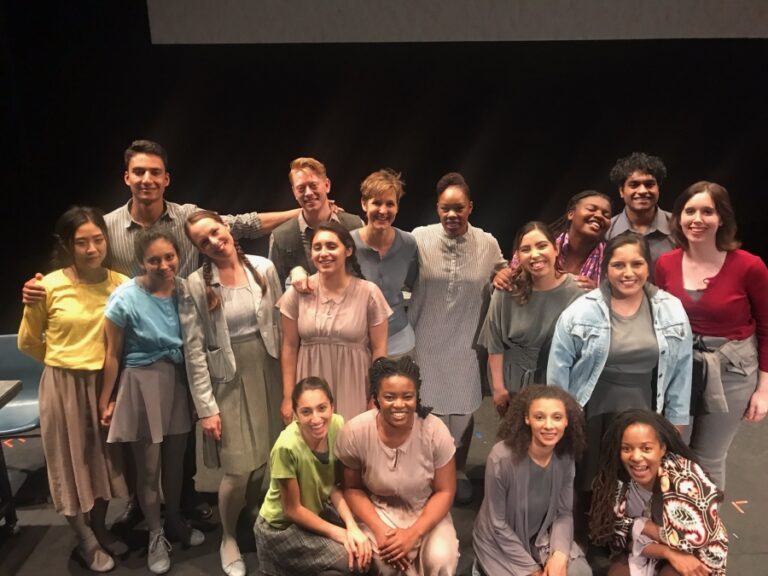
“The Bluest Eye,” sponsored by the UC Davis Department of Theater and Dance, will be performing at the Kennedy Center American College Theater Festival Region 7 Finals from Feb. 18 to 22. Based on the novel “The Bluest Eye” by Toni Morrison, the story is acted out through puppetry — not actors. This stylistic choice and distinctive way of performing is not how the play is normally performed, but it is what ultimately garnered attention leading to a place in this prestigious theater competition.

The cast and crew of 20 people will go to the University of Oregon in Eugene in hopes to win and advance to the next level of the competition, which takes place in Washington. They are currently raising money through their GoFundMe page in order to meet their $10,000 goal, which will go toward travel expenses. The Kennedy Center American College Theatre Festival is a weeklong festival that includes workshops, tech Olympics, public speakers and multiple different educational opportunities from which the whole cast can benefit. The festival holds a competition between three college campuses. This year, “The Bluest Eye” cast and crew will showcase their play on Tuesday, Feb. 19 and will be up against two other colleges: Linn-Benton Community College and Humboldt State University.

“We were in the last week of rehearsal and I said, ‘this is gorgeous,’” said Margaret Laurena Kemp, the director of the show and an associate professor of theatre and dance at UC Davis. “I don’t think [the cast and crew] realized how much they grew, how much they knew about theatre making and visual storytelling and theatre for social change and […] the panelists were really more than impressed, they were really blown away.”

“The Bluest Eye” cast and crew have been together for two years. At first the performance started like any other UC Davis theater performance. When Kemp saw the dedication of the cast to learn puppetry and make the puppets come alive, she submitted a picture to the Kennedy Center American College Theatre Festival, which ultimately got the cast recognized. The KCACTF sent in adjudicators to interview “The Bluest Eye” crew, asking them questions about the production. After watching the play, the cast and crew lined up ready for an interview with the ensemble and the adjudicators. Questions ranged from the logistics of why they chose to use puppets to how they used the puppets and what the experience was like with the puppets.  

“I felt like our cast and our energy with the puppets was something they probably may not have seen,” said Renata Zacarias, a third-year theatre and dance major, as she recalled how she felt after the interview process with the adjudicators from KCACTF.

With a diverse cast, the production is able to successfully act out, through puppets, the heavy-hitting topics that the book discusses, like racism and definitions of beauty.

“I think [winning] would definitely prove that people want to see the show,” said Jillian Yong, a second-year international relations and theatre and dance double major. “And all of us believe in the message of the show. And it’s become very important to a lot of us. The cast is almost completely people of color, which is really cool. Especially because theater tends to be pretty white. So it’s really cool to see a cast that’s primarily people of color, especially women of color, too. So it would mean a lot in that people want to see this show and they want to see this message.”

Kemp concluded that using puppets would tell the story, which speaks volumes about racial injustices in the United States, in a meaningful manner. Kemp called an old coworker in South Africa, Janni Young, and asked if she could come to the US in the summer to build the puppets and reimagine the script with the concept of puppetry in mind. Young went on to become co-director of the show and taught the cast how to properly use the puppets.

“We decided to use the puppets so that we can think of class in a wider range of race and ethnicity, away from the specifics of the show and its visual theatre,” Kemp said.

The hard-hitting show left an impact not only on the viewers, but on the cast as well.

“It’s definitely made me more conscious of what shows I’m doing and what the message is of the show that I’m doing,” Yong said. “Because none of the shows I’ve done since then have had such a strong message.”

With only a few days left to head over to the festival, the ensemble still needs a significant amount of donations in order to cover their costs.

“This show has gone through a lot,” Yong said. “Sometimes it’s a little bit tough because it feels like we’re rallying ourselves. And sometimes it feels like there isn’t a ton of support. But then, I’ll see emails about so and so donated or so and so left a comment on your GoFundMe post. It’s really inspiring when people do that, and it helps a lot and it means a lot. I feel like we’re very lucky to have this community that’s willing to give support like that.”

Written By: Itzelth Gamboa — arts@theaggie.org
ASUCD statement replaces failed Senate resolutions about Natalie Corona’s death

After public criticism over expressed support for law enforcement, new statement focuses on Corona’s legacy

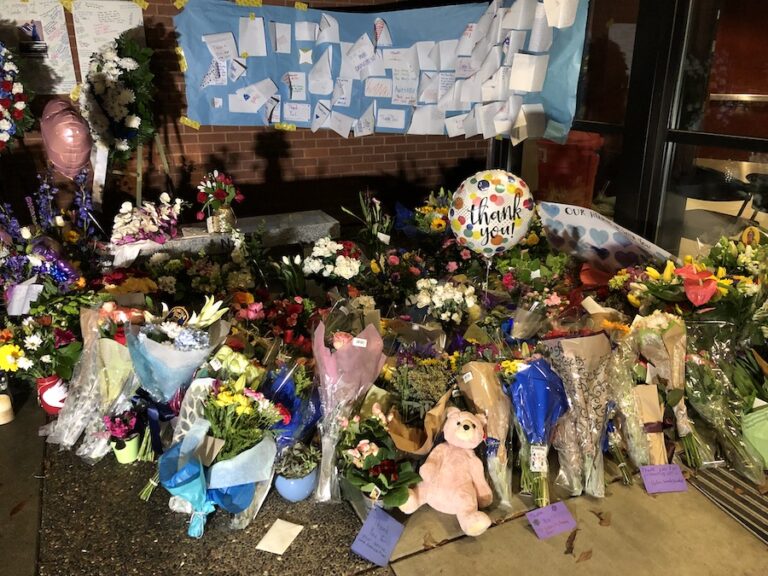
Almost three weeks after Davis police officer Natalie Corona was killed in the line of duty, ASUCD has released an official statement acknowledging the death after two resolutions failed to pass due to public criticism.

The statement, which mirrored the sentiment in Senate Resolutions #7 and #8, was first released publicly via ASUCD President Michael Gofman’s official Facebook page and focuses on Corona’s life, expressing the association’s condolences.

“Those around Natalie admired her mentality, for she was a hardworking individual who went above and beyond to pursue her goals,” the statement reads. “Natalie Corona is a hero for her dedication to protecting our community.”

While the statement as it appears on Gofman’s Facebook page is signed by a supermajority of senators as well as some unit directors and commission chairs, Senators Jumoke Maraiyesa, Brandon Clemons and Tony Chen’s names did not appear on the statement as signatories.

Maraiyesa declined to comment and Clemons did not respond to requests for comment. In response, Chen said he remains “neutral about resolutions and statements regarding Natalie Corona.”

“My vote and my action are based on my community’s response,” Chen said.

From his part, Gofman said that though he doesn’t want to comment on other people’s motivations, he believes “that outside of ASUCD, it is my belief that a majority of the students of this campus stand with our statement and the failed resolution in honoring Natalie Corona.”

The public release of the statement follows two failed Senate Resolutions: #7 and #8. Senate Resolution #7, authored by Ryan Gardiner, aimed to honor Corona and expressed the association’s support for local law enforcement. The resolution was withdrawn by Gardiner on Jan. 24.

Senate Resolution #8, authored by interim Senator Mohammad Qayum, expressed the exact sentiment of the failed SR #7. It aimed to honor Corona and “express support for officers like her.” One distinct change between the resolutions was the removal of a sentence containing the phrase “thin blue line” in exchange for broader support for law enforcement.

The ECAC posted a controversial statement on Jan. 11 to its since-deleted Facebook page criticizing the use of what was deemed to be the Blue Lives Matter flag in posts memorializing Corona. The Blue Lives Matter flag doubles as a symbol for the Thin Blue Line movement. The post, which drew national criticism, called the flag “anti-Black” and “disrespectful.”

Following both ECAC’s post and a wave of online backlash and criticism, ASUCD Vice President Shaniah Branson authored her own post on the official ASUCD Facebook page on Jan. 13 expressing condolences to Corona’s family and defending the right of ECAC to post the statement.

“While [the ECAC] acted within their by-lawful prerogative in releasing the statement, it does not speak for the entirety of the Association,” Branson’s statement read. “The aforementioned standard holds true for every group that makes up this Association.”

Gofman responded to the ECAC’s post via Facebook, calling it “disgusting” and urging ECAC to remove it and issue an apology. At a recent ASUCD Town Hall on Jan. 22 scheduled to discuss the controversy, Singh, the ECAC chair, said the commission stands firmly by its statement.

SR #8 was the subject of a two-hour discussion at the Jan. 24 Senate meeting. Members from the public expressed disapproval of the resolution because it voiced support for law enforcement, a position not everyone in the room agreed with.

“The official claim is that the resolution would not have represented the undergraduate body, however, I don’t believe that to be true,” Qayum said. “The resolution was written to honor Officer Corona’s life and after further amendments, the resolution read as a simple statement purely about her. If that is not representative of the student body, then it is a sad day for all of us.”

Eventually, after Senator Noah Pearl abstained and Senator Brandon Clemons effectively abstained due to his absence, a split vote was broken by Branson who encouraged Qayum to work on a statement authored with public opinion in mind.

According to Qayum, his resolution did not pass because “senators became nervous about a growing crowd and they did not want to anger them or take a controversial stance.” He subsequently made removals and additions using feedback from the community to draft the recently-released statement.

“People wanted more reference[s] to Officer Corona,” Qayum said. “And I agreed with those changes.”

Written by: Aaron Liss — campus@theaggie.org

We would do anything for love

Editorial Board shares stories of romance –– some sweet, some silly

Emily Stack, Editor-in-Chief

I did my fair share of embarrassing things in my younger and more vulnerable years, but one particular incident involving an attempt to assert strength in the wilderness truly speaks to my character. When I was 17 or so, my then-boyfriend and I decided we’d like to go on a camping trip. The Boyfriend, an intelligent and pragmatic young man, suggested a gas camp stove or a proper charcoal grill, but I was confident that I, with generations of hearty peasant blood in my veins, could cook a fine dinner over a campfire. Like an early hominid, I would demonstrate my ability to use tools, build a fire, and procure nourishment, thus establishing myself as an ideal mate. The Boyfriend would be impressed and humbled by my physical strength and advanced survival skills. It’s possible I suggested chopping my own firewood.

Cut to 11:00 p.m., in the pitch dark and cold, with the two of us huddled for warmth and looking ruefully at my small fire and uncooked dinner. The truth, dear reader, is that I had no idea what I was doing. The top of a flickering campfire isn’t nearly hot enough to grill flank steaks, and it was so windy on Mount Tamalpais that I made more smoke than flame. He had a carton of blueberries for dinner; I ate humble pie.

In retrospect, there were likely simpler and more realistic ways to win the admiration of The Boyfriend, ones that didn’t end with wounded pride and empty bellies. (In retrospect, it wasn’t the admiration of The Boyfriend but of myself that I was trying to win.) But because I’m nothing if not stubborn, I maintain the dream of properly executing my mountain-man fantasy.

Olivia Rockeman, Managing Editor

In second grade I met my soulmate, Trevor. From our shared love of Legos to our skills on the four-square court, I’d never had so much in common with another boy. One day, after getting three strikes from our teacher, I was forced to remain at my desk during free time while everyone else played together. Trevor was aware of my predicament and brought Legos to my desk to keep me busy in my confinement. It was then that I knew he was my ideal man. At the end of that school year, my mom told me that Trevor and his family were moving to Orange County. Knowing that long distance wouldn’t be an option, I said an emotional goodbye and was left to finish out elementary school without him by my side. We haven’t seen each other since, and despite recent attempts at locating him, I realized that there are thousands of Trevors in California. He will always be the one that got away.

Harnoor Gill, Science Editor

A lot of kids saunter through their elementary school years, entertaining fleeting crushes and short-term relationships, committing wholeheartedly to no one in particular. Not I. I was born with a strong conviction in my “wifey” qualities. I thought I had it made when I made the resolute decision to give my beloved set of Pokemon cards to a stubby-legged boy in Mrs. Carbrey’s second grade class. This was the start of something new. I was going to be someone’s wife! I didn’t have a lot of experience with a serious commitment at the ripe age of 7, but I’d manage on the love that was already festering for him in my heart. He took my offering with an eager and greedy grin, muttered a quick thanks and rushed out for recess, leaving me as uncuffed as ever and triggering the unfortunate beginning of the multitude of abandonment and trust issues that I carry with me to every romantic encounter to this day. Happy Valentines Day!

Liz Jacobson, Arts and Culture Editor

Oh, Justin. Justin Bieber. The Biebs, if I may. While my bedroom walls are no longer adorned with J-14 magazine posters that featured your sweeping bangs, my love for you has never faded. Not even while you were going through your angsty phase. I remember when I first heard your angelic voice in sixth grade physical education. Coach Hanson blasted your timeless tune “One Time” while we ran the mile. From that moment on, I was a Belieber. I remember begging my mom to buy “As Long As You Love Me” on iTunes the morning it came out so that we could listen to it on the way to school. I saw “Never Say Never” in theaters the first week it came out, and I cried. I had the board game. I had both perfume scents — yes, both. Even still, I can sing “Baby” word for word. While I’m happy you have finally found love and stability with Hailey Bieber (née Baldwin), in my head, I will always be your “One Less Lonely Girl.” Please release new music soon.

Olivia Luchini, Features Editor

Like an IV drip of drama and obvious product placements, “Degrassi” owned my young, middle-school heart more than I’ll ever own a house as a Millenial. I thrived off of the ability to live vicariously through Canadian young adults, but I survived off of Eli Goldsworthy, the resident dark-bad-boy-who-can-quote-basic-Shakespeare-while-brooding of the fictional high school. Eli Goldsworthy had everything: Swoopy black hair, a hearse to drive to and from class, an obsession with a fictional metal band (Dead Hand, obviously) and a complicated backstory that was never fully explained (it’s okay, I wrote fan fiction to explain the holes). I refreshed the “Degrassi” Facebook group every day when I returned from trading silly bands in my music appreciation class, just praying for some new Eli footage that those Canadian thieves would get access to before my limited American eyes. What was great about Eli? Everything? Yes, but mostly it was the fact that his love interest on the show was a young journalist who was in a dramatic arts club and was in an advanced English class. Vicarious. Lee. What was the BEST about Eli? That sweet, sweet fan fic about his green orbs and curious smirk. XD. (But seriously I wrote a “Degrassi”/”Alice in Wonderland” crossover fanfiction and no one stopped me.)

Dominic Faria, Sports Editor

I’ve had the misfortune of being infatuated with the female sex for all of my life, and for a middle school-aged boy, this is a particularly tough spot to be in. Despite my Spicoli-like hair, crooked smile (pre-braces) and downright awful sense of fashion, a girl by the name of Grace took a liking to me. I of course liked her too and within the first few weeks of our relationship (if you could even call it one, given how young we were) I agreed to go with her to visit her favorite teacher from elementary school. As my nervous sixth grade self stood next to Grace as she chatted away with her old teacher inside a classroom at West Valley Elementary, I decided that it would be a good idea to give my legs a little rest and lean on a desk nearby. My feeble brain failed to consider the fact that the chair that was placed on said desk was liable to slide off very easily, which it certainly did the minute I sat down. So I watched in horror as this chair set off a chain reaction of chairs crashing down from the desks all around the classroom for the next 30 seconds. Even though I was humiliated, Grace was kind enough to remain my girlfriend for at least another year after that. I guess it was true love.

Hannah Holzer, Campus Editor

The summer going into my junior year of high school, I was stricken by the impulse to get a pen pal. I did a bit of research, and found the online website Interpals. One night, I happened upon the profile of Andrew from South Carolina who, in addition to his charming profile, was quite handsome. As I was drafting a message, he beat me to the punch and sent me a message of his own. It was so serendipitous, it seemed too good to be true. I soon found out he was seriously ill, but we bonded over many things. We continued to talk all that summer until one day, his cousin messaged me from Andrew’s page to tell me he had passed on. Over a year later, I was telling the story to some good friends and pulled up pictures of Andrew. It was only then, when a friend pointed out the obvious — that not only were the photos of “Andrew” on his profile of distinctly different people, but they were also actually too good to be true, seemingly taken from professional ads — that I realized I had most definitely been catfished. It was a brutal and embarrassing realization, but remains a favorite story among friends. And I did end up making a connection on Interpals — Will from Australia is now one of my best friends, and we’ve spoken almost every day for the past three years (and he’s real, I promise!).

Kaelyn Tuermer-Lee, City Editor

During my junior year of high school, there was this new kid named Rand in my first period AP U.S. History class. He was a quirky person who always carried around his lunch box and running shoes strapped to his backpack, and many would laugh as his footsteps were heard running down the hallway at 8:20 a.m. for our 8:15 a.m. class. I don’t think there was a single day he was on time. One day after class, Rand asked me if I wanted to go to lunch, to which I said sure. What I hadn’t realized, however, was that he would be eating his packed lunch on the way there — which consisted of a bag of plain romaine lettuce — and I would be the only one actually eating food once we got there. I awkwardly tried to maintain a strained conversation that revolved around what little we had in common as he stared at me while I ate. I only realized at the very end of the year — as in the last day of school — when he wrote in my yearbook that he considered our lunch to be a “date.” It certainly took me by surprise and I still think back to it. The only part I didn’t fully understand was why he also wrote, “The early bird gets the worm, but the second mouse gets the cheese.” Was I the cheese? I guess I’ll never know.

Taryn DeOilers, Opinion Editor

I’ve had a lot of embarrassing moments in my romantic life — and I mean a lot — but there’s one that’s easily the cringiest. It was the first grade, and a young lad with the most British-sounding name possible had swiftly captured my little heart — and apparently the heart of my best friend, who had confided to me that she’d dreamt of them kissing. I was, of course, supremely jealous, and calculated that I also needed to prove my love in the form of a kiss. Mine, however, would have to be in real life.

The only problem was that he had no idea who I was, and I was too shy to even confess my love, let alone kiss him. So my two friends and I concocted a foolproof plan: While we were standing in line after recess, one of them would “accidentally” cartwheel into me, thereby propelling me, face-first with my lips puckered, straight into my man. I would then “accidentally” plant a kiss on his lips in the process. This would naturally lead to us falling in love and having many kids and living happily ever after, or whatever. It didn’t go according to plan. When my friend cartwheeled into me, I launched forward, arms flailing and yelling, “WhooOoOooa!” with the acting chops expected from a six-year-old. But instead of smooching, I missed him entirely, loudly kissed the air next to his face with a deafening ‘MWWWAH!’ and stumbled onto the ground. He looked at me, bewildered, then coughed awkwardly and turned back in line. Although my love for this man perished right then and there, the profound embarrassment shall live on forever.  

Written by: The Editorial Board

UC Davis Hosts Biodiversity Day

The California Aggie explores some of the various museums and collections

UC Davis will host the 8th annual Biodiversity Museum Day on Feb. 16 to showcase 13 biodiversity-related museums and collections. Organizers hope to celebrate the great variety of species that inhabit the earth and highlight the threat human actions pose to biodiversity.

Many of the museums and collections open during the event are used for teaching and research. Biodiversity Museum Day is an opportunity to broaden the reach of the UC Davis collections.

“Those of us who manage these collections want to help people become more aware and knowledgeable about the interaction of organisms on this planet,” said Ernesto Sandoval, the manager of the Botanical Conservatory and one of the event planners.

The event will run from 9 a.m. to 4 p.m. with free parking and admission. Half of the museums and collections will be open in the morning and the other half will be open in the afternoon. The official website offers a map and more detailed information.

The California Aggie chose one species of particular interest from each collection. These are some of many the species to take a closer look at.

Arboretum

Taxonomic Classification: Melaleuca viminea

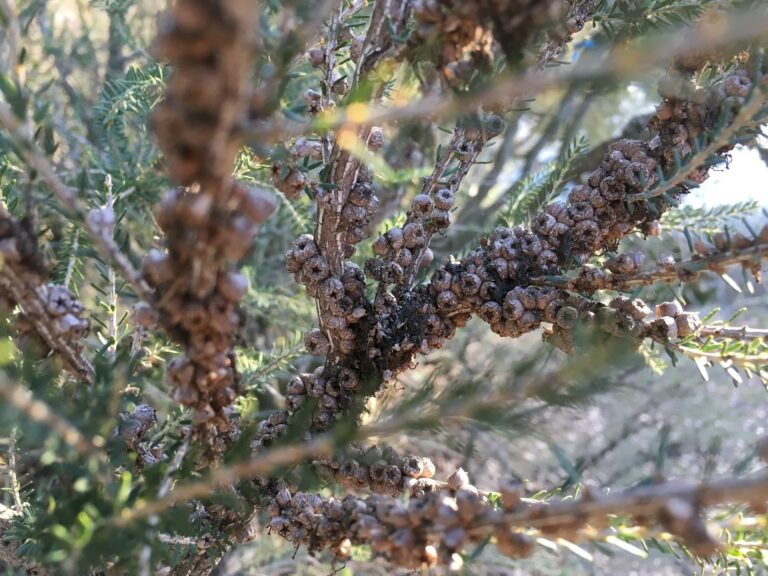
A Melaleuca shrub is planted on the eastern side of the Arboretum in the Australian Collection. The shrub is unassuming from afar, but up close, little woody fruits that look like barnacles cling to the branches of the plant. These incredibly tough fruits only drop seeds after a fire. Melaleuca is native to Australia but is found in different varieties across the world. It does not require irrigation because of its deep roots and evergreen leaves that maximize its ability to collect water. The shrub, like the rest of the Arboretum, is open to the public year-round, but Biodiversity Museum Day is a good opportunity to pause and take a closer look at the incredible variety of species living in Davis.

Bohart Museum of Entomology

Photo credit: Peter Smith

Taxonomic Classification: Therea petiveriana

This cockroach is informally called the “domino cockroach” because of its black and white spotted pattern. Entomologists believe the unique colors evolved to help this insect, native to Southern India, imitate the more dangerous six-spot ground beetle. Visitors can find the “domino cockroach” in the Bohart Museum of Entomology among the display habitats that contain living species. Most of the Bohart museum is a collection of meticulously preserved dead insects that will also be on display during Biodiversity Museum Day. In particular, the large butterfly collection will be open with experts ready to provide in-depth information.

Botanical Conservatory

Photo credit: Peter Smith

Taxonomic Classification: Dorstenia gigas

In the wild, the giant Dorstenia has very few leaves because it is a succulent. UC Davis botanists discovered, however, that the plant grows conspicuous leaves when heavily watered in a greenhouse. If you visit this plant in the Botanical Conservatory on Biodiversity Museum Day, you will see a greenhouse plant that looks dramatically different compared to its wild equivalent.

California Raptor Center

Photo credit: Billy Thein

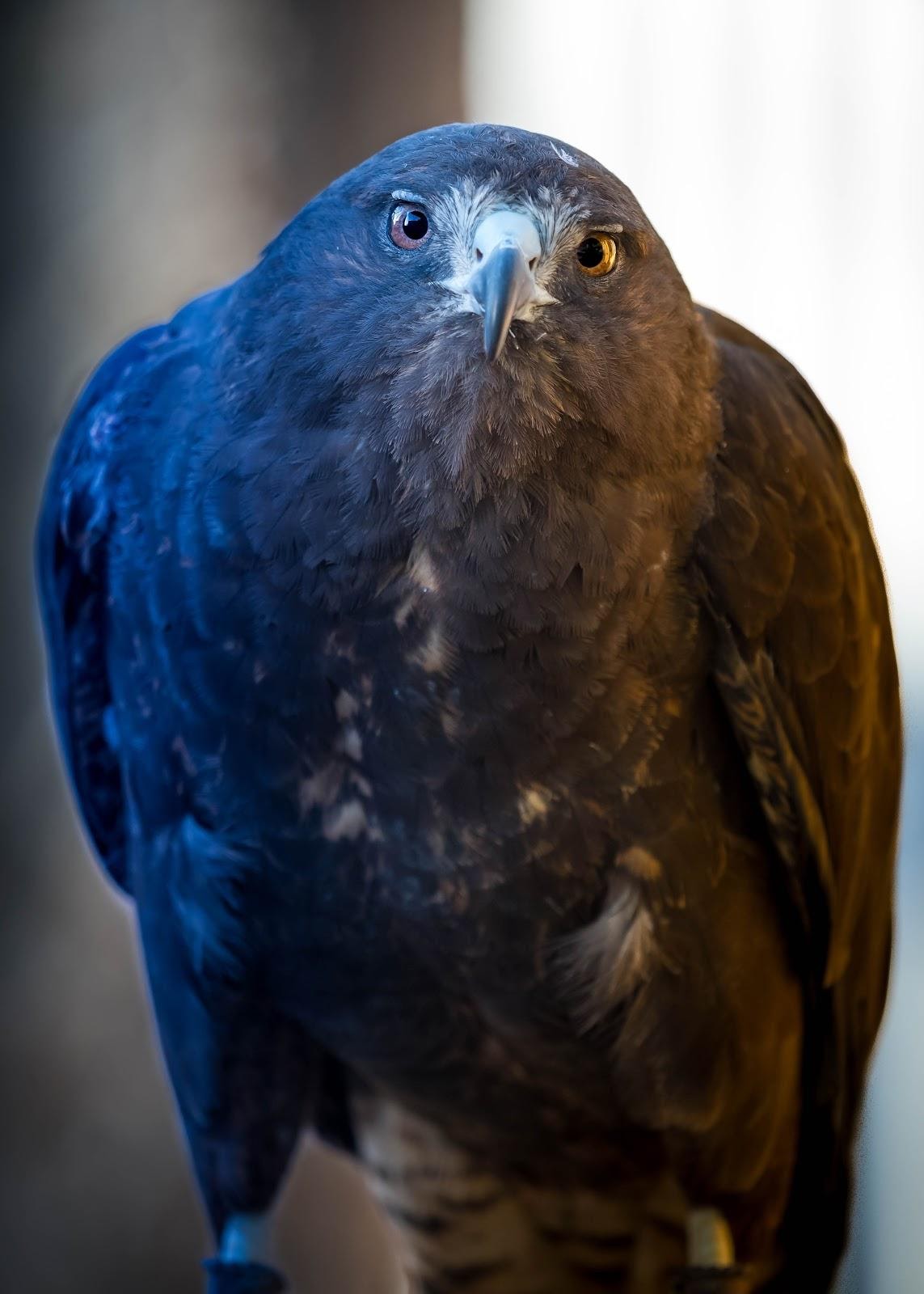
Taxonomic Classification: Buteo swainsoni

Name of Bird pictured: “Whistler”

The Swainson Hawk is a local species with fascinating migration patterns.

“The core of their Central Valley breeding population is concentrated in the greater Sacramento region, including areas in and around Davis,” said Julie Cotton, a volunteer and outreach coordinator at the California Raptor Center. “They are one of the longest-distance migratory hawks in the Western United States, traveling from their summer breeding grounds to areas of Central and South America for the winter.”

The Raptor Center has two “educational ambassador” hawks named Grasshopper and Whistler. Both will participate in the Biodiversity Museum Day.


Center for Plant Diversity

Photo credit: Dean W.M. Taylor CC 2.0

Taxonomic Classification: Calystegia occidentalis

Department of Anthropology Museum

Photo credit: Peter Smith

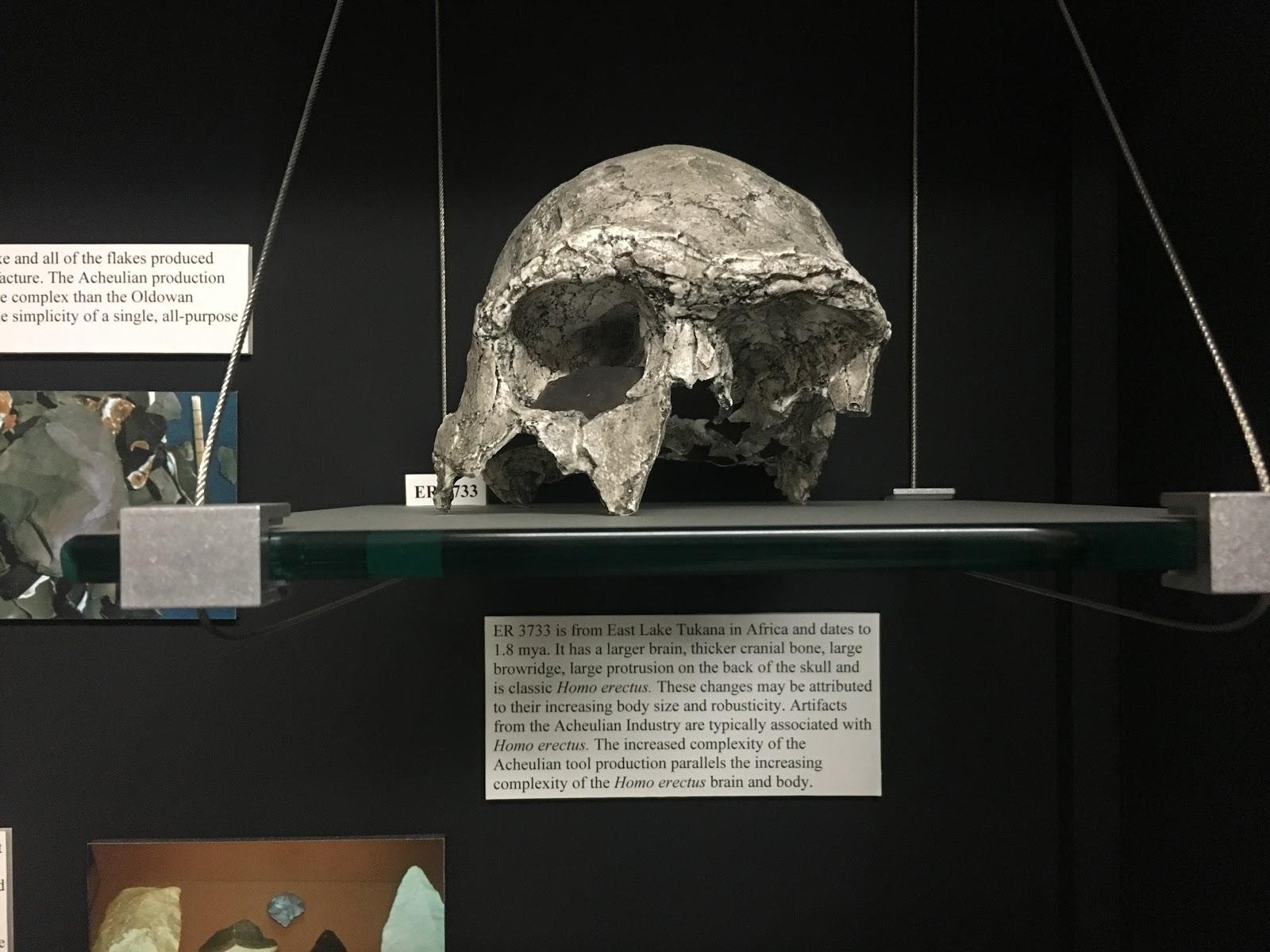
Taxonomic Classification: Homo Erectus

Häagen-Dazs Honey Bee Haven

Photo credit: Public Domain

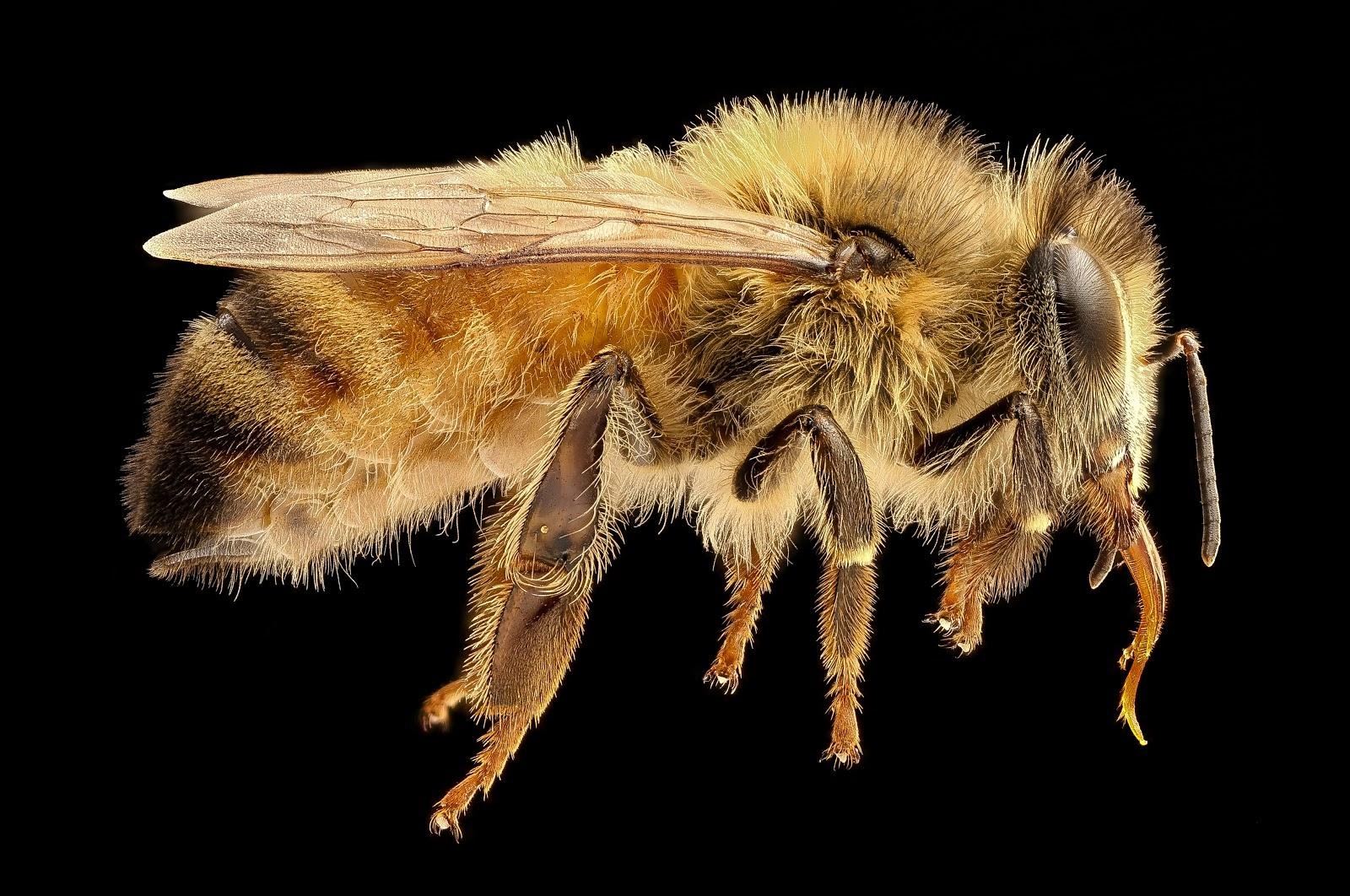
Taxonomic Classification: Apis mellifera

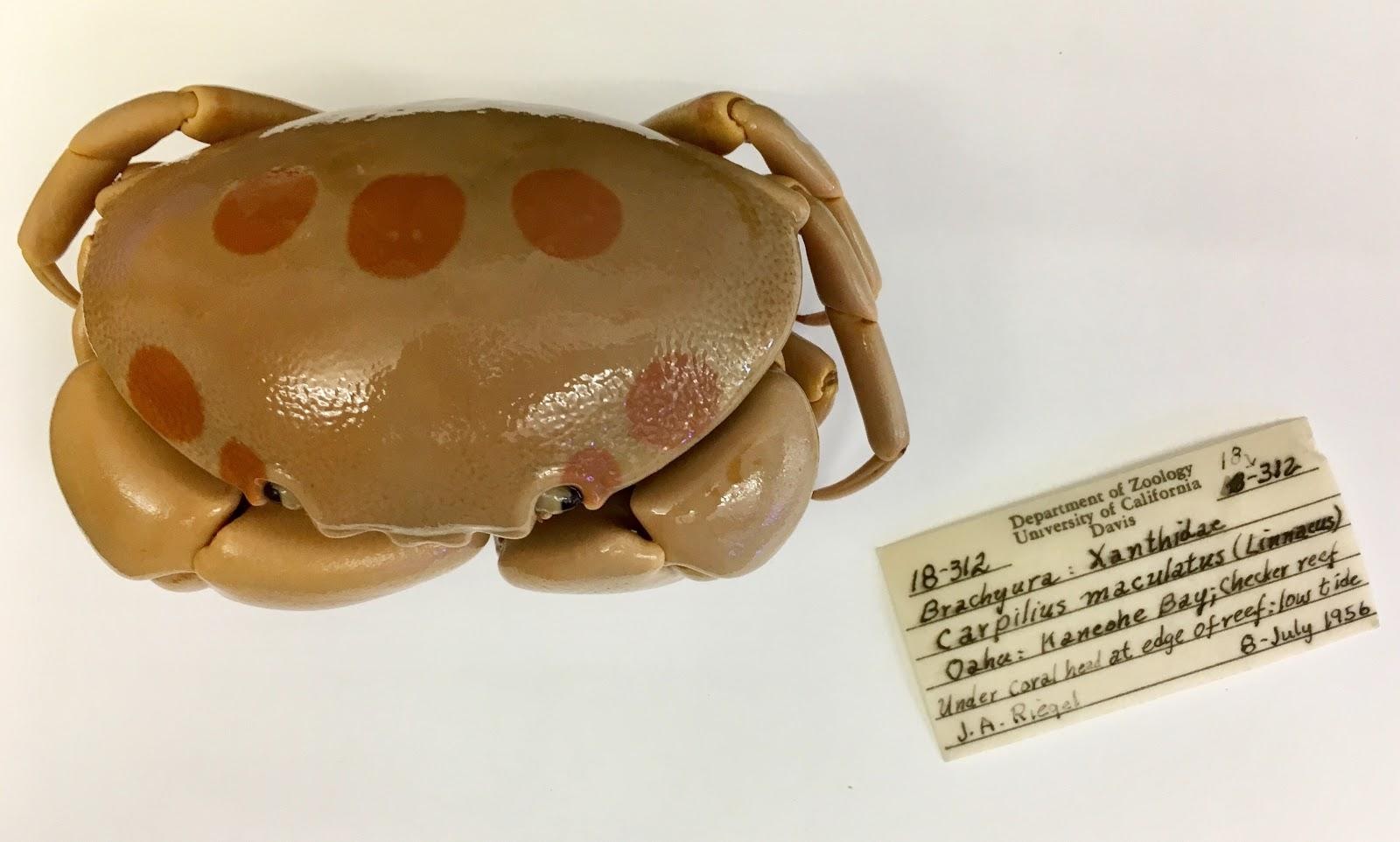
Marine Invertebrate Collection

Photo credit: Courtesy Marine Invertebrate Collection

Taxonomic Classification: Carpilius maculatus

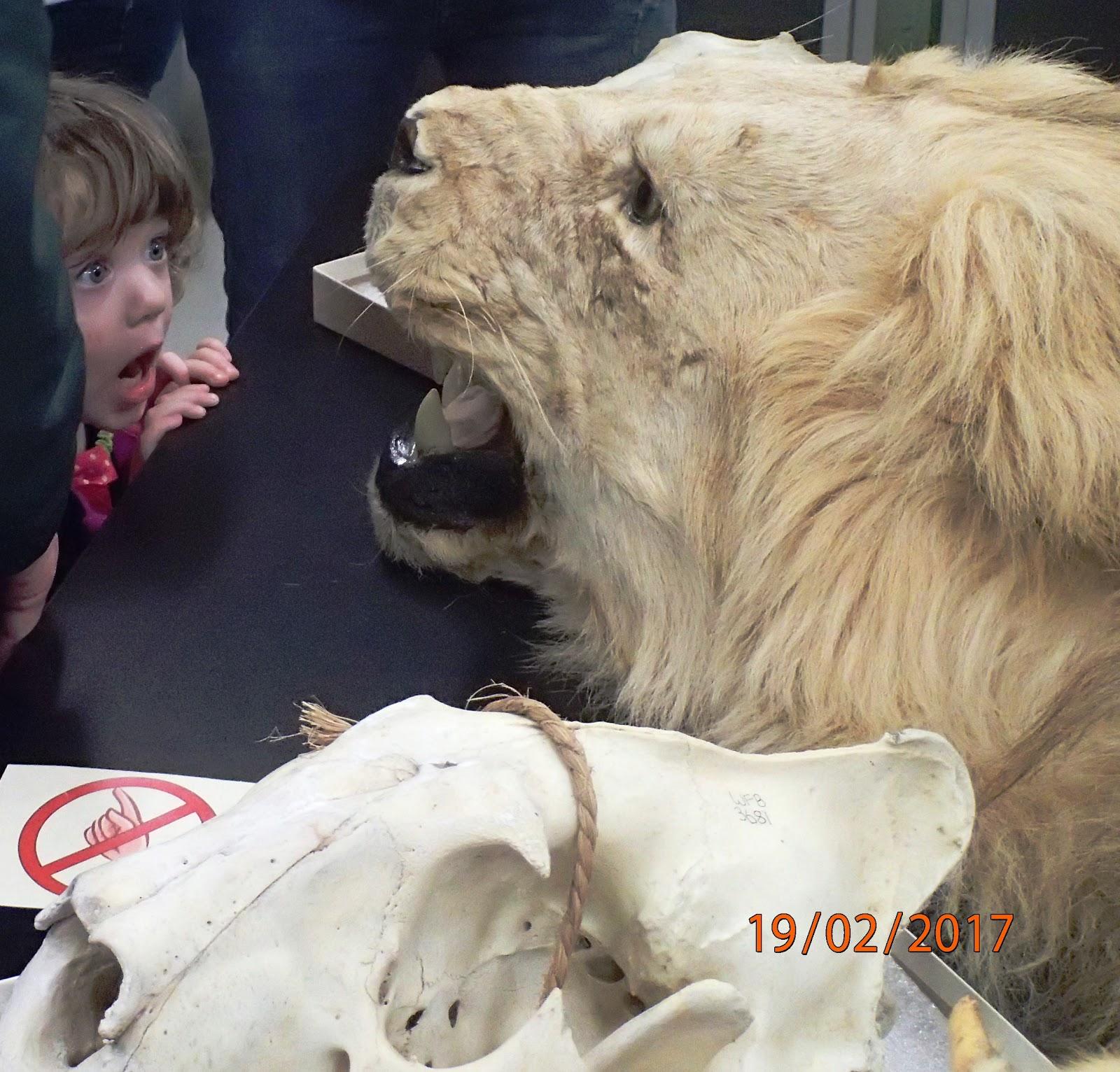
Museum of Wildlife and Fish Biology

Photo credit: Courtesy Museum of Wildlife and Fish Biology

Taxonomic Classification: Panthera leo


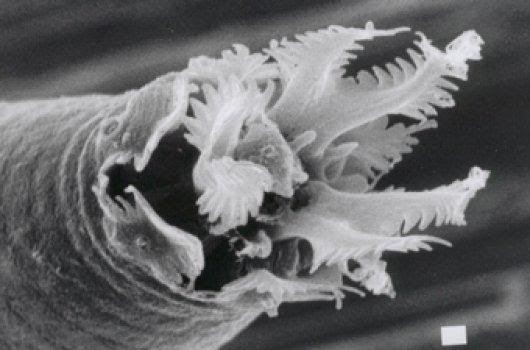
Nematode Collection

Photo credit: Courtesy Nematode Collection

Taxonomic Classification: Acrobeles complexus

Nematodes are the largest group of multicellular animals on earth, but they are not well-classified or understood. Acrobeles complexus is a mysterious nematode that can survive even the most inhospitable conditions.

“This is a microscopic free-living nematode capable of living in extremely arid desert environments due to its ability to survive in a dried-out resting state, called anhydrobiosis, until environmental conditions are right for it to wake back up,” said Corwin Parker, a graduate student in the department of Entomology and Nematology who helps with the museum.

Although nematologists understand how the species withstands extreme conditions, they are unsure of the specific purpose of the structures around the mouth.

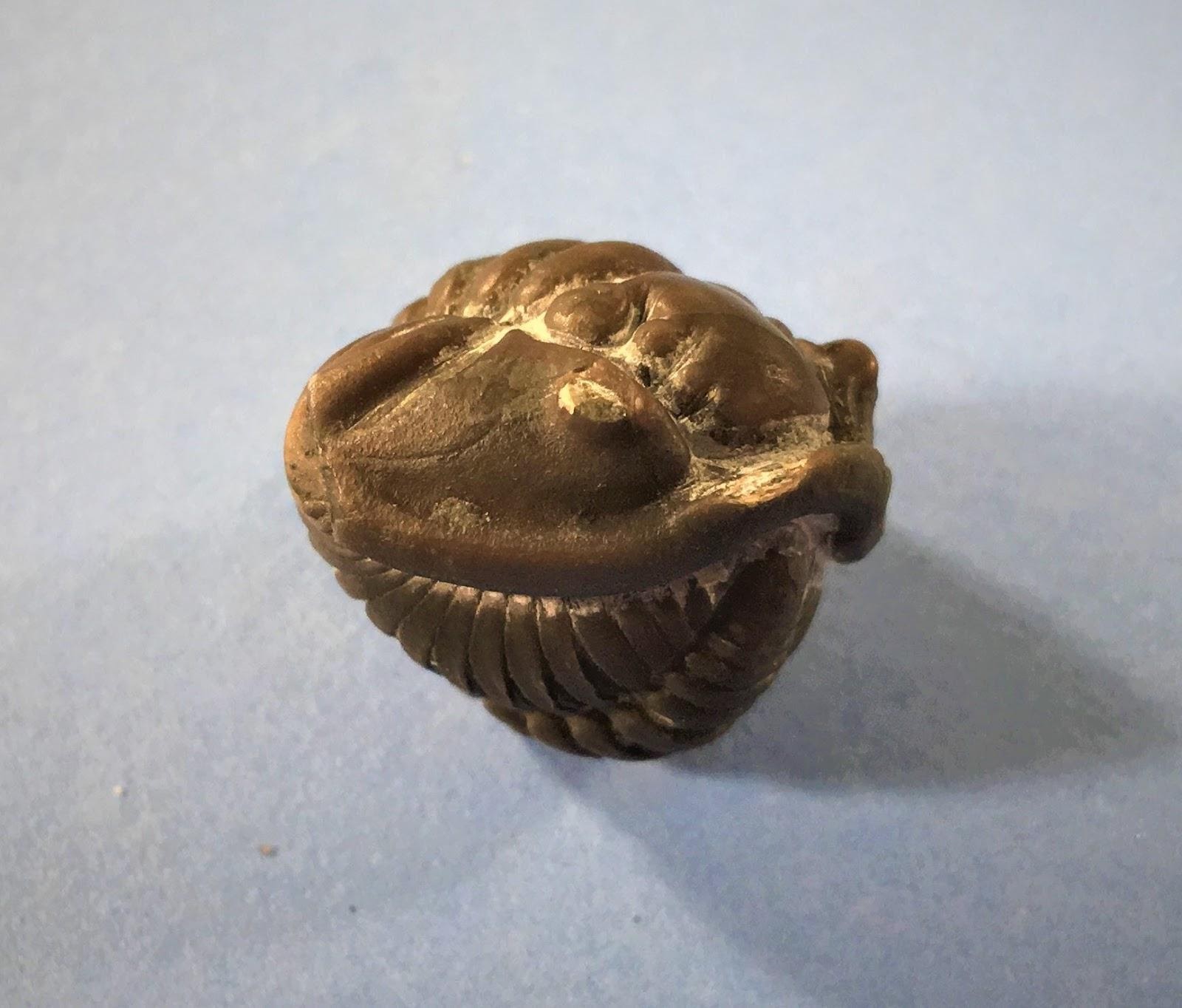
Paleontology Collection

Photo credit: Courtesy Paleontology Collection

Taxonomic Classification: Flexicalymene meeki

Phaff Yeast Culture Collection

Photo credit: Courtesy Phaff Yeast Culture Collection

Taxonomic Classification: Saccharomyces cerevisiae


Viticulture and Enology Culture Collection

Photo credit: Courtesy Viticulture and Enology Culture Collection

Taxonomic Classification: Brettanomyces bruxellensis

Written By: Peter Smith — science@theaggie.org


PETA files lawsuit against UC Davis over treatment of primates

In wake of multiple violations in last six years, lawsuit could force release of footage recorded within Primate Center.

People for the Ethical Treatment of Animals (PETA) filed a lawsuit against UC Davis in an effort to force the university to release videos cited in researchers’ published papers on studies conducted at the UC Davis Primate Center. UC Davis has refused to do so, despite PETA’s filing of a California Public Records Act (CPRA).

Andy Fell, the associate director of news and media relations at UC Davis, said in an email that the CPRA request made by PETA in December of 2017 was only partially fulfilled in May of 2018 because the “requested material concerns ongoing research, or because the records do not exist.”

“Animal research benefits human health, is conducted humanely and is strictly regulated,” Fell said. “We strive to take the best possible care of these animals.”

The lawsuit filed by PETA, however, points to several instances in which UC

Davis failed to comply with laws regarding laboratory animals. In the past six years, UC Davis hasn’t reached the minimum standards of care outlined in the Animal Welfare Act (AWA) at least 24 times, according to the lawsuit.

The lawsuit indicates several citations by the U.S. Department of Agriculture’s Animal and Plant Health Inspection Service, the department that oversees the implementation of the AWA, including an instance in which a monkey suffered kidney damage and internal bleeding after an attempted escape led to use of a tranquilizer dart gun.

Jeremy Beckham, a researcher associate in PETA’s laboratory investigation department, has been working on issues related to animal experimentation for 15 years. Of the 4,500 monkeys at the primate center, some are kept outdoors for breeding purposes, but many of them are used for experimentation indoors and away from the public eye, according to Beckham.

Beckham listed common issues of monkey treatment in primate centers like the one at UC Davis, including monkeys being subjected to invasive brain experiments, psychological experiments which have included forcing the monkeys to inhale toxic substances and isolation. Since monkeys are social and emotional animals, isolation in cages causes them to pace, swing and potentially self-mutilate, Beckham said.

Primate centers generally don’t allow the public to see what is occurring within their facilities. A photographer from The California Aggie, who attempted to photograph the center from behind the fence surrounding the building, was told by a public safety officer from the UC Davis Police Department to delete the photos he had taken. UC Davis officials said this is done to ensure the safety and privacy of the employees who work at the center.

Due to restrictions of this nature at both this and similar facilities, PETA utilized other ways to gain documented insight into the centers’ daily operations. One way PETA receives information on monkey treatment in these centers is through an open records requests, like the CPRA.

Beckham said that a UC Davis research psychologist has been running an infant behavioral assessment program for the last 15 years — a program that is funded by federal tax dollars and a program the majority of the monkeys born at UC Davis have gone through.

“Shortly after the monkeys are born, they’re separated from their mothers, which we’ve known for a long time is extremely stressful for both baby and mom, and then they’re subjected to a variety of stressful situations,” Beckham said.

The infant monkeys may be put through a screen showing an image of an aggressive monkey after being isolated in a cage, according to Beckham.

“Obviously, baby monkeys separated from the security of their mom seeing this image of this larger monkey stresses them out and scares them,” Beckham said. “They videotape the reactions of these baby monkeys and look at which monkeys act more stressed out than others.”

Fell, on the other hand, said that the monkeys studied are “being assessed for how they react to stimuli such as a person looking at them or a person in profile, or to other stimuli such as food rewards.” The research shows that the behavior traits the monkeys exhibit relate to group behavior and varied disease responses.

Beckham argued that, as a public institution with research funded with federal tax dollars, UC Davis should release the tapes from this study in addition to tapes from other experiments.

“What better way to cut to the heart of what’s happening in this laboratory than to simply release the videos that the experimenters took themselves?” Beckham asked. “Let the public decide for themselves if they think that’s worth subsidizing. We’ve already supported these experiments for 15 years, over $5 million have gone towards these experiments.”

While Fell defended UC Davis’ partial release of records, Beckham said that UC Davis has argued against releasing the full records, claiming doing so would be a threat to academic freedom.

“I think especially because they’re a public agency and these experiments are funded by tax dollars, we have a right to look over [academics’] shoulders,” Beckham said. “We should not blind ourselves to academic institutions’ biases. People in academia are just as susceptible to abusing their position of power and just as susceptible to bias as anyone else.”

The P.E.A.C.E. club at UC Davis, a club that advocates against animal cruelty through education, has also organized against the Primate Center. The club works closely with PETA and has a designated campus representative each quarter who works directly with PETA. Many of the events the club hosts are also funded by PETA.

“Last year, we held a vigil and we were walking around downtown — we came in a group and sang songs and held signs talking about the primate lab and why we shouldn’t use animals in testing,” said Julie Novaes, a second-year Spanish and neurobiology, physiology and behavior double major, the director of events for the P.E.A.C.E. club and the current campus representative for PETA. “We had a demo last year also where we wore monkey masks and it was like hear no evil, see no evil [and speak no evil]. That was on campus at the MU, just to have people come and start a conversation.”

Novaes also mentioned a petition created by the Free Davis Primates group “dedicated to raising awareness about the 5,000+ primate who undergo unnecessary/painful testing that goes on behind closed doors at the UC Davis Primate Research Center.” The petition has nearly 13,000 signatures with the goal of gaining 15,000 signatures.

The P.E.A.C.E. club’s ultimate goal is to shut down the primate center, according to Novaes.

“Harvard shut theirs down a couple years ago, and a lot of it was a big push by students, and they’re still doing fine as a school and I think we can do the same thing,” Novaes said. “A lot of people argue that because they’re less intelligent than we are, than they deserve to be treated poorly. But I don’t think intelligence is a measure of the compassion you deserve. We shouldn’t be enslaving animals for our needs.”

Written by: Sabrina Habachi — campus@theaggie.org

Civil rights lawsuit against West Davis Active Adult Community dismissed

0

Developer of Davis senior housing project questions whether campaign funding laws were violated

A lawsuit levied against the City of Davis and developers of the West Davis Active Adult Community that accused the two parties of housing discrimination was dismissed without prejudice in January. WDAAC developer David Taormino is now questioning whether the lawsuit constituted a violation of campaign finance laws, and is considering pursuing legal action.

According to a news bulletin on the City of Davis website, the case was dismissed on Jan. 18 by U.S. District Court Judge Morrison England, Jr. The defendants, including the City of Davis and Taormino, filed a motion to dismiss the case in response to the suit, and the plaintiff agreed to a dismissal without prejudice — meaning that the plaintiff or other interested parties could still file a similar case in the future if they so choose.

Council members celebrated the dismissal in the Jan. 25 post, expressing satisfaction that construction of the WDAAC can now go ahead as planned.

“Our city has acted on numerous proposals that enhance the local economy, and help increase housing opportunities for our community,” said Councilmember Dan Carson. “Unfortunately, several of these projects have had lawsuits filed against them delaying their benefit to the greater community. I am pleased to see that this lawsuit was dismissed by the court.”

Mayor Brett Lee also expressed his satisfaction with the outcome of the case.

“This project went through a very thorough public process inclusive of a Measure R vote — I am pleased to see the will of City Council and the majority of Davis voters is being upheld without unnecessary delay,” Lee said.

The suit, Ignacio v. The City of Davis, et al. was initially brought against the city in the run-up to the November 2018 election, when voters approved the project under ballot Measure L. Civil rights attorney Mark Merin filed the case on behalf of Samuel Ignacio, a Sacramento resident of Filipino and Hispanic heritage. Merin’s case argued that one of the WDAAC’s provisions — informally called “Taking Care of Our Own” — constituted de facto housing discrimination under the Federal Fair Housing Act. Under the Taking Care of Our Own provision, 90 percent of the new homes proposed by the project would be reserved for Davis residents, those with close relationships to Davis residents or those who have worked in Davis. Because the Davis community is “predominately white,” Merin argued, the policy was inherently discriminatory against non-white buyers.

“The result of this ‘local resident’ restriction, as alleged in the civil rights complaint, is the continuation of a racially imbalanced community and the exclusion of minority would-be purchasers in violation of the Federal Fair Housing Act,” Merin said in a press release posted by the Davisite, a blog run by Davis community members.

But judging from court documents, Taormino said, it appears Merin dropped Ignacio as a client on Dec. 6 without offering explanation. A second lawyer, John F. McIntyre of San Jose, took up Ignacio’s case. A little over a month later, however, the plaintiff camp agreed to dismiss the case after reviewing documents submitted by Taormino and the other defendants.

“The second lawyer got our documents that were filed with the court, and reviewed them and indicated that our points and our authorities were well-considered and well-taken, and […] his client — fully aware of the situation — decided to drop the lawsuit,” Taormino said.

Taormino went on to call the lawsuit a “political ploy” intended to influence the outcome of the Measure L vote, as well as a misuse of the court systems. Furthermore, Taormino said, if the lawsuit was an intentional tactic meant to influence the election results, the opposition would have been required by law to list attorney funds as a campaign expense. Taormino said that Merin disclosed to his attorney that he had received $20,000 dollars to represent Ignacio.

“The opposition, when they filed their forms, made no reference whatsoever to any money going to Mr. Merin or anybody else,” Taormino said. “Mr. Ignacio, we know, does not have the wherewithal to come up the fund to pay an attorney $20,000 […] The law says we’re not going to stop you from doing that, but you got to disclose where the money came from to pay for that type for thing.”

The California Aggie reached out to Alan Pryor, who acted as treasurer of the No on L campaign, but did not receive a response before the time of publication. Taormino expressed some interest in pursuing legal action to investigate whether campaign laws were violated.

“We are considering an appropriate legal response,” Taormino said. “If you don’t stop people from filing frivolous lawsuits by doing nothing, you essentially endorse their type of politics […] I think we should have a reasonable and higher standard for the quality of election rhetoric.”

Written by: Tim Lalonde — city@theaggie.org

Run for 224: 37th Davis Stampede event to honor Officer Natalie Corona

0

A Change of Pace Foundation will contribute to fund for police department

On Feb. 24, A Change of Pace Foundation will host The Davis Stampede in remembrance of Officer Natalie Corona, who was fatally shot in downtown Davis on Jan. 10.

To honor Corona, whose badge number was 224, the organization will contribute $2.24 from each entry ticket to a fund for the Davis Police Department, which allows the department to use the money at its discretion. ACoP will also display her number on its T-shirts for Davis-based events.

“We felt that was a small token of what we can do, but also honor her by putting that badge number on all of our shirts on the entire 2019 season,” said Dave Miramontes, the executive director of ACoP. “In tribute, we want to keep that number present throughout the year so we don’t go back to our daily lifestyles and forget about incidents like this or people like that.”

In addition to a kids’ fun run, the annual event features a half marathon, 10K and 5K, in which participants will be timed and may be eligible for age-group awards. With a large number of participants, ACoP — which hosts a variety of race events to promote fitness and healthy living — worked closely with the police department in the past for security reasons. According to the ACoP website, Corona had “enthusiastically assisted at some of [its] recent events.”

“Like everyone else in the city, I think our organization was hit pretty hard,” Miramontes said. “We deal with the police department all the time with all our events. They provide all the safety for the athletes, participants and, of course, for us. We’ve worked with them for a long time.”

Miramontes emphasized that the tribute extends beyond just Corona, and to all individuals of the police department.

“In doing this for Natalie, we’re also doing it for a separate reason too, and that is letting people know a lot of the times we take the officers for granted as far as safety goes,” Miramontes said. “It is a safe community without a doubt, and the reason for that is the officers that we have. We have to honor them along with Natalie.”

In the event’s 37-edition history, this will be the first time it incorporates a personal tribute. The date of the event was decided months ago, and happened to fall on Feb. 24 (2/24), coinciding with Corona’s badge number. The decision to dedicate the race to Corona came among many other efforts from the Davis community to deal with the tragedy. The organization experienced an increase in ticket sales in response to its support for Corona.

“We did get a surge when we first posted it out,” Miramontes said. “We got a lot of people that have said ‘that’s a great idea and a great thing to do.’ It may increase our numbers, and hopefully it does, but that wasn’t the goal.”

Student groups, such as the UC Davis Cross Country & Track Club, often volunteer to lead runners around the course and pass out bids or participate in ACoP events. Julia Cunniffe, a club member and fourth-year biological systems engineering major, initially signed up for the event for the fourth time to practice for her upcoming marathon.

“I think that it’s a really good idea,” Cunniffe said. “It’s inspiring because a lot of people participate in this event and it’s running for a cause. I signed up before that even happened, but I think it’s a good add-on.”

Written by: Renee Hoh — city@theaggie.org

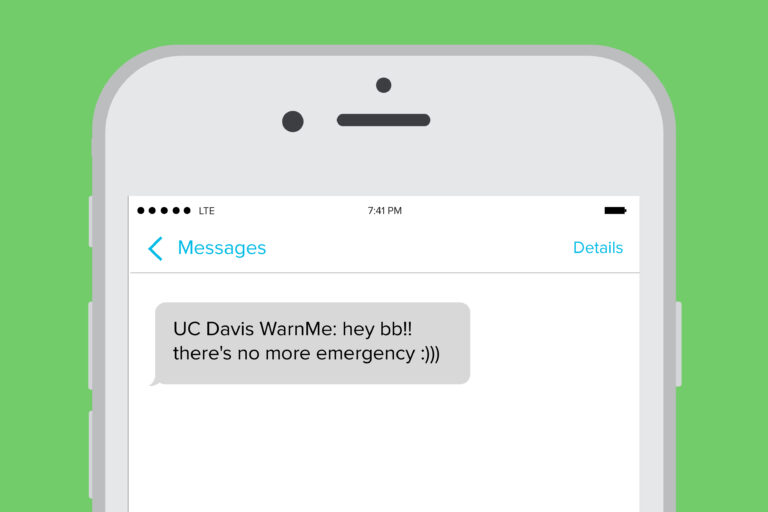
Humor: UC Davis WarnMe system warns us that there is in fact no emergency.

Have no fear! WarnMe is here…

So, I’m pretty sure you guys and gals have all received the nerve-racking, spine-chilling, blood-curdling text from the UC Davis WarnMe system notifying us that there is no emergency. I just want you all to take a brief second to laugh at this foolery.

When there is indeed a threat to the Davis community, the so-called WarnMe system waits until the suspect successfully disguises himself as a “street preacher” to let us know that yet another house has been robbed and the suspect has successfully escaped to the next house of interest.

If the WarnMe system won’t give us sonic-speed intel on emergency information, like during the recent shooting — which I found out about from the Mango Flower chef on Anderson Road, by the way — then maybe UC Davis should change its emergency protocol to something a bit more useful.

For instance, instead of warning the students that “campus will remain closed on Martin Luther King Jr. Day,” warn them that “Buses A-Z will be 15 minutes late all week due to a three-bike collision on A street and Russell.”

Or, “Attention students who like to drink ‘clean’ water: Wellman, Hart and Giedt Halls currently have the green filter level. Drink up!”

Or maybe, “For students who need to relieve stress, please come to the quarterly primal midnight yodel the Sunday before finals.”

Finally, to restate what I forgot to say above, the WarnMe system is very much needed. It just has to switch from texting us about expired local crime reports to texting us positive affirmations like, “Today and every day my thirst for learning is alive and well in me.”

Written by: Hilary Ojinnaka —hiojinnaka@ucdavis.edu

(This article is humor and/or satire, and its content is purely fictional. The story and the names of “sources” are fictionalized.)

Recapping the worst blown calls in sports history

0

Missed pass interference call in the NFC Championship among the worst in history

With just over two minutes to play in this year’s NFC Championship game, New Orleans Saints quarterback Drew Brees dropped back in the pocket from his own 44 yard line and hit wide receiver Ted Ginn for a 43 yard gain, advancing the Saints into the red zone. With the game tied and a Super Bowl birth on the line, the Saints stood just 13 yards away from the endzone and had an 88 percent chance to capture the win, according to ESPN.

All the momentum was on the Saints’ side, but this changed just three plays later. On the third down and 10, Rams cornerback Nickell Robey-Coleman got away with an egregious pass interference penalty on Saints wide receiver Tommylee Lewis. Robey-Coleman not only made downfield contact in an obvious attempt to prevent Lewis from catching the ball, but he also made head to head contact with Lewis.

This play could have drawn at least two different penalties, but not a single one was called. The NFL’s Head of Officials, Alberto Riveron, told Saints Head Coach Sean Payton that the officials “blew the call” by not penalizing the Rams for pass interference late in the fourth quarter.

Had the pass interference been properly called, the Saints would have had the ball first and goal inside the Rams’ ten yard line, as well as a much better chance to score a touchdown and go ahead by at least six points. Instead, the Saints were forced to settle for a field goal to take a three-point lead that the Rams were able to overcome after forcing overtime.

Essentially, the Saints appeared to have been robbed in what many are calling the worst missed call in NFL history. Some Saints fans have even gone so far as to file a lawsuit against the league for the mistake, and others staged a massive protest during the Super Bowl. While this mistake was shocking, it begs the question: was this the worst blown call in all of sports history?

Arguably one of the worst calls in all of sports history took place rather recently, back in June of 2010, in a game between the Detroit Tigers and the Cleveland Indians. With veteran umpire Jim Joyce calling the shots at first base, Detroit’s Armando Galarraga took the mound against the Indians and pitched the best game of his career.

At the time, only 20 pitchers in MLB history had pitched perfect games, in which the other team did not hit a single ball, receive a single walk or benefit from a single error; 27 straight outs are the only things recorded on the team’s scorecard. That evening, Galarraga had recorded 26 straight outs and was one out away from completing the coveted perfect game. With two outs in the ninth inning, he faced Cleveland shortstop Jason Donald for what was expected to be the final of Galarraga’s perfect game.

Donald hit a routine ground ball to the Tigers’ first baseman, and Galarraga covered first base to receive the ball from his teammate mere seconds before Donald’s foot hit the bag. Joyce, however, saw the opposite. He called Donald safe and, despite cries from the fans and the entire Tigers team, stuck to his call, ending Galarraga’s bid for a perfect game.

At the time, instant replay was only allowed to be used in MLB playoff games — a rule that has since then been abandoned — so the umpires were not required to review the play. The instant replay that fans saw on their televisions at home, however, showed that the call was completely wrong and that Galarraga had caught the ball before Donald stepped onto the base.

Though Joyce could not be persuaded to change his mind during the game, the umpire broke down in tears after the final out was recorded and he saw the replay, admitting to reporters that he cost Galarraga a perfect game.

Though Galarraga publicly forgave Joyce for the call and the two men went on to publish a book together titled “Nobody’s Perfect,” baseball fans have never forgotten his major blunder.

Next on the list of all-time officiating catastrophes comes the missed handball in the quarterfinals of the 1984 FIFA World Cup between Argentina and England. With the game tied in a scoreless match, Argentina pushed down the field following halftime. Argentinian legend Diego Maradona chased down a ball that was misplaced by an English defender, where he was on track to collide head-on with the goalie.

As they both approached the ball, Maradona elevated and extended as far as he could to attempt to head the ball in. England goalie Peter Shilton thrusted forward to punch the ball out of the air, but it was the fist of Diego Maradona that punched the ball into the net. Because his hand was so close to his head, and the officials apparently having a historically embarrassing angle, the handball was not called. Not only did Argentina win that game by a single goal but also went on to win the entire World Cup tournament. Later on, Maradona would dub his infamous goal ‘the hand of God.’

The 1972 Olympic Games held in Munich, West Germany also left a sour taste in sports fans’ mouths — specifically for U.S.A. basketball fans — after a botched call. Going into the Olympics, the United States’ men’s basketball team had an undefeated 62-0 record, the longest win streak in all of Olympic history. This was thought to have sealed the deal on the claim that basketball was an American dominated sport — something that Renato William Jones, president of the International Federation of Amateur Basketball, worried about.

The U.S.S.R., however, refused to believe this. The Soviets assembled a team of veterans to make up their basketball team and even sent a bribe in the form of high quality vodka and cigars to Jones, among other things.

The U.S. and the U.S.S.R. met in the gold medal game. Toward the end of the contest, the Americans led by two points with just one second left on the clock. The Soviet team complained to officials that the time out they tried to call before the most recent free throw was completely ignored, and Jones demanded that three seconds should be added to the clock. The officials complied, and three seconds were added, but it was not enough for the team to pull ahead.

Jones complained again that the clock had started prematurely, and an additional three seconds were added back. This was just enough time for the Soviets to score the winning basket, breaking the American’s undefeated run. The American team refused to accept the silver medal, and it remains unclaimed to this day in a vault in Switzerland.

Although it is difficult to determine which call, or missed call, was the most egregious, it is fair to say that no sport is safe from poor officiating.

Written by: AJ Seymour –– sports@theaggie.org

Manetti Shrem Museum holds “Make Your Own Tea Blend” event

0

On Feb. 1, students and community members gathered for “Xicanx Futurity” exhibition  

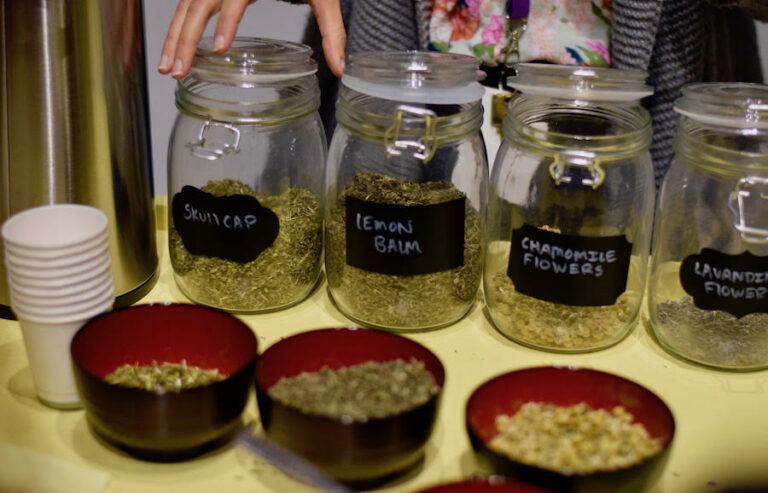
As part of the Manetti Shrem Museum of Art’s “Xicanx Futurity” exhibit, a rolling cart known as Botanica del Barrio can be found between 12 p.m. and 2 p.m. on the first Friday of February, March, April and May, nestled in a corner beside a wall of the artist’s work. On these days, the museum offers an interactive “Make Your Own Tea Blend” event with information about the effects of different types of herbal tea blends. On Feb. 1, two serpentine lines trailed from each side of the cart — one line of people waiting to try the tea and another line waiting to make their own blend.

The exhibit offered four different herbs, each with different calming and relaxing benefits which were presented on a flier and by museum employees. According to the flier, chamomile is “a mild sedative and good gastric anti-inflammatory” that soothes the nerves, and skullcap is a relaxing nervine that is helpful for “nerve tremors, stress, menstrual tension or cramps and nervous exhaustion.” Lemon balm is used for digestive problems, pain, anxiety and sleep problems, and lavender is used for relaxation and to promote restful sleep. In the blend served at the Feb. 1 event, they used an equal amount of chamomile, skullcap and lemon balm and half as much lavender, as lavender is considered to be very strong.

Museum staff were not expecting such a large turnout, so for the first couple of hours, they ended up setting out a bowl with the same blend that they were serving — instead of having each attendee make their own blend — to expedite the process. Toward the end of the event, more attendees made their own blends and were assisted by employees who explained the benefits of each herb and the artist’s intentions in creating the cart.

The Director of museum education Jessica Wimbley described the process of bringing the Botanica del Barrio inside the museum. Initially, to even consider having the cart inside the museum, the artist, curators, exhibition team and visitor services had a conversation to ensure that the materials on the cart wouldn’t damage the artwork and to gain a full understanding of the artists and curators intention.

“Felicia ‘Fe’ Montes is a Xicana/Indigena artist who works in Los Angeles, California,” Wimbley said. “She considers herself to be an ‘artivist,’ which is a combination of being both an artist and an activist […] there’s very much this social interactive component in which the goal of the work is to be able to share information with the community about different herbal remedies and medicines, especially those rooted in Mexican and indigenous medicine and tradition.”

For the “Xicanx Futurity” exhibition, the museum has been working with the Chicana/Chicano Studies department closely. Two of the guest curators are from this department: Carlos Jackson, an associate professor and chair, as well as Susy Zepeda an assistant professor. There has also been student engagement, with students from the department utilizing the Botanica del Barrio as well as being involved in other interactive parts of the exhibition.  

“Well, the museum is very proud to have this exhibition here,” Wimbley said. “This partnership with the Chicana/Chicano Studies department has been a wonderful partnership in pushing the research [of professors at Davis] and celebrating a history of artists who have been working who may not have gotten as much exposure in traditional museum contexts. And advocacy for artists within the community is something that we feel is important to support and highlight.”

Student attendees included second-year undeclared major Albert Jai, who is part of the Pal Program, a program that “pairs up undergraduate students for intercultural conversation experiences,” promoted the event. Jai generally drinks Chinese and Japanese green teas but doesn’t particularly have any preferences.

“I’ll drink coffee for the purpose of staying up,” Jai said. “I’ll drink tea for the purpose of enjoyment.”

Third-year biological sciences major Kacey Phonesavath has attended past events at the museum and enjoys getting the chance to take a look at new exhibits. She discovered the event on Facebook and decided to go, not only to check out “Xicanx Futurity” but also to drink tea, something she does daily.

“I usually like darker blends that are really bitter and strong,” Phonesavath said. “I had a really open mind and I thought, ‘it’d be something different — maybe a flavor that I hadn’t tasted’ […] I don’t think I’ve heard of skullcap.”

Jai also said that part of the reason he likes tea is because he is Asian, and he discussed the parallels he observed between Asian cultures and Latin American cultures at the event.

“In Latin America, as well as Asian countries, a lot of herbal medicine is used, in contrast to Western medicine,” Jai said. “And all I can say is, I think it works sometimes, but I don’t know how it works.”

Wimbley was happy with the turnout for all of the events through the “Xicanx Futurity” exhibition thus far and thinks that it will continue.

“I think it’s important to build a safe space in which students are seeing themselves reflected in the exhibition, in the artists, in the curators,” Wimbley said. “And I think we have a wonderful opportunity to provide that for students here in Davis […] I think the idea of us really being able to encourage, engage, celebrate and give a space for voice for the department, for the curators, for the artists and for the students is something that’s important to exist as a 21st century museum today.”

Written by: Anjini Venugopal — features@theaggie.org

Senate report: senators are yet to complete required sensitivity trainings

KDVS’ general manager asks Senate to fight for units located in Freeborn in light of planned demolition

ASUCD Vice President Shaniah Branson called the Jan. 31 Senate meeting to order at 6:10 p.m. in the Mee Room of the Memorial Union.

President Michael Gofman, Senator Alisha Hacker and Senator Mohammad Qayum were absent. Internal Affairs Commision Chair Jacob Ganz arrived late and Senator Simranjit Kaur left half-way through the meeting due to illness.

Senator Noah Pearl was elected as pro tempore for the meeting.

KDVS’ General Manager Jacob Engel gave a quarterly report, speaking about the 24-hour radio station’s recent achievements. He concluded his report by discussing the future of KDVS once it is no longer located in lower Freeborn Hall.

“I urge ya’ll to fight for the units based in Freeborn Hall,” Engel said.

KDVS, along with The California Aggie, Entertainment Council, Project Compost and Aggie TV, are located in lower Freeborn Hall and will have to relocate after the planned demolition of the building.

A quarterly report from Specialized Transportation Services and Tipsy Taxi followed. This year, ridership has doubled and Tipsy Taxi hopes to expand the amount of drivers that are available during peak hours.

Branson transitioned the meeting into unit and committee adoption. Each ASUCD unit is “adopted” by a senator. KDVS, the Coffee House and other units were given adopted senators.

The Senate then began a cultural humility training led by Rina Singh, the Ethnic and Cultural Affairs Commission chair. A poll by Singh revealed that none of the senators had completed the LGBT training, allyship training or CARE training, all of which are required under the ASUCD Bylaws.

After a short break, Senate reconvened. Kaur and Ganz as well as Senator Brandon Clemens and Singh were late returning.

Senate turned to discussion of old legislature. Senate Bill #29 was taken up by the table. The bill, which was originally seen on Oct. 11, 2018, would remove references in the Bylaws to the position of speaker of the assembly. The position was abolished by the Senate in the fall of 2018. The bill passed with no objections.

Senate Bill #30, which clarifies and simplifies the process of closed sessions, then passed without objections.

Finally, Senate Bill #33 was addressed. The bill introduced the student advocate position into the association’s bylaws. Ganz authored the bill and it was passed unanimously by the Internal Affairs Commission.

The position will provide aid for any UC Davis student “charged with University or campus violations, experiencing Financial Aid difficulties, disputing grades, and/or filing grievances against members of the campus community.”

Additionally, “the position will represent ASUCD in meetings with campus or university administration in regards to student rights, campus rules, and/or other areas of student conduct.” The student advisor will be an advocate for the entire UC Davis student body in regards to “student rights, university policies, laws, regulations, and procedures.”

Senators amended the bill to include a two-year term limit on the person holding the student advocate position. SB #32 passed with amendments without objections.

Public discussion and announcements were made. Ex-officio reports and elected officer reports were given.

The Senate meeting adjourned at 10:13 p.m.

Written by: Ally Russell — campus@theaggie.org

ASUCD endorsements: Consider the following

The Editorial Board endorses three candidates for ASUCD Senate, neither executive ticket

ASUCD Winter Elections begin on Tuesday, Feb. 19, with 14 Senate candidates running for six available seats and two executive tickets running for the president and vice president positions. The Editorial Board interviewed 11 of the 14 senatorial candidates as well as all four of the students running for executive roles to learn more about their platforms and future plans for the association. One Senate candidate declined our request for an endorsement interview, one did not schedule an endorsement interview and one other planned to drop out of the race. Many of the Senate candidates expressed interest in ASUCD’s mission, but we felt that the following three individuals offered concrete solutions to problems facing the student body. As in the past, the Editorial Board chose not to endorse graduating seniors because they won’t be able to fill the entirety of their terms, which will end in February of 2020.

While the Editorial Board preferred the policies and platforms of the Unite! executive ticket, the Board ultimately had concerns about both tickets and could not come to a consensus regarding an executive endorsement.

1. Sahiba Kaur — BASED Slate

Sahiba Kaur, a third-year transfer managerial economics major, is running on the platforms of student success and wellness, increased transfer student involvement and environmental justice. Kaur outlined plans to increase the number of tutors in the STEM fields and encourage minority students to pursue graduate degrees. She also discussed ideas for tackling housing discrimination, increasing campus parking availability and smoothing the transition to UC Davis for transfer students. Environmental concerns are also at the center of Kaur’s campaign, and she plans to implement an herbicide-free program on campus, much like one that is currently underway at UC Berkeley. As the former president of the Associated Students of Delta College, Kaur is well-prepared to draft actionable legislation and come to the table with a focus on collaboration and meaningful change.

2. Justin Weiner — Unite! Slate

Justin Weiner, a second-year neurobiology, physiology and behavior major and a trained EMT, approached his campaign with a focus on student health. As senator, Weiner would like to ensure that Tipsy Taxi drivers are first aid and CPR certified, develop a program to educate students about drug safety and provide more anonymous HIV testing in the LGBTQIA Resource Center on campus. The Editorial Board appreciated Weiner’s specific plans to address the lack of attention paid to student health on campus. If elected, Weiner would be the only student from the College of Biological Sciences at the Senate table.

3. Victoria Choi — Unite! Slate

Second-year English major Victoria Choi is focused on making ASUCD more accessible for students outside of the association. If elected, Choi plans to increase ASUCD’s outreach to registered student organizations, create more awards for students with financial need and develop a philanthropy fund for ASUCD on UC Davis’ give page so that units can receive additional funding. Choi impressed the Editorial Board with her enthusiasm for making the Senate a more collaborative environment. She also highlighted the importance of prioritizing the 22 units that ASUCD oversees, as they are a crucial part of everyday student life.

Written by: The Editorial Board

Senate report: senators are yet to complete required sensitivity trainings

KDVS’ general manager asks Senate to fight for units located in Freeborn in light of planned demolition

ASUCD Vice President Shaniah Branson called the Jan. 31 Senate meeting to order at 6:10 p.m. in the Mee Room of the Memorial Union.

President Michael Gofman, Senator Alisha Hacker and Senator Mohammad Qayum were absent. Internal Affairs Commision Chair Jacob Ganz arrived late and Senator Simranjit Kaur left half-way through the meeting due to illness.

Senator Noah Pearl was elected as pro tempore for the meeting.

KDVS’ General Manager Jacob Engel gave a quarterly report, speaking about the 24-hour radio station’s recent achievements. He concluded his report by discussing the future of KDVS once it is no longer located in lower Freeborn Hall.

“I urge ya’ll to fight for the units based in Freeborn Hall,” Engel said.

KDVS, along with The California Aggie, Entertainment Council, Project Compost and Aggie TV, are located in lower Freeborn Hall and will have to relocate after the planned demolition of the building.

A quarterly report from Specialized Transportation Services and Tipsy Taxi followed. This year, ridership has doubled and Tipsy Taxi hopes to expand the amount of drivers that are available during peak hours.

Branson transitioned the meeting into unit and committee adoption. Each ASUCD unit is “adopted” by a senator. KDVS, the Coffee House and other units were given adopted senators.

The Senate then began a cultural humility training led by Rina Singh, the Ethnic and Cultural Affairs Commission chair. A poll by Singh revealed that none of the senators had completed the LGBT training, allyship training or CARE training, all of which are required under the ASUCD Bylaws.

After a short break, Senate reconvened. Kaur and Ganz as well as Senator Brandon Clemens and Singh were late returning.

Senate turned to discussion of old legislature. Senate Bill #29 was taken up by the table. The bill, which was originally seen on Oct. 11, 2018, would remove references in the Bylaws to the position of speaker of the assembly. The position was abolished by the Senate in the fall of 2018. The bill passed with no objections.

Senate Bill #30, which clarifies and simplifies the process of closed sessions, then passed without objections.

Finally, Senate Bill #33 was addressed. The bill introduced the student advocate position into the association’s bylaws. Ganz authored the bill and it was passed unanimously by the Internal Affairs Commission.

The position will provide aid for any UC Davis student “charged with University or campus violations, experiencing Financial Aid difficulties, disputing grades, and/or filing grievances against members of the campus community.”

Additionally, “the position will represent ASUCD in meetings with campus or university administration in regards to student rights, campus rules, and/or other areas of student conduct.” The student advisor will be an advocate for the entire UC Davis student body in regards to “student rights, university policies, laws, regulations, and procedures.”

Senators amended the bill to include a two-year term limit on the person holding the student advocate position. SB #32 passed with amendments without objections.

Public discussion and announcements were made. Ex-officio reports and elected officer reports were given.

The Senate meeting adjourned at 10:13 p.m.

Written by: ally russell — campus@theaggie.org

Trivia Night

Davis students test their smarts at various trivia nights

When people picture the bar scene at Davis, they likely think of memories of G Street Wunderbar’s “funk night” or Froggy’s karaoke. While many still attend the famous Tuesday trivia night at Sophia’s Thai Bar and Kitchen, this bar activity seems to be in a different category of socializing than others. The appeal of trivia night is its perfect synthesis of energetic and relaxed atmosphere, as users turn off their phones, sit with their selected teams and try to recall all of the necessary knowledge that they have accumulated over the years.

Different to other bar games, trivia night requires strict teams of smaller numbers. Attendees must choose the group they want to play with in a friendly and collaborative manner. Because of this, trivia is often more intimate than the large social scene of other bars, as players sit in silence and anticipation for the pubmaster’s question instead of talking loudly or dancing to music. While attendees might find friends on other teams, those friends will be their friendly competition that they can talk to during breaks in the game, but for the most part will stay with their team.

Popular trivia nights in Davis are offered almost every night of the week: Monday’s from 7 to 9 p.m. at de Vere’s Irish Pub, Tuesday’s from 9:30 to 11:30 p.m. at Sophia’s Thai Bar and Kitchen, Wednesday’s from 8 to 10 p.m. at University of Beer, Thursday’s from 9 to 11 p.m. at Woodstocks and Sunday’s from 6 to 8 p.m. at Davis’ new brewery, Three Mile Brewing.

While trivia night at Sophia’s and other bars are for ages 21 and up, Woodstocks and de Veres offer trivia for all ages. Each location has specific rules for the game regarding team numbers, drink minimums, difficulty and prizes. Usually, the teams range between five and eight members with prizes that include gift cards to use at the location or a bottle of wine. Although different locations range in enforcement of their phone policy, most attendants respect the rules and don’t think twice about putting their phone away for two hours of questions, contributing to the comfortable and intimate atmosphere of the game.

Sophia’s Thai Restaurant was the first bar in Davis to begin the beloved trivia night tradition in 2005 and almost always reaches its limit of forty teams during the summer and spring, according to Davis Wiki’s page on trivia nights. With a range of undergraduates, graduate students and other professionals in Davis, trivia night offers a chance for teams to share their diversity of knowledge and information amassed over the years.

Jacob Ganz, a fourth-year history and political science double major, and regular first place winner at Sofia’s trivia night expressed his love for trivia night as one rooted in friendship and the cult following of trivia night’s pubmaster Kevin.

“My favorite thing about trivia night is the camaraderie,” Ganz said. “It is so much fun to get together with your friends for a couple of hours during a busy week and not think about school. I love that the trivia is challenging and that Kevin is so much fun with all of [his] inside jokes and quirks. From the team names to the bartenders knowing more of the answers than the teams playing, I love Sofia’s trivia. The most satisfying feeling is winning trivia and taking a photo with Kevin which is truly the highest level of achievement possible in Davis.”

For many trivia night goers, planning teams includes choosing different fields of knowledge that individual people have in order to make a well-balanced team. As friends go through and decide which of their teammates have expertise in what subject, team members grow in intellectual validation and confidence as they realize that the random knowledge they might know is actually applicable and appreciated.

For fourth-year sociology major Nicole Smith, seeing the range in knowledge of her team is her favorite part.

“I love that trivia night brings people together of different skill sets and of different backgrounds,” Smith said. “The best rounded teams perform the best, and I love that it encourages a well-rounded friend group.”

For Smith and many others, the variety of knowledge present on all trivia teams is not a result of pulling together random people to create a versatile team, but the opposite. It’s a testament to how everyone’s interests and passions can come together for two hours and pass a clipboard around to their friends that might know more about literature, science, or pop culture than others.

Camron Clifton, a fourth-year food science major, explained where his knowledge for trivia often comes from, and the most rewarding part of knowing an answer.

“My favorite part of trivia is getting a group of my friends out there and trying to remember as much random stuff we’ve learned in our 20 years of going to school or random pop culture knowledge,” Clifton said. “Sometimes you forget something and it makes you irrationally angry, other times you remember some random fact from your random GE you took freshman year. Trivia is a great night at the bars because it’s all about getting a small group of friends together, having a couple drinks and testing your wits. Especially when you know other teams and can talk trash. Overall it’s very wholesome and super laid back.”

For most bargoers, trivia night is a tradition that cannot be replaced by any other bar activity because of its unique ability to bring friends together and give them an activity to test their intellect, put their phones away and flaunt their knowledge all while having fun.

Written by: Rosie Schwarz — arts@theaggie.org

Students react to Coachella’s 2019 Lineup

0

This year’s Coachella lineup disappoints some students, though individuals are still excited for the overall experience

Every year, people frantically attempt to purchase tickets in preparation for one of the biggest music festivals in the country, Coachella. Tickets go on sale for a few short hours in June and again in January before they completely sell out. Groups of friends mob to Airbnb hoping to book an apartment in Indio that will fit all of their attending friends. People endlessly browse shops in order to find the most Instagram worthy Coachella-ready outfit. Despite all of the stress, planning and fees that go into attending Coachella, attendees are always extremely excited to flock to the dessert and enjoy the festival every year.

The lineup for Coachella doesn’t come out until after all of the general admission tickets have already been sold out, so festival goers blindly buy their tickets every year.

This 2019, headliners for Coachella include Childish Gambino, Tame Impala and Ariana Grande, which to some feels somewhat disappointing after last year’s headliners (The Weeknd, Beyonce and Eminem). Beyond the headliners, the general 2019 lineup appears to be much less stacked with large and notable performers than in previous years.

Aeron Yim, a fourth-year managerial economics major, debated attending Coachella for the first time, noting the possible pros and cons of this year’s lineup.

“Now that I know the set list, I have to admit that the headliners are a little disappointing,” Yim said. “Ariana Grande is great but I wouldn’t necessarily go out of my way to see her. There are a few smaller artists attending who are the ones that I’m more excited about. At the end of the day, I feel like it’s still worth it to go and it would still be really fun.”

Yim noted that for attendees returning to Coachella this year, it may be a less exciting experience than for those attending for the first time. However, while the lineup for this coming year may be somewhat disappointing in comparison to previous years, the actual experience of attending Coachella is what many people look forward to.

“If I went last year, I might be less inclined to go right now,” Yim said. “But sometimes it’s more fun to be in the crowd for the smaller artists just because there’s less hype for them. All in all, Coachella would still be great for the Instagram and the experience itself would be really fun to have with friends. Since it’s something that I haven’t done before, I think it would be a really cool bucket list experience to have. I’ve always had a good time at music festivals, and I’ve always taken away fun memories with my friends at those events. Despite the lineup, music festivals are always going to be fun.”

Individuals returning to Coachella this year noted that there are both pros and cons to this year’s more relaxed lineup. Wesley Yu, a UC Davis alumnus, plans on attending Coachella for the second time, and shares his excitement for this year’s different Coachella experience.

“I’m excited to keep an eye out for the food and the art installations that are going to be there,” Yu said. “Last year the lineup was really good, but it meant that we were always rushing around to find the stage for the next artist. This year, because there are less artists that I actually want to see, I have more time to walk around and just take my time in experiencing the festival. I think last year was both good and bad in that I couldn’t really get the full Coachella experience with the additional art installations. This year, I can do all of that while still attending the performances that I want to see.”

Yu emphasized that while the music at Coachella is a huge component to the festival, a large part of the experience is the ability to take advantage of everything that Coachella has to offer, from its food stalls to the various art installations to simply relaxing and catching up with friends.

“You can’t have Coachella without the music, and Coachella without all of the art installations would be pretty bland,” Yu said. “It wouldn’t be Coachella without one or the other. Both the music and the art leads to the overall experience that makes Coachella so iconic. Either way, I’m excited for this year’s festival.”

Written by: Alyssa Hada – features@theaggie.org