57 F
Davis

Davis, California

Monday, December 22, 2025
Home Blog Page 52

Never cheer alone

Exploring the importance of sports in community building 


By VIOLET ZANZOT— vmzanzot@ucdavis.edu


The Philadelphia Eagles — my team — are the 2025 Super Bowl champions. Of course, when I say “my team” I mean that it is their wins I celebrate and their losses I mourn. I share this team with millions of other people, just like I share the Boston Red Sox, the Auburn Tigers and the UC Davis Aggies.

Saying a team is mine feels synonymous with naming a place, in my case Alabama, as my home. It is mine, but I share it with millions of other people. These things do not belong to me alone, but I ascribe them to the communities they embody. They are mine because I have memories associated with them and because in some way, they have shaped me into the person I am today. 

To love a team is to be part of a collective, to care about something bigger than yourself and to know that, even though everyone may be there for a different reason, you all share the purpose of participating in and supporting the community itself. 

It’s easy to not understand sports — not just the rules, but the passions behind the fans. From outside the sports world, it may be difficult to grasp why people dedicate Sundays to the couch, glued to the TV for 18 weeks (and also for playoffs), or why people buy $150 jerseys or fly across the country to see the team they watched as a kid play. As someone from the inside, it just makes sense. 

The impact a team can make on an individual and a community expands beyond the final whistle of a game. Lincoln Financial Field, the Eagles’ stadium (along with the team itself) has dramatically impacted Philadelphia’s economy. Retail vacancy in Philadelphia now sits at 2%, and the increase in foot traffic around game day by both locals and tourists boosts revenues of surrounding businesses — the expansion only continues. 

Teams generate even more sales related to game tickets, concessions, merchandise, sponsorships and advertising, effectively bringing people in to support a town. Outside of fiscal impact, they go further with outreach. Teams support charitable endeavors: Look to the Eagles’ Autism Foundation or the Eagles’ Charitable Foundation.

Beyond that, teams increase social capital, a measure of the quality of life. Sports build interpersonal relationships, social networks, civic engagement, trust and cooperative norms.

Sports, of course, can mean a lot of different things, whether one is referencing pee wee soccer, Major League Baseball, women’s rugby, the National Hockey League or anything in between tag and synchronized swimming. 

The type of sport and level of play have their own impacts and implications, but all sports can build community — it’s just a matter of the impact size and involvement between those on the “field” and those cheering on the sidelines. 

Being a fan makes an individual part of a community. Whether you’re in Argentina, Australia or America, you can cheer for the Eagles — and you will have people cheering with you. You may have people cheering against you, too, but those people are wrong, so don’t listen to them (just kidding). Regardless of who you cheer for, the point is that the simple act of cheering for someone gives you a place to belong. 

Sports build more than an economy and do more work than what you see on magazine covers — they give people something to connect with as they pass each other on the streets (for instance, exchanging a “Go birds!”). Being a supporter of a team, a fan, gives you something to cheer for or cry about, something to drink, eat and scream about; And, most importantly, it gives you people to do those things with. 


Written by: Violet Zanzot— vmzanzot@ucdavis.edu


Disclaimer: The views and opinions expressed by individual columnists belong to the columnists alone and do not necessarily indicate the views and opinions held by The California Aggie.


 

Recognizing and celebrating Black History Month is as important as ever, despite the erasure of many cultural observances

Nobody is safe from Trump’s war on “woke”


BY THE EDITORIAL BOARD


Black History Month has long been an opportunity to celebrate the accomplishments and contributions of the Black community. This recognition is an integral part of social progress and the mending of long-standing divisive social conditions. However, President Donald Trump’s dissolution of the Department of Diversity, Equity, and Inclusion (DEI) makes this February alarmingly different from previous years.

The disestablishment of the DEI was done alongside a broader set of executive actions that sought to censor and disband diversity initiatives. One of these initiatives was Justice 40, which aimed to improve health conditions in polluted neighborhoods, specifically neighborhoods with large communities of people of color. Trump even went so far as to blame diversity initiatives for the tragic Potomac River plane crash that claimed the lives of 67 people on Jan. 29.

 Trump’s war on “woke” didn’t end there — shortly after these executive actions, he threatened to withhold federal funding from schools refusing to end their DEI programs and gave schools only two weeks to do so.

Many corporations have also followed suit and ended their diversity and inclusion programs, many of which were installed in 2020 following the murder of George Floyd. Some of these corporations that repealed their DEI programs include Walmart, Target, Meta and Amazon.

The ease with which many corporations entirely eliminated their DEI programs is a testament to the fact that they will always be profit-seeking conglomerates. Their commitment to social justice was performative, and now employees and customers alike must suffer the consequences.

The Department of Defense (DoD) sent out a press release on Jan. 31 titled “Identity Months Dead at DoD,” outlining their refusal to celebrate any kind of cultural awareness month. The cultural awareness months no longer being celebrated include, but are not limited to: Black History Month, Women’s History Month, National Arab American Heritage Month, Asian American and Pacific Islander Heritage Month, National Hispanic Heritage Month and Pride Month.

The American Civil Liberties Union discussed the Trump Administration’s goals, describing them as “the eradication of all programs designed to address profound and persistent inequalities in American life — with the effect of further entrenching, and indeed worsening, systemic inequalities in access to education, health care, and economic opportunity.”

To some, the ending of DEI may seem inconsequential, as though DEI was a governmental department exorbitantly wasting taxpayer dollars. This mindset is extremely dangerous, and it is important to recognize that Jim Crow laws ended only 61 years ago. Many people alive today have experienced a world that subjugated people of color to a lesser than existence, and even today, the remnants of systemic oppression persist.

Now more than ever, it’s critical to recognize the ways in which a system that wasn’t designed for equality is no longer serving us. Although advocacy may seem futile in the Trump era, complacency is violence.

The Editorial Board encourages you to support Black-owned businesses and inform yourself about Black History and Black Futures Month this February. You can find more information online about which companies are still maintaining and bolstering their DEI programs in order to be a more ethical consumer.


The Editorial Board recognizes the stark underrepresentation of Black Americans in newsrooms. While we offer opinions in this editorial surrounding Black History Month, we recognize the ways in which privilege may cause our perspectives to fall short.


Written by: The Editorial Board


Lessons from the dance studio

Thank you to my dance teachers 


By MOLLY THOMPSON – mmtthompson@ucdavis.edu 


It’s no secret that our childhood experiences shape who we become as adults. The way we were raised, where we grew up, the friends we had, our elementary education and so many other factors cumulate to create who we are now. Perhaps one of the most influential elements of this equation is the extracurricular activities we were most heavily involved in. 

Especially in middle school and high school, it’s hard not to equate personal identity with after-school activities (at least to a certain extent). You’re a football player, a theater kid, a tennis star, a horse girl, a mock trial nerd, a volleyball athlete, a roller skater or a dancer. That was me: I’m the dancer. 

My mom put me in ballet classes as soon as she possibly could — which ended up being when I was three. So, as long as I’ve known myself, I’ve understood myself to be a dancer. It’s safe to say that dance had a massive influence on who I grew up to be. I studied ballet the most, but I also practiced jazz, contemporary, modern, Latin and hip-hop. By my fourth year of high school, I was in the studio for 20 to 25 hours a week. 

We dedicate so much time and energy to organized sports, so it’s only natural that they have a heavy hand in crafting our characters. 

Perhaps the greatest value instilled in me from my time at my home studio (shoutout to Dancenter in Santa Cruz) is the value of true commitment, especially to a team. In a piece of choreography, each dancer is vital to the integrity of the performance; commitment is crucial because we all rely on each other. It’s impossible to move forward or productively work on choreography if not everyone is present, so it’s heavily stressed in the dance world that you show up to rehearsal. Always. 

This notion of “showing up” is true for a majority of team sports, and it’s also true in our society at large. Commitment and reliability are important in the workplace, in friendships and relationships, in hobbies and in higher education. Those skills pay off beyond the studio, field or court. That instilled sense of responsibility to a group has made me a very dependable person. I can thank my dance teachers for that. 

With any demanding extracurricular, you need elite time management skills. On any given Wednesday, I was at school from 8 a.m. to 2 p.m. (or something like that). Then, I did a little Advanced Placement (AP) Calculus homework at home before going to the dance studio at 3:45 p.m., remaining in dance classes until 9 p.m.; Then, I’d drive myself home and make a quesadilla or a bowl of pasta (my parents had eaten like three hours earlier), and finally I’d finish up my AP Government assignments, shower and fall into bed. On top of other extracurriculars like mock trial and working on the weekends, I genuinely can’t fathom how I stuck to that schedule daily. But this schedule gave me some serious time management skills, and most people who were involved in sports and any number of other activities can say the same. Balancing all of those commitments requires meticulous planning and efficiency, which is still how I operate (okay maybe not always, but at least I know that I can). Collegiate schedules can be similarly demanding — those skills have to come from somewhere. 

Growing up in dance studios has also manufactured the way I respond to critiques. As in any sport or extracurricular activity, dance involves a lot of constructive criticism and mentoring. To be successful, you have to learn to use the corrections you get from teachers to your advantage and to not take them personally. It can be so challenging to keep criticism from getting to your head, but once I learned to take it as an opportunity to grow, I started to improve significantly. Instructors aren’t going to give you constructive feedback if they don’t think you’re ready to take it — if they don’t think that you can handle more difficult elements. Through dance, I learned to take corrections as testaments to my abilities: they meant I was ready to grow. 

Physically, dance has given me a more thorough understanding of my anatomy and how my body works than any health class I’ve ever taken. I have a relatively solid grasp on human mechanics (at least for someone who has never formally studied it) and, while I’d never claim to be an expert, it comes in handy sometimes. 

Dance also heavily influenced how I exercise. For instance, I know not to static stretch before a workout because holding a stretch for more than a few seconds can temporarily deactivate the muscle, causing other muscles to overcompensate at the risk of injury — so I save those for after I finish. I know that strengthening the muscles around the shin can help prevent shin splints, and you can do that by flexing and mobilizing the foot (a former Rockette once told me to spell out the alphabet with my toes to work those muscles). Dance, with its heavy emphasis on being “even” and always exercising both sides of the body, has also instilled in me a need to have a well-rounded workout — I’m incapable of doing the “splits” that avid gym-goers do, where they focus on one muscle group per day: I just do a little bit of everything. 

Long story short, we are products of our extracurricular activities. We dedicate ourselves to them and we get a lot in return. We gain teamwork skills, independence, reliability, time management skills, the ability to fail and bounce back, the ability to apply feedback, compromise, attention to detail and so much more (I could write an entire sequel to this article). Each individual sport is going to yield slightly different values, but we all have a lot to thank our coaches for — they truly made us who we are. 


Written by: Molly Thompson — mmtthompson@ucdavis.edu 


Disclaimer: The views and opinions expressed by individual columnists belong to the columnists alone and do not necessarily indicate the views and opinions held by The California Aggie 

And just like that… ‘Sex and the City’ is back

UC Davis students discuss the show’s resurgence and reintroduction of a new generation to female friendships, aging and sex (obviously)


By AALIYAH ESPAÑOL-RIVAS — arts@theaggie.org 


“Sex and the City” follows the life of Carrie Bradshaw, a 30-something-year-old sex columnist living in New York City. Amidst spilling her sexual relationships every week, trying the hottest restaurants and clubs in NYC and attempting to find a place in the ever-changing dating landscape, the show goes beyond just showing the glamorized NYC lifestyle. Accompanied by her three friends, Charlotte, Miranda and Samantha, each episode navigates Carrie’s life, intertwined with subplots of her friends as they all try to find what they want most in life: love. 

Initially airing in 1998, the show was based on the real-life newspaper column of the same name, written by Candace Bushnell. Produced by HBO, the show went on to have six seasons, two movies, a prequel series and now a revival series that began airing in 2021. Covering topics such as smoking, sexually transmitted diseases, marriage and impotence, the show is a mosaic of everything womanhood. 

While the show originally concluded in 2004, both its revival series and addition to Netflix have repopularized the show for the new generation. As it regained its footing in pop culture, the question to ask was, “Why?” After all, its title alone may drive people away. 

Although its title may trick you into thinking it’s all about sex — it delves deeper into each woman’s motivations behind sex, their deep desire for love and the fear of being vulnerable. Each character has a unique and different personality that shapes their relationships and friendships: Carrie is obnoxiously self-absorbed, Miranda, the most judgmental, Charlotte, more conservative, and Samantha, unapologetically promiscuous. Though their personalities may seem contradictory, these dissimilarities make the show better, as every viewer can resonate with a bit of each woman. 

Isabel Resto, a second-year animal science major, watched the show for the first time last year and found it made her reflect on her own relationships. 

“The show made me realize that I should not be putting up with stuff like that, and at the end of the day, a guy is just a guy, and sex is just sex, and one day you’ll find someone you love, and they will rarely be perfect,” Resto said. “I love how much it highlighted how heavily the girls leaned on each other, and it made me reflect on how much I lean on my friends but that it is okay because that’s what friends are for, and I am always here for them to lean on.”

Remali De Silva, a fourth-year English major, has watched the show five times and goes back to learn something new every time.

“At this point, I’ve watched the show all the way through more than five times, and I find that I learn something different about it each time,” De Silva said. “Mostly it’s about how different my opinions are from them, and how, even if I feel like I align with their beliefs, I’m not in the stage of my life where I want to engage with sex and dating in the way that they do.”

While some episodes have aged poorly in this day and age, the show’s boldness in covering taboo topics remains an incentive to watch. 

“This show definitely took a risk at the time it was created,” De Silva said. “Shows nowadays portray sex in more explicit ways, which was something this show never had to do even to make a strong impact. I think we rely too heavily on the shock factor of sex nowadays, and we should try to make shows more nuanced like ‘Sex and the City.’” 

Though it was released nearly three decades ago, “Sex and the City” remains an important piece of media for all women, having broken the “forbidden” world of sex in media through empowering strong female lead perspectives. 

“The early 2000s was the perfect time to start shaping the idea that sex doesn’t have to be a scandalous secret,” Resto said. “Even though sex is more normalized in the media now, the center and allure of this show is the emotional bonds between the women, not the sex.”

If either of these students’ experiences sound interesting, or maybe you just want to see why Big is moving to Paris (if you know, you know), you can watch “Sex and the City” on Netflix and HBO Max. 

Written by: Aaliyah Español-Rivas — arts@theaggie.org 

To delete or not delete?: Social media deactivation and news avoidance

0

UC Davis communication professor and students weigh in on staying politically informed 


By RACHEL GAUER — features@theaggie.org


Following the re-election of President Donald Trump, many have taken note of the president’s close relations with key players in various technology and social media companies.

Elon Musk, chairman of X, Mark Zuckerberg, chief executive officer (CEO) of Meta, the company that owns both Facebook and Instagram, and Jeff Bezos, founder of Amazon, were all seen front and center at the president’s inauguration ceremony on Jan. 20, suggesting an integrated relationship between tech CEOs and contemporary American politics.

With Meta’s recent decision to both cut their Diversity, Equity and Inclusion (DEI) programs and its fact-checking program, some have inferred that these platforms may have developed a stronger right-leaning political agenda due to their relations to the Republican president. In response, some who are in disagreement with the company’s actions have opted to delete or deactivate their accounts on Meta platforms.

Nestor Perez, a second-year Russian and Italian double major, made a choice to delete the Instagram application following the presidential inauguration, an event he said sparked a connection between the Meta platform and Zuckerberg’s involvement with the government.

“I feel like the new presidency was what pushed me to finally get rid of the social media that I have because it was appalling to see how these CEOs and people who run these platforms are worming their way into the government,” Perez said. “This is something that should not be a thing, they should be completely separate. The fact that it is getting like this is what finally made me say ‘no.’”

Magdalena Wojcieszak, a professor of communication at UC Davis, studies news and political information engagement through courses CMN 145 (Political Communication) and CMN 141(Media Effects: Theory & Research). Wojcieszak provided insight into the deletion of social media, commenting that though it may be beneficial to one’s mental health, it is important to strive to keep updated with the news.

“I feel that deleting your account is a very political statement that shows you are politically engaged,” Wojcieszak said. “It is actually likely to increase your well-being because you’d be exposed to less negativity, but you need to get into a habit of, say, having your homepage show the New York Times, The Washington Post, CNN, Fox or wherever you get your news. Otherwise, if you do see news on the platforms and then you delete it, it is possible that you then think you’re living in a blissful reality.”

Katherine Krinsky, a fourth-year English major, said she strives to find balance. She tries to stay away from social media due to its addictive nature and overexposure to what she sees as excessively negative content, while still ensuring that she is politically engaged.

“I realized that I wanted to prioritize being informed on what’s happening but on doses that I can control more,” Krinsky said.  “Rather than getting sucked into ‘doom scrolling’ on Instagram, I have gotten into the habit of listening to NPR news podcasts every morning and spending some time at the end of each day reviewing the headlines from the New York Times. I feel like I’ve been able to manage the energy that I give to my news intake instead of being overwhelmed by the intensity of the news I’d see on social media.”

Social media, particularly for Gen Z individuals, serves as a means of communication with others, education on current events and a way to keep up with trends. Without it, one may feel disconnected and less informed about the world, especially for those who primarily rely on social media for news coverage. Deleting it therefore may have both social and political consequences, as users may be generally less exposed to informative content.

However, Wojcieszak said that those who do rely on social media for news information may be exposing themselves to overly negative content.

“There is research that shows that news that is shared on social media platforms is way more negative than the news that is posted on the website,” Wojcieszak said. “Say, for instance, someone goes to the social media page of The Washington Post — the articles that they decide to share are way more negative in tone than what is actually available on the website.”

Wojcieszak explained that the content that tends to get the most traction on social media sites — shares, clicks and comments -– tend to be stories with a negative or disheartening edge. Due to this pattern, the sites have more incentive to continue to post similar content.

“My work shows once it is [posted] on the platform, what is then being shared and gets the most engagement is negative and [tends] to be things that attack the other side,” Wojcieszak said. “If you are one of the few people who get their news from social media, you are exposed to more negativity, conflict and polarization than you would be just by going to the home page.”
Though it can be discouraging to view content that tends to be overwhelmingly negative, Wojcieszak emphasized the importance of being politically engaged and viewing news content -– a trait that she has found to be in small numbers through her research on political news avoidance.

“People find news overly negative, overly conflictual, overly focused on drama, polarization and whatnot, and that is said to turn many people away from news,” Wojcieszak said. “But the reason the negativity in the news is the reason to not watch news applies to not many people — it applies to people who used to consume news or who want to consume news. In order to be negatively affected by negativity, you need to be actually engaging with news — that reason for news avoidance pertains to actual news users. Which brings me to the majority -– the majority of people just don’t care.”

Wojcieszak suggested to younger individuals to involve themselves in the political realm as much as possible, stressing the importance of connecting current events to our daily lives.

“I am worried that the younger generation is withdrawing from politics altogether,” Wojcieszak said. “I ask that you guys don’t do that — it’s so easy to not notice how much everything that is happening in Washington impacts you. It’s really easy to say, ‘It’s something over there, it has no relevance to my life’ — but [it] actually does.”


Written by: Rachel Gauer — features@theaggie.org


Is that product really as sustainable as it claims to be?

The looming rise of greenwashing and how to recognize it


By ELLIE NOH — eenoh@ucdavis.edu


Many individuals, especially in companies, recognize the detrimental impacts of climate change caused by human activities. While some organizations have corporate goals to improve sustainability in production and distribution, others might not truly be using environmentally friendly practices — or may be harming the environment through other means. This corporate facade of sustainability, which is used to mislead the public about a company’s true environmental impact, is known as “greenwashing.”

Because of consumerism, the impact of waste has grown more dire and the use of green advertising has not been effective in mitigating such practices. One such case is fast fashion, which has one of the worst environmental impacts to date. 10% of carbon dioxide emissions worldwide are due to the fast fashion industry, according to the Center for Biological Diversity. If fast fashion continues to rise, greenwashing slogans and messages platformed by certain companies may cause consumers to believe that they are contributing to sustainable fashion when they are not. 

To further this idea, in recent years, there has been a growing awareness for sustainability, with more individuals trying to implement environmentally conscious day-to-day actions — especially those popularized on social media. Environmental advertising is a tool that often gives companies an advantage since more people might be inclined to purchase products that seem to be eco-friendly. 

While some forms of greenwashing are more obvious than others, companies use many subtle tactics to make their products seem more environmentally friendly. This includes using ambiguous words such as “eco-friendly” — which is a term subject to various interpretations — thereby influencing consumers to believe they are contributing to a greener future. Another common method is to utilize images that contain aspects of nature, like plants or animals, in order to give the impression that the overall theme of the brand is focused on conserving nature. 

However, while it is important to be critical of advertising messages, it is also important to note that, while some companies may be using these greenwashing strategies to increase consumer purchases, it doesn’t mean that other companies use similar ideas to reliably market their products. Thus, there exists an individual need on the side of the consumers to do their own research and buy products that are actually sustainable. Companies regularly release sustainability reports which people can freely peruse to analyze the environmental impacts and identify a company’s true goals.

Additionally, some organizations aim to help with this ongoing issue of greenwashing. For example, the Federal Trade Commission’s Green Guides are established sources that provide assistance with marketing truthfully, encouraging companies to ensure that their products are as sustainable as they sound.

As the fight to decrease the human impact on climate change continues onward, it is essential to have these truthful measures to help implement environmental change. Given that these changes can take time, it is fundamental that we do our own research and recognize which companies are being truthful and which are not. While many organizations are working toward clear-cut, reliable marketing, existing greenwashing tactics and the widespread nature of consumerism necessitate that consumers think twice before purchasing a potentially “green” item — it may not truly be as sustainable as it seems.


Written by: Ellie Noh — eenoh@ucdavis.edu


Disclaimer: The views and opinions expressed by individual columnists belong to the columnists alone and do not necessarily indicate the views and opinions held by The California Aggie.

 

Neurodivergent students reflect on their experiences at UC Davis

0

Students open up about their social and academic backgrounds as they navigate college 


By AMBER WARNKE — features@theaggie.org

College can be challenging for many students, with balancing social life, academics and work experience proving difficult across majors. Neurodivergent students however, may face unique challenges as they encounter a system that was designed around a different way of processing. 

Neurodivergence refers to people who process information in an “atypical” way, including disabilities such as dyslexia, dyspraxia, Attention-Deficit Hyperactivity Disorder (ADHD) and autism, according to Northwestern Medicine. An estimated 10 to 30% of students in higher education are neurodivergent, which can lead to struggles with sensory processing, time management, attention and social differences.

A source, who wished to remain anonymous, said that being autistic has led to them experiencing the social side of college differently than some of their peers. 

“I think it’s definitely made it more challenging to make friends, because I get very stressed out sometimes, going to social events,” they said. “I feel like there’s a lot of unwritten rules about things that you just kind of have to figure out.” 

Social rules can be difficult to navigate, especially when contemporary culture sometimes emphasizes politeness over genuineness, such as when people say they ‘should meet up for coffee’ when they run into one another, only to never set up a time. 

This is something Erin Burnett, a third-year neurobiology, physiology and behavior major, relates to having a difficult time navigating. 

“Social niceties just confuse me and I kind of can act on them the wrong way and it can be misinterpreted,” Burnett said. 

Burnett, who has ADHD, autism and Obsessive Compulsive Disorder (OCD) tendencies, is the event coordinator for the Aggie Neurodiversity Community. Being a part of this community is something that has helped her navigate the often confusing social aspect of college, and has allowed her to meet many other students who can celebrate being their true selves. 

Being a member of the Aggie Neurodiversity Community has also helped them navigate collegiate social life.

“It’s just really reassuring to see people who also are dealing with similar challenges and see that they are going at their own pace, and they’re still being successful and doing what they want to do in life,” they said. 

A second-year English major, who wished to remain anonymous, has ADHD, autism, antisocial personality disorder and Post-Traumatic Stress Disorder (PTSD). The student spoke about his experience with people who might not initially realize that he is neurodivergent. 

“If people don’t even know you’re autistic, they can still tell there’s something weird about you,” the student said. “If someone doesn’t fit with how [others] think they should be, they’re going to be weird about it.” 

This can be especially challenging in college, where snap judgments can often be made in social interactions, which are considered an integral part of the college experience. The student shared how students can create a more welcoming environment not only for neurodivergent students, but for everyone. 

“Everyone’s a goddamn person and everyone’s fucking weird,” the student said. “You don’t have to know what their disability or what their shit is, what’s going on. Assuming everyone is trying their best is something that helps me. Like, I’ve got no empathy, but I have a lot of compassion.”

In addition to socializing, academics can also be challenging for neurodivergent students in a system designed primarily for neurotypical lecture-format learning styles, with many accommodations being difficult to access. 

Burnett has especially been impacted by the sensory difficulties tied to autism. 

“There was one final, I remember crying and having to say, ‘I need a second,’ because the lights buzzed,” Burnett said. “I got to experience just how difficult it is to go without accommodations. And then I was fortunate enough to receive them and see how much better it could be. To have captions during a lecture, or be able to take an exam after having cried during that final to be able to not have to cry during exams because of sensory issues because I [now] take them at the accommodating exam center.”

The anonymous student’s multiple disabilities also pose unique challenges as he navigates college academics.

 “ADHD makes it hard for me to focus, which is kind of a given,” the student said. “But because of the mixing with the PTSD, I have a very high threshold for the panic that needs to happen to get things done.” 

The anonymous student also commented that the main thing that helps with this is proper medication, which can be difficult to secure as UCSHIP does not cover stimulants. This has made it especially hard for some students to access medication, as many stimulants have been impacted by continual shortages since 2022

Part of the first anonymous academic journey, meanwhile, has been gaining a greater acceptance of their college trajectory.  

“Some stuff is just going to take a while, or it’s going to take longer for me to do,” they said. “I’m going to have my own path and go at my own pace.”

The anonymous student suggested ways the university could better support these students, who may require more self-paced academics, rather than a standardized academic trajectory. 

“If you want to facilitate learning, you have to facilitate growth, not just constant [focus] on deadlines,” the student said. “Whether or not the school system supports you is not a measure of your worth, I promise.”

The anonymous student went on to suggest that if all professors gave partial credit for late work, recorded their lectures and allowed test retakes, not only would neurodivergent students potentially be more supported academically, but neurotypical students would as well. 

Professors building more flexibility into their courses would be especially helpful because neurodivergent students may require accommodations in different areas. While one student may need assistance with the socializing required for group work, for instance, another may have executive functioning challenges, and benefit most from extended deadlines. Neurodivergent students are not a monolith, as these students have shared, and two students with the same disability can experience vastly different challenges.

“If you’ve met one neurodivergent person, you’ve met one neurodivergent person,” Burnett said.  

However neurodivergent students opt to cope with their disability, and whether it’s through seeking community with students who can relate to their challenges, pursuing academic accommodations or practicing self acceptance — their perspectives and experiences are integral to the diversity of the Aggie community. Neurodivergent students have always been a part of the UC Davis community, and they always will be. 

Written by: Amber Warnke — features@theaggie.org

Editor’s Note: A source’s name has been made anonymous for their privacy. In the original publication 

The Davis Street Market: a handmade Valentine’s Day show

The market hosted a craft-filled event in celebration of Cupid’s holiday 


By DEVANSHI AGNIHOTRI —- arts@theaggie.org


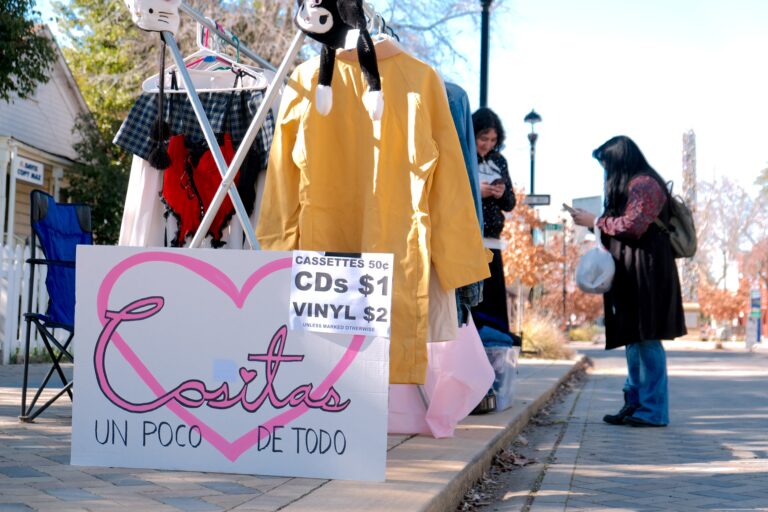
Precious crochet animals smile at you and beads sparkle as you make your way down 3rd and B Street. The Davis Street Market’s Valentine’s Day Show was held on Feb. 8, with the street filled with vendors selling an assortment of handmade products and some having Valentine’s Day-themed items.

The Davis Street Market has been a place for people to slow down their walk to the Davis Farmers Market or through downtown, and the vendors have worked to maintain the market as a community for everyone.

Rachel Jenson, the owner of Vivid Customz and a moderator of the Davis Street Market, has strings of beads up to nine-feet long on display. She has been a vendor for a little over three years and previously sold paintings but now sells waist beads, anklets, bracelets and stickers.

For Jenson and many vendors, the items they sell trace back to their own shopping experience and their desire to give shoppers an authentic as well as ethical product.

“I was selling because I wanted others to feel how my beads made me feel,” Jenson said. “I have always had a tough relationship with my body, then I started wearing waist beads and anklets, and I learned to love myself. Now, people tell me they feel that way too. I also try to keep a very inviting vibe at my booth. My beads are for anybody — anybody.”

Jenson emphasized the importance of creating a comfortable experience for customers, which, as the show is open to the public, adds to the event’s welcoming setting.

The Davis Street Market has grown in popularity through the years, with the number of vendors increasing to roughly 60 in the spring, according to Jenson.

“I have watched many students come and go through the years, and it’s awesome to see the community growing to now 50 to 60 vendors in the springtime,” Jenson said.

Another vendor, Trinh Giang, is owner of @whatstrinhmaking and creates clay magnets, pins and trinkets. Giang has been a vendor for about two years but started selling handmade items about two months ago.

Despite multiple vendors not selling specific Valentine’s Day-themed items, supportive energy and love was still in the air.

“It makes me extremely happy to know that my supporters can see my creations and think of specific people in their lives that would appreciate both the product itself and the sentiment of thinking of those you love,” Giang said.

The market has become such an integral part of the community, as well as a creative outlet. Giang mentioned not having many creative outlets growing up but said the Davis Street Market has brought out their creativity after they initially began their artwork.

“I decided to sell my craft, because I knew Davis was full of people similar to me who love to spend money on a silly, little trinket,” Giang said. “I was inspired to join the market because of how accessible it was. It is truly the perfect opportunity for beginning artists since the space is free and most vendors are in similar positions of sharing their craft amongst the busyness of their full-time jobs or education.”

If you missed the Valentine’s Day Show, the Davis Street Market is open for local art on Saturdays and vintage clothing on Sundays from 10 a.m. to 3 p.m. So, make sure to bring your friends and take in all the art the market has to offer.


Written by: Devanshi Agnihotriarts@theaggie.org 

How to support your friends during Ramadan

Thoughtful ways to make Ramadan more meaningful for everyone


By IQRA AHMAD — arts@theaggie.org


The month of Ramadan is approaching fast, as it begins next week, from Feb. 28 to Mar. 29. This month in the Islamic calendar marks a sacred time that is observed by Muslims around the world. It is a period of reflection, gratitude and community, in efforts to encourage better habits of patience and generosity.

If you have friends observing Ramadan, offering thoughtful gifts or simply taking the time to learn more about the significance of this month can show your support and make them feel truly appreciated. Here are ways that you can participate:


Learn about Ramadan: 

Acknowledging the values and practices of Ramadan can help you understand its importance. During this month, Muslims fast from dawn until sunset, refraining from food and drinks as an act of devotion and self-discipline. But Ramadan is much more than fasting — it is a time for spiritual reflection, increased prayer and acts of kindness. Giving to charity, known as Zakat, is an essential part of the month, reinforcing the values of generosity and compassion.

You can also ask your friends about their experiences and traditions. Ramadan is observed differently depending on one’s culture, region and upbringing. Many families have unique traditions, including special dishes prepared for Iftar (breaking of fast). Some might have childhood memories of staying up late for Suhoor (the pre-dawn meal) or gathering with loved ones for Taraweeh (night prayers at the mosque). Others might share how fasting has shaped their personal growth and strengthened their sense of gratitude. Asking questions can be a wonderful opportunity for you to engage with your friends and learn what Ramadan means to them.


Join in Iftar gatherings:

By joining your friends for Iftar, the meal that breaks the fast at sunset, you can be part of the camaraderie and spirit of Ramadan. Many families prepare special dishes for this occasion. Being part of an Iftar gathering, whether at home or in a local mosque, can be a heartwarming experience. If you’re invited, bringing a small contribution — dates, a traditional food or a dessert — can be a thoughtful indication that you care.


Gifts or crafts:

If you enjoy creative projects, making do-it-yourself (DIY) Ramadan crafts can be a fun experience to celebrate. A handmade Ramadan card with a message can brighten your friend’s day. You can also create decorative lanterns inspired by the traditional Fanous, which are commonly used during the month, or put together a countdown calendar to mark the days leading up to Eid al-Fitr.

Thoughtful gifts can make a world of difference in showing your appreciation for your friends observing Ramadan. A box of dates and snacks makes for a perfect and practical gift, while scented candles or essential oils can help create a relaxing atmosphere after long fasting hours. Books or journals also make wonderful presents, providing space for contemplation and reflection throughout the month.


Celebrate Eid with them:

As Ramadan comes to an end, it is followed by Eid al-Fitr, a joyous celebration marking the conclusion of fasting. If your friends invite you to join in their Eid festivities, it is an amazing opportunity to celebrate together. Bringing a small gift, sharing in traditional foods and simply being present in their happiness can make the day even more special for them. Your kindness and willingness to understand their experience will not go unnoticed, and your friendship will be all the stronger for it.


As Ramadan approaches, these thoughtful suggestions provide meaningful ways to support and celebrate with those observing it. By taking the time to understand and engage in Ramadan, you can make this month even more special for those around you.

Written by: Iqra Ahmad — arts@theaggie.org

Gunrock spotted sulking after fumbling a stallion

It’s rough out here


By ALLISON KELEHER — adkeleher@ucdavis.edu


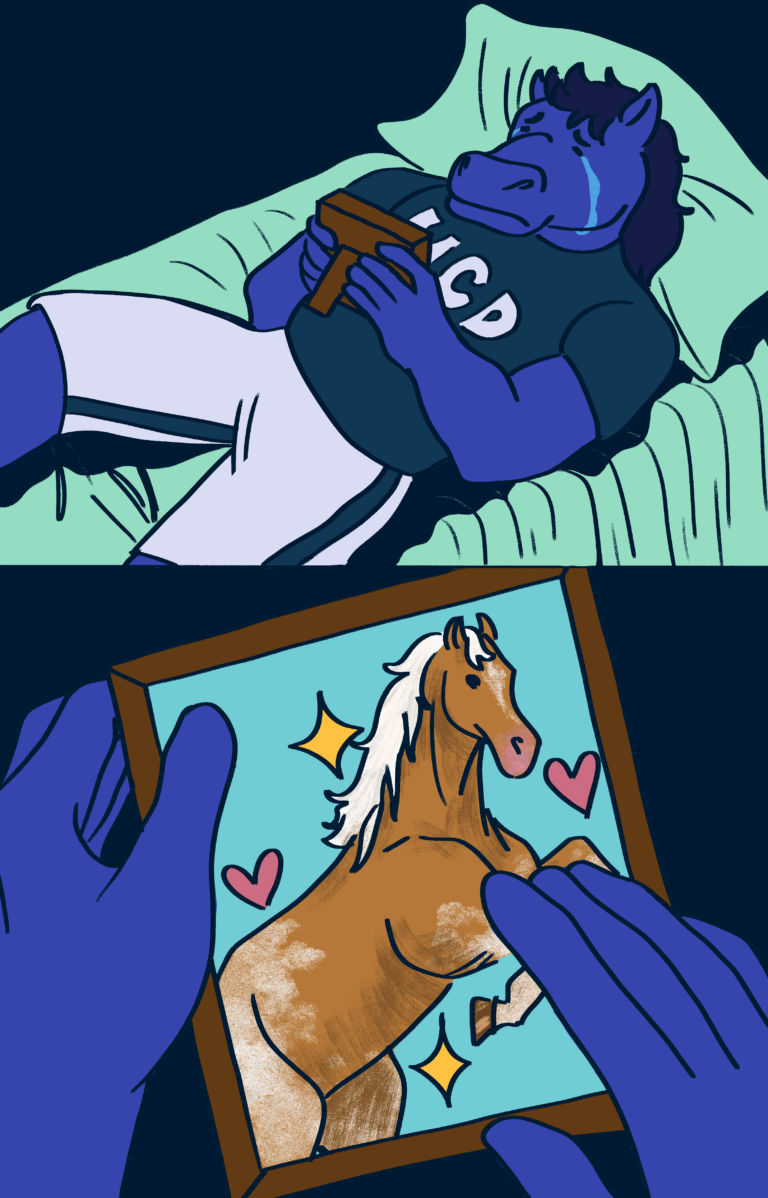
The other day, I was taking a stroll through the Memorial Union (MU) Quad when I looked to my right and saw Gunrock lying face down in the grass. His shoulders were shuddering and there appeared to be a pool of tears collecting beneath him. I can’t lie, we have all been there, so I paused to go comfort our beloved horse. 

“Gunrock, what’s wrong?” I asked as I rubbed his back to soothe the tears.

This resulted in a loud sigh and further sobbing from Gunrock. When he finally flipped over, I winced because his muzzle was all squished from lying face down on the ground. He sniffled a couple of times before I gave him a tissue to blow his nose. With a loud “HONK,” he blew his nose and then went to compost the tissue (since we are a sustainable campus). 

When Gunrock returned, he sat down on the grass and began to spill the tea. 

“She was amazing,” Gunrock said. “The most amazing horse I have ever met, and I was willing to give her anything she wanted. She is so kind — one time she stopped to give someone a ride to class when they missed the bus. And, she would never ask for anything in return.” 

“Aww Gunrock, that’s so sweet,” I said, to support his healing process. 

“But that’s not all, she had the most stunning body—” 

I cut off Gunrock right there, because I’m not trying to hear all that. This resulted in a loud groan from Gunrock, since he was annoyed with my prude nature. 

“All I’m saying is that her coat was beautiful,” Gunrock said. “She was a sleek brown stallion and the subject of all of my deepest desires.” 

“Well, what happened, Gunrock?” I asked. 

I regretted asking this question, because his eyes immediately welled up with tears and he slumped over onto my shoulder. I had to pat his back for a solid half an hour until he could compose himself. 

To spare you the details, Gunrock eventually told me that she dumped him after their Valentine’s Day date. I felt bad until he proudly stated that they went to Raising Cane’s, since it’s ‘red inside’ and ‘an official sponsor of UC Davis Athletics.’”  

Unfortunately, our mascot is not very romantic. His stallion showed up wearing her best horseshoes with the red bottoms, according to my sources. Her face reportedly appeared disgruntled throughout their entire date. Afterward, she sprinted away from Gunrock, tail billowing in the wind. Gunrock was left standing outside of Cane’s, with her rejected rose bouquet in his hands.

After all of that, Gunrock couldn’t muster anything besides laying on the ground and crying. Apparently, UC Davis Athletics is getting upset with him, because he keeps cancelling all of his appearances. However, Gunrock doesn’t care if they fire him, because he is entirely consumed by thoughts of his ex. 

“Now, I’m so blue,” Gunrock said through the tears. 

It was at this moment when I heard rustling in the distance, and a large horse came galloping toward our spot on the MU Quad. It was her. Gunrock was right — she is beautiful, and she is also several feet taller than him. 

He looked up with stars in his eyes and began to apologize. 

“I didn’t know where to take you for Valentine’s Day,” Gunrock said. “I’ve never had a lady friend before.” 

She seemed to like this response, because they immediately began to make out right in front of me. That’s when I left them alone. In the end, I don’t have much more to report other than the fact that our mascot has no game. 


Written by: Allison Keleher — adkeleher@ucdavis.edu


Disclaimer: (This article is humor and/or satire, and its content is purely fictional. The story and the names of “sources” are fictionalized.)

Segundo Infill Housing Project: Construction begins on Segundo’s newest residence hall

0

$100 million dorm project expected to be completed in 2027


By NOAH HARRIS — features@theaggie.org


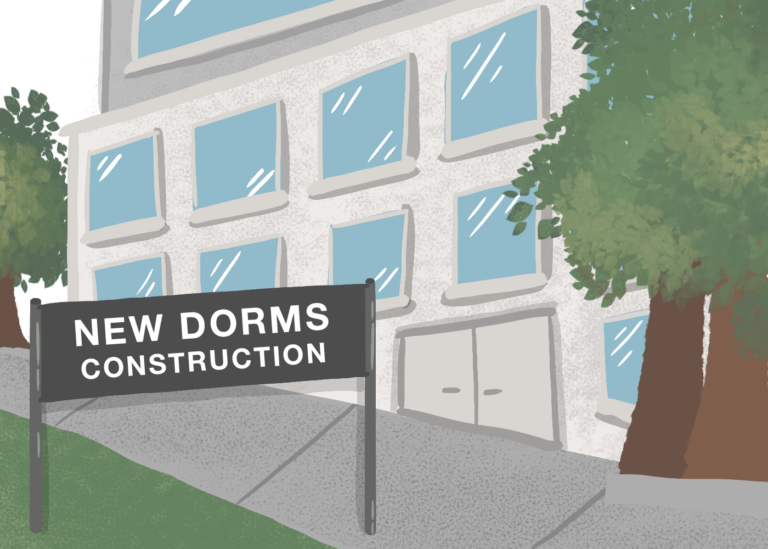
New construction is starting at UC Davis in its northwest campus as the Segundo Infill Housing Project commences — a massive project that will eventually result in a new residence hall in the Segundo dorm area.

On Feb. 1, Parking Lots 16 and 22 were officially closed down next to Primero Grove and Regan Hall on campus, marking the first noticeable change resulting from the project. Barriers have been erected, and on Wednesday, Feb. 5, workers began to start ushering people away from the bike path to the west of the area.

There are currently no additional plans to build parking to compensate for the loss, as Lot 22 will be closed permanently and Lot 16 will only partially reopen, according to the project manager.

The project’s estimated completion date is July 2027, and it is estimated to cost $100 million. There will be approximately 494 beds in the five-story building, with around 60% of the rooms for double occupancy and 40% for triple occupancy. However, all rooms will be large enough for triple occupancy if needed.

Laura Blosser, the senior project manager of the project, described the time frame for completion of the building. 

We want student occupancy in fall of 2027,” Blosser said. “So if we can complete in May or June from the contractor’s side, then our student housing offices have enough time to put in all the furniture.”

Jeff Fuller, who is the project director for McCarthy Building Companies, Inc., the contracting company building the new residence hall, was optimistic about the timeframe.

“We feel like the schedule is very doable,” Fuller said. “The building’s going to go up extremely fast. Most of the calendar year 2026 will be kind of like building out the inside of the building, so we feel very confident of being able to get the project done on time, if not early.” 

This project will be funded with $1.75 million of housing reserves. The other $98,297,000 will be through external financing. It is anticipated that significant debt will accumulate as a result, with a projection of the average annual debt service for years one and two at $4.2 million, and for years three through 30 at $6.1 million.

With a loss of parking space, issues could present themselves during students’ annual move-in time. However, Shelby Slutzker, the engagement and marketing specialist for UC Davis Transportation Services, said that this hurdle is not projected to be difficult to overcome. 

“Event parking will have to be distributed to other nearby lots, which will vary depending on where the event is held,” Slutzker said via email. “Moove-In won’t be majorly impacted because we use Lot 25 (Segundo) and Lot 46 (Tercero) for move-in operations.” 

Lot 25, referred to by Slutzker, is located next to the Activities and Recreation Center (ARC) on the UC Davis campus.

Slutzker acknowledged that the closing of parking lots would cause change on the UC Davis campus, but she did not see it as a cause for concern.

“We do anticipate that losing those lots will result in somewhat of a redistribution or rebalancing of parking across campus facilities, especially impacting those nearby parking areas like lots 14, 25, Quad and even Pavilion,” Slutzker said. “We always anticipate the impact to be greater after the initial change but after some time goes by, we will see that rebalancing.”

While there has not been much construction occurring aboveground, changes will soon be visible in the Segundo dorm area. 

“I think a lot of [the time], on sites, you don’t see anything,” Blosser said. “It’s not impressive looking for a little while because they’ll be doing the underground stuff first. I would say by April and May, you’ll start to see stuff coming up out of the ground.”

Blosser discussed the issue of noise and acknowledged the impacts of the situation.

“[For construction], our typical hours are 7 a.m. to 5 p.m.,” Blosser said. “And we’ve said that during finals weeks, they’ll start at 8 a.m. instead. There’s a little bit of flexibility to try to, you know, we understand people are sleeping here and that’s rough. It won’t be that noisy once the first couple of months go by.”

Similarly, Fuller said that while construction will be noisy, there are plans to limit the amount of inconvenience to nearby students.

“Construction is inherently a fairly noisy operation,” Fuller said. “Some activities are […] noisier than others. We work with the campus on doing the noisier activities at a later start time in the morning so as to not be too disruptive to the students.”

This construction comes after 2018, when UC Davis anticipated that the on-campus student population could grow from approximately 33,825 (2016-2017 academic year) to approximately 39,000 (2030-2031 academic year), necessitating the need for more on-campus housing, especially given a stated commitment to ensuring 48% of students living in Davis are on campus.

There were three initial alternative proposals to the current plans that were rejected. Alternative one involved renovating buildings in Primero Grove or the Regan Hall dorm area, alternative two involved replacing the entire area of Segundo and alternative three was a Public-Private partnership — where a private company would pay for the new building and would lease it back to UC Davis. The building itself was modeled from existing residential areas on campus.

As of right now, there are no plans to add additional space to the Segundo Dining Commons. Amenities in the new residence building include covered bike parking, some of which will be in a locked area, and a “Zoom Room” for video meetings. There will also be nooks to sit in and a grassy area outside. More information on the Segundo Infill Housing Project can be found on the UC Davis Design and Construction Management website


Written by: Noah Harris — features@theaggie.org

American Association of University Women hosts first speaker forum of 2025

0

UC Davis alum and speakers from UC Davis’ Global Learning Hub attended to represent global possibilities for aspiring young women


By MATTHEW MCELDOWNEY — city@theaggie.org


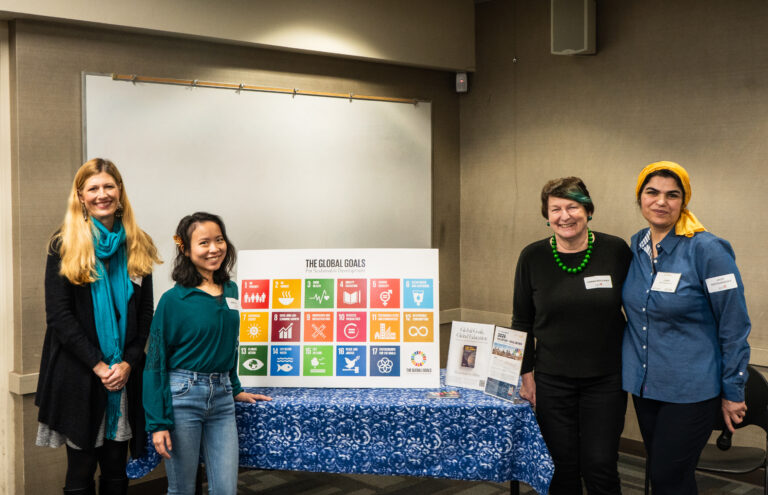
On Jan. 30, the American Association of University Women (AAUW) held a speaker forum in the Mary L. Stephens Library on the advancement of women in leadership positions. The speakers shared their leadership experiences in fields ranging from global education, public policy, STEM and the arts.

Joanna Regulska, the vice-provost and dean of UC Davis Global Affairs, spoke alongside Director of Global Engagements Jolynn Shoemaker. They spoke about their active roles in the university’s global involvement and initiatives.

“We are proud of our work at UC Davis for the public contributions [made] to the [United Nations (UN)] sustainable development goals,” Regulska said. 

The UN sustainable development goals (SDG) is an agenda agreed upon by all UN member nations for the collective peace and prosperity of people and the planet. The speakers presented key goals such as no poverty, gender equality, climate action, quality education and zero hunger. 

Regulska and Shoemaker were particularly excited to present one of the accomplishments made by UC Davis’ Global Hub, which was to have UC Davis appointed as co-chair for the SDG: Zero Hunger by the United Nations Academic Impact (UNAI). 

Regulska and Shoemaker emphasized the significance of UC Davis’ commitment to international collaboration and local outreach through these SDG goals. Through the leadership of Regulska, Shoemaker and their undergraduate interns, UC Davis’ role in the UNAI and other international organizations assists the university with funding, partnerships and collaborations. 

Shoemaker then reflected on her prior experience as a woman working for the United States Department of Defense in 2002. She described a conversation she had with an older, more senior official in the government that has stuck with her.

“He said, ‘There needs to be more of an emphasis on getting women involved in leadership,’” Shoemaker said.

Shoemaker recalled how important receiving this kind of sponsorship was for her at that point in her career. Furthermore, Regulska added how women in leadership need to be playing a more active role as mentors. Women leaders need to sponsor and support the goals of their subordinates — that is how to advance women in leadership, according to Shoemaker and Regulska. It is only by bridging inter-generational gaps and internalized biases that Regulska and Shoemaker believe that women can break down these barriers to empowerment in the workplace, self-imposed or systemic.

Annie Chen, a UC Davis alum and co-owner of Sciencely Handmade, hopes that her sustainable, naturally inspired jewelry and lifestyle brand is able to encourage feminine expression in STEM.

She started her business with her sister to incorporate climate consciousness, minority inclusion and scientific curiosity. Because of these core business values, Sciencely Handmade uses recyclable, biodegradable materials to create everyday products inspired by nature’s scientific beauty. 

“Science does not have to be this Notan (black and white), ivory tower,” Chen said.

Chen said she believes the beauty and wonder of science can be made accessible for everyday women rather than an unchanging, privileged space for a disconnected elite. By reclaiming this space for women, Chen hopes this business can make a real impact on having women participate further in scientific discourse. 

These accomplishments of local women leaders are a testament to the AAUW’s success in their goals of advancing women in leadership roles, economic equity and eliminating academic bias. To get involved at UC Davis, the AAUW has a student branch on campus that provides updates on future speaker events and opportunities that can be accessed on their website.

Written by: Matthew Mceldowney — city@theaggie.org


Yolo County announces 2030 Climate Action and Adaptation Plan

0

The ambitious initiative aims to achieve a carbon-negative footprint in the next five years


By OLIVIA HOKR — city@theaggie.org


On Dec. 3, 2024, the Yolo County Board of Supervisors unanimously adopted the 2030 Climate Action and Adaptation Plan (CAAP). CAAP was built on Yolo County’s previous climate action initiatives, including the 2011 Climate Action Plan and the 2020 Climate Emergency Declaration. The CAAP is a revised, comprehensive plan with an emphasis on both climate mitigation as well as climate adaptation. 

The 2020 Climate Emergency Declaration brought awareness to the effects of climate change in the area, including the increase of wildfires and extreme weather events and the impact it has been having on the community. In a press release, Yolo County Supervisor Lucas Frerichs expressed the urgency of climate action.

“Yolo County is already experiencing impacts from the changing climate, and we know we need to take immediate action to reduce our emissions and protect our residents,” the press release reads. “This plan reflects the County’s unwavering dedication to equity and advancing solutions that will build a more resilient, sustainable community for generations to come.” 

With the most ambitious goals of any local government in the United States, the CAAP places Yolo County in the spotlight of climate action, according to the press release. However, this plan does not solely target reducing greenhouse gas emissions and protecting Yolo County’s natural agricultural resources. It also pays special attention to helping the community adapt to the changing environment. The Sustainability Division’s CAAP webpage of the Yolo County website defines their areas of focus for community members.

“The CAAP aims to empower historically disadvantaged communities, create social and economic opportunities, and protect the most vulnerable populations from climate change while ensuring they play a central role in decision-making and can fully benefit from the plan’s outcomes,” the webpage reads.

By focusing on both the planet and the people, part of the CAAP works to ensure a just transition. This refers to a unifying set of principles and processes that will empower the society, the economy and the well-being of vulnerable and disadvantaged populations. 

“This transition balances the urgency of necessary changes with the commitment to sustainable and just realignments,” the CAAP webpage reads. “This transition incorporates the perspectives of all individuals and groups, particularly marginalized groups, to ensure that climate solutions meet the needs of the community at large. A Just Transition strikes a balance between the speed of necessary changes while still promoting necessary, sustainable, and just realignments.”

To effectively execute programs that will result in negative carbon emissions and support community members, the CAAP outlines three main components: strategies, measures and actions. The strategies are the highest-level implementation piece. There are 10 in total, including decarbonizing transportation, optimizing water use, minimizing waste and supporting climate-smart agriculture. 

Beginning in the spring of 2025, a CAAP progress tracker will be available for the public to stay up to date on implementation programs and actions. An E-Newsletter is available for residents to join and receive progress updates as well. The complete Climate Action and Adaptation Plan is publicly accessible on the Yolo County Sustainability Division’s webpage for those further interested in the background, strategies, funding or implementation of the project. 


Written by: Olivia Hokr — city@theaggie.org


UC Davis students discuss the troubling queer dating scene

0

Students delve into the different facets of navigating the LGBTQ+ dating scene 


By EVELYN SANCHEZ — features@theaggie.org


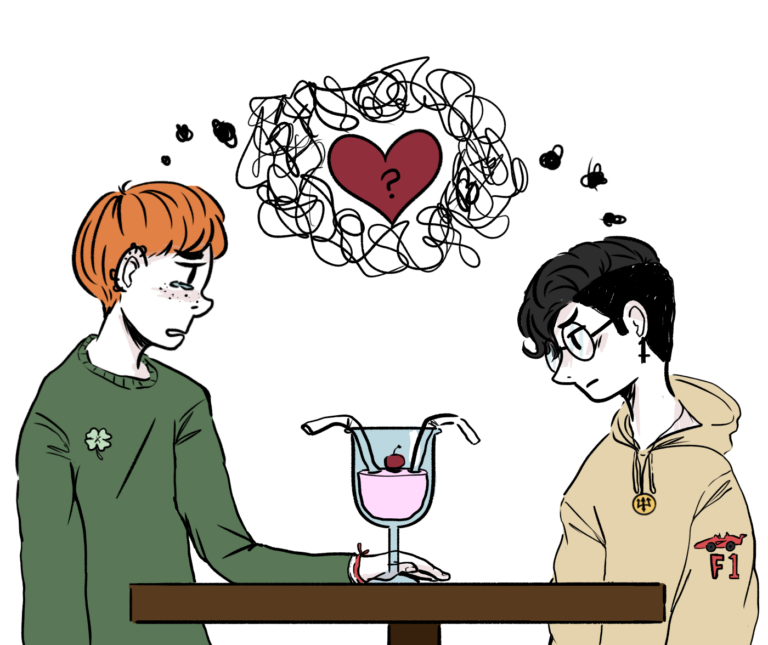
Navigating the labyrinth of love can be especially difficult when Feb. 1 hits. During the month of romance, Valentine’s-related items and rhetoric can be ubiquitous and discouraging for people who aren’t lucky in love. For the LGBTQ+ community in particular, dating can often come with its unique ups and downs. 

When describing the queer dating scene, UC Davis students shared many grievances.

“It is monotonous,” a fourth-year student, who requested to remain anonymous, said. “It is the same type of person, same shit. There’s not a lot of variation inside the dating pool. People fit inside this kind of bubble.”

Ana Julia Breves, a third-year political science and history major, expressed her opinion on the queer dating community at Davis specifically.

“It’s a little weird, since everybody seems to be connected,” Breves said via text message. “Like, you can’t talk to anyone without them either having a thing with someone you’re friends with or having beef with someone close to you.”

With the LGBTQ+ community already being relatively small, the number of single individuals is also drastically cut down. As these students shared, it is seemingly rare to find a person disconnected from the web of singles in a small college town like Davis. 

“I think it definitely has a smaller pool,” Amaya Hamilton, a fourth-year psychology major, said via text message. “A lot of sapphics know each other and have shared partners.”

Hamilton explained her thoughts on the queer dating scene as a queer Black woman. 

“Grievances? I guess being Black in a majority white and Asian space,” Hamilton said. The dating scene is pretty difficult for me as a queer Black woman. I find that I am not that many people’s type. I have faced discrimination from previous partners.”

Even amongst a population of 65,832 people, according to the United States census, Davis can seem homogenous and small to some students. The transactional nature of dating culture tends to perpetuate a specific type of relationship, especially among sapphics.

“Personally, I’m tired of people only wanting to hook up but that might just be because I only really use dating apps,” Breves said. “I’m kind of a clingy lover girl, unfortunately.”

Hamilton continued by sharing the prominent issue she has noticed in the dating pool.

“[Some] issues would be immaturity,” Hamilton said. “That would be number one.”

Breves continued saying that the limited options present a significant struggle in finding connection.

“I think it’s definitely harder to get through,” Breves said. “There’s obviously so many more straight people, so it’s easier to find someone you might click easily with. But the queer dating scene is much smaller so it feels like you have to talk to [an] endless amount of people before you find someone that might maybe have the same intentions as you do.”

Embracing non-heteronormative approaches to relationships is inherent to queerness. While heterosexual couples are able to engage in these types of relationships, the notable prevalence of polyamory seems to be most commonly found in queer spaces. 

“I do see a lot more people who are poly, and not that that’s not a bad thing either,” the anonymous student said. “But, they’re not looking for the same type of relationships. I see more poly desire [in general]. It makes me question whether I want to be in a poly relationship, and I don’t think I’m ready for that.”

This student continued by discussing the lack of connection and complexity in the online dating scene. 

“There’s no depth in the conversations you’re having, and that doesn’t necessarily mean it’s happening to everyone,” the anonymous student said. “But as a queer person on dating apps, there’s not a lot of organic [relationships] happening. I want [them] to be a complex character, and I feel like a lot of people aren’t — that might not be an issue in the queer dating scene [specifically], but it’s probably relatively true for a lot of people in the dating scene overall. The culture we are in doesn’t encourage authenticity.”

Despite sharing similarities, queer dating culture continues to be very different from heterosexual dating culture, according to students. 

“Queer people, especially queer people of color, are forced into personality moratoriums much earlier than others because you have to hide a part of your personality, and that means when you’ve left hiding yourself behind, you come out as a new person,” the anonymous student said. “That does help with being able to communicate your boundaries. 

Hamilton discussed the sentiment of community and understanding found in queer spaces.

“I think a positive would be the community that sapphics have,” Hamilton said. “It’s nice to have a partner who cares a lot. I feel like that’s rarer in straight relationships.” 

The anonymous student, on the other hand, commented upon the different fears and insecurities faced uniquely by queer people.

“There’s a massive difference in what we are afraid of,” the anonymous student said in reference to targeted violence, familial and cultural pressure. “Oftentimes, a queer identity is at odds with the cultural hegemony. A lot of it has to do with queer people already breaking away from patriarchy or [trying to], but they’re not perfect. I think we are all trying to break away from harmful cultural norms, but I still think that queer people are doing it a lot better.”

LGBTQ+ students experience a vast amount of struggles, and openly seeking partners in a tense cultural climate is a challenge itself. Though Valentine’s Day can serve as a yearly reminder to those still looking for their other half, students agree that the general culture of dating is hard to navigate efficiently. 

“Despite how agonized I feel about the queer dating scene, I would still rather go through it than the straight one,” Breves said. “As a lesbian, I think queer women would easily understand what I want much more than a straight man. There’s already a level of understanding and I think that’s comforting.” 


Written by: Evelyn Sanchez  — features@theaggie.org

The old Gaga is back

Lady Gaga casts a spell with her newest single ‘Abracadabra’


By SHREYA KUMAR — arts@theaggie.org

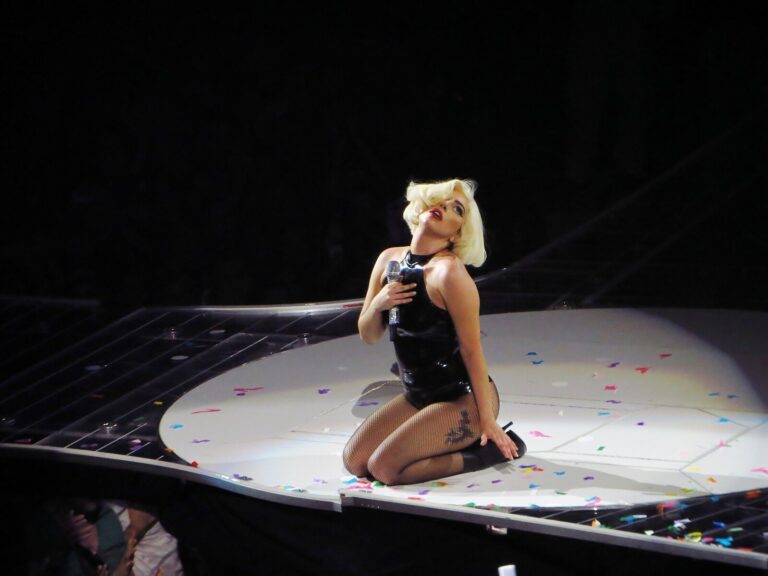
During the Grammy Awards on Feb. 3, Lady Gaga debuted her new single, “Abracadabra.” The high-energy dance pop track was accompanied by a theatrical music video that quickly garnered widespread attention, racking up over 16 million views on YouTube just a few days after its release.

“Abracadabra” marks the second single from Gaga’s highly anticipated eighth studio album, “Mayhem,” set for release in March. For long-time fans, Gaga’s return to dance pop feels like a homecoming. Her career skyrocketed in 2008 with “The Fame Monster,” an album filled with infectious beats, campy visuals and a rebellious attitude that challenged mainstream norms. 

She cemented herself as a queer icon and a voice for social change with subsequent albums “Born This Way” and “ARTPOP,” both of which leaned heavily into electronic dance music (EDM) and explored themes of sexuality, self-expression and cultural defiance. Gaga’s early work was provocative and boundary-pushing, drawing inspiration from burlesque and queer ballroom culture to craft a sound and image that shook the industry and ignited conversations about LGBTQ+ rights and sexual liberation.

However, in the late 2010s, she chose to take a break from releasing club bangers and instead explore genres like jazz and soft rock on her next two albums, “Cheek to Cheek” and “Joanne.” Soon after, she landed a lead role in the film remake “A Star is Born,” whose mellow, acoustic soundtrack was so popular in the mainstream that she became the first woman to ever win an Oscar, Grammy, British Academy of Film and Television Arts (BAFTA) and a Golden Globe all in the same year. 

By this point, despite still being wildly popular and successful, many of her original fans felt that she had let go of her counterculture roots in favor of a more universally palatable sound and look. She returned to her dance pop sound on the 2020 album “Chromatica, but the album was overshadowed by its many collaborations with big names in pop like Ariana Grande, Elton John and Blackpink, as well as the COVID-19 pandemic in general.

With the release of “Abracadabra,” fans and critics alike are debating whether Gaga has fully reclaimed her dance pop throne. The song features pulsating beats and hypnotic synths, very reminiscent of her earlier hits from “The Fame Monster” era. The accompanying music video, co-directed by Gaga herself, showcases a vibrant dance battle between the light and dark facets of Gaga’s persona, featuring frenetic choreography, avant-garde costumes and striking visuals. Many longtime fans have praised the single as a return to form, celebrating its theatrical flair.

Additionally, the current resurgence of EDM-heavy dance pop — exemplified by Charli XCX’s 2024 album “Brat” — has shifted the genre’s landscape, in turn making Gaga’s return less unexpected than it might have been a decade ago.

Some cultural analysts have even linked the renewed popularity of high-energy, hedonistic dance pop to economic and political instability, coining the term “recession pop” to describe the high energy, raunchy club anthems that tend to thrive in times of societal uncertainty. When people lose trust in institutions, they often turn to extravagant escapism, embracing high-fashion aesthetics and maximalist music that encourages dancing, having fun and self-confidence. 

Lady Gaga is no doubt one of the pioneers of “recession pop,” and her return to the sound has made people even more aware of how much skepticism and fear is in the air right now. Her re-emergence into this space suggests not just a return to her roots but an acknowledgment of the cultural climate that made her music resonate so deeply in the first place.

Whether “Mayhem” will solidify Gaga’s return to her dance pop roots or push her into new creative territory remains to be seen. Does her return herald a new age of economic insecurity or is she merely cashing in on a current trend that she helped create years ago?  Regardless, “Abracadabra” has reignited discussions about her impact on pop music, proving once again that Lady Gaga remains one of the most compelling and unpredictable artists of her generation.

Written by Shreya Kumar — arts@theaggie.org