55.7 F
Davis

Davis, California

Monday, December 22, 2025
Home Blog Page 75

Student fans recount their 2024 MLB World Series experiences

0

Yankees and Dodger fans describe their favorite parts about watching the series


By GRACIELA TIU — features@theaggie.org


On Oct. 30, the Los Angeles Dodgers won the World Series against the New York Yankees, finishing off the annual Major League Baseball championship series between the winning teams of the National League and the American League. The series, which is played for a best of seven, ended in the fifth game at Yankee Stadium, with the Dodgers winning their fourth game 7-6. Dodgers and Yankees fans here at UC Davis, despite being far from Los Angeles and New York, still felt the excitement surrounding the series, especially after the final game. 

“I was at the library when they won and it was funny to see other people jump out of their seats to celebrate it,” Carlos Gonzalez, a second-year human development major, said. “As soon as they won, I FaceTimed my parents just to get their reactions. It’s crazy to think that a game can make you feel those emotions.”

Although Dodgers and Yankees fans were especially thrilled this year because of the World Series, Roman Kuznetsov, a second-year aerospace engineering major, said he has been passionately rooting for their teams for years.

“Back when I was like three years old, I saw a Yankee hat in my wardrobe that I think my mom bought for me,” Kuznetsov said. “I also saw a lot of people around me wearing Yankees hats because I grew up in the Bronx, which is where Yankee Stadium is. So I was just, you know, indoctrinated into the culture of being a Yankee fan.”

Gonzalez also said his affiliation with the Dodgers stemmed from his relationship with his family.

“I’ve been a lifelong fan, because there’s some history behind it regarding my dad living in LA,” Gonzalez said. “I grew up watching all of the teams that he supported, so they became my teams.”

As a Yankees fan, Kuznetsov also recounted the sad but emotionally-connecting experience of being in Davis during the Yankees’ loss.

“A lot of people that I know are Yankees fans back home,” Kuznetsov said. “Losing the World Series was very much a heartbreaker for us. A lot of my fellow Yankees fans felt very depressed after that game, and I think that was the mood around the entire clubhouse and fanbase. It also brought me closer to them because we all share the same sense of melancholy.”

Daksh Shekar, a second-year human development major said he noticed how watching the game can bring him closer to his friends and loved ones.

“I would say watching baseball has definitely brought me closer to my housemates, because it gives us a chance to bond over wanting the same team to win,” Shekar said.

Student fans often have different game-watching habits, with some of them watching by themselves and others watching with their friends.

“I typically watch them by myself because I’m the only baseball fan in the house, and because I’m really tense and I typically tend to yell at the game,” Gonzalez said. “I did watch one game with one of my friends back home from San Diego, and that was like a bonding thing.”

Kuznetsov also mentioned the various places he watched the games throughout the series.

“Sometimes I’m watching it on my laptop, sometimes I’m watching it on my phone,” Kuznetsov said. “Sometimes I go to my friend’s place and watch it on their TV. They’re Dodgers fans, so that creates an interesting dynamic.”

Despite series-based excitement, students from both major cities watching the series here in Davis agree that they wish they could experience it in their hometowns.

“Everybody gets crazy in New York,” Kuznetsov said. “Everybody’s jumping up and down out of their seats for a routine play. It’s just absolutely insane and if I could go back to New York and experience this right now, I would.”

The series being between two historic MLB rivals in two major cities also sparked a lot of enthusiasm among fans.

“I think it’s the people in major cities, especially two big cities like Los Angeles and New York, that feel very strongly for their team,” Kuznetsov said. “Even if they’re not actually baseball fans, it’s just a historic rivalry that has been around for decades.”

Both teams also had a lot of star players that made watching the series more enticing to fans.

   “The amount of superstars on both teams during this World Series made it appealing to me as a viewer,” Shekar said. “I loved watching Freddie Freeman, Shohei Ohtani, Mookie Betts and Kiké Hernandez from the Dodgers, and I liked watching Juan Soto and Giancarlo Stanton from the Yankees.”

Many fans also enjoy watching their favorite players during each game and learning about their inspiring stories.

“My favorite player is Mookie Betts,” Gonzalez said. “He’s one of my favorite players because [he] proves that people from different ethnicities can go above and beyond. He had a harsh childhood growing up; he wasn’t supposed to play and they told him that he would never make it because he was too short. Overall, I just really enjoyed his perseverance and his story of going to the World Series.”

All in all, watching baseball can be a thrilling and electrifying experience, no matter how you view the game.

“I think baseball is just a game that [can] flip,” Gonzalez said. “There’s no script and it could flip out of nowhere, and it’s happened so many times. You could be up five-zero, like in the last game, and then the other team somehow manages to bring it back. I really enjoy it because it’s just a rollercoaster of emotions, and it’s cool seeing people that get to experience that at the stadium, that feeling of knowing your team is winning.”


Written by: Graciela Tiu — features@theaggie.org

OSSJA case for alleged student vandalism postponed

A student was arrested for vandalism, and a UCDPD officer fired their service pistol in the process of the arrest


By Rivers Stout — campus@theaggie.org


On May 24 at roughly 1:40 a.m., a UC Davis Police Department (UCDPD) officer fired their service pistol while chasing and arresting three suspected vandals. One of the three individuals was Cheyenne Xiong, a UC Davis student who has since been charged with a felony for the alleged act of vandalism. Alongside this, she faces trial from the Office of Student Support and Judicial Affairs (OSSJA) that could threaten her ability to remain a student.

The National Lawyers Guild (NLG) at UC Davis has since begun to support Xiong in her OSSJA case and created a petition that demanded her case be dropped and that the university instead focus on investigating the UCDPD officer who discharged their service weapon. 

Shasun Sulur, a graduate law student and spokesperson for NLG, highlighted the organization’s objectives.

“The National Lawyers Guild here at UC Davis is a group of students who are interested in progressive movement lawyering,” Sulur said. “We organize here at King Hall around issues of accessibility, divesting from Palestine and pushing administration [alongside] other groups on campus to get divestment on a larger scale.”

Many public faces and organizers of last year’s pro-Palestine movement were King Hall students, including members of the NLG.

Sulur expanded on the petition’s goals.

“The OSSJA is the student conduct division of the UC Davis administration,” Sulur said. “They handle all sorts of issues like academic dishonesty and cheating, to any sort of violation of the UC Davis Code of [Academic] Conduct for students. It’s a panel of members who investigate [possible violations]. What we’re asking for is full transparency around this process and also for them to drop the charges entirely and investigate the officer instead.”

Xiong’s hearing has been postponed three times, and Sulur speculated that the last postponement was due to the petition. As of the date of publication, the OSSJA case has been postponed to December.

Sulur further critiqued the actions of the OSSJA and expanded on what their findings could mean for the trial.

“We’re glad as of right now, because [Xiong] is also facing criminal charges in the county of Yolo and anything the OSSJA finds and publishes in their report can be used in the criminal trial against [Xiong], which can carry a term of up to three years for felony vandalism,” Sulur said. “Again, this is a member of the UCD community — she’s a 20-year-old student here on campus. The OSSJA instead of protecting her life, safety and well-being, is possibly putting her at risk of up to three years in prison.”

Sulur explained that Xiong’s fifth amendment rights could be potentially infringed upon in this trial. Under the fifth amendment, Xiong has a right against self-incrimination and a presumption of innocence which Sulur argues the OSSJA trial may violate. 

“There could be a question of constitutional protections for [Xiong] in criminal trials,” Sulur said. “What this OSSJA investigation does is already make an assumption and decision about her conduct and basically deems her guilty or not guilty before she gets a fair trial in front of a jury.”

The university has yet to publicly investigate the officer’s use of their firearm, or make a statement, but the UCDPD police chief has submitted the instance to the Independent Police Accountability Board. 

When asked if there’s a minimum amount of signatures needed to dismiss the case, Sulur said the following. 

“We’re hoping for overwhelming pressure,” Sulur said. “The OSSJA is not a democratic institution, it is a part of the administration that will conduct its own investigation and release its own findings. We want to show them the overwhelming amount of students and community members who believe these charges should be dropped. The OSSJA has not told us what it will take to drop these charges to clear [Xiong’s] name […] They’re not being transparent enough, not only to the community but [to Xiong] herself. These decisions are made behind closed doors.”

Sulur commented on the behavior of the OSSJA and University of California as a whole, believing that their ongoing support for the University of California Police Department (UCPD) is affecting the ability of students, especially students of color, to feel safe on campus.

“This is really emblematic of a larger trend of the [University of California] supporting and funding the UCPD on this campus,” Sulur said. “This UCDPD officer needs to be investigated and held accountable […] The UC is prioritizing UCDPD on campus, harming students both in terms of the officer firing their gun during the arrest, as well as how this can be used in [Xiong’s] criminal trial.”

Xiong was unavailable for an interview due to her ongoing criminal trial.

Written by: Rivers Stout — campus@theaggie.org

Vigil held to mourn the loss of life in Israel

The local temple, Bet Haverim, gathered the community for song, prayer and moving speeches in Central Park

By HANNAH SCHRADER — city@theaggie.org 


On Oct. 7, 2023, Hamas, the Islamic Resistance Movement, launched an attack on Israel resulting in the death of over a thousand people, largely Israeli citizens. This attack sparked the currently ongoing Israel-Palestine conflict which recently surpassed a year in length.

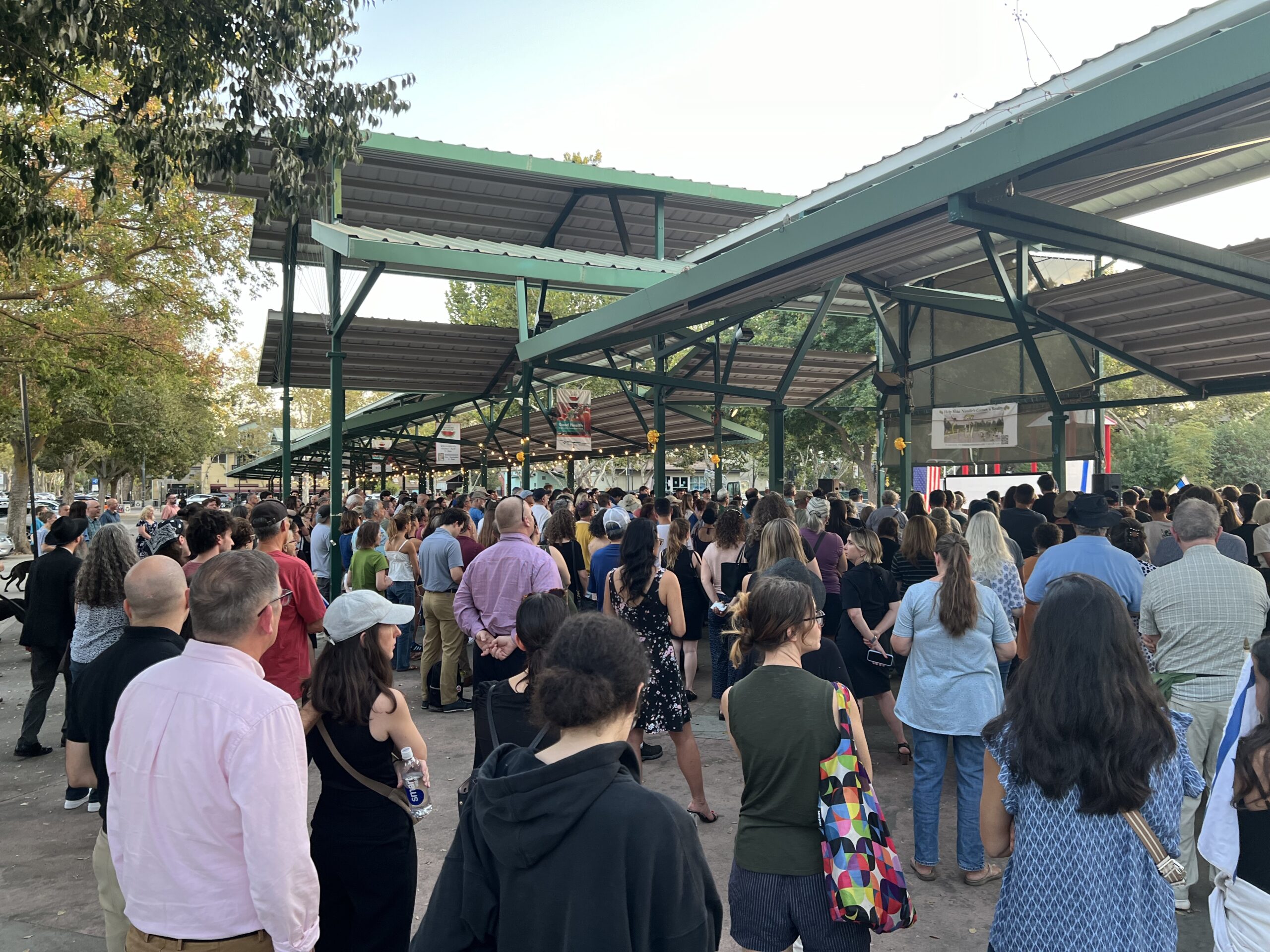
To mourn the loss of life and heal as a community, Bet Haverim, the local temple, organized a vigil that was held in Davis’ Central Park. The vigil consisted of prayer, song and music.

Members of the board of Hillel House Davis, an organization that aims to provide a community for Jewish students, gave speeches at the vigil.

Barry Klein, the president of Hillel House for the Davis and Sacramento region, reflected on hearing of the attacks for the first time on Oct. 7, 2023, which coincides with his birthday.

“I woke up on Oct. 7 at 3 a.m. for various reasons, but I always check my email to see if one of my children had sent me a happy birthday,” Klein said. “And I saw the attack by Hamas on Israel, probably before most people in the U.S. had seen it, so that’s burned in my memory as the most horrible birthday I’ve had.”

Klein then discussed his responsibility as a leader in the Jewish community to help students through this painful time.

“[I’m] currently the president of the board of Hillel [House] at Davis and Sacramento, and so that immediately opened the door to lots of things we needed to take care of to make sure that students on campus were safe and secure and able to pursue their studies in a stress-free environment,” Klein said. “And we do a lot of grieving for all the loss of life in Israel, and my prayer is that the evil people who perpetrated those attacks would disappear so this would never happen again.”

Klein then discussed the aspect of the vigil most moving to him, and the impact of the Davis community.

“So Israelis took it particularly hard because there are Israelis at UC Davis, the students, faculty and [others just] visiting,” Klein said. “I just took it particularly hard because everybody was touched personally by what happened and it took us out.”

Students hold each other during vigil. (Hillel House / Courtesy)

Rabbi Jeremy Simons, the co-rabbi of the Bet Haverim congregation in Davis, discussed the intent behind organizing the vigil.

“In the Jewish faith, we mark the anniversaries of deaths,” Simons said. “It’s called a Yarhzeit and Oct. 7, in addition to being the the anniversary of the terrorist attack, is also the anniversary of the deaths of well over 1,000 people. And so it was a chance to say the traditional memorial prayers and also just to mark how we’re all feeling, because this has been a very difficult year in the Jewish community, a very upside-down year. And it was a chance for the community to come together and to mourn and grieve.”

A large crowd gathers in Central Park for the Oct. 7 vigil. (Hillel House / Courtesy)

Simons then talked about the significance of the attack to him and the Jewish community at large.

“I don’t think it was in my imagination that those things [attacks] could even be possible, or something that I worried about or thought about,” Simons said. “Just reading the reports on that day was, I have no words to describe it […] A lot of other people I ran into that day were just crying, crying, crying, so yeah, it was a deep shock to the Jewish community. It’s not that big all things considered, so there are a lot of connections, like we have people here who have connections to people who were taken hostage, to people who were killed and people who are serving in the military.”

Simons then reflected on the outcome of the vigil and how it served the Davis community.

“[The vigil] provided a space for people to be able to come together, to be with other people and not feel alone, and to just mark what was otherwise a really, really hard day,” Simons said. “I know a lot of folks just told me they took Oct. 7 off from work or didn’t go to class, just because it just hits that hard.”


Written by: Hannah Schrader — city@theaggie.org


The rights of journalists are on the line this election season

With Election Day around the corner, press ownership blocks endorsements from newspaper editorial boards

Disclaimer: While this editorial will be discussing pressing issues facing reporters this election, The California Aggie Editorial Board is not able to make formal political endorsements, according to external bylaws. This story will discuss the anti-press policies of certain political candidates, but not by name. 

By THE EDITORIAL BOARD

Election Day is rapidly approaching — in less than one week, mail-in ballots are due and the country will soon see new leadership that will impact day-to-day life for Americans for years to come. There is no sugarcoating it this time: the stakes are high and lives are on the line. 

With polls showing Vice President Kamala Harris and former President Donald Trump in a tight race, endorsements are all the more important. Unfortunately, things may look a little different this year. Over the last week, the Los Angeles Times and The Washington Post have both been prohibited by their ownership from releasing endorsements for Democratic nominee Harris.

Editorial boards serve as part of the opinion section of the newspaper, represent the beliefs of the paper’s editorial staff and speak out on critical issues. In a democracy, fair reporting from newspapers is essential to keep an eye on unchecked powers and local authorities, as well as telling people’s everyday stories. However, publications offer more than news. Commentaries on local opinion, reviews and political endorsements are all vital services independent newspapers can offer. 

The L.A. Times Editorial Board had drafted an endorsement article for Harris when owner Patrick Soon-Shiong decided the paper would not be offering an endorsement for any candidate this election. The Post Editorial Board also had plans of endorsing Harris until CEO Jeff Bezos, the billionaire founder of Amazon, stopped not only this endorsement but the opportunity for the Editorial Board to endorse any presidential candidate in the future. 

Following these recent restrictions, many editors have left the L.A. Times and more than 200,000 subscribers have canceled both their print and online subscriptions to The Post. 

“We are deeply concerned about our owner’s decision to block a planned endorsement in the presidential race,” a statement from The L.A. Times Guild Unit Council and Bargaining Committee reads. “We are even more concerned that he is now unfairly assigning blame to Editorial Board members for his decision not to endorse.”

The California Aggie Editorial Board condemns the recent restrictions on newspaper editorial boards’ right to endorse a presidential candidate. The leadership of every newspaper, from student to local to national, deserves the right to weigh in on elections. 

These restrictions also set a dangerous precedent that ownership can intervene in editorials whenever they see fit. This is why, in part, the Society of Professional Journalists (SPJ) has condemned these recent announcements. 

“If ownership begins dictating what stories can or cannot be published, it sets a precedent for compromising journalistic independence, which could lead to deeper restrictions on news coverage over time,” the former National President of SPJ, Lynn Walsh, said in their statement.

This is especially distressing in an election where journalists’ First Amendment rights are being called into question. One of the two major presidential candidates has continuously threatened these rights and scrutinized the press. 

The aforementioned candidate has proposed stripping news outlets such as ABC and CBS News of their licenses, taking the Federal Communications Commission (FCC) under full control under the executive branch and jailing reporters; they have also suggested jailing publishers and “top editors.” 

Last year, Politico reporters broke the news that the Supreme Court was going to draft plans to overturn Roe v. Wade after a source leaked the draft opinion to them. Following the leak, the court shared they would investigate the situation, and the candidate mentioned demanded their arrest.

“They’ll never find out, [and] it’s important that they do,” the candidate in mention said in a Truth Social post. “So, go to the reporter [and] ask him/her who it was. If not given the answer, put whoever in jail until the answer is given. You might add the editor and publisher to the list.”

This is unprecedented, anti-press and violates the protections journalists are given under the First Amendment — this type of rhetoric about the press undermines democracy itself. In an election that will affect reporters so greatly, editorial boards must be allowed to speak out. 

Other than the repercussions for news publications, this election will greatly affect everyone. From access to reproductive healthcare to immigration and potential mass deportations to the Supreme Court, your ballot will have nationwide impacts.

In a very polarized political climate, discussing this election may feel overwhelming — but it is important to exercise your civic duty and encourage those around you to do the same. While we cannot endorse a candidate or tell you who to vote for, The California Aggie Editorial Board encourages you to use your best judgment this election season and pay attention to what is at stake.


Written by: The Editorial Board

Spice up your Halloween with a seasonal drink

The best fall-themed drinks from local coffee houses in Davis 


By ELIZABETH BUNT — arts@theaggie.org 


Halloween is finally here, and Davis is fully in the grip of fall. With cooler days rolling in, there is nothing cozier than spending the morning in a warm coffee shop. Unfortunately for Davis students, it’s midterm season so schoolwork is involved with every coffee trip. Luckily, Davis has several local cafés that are perfect for sitting, sipping and studying. These are some of the coffee shops offering specialty fall drinks and perfect atmospheres for both the coffee aficionado and the academic weapon.  


Mishka’s Pumpkin Latte: a fall staple

Mishka’s Café is an old standby for most Davis students, especially humanities majors. On any given day, Davisites can be found reading, writing and sampling pastries under the constantly changing local artwork hung on the walls. To ring in the changing weather, the Mishka’s baristas have brought back a classic favorite: the Pumpkin Latte. This latte tastes exactly like a homemade pumpkin pie with just enough coffee flavor to cut through the sweetness. The drink is finished with a dusting of cinnamon and customers can also ask for a dollop of homemade whip cream on top. The Pumpkin Latte comes in three different sizes and can be ordered hot or iced. To really complete the experience, café-goers should pair the latte with one of Mishka’s famous pastries that are made in the bakery above the shop: gingersnaps, pumpkin bars or chocolate muffins.


Temple Coffee: classic flavors, new delivery

This fall, Temple Coffee — located on G Street — has a packed seasonal menu with two returning favorites and two brand new creations. The Gingersnap Latte, topped with ginger whipped cream and chai sugar, is making a reappearance this year along with the Ginger Cream Cold Brew. These two drinks were huge hits last year so Temple fans will be glad to have them back. For those who prefer non-coffee beverages, Temple has created the Autumn Apple Bliss and the Matcha Tonic. The Autumn Apple Bliss is a chamomile tea made with brown sugar, cinnamon and apple butter, perfect for tea lovers in search of something special for the fall season. The Matcha Tonic is a classic matcha paired with crisp tonic water and sweetened with brown sugar simple syrup. This drink is ideal for those looking for something seasonal but a little less sweet to sip on while studying.  


Pachamama Coffee: local twists on global flavors 

Currently, Pachamama Coffee is offering a five-drink autumn menu alongside their fixed menu. Avid Pacha visitors will be familiar with the Maple Brulée Latte and Honey Bear Latte, drinks that have appeared several times on their seasonal menu in both hot and iced form. New beverages this season include the Dulce de Leche Latte, Pumpkin and Cardamom Latte and Criollo-Cacao Mocha. The Pumpkin and Cardamom Latte is very similar to the latte offered at Mishka’s except for the warm cardamom infusion. The Dulce de Leche is exactly what it sounds like: a buttery, sweet take on a Latin American classic dessert with hints of caramel. The Criollo-Cacao Mocha is the most experimental beverage on Pachamama’s autumnal menu. This mocha combines Peruvian cacao, Colombian sugar and a hint of Himalayan salt to add a little kick of spice to the chocolatey taste.  


These seasonal recommendations ought to make it easy for any student to find the perfect place to study and the perfect coffee to sip on while doing so. Keep in mind, these drinks are only offered for a short while this autumn, so take a trip downtown and pick an autumnal brew to become your new obsession. The only difficulty will be deciding which drink to try first.  

Written by: Elizabeth Bunt — arts@theaggie.org

How to live your ‘Practical Magic’ life this Halloween

Here’s how you can make your life a little more bewitching this autumn, a la “Practical Magic”


By NATALIE SALTER—arts@theaggie.org 


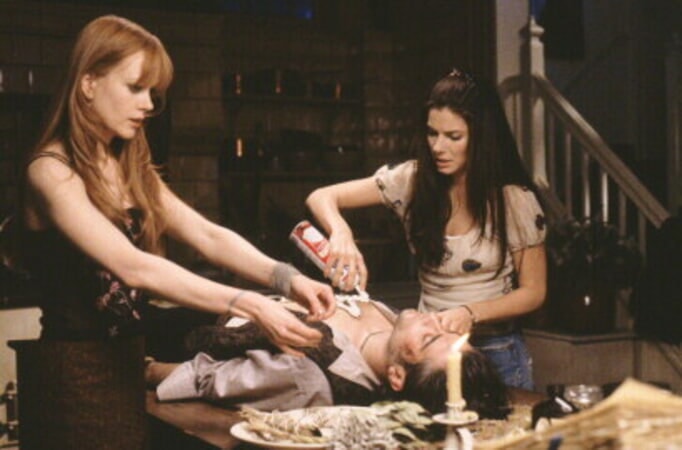
If you think about the word “witch,” your first thought might be an old woman with a pointed hat and a broomstick, brewing bubbling potions in a cauldron under the light of a full moon. While this is a classic interpretation of witches, countless films, shows and novels throughout time have challenged this simple picture and presented creative perspectives on what witchcraft really is. One such film is 1998’s “Practical Magic,” starring Sandra Bullock and Nicole Kidman as two sisters born into a family of witches. The film is a cozy and delightful watch for Halloween that crafts a welcoming image of witches and their magical lifestyle — one that you can live too this October.

To start out your “Practical Magic”-themed day, whip up a batch of pancakes for breakfast. Just like the characters in the film, you can try your hand at making all sorts of shapes and images out of the batter, and paired with butter and syrup, you’ll have an absolutely delightful and delicious morning. For an even more autumnal twist, add pumpkin and cinnamon to your pancakes, or try an apple syrup to top them off with. 

One of the most iconic parts of “Practical Magic” is the whimsical, comfortable outfits worn by the main characters. Colorful maxi skirts, oversized knit sweaters, silk dresses and patterned cardigans are all wardrobe staples that will make you feel like you’re living in the film too. Try mixing patterns and fabrics to create a look that is both fun to wear and unique to you. Being witches, the film’s iconic sisters don’t feel the need to be restricted to one style or another, and neither should you. If you want to find more stand-out pieces, go out thrifting with a friend. Thrift stores are full of one-of-a-kind items; likewise, by buying clothes second hand, you’ll be making an environmentally conscious choice.

The elder of the two “Practical Magic” sisters, Sally, runs a small shop where she sells self-care products, which is a great reason for you to indulge in a self-care routine of your own. A sweet scented candle, a bottle of your favorite lotion, a mug of tea and a face mask can combine with a warm bath to create a wonderfully relaxing afternoon. If you can, try and shop for your self-care products at local shops.

It’s not a “Practical Magic” day if you forget one of the film’s most iconic scenes — Midnight Margaritas. Though the name explains itself, there’s plenty you can do to add your own twist to this tradition. If you’re not one for drinking, there are countless fun non-alcoholic beverages you can have when the sun goes down. Invite over your friends or family and celebrate together! 

Just like Sally and Gillian always have each other’s backs, show your loved ones that you’ll always be there for them. It’s not a “Practical Magic” October without the people you care about, so make sure to include them in your utterly magical day. 

Written by: Natalie Salter—arts@theaggie.org

Open Walls Collective brings an innovative approach to art exhibitions

0

The Davis art collective inspires creativity and conversation 


By LAILA AZHAR — features@theaggie.org

 

The sight of eight-foot tall walls with wheels attached to them might not bring the words “art gallery” to mind — but Open Walls Collective isn’t a typical art gallery. 

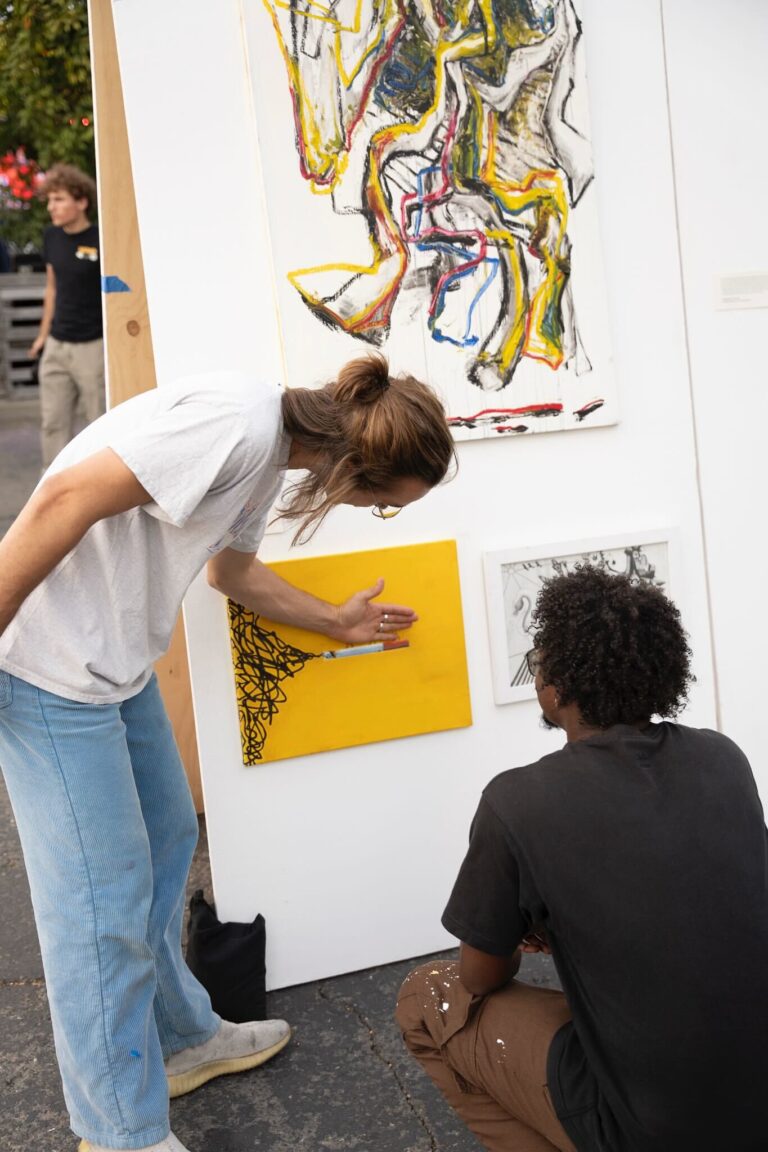
Beginning this summer, the collective has emerged as a unique space for Davis creatives to learn the ins and outs of displaying their work. The walls that serve as the group’s namesake allow them to turn any venue into a gallery personalized to the artist’s liking. As they put it, they’re “redefining what gallery spaces and artist platforms consist of.”

Before launching, the group studied the advertising of fashion brands in an age of oversaturation on social media. The most successful ones, they noted, didn’t attempt to advertise to everyone — they catered to their particular audience. 

Similarly, Open Walls Collective set out to answer the question, “What would an artist want in a town like this?”

On Oct. 11, they hosted a pop-up event as part of Davis Rave Co. and Sudwerk Brewery’s “Frog Hop” event. A group of 12 artists displayed their work and artist statements. Two murals were created live at this event. One, a community mural, allowed for anyone in the audience to participate in drawing, while the other involved professional artists painting the logo of the event. 

Their upcoming show, titled “Are you better than AI?,” is taking place on Nov. 1 at the Pence Gallery. This juried exhibition has a twist — among the artists displayed in the show, one will secretly be Artificial Intelligence (AI). 

The advent of generative AI has raised a lot of questions for creatives. 

“I’ve seen a lot of AI-generated images online,” Tavleen Hayer, a second-year human development major, said. “When you use AI you don’t have to pay a liveable wage, the way you do when there’s humans involved, so I can definitely see how that would cause a lot of fear for artists.” 

Sophia Nguyen, a fourth-year biological sciences major, also commented on how the current period of technological advancements may potentially impact the job market.

“There’s fear about AI replacing jobs, and there’s also some people using AI in cool ways,” Nguyen said. “We’re in an adjustment period where we have to figure out how technology advancing can also involve people being treated and paid fairly.”

Notably, this fear that studios will turn to generative AI for tasks typically done by paid workers was a major component of last year’s Writers’ Guild of America (WGA) and Screen Actors Guild-American Federation of Television and Radio Artists (SAG-AFTRA) strikes

Open Walls Collective’s upcoming exhibition addresses the topic of AI and art. Rather than presenting definitive answers, the exhibition allows artists to come together and respond to the prompt however they choose. The group aims to have a nuanced approach to this relevant issue.

For many members of the group, the biggest challenge facing artists today is increased cost of living. They hope the organization can be a place for newer artists to gain experience and learn the skills they’ll need to continue their craft in the real world. 

“The idea of a ‘starving artist’ is attached to everything,” Krishna Das, a fourth-year art studio major, said. “Open Walls Collective is a way for artists to stop thinking about the overwhelming pressure that they may not be heard, or matter or find employment — or they have to wait and wait and instead adopt a realization that if you can’t find anyone to make these connections happen for you, you’re going to have to make [them] yourself.” 

These connections, the group noted, are an essential part of running Open Walls Collective. The vibrant arts scene in Davis has served as a major source of inspiration for the group. 

Pence Gallery has really shown us a degree of professionalism that now we try to maintain everywhere we go,” Das said. “The way [The] Basement Gallery curates artists and staff, how talented they are and the way they take themselves seriously has led us to look for alumni that were part of [The] Basement Gallery.” 

The UC Davis arts department in particular, the group also noted, has provided invaluable guidance and resources. 

Open Walls Collective is precisely that — open. They’re an open space for newer artists to gain knowledge and experience, and they are open to learning more from established artists. As they continue to host events, their unique and collaborative approach will provide a valuable outlet for Davis creatives.  


Written by: Laila Azhar — features@theaggie.org

Big dust ensures that the TLC is never cleaned

I’m coughing just thinking about it


By ALLISON KELEHER — adkeleher@ucdavis.edu


Me and all of my faithful readers can agree on one thing: The Teaching and Learning Complex (TLC) is nasty. As I ascend the stairs, I can see the clumps of dust and hair floating around at my feet. One time, I almost tripped over one because it was so big. 

This matter is near and dear to my heart, because I love vacuuming. One time, I dreamed about sneaking in there in the middle of the night with my vacuum to finally give the TLC a good clean. There’s something satisfying about a vacuum cleaning up immense amounts of dust and hair all at once. After this dream, the idea of cleaning the TLC has plagued my mind. The other day, I woke up holding my vacuum and my keys — that’s how I knew it was getting serious. 

So, I began plotting. I’ve conducted heists before but this one was going to be tough solely because of the vacuum. For context, my vacuum is bright pink, essentially ruining the aura of mystery. However, it enhances my aura of cutesy, so that makes up for it. Rather than fight it, I leaned into the pink and wore a monochromatic pink outfit to pair with my vacuum. After taking several mirror selfies, I headed out on my mission. 

The plan was simple: Hide out in one of the TLC classrooms under a desk until everyone leaves. Walking in wasn’t easy, because so many people loved my outfit and begged me for details. After valiantly fighting off my fans, I found an empty classroom on the third floor to camp out in. 

I brought some snacks for the wait, including an iced coffee, baby carrots, Trader Joe’s soup dumplings and a Snickers bar. While eating the soup dumplings, I feared that the slurping would give me away —  but I got lucky. After my feast, I passed out into a food coma for several hours. When I finally woke up, I was upset with myself because I lost valuable vacuuming time. After a brief scolding in the mirror, I shot to my feet and grabbed my vacuum. 

As I inched out of the classroom, I scanned the hallway for anyone who would try to stop my mission. Thankfully, no one was there. Due to my lost time, I decided to focus on the front steps since those were the most nasty. Dragging my vacuum behind me, I made my way downstairs to the contaminated area. 

We made our way to the front and I got to vacuuming. As I turned it on, the noise made me worried that the mountains of dust had already clogged my vacuum. It was a shrill, squeaky noise that almost hurt to hear. When I knelt down to inspect the vacuum, I almost fainted from shock because it wasn’t a dust clump — it was a dust bunny. During normal business hours, those phrases mean the same thing, but at 3 a.m. in the TLC, there are living, breathing dust bunnies. 

This dust bunny was squeaking up a storm because I had trapped it in my pink vacuum. I tentatively touched the dust bunny, and it growled at me. I retracted my hand quickly out of fear of a bite, but then I remembered that dust can’t bite you. So, I got a firm grip on the bunny and pulled it out of the vacuum. This bunny had a particularly large tail, causing it to get stuck. 

As I placed it on the dirty ground, it hopped away quickly into the darkness. After this interaction, I decided that maybe it was a good idea to leave, since it’s clear that I’m sleep deprived. But then, a hoard of dust bunnies came charging at me out of the darkness, causing a cloud of dust to fill the air. The dust filled my lungs, and I started coughing relentlessly. 

This caused the bunnies to stop in their tracks since I was clearly not a threat. At this moment, they were able to get a good view of my pathetic image: Hunched over and coughing, I was an ugly thing to behold. However, this coughing fit subsided after a moment which allowed me to stand up straight. 

I got a clear view of the bunny army, which was fairly large considering that the TLC has a lot of dust to contribute. However, as I gazed upon them, the bunnies started to look up at me differently. Like I was one of them. I decided to accept the role as their fearless leader and  began leading them through the TLC. I have a feeling that my monochromatic pink outfit gave me the resemblance of the notorious pink energizer bunny. Clearly that was the reason since they accepted me as their leader so quickly. 

In the end, these bunnies really shouldn’t have trusted me as their leader. I guided them to the back of the TLC where I coached them to jump off of the railing to their death. Sadly, this was for the greater good, because now the TLC is clean as a whistle. But now, I wait anxiously for their revenge.


Written by: Allison Keleher — adkeleher@ucdavis.edu


Disclaimer: (This article is humor and/or satire, and its content is purely fictional. The story and the names of “sources” are fictionalized.)

The Avid Reader holds historical fiction panel on prejudice, politics and escapism

Three authors discussed their approaches to writing historical fiction in recognition of California Writers Week


By RORY CONLON — city@theaggie.org


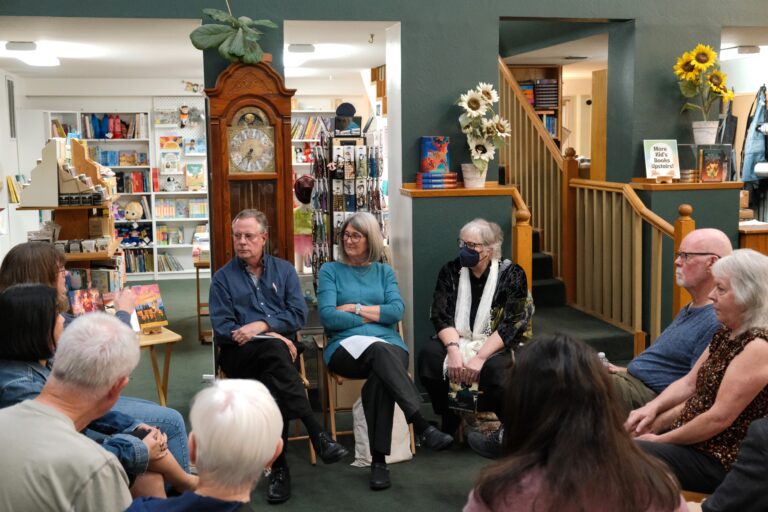
The Avid Reader Bookstore hosted a panel of three historical fiction authors to discuss their books in honor of California Writers Week on Oct. 22. 

The authors, which included Tim Schooley, Judith Starkson and Laura Jensen Walker, have written historical fiction novels set as far back as the Bronze Age and as recent as the 1940s. Schooley said that the main aspect tying their books together is the ways in which history connects to the present.

“George Santayana said it best: those who can not remember the past are condemned to repeat it,” Schooley said. “We wanted to talk about that and see how some of these themes resonate throughout history.” 

Starkson showcased “Priestess of Ishana (Tesha),” the first book in a series following the journey of a Hittite queen in the Bronze Age. Starkson said she wanted to learn more about Hittite, an empire in the 12th century that stretched across Turkey, Syria and Lebanon, and tell the story of a powerful female ruler that transcended the norms of her time. 

“How does an autocratic, patriarchal world have a queen who was famous in her day [for] bossing Ramses the Second around and negotiating a treaty that kept an incredibly disrupted world from breaking into pieces?” Starkson said. “I looked at that mature woman and said, ‘Who were you in the beginning, and how did you get there?’ My series is about her rise to this extraordinary throne.” 

Starkson also drew parallels between the queen, Tesha and Kamala Harris, the Democratic presidential nominee. 

“Presenting that model of unexpected female leadership to the world in an emotionally engaging, immersive form is my subversive way of persuading people that women can [do it],” Starkson said. “You know that hesitancy some men in America are currently having as they cast their ballots? I’m hoping I’ve soothed some qualms in my readers.” 

Schooley’s novel, “The Wool Translator,” also included women who defied tradition. He said that Aisha, a math prodigy in his book, was inspired by his research into the Nasrid Kingdom during the medieval age. 

“I found a lot of original sources from the Nasrids talking about these unusual women in their community who were recognized for their brilliance,” Schooley said. “They were allowed a measure of freedom to conduct studies and some of them were considered very important people in their community.” 

“The Wool Translator” follows the relationship between Aisha, a Muslim girl, and Newt, a Catholic boy. Schooley names Donald Trump’s “Muslim ban” in 2017 as having inspired his decision to explore religious divides in the novel. 

“I started thinking, ‘How would it be possible for me to have a young person in this Muslim kingdom meet a Catholic boy from England?’” Schooley said. “The theme of religious intolerance drove the idea of the story and the plot developed from that.” 

Walker’s debut historical fiction novel, “Death of a Flying Nightingale,” is set in England during World War II. The Nightingales were a lesser-known, all-female part of the Royal Air Force that cared for wounded soldiers and shuttled them to safety, according to Walker.

“They went to Normandy the week after D-Day to bring back wounded men from the blood-soaked beaches of Normandy,” Walker said. “They took care of these men on the flights home, and they weren’t allowed to have parachutes because if the plane went down, their job was to stay with the patients. So, every day, two times a day, they risked their lives.” 

Walker interviewed the last living Nightingale, who was 106 years old, and included some of her anecdotes in the story. She said the Nightingales showed her how women’s contributions can be overlooked in the past and the present. 

“Most of these women became wives and mothers, and that generation didn’t talk about the things they went through,” Walker said. “Many of their children didn’t even know what their mothers had done until 40 years later when they somehow found out about it or mentioned it.” 

The authors also discussed reasons why World War II fiction has experienced a resurgence in the 2010s. Starkson said that in a time when people have mixed feelings about conflict, it can be comforting to look back on a time when people were more united. 

“I think partly because so much is really problematic these days, we don’t have the mental space to step into fiction where it’s equally problematic,” Starkson said. “We want an escape. It’s reassuring to look back and say, ‘See, people faced a time of great evil, and they responded in a way that was victorious.’” 

Written By: Rory Conlon — city@theaggie.org


ASUCD Senate passes SB#6

Bill makes Ethical Spending Committee permanent ASUCD entity; Bike Barn sales at a record high


By Rivers Stout — campus@theaggie.org

On Oct. 24 at 6:10 p.m., Internal Vice President Aaminah Mohammad called the ASUCD Senate meeting to order and began with a land acknowledgement to the Indigenous Patwin people. 

New committee leaders were sworn in, including those for the Student Sustainability Career Fair Committee (SSCFC) and STEM Committee. 

Tianneh Bonardi, a second-year political science and managerial economics double major, was sworn in as the fifth interim senator. She also occupies the position of social chair of the Danzantes del Alma, a Folklórico group on campus. Bonardi said that during her time in office, she wishes to increase ASUCD visibility so that students have better engagement with student government.

A new chairperson for the Ethnic and Cultural Affairs Commission (ECAC) was also sworn in. They stated that they wish to combat discrimination while in office, specifically discrimination against the Palestinian community on campus. 

Senator Jacob Klein, who previously abstained from voting on SB#52, raised a concern over the appointment.

“What do you think [is] the biggest issue facing our campus when it comes to ethnic and cultural affairs and how do you plan to work to address it?” Klein said via a later statement discussing the concern further.

Quarterly reports soon followed. Disability Justice Committee (DJC) Chairperson Noa Sumner was first to present. Before the official quarterly report began, Sumner shared the committee’s concerns with the ASUCD onboarding process and how it was not friendly towards people with disabilities, specifically citing a lack of communication. Additionally, DJC and Unitrans collaborated to replace signage on buses, with new signs noting that Unitrans drivers are available for help if needed. 

ASUCD President Gaius Ilupeju acknowledged the ASUCD onboarding difficulties. He revealed that practices were currently under investigation following the recent hiring practice misconduct.

A break was called at 7:02 p.m., and the senate was called back into session at 7:22 p.m.

The Academic Affairs Commission then gave their quarterly report. The chairperson stated that they were in the beginning stages of an initiative to change when midterms could be conducted. There were also talks about the Office of Student Support and Judicial Affairs (OSSJA) disproportionately targeting international students and how this could be rectified. Banning Turnitin was mentioned, as it counts Google Translate as AI software. The chairperson explained that this causes an issue, as many international students who don’t speak English as their primary language rely on translation websites and software.

The Bike Barn’s quarterly report soon followed. Business Manager Emilie-Anne Roxas stated that this year’s Mooove-in Week saw the most sales the Bike Barn had ever had, with $100,000 of profit being made between opening day and the first day of classes. Roxas also noted that they’ve seen more crashes involving e-bikes and e-scooters than ever before.

Ilupeju commended the Bike Barn, saying that he wished other units could be as “on it” as them.

Roxas then raised a question to the senate concerning how much solidarity workers at the Bike Barn can show for fellow students, citing last year’s United Auto Workers (UAW) strike. Ilupeju said that the senate was working on the issue, but that units should not have differing stances on what he labeled “social issues.” Ilupeju specifically mentioned ASUCD units displaying the flag of Palestine in their Instagram profile pictures. 

Quarterly reports ended, and the senators went over their weekly activities. 

Public comment ensued, with two speakers declaring their support for SB #6, and the importance of ethical spending. 

The senate then discussed SB#6. The bill would make the Ethical Spending Committee (ESC) created by last year’s SB#52 into a permanent entity under the Internal Affairs Commission (IAC). 

Before official debate began, the house was divided. Senators Ezra Ruben and Mia Cohen signaled that they would vote against the bill, while a few other senators indicated they were in favor of the bill.

Ruben said he liked the bill but had major concerns — many of which echoed the arguments posed by Senators Gabriel Gaysinsky and Klein during the passing of SB#52 last year. Concerns included Israeli and Jewish students feeling excluded and unable to express a positive Israeli identity, that focusing on one issue is unfair to other issues, that there might be biased decision making without guidelines and that committee members “unaffected by these issues can go home and put it aside.”

The ESC at this point has functioned since SB#52 passed and has guidelines and procedures established.

Senator Siddharth Jasthi expressed his opinions on the bill.

“I think we should keep in mind that this bill and committee is made specifically to divest the ASUCD from companies supporting human rights abuses,” Jasthi said. “The reality is that Israel is responsible for abuses. If a nation or state is committing abuses and a corporation is participating in it, divestment is called for.” 

Earlier, Ruben called for a diverse set of goals to be present on the committee.

Senator Jasthi continued expressing his reasoning for supporting the bill.

“This committee is set for divestment,” Jasthi said. “Divestment is the end goal, and diverse goals on divestment when divestment is the end goal is kind of silly.”

Senator Ruben responded.

“We have to be conscious of the fact that we’re not experts,” Ruben said. “It’s naive to say that we can have the authority to speak on these things, [and] it’s not as simple to say that these corporations are committing human rights abuses. You might be right but I don’t know if it’s your right to say so.”

ASUCD President Ilupeju added his thoughts on the matter.

“This is not a controversial piece of legislation,” Ilepeju said. “How many of us here have degrees in transportation management? In dining services? How many of us are even aware of the permits? I’m assuming not many of us are aware of these things but the senate sits here and makes decisions on these things…We’re in the top 100 universities in the world. We’re not kids anymore.”

The senators voted 9-2-2, passing SB #6, with Senators Ruben and Cohen voting against the bill.

Ruben apologized repeatedly over having possibly offended others in the room.

The meeting was adjourned at 9:11 p.m.


Written by: Rivers Stout — campus@theaggie.org


Editor’s note: Due to sound difficulties and the absence of microphones for every speaker, there was an error reporting a statement made by Senator Klein in an earlier version of this article. He later shared a statement with The Aggie that is included in this article.

Good and Weird Davis hosts a bike tour throughout the city’s iconic spots

“Dis-orientation: A Good and Weird Bike Tour of Davis” was held on Oct. 17 


By OLIVIA HOKR — city@theaggie.org


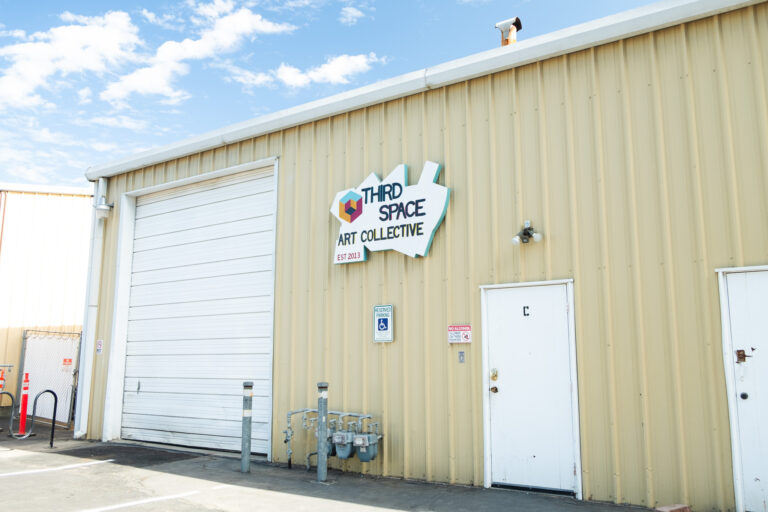
Good and Weird Davis, a media platform devoted to sharing exciting events in Davis, recently hosted a bike tour throughout the city. On Oct. 17, people gathered for a bike ride starting at Third Space Art Collective and ending at Delta of Venus. Bikers got the chance to interact with various businesses and stores along the route.

Good and Weird Davis’ online presence provides a community calendar with local activities and events. They share information about farmers markets, art shows, poetry and band performances and even educational clinics. They also share links to a myriad of businesses and organizations in Davis where community members can find exciting events throughout the year. 

To bring people together, Good and Weird hosted their own bike tour called “Dis-orientation: A Good and Weird Bike Tour of Davis” earlier this month. Anyone was welcome to ride along as they showed off the variety of places and businesses Davis has to offer. 

Along the route, participants had the chance to learn about different projects and visit new, iconic and essential locations all in one ride. Throughout the tour, they made stops at Third Space Art Collective, Secret Spot, Central Park, Davis Food Co-op, Davis Bike Collective and Delta of Venus. 

“We’ll visit these spaces, hear from some people doing cool things and we’ll point out a bunch of other rad things along the way,” a Good and Weird Davis Instagram post reads.

Businesses such as Third Space Art Collective and Davis Bike Collective are prominent community organizations in Davis that were both featured on the bike tour. They each hold open hours one to two times per week where they interact with the community and offer different services to enrich artists and bicyclists, respectively. 

Davis Bike Collective was one of the final stops along the ride. As a non-profit bicycle organization, Davis Bike Collective has become a staple in the biking community of Davis. They host open hours weekly on Thursdays and Fridays to provide tools and a space for community members to work on their bikes. 

“We provide a public DIY shop where folks share tools, skills and knowledge about bike maintenance and repair,” the Davis Bike Collective’s website reads. “Our aim is to empower confident and committed cyclists through education and community building, and to encourage more cyclists by making bikes and bike maintenance fun, safe and accessible for everyone.”

All of the projects and places riders got to experience along the ride can also be found on the Good and Weird website for those who want to take a self-tour at any time. 

Good and Weird Davis promotes community building and ensures everyone in Davis has somewhere they feel they can fit in. It is an informative resource for those looking for new spots to check out and meet new people. If you’re looking for more information on upcoming events in the city of Davis, take a look at Good and Weird Davis’ website and community calendar. 


Written by: Olivia Hokr — city@theaggie.org 

Studio Laika produces fall animated favorites

Stop-motion animation is a complex art form that deserves recognition  


By AALIYAH ESPAÑOL-RIVAS — arts@theaggie.org 


When thinking about the different mediums of animation, many come to mind: Computer-generated images (CGI), 3D and hand-drawn animation are the most common, while other mediums tend to go unnoticed — specifically, the style of stop-motion animation, despite the extensive work that goes into the process. 

Stop-motion animation is a multi-step style that involves the photography of various still images that are then edited together to mimic movement. While a CGI-animated film can now take one to two years given new technology, a stop-motion animated film takes anywhere from three to four years, with a year of the animation being solely the photography to begin the editing process. 

Despite the time, money and labor of a stop-motion film, the film style is underappreciated by audiences. However, there are few studios and directors that have taken the risk of using stop-motion animation that deserve their flowers.  

Laika Studios, founded in 2005, is a production company that specializes in the art of stop-motion animation through the storytelling of children’s films. The studio has released five films since its inception: “Coraline” (2009), “ParaNorman” (2012), “The Boxtrolls” (2014), “Kubo and the Two Strings” (2016) and “Missing Link” (2019). 

Of the five films, the most prominent release of theirs is “Coraline.” Released in 2009, the film has become a staple in pop culture not only due to the darker storyline for a children’s movie but also due to the intricate animated world of the film. The process involved 52 stages and 130 sets with a multitude of puppets and 3D-print technology to bring the world to life. 

And while there is no doubt “Coraline” is an animated classic, the other films produced by Laika Studios deserve the same attention. And beyond the detailed craft Laika produces, their emotionally rich plots are equally as creative. Thus, if you loved “Coraline,” Laika has four other films that you should check out, including a new one releasing next year called “Wildwood.”

But why call attention to a small subsection of the endless catalog of animated films? Well, now more than ever during a period of oversaturation of sequels and an oligopoly animated film industry, new ideas need to be recognized before studios decide to stop taking risks. 

However, recent stop-motion animated films have garnered some conversation. Despite the lack of marketing and going straight to streaming services, few films have received well-deserved recognition. Guillermo del Toro’s “Pinocchio,” released on Netflix, won an Academy Award for Best Animated Picture in 2022. Tim Burton also released “Wendell and Wild” in 2022 to critical acclaim.
While the two films are a step in the right direction for the future of stop-motion animation, audiences should be more open to less typical animated films. While there is no doubt some CGI-animated films are masterpieces, the art of stop-motion is beyond what a computer can ever render. 

Stop-motion animation requires a team of dedicated workers who have a passion for precise, time-consuming work. While we as the audience reap the benefits of their labor, we are the people that control whether or not these films are produced. Stop-motion animation is a high risk for studios and needs our support to solidify their importance in the animation industry. Before you judge a book by its cover, or rather a movie based on its trailer, think about the people behind the scenes making the films.

So, while you enjoy Halloween classics such as “Coraline,” “Corpse Bride” and “The Nightmare Before Christmas,” consider why you love those films.  


Written by Aaliyah Español-Rivas —-arts@theaggie.org 


City of Davis recognizes Oct. 14 as Indigenous Peoples’ Day

Vice Mayor Bapu Vaitla proclaims day of recognition and observance during city council meeting


By MATTHEW MCELDOWNEY — city@theaggie.org


On Oct. 15, the Davis City Council convened to proclaim Indigenous Peoples’ Day as the first item of their meeting agenda. On behalf of all members of the Davis City Council, Vice Mayor Bapu Vaitla read aloud the city’s proclamation that recognized and observed the holiday before some of Davis’ Native American residents and members from the Yocha Dehe Wintun Nation: one of the three Patwin tribes indigenous to the land Davis resides.

Vaitla said it was important to recognize this holiday and what ostensibly is the history of the atrocities committed at the expense of these Indigenous communities in America.

“Indigenous people, the original inhabitants of this hemisphere, suffered injustice, exploitation and genocide through forced removal, war, broken treaties, rape and the implementation of laws and policies to support such exploits by the United States of America,” Vaitla said. “Indigenous Peoples’ Day replaces Columbus Day in order to dispel the historical falsehood that Columbus discovered America.”

Vaitla then gave recognition to the Patwin tribe nations that have been stewards to the land where the city of Davis currently resides.

“For thousands of years, the land that the city of Davis sits on has been the home of Patwin people,” Vaitla said. “Today, there are three federally recognized Patwin tribes: Cachil DeHe Band of Wintun Indians of the Colusa Indian Community, Kletsel Dehe Wintun Nation and Yocha Dehe Wintun Nation.”

Vaitla concluded the proclamation by expressing the community’s gratitude for the lasting legacies left by these Patwin tribe nations.

“We are honored to be here today on their land to reaffirm our relationship to these tribal nations,” Vaitla said. “The city of Davis has benefited from the values and contributions of these Native Americans’ knowledge, labor, technology, science, philosophy, arts, culture and resources. Therefore we, the Davis City Council, on behalf of the residents of Davis, now recognize and observe Indigenous Peoples’ Day.” 

James Kinter, the tribal secretary of the Yocha Dehe Wintun nation, along with his family expressed gratitude for the city’s acknowledgment of Indigenous history and perseverance.

“On behalf of my tribe, thank you for doing this,” Kinter said. “All of this [history] happened to us and to acknowledge that benefits everybody in this country. That way we can understand some of the atrocities the tribes faced during that time.”

The importance of Native American visibility is a forefront issue of the nations of the Patwin tribe, but it is also the case for Native American communities all over the country. This diverse heritage of Native American families who call Davis their home was put on display.

Jesus Valle, a professor at American River College and a Davis resident, reaffirmed the proclamation made by the Davis City Council.

“This means a lot,” Valle said. “Words matter. These things have meaning, and it creates an atmosphere and an environment of awareness.” 

Valle expressed his gratitude for the nations that have lived here before him through a folk song in his own Native American language.

This desire for awareness and empowerment in Native American communities in Davis was felt through these words, and also by the activism of the Davis community.

The city council also invited Nizhoni Ellenwood, a NimiiPuu/Nez Perce tribe and Apache tribe artist as well as the president of the Davis-Joint Unified School District.

“Just this last week, we opened a Native Resource center for our K-12 families here in Davis, so this is our very first time that our communities have had a place for our families to go to,” Ellenwood said.

Eligible Davis K-12 families can receive grants and support for extracurricular activities. Further information regarding meetings is accessible on the Davis Joint Unified School District website. For Ellenwood, these programs and resources mark a positive change for empowering Native American communities that have persisted in spite of powers that have sought to erase their history.

“In regards to Indigenous Peoples’ Day and giving back to the community, one thing that I always ask for are donations to things such as our Native resource center which helps us build a better space, allows us to offer more to our children and helps support our next generations,” Ellenwood said. “There is so much more that we want to do.”


Written by: Matthew Mceldowney city@theaggie.org


Demon King picked the wrong day for world domination

An interview with the devil


By AUDREY ZHANG – aurzhang@ucdavis.edu


A hundred voices cried out in agony. Ash blackened the sky. Sulfur steam burned animals alive as they fled ground zero of the apocalypse, and with a roar the Demon King ripped the earth asunder right in the middle of a haunted house. 

“Wow, they really went all out on the special effects this year,” a passerby remarked. 

King ZZZaz has unfortunately been overlooked by modern historians, because people saw his name in ancient texts and just assumed the author was sleepy. He is, in actuality, a hardworking and detail-oriented King of Hell looking to make his resume stand out against all the other devilish deeds majors.

“Everyone’s collecting pitchforks and going into coding nowadays, so I wanted to do a project that showed I had initiative,” King ZZZaz said. “I figured a college campus full of students would be sympathetic about how hard it is to find a job, especially when you’re only seven feet tall. If I just asked really nicely with a sword, they’d probably just let me take over Davis and enslave them. You know, out of solidarity.” 

In exchange for writing him a glowing reference in blood, he has agreed to explain exactly what went wrong with his hostile takeover.

“It started to go wrong when little children came up and demanded tribute from ‘me’ — it’s supposed to be the other way around,” King ZZZaz said. “I don’t know how they ever got their license to pillage and terrorize, because they were asking for candy of all things. When did a nice sacrificial lamb go out of style?” 

“It got even worse when my general popped out of Hell in the middle of a costume contest,” KIng ZZZaz said. “Before he could even start threatening anybody, they declared him the obvious winner. It was for who had the ugliest costume. I’d never seen him look so defeated. I can’t even get him to stab people anymore, not even a little bit! He’s too busy trying to put on makeup, but his tears keep washing it off.”

When asked if he learned anything, King ZZZaz shared a statement. 

“Let me tell you, this whole trip has been a disaster,” King ZZZaz said. “I don’t even want to make a report on it, not even for extra credit.”

Indeed, King ZZZaz has made the same mistake hundreds of demons have made before him. Every year, several Demon Kings attempt world domination, and every year, if they don’t accidentally kill each other, they pick the one day humans aren’t dressed like humans.

“One of my subordinates stabbed me. Me!” King ZZZaz said. “You’d think the crown of fire around my head would clue them in, but no, they just complimented my cosplay and asked how I got my blood to look purple.” 


King ZZZaz shared his optimistic outlook on the unfortunate situation. 

“It hasn’t been a total loss though,” King ZZZaz said. “The torture department has gotten so many new ideas about how to punish people back home. I would love to shake the hand of the person who came up with midterms.”


Written by: Audrey Zhang – aurzhang@ucdavis.edu

Disclaimer: (This article is humor and/or satire, and its content is purely fictional. The story and the names of “sources” are fictionalized.)

Long COVID-19 continues to cause symptoms months or years after initial infection

Individuals may still experience issues with tiredness, dizziness and weakness due to persistent inflammatory response


By KATIE HELLMAN — science@theaggie.org


After contracting COVID-19, many individuals suffer from a plethora of debilitating symptoms that persist long after the initial infection. This condition is known as long COVID. 

These health problems can last for weeks, months or even years; most commonly, individuals report extreme fatigue, brain fog, dizziness and digestion issues, according to the Mayo Clinic. To receive a diagnosis of long COVID, a patient must experience the symptoms of COVID-19 three months after they first contracted the illness.

“Some researchers have estimated that 10% to 35% of people who have had COVID-19 went on to have long COVID,” the Mayo Clinic website reads.

Long COVID has proved to be notoriously difficult to treat due to uncertainty regarding its cause. One proposed hypothesis is that COVID-19 triggers an autoimmune response that leads the immune system to perceive the body’s own cells as a threat. This leads to damaged tissues and chronic inflammation.

It’s also possible that persistent symptoms occur due to a serotonin imbalance as a result of the virus replicating in the gastrointestinal tract, leading to neurocognitive and cardiovascular symptoms. 

Emerging infectious disease expert Christian Sandrock further discussed these potential causes in an article with UC Davis Health.

“This drives the neurocognitive symptoms (i.e., brain fog, memory loss or mood changes), and the binding to ACE receptors (a protein on the surface of many cells) causes much of the other cardiovascular symptoms,” the article reads.

Since the autonomic system, a part of the peripheral nervous system that controls involuntary body functions, is affected, widespread symptoms including effects on blood pressure, blood flow and heart rate are also common.

Health issues associated with long COVID appear to improve over time, albeit at a slow rate. Avoiding long COVID altogether might be possible by vaccination with Paxlovid, an antiviral therapy that targets a key enzyme contributing to the infection.

There are a few main risk factors that contribute to the likelihood of developing long COVID, according to Yale Medicine

“People who have had severe COVID-19, in particular those who required hospitalization or intensive care… people who have not gotten a COVID-19 vaccine… people with underlying health conditions such as diabetes, asthma, or obesity [and] …people who had multisystem inflammatory syndrome during or after COVID-19 [are at increased risk],” the article reads.

Although there are still many unknowns regarding long COVID, there is hope that symptoms may self-resolve with time, and even if they don’t, treatments can help control them. Furthermore, research is continuously being conducted to improve the health and well-being of those affected for a positive long-term outlook.

Written by: Katie Hellman — science@theaggie.org