57 F
Davis

Davis, California

Monday, December 22, 2025
Home Blog Page 80

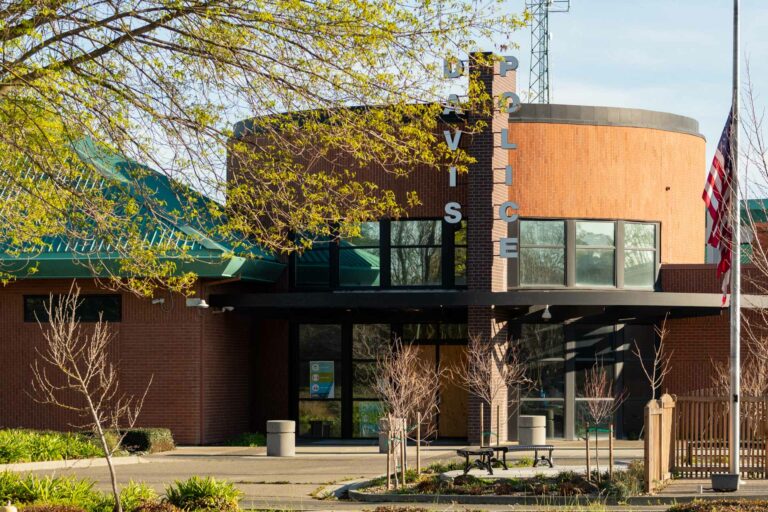
Davis Police Department to see new police leadership

Police Chief Darren Pytel to retire after 41 Years, Deputy Chief Todd Henry named successor 


By ALMA CULVERWELL — city@theaggie.org


After a 41-year career at the Davis Police Department, Police Chief Darren Pytel recently announced his retirement, scheduled for Oct. 17, 2024. Pytel’s retirement marks the end of an era for the city, as he had been a cornerstone of the department since starting as a police cadet in 1983. Deputy Chief Todd Henry has been named as the new chief, according to a city announcement by City Manager Mike Webb.

Pytel’s career in the department has been marked by a wide range of roles, including bike enforcement officer, watch commander, lieutenant, captain and deputy chief, before becoming police chief in 2015. Throughout his tenure, Pytel led the department through significant challenges, including the COVID-19 pandemic and the 2023 serial stabbings that shook the Davis community. 

In addition to his leadership role, Pytel has also served as a professor in the Administration of Justice Department at Sacramento City College, a position he plans to continue after retirement. He also looks forward to spending time with his family, traveling with his wife and exploring the region’s wineries.

“I’ve had a long and amazing career with the Davis Police Department,” Pytel said in a city of Davis press release. “It has been a true pleasure serving this community and working with so many people who have been focused on ensuring a safer Davis. I will miss so many, especially the dedicated members of the department, but I have no doubt they will continue to serve with pride and distinction under Chief Henry’s leadership.”

A head shot of former Davis Police Department Chief, Darren Pytel. (City of Davis Police / Courtesy)

Webb praised Pytel’s commitment and leadership to the city of Davis.

“His unique expertise and deep knowledge of the Davis community are unparalleled,” Webb said in the statement. “I wish him the best in his well-deserved retirement and am confident that Todd Henry will continue to build on Pytel’s legacy.”

Henry brings more than 28 years of public safety experience to his new role. Henry joined the Davis Police Department as deputy chief in March 2023, after a 25-year career with the Sacramento County Sheriff’s Office, where he developed initiatives such as a homeless outreach team and a mental health crisis response unit. His experience in community and intelligence-led policing, coupled with his leadership roles in various public safety boards, positions him as a strong successor to Pytel.

“I am grateful and honored to have the opportunity to continue serving this amazing community,” Henry said in the statement. “Davis has welcomed me with kindness and support, and I am committed to upholding the values of integrity and transparency that the city has come to expect.”

Henry’s appointment has garnered praise from city officials, including Mayor Josh Chapman, who expressed confidence in his ability to lead the department. 

“I would like to welcome Deputy Chief Henry into his new role as Davis Police Chief,” Chapman said in the press release. “I have full confidence that he will be a great leader for our Police Department for years to come.”

As the Davis community prepares for this transition, Henry will step into a role with both challenges and opportunities, working to continue the city’s reputation as a safe, inclusive place for residents.

Pytel’s retirement caps a career marked by dedication and resilience, and the city will feel the impact of his absence. However, with Henry’s experience and vision, Davis residents can look forward to a continuation of the department’s commitment to public safety and community engagement.


Written By Alma Culverwell — city@theaggie.org

Davis City Council candidates debate housing, business and inclusion ahead of election

The three candidates running for District 2 discussed their positions on hot topics during a forum held by the League of Women Voters 


By RORY CONLON — city@theaggie.org


The three Davis City Council candidates running for District 2 discussed plans to make housing more affordable, support business owners and engage with UC Davis students during a candidate forum hosted by the League of Women Voters on Sept. 26 in City Hall. The candidates, Linda Deos, Victor Lagunes and Dillan Horton, answered questions written by the League of Women Voters and the audience. 

Sophia Ocampo, a registered nurse and UC Davis alumna, said she was most concerned about how candidates would address rising costs of housing. 

“I rent, and I wonder if I will ever be able to afford buying here,” Ocampo said. “I’m 40 years old now. Having been a student here before and rented here 20 years ago, I’m still facing the same issue.” 

During the forum, candidates were given 90 seconds each to explain their plans for making housing more affordable to public employees and young adults. 

Lagunes, the president of the Davis Teachers Association, said he estimated that 45% of educators cannot afford to live in the area they teach in but offered a possible solution.

“Pushing for designs that are either higher in density or lower in square footage at price points more accessible for individuals […] is one way to move the needle,” Lagunes said. “I also think that investing in our Housing Trust Fund so that we can provide down payment assistance to people starting to build their own equity in those units is another way to move the needle.” 

Deos, a member of the city of Davis Planning Commission, said the first step is to recruit public and private partners who manage mutual housing programs. She also pointed to a transportation plan to accommodate the dense housing.

“Get more density going up and around,” Deos said. “Build those duplexes, build those triplexes, build all of those, but we have to link transportation with density.” 

Horton, a chair on the Davis Police Accountability Commission, is a renter in the Davis community. He proposed building more diverse types of housing and strengthening a program that supports renters in becoming home buyers. 

“It’s important we prioritize building more workforce, market-rate and mixed-use housing, so that families, seniors and working folks can afford to live in town,” Horton said. “We also need to make sure that the First-Time Home Buyer Program has money in the piggy bank. Folks like myself who want to be able to utilize the program to transition out of rental housing aren’t able to utilize that today to move through the housing continuum.” 

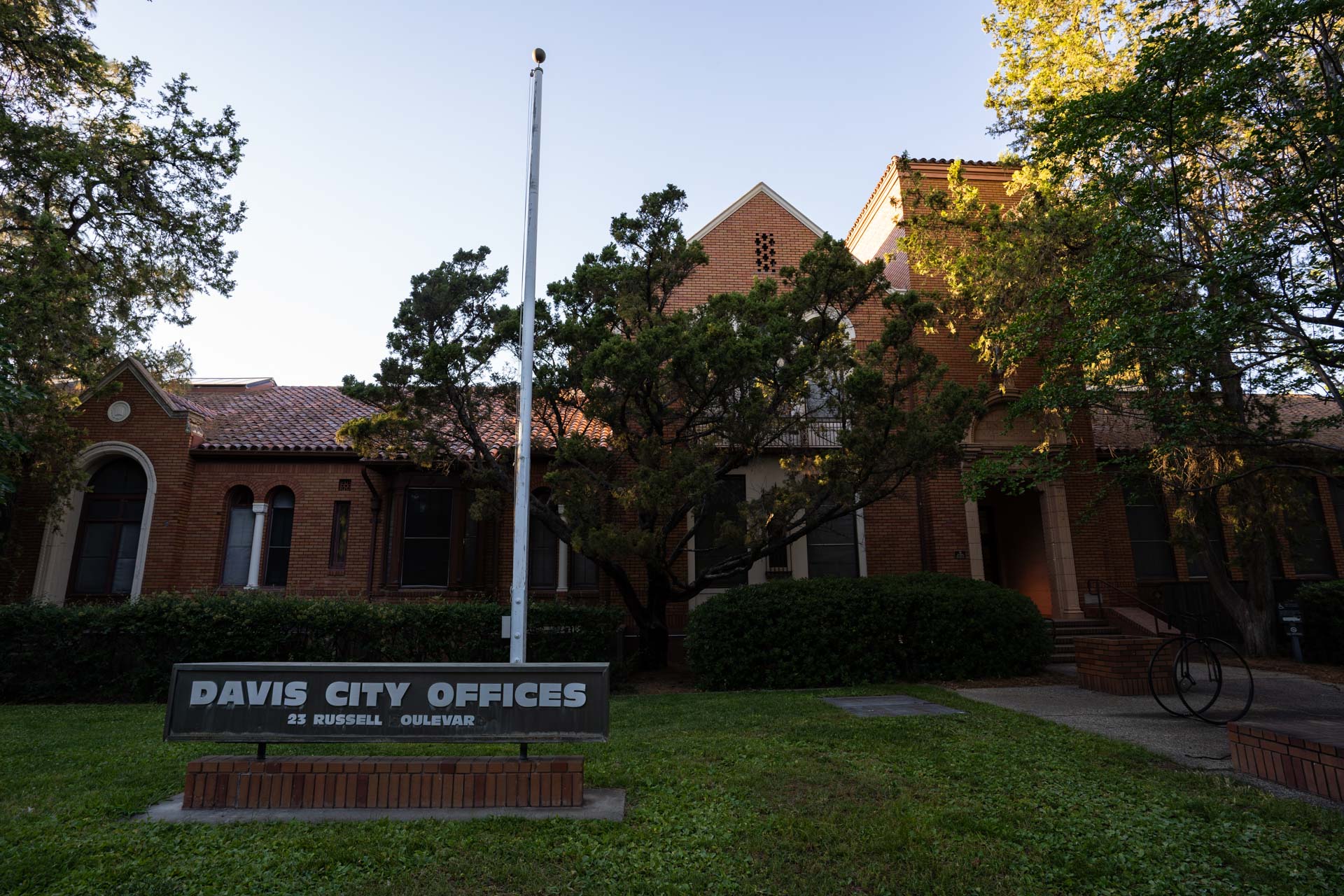
Davis City Offices where town hall is located. (Justin Han / Aggie)

Candidates then discussed the financial health of the city of Davis. Lagunes said the key to improving the financial health of Davis was through passing Measure Q and supporting small businesses. 

“When we talk about our economic development, we talk about our businesses and the need for a greater tax base,” Lagunes said. “I think it’s important that our city has hired an economic development director to conduct outreach and find more incubators to start businesses. I also think it’s important that our partnerships with our local non-profits continue to thrive so they can continue to provide their services.” 

Horton said that when he was talking to voters about Measure Q, he encountered resistance from people who thought the city was not doing a good enough job of managing money. 

“We need better outreach to affected residents before we formulate new projects or policies, so that we don’t do one project one, two, three times over,” Horton said. “We need to better utilize local expertise instead of paying several thousand dollars to an out-of-town consultant for almost everything we do as a city. If we do these things, we’ll rebuild broken trust with Davis voters and, at the same time, be better stewards of our city finances.” 

Deos said that passing Measure Q, which would increase the sales tax by one cent and provide $11 million a year toward essential city services, would improve the city’s financial health and cited her experience as a bankruptcy attorney.

“How do you build trust?” Deos said. “You put people there that you trust, and who’s somebody who can do that? How about a bankruptcy attorney who’s been looking at financial documents for 25 years and saying, ‘Here’s what you need to do.’ That’s what I’m going to bring to the city.” 

Candidates also responded to how they would make local government work for students who were unable to vote in the election, either because they were too young or because they didn’t live in the district. 

Lagunes said that to increase engagement from college students, the city needs to address their needs. 

“The level of housing insecurity and the level of students on social supports like CalFresh are a lot higher now,” Lagunes said. “You can imagine that if your basic needs are not being met then that’s going to limit your ability to engage and access what local government is about. I think voicing that is why I was able to get the endorsement of the Davis College Democrats.” 

Horton said millennials and zoomers are issue-based voters who are looking for change on issues that matter in their lives. 

“I think it’s critically important that if we want more young people to be willing to vote in any election, not just a Davis City Council election, we need to, as government leaders, make progress on the issues that working-class Davis [residents] are facing in their lives every day,” Horton said. “We need to make progress on expanding access to quality, affordable housing and making it easier to start and operate a small business in this community.” 

Deos said that the key to engaging students is inviting them to get involved in city council meetings and reach out about issues affecting the community. She also pointed out the historical significance of the race — if elected to the city council seat in November, she would be the first openly gay lesbian to serve on city council, and Horton could be the first openly gay, African-American candidate elected to office. 

“Having that presence is huge,” Deos said. “It’s the same thing if Dillan [Horton] were to be elected — I think that is so important. When I was growing up thinking about coming out, it was like, ‘Oh, Harvey Milk got assassinated, I’m going back into that closet.’ It wasn’t safe for me to come out. [It’s about] showing what’s possible.” 


Written By: Rory Conlon — city@theaggie.org


Local Davis libraries and bookstores bring awareness to Banned Books Week

Mary L. Stephens Library, The Avid Reader and more take a stand against literary censorship


By OLIVIA HOKR — city@theaggie.org 


Banned Books Week is an annual campaign that brings visibility to books that have been banned or challenged over the past hundreds of years within schools and libraries. This year from Sept. 22 to 28, librarians, writers, journalists and teachers focused on highlighting the diverse voices of authors who have been victims of these bans. The American Library Association implemented the theme “Freed Between the Lines” for this year’s unition against censorship as a political statement for the freedom of storytelling and reading.

Yolo County Library took a public stance through their social media accounts and participated in Banned Books Week to encourage the community to unite against book bans. At an even more local level, the Mary L. Stephens Library in downtown Davis joined other Yolo County Libraries in shining a light on books that are being challenged and banned throughout the nation. 

Scott Love, the library regional manager in the West Yolo Region, shared that Mary L. Stephens Library produced a display of challenged books. Similarly, Logos Books in downtown Davis created a display for Banned Books Week that included a printed list of the 2023 most-challenged books. 

“It is important to acknowledge the attacks on everyone’s right to have unrestricted access to free books to read,” Love said. “Yolo County Library feels strongly that each individual and each parent should decide what they and their children should read, not the library.”

The American Library Association’s Office for Intellectual Freedom shared data that showed a 65% increase to challenged books in 2023 compared to the amount in 2022. Public libraries and school libraries were main targets of censorship this past year. The most common reason for a book to be challenged is its representation of LGBTQIA+ and BIPOC identities within the story, according to the data. 

Kayla Girdner, the administrative assistant and social media manager at The Avid Reader in downtown Davis, believes in advocating for the freedom of books year-round and fighting against the marginalization of authors.

“They can’t ban the books from the bookstore, but they can absolutely ban them from being accessible to people who don’t necessarily have money to go out and buy the books from a store,” Girdner said. “[Banned Books Week is] a big push in schools and bookstores to celebrate those books and make them visible in places where maybe they wouldn’t be.”

In 2023, Texas and Florida challenged, respectively, 1,470 titles and 2,672 titles per the data made available by the American Library Association. These were the highest numbers of challenged titles among the 50 states.

Meanwhile in California, Governor Gavin Newsom signed the California Freedom to Read Act into law on Sept. 29, 2024. This law prohibits public libraries, which includes school libraries, California State Libraries and library districts, from limiting the distribution or sale of books on the basis of the topics and materials within it. It will go into effect on Jan. 1, 2026.

“​​The bill would prohibit the governing board or body of a public library, or any body or commission designated to review the procurement, retention, or circulation of, or access to, library materials, from (1) proscribing the circulation or procurement of, or access to, library materials in a public library because of the topic addressed by the library materials or because of the views, ideas, or opinions contained in materials or (2) creating policies or procedures that limit or restrict access to library materials offered by the public library, except as provided,” the bill reads.

The increasing attempts of censorship on literature within the U.S. is a crucial problem that communities must continue to fight. Book bans can impact education, diminish the diversity of author’s voices, discourage literature engagement and reduce access to incredible stories. Yolo County Library and local Davis businesses are proud to distribute and sell titles that have been challenged and unite against book bans. 

“In my 38 plus-year career across four library systems, I have seen many materials challenged by groups or individuals,” Love said. “But not one of those challenges was successful.”


Written by: Olivia Hokr — city@theaggie.org


Culture Corner

The Arts Desk’s weekly picks for music, movies and more 


By SAVANNAH ANNO — arts@theaggie.org


In honor of Hispanic Heritage Month, enjoy these four picks created by Hispanic and Latinx artists! 


Song: “Lejos de Ti” by The Marías (2024)


Referring to themselves as the “psychedelic-soul lovechild” of lead singer María Zardoya and band member Josh Conway, The Marías blend almost every genre under the sun: indie rock, funk, latin pop and even jazz. Simply put, listening to The Marías makes you feel cool.

“Lejos de Ti,” the eighth track on their most recent album “Submarine,” details the isolating aftermath of a breakup. With trance-inducing vocals, Zardoya promises to keep her ex-lover in her memories forever, despite how much it may hurt at first, and begs him to do the same. 

While the lyrics seem simple on the surface, what may be most interesting is the possible backstory behind the breakup song. Along with tracks like “Sienna” and “Echo,” fans speculate “Lejos de Ti” was based on the real-life split between Zardoya and Conway who were in a relationship from 2016 to 2022. In “Lejos de Ti,” perhaps the two are promising to each other that despite the end of their romance, they’ll keep their memories intact in order to preserve their creative partnership. 


Movie: “Pan’s Labyrinth” dir. by Guillermo del Toro (2006) 

As Halloween begins to creep up on us, so do those childhood monsters we used to look for under beds or behind closet doors. For me, one of the scariest was del Toro’s Pale Man, a monster whose eyeballs were not kept in his head but on the palms of his hands. The story begins with Ofelia, a young girl living in 1944 Spain, who moves to the countryside with her pregnant mother and violent stepfather. As the stepfather, Captain Vidal, begins to hunt down Spanish rebels, Ofelia is whisked away into her own mission. Meeting a faun who leads Ofelia to believe she’s the reincarnation of a lost, otherworldly princess, she is given three tasks to complete through an ancient stone labyrinth. Faced with monsters in both the real world and underground, Ofelia’s fantastical journey works to represent the historical conflict of Francoist Spain, a period of dictatorship following the Spanish Civil War. With a meticulous eye, del Toro is able to perfectly balance horror, folklore and history in this perfect October watch. 


Book: “Blackouts” by Justin Torres (2023)


I first heard of Torres last fall in a queer fiction course when we read and revered his debut work, “We the Animals” (2011). In his second novel, “Blackouts,” Torres grows into an even better writer as he weaves a story that feels unreliable and all too real at the same time. The book tackles the issue of queer erasure both literally and figuratively. Struggling with gaps in his consciousness, 27-year-old narrator Nene seeks out Juan Gay, an older man he met a decade prior at a mental hospital. Both institutionalized for being queer, Gay, who is now on his deathbed, bestows upon Nene his unfinished task of chronicling the research of Jan Gay, who interviewed queer folk and even published a book, “Sex Variants: A Study of Homosexual Patterns” (1941). 

Torres brilliantly blends real life history with his own fiction: Jan Gay was an actual researcher, and the book really was published in 1941. The title “Blackouts” references the copy of the Jan Gay book passed down to Nene that is selectively filled with scribbled-out words and paragraphs to form new messages and meanings. Similarly, the book was misconstrued in real life when it was used by other researchers to create stereotypes and criminalize the queer community. As Nene works to commit Juan Gay’s oral history to memory while immortalizing the stories that came before him, the pair recount their lives and experiences in an emotional whirlwind of a novel. Coupled with unimaginable prose, the story will leave you inspired, probably sobbing, but most importantly — hopeful. 


TV Show: “Los Espookys” by Julio Torres, Ana Fabrega and Fred Armisen (2019) 


By coincidence, another Torres! Switching out heartbreaking for hilarious, “Los Espookys” has proved Julio Torres to be a comedic visionary. Beginning as a writer for Saturday Night Live — which led to four different Emmy nominations — Torres left the show in 2019 to begin his own projects. With Fabrega and Armisen, “Los Espookys” marks the beginning of a universe all of Torres’ own: brightly colored, blunt and ultimately confusing with its out-of-this-world scenarios — literally. 

Following a group of four odd and supernatural-obsessed friends, “Los Espookys” tells a classic tale as each character learns the importance of following their dreams and staying true to themselves. Unlike these classic tales, the characters’ dreams include success in the horror business. Each episode chronicles the team helping a different customer by faking the existence of aliens, sea monsters and other strange creatures. As the show progresses, the line between real and imaginary gets increasingly blurry as they become involved with strange politicians, cursed mirrors and psychic water spirits. Blending creepy and creative, “Los Espookys” serves as a love letter to the strange. 

Written by: Savannah Anno — arts@theaggie.org

Are sequels really just as good?

The animation industry needs more original films, not sequels


By AALIYAH ESPAÑOL-RIVAS — arts@theaggie.org 


There is currently an ongoing trend in the animation industry: sequels. More specifically, sequels, threequels and tetralogies of films that do not need another installment. As children, we were told that the princesses lived happily ever after and that’s it. But not anymore. Instead, studios such as Disney and DreamWorks are choosing to continuously produce installments of blockbuster films at the expense of original stories.

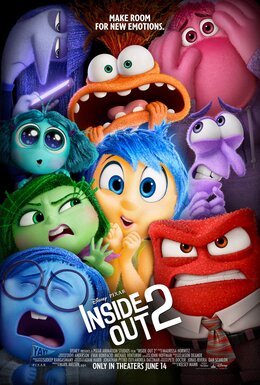
This year alone, three of the highest grossing animated films were all sequels or tetralogies. “Kung Fu Panda 4,” “Despicable Me 4” and “Inside Out 2” have made a combined box office of nearly $3 billion worldwide. Moreover, this November “Moana 2” is slated for a Thanksgiving release, a primetime slot that will no doubt make millions for Disney. 

Although these sequels are often a financial success, they oversaturate the movie production field and can bar the production of new, original movies.

This can happen due to two reasons: either there isn’t any promotion for the non-sequel films or it is shucked to streaming services. The biggest culprit of this act is Disney and their treatment of their subsidiary Pixar Animation Studios. During the pandemic, Pixar provided audiences with original stories such as “Turning Red,” “Luca” and “Soul” despite being released on the Disney+ streaming service. Once audiences returned back to the theaters, however, Pixar stopped producing original films once again.
The first Pixar film released post-pandemic was “Lightyear,” a prequel to Pixar’s first film franchise, “Toy Story.” Despite the love for the original “Toy Story” films, the movie bombed at the box office, causing Pixar executives to go back to the drawing board. 

Additionally, two Disney animated films were released and performed poorly as well due to minimal promotion: “Strange World” (2022) and “Wish” (2023). As a result of expectations not being met repeatedly, Disney and Pixar returned to what is most comfortable: pre-existing properties that are known to make money, otherwise known as “Moana 2” and “Inside Out 2.” 

“Inside Out 2” is now the highest grossing film of 2024. Its success, while a win for Pixar and Disney, is a worrisome sign for the future of animation. 

At the D23 Expo this year, the conference hosted yearly to announce Disney’s newest projects across their subsidiaries of Marvel and Pixar, they confirmed more sequels. It was announced that “Frozen 3,” “Frozen 4,” “The Incredibles 3” and “Toy Story 5” are slated to be released by 2030. Other than Disney, “Shrek 5,” “Sonic the Hedgehog 3” and “The Super Mario Brothers: 2” are also slated to be released by 2026. 

Despite expectations not being met for original films, studios should not give up on producing them. There are plenty of new original animated films releasing soon such as “The Wild Robot,” “Piece by Piece” and “Transformers One,” that deserve the same recognition as all of the sequels from this year.

Although sequels make millions, it’s only a matter of time before audiences lose interest in these beloved characters. These studios need to realize what made them stand out was their original stories. By only producing sequels, they are tabling their ability to creatively produce new, rich narratives.


Written by: Aaliyah Español-Rivas — arts@theaggie.org 

Despite changes, Watermelon Music continues to support the local community

0

This “one-stop shop for music” keeps its doors open in the face of difficulty 


By LAILA AZHAR — features@theaggie.org


Watermelon Music is described by those who operate it as a “fiercely independent” music store. The shop has been considered a Davis staple since its opening in the 1970s and is proud to be a non-commercialized, family-friendly store that has aspired to be a “go-to” for musicians based out of Northern California.  

Following COVID-19, the store was facing serious financial struggles; in the face of these hardships, the business decided to make some alterations in order to prevent Watermelon Music as a whole from going under. 

On May 3, local Davis music store Watermelon Music announced its closing with the Davis community. 

“It is with a complex mix of emotions that I must announce the winding down of Watermelon Music,” Jeff Simmons, an owner who has worked at the store for 35 years, said. “I have always tried to operate with integrity and transparency, and it is important to me that I exit on my own terms, with clean hands and obligations met.” 

Initially established as Second Street Music, the store has been around for over 50 years, existing as Watermelon Music for 28. 

Brian Aguilar, who has worked at the store for 12 years, described it as “a one-stop shop for music,” providing instruments, sheet music, lessons and other equipment. 

In recent years, the increase of online sales has put Watermelon Music in a difficult spot. COVID-19 in particular sent the store into debt, as equipment was purchased in anticipation of a school year that never came.

During the summer of 2023, a GoFundMe aimed to help the store financially and keep its doors open raised over $100,000. However, unsure of how stable the future would be, Simmons made the difficult decision to begin closing operations. 

“I can’t see a clear path toward becoming profitable again, without a complete rethinking of the model that has worked for so many years,” Simmons said.

Despite this, members of the store and members of the community came together, refusing to see a beloved pillar of the Davis music community close its doors. 

Aguilar, along with another employee, Eric Wellington, stepped in to become the managing partners of Watermelon Music. This transition involved downsizing — the store will no longer carry orchestra or band instruments or provide instrument rentals. Additionally, the amount of sheet music the store carries will be significantly reduced, going from 30,000 titles to 300, specifically keeping the sheet music needed by local teachers. 

The instructors who taught music lessons at the store have now formed the Watermelon Music Academy, which will be continuing as an offshoot of Watermelon Music. 

Additionally, a non-profit organization called the Friends of Watermelon Music rallied to support the store, taking over part of the building with the goal of providing instrument rentals. 

Aguilar said that during this transition, Simmons was encouraging and supportive.

“He has facilitated this transfer of leadership here to Eric and myself in a way that would not have been possible with almost any other business owner,” Aguilar said. “He wants to see what he built live on, and he wants to see the community be served.” 

It is precisely this loyalty to the community that has saved Watermelon Music. The store hosts a variety of open events and communicates with local schools to ensure that students and teachers have the equipment they need. 

Customers often express how long the store has been a part of their life when they come in, according to Aguilar. 

“There are so many people who are like, ‘Oh I’ve shopped here for this many years, and I’ve known Jeff since he was in college,”’ Aguilar said.

This close relationship among local people and businesses is something that an online retailer or a large corporation could never replicate. Even as the store faces difficulty, the community’s connection to Watermelon Music motivates them to ensure it remains an available resource. 

Aguilar said he hopes to host one community-oriented event each month. At the end of October, Watermelon Music will host a family-friendly haunted house. In November, the store plans to partake in its annual “Strings for Food” initiative, in which they restring guitars in exchange for two cans of food, which will be donated to a local food bank. 

Friends of Watermelon Music has plans to offer classes in non-western music, as well as to become a consignment store where people can sell their old music equipment. 

Jenny Le, a second-year managerial economics major, said she was excited for the future of the newly modified store. 

“Online shopping and big retailers have made life difficult for small businesses and locally owned businesses,” Le said. “It’s cool to see a store like Watermelon Music manage to stay open despite that.” 

Rania Asad, a second-year neurobiology, physiology and behavior major, said she appreciated the community aspect of local businesses like Watermelon Music.

“People learn music alone or with a very small group a lot of the time,” Asad said. “But it can really connect a lot of people, and a store like this is a space for that to happen.” 

Currently, as the store is clearing out items they will no longer continue to stock, many items are on sale at 50% off. In partnership with the local art studio, a kiosk at Secret Spot offers Watermelon Music items. As changes take place, Aguilar encourages folks to take advantage of these resources offered by Watermelon Music, as well as to support the business so that it can remain a part of the Davis community for years to come. 


Written by: Laila Azhar — features@theaggie.org

Review: Rewatching ‘A Bug’s Life’ as an adult

The children’s movie holds up even when viewed through an adult lens 


By JULIE HUANG – arts@theaggie.org


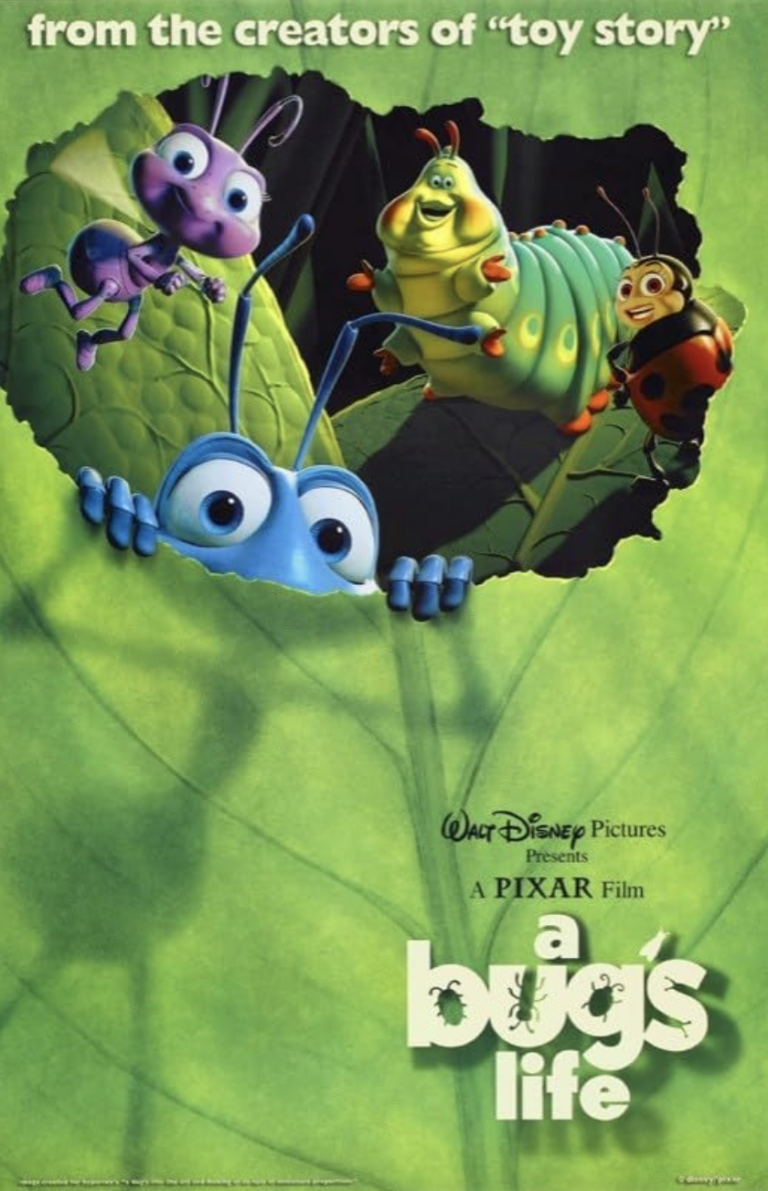
As adults, circling back to films we watched as children can often evoke feelings of nostalgia and joy that are reminiscent of the twists and turns of childhood. One such film is “A Bug’s Life,” Pixar’s second computer-animated film, which was released in 1998. 

The film follows Flik, an ant with a penchant for inventions that seem to cause more harm than good to the ant colony that he calls home. Having been subjugated by a group of grasshoppers, the ants must gather food for both themselves and their tormentors, until one of Flik’s inventions destroys the food offering. Princess Atta sends him on a mission to find warrior insects to defend the colony against the grasshoppers — a disguised ploy to get rid of him for good. When he comes back with a group of circus bugs that he believes are strong warriors, Flik realizes that he must devise another plan to protect his colony, using his knack for inventions. 

There are some things about “A Bug’s Life” that may not hold up during a rewatch 26 years after its initial release. For one, the crowd shots feature dozens of CGI ants moving in synchrony and all sporting the same facial expressions. The disproportionate scale of the characters also inspires feelings of uncanniness. In real life, seeing a garden ant nearly the size of a grasshopper would probably be a terrifying experience. 

Despite these flaws, the movie itself ultimately makes for a valuable experience due to its lighthearted approach to a mature story and themes that might have been accompanied by a much darker atmosphere if not written for a children’s movie. When viewed by those who have gained the perspective of adulthood, it is clear that “A Bug’s Life” contains heavy concepts such as power struggles between groups of people (or insects) and glimpses into the strategies used by oppressors to maintain hierarchical systems of oppression. 

These ideas are handled with care and woven seamlessly into the plot and dialogue of the movie, so that every scene seems believable instead of heavy-handed. An explanation coming from Hopper, the leader of the grasshoppers, on how to crush the ants’ spirits so that they forget their strength in numbers seems like a sufficiently villainous speech for the main antagonist of the movie. Meanwhile, older viewers are able to make the connections between Hopper’s actions and real-life dynamics between oppressor groups and the people they oppress. 

The movie’s plot is also driven by the pressing concern of finding enough food to support oneself and one’s family unit. The idea that food is a necessity is obvious to all, including children. However, adult audiences, who are more closely acquainted than children with the daily ins and outs of buying, preparing and budgeting for food, may more readily appreciate the arduous effort the ants must put in to gather foodstuffs. 

Rewatching the film in adulthood also adds new emotional layers to the characters, brought about by adult audiences’ ability to draw from a larger bank of lived personal experiences and reflections on those experiences. Flik’s beginnings as an outcast with different interests and attitudes than the rest of his colony are reminiscent of the classic adolescent experience of feeling different and therefore isolated. As the audience follows his character arc from outcast to celebrated hero, they are presented with the idea that their interests and ideas, no matter how different, hold the key to personal fulfillment. Already a valuable message to receive in childhood, older audiences who have lived through circumstances similar to Flik’s are able to bring their own memories to the film, infusing the viewing experience with rich personal meaning. 

As a children’s film, “A Bug’s Life” is appropriately cheerful and silly, featuring a bright color palette and an eclectic cast of characters. The childish visuals and cheery atmosphere are supported by a well-developed foundation of themes and concepts with the potential to resonate with audiences much older than children.

Written by: Julie Huang — arts@theaggie.org

Noticias de última hora: Presidente de ASUCD reveló por inadvertencia la mala conducta de empleo de un ex director de unidad

Gaius Ilupeju reveló la mala conducta durante la reunión del Senado de ASUCD el 3 de Octubre, antes que oficiales de ASUCD intentaran reprimir la publicación del problema.

Escrito por VINCE BASADA, Traducido por ILEANA MERAZ Y SAMUEL RUIZ — campus@theaggie.org

Un ex director anónimo de ASUCD ignoró reglas de empleo y estatutos de entrevista, el Presidente de ASUCD Gaius Ilupeju alegó en una reunión pública del Senado de ASUCD el 3 de Octubre.

Durante una reunión pública del senado del gobierno estudiantil, ASUCD, el 3 de Octubre del 2024, el presidente, Gaius Ilupeju, alegó que un ex director de unidad ignoró las reglas de empleo y de entrevista. 

“Descubrimos este verano durante entrevistas que un director anterior no estaba conduciendo entrevistas como supuesto, de acuerdo con los estatutos de entrevistas , y adicionalmente no estaba cumpliendo con prácticas de empleo justas,” Ilupeju dijo. “[Este director de unidad] publicó vacancias y no condujo entrevistas. El ex director en el tiempo de ofrecer y empezar el proceso de entrevistas organizó para que sus amigos aplicarán o gente que ellos conocían aplicarán a las vacancias de trabajo. Adicionalmente además de no mandar las formas de empleo, no tuvo a la gente correcta en las entrevistas.”

El ex director de unidad que estuvo involucrado no fue identificado, y su motivo/daño fiscal a la organización sigue desconocido. No hubo más información sobre las entrevistas en donde fueron descubiertos ni el proceso disciplinario que fue conducido al descubrir de esta acción corrupta interna.

La revelación de estos desarrollos a la prensa, que también era nueva información para el cuarto lleno de nuevos senadores y presidentes de comisión,  fue hecha por inadvertencia. Ilupeju reveló la mala conducta sin conocer la presencia de un reportero del periodico El California Aggie.  No había otros individuos aparte del gobierno estudiantil en la reunión y el reportero.

“Si esa [violacion de empleo] se sale de este cuarto, podríamos estar involucrados en demandas judiciales serias,” Ilupeju dijo a sus compañeros del gobierno estudiantil.  

Ilupeju y la Vicepresidenta Interna Aaminah Mohammed intentaron eliminar sus palabras del registro de la reunión y pidieron que El California Aggie no publicará la información, una solicitud que en acuerdo con el Código de Ética ,El Aggie no realizó.

Ilupeju después dio un comentario escrito cuando se le pidió.

“Mientras siempre nos esforzamos para asegurar que todas nuestras unidades y servicios siguen las direcciones y reglas apropiadas al límite y mejor su habilidad, no siempre ha sido así en el pasado,” dijo Ilupeju.

“El evento al que me refiero ocurrió el año pasado o el año antepasado, sólo recientemente aprendí sobre esto cuando acepté esta posición. Estamos haciendo todo lo posible para prevenir que esto pase otra vez.”

La información fue revelada durante una discusión sobre SB#1, una propuesta para  el presupuesto de ASUCD para el año fiscal de 2024-25 que sirve también para autorizar dos proyectos capitales para mejorar los servicios y operaciones del Coffee House y Unitrans.

El borrador inicial incluía palabras que afirmaban el derecho de la oficina ejecutiva de ASUCD de “suspender el presupuesto de cualquier violando la constitución y leyes de ASUCD.” Cuando el Senador Chilena Wickramasinghe le preguntó al Presidente Ilupeju  la razón por la inclusión de la cláusula, Ilupeju reveló la mala conducta al senado.

“Porque hemos dado semi autonomía a nuestras unidades, no examinamos cómo gastan sus presupuestos,” Ilupeju dijo en la reunión. “Hemos tenido muchas situaciones donde gente se pasa del presupuesto, y nuestra política actual es que si una [unidad] tiene deuda, si se pasan del presupuesto, [y] si terminan gastando más de lo que se le ha dado, el dinero sale de la reserva general.”

“Eso no es justo para los estudiantes porque significa que no somos prudentes con el dinero que se nos ha sido dado, y eso no es justo para otras unidades,” Ilupeju dijo. “Hay unas unidades que van mucho más allá para asegurarse de que están verificando los números, incluyendo recibos.”

SB#1 después fue pasado por unanimidad, pero con la sección mencionada eliminada. Ilupeju también dijo en el momento que él planea tener reuniones privadas sobre la mala conducta en más detalle.

Escrito por: Vince Basada – campus@theaggie.org

Traducido por: Ileana Meraz y Samuel Ruiz 

The Aggies face another loss against Long Beach State

Despite the loss, UC Davis looks forward to the rest of their season 


By (Krista Hajjar) — sports@theaggie.org


The UC Davis Aggies played another home game against the California State University, Long Beach (CSULB) Elbees on Sept. 26. UC Davis fought hard and won the first set, but Long Beach State fought back and ultimately won the game. 

The Aggies were hoping to start strong with a lead in the game as they scored the first point of the set. However, the strong start was short-lived as the Elbees stole the lead. CSULB kept a distance of three to four points throughout the set, making it difficult for UC Davis to catch up to them — but that didn’t stop them. The Aggies put an end to the Elbees’ scoring at the 17th point when Jade Light, a third-year aeronautical engineering major, scored a service ace, placing the Aggies only a point behind with a score of 17-16. 

UC Davis’ streak continued as Long Beach State missed a point, tying the match at 17-17. The rest of the first set was neck and neck with both teams ultimately remaining tied, at 21-21. The Aggies didn’t hesitate and continued to fight in the first set and ultimately finished with a victory block by Allie Caldwell, a second-year undeclared major, and Olivia Utterback, a fourth-year human development major.

The second set wasn’t as favorable to the Aggies as the first set. Within the first 15 points of the second set, the Elbees gained a six-point lead over the Aggies, making the score 10-4. UC Davis did their best to close the gap by scoring three points back to back, however, CSULB didn’t let them get too far ahead. Head Coach Dan Conners called multiple timeouts during the set, but even with the constant communication between coach and players, UC Davis took a loss during the second set with a final score of 25-15. 

With set wins being tied 1-1, the Aggies stepped into the third set gaining a two-point lead from the Elbees. The lead was once again short-lived as Long Beach State managed to  score four back-to-back points. Utterback then cut off their winning streak by scoring a point and keeping the gap down to a one-point lead in favor of the Elbees. Both teams were back to being neck and neck, until CSULB scored seven consecutive points, turning the score into a seven-point lead. While the Aggies tried their best to close the gap, the Elbees didn’t let up and swept the third set with a final score of 25-17. 

The fourth set started off strong for the Aggies as they took the lead by scoring the first five points with two service aces from Light and two kills from Utterback. The Elbees quickly worked hard to close the gap and narrowed it down to another one-point difference. Both teams fought hard, and the game remained within a one-point difference until Long Beach State stole the lead within a few plays, creating another seven-point gap. Though UC Davis tried to come back, they eventually lost the fourth set 25-16, and the match went to CSULB. 

Although UC Davis lost the match against Long Beach State, that doesn’t mean there weren’t any highlights from the players. Light achieved an UC Davis-high with a total of 12 kills, three service aces and 10 digs. Utterback was just behind Light in number of kills with 11 but also had two blocks and eight digs. Mia Starr, a second-year undeclared major, maintained the UC Davis offense with 33 assists, 11 digs and two kills. Lastly, Julie Ng, a fourth-year managerial economics major, ended the game with a match-high of 16 digs.

Head Coach Dan Conners shared his insight with UC Davis Athletics following the match. 

“We didn’t have the best plan for their service, and I take responsibility for that,” Conners said. “We lost the serve and pass battle tonight, so it will be key to game plan for that better before we face them again. Wins and losses are all part of the journey, and you have to move on quickly and get ready for the next. So we will be ready for UC San Diego on Saturday.” 

UC Davis went on to win against UC San Diego with a final set score of 3-0 and aim to turn this into a winning streak as the season progresses. The Aggies have had a dynamic start to their season and, despite the loss against Long Beach State, look forward to a season of strong competition and intense matches. 


By (Krista Hajjar) — sports@theaggie.org

A glimpse into the after-hours Davis music scene

Matt Talbott plays a solo show at Armadillo Music


By ELIZABETH BUNT — arts@theaggie.com


On Oct. 2, after the storefront closed for the night, a small crowd of music lovers quietly descended on Armadillo Music, a vinyl record and CD shop located in downtown Davis on F Street. The main draw was a one-man show played among the boxes of records. The artist was Matt Talbott, the former lead singer and guitarist of the alt-rock band Hum.

Leading up to the show, there was little to no press provided by Armadillo. The only sign that a concert would take place was an Instagram post featuring Talbott’s name and the incorrect date for the show. In true indie fashion, those interested in attending had to track down Talbott’s Facebook (which had not been linked to the Armadillo post) and buy tickets from a third party website. Armadillo capped the number of attendees somewhere around 30. Anyone who had not bought tickets through the Facebook page was able to enter only by paying in cash.  

Once inside, the crowd settled around the tiny stage set up in the front corner of the shop. An Armadillo employee at the back of the store served beers on tap and chatted with the regulars. Alongside couples, the unofficial uniform of black band tees and jeans seemed to ring true with the middle-aged audience. College students filled in the gaps among them in groups of three or four, with many sporting fishnets and long hair. 

Talbott emerged and took a seat on stage in a wooden chair with green cushions that looked like it could have come from an estate sale that morning. He wore a shirt that read, “Someone in Des Moines Loves Me.” The lights went off in Armadillo, save for a single spotlight aimed above Talbott’s head. The audience rustled as they sat in front of his feet and amps, and the air could only be described as reverent.   

The show itself was simple and intimate while the music was moody and atmospheric. By way of instruments, Talbott only had his two acoustic guitars and an analog foot pedal that allowed him to loop background noises and his voice. He played for just over an hour, telling stories about life on the road and the Sacramento DMV in between songs. Occasionally, Davisites illuminated by the streetlights outside would walk past the windows, peer into the darkened store at the little gathering and continue on their way. It only added to the ambiance and uniqueness of the concert.  

When Talbott had finished his set, he stood and met audience members among the walls of CDs and vinyls. He sold some t-shirts and posters and signed old Hum records but mostly chatted with members of the crowd who had somehow found out about the concert and who were delighted to hear him play.  

For anyone looking to have a different night out in Davis or for music lovers looking for their scene, Armadillo after hours is the place to be. Despite being a niche event, the staff and audience at Armadillo were incredibly welcoming. The events are small and companionable; each one offers something different, something not found at house shows or campus concerts like Sunset Fest or Lawntopia. If you can overcome the challenge of figuring out who is playing (and when), you will be rewarded with a night of music so intimate it feels like it’s being played for you alone.  

Written by: Elizabeth Bunt — arts@theaggie.org

Why I love ‘Smosh Reads Reddit Stories’

The hidden benefits of listening to talk shows 


By MAYA KORNYEYEVA — mkornyeyeva@ucdavis.edu


This summer, something both inevitable and terrible happened — I ran out of things to listen to. My “Discover Weekly” on Spotify grew steadily worse, I finished listening to the last audiobook of Harry Potter (voiced by the legendary Jim Dale) and I was fresh out of podcasts. All the while, I was itching for new content to listen to on my Bay Area commute. 

That’s when I stumbled across the “Smosh Reads Reddit Stories” podcast on Spotify. I’m not an avid Reddit reader, but I’ve come across a few interesting stories here and there, along with plenty of good meme content. “Why not?” I thought to myself and pressed play on a classic “Am I the Asshole” (AITA) episode. 

It may be a smidge dramatic to say that my life changed, but I was instantly hooked on the podcast. There were stories from every niche subreddit on the internet, featuring tales that ranged from wedding disasters to a cucumber-snacking addiction to cat theft. Each and every episode made me laugh, gasp in shock and critically evaluate what I would do if I was in the original poster (OP)’s shoes. 

For some context, Smosh is an independent production group on YouTube started by Anthony Padilla and Ian Hecox back in 2002. It centers around skits, improv and comedy, and boasts a reputable 26.7 million subscriber base. Their subchannels include Smosh Pit, Smosh Games, SmoshCast and ElSmosh, which cover everything from “try not to laugh” challenges to board games to Spanish renditions of their popular videos. This channel really has something for everyone and was built from the ground up even before the launch of YouTube as a company.

There is something inherently refreshing about listening to a casual conversation between friends. Each episode of Smosh’s Reddit podcast, no matter the co-hosts, contained a good mix of lighthearted humor, shocked silences and serious deliberation. Many of the stories that are featured on Smosh contain numerous layers and occasionally unreliable narrators, making each one the topics of complex debate. Listening to Shayne Topp and his co-hosts try to reason out each story and approach the post from every direction (even playing the devil’s advocate at times) was both enlightening and entertaining. 

It’s rare for me to hear anyone canvas out issues with such empathy and attention to detail. Often, I hear people on podcasts arguing a single point of view, refusing to accept alternative perspectives and remaining hyper-focused on their own beliefs. Smosh is unique because everything is said in a space free of judgment, and every story is given a fair and deliberate hearing. Even when reading and replying to the darkest, strangest stories, Smosh’s co-hosts manage to find some light and hilarity amongst it all. 

I also particularly love that this podcast features three co-hosts, rather than the typical one or two, and that the production team can even be heard laughing in the back at times. This quality adds more dimension to the listening atmosphere created by this podcast, bringing the audience closer to the conversation and providing an immersive experience.

When you, like me, are used to sitting in a car alone and vibing to some music while driving, Smosh is an introduction to a whole new world. It’s similar to having a group of friends chilling in the backseat, chatting about stories they’ve come across online. The various Reddit stories are also educational; after listening to a good 10 to 15 episodes (each about an hour long), I received a crash course in interpersonal communication and conflict resolution. Although I had my own opinions on how to approach the different Reddit scenarios presented, it was gratifying to hear that my way of thinking was reasonable and by no means unconventional.

This is true for a lot of podcast listeners out there, and is reflected in a budding field of research about the potential benefits that can be reaped from podcasts. Podcasts are proven to engage our social selves, make us feel more productive and quench our curiosity and thirst for knowledge, according to the National Institute of Health (NIH), Listening to podcasts is meant to educate and inform, just as much as it is to entertain and amuse. Talk shows in particular are exceptional at both, and Smosh, in my personal opinion, does it better than any other podcast I’ve listened to. 

If you’re ever looking for some outrageous stories and a carload of laughs, look no further than the “Smosh Reads Reddit Stories” podcast on Spotify. Not only will you take away some life lessons from the experiences of people on Reddit, but you’ll feel more connected to humanity. Maybe you’ve gone through something similar to someone else’s story. Maybe you have questions and are simply looking for some answers. Or maybe it’s been a long time since you’ve laughed. In any case, Smosh’s podcast will surely take you on some unforgettable adventures. 


Written by: Maya Kornyeyeva — mkornyeyeva@ucdavis.edu

Disclaimer: The views and opinions expressed by individual columnists belong to the columnists alone and do not necessarily indicate the views and opinions held by The California Aggie.

False-positive mammogram results may deter women from future breast cancer screenings

While it’s not uncommon to need additional screening, this can evoke significant fear in patients


By KATIE HELLMAN — science@theaggie.org


Mammograms are used for the early detection of breast cancer, and they are a life-saving tool. The test utilizes X-rays to create images of breast tissue that can be examined for masses or anything else of concern. 

A fallback of mammograms is that they have the potential to give false-positive results. If women are called back for additional screening, it can lead to significant amounts of emotional distress even when the process does not result in a cancer diagnosis. The UC Davis Comprehensive Cancer Center conducted a study and found that when women received a false-positive result, they were less likely to return for breast cancer prevention exams in the future.

The study collected data from over 1 million patients between the ages of 40 and 73, using over 3.5 million mammograms from 2005 to 2017. The results, which were published in the Annals of Internal Medicine, implied that this can lead to undiagnosed breast cancer occurrences for the women who choose not to return for more screenings.

“Women were less likely to return to screening after false-positive mammography results, especially with recommendations for short-interval follow-up or biopsy, raising concerns about continued participation in routine screening among these women at increased breast cancer risk,” the study reads.

Diana Miglioretti, chief of the Division of Biostatistics at UC Davis and researcher in the cancer center, discussed the implications of these results in an interview with UC Davis Health.

“It is important for women with false-positive results to continue screening every one to two years,” Miglioretti said. “Having a false-positive result, especially if it results in a diagnosis of benign breast disease, is associated with an increased risk of being diagnosed with breast cancer in the future.”

77% of patients who had a mammogram with a normal result came back for future tests, compared to only 61% of those who had a false-positive result and were supposed to come back for follow-ups. If a biopsy was suggested, 67% of patients returned. If a false-positive result were to occur on more than one occasion, only 56% of women returned.

These results are important, because false positives are not an uncommon occurrence. In patients between the ages of 40 and 49, there is a 10-12% chance of receiving a false-positive result after a mammogram. If someone were to have yearly mammograms for a decade, there is a 50-60% chance they would receive a false-positive result at some point, and there is a 7-12% chance their result would be accompanied by a recommendation for a biopsy.

An article by Susan G. Komen, an organization that aims to make an impact against breast cancer, explains why mammograms should not be avoided for this reason.

“If you’re called back to check an abnormal finding on your mammogram, it’s normal to be worried or concerned,” the website reads. “However, false positive results are common. Most women who are called back don’t have breast cancer.”

False-positive results occur for a wide variety of reasons, including having dense breast tissue, overlapping tissue or calcifications. Even if additional screening is suggested following a mammogram, that does not mean there is reason to panic — around 10% of the time, extra imaging is recommended, but that doesn’t necessarily indicate a cancer diagnosis. Getting these scans should not be avoided due to the potential for false positives, as they are a crucial component of preventative healthcare.


Written by: Katie Hellman — science@theaggie.org

Newspaper crafting with the Editorial Board

Repurpose your copy of The Aggie while reducing your carbon footprint


By THE EDITORIAL BOARD 

Marking the 50th anniversary of the curbside recycling program, the city of Davis recently received the Outstanding Zero Waste or Recycling Program award from the California Resource Recovery Association. The program works alongside Recology Davis to collect discarded material — trash, recyclables and organic waste like food scraps and yard trimmings — from Davis residences to reduce the community’s overall contribution to landfills. Organic waste, including paper, cardboard and yard materials, are especially harmful to the environment when left to decompose in landfills due to their production of methane gas. 

While it’s become a common misconception that recycling’s benefit to the environment has been overstated, it’s important to remain conscious of the impact our actions have on the world around us. As students at UC Davis, a university renowned for its sustainability, we have a responsibility to utilize the resources our city provides. Whether it’s staying up-to-date on the city’s contributions, correctly sorting your waste or actively participating in environment-focused clubs on campus, there is always something you can do to help the environment, no matter how small it seems. 

For more information on all things recycling in Davis, check out the city of Davis’ website. Without further ado, in honor of the recycling program beginning as a newspaper drop-off program, here are The Editorial Board’s picks for ways to repurpose The California Aggie’s weekly issue and reduce your carbon footprint. 

Chris Ponce, Editor-in-Chief: Newspaper flower bouquet

While this may not be the most elaborate craft on this list, it is a timeless one. Regardless if it’s for family, friends or that special someone — the next time you are buying a bouquet of flowers, grab a copy of The Aggie as well. Let’s be real, leaving a bouquet wrapped in the plastic they came in is cute, but why not go the extra mile? Besides, who wants to see a barcode and a bunch of plastic when they receive flowers? 

The gesture of wrapping your flowers in a newspaper shows you put in the extra time, thought and effort that your loved ones so rightfully deserve. There are several ways to do this, but my favorite is the basic: after putting your flowers of choice together, lay out our newspaper with the corner side pointed up, wrap them and then tie it with a rubber band or ribbon — and viola! Whenever I get to give someone flowers like this, the smile I get in exchange is unmatched — it truly is worth all the effort. 

Alyssa Crevoiserat, Managing Editor: Newspaper pencil cups 

This one goes out to everyone who keeps a mug on their desk for pencils instead of tea — why not finally make the switch from ceramic to paper? If you don’t question the durability of a newspaper pencil cup, the choice is easy. Repurposing newspapers is an environmentally friendly way to practice your crafting skills on something that you won’t just toss in a week. If you’re looking for a craft that isn’t seasonal, look no further than a newspaper pencil cup. 

All you need for the craft is the latest (or oldest) copy of The California Aggie, some colored scrap paper, glue, scissors and the extra cardboard you still have laying around your apartment from move-in season — don’t lie, I know you do. Newspaper pencil cups are entirely customizable; there are many tutorials out there for pencil cups with compartments, a woven pencil cup or a square-shaped pencil cup that sort of looks like a crown. If these don’t speak to you, all it takes is a quick YouTube search to find what pencil cup best suits your needs. 

For all of The Aggie fans out there, turn your passion for journalism into something tangible and creative instead of just tossing your copy into the recycling bin. While you could also just buy this on Amazon, where’s the fun in that?  

Maya Kornyeyeva, Opinion Editor: Newspaper envelopes

If you ever run out of those boring, standard white envelopes, fear not. All you need is some strong tape, scissors and an old print of the CA Aggie and you can make yourself a unique holder for your letters. Beyond saving yourself a buck or two, a newspaper envelope is sure to shock the socks off your pen pal, who perhaps never realized how crafty you truly are. 

The folding process is simple; turn your newspaper into a square, fold it in half to crease, fold in the corners then make a triangle for the flap. If you’re feeling adventurous, use some markers to decorate your envelope, and if you’re someone who collects washi tape or stickers, add some of your favorite designs for an extra special touch. Just 10 minutes and your beautiful envelope is complete!

Zoey Mortazavi, Features Editor: Mini newspaper furniture

If you’re ever in need of a crafting moment, having extra newspapers lying around is a perfect option to mix recycling and making something thoughtful for yourself or a loved one. Look no further than one of the cutest ways to reuse newspapers: making miniature furniture out of them. Some options for this include making mini chairs, couches, tables or the most Davis-related idea: making a mini bike. These are pretty simple to make, though some of them might take a little bit of time to complete. Most suggested tutorials for this type of craft include rolling up newspaper into cylinders and gluing them together in order to create the mini furniture. To make mini armchairs, there is an even simpler way to do it — simply fold pieces of paper into boxes and glue or tape them together, as the linked video tutorial shows. These are a super cute decorative idea if you’re ever looking to spruce up your desk, decorate your room or even gift them to someone! 

Ana Bach, Arts and Culture Editor: Newspaper or wrapping paper? Newspaper.

Next time you find yourself scrambling to wrap a gift for a loved one, look toward one of the newspaper stands for some free wrapping paper! Not only are you saving yourself a good lump sum of money, but you are also giving someone knowledge-filled decoration, making your original gift all the more unique. You are also welcome to write cute little sentiments on the wrapping paper, circling words or phrases that stand out within the writing and help you weave together your heartfelt message. Lastly, adding some twine to create an extra embellishment is a final touch that will surely “tie” it all together. 

Hannah Schrader, City News Editor: Newspaper roses

If you find yourself on a tight budget, like many of us college students so often do, a newspaper rose could be the perfect eco-friendly and economical kind gesture. You only need an old print of The Aggie, scissors, tape and a stick for this craft. As for making the rose, you first need to fold and tape down a piece of newspaper around the stick to make the flower bud. Next, cut out heart-shaped petals, and the amount is dependent on how large you want your rose to be but generally about 15-20 petals should be sufficient. Then start taping the petals to your flower bud, and after each layer of petals start the next layer slightly above the previous. After you have finished attaching all your petals, bend the tops of the outer petals very slightly for a more realistic look. Then your newspaper rose is done! The last step is to gift the rose to someone you appreciate or keep for yourself as an act of self-love.

Katie Hellman, Science Editor: Newspaper garland

Newspaper garlands are a great eco-friendly craft idea, and they are very versatile in terms of the designs that you can make. They also might be one of the easiest crafts on this list, as they require minimal creative abilities aside from being able to handle a pair of scissors. All you have to do is cut out some shapes, attach them to some string or twine and hang up your new decor. To give your old paper a new purpose, we would recommend cutting out hearts, stars or flowers — or, if you’re feeling the fall spirit, you can also put up some ghosts or pumpkins. For those who are particularly artistic, you could also experiment with making your shapes three-dimensional or adding hand-drawn details. 


Written by: The Editorial Board

Students moving in and out creates an overflow of discarded furniture every year

0

How excess furniture during student housing transfers has impacted Davis


By NOAH HARRIS — features@theaggie.org


Many students at UC Davis choose to live off campus after a year in the dorms, dealing with the often-daunting task of finding and living in an apartment or house. For many students, their new residences are not furnished before they move in. 

During the fast-paced graduation season and the new school year, it is likely that Davis residents will see furniture on the street, discarded while students hurry to move out and make way for the next batch of students who need their apartments to be furnished. One business trying to combat this problem is Community Mercantile, a non-profit organization that takes in secondhand items such as furniture, tools and books. 

Lois Erhartic, a board member of Community Mercantile, described their company-wide mission.

 “[We want to] keep things out of the landfill, to find ways to repurpose, reuse,” Erhartic said. “Anything but the landfill, because to reduce the waste and the toxins that come from that, [we need] to reduce the need to manufacture because of the waste that comes from manufacturing.”

Erhartic further described what their aim has been for the shop. 

“Our point is not to have a thrift shop, our point is not to accumulate funds from a thrift shop,” Erhartic said. “Our point is to keep things out of the landfill.” 

In late August and September of this year, Stephanie Koop, one of Community Mercantile’s founding members, held a garage sale outside. Erhartic was shocked at the garage sale and how quickly its contents were acquired.

“[There is] a video that I took probably around the last week of August, and it was things that Stephanie collected off the streets of Davis in one week, and I took a video of it,” Erhartic said. “It filled her garage, her driveway and […] her whole courtyard.” 

While it might create a business opportunity for some, it is a violation of the city code to leave furniture and other items, such as mattresses, out on the street or sidewalk, according to the city of Davis. This can create hazards for bikers and pedestrians, and it can be visually appealing for the community. 

However, there are options to move items that do not require selling or giving them away. At the end of May, the city of Davis sends out mail to every resident, giving them a one-time voucher to bring a car’s worth of discarded items to the county landfill to be recycled. However, while the Yolo County Landfill does have a thrift store, they do not take items such as upholstered furniture, mattresses and large appliances.

Last year in the U.S., about 900,000 fewer homes changed ownership than they do in a typical year, according to The New York Times, and the average American relocates 11.7 times in their lifetime, according to Nasdaq. However, Davis is different from most places, as first-year students tend to live in the dorms, while returning students are not guaranteed a spot in the residence halls. Many returning students live in off-campus apartments. 

In one article from 2022, UC Davis asserts that 38% of students live on campus, including The Green at West Village, where first-year students do not typically live. Regardless, this means that a significant portion of UC Davis students will have moved at least twice — once into the dorms and again into a residence outside the dorms. 

Kelli Ann O’Day, the assessment program manager with UC Davis Sustainability, explained what this means for the city. 

“The turnover rate of people moving in and moving out with Davis is especially high because of the student population,” O’Day said. “When you’re [first] going to school, you think about [going] and then leaving. You don’t really think about the fact that there’s thousands of students every year kind of doing the same thing.”

Koop had an idea that the university could implement to save large items from going to the landfill. 

“What I would like them to do is to provide a space for the students between graduation and when the new students move in in August, September and October, for the students moving out to place […] their used stuff there so that the new students can come in and either purchase them for a low price or just have them free,” Koop said.

When asked about implementing a space for secondhand items, O’Day had a positive reaction but was unsure about how that could become a reality. 

“It feels like we have a really big campus,” O’Day said. “But as far as places where you could safely leave furniture and maybe protect it from the elements, could it be an outdoor place, or would it need to go inside? That would be a larger conversation.” 

On Community Mercantile’s website, they state that they are not accepting donations until mid-November. There’s a simple explanation for their inability to do so, according to Erhartic. 

“It’s space. It’s simply space, and we would like to find some bigger space that works within our budget when our lease is up, but nothing is a given,” Erhartic said.

Davis is certainly not the only place where this problem can be found. At UC Los Angeles, there are over 1,500 bulk pickup requests in late August during move-out time. This has created piles of large items laying outside, even blocking sidewalks with the sheer amount of furniture. 

There are several options for giving away secondhand items in Davis, including Goodwill, the Yolo County SPCA and Facebook Marketplace. There is also an on-campus thrift store called the Aggie Reuse Store which is an option for secondhand clothes, school supplies and small appliances. However, they are a very small store and do not accept large appliances such as electronics or furniture.

Right now, there seems to be a slight disconnect in effectively reusing and giving away secondhand items in Davis. In the future, many residents such as O’Day, Erhartic and Koop hope that positive change will occur with collaboration between local businesses and local government. Hopefully soon, there will be a more productive solution to furniture-based waste in our community.

Written by: NOAH HARRISfeatures@theaggie.org

‘Red Dead Redemption II’ remains exceptional six years later

Rockstar Games’ critically acclaimed video game is considered one of the greats, but it’s the game’s emotional core that makes it so phenomenal 


By NATALIE SALTER—arts@theaggie.org


In an industry so diverse in its offerings, it can be hard to properly define what qualifies as a video game masterpiece. No two games are fully alike, and there are a thousand different factors to consider: the gameplay itself, the story, the quality and performance of graphics, the characters and their motion-capture performances, to name a few. This sheer volume of variables means that a game can seldom satisfy every single qualification and hit every single mark without sacrificing something else in the process. 

The most detailed and expansive of open-world games are often weaker in their stories; those games which are motivated by storytelling first and foremost often limit themselves to that narrative and offer the player little freedom beyond it. Thus, it is no small accomplishment for a game to not only balance but succeed in each and every one of these categories — and if there is one game that has done this exceedingly well, it is the 2018 action-adventure title “Red Dead Redemption II.”

Remaining to this day one of the most critically acclaimed games of the last decade, Rockstar Games’ “Red Dead Redemption II” is a genuine triumph of the modern video game. Players are thrust into a captivating fictionalized picture of 1899 America as Arthur Morgan, an esteemed member of an infamous gang of outlaws fighting to retain their lawless ways as the age of the gunslinger comes to a close. Once the expository passage of the game is completed and all of the features of its world and gameplay become available, what ensues for any new player is an unforgettable experience which is nearly impossible not to fall in love with. 

Filled with lush scenery and incredible detail captured with the game’s hyper-realistic graphics, it’s hard not to fall in love with the immersive world “Red Dead Redemption II” creates. The landscapes are expansive and full of thousands of unique quests, conversable side characters, skill-based activities such as fishing or bounty hunting, secrets and even treasure maps leading to piles of gold. The game’s attention to detail and commitment to immersion is genuinely commendable. The world of “Red Dead” feels alive in every sense: characters interact with each other around your camp and beyond regardless of player intervention; wolves play with each other in the snow; and construction workers hammer individually animated nails into boards. With thousands of possible conversations and discoveries, the entire world reacts to and interacts with the player as vividly as the player interacts with it.

The game’s story is likewise anything but forgettable, following the inner workings and disputes of the central Van Der Linde gang as they are hunted by government agents and embroiled in the sociopolitical conflicts of the regions they pass through. It is a feat of video game storytelling that is relentless to the end, leaving you hardly able to turn the game off for a second. 

Moreover, the characters are brilliantly crafted and brought to life by the voice and motion-capture acting. Protagonist Arthur — the subject of no small amount of critical praise for his deeply emotional journey and striking internal and external struggles — exhibits a complexity of nature and growth which is near unparalleled in the video game industry. His interpersonal relationships are just as captivating, interacting and connecting with the gang’s members as they all struggle to find a way out of a world that is closing in on them from all sides. None of the emotions, relationships or decisions integral to Arthur’s story are middling in impactfulness. The result of this is one of the most human characters created in the industry who, if you choose to play “Red Dead,” will prove to be unforgettable long after you’ve moved on to other games. 

Among the many components of this game to note, one of its most daring implementations is an honor system wherein the player receives positive or negative “honor” points according to the morality of their choices throughout the narrative and beyond. This honor level affects the course of the story and even the ending of the game, pushing players to interrogate their own decisions and what they believe to be right. From being given the choice to give money to a beggar or help a lost man find his way home to making incredibly weighted choices near the game’s end, players are, just like in real life, continually given the opportunity to do what is right for themselves or, though it may be inconvenient or hard, the kind choice. The combination of the branching honor system and the sheer variety of ways in which players can confront situations they find themselves in ensures that no matter how many times you play the game, you’ll have a new experience every time.

It is an achievement on its own to create a game as detailed and enjoyable to play as “Red Dead Redemption II”; it is another to intertwine this experience with a deeply moving story which may bring even the most stoic of players to tears. “Red Dead” boldly ventures to ask us what we consider “good.” Can a person be entirely good or evil by nature? Are we defined by our mistakes, or by our acts of good? Is it only the largest and most sweeping acts of righteousness that change the world for the better, or are the little kindnesses we can carry out each and every day just as important? These questions, left largely to the players themselves to answer, lay the foundation of the game’s story. Although players can choose to live as reckless and bloody a criminal life as they wish, it is the “high honor” arc of the game that is perhaps the most impactful. 

The world is complicated; it’s often filled with pain and fear, and doing the right thing is seldom easy. And yet, you can choose to be kind, to help the people and places around you even if it is in the littlest of ways. That, “Red Dead” seems to insist, is the true meaning of courage. And if there’s one thing to take away once you put down the controller and wander back into the uncertainty and fear of real life, it’s that you are brave and capable enough to change the world, one loving act at a time.


Written by: Natalie Salter—arts@theaggie.org