59.3 F
Davis

Davis, California

Sunday, December 21, 2025
Home Blog Page 79

Annual Memorial Union poster sale strengthens student expression and community

0

Poster Invasion hosts a student-loved pop-up shop every fall quarter at UC Davis


By GRACIELA TIU — features@theaggie.org


If you walk on campus during the first couple weeks of school, you will probably come across the poster sale, hosted annually at the Memorial Union (MU). Poster Invasion, the business behind the event, comes to the UC Davis campus every year to sell posters, tapestries, postcards and more to students, professors and everyone in the community. 

Amina Adamjee, a sales representative for Poster Invasion, described the company.

“It’s a woman-owned business,” Adamjee said. “We’re a poster sale that goes campus to campus across the country. We do everything from posters and postcards to tapestries.”

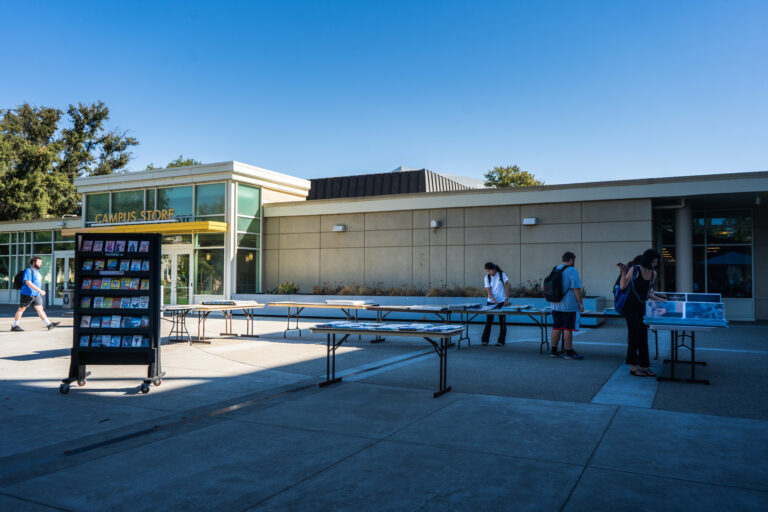
At UC Davis, the poster sale happens right outside of the MU and next to the campus store, with several tables set up in front of the main entrance. 

“I believe that having the location in front of the Memorial Union is really good,” Jacob Mashini, a second-year civil and environmental engineering major, said. “Not only do people at the beginning of the year have to enter the campus store but the bus stop is also right in front of it, so it allows for a lot of people to see the poster sale.” 

Students also seem to appreciate the convenience of the sale happening at such a focal point on campus.

“You’re already going to campus, so you can get all the stuff you need to get done and shop for new posters,” Jaalon Terry, a fourth-year civil engineering major, said. “It’s pretty convenient for students who are always on the go. Some students don’t have cars to go places so it’s good for them, too.” 

The sale taking place at the start of the year works well for students since it occurs close to move-in day, but some students say they would like to have another one later in the year as well.

“I like having the poster sale at the beginning of the year, because it’s a really good way to decorate your dorm or your apartment,” Mashini said. “However, I do think it would be nice if they implemented another poster sale throughout the year. For example, one of my close friends’ birthday was in the middle of the year and I remember the poster sale having star sign-themed postcards, and I feel like if I could buy that then I would have, but the poster sale isn’t available throughout the year.”

The event features folders with a variety of posters and designs ranging from visual art to album covers, all of which customers can quickly flip through when walking through the event.

“I like having the poster sale, because I like wall art, but I struggle to figure out what to put up, so having a selection already displayed helps narrow down the options,” Terry said. 

Not only does the business sell posters related to popular music and visual artists, but it also features student designs.

“What’s really awesome is that we also accept art submissions from students,” Adamjee said. “So a lot of the medium-sized and smaller posters are done by students, and then they make up some of the proceeds of those sales.”

Mashini said that shopping for posters and tapestries at Poster Invasion’s campus events feels more special than buying decorations elsewhere. 

“The poster sale features unique and curated artists, giving it a personal touch that I feel a lot of mass-produced decor lacks,” Mashini said. “Another thing that I find special about this poster sale is the fact that it doesn’t only include musicians, it includes actual artwork which can help people express themselves. People relate to many paintings, so I feel like buying posters can help people feel a sense of community within UC Davis.”

Adamjee also notices an enthusiastic energy among people shopping at their annual event.

“I think it’s the excitement; you’ll especially see it with the freshmen because usually, the second or [third or] fourth-years have seen us around,” Adamjee said. “But with the freshmen, it’s the first opportunity they get to decorate their dorms and have a little self-expression.” 

Although the business primarily hosts pop-ups, it consistently has a wide variety of posters and decorations available for purchase.

“We have so many different genres,” Adamjee said. “And when we get to see each campus [we’re] like, okay, what’s more popular here? Is it sports? Is it art prints? Is it rappers? Is it movies? Is it music? You know, and there’s always a trend too. So that’s pretty cool statistically.”

Customers enjoy the poster sale particularly because the decor they buy can showcase their interests and prompt bonding with friends.

“I have two posters: I have a Lana Del Rey and SZA poster which I use for decoration,” Mashini said. “I have them on my walls, and it’s nice because I’m able to start conversation[s] with [people]. For example, I remember inviting a friend over to my dorm last year and they saw my Lana Del Rey poster — we were just talking about how much we love the artist, and ever since then I’ve been really close to that friend. I feel like it’s a way for you to show your interest[s] and express yourself without saying it directly to a person.” 

Overall, the poster sale gives students the opportunity to decorate their personal spaces in their own ways.

“I feel like everyone can tell a bit about someone’s personality with their decorations, especially their music taste,” Mashini said. “The poster sale benefits a lot of people because they’re able to relate to people who have similar tastes, and I feel like it really helps bring the school community together.”


Written by: Graciela Tiu — features@theaggie.org
Davis International House celebrates 40-year anniversary

The art and cultural exchange non-profit hosted International Festival on Oct. 6 which included food, dance and a backyard concert


By MATTHEW MCELDOWNEY — city@theaggie.org


To celebrate 40 years of cultural immersion, International House Davis hosted the International Festival known as “ifest” that brings the community together to celebrate its differences. Set for Oct. 6, Davis International House drew in a variety of local vendors, artists and musicians to express the tastes and sounds of the Davis community. The event was free to enter and lasted from 12 to 6 p.m.

Throughout the festival, food vendors offered a breadth of options such as Hawaiian fried chicken, Zimbabwean soul food and fresh churros. Craft vendors and organizations set up shop nearby for attendees to peruse. There was jewelry, crochet crafts and plenty of free goodies for those taking breaks between concert performances and live demonstrations.

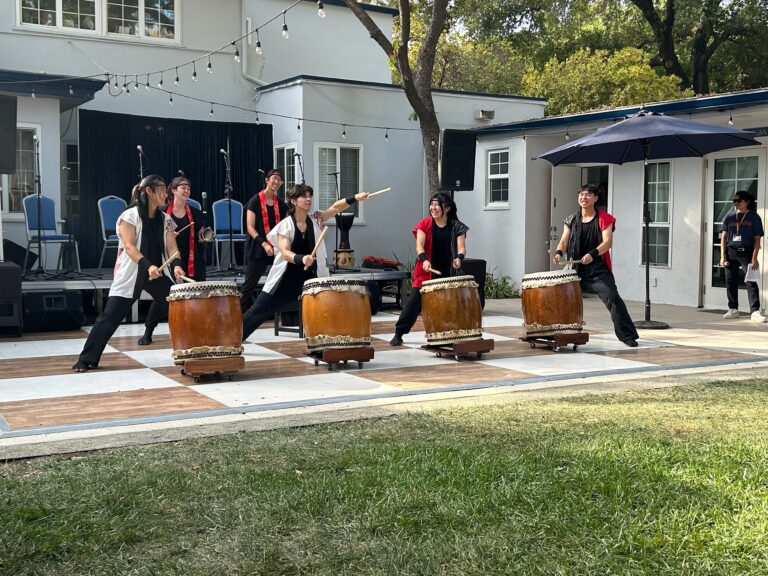
Festival attendees had the opportunity to experience an authentic performance of Danza Mexica, Ballet Folklorico and many other Latin American forms of music and dance. As for Asia and Polynesia, ifest had a diverse selection of music from local artists such as Bakuhatsu Taiko Dan, Nā Keiki O Hawai’i and the UC Davis K-pop group, EKHO Dance. Music and dance groups from Africa and African diaspora, like the Afro Minivibes, have toured across the country in their mission to host and support Black-owned businesses and filmmakers and eventually landed in Davis to perform for ifest. 

A staff member introduced the Nariman Percussion Ensemble, a Persian drumming group, and discussed how they captured the spirit of the festival’s diverse music.

“The reason why music is able to be blended while remaining familiar to so many is precisely why music can connect us globally,” the staff member said.

A staff member introduced a shamisen and koto performance by the Edo Ensemble. The performance of these traditional instruments highlighted the spirit of cultural resiliency that ifest promotes.

“They play traditional Japanese music that will transport you all the way back to the 16th century,” the staff member said.

Workshops for topics ranging from capoeira — a Brazilian martial arts dance performance — to Chinese calligraphy and tea ceremony were open and free for all to try within the Davis International House itself. 

To support and find out about these performers and programs, there is a full list available on the Davis International House’s official website, along with the events and resources that International House offers less than a mile from campus.

Shelly Gilbride, the executive director of Davis International House, went into detail about the work they do for the Davis community. As an International House, their mission is to foster the exchange of art, culture and ideas to build enhanced international understanding. 

“There is a beautiful lack of clarity with what Davis International House is,” Gilbride said. “It can be anything. By focusing on the exchange of arts, culture and ideas, we can forge human connection.”

Davis International House is a hub for practitioners to maintain, share and celebrate their culture. Leaning into the participatory culture of Davis’ creative scene, Davis International House creates a space where people can learn and express themselves.

On a weekly basis, Davis International House hosts community-led programs such as their 15 different conversation groups, world dance club and a daf drumming group.

 On top of the bigger events like ifest, other showcases that celebrated Indonesian and Indian culture and Persian New Year are also hosted by Davis International House. Additional events include a United Nations Day presentation on Oct. 27 and a Native American culture workshop on Nov. 9 — many more can be viewed through their official website.

Gilbride emphasizes that to host events like ifest and these culture days for the community is more important than ever. 

“Sometimes it is very difficult with the trauma of the world to realize the importance of celebrating with one another, but the only way we are going to face the problems of the world is if we can come together,” Gilbride said. “And the best way to come together and feel connected with one another is by listening to music or sharing a meal. That is how we are going to come together.”


Written by: Matthew Mceldowney city@theaggie.org


Blurring the boundaries of fame

Chappell Roan’s unique approach to pop stardom raises questions about social expectations for performing artists 


By JULIE HUANG – arts@theaggie.org


Performing artists are known for having intense, complicated and often highly parasocial relationships with their fans. Recently, the question of how much information performers owe their fans about their personal lives and beliefs has been raised, as standards surrounding appropriate behavior for both public figures and their fans grow increasingly unclear. 

This uncertain situation is best exemplified by pop singer-songwriter Chappell Roan, whose current circumstances as a rising public figure generate discussion about her controversial attitude toward her fame.

Roan recently faced backlash over the cancellation of her All Things Go festival appearances as well as her refusal to publicly endorse any candidate for the 2024 presidential election. This response is a reflection of society’s most prominent values and how they manifest within celebrity culture. 

Supported by swaths of people eagerly consuming, analyzing, appreciating and criticizing their artistic creations, performing artists with large fan bases wield massive amounts of influence on what is deemed culturally current and significant. 

The potential of that cultural power creates the expectation that celebrities should take advantage of it. From referencing the names of their favorite beauty products to the names of the candidates that they will be voting for on election day, endorsements have become so commonplace that they are woven into the fabric of culture itself.

Roan’s statement that there are “problems on both sides” of the 2024 presidential ticket transformed what could have been a clear-cut political endorsement into something less straightforward. In doing so, Roan rejected the expectations placed on performing artists to package their personal beliefs into something easily consumed and digested by the general public. 

By expressing more complex views, Roan publicly upholds a sense of personal identity that is expected of the general public to maintain but rarely feasible for performing artists whose identities are usually subsumed into the aesthetics, products and lifestyles that they are associated with. 

Roan’s attitude toward the presidential election builds off of previous statements where she explicitly acknowledges the difference between her public image and her personal identity, asking fans not to harass her if they see her out in public. 

The introduction of uncertainty into a traditionally accepted dynamic between pop star and fan seems to be unintentional on Roan’s part. However, intention does not factor into the resulting circumstances. Those who expected a certain course of action based on Roan’s previously established brand are blindsided by her decisive refusal to allow the public to project a certain image onto her, causing frustration and controversy. 

This controversial situation suggests that celebrity culture has evolved to a stage where performing artists are now expected to perform their chosen public persona at all times. This expectation invites criticism whenever they stray from that image. 

The increasing need for performing artists to always be exactly what they seemed to promise may stem from public desire for celebrities to represent the prevailing social, cultural and political values of the day. When a performing artist says what everyone’s thinking, it creates a sense of cultural unity. When a performing artist leans into an aspect of their personal identity as part of their brand, it seems to uplift everyone who shares that identity. 

It is undeniable that their cultural influence often can and does create positive effects in society. However, the expectation that performing artists strive constantly to become the living embodiment of certain beliefs and values ultimately creates an unsustainable cycle in which performing artists are encouraged to simplify their personal beliefs for mass consumption, and fans are encouraged to disregard nuance in favor of listening to what a celebrity tells them. 

In an era where it becomes increasingly difficult to understand how much celebrities should disclose and how much fans should care, the individuality of both the performer and consumer are at risk of being consumed by fame. 

It may also be important to note, however, that the emotions and attitudes that fuel celebrity discourse remain as transient as ever and do not always represent everyone. Despite her controversial situation, Roan recently performed at Austin City Limits Music Festival to throngs of cheering crowds, proving that her star power has not yet dimmed. 

Written by: Julie Huang — arts@theaggie.org

Melody versus meaning

The two types of music lovers 


By MOLLY THOMPSON – mmtthompson@ucdavis.edu 


I’ve kept it no secret that I’m an embarrassingly dedicated Taylor Swift fan. There are a few reasons for that, with the first being a combination of her propensity to enshrine captivating storylines in her tracks and the second being my long-held love of stories. Nostalgia and sentimentality are doubtlessly to blame as well. 

But I think one of the biggest distinctions between people that gravitate toward Taylor Swift and those that stray away can be found in how we each individually process music as we listen to it. 

Of course, there are more than two types of people (I’m not trying to divide the world into Swifties and haters), but for the sake of this conversation, there exists a binary of people who listen to music primarily for lyrics, words and semantics, and people who listen primarily for melodies, instrumentals and sounds. 

When I listen to a song, I hear poetry. My favorite songs are comprised of beautiful words that fit together in serendipitous patterns and combine to tell a story or convey an emotion so visceral I can feel it in my core. I listen to music for the lyrics — the melody is secondary. 

Granted, the actual sound of the song isn’t moot; I still want to listen to music over, for example, audio recordings of poetry. But the instrumentality of a song just has to be good enough — the lyrics are make-or-break. 

This topic is fascinating to me, so I’ve discussed it with a number of people. As someone who appreciates lyrics exponentially more than I appreciate the actual music, I memorize songs without meaning to and internalize the words intrinsically. But I’ve talked to a lot of people who almost don’t hear the words of a song at all — they hear the melodies, sounds and instruments as the heroes, with the lyrics as just another element of a cohesive track. As for myself, I could tell you the bridge of a song word-for-word, but don’t even try to ask me about the baseline. 

Naturally, these preferences influence how we choose what music to listen to. I like Taylor Swift because I enjoy how she works with language, and her songs are catchy enough to satisfy me. But a common criticism of her work is her lack of creativity and variety with her instrumental tracks, so someone who hears sounds over words isn’t going to enjoy it as much as I do. Similarly, I wouldn’t be interested in songs with more artistically crafted instrumentals if the lyrics aren’t the focus. 

This phenomenon gets really interesting when we look at it in regards to the patterns of popular music in our current zeitgeist. A lot of pop music right now sounds similar sonically; what people latch onto are the lyrics. Of course, to be a really big hit, a song still has to have a really catchy melody. However, once it crosses that threshold, the words seem to be the characteristic that’s most heralded about it. 

Think about Sabrina Carpenter’s recent smash-hit album “Short n’ Sweet.” Yes, the crowd-favorite tracks are punchy and upbeat, but the most celebrated elements are clever lyrics and lines that resonate with the audience. 

My theory for why that tends to be the case is that, to the untrained ear (like mine), it’s significantly easier to comprehend and appreciate stellar craftsmanship when it comes to words than with music. I can tell whether or not I like the sound of a song, but I don’t have the skillset to judge or understand its quality on a deeper level. However, I’m well-versed enough in the realm of words to see, feel and revel in a well-written set of lyrics. 

What I might hear as a “bad” or “boring” song is likely to be a favorite of those who process it differently than I do, and my favorite songs are surely equally as unappealing to the same people. Yes, it is a matter of taste, but it’s also (to a certain extent) out of our control. Regardless of how training and other experiential factors affect how we hear music, it’s hardwired in us. In other words, I didn’t choose the Swiftie life, the Swiftie life chose me.


Written by: Molly Thompson — mmtthompson@ucdavis.edu 


Disclaimer: The views and opinions expressed by individual columnists belong to the columnists alone and do not necessarily indicate the views and opinions held by The California Aggie 


UC Davis football gains its first-ever win over a top five-ranked program

UC Davis Aggies beat the University of Idaho Vandals in a nailbiter on home turf


By Diego Cerna – (sports@theaggie.org


The No. 14-ranked UC Davis Aggies went up against the No. 4-ranked University of  Idaho Vandals in the much anticipated Big Sky Conference football game of the week on Sept. 28. This game also held the annual first-year field run where UC Davis first-year students rush the field right before the game starts.

The University of Idaho opened up with back-to-back touchdowns on their first two drives, jumping out to an early 14-0 lead in the first quarter. The Aggies responded during their second drive with a red zone touchdown thrown by Miles Hastings, a quarterback and fourth-year communications major, to Chaz Davis, a wide receiver and fourth-year psychology major.

After a missed field goal by the Vandals, the Aggies marched down the field again to the one-yard line where Lan Larison, a running back and fourth-year managerial economics major, punched in his team’s second touchdown to tie the game. Larison’s touchdown also moved him into a three-way tie for fourth most touchdowns scored in UC Davis football history with a total of 28 touchdowns in his career.

Up 17-14, the University of Idaho looked to push their lead at the Aggies’ 25-yard line until Kavir Bains, a defensive back and fourth-year managerial economics major, intercepted a pass to shut down any hope of scoring before the end of the first half.

With the Aggies receiving the ball on the opening kickoff to start the second half, a planned fake-reverse handoff made space for C.J. Hutton, a wide receiver and fourth-year managerial economics major, to run 72 yards on the return. With good field positioning, Hastings threw a lob to Larison who made a rolling catch in the end zone for another UC Davis touchdown. 

On back-to-back Vandals possessions, Lamont Shamburger, a third-year defensive back and undeclared major, and Porter Connors, a linebacker and third-year human development major, snagged two interceptions, adding to an imposing performance by the Aggie defense. 

Additionally, at the end of the third quarter, Hastings hit Winston Williams, a tight end and fourth-year psychology major, up the middle to give UC Davis a two-possession lead. 

When all seemed lost for the Vandals, a fourth-quarter rally field goal and a touchdown with less than a minute to go made the score 26-28. The Vandals were just a two-point conversion away from sending the game into overtime, but pressure from Zach Kennedy, a defensive edge and fourth-year managerial economics major, forced the potentially game-tying throw out of bounds to seal the Aggies’ first-ever victory against a top five-rated team. 

Hastings threw for an impressive 248 yards and three touchdowns, connecting with eight different receivers and five who had over 30 yards that night. This historic win gave new Head Coach Tim Plough his first-ever win in the Big Sky Conference. 

“The feeling of winning games at Davis feels different when you win games anywhere else,” Plough said in the post-game press conference. “Whether they’re a top five team or ranked 150th, every win for the Aggies is really special to me.”

Plough remains optimistic about UC Davis’ hopes for the season despite not having played their best football prior to their victory over the University of Idaho Vandals. 

“A good friend of mine told me that you’re either winning or learning and luckily we’re doing both right now,” Plough said. “Hopefully we can do that throughout the year.”

Sabah Nabiha confirmed as ASUCD Interim Senator

The senate adopted different ASUCD units, committees and passed SR #1


By JORDAN POLTORAK — campus@theaggie.org


The meeting was called to order at 6:13 p.m. by ASUCD Internal Vice President Aaminah Mohammad, followed by a roll call and a reading of the UC Davis Land Acknowledgement

Madison Seeman, a third-year art studio major, was confirmed as the Aggie Arts Committee chair. Seeman commented on her experience with the committee and discussed ideas for future projects.

 “As a committee member, I found a lot of joy in being a part of the projects we were making,” Seeman said. “[We are] continuing projects with the Moo-vin’ Moo-seum, getting public art on campus such as art in the bike circles and working with the other committees to get murals on campus.” 

Siomara Sanchez, a third-year sustainable environmental design major, was then confirmed as the Aggie Arts vice chair.

The meeting then moved into the interim senator confirmation, and ASUCD President Gaius Ilupeju praised the confirmation of Sabah Nabiha as the interim senator.

 “Our process during the whole vacancy period was if it meant we had to put a vacancy again, we would because we wanted to find the highest-quality candidates we could,” Ilupeju said. “I have nothing but praise for Sabah.” 

Nabiha stated her goals of passing green measures and getting proper representation for students.

“We’re supposedly one of the greenest schools in the world, not just the country, [yet] we lack [Electric Vehicle] EV charging measures,” Nabiha said. “One of those [goals] includes better and safer transportation as well as reducing gas cars by having more EV charging stations.”

The senators then volunteered to adopt various units and committees such as the Office of Disability and Justice Advocacy, Whole Earth Festival and the Entertainment Council. 

Ivy Schosser, a third-year political science and religious studies double major, and Annapurna Slva, were confirmed as commissioners for the Environmental Planning and Policy Commission (EPPC).

Schosser commented about her role in fighting environmental issues on campus.

 “I have a love-hate relationship with the pouring rights contract and helped lead the fight against Pepsi here at UC Davis,” Schosser said. “It has taught me a lot about the policy side of environmental rights.”

Slva then gave an overview of her goals as a commissioner.

“Sustainability checks for ASUCD events and clubs [as well as] creating a database for more sustainable purchasing options,” Slva said.

The senators then reviewed previous legislation including SB #1, which was passed by a vote of 9-0 on Oct. 7. This bill assigns the ASUCD budget for the 2024-25 fiscal year. They also discussed SB #2, restricting artificial intelligence from performing jobs that can be done by UC Davis students. 

Lastly, the senators discussed SR #1, which details the senate’s goals for the upcoming school year. The resolution passed by a vote of 10-0, and Senator Mia Cohen abstained. 

Cohen expanded on her reason to abstain from the vote.

“I love the commitment to bring together communities and to engage in dialogue and work to create unity on campus, especially after observing the campus environment last year,” Cohen said. “However, I cannot go without noticing the section on ethical spending, that being said I cannot support this section of the resolution and I will have to abstain.”

At 8:10 p.m., the meeting was adjourned.

Written by: Jordan Poltorak — campus@theaggie.org

Fall into success with the Editorial Board

A fall quarter survival guide 

By THE EDITORIAL BOARD

As the leaves fall and classes are ramping up, college life can feel overwhelming. Between wanting to get good grades, living in a foreign place and balancing extracurriculars, it’s a difficulty unlike any other. However, with the right tips, anyone can have a successful fall quarter. Here’s how to cope with academic stress and take advantage of what this quarter has to offer.

Travel

Davis is a prime location for weekend or day trips — just a few hours away, you can find not only the ocean but the mountains as well.

One of the best places to go is Tahoe. Located only an hour and a half away from Davis, Tahoe has a lot of activities to offer. Whether it’s skiing in the mountains, visiting the beautiful lake or driving through one of the many local towns, Tahoe might be the place for you.

Additionally, in the other direction, you can take a trip down to the Bay Area. If you have been missing the beach or live close by, then a day or weekend trip to the Bay might be refreshing. There are numerous areas to visit within the Bay: whether it’s San Francisco for the big city, Marin County for the hiking or Napa Valley for the wine tasting, it’s the perfect daycation from school. 

If you are looking for somewhere nearby with affordable shopping and many restaurants, Vacaville is another great place to check out. Only a 20-minute drive from Davis, it has some much-needed retail therapy and comfort food that is missing from Davis. With its close proximity, students can even Uber to Vacaville for a cheap rate.

For those of you who are running low on gas and looking for a shorter trip, downtown Woodland has more to it than meets the eye. From local cafes like Morgan’s Mill to The Pleasant Pheasant Bookstore next door, the best local hidden gems are closer than you might think.

There are a variety of ways to get to these locations: aside from taking your own car or catching a ride with a friend, you can rent a Zipcar, take a bus or hop on the Amtrak. So, consider taking a trip this fall and exploring the surrounding area. 

Burnout

Burnout is no joking matter in college. Sure, it may seem like everyone has it together, but believe us — that is not the case. Everyone experiences burnout in one form or another, and it’s important to give yourself and the people around you grace during this time. While burnout is challenging, it’s a natural and expected feeling that can be effectively managed. 

Going outside and staying active is a great way to help relieve your stress and clear your mind. Additionally, trying new activities — such as joining a club or perfecting a recipe — are good ways to recharge. It’s all about making time for yourself and taking a break from studying. You can also utilize mental health resources on campus to help support your well-being. The resources are there and largely part of your tuition, so why not make use of what is being offered and be proactive when it comes to prioritizing your mental health? 

Academics

As one of the best public schools in the nation, it’s no surprise that UC Davis students can expect an academically rigorous workload. The quarter system can be challenging due to its fast-paced nature, leaving many students feeling like they are playing catch-up. That doesn’t mean, however, that managing classes cannot be done with the right steps. 

Creating a to-do list or using a planner is a great way to stay on top of your work so you don’t fall behind. Google Calendar is one of the best: You are able to access it anywhere, on any device, at any time and it even gives you notifications when an assignment is due.

Additionally, another resource to utilize is the tutoring center located on the bottom floor of Shields Library. If you feel completely lost in a class or need a quick refresher, they have a strong support staff that is ready to help. 

Study groups are also a great way to keep up with classes. Working with peers can reduce stress and enhance your understanding of the topics, while getting a chance to meet new people and make connections.

The key to managing these fast-paced classes is to be organized with your assignment schedule and seek out help when you need it. Anyone can do it — it just might take a little time and practice to fall into a healthy routine. 

Jobs and Internships

A great way to get more involved in the Davis community is to apply for a local job or internship. If you have time on your hands or want to earn some money, a job or internship is just the thing you need. Not only do they enhance post-grad applications, but they also impress future employers. 

From working in a research lab to reporting for The California Aggie, there is a little something for everyone. A wide variety of jobs and internships are also starting the hiring process for next summer, so it might save you future stress to apply now and relax later. UC Davis hosts job fairs year-round that can be found at the Career Center or on the Career Fair website page. Additionally, if you want to work on campus, you can apply to a wide range of jobs on the ASUCD vacancy page, which is constantly updated with new opportunities. 

Don’t be scared to also reach out to professors or career advisors directly — they might be a valuable resource in finding a job or internship.

One last thought 

We hope this survival guide will help you make the most of your fall quarter here in Davis. This school has so much to offer not only in academics and work but also in fun fall activities. Embrace the challenges and joys that come with the start of a new year, and remember to lean on the Davis community for support. Enjoy your fall quarter, everyone!


Written by: the Editorial Board


Sunset Fest 2024 brought Knock2 and Hojean to the UC Davis community

The event kicked off with student openers ENTO and DJ EKO


By RAGAVI GOYAL — campus@theaggie.org 


ASUCD’s Entertainment Council hosted its annual Sunset Fest at the UC Davis Health Stadium on Friday, Oct. 4 from 6 to 10 p.m. The concert focuses on creating an immersive experience for UC Davis students and features local and popular artists. This year’s artists included: Hojean as the event opener, DJ EKO and ENTO as the student openers and Knock2 as the headliner. 

Hojean’s music is centered around R&B and pop genres spanning across themes like love, mortality and the afterlife. With 1.2 million monthly listeners on Spotify, some of his most notable songs include “Over 85” and “Comin’ Through.”

Knock2 is popularly known for Dance/Electronic music, typically combining elements of bass, house and trap. He has 1.6 million monthly listeners on Spotify and is currently on tour across the United States.

The stadium held a large crowd of students for the event as they listened to, danced to and enjoyed the music played by these artists. The featured student openers at Sunset Fest worked both onstage and backstage to keep the energy going. 

The first student opener, ENTO, has performed for live audiences from Italy to California and brought a unique blend of tech house, UK garage, drum and bass and techno music to the stage, according to the Entertainment Council’s Instagram

The second student opener, DJ EKO, participated in his second performance of the quarter, his first being at the Entertainment Council’s on-campus artist reveal. 

The event came together under the collaborative efforts of the recruited student security, the volunteers and the Entertainment Council staff. 

Arya Trivedi, a second-year computer science major, explained what he enjoyed at the event.

“It was a really fun night of music and vibes [and] I really liked the artists, too,” Trivedi said.

Sunset Fest provided a space for the UC Davis community to come together and have fun at the start of the school year. Srinidhee Sivara, a second-year biological sciences major, described that sense of community. 

“It was my first concert ever, and it turned out to be a really good one,” Sivara said. “Vibes were vibing [and] it was great to see the whole student community have so much fun together.”

Sage Prudente, a third-year nutrition science major, said they appreciated the efforts of the Entertainment Council in bringing this whole event together.

“I think it was a really good turnout, and I thought the production was done really well,” Prudente said. “ASUCD put me onto some good music.”

The night was full of the ebb and flow of music and tunes culminating into a joyful experience for the UC Davis students. One student, Anoushka Hingorani, a second-year computer science major, said that Sunset Fest is something to look forward to every year. 

“I already cannot wait for the next Sunset Fest,” Hingorani said.


Written by: Ragavi Goyal — campus@theaggie.org 


Yolo County Elections Office empowers voters this election season

Through educational workshops and information sessions, a variety of organizations work together to share essential knowledge with prospective voters


By OLIVIA HOKR — city@theaggie.org

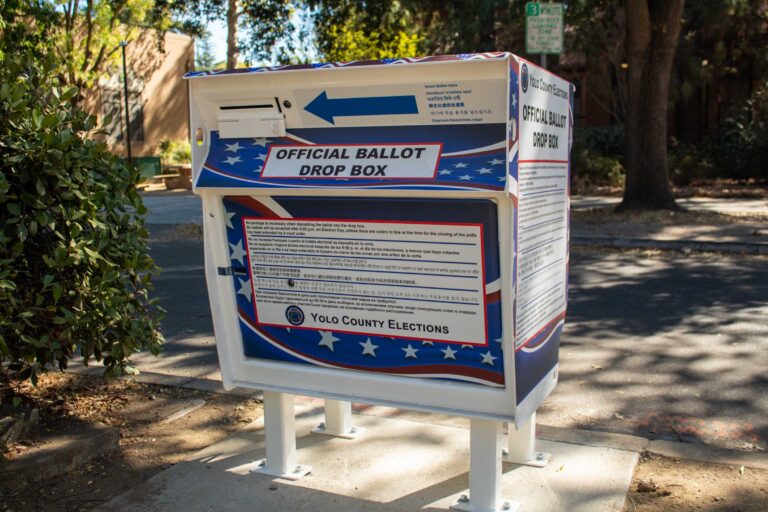
Yolo County hosted a Voter Education Workshop on Oct. 2 as well as a second informational session on Oct. 9 in Davis. These outreach and informational events are held in cities throughout Yolo County in their effort to encourage voter education and promote voter turnout for the upcoming election. 

The Oct. 2 workshop was a collaborative effort between the Yolo County Elections Office and the Yolo County Voting Accessibility Advisory Committee (VAAC). The goal of the VAAC is to maximize accessibility when it comes to registering to vote, receiving and filling out a ballot and finding crucial information regarding their local ballot measures. 

Kate Laddish, the chair of the Yolo County VAAC, is committed to working with her team to increase voter knowledge surrounding important election steps. 

“Voting is a fundamental right for citizens and is necessary for a functioning, participatory democracy,” Laddish said. “Having a disability or other access and functional need must never be a barrier to registering to vote and voting privately and independently. Voters are more likely to exercise this right when they have a solid understanding of registration and voting processes, options and accommodations.”

Along with providing essential information for all residents, the workshop also focused on ensuring that those who may require accommodations can feel confident in voting independently. It was also available to community members who are not yet 18 to give the next generation a head start in elections and voting knowledge. 

Yolo County Assessor, Clerk-Recorder and Registrar of Voters Jesse Salinas is the head of the Elections Office. Salinas brought attention to the Voter’s Choice Act, which provides ballot drop boxes and in-person voting options ahead of election day and on election day.

“Yolo County adopted the Voter’s Choice Act (VCA) in 2022, modernizing how we conduct elections,” Salinas said. “The VCA provides more days and ways to vote. This Voter Education Workshop will help voters understand all of the options available for how to make their voice heard.”

On Oct. 3, 4 and 9, sessions with Yolo County Empowering Residents Through Education and Registration took place. The Public Defender’s Office, Probation Office and Assessor/Clerk-Recorder/Elections Office collaborated to inform residents of the voting process and their rights as voters. 

Lucas Frerichs, the chair of the Yolo County Board of Supervisors, emphasized the importance of empowering Yolo County voters.

“Empowering our residents through accessible voter education is vital to strengthening our democracy,” Frerichs said. “By collaborating across departments, we are ensuring that every Yolo County citizen has the opportunity to engage in the electoral process.”

Yolo County is going to great lengths to motivate voters by offering educational opportunities. Every resident should be able to feel confident in the voting process this season with the help of local organizations. 

If you find yourself struggling to register to vote or are concerned about filling out a ballot for the first time, the Elections Office website presents detailed information on nearly all aspects regarding the election.

Written by: Olivia Hokr — city@theaggie.org 

Review: ‘Saturday Night’ is 90 minutes of madness

The newly released “Saturday Night” film showcases the tumultuous journey before the first episode of “Saturday Night Live”


By AALIYAH ESPAÑOL-RIVAS — arts@theaggie.org 


“Live from New York, it’s Saturday Night!” is typically the phrase that comes to mind when thinking about the sketch comedy show “Saturday Night Live” (SNL). Airing since 1975, the show is currently on its 50th season, with a history of talented comedians, amazing hosts and breathtaking musical performances. However, the show wasn’t always a pop culture hit, as it originally started with a handful of up-and-coming comedians found off the street.

The film “Saturday Night” showcases the humble beginnings of the show, following the chaotic 90 minutes prior to the first live taping of “Saturday Night Live.” Shot from the perspective of Lorne Michaels, the show’s creator, the film goes through the (literal) highs and lows of the taping, as each member of the cast tries to find out what exactly SNL is. 

The film, beginning from the outside of the NBC building, shows a frantic Michaels (Gabriel LaBelle) as he scrambles to get his crew together by airtime. With pressures from NBC executives who are curious to figure out how the show will turn out, Michaels goes from floor to floor as writers, cast members and higher-ups berate him with questions and demands as he tries to put out fire after fire. From actors unwilling to sign contracts, falling equipment and drugs being inhaled behind closed doors, Michaels can never catch a break. Accompanied by fast-paced music and frantic scene cuts with nauseating shot-reverse shots, viewers are taken through the hectic journey as time ticks down. 

However, beyond Michaels, each cast member struggles internally with finding their purpose on the show. Comedian Garret Morris (Lamorne Morris), questions why he was even chosen for the role given his impressive past on Broadway as a playwright. Comedian Jane Curtin (Kim Matula) struggles with her age and maturity in comparison to her coworkers. Most prominently, comedian Chevy Chase (Cory Michael Smith) attempts to climb the television ladder despite his underlying insecurities after being approached to take over as a talk show host in replacement of Johnny Carson. 

Yet, all of these problems are put to rest as the climax of the film occurs and Michaels learns NBC has no real faith in his show, with a rerun of another show on standby to air instead. Along with the lead comedian, John Belushi (Matt Wood), quitting the show before even signing his contract, everything comes to a screeching halt. In a moment of pure despair, Michaels wanders into a bar and encounters an aspiring writer who gives him the strength to keep going.

As a result, Michaels returns to the studio ready to give it his all. After running through successful sketches, there are only minutes before airtime. Nonetheless, it isn’t until mere seconds before that studio executives decide to give SNL a shot. 

While it is hard to describe exactly what SNL was in its beginnings, the film shows that despite being turbulent, the show provided a home for everyone involved. Though it took some time to find its voice, and a name change from “Saturday Night” to “Saturday Night Live,” the show eventually grew and housed successful comedians such as Jim Carrey, Adam Sandler and Tina Fey. 

SNL itself proves you always have to take a chance on new ideas, as you never know what could come out of a semi-raunchy, clunky band of misfits and comedians. Check out “Saturday Night” in a theater near you to see for yourself! 

Written by: Aaliyah Español-Rivas — arts@theaggie.org

UC Davis women’s swimming & diving team starts off the season on high note

CSUN meet domination follows Blue & Gold home meet 


By Krista Hajjar — sports@theaggie.org


After a success at the Blue & Gold meet, the UC Davis women’s swimming & diving team looks forward to their upcoming season filled with exciting invites and more home meets than ever. The Blue & Gold meet is an unofficial competition of various distances, during which the team captains draft their own teams and lead the meet. 

Each team showed up in fun outfits repping either blue or gold as they got ready for a friendly competition. Head Coach Matthew Macedo explained what he looks forward to during the meet every year. 

“[The] Blue [&] Gold is always a fun way to kick off our season,” Macedo said. “It is fun to see our captains wear their coaching hats, and we usually see some exciting races and a close final score.”

Not only does the Blue & Gold meet help the UC Davis Aggies kick off the season, but the event also gives the opportunity for first-year students to compete on a college level and get a feel for a dual-meet environment before starting their actual season. 

However, the weekend fun for the swim team didn’t end with the Blue & Gold meet — right after, the team had their annual alumni meet where previous generations of Aggie athletes returned to the Davis lanes to rep the blue and gold once again.

With such a fun and energetic start to the season, the team was ready for their meet at the California State University, Bakersfield (CSUB) Sprint Classic. On the first day of competition, UC Davis competed in 14 events across both swimming and diving, placing within the top five in nine of the 14 events. They finished their first day in Bakersfield placing fourth overall with a total score of 327.50, outsourcing CSUB and Pepperdine University. 

The Aggies had some great highlights from the meet: Katherine Lim, a first-year animal science major, made an incredible debut by securing first place in the three-meter dive, scoring a 267.65; Priscilla Nguyen, a third-year biological sciences major, placed second in the same event, scoring a 240.20.

Katie McLain, a fourth-year communications and international relations double major, gained points for the Aggies on the first day of competition. McLain placed third in the 50-yard breaststroke with a time of 30.10 seconds and helped bring the team to fourth place in the 800-yard freestyle relay and the 200-yard medley relay. McLain also lended a hand in the team’s second-place win in the 200-yard freestyle relay with fellow teammates Christy Douglas, a fourth-year neurobiology, physiology and behavior major, Sophi Mackay, a second-year communications major, and Naomi Beogholm, a second-year electrical engineering major. 

The final win for the Aggies came in the 200-yard individual medley. Brynne Graham, a second-year mechanical engineering major, took second place with a time of 2:07.08, and Sam Rhodes, a fourth-year neurobiology, physiology and behavior major, followed close behind with a time of 2:07.52.

The Aggies gave a strong performance in Bakersfield — one that will hopefully be continued throughout the season. If the UC Davis women’s swimming & diving team has more meet outcomes like this, they could have a successful season that might even be enough to take them to the championships. 


By Krista Hajjar — sports@theaggie.org

Who’s on your ballot this upcoming election season?

As November nears, the city news desk created a voter guide for Davis residents to make informed decisions about the local candidates and measures on their ballot


By THE CITY NEWS DESK — city@theaggie.org


Linda Deos:

Linda Deos is running for the Davis City Council in District 2. For the last few years, she has also served on the Utilities Commission and Planning Commission for the city of Davis. The key issues her campaign is targeting are building a climate-resilient city, addressing housing and homelessness and improving roads and greenbelts. 

To make Davis more climate resilient, Deos advocates for the city to work with partners in the county so that it can become part of a regional battery storage facility. She also wants to explore the option of smaller, cheaper solar panels that people can install on their balconies or on walls facing the sunlight. 

To address homelessness, she plans to work with the Daytime Homeless Respite Center and Paul’s Place to make sure unhoused people have somewhere to go after 4:00 p.m.

To increase access to housing, she wants to go back to building smaller, more efficient units. This would involve building more dense housing like duplexes, triplexes and quads. She also wants to look into building flats that residents can buy and own to build equity. 

She is a vocal advocate for passing Measure Q, which would increase the sales tax by one cent and generate $11 million for the city if it passes. She said that the money will go into the General Fund and thus can be used for a variety of purposes, from providing assistance to unhoused populations to supporting public safety efforts. While the city will have to weigh different options for where to direct the money, she said her first priority for any extra money is to invest it back into crumbling infrastructure. 

“I want it to go to our bike paths, our parks and our greenbelts,” Deos said. “I would like to see road maintenance with the bike paths […] Until I hear more, I’m going in the direction of maintenance right now, because that’s what people are experiencing in their day-to-day lives.” 

Dillan Horton:

Hailing from Los Angeles and a working-class background, Dillan Horton is running as a candidate for District 2 in Davis’ upcoming city council race. Initially, Horton moved to Davis for his education, but in the wake of his mother’s death, his desire to give back to the community that gave him comfort and grace inspired him to work in public service.

Among his various tenures in local government, Horton was appointed by the Davis City Council to the newly formed Police Accountability Commission where he served as vice chair and later, the chair for three consecutive terms. Horton elaborated on the importance of the work that he’s done for this commision.

“I have shown by my work in creating the Davis Department of Social Services and Housing, expanding the city’s mental health commissions and doing audits of the police use of force policies in the wake of George Floyd’s death,” Horton said. “I am the candidate that is able to bring about meaningful change in people’s lives.” 

Aside from police reform, Horton also pushes for resources to allow Davis to be more accessible and inclusive. Horton said he recognizes the need for more accessible infrastructure and aims for improvement and making a greater effort for community outreach, going along with his experience working and taking walks with mobility-impaired individuals. Horton supports infrastructural improvements such as repairing damaged roads, creating more bus shelters and removing barriers to Americans with Disabilities Act (ADA) accessibility. 

Additionally, Horton’s climate action plan aims to increase protections for trees to help mitigate the urban heat island effect — due to various factors, warmer temperatures and heat waves are exacerbated by reduced vegetation cover. 

Horton also expressed his deep interest in the topic of inclusivity.

“I want to make sure, across the board, city services are fully inclusive and accessible to folks in the LGBTQ+ community,” Horton said. “As for private sector folks, it is important to make sure that people’s rights aren’t being infringed upon for housing in particular.”

To address the effects of the housing crisis in Davis, Horton advocates for a better staffed and funded Renters Resources Program, bringing back funding to the First-Time Homebuyers program and encouraging the development of affordable and mixed-use housing, especially on city-owned rather than agricultural land. Horton also hopes to direct more resources to the Homeless Outreach Coordinator. 

As for Davis’ issues for economic development, Horton wants to address the barriers to opening small businesses in Davis as opposed to other cities in the area. 

“An entry-level business is a lot harder than one would think to start in Davis than it should be,” Horton said. “And if we want a community that is sustainable and innovative, the city council needs to be as supportive as it can be.”

Horton’s plan for more equitable development involves bringing greater meaning to the notion that Davis is a union town.

“Being sure that the city council is a proactive leader when it comes to labor and workers rights issues is something important that I want to lean into,” Horton said.

Regarding the role of the city council, Horton emphasized the importance of leadership.

“The job of a city council is very particular,” Horton said. “It requires listening to your constituents, which as an activist and an organizer for 13-plus years, I am particularly adept at making sure that the concerns of working-class, under-represented and underserved people are heard.”

Victor Lagunes:

Victor Lagunes, a local Davis junior high teacher, is running for the Davis City Council in District 2. Lagunes was born in Washington, D.C. to parents who immigrated from Mexico to the United States to further pursue their education. Lagunes came to Davis 14 years ago as a transfer student from the College of San Mateo with the hopes of pursuing a degree in psychology and a career in marriage and family counseling. However, he found his career goals shifting to education after volunteering in a classroom and getting the opportunity to work with youth. 

In 2013, Lagunes earned his teaching credentials and master’s degree from UC Davis. For the past 12 years, he has worked at Da Vinci Junior High, a project-based middle school in West Davis. He is also currently serving as the president of the Davis Teachers Association for his third term. Additionally, Lagunes is a founding board member of the Davis Community Action Network, a non-profit focused on affordable housing and climate change solutions.

Lagunes’ policy goals and vision are shaped by his strong connection and background with education. 

“We have discussed the future of Davis and how we can ensure that our city can maintain its unique character while also moving forward into the future with strength and resilience,” Lagunes said in a statement on his campaign website.

Lagunes has three main areas of focus he plans to highlight as part of his campaign: housing, economic development and climate. Some of his goals include expanding housing affordability for all income levels and exploring possibilities for workforce housing, soliciting creative ideas of how Davis can attract newly graduated UC Davis students to start new businesses and improvement of roads and bike infrastructure focusing on cooling and safety.

Lagunes emphasized the need for Davis to be more inclusive, accessible and in balance with the natural environment. 

“I’m running for [Davis] City Council because I believe we can be a community that lives up to its ideals and works for an inclusive and thriving city for future generations,” Lagunes said. 

Lagunes has been endorsed by multiple organizations and Davis local leaders including Davis City Council Member Will Arnold, former Mayor Robb Davis, Davis City Council Member Bapu Vaitla, the Davis College Democrats and the Davis Teacher Association.

Donna Neville:

Council Member Donna Neville is currently representing District 3 in the city of Davis and will be seeking re-election this November. Neville was first elected into office in May 2023 during a special election to fill former Mayor Frerichs’ seat after he was elected to the Yolo County Board of Supervisors.

In Neville’s 2023 campaign, her focuses included: funding city infrastructure, enhancing climate resilience, taking action on affordable housing and maintaining integrity in city finances.

Neville discussed her time in office thus far and her dedication to upholding her commitments to the people of Davis.

“From the day I was sworn into office, I have worked hard to honor the commitments I made during my first campaign,” Neville said via a press release. “I promised that I would listen to everyone and do my homework before making decisions, and that is what I have done. Over the past year, I’ve had countless meetings with community members and have worked hard to address their concerns.”

In a continuation of Neville’s reflection of her time as a city council member, she discusses how she feels she has changed because of the role.

“I felt very connected to this community well before I came into office, but over the past year, I’ve gotten to know many more people and my understanding of, and love for, this community has only gotten stronger,” Neville said.

While in office, Neville has gotten approval for a housing element in Davis and also begun to update the city’s general plan.

For this upcoming election, Neville has similar priorities as to her 2023 campaign — a focus on affordable housing and climate-friendly city planning — but she now includes an emphasis on providing city services.

Allison Vo / Aggie

Josh Chapman:

Mayor Josh Chapman has served on the Davis City Council since November 2020 and represents District 5 in the city of Davis. Some of Chapman’s campaign priorities include: developing strategies to enhance transparency in city goals, working with the county to find compassionate solutions to address homelessness and working with constituents to promote diversity and inclusion in education.

Chapman made clear his embrace of the District 5 community in a statement on his website.

“I am extremely proud to call South Davis my home,” Chapman said. “We are one of the most diverse communities in Davis, which is why I strongly supported the transition to district voting, as it has felt that South Davis has too often been ignored, and I want to be an advocate specifically for South Davis.”

Chapman then went on to discuss some of the local organizations that endorse his campaign.

“I am humbled and honored to have the support of the Democratic Party, Davis Firefighters, Yolo Indivisible and hundreds of local South Davis residents who believe that I am the right choice to represent our community on the Council,” Chapman said.

Chapman then discussed the need for better solutions to the mental health problems of the Davis community.

“The budget decisions we make must reflect the values of our community,” Chapman said. “Reform methods such as de-escalation and wrap services are consistent with my professional training in mental health support services to juvenile delinquency-involved youth and their families, and in suicide prevention.”

Measure Q:

This election season, Davis residents will see Measure Q on their ballots. Measure Q is a new tax proposal to raise sales tax in Davis by 1%, from 8.25% to 9.25%. The revenue from this increase can be utilized for the needs of the city of Davis, including bike path and road improvements, affordable housing support, infrastructure improvement and more. 

Davis City Attorney Inder Khalsa released an impartial analysis of Measure Q explaining more of the specific ramifications and details surrounding the proposal. 

“The city estimated that this Measure will raise approximately $11 million per year in new local revenue for use by the city,” Khalsa said. “The City Council’s adopted ballot question states this new revenue would be used for essential city services, which include public safety and emergency response, crime prevention, pothole repair, parks, road, sidewalk and bike path maintenance, addressing homelessness, affordable housing and climate change.”

Within Yolo County, three other cities’ ballots will include a measure for a 1% increase in sales tax. Davis residents have conflicting views on this measure and have created an Argument in Favor of Measure Q as well as an Argument Against Measure Q.

Those in favor of Measure Q include community leaders and business associations, including five former Davis mayors: Lois Wolk, Robb Davis, Brett Lee, Gloria Partida and Lucas Frerichs. Their reasons for supporting this measure include improving safety, quality of life, financial stability and affordable housing. 

“The city of Davis has worked diligently to manage existing resources efficiently, trimming expenses while protecting residents’ services and staff positions,” the argument in favor reads. “Now we need to catch up to inflation, increasing costs, and our growing population. Thoughtfully developed, Measure Q is an investment in our community’s future, ensuring that Davis remains a safe, vibrant, and welcoming place for all.”

Those against Measure Q, which include commission members and business owners, believe the Davis City Council is unnecessarily increasing taxes on account of their own budget issues. 

“Our Davis City Council is out of control with no plan to rein in costs,” the argument against reads. “Instead they referred to new programs and services, while continuing to spend our tax dollars on exorbitant salaries. We simply cannot trust them with more of our money until appropriate oversight and controls are implemented.”

The city of Davis’ website has provided an informative FAQ document on Measure Q along with other resources related to the election should community members have more questions regarding their ballot. 


Written By: The City News Desk — city@theaggie.org

Organizations on campus encourage voting and civic engagement

0

UC Davis’ CALPIRG, Students Demand Action and the Environmental Club advocate for their respective causes, promote student participation in the upcoming election


By GRACIELA TIU — features@theaggie.org


With less than a month until the presidential election, UC Davis students have been preparing to vote — some even for the first time. Various on-campus political and advocacy organizations have been planning different ways to help students get ready for November. Among these groups are the UC Davis chapters of California Public Interest Research Group (CALPIRG), Students Demand Action and the Environmental Club, all of whom will continue to host events, activities and projects to further advocate for their respective causes, especially during this election season.

UC Davis’ chapter of CALPIRG prides itself on supporting students in driving social and political change.

“CALPIRG students is a statewide student organization that started here at the UCs in the ’70s to make social change,” Samantha Fabila, a fourth-year political science major and the New Voters Project coordinator, said. “Our mission is to get students to have the power to shape the future we will inherit. Our chapter provides the training, professional support and resources necessary for students to tackle climate change, protect public health, strengthen our democracy, feed the hungry and more.”

Through CALPIRG at UC Davis, students have had the opportunity to participate directly in civic engagement, most recently marked by a win in September with the passing of SB 1053, a statewide ban on plastic grocery bags, after mobilizing support and lobbying in Sacramento. Their advocacy has continued into the election season, with them posting on social media for National Voter Registration Day, tabling on campus and working on the statewide campaign the New Voters Project.

“The CALPIRG New Voters Project has helped register young people to vote since 1984, and it is completely nonpartisan,” Fabila said. “Since then, we’ve helped register more than two million young people to vote and made more than three million personalized Getting Out to Vote contacts. The New Voters Project focuses on the magnitude of young people losing their voice by not voting. This may be due to students either lacking the knowledge of how to vote or just not fully comprehending the significant impact that voting can have.”

With all of their political and civil work in mind, Fabila explained how the students of CALPIRG value public participation. 

When young people don’t vote, it means policies are often ignored on issues that matter to them the most, like climate change and education,” Fabila said. “Plus, if they don’t engage, they might feel even less connected with politics, creating a cycle of apathy. By aiming for an 86% youth turnout, we’re not only striving for high engagement but also working to create a future where young voices are recognized and valued.”

Another organization on campus, Students Demand Action at UC Davis, has also been actively working to get students involved and further their mission.

“Our main goal is just to work towards gun violence prevention and ending gun violence throughout America,” Samya Rizvi-Syed, a second-year political science and managerial economics double major and co-president of the organization, said. “In terms of the election, we believe in electing gun-sense candidates, especially up and down the ballot regarding all levels of government.”

With voting being one of the most direct ways to work toward gun violence prevention, the organization has been hosting events and spreading awareness about voting and the upcoming election.

“As a club, we’re hosting election-related activities like phone banking, where we usually call registered voters to inform them about the candidate that’s running and encourage them to show up and vote, canvassing, where we go door to door, talk to people and inform them about the current election, and voter registration workshops,” Rizvi-Syed said.

Students Demand Action at UC Davis has particularly noticed the importance of mobilizing the vote for candidates that align with their goals of gun violence prevention.

“Our goal is to not only just bring awareness to the election but also make people aware of who we’re electing and make sure we’re electing gun-sense candidates because guns are the leading cause of death in our generation,” Rizvi-Syed said.

Yet another campus group working in advocacy and election preparation, the Environmental Club at UC Davis has continued to work toward their goals of sustainability and nature appreciation.

“The Environment Club’s mission is to promote and encourage UC Davis students to make cleaner choices, as well as find their passions and enjoy nature,” Vanshika Kanodia, a third-year neurobiology, physiology and behavior major and president of the club, said. “We do multiple activities such as recycling, upcycling, career panels, helping community gardens, peaceful protests, hikes and beach cleanups.”

The club also encourages its members and the wider community to vote in the upcoming election, mentioning plans to incorporate the topic into their general meetings in preparation for November. 

Kanodia describes the significance of voting and voter engagement, especially regarding the environment.

“Voting is really important because of the impact elections will have on a lot of environmental decisions,” Kanodia said. “The U.S. is one of the largest contributors of carbon emissions, so we want to do something about it. UC Davis is doing a lot about it, but we as students also need to do so. This ties back to our club, because we want to make sure that not only are we spreading the impact [of preventing climate change] in California and [at] Davis, but if we have proactive behavior in the U.S. for climate change and the environment, that will encourage people to get out in nature more often.”

Because of groups like CALPIRG, Students Demand Action and the Environmental Club, students at UC Davis have countless opportunities to get civically educated and engaged in our country’s democratic process. For more resources regarding voting and the upcoming election, visit Aggies Vote


Written by: Graciela Tiu — features@theaggie.org

Inflation has left the squirrel community in shambles

Please contribute to their GoFundMe


By ALLISON KELEHER — adkeleher@ucdavis.edu


Lately, the economic and political state of the world has been bleak to say the least. Inflation is wreaking havoc across the nation, resulting in a higher cost of living and lower disposable incomes. 

Of all social classes, the one hit the hardest has got to be the squirrel community here at UC Davis. I swear these little rats won’t leave me alone when I’m eating my breakfast. I want to eat my oatmeal in peace, sue me. 

After this personal experience, I came to the conclusion that this must be a father trying to provide for his family. This made me sad, because I should have given him my oatmeal. Squirrel blood is on my hands. Since I made this tragic mistake, I decided to take accountability and share his story. 

The following day, I returned to the same location, and I brought more oatmeal this time. I offered it over to the squirrel, and he hobbled over in his skinny body. After a ravishing meal, I had a delightful conversation with this squirrel father. 

The squirrel father, George Knutt, has a wife, Cynthia Knutt, and three lovely children named Timmy, Charlotte and Peter. They used to live in a nice, rent-controlled tree in the Memorial Union Quad. This lovely location was filled with acorns to scavenge for and unsuspecting students to steal food from. Everything was going great for the family. Mr. Knutt would spend the day scavenging while his family would keep up the tree in his absence. 

Then, things slowly became more difficult. It started when Mrs. Knutt began scavenging as well, turning them into a dual-income tree. This tore the patriarchal family dynamic apart. Mr. Knutt no longer felt like a high-value male squirrel. He numbed this pain by having relations with a nearby squirrel siren. When Mrs. Knutt found out, their family was left in shambles. 

Meanwhile, a nearby industry of squirrels in the largest tree on the Memorial Union Quad were left unharmed. The leading squirrel, John D. Acornefeller, hoarded all of the local acorns and seeds in his large tree. Acornefeller, with his large labor force of lowly squirrels, collected all of the food sources nearby, leaving middle-class squirrels with nothing — middle-class squirrels such as the Knutt family. 

To make matters worse, Acornefeller has strong political ties, which silence any potential competitors. This rising inflation is leaving the Knutt family in disrepair, and the Acornefeller corporation wants to keep it that way. I bet Acornefeller doesn’t even pay his taxes.

This blow-out discovery of mine is going to shock the masses. As a nation, we need to support and uphold the Knutt family. Please support their GoFundMe so that we can get them back on their paws. 


Written by: Allison Keleher — adkeleher@ucdavis.edu


Disclaimer: (This article is humor and/or satire, and its content is purely fictional. The story and the names of “sources” are fictionalized.)

Asynchronous classes don’t compare to live lectures

I’ve stopped taking lecture halls for granted 


By MOLLY THOMPSON – mmtthompson@ucdavis.edu 


It’s safe to say that we all pay a lot of money to be here. Granted, that funding comes from a myriad of different sources (government loans, savings accounts, sponsored scholarships, etc.). But everyone agrees that higher education, especially at a large and well-renowned institution like UC Davis, is abhorrently expensive. 

But hey, we’re paying for fascinating, high-level classes taught by prestigious, noteworthy scholars. We’re paying for access to state-of-the-art equipment and facilities, an enviable library of resources and an overall engaging education that prepares us for the professional world. So it’s at least justifiable to a certain extent, right?

I truly believe that a high-quality education is invaluable. I’m not trying to justify the actual net cost, but I do think it’s worth a lot. What’s more difficult for me to justify is the education I receive from asynchronous classes.

Most of our classes here at UC Davis take place in classrooms and lecture halls, with professors teaching in person, interacting with students and passionately lecturing to the individuals sitting in front of them. While large lectures can sometimes feel like a one-way street with few elements of conversation, conventional classes actually retain a lot of beneficial elements. This includes the opportunity for students to ask questions, the sense of accountability that accompanies an academic environment, nonverbal feedback between the lecturer and the audience and more. All of this makes traditional collegiate classes effective and worthwhile. It’s hard to preserve the value of lectures through a different format.

This is not for a lack of trying, though. The virtual, asynchronous class format that was born of the COVID-19 pandemic is an attempt to make higher education more accessible and less expensive in a variety of situations. It made sense given the severe constraints of the pandemic, but it doesn’t make sense anymore. 

Asynchronous classes inherently lack some of the most valuable attributes of in-person lectures; there’s no opportunity for students to ask questions or interact with the professor. It’s a lot easier to get distracted or slack off while attending virtual lectures in your home or third space, and there’s no way for the lecturer to gauge how the audience is receiving the information they’re relaying.  

All of this amalgamates to make virtual classes a lot less valuable than conventional classes. Objectively, the vast majority of students take significantly less away from asynchronous lectures than they do from in-person ones. And yet, we’re still paying the same amount of money for virtual classes that are a lot less beneficial as we are for classes with interactive, engaging and lively environments. 

The issue I have isn’t with the fact that virtual classes are offered at all — it’s certainly true that some people are more comfortable and productive with asynchronous formats. Rather, what I take grievance with is the fact that certain classes are exclusively offered virtually. 

I personally have a difficult time retaining the level of care and depth of understanding I consider to be valuable in asynchronous classes compared to conventional classes, so it’s frustrating to me when a class that I need to complete my major or that interests me isn’t available live. 

Last year, I had to take an introductory communications class that was only offered online. I think the material could have been really interesting if it was delivered in a dynamic and interactive format, but instead I was stuck watching YouTube videos from 2013 on my own, thinking about how much money I was paying for it the entire time. 

I understand that virtual classes have certain benefits, and this is not to say that they should be eradicated, but simply that they aren’t equally comparable to in-person teaching formats. It’s been proven time and time again that students perform better when they’re engaged in classes, and it’s intrinsically difficult to truly engage with a computer screen, regardless of what’s on it. 


Written by: Molly Thompson — mmtthompson@ucdavis.edu 


Disclaimer: The views and opinions expressed by individual columnists belong to the columnists alone and do not necessarily indicate the views and opinions held by The California Aggie