57.3 F
Davis

Davis, California

Wednesday, December 24, 2025
Home Blog Page 864

News in Brief: ASUCD president proposes to implement “happy class”

0

ASUCD President Carly Sandstrom is working to implement a course that promotes overall happiness on the UC Davis campus.

According to Sandstrom, these “happy classes” are offered at other universities, including Harvard, Yale and Stanford. Students who enroll in these seminars have the opportunity to explore the idea of happiness and find various ways to achieve happiness without the stress of a grade or an excessive amount of homework.

Sandstrom explained that the class would work to “de-stigmatize” mental health.

“The hope is this could be a class that allows you to explore such an idea of happiness without being bound by a grade that could potentially harm your ability to de-stress and explore,” Sandstrom said.

The course would be offered as a Pass/No Pass seminar and would be available to all grade levels.

Sandstrom is currently working with Counseling and Psychological Services (CAPS) faculty to find a way to implement this course and create a class that would fit in at the UC Davis campus. In addition to the psychological and counseling services offered at CAPS, this class would offer students a different type of forum to explore personal happiness. The arrival date for this class is still to be determined, and the class will have to first be approved by Academic Senate before being offered on campus.

According to Sandstrom, this type of class would be beneficial to UC Davis students because of the competitive and stressful nature of college and the expectations placed on students by their professors, peers and themselves.

“UC Davis is becoming a more and more difficult university to get into as well as stay in,” Sandstrom said. “Many students face pressure from home, classmates, themselves, etc. and struggle to identify what makes them happy and what their definition of success is.”

While this class is still in the early stages of research and gathering information, Sandstrom will continue to work on the idea in the hopes of the seminar being offered to UC Davis in the near future.

“My hope is that this happiness class would shed light on the pressures that students face and take a proactive approach in helping students determine how to cope with that in a pragmatic way that takes away the stigma around seeking therapy or help,” Sandstrom said.


— LAURA FITZGERALD
 

Sustainable Agriculture: Food Solutions

0

If you gaze into the depths of the food system too long, you might begin feeling dizzy. It can make a person uneasy to learn about and recognize the inequality and privilege related to the ways we get (or are unable to get) our food. While the maze-like relationships between all the actors within the food system usually serve to confuse, disenchant or even perturb us, they also offer opportunity. Untangling this mess requires innovative and creative ideas that address the root cause of problems.

One opportunity we have is to learn how to grow food, again. Only 100 years ago, 90 percent of folks in the U.S. farmed. Only four generations later, and less than 2 percent of us do. Such a shift has essentially eliminated the knowledge and connection we have with our food. Cultivation is an activity that can bring us back to not only our own roots, but to humanity’s roots. Cultivation, the act of caring for the land, can reveal more than just knowledge of plants. It can help bring food politics into perspective.

By planting and harvesting food, we are contextualizing what and how we eat. Understanding California’s current drought is easier when you see your own garden shriveled and wilted. You can grow on your apartment balcony, in your backyard or on campus. Gardening can be as easy as potting your favorite herb or watering a tomato start. For those looking for ways to dirty their fingernails and soil-stain their knees, try tending a plot at the Experimental College Gardens or volunteering at the Student Farm on campus. Both will provide the opportunity to experiment, make mistakes and look at our food differently.

We can also gain perspective by actively working to remove the blindfold that obscures need and hunger within the food system. For some, this blindfold never existed or was removed long ago. For others, removing the blindfold starts with realizing we are wearing one to begin with.

The number one cause of hunger in our own country, and worldwide, is inequality. A popular phrase within the food movement is “food deserts,” or places where folks lack adequate physical access to healthy food. Some critics retorted that “food deserts” are more akin to “money deserts.” Food that is physically accessible is not always financially accessible.

To address this issue on campus, students formed The Pantry, which serves as a resource to fight against the rising costs of education by providing high-protein, non-perishable foods to any UC Davis student in need. Clubs, sororities, fraternities and other student groups can volunteer to “Adopt-a-week” by volunteering staffing hours. The Pantry isn’t the only food bank creatively reaching out to communities in need.

The Food Bank of Yolo County is addressing hunger through youth programs. They offer the Kids Farmers Market, an after-school program that not only educates children about nutrition but provides them a minimum of 10 pounds of free produce to take home once a week. The program treats children as partners in addressing food access, education and nutrition in a meaningful way.

Varied perspectives can influence large-scale laws and regulations that support a just food system. Recently, Michelle Obama announced a revamped nutritional label for all packaged foods that accurately conveys health information to consumers. The proposed changes correct the cunning ways food corporations have manipulated information for decades.

The new label would require differentiating between naturally occurring sugars (such as those derived from fruits) and added sugars (such as high fructose corn syrup). Serving sizes would also change to reflect actual consumption and container size. For example, a 12-ounce and 20-ounce soda are both considered one serving size, because the entire bottle is usually drunk in one sitting. Labels would also be required to list nutrition information for “one serving” as well as “servings in this container.”

Large, powerful companies like PepsiCo and Coca-Cola are obviously unhappy with the changes — and they should be. They profit off of misinformation. Thankfully, large scale changes are beginning to reflect the increased awareness and concern around food system issues.


Start widening your perspective by emailing ELLEN PEARSON at erpearson@ucdavis.edu. You can also follow her thoughts at peardaughter.wordpress.com.

Shifa Clinic aims to overcome linguistic, cultural barriers

0

As she sits patiently in the waiting room, Gurbachan Samra, a 56-year-old Sacramento resident, chats with an acquaintance in Punjabi, her native tongue. They sit one chair apart against the tan-tinted walls of the clinic. When a doctor approaches her, Samra looks up and continues speaking in Punjabi while she explains the reason for her checkup. When the doctor understands and responds to her in the same language, a look of relief washes over Samra’s face.

Samra and her husband, Satvinderpal Samra, are patients at Shifa Community Clinic, a free health clinic located at 419 V St. in downtown Sacramento. Shifa, meaning ‘to heal’ in Arabic, is a clinic that provides basic healthcare to the uninsured South Asian and Middle Eastern population of Sacramento.

Like many of the patients at the clinic, Samra and her husband recently immigrated from India. And like many of the patients, Samra and her husband are without health insurance.

Samra has been a patient at Shifa since she moved to California five years ago. She comes to the clinic to get check-ups and medication for high blood pressure and cholesterol.

“Other doctors take fees and don’t do the tests or give prescriptions. Here it is easier to get help,” Samra said.

Due the implementation of the Affordable Care Act (ACA) in October 2013, Shifa Clinic volunteers are trying to educate their patients about signing up for health insurance under California’s health exchange, Covered California. However, it remains to be seen if this coverage can provide the same type of culturally conscious care that Shifa Clinic already provides.

Shifa Clinic operates with the combined efforts of volunteer doctors, UC Davis medical students and UC Davis undergraduate volunteers. The clinic is open Sundays and three Saturdays per month. Dr. Shagufta Yasmeen, the current medical director, founded the clinic in 2000 with the help of the neighboring mosque at 411 V St. It became affiliated with the UC Davis School of Medicine in 2005.

Overcoming barriers

Language barriers often arise as they see patients with language difficulties, in particular patients who speak Urdu, Hindi, Punjabi, Arabic, Bengali and Fijian. Rachel Naik, a Shifa Clinic volunteer and a fifth-year psychology and neurobiology, physiology and behavior double major, said breaking through that barrier is the first step to earning a patient’s trust.

Naik recounted one instance when a patient who only spoke Urdu opened up to her because she was able to communicate with her in her native language.

“Oddly enough, we shared a very similar history,” Naik said. “At the end of her appointment she gave me a hug and blessed me, just like a family member would; she then told me that she had not seen a doctor in seven years because she did not have insurance and because of the language barrier.”

Supaksh Gupta, a second-year at the UC Davis School of Medicine and Shifa Clinic volunteer, said communication barriers often arise when discussing certain types of medical conditions.

“Talking to the patients about things like depression or sexual history, it doesn’t translate as well and that makes it harder to discuss,” Gupta said.

Manoj Prasad, a 32-year-old U.S. army soldier, has been bringing his mother-in-law Salima to the clinic because it is the only place where language and cultural barriers are more easily overcome.

“When [my mother-in-law] came from India they couldn’t figure out her health insurance and then she found out about this place,” Prasad said. “It seems like the right place for her; there are no language barriers here.”

Salima needs regular check-ups to monitor her blood sugar levels and refill her medications, and it wasn’t until she came to Shifa Clinic that she fully realized the extent of her condition, Prasad said.

Additionally, Shifa is a nonprofit clinic and all patients are seen free of charge. Most of the clinic’s funds come from fundraisers and donations by mosques, and UC Davis gives funding for lab work, said Narine Abgaryan, a UC Davis School of Medicine student who volunteers at Shifa Clinic.

Shifa Clinic allows anyone who needs basic medical help to become a patient,  and the majority are recent immigrants who may or may not be documented, said Harman Grewal, a Shifa Clinic volunteer and a fourth-year exercise biology major.

“We see anyone, we don’t ask if they are documented or not,” Grewal said.

Obamacare and immigrants

Currently, Shifa Clinic is in the process of teaching their patients how to get coverage under California’s health exchange, Covered California.

When Covered California enrollment started in October 2013, many Californians who were previously uninsured were able to enroll in health insurance for the first time. However, for immigrants there is a slight catch; all lawfully-present immigrants are eligible for coverage, but undocumented immigrants are not eligible for health coverage under the federal health reform.

According to an Oct. 17, 2013 article in India West, the U.S. is currently home to 540,000 undocumented South Asians, and 11 million undocumented people of all nationalities.

Ellen Wu, executive director of the California Pan-Ethnic Health Network, a health advocacy organization based in the Bay Area, said that for those immigrants who are eligible the challenge lies in helping them understand how to get coverage in their own language.

“We are making sure outreach and education efforts are culturally and linguistically appropriate,” Wu said in regard to her organization.

Grewal said she has seen some patients experience difficulties because they don’t have access to a computer with internet, struggle with using the website or are not proficient enough in English to go through the process. Shifa volunteers have discussed bringing in someone from Covered California to help educate patients, but it has not been put into motion yet, Grewal said.

“I did meet a patient who said that she didn’t qualify for Obamacare. From what she told me of her family situation, I thought she would qualify for Medicaid,” Grewal said.

According to Wu, under the federal health reform immigrants below a certain income level can qualify for MediCal. Covered California expands the MediCal program to allow those with incomes of less than $15,000 per year to qualify for coverage under MediCal.

However, lawful permanent residents with less than a $15,000 annual income will not qualify for MediCal in California or Medicaid programs throughout the country before five years of residency in the country. New immigrants with less than five years’ residence in the U.S. will qualify for subsidized care if their income is between $16,000 and $45,000.

While Shifa clinic volunteers are trying to teach patients how to get health coverage, Naik said these efforts will not hinder the work they already do.

“We will be educating our patients and others who call to be patients at Shifa about Obamacare and how they can be covered,” Naik said. “That being said, Shifa will always be open to help serve our community.”

Guest Opinion: Health Care Open Enrollment is Closing

4

Purchasing health insurance is essential to make sure that you are prepared for any worst case medical situations, and by law every American is now required to get covered. If left uncovered in the case of a serious medical emergency, you could be saddled with staggering medical bills. If you are without insurance, you have until March 31 to find and sign up for a plan. While this might sound like a daunting task, it is essential that you get covered and it is easier than you might think. Remember that if you are on your parent’s health insurance plan you can stay on it until you are 26, and if not you can still enroll in the Davis SHIP plan if you are a registered UC Davis student. But if you are graduating and can’t stay on your parent’s insurance, or otherwise find yourself without insurance, there are a lot of questions you probably have about the next step. Here are some key tips for finding affordable health insurance:

1. Check out options at the Covered California Marketplace. These plans include coverage for doctor visits, hospitalizations, maternity care, emergency room care, prescriptions and more. You can see all of this information online at https://www.coveredca.com/

2. Find out about financial help that’s available. On Covered California’s website, you can find out if you qualify for financial assistance to lower your costs.

3. Use Covered California to compare plans side-by-side. The new marketplace lists your options on one website, and shows what each plan covers.

4. Take advantage of expert help in-person, online, or by phone. Specially trained people are available across the state to help you apply and understand your options. Find them at https://www.coveredca.com/enrollment-assistance/ .

5. Don’t take no for an answer. Insurance companies can no longer deny you due to a pre-existing condition. If an insurance agent tells you that you can’t sign up because you are sick, they are breaking the law.

6. The sooner you enroll, the sooner coverage starts. If you enroll by March 15 your coverage will start April 1st. But if you enroll between March 15 and March 31 your coverage doesn’t start until May 1.

If you’re from outside California, all of these tips still apply, but you should check out https://www.healthcare.gov instead.

Health care reforms have given consumers a variety of new protections nationwide that they didn’t have before. In addition to being able to stay on your parents’ plan until you are 26, these are other key consumer protections:

Free preventive care, including check-ups and vaccinations

Insurance companies can’t set a lifetime cap on what they’ll pay if you get sick

Rebates if your insurance company spends less than 80 percent of premiums on care

No more annual caps on what your insurer will pay if you get sick

Insurance companies can’t charge women more than men for coverage

To learn more about Davis SHIP and the Affordable Care Act (ACA), check out our information online at http://shcs.ucdavis.edu/pdf/davisship-aca.pdf

To find out more about the ACA and Covered California, check out CALPIRG Education Fund’s full Health Insurance 101 guide online at http://www.calpirg.org/resources/cap/so-you-need-health-insurance-now-what .

Zach Weinstein
Health Care Associate, CALPIRG

Dr. Michelle S. Famula
Executive Director, Health and Wellness
University of California, Davis


Female Athlete of the Quarter: Megan Heneghan

0

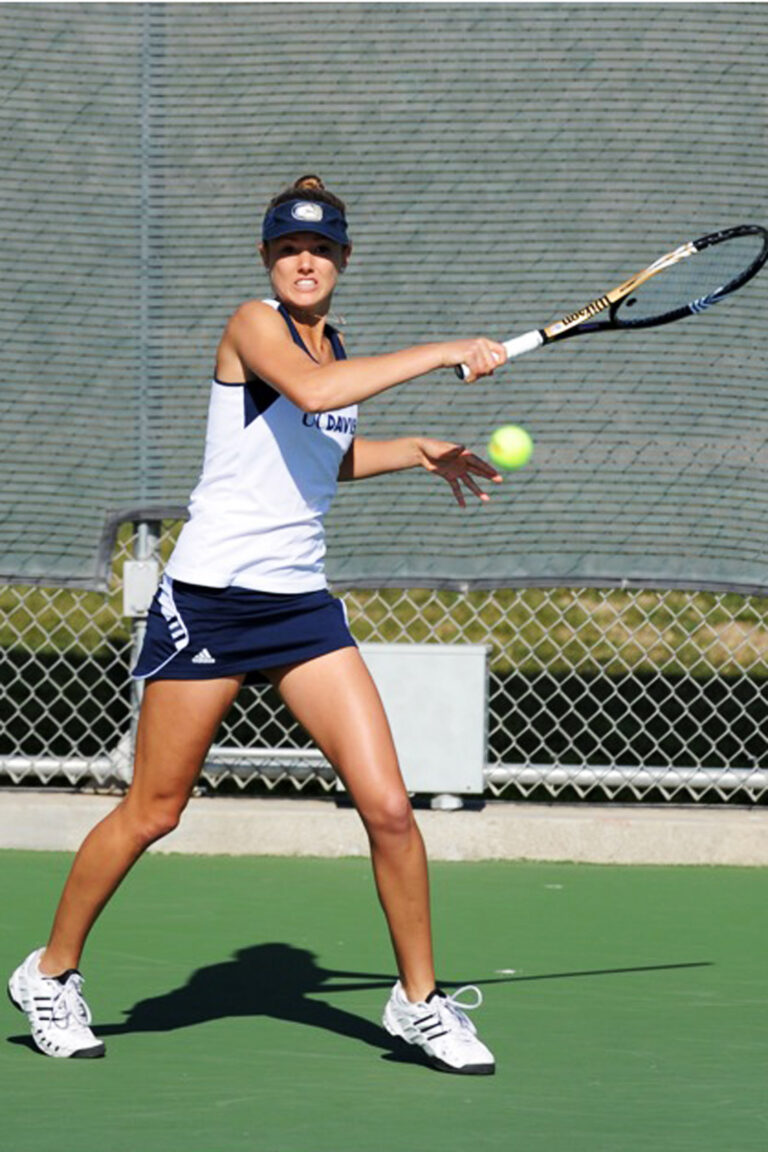
“She’s probably the best player I’ve ever coached, and I’ve been here 19 years,” women’s tennis head coach Bill Maze said.

Senior Megan Heneghan’s 7-4 match record in singles matches this quarter, not including an unfinished match that she was leading by a set, seems to match the statement made by her coach.

All of her matches have all come at the number one position, meaning that she faced the top player from the opposing team every time she stepped on the court in singles, making her record all the more impressive.

Heneghan backed her strong singles play up with impressive doubles results as well. Partnering mainly with senior Melissa Kobayakawa, Heneghan boasts a 9-3 doubles record for the quarter, giving her team a chance to win the crucial doubles point virtually every time she took the court.

The women’s tennis team now has a 6-6 dual match record through this quarter, and Heneghan’s impact is clear to see. Besides the positive statistical results, the rest of the team receives a mental boost knowing that their star player can be counted on to give them a win at the number one position as well as a doubles win.

Heneghan’s play has not only led the Aggies to victory, but has also impressed opponents. Heneghan received the Big West Tennis Athlete of the Week honors this season, the third time in her career which she has received this reward.

“Her greatest strength is her competitiveness,” coach Maze said. “She gives [her opponents] nothing. She plays phenomenal defense and has become much more offensive.”

Heneghan was also recently awarded one of the two Big West Scholar-Athlete awards given to UC Davis for the 2013 season. She is one of only 18 athletes from the Big West Conference to receive the award.

The former Big West Freshman of the Year has really put together a stellar career here at UC Davis. From winning matches to winning accolades, she has really done it all. Her senior year has really been no different, Heneghan has been a key cog in the UC Davis women’s tennis team.

Heneghan’s combination of on-court success and leadership, as well as her off-court achievements, make her the Female Athlete of the Quarter.


Female Freshman of the Quarter: Hilvy Cheung

0

UC Davis women’s swimming and diving has many reasons to be proud of their consistently excellent performances within the last few years of competition. With a solid group of female swimmers and divers, the team constantly holds their own versus top schools throughout the nation. Adding to the team’s overall success this season was Freshman of the Quarter Hilvy Cheung, who dove headfirst into the pool as an Aggie and established herself as a huge contributor for the squad this past year.

Cheung first established her dominance in October, when she posted the fifth-fastest time in school history in the 200-yard butterfly during the Pacific Invitational Women’s Swimming Meet.

Cheung continued her dominance in the pool throughout the season, breaking multiple school records in several strokes including the butterfly, free, back and medley relay, leaving many of her competitors in her wake.

With accolades ranging from being named the Mountain Pacific Sports Federation/Turbo Athlete of the Week in January to being invited to compete in the 2014 NCAA Division I Women’s Swimming and Diving Championships from March 20 to March 22, Cheung is highly deserving of being named Female Freshman of the Quarter.

Male Freshman of the Quarter: Georgi Funtarov

0

The Bulgarian native had an outstanding freshman season. After injuries to junior forward J.T. Adenrele and senior forward Josh Ritchart, freshman forward Georgi Funtarov was a sight for sore eyes.

Funtarov averaged 8.8 points per game and 4.8 rebounds per game in just 24.3 minutes per game. He had a standout game in the win against Cal Poly on Feb. 27, where Funtarov recorded a double-double with 17 points and 10 rebounds.

Funtarov is also an excellent shooter, he shot 41.5 percent from the field and 36.4 percent from behind the arc this season. His ability to spread the floor and shoot the three has been beneficial for UC Davis all season long.

He is expected to be a consistent contributor to the Aggies for the next three years. Funtarov’s presence in the front court will be significant due the to fact that the Aggies are weak in the paint. The minutes and production of Funtarov — especially as a freshman — has had a significant impact on the Aggies and makes him Male Freshman of the Quarter.

Male Athlete of the Quarter: Corey Hawkins

0

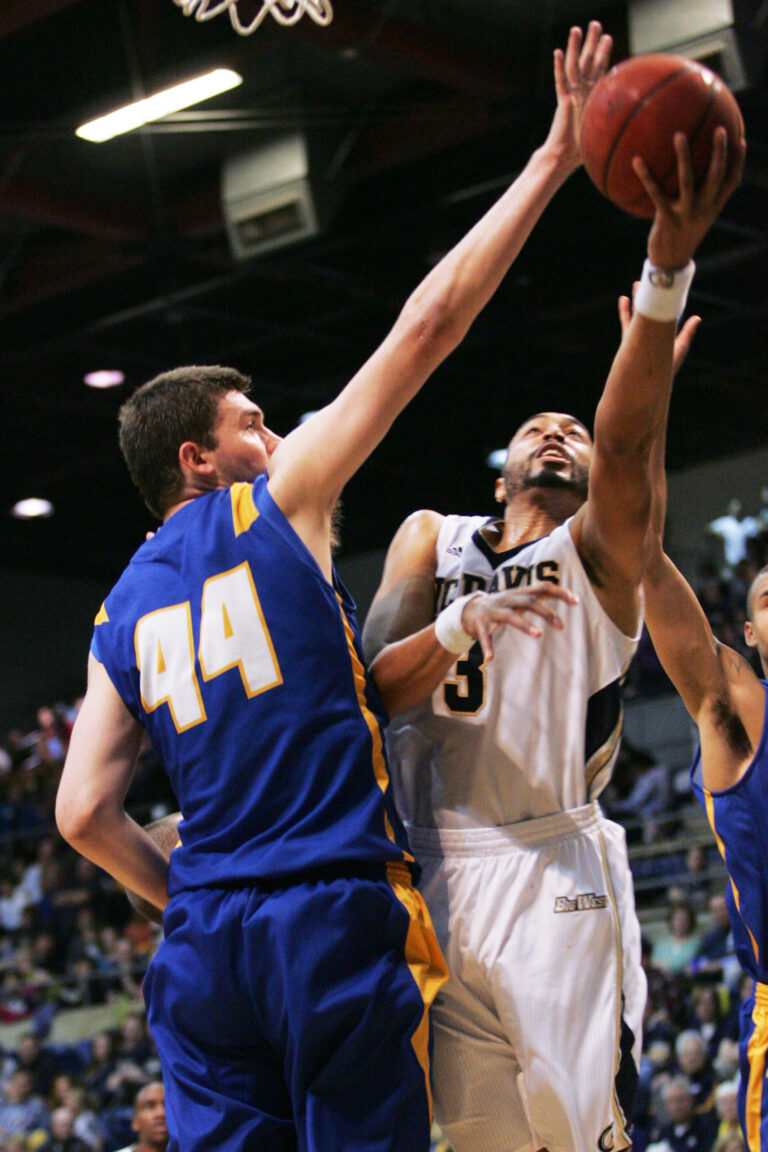
After winning Male Athlete of the Year in the 2012-13 school year, Hawkins once again returns, this time as the Male Athlete of the Quarter. Though he has not had nearly the same year as in his 2012-13 season, Hawkins has much to be happy about, including recently earning a spot on the All-Big West second team.

With his 18.0 points per game average, Hawkins is once again leading the team in scoring. His 4.5 rebounds per game is third on the team, which is impressive considering he is a 6’3” guard.

Despite having a down year, Hawkins still scored at an elite level. His scoring average was good enough for second in the Big West, and many teams have devised defenses in order to stop his scoring. However, these defenses have not always worked as evidenced by Hawkins’ 29-point outburst against Hawai’i this season.

But possibly more impressive is that Hawkins has carried the Aggies on his back. With the season-ending injury to junior forward J.T. Adenrele, the redshirting of senior forward Josh Ritchart and the inexperience of the new role players such as freshman Georgi Funtarov, Hawkins has really been the player carrying the majority of the scoring burden for the Aggies.

Thus, when Hawkins broke the 1,000 career point mark earlier in the season against Cal State Northridge, it was a sight to behold. In only his second season playing for the Aggies, Hawkins joined 19 other Aggies as the only players to reach this mark.

“It is an honor to reach this milestone, but I must admit that I was unaware of my situation entering this game,” Hawkins said after the game. “All credit goes to my teammates, it is their aggressive play that creates a lot of open looks for everyone on the court.”

Hawkins’ willingness to thank his teammates and focus on the team’s goals rather than his own personal accolades was one of the bright spots in this otherwise difficult season for the Aggies.

The Aggies have come as far as they have this season due to the grit and determination of Hawkins. His dedication to the team, despite the tough losses this season, is why Hawkins is the Male Athlete of the Quarter.


Female Team of the Quarter: Swimming and Diving

0

Conference championships aren’t usually associated with UC Davis. However, members of the UC Davis swimming and diving team would argue otherwise.

On Feb. 22, the Aggies won their third Mountain Pacific Sports Federation (MPSF) championship in four years, earning the honor of The California Aggie’s female team of the quarter.

The team, led by senior breaststroker Liliana Alvarez and freshman butterflier Hilvy Cheung, outscored seven other schools to win the MPSF title. On the second day of the meet, all 20 Aggies—16 swimmers and four divers—scored.

Alvarez collected two MPSF individual titles, winning the 200 Breast in a pool-record 2:12:84 and also the 100 Breast in 1:00.89. Alvarez, who owns the 100 Breast meet record (1:00.47), became the first swimmer in the history of the MPSF to win one event four times, achieving the feat in the 100 Breast. She is also the first Aggie to qualify for nationals all four years.

“She has gotten better every year,” head coach Barbara Jahn said about Alvarez. “And I think it’s a testament to the amount of hard work and dedication that she’s put forth to our team. She’s a great role model and a fierce competitor.”

Cheung, named MPSF Freshman of the Year, placed second at the MPSF meet in the 200 Fly with a time of 1:56:14. Senior Haley Porter also earned a second place finish in the 100 Free with a time of 50:02 — the third fastest 100 Free swim in UC Davis history.

Jahn credited the work of assistant coach Pete Motekaitis, the former coach of the men’s team before it was cut, in the development of Cheung. She also said that Cheung reminds her of a younger Alvarez.

“She’s getting faster and faster,” Jahn said. “She’s going to be like Lily. I’m going to predict she’s going to qualify for nationals all four years. She’s going to go to nationals and set new records.”

Both Alvarez and Cheung will represent UC Davis at the 2014 NCAA Division I Women’s’ Swimming and Diving Championships in Minneapolis on March 20-22. On the diving side, sophomore Lucy Lafranchise will represent UC Davis at the NCAA Zone E qualifying meet from March 13 to 15 in Colorado Springs, Colo.

Men’s Team of the Quarter: Basketball

0

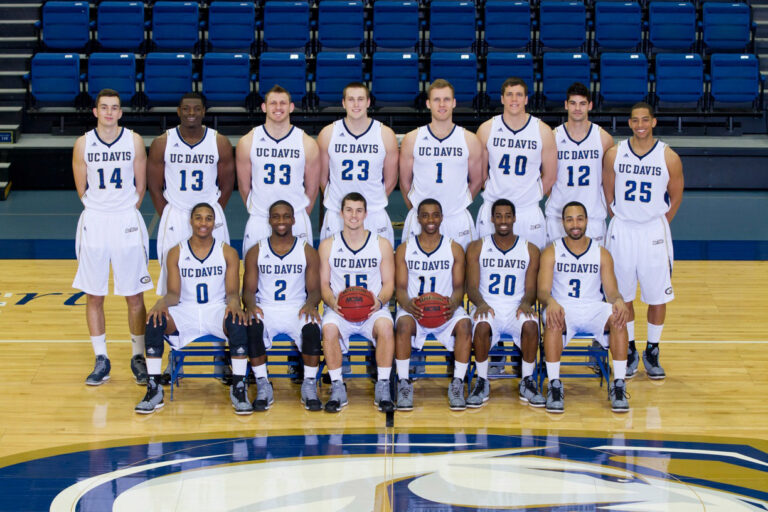
The UC Davis men’s basketball squad started off their season with high hopes, winning three of their first five contests.

Since that point, they struggled with injuries, absences and a general lack of size and will now be sitting out of the Big West Conference Tournament.

The Aggies took their first hit before the season even started, losing junior forward J.T. Adenrele to a season-ending knee injury. Adenrele averaged 12.6 points, 5.9 rebounds and 1.5 blocks per game in the 2012-13 season, while giving UC Davis a consistent big defensive presence.

With Adenrele out for the season and forward Ryan Howley graduated, the Aggies were already missing their top two rebounders from a year ago. When senior forward Josh Ritchart was lost for the year after nine games, they were left with too little size to compete in the Big West.

Ritchart was nothing short of dominant in his nine games with the Aggies, scoring 17.3 points per game on 63.2 percent shooting, while also averaging 6.6 rebounds per game.

His absence left a significant hole both on offense and on the boards, one that coach Les struggled to fill.

Much of the offensive pressure fell to junior guard Corey Hawkins, who performed admirably given the situation. He scored 18 points per game on 44 percent shooting, while dealing with much more significant defensive pressure on him every game. Senior guard Ryan Sypkens also averaged double-figure points, with 11.4 per game, while shooting 41.5 percent from beyond the arc.

Defense proved to be the bigger problem, as the Aggies were left with only three forwards after junior forward Iggy Nujic left the team for personal reasons. Sophomore forward Justin Dueck, who did not play in 11 out of the first 18 games of the season, played double-digit minutes in the last 13 games of the season. Likewise, the team relied more heavily on junior forward Clint Bozner who continued to improve throughout the year.

The good news for the Aggies is that they will only lose one player, Sypkens, to graduation and will get back both Adenrele and Ritchart. They also saw consistent production from two freshmen, guard Brynton Lemar and forward Georgi Funtarov, who were starting games late in the season. This pair should be even better for UC Davis next season with a year of Division I basketball under their belt.

The Aggies should have the size and experience to compete in the Big West in the 2014-15 season after an injury-plagued rebuilding year.


Online courses expand opportunities for students

1

Options for online classes are increasing both on the UC Davis campus and within the UC system. One of these options is UC Online, a system that allows professors from all seven of the UC schools to teach the classes they specialize in over the internet.

According to Shelly Meron, a UC Online spokesperson, the UC Online classes are developed for UC students to enhance their undergraduate education. Meron said that the feedback received from students has been very positive. Some students have been able to take online courses that they would not have been able to fit into their schedules otherwise.

“These classes are primarily for UC undergraduate students,” Meron said via email. “This program aims to give more flexibility in terms of student learning, expand access to high-demand and gateway courses and help our students progress toward getting their degrees.”

Although the classes are aimed to teach UC students, students from other colleges and from high schools can also take the classes. The cost is free for UC enrolled students but costs a certain amount per unit for any students outside of the UC system.

The classes range from writing courses and computer science classes to those on global climate change. The platform allows students to watch the lectures at their leisure and only leave the online format when they have to take an in-person test.

Anthony Tromba and Frank Bauerle, two UCSC professors teaching Math 19A: Calculus for Science, Engineering and Mathematics, said they have had an enjoyable time teaching the course online.

They said that during their time teaching the course in-person, they have only seen a small handful of students come to physical office hours. However, communication through the online chat rooms has shown to be a success.

“Students can talk and comment anonymously through the chat room,” Tromba said. “It’s led to a dramatic increase in communication between faculty and students.”

Tromba and Bauerle said that with classes getting larger, online courses are a good alternative. In the online course, the students and professors still have a chance to interact over the internet as if it was a one-on-one situation.

“Given the fact that we do not have 30 to 40-student classes anymore, this is an appropriate solution,” Bauerle said.

Nutrition 10: Discoveries and Concepts in Nutrition (NUT 10), a popular general education course for the UC Davis campus, is a class that has gained more acclaim since it was put into an online format for Winter Quarter 2014. Dr. Elizabeth Applegate, who teaches NUT 10 both in-person and online, said that teaching the course on both mediums has allowed more students to enroll.

Applegate said that one advantage to the online course is that students are able to watch the lectures when they want for a week after they come out. She also said that the technology has worked well and there have not been any problems with the equipment: one main camera and two backups.

“Working with the online format has been really positive,” Applegate said.

According to Applegate, the scores on midterms have been better by about one point for the online students than the in-person students.

Krista Sowell, a TA for NUT 10, said she has seen an increase in communication between herself and students through online forums.

“Some students may feel like they can’t come up to a TA in person,” Sowell said. “I feel like I’ve had more contact with students through virtual methods.”

Sowell said that students have perceived the online course very positively. She said she is glad that NUT 10 has been able to reach more students because of the higher enrollment that the online course allows.

“I just hope they’re still getting the NUT 10 experience,” Sowell said.

Applegate said she spoke with California Governor Jerry Brown and student regents about making NUT 10 an online-only and UC Online course. The hope is to get the course up and running for the UC Online system sometime next year.

“I want to get it right first at UC Davis,” Applegate said.

Registration for most UC Online courses began on March 3 and will end on March 30. NUT 10 will be offered online again for Spring Quarter and is currently open for registration.

Letter from the Editor

2

Twelve months ago, former Editor in Chief Janelle Bitker published a Letter from the Editor that began with: “There will be no issue of The California Aggie outside your lecture the first day of spring quarter. Or the next day. Or the next day.”

I never thought I’d be saying the same thing.

The California Aggie is suspending its print edition and staff pay for Spring Quarter. As of today, everyone who works for The Aggie is a volunteer for a digital newspaper. We’ll still be publishing news online and updating our social media (Twitter, Facebook, Instagram) as if we had a printed edition of our paper.

Yes, the fee referendum passed — thanks to you. Yes, after a couple of weeks, the Office of the President finally has the Vice Chancellor and Chancellor-approved referendum. But guess what: Spring Quarter tuition and fees have already been issued. In the language of the bill, it is explicitly stated that the funds would have come into play in the spring.

The Aggie does not have enough money to continue printing or to pay its staff without going into a larger debt than anticipated. We fought the good fight during the campaign and got our referendum passed by the student population in the name of journalism.

After a debilitating political quarter for The Aggie, we know that with the (hopefully) incoming fee, we have to prepare. And by eliminating expenses, we now have the time to reorganize the staff, approach projects we never had time for and have the conversations that need to happen with regard to the future of the paper.

For the first time, The Aggie will be able to train its incoming managing staff effectively, including an Editor in Chief that will hopefully be selected before the final week of this quarter. During this time, Campus Media Board will also be recruiting the professional business staff member we anticipate hiring with the incoming fee.

It’s an extremely frustrating situation, but we’re not going to spend our time defeated and disappointed. It’s a bittersweet decision, and we hope we have your support. No newspaper should ever have to go through the political wringer that we went through and continue to experience. We hope that this situation never repeats itself within ASUCD or the UC Davis Administration.

ELIZABETH ORPINA is open to questions and concerns at editor@theaggie.org.

UC Davis ranks first in the world for agriculture, forestry

QS World University Rankings, an organization that annually ranks universities in 30 subject areas, recently ranked UC Davis No. 1 in the world for teaching and research in agriculture and forestry for the second consecutive year. UC Davis was also ranked in the top 15 for environmental sciences and in the top 35 for civil and structural engineering.

UC Davis’ College of Agricultural and Environmental Sciences has more than 6,200 undergraduate students in 27 majors, as well as more than 1,000 graduate students. Additionally, more than 3,000 acres of the UC Davis campus are dedicated to agricultural research.

“I think we received the ranking because of a combination of things,” said Helene Dillard, dean of the College of Agricultural and Environmental Sciences. “The research and the teaching is top-notch, and that was very well-recognized in the ranking.”

QS World University Rankings looks at a multitude of sources to determine the rankings, including the universities’ academic reputation, student-to-faculty ratio and research output.

Daniel A. Sumner, the UC Davis director of the University of California (UC) Agricultural Issues Center, believes that UC Davis’ extensive programs make the University stand out in these fields.

“We have breadth … whether you go to the plant sciences or animal or agricultural departments you would find premiere fields,” Sumner said. “Across the board we are strong, from everything to food science to plant science to environmental science.”

Sumner credits the ranking to UC Davis’ high-quality work in a range of fields within the department and the participation in projects worldwide, including places like China, Africa and Latin America.

Though appreciative of the recognition, professors and staff are already looking towards future plans for the department.

“We’re doing a lot on the environment,” Dillard said. “Where we’re going to be heading is, how do we grow and prepare that food in an environmentally sustainable way? How can we leave the smallest footprint possible on the environment? I see us as being the leaders in that in the future.”

Dillard also said that there is going to be increasing levels of multi-disciplinary works and collaborations with other colleges within the UC Davis system, such as the medical center, veterinary school and engineering school.

“Issues of enormous importance [to focus on] include how to ensure there is sufficient nutritious food for the next two billion people in the coming 40 years, how to adapt to climatic changes causing both droughts and floods, as well as how to change our dependency on fossil fuels and how to manage and conserve water,” said Jan Hopmans, an associate dean in the College of Agricultural and Environmental Sciences and also a professor in the Department of Land, Air and Water Resources.

According to Hopmans, the recognition will have positive effects on UC Davis.

“To have this ranking brings more international students to our campus,” Hopmans said. “This brings more diversity to our campus, and could encourage our California students to study abroad as well.”

Some students also agree that the rankings provide them with a sense of pride for UC Davis.

“It gives me confidence that I am in good hands here at UC Davis because I am part of a strong program that will continue to thrive in the coming years,” said first-year Melinda Wang, an environmental policy, analysis and planning major. “I know that there are numerous resources pertaining to my field of study that I may utilize and contribute to during my time here.”

According to Dillard, the rankings reaffirm the success UC Davis students and staff have reached through their focus and research and serve as a benchmark from which to improve.

“We’re really happy that we have the rankings, not so much from being a number one school, but because it gives us a feel of how we’re doing,” Dillard said. “It feels good because it recognizes all the hard work of our faculty, students and staff. It recognizes the hard work people are doing every day in outreach and extension. It’s a real proud moment that our school and college are being recognized.”

Guest Opinion: An Incident of Hate

4

Linda P.B. Katehi recently mentioned via email that she would like to hear about hate crimes occurring on our campus. To stop further hate crimes, I demand that she disband police patrols, stop student surveillance and fire Officer S.R. Terry.

The following occurred Thursday, March 6 between 7:15 p.m. and 9:00 p.m. on Orchard Park Road.

I heard shouting outside on the street. I went outside and saw two police cars and a police bicycle; five cops total. A Hispanic male student (whom we shall refer to as “C”) was being held in front of the nearest car with two police officers trying to question him. He was not cooperating and was shouting that his rights were being violated. He was demanding to speak to a lawyer, shouting for help. I later found out that he and his companion had been stopped because they were smoking Swisher Sweets, and Officer S.R. Terry allegedly smelled marijuana. Though even after a thorough search of both victims and the premises, it was not evident that any was actually found.

The other officers put C’s companion, an African Muslim student (whom we shall refer to as “P”), in the back of the second squad car and came over to help search C. They forced him onto the ground with his hands cuffed behind his back. He was shouting in pain, and they tasered him. He had five officers on top of him as they tried to remove his backpack, go through his pockets, and take his shoes. When he got up there was blood on the sidewalk from the police beating him to submission. They put him in the squad car, and waited until the fire department and an ambulance arrived.

Another passerby saw the incident and asked what was going on. He tried to talk to P but one of the cops said “It’s against the law to talk to prisoners,” and told him to leave. This is a lie and an abuse of police power to intimidate the public.

A medical examination was performed on C. The paramedics gave him a neck brace and put him on a stretcher; they moved him to the ambulance and drove away escorted by the first police car. The paramedics also wiped up the blood from the sidewalk. The second car stayed behind and the officers searched the area.

While P was in the car, I heard the bike cop S. R. Terry make several racial slurs including “He’s shouting jihad” (in reference to P speaking in Arabic). Eventually they let P out of the squad car and had him sign a citation for marijuana possession, even though he had none.

Two police officers approached me separately to ask if I had witnessed anything; I refused to speak to them.

The second car and the bike cop left with no sign of the injustice that had been committed except a small drop of blood that the paramedics missed.

With the law on their side, it seems like the police are entitled to do whatever they want. I feel powerless, I’m scared, and I don’t feel safe around the people who are supposedly here to protect and serve.

Literary Lessons: Stimulating Reading

0

There are lots of ways of understanding the universe. I always see Life & Style magazines everywhere, and I realize that those are pictures of how I am supposed to comprehend life. I make this hypothesis based on supply and demand. American society will be given the type of philosophy it craves, much in the same way a mother might feed her developing preschooler boxed macaroni and cheese, Doritos, and ice cream every night. Clearly, these glossy pages of gossip are how people want to think about humanity, and they are so provided.

However, for the sake of everything that isn’t social media and supermodels, I would like to propose an alternative. I proposition that we understand the universe not in the way that only satisfies our simulation-hungary id. I suggest a thing called reading.

I can watch Girls and get a solid look at bourgeois, white, indie kids who live in New York City. I receive this with a grain of nudity, well-placed clothing shout-outs and background music. Then again, I could also read Catcher in the Rye and stay on the same theme of melancholy, hedonistic griping about privilege. In that case, I would have a small book that smelt of cigarettes for which I paid $1 from the local SPCA thrift store. However, in watching the Catcher In the Rye movie that played in my mind while I was reading, I was the director, philosopher and general decision maker. I decided if the characters had big or small noses, what their accents were, how the houses looked. I was basically Lena Dunham.

“I Can” watch Nas rap about colonialism on YouTube and see cute little kids sing along to a track about a history of oppression with “Für Elise” playing shyly for four and a half minutes. I could also pick up a copy of Chinua Achebe’s Things Fall Apart. It would take me about a week to experience an insignificantly small portion of the horror that went on in Nigeria and I could feel culture, passion, rage, confusion and empathy for something that I can’t even really understand. I can’t even be personally connected to these experiences, but the book can make me feel emotions to such an extent that I get frustrated with my own skin color. It makes me think to myself, should I feel guilty?

I can flip go through the pictures of what people wore at the Oscars and be amazed at the ornateness of the dresses, how regal money can make people look and how different I look from the units of perfection I see before me. On the other hand, I could read The Great Gatsby and get to go to incredible parties myself, albeit in my head, and have love affairs with the characters I read before me. Instead of comparing myself to a picture without context of character, morality or circumstance, I get to experience the tumultuous situation of love, isolation and money. In comparison, staring at pictures of expensive dresses might make me feel vapid and empty.

I can turn on any “Real Housewives” episode and be entrenched in gossip and betrayal fed to me through the bodies of unsophisticated pseudo-actors on the fame train. They will no doubt be beautiful and rich, probably dependent on their husbands with so little work experience that they are uncomfortably intrigued by their maids. Instead, however, I could hear a maid tell a heart wrenching tale of love, loss, fortune and magic in Wuthering Heights. I can imagine my own version of what a beautiful, rich, dependent person looks like. Moreover, I don’t have to forcibly forget that everything I see on my TV screen is actually scripted. No, my delightfully deceitful characters have an acknowledged team of screenwriters, that being Emily Brontë and I.

What I mean to conclude is simply that there exist ways of getting our animalistic fixes. I want to hear about cheating wives, murder and self-indulgent complaining. I admittedly enjoy stories about those things. That being said, these stories can be sold in much less simple ways. Reading is one of the few ways that humans can both learn about the universe and create their own universe using their minds. There is a time and a place for everything, I would just encourage everyone to make sure that picking up a book is one of them.

Thank you to everyone who read my column this quarter, to The Aggie for giving me this incredible opportunity and to all past, present and future authors.


To read with EREN KAVVAS, you can email her at ebkavvas@ucdavis.edu or read along at her blog, atlas4wanderingminds.blogspot.com.