59.3 F
Davis

Davis, California

Wednesday, December 24, 2025
Home Blog Page 865

In Transition: C-C-Conclusion

0

It’s officially the last week of Winter Quarter, which means that I only have one quarter left here at UC Davis — and only one quarter left of college.

That’s terrifying.

As difficult as this journey has been, it truly has been some of the best years of my life. And with that, please let me introduce you to my alter ego, Sappy Sarah. She’s spent some time reminiscing and here’s what she has to say:

Being a transfer student is weird. I’ve already graduated from college once, but I still can’t believe my time at UC Davis is almost up. As I think about my college experience coming to a close, I consider myself lucky to have had two very different college experiences. Each one taught me different, but irreplaceable, life lessons; lessons that I hope will bear influence on the rest of my life.

As I prepare to graduate, I can’t help but think back to my community college graduation and reflect on my experiences at my CCC.

Attending community college completely opened my eyes to my own prejudices, incorrect assumptions and limited scope. I entered community college thinking that I would be taking mind-numbingly easy classes, filled with high school dropouts, a dim future and a lonely experience.

But what actually happened was quite different.

My classes were filled with students who were on the cusp of resuscitating their lives. I met students who were transitioning from stay-at-home roles to bread-winners, teenagers who had finally been freed from the annoyingly clichéd constraints of high school and students who were avidly returning to school after losing their jobs and reorganizing their lives.

I met people who were in transition and utilizing it to the best of their abilities. I truly was surrounded by a community of people just like me.

Albeit, at times it was incredibly frustrating. Seemingly useless assignments and ineffective teachers annoyed me to my core as I balanced 15 units of classes and 30 hours of work per week.

Feeling like I was attending a one-step-above-high-school institution, I didn’t get it. How could I have both the best and worst of it?

Now that I’m at a UC, I get it. I can also see that being a community college student and a UC student aren’t actually all that that different.

In addition to still having really cool professors and a plethora of unnecessary assignments, the UC life has taught me the true meaning of “cram,” “prioritize” and “ambition.”

UC Davis has taught me how to use my time in the most efficient way possible. 10 weeks feels like nothing, but somehow we manage to fill it with the seemingly most insane standards possible — standards that reinforce the diligent work ethic my CCC taught me.

UC Davis has taught me that I don’t need to do every single reading or assignment in a given class (please don’t tell my professors!) — a far cry from the type-A community college student I had been.

Combining my CCC and UC experiences has redefined the type of student I am. It has taught me that education truly does extend beyond the classroom.

I never thought I’d see the day that I found Shakespeare’s work pertinent to my life, but here I am finding my life filled with chiasmuses and soliloquies — well, really, just me babbling on and on about my life.

So, ultimately, college has taught me 5 things:

1. I should never walk into anything with a limited scope of possibilities.

2. I will almost always be surprised by the people that surround me; with their potential, determination and accomplishments.

3. There will always be unnecessary assignments of sorts in life. It’s not about being exact, it’s about being efficient; not focusing too much on the scope of any one thing, but applying it to every aspect of my life and absorbing as much of it as I can.

4. All work and no play makes Sarah a dull girl, but all play and no work makes Sarah a dumb girl. Balancing work and fun is key.

5. I can always manage to one-up previous Sappy Sarahs.

If you want add to Sappy SARAH MARSHALL’s list of college life lessons, email her at smmarshall@ucdavis.edu! You can also follow her writing at SarahMarshallUCD.tumblr.com.
Latin Americanisms: FIN

0

The life of an opinion writer is not what you might expect. Sure there are the initial dreams of print-fame and glory (not really) coupled with the undying adoration that is to be expected from faithful and attentive readers (I remain hopeful). But these well-intending illusions of grandeur quickly give way to the more unassuming reality that is student journalism at a place like UC Davis.

It’s a job that is done for the love of journalism itself. When all is said and done, we columnists have it fairly easy. We write our thoughts (for better or worse), go through the editing process, and then wait patiently for that most glorious of days, print Thursday. Editors and non-Opinion writers (read: actual journalists — or anyone outside of the wondrous twilight zone that is the Opinion section) on the other hand tend to do the important work while allowing us to further indulge in our navel-gazing. For that, we thank you.

Any column that deals with culture or its interweaving fabrics, be it art, sports, religion or crime — as this column has done — will have to inevitably broach questions of identity and belonging. This was something I fully expected when I signed up for the job. Partially because they are questions which have mediated my own college experience — along with informing issues I take interest in and would presumably write on — but also because they are questions which are universal. Anyone and everyone reaches a point in life where the issue of being an outsider in a strange land presents itself at once as an insurmountable obstacle, and also as a mythical demon to be defeated (this one’s for you Joseph Campbell, wherever you are). Some might point to the trauma of the first day of school as a point where the divide between people first manifests (I’ve met some pretty insightful toddlers). Others might see leaving behind their homeland in search of a better future as the ultimate test in their lives. No matter the finer details, everyone can find common humanity in difference.

This is the heart of community. While a place like Davis might not be as readily-identified with difference or cultural diversity as say, a city only a few miles away like Sacramento, as students of the world and as wide-eyed scholars it is our task (you’re not going to leave the crazed columnist shouting by himself are you) to invite discussion on cultural diversity and to work towards creating and maintaining the respect which it is owed.

What I didn’t expect in this journey was the difficulty that came in exploring such issues. Recounting my thoughts on such and matter was not difficult. The difficult part came in finding an adequate link to the Davis community in a column devoted almost exclusively to Latin American issue while fronting the aptly-named title of Latin Americanisms. But this anxiety in topicality yielded something of a greater truth for me both as a writer and as an immigrant from Latin America.

These are questions which millions of other immigrants from around the world have struggled to come to terms with in their own lives, and will undoubtedly continue to come to terms with as long as we continue living in an imperfect world (which seems to be for the foreseeable future).


If after a quarter of columns you’ve yet to be convinced of a trip to Latin America, please contact JORGE JUAREZ at jnjuarez@ucdavis.edu to let him know what he did wrong. Too much of a focus on drug violence? Too little focus on the poetics of Gucci Mane?

TechHub relocation first of extensive UC Davis Bookstore renovations

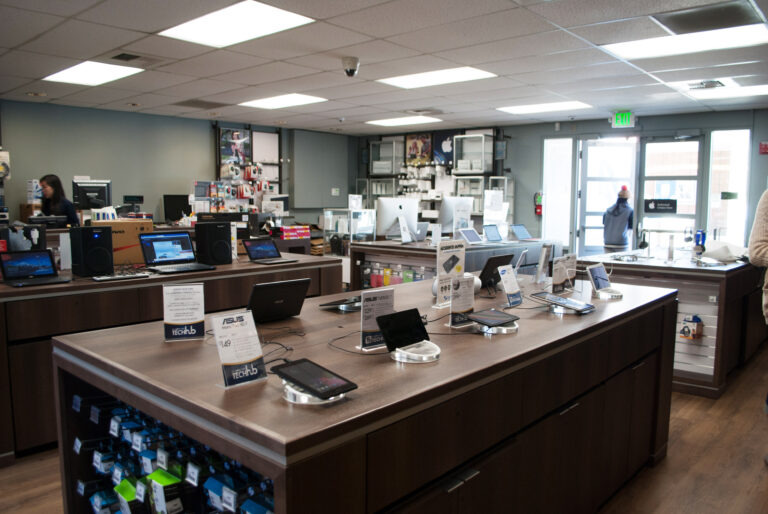
As part of the new Memorial Union (MU) renewal project to begin in January 2015, the UC Davis Bookstore recently relocated its TechHub from behind the MU ATMs to the space previously used for the MU Station Computer Lab. According to Jason Lorgan, director of UC Davis Stores, the new TechHub has been open for several weeks in order to gauge public opinion and prepare for its grand opening on March 31.

According to Lorgan, the relocation of the TechHub was made in order to provide more space for the UC Davis Bookstore renovation and increase visibility for the facility.

“In order to expand the footprint of the store so that we can better accommodate the start of the quarter and the number of students we’ll have in general, we needed to try to reclaim some of the space that’s in the store now,” Lorgan said. “One of our solutions was to move the TechHub out.”

Lorgan hopes that relocating the TechHub from the back corner of the bookstore will allow more students to become aware of the facility and its resources.

“We’ll often hear from students in their third or fourth year here that they’ve discovered the TechHub for the first time because it’s kind of in the back corner and they’ve never actually seen it there,” Lorgan said. “We recognize it’s kind of hidden.”

While Lorgan said he still believes the new TechHub location is slightly hidden as well, he hopes to combat this by posting signage to inform people of the facility.

“Where it’s at right now is kind of hidden as well, but we’re going to put a whole bunch of signage there as this project moves forward so that we hope it’s much more prominent and easy to find,” Lorgan said.

Due to the increase in space, one of the primary changes to the TechHub includes expanding the product selection, specifically an increase in tablets. According to Lorgan, the Student Advisory Council advised him to do this because of the increase of tablet usage by students.

“A few years ago there was a big shift from desktop to laptop, and now it’s moving to tablet. So we’re greatly expanding our tablet selection and bringing in additional accessories,” Lorgan said.

Another change to the facility will be an increase in technology training sessions. While the previous TechHub held a few technology training sessions, Lorgan predicts the increase in visibility of the new facility would allow more students to be aware of these programs.

“We had technology training before, but we just hope to expand that program. Sometimes that involves bringing the vendors in,“ Lorgan said. “So maybe Apple comes in and does demonstrations on how to maximize the use of the iPad, or it could be that Adobe comes in to demonstrate how their software works. That kind of thing.”

In addition to an increase in product selection and technology training sessions, Lorgan wants students to become more aware that the TechHub covers computer repairs as well.

Lorgan chose to hold the grand opening of the TechHub strategically on the first day of Spring Quarter.

“Our grand opening will be March 31, which is the first day of Spring Quarter and it’s the busiest time in the bookstore,” Lorgan said. “There’ll be more people in the vicinity, more people than normal, so they’ll actually get to see the store because it’s a very high traffic period.”

Early student reaction to the new TechHub has been positive.

“I actually do like that it’s bigger. It’s good that there are more products there,” said Ahalya Prakash, a third-year microbiology major. “It’s a lot better than having a smaller one inside the bookstore.”

For Song Kim, a third-year civil engineering major, the TechHub has improved greatly by adopting a more modern design.

“It looks a lot like the Apple store when you go in. You get a sense of that environment. It’s more of a tech hub now,” Kim said. “It feels a little more fancy, a little more luxurious, that kind of feeling.”

However, Jonas Viernes, a first-year biochemistry and molecular biology major, does not see a huge difference between the new and old facility.

“I don’t really feel that it’s that much bigger than the old one,” Viernes said. “I’m kind of indifferent to moving the location. It doesn’t really matter to me. As long as they’re selling the same stuff at least and they don’t have to downsize on the products they have, I’m fine.”

In addition to relocating the TechHub, the bookstore will undergo other significant changes during the MU renovations. According to Lorgan, additional space will be recovered from the store through removing 16 offices currently located in the bookstore and turning them into retail space. Those offices will be moved to the fourth floor in the MU, which is currently undergoing renovations to create space for additional employees.

One of the major changes to the bookstore will include changing the entrances to abide to the current fire code. Because the current entrance of the bookstore is both the emergency exit of the store and the MU, Lorgan said the bookstore exit had to be changed in order to divide the number of people going through that single exit.

According to Lorgan, the current entrance will be closed off, and a window and two new exits will be created. One will be created by the corner near the new TechHub and ATMs and the other will be in the middle facing Freeborn Hall. Both exits require students to enter from outside the MU.

Additionally, the lockers at the front of the bookstore will be removed, and two fitting rooms will be added to the retail area. According to Lorgan, this is the first time the bookstore has been remodeled since 1989.

“A lot of people ask us for fitting rooms so they can try something on and we don’t have any,” Lorgan said. So we’re excited that we’re going to have two fitting rooms.”

During the nine months before bookstore renovations actually begin, Lorgan said the bookstore will expand its clothing selection into the TechHub’s old space.

Before the TechHub moved to its current location, that space was previously used for the MU Station Computer Lab, which was relocated to Wellman Hall in November.

Another major change to the bookstore includes its recent partnership with Amazon. According to Lorgan, UC Davis is the only university in the nation with this unique relationship.

As part of the partnership, Amazon recently installed two Amazon Locker systems at the MU and the Activities and Recreation Center (ARC) for students to order items and have them safely delivered and securely stored at these locations when ready for pick-up. According to Lorgan, ordering packages via the Amazon Locker system will ensure students’ packages will not be stolen if students are unavailable during the time of delivery.

There are currently 66 lockers between the two buildings — 44 at the MU and 22 at the ARC. Lorgan anticipates expanding the lockers into other buildings as the program moves forward.

In order to pick up a package, students will enter their order number into the system, which will unlock the corresponding locker number holding the package. After delivery, students have 72 hours to pick up their package before it is returned back to Amazon for a refund.

According to Lorgan, when students enter their Davis zip code, Amazon will immediately alert the customer that there is an Amazon Locker near them and if they wish for their package to be delivered there. If ordered through the system, Amazon will also immediately recognize the customer as an Amazon Student, giving the benefit of free two-day shipping.

An Amazon Locker launch party was held on March 11 and 12 at the MU to showcase the new system and give away free items to those who experimented with it.

“We’re the only university in the country that has the pilot with Amazon right now. They chose us for a variety of reasons that we’re very proud about,” Lorgan said.

After working closely with the Student Advisory Council on the conception of the TechHub, Lorgan urges students to provide their feedback on the new facility on their website before its grand opening on March 31.

“We welcome student comments because this is a work in progress,” Lorgan said. We would love to hear advice. We built that for students. We want to hear from students. It’s not our idea; it’s the students’ ideas.”

Ombuds Office opens to students

0

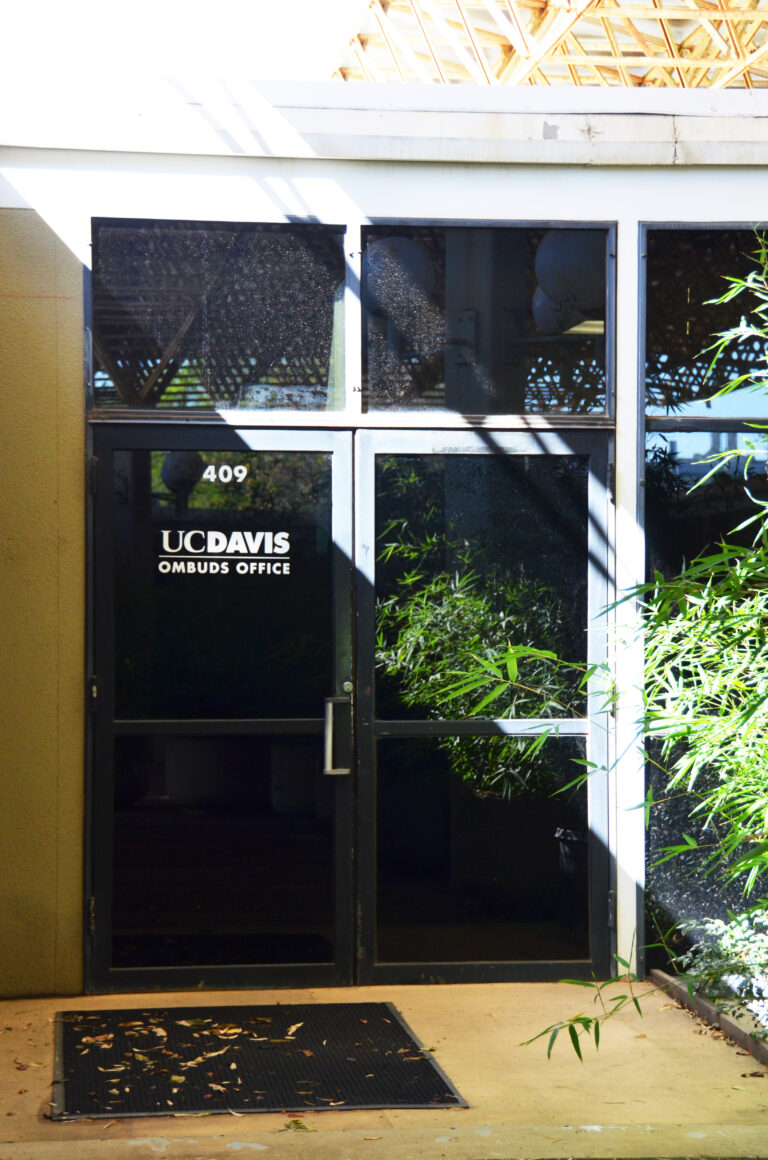
On March 1, the UC Davis Ombuds Office officially opened its doors to students. The office, which opened last June in Surge IV, previously only served UC Davis faculty and staff.

The Ombuds Office’s purpose is to offer confidential conflict resolution and management services. According to Susan Kee-Young Park, director of the Ombuds Office, the office differs from other counseling services, such as CAPS, by not offering psychological services and by keeping all information and discussions confidential.

Park said that the office reports to the Office of the Chancellor solely for administrative and budgetary purposes, and because the Ombuds Office is independent and confidential, it does not file reports of students’ issues to UC Davis.

The on-campus office is the second Ombuds center in the UC Davis system — there is also an office on the UC Davis Medical Center campus in Sacramento. UC Davis is now the last UC campus to have an on-campus ombuds office available for students.

According to Park, the Ombuds office initially worked with only UC Davis faculty and staff, handling issues such as workplace conflicts, harassment and authorship disagreements, among others. Even though the office was not officially open to students, Park said that she would not turn students away. Now that the Ombuds Office is officially accessible to students, Park said that some of the common student issues she helps with include matters regarding roommates, grades and discrimination.

Since the Davis office opened nine months ago, Park has been the sole ombudsperson on campus. She said that she would eventually like to have additional staffing and that she has made this known to administration.

According to Park, the office has not been utilized by students much since March 1. However, she believes that word about the office is beginning to travel around campus, and she expects more students to make use of the resource.

To schedule an appointment at the Ombuds Office, students can call the office at (530) 219-6750. The center is open Monday through Friday from 8 a.m. to 5 p.m.


— Scott Dresser


UC Davis Sunatya, Visions Global Empowerment present Davis Dheem Tana 2014

0

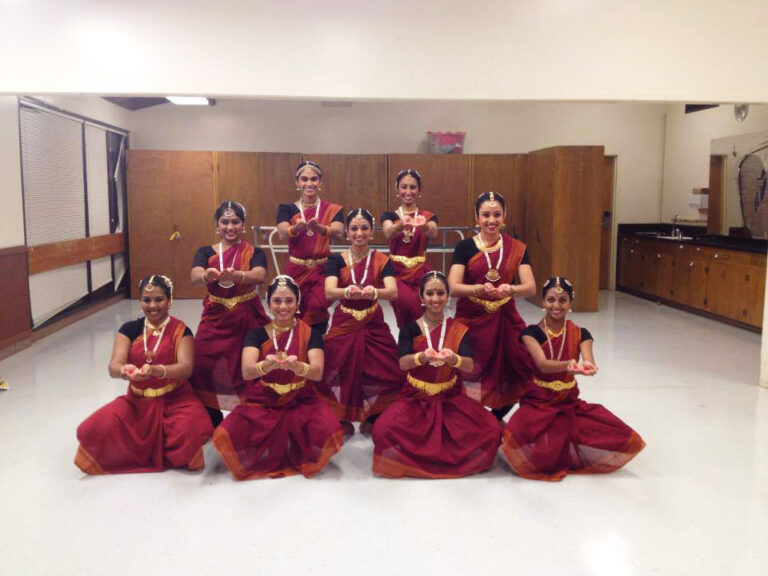
On March 29, Davis’ classical Indian dance group, Sunatya, will host their showcase titled Davis Dheem Tana 2014 alongside teams from universities around the country, including UCLA, USC, UC San Diego, UC Berkeley, University of Washington, Penn State, Tufts and Stanford.

Davis Dheem Tana 2014 is made possible by a partnership with the Davis branch of Visions Global Empowerment. Since its inception in 2003, this nonprofit organization has conducted over 28 life skills training programs at universities and schools in South Asia. All proceeds from this event will be donated to youth affected by poverty and conflict.

The 11 dancers in Davis’ all-female group Sunatya are trained in Bharatanatyam, which is a dance form originating in India. Originally performed by temple dancers in ancient times, Bharatanatyam is now widely performed around the world. The team prides itself in combining the classical form of Bharatanatyam with modern influences for a contemporary audience.

“It’s a very ancient dance form and it was revived relatively recently in the 20th century,” said Neha Palacherla, a fourth-year English major who has been dancing since she was five. “It has become very popular here in the States and all over the world, even outside of India. There are a lot of classically trained dancers.”

Bharatanatyam involves a lot of skill and endless practice. Many group members have been dancing since they were children and each brings a slightly different style to the team.

“The thing with the dance form that we do is that it requires a certain amount of training beforehand. All the girls on the team have been trained for a couple of years. Most of them have at least 10 years’ experience,” Palacherla said.

The group name “Sunatya” means “graceful dance.” The team have been promoting the showcase through their Facebook page, website and also in the community. They will be tabling on the Quad this week.

“There are a lot of Indian community organizations so we’ll be reaching out to them. We’re all from different dance schools so we’ve been asking our teachers to tell their students to come [to the show],” Palacherla said.

Anisha Rajavel, a third-year biochemistry major, captains Sunatya with fellow UC Davis student Ahalya Prakash. Rajavel has been dancing for 13 years.

“[The captains] are in charge of choreographing all the dance moves. Our modern influence is primarily the music. We generally keep the choreography traditional,” Rajavel said.

Classical Indian dancing is already popular on the East Coast, and there are several large competitions such as Laasya. Rajavel and Prakash first decided to put on the show last Spring Quarter. Davis Dheem Tana 2014 is the first showcase to be held on the West Coast and will see several competitive college dance teams come together to raise cultural awareness in the Davis community.

“Two of the teams that are coming [to dance in the show] placed second and third at one of the biggest competitions on the East Coast. I’m really excited to dance at the same show as them,” Rajavel said.

Ritika Johal, a fourth-year neurobiology major, has been a part of the Davis branch of Visions Global Empowerment since 2011.

“My role as president basically includes coming up with new fundraising ideas. We have a Visions member, Ahalya [on the dance team]. She has been with us for two years, so we thought it would be perfect to partner up,” Johal said in a phone interview.

The partnership with the Davis branch of Visions Global Empowerment has worked well.

“We are completely non-profit and we want to do our part for the community. Visions tends to [help people in] the place where Bharatanatyam comes from. [Visions] also have lots of events experience,” Rajavel said.

The dancers wear traditional costumes which are adjusted to make them easier to dance in. Each team will have eight minutes to perform, and each dance follows a storyline. The showcase will appeal to all audiences and no previous knowledge of Bharatanatyam is necessary.

“You don’t have to be Indian [to watch the show]. Each team has a video to introduce their stories so you don’t have to know anything about the dance before coming,” Rajavel said.

Davis Dheem Tana 2014 will begin at 5 p.m. at the Richard Brunelle Performance Hall on March 29. Tickets bought in advance are $10 for students and $15 for the general public. Tickets can be purchased online at davisdheemtana2014.wix.com/dheemtana.

“Earth Water Science and Song” course brings together science, music

0

At what point does a musical composition have anything to do with water management and soil sciences? For most of us, never, but for the students in UC Davis’ academic course “Earth Water Science and Song” (Science and Society 42), they intertwine perfectly. For the past five years, UC Davis has offered this cross-disciplinary course for undergraduate students interested in understanding the connections between music and science.

Science and Society 42 (SAS 42) is part of the Art-Science Fusion Program at UC Davis. The program was founded in the early 2000s by Professor of entomology Diane Ullman and local artist Donna Billick in hopes of teaching students how to use creativity to spark innovation in both science and the arts. In 2009, SAS 42 was added to the roster of classes that would be a part of this unique academic venture.

Professor Emeritus of land, air and water sciences, Wendy Silk, co-founded the class with a former graduate student. Silk, who said she has a passion for music and science, explained that students often view music as simplistic, when it’s really just as complex as science. She said she believed that by putting the two subjects side-by-side in the same course, students would not only see the similarities between the two, but that they would reap the benefits of mixing these disciplines.

“In my decades of teaching, my greatest frustration was the anxiety and boredom that science classes seemed to trigger in the students,” Silk said. “With music and performing, I find that they’re almost always uplifted from the stress. I realized that if we could bring music into the classroom and have the students work in ensembles and bring their own creativity to the subject, then it would be a good way to get them to enjoy learning.”

Students in the class attend lecture in the morning twice a week where they learn about nutrient cycles, water, carbon and nitrous cycles, resource management, pollution, global climate change and water management. The students then meet for two hours once a week for music discussion where they learn basic music concepts (i.e. harmony, melody, rhythm), lyric writing and how to perform in public. They are also taught how to deal with aspects of performing like stage fright, physical presentation and concert planning.

The students are expected to either compose or adapt a song for their final project that is connected to one of the scientific focuses they’ve learned about in the course. The purpose of this is to show that music helps to cement knowledge in the students’ minds more effectively than just reading from a textbook.

Second-year animal science and management major Jack Merwin said the class has helped him retain knowledge he might not have been able to remember if he were in a normal science class.

“Science and music are two different worlds, but in this class they come together in a very cool and weird way,” Merwin said. “I think it’s interesting to see that by learning to play music intertwined with science facts not only allows the performers to learn this information, but allows the audience [that is listening] to learn too. When a song gets stuck in their head they’re forcing themselves to learn those lyrics, thus learning those facts.”

The class is also considered unique because it brings together students from different disciplines that might not otherwise collaborate in day-to-day life. Students are encouraged to share their unique talents and skills, whether they are scientific or artistic, in order see the benefits of both academic disciplines.

Third-year ethnomusicology graduate student and SAS 42 teaching assistant, Sarah Messbauer, said she also has a passion for science and that she wants to encourage students to venture outside of their comfort zone with this course.

“It’s really important to work across disciplines and learn how to think outside of the box no matter what field you’re in,” Messbauer said. “Life isn’t in these neat little categories, life is all mixed up, so the more that you’re able to make connections across fields, the better off you’ll be in life.”

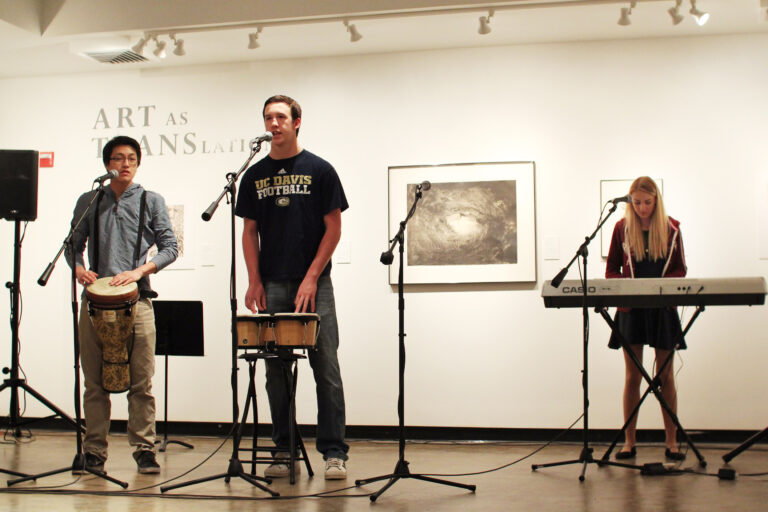
The course will have its final project showcase on March 14 in the Nelson Gallery. The show will consist of students’ original and adapted compositions and will cover the scientific topics they’ve discussed during the quarter. The show starts at 7 p.m. and admission is free.

Tune In: The Musical Magic of Disney Movies

0

I’m just gonna go ahead and begin this column with a bold statement, one I expect most people will agree with:

Disney movies are fantastic.

They’re brilliant. They appealed to me when I was five, they appeal to me now as a 21-year-old and I can guarantee they will still appeal to me when I watch them with my kids in 15 years.

But how do they do it? How does Disney manage to produce classic after classic? Yes, it may be due to their simple, yet symbolic storylines. It also may be magic (I mean, it IS Disney after all). However, there’s one specific aspect of Disney movies truly separates them from other animation. It’s the part of the movies that leaves you humming for days after watching.

I’m talking about Disney’s amazing music. The catchy melodies of the songs, the accessibility of the lyrics and the distinguishable voices of the singers make these songs unique and unparalleled. Not to mention the variety in the songs of every musical Disney movie; soundtracks that throw you through an emotional journey.

Take Beauty and the Beast, for example. The movie opens with the song “Belle (Little Town),” a peppy tune that begins the movie on a cheerful note. The music in the background is comparable to what one might hear at an orchestra show, light-as-air stringed instruments that intertwine smoothly with cello and light percussion.

It’s incredible how Disney musical directors are able to compose such legitimate classical-sounding music. Belle’s flawless voice comes in, accompanied by Gaston’s rough one, to complete the song in a traditional Disney fashion.

The applicability of the song is noteworthy too. Hidden behind the scene’s characters is the message, “I want more out of life than I am currently getting.” It’s a message that anyone can relate to­ — you don’t even have to like the movie to appreciate it.

However, the beauty (no pun intended) in Disney’s genius is their ability to write songs of all types. The ballad “Beauty and the Beast (Tale as Old as Time)” is personally one of my favorite songs of all time, and even won the academy award for Best Original Song.

Its simple piano arrangements are accompanied by beautiful, orchestrated strings and Mrs. Pott’s granny-sounding voice. Why this song gets me every time, though, is its emotional weight. But to say the melody is emotional would be an understatement; this song goes straight to my heart. Mrs. Potts sings of two lovers who overcome their differences and find common ground. It’s a beautiful song, and in combination with the movie’s plotline, creates an indescribable emotional experience.

Disney has mastered the art of writing songs addressing almost any mood. Inspired, lonely, in-love — Disney soundtracks feature the full spectrum. But Disney’s musical genius is capable of even more breadth than a single soundtrack demonstrates. To realize Disney’s full spectrum of musical ability, we must compare songs from multiple movies.

Compare the songs in Beauty and the Beast to those in The Little Mermaid, for example. In the former, we see how Disney is able utilize the piano and stringed instruments to create an orchestral, formal sound.

But in The Little Mermaid, Disney employs a new group of instruments to create an entirely alternative sound. Mallets, steel drums, keyboard and brass instruments place the listener in the middle of the Caribbean Sea rather than dancing in a ballroom. The relaxed, tropical vibe of songs like “Under the Sea” and “Kiss the Girl” flow seamlessly with the movie’s underwater animation, and do so without compromising the emotionality we have come to expect from Disney.

The variety among songs from movies like The Little Mermaid, Aladdin and Tarzan demonstrates how truly amazing Disney is. Without fail, their musical studio is able to create songs that address the full array of emotions, while intertwining these songs with the plot — an impressive feat. But when you consider that these movies require songs fitting an underwater, or jungle, or African Savannah-type atmosphere, it increases the impressiveness exponentially.

Disney’s magic takes place in many different settings. Next time you find yourself experiencing this magic for yourself, consider just how well the music not only fits the setting, but generates the magic.

How to keep your laptop battery happy, healthy

As college students, almost every Aggie has a laptop; they are a great tool due to their mobility. However, they are less effective when they are constantly plugged into a power source. There are many myths and tips on how to maximize battery life and battery health in order to get the most of your device.

The way you charge your battery can affect its ability to hold a charge in the long run. Some believe that you should let your computer drain and then charge it to 100 percent to keep the battery healthy. However, according to a Microsoft spokesperson, this might not be the best practice.

“If you frequently drain a lithium-ion battery, and then recharge it, it can quickly lose its ability to hold a charge, which affects the accuracy of the battery meter …  Lithium-ion batteries last longer if you charge them often, a little at a time, to maintain a minimum charge of about 40 percent capacity,” said a Microsoft spokesperson in an email interview.

The practice of draining then fully charging is not for lithium-ion batteries, which most current laptops have. But if your computer has a nickel cadmium (NiCd) battery or a nickel metal hydride (NiMH) one (which are commonly found in older laptops) than this practice would work for you.

There are ways to check up on your computer’s battery without having to take your device to the local computer store. Battery health is a comparison between your laptop manufacturer’s advertised capacity and the current capacity of the battery. Most laptops have a page to show the condition of the battery health and give pop-up warnings when your battery’s health is critical.

For example, with most MacBook Pros you can hit the option key while clicking the the battery icon in the menu bar. This will give you a current status; if any option says anything but “Normal” then look into it. You can easily do an internet search to figure out how to check your specific laptop’s battery life.

There are many apps or widgets that you can download to do this also. Bjango has created iStat Pro and iStat Menu. If you have a MacBook with Mac OS X Lion or an older version of  OS X, then you can download the iStat Pro widget for free. The iStat menu app is an updated, non-free version for new OS X.

The iStat products can tell you your battery health, cycle count, temperature and other information. Marc Edwards is the founder of Bjango.

“We show some stats that may help diagnose the current status of a MacBook’s battery … iStat Menus also shows the battery condition, as reported by OS X, plus volts and amps for the curious … iStat Menus also provides configurable additional battery warnings, if you’d like an early indication that you’re running a bit low on power,” said Marc Edwards, the founder of Bjango, in an email interview.

Andrew Robertson is the operations manager, buyer and lead technician at the UC Davis TechHub repair center. Robertson stresses the role charging cycles play in a battery’s health.

Think of a laptop’s charging cycles the way you think of a car’s mileage. Charge cycles are incremented every time you charge from point A to point B. Just as a car is only built to last a certain amount of miles, a battery is only built to last a certain amount of charge cycles. For example, charging from 70 percent to 100 percent is one cycle.

“Most people, when they have battery issues, it will be because it was left charging for much longer than it should be at a single time period,” Robertson said.

According to Robertson, if you leave your laptop charging for too long your battery will get to full charge, which is one cycle, then use a bit then charge it back up again. Depending on how long you keep it plugged in, this will result in more cycles than you should have.

Keep in mind your battery’s age as well. As they get older, it becomes harder for them to hold a charge.

High temperatures also hinder a battery from holding a charge.

“Extreme temperatures can degrade battery life over time. At extreme high or low temperatures (such as freezing),”  said Choon Chng, a Chrome hardware engineer in an email interview.

Try to keep your laptop on a surface where the air can circulate. Avoid using it with its fabric sleeve under it. If you can hear the device’s fans going crazy, this means your laptop’s temperature is too high.

Taking care of your laptop is more than just avoiding spilling coffee on it. If handled properly, it will last you your whole college career and hopefully into your job.


News from around the world: March 12, 2014

0

Violence in Ukraine

The capital of Ukraine is experiencing the most violence since the former Soviet Union became independent 23 years ago.The turmoil the Ukranian government has been experiencing during the past few weeks is the product of persistent social tension and political unrest. The explicit protests and demonstrations are due to the actions of President Viktor Yanukovych rejecting a geopolitical trade deal with Europe, which sealed a $15 billion bailout from Russia. Thousands of citizens flocked to the street to demonstrate against the obvious corruption and police brutality.

College Board restructures SAT

The Scholastic Aptitude Test (SAT) that high school students must take to get into college will be overhauled and changed drastically. Criticism from parents, colleges and students saying that the exam does not focus on core academic skills urged the College Board to fundamentally restructure the test.The College Board is ending the old penalty for guessing wrongly, making the essay optional and scrapping vague and obscure vocabulary words in the reading section of the exam. David Coleman, the president of College Board, said that both the SAT and its competitor the ACT have become obsolete in testing academic knowledge.

Malaysian flight disappears mid-flight

On March 7, the Malaysian Flight 370 airplane disappeared over the Southeastern Asian seas between Vietnam and Malaysia. At 12:41 a.m. March 8, the Boeing 777-200 took off from Kuala Lumpur, the capital of Malaysia, and was scheduled to arrive in Beijing, China at 6:30 a.m. However, at approximately 1 a.m. Malaysian air controllers lost connection with the plane. A total of 239 people were on the plane, five of whom were under 5 years old and 12 of whom were crew members. So far, authorities have no further information regarding the issue.

— ROHIT TIGGA

This Week in Senate: March 12, 2014

0

ASUCD Vice President Bradley Bottoms presided over the Senate meeting on March 6. The meeting was called into session at 6:14 PM.

The meeting was mainly comprised of reports from ASUCD unit directors and general discussion.

Bike Barn unit director Nali Weinstein and general manager Robert St. Cyr reported that they are working to increase income. The Bike Barn’s expenses are down $63,000 from last year. In order to increase income, the Bike Barn will be renting bikes on Decision Day and holding an end-of-the-year yard sale in May. The Bike Barn is also working on decreasing its environmental impact by disposing of waste properly and recycling bike tires.

Lobby Corps Unit Director David Kuwabara reported on the proceedings of the unit and its hope to expand in the future. The unit is currently working on 30 higher education bills. Kuwabara said the unit wants to expand beyond the narrow set of higher education issues and to work with the new ASUCD senators and other advocacy groups on campus. Lobby Corps would like to expand to federal legislation and has conducted some preliminary research.

Refrigerator Services Unit Director Kevin Vang reported on the unit’s issues. The unit has about 150 broken mini-fridges that are taking up space. Fridges cannot be dumped because the toxic substances have to be removed before they can be disposed of properly. Vang is currently working toward determining how many fridges the unit actually has.

Eight new candidates were confirmed to the Gender and Sexuality Commission.

Representatives from the ASUCD judicial branch reported the decision in the case of Senator Miles Thomas vs. ASUCD President Carly Sandstrom. Sandstrom was found guilty of breaking an ASUCD bylaw. The court warned the senators to do their assigned duties and to educate others about the bylaws. The representatives also commented that the court should not be used to solve personal issues and that there was “an insane amount of immaturity in the senate.”

The meeting then moved into orders of the day and public discussion. The units in the Memorial Union (MU) and the Silo will be moved because the Silo will be renovated in the summer, and the first two floors of the MU will be renovated next January. There was a discussion about whether the post office in the MU should be kept as a unit after the renovation or whether it should be closed down. No decision was made.

— Jordyn May

De Vere’s drums up community support for childhood cancer research

0

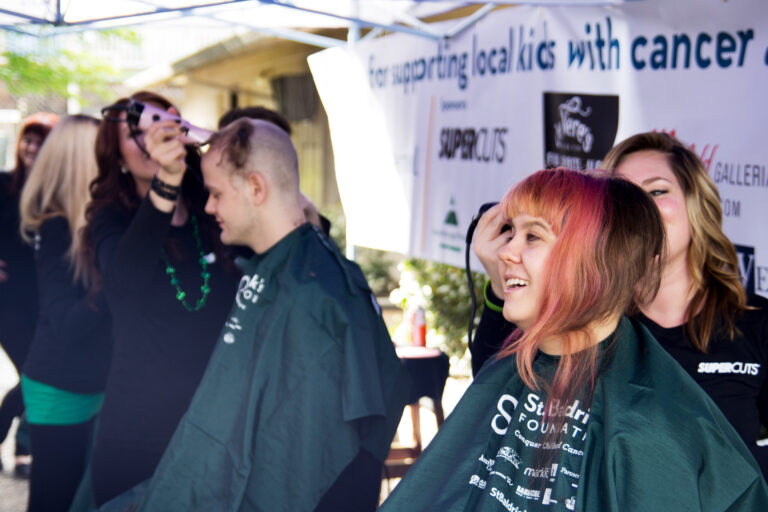
On March 8, the patio of de Vere’s Irish Pub (de Vere’s) was full of applause, raised glasses and hair as participants young and old shaved their heads to raise awareness and funds for childhood cancer research through the St. Baldrick’s Foundation and Keaton Raphael Memorial (KRM).

This is the third year the head shaving fundraiser has been held at de Vere’s in Davis, and is the 12th year since the Northern California non-profit KRM has partnered with the St. Baldrick’s Foundation in the Sacramento region to raise funds for local and national research. With 899 shavees, the organization has raised $354,179 so far this year.

With barber services provided by SuperCuts, children and businesses raised over $1,000 each with the help of sponsors who supported community members as they stood in solidarity with cancer youth, making a “bald statement.”

“It’s a very powerful day,” said Henry de Vere White, who co-owns de Vere’s. “It’s a public, physical demonstration that this battle can be won, that if you are doing it you’re not alone. People come together and they rally around [childhood cancer] but I think that when people get here and they see people [shaving their heads] it all of a sudden clicks and they see what we need to do. It’s very emotional for some people too because maybe it’s in honor of a child they’ve lost or a brother, sister, aunt; everyone’s been touched in one point in their life by cancer.”

Mother and son Lesah and Josh Ross were two such participants. Josh, after having worked at de Vere’s and participating a year previous, held his mother’s hand throughout her first head shaving experience.

“I was introduced to [the event] by Josh and inspired by him, but also I worked with babies for several years as a physical therapist. [There were] a lot of babies who didn’t grow up to be adults and [I] watched families go through that,” Lesah said. “I love to see the kids doing it because the kids that are giving up their hair are normalizing for those who are going through chemotherapy that there are many reasons you would be walking around with a bald head.”

They were both personally affected by cancer as March 8 marked the 25th anniversary of Josh’s grandmother’s death from cancer.

“A good portion of our family on [my mom’s] side didn’t make it to meet me and my brother,” Josh said. “[Shaving your head] is something that takes very little and gives a whole lot.”

KRM, which manages head shaving fundraisers at the Westfield Galleria in Roseville and also at both de Vere’s Irish Pubs in Sacramento and Davis, among other events, seeks to not only raise funds but also to raise awareness about childhood cancer, according to Dana Pearson, development coordinator of KRM.

According to St. Baldrick’s, every three minutes a child is diagnosed with cancer and only four percent of federal funding is allocated to childhood cancer research.

“Our mission is to focus on the family as a whole and we provide them with emotional, educational and financial support from the moment their child is diagnosed and referred to us [by local hospitals] and then from there we have a family navigator who stays with them through their cancer journey,” Pearson said. “About 96 percent of our families are low-income so they can’t afford to do [certain leisure activities] on a normal day, and when their child turns up with childhood cancer it knocks their income in half or even more than that sometimes. So it’s really important for us to be there. For financial assistance, providing $500 to someone who’s lost both their jobs is vital and can help them out immensely for the time being.”

Based in Roseville, KRM’s creation in 1998 was inspired by the loss of 5-year-old Keaton Raphael to neuroblastoma, a cancer of the nervous system. After noticing the lack of resources available to those in their situation, parents Robyn and Kyle Raphael founded KRM to specifically aid families through cancer battles.

According to White, Robyn Raphael was instrumental in starting the St. Baldrick’s events in the area, initially reaching out to his father, who works at the UC Davis Comprehensive Cancer Center, to coordinate a fundraising event.

“If your kid came down with cancer and you had a mortgage payment [Raphael] would find you a mortgage payment,” White said. “If you couldn’t read the insurance paperwork she’d help you navigate the system. If your kid needed a teddy bear a teddy bear was brought to the hospital.”

After seeing the success of his father and Raphael’s fundraising initiative at the UC Davis Cancer Center, White recalled that though St. Baldrick’s was established in 2005 as an independent foundation, it originally began as a head shaving challenge among colleagues in a Jim Brady’s Irish Pub and Restaurant in Manhattan in 2000. Twelve years later, St. Baldrick’s had reached its $100 million mark in research grant funding. White asked his father to move the event to the pub, and he agreed under one stipulation: out-fundraise his previous effort.

“As my dad will admit, people like going to the pub and they like having a beer while they do it and they like rooting their friends and family on,” White said. “Obviously, I’m bald so [I can’t shave]. But this year we did a toy drive and instead I dressed up like an Oompa Loompa, so that way I could show I’ll do anything for kids, I’ll do anything to help.”

However, behind the lighthearted socializing and fundraising is a serious cause. Pearson said that the St. Baldrick’s events are where the fundraised research dollars come in. Those dollars go to research locally at Raman Project Center for Biophotonics, the Pediatric Clinical Trials Program and the Novel Targeted Therapy for Childhood Cancers, all here at UC Davis. Nationally, all of these organizations work toward finding a cure.

“My mom is a breast cancer survivor and my good friend passed away last year from breast cancer. This job [with KRM] came around that same time, so it was like a calling for me,” Pearson said. “I was in sales before this so it was just, get the sale and move on, but with this it’s passionate and for a great cause and it’s wonderful to know we come to work every day to make a difference in these childrens’ lives and their families.”

White had similar experiences and sentiments about the issue.

“People have a way of associating [cancer] as an old person thing and [think] they will never get it,” White said, “but when my friend who I went to high school with passed away on her 35th birthday when she beat cancer [previously] then it came back and it decimated her, it was really hard to look at your friend who’s extremely healthy and watch them go through that. And if you’re a parent, which I am, and you have to look at your 7-year-old and explain to them why they’re hurting or why they might not get better or why they might not see their next birthday, everyone can agree that that shouldn’t happen. That’s not fair.”

White further said that the participation for his Davis event has not been half the size of his Sacramento event, which he has hosted for six years. However, with the community vibe of Davis, he sees lots of potential to further support this cause.

“Out here [in Davis] it hasn’t really picked up the way that it has in Sacramento,” White said. “My challenge for next year is [finding] who at UC Davis can help me recruit people to do this, who can help drum up more teams and help me find ways to engage the community to participate. We’re just a couple bartenders who opened up a pub that people have embraced, and since we have access to people and have a venue where they can meet at, it’s the least we could do for our father’s dream to cure cancer. This is our mission every year.”


This week in science: March 12, 2014

 Vitamin D reduces risk of breast cancer

According to researchers at the University of California, San Diego School of Medicine, breast cancer patients with high levels of vitamin D in their bloodstream were twice as likely to survive than cancer patients who did not. These findings were published in Anticancer Research. When present in sufficient levels, vitamin D prevents tumors from growing. Consulting your physician is highly recommended before increasing your vitamin intake.

http://sciencedaily.com/releases/2014/03/140306163236.htm

Improved care through smart-eye phones

Exciting new research published in the Journal of Mobile Technology in Medicine from Stanford University Medical Center sheds a new path on providing ophthalmology care. The innovative technology uses smartphones to take very accurate images of the eye and immediately uploads them to patients’ electronic records. This would allow for health professionals to provide remote feedback between specialties and thus effectively diagnose and treat a patient. It also cuts down the cost of the standard equipment, which requires extensive training to use. Anyone in the health field could use this technology and increase the access individuals have to eye-care services, especially in rural areas.

http://sciencedaily.com/releases/2014/03/140307111056.htm

Alzheimer’s predictable with blood testing

Researchers from Georgetown University Medical found a way to predict with 90 percent accuracy the precursor of developing Alzheimer’s disease in healthy individuals. Because Alzheimer’s currently affects 35.6 million individuals worldwide — a number that’s only expected to increase over the years — the researchers developed a blood test that can determine whether or not someone will develop mild cognitive impairment or Alzheimer’s within three years. The test identifies 10 lipids in the blood that predict the onset of Alzheimer’s. It may be clinically available in the next two years.

http://sciencedaily.com/releases/2014/03/140309150532.htm

Let there be light

Researchers from University of Liege, Belgium have discovered a new photoreceptor. Melanopsin is a part of an important mechanism that relays information to particular areas of our brain. Animal studies show that without this photoreceptor, the processes involved in the mechanism become disrupted and the biological clocks of animals become deregulated.

http://sciencedaily.com/releases/2014/03/140310152023.htm

AB 2160 seeks to simplify financial aid process for incoming college students

0

On Feb. 25, California State Representative Phil Ting announced AB 2160, a bill that would require all high schools in California to electronically submit GPA verification of all graduating high school seniors to the California Student Aid Commission.

“We want to do everything possible to streamline that process so students who are graduating from high school and entering into a higher education institution can get access to the funding they deserve,” Ting said.

While some high schools in California automatically submit GPA verification electronically, those that don’t require students to request GPA submissions themselves.

Statewide in 2012, there was a FAFSA completion rate of 54 percent among graduating high school seniors, and a Cal Grant completion rate of 50 percent, according to Orville Jackson, senior research analyst at Education Trust.

In 2013, those numbers went up to 61 percent for FAFSA, and 58 percent for Cal Grants. This increase can be attributed in part to the California Student Aid Commission’s program, WebGrants, which allows students to submit their GPA verification online. The California Student Aid Commission has been campaigning across California high schools to get the program into as many schools as possible.

If AB 2160 were to pass, rates are expected to continue to increase, according to Jackson.

“This data highlights that there is a chunk of students that aren’t taking advantage of applying for aid,” Jackson said. “A significant amount of students don’t apply because they don’t have the support or know about the availability.”

According to Jackson, it is hard to see exactly how many students in need aren’t applying for aid programs due to GPA and income requirements, but he estimates that the application rates should be higher.

“A lot of students take themselves out before they have a chance, partly because they’re daunted by the actual process itself; the steps, the information you need,” Jackson said.

The recession may have caused an even greater scarcity in the number of applications submitted, according to Diana Fuentes-Michel, the executive director of the California Student Aid Commission.

“At the high school level, there has been a reduction in the level of counselors who focus on financial aid,” Fuentes-Michel said. “Because of the budget crisis, funding that went to students was reduced.”

This lack of funding created a barrier for students applying for financial aid, according to Ting. An already complicated system of GPA verification submission was made more complex by a lack of student resources during a time when students may have needed help the most.

“There’s a huge correlation for districts or schools who submit that verification electronically and the application rates for Cal Grant,” Ting said.

In the Bay Area, 128 out of 320 high schools already submit GPA verifications electronically.

According to Fuentes-Michel, students who qualify for the Cal Grant are typically working-class or low income, but this year, for the first time, students could qualify for the Middle Class Scholarship, which will increase student eligibility for aid across the state.

Schools that do not have automatic GPA verification require the verification to be done on paper, via mail, a time intensive process. The California Student Aid Commission is working on a dashboard that will include all of the information that students need, according to Jackson.

“It’s just one more stop in an already convoluted process,” said Melissa Williams, whose son David will graduate from Davis High School in the spring and attend UC Davis in the fall.

“[David] already had enough going on, so it fell to me to make sure that he got all of his financial paperwork in on time,” Williams said. “And there was no way he was attending school without aid.”

Introducing this automatic GPA verification into high schools will come at no cost to the schools themselves. The California Student Aid Commission has technicians that will work with the district and establish the file, according to Fuentes-Michel.

“This simple reform will make a huge impact on access to aid and making sure that we can make higher education much more accessible to students that really are in need,” Ting said.

Watts Legal: March 12, 2014

0

Question: Is it illegal to sneak into a political convention without a ticket and eat dinners that no one else is eating? Am I breaking any laws, or is it just frowned upon by society? The Republican convention is coming up, and I’d like to check it out, but I don’t want to buy a ticket.

— J. V.
Davis, CA

Answer:

Just because someone leaves a door open doesn’t mean you can walk through it.

Sneaking into the Republican convention would be trespassing, unless you wandered into the convention in a daze, honestly confused about whether you were in the wrong place.

A minor, non-disruptive trespasser would probably not get prosecuted criminally but might still get sued in a civil court for money.

If you were going to get sued by the Republicans, they would most likely sue you for common law trespass. In California, winning a lawsuit for trespass requires the Republicans to prove five things: (1) the Republicans’ ownership or control of the property; (2) your intentional, reckless or negligent entry on the property; (3) you lacked permission to enter the property, or you acted in excess of the permission; (4) actual harm to the Republicans; and (5) that your conduct was a substantial factor in causing the harm.

Most of these are easy to satisfy. A party that reserves a room has control of that property. Permission isn’t a question. Actual harm is the main sticking point: the Republicans would have to prove that you harmed them in some way by walking through the convention. As you stick around longer and disrupt more activities, the probability increases of the Republicans proving they suffered actual harm caused by you.

Importantly, where there is a consensual entry, there is no trespass. When a convention is in a hotel, you usually have the hotel’s implied permission to walk around the hotel’s lobby and hallways. And, of course, buying a ticket to the convention would give you the Republicans’ consent to attend the convention.

You can’t exceed the consent given to you, however. According to the Restatement of Torts (a big book about the common law), “a conditional or restricted consent to enter land creates a privilege to do so only insofar as the condition or restriction is complied with.” Any privilege to enter must be exercised at a reasonable time and in a reasonable manner.

In other words, when the hotel says you can go in the lobby or talk to the guy at the front desk, that does not give you the right to enter ballrooms. When the Republicans allow you to attend a speech in a ballroom, that does not give you the right to stick around for the $150 a plate dinner that follows.

In a civil lawsuit, a convention trespasser is unlikely to have to pay out much money, since sneaking into a convention usually would not cost the Republicans much money.

Trespassers who disrupt the convention or steal something of value (like a dinner) would have to pay out the cost of what they stole, or the estimated cost of the disruption. And if the trespasser acted really egregiously, the jury could punish him by making him pay punitive damages — extra money designed to punish. It would be up to a jury.

Getting prosecuted criminally, which could result in jail time, is not up to the Republicans — it’s up to the government. The government would have to prove that the trespasser intentionally entered the property to disrupt the property owner’s rights, and failed to comply when the property owner told him to leave. That intent element is a high hurdle.

For simply sneaking into a convention to listen to the next Mitt Romney, the government would probably not bother to prosecute. But Occupy-style tactics designed to disrupt the convention might catch the district attorney’s attention.

Daniel Watts is a Sacramento attorney, former Davis City Council candidate and graduate of UC Davis School of Law. He’ll answer questions sent to him at governorwatts@gmail.com or tweeted to @governorwatts.

Test banks provide students additional study material

0

The multitude of testing procedures set in place to avoid cheating is, as we all hope, benefiting those who took the time to study materials prior to class.

And while TAs scanning lecture halls in search of wandering eyes has undoubtedly led to the reduction of incidences of blatant copying, a more subverted strategy is allowing some students to come into a test already knowing what to write.

Test banks are copies of exams saved by students and used as a study tool for others. Fraternities, sororities and other student organizations take pride in their extensive backlog of tests and allow members to freely use these exams for studying.

“One person is in charge of organizing the tests. After rush, an email goes out asking for brothers to bring their old tests to the house to allow others to have access to them,” said Blake Hamilton, a second-year environmental science and management major and Sigma Phi Epsilon member.

Sigma Phi Epsilon follows the same general procedure as the other Greek organizations. Those which have been affiliated with UC Davis for many years can have an extensive number and variety of tests. Some sororities even go as far to create incentive to turn in their tests — to gain ‘points’ toward social events.

Hamilton uses his chapter’s test bank when he needs to supplement his studying.

“I found that seeing how old tests are put together really helps, and there are teachers who recycle answers year after year. Looking at old tests helps me get better grades,” Hamilton said.

While sharing old tests is allowed by Student Judicial Affairs (SJA), an advantage comes into play if students memorize answers.

“If an instructor chooses to allow students to keep exams, the student may choose to retain them,” said SJA Director Donald Dudley in an email. “Fellow students are allowed to study from them, but may not memorize or borrow answers from those exams.”

Memorization marks the point where an unfair advantage begins. Old tests can contain identical questions to that of current exams, which can represent a major boost in the grade of the user.

Despite SJA’s stance, some, including chemistry professor Matthew Augustine, said that monitoring the difference between memorization and diligent studying proves unlikely.

“It’s one thing to memorize ‘a-b-d-c’ on a scantron, and another to understand the mechanisms that are going on because they saw an old test. [On memorizing answers,] it would really come down to he said/she said. It’s a position that’s impossible to enforce,” Augustine said.

Restricting the unfair advantage of those with access to past tests comes down to instructors.

“An instructor can take preventative measures such as changing questions sufficiently so that a student is still required to use their own abilities to demonstrate their understanding. Changing parts of a question can also make it easier to detect if someone is recycling an answer from a previous test version,” Dudley said.

Although professors are expected to add variety in their exams from year to year, a fair degree of overlap exists.

“This year’s midterm was the same format as last year’s. The material warrants it,” Augustine said. “What I did this year was to go through and change all the acids to bases — overall, it was the same exam. The average was only 10 percent higher [than last year].”

Augustine went on to explain that in derivational classes such as chemistry and physics, having an idea of what is on a test does not necessarily lead to a higher grade.

“I think it’s irrelevant [if students utilize test banks]. It’s about putting the time in to study and understand the material. Years ago, I didn’t have time to write an exam. I went into the review session, went through every problem on a practice exam and some other stuff, went home, changed the cover on that exam and gave it the next day. The average was [only] 5 percent higher.”

With such an infinitesimal change in the class average after essentially walking students through their exam, Augustine decided to post practice exams and keys (albeit in the basement of the chemistry building, so that students would have to put in effort to see the answers). In applied classes, test banks represent nothing more than resources from which to study.

In other types of courses, however, where specific concepts are targeted year after year, seeing what instructors focus on is less of a tool to study with, and more of an exclusive peek behind the curtain.

“There was definitely similar questions on there that showed up again on the midterm. It was helpful to study [using the old test],” Hamilton said after viewing a previous test for his biology course. “I use it as a study tool — people do try to memorize answers, but they’re screwed if those questions aren’t on the test.”

The advantages of test banks varies from course to course and from person to person — time and effort is still required, even if a student is simply trying to memorize answers.

Those with access to these exams don’t see them as providing an advantage over their peers, only as an available tool at their disposal.

“I don’t think it represents an unfair advantage,” Hamilton said. “I think that everyone should try to take advantage of the resources available to them — that’s part of being in college in the first place.”