57.5 F
Davis

Davis, California

Wednesday, December 24, 2025
Home Blog Page 863

Arts Week: April 3, 2014

MUSIC

Anglerfish
April 5, 9 p.m., free
Level 6, West Entry Parking Structure
This Saturday night the heavy rock sounds of local band Anglerfish’s upcoming concert will be echoing throughout the West Entry Parking Structure at UC Davis.

AKOKA: The End of Time
April 5, 8 p.m., tickets $25 to $49
Jackson Hall, Mondavi Center
Inspired by the premier renowned clarinetist Henry Akoka’s prison camp recordings, fellow prison camp survivor Olivier Messiaen will perform his “Quartet for the End of Time.” The performance will be accompanied by pieces from David Krakauer and hip-hop artist Socalled.

DANCE

The Power of 1
April 6, 3 p.m., $12
Studio Theatre, Pamela Trokanski Dance Workshop
The Pamela Trokanski Dance Theatre (PTDT) will be presenting “The Power of 1,” a contemporary piece that considers individual personal and cultural perspectives, to start their 29th season as a dance studio. The performance features the talents of the PTDT, the PTDT apprentice company and Third Stage Dance Company.


ART

Hollingshead: The Art of Portrait
April 7 to May 4, free
Nelson Gallery
Curated by art history graduate student Emily Dorn, this exhibition will feature the portraits of Paul W. Hollingshead, a photographer who worked with famed modernist and Vanity and Vogue photographer Edward Steichen. Hollingshead’s images often captured the best in his sitters, enhancing the glamor of everyday people.


OPERA

Otello
April 7, 7 pm., tickets $10 to $20
Jackson Hall, Mondavi Center
The San Francisco Opera will be performing Verdi’s adaptation of the Shakespeare tragedy Othello. The Mondavi Center performance will feature the vocal abilities of South African tenor Johan Botha and Bulgarian soprano Svetelina Vassileva in leading roles.

 

Aggies’ golf teams finish strong in weekend tournaments

0

The No. 37 ranked UC Davis women’s golf team faced off with 14 other teams from around the nation at the Anuenue Spring Break Classic in Maui, Hawai’i from March 24 to March 26. The Aggies came into the weekend on a hot streak after performing admirably in their last three tournaments, placing second, sixth, and second respectively.

Through 18 holes, UC Davis held fourth place with a 10-over 288, led by sophomore Betty Chen who held a share of the individual lead after shooting a two-under 70.

Chen continued her dominance in the second round, scoring an even round of 72 while dropping one place in the standings. Junior Beverly Vatananugulkit scored a 75 on the round, bringing her to a tie for No. 27, allowing the Aggies to slip into third place.

UC Davis held on through the final 18 holes, finishing the weekend in third place. Chen impressed once again, scoring a one-under 71 to take second place. Vatananugulkit shot a 77 on the day, while finishing No. 29 in the field.

“Competing today was a great opportunity for us to learn about what we need to do to compete with a few top teams in the country,” said head coach Anna Temple.

The Aggies finished just behind nationally-ranked Pepperdine, No. 15, and Washington, No. 10.

Meanwhile, the men’s golf squad traveled to Stanford to compete in The Goodwin.

The Aggies finished the first day in 13th place, shooting a seven-over 287. They were led by sophomores Ben Corfee and Luke Vivolo who each shot one-over 71s.

A rain-filled Saturday saw UC Davis drop one place in the standings, down to 14th place, after a 15-over 285. Vivolo once again led the pack, shooting a two-over 70, while freshman Nicholas Noya and senior Matt Hansen each chipped in with 73s.

The final day was owned by Hansen, who birdied five of his first 10 holes on his way to a five-under 65, just one stroke away from a career best. This virtuoso performance allowed the senior to jump 29 spots into a 20th place finish.

Corfee, who led the Aggies for much of the weekend, finished the weekend by shooting a 70, knocking him into a 28th place result.

Hansen’s performance helped UC Davis to jump four spots to a 10th place finish in the tournament. The Aggies shot a one-under 279 in the final round, significantly better than the first two days, leaving them 21-over on the weekend.

Their performance also saw them defeat several nationally-ranked opponents, including No. 43 TCU, No. 33 San Diego State University and No. 22 UNLV.

The men’s golf team will hope to continue the excellence of their final round at the Wyoming Cowboy Classic from April 7 to April 8, while the women’s squad will take their talents to the PING/ASU Invitational from April 4 to April 6.


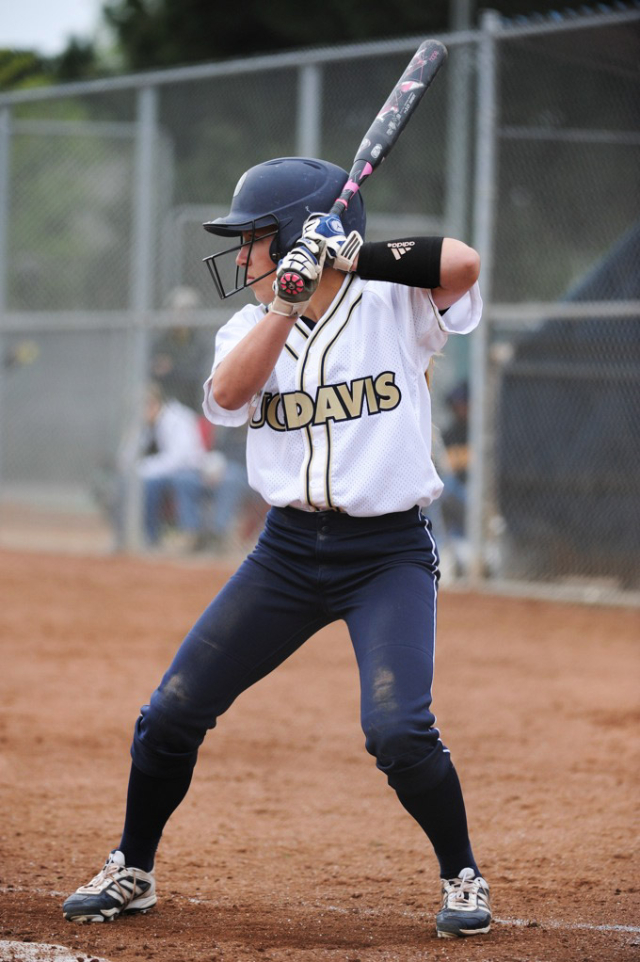
Spring showers delay UC Davis softball

0

Teams: UC Davis; Saint Mary’s

Records: Aggies: 11-22 (0-3); Gaels: 12-17 (0-0)

Where: La Rue Field — Davis, Calif.

When: Saint Mary’s: TBA

Who to Watch:  

With Winter Quarter and tournament season finally behind them, UC Davis softball was ready to come home after being on the road since mid-February, playing their last 17 games away from Davis, Calif.

In preparation for their league opener against always solid Long Beach State, the Aggies were scheduled to take on Saint Mary’s in a doubleheader March 26. However, Mother Nature had different plans.

With a mid-week downpour, the games versus the Gaels were postponed, with the reschedule date still undecided. Unable to have the opportunity to shake off some of the rust after their long stint away, the athletes then had to face the 49ers in now their first games back on the field after a long period away.

Coming into their Big West League opener versus Long Beach State, several players who performed well throughout February and March are expected to do big things for the team coming into league play.

In particular, sophomore Kelly Zboralske earned Field Player of the Week from the Big West Conference after performing solidly throughout tournament play, especially during the Stanford Louisville Slugger Classic on March 8 and March 9. Zboralske is the first Aggie since 2011 to receive this honor. She holds a current batting average of .313 and a stellar fielding percentage of .939.

Dominating on the mound, freshman right-hander Dana Cruse has been pitching well for the Aggies so far this season. As of March 25, Cruse sat in 96th place in NCAA national rankings for shutouts, with two. She currently maintains an ERA of 4.35, and at such a young age is expected to continue to do big things and grow with the team.

Preview:

Unfortunately, it appears those warm-up games versus the Gaels would have done the Aggies well, as Long Beach took down UC Davis in both games this past Sunday, March 30, 8-0 and 9-1.

The Aggies were not able to fight off the 49ers’ onslaught, as the Big West games of 2014 commenced on La Rue Field. Long Beach’s bats were on fire throughout both games and UC Davis was unable to respond, scoring only one run in the first two games of league play.

With the last game of the series being pushed back to March 31 at 10 a.m., the athletes hope to take at least one from Long Beach, giving the team some momentum as they move on to face Cal State Northridge in Northridge, Calif, April 5 to April 6, in the next round of Big West Conference play.

There is plenty of softball to be had in the second half of the season for the Aggies, with this last game versus Long Beach, followed by three-game series versus Northridge, Cal Poly and UC Santa Barbara, all counting towards Big West Conference standings.

— Sloan Boettcher


Mustangs trample all over Aggies

0

Following a season-high four-game win streak stretching from March 15 to March 25, the UC Davis baseball team was on a roll, matching dominant pitching with timely hitting. However, the Aggies saw their streak and momentum disappear over the weekend of March 28 in San Luis Obispo, getting swept by Cal Poly.

The three-game series was both teams’ first in Big West play, and Cal Poly (23-4, 3-0), currently ranked fifth in the country, lived up to its billing by thoroughly overwhelming the Aggies (12-12, 0-3).

In the series opener on March 28 at Baggett Stadium, the Mustangs jumped all over UC Davis starter senior Harry Stanwyck for seven runs in the first inning, essentially putting the game out of reach from the outset, en route to an 8-0 shutout victory. The right-hander faced 12 batters and allowed six hits in the first inning alone, although he did regroup to complete three more innings and save the Aggie bullpen from having to burn itself out. In four innings, Stanwyck allowed eight runs on eight hits and struck out three.

On the flip side, the Aggies were shut down by Cal Poly starter Matt Imhof, who tossed a complete-game shutout. Imhof allowed just four hits, and he struck out 13.

One bright spot for UC Davis was its bullpen. Freshman right-hander Justin Mullins threw four scoreless frames in relief of Stanwyck.

In the second game of the series on March 29, the Aggies raced out to an early lead before falling 5-3. In the third inning, RBI hits from senior Steve Patterson, junior Nick Lynch and sophomore Spencer Henderson put the Aggies up 3-1. However, the lead was short-lived, as Cal Poly pushed across three runs in the fourth to regain the lead. For the game, seven different Aggies recorded hits, but no player had more than one.

In the series finale on March 30 in front of 2,039 fans, Cal Poly once again dismantled UC Davis, winning 9-1. The Aggies were led by senior Adam Young’s two hits and RBI. The third baseman extended his reached base safely streak to 15 games, and he is now hitting a blistering .446 this year, which leads the team by far (the next highest is junior center fielder Kevin Barker at .367).

Following the game, Cal Poly’s head coach was impressed with the effort of his team, which is now 16-1 at home.

“That’s what we wanted to do, take care of business,” coach Larry Lee said in an interview with Cal Poly’s athletic department. “But we still need to work on a lot of areas and get major contributions from other players if we are to reach the goals we want to accomplish.”

Up next for the Aggies is a home game on April 1 against Saint Mary’s (13-13), followed by a three-game road series against Big West foe Cal State Fullerton (14-10), currently ranked No. 16 in the country.


UC Davis suffers loss in first conference match of season

0

UC Davis women’s water polo team fell to the UC Santa Barbara Gauchos by the score of 7-4 in their first Big West match of the season on March 29. After the loss, UC Davis slipped to 11-12 overall records and 0-1 in conference play.

Although the Aggies lost to the Gauchos at the UCI Invitational women’s water polo tournament on Feb. 22 by the score of 11-9, this game seemed to be an even matchup since UC Davis is ranked 15th in the National Collegiate polls while UC Santa Barbara is ranked 16th.

In the first quarter, the Gauchos came out in full force as Samantha Murphy scored the first 6-on-5 goal during a power-play with 7:24 to play. Three minutes later, UC Santa Barbara’s Bryn Hudson followed by scoring another 6-on-5 goal to give the Gauchos a 2-0 lead. The Aggies were finally able to get on the board two minutes before ending in the first half when sophomore center Allyson Hansen scored a power-play goal, assisted by sophomore Ariel Arcidacono, and helped the Aggies close the gap in the first quarter, 2-1.

As the second quarter began, UC Davis quickly evened the game with junior Paige Oreglia’s goal with 7:45 to play, tying the game at 2-2. However, the Gauchos soon took back the lead with two quick goals by Jessie Porter and Carly Christian with 6:14 left in the quarter.

The Aggies stayed strong and with 5:34 to play, Oreglia put another goal on the board. Unfortunately, Jessie Porter continued her fine performance and responded with another goal for the Gauchos, leaving the score 5-3 at the half.

UC Davis could not make any shots in the third quarter due to the air-tight defense by UC Santa Barbara. They were held scoreless throughout the third quarter and struggled to find an offensive rhythm.

The fourth quarter opened up with UC Davis scoring via a goal by Hansen. However, the Gauchos were simply too solid for the Aggies to take advantage of. A goal by the Gauchos’ leading scorer Lauren Martin sealed the fate of the game with UC Santa Barbara winning 7-4.

The Aggies will now begin one of their Big West road trips, starting with the UC Irvine Anteaters on April 5 and ending by visiting Long Beach State on April 6.

UC Davis tennis plays well in weekend tournaments

0

UC Davis men’s tennis has been surging as of late, and their latest victory came on March 30 against UC Irvine, 6-1. With this win, the Aggies now have a 12-7 overall record and a 2-0 conference record. UC Davis only lost twice in March, those losses coming against Fresno State and Nevada.

UC Davis won two of three doubles matches before the third match was left unfinished due to rain.

The winning continued for the Aggies as they won six of seven singles matches. In his victory, freshman Alec Adamson (20-8) became the third Aggie to win 20 matches.

The only loss came against UC Irvine’s Tyler Pham who defeated senior Kyle Miller. Miller struggled and lost in two sets, 6-1, 6-1. This was the only point that UC Irvine was able to earn in singles.

UC Davis men’s tennis will now face Hawai’i on April 1 at the Marya Welch Tennis Center in Davis, Calif.

UC Davis women’s tennis won their fifth straight on March 30 against the University of Portland Pilots.

The Aggies won five matches, lost one, while two matches were left unfinished in singles due to rain. In doubles, UC Davis swept Portland in all three matches, improving the team’s overall record to 10-6.

Up next for UC Davis are the Cal State Fullerton Titans, who come into town for an April 4 showdown at the Marya Welch Tennis Center. The Aggies hope to sustain their momentum against the struggling Titans, who are 5-13 overall this season and have gone 0-5 in conference play.


49ers strike gold as they sweep Aggies in weekend series

0

The Aggies had a rough start to conference play, getting swept by the Long Beach State 49ers. They started their series against the 49ers with a doubleheader on March 30. This was a long day for UC Davis as the 49ers clearly had the Aggies’ number.

In the first game of the doubleheader, the 49ers were led by shortstop Shayna Kimbrough and second baseman Cya Neal. Kimbrough went 2-3 with a walk, a run and an RBI. Neal went 2-4 with a run and an RBI.

The Aggies simply could not stop the 49ers’ batting order; starting pitcher freshman Dana Cruse only went 3.1 innings and gave up four earned runs. Sophomore Leah Munden came in to relieve Cruse and fared no better, giving up four runs — though none of those were earned — in two innings pitched.

Besides the lack of ability to stop the 49er bats, the Aggies’ bats were silent, struggling to even get hits against Long Beach State’s Erin Jones-Wesley. Jones-Wesley was stellar against the Aggies, giving up only two hits in six innings pitched.

Sophomore designated player Kelly Zboralske, who is hitting .313 for UC Davis, struggled against Jones-Wesley. Zboralske went hitless in three at-bats and struck out twice in a frustrating outing. With the lack of hitting from the Aggies and the hot bats of the 49ers, the Aggies lost 8-0 in six innings.

With the second game of the doubleheader occurring right after the 8-0 defeat, the Aggies were not entering the second game with positive momentum. It showed, as once again the 49ers’ bats lit up the Aggies’ pitching. Kimbrough and Neal once again led Long Beach State. This time, Kimbrough went 3-4 with two RBI and a run. Neal went 3-4 as well, with an RBI and a run.

The dynamic duo of Kimbrough and Neal once again sparked the 49ers’ offensive display against the struggling Aggie pitching, which gave up nine runs. Starting pitcher sophomore Alicia Paine struggled as she couldn’t get out of the second inning, only pitching 1.1 innings. Paine gave up five hits and four runs, all of them earned, in this short span. She was relieved by sophomore Marissa Chapa who was blasted for nine hits and five earned runs in 5.1 innings.

The problem for the Aggies was that their bats were once again cold. Long Beach State’s Amanda Hansen pitched a complete game and only gave up one run. UC Davis’ sole run came from sophomore outfielder Cat Guidry’s single to third, which drove in senior second baseman Chandler Wagner. UC Davis was simply outclassed and fell in the second game of the weekend, 9-1.

The final game of the weekend series against Long Beach State was not even on a weekend. The game, which was played on Monday, March 31, was a much closer battle between the Aggies and the 49ers than the weekend games had been.

Munden, the starting pitcher for the Aggies, struggled early giving up five hits and three earned runs in only 2.2 innings pitched. However, the Aggies received brilliant relief play from Cruse, who pitched 4.1 innings of shutout ball. Cruse only allowed one hit in those four innings.

However, while UC Davis’ pitching woes were qualmed by Cruse, the poor hitting was still blatantly obvious. Jones-Wesley once again stymied the Aggies’ batters, holding them to one earned run in 4.2 innings pitched. UC Davis’ one run came from an RBI single by sophomore shortstop Christa Castello, which drove in pinch-runner sophomore Jasmine Lee. From that point on, the Aggies were completely shut down by a combination of Jones-Wesley and Hansen, which ended with a final score of 3-1.

This pitching duel ended up going in the 49ers’ favor, as they simply had enough clutch hitting to build a substantial lead. The third inning spurt, where Long Beach State scored all three of its runs, was catalyzed with a single by Neal. Neal then advanced to third on a single by third baseman Hannah De Gaetano and was driven home by a sacrifice fly.

The Aggies simply could not get anything started with their bats and struggled mightily against the strong Long Beach State pitching staff. They hope to turn around their fortunes in Big West play, as they head to Northridge, Calif. to face the Matadors.


Modern Bey Feminism: Beyonce Knowles Best

1

mug_strumwasser

Let me set the scene.

It’s Friday night and you’re out with your ladies. You’re wondering if it was worth pausing Netflix, getting out of bed and putting on makeup to go pay for alcohol at a bar with mediocrely attractive people.

But then, everything changes. “Drunk In Love” comes on, and suddenly you know that this is going to be the best night ever.

Why? Because Beyoncé.

After making a name for herself as the lead singer of Destiny’s Child in the late 90s and early 2000s, Beyoncé went on to build a successful solo career with her first album, Dangerously in Love.

Fast-forward 11 years and Beyoncé is more relevant than ever. She has emerged as a symbol of femininity, sexuality and success, while embracing the idea of being a strong independent woman and feminist.

But with this success also comes some heavy criticism. As young women navigate the media on a search for a strong female role model, many question the validity of Beyoncé’s brand of feminism.

Feminism has been defined in many ways, but can ultimately be described as the fight for gender equality (NOT the superiority of women over men). Feminist writer and cultural critic bell hooks defines feminism as “A movement to end sexism, sexist exploitation, and oppression,” while Chimamanda Ngozi Adichie, who is sampled in Beyonce’s song “Flawless,” defines a feminist as “a person who believes in the social, political, and economic equality of the sexes.”

How can Beyoncé be a feminist if she dances like that? Isn’t she just playing into society’s representation of women in the media?

The answers to these questions, of course, are complicated. As an avid Beyoncé fan, I’ll be the first to say that Beyoncé’s sexuality and self-expression can be confusing when looked at from a feminist perspective.

Beyoncé’s cultural relevance is especially important in this day and age, as one issue in the feminist movement has been how to increase accessibility. Feminism has been isolated in academics and made inaccessible to the average layperson who is unfamiliar with complex and specific jargon such as “intersectionality” and “false binaries.”

Beyoncé’s music, however, has made the idea of equality of the sexes accessible for everybody, presenting it in a way that is interesting and relevant to modern day young listeners. Similar to Virginia Woolf and Alice Walker, whose literature highlighted feminist ideals, Beyoncé’s songs and music videos present feminism in a way that’s easier to swallow.

This is a part of a greater movement of feminism away from academia and back to the founders — everyday women.

Of course arguments arise when Beyoncé is presented as an “everyday woman.” As No. 17 on Forbes’ list of 100 most powerful women in the United States, Beyoncé has resources that are unavailable to the majority of her listeners.

But looking at feminism through the Beyoncé lens can help us understand society’s view on feminism and sexism, and help us assess what still needs to be done. While no one needs to agree with everything Beyoncé says, understanding her effect on modern day feminism can bring us a little bit closer to gender equality.

Beyoncé has created a successful music career while also making huge steps towards overcoming sexism in our society by providing a brand of feminism that can be consumed as an entertainment media by the masses.

While Beyoncé has dazzled all of us with her performances and sparkly dresses, she isn’t a perfect human being, or a perfect feminist. Throughout the next few weeks I’ll be looking at Beyoncé and the role she plays in providing different viewpoints on modern day feminism, and I hope you’ll be paying attention too.

To sing Beyoncé karaoke with HANNAH STRUMWASSER, email her at hstrumwasser@gmail.com.

Co-op Bonanza: Beyond the Fridge

0

mug_moniz

How do I even start to talk about where I live? The beginning, yes, but the self-conscious freshman that started hanging out at the co-ops doesn’t quite understand the importance of the whole matter. And starting in the middle is asking for a whole lot of “this is cool and this and this and oh yeah that…” so the beginning it is.

I discovered cooperative communities through the on-campus Tri-Cooperatives during the winter quarter of my freshman year. After one dinner and one garden party, I was so hooked that I now find myself in the middle of that cooperative, garden-crusted, compost-making space as a resident, not a visitor. Though I’ve been living there for two quarters now, I know I still have a lot to learn. So that’s what this column is for — I’m hoping to take you on this adventure with me. I aim to delve into all the aspects of the cooperative community that, over the course of the last year, I’ve just accepted and ran with. For example, what even is a cooperative community?

Why, thank you for asking! Loosely put, it’s a group of people that agree to work together to meet some sort of ends, be it economic, cultural or social. While my experience is in a housing community focused around us all having a place to sleep and a social base, the idea of the cooperative extends to businesses, such as the Davis Food Co-op. As a business, the Food Co-op shares ownership with its customers. Instead of having a Big Person at the top of the line, the Food Co-op is literally owned by anyone who wants to chip in.

That’s a somewhat obvious example, since it includes the word “co-op” in the name, but get this, unions can actually be considered co-ops. (Did you know that? I didn’t know that.) Unions are worker cooperatives, essentially, because all the workers cooperate to get better wages and working conditions and all that jazz. If we look back to the earlier definition of a co-op, the union meets that definition. Workers voluntarily become part of a group that cooperatively pursues economic benefits.

Co-ops, including the Food Co-op and unions, fall under various owner models. The Food Co-op is a consumer co-op because it’s owned by various members (who are usually customers) while unions are worker co-ops because the members do work that benefits the whole of the cooperative. There are even more owner models: retailers, non-monetary, volunteer, business/employment … and beyond ownership models, there are types of co-ops: housing, utility, agricultural and even banking co-ops. (Is this more complicated than you expected? Yeah. Same here.)

Fun Fact: out of all the types of co-ops, agricultural co-ops are the most common, which isn’t too surprising coming from the home of the Aggies and the water tower that’s secretly a cow poo scented air freshener.

With these definitions in mind, I’m realizing that this place I’ve come to call home is way more than just a house filled to the brim with cats and people and tasty food. While I’m interested in exploring the little details of cooperative life, such as when to plant chard and how many freaking gallons of milk 14 people go through in a week, I’m intrigued in taking a step back. I’ve realized that this special and strange world I live in is actually a huge system that means a lot more than a refrigerator full of food that I chipped in money for and a few hours of garden work a week.

The decades of people before me actually thought a lot about what they were getting into. Even though there are all these definitions that are designed to define co-ops, and they seem to apply pretty well to business-like co-ops, I’m not sure where to begin when it comes to the housing cooperative I live in. Can a group of ridiculous and entertaining individuals even be defined like that? Maybe by the end of this column, after I’ve figured out the details of the details, maybe then I’ll know if I can write the answer down and pin it to my muraled wall. But I don’t think that’s going to be possible.

Interested in wearing socks with sandals? Ask ISABEL MONIZ for advice on how to rock the look at irmoniz@ucdavis.edu.

Breaking Norms: Table Manners

0

mug_holmes

The definition of ‘social norms’ was reiterated to me recently in my psychology class — they are “expected standards of conduct in a society that drive members’ social behavior.”

The way I see it, social norms are just begging to be broken. I mean, why do random rules of social conduct even exist and who put them into effect? Was it some sort of collective team effort, devised by a kind of mainstream coalition? Or do social norms come to exist simply out of popularity of performance?

One intriguing social norm concerns table manners. There are so many rules around how to conduct yourself at the table, so I thought I’d break a few to see how people would respond.

It’s noteworthy to mention that I’m a freshman, so eating at the DC is a daily occurrence and also is the perfect place to break social norms.

I spotted two guys sitting together at a table in the Cuarto DC. They were immersed in a conversation and I approached their table without making eye contact or asking if I could sit with them. Instead, I just pulled out a chair, sat down and started to eat my bowl of cereal.

I wanted to see how people would react if a complete stranger just decided to sit at their table.

The two guys abruptly stopped their conversation as soon as they realized that I was actually going to sit at their table. For nearly 20 seconds — nothing. I kept quiet to myself until the guy to my right nervously said “Heyy, how’s it going?” I responded, but then quickly returned my focus back to my cereal, further confusing the two guys.

Nick, the guy to my right, flat out said, “I’ve never had someone I don’t know sit at my table before.”

Mission accomplished. Social norm confirmed.

After introductions were made and a conversation started, I told Nick and my other new BFF James that I was performing a social experiment. Nick, feeling relieved, said “Ohh! That makes it so much less creepy.”

“Creepy?” I’d say that’s a normal way to respond to what I did. But why is that the standard? The answer is because we’re told that you can’t just sit down at any table you want without asking because that would be, dare I say, absurd.

That would make people feel uncomfortable. This is one of those norms that could easily be swept away and forgotten if we just put our minds past how potentially awkward sitting with strangers could be.

Nick and James admitted that they were extremely confused as to what the hell I was doing, and it even ran through Nick’s mind that he had met me before but had forgotten who I was. That’s how unlikely he thought it was that a random person would just come sit at their table.

Soon enough, I was on to my next target: a group of four guys eating on the couch in the middle of the DC. After I sat down and made some eye contact with them, one guy actually got so uncomfortable that he stood up and left, only to return again as I was leaving. One of the others told me he just felt really awkward.

It just goes to show how surprised and overwhelmingly confused people feel when they’re confronted with this scenario.

Another social norm that I decided to break was the proper eating technique. Not too many people deviate from the social norms that accompany mealtime.

So, I got creative. Instead of drinking my Diet Coke from a cup, I poured my soda into a bowl and used a pink umbrella straw that I supplied myself. The people at my table and those passing by gave me weird looks, of course.

Because “why??” would I do that, as a friend inquired. Why? Well, it works. I stayed hydrated.

I also decided to have some fun with mealtime by “bobbing” for my own apples. I got two apples, placed them in a bowl, submerged them in water and was going to attempt to work for my food.

However, right before I was about to dunk my face in, I was stopped by “What the f*** are you doing, Savannah?” That was the voice of society scolding me for veering away from normal eating behaviors.

Just like the apples in the water, that comment was saturated with negative judgment. And the intriguing thing is, that’s a completely normal and appropriate response to my behavior at the table.

When seeing people violate the unwritten rules of social conduct, it’s normal to respond in a shocked way. That’s why people don’t commonly go against them.

If you want to play hot potato with the pancakes at the DC, contact SAVANNAH HOLMES at skholmes@ucdavis.edu.

Column: Spring Fake

0

It all started when my mom wanted to find out about Oahu’s Farmer’s Market.

My family was headed to the islands for spring break and, in accordance with our predisposition to non-normative travel, wanted to experience more local aspects of the islands that weren’t purely manufactured for the tourism industry. To my unpleasant surprise, I found that if you plug “Oahu” into the Google Machine, you find out it’s the most populous island, #1 Hawaiian tourist destination, “a tourism and shopping haven” (Wikipedia), “The most developed of the Hawaiian islands” (Lonely Planet) and “home to the only real metropolitan area in all the Hawaiian Islands” (WikiTravel) — all of which I read as “hella colonialized.”

For a little bit of context, colonialism is “a political-economic phenomenon whereby various European nations explored, conquered, settled, and exploited large areas of the world” (Encyclopedia Britannica). In Hawaii, this occurrence could be pinpointed around 1893, when the United States violently overthrew the Queen of Hawaii and put their own government into place.

Since then, mainland Americans came in and built high-rises and highways, much in the same way they did on Native American land — but in this case they kept natives around instead of driving them out, in order to exploit and bastardize the culture for profit.

Colonialism is the soundtrack to this column being the $99/person luau playing out a few feet from my balcony — turning a historically special and symbolic practice into a weekly event wherein dark-skinned people serve “traditional” food, wear “traditional” dress and perform “traditional” dance for their dominantly white-skinned audience.

Colonialism is an ad in Hawaiian Airlines magazine, a two-page spread in the hotel’s guest book and a four-foot poster in the lobby advertising “the world’s premier Polynesian encounter, featuring hundreds of warm, welcoming islanders and “Go Native” adventures” — accompanied with pictures of shirtless caricatured “natives” posing with tank-top clad tourists.

Some argue that “cultural immersion” programs like these are acceptable, or even beneficial, because you’re financially supporting local people and you’re appreciating and trying to learn more about their culture.

But that fails to take into account that colonialism and capitalism have erased a diversity of jobs, leaving locals economically dependent on resorts, “cultural shows” and other aspects of the tourism industry. (Also, it’s highly doubtful that the hula dancers and such-branded “Polynesian Natives” see much of the money that you pay — the hotels and tourist companies most likely gobble up the majority of your funds).

The unfortunate reality with all of this is that it isn’t a system I feel I can put a stop to, but it’s also one that I don’t want to support.

It’s a dilemma pretty much completely exclusive to middle-class socially-conscious college students: do I contribute to a system that I am fundamentally opposed to, or do I turn down a dope-ass free vacation?

Ultimately, I chose the former.

I went because I love my parents and it would make them sad not to see me. I held my tongue because they are good, hard-working people who don’t deserve my financially-dependent ass making snarky remarks about privilege and colonialism.

I winced walking past the luau, groaned at the “Go Native” ads, facepalmed when I found out a neighboring Marriott housing project was called “Coconut Plantation,” but for the most part, tried to relax and enjoy myself and not let the money my parents spent go to waste. I’m privileged enough that this sort of vacation is a reality for me, whether I asked for it or not.

So yeah, in some cases I’d say take the damn vacation. If you’ve worked hard and feel you deserve a break, go ahead and make awkward eye contact with that beautiful steward on the plane. If you acknowledge your privilege and give sincere thank-yous to the hotel staff, go ahead and fall asleep on the beach, giving yourself unseemly tanlines.

But steer clear of the “Go Native” events, grass skirts and coconut bras.   Colonialism and cultural appropriation are SO 1893.

To suck the fun out of anything with TANYA AZARI email her at tazari@ucdavis.edu.


The Maturing Moviegoer: Sex and “The Virgin Suicides”

0

mug_flesch

I love movies. They reveal, they entertain and they stimulate us in ways both conscious and subconscious. I love stories. They put flesh on bone. There is no way to illustrate a theme better than a story.

So what do we have here? We have great films. We have stories. And we have the themes that shape those stories. Films. Stories. Themes. Let’s add one more ingredient to the mix before you get back to staring aimlessly at your phone. Coming of age.

Everybody says that it’s harder now growing up than it ever was. Certainly there are components of our culture that former generations couldn’t even dream of growing up with (twerking). But what generation hasn’t experienced this? We are blossoming sprouts, coming into our adult lives whether we like it or not. We are also crash test dummies for new challenges along the way. Sounds fun.

Movies provide the perfect venue for trying to understand what we are going through. After all, if movies weren’t relatable on some level, we wouldn’t watch them. And although the story may change, the themes stay the same, time and time again. Let’s explore!

The Virgin Suicides is a 1999 film by Sofia Coppola, adapted from the 1993 novel by Jeffrey Eugenides. We are presented with the tale of five sisters, the youngest of which commits suicide. But through a kind of sad beauty, and a surprising grin-inducing humor, we whimsy our way into the lives of the remaining four sisters, as well as four boys who find themselves captivated by their mystery.

One of the boys mentions how girls know all about things like love and death and that boys are often there to merely add the noise that entertains them. That boys never can truly understand these things like a girl can.

I’m not so sure about that. But maybe that’s just proving the point. Can it be possible that men are so unilateral in intention and desire that girls have us figured out from the get-go? Maybe this is true of girls looking upon pre-pubescent boys, but as males foster their abstract mind, it surely cannot be possible that women will reach into the minds of men so wholly as to leave us sitting on our asses.

Sofia Coppola gives a story in which those humans endowed with penises are observers of those other humans endowed with vaginas. It is true that girls become women earlier on than boys become men. I suspect this creates a kind of wonder in boys, who have yet to mature. And I believe this wonder looks different with each generation.

In 1970s Michigan, the time and place in which The Virgin Suicides is set, we can see a difference in the way boys learned about women. The four boys in the movie peeped through telescopes to see sex in all its moist, passionate and slightly awkward glory. Now, boys peep through the internet to sites where their cravings can be satisfied by professional and amateur pornographers alike.

Porn can create illusions for many young men — illusions that can persist. Sure, there was Playboy and Hustler back in their hey-day, but today’s sexual media makes those magazines look like chastity manuals.

Do not make the mistake of thinking that I am nostalgic for a time I did not live. That would be impossible. Peeping through telescopes for sexual gratification is far riskier than waiting until you’re alone in your dorm room with nothing but tissues, some lotion and a working internet connection.

So where is the silver lining here? What do we learn from The Virgin Suicides, other than that Trip is a terrible name for the most handsome dude in the movie? Well, that is hard to say. Movies that give us ambiguous endings tend to leave people feeling crazy. But somehow, we are left with more when less is said for us.

And in this thought we find a parallel to our modern predicament. Pornography is similar to the grandstanding politicians of today — full of answers and no questions. Because that’s what people want. Answers. But considering the ubiquity and subsequent dilution of sex in today’s culture, sexual coming of age may be better endured as trial and error fraught with natural embarrassments and ambivalences that can only be laughed upon as we reflect on our experiences.

Spring is in the air, the birds are chirping, the bees are buzzing; it’s time to perk up your ears, open your eyes and read my column. I hope you join me as we try to figure out all the ways we leave our youth behind.

If you want to tell ELI FLESCH that he knows nothing about sex, you can reach him at eliflesch@ucdavis.edu.

Review of The Wind Rises

Studio Ghibli’s most recent animated production, The Wind Rises, is now showing at Regal Cinemas on G Street in downtown Davis. The film is Japanese filmmaker Hayao Miyazaki’s final movie of his career and is perhaps one of his best pieces yet.

Miyazaki, writer and director of the Academy Award-winning film Spirited Away, has brought forth themes of love, growing up, feminism, good vs. evil, environmentalism, flight and reality vs. fantasy over the years in all of his movies and The Wind Rises is no exception. The Wind Rises imagines the life of Jiro Horikoshi, a real life aeronautical engineer from the 1950s who designed aircrafts used by the Japanese army in WWII. The film, though based on historical events, is whimsical in quality and invites the viewer into a highly aesthetically appealing experience.

The film beautifully intertwines the ideas of flight and love into one in the same for young Horikoshi. It explores the difference between Horikoshi’s ambitions to create beautiful aircrafts and the reality of how his designs will actually be manipulated by those in power. The Wind Rises offers a balance between visual pleasure and a complex emotional rollercoaster.

Horikoshi learns to love people as he loves airplanes when he meets Naoko Satomi, a young woman dying from tuberculosis. He realizes the planes he designs are inspired by the same passion he feels towards Naoko. As he learns his aspirations to create stunning aircrafts must be surrendered to those in power for the purpose of war, he simultaneously learns to deal with the imminent loss of ailing Naoko. The interactions between Horikoshi, Naoko and his aeronautical dreams are intricately paralleled to one another and convey the idea that emotional attachment of the human spirit to anything must be learned as well as unlearned, but should always inspire one to live life to the fullest.

The animation itself slightly differs from that of Miyazaki’s previous films, but with good intent. The physical motions of the characters and environment in the film are less precise and exceptionally fluid. The fluidity of the animation is meant to parallel the freedom of air travel and the dream-like atmosphere that Horikoshi has molded for himself. The actions of the characters and the motion of the environment almost meld together, blurring the lines between individual events and moments in time, creating an ambiguous reality. The film pushes the notion that what we hope is real and what is actually real is never concrete or definable and that one must construct their own reality in order to survive.

Amongst the gorgeous animation, historical occurrences and serious existential issues, Miyazaki manages to keep the film light-hearted, incorporating comical relief. Viewers will enjoy Kayo, Horikoshi’s sassy (as well as goal-oriented and independent) younger sister, Castrop, a German man who despises Hitler but is madly in love with the idea of being madly in love and Kurokawa, Horikoshi’s tiny wise-cracking boss with a substantial bowl cut.

Funny, aesthetically pleasing, romantic, sad and inspiring, The Wind Rises is nothing less than one more of Miyazaki’s naturally flawless creations, and unfortunately, his last. He has truly left all he has to offer in his final film and I recommend everyone see this movie if they get the chance.

The Mondavi Center hosts Circa’s “S”

0

On March 30, The Mondavi Center will host the Australian circus group Circa. Circa will be performing their show “S,” a captivating and raw example of the modern circus. Drawing inspiration from the smooth contours and constantly changing directions of the letter “s,” the cast will explore their physical and emotional limits with organic and powerful acrobatics.

The performance is influenced by the simplicity of the letter “S.” With no numbers, acts, props or even elaborate costumes, the ensemble is said to be able to capture a sense of purity and vulnerability with their movement. As a result, Circa’s acrobatics engage the audience’s emotions.

According to Yaron Lifschitz, the CEO and Artistic Director of Circa, “S” is a different piece from what he has done in the past. Lifschitz said he was excited about “S” being regarded as something beyond explanation but still moving.

“It [“S”] is a place where the body and the artist become a resonant, poetic, theatrical, medium that generates an authentic human connection between the performers and the audience,” Lifschitz said. “One thing that I like about the show is an expression of an emotion that does not quite have a name. I hope the audience feels something when they watch it and call that thing ‘S.’”

In nine years, Circa has travelled to over 27 countries and has been praised for their flawless beauty and creativity.

Thomas Kriegsmann, the company’s US touring representative, has traveled with Circa during their US tour and commented on the strengths of Circa’s performers.

“I cannot speak highly enough of Circa’s performers,” Kriegsmann said. “The circus artist is such a rare form of human being — my understanding of it still merely scratches the surface. I consider myself someone who dedicates a lot of time and sacrifice to their craft, but it can never compare to the depth of dedication and personal risk of a Circa performer.”

“S” will feature the unique musical team of widely praised artists Kimmo Pohjonen, Samuli Kosminen and the Kronos Quartet. The musical soundtack, titled “Uniko,” consists of an accordion, eerie synth samples and a dynamic stringed quartet.

“It is a tremendously powerful piece, a wonderful piece of music at its core,” Lifschitz said. “It all adds a sort of musical heartbeat that group explores physically.”

This is Circa’s second performance at the Mondavi Center. Their show is part of a group of movement based acts hosted by the venue titled the Marvels series. The Mondavi Center’s associate executive director and director of programming, Jeremy Ganter said he is impressed with how much Circa has grown as a group.

“It really is that every time you see a new work from Circa it is a complete surprise how much they have transformed,” said Ganter. “Circa is a company that is doing movement at a high level and bringing something new to the table and new to the genre of circus.”

“S” will take place in The Mondavi Center’s Jackson Hall. Doors open at 3 p.m. Ticket prices for the performance will range from $12.50 to $49. For more information about purchasing tickets, show times or information visit www.mondaviarts.org.

Davis alumna writes, directs film about periods

0

As part of the preparation for her upcoming film currently called “The Untitled Short Film About What It’s Like to be On Your Period,” UC Davis alumna Kristine Gerolaga will get to play the part of a menstruation cycle onstage.

Gerolaga, who graduated from UC Davis in 2009 with a degree in sociology, is a filmmaker and actress. Since then, she has contributed to and written her own short films, as well as acted in commercials and a web series.

The writing of the film came about as an assignment from Gerolaga’s instructor at the Beverly Hills Playhouse, but the concept came from a trend she has seen in the film industry.

“Gender and race inequality in the industry is still a problem, plain and simple,” Gerolaga said. “I want to make this short film to contribute to the movement of equality for women and people of color in front of and behind the camera. I hope to give opportunities to a truly diverse cast and crew to be a part of a really fun film with an important message.”

In order to raise funds for her latest short film project, Gerolaga is holding a fundraiser show at the Beverly Hills Playhouse in San Francisco on March 16.

“The show is called ‘Here She Comes: Periods Leak Their Personal Stories,’ and will feature a diverse cast of Bay Area actors, musicians and comediennes that celebrates women and the period,” Gerolaga said in an email interview. “Think Vagina Monologues but from the period’s point of view.”

The event will mark the beginning of Gerolaga’s crowdfunding campaign for the film. Her friend and classmate at the Beverly Hills Playhouse in San Francisco, Jennifer Vo Le, suggested the event also be an extension of the film itself.

“I suggested we create a theatrical production of her concept in order to complement her short film so that it invites and gives the audience a chance to further experience her vision,” Le said in an email interview.

On top of showcasing actors in the performance aspect of the event, the theatrical extension also features other writers and designers, including Gerolaga’s cousin, Hannah Burgos. Burgos is a designer, illustrator and writer based in San Francisco and New York, and is contributing to the event as a graphic designer and helping create certain props.

“I made the huge stuffed vagina that appears in the film, which will also be at ‘Here She Comes,’” Burgos said in an email interview.

However, Burgos said her primary contribution is as a writer, providing one of the five monologues that are set to be performed the night of the event.

“We were all assigned to write the voices of very particular ‘period personalities’ (as in, create a character out of a period), whose stories would correlate to the women they belonged [to],” Burgos said. “Our job was to creatively parallel the stereotypical external behavior, physical condition, emotional expression and introspection of a woman on her period with events concurring in her body.”

Gerolaga said she wrote two of the monologues for the event herself, and will be performing in at least one of them.

“I will actually be playing the archenemy period of a menstruating superhero,” Gerolaga said.

Gerolaga, like others involved in the event, stressed the humorous aspects of the project, but said she also hopes to address serious issues in the production of the film she plans to complete after the crowdfunding effort.

“It is a comedic short film about the rough relationship between a woman and her personified period, but it is ultimately about what it means to be a woman,” Gerolaga said. “The short film also challenges the typical period stereotypes we see in films and on television by trying to cover a range of monthly experiences with various funny characters.”

Gerolaga’s ability to write and perform characters in a way that parallels her desire to support greater diversity in film comes from her time spent at UC Davis.

“People think I’m wasting my sociology degree, and I’m not. Acting is about understanding the human condition,” Gerolaga said. “Sociology and social psychology have given me a wealth of knowledge on all kinds of people and backgrounds that I continue to use today when shaping the characters that I’m playing. Without those specifics, I could fall into stereotypes or caricatures instead of three-dimensional human beings and I would definitely not be doing my job very well at that point.”

Gerolaga and her colleagues involved in the project have high expectations for the event and film.

“The show is going to be great,” Burgos said. “So much sweat and blood has been put in this project. Pun intended.”