54.1 F
Davis

Davis, California

Tuesday, December 23, 2025
Home Blog Page 893

Decreasing chlorophyll causes fall colors

It’s that time of year when the thousands of trees on and off campus experience a dramatic change before the cold winter. Leaves are turning gold, red and orange — what is the secret behind these changes?

To answer that question, we need to understand the biological purpose of leaves and their chemical components. Leaves are the part of a plant that photosynthesize. They take in energy from the sun in the form of light and turn it into a form they can use, namely, glucose and other sugars.

Why do leaves do this instead of other parts of the plant? In trees, especially, leaves are responsible for photosynthesis because they are green. Their unique structure also aids them in their ability to make sugars, but the most important part is their color. The green in plants comes from a specific light-absorbing pigment, known as chlorophyll a.

“Leaves are green because the primary photosynthetic pigment, chlorophyll, absorbs the red and blue spectra of light while reflecting the wavelength of visible light that corresponds to green,” said Zachary Chestnut, a plant biology graduate student, in an email.

Essentially, leaves are green because it is the only wavelength of light they do not absorb.

Chlorophyll is one of the most important molecules on the planet. With chlorophyll and other light-absorbing pigments, plants can absorb a range of colors, allowing them to grow in a variety of locations and periods in a year.

“I remember talking to a friend of mine about how we barely noticed the colors changing at first, but now that we have, we realized how beautiful the Davis campus looks with all of the leaves changing color,” said Bhumika Kukreja, a second-year microbiology and international relations double major. “There is such a wide variety of plants that we get to witness a wide range of color changes, and that’s really quite amazing.”

The sun doesn’t shine the same all year long, and in winter especially, the sun may never even make it through the clouds on a given day. This causes the temperature to go down as the northern and southern hemispheres take turns tilting away from the sun.

This temperature decrease is a signal for certain kinds of plants to make changes to their internal chemistry.

“As the temperature goes down, there is an enzyme called chlorophyllase. Chlorophyllase gets activated and degrades chlorophyll,” Katayoon Dehesh, a plant biology professor, said. “When chlorophyll goes down, because it is the major pigment, the color of carotenoids becomes the dominant pigment … As the temperature goes down, the plant is not as metabolically active. In order to adjust its metabolic valve, the chlorophyll gets degraded so there won’t be any photosynthesis.”

According to Chestnut, the accessory pigments are in plants all year long, but chlorophyll masks them. When fall arrives, chlorophyll departs from the leaves, allowing the other pigments to become visible, thus changing the color of the leaves.

Some plants, however, do not need to change how they photosynthesize light. These are called evergreens. They include conifers (think pine cones), holly (Christmas time), and eucalyptus trees (Golden Gate park and Vicks VapoRub).

“First of all, the leaf structure is very different,” Dehesh said. “Second, because the gymnosperms — and the conifers specifically — they have a different metabolic process. They grow very slowly, and their metabolism is also accordingly not as rapid.”

These plants do not need to slow down in winter because they are always growing slowly.

As simple as they may seem, plants are some of the most complex organisms on our planet. We use them in almost every realm of our lives, from medicine to housing. The complexity of their internal structures and processes only adds to their beauty.

UC Davis known as largest feeder for Sacramento City Year branch

0

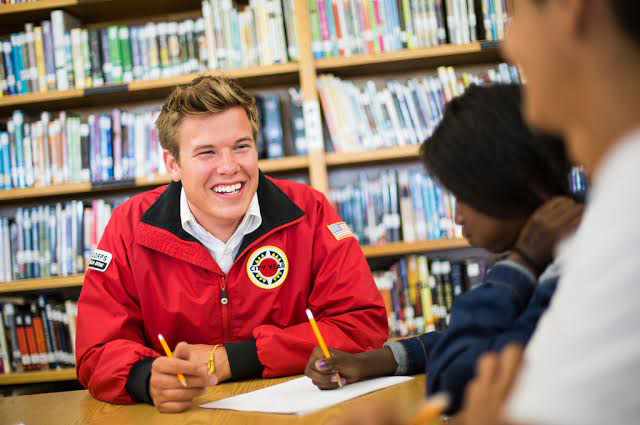
UC Davis graduates make up the largest proportion of City Year corps members in the Sacramento branch, according to City Year Executive Director Jake Mossawir. The Sacramento branch of City Year, although only in its second year, serves more than 3,000 students in five different schools.

City Year is a non-profit organization that offers tutoring and mentorship to at-risk students in 24 cities nationwide. They work closely with teachers, other corps members and parents to help students succeed in school.

The proximity of UC Davis to Sacramento is a factor in its popularity among UC Davis graduates, according to Anton Taylor, City Year regional director of Diversity Recruitment and Strategic Partnership, West Coast.

“We’ve found that UC Davis students have an unwavering passion for service particularly pertaining to youth,” Taylor said in an email.

Corps members must be between the ages of 17 and 24, and have done some college coursework. Commitments to City Year span the length of a year, with the option to reapply for additional time with the program.

Corps members can apply for post-graduation jobs, study for graduate school exams and “engage in the community outside of UC Davis,” while working with City Year and supporting younger students according to Mossawir.

“For any graduating student, it’s perfect to do when you’re applying to law or grad school. It’s a way to establish yourself as a young professional,” said corps member Evelyn Garcia, a 2012 UC Davis graduate.

City Year determines which students are at the highest risk of dropping out based on three factors: poor attendance, disruptive behavior and course failure.

College-aged students perfectly fill the role of mentor to younger students because they aren’t as intimidating as teachers, according to corps member and 2013 UC Davis graduate, Stacy Liu.

“We provide ‘near peer’ support,” Liu said.

Corps member and 2013 UC Davis graduate, Houston Edwards, found out about City Year at the UC Davis career fair, and his experience with the organization has inspired him to consider a career in teaching.

“[The best part is] having the opportunity to work with the kids and to see them learn and grow,” Edwards said.

While City Year is about helping students, you don’t have to be interested in becoming a teacher to join, Mossawir said. There are other reasons to join the organization.

“[City Year] gives you opportunities. We partner with about 100 universities nationwide who offer tuition reductions of 25 to 100 percent for students who were part of City Year,” Mossawir said.

In addition to monetary compensation, Mossawir believes that working for City Year is fulfilling to corps members.

“If you’re going to dedicate time, energy and resources to something, you need to make sure that it has a measurable outcome,” Mossawir said.

Liu spent a couple of months searching for jobs after graduating from UC Davis, but was looking for something meaningful to do. Liu acknowledges that working with kids can be frustrating.

“It’s frustrating when kids shut down and there isn’t enough assistance,” Liu said. “It seems like the kids always need more help. It’s definitely more than just playing with kids.”

City Year corps members impact the lives of the children that they help.

“We build a strong relationship with the kids, and we become a source of comfort,” Garcia said.

Corps members also benefit from creating strong relationships with the kids that they serve.

“They see you as a leader and it really helps to build your confidence,” Garcia said.

One student confided in Garcia that he wanted to attend Sacramento State College, but then later had issues staying on task with his homework. Garcia reminded him of his goal to attend Sacramento State, and his attitude towards school significantly improved.

“He was listening, he heard me,” Garcia said.

Of the one million students who drop out of school each year, half of them come from only 12 percent of schools, according to the City Year website. The organization concentrates its efforts in communities and schools in which the dropout rates are highest.

City Year was founded in 1988, and currently serves students across the United States, as well as in South Africa and England.

City Year is currently accepting applications for the 2014-15 school year, and interested applicants can apply online at cityyear.org.

UC Davis to offer virtual Nutrition 10 class Winter Quarter 2014

0

The popular lower-division course Nutrition 10 (NUT 10) will be offered online for Winter Quarter 2014. NUT 10 covers weight loss strategies, effects of dietary supplements, links between nutrition and disease and other related concepts.

The class will be taught in person by Dr. Liz Applegate and the online class will be offered to students who would like to take the class virtually. More than half of the students will be enrolled to take the class face-to-face, but online students will be able to watch the lectures either live when Applegate teaches them or after the lecture.

“Everything is identical,” Applegate said. “Students can watch a live video cast of lectures or a delayed taping for up to seven days after the lecture.”

This past summer, Gov. Jerry Brown emphasized the importance of expanding online class options in higher education systems. With the amount of students to teach increasing, and funding and room for new lecture halls decreasing, online courses are a possible solution.

Applegate took this into consideration when developing the NUT 10 class to be online.

“I’ve always tried to use current technology and I wanted to try out the online course system for myself,” Applegate said.

In the past, Applegate said she has utilized the Smartsite online forums and has a podcast of her lectures available throughout the quarter.

NUT 10 was first offered online as a pilot research study in the summer of 2012. Applegate said that the results from that experience were very successful and students really like what the virtual class has to offer.

“The online course can accommodate students who don’t want to sit down in lecture, but want to understand or learn the information at a different time,” Applegate said. “I’m planning on enrolling 800 students total, and am anticipating that 200 students will take the virtual class.”

UC Davis currently offers some online and hybrid courses. For online classes, all of the instruction and activities take place virtually. For hybrid courses, students attend class fewer times per week than they normally would for a face-to-face class, and spend the rest of their time participating online through lecture boards and other interactive activities.

“NUT 10 is a blending of hybrid and online courses,” said Dan Comins, the instructional designer for Academic Technology Services. “It is not a true hybrid course because a portion of the students will come to class every day and a portion will just watch the lectures online.”

The possibility for hybrid courses comes through the Provost Hybrid Course Award (PHCA), a grant program that supplies interested faculty members with $12,500 to create their face-to-face class into a hybrid course. In the first year of the program, six awards were given and 10 were given out in the second year. This is the third year of the program.

“This year we are expecting 22 applicants and we hope to give out four to six awards,” Comins said. “It’s a very successful program.”

Comins said that many faculty members other than Applegate have shown interest in creating online courses, and have been able to do so through support from the UC online instruction pilot project. The most popular primarily online course at UC Davis so far is Dr. Arnold Bloom’s Global Climate Change course.

“Bloom recorded high quality lectures  and made the recordings interactive at certain points,” Comins said. “His class is quite popular and a lot students have enjoyed it.”

Along with her online lectures, Applegate will also be supplying interactive options for extra credit to online students.

“Students can participate for extra credit through online jeopardy or they can watch extra online lectures,” Applegate said.

As with other online classes, all instruction and activities will be administered via the web, but students still need to be present in person to take midterms and other major tests. All deadlines and rules that apply to students who attend the face-to-face class also still apply to the online students.

“I think that NUT 10 would work as an online class because the concepts are simple enough to grasp as long as you keep up with the work and pay attention,” said Lauren Merrell, a fourth-year psychology major who has taken the face-to-face version of NUT 10. “You don’t need a ton of in class interaction to do well in the class.”

As to the prospect of increasing online classes at UC Davis, second-year communications and psychology major Kaye Marquez said it is a good idea.

“I think that the students who sign up for a virtual class will be able to succeed in it,” she said. “Online classes teach students time management.”

Dr. Applegate will give PTA numbers to all waitlisted students who want to take the virtual version of NUT 10.

Police Briefs

0

THURSDAY 11/14

Blasphemous

Someone received threatening phone calls from a male subject who was upset that the lunch he had at the church on Pole Line Road had mayonnaise on it.

FRIDAY 11/15

The Vampire Diaries

Somebody came home to their apartment on Arlington Boulevard to find muddy slippers and blood drops on the floor and felt uncomfortable staying there.

SATURDAY 11/16

What goes around, comes around

Someone reported an intoxicated-looking male hit a parked vehicle in the lot on West Covell Boulevard, then attempted to go around it and park elsewhere without leaving a note.

Daily grind

Someone accidentally bumped into a guy on Fifth and D streets and spilt coffee on him; he then threw all her stuff on the ground, yelled at her and refused to let her gather her belongings to leave.

SUNDAY 11/17

Careless whisper

A person was confronted by an aggressive solicitor on Ecuador Place; when the person declined, the solicitor started whispering things under his breath.

Stop cold

Somebody found an abandoned fridge on Cowell Boulevard and was concerned that children may get stuck inside.

Police briefs are compiled from the City of Davis daily crime bulletins. Contact EINAT GILBOA at city@theaggie.org.

Aggie Arcade

PlayStation 4 First Impressions

My PlayStation 4 arrived Friday evening, and I spent the next few days with Sony’s newest console and a few of the big-name launch titles. Overall, it’s been a successful launch for the company following the disastrous 2006 PlayStation 3 launch. Like any new piece of hardware it has its ups and downs, but at the end of the day the PS4 represents a promising foundation for the new generation of video game consoles.

The PS4 makes a strong first impression right out of the box with its sleek design that features a slanted box shape and well-hidden power/eject buttons. The design does result in some odd utility issues, namely the fact that plugging in cords to the back of the console can be difficult because the slant of the hardware obstructs the user’s view of the back. That may prove a bit frustrating for people who like to move consoles around or change cables frequently.

Also included in the box is the new Dual Shock 4 controller, which stands out as one of the highlights of the entire package. I’ve always enjoyed the PS3 in spite of its flimsy controller, but the Dual Shock 4 improves on that and more. The new triggers and analog sticks share more in common with Microsoft’s wonderful Xbox 360 controller, and the actual material of the gamepad feels incredibly comfortable.

After that I pulled out the included mono headset, which is a first for Sony. The PS3 clearly lags behind the Xbox 360 when it comes to user communication, but the inclusion of the headset and voice chat with the PS4 marks an improvement. On the downside, there’s just one earbud for the headset, which I find uncomfortable. But for a cheap-looking device, it proves functional and the sound appears to be decent.

Once I booted the system up for the first time I downloaded the day-one patch (the wonders of technology!) and proceeded to check out the new user interface. It’s surprisingly similar to the XrossMediaBar (XMB) from the PS3, with a few nice touches. All of the user’s recently played titles show up in icons in the main menu, and there’s a new section that keeps track of friends’ recent activities. It all looks visually appealing, though perhaps too simplistic.

The best thing about the new interface is the ease of multitasking, which was almost nonexistent on the PS3. I had no problem downloading a game while I played something else or took a look at my trophies. Also, the download speeds seem a lot faster than they used to be, which I see as a critical improvement.

Perhaps the coolest new feature with the PS4 is the addition of the share button on the controller. Pressing that button allows users to upload their last 15 minutes of gameplay or a screenshot to Facebook, though other services/websites will be supported in the future. So if I happen to pull off an amazing feat in a game or stumble upon a ridiculous glitch, I can share that moment with friends. In addition, the console comes with Twitch and Ustream support right out of the box, so streaming to the world is as simple as pressing the share button, logging in and starting the broadcast.

A lot of people are disappointed with the launch lineup, and I can’t say it’s amazing. But I had a lot of fun with games like Resogun, Killzone: Shadow Fall and Need for Speed Rivals this past weekend. At the very least, I certainly prefer them to the launch lineup for the PS3 and Xbox 360 some years back. And the new technology shines on games like Killzone: Shadow Fall, which looks stunning at times.

I’m interested to see how Microsoft does with its Xbox One launch Nov. 22, because Sony got off to a strong start last week. More and more games will be coming out for the console in the next year, which should entice those who held off on a day-one purchase. So the future is looking bright for video game audiences everywhere.

Former UC Davis standout wide receiver showcases talents in CFL’s Grey Cup

0

Former UC Davis football standout Bakari Grant has found a home in the CFL with the Hamilton Tiger-Cats. Grant, who played at UC Davis from 2005-09, is a crucial part of the Tiger-Cats’ offense. He is currently the leading receiver on the team with a career-high 947 yards receiving on the year. Grant has also scored two touchdowns this season.

Grant’s production has helped the Hamilton Tiger-Cats reach the Grey Cup — the CFL’s equivalent of the NFL’s Super Bowl. The Tiger-Cats have gone 10-8 this season, second in their division, in part to Grant’s outstanding performance. With two consecutive wins in the playoffs against the Montreal Alouettes and the Toronto Argonauts respectively, the Tiger-Cats head to Regina, Saskatchewan to face off with the Saskatchewan Roughriders on Nov. 24.

Grant has finally found a home in the CFL after quite a journey. Grant redshirted his freshman year at UC Davis and had a limited role in his second year for the Aggies. However, after having three fantastic seasons at UC Davis, where he was a three time All-Great West Conference team member and compiled a total of 1,925 yards receiving and 18 touchdowns, Grant decided to move on to professional football.

He tried out for the San Francisco 49ers and was signed to a two-year contract in May of 2010. Unfortunately, Grant was waived by the 49ers in August of that same year. He then was signed by the San Jose Sabercats of the Arena Football League in September 2010 before being quickly signed once again to the San Francisco 49ers’ practice squad in December 2010.

Grant was not given the opportunity to play in the NFL and was eventually waived again by the 49ers early in 2011. He was then picked up by the Hamilton Tiger-Cats in May of 2011 and has played for them ever since.

In his three seasons with the Tiger-Cats, Grant has caught 149 passes for 1,930 yards and nine touchdowns. He will need to continue his productive play as the Tiger-Cats head into the Grey Cup. The game will be televised on the NBC Sports Network on Nov. 24 at 3 p.m.

Coffee brewing class offered winter 2014

0

Students finding it difficult to stay awake in class might yet be saved by ECM 1: The Design of Coffee.

ECM 1 began as a freshman seminar but is being offered for the first time this winter as a full-fledged general education course. In the class, students will brew and taste coffee in a laboratory setting aimed at introducing them to chemical engineering.

The class is the brainchild of UC Davis professors Tonya Kuhl and William Ristenpart. Ristenpart attributed the initial idea to Kuhl, but said that he proposed expanding it beyond chemical engineering students.

“She thought of the idea of doing an experiment based on analyzing how a Mr. Coffee brewer works,” Ristenpart said. “I thought that was such an awesome idea that we shouldn’t do it just for students in chemical engineering, but instead offer it to the whole campus as a fun engineering design course.”

The instructors have said the focus of the class is not on a lecture where the students are told what they should learn. Instead, they’d like to emphasize the lab portion of the class, where students learn by doing.

“Beyond drinking coffee and learning more about the processes of roasting and brewing, I think the most fun way to learn is to try things out for yourself,” Kuhl said. “Instead of hearing about a subject, the students will be doing their own experiments.”

No prior experience is required for the class. In fact, when it was just a seminar, Ristenpart and Kuhl encouraged their students not to read too much on the subject ahead of time.

“We didn’t want them to already have expectations about what was going to happen or follow some rote methods,” Kuhl said. “Instead, we want students to make their own discoveries.”

Both Kuhl and Ristenpart believe that even students who love coffee may find their current methods of brewing challenged by their discoveries in the lab.

“They’ll get to taste the resulting coffee and see firsthand how different design choices affect the sensory qualities,” Ristenpart said.

He also said that the brewing process itself contributes a lot to the taste of coffee. In the course of weekly discussions and labs, students will learn about the principles of chemical engineering they will be applying in order to brew the perfect cup of coffee.

The lab will function much like other labs. There will be pre- and post-lab assignments most weeks dealing with the brewing procedures. A notable difference is the rules concerning food and drink, as the class will question how the finished product tastes and will depend on the students and instructors to test that themselves. Students will be encouraged to consume the chemicals used in the lab, which include coffee beans and water.

At the end of the course, groups will be challenged to make the perfect cup of coffee while also using the least amount of energy. An “Iron Chef”-like competition will be held where judges drink coffee in a blind taste test. The score given to each cup is then compared to the energy required to make it, and a winner will be decided.

Ristenpart and Kuhl hope the class will introduce students to new ways of thinking and problem solving typically reserved for engineering students.

“Traditionally, the chemical engineering program hasn’t offered any general education courses, so students outside of our major often have very little idea what chemical engineers do or how they approach problems,” Ristenpart said.

Ristenpart said that this is one of the only chemical engineering courses designed for students both in and outside the field, and that if the original seminar is any indication of what is to come, the response will be positive.

“Based on our initial feedback, we think the students will react extremely positively,” Ristenpart said.

Following Ristenpart and Kuhl’s desire to build excitement for the class and attract more students, Connor Frey, who runs the “UC Davis Engineering” YouTube channel, was tasked with producing a promotional video of ECM 1.

“It’s essentially an attention-getter to get people to look at the class,” Frey said.

Following the low-stress pattern of this introductory course, the promotional video is a parody that describes the basics of the class and why students should be interested.

However, the class filled up before the promotional video was even published. If this interest remains high, Ristenpart and Kuhl stated that they are hopeful they will be able to continue it in future years.

“We hope to make ECM 1 a regularly offered class,” Ristenpart said. “It depends on student demand. Even if you can’t get in the class for winter 2014, please let us know you’re interested by getting on the waitlist.”


The Philosophy of Education: Study Habits

0

If friends ask us how we did on an exam, how would most of us answer? Would we say that we realized that we understood certain concepts but needed to study others more?

When we cram by purely memorizing, thinking only of the grade, we miss the point of education: not only to know facts, but to be able to use them to solve new problems. As we cannot apply facts we do not know, education requires some memorization as a means to reach that goal.

However, we should not forget that memorization is not the goal itself. If we can use the material we know, we will do well in not only that class but also in later courses that draw on the same concepts.

We may tell ourselves that we do not have time to understand the material in one 10-week quarter, but how long do we spend memorizing lecture slides and old exams?

While only memorizing might earn us a passing grade in many classes, we could instead spend those countless hours understanding the material. If we do, the knowledge will not leak out within a week or two after the test, which commonly occurs when we solely memorize.

However, pure memorization does have an appeal: it is a mindless, mechanical exercise when done without attempting to understand. If we lack interest in a class, we often turn to brute-force memorization as it seems easier.

Unfortunately, many of us do not connect this approach and our resulting mood. After a night of cramming, how do you feel?

Do you feel relaxed and happy after a good night’s sleep? Or do you feel stressed and irritable after a sleepless night? While we may pass the exam after a night of cramming, do we want to live like this?

How many of us have answered a question incorrectly despite knowing the answer because we were panicking at the time and could not think clearly? When we stress and lack sleep, we lose focus and mental clarity.

Even so, sometimes we feel that we must memorize due to the exam style: some professors ask for minor details and definitions that we will likely get wrong if we have not memorized them.

While we may not do as well on these tests if we do not memorize everything, is our happiness and peace of mind an acceptable price? We do not need a perfect score to get an A.

Unfortunately, many of us primarily memorize because we were trained to do so in grade school, and the habit followed us to the university. To break the habit, we must change our way of thinking about studying.

A good approach, which may be helpful, is to mentally organize what you know and then try to fill in the conceptual space between the facts.

For example, plants need nitrogen, but cannot use nitrogen gas, and bacteria can fix gaseous nitrogen into forms plants can use. But how does the nitrogen get from the bacteria into the plants? Never ignore blank spaces by saying that it just happens, try to figure it out!

We already know the information that fills these blank spaces a great deal of the time; we only need to put the pieces together. If we realize that we really do not know, we should ask the professor.

When we assemble separate facts into a coherent whole, we have a greater understanding of those facts. If we synthesize the material this way, even if we forget a detail the test asks for, we have a good chance of figuring it out from related concepts we do remember.

To see if we know the material, we should take practice tests. However, we should not take practice tests to learn the material by looking at the answers.

Think of the material as filling a circle and the practice test questions as randomly distributed points within that circle. If we can answer all of the questions without looking at our notes, we probably understand the entire circle or close to it.

However, if we cannot answer many questions and thus look up the answers, we are learning only a few tiny points in the circle, which may not be the same small points on the test.

Instead of looking up specific answers to questions we do not know, we should realize that we do not yet understand and need to study more. If we notice that we cannot answer many nearby points, we likely do not know anything about that area and should focus on it.

To share your study habits, contact WILLIAM CONNER at wrconner@ucdavis.edu.

Stay Tuned: Battle of the Bands

0

A drop of sweat rolled down my forehead and collected in my eyebrow. “And next up we have…” the announcer rumbled. Deep breath.

There are many reasons to form a band, one of them being to compete in Battle of the Bands at your school. Maybe you will decide to form this band months in advance to give a good amount of time to properly prepare. Maybe you will throw something together three weeks before the first performance.

To be fair it started out as a joke. In the tenth grade, my friend Betty and I played music almost every day and had been joking about making a two-person band for weeks. By the time we got serious about the idea we had recruited our friend Marisa to be a drummer and Brittany to be a violinist. Then a few more of our friends thought it would be fun to join. I know now what I didn’t know then: how to say no. It’s not that I regret forming such a large band, but for practical purposes seven people — seven teenagers — is a little more than the average high schooler can handle.

Band practice was 40 percent talking, 60 percent hauling Marisa’s drum set in and out of the house. Of the three weeks we practiced, about a week and a half was spent deciding what to name the band. We called ourselves Greek Fire — inspired by a Greek war tactic we learned about in our AP World History class. The name had no relevance to our music or our image whatsoever, but it sounded cool as hell at the time, so it stuck.

The last two weeks consisted of hellishly chaotic practice sessions attended by at least four band members at a time, and me calling in every favor I was owed to provide sound equipment for our performance.

Betty: Ukulele/Voice, Brittany: Violin/Flute, Marisa: Drums, Benjy: Voice/bass, Kyla: Piano/Tambourine, me: voice/guitar/banjo. In case you’re having trouble with the numbers that’s about a million and five mics.

Our first performance went surprisingly well. We made it into finals though I have my suspicions that we made it on the grounds that turning down seven kids is a lot harder than turning down three or four.

And then hardly a week later, finals were upon us. Greek Fire was competing with four other bands: one death metal, two rock and one reggae. We were the only underclassmen competing. We were also the only girls. I felt out of place and awkward as I asked where we should set up.

“And next up we have…Greek Fire!”

The equipment had been set up, though the sound system could barely accommodate for the amount of people on stage. But we had been good enough to make it to finals, and grasping onto that hopeful thought, I stepped into the spotlight with my banjo gripped tightly.

We began. My voice shook. The trumpet came in a measure late. The drummer couldn’t hear us. The harmonies stayed stubbornly flat. I’m sure it must have been slightly comical from the audience’s perspective, either that or horribly grating. We plowed through that song, the trumpet wandering in and out of any discernible melody, Benjy’s theater voice booming over the rest of the band and the drums futilely trying to keep rhythm to the disjointed clash of sounds.

The worst part was finishing the song and only being a third of the way through the performance. The second song however, went well. Strangely everything went according to plan, and next to the first song, the performance was nothing short of perfection. One more to go.

Feeling empowered, we began to play. And then suddenly the sound cut out. But we didn’t. We just sang louder. Weirdly, in the midst of the cacophony, I realized that it could hardly be worse, that all my fears had been confirmed and yet here I was still playing, half laughing, and then I was bowing, waving unabashedly to the audience as we walked off the stage. We placed last.

Out of that band, me, Betty, Marisa and Brittany eventually formed a smaller band called Decibella. We played gigs around town and performed in Battle of the Bands the two following years, placing third and then second.

Greek Fire was the spark that led to a high school experience full of music. Sometimes you have to think big in order to create anything worthwhile. We might have been the worst band that night, but we were undoubtedly the biggest.


Hey we should totally start a band or something! Contact ELLY OLTERSDORF at eroltersdorf@ucdavis.edu.

Cosmic Relevance: Our stories

0

As a fourth-year student expecting to graduate this spring, I’m searching for a job.  And like everybody else trying to get hired, I play the game. Each time I build a résumé or write a cover letter, I present my best hirable self. I put my past on a piece of paper, and provide all my proven proficiencies. With each potential position, I construct a different history of my education, employment and skillset — a history of myself.

After so many applications, I begin to contemplate the ways I frame my personal narrative. For all these companies, I am only really saying, “HIRE ME!,” and I’d prefer to identify myself beyond an eager job-seeker. So how would I answer the simple question, “what’s your story?”

Well it turns out we’ve all had to answer this question to get into college. The University of California application includes the personal statement — an opportunity in two essays to share how the applicant’s past has shaped their present, a soul beyond a transcript and test scores.

The first prompt asks the applicant to “describe the world you come from,” and “how your world has shaped your dreams and aspirations.” The second asks for “a personal quality, talent, accomplishment, contribution or experience that is important to you,” and “what about this quality or accomplishment makes you proud and how does it relate to the person you are.”

Aside from assessing writing and persuasion capabilities, admissions officers encourage applicants to be honest and personal; they look to see if applicants can reflect, interpret and learn from their life experiences. To be successful, one needs to prove that they are a thoughtful individual. That’s why I get the impression that this ability, to think critically about one’s past, is vital for academic and career success.

So I frame myself positively for others, professionally and socially. But how do I frame myself? I’ve lived only one life, yet I’ve created these different timelines for work and school. We could say it’s connected to a type of cognitive bias, known in psychology as the framing effect — where different conclusions can be drawn from the same information.

This principle states that we will react positively to a piece of information if it promises gain. But if that same proposition is framed negatively, expecting a loss, we decline. This phenomenon suggests that we inherently hold preference for potential gain and our perspective shifts to positive framing.

Using this technique, creating a personal narrative for oneself can be cathartic. Our lives are defined through selection, and over time, we pick and choose what feels important. We identify the cards we were dealt, and recount the plays we’ve made.

Yet, what if you, the protagonist, is caught in a tragedy? At times, it seems like a curse that certain circumstances can overshadow an infinite sea of details. I offer the wisdom of musician Victor Wooten, who says, “Life is not only about getting the responses we want, but about continuing to do what is right regardless of the responses we get.”

So if we ever feel lost, this storytelling can act as a reminder, an inventory of guiding experiences. We can remember the mistakes we’ve made, and the lessons we’ve learned. We can conjure role models, and those who gave support. Sometimes it’s easy to lose the big picture. It can be useful to see how our past has led to our present, and how our present is going to get us into the future.

Thus, our decisions on how to view the past gives us some agency on how we approach the future. No matter what experiences we have had, we want to know that we are on track.

And what track should that be? Does all this reflection point to anything? For an answer, I turn to a quote from The Teachings of Don Juan: A Yaqui Way of Knowledge. The Indian sorcerer Don Juan says to the young anthropologist, “For me there is only the traveling on paths that have heart, on any path that may have heart. There I travel, and the only worthwhile challenge is to traverse its full length. And there I travel, looking, looking, breathlessly.”

If you would like to become the official biographer of DANIEL HERMAN, he can be reached at dsherman@ucdavis.edu.

UC Davis hosts bone marrow drive

0

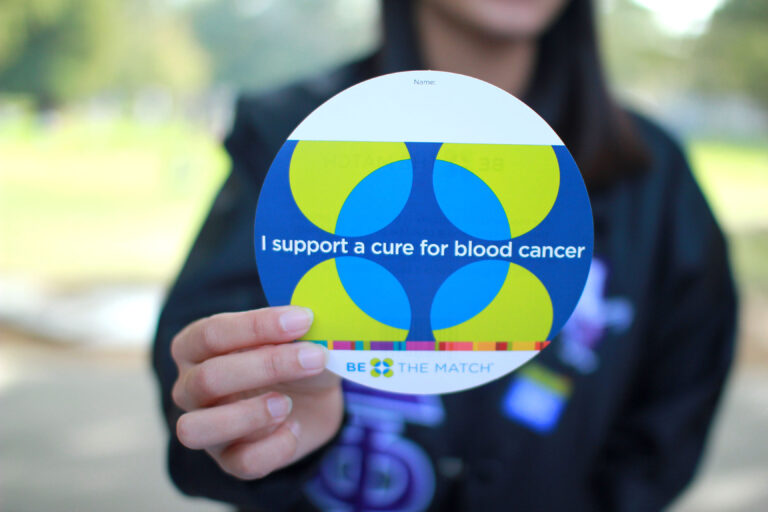
Bone marrow donation is critical to treating serious illnesses. With their bone marrow drive and registration on Nov. 6 and 7., the American Asian Donor Program (AADP) marked an 18-year relationship with UC Davis and helped register 90 students.

According to Fion See, who coordinated the drive, bone marrow donation is important because, unlike blood which only has several types, bone marrow types are much more diverse, making it harder to find the unique match a patient might need. Of all donors, only about one in 540 will actually donate their marrow for a waiting patient. Even within a patient’s family, the chances of finding a match is about 30 percent, and often for the patients in need, the stakes are high.

Jonathan Leong founded the American Asian Donor Program after a friend passed away from cancer.

“[Jonathan’s] friend, who was an Asian American, was diagnosed with leukemia and … was unable to find a match and he passed away. Jonathan then founded the AADP to promote more minorities to sign up as bone marrow donors,” See said.

As in the case of Leong’s friend, and many more like him, the need for bone marrow can be a matter of life and death. The stem cells in bone marrow are the key component to forming new, healthy cells, as stem cells have the potential to become specialized according to the needs of the body. The stem cells found in bone marrow are called hematopoietic stem cells, or blood stem cells.

“Bone marrow transplants are needed for patients who have leukemia, lymphoma or other blood related diseases,” See said. “It is very hard to find a match.”

Donation has the best results right after a cancer patient has had their first chemotherapy, before survival rate goes down in ensuing sessions. This makes it critical for timely registration and donation in many cases.

The extraction of blood stem cells is a process called Peripheral Blood Stem Cell transplantation (PBSC), and according to See, 75 percent of all donors will go through PBSC.

Urban legends of bone marrow donation purport anesthesia-less procedures with large needles boring down into the bone and painful side effects. Cao Pham, a donor and UC Davis alumnus, described the process as the opposite.

“It was absolutely painless in my experience, as painless as donating blood. The donation process for me was through PBSC donation,” Pham said.

For the 12,000 patients waiting to find their match in the bone marrow registry, such urban legends can be harmful and may often deter potential donors from following through, according to See.

The AADP encourages and provides education on the matter. Ultimately, the whole process of donation only causes minimal discomfort and soreness, certainly nothing life threatening.

With the UC Davis drive, the AADP expected to sign up over 200 donors to their cause. Special encouragement was given to minorities who, like Leong’s friend, have a much harder time finding a match for their particular needs.

At UC Davis, fraternities have played an integral role in supporting the AADP. Among them are Alpha Kappa Delta Phi and Alpha Phi Omega, as well as Lambda Phi Epsilon, the fraternity in which Pham was a brother.

UC Davis is just one avenue the AADP has used to help treat the issue of bone marrow donation. Recruitment director Ruby Law stated that the community outreach is an integral part of the organization.

“AADP hosts over 400 donor drives every year,” Law said. “We work with student groups in different colleges to organize marrow drives during fall and spring. We plan to host more drives in the community.”

An integral part of outreach involves educating the public on matters of donation, disease awareness and debunking misconceptions. The organization even supplies bilingual recruiters to help bridge language and cultural gaps in minority communities.

“We educate the public through giving presentations and hosting bone marrow drives at colleges, companies, places of worship and community events,” Law said.

The AADP continues to make a difference in the lives of both donors and patients.

“I have only donated [bone marrow] once, but I would not hesitate to do it again if I get a match in the future,” Pham said.

UC Davis, NASA study Chelyabinsk meteor’s impact

UC Davis Professor Qing-Zhu Yin of the Department of Earth and Planetary Sciences has collaborated with an international team including NASA’s preeminent meteor astronomers in the first ever study of the Chelyabinsk meteor. The research was published Nov. 7 in the journal Science. Studies of this type, which employ experts’ knowledge, highly-practiced sets of eyes and specialized technologies have allowed researchers to tell the life story of the meteor, from its cosmic birth billions of years ago, to its turbulent and high-speed conclusion in the frozen base of Lake Chebarkul.

On Feb. 15, a decaying remnant of the extra-terrestrial Chelyabinsk meteor plunged through Earth’s atmosphere at an estimated 41,000 miles per hour, roughly 40 times the speed of a triggered bullet. The resulting shock wave, which caused significant damage, passed through the city of Chelyabinsk, shattered windows, knocked locals to the ground and prompted nearly 1,500 people to seek hospitalization.

Although less than half of one percent of the meteor remained intact by the time it collided with an ice-capped lake bed in the Siberian foothills, the Chelyabinsk meteor represents one of the very first of its kind whose trajectory and descent to Earth was captured in detail on handheld cameras. The International Sensor Network, including Earth-viewing satellites and the Comprehensive Nuclear-Test-Ban Treaty Organization’s International Monitoring System were also responsible for tracking the meteor’s journey, according to Yin.

Trajectory analysis of the Chelyabinsk Meteor indicates that it likely originated from the Flora Asteroid Family, a fragmented population of a once vast asteroid that orbits between Mars and Jupiter. Coincidentally, this population of space-rubble remains the most plausible origination site of the Chicxulub Asteroid, one of the foremost suspected killers of the dinosaurs. The possibility of slingshotting one of these massive bodies through space is largely influenced by the gravitational activities of nearby Jupiter.

“Asteroids are not in perfect circular orbits, therefore they collide and break apart, aided by Jupiter’s immense gravitational influence,” Yin said in an email interview. “Any hiccup in Jupiter’s gravitational instabilities could perturb the otherwise fairly stable orbits of the asteroids and send them into the inner part of the solar system, eventually into the collisional course with the Earth, Moon and even the Sun.”

NASA meteor astronomer Peter Jenniskens and his research colleagues have estimated that the Chelyabinsk meteor embarked upon an estimated 1.2 million year journey from the Flora Family in the asteroid belt up until its fiery encounter with earth. Upon its entry into the atmosphere, the meteor weighed 13,000 metric tons.

In an initial celestial fragmentation event experienced billions of years ago, the entirety of the Chelyabinsk meteor saw the development of stress veins. These veins are tiny cracks throughout the rock that filled with metallic substances and helped to hold the rock together for the time being. In a fortunate turn of events for Earth, when the Chelyabinsk meteor entered the atmosphere, the structural integrity of the stress veins weakened, and the rock began to fragment, causing the deposition of energy and physical mass into the surrounding environment. The largest single chunk of meteorite that remained after descent weighed only 650 kilograms, roughly 0.04 percent of the original mass, numerical figures provided by Jenniskens.

“The shock wave originated from the fragmentation event, not the impact itself. Fragmentation is key to where the energy of motion is distributed — where the rock fragmented is where the energy is deposited,” Jenniskens said.

Furthermore, the Chelyabinsk meteor is hypothesized to have deposited the equivalent energy of nearly 600 kilotons of TNT into Earth’s atmosphere, a numerical figure provided by Yin. This massive energy expenditure is approximately 30 times greater than that of the Hiroshima atomic bomb, one of the larger devastating energetic events produced by man.

The Chelyabinsk meteor has been widely classified as a “wake up call” for the international scientific community. According to Yin, the UN General Assembly recently approved measures to coordinate detection and response efforts for asteroid strikes that have the potential to obliterate urban areas and potentially destroy civilization.

“Specifically, the agency voted to create an International Asteroid Warning Network made up of scientists, observatories and space agencies around the planet to share information about newly discovered asteroids and how likely they are to impact Earth,” Yin said.

Technology will be key in the tracking of potentially hazardous Chelyabinsk-like objects that Earth may encounter in the near and distant future. The Large Synoptic Survey Telescope (LSST), a device currently being developed by another international  team headed by UC Davis’ Experimental Physics and Cosmology Professor Anthony Tyson, may assist with hazard mitigation and planetary protection strategies.

“[In 2020] the LSST will provide a comprehensive census of our solar system, including potentially hazardous asteroids as small as 100 meters in size,” Tyson said in an email interview. “A recent U.S. National Academy of Sciences study showed that LSST is the most cost-effective solution to this need for early warning.“

The Chelyabinsk meteor is a motivating reminder that serious measures should be taken to track and predict potential collisions with traveling celestial bodies. Though there remains a winded debate regarding the existence of life beyond earth, there is absolutely no doubt that the natural forces existing beyond our own atmosphere are very much alive and are capable of determining the fate of mankind.

Scientists worldwide, led in part by experts residing at UC Davis and NASA, are at the forefront of rendering processes and technologies by which we may defend ourselves from future events like the Chelyabinsk meteor.


Davis City Council approves Cannery Project

0

On Nov. 19, the Davis City Council voted to approve the Cannery Project and Environmental Impact Report (EIR) attached to the proposal. Outlined in the Nov. 19 meeting agenda as an analysis of various issues such as air quality, land use planning and noise and cultural resources, the EIR is a crucial step in the progression of property development in Davis.

The North Davis development project known as the Cannery is nearing completion of civic prerequisites. Consisting of over 500 housing units, the project will also be host to a large urban farm, mixed-use business land, parks and extensive greenbelts. Goals of the project include setting an example in sustainable building, along with attraction of young families and private sector businesses.

In 2010, the process began with a proposal from The New Home Company (TNHC) to the City of Davis. This set the gears in motion for the development of an empty lot between F Street and Pole Line Road.

Numerous changes have been made to the original plan. Following recent community discussion with The New Home Company, it was decided that instead of adding extra solar, 25 of the single family homes will be built as Zero Net Electricity units.

Covell Corridor Project

Running in parallel with the Cannery is the Covell Corridor Project (CCP). It is a series of plans for increasing bike and pedestrian connectivity and traffic-calming measures for the region of Covell Boulevard between F Street and Pole Line Road. While the Cannery would be making use of the improvements outlined in the CCP, they need to go through separate approval processes.

According to Mike Webb, Sustainability and Community director for the City of Davis, approval of the CCP is due to take place in early 2014. Outreach will be done in December 2013 and January 2014 and the City Council will meet for a vote sometime during February and March 2014.

The entire series of improvements on the Covell Corridor are estimated to cost $15,460,000, with the Cannery Project contributing funds as outlined in the Development Agreement and the Roadway Impact Fees.

Plans for mitigating traffic were outlined at the council meeting by Adrian Engels, project manager at Mark Thomas & Co. Engels predicted that eliminating free right turns on Covell at F Street, J Street, L Street and Pole Line Road would also alter traffic on the eastern region of Covell.

“The second improvement will probably have the most effect on the Corridor…[it] would take the pork chop islands (traffic islands) out and tighten up the curb returns at all of the intersections…” Engels said.

Inclusion of a traffic signal on the L Street and Covell intersection was mentioned as another key component.The current plan for bike connectivity will involve usage of and improvements to the H Street Tunnel previously discussed last week.

Environmental Impacts

During the public hearing at the Nov. 12 City Council meeting, several citizens shared the view that cutting down approximately 350 of 380 trees on the property was excessive. There is currently a Tree Protection Plan mitigation measure, and Valley oak trees that are in fair condition will be retained when feasible. A hedgerow will also be planted on the side of the urban farm with trees that wouldn’t interfere with farm operations.

In accordance with the development agreement reached between the city and THNC, the trees in the region will also be reviewed by third party arborists for three years. This is to continue both during and following buildout.

However, in order to make space for building foundations and infrastructure, many trees will have to be cleared.

Rob Cain, Urban Forest manager for the City of Davis, confirmed this at the city council meeting.

“Unfortunately some trees will have to be removed just because of their location,” Cain said. “We’re still going to be looking at it on a tree-by-tree basis.”

Dr. Glen Holstein, a longtime Davis resident and senior scientist at Zetner and Zetner, a biological consulting firm, shared his thoughts regarding the losses of older trees.

“I’m skeptical when I hear talks about mitigation for destroying…our mature Valley oaks because these are things none of us will see again in our lifetime no matter how many saplings are planted,” Holstein said.

Regarding other aspects of the plan, Holstein was in favor, adding that “…otherwise, it’s a great project. I particularly like the idea of finally getting a traffic light at L Street and Covell. We’ve needed one at that intersection for a long time.

Market Hall

The feasibility of including a 12,000 sq. ft. Market Hall was also debated. Envisioned as an open space for small vendors to market their wares, the hall would draw inspiration from Oakland’s Rockridge Market and Napa’s Oxbow Market. It would also be anchored by two restaurants occupying a 5,000 to 6,000 sq. ft. space at either end.

Several council members expressed skepticism that the restaurants would succeed, and Mayor Krovoza pointed out that similarly-sized downtown restaurants still struggle sometimes, despite their ideal location.

Doug Wheeley, a consultant to the mixed-used portion of the project, elaborated on the virtues of having a market hall in Davis.

“There is nothing quite so fluid as retail. Some things we haven’t seen 10 years ago and others we might not see 10 years from now. Hopefully the buildings themselves have a long life,” Wheeley said. “Market halls are an interesting market tenant…It’s looking at an older community model…more about place-making than shopping center development.”

Next Steps

Following the approval of the EIR and entitlement, the Cannery is no longer merely a discussion and it now enters the implementation stages. With regards to the CCP, there will be several public workshops in the near future to further modify and improve it. Further information about workshops and public hearings can be found at the City of Davis website.

Trying to understand: Doomed in the “Death Star”

0

UC Davis’ Social Sciences and Humanities Building (SOCSCI), more commonly referred to as the “Death Star,” continually lives up to its reputation of being the most confusing place on campus. This labyrinthine building, designed by Antoine Predock, pulls newcomers in and whirls them around its concrete walls.

Nicknamed after the Death Star in Star Wars, a space station that carried an instrument that was capable of destroying an entire planet, our version can also cause dismay and ruin.

All who dare to enter, whether aware of the building’s maze-like architecture or not, are treated to a complimentary excursion. For some it’s exciting, but for those who don’t cushion their schedule with approximately twenty extra minutes, it’s distressing.

It’s easy to tell who’s lost because their eyes grow frightful as they’re forced to meander down hallways and up flights of stairs, only hoping not to be late to class or get lost forever in the concrete and shiny metallic abyss.

Having only been in the Death Star once, I decided to conduct an experiment and engage in the design chaos of the building. I was blindfolded and led deep into the building at night, dropped off, and had to find my way to a specific department.

Two friends deposited me in room 2203 in the history department (2nd floor), and my destination was the Library for Agricultural and Resource Economics (4th floor). They had a two minute head start and my mission was to find them as fast as possible at the entrance of the library.

A timer was set, so the pressure was on.

I navigated my way through hallways and up and down countless flights of stairs, passing the same people and offices in what seemed like every two minutes.

Unfamiliar with the layout of the Death Star and not relying on maps, I followed my rather lacking sense of direction. In an effort to conduct this experiment as accurately as possible, I didn’t take people up on their offers to lead me in the right direction. Instead, I flew solo — looking like a chicken with its head cut off as I ran around and narrated what I was doing into a voice recorder on my phone.

So, not only did I look lost and confused, but I appeared to be crazy as I talked to myself.

After roaming around in the barren and desolate maze of concrete walls, I started referring to my phone as Wilson in the hope he would morph into a volleyball. Devoid of human interaction, I dashed around in the dark, only hoping to set my eyes upon the library doors before the time on the stopwatch reached a pathetic number.

My goal was to be able to bask in an endless amount of glory when I beat the wrath of the Death Star by finding my friends in an impressive amount of time. Sadly, that was not my reality. I was forced to surrender what little bits of ego I had left once the timer reached above 10 minutes.

It took me precisely 25 minutes to arrive at my destination. Locked doors and staircases that led to nowhere didn’t assist me throughout my journey.

Predock purposely designed this building in a confusing manner to encourage social interaction. Doors are randomly locked in order to force people to take a different route, and the amount of floors differ in each building structure. Ingenious.

The Death Star perplexes most people, but it’s something that makes UC Davis more interesting and unique. This unusually stimulating building houses an array of activities and serves a great communal purpose.

Many clubs gather here to play all sorts of games, e.g. Nerf wars, Sardines and hide-and-seek, and others just come to explore, hang out on the rooftops or overlook campus. If you’ve never entered SOCSCI, then go do it today. Don’t wait until you have a class there and it takes you half an hour to find it.

Although the building itself may seem grim, once you get past the odd design patterns and colorless facade, you’ll realize that it’s a cool place that adds to the ambiance of Davis.

SAVANNAH HOLMES can be found blindfolded in SOCSCI 2203 or can be reached at skholmes@ucdavis.edu.

AFSCME 3299 strike: UC problems, we see answers

0

With the recent 24-hour strike held by the American Federation of State, County and Municipal Employees (AFSCME) 3299, the largest union in the University of California (UC), the tension between the UC system and some of its employees has come to a head. AFSCME 3299, which includes custodians, cooks, licensed vocational nurses and many other workers who make up the backbone of the UC system, is arguing for more competitive wages to account for the increase in cost of living.

Both sides had been bargaining to no real avail for quite a while. With neither side willing to budge, the strike on Nov. 20 was an expression of frustration by the union regarding the lack of progress.

The UC responded by making public statements regarding the negative effects of the strike including putting patients at risk due to a labor dispute.

Despite this blistering indictment of the AFSCME 3299 strike, an important question must be asked. What could the UC system have done to have avoided this strike?

For one, the UC system could have worked closer with AFSCME 3299 to meet its demands. Instead, the UC has shown a disinterest regarding the negotiation of wage increases for the workers in AFSCME 3299, believing that the wages currently offered are “competitive” with the market.

But what is “competitive” about wages that are on average 25 percent less than those wages offered to workers in California community colleges or other hospitals?

The answer: nothing.

Instead of simply blaming the union for doing what it was created to do — protecting its workers — the UC leaders should actively look to help solve this problem. The strike and all of the problems associated with it could have been easily avoided had the UC system simply sat down and bargained fairly with the workers.

As a public institution whose primary purpose is to provide students with the education needed to pursue future endeavors, the UC system should also seek to provide its workers with fair pay and the capability of providing a decent living for their families.