55.5 F
Davis

Davis, California

Tuesday, December 23, 2025
Home Blog Page 892

Community organizations fundraise for Typhoon Haiyan victims

Since the onslaught of Typhoon Haiyan in the Philippines in November 2013, several organizations, businesses and prominent groups in Davis are holding fundraisers to aid those directly affected by the storm.

Some members of the Davis-Yolo County Filipinos and Fil-Am at UC Davis are originally from the affected areas and still have families living there. Ruth Asmundson, the former mayor of the City of Davis from 2002 to 2010, is leading the fundraising efforts.

During Asmundson’s eight-year term as mayor for the City of Davis, she had the opportunity to build many social connections for fundraising efforts.

“Since I have done many fundraising events for good and humanitarian causes … I could call on them for help,” Asmundson said in an email. “In my experience Davis and Yolo County friends are very kind and generous for good causes.”

The organization held a fundraising luncheon at St. James Memorial Center on Nov. 23. They sold about 350 tickets for $35 each, raising about $12,250. They served an authentic Filipino lunch to those who attended.

Despite raising this large amount of money, Asmundson and the group do not wish to stop here. The overall long-term goal of the groupa, The Filipinos of Davis and Yolo County and the Friends of Los Baños Committee, is to raise $100,000.

This benefit luncheon aimed to provide basic needs like food, water and medicine for the typhoon victims in the affected outlying islands and communities. These areas have not received as much help by big humanitarian organizations, Asmundson said.

“We’re targeting these communities because we have Davis-Yolo County Filipino residents who originally came from those areas or still have families and friends there,” Asmundson said. “The long-term fundraising goal of the group is to help these targeted communities rebuild their schools, libraries and help reestablish their means of livelihood, for example help fishermen get another small fishing [boat].”

The next fundraising event will be on Dec. 7 at the International House. All of the proceeds go to the Rotary Club of Makati. The funds will be channeled to the district to which Los Banos belongs. Los Baños is a sister city to the City of Davis.

The district will then directly coordinate with targeted Rotary Club Districts in the typhoon-affected areas and will specify how the funds will be used.

After the 2006 tsunami, Tom Lovering, then the owner of Cantina del Cabo (restaurant on G Street, now closed), and Asmundson put together a quick fundraising event. From those efforts they concluded that it would cost $2,000 per house to rebuild.

With the Davis Rotary Club, they were able to raise $80,000 in 2006 but eventually raised almost $100,000 and built more houses.

Lovering believes that anyone can make a difference and help those in need in the Philippines.

“Whether you are a political leader or business leader, it doesn’t matter; what matters is how much effort you put in raising money to help those hurt by this disaster,” Lovering said in an email.

Michael Farias, CEO of Plumbing M.D. Inc., is also fundraising for Typhoon Haiyan relief within his own company. He said that if his employees are willing to donate one hour of pay, the business will match it.

“We want to do something for others, and this recent catastrophe in the Philippines seems to be on all of our minds,” Farias said. “
One of the most pressing needs is for clean water. That is something employees of a plumbing company can relate to.”

The Rise Up, a UC Davis Typhoon Relief Fund, held an open donation during the month of November. It was started by Kirby Araullo, a board member for Philipino Americans in Science and Engineering (PASE).

They had several donation jars. These were located at the Student Recruitment and Retention Center (SRRC) in the Student Community Center. Some UC Davis students also took to classrooms and presented the jars to fellow students and faculty, while educating them about the devastation left by Typhoon Haiyan and how they could join the relief efforts.

“The reason why the Fil-Am community chose this organization to work with is because they work directly with the people affected,” said Elena Nicdao, the academic chair of MGA Kapatid (a cultural, academic, political and social Filipino group at UC Davis). “This ensures that what we donate will go directly to the people who need it, because there are some organizations who keep a percentage of what is given to them for themselves.”

Rigo Aczson, a PASE member, said it was easy to donate and help support this cause.

“We set up a materials donation at the SRRC. People could drop by and donate non-monetary items that could immediately help survivors in the Philippines,” Aczson said in an email. “Materials encouraged include non-perishable food that does not require water, electricity or can openers, basic medicine, clothing, bottled water.
”

All the proceeds will go to National Alliance for Filipino Concerns which is a grassroots organization.
 

Mushrooms to spring up this winter

0

Mushrooms will be blossoming at UC Davis this Winter Quarter through the efforts of community food projects at the Domes, the Student Farm and the popular course PLP 40: Mushroom Cultivation.

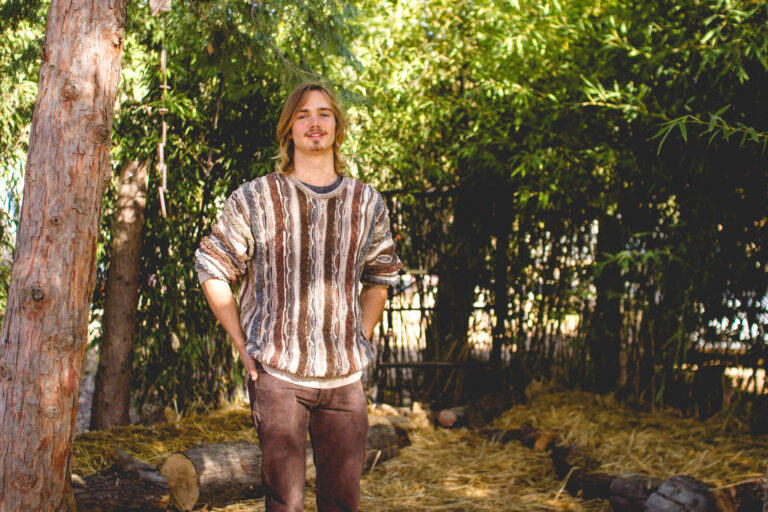
Jack Taylor, a third-year sustainable agriculture and food systems major, has been interested in mushrooms since he was 14 when he came across his first mushroom identification guide in his grandparents’ house. He is now initiating small scale cultivation on campus, bringing his enthusiasm and production experience to subsistence farming.

“I like learning about mushrooms because they would be a [sustainable] facet of a community-based food system,” Taylor said. “The Domes are a great community and a great place to experiment. [The mushroom project] is a community food source here. It’s not for profit or anything. At this point we’re just focusing on the ‘how.’”

Since August, Taylor has been interning with a small scale industrial mushroom farm in Sacramento called Dragon Gourmet Mushrooms. His internship has been sponsored by R. Michael Davis, UC Davis professor of plant pathology and facilitator of  PLP 40.

Since then, Taylor has started growing his own mushrooms at home using waste materials from his internship, like the plastic bags of sawdust in which the mushrooms are cultivated. These waste materials still contain spawn which is the germinating transplant of fungi.

The spawn is then transferred or inoculated to straw which acts as the new substrate or growth medium and nutrient source for the mushrooms to colonize.

Taylor has made this the main model of the Domes’ mushroom project, along with some community members’ initiative to grow mushrooms on used coffee grounds.

However, these are not the first mushroom cultivation experiments that have been explored on campus.

For nearly 20 years the UC Davis Plant Pathology Department has offered PLP 40, devoted to the history and practice of mushroom cultivation. The hands-on, laboratory-intensive course was brought about by student demand. According to Davis, he has never had to advertise the course, and UC Davis is one of the few campuses in the country to offer it.

“One reason I teach the class is because I think everyone in California should appreciate agriculture, since it’s such an important industry in here,” Davis said. “I hope that a few students will be so interested that they might pursue it as a career, or for students to be able to teach other students how to grow mushrooms.”

According to Davis, mushrooms are the fifth most valued crop produced in the U.S., and can diversify any farm operation with minimal resources, since the growing medium for them is often straw or compost.

Due to the rarity of such university courses, Davis said students could have relative ease finding internships or jobs in mushroom operations, which has been the case for Taylor who first approached Dragon Gourmet Mushrooms at the Davis Farmers Market.

In PLP 40, students attend a one-hour lecture each week about the theory and history behind mushroom cultivation, and participate in a three-hour lab where they practice making their own tissue cultures from spores and utilizing growth chambers on campus to provide optimal temperature and humidity, which can often be a limiting factor when growing mushrooms at home.

The students grow oyster and shiitake mushrooms on straw, and button mushrooms on compost, which is provided by the professor.

Besides teaching PLP 40 to introduce students to mushrooms, Davis also harbors a personal passion for fungi.

“[Mushroom identification] takes you into the forest in the off season when it’s cooler and it’s rainy,” Davis said. “And the forest floor could be covered with different colors and shapes of mushrooms. It’s just an enjoyable pastime.”

Taylor also has a similar passion and hopes to share it with his fellow student body through his position as student lead farmer on the Student Farm. He is starting a mushroom project in the Ecological Garden on campus. The idea has come about through the establishment of farm dialogues this past year between farm staff, professors and students.

Erica Van Steenis, a community and regional development graduate student and volunteer and intern coordinator for the Student Farm, has teamed up with Taylor to make the project happen.

“Jack brought up the idea of cultivating mushrooms on logs during one of our farm dialogues, and we thought it could enrich the Ecological Garden through collaboration,” Van Steenis said.

The cultivation of logs entails drilling holes into the wood, placing spawn inside and covering it with wax. The success of this project and the Domes’ mushroom garden on straw depends on the environment and moisture levels of the substrate. However, both Van Steenis and Taylor are confident that the projects will have a positive impact on the communities.

“Interns are coming out to the Student Farm to learn and it’s great to teach them and learn from them, it’s a great community learning experience,” Taylor said. “Sustainable agriculture is a broad topic and I think it’s great that people are interested in alternative methods and knowing where their food comes from.”

Campus Chic: Joanna Villegas

0

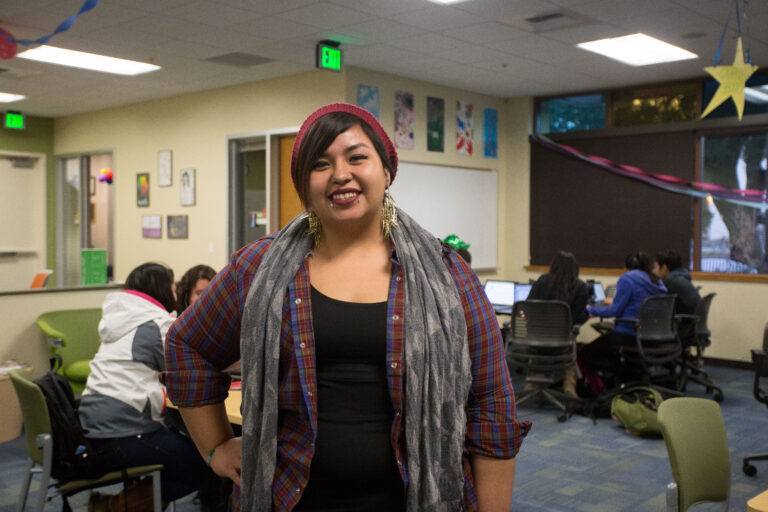
Fashion isn’t about the body; it’s about the attitude. In this week’s edition of Campus Chic, our muse of the week and fifth year English and Chicano studies double major, Joanna Villegas, shares her journey to becoming the strong, confident and full-figured woman she is today.

Now, I can go on and on about how we need to love ourselves and embrace all of our flaws, but how exactly do we do that when society tells us we’re never good enough? I might be stating the obvious with that contention, but working at a fashion magazine in New York City made the exclusion of plus-sized women in fashion all the more real to me. Despite having a spread in the magazine targeted specifically towards the everyday plus-sized woman, I clearly remember the design director scoffing at the idea of supporting “fat women” and claiming that the feature has “absolutely nothing to do with fashion.”

I don’t know about you, but it’s definitely time for a change because I’m sick and tired of seeing stick-skinny models walking on every runway at every fashion show. Wear what makes you feel good—what makes you feel “powerful.” Perhaps it’s a bold print or your favorite shade of red? Perhaps it’s a killer pair of wedge heels or sky-high knee-length boots? Whatever it may be, step out of your comfort zone and try things you’ve always wanted to wear! Remember, fashion is about taking risks and channeling a stronger, more confident and unstoppable you.

James’ Notes: Dress for the ’90s? Yes, please! Break out those flared bell-bottoms, rock that neon windbreaker and wrap that flannel around your waist because the ’90s are back and chic-er than ever. With all this buzz over blue collar boots for the white collar worker, I’m predicting fashion’s next biggest thing will be overalls. Hell yeah.

1. If you could describe your personal style in three words, what would they be?

Comfortable and constantly changing.

2. Who or what is your style icon?

I can’t say that I have a particular style icon — or ever did. In the past two years, since I transferred to UC Davis, my style has been constantly evolving. There are fat and fabulous women on Tumblr that have encouraged me to step out of my comfort zone and I find myself wearing something outside of my former comfort zone everyday to see if I like it and how it makes me feel. The queer community was extremely helpful in improving my perception of self and fashion became a tool of resistance against the standards of beauty I used to think I had to meet.

3. What are your three must-have items in your wardrobe?

Leggings, dark blue jeans and tank tops/camis. I feel like these are the basics and you can dress these up or accessorize them as much as you’d like.

4. What is your favorite accessory and why?

I love big earrings and I love scarves. I don’t know if I could pick a favorite!

Earrings and scarves are close to your face and people immediately notice them when they greet you. These accessories can make a memorable statement about you. For example, I have a lot of earrings with spikes, that I feel in many ways characterize my fearlessness as a fat queer chicana femme.

5. Where do you love to shop and why?

I mainly shop at thrift stores now. They’ve proved good for accessories, but since they don’t always have plus-size clothing, I also make the occasional trip to Torrid or the Forever 21 (small) plus-size section. I always go to clearance racks first. It’s nothing new to say that there is a limited amount of options for plus-size folks. There have been improvements over the last few years which is nice because I don’t feel I should need to change my body in order to find clothing that properly fits and appeals to my taste.

6. What is your most treasured item in your wardrobe?

I bought a maroon plaid shirt at the beginning of this quarter and it has become my favorite thing to wear! I bought this shirt around the same time I chopped off my hair. That shirt has become a marker for all the changes in my style and gender presentation.

7. How has your style changed since high school?

Coming from a low-income background, a lot of the clothes I had growing up was either handed down or picked for me based on the price. It wasn’t until about junior year of high school — probably around the time I started working — that I was able to pick some things for myself. I do acknowledge though that my parents would let me choose my shoes growing up, regardless of the price. It was the one thing I had a lot of freedom with because my mother grew up having torn shoes, in some cases sharing shoes with her siblings, for most of her childhood and it was a very traumatic experience for her. Needless to say, I had no space to build my own wardrobe. When I did have the chance, there were a lot of body size issues that wouldn’t let me feel comfortable in certain articles of clothing. Now, I feel comfortable with my body and feel comfortable in practically anything. Right now I’m loving clothing with mesh.

8. What does fashion mean to you?

I’m having a hard time with this question because I don’t consider myself a fashion trendy person. When I think FASHION I imagine extremely thin people and models with class privilege — no one I will ever resemble and by no means am aspiring to resemble. So I guess fashion has become an act of resistance; it gives you the opportunity to outwardly express yourself and have people perceive you the way you want to be perceived. Others might try and police you, but at the end of the day, you will present the way that feels best for you.

9. How do your queer and Chicana identities play a role in creating your personal style?

As a Chicana, I have become politically conscious and culturally aware. It is through this personal growth that I was able to see myself in a positive way. It is through this growth that I can now celebrate my fat, brown body and appreciate it as it is. It is through this growth that I am able to tell others openly that I am queer — that I am able to acknowledge resilience as a skill. I have altered my perception of self by deconstructing the oppressive thinking that lived within me — the oppressive thinking I learned as a child and continue hearing as I navigate new spaces.

10. What final tips can you give to our fashion-forward readers?

I often hear different people say that a certain article of clothing wouldn’t look nice on them or a certain shade looks bad on them. I think I want to ask those people to give it a chance. If there is something that you have admired on someone else, something that has caught your attention, and you’ve caught yourself wishing you could wear that, give it a chance. It’s refreshing to get out of your comfort zone sometimes. If you fear being mocked, ridiculed or shamed, you might be holding back for a valid yet wrong reason. I only say that because I took so long to 1) appreciate my body, and 2) wear clothes that look fabulous on me — colors that look lovely on me — because I was so scared of what others will say about me or to me.

IMG_3734

IMG_3742

IMG_3765

UC Davis design students to put up birdhouses for nesting birds

0

Professor Ann Savageau’s sustainable design students created birdhouses with environmentally sustainable designs and will have their work installed on light posts along Lake Spafford in the UC Davis Arboretum, and in posts on the Quad on Dec 7. The birdhouses will stay up from Dec. 7 until Jan. 6.

“[The birdhouses are] designed to show that people can construct projects to restore the habitat and to inspire people [to explore] the possibilities of design,” Savagea said. “We think this project may be a model for future projects and we hope to install permanent birdhouses.”

The projects will provide a home to four different nesting birds: the Ash-throated Flycatcher, the Western Bluebird, the Tree Swallow and the House Wren. Not only will the houses provide a place for birds to nest, they will also feature aspects of green design.

Elaine Fingerett, the Arboretum’s academic coordinator, developed the idea and invited Savageau to instigate the project.

“I thought, ‘Wouldn’t it be great to have students design birdhouses with sustainable features and install them in the Arboretum?’” Fingerett said.

Fingerett works with UC Davis faculty and students to create outreach programs that show the public the work that UC Davis has done. She has also been working with Professor Robin Hill’s Site Specific Public Sculpture class to create temporary art installations in the arboretum starting on Dec. 7.

The students’ designs feature varied green or sustainable elements. One birdhouse has shingles made of soda can tabs. The use of recycled or repurposed materials is another route the students took to add sustainable features to “save energy and help the environment.”

The design project required that students fashion their models after a specific architect or architectural style, in addition to featuring sustainable green elements.

“The first things I imagined were miniature green roofs and small solar panel arrays on colorful, alternative, artful bird houses,” Fingerett said.

She described the projects as “wonderful, imaginative, and inventive,” while Savageau said that the designs were “incredibly clever.”

In addition to working with the arboretum, Savageau also worked with Zachary McDonald, the bird team leader of Wild Campus, a student organization that promotes projects to restore wildlife habitat in UC Davis.

McDonald helped students complete the project by providing blueprints for the general layout of the birdhouses and by answering their questions on constructing the birdhouses to accommodate the birds’ needs.

McDonald explained that the birdhouses will help the diverse array of bird species around the campus and “will function as typical birdhouses once the birds start migrating back to campus, but will primarily serve as a display for the community until then.”

McDonald characterized the event as a combined effort to provide homes for local nesting birds.

“[This is] a joint effort by Wild Campus, a student-run organization through UC Davis, and Ann’s design class to promote sustainability, as well as an effort to increase community involvement and awareness with wildlife,” he said.


AIDS Day Bike Ride raises funds for HIV testing, treatment

2

The first annual Sac Valley National AIDS Day Bike Ride was held on Dec. 1, and all funds raised went toward the promotion of HIV/AIDS testing, prevention and treatment both globally and locally.

Bikers departed from the Davis International House and chose to bike either a 30- or 60-mile route. The ride was a combined effort between two organizations, Breaking Barriers and Sahaya International.

Sahaya International is a nonprofit organization which was founded in Davis that works to improve the quality of life for people in developing nations, while Breaking Barriers focuses on the lives of people living in Northern California.

“This will be our first event together, and our two agencies are looking forward to doing more together in the upcoming year,” said Nelson Sandré, the board president of Breaking Barriers.

Both organizations are deeply involved in preventing the spread of HIV and providing support for those who are affected by it.

According to Sandré, while AIDS may not be as prevalent a topic in the media today as it was in the 1980s when the face of Ryan White covered newspapers, magazine covers and television broadcasts, there has been an increase in AIDS positivity in recent years among young people in Northern California.

Breaking Barriers, which offers a mobile HIV testing site, saw a 10 percent rate of HIV positivity in people that they tested last year, an increase of approximately two percent over recent years.

“We’ve also seen an increased amount of testing due to education,” said Sandré. “It’s important to get tested and know your status.”

On campus, the UC Davis Lesbian Gay Bisexual Transgender Queer Intersex Asexual Resource Center (LGBTQIA) offers free HIV testing for students on Monday nights from 6 to 8 p.m.

Unlike the UC Davis Student Health and Wellness Center which offers confidential testing, the LGBTQIA Center’s testing is completely anonymous. They keep no records of who was tested or of their results, according to Kim Westrick, the interim office coordinator of the LGBTQIA Center.

“I think that it’s important to have a resource like this on campus, given that college students are generally a fairly sexually active population,” Westrick said.

The anonymity of the testing is comforting to students who may otherwise not get tested.

Westrick also stressed that students need to know where to get help if they are positive for HIV.

“It’s great that we have the testing at the resource center, because the community is more comfortable coming in to get help if they’ve been in before for testing,” Westrick said.

While a lot of the HIV/AIDS problem in the United States is associated with stigma, in developing nations, people often struggle to get help even if they want it.

A large part of Sahaya International’s work with HIV/AIDS is in helping people get to a location to be tested and receive medical treatment.

“The government covers the expenses of medicine, but a lot of the problem is getting them a train ticket to get there [to a doctor],” said Dr. Koen Van Rompay, secretary and treasurer of Sahaya International. “It can cost seven or eight dollars for a train ticket, and a man living in India only makes two to three dollars a day, if he can find work.”

In India, Sahaya International supports about 240 children, 22 of which have HIV. You can sponsor a child for $30 a month, and the money allows them to receive an education and live healthy lives.

Some of the students who have graduated high school are applying to attend UC Davis, and Rompay cited one in particular who is getting ready to go into his master’s program.

While all of the financial support that the program gives the children is vital, there is one other part of the equation that Rompay believes is just as important.

“Hope is strong medicine. If you give people hope and the tools that they need, they can do a lot with it,” Rompay said.

Honorable Mention: Matt Sheldon

0

At every level of sports, athletes are often more concerned with personal accolades and statistics than they are about winning and team success. Because of this, it’s always refreshing to speak with an athlete with a team-first mentality.

Meet Matt Sheldon. This junior from Portland, Ore. has been the leader for the UC Davis men’s soccer team this year and realizes there’s more to collegiate athletics than his individual stats, even though his are superb.

The Aggies finished the season on Nov. 15, following a defeat to UC Irvine in the Big West semifinals, ending the year with a 9-9-3 record (4-4-2 Big West).

Sheldon, who tied for the team lead with six goals and eight total points this year, believes the Aggies can move even further into the playoffs next season.

“My main goal is for us to win the Big West tourney,” Sheldon said. “I don’t care about my accolades. If we win the Big West tourney, it’ll be the best season.”

He has been a factor for UC Davis each of his three years here. He played in all 19 games as a true freshman, starting in nine of them, finishing the year with two goals and two assists. Last year, Sheldon once again played in each game (21 total), making six starts. During his sophomore season, he tied for the team lead with three goals and eight total points.

Sheldon’s play has steadily improved each season he’s played for the Aggies. He attributed this success to strong offseason workouts.

“This last year was the hardest I’ve ever worked in the offseason,” Sheldon said. “I went out every single weekend and on off-days. Throughout the summer, I stayed here and trained.”

According to Sheldon, his personal season highlight came against Cal Poly on Nov. 6, when he scored the game-winning goal with five seconds left in regulation, giving the Aggies a 2-1 victory.

“The feeling about that [goal] and knowing that we really needed that win … was just a lot of emotion,” Sheldon said.

Sheldon played basketball and ran track in addition to playing soccer in high school, and picked UC Davis over Oregon State. An applied math major, he is minoring in coaching principles and methods and looks to possibly become a soccer coach one day.

He knows what he needs to work on to raise his and the team’s game for next season, and his sights are set for an even more successful senior campaign. He realizes that his success will facilitate team success.

“Next season I’m trying to get 10-plus goals,” he said. “The main things I’ve been talking to my coach about are working on my touches and my dribbling and shooting and keeping all my soccer specific skills fine-tuned.”

In the meantime, in addition to working out and improving himself, he spends time following sports. Sheldon follows the Portland Timbers of the MLS and the Portland Trail Blazers of the NBA, and he enjoys watching the English Premier League.

Vice president of Warner Bros. visits alma mater

0

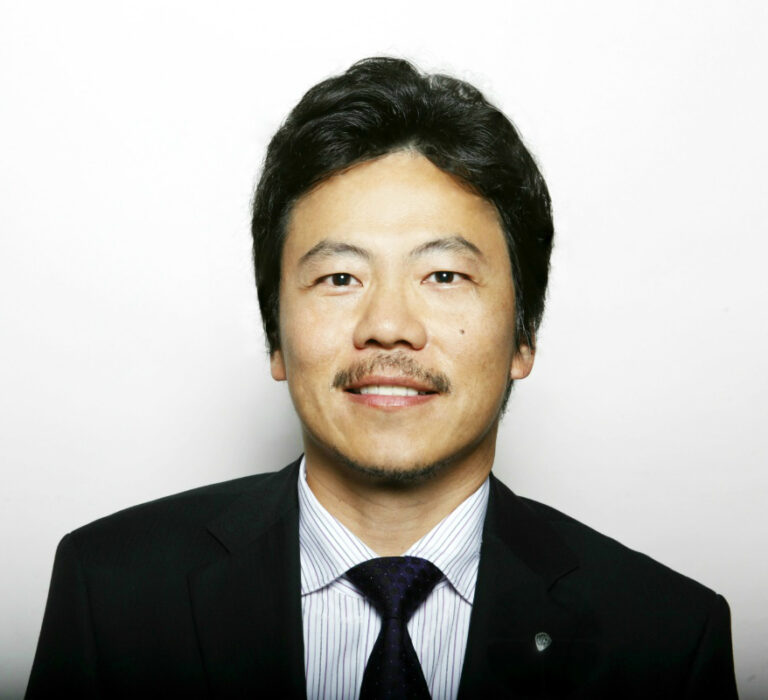
Michael Chang is the Vice President of Business and Legal Affairs at Warner Bros. He is also a UC Davis alumnus who attributes his future success in part to campus involvement.

Recently, he and his wife, also an alumna, brought their family back to town hoping to encourage their daughter to apply and attend.

Chang graduated in 1992 with a degree in international relations, and UC Davis and ASUCD were integral in shaping Chang personally and academically. He cites the ASUCD Lobby Corps as one of the most influential enterprises in his time at the university.

“I was part of the internal affairs … our job was to help knock on doors and advise the administration on key issues that affected students back in those days,” Chang said.

These issues included managing budget cuts, tuition increases and the acceptance of gays and lesbians in Reserve Officers’ Training Corp (ROTC) programs. The vital nature of these issues made Lobby Corps a very special program to Chang.

“My biggest fear was that I would be a loner,” Chang said. “I was not comfortable in my own skin having come to this country not speaking a word of English.”

Overcoming this struggle was a natural process. As Chang got more involved in the campus, his said his fears slowly dissolved.

“Davis felt for me — it’s just a place that makes you feel like [you’re] home,” Chang said.

Chang’s daughter Alyssa reflects her father’s opinions of the University despite being in high school. She said she found her brief time on campus to be everything her father has touted it to be.

“Everyone was really ready to help you, whether it’s finding your way around or getting into deep conversations about how to apply for college,” Alyssa said. “Out of all the colleges I’ve visited so far, this one really stood out to me. Maybe it’s the Aggie air.”

Chang met his wife, Hiromi, at Davis, and they have been together ever since. She likened their early relationship to that of Pepe Le Pew and Penelope Pussycat of the old Warner Bros.’ “Looney Tunes” cartoons, and in their time together she has been very supportive of his career growth.

“Challenges give him struggles. Struggles make him grow. Growth leads him to the next leap. All I do is encourage and just be patient,” Hiromi said.

After a successful undergraduate tenure, Chang’s next step was to advance his self-envisioned quest to become a lawyer. He set his sights on UCLA Law, which he attended right after graduating from UC Davis.

“I knew that I would be in school for another three years. I envisioned my life to fit that of a model law student,” Chang said.

Before law school, Chang sought out practical experience he could bring to a post graduate education, shunning distractions such as television. Upon completing his law degree at UCLA, he worked at several places before finding a position at Warner Bros., a job that did not come without its ups and downs.

“[Success] is a combination of being at the right place at the right time … having the job skills and having an interest in what you do,” Chang said.

Chang said he has found the entertainment industry to be an exciting enterprise.

“The entertainment business is a mass market business. It’s just fun,” Chang said.

Chang also said that he found similarities between the Davis and Warner Bros. environments. In his education and work, he surrounded himself with open-minded people, and his ability to adapt to different environments was critical.

Chang’s proficiency in Japanese has also helped open doors in his career, and he strongly suggests that students try to become well-versed in a secondary language.

“I work quite a bit with Japanese companies. It makes it easier to develop a common bond,” Chang said.

Now, as far as the future is concerned, Chang said his goals are less tangible, focused more on a particular mindset.

“My biggest ambition for my life is to have more happiness and less worries … that can apply to anything,” Chang said.


Square Tomatoes Craft Fair promotes community involvement

0

The Davis Square Tomatoes Craft Fair is in full swing this month and held their first fair on Dec. 1. The fair has been going on once a month since August 2012.

The upcoming fair will be on Dec. 15 from 10 a.m. to 4 p.m. at Central Park at Third and C streets in downtown Davis. They scheduled two fairs for December and will reconvene in February 2014.

According to event planner Sally Parker, the craft fair is named in honor of Davis’ own invention — the square tomato, known for its improved transportation capacity and controversial taste.

Since its first event, the craft fair has gained considerable acclaim by the Davis community and will continue to develop and expand with its number of vendors and activities.

“We started out in the parking lot of the Davis Food Co-op and then we moved here last November — and we’ve been in Central Park ever since,” Parker said.

There were approximately 30 vendors and a band at the Dec. 1 event, selling crafts ranging from artisanal jewelry, knitted pieces and even dog biscuits to name a few of the products.

“Long ago, we were much smaller. We’re hoping one day to put up signs in Central Park telling people about the Square Tomatoes Craft Fair … What I would love to have is a lot more students and performers come out here. I’d love to have singing and dancing to create a lively environment,” Parker said.

Parker, who teaches at the UC Davis Craft Center, was inspired to found the event in order to create an accessible, fun and fair environment where artists can share their trade with the community. Carol Wheaton, a knitter, helps with publicity. Quilter Betsy Peterson helps with ideas and vendor recruitment. A number of the other vendors at the event also teach at the UC Davis Craft Center.

“Vendors pay for a spot here, the object of this fair is to give vendors a chance to have a nice venue with low middleman prices which means both vendors and visitors get a bargain,” Parker said.

In addition to teaching, Parker has run a business for the last five years called Tiny Worlds Jewelry. She sells necklaces, earrings and bracelets formed with artisanal glass purple, green and iridescent beads, each personalized with plated-silver animals. Her current pieces feature squirrels, foxes, snakes and rabbits.

“I cast lots and lots of animals — spirit foxes and Mayan design in bronze and silver … a spirit fox is a Japanese fox with nine tails. The more tails, the more power it has,” Parker said.

The craft fair, Parker explains, typically will have some sort of theme to match the season. This aspect of the fair has been a hit with families and students as it provides an interactive aspect to the art.

“For Halloween, we had instructors teaching how to make sugar skull charms. We’ve had geology day where we had a timeline corresponding to geological events,” Parker said.

Dec. 1’s event had a holiday time feel to it — one of the seasoned vendors was selling a gimmick sweater randomly appliquéd with bells, Santa and reindeer, endearingly coined the “Ugly Christmas Sweater.”

“We’ve been in the business for 10 years. We’ve been doing the ‘Ugly Christmas Sweater’ item for about three years. I like peoples’ reactions to the sweaters,” said vendor Jan Shores.

The craft fair continues to grow each time, and always welcomes new vendors. One such first-time vendor, Tina Wang, sells homemade dog biscuits and collars, of which all of the proceeds will go to Scooter’s Pals Dog Rescue.

“I got involved two years ago and found that I wanted to gain experience training a few dogs. By now I have fostered 12,” Wang said. “The dog cookies are a hit … we will probably sell all of them by the time the fair ends! This is my first time at the craft fair and it’s been a great experience. It’s a great way to advertise and connect with the community.”

In addition to vendors, the fair features a traditional American Jazz band that Parker explains plays “danceable swing and jazz.” The New Harmony Band contributes to the holiday vibe by playing renditions of well-known holiday tunes.

It consists of nine members mostly from Davis and Sacramento, and is based out of the New Harmony housing community apartments that are designed to serve disabled people.

“This is our third time performing at the craft fair. We’ve been having a great time here, the first time we played we had a lot of the community dancing … it was really lively and nice,” said the band’s cornet player, Eric Zilbert.

One band member comments on the fun nature of the craft fair.

“I like where people can look at items they might realistically purchase. The craft fair is interesting because you can look at professionally made art and get it for a reasonable price,” said band member Michael O’Hearn.

He adds that the craft fair has fostered a wonderful environment for building community, one they have aspirations to continue working with.

“I hope our music brings good company and sounds,” O’Hearn said. “I hope we can welcome people to the fair and make people feel better through our music.”

According to Parker, the fair improves the atmosphere of community in Davis for a variety of reasons.

“Square Tomatoes is great for visitors … You can dance, look for bargains, see new designs, talk to artisans and learn how they make their crafts,” Parker said. “Square Tomatoes is a great place for vendors.  It provides beginning artisans to find an entrance into the business world.  Most artists must search a long time for a gallery. Square Tomatoes provides an immediate way to meet the public.”

Influenza strikes UC Davis

It’s that time of year again. The weather has us huddling indoors around warm fires. Friends and family gather together to spread holiday cheer, delicious food and … influenza. It’s not something we typically think about, but it’s important. Right now, especially, UC Davis students should make sure they know all about influenza and how it works.

Thomas J. Ferguson, M.D., PhD, is the medical director of the UC Davis Student Health and Wellness Center.

“We are starting to see some influenza cases among students,” Ferguson said in an email.

Influenza is an infectious disease that affects birds and mammals. It is caused by RNA viruses from the family Orthomyxoviridae. RNA viruses use ribonucleic acid (RNA) as their genetic material to infect hosts. This RNA is what makes us feel sick, as it helps the viruses replicate inside us and produce toxins that can harm us.

Influenza is commonly mistaken for other illnesses, such as the common cold and the “stomach flu,” but it is a more intense disease caused by a different, specific kind of virus. The common symptoms include chills, fever, runny nose, headache, sore throat, muscle pains, coughing, weakness, fatigue and general discomfort. While it can also cause nausea and vomiting, influenza is not to be confused with gastroenteritis. This is what we know as the “stomach flu” or the “24-hour flu.”

The flu is more serious than other illnesses for a few reasons. Primarily, it is harder on the body than other similar infectious diseases. It can also lead to pneumonia caused by viruses or bacteria. Lastly, its genetic material is constantly evolving, allowing it to become more infectious and more harmful.

Connie Caldwell, M.D., Yolo County health officer, encourages everyone over six months old to get a flu shot each year.

“Each year’s vaccine is a little different, because each year, the vaccine is produced to match the most common strains of influenza that are circulating around the world,” Caldwell said.

During this time of year, everyone should be getting their flu shot. There are many myths and fears surrounding the vaccinations, but they are only here to help.

Vaccines work by injecting weakened or killed parts of the pathogen (the disease-causing microorganism) into our bodies. Our immune system can then identify these invaders and build a response to them so that later, if the real flu finds its way into our bodies, the system knows what to do.

To those who claim they are too healthy to need a flu shot, Reva Vishwas, a third-year genetics major and intern at the Sutter Davis Hospital Emergency Room, said otherwise.

“Your body does have natural defenses against viruses such as white blood cells; however, viruses can attack and replicate in the body faster than your immune system can work. Antibiotics have no effect against viruses. Vaccination is important because it allows your body to build up a defense before the virus strikes,” Vishwas said.

Furthermore, even if you do easily survive a bout with the flu, not everyone has the same chances.

“The very young, the elderly and those with chronic illnesses are most severely affected … If you are healthy, you might not get very sick with influenza. Still, you would be contagious and could give the flu to your family, acquaintances and vulnerable members of your community. When weighing whether to get the influenza vaccine or not, please consider both your health and the health of those around you,” Caldwell said.


Aggies squeeze past the Cougars, 80-75

As the Aggies (2-2) headed into Portland, Ore. for the Portland State tournament with a 1-2 record, they looked for a source of momentum to help jump start their season. The Aggies certainly found what they were looking as they managed to squeeze out a close victory against the Southern Illinois University Edwardsville Cougars (1-3) due in large part to the magnificent play of senior forward Josh Ritchart.

Ritchart had a dominant game on Friday, Nov. 22. His final stat line included an impressive 35 points on 12-14 (85.7%) shooting from the field, 13 rebounds, two assists and two blocks. Ritchart’s scoring outburst was the first time that an Aggie has scored 30 points or more since junior guard Corey Hawkin’s outstanding 34-point performance against Long Beach State on national television last season.

“I’m on our guys all the time about playing games the way you practice; Josh has been our best practice player, he brings it every day,” said head coach Jim Les.

The Cougars came out roaring from the start, jumping out to a 19-6 lead early in the first half. UC Davis fought its way back due to some solid defense and the continual effort on the offensive end by Ritchart.

Ritchart capped off a fantastic first half performance with an improbable three-pointer from close to three-quarters court which beat the buzzer. This allowed the Aggies to dwindle the Cougar’s lead to only two points, 38-36.

The second half brought new life for UC Davis as junior guard Corey Hawkins finally got going. After only scoring two points and turning the ball over three times in the first half, Hawkins managed to score nine points in the second, bringing his game total to 11 points.

Redshirt freshman Darius Graham was able to create offense for the Aggies in the second half, as evidenced by his five assists after intermission. Graham finished the game with a team-high seven assists to go along with his seven points.

However, the night was dominated by Ritchart, who dropped another 15 points in the second half and added 7 rebounds as well. Ritchart scored four clutch points on two free throws and a jumper late in the game, which put the game out of reach for the Cougars. Ritchart’s points were the last points scored by either team, with the final score at 80-75.

The Aggies will continue play in the Portland State tournament against Loyola Chicago on Nov. 23 at 3:00 p.m.

KENNETH LING can be reached at sports@theaggie.org.


10-year-old prodigy attends UC Davis

Arav Karighattam is in Math 125A, an upper-division math class on real analysis. He’s also 10 years old.

Attending a lecture by Professor Andre Deckert on analyses of inverse functions, Arav even corrected a mistake his professor made, to which Deckert merely smiled.

Arav has been attending UC Davis classes since he was eight years old, and began auditing classes this past summer. He is now registered as an open campus (concurrent) enrollment student, meaning that he can take classes and have his papers graded, but is not pursuing a degree.

“I was 4 feet 4, or 3 then,” Arav said, referring to the first time he started taking classes at UC Davis. “I think I liked [the environment].”

That class was Math 145A, Combinatorics.

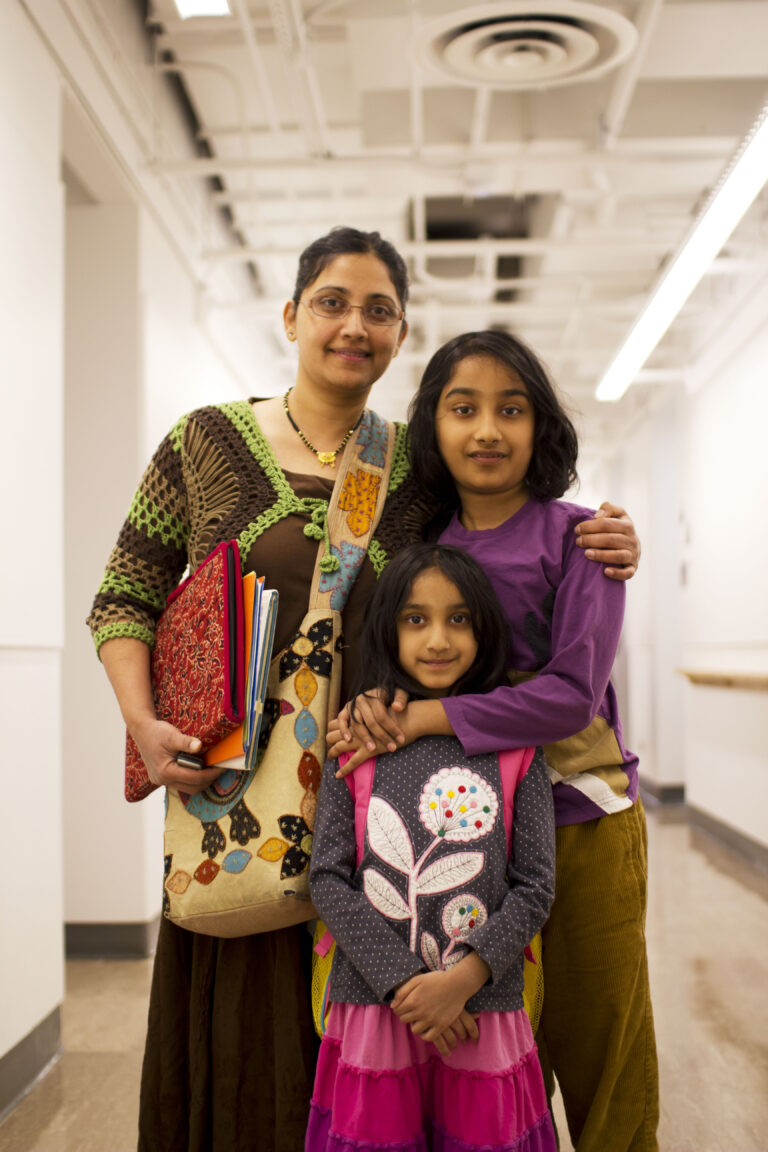
Arav’s father, Vasan, is an electrical engineer, but despite knowing a good amount of math, said that he was taken aback by Arav’s advancement.

“At six he asked me things like nth roots of a number … and how they look,” Vasan said.

Arav’s mother, Kavita, also said she was surprised by her son’s development, recalling that one day she borrowed a book from the library titled Mathematical Ideas, in which there was a short segment about the number 1729 and Srinivasa Ramanujan, a young mathematician in the late 1800s and early 1900s.

In the book, mathematician G. H. Hardy asks Ramanujan if he thinks 1729 is a dull number.

“I stopped and posed the question to my little six-year-old Arav. Much to my amazement, Arav replied ‘Not at all, Mamma. 1729 can be written as 9^3 + 10^3 and also as 1^3 + 12^3,” Kavita said.

According to Kavita, the book described Ramanujan expressing the same thing.

“Initially I thought I could work with him up to [age] fifteen,” Kavita said. “When we noticed that what he was doing was very advanced — and he was six then, we contacted the math department and said, ‘What do we do with this situation?'”

Vasan visited the math department’s table on Picnic Day that year, and he was put into contact with Professor Tom Sallee.

At age six, Arav began studying with Sallee, who still works with him today, providing one-on-one assistance with questions or ideas that Arav has.

“I probe for understanding,” Sallee said.

In this respect, Sallee believes his role is to give advice, and make sure Arav is keeping up with the mathematical concepts. Now however, despite a love for Arav, Sallee said that he is limited as a mentor.

“It is important that Arav be mentored by a younger person,” Sallee said.

His belief in this stems from the fact that math is a dynamic subject. The advent of computers has created yet another field for Arav to learn, one that proves challenging for Sallee.

Above all else, Sallee is concerned about Arav’s happiness.

“I don’t want to see him burn out,” Sallee said, which often is the case with children in similar situations.

Sallee said he has always made it a point to make sure Arav finds the math fun.

Arav’s development has also been fostered by continued participation in upper-division math and lower-division physics classes, the Berkeley Math Circle and mentorship from professors, as well as his own personal motivation.

“He’s taught himself a lot … he’s really self driven; no one asked him to sit down and do [his work],” Kavita said.

In a sit-down with Arav’s family, Vasan and Kavita presented a large quantity of manila folders, each filled with many sheets of paper. They represent Arav’s world beyond math and UC Davis.

“There are over 300 poems,” Vasan said, to which Arav quickly replied, “400!”

Kavita said that Arav taught himself to read and write at a very early age. Aside from the 400 poems, he has also written numerous short stories, ranging in topic from mathematics and physics to biology and nature.

In one of his poems, he wrote, “Everywhere around you / things amaze – / in rainforests, / and deserts, / and even / nearby people’s homes.”

Arav has been homeschooled now for years, being too far ahead to find benefit in a traditional classroom, according to his parents. Despite this, he still finds time to socialize with friends and other homeschooled children.

Arav and his sister, Aranya, have pooled their imaginations to spawn entire worlds.

Jupitara is one of these imaginary lands. The celestial images the name conjures do not do justice for the amount of detail Arav has put into it. He has even written a guide describing the planet and its inhabitants.

“This is a user guide to the history of the bug species and its accompanying ancestors. Welcome to the start of the book on what happens in Jupitara,” Arav wrote in a prologue to many pages of timelines, diagrams, events and illustrations.

Arav doesn’t just contemplate imaginary worlds, however.

Kavita said that at a physics lecture series at UC Davis last summer, Arav was able talk to professor Leonard Susskind of Stanford University, who is regarded as one of the fathers of string theory. Arav told him about an experiment he’d designed to figure out if the universe is finite or infinite.

“Professor Susskind smiled and said to Arav that he had been thinking about the same problem for several years,” Kavita said.

Since he was five years old, Arav has been planning to get a Ph.D and pursue research as a professor of math. In the meantime, however, his parents have said that their main goal is to keep him happy.

Food stamp cuts hit Yolo County

On Nov. 1, more than 47 million Americans who take part in the federal food stamp program saw their monthly benefits shrink as a temporary boost from the 2009 stimulus package expired.

According to the Center for Budget and Policy Priorities, a non-partisan think tank, a family of four collecting the maximum monthly benefit of $668 saw a reduction of $36. These cuts will average out to less than $1.40 per individual meal in 2014.

The reductions were planned as a phaseout of part of the 2009 American Recovery and Reinvestment Act, a piece of which raised the benefits for food stamp recipients by 13.6 percent.

Often referred to as food stamps, the Supplemental Nutrition Assistance Program (SNAP) provides federal aid to help low-income individuals purchase food. California’s program, known as CalFresh, covers about 4.2 million people, or 11 percent of the state’s population.

As of September 2013, Yolo County had 16,845 residents participating in CalFresh, about eight percent of the county’s total population. However, according to Nancy O’Hara, the assistant director of Employment & Social Services for Yolo County, this number continues to grow, with about 450 people joining the program in October.

“It’s a pretty significant increase,” O’Hara said. “We really hope it continues.”

O’Hara attributes this increase in enrollment in part to a greater outreach effort on the part of the county to enroll more Californians in the program. In California, only about 55 percent of those eligible for SNAP apply to receive benefits, giving it one of the lowest SNAP participation rates in the country.

SNAP eligibility depends on factors such as family size and income, with those making under 130 percent of the federal poverty level able to apply for benefits. Under this scheme, a family of four that earns less than $30,625 a year is eligible to receive benefits, which average $153 a month per individual.

The fastest growing segment of these new recipients are those who earn some form of income, yet still can’t make enough to cover food expenses for themselves or their families.

“Even if you’re working 40 hours a week on minimum wage you’ll probably still be eligible,” O’Hara said.

The cuts are particularly pertinent to State Rep. Mariko Yamada, who takes part in the annual “Hunger Challenge” — living on food stamps for a week in order to draw attention to the difficulty many SNAP recipients face in ensuring food security.

“There are still a lot of myths out there about who is actually on SNAP,” Yamada said. “It could be students, seniors or anyone who has low income — hunger knows no bounds.”

The state attempted to prepare SNAP recipients for the reduction, posting information about what future benefits would look like as well as tips on how to cope with a tighter budget in the lead up to the cuts.

According to Michael Weston, the spokesperson for the California Department of Social Services, those affected by the cuts may have to look elsewhere for their food supply.

“For individuals who are having trouble meeting their daily nutrition needs, there are options for them,” Weston said, referring to the numerous food banks and pantries across the state.

However, private nutritional assistance programs are experiencing increased demand as well, especially around the holiday season when food banks are tasked with supplying an ever growing contingent of hungry people.

Such is the case with the Yolo Food Bank, which according to the bank’s Agency Relations coordinator, Stephanie Sanchez, has seen its average monthly user base grow from 25,000 in 2012 to around 28,000 in 2013.

UC Davis’ The Pantry, which relies on food purchases from the Yolo Food Bank as well as private food donations, is also attempting to broaden its outreach in order to serve the student population more effectively, according to Tara Storm, The Pantry’s director of Internal Operations.

“We’re definitely trying to get our name out there,” Storm said, referencing the Pantry’s increased use of social media and flyering efforts in order to attract both donors and recipients.

Despite the efforts of private groups to make up for shrinking government assistance, these reductions may prove to be only the beginning of a longer trend of planned cuts to the food stamp program. As Congress continues negotiations regarding a new farm bill — a large chunk of which funds SNAP — further food stamp funding is on the chopping block.

The final fate of this funding is still unclear as Congress attempts to reconcile the differing House and Senate versions of the bill. The main sticking point of their negotiations is a large gap between the House bill’s $40 billion in cuts and the Senate’s milder $4 billion in cuts.

“It was certainly our hope that Congress would be able to agree on sustaining such a large government poverty program,” Yamada said. “This is a major step backwards for our country. It’s really a disgrace.”

Successful swan song for Aggie seniors

The Aggies ended their last home game and sent their seniors off with a 34-18 win over University of North Dakota (UND) on Nov. 16. The game marked the last time playing at Aggie Stadium for 16 UC Davis seniors.

“Our focus the last couple of weeks has been superb,” said head coach Ron Gould. “We talked about attention to detail and focusing on fundamental football. I am proud of the team to see the seniors go out with a win. This group of seniors is really special. To see the way they have embraced me, see how they responded to change – not necessarily better, but different — was great to see.”

UC Davis’ win improved their record to 4-7 overall and 4-3 in the Big Sky Conference while ending UND’s season at 3-8 (2-6).

In addition to scoring three touchdowns, junior running back Gabe Manzanares ended the game with 194 total yards and 132 yards rushing, more than twice as many rushing yards than UND.  This was his fifth consecutive 100-yard game.

Manzanares carried the ball 27 times, averaging 4.9 yards per attempt with a long of 39 yards. The running back scored on runs of 17 yards, one yard and caught a 15-yard pass from senior quarterback Randy Wright.

The San Francisco, Calif. native moved up to eighth on the Aggies’ single-season rushing list with 1,163 yards while advancing six spots to fourth for single-season carries with 232. Manzanares needs only 21 yards to pass Matt Brown (1,183 in 2000) for the seventh spot, and a 125-yard game would put him past G.P. Muhammad (1,287 in 1998) for fourth all-time.

Sophomore kicker Brady Stuart was named Big Sky Conference Special Teams Player of the Week for the second time this season, due in large part to his career-best four field goals (18, 29, 32 and 35 yards). The Newhall, Calif. local is now 15 for 22 for the season with eight consecutive field goals.

Both teams got on the board in the first half with field goals, but UC Davis took a 6-3 lead with a 29-yard Stuart field goal on the first play of the second quarter.

Senior Jonathan Perkins’ 72-yard kickoff return set up Manzanares’ 17-yard TD run, which improved the Aggies’ lead to 15-3 in the first 30 seconds of the second quarter.

Despite a second 45-yard field goal from Zeb Miller and a three-yard TD from Adam Shaugabay (with a blocked PAT by UC Davis senior defensive tackle Anthony Kaspar), UND trailed 18-9 before the half.

Manzanares’ 15-yard TD reception occurred early in the fourth quarter and inflated the Aggies’ lead 24-9, while his one-yard rush halfway through the period made the score 31-12.

UND made one last push and scored on Kenny Golladay’s touchdown at the end of their 80-yard drive, but Kaspar blocked the extra point yet again. The senior from Dana Hills, Calif. also added six tackles and a sack.

Stuart’s last field goal produced the final score of the game, 34-18.

“I told my players this week to keep playing the next play, line up again, and play that play,” Gould said. “If we have to, let’s regroup, refocus and execute the next play. I told them not to look at the scoreboard and just worry about the next play.”

Although UND finished with 368 yards passing, UC Davis’ defense held UND to only one touchdown and recorded three sacks.

Senior cornerback Dre Allen finished with seven tackles and a pass breakup, while freshman defensive end Zak Petit had two sacks. On top of a 44-yard punt return, senior Charles Boyett had six tackles.

Averaging 45 yards per punt on five punts, Colby Wadman added to the special teams’ impressive performance.

Wright completed 18 of 32 passes for 263 yards while senior Tom Hemmingsen had three catches (including a 44-yard catch the first play of the game) for a team-high 66 yards.

UC Davis will play their final game of the season at the 60th annual Causeway Classic this Saturday, Nov. 23 at 3:30 p.m. at rival Sacramento State’s Hornet Stadium.

The Aggies’ defense will have their work cut out for them with three-time Big Sky Offensive Player of the Week quarterback Garrett Safron. Safron threw for a Sacramento State record of 554 yards on his way to four passing touchdowns. He also led the team in rushing with 42 yards and two rushing touchdowns in a 43-42 victory against Portland State on Nov. 16.

The Nelson Gallery presents “The Art of Tea”

0

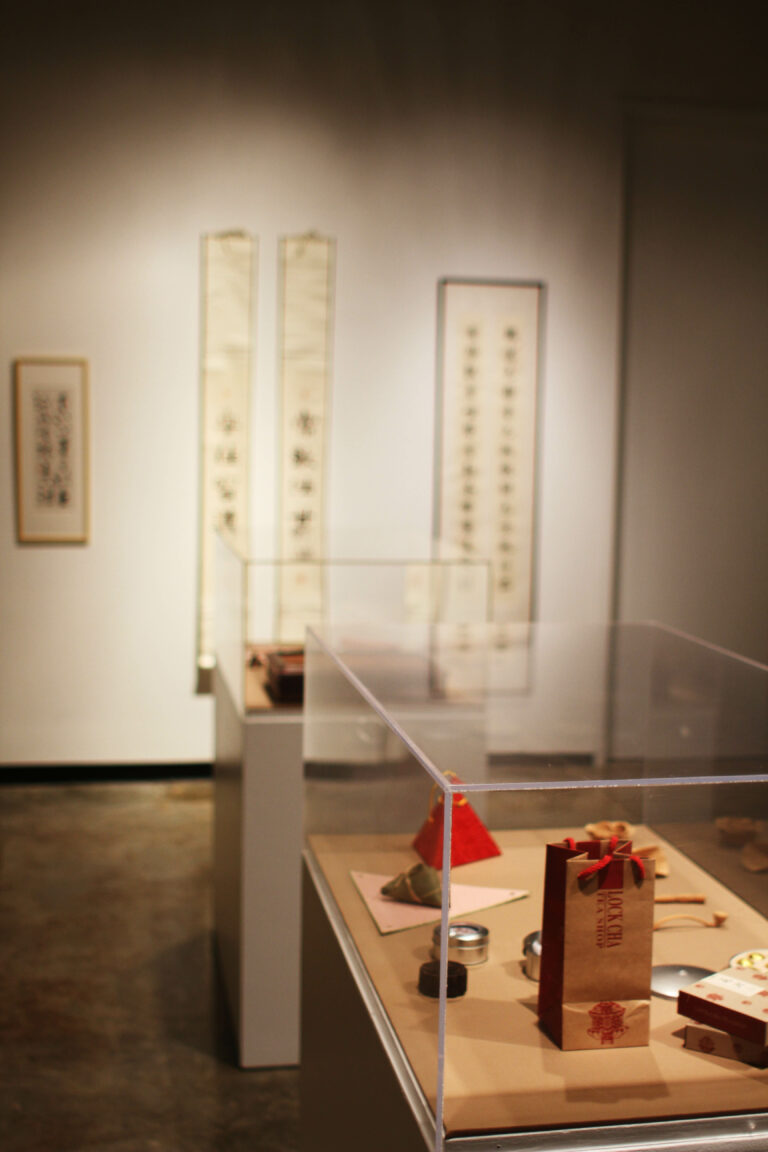
On Nov. 22, internationally-recognized Tea Master Wingchi Ip and former curator of Asian Arts at the Fogg Museum and the Saint Louis Art Museum Dr. Steven D. Owyoung will speak to present the Wingchi Ip and the Art of Tea exhibition that is being shown at the Nelson Gallery from Nov. 15 to Dec 15.

Sponsored by the Department of Art and Art History, East Asian Studies, the Davis Humanities Institute, the UC Davis Confucius Institute, Alan Templeton and Darrell Corti, the colloquium will take place at the Nelson Gallery, from 3 to 5 p.m. Both Ip and Dr. Owyoung will describe the centuries-long culture of tea, to explain the calligraphy and materials relating to tea featured in the exhibition.

The exhibition largely displays books about tea and tea culture found in the UC Davis Special Collections Department, and tea paraphernalia from the Katharine Burnett and Bob Moustakas Collection.

A few students were granted the opportunity to help curate the exhibition, such as fifth-year art studio major, Roxanne Faure, who described what specifically is featured in the exhibit.

“The focus of this exhibit and of UC Davis’ study of tea is not primarily about East Asian art, but tea around the world,” Faure said in an email interview. “The exhibition features a selection of books and cards from Special Collections’ Hurt-Peck Beverage Library and general Special Collections holdings, along with two poems on scrolls written by visiting Tsiologist Wingchi Ip, one of the foremost tea experts in China and who has been instrumental in disseminating quality teas and information about them.”

Many departments from different areas of discipline at UC Davis have become influenced by these tea-related collections. This has encouraged research in nutrition, agriculture and other areas, so the creation of this exhibit seemed fitting, attracting many fields.

“Professor Katharine Burnett has been working closely with our school librarians to find and catalog books in the Shields Library that deal with tea,” Faure said. “Since UC Davis is beginning to study tea across departments and we’re having all these marvelous tea-related events, Axel Borg, a librarian in the biology and agriculture department of Shields, had the idea of creating this exhibit of materials from Special Collections on tea and offered to have students from Professor Burnett’s seminar curate it.”

Fourth-year international relations major and art history minor Ashley Cook was also offered this opportunity to curate. She described her and Roxanne’s specific roles as curators of the exhibition in an email.

“I found the opportunity in Professor Katharine Burnett’s proseminar class about tea, part of the AHI 190 series,” Cook said. “My role, as well as Roxanne’s, has primarily been invested in identifying and organizing materials for the collection, which is not an easy feat when looking at the 256 results that come up when searching ‘tea’ in the Special Collections Database.”

To present this compilation of tea-related items that Roxanne Faure and Ashley Cook had the opportunity to arrange, UC Davis had Wingchi Ip himself come, along with tea historian Dr. Owyoung.

Wingchi Ip is a tea master, tea scholar, artist and director of Lock Cha Tea Shop, where he is a tea exporter, manufacturer and retailer in Hong Kong. He is also the former head of the Fujian Tea Research Institute, in Fu’an China. At the colloquium, he will describe “The Way(s) of Drinking Tea,” where he will explain how to select, brew and taste teas, as well as explain the differences between the primary types of Chinese teas on the market, such as green, fermented, semi-fermented and white teas.

Following Ip’s detailed description of the different ways to drink tea, Dr. Owyoung, will present his “Drinking from the Dragon’s Well: An Introduction to the Tea Cultures of China, Korea and Japan.” This is an hour-long presentation of the historical figures and events that inspired the evolution of tea from a beverage to a philosophical and spiritual pursuit. Dr. Owyoung is an expert in the subject, and has concentrated on the translation of texts and poetry related to tea.

“‘Drinking from the Dragon’s Well’ offers a history of tea from the seventh through 19th centuries,” Dr. Owyoung said in an email. “The illustrated presentation will cover three civilizations and shows the transmission of tea over time between continental China and its transformation by peninsular Korea and the archipelago of Japan.”

As a near-universal drink in Asia, tea has for millennia had a great cultural influence that continues to this day. Its use seems to demands a mastery of knowledge, technique and form, all of which contribute to the notion of performance, grace and formality, making it an art form.

“The talk will explore various historical and aesthetic movements of each of the three Asian cultures, including the Daoist origins of tea, the import of monastic practices, the philosophical bases of tea and their expression in the arts,” Dr. Owyoung said. “Tea should be seen as an art, because of its preparation, service and appreciation. In its various forms fine tea was and still is a costly commodity.”

As tea has taken on a great importance even in the United States, this talk helps trace the culture of the art back to its roots. Wingchi Ip and Dr. Owyoung will present this journey at the colloquium, where one can anticipate beverages and a chance to explore future opportunities for studying the art, history and science of tea on our campus.

AFSCME 3299 members protest systemwide

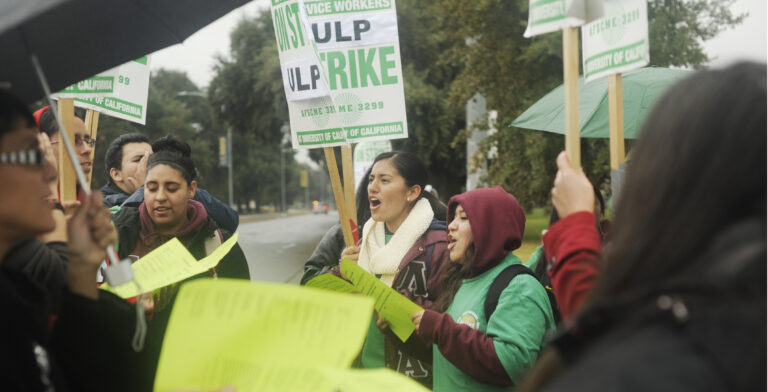
On Nov. 20, the American Federation of State, County and Municipal Employees for the University of California (AFSCME 3299) went on a one-day Unfair Labor Practice Strike of nine UC campuses and five UC medical centers. The union, which represents university service and patient care workers, struck in response to alleged intimidation by UC management when they participated in a two-day hospital strike in May.

The systemwide strike began at 6 a.m. and ended at 7 p.m. on the same day. AFSCME 3299 members employed at UC Davis held their strike at the corner of Hutchinson Drive and La Rue Road.

According to an AFSCME 3299 press release, the union stated that UC administration illegally harassed and intimidated service and patient care workers when they struck to advocate for patient safety.

“We’re here because of an unfair labor practice. When employees expressed safety concerns, they’ve actually been intimidated and harassed by management to not bring it up. We’re here to express that we’re tired of being harassed for speaking up on the behalf of patients and students’ safety,” said Fernando Garcia, AFSCME 3299 member and a UC Davis grounds employee.

Leticia Garcia-Prado, a medical assistant at the Student Health Center, said her administrators harassed her with questions on whether she was going to come to work or not when she struck in May. She said she was threatened both verbally and through email.

“We got emails that actually said we could be disciplined if we didn’t call in. We don’t have to call in. Once the University gets notified, they should expect us to be exercising our right to strike and they shouldn’t be asking us about it on a regular basis,” Garcia-Prado said.

Prior to the union’s Nov. 20 strike, Garcia-Prado said that university management harassed her again about her intention to come into work, but with different wording.

“We did of course receive similar emails today, but they changed the wording. They said we [didn’t] have to come in, but we [could] and they [wouldn’t] tell our union,” Garcia-Prado said.

Although Jason Henel, a AFSCME 3299 spokesperson, is hopeful for an apology and for legal action to be taken against the UC, he said that the union’s main priority is for the university to stop their alleged harassment of workers.

“The very first thing we want is for them is to cease and desist their intimidation and harassment of workers. It’s just a shame that they continually threaten us with disciplinary actions for speaking up for better staffing levels and safety measures. That just has to end,” Henel said.

According to Shelly Meron, University of California Office of the President spokeswoman, UC administration maintained their behavior in response to the strike was not illegal. Meron said the UC followed its normal procedure of asking employees about their intention to come into work in order to prepare for the strike and safely care for patients.

“What happened here is that the university asked AFSCME workers and its employees last May if they planned to come into work during the strike, which is our normal procedure and legally permissible. We did that so we could adjust our staffing and prepare for the strike so that we could care for our patients,” Meron said.

In March, the Public Employment Relations Board (PERB) will be holding a hearing to determine whether there was any wrongdoing on the part of the UC according to Meron.

“There’s nothing to be done at the moment, except wait for the hearing. PERB hasn’t made any determination of wrongdoing and there’s not any determination of wrongdoing by the university either,” Meron said.

Meron said the strike has had a negative impact on UC medical centers.

“We have had a lot of medical appointments cancelled. Certain procedures or elective surgeries have been delayed. People who are getting lab tests or therapies aren’t getting those in a timely manner. Our emergency room may have to go on drive-by status which means ambulances with critically ill patients might have to travel to other facilities to get emergency care. It’s been very disruptive to campuses,” Meron said.

Charles Casey, the senior public information officer for the UC Davis health system, contends the AFSCME’s 3299’s strike has inconvenienced the UC Davis medical center, but not as drastic as Meron claims.

“It certainly inconvenienced some patients, but many operations and activities here are as close to normal as possible. We’re still seeing patients in the emergency department; we’re still doing surgeries. We didn’t reschedule much at all. It has had an inconvenient impact, but it has not shut down the hospital. We expect to be back to completely normal tomorrow and throughout the rest of the week,” Casey said.

According to Keith Sterling, UC Davis news and media director, the strike’s impact lies primarily with food service workers. Sterling claims UC Davis has arranged for supplemental crews to cover any shifts needed to be worked.

Along with patient care workers, AFSCME 3299 includes university service workers who struck in support of their fellow members and to fight for worker’s safety for both parties. For Katrina Swim, a lead cook at Tercero Dining Commons, service employees are overworked which she believes endangers the safety of customers, co-workers and the workers themselves.

“It’s unsafe for the customer because we’re dealing with food. We’re dealing with hot foods; we’re dealing with food safety. And it’s putting coworkers at risk because you can endanger a coworker just by being too tired to work, having a sharp object beside you and turning the wrong way without noticing because you’re so tired,” Swim said.

Accompanying AFSCME 3299 members on strike was UAW Local 2865, the UC Student-Workers’ Union, who filed a sympathy strike in support of the service union’s claims.

“We believe it’s important to stand up in solidarity with AFSCME because they’ve been experiencing a campaign of illegal intimidation and harassment by the UC and we want to show that this is not acceptable,” said Caroline Mckusick, a member of UAW’s executive board.

Although several teaching assistants cancelled discussion sections to attend the strike, Rebecca Miller, a first-year animal science major, believes this will not have a large impact on students.

“I don’t think [the strike] will compromise anything. …We’re adults here; I feel like we can deal with one day,” Miller said.

According to Henel, AFSCME 3299’s primary plan after the strike is continuing to fight for safe staffing.

“The safety conditions directly impact students and patients. With reduced staffing, you have situations where people are trying to do much more with less. There’s been a 20 percent increase in worker injury in the past years. One in 10 workers are going to be injured on the job. That is unacceptable,” Henel said.

Additionally, Meron said that every offer the UC has made towards AFSCME 3299 in respect to other union goals has been rejected.

“Our staffing is appropriate currently. That is our opinion. This is not about staffing; this is about AFSCME’s refusal to compromise with us at the bargaining table. We’ve made several offers to them including wage increases, health benefits, pensions — all the issues they have told us are important to them. And AFSCME has refused all of those offers,” Meron said.

For Ricardo Martinez, a core member of the Student Labor Organization, the alleged intimidations toward union members are disconcerting. He worries the possible failure of AFSCME’s plight might make it harder for students to voice their complaints.

“Where we’ve come in society, to have these tactics put on people, you’re really left baffled by the actions the UC is taking. If the workers are able to get struck down, the students will probably be crushed,” Martinez said.

According to Meron, the service union and the University are still in negotiation. A planned hearing for AFSCME 3299’s complaints is scheduled for March 2014.