


59.1 F
Davis

Davis, California

Wednesday, December 24, 2025
Home Blog Page 903

Government shutdown puts UC Davis research on hold

0

UC Davis scientific research supported by the National Science Foundation (NSF) and National Institutes of Health (NIH) was severely impacted within the first few days of the recent government shutdown.

Due to the lapse in funding, several faculty members, graduate students and researchers have witnessed the debilitating effect on their research.

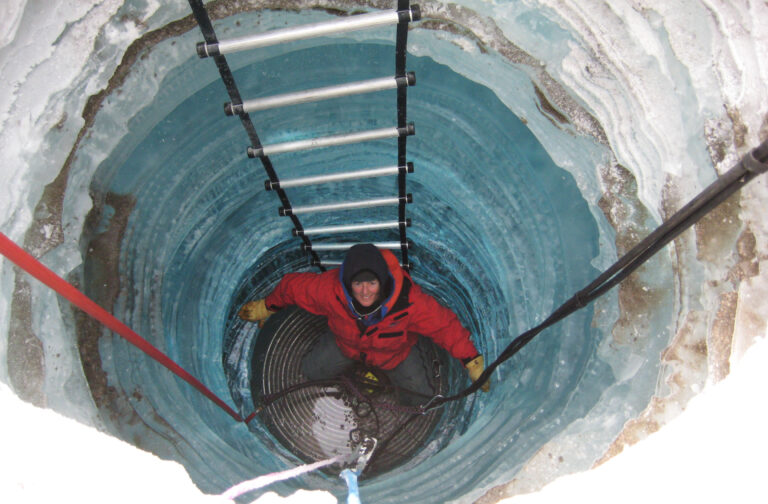
About a week before geology professor Dawn Sumner was supposed to embark on her three month trip to Antarctica with the United States Atlantic Program (USAP), it was abruptly cancelled.

Along with the thousands of researchers involved with USAP, which is funded by the NSF, Sumner is still waiting to hear whether the research in Antarctica will persevere.

“I still don’t know whether or not I’ll be able to go [to Antarctica]. It is very uncertain which is very unnerving,” Sumner said.

In order to coordinate fieldwork in Antarctica, the NSF works with Lockheed Martin, an American advanced technology company, for logistical and technical support.

When the shutdown initially occurred, Lockheed Martin had enough money allocated toward USAP for about a week.

As the pool of funding gradually depleted, all Antarctic research stations were transitioned into “caretaker status,” where the majority of stationed staff were required to go back home.

Now that the government has returned from its 16-day shutdown, USAP is currently in the process of recovering all delayed research.

If USAP is unable to reschedule the trip, Professor Sumner is among the lucky ones who will still be able to do her research with the help of the New Zealand Antarctic Program.

While the possibility of researching in Antarctica looks more promising for Professor Sumner, there are still challenging time constraints that must be considered.

Since Professor Sumner was supposed to depart on Oct. 17 and conduct her fieldwork in early November, all of her research has been pushed back into later months.

“We need that time in November, [because] typically it’s too warm by December,” Sumner said. “If you miss one year of monitoring, you can never get that back. This can significantly damage the quality of results.”

Tyler Mackey, a geology Ph.D. student researcher involved in Professor Sumner’s project, addressed the same concern.

“If we aren’t able to get there in time during the year, we won’t be able to do our work this year at all,” Mackey said.

Ultimately, the loss of this fieldwork in Antarctica could inhibit Mackey from specifically addressing elements of his work.

“It will affect what my Ph.D. is on and will change the different parts of the research,” Mackey said.

Mackey, however, stated that he was fortunate. If he had not done enough research previously, he may have been in danger of not getting his Ph.D..

The potential decrease in research that this shutdown has caused may also impinge upon scientific efforts and achievements globally.

“The science that the U.S. is doing is not in a vacuum,” Mackey said. “We collaborate extensively with other countries.”

According to Mackey, the lack of research that they will be able to share is an unfortunate byproduct of the shutdown and budget cuts.

Research funding in the U.S. has been cut back dramatically for a while now. Under the sequestration order that was signed on March 1, 2013 by the federal government, the NSF’s budget was cut by $356 million.

While all research funded by the NSF will receive the allocated grants for this year, the sequestration will limit the future scope of the program, and the sharing of research between nations may be impacted.

In turn, the multitude of scientific projects on campus and the availability of grants for graduate students will be cut down.

Johnathon Anderson, a genetics Ph.D. student who works in an NIH funded lab at the Institute for Regenerative Cures, shared his concerns regarding the future difficulties that students will face.

“I fear that some of the students may have been discouraged from applying for the NSF Fellowship since they could not access the NSF FastLane website and the submission deadline is coming fast upon them,” Anderson said in an email interview.

Like the potential graduate students applying for NSF scholarships, Anderson has experienced similar obstacles when writing grants for his own laboratory.

“The recent government shutdown froze my lab’s Transformative NIH (high risk, high reward) grant,” Anderson said. “This has caused my research to grind to a halt as I have not been able to order much needed supplies for my project.”

In addition to the challenges during the grant writing process, Anderson said he believes that scientific resources utilized for groundbreaking research are being jeopardized.

“The shutdown has also put the lives of thousands of valuable research mice at risk that are used in cancer, diabetes and Alzheimer’s research, and put shipments on hold for fruit flies which are an invaluable research model organism,” Anderson said.

Although all of these issues will be extremely challenging to solve in the upcoming year, Anderson believes that both the recognition of scientific innovations among the general population and the need for federal support will help to advance programs like the NSF and NIH.

“I think the scientific community as a whole could do a much better job of elucidating just how crucial government funding is to generating tangible products that our society benefits from, while concurrently sparking much needed wealth creation for our economy,” Anderson said.
Study finds linkage between DNA, marital satisfaction

When it comes to marriage, wouldn’t it be nice to know whether it’s for the better or for the worse? Fortunately, for the meticulously-cautious and planning-obsessed people, a recent study published in the journal Emotion begins to tap into this fascinating area of marriage and its relation to DNA. Dr. Robert Levenson, a psychology professor at UC Berkeley and the main investigator of the study, suggests that our genetic make-up contributes to our marital satisfaction.

The study discovered that alleles — different versions of particular genes — set the stage for how individuals process and understand their emotional state, which eventually affects their relationships.

“We are always curious why some couples are happy and thriving whereas others are seemingly unhappy and miserable,” said Claudia Haase, co-author of the study, in an email interview. “Research has shown that the emotions that spouses show when they are together (e.g. affection, joy, sadness or anger) play an important role in how their marital satisfaction develops over time.”

The researchers discovered a linkage between an allele known as 5-HTTLPR which regulates serotonin levels and relationship satisfaction. All of us inherit some variant of this gene from our parents. Since 1989, this longitudinal study tracked 156 married couples over 20 years.

Every five years, the participants checked in at UC Berkeley to report their marital satisfaction and interact with one another in a lab setting. The researchers observed and coded their behaviors, such as the participants’ facial expressions, body language, tone of voice and the topic of the participants’ conversations. Half of the participants provided DNA samples, and researchers were able to match up their genotypes with the level of marital satisfaction reported by the participants.

The study found that participants with two short alleles of the 5-HTTLPR gene were found to be most dissatisfied in their marriage when a great surge of negative emotion was experienced. However, they were the most happy when positive emotion was involved. In contrast, participants with one or two long alleles for the gene, were less likely to be bothered or affected by the emotional highs and lows of their marriages.

The researchers caution that one shouldn’t predict their happiness or unhappiness in a marital relationship simply based on their genes. It isn’t advised to assume that just because you have inherited two short alleles for the gene, that you are set up for marital doom.

Committed married couples form an integral part of the UC Davis community — ranging from professors and staff to both graduate and undergraduate students. Dustin Burns, a third-year PhD graduate student in the physics department, is a member of this subpopulation.

“At least from personal experience, some people are definitely more sensitive to the emotions present in their relationship, while others are more indifferent,” Burns said.

The study simply suggests that individuals with two short alleles are more likely to be sensitive to the emotions they experience in their marriage. For instance, they are more likely to be happy in a healthy relationship, and fare the worst in an unhealthy one. Regardless of your genetic make-up, it is important to not exclude environmental factors, which clearly also play a role in one’s emotions and relationship satisfaction.

Dr. Lian Bloch, who earned her PhD in clinical psychology from UC Berkeley and is now a psychologist, played a key role in envisioning the connection between genetics and marriage. She believes that therapy, whether it be done with a professional or at home, can help couples to regulate their emotions and to better process and understand their heightened emotions when they occur.

“Couples therapy supports taking an active look at self-awareness, emotional and communication dynamics within the marriage. [It takes] time to foster awareness as an individual, and as a couple as well,” Bloch said.

Nameless Magazine

0

Nameless Magazine is UC Davis’ exclusively student-run literary magazine, which publishes one digital issue per quarter and one print issue per year. Each issue features fiction, poetry or mixed media submissions.

Mitchell Winter, editor in chief and fourth-year linguistics and religious studies major, believes it is the emphasis on student participation for which the publication is named.

“[The name] can seem kind of eccentric but it also is true. Because there are so many different voices that we’re trying to convey, we don’t want to give one title to any one piece,” Winter said. “It’s this kind of being nameless, and not having a certain voice that’s coming through, trying to have everyone.”

The first digital issue, which will come out at the end of Fall Quarter, will feature works exclusively from undergraduate students.

“While some literary magazines with wider scope tend to be more competitive, Nameless is largely about connecting the undergraduate community with opportunities to publish and share their work,” said editorial board editor and third-year gender studies major Katherine Geni, in an email.

Though Nameless cannot accept all entries, the staff works and meets weekly to incorporate as many pieces as they can into each issue.

“We’re definitely selective, but we select a broad amount of works,” Winter said.

Additionally, the Nameless staff hopes to emphasize diversity in the pieces that it publishes.

“Nameless also accepts submissions from people of all majors,” Genis said. “We’re hoping to receive a good mix of content from varying positions and perspectives on campus.”

The magazine extends beyond simply selecting student submissions. Nameless hosts workshops for the public. At these workshops, students are able to discuss and polish ideas for pieces and submissions.

“We try and give people stable critiques, and stable ways to look at art in Davis,” Winter said.

In the past, submissions were reviewed by members of a board corresponding to each type of media the magazine publishes.

However, facing a decline in staff due to graduating editors, this year Nameless magazine is moving in a slightly new direction.

“This year, we’re merging the three editorial boards (poetry, fiction and mixed media) into one entity. [Merging] will hopefully make communication more efficient and streamline the overall editing process,” Genis said.

Despite the decline in staff, Nameless Magazine plans to extend its focus beyond publication.

 “We’re also aiming to do more publicity and hope to connect with other groups on campus,” Genis said.

The staff hopes these efforts will help them to bring the core values of Nameless Magazine to a broader spectrum of students. The literary magazine offers a stage for artistic expression for students who are less comfortable with performance mediums, said poetry editor and third-year linguistics major Syd Salsman.

“Nameless is important because we provide a point of diffusion for students’ creative works that might otherwise go unread, unappreciated or unpublished,” Salsman said.

To learn more about getting involved in Nameless Magazine, visit namelessmagazine.com.

The Enchanted Cellar grows from Halloween auction to year-long business

0

From Halloween festivities and themed parties to theater productions and Dickens’ fairs, people from The Enchanted Cellar serve the Davis community and surrounding areas with over 25,000 stock items for rental year-round.

“Some people have a costume idea but think, ‘how in the world am I going to make the costume do that?’” said costume shop director Roxanne Femling. “That’s a challenge, but sometimes that’s the fun part for us too.”

The Enchanted Cellar, located in the basement of Wright Hall, offers a variety of clothing and accessories for rental. With the various events that occur on campus, in town and in Sacramento, Enchanted Cellar staff believe there is a student need for costumes.

“There are a lot of events that people go to or organize that they might need a costume for,” said Anel Zarate, a third-year design major and rentals assistant/stock agent at The Enchanted Cellar. “There are a lot of parties that people want to dress up for, even if it’s not Halloween.”

Originally started in 1999 under the name Halloween Costume Auction, the shop held auctions for three years before officially beginning to sell and rent to the UC Davis Theater and Dance Department in 2004.

The Enchanted Cellar name was coined in 2007, the same year that the shop opened its doors to students who were not affiliated with the theater department and to the public.

To encourage local visitors, the shop offers 50 percent off all sales and rentals to customers affiliated with the university.

Without that 50 percent off rate, one-week rentals through The Enchanted Cellar range from $75 to $150.

Although usually offering rentals only, The Enchanted Cellar held their second Decade Sale this year, with over 1,000 items on sale for the Halloween season.

“There are a lot of really cool things that people would find, like jackets, corsets and fairy wings,” Zarate said.

The Decade Sale, taking place every 10 years, allows the Theater and Dance Department to look through their inventory and pull out what they no longer use.

“The inventory of all our costumes has accumulated over time from shows we do and donations from the community,” Femling said. “Sometimes it grows too much, and then we have our decade sale. We haven’t used these items for ten years in the department, so they’ve had their chance.”

The Enchanted Cellar staff started pulling items together January of this year.

“With our costumes, you feel like you are in a more historical garment,” Femling said.

Femling said that customers vary greatly, from students to dance companies, and suggested that potential customers just come down to browse and have a good time, even if they don’t have a costume in mind.

“I want people to just come to look at what we have and have fun. Create some ideas, we are here to help with that too,” Femling said.

All of the costumes are made by students, according to Jason Moscato, a second-year dramatic art and linguistics double major and assistant company manager for the Department of Theater and Dance.

“All of the costumes that we make are really high quality, much higher quality than Halloween shops,” Moscato said. “You are supporting the students and getting a great product in return.”

The development of The Enchanted Cellar and its services has been a long process, with the project evolving every year in its presentation.

Last year, the Department of Theater and Dance put on The Haunt, a haunted house for students during the Halloween season, complete with a costume party after. The Enchanted Cellar made costumes for the event and offered costume rentals to party attendees.

“The Haunt was great, however attendance wasn’t as high as we expected, so the costume rental numbers were a little bit lower,” Moscato said. “Students were mostly focused on The Haunt instead of The Enchanted Cellar.”

This year, the department was able to publicize the shop on its own, without the pressure of scheduling a coordinated event alongside it.

“I think the publicity is a little more successful now because it’s more focused on the shop,” Moscato said. “Having The Enchanted Cellar publicized independently will allow students to see what a great resource it is.”

Increased publicity for this season allowed for greater student involvement. From building costumes and managing the shop to tabling on the Quad and dressing up for publicity photo shoots, The Enchanted Cellar offers students the opportunity to gain experience in several fields.

Depending on how many people are working and how intricate the project is, a costume can take from a week to a month to make. Femling said the most popular costumes for rental are Renaissance and period gowns, along with 1920s attire.

“Compared to other costume places, we have a lot more things that are legitimately from the period. They are actually made the way that they were made back then,” Zarate said. “We also have a lot of weird things that you wouldn’t find at a costume store, like horse heads.”

This year, because of increased demand, The Enchanted Cellar staff has and is working on more costumes from today’s pop culture scene, such as characters from Star Trek and Harry Potter.

Customers are also not limited to The Enchanted Cellar’s current stock.

“We can pull things together to try and make whatever they are envisioning,” Zarate said. “We can definitely help them try to create what they are looking for.”

Campus Book Project moves students to action

0

Half the Sky, a novel based on empowering women, is the focus of this year’s Campus Book Project, and has inspired UC Davis students to take matters into their own hands.

The authors, Nicholas Kristof and Sheryl WuDunn, argue that the worldwide oppression of women is “the paramount moral challenge” of the 21st century, and their novel is currently featured in two classes at UC Davis: a freshman seminar as well as a humanities class. It has also been read by students of the Davis Honors Challenge, and has inspired the creation of Voices for Opportunity, a UC Davis fundraising organization. The novel has also been featured by a Davis seminar series titled Women in Leadership.

“It was chosen for its global appeal and impact on women, as well as the importance that it places on education,” said Mikael Villalobos, the chair of the Campus Book Project.

Two first-year students from the Davis Honors Challenge were inspired to create Voices for Opportunity, which chooses a non-profit organization to sponsor every quarter. This quarter, addressing Half the Sky’s emphasis on the importance of education for women, they are sponsoring the Campaign for Female Education (CAMFED).

CAMFED supports the education of girls in rural Africa. Through the program, girls are provided with school essentials and are offered access to everything from girls’ clubs that offer peer mentoring to money management and business training and global speaking opportunities, according to CAMFED’s website.

“We’re being treated to an amazing education at UC Davis, and we want to expand that to others,” said Kimberly Berg, a first-year genetics major and the vice president of fundraising at Voices for Opportunity.

According to the president of Voices for Opportunity, Heather Nguyen, a first-year neurobiology, physiology and behavior and English double major, they hope to expand into more elaborate fundraisers in the future.

At the moment, Voices for Opportunity tables at various events for Half the Sky, and takes donations for CAMFED.

While the novel focuses on oppression that women face today, it is also intended to be a tool for readers to take matters into their own hands, suggesting “Four Steps You Can Take in the Next Ten Minutes” to improve the lives of women worldwide.

The book also has an appendix which lists various organizations that support women, and according to Villalobos, also addresses oppression that women face in the United States.

“Its salient to address that women face worldwide oppression,” Villalobos said.

Women in Leadership is another project on campus that was started by Nicole Chaffee and Jeni Lee, two Ph.D. students in the designated emphasis in the biotechnology graduate program.

With the help of the UC Davis Biotechnology Program director, Dr. Judy Kjelstrom, they seek to facilitate dialogue about issues facing women in leadership, and to improve the lives of women in the United States.

The Women in Leadership Seminar Series mission is in line with Voices for Opportunity and the Campus Book Project, hoping to raise awareness of gender imbalances and to promote equality.

The Women in Leadership series has offered several film showings, including a screening of Half the Sky on Oct. 23.

To combat problems of gender equality that exist even in the United States, Women In Leadership will host a panel session on Dec. 2 from 3:30 to 5 p.m. at the UC Davis Conference Center.

The panel will be made of up six female leaders in academia, state government and industry, including UC Davis Chancellor Linda Katehi.

The panel will consist of a discussion facilitated by Chaffee and Lee, as well as audience generated questions. Chaffee and Lee seek to inspire other women to pursue their passions and improve gender equality, especially in STEM (Science Technology Engineering and Math) related fields.

“If you have more women at the top, they can speak for the women that are below,” Chaffee said.

According to Catalyst.org, women hold less than 5 percent of CEO positions in Fortune 500 companies, even though more women than men earned PhDs in 2010.

“As women in science, we face that [stigma] all of the time. It’s little things, you don’t really realize what’s going on. It’s a unique form of discrimination,” Lee said.

These projects are all centered around or featuring Half the Sky, and are attempting to bring light on the problems that women face.

“We’re increasing awareness towards what women experience and what we as individuals can do,” Villalobos said.

DavisFREE grant to create energy efficiency plan

0

The City of Davis has received a $300,000 grant awarded by the California Energy Commission to enact a two-year plan to reduce Davis’ carbon emissions completely by 2050. The Davis Future Renewable Energy and Efficiency (DavisFREE) grant will be put towards hiring technical experts to plan and execute the city’s climate action goals.

The project will be headed by the Valley Climate Action Center (VCAC), an outgrowth of the Yolo County Energy Efficiency Project (YEEP).

YEEP, a nonprofit organization that cooperates with the City of Davis, was able to show that if people are informed, they will choose efficiently for both money-saving reasons and as a duty to their community. VCAC wants to take that duty to the next level.

According to the VCAC website, their main goal is to provide quick and easy information to residents and businesses for the purpose of sensible investments that will save both their energy bill and the environment. They believe that efficiency investments are dampened mostly by barriers such as high initial cost, lack of attractive financing and lack of information on the best products, technologies, providers and methods.

For the DavisFREE Grant, the VCAC will work closely with the Cool Davis Coalition, the backbone of the annual Cool Davis Festival held in downtown Davis.

“The VCAC is the nonprofit agency heading up this project. They are a team of energy experts, members of the Cool Davis Coalition and a partner of Cool Davis,” said Chris Granger, executive director of Cool Davis, in an email.

The movement will target the Davis community and urge their collaboration with the project.

“Of course we are having a detrimental effect on the environment,” said John-Francis Caccamo, Davis community member and member of the Endangered Species Club. “Looking at the number of cars on our roads that spew out carbon dioxide, Davis could utilize rural and community areas in much more effective, energy-saving ways.”

The VCAC has broadened its focus to include measures which reduce carbon emissions of energy and water use in buildings and transportation. This would impact every individual in Davis, changing lifestyles and making community members more conscientious.

“The City received this grant to do an energy plan for the community. This will map out where all the energy we use in Davis will come from in the future,” Granger said. “They will be examining our current baseline of energy use starting from where we are now, and then examine how we will get to net-zero carbon by 2050, a goal that the City Council set in 2010.”

According to the VCAC website, another part of the project is to develop a geographical information system — a spatial analysis tool and database that will incorporate aerial imagery and property ownership with energy improvement history.

“While I respect the initiative and its goals, this seems like a lofty endeavor to me,” said Jacob South, a member of Advocates for a Better Environment (ABE). “Although I am hopeful for any environmental advances that could ripple into the industrial world, I have not yet seen anything that comes realistically close, but I would like to be proven wrong.”

The DavisFREE initiative strives to conduct research and develop Zero Net Energy Retrofit Guidelines for existing residential buildings to address the needs of a settled, low-growth community.

The project hopes to utilize PG&E analysis of energy efficiency to find candidates who would be able and willing to make improvements in their energy sources.

“This project seems to follow along the same lines as a project of SMUD (Sacramento Municipal Utility District),” said Ben Cobbold, a UC Davis Medical Center registered nurse. “[The project] allows you to pay four to seven dollars more on your energy bill per month to utilize a certain percentage more renewable sources toward your energy usage.”

The DavisFREE initiative will utilize the current city setup of Davis and improve it slowly relative to the potential of each individual establishment. The initial $300,000 in grant money will be used to substitute renewable energy for carbon-emission consequence fuel, and in the future, be able to save that amount of money and more.

News from around the world

0

Arrest at Barneys New York stirs talk of institutionalized racism

Last week, Trayon Christian, 19, was arrested by undercover police officers and jailed on suspicion of fraud for purchasing a $350 Ferragamo belt at Barneys, New York luxury store. He filed a lawsuit because although Christian showed police his receipt for the purchased item along with his debit card and identification, police still claimed that he wouldn’t be able to afford such an expensive purchase.

Medicare chief apologizes for Medicare website’s shortcomings

On Oct. 29, Medicare chief Marilyn Tavenner testified at Capitol Hill at the House Ways and Means Committee hearing on the implementation of the Affordable Care Act. Tavenner apologized for dysfunction on the website for new sign-ups. The main problem is that health care plan cancellation notices are affecting small businesses and individuals who are purchasing private insurance. She asserted that insurers are responsible for cancellation letters that have reached 14 million people purchasing individual policies. Officials say this is not a problem because new, possibly even less expensive and better plans can replace the cancelled ones.

Rim-Fire Fully contained

As of Oct. 24, the Rim Fire has been 100 percent contained and the cost to date is $127.350 million — though the cause is still under investigation. The Rim Fire began Aug. 17 and is the third-largest fire in California history. It has burned a total of 257,314 acres of the Stanislaus National Forest. The remnants of the fire continue to be managed by the Groveland and Mi-Wok Ranger Districts on the Stanislaus National Forest with 42 personnel remaining on the scene.

Syrian Polio outbreak; high-risk internally and globally

There have been 10 polio cases confirmed in northeast Syria, according to a U.N. health agency in an interview with the Associated Press. Polio was last reported in Syria in 1999 and has since spread due to lack of vaccinations, access to health care and basic hygiene. The U.N. has implored the Syrian government to allow the U.N. access to immunize the approximately 500,000 children that have never been vaccinated against the highly contagious disease. In partnership with the World Health Organization, they hope to immunize the 2.4 million children of Syria. Due to the collapse of various Syrian medical and governmental organizations, polio immunizations have not been available in the country since before the Syrian civil war began in 2011.

U.S. National Intelligence Director testifies at House Intelligence Committee Hearing

At the House Intelligence Committee hearing on Tuesday, Oct. 29, National Intelligence director James Clapper asserted that spying on other countries and at home is justified because it is commonplace. His testimony was in response to allegations that the National Security Agency has pushed into unethical boundaries by surveilling some 35 national leaders from allied countries. The hearing was meant to address the possibility of making changes to the Foreign Intelligence Surveillance Act in so far as that Tuesday, President Barack Obama ordered a review of the various US surveillance programs.

— Gabriella Hamlett

Cockroach infestation causes Davis citizens to struggle

0

In recent weeks, students have noticed a higher concentration of cockroaches in their homes, restaurants downtown and on campus. The concentration is particularly high near downtown, but they can be seen in almost any deserted area in Davis at night.

Max Moazzam, a fourth-year economics major, sees cockroaches in his apartment every day.

“The worst thing about cockroaches is they can be anywhere. In your bed, in your food, in between the pages of The Aggie; they can really surprise you,” Moazzam said.

Visitors to Davis have also experienced the infestation. Roberta Dousa, a third-year English and anthropology major at UC Berkeley, took the bus to Davis to visit her friend. In the two days that she was in town, she noticed the problem.

“I saw tons of them in my friend’s apartment. I was concerned for her health and that of her housemates. I believe they had a cockroach problem because her summer housemates made the grave error of killing a mouse behind a stove and not picking up its decaying carcass. Her apartment was located downtown and I saw many cockroaches in the streets next to restaurants downtown as well. This was particularly disgusting and repulsive,” Dousa said.

Students often describe cockroaches as “disgusting and repulsive” but the question remains as to whether or not they actually cause a health issue or if their appearance is simply unappealing.

The U.S. Department of Health website states, “When cockroaches that live outdoors come into contact with human excrement in sewers or with pet droppings, they have the potential to transmit bacteria that cause food poisoning (Salmonella spp. and Shigella spp.) if they enter into structures.”

Cockroaches are of particular concern when considering all of the local restaurants, especially the ones located in downtown Davis. This area accommodates large masses of people which creates an enormous amount of waste. When the trash sits outside for long periods of time in open containers and is not disposed of properly, it attracts cockroaches. This makes it nearly impossible to keep the pests from entering restaurants.

Therefore restaurants in downtown have to be extremely attentive to health regulations and have to make concerted efforts to keep cockroaches out of their restaurants. Some restaurants are successful at keeping the pests out of the kitchen and away from customers.

A former employee of Woodstock’s Pizza, Joshua Ross commented on the lack of cockroaches at his workplace.

“I never encountered a cockroach in the restaurant in the several months that I worked there,” Ross said.

While some restaurants are persistent in keeping cockroaches out of their buildings, others have lapses.

“I have never seen them at Bernardo’s but at Bistro 33 I did,” said a former employee of Bistro 33 and Cafe Bernardo. “However they really tried to control it. Whenever there was a big problem they would bug out the restaurant. I believe they did that at least once every month.”

The Yolo County website has records of all health inspections for  restaurants in the area. Bernardo’s has had at least two health inspections a year and has never had an investigation due to  complaints. However, Bistro 33 only has one routine inspection a year. The years in which they had more than one inspection were due to complaints or were follow up inspections.

If some of the restaurants located in the midst of a cockroach haven are somehow able keep their restaurants cockroach free, it must be possible for students in apartments downtown to do the same.

Leah Boodrookas, a third-year design major, has a hard time living with cockroaches.

“Dealing with the stress of college is difficult enough without the stress of having your apartment bombed every other weekend,” Boodrookas said.

Boodrookas and her roommate made their landlords spray their apartment complex until they no longer saw cockroaches on the premise. The U.S. Department of Public Health states that while spraying apartments can be effective it is also the responsibility of the residents of an apartment to restrain cockroaches.

The U.S. Department of Public Health’s report on cockroach management states, “Although baits are a highly effective method of control, if cockroaches have access to stored food products, if pet food is left out or dirty dishes are left in the sink overnight, this method of control will have limited effect.”

“They are everywhere in Davis, I have even seen them on campus in Haring [Hall]. So there is no escaping them,” Boodrookas said when asked how she prevented the cockroaches from once again encroaching on their home. “But, what helped me and my roommate the most was keeping everything spotless. Maybe that’s hard in college, but I think it’s most definitely worth it.”

Tune In: Addressing all types of music

0

E.D.Empty

Electronic Dance Music (EDM) is very quickly growing in popularity. From UC Davis students, to middle school students, to aspiring DJs who work at Trader Joes (I met one of those), everyone seems to be getting into one type or another of this blossoming genre.

I am not by any means a huge electro-head. That title belongs to my friends who literally can listen to nothing else.

I refer to essentially all fast-paced modern electro as EDM because there are so many DJs and remixes and sub-genres that my attempts to tell them apart have always been futile.

It should be noted that I have never been to a rave. You can label me a “noob” if you want, and many of you reading this are sure to be more knowledgeable of electro culture than myself. However, I am going to discuss EDM to the best of my ability anyway.

To me, it all sounds the same. The genre features sounds that are crazy, spacy, clean, dirty and everything in between. The genre may make you want to jump around for hours straight and lose your mind, or bob your head for an entire two-hour car ride.

I get it — the energy is unmatched. But what else is there to the genre besides energy and cool sounds? That seems to be it. I crave human emotion, personality, individuality. It seems to me that the music goes no deeper than sounding fun, and for me that’s not enough. Maybe I’m listening to the wrong EDM songs, but they all seem to follow the same formula: crazy synth pattern, kick drum-heavy dance beat, build-up, then tons of bass.

I’ll give EDM this: the rhythm can really can blow your mind. But whenever I listen to EDM, I hear only sounds.

Obviously, EDM is not my cup of tea. Swedish House Mafia makes me mad, Tiësto annoys me, but I’ll admit Avicii is not terrible. I do have a point to this rant though: there can be a compromise.

Human emotion does exist in some electro music, and can coexist with the same energy and synth sounds that we all enjoy. Where, you ask? In ’80s electro music.

The band I have in mind is New Order. Their prime was the early ’80s, they are overflowing with relatable, authentic emotion and they make beautiful electronic music.

Even if you do not know it by name, you have probably heard the song “Bizarre Love Triangle.” It’s got an incredibly poppy drum beat, and I don’t believe it possible for a human being not to be energized by the music as the layers develop. The synth and bass go hard. Before you know it, you have your eyes closed imagining yourself in a black light roller rink.

The instrumentals are insanely catchy, and a voice comes in and sings about his messed up love life in an abstract way reminiscent of Bob Dylan. It is actually formatted with real lyrics and real verses. Not to mention they’re well written. And the best part? He is singing over well-produced, energetic electronic music.

Each of their albums is filled with fantastic songs. Some are just instrumentals, but the passion is evident in every single one. I don’t understand why people don’t rage their faces off to songs like “Bizarre Love Triangle” or “Blue Monday,” another New Order classic.

I get that you EDM fans out there love the energy of the genre. I am simply saying that you can get a purer, more original form of that energy with meaningful lyrics and quality sound production.

You never know, perhaps giving ’80s pop a chance could turn you on to a whole new musical experience.


TYLER WEBB will be gettin’ electric all week and can be reached at arts@theaggie.org.

Campus Chic

0

IMG_1641

IMG_1649

IMG_1719

IMG_1772

IMG_1734

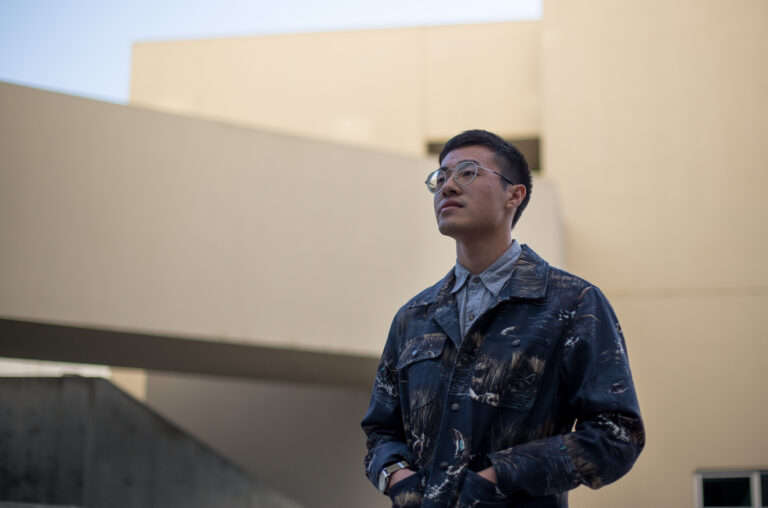
The smell of menswear is in the air as fashion enthusiast and raw denim junkie, third-year electrical engineering major Jasper Siu, gives MUSE the inside scoop on his personal style and how to do menswear his way.

In this week’s edition of Campus Chic, let’s talk raw denim. If you like your clothes nice and clean, raw denim is not for you because these jeans are all about getting down and dirty. Think of them as a blank canvas awaiting to be painted by the colors of your daily experiences or a caterpillar anticipating its metamorphosis into a majestic butterfly after undergoing countless trials and tribulations. If you’re up for the challenge, you will be wearing these jeans everyday without a single wash for up to six months or even an entire year.

A word from the wise: Febreze is your friend. Hang your jeans and spray on a reasonable amount of any air freshener you have to temporarily reduce the odor of the garment. Another way to deodorize your jeans is to secure them in a Ziploc bag and freeze them in order to kill off the bacteria producing the odor. Remember to beware of rain and water as the indigo dye from your jeans can bleed into your white shirt or shoes. Roll the hems of the pant leg to prevent water from reaching your shoes and to show off the selvage detailing of your jeans. After your six months (or year) are up, wash your jeans and you will end up with a beautiful pair of pants customized with every fade and flaw created through all the day-to-day happenings of your busy life. Like Siu says, they truly are your second skin.

James’ Notes: For all the raw denim enthusiasts out there, it might be a better idea to opt for a nice pair of chinos or tailored trousers when going on a date or a job interview. No one needs to smell those dirty jeans of yours, especially not your boss.

Q&A with Jasper Siu

1. If you could describe your personal style in three words, what would they be?

Clean, simple and dark.

2. What are your three must-have items in your wardrobe?

Raw denim, a plain white crewneck T-shirt and a blue Oxford button-up.

3. What do you love about raw denim?

Everything really. First of all, just the fact that it looks better as it ages over time. It’s pretty much like your second skin. As you wear it, you have a small story behind every fade, like a wallet fade or pencil fade. My old pair had my driver’s permit on my left back pocket and even that left an imprint. I like the stiffness behind [raw denim], really. After going back to trying out normal jeans, they kind of felt like sweatpants. They’re just so soft and they didn’t feel like the true jean.

4. How do you maintain your jeans?

I’m more into slim fits so, if I find that it doesn’t fit me on the first wear, I’ll pre-soak it and have my sister tailor it for me. The first soak is to just get the extra shrinkage out and then you just wear it from there. The pair that I’m wearing right now are from United Stock and they fit me fine on my first wear so I’m just going to wear them and wash them in probably another few months.

5. What is your favorite accessory and why?

My Timex weekender watch. It’s my favorite because it’s also a functional accessory. I’m constantly checking it during the day and especially during testing time, so I can manage my time better.

6. Where do you love to shop and why?

For my basics, I like Uniqlo because they have reasonably priced clothing and the quality’s pretty decent. They pretty much have everything you would ever need if you’re looking for something simple.

I also like Supreme a lot because they have really unique clothing and they really held true to what they’ve been doing. They have a lot of designs that don’t follow the norm and they’ve always been very futuristic and ahead of the game. There were a lot of prints that they’ve been doing a few years ago, like full artwork/graphic tees, and people weren’t quite into that when they were doing it; but right now, a lot of the high fashion brands, like Givenchy, are doing the same thing, but [Supreme] had already done it.

7. What is your most treasured item in your wardrobe?

It would have to be this Supreme jacket that I’m wearing now. I remember when I first saw it in the lookbook that came out, I was in the airport on my phone and was like, “What is this? I have to have it!” No matter how much it cost, I was gonna get it.

8. What items do you recommend our readers to incorporate in their wardrobes for the fall season?

Casual vests. It’s a great piece that’ll keep you warmer that doesn’t cover the rest of your outfit but rather adds on another layer.

9. What final tips can you give to our fashion-forward readers?

I know as college students we’re on a tight budget, but sometimes spending a little more money on the essentials can make a big difference. For example, a good leather belt can last you forever, and will look better as it ages if maintained well.

News in Brief: Davis does Dia de los Muertos

0

Davis will participate in the Meso-American festivity of Dia de los Muertos with three different events that Davis Downtown, the Davis Cemetery and the University will all host.

On Oct. 31, the second annual Dia de los Muertos celebration will occur in the E Street Plaza from 2 to 5:30 p.m. Attendees can enjoy a Dia de los Muertos procession, dance performances and a community altar organized for the El Dia de los Muertos Celebration.

At 4 p.m. the El Dia de los Muertos procession will begin, starting from Tres Hermanas, located at 805 Second St., and ending at the E Street Plaza. Performers and costume wearers are encouraged to participate.

This year, Pamela Trokanski’s Dance Group will put on a flash mob performance of Michael Jackson’s “Thriller.”

Additionally, Davis will also be celebrate the lives of the dead on Nov. 2 from 11:30 a.m. to 4 p.m. at the Davis Cemetery, located at 820 Pole Line Road.

Davis will be celebrating the life of internationally departed scholar Jack Forbes in a celebration of his life and work through Dia de los Muertos. Jack Forbes was a Native American scholar who was responsible for the establishment of the Native American studies program at UC Davis.

Along with recitation of Forbes’ poetry, burial site blessings and speeches about his life and work, the event will also include elements from previous Dia de los Muertos events. There will be an altar viewing beginning at 11:30 a.m., joined by Mariachi Tramontin, Native Drumming and Flute Music, and Mexican hot chocolate will be served until 4 p.m.

Lastly, UC Davis will also be holding a Dia de los Muertos event, Nov. 1, from 6 to 8 p.m., on the first floor of Sproul Hall.

The event will be sponsored by the Department of Spanish and Portuguese and Chicana/o Studies. Students will participate in the ritual ceremony with poetry readings and remembrances of the departed.

This Day of the Dead Altar and Celebration is dedicated to the life of poet and artist José Montoya, who passed away earlier this year, and students will recite his poetry at the event. Pan de Muerto, a traditional bread eaten this time of year, horchata and other drinks will be served as as refreshments.


SmartSite: How it helps, how it hurts

Replacing MyUCDavis in 2005, SmartSite is the current course management system here at UC Davis. Sakai is the underlying, open source software for Smartsite hosted through the outsourced vendor Asahi Net International.

Andy Jones, academic associate director of Academic Technology Services, said in an email that Sakai is “the community source collaborative learning environment that provides the code and ‘engine’ for our SmartSite.” This means that software developers at other schools from around the country can contribute tools and applications that we can use on SmartSite. UC Davis’ software developers are responsible for the Gradebook2 application.

SmartSite is one of the most heavily relied upon tools that instructors and students use to keep track of their courses.

“SmartSite is used in the vast majority of all UC Davis classes, and in almost all large-enrollment classes,” Jones said.

As such an important tool in students’ everyday lives, there is a lot of dependency placed on it, and this dependency is a real issue when SmartSite’s routine maintenance goes wrong.

The most recent example of this problem is the incident that occurred during SmartSite’s maintenance on Oct. 18 that caused access issues through most of the weekend.

“There was something that went wrong with that maintenance that wasn’t detected until Saturday. So it was down from about seven in the morning Saturday until mid-afternoon Saturday; and then, although it seemed to be corrected, it occurred again Sunday,” said Steve Faith, the instructional technology coordinator of Academic Technology Services.

Asahi Net International hosts and performs maintenance on Smartsite when something goes wrong.

“They can’t always tell us when it’s going to be fixed because they don’t always know what’s wrong,” Faith said.

UC Davis used to host SmartSite personally, but it was cheaper to outsource this duty.

The general consensus about the occasional downtime with SmartSite is frustration.

“It’s just a hassle for the student to have to deal with all these problems with SmartSite,” said Dung Nguyen, a fourth-year English major. “The teacher had to push back the deadline (for my homework). It was a hassle for her too … my homework was almost late and I had to talk to my teacher about the problems I was having.”

Though SmartSite may seem unevolved, it receives regular updates to enhance it.

“The SmartSite team updates the system regularly to maintain security and provide patches,” said project manager and developer Constance Fuller in an email interview.

According to Fuller, they are working on the deployment of a new, streamlined user interface that may be available to enhance tablet and phone usage.

“As time has gone on, it has not evolved as well as other products that are in the same category that SmartSite is,” Faith said.

According to Jones, the SmartSite team is “considering future learning management system alternatives to Sakai that might better adapt to the needs of its users.”

“[We’re also] looking at a new partial GUI (graphical user interface) change to SmartSite,” Faith said. “It’s going to be called NeoPortal.”

Faith said the new GUI would make it easier to get to your courses than it is now. Though it might not be called SmartSite, it can be expected in the next couple of years.

SmartSite is a great resource for classes but it can also be useful for clubs as anyone can make their own page. It is also customizable to the needs of the instructor, the class and anyone else who uses it.

Fuller said Faith and his colleague, Fernando Socorro, lead training sessions every week for those who need assistance with Smartsite.

So as Aggies look ahead to see what new course management system awaits, we can still use SmartSite to our best abilities and hope we don’t experience anymore downtime.

Athlete alumni found Davis-based company

0

Three UC Davis alumni have used their personal experiences as student athletes to contribute to the niche market of college recruitment through social media.

Fuse Athletics started as an idea for a mobile app, and turned into an online social platform for communication and management between high school athletes and college recruiters. They are now supported by local business accelerator Davis Roots which aims to keep local startups in town.

Having respectively played collegiate level football, swimming and basketball at Davis, the founders Ethan Garrett, Hudson Lofchie and Andrew Ritchart knew how difficult recruitment could be.

Garrett, the chief executive officer of the operation, graduated UC Davis in 2012 with a degree in environmental policy analysis and planning. He played high school football but had never heard of UC Davis until he and a classmate tried out during their senior year.

“I would have never been seen [by recruiters] if I had not come to Davis’ football camp,” Garrett said. “What if I went to a different football camp? It’s all about being visible and in this social world you have to have an online presence.”

Garrett said that they knew that a lot of coaches’ email addresses and phone numbers are hidden from potential athletes, so Fuse Athletics partnered with a company that supplied collegiate information for every division and every league.

“Kids can go and search by sport, state, division, conference, gender or school along with the contact information, which is encrypted like Craigslist,” Garrett said.

Over eight months, they interviewed college coaches and high school athletic directors, built their website and received an initial investment from their co-founder and chief financial officer Doug Coats. In September, they were accepted by Davis Roots, and are now one of four UC Davis alumni startups in the program.

General manager of Davis Roots Alex Rossbach graduated from UC Davis in 2012 with a degree in political science and also swam collegiately. As a former college athlete, he understood the company’s concept.

Garrett mentioned that Davis Roots decided to support the company after calling it a “Linkedin for sports.”

“For me, coming from a swimming background, [the recruitment process] was about who your coaches knew and not about how good you were all the time,” Rossbach said. ”When [Fuse] came to us with their product, team and idea, it really resonated with all of us because it was easy to see there is a problem with this market … and they’re trying to democratize that process.”

Davis Roots, founded in 2012, was created out of a need for economic vitality in the City of Davis.

“One of the big problems we’re tackling right now is that there are no real jobs in Davis for graduates,” Rossbach said. “We see this mass exodus from Davis to the Bay Area because there’s a lot more opportunity there. Our whole mission is to create financially-sustainable companies to help Davis grow and inspire other students coming out of the university.”

Davis Roots is a mentorship program for startups, to aid them through the steps of business development. The founders, Andrew Hargadon and Anthony Costello, provide the companies contacts to investors and local entrepreneurs, office space in Davis, workshops in public relations and marketing and act as advisers to each company in the program.

The idea of social media recruitment tools for high school athletes is not new, and Fuse Athletics faces competition from websites like beRecruited.com, which was founded in 2000, boasts a userbase of one million and is based in San Francisco.

Fuse Athletics is currently contacting athletic directors of local high schools to be part of their beta phase of development for private trials. Dixon High School and Davis High School have already committed.

“There are cases where it could fail, ” Garrett said. “But we see [Fuse Athletics] going well during the beta and we see this getting pushed nationwide.”

Due to internet accessibility, Garrett, Lofchie and Ritchart fear that widespread use may be overwhelming, and with some funds raised through the Davis Roots program, they plan to hire UC Davis students for web programming and customer service. They have also worked with the University Writing Program department to offer writing internships for basic web content.

“We had offers to go to San Francisco, [and also] to bring the company down to Santa Monica, but we want to be here because UC Davis has so many smart kids,” Garrett said. “The ultimate goal of having this is to keep more UC Davis graduates here. We just want people who are excited to dream big.”

According to Anthony Costello, co-founder of Davis Roots and current adviser of Fuse Athletics, it is important, as a business accelerator, to invest in not only a worthwhile business idea but also the team that is executing that idea.

“Companies have to learn how to get comfortable with making mistakes, how to hire the right people, how to ask for help and how to raise money,” Costello said. “But what you really can’t teach people to have is passion for their market or passion for their idea. For me it’s feeling passionately about what you’re trying to do as a business that makes the difference between being successful and failing.”

This Week in Senate

0

ASUCD Vice President Bradley Bottoms presided over the Oct. 24 meeting. The meeting began at 6:20 p.m., with Senator Yee Xiong absent.

Jay Chou, director of ASUCD Specialized Transportation Services and Tipsy Taxi supervisor, announced that cameras will be installed in all Tipsy Taxi vehicles by winter 2014. This will ensure both driver and passenger safety. The cameras can also be used to record any verbal disputes or customer dissatisfaction.

An ASUCD bill to fund the Students of Color Conference (SoCC) was passed by the Senate.

SoCC is an annual conference hosted by the University of California Student Association (UCSA). The three-day conference promotes dialogue between students and raises awareness of issues that affect those of color. UC Davis is not a member of the UCSA and does not fund its students attending the conference. Most other UCs are members and cover all conference costs for their students.

The Senate Bill was proposed to cover most of the travel, lodging and registration fees of UC Davis students participating in the conference. The bill was initially sent to Vice President Bottoms and asked for a total of $3,000. After review from the Business and Finance Commission (BNF), the bill dropped its asking price to $2,500. It was then brought before the Senate with a BNF approval and Ethnic and Cultural Affairs Commission approval.

Those in Senate favoring the bill praised the conference’s merit as an outreach event for UC Davis students. Senators not in favor of the bill noted that it is also receiving funding from the Club Finance Council (CFC).

“The CFC is also funded by ASUCD, so they’re essentially ‘double-dipping,’” Senator Ryan Wonders said.

The bill, however, passed by a close 7-3-2 vote. The money will be taken from the Senate’s $12,800 reserves.

The meeting was adjourned at 11:01 p.m.

— Atrin Toussi

Experimental College confronts $40,000 deficit

0

The Experimental College (eCollege), an ASUCD unit, lost $40,000 from its independent reserves due to a struggling market for its classes. The Experimental College, founded in 1966, offers classes based around movement, such as yoga, kung fu and dance that are not otherwise offered in the school system.

“We are currently in a situation where our reserves have run low and may not be able to support us through the end of the year,” Experimental College office coordinator Hannah Moore said in an email interview.  “ASUCD does not have the ability at this time to help us financially while we work on new strategies.”

The loss of funds began in 2007, said ASUCD budget controller Eric Evans, when Campus Rec began to push their classes which were similar to the eCollege.

“The Experimental College hasn’t adapted to the market yet and is now playing in a new field,” Evans said.

The eCollege currently has $15,537 in reserves. It is projected to lose about $23,000 by the end of this school year. Evans said that ASUCD is working with the eCollege to increase their profits so they will hopefully break even by the end of the year instead of going into a deficit.

In order to prevent the projected loss from happening, cuts and improvements have been made to the eCollege overall. These include cuts in course printing, staffing positions, pay for instructors and staff and complete cuts of classes at the eCollege that have not been making money.

There has also been a change in the split between funds made from eCollege classes. In winter 2013, the split changed from 70-30 to instructors and funds to ASUCD respectively, to a 50-50 split.

“The cost of managing the previous split was more than the college could afford,” Evans said.

In an effort to gain funds, the eCollege has been working with ASUCD unit Creative Media and the new marketing department ASUCD funded this year.

“This year we have been working closely with the Creative Media Marketing unit to produce materials that are visually consistent and creating new marketing plans,” Moore said.

Creative Media has helped eCollege come up with a new design for advertisements and they have also redesigned their website. This was the first major project given to them because it required participation from all aspects of Creative Media; marketing, design and programming.

Creative Media Director Alex Park spoke about the changes the program has made for the Experimental College.

“We made the Experimental College’s identity able to show more through their website,” Park said. “We also made designs based off of their culture.”

A large benefit of the new website is that registration is now easier than before.

“Our biggest asset that is currently being worked on is our website.  It will make online registration easier and be on whole an experience tailored to user ease,” Moore said. “We are focusing on discovering what it is that our students want to see and then filling that need.”

The long-term marketing plan for the eCollege is to advertise with their new designs, put up signs in Unitrans buses, table at events and reach out to faculty and students about their classes.

“We are taking this as an opportunity to reach out to the campus and community to conduct focus groups on what types of learning and courses are of interest and where there are educational gaps on campus,” Moore said.

There is also a new Try Before You Buy option for eCollege classes, which means members can try out a class for free to get a feel for whether they want to buy a pass.

“We are trying a lot of different ways to help the Experimental College advertise and bring in new more members,” said marketing department co-director Nick Dias.

Dias said the eCollege is also going to incorporate cultural literacy classes into the curriculum. This will be done by having a handful of cultural clubs on campus teach classes to raise awareness on different cultures. The eCollege will also teach free classes in dorms to raise awareness of their programs.

One aspect of the college that has continuously raised funds has been the eCollege garden. Here, anyone who wants to garden can rent out a plot to grow vegetables and plants of their choice.

“Garden spots have almost always been fully sold,” Evans said.

Second-year human development major Jade Lewin and second-year evolution ecology and behavior major Jenna Huxley share a plot in the Experimental College garden.

“I’m thankful to have the opportunity to cultivate a piece of land and make it my own, engaging in the process of transforming a weeded plot into a full-blown garden, as well as a nice place to read or do homework,” Lewin said.

“It’s been a great place for peace of mind because it’s so different in there than the rest of Davis. It’s definitely my safe haven,” Huxley said.

The marketing department and ASUCD will continue to work closely with the eCollege until results from their efforts can be seen in winter 2014.

“As with other projects within ASUCD, this is an incredible opportunity to make huge changes,” Evans said. “There is a very broad horizon here.”