52.1 F
Davis

Davis, California

Saturday, December 27, 2025
Home Blog Page 945

Aggies earn mixed results against tough competition

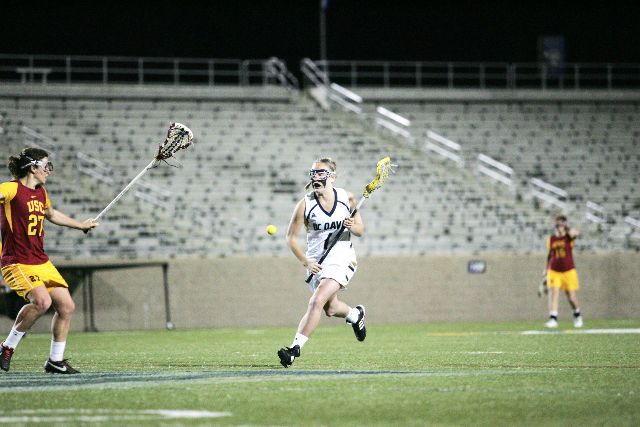
The women’s lacrosse team (3-8, 0-4) went 1-2 over spring break, despite facing the toughest back-to-back combination of opponents thus far this season. After demolishing Howard by a final score of 23-6, the Aggies squared off against Navy and Drexel, which are ranked 16th and 12th, respectively.

Senior Elizabeth Datino garnered MPSF Offensive Player of the Week honors, totaling 13 goals with four assists in the three games. In addition, she posted a career-high seven goals at Howard. She then went on to score hat tricks against both the Mids and Dragons. Against Navy, the Aggies rallied to within deficits of 5-3 and 8-5 early on before Navy pulled away in the middle-third of the contest.

The Aggies held a 5-3 lead late in the first half before a Drexel goal with only eight seconds left in the half. This ignited what became a 6-2 Dragon finish. Sophomore Kai Murphy accomplished her best game thus far, tallying eight sixes throughout the course of the game.

Senior Hannah Mirza scored a hat trick and had a fantastic all-around game against the No. 18 Mids. Furthermore, freshman midfielder Mary Doyle netted a career-high two goals to go with three draw controls. Currently, she is ranked second on the Aggies in the latter category with 27 behind Mirza’s 38.

“Looking back on the trip, it was a great experience,” said head coach Kate Henwood. “We represented UC Davis lacrosse well. I was proud of the team for their efforts. Playing teams of that caliber and being in those games will prepare us for coming back to face our toughest MPSF opponents. There is something about timing that you have to understand as a coach. I have been telling the team for two weeks that we are about to turn that corner. The Drexel game helped prove to our players and helped them understand that they belonged.”

Next, the Aggies faced the Denver Pioneers. Datino scored a hat trick and Landry combined four total points with a game-high nine draw controls. However, UC Davis was unable to hold on its halftime lead, falling 1-11 to their 20th-ranked opponents.

The Pioneers took a two-goal lead for the first time since early in the first half. The Aggies managed to battle back to an 11-11 tie, but Pioneer Secora converted a pass from Remenapp for the game-winner with six minutes left.

The Aggies will continue their MPSF play with a road game at Fresno State on Saturday at 2 p.m. Last season, the Aggies tamed the Bulldogs 21-5. Seniors Gina Hoffmire and Anna Geissbuhler each scored five goals to lead UC Davis to victory at the Aggies Stadium.

The Aggies never trailed during the game, drawing first blood off of senior Corsa’s successful eight-meter attempt just 71 seconds into the game. Geissbuhler punched in three goals after the break. Overall, the team outshot its opponent by a 45-6 margin and committed 12 fewer turnovers than the Bulldogs.

Fresno State’s record stands at 2-9, 0-4 in conference and 1-5 in away games. They have lost their past three games. Their last loss was against San Diego State 18-8. The Bulldogs will face Oregon before taking on UC Davis.

VEENA BANSAL can be reached at sports@theaggie.org.
This Week in Science

*Editor’s note: This is a new section of the science page. Every week, we will publish the top seven (according to us) most fascinating science breakthroughs that we don’t have space to write articles about.

Health:
Sorry guys, size does matter (but not a lot). A recent study published in the Proceedings of the National Academy of Sciences shows that women judge men’s attractiveness based partly on penis size. The best line from the study was, “The penis is not an island.” This means that male physical attractiveness is based on many other factors as well, including body-size, hip-to-shoulder ratio, muscle tone, hair and voice level. I just feel sorry for the 105 women who had to look at slideshows of 343 naked men.

Solar System:
We might find some form of life on Io, one of Jupiter’s moons. Astronomers recently discovered that the surface of Io is rich in hydrogen peroxide. So, who cares? All life (as we know it) requires water and certain elements like carbon, nitrogen, phosphorus and sulfur, but it also needs some form of energy, either light or chemical. Io has the liquid water, and it has the elements. The recently found hydrogen peroxide could provide the chemical energy needed to jump-start life. The theory is based on the fact that peroxides were critical to the formation of life on Earth.

Biology:
If you enjoy cooking with vinegar or drinking kombucha, your tastebuds owe their pleasure to a genus of bacteria called Acetobacter. This same group of bacteria has recently been engineered to produce a material called nanocellulose, which could revolutionize the industry of industrial biofuels. The resilient nature of nanocellulose also has applications in making stronger, lighter body armor, wound dressings and the cellular scaffolds for building new organs for transplantation.

Green Energy:
Engineers have nearly completed construction of a completely solar-powered airplane. In early May of this year, the plane is set to make the first-ever crossing of the United States without any fuel. Should the flight prove successful, the team will begin preparations for the first-ever round-the-world flight powered by solar energy.

Technology:
A new camera system has been developed that can create detailed, 3D images from over 1 km away. The camera bounces photons off of an object and measures how long it takes for the photon to return to the camera. The system can measure the “flight time” of individual photons, and is accurate down to a single millimeter. The new camera system accurately produced a 3D model of an entire mannequin, including the facial features, from almost half a mile away. This new system will be highly useful in autonomous robots, self-driving cars, military drones and other instances of machine vision.

Spacetime:
A group of physicists have recently proposed a new model of the universe that directly competes with the “accelerating expansion” theory. Current theories hypothesize that the universe is continuously expanding, and that the expansion is getting faster and faster due to the forces exerted by dark energy or dark matter. This new theory instead states that instead of the expansion speeding up, it is actually time that is slowing down. The astronomical observations such as redshift that we associate with an expanding universe continue to hold true for this new theory, and the slowing-time theory does not rely on an immeasurable “dark energy” for it to be true.

Medicine:
A group of doctors at Washington University at St. Louis have recently discovered that they can cause individual cells in the body to move towards a tiny beam of light. Human eyes contain opsin, a light-sensitive protein that translates light into vision. The researchers genetically modified human immune cells to contain opsin, which made the immune cells sensitive to light and gave them the ability to be guided by a laser. This holds great potential for being able to reverse immune system diseases such as diabetes, and even some hereditary heart diseases.

HUDSON LOFCHIE can be reached at science@theaggie.org.

AggieTV grows student interest, ASUCD segments

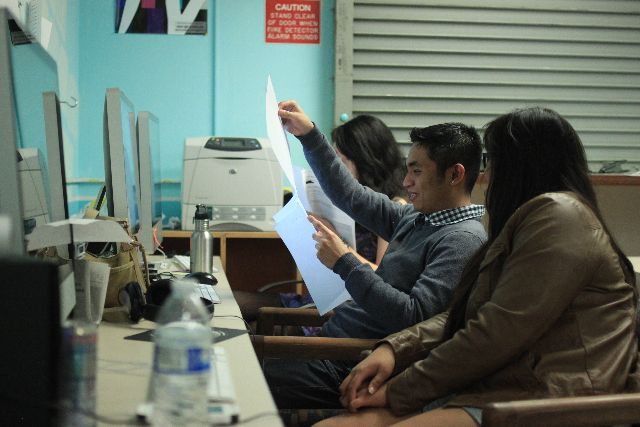
ASUCD unit AggieTV is aiming to keep up with what students are interested in, and is introducing new segments to its lineup.

“Our main audience is students. We’ve done that in the past with large projects, such as the UC Davis LipDub, or the Harlem Shake video. We’re always about the students, and we hope that this message is apparent in the content that we produce,” said AggieTV’s Executive Director Anna Oh.

Presided over by ASUCD, AggieTV has a total income of $1,000 annually, as well as an ASUCD subsidy of $14,461 for their total expenses for the 2012-13 academic year.

Income stems from promotional videos, equipment rental fees, business contracts, content licensing, and products and services, according to an ASUCD budget summary.

New shows
AggieTV is currently producing several different video series, including “Word On The Street,” or WOTS, in which reporters move around campus and ask students to talk about relevant events coming up or interesting topics.

The unit also began producing “How To” videos in the fall. The videos teach viewers how to do a particular activity or perform a talent while featuring UC Davis student groups and organizations.

WOTS consists of reporters asking students about current events, while the “How To” segments focus more on student groups and clubs on campus. One example is “How To: Pop!” featuring the UC Davis Popping Club.

In addition, AggieTV is developing a news show that will be airing this spring, which will feature information regarding ASUCD and the different ASUCD units. Such information will include upcoming events and announcements from the ASUCD president.

According to Oh, the goal of the news show is for students to become more informed on issues and events concerning the student body as a whole, but because the project is still in development.

Oh said there will also be live music sessions, as the unit held auditions for live music talent and have recorded a few but will wait until they record more to release an initial video. This was done in collaboration with KDVS.

“We wanted students to show off their talent and reveal what Davis has to offer,” Oh said.

In addition to promotional videos for campus groups, AggieTV staff are motivated to create their own short films to showcase at the UC Davis Film Festival, according to Oh.

New equipment
According to Alex Park, director of Creative Media, the unit is always on the “cutting edge of media.” A proposal is currently underway for Creative Media to purchase two new plasma screen TVs that would be provided through ASUCD funding. The new TVs would play videos for all ASUCD units, including AggieTV, in public spaces on campus.

“We want to make sure that we can place [them] in multiple places on campus. Why get plasmas where they can’t be seen? We want [them] to be in high-profile areas,” Park said.

According to Oh, purchases are usually approved by drafting a bill to go through ASUCD Senate, as the unit is under ASUCD, not Campus Media Board.

Growing presence
“As an excelling ASUCD unit, I strongly believe that there is much potential for AggieTV, as well as larger and more exciting opportunities for future members of AggieTV,” Oh said.

The unit is hiring and searching for new photographers and reporters for spring 2013. Interested students can apply online at aggietv.org by April 15.

Tim Tran, AggieTV’s entertainment director, said many students that are entering the media industry are already expected to have many of the skills that AggieTV teaches to its employees.

“We are entering a workforce comprised of experts, and to get a job, one must have more than one skill. AggieTV strives [toward] developing its staff to build up their strong talents and teaching new skills, ultimately giving them a more competitive advantage in the world,” Tran said. “A reporter who can report, film and edit is much more valuable to an organization than a reporter who can only report.”

JESSICA GRILLI can be reached at campus@theaggie.org.

Admission to UC Davis tougher every year

0

Matt Soeherman walks through the throngs of incoming first-years bustling about the Quad on Decision Day, the largest recruitment event of the year. He is one of many prospective students accompanied by a parent, carrying a map and overwhelmed by the UC Davis campus. By day’s end, he will log in to his computer, pull up a Statement of Intent to Register and take his first step to officially becoming an Aggie.

With rumors floating around that UC Davis has begun to reject applicants with GPAs of 4.3, students are wondering what it takes to become an Aggie these days.

The average admission GPA is slowly creeping up. While the average GPA of a first-year in 2010 was 4.1, the average GPA of a first-year in 2012 was 4.2. The 2013 average is expected to be even higher, and that statistic will be released in early May. However, GPA is only a small part of the admissions picture.

When it comes to choosing incoming first-years and transfer students, the admissions panel uses 14 criteria, which all UC campuses adhere to, as well as a holistic review. In holistic review, the panel reads every application cover to cover with an eye toward academics as well as personality, said Walter Robinson, executive director of UC Davis Admissions.

“There are some students who don’t have stellar GPAs or stellar test scores, but they have amazing stories — life has dealt them a real difficult hand, like the girl who was 14 [years old] and was raising her daughter while still being the student body president,” Robinson said. “We admit stories — quite frankly, stories of outstanding students.”

Soeherman, a prospective UC Davis first-year, played four years of varsity tennis, is a frequent blood donor and an active leader in his church, and has a 4.3 GPA. He was accepted into the College of Biological sciences and expects to major in biology, and he hopes to get involved in the tennis club team.

Soeherman considers himself lucky, though, because many of his friends had a similar combination but were not admitted.

“Not too many of my friends that probably should have gotten into Davis got in,” Soeherman said. “Davis is pretty underrated in high school because we don’t know how competitive it’s getting.”

Robinson cited the lower level of competition as one of the core reasons he took a job at UC Davis after leaving his position as assistant vice chancellor and director of admissions at UC Berkeley.

“Davis became very attractive to me [because] it had — and still continues to have — a higher admit rate. I’m very attracted to greater access because that means you can promote diversity,” Robinson said.

Diversity also extends to transfer students and non-California residents. Robinson denied rumors that the University is admitting more out-of-state students instead of California residents because they pay higher tuition — $36,755 instead of $13,877.

“This year we had an 11 percent increase in applications from California applicants, and we’re really proud of that because we don’t want Californians to feel they’re being neglected,” Robinson said.

The Transfer Admission Guaranteed, or TAG program, accounts for roughly a fourth of all transfer admissions. Robinson stated Davis was preparing to increase their emphasis on TAG admissions.

Other UC campuses, such as UCLA, UC San Diego and UC Berkeley, have recently terminated their promise that transfer students can be guaranteed admission after two years at a community college. The UC system did recently create, however, a policy that allows students to choose only one TAG agreement instead of many.

Students can apply to multiple UCs, but they can only have guaranteed admission to one, choosing which one they want the most. About 25 percent of all transfer admits at UC Davis are from the TAG program.

Students are rated on how well they performed with the resources that were available to them, ensuring that those who performed well in a poorly-financed school, for example, are treated as fairly as those who excelled in a well-funded school.

“Part of what we’re looking for is to be an engine of socio-mobility for all stratas of our socioeconomic bands,” Robinson said.

Soeherman felt immediately attracted to the Davis campus, more so than other sister schools.

“I think the campus and the environment and the whole atmosphere is honestly a lot better than Berkeley, which is not that great physically,” Soeherman said. “At Davis the dorms are really nice, the whole campus is open, the college-town is really cool.”

Lanette Bingaman, UC Davis Visitor Services Manager, says that surveys have proven that campus visits heavily influence the ultimate decision for prospective students.

“Something about physically being here, seeing the beauty of our campus, feeling the friendliness of our community and campus environment and factoring in our academic excellence really does it for many of our future applicants,” Bingaman said.

ALYSSA KUHLMAN can be reached at features@theaggie.org.

Queers speak out

0

“Somebody tried to run me over because I was wearing ‘girl’ clothes.” “A man in a passing car yelled ‘you’re gay’ to a friend and me.” “I was assaulted by a UC Davis professor.” And “I was raped.” Over the course of an hour on March 18, a sign lying on the North Quad titled “This happened to me…” was slowly filled by a number of these shocking narratives.

Next to the first sign, a second poster titled “I’ve been called this…” asked UC Davis students attending a rally against queer violence titled “This is not OK” to fill in the sentence. Replies included “tranny,” “bitch,” “bê đê” (gay in Vietnamese), “bull dyke,” “whore” and “cunt.”

March’s rally was organized with the intent of bringing campus attention to several recent events — such as the March 10 bashing of Davis community member Mikey Partida and the transphobic “outing” of two candidates during the winter ASUCD elections.

In support of the event, straight ally Mayor Joe Krovoza shared an experience when he was called a “fag” when camping with a friend. Along with this show of solidarity, students and community members shared stories about how sick they are of everyday occurrences — including being stared at, being harassed and having to explain their sexuality to strangers.

Rally participant Erica Kenney, a 21-year-old food science major, was upset by the lack of new faces at the rally. “I felt like, once again, I was disappointed that the same people were showing up and we are not reaching out the way I would like to be. I struggle to think of ways that these stories could be heard,” she said.

“I have been fighting for years, why isn’t this over? I’m so fucking tired of this,” declared civil engineering major and student activist Adam Horn when he stood up to the microphone. “What else can I do?”

Horn implored witnesses to speak up on behalf of victims of discrimination. “Allies are our strongest advocates; when they stand up for me it speaks volumes.” Horn spoke of the violence that is still being silenced in dominant campus discourse. “It was a huge deal when Mikey got beat up, but there is still a lot of trans violence that goes unnoticed.”

Now, almost one month after the “This is not OK” rally, third-year physics student and trans woman Eva Angeli has a blood-red eye and and a fist-sized indent on her left cheek. Angeli was walking home from school on April 4 when she “heard a girl screaming and a guy yelling.”

She said that, while trying to de-escalate the situation, she was punched — “everything went black for a second.” Angeli said the unidentified suspect then “called me a faggot and said that he was going to beat me up.”

Angeli says that she filed a police report because “a lot of times, things get passed over — the perception that Davis is a perfectly safe place allows for the invisibility of victims.”

Alfredo Del Cid, LGBT Resource Center office coordinator, believes that victims of violence in Davis “often feel discouraged [from reporting] because they see similar issues not being resolved.”

Del Cid believes that one of the ways to make sure that queer voices are being heard is to assure community members that the LGBT Resource Center staff is willing to help provide support and guidance during a Campus Violence and Prevention Program or police reporting process.

Join Facebook groups to become aware of upcoming events (Queer Student Union, UC Davis LGBT Resource Center) and make new friends during Crafternoons — 3:30 p.m. Fridays at the LGBT Resource Center.

If you are queer or an ally, come to events and speak out — society won’t change itself.

KATELYN RINGROSE is tired of campus cruelty. She can be reached at knringrose@ucdavis.edu.

Editorial: It’s a small world

0

Last week, a group of international students sent a letter that detailed their difficulties with integration and expressed disappointment with the community’s lack of support.

As the number of international students grows on campus, so does the importance of this issue. Currently, we host over 2,000 international students, with the 2020 Initiative intending to bring in thousands more in the coming years. For Fall 2013, UC Davis received 6,747 freshman applications from internationals — a 65 percent increase from the previous year.

Members of the editorial board have studied abroad and are preparing to study abroad in the near future. We understand the importance and allure of global education. And more than that, we understand what it’s like to drop everything you know, immerse yourself in a foreign country with bizarre customs and suddenly find that you can’t communicate as well as you thought you could.

It’s what we, as internationally-minded students, sign up for. As sad as it is to read that our foreign comrades feel disconnected, we also know from experience that it’s a shared burden. International students at UC Davis need to put in a lot of effort if they want to learn about the American way of life, improve their English and make local friends. They need to embrace the discomfort and throw themselves into as many new situations as possible. They need to say “yes” to opportunities that might make them cringe and, probably, experience a fair amount of rejection.

This is not as easy as it sounds. And we know that American students could be more helpful. It’s a strange “us versus them” mentality, where, stereotypically, groups of international students sit together in class and speak foreign languages while groups of American students dissect the season premiere of “Mad Men.” This separation is alienating and unfortunately self-perpetuating. Students on both sides need to make the conscious effort to cross the room and strike up awkward conversation.

There are a lot of resources on campus and in the City of Davis for international students, as well as for locals looking to mingle. These resources are difficult to find though — they aren’t publicized and there doesn’t appear to be a single web page that lists them. Instead, students are running around in circles looking at websites for Services for International Students and Scholars (SISS), University Outreach and International Programs (UOIP), UC Davis Global Ambassadors, the Partners in Acquiring Language (PAL) program, the International House, Club International and a vague International Students UC Davis student portal.

Even though Club International claims over 500 American and non-American members on Facebook, some complain that it’s really only international students hanging out with one another. Meanwhile, the university doesn’t facilitate any way for international and local students to live together. Other schools have thriving programs for this, whether it’s merely matching students who then arrange off-campus housing together or it’s an International House with residency options. We can’t think of any good excuse as to why — when there are many ethnic-themed floors — the dorms can’t offer an International Floor.

Chancellor Linda P.B. Katehi was an international student at UCLA. She knows the challenges international students face. She should be making sure that the university isn’t merely recruiting more and more international students for their money — $36,780 in student fees next year compared to $13,902 for residents — but is actively working with them to make UC Davis the global campus that administrators claim it is.

UC introduces system to alter allocation of state funds

0

State funds distributed by UC to each campus this academic year (2012-2013):
Not currently receiving rebenching funds:
UCLA: $6,413
UC Davis: $6,129
UC Berkeley: $5,749
UC San Diego: $5,499

Currently receiving rebenching funds:
UC Riverside: $5,401
UC Santa Cruz: $5,215
UC Irvine: $4,975
UC Santa Barbara: $4,275

University of California officials have agreed that the process by which individual campuses get state funding isn’t transparent enough. A newly introduced budget model called rebenching aims to remedy that.

The new system will allocate funds for UC campuses based on enrollment figures, according to a recent rebenching proposal. Extra state funds will not be redistributed among all the campuses, rather, to those schools that typically receive less funding. UC Riverside, UC Santa Cruz, UC Irvine and UC Santa Barbara are currently receiving these rebenching funds.

Setting enrollment goals for UC campuses is the next phase in the rebenching proposal. Upon receiving campus input, UC officials are expected to set the enrollment targets by June, which will eventually determine the rebenching fund amounts for next year.

A numbers game
Previously, the state funding structure was based on an algorithm that took into account graduate student population and when the campus increased enrollment. This favored older campuses, like UCLA, which receives the most state funding at $6,413 per year.

“It was by default, the way the distribution took place, [that] tended to favor campuses who had been established a long time ago,” said Jean-Bernard Minster, Chair of the Committee on Planning and Budget for the Academic Senate.

According to UC spokesperson Dianne Klein, the goal of rebenching is to more equitably allocate state funding to campuses based on the numbers and types of students enrolled.

“Currently, UCLA receives the largest allocation of state funds. Is that fair? Is that equitable? Under rebenching, other campuses will see their allocations of state funds increase,” Klein said.

Klein stated that rebenching is scheduled to take place over the next six years. However, the six year plan may be adjusted, depending on whether or not the UC receives enough additional state funds each year.

Funding for the rebenching plan would require about $36 million annually.

Less confusion means more transparency
According to Kelly Ratliff, a representative of UC Davis Budget and Institutional Analysis, the rebenching process aims to create a more consistent and uniform approach for allocating state funds in place of many years of incremental allocations.

“An important goal is to have a simple methodology which will improve transparency,” Ratliff said.

Minster agrees that rebenching is important for transparency.

“[Rebenching] truly is a step towards transparency, away from an old system that had become extremely complicated and impossible to explain even by learning from administrators,” he said.

Ratliff explained that rebenching is one of the two major efforts that have been made to simplify allocation of funds. The first was funding streams, which were implemented in the 2011-12 school year and replaced a series of complex and incremental allocations with a simple tax on all expenditures. Unlike funding streams, rebenching focuses on how the state funds are allocated.

“[Rebenching] is based on increased state funding and is paired with the new model of allowing campuses to keep all the revenue they generate,” Klein said.

Budget shortfall remains
According to Klein, state funds to the UC have been reduced by nearly $1 billion in the last five years. While the passage of Proposition 30 prevented an additional $250 million cut in state funding, the UC continues to face challenges to its budget.

“While we are certainly happy that [Proposition] 30 passed, it is not a panacea for higher education and we will continue to pursue efficiencies and cutbacks and revenue-generating measures. We did not raise tuition last year and are not planning to do so for the upcoming academic year. So we still have a budget shortfall that we must close,” Klein said.

JESSICA GRILLI can be reached at campus@theaggie.org.

Capitalism and the poor

0

For those of you who did not read my column last quarter, I will be writing about capitalism and defending it against various criticisms. Rather than a technical philosophical defense of capitalism, though, I will be focusing on concrete issues. I should also note that the system we have today in this country does not qualify as capitalism, but instead is a mixed economy with improper government controls and cronyism. I refer you to my first column last quarter for a fuller discussion of what I mean by capitalism.

Often, when I tell people that I support laissez-faire capitalism — the system in which the government does nothing but protect the life, liberty and property of its citizens, and all property is privately owned — it is asked: “What about the poor?”

I could just as easily respond, of course, by asking, “What about them?” The hidden assumption behind the original question is the view that no one has a right to exist entirely for her own sake — to produce and enjoy her own wealth free from the coercive interference of government. No, some people must be forced to sacrifice their values for the sake of the poor, or less fortunate. This is the premise that has to be challenged if we are to live in a moral and free society.

First, it is a misconception that the poor are worse off in a laissez-faire capitalist system — because everyone can benefit the most from productive geniuses in such a system. By this I do not mean some sort of “trickle-down economics” (a term best avoided because of how politically charged it is) but rather that if productive individuals are left to their own devices, their value creation creates more opportunities for wealth and improvement in the standard of living: you do not have to be rich to benefit from what producers such as Bill Gates or Sam Walton have accomplished.

Moreover, entitlement schemes and wealth redistribution aimed at reducing poverty can cripple the self-esteem of their recipients. The precondition of true, lasting self-esteem is independence, productiveness and self-reliance. Applied to economic situations, this means working to provide others with values as a way of acquiring wealth. Coercive redistribution negates this by transforming economic relationships into those between victims and parasites. Worse, such policies can incentivize idleness or other kinds of self-destructive behavior, resulting in even more poverty.

Second, although I am optimistic that in a laissez-faire capitalist society private charities could alleviate the worst aspects of poverty, we should reject the notion that poverty is necessarily a social problem, i.e. a problem that society as a whole has a responsibility to solve. In a free society, wealth is distributed according to voluntary choice: People agree to work for a certain wage, pay a certain price, accept the terms of a contract and so on. Thus, it is not the fault of wealthier individuals (or anyone else) that others are poor (in a semi-free society, this may not be the case, but then that is just an argument for true capitalism).

Poverty can arise from many circumstances, such as a lack of education or simply misfortune — I do not hold the view that people in a free society are necessarily poor because they deserve to be. This does not change the fact that morally each individual is responsible for her own life. Only you can make your life meaningful and successful by choosing goals and achieving them — you cannot properly shift this burden to others.

Ultimately, although it may be moral if one can afford it to support charitable causes, poverty is not an important issue in a technologically advanced and productive laissez-faire society. What matters most is pursuing your values and trading with others to achieve your rational goals: developing a career, cultivating romantic relationships, enjoying art and so on. To act on your values, you need to be free; laissez-faire capitalism is the system that reflects this fact.

TRISTAN DE LIEGE can be reached at tflenaerts@ucdavis.edu.

First aid

0

Bad trips suck.

Sometimes they happen because you smoked a little too much, other times because you hadn’t eaten all day; or maybe because you weren’t used to smoking out of a bong and didn’t expect such a potent hit. Sometimes even something as trivial as the temperature or lighting might cause them.

Either way, bad trips ruin your high and put your body in an uncontrollable panic.

While weed usually helps calm your nerves, it can also put you in a state of increased sensitivity and hyper-awareness. This is cute and funny when it happens to the kids on “That ‘70s Show,” but it is actually extremely uncomfortable and scary.

During a bad trip, every single thought becomes urgent, and the feeling that something terrible is about to happen becomes impossible to ignore.

Sometimes people get extremely paranoid and they worry that the cops (or somebody’s parents) are going to show up out of nowhere and throw everybody in jail. Other times people get exaggeratedly worried about their health, and they get the feeling that they cannot breathe properly or that they are about to have a heart attack or brain aneurysm.

In their frantic state, people will catastrophize every little sensation or fear. Their minds become obsessed with negative thoughts that grow and spread through their entire being. They become anxious and fearful for no logical reason.

It might sound as if someone should be able to escape a bad trip simply by thinking happy thoughts, but while this is half-true, it is not that easy. The mind is extremely complicated and powerful. Sometimes it seems to develop a mind of its own and refuses to be tamed.

Trying to get out of a bad trip by telling yourself to think positive thoughts is like trying to fight fire with fire. It usually only makes things worse by adding to the million swarming ideas in your head that already have you incapacitated.

Instead, it is better to concern yourself with mundane, even boring matters. Do things that you can do automatically and that don’t require much thought.

Wash the dishes. Clean your room. Pick out your outfit for tomorrow. Organize your bookshelf or music library. Make your roommate a sandwich.

These tasks are not at all stressful, but they provide enough mental and physical stimulation to distract you from your irrational paranoia. Plus, they leave you feeling quite productive and accomplished.

Do something artistic or constructive. The same animated state of mind that is causing your paranoia can be converted into a creative, uninhibited point of view that can allow you to approach the world in a curious, beneficial, almost enlightened manner.

Draw, sketch or color in a coloring book. While a lifetime of honesty and civility might have left you inclined to always color inside the lines, in your altered state you might feel the urge to avoid this temptation. Go crazy.

You should embrace this newfound feeling of rebellion and question everything.

Work on some puzzles, solve some mysteries, pop in a song or movie and see if you notice things that you’d never noticed before.

Again, your paranoia stems from an increased awareness of yourself and of the world around you, and you should try to focus on something healthy and interesting. This way you are not simply carrying around an acute sensitivity that quickly over-exaggerates every single negative thought.

I am not saying you should ignore any serious signs that your health might be in danger. If you honestly feel as if you are suffocating or are having a heart attack, then you should definitely see a doctor.

But take the time to ask yourself if there’s a chance it might just be in your head. There are a number of emergency room visits by first-time smokers who freak out and think they are dying. But after being examined they are simply told to go home and rest so they can come down from their high.

If you can still talk in complete sentences, and if your face is still its natural color, and if you can still walk around on your own, then you’re most likely alright, and you should just enjoy your weed and watch some more episodes of “That ‘70s Show.”

LEO OCAMPO and his bong can be reached at gocampo@ucdavis.edu.

Police briefs

0

FRIDAY, 5 APRIL 2013
All in a day’s haze
A group of 15 to 20 college-aged subjects — several of them blindfolded — were reported walking in a line toward the playground on Portage Bay East.

MONDAY, 8 APRIL 2013
Fountain of Youth
A man was passed out on the stone fountain while sitting upright with his head between his knees on Fourth and C streets.

TUESDAY, 9 APRIL 2013
Crouching Neighbor, Hidden Camera
Somebody’s neighbor was videotaping her in her backyard on K Street.

But it was coming right tortoise!
Somebody’s large male desert tortoise went missing after a party on Creekhollow Lane.

Meet the Parents
Someone reported that a man on a bike stopped, grabbed his daughter’s hand and tried to kiss her on the mouth on Russell Boulevard.

Police briefs are compiled from the City of Davis daily crime bulletins. Contact EINAT GILBOA at city@theaggie.org.

Editorial: Go small or go home

0

On March 28, owners of Common Grounds Coffee in South Davis posted a Facebook status announcing that their landlord refused to renew their lease in favor of a Starbucks, closing its doors on March 31 after 13 years of business.

A week later, the owners announced that they will open again in three months, thanks to customer support. The owners made an agreement with their landlord to move to a location adjacent to the shop’s previous location.

This is sadly part of a growing trend, where local businesses are displaced by chain stores.

As a city known for its small-town feel and sustainable transportation practices, it’s disconcerting to see small businesses known for their unique quirks or specializations disappearing. And it’s not just because we like having things that others can’t have.

Independent businesses are struggling to stay afloat due to increased competition from online retailers, the presence of more big-box retailers and high rent costs, to name a few. Operating costs can also get quite expensive over time.

Additionally, the term “land oligopoly” is being thrown around as a reference to how so few people own a majority of the commercial real estate in Davis, a big influence over the costs of rent.

Common Grounds is just one example of a small local business facing setbacks. Davis has lost several other independent businesses in recent years, such as the Wash Mill Laundromat and Rostini Italian Kitchen, with high rent and high operating costs cited as respective reasons for their closures.

Meanwhile, we’ve had Whole Foods, Panera, Forever 21, Habit Burger and Pinkberry open up, taking precious consumer dollars. And Wingstop is on its way.

We’re not saying we never shop at these big-box stores — who doesn’t want to stock up on cheap generics? But we also don’t want Davis to lose its character.

According to the Davis Downtown Business Association’s (DDBA) website, six cents of every dollar spent at a big-box retailer is recirculated in the community and 20 cents of every dollar spent at a chain store is recirculated in the community, whereas 60 cents of every dollar spent at an independent retailer is recirculated.

“A dollar spent at a locally-owned store is usually spent six to 15 times before it leaves the community,” the website stated.

In addition, small businesses create more local jobs, buy more of their goods and services locally (which lessens environmental impact), give back to the community more and increase sales tax revenue, according to the DDBA.

We hope chain stores and small businesses can coexist. As customers did for Common Grounds, we encourage individuals to show continued support for local businesses because, really, there’s no place like home.

Women’s water polo preview

Teams: UC Davis vs. Cal State Monterey Bay; Pacific
Records: Aggies 12-15, (0-6); Otters 8-19, (2-5), Tigers 16-11, (1-4)
Where: The “Otter” Tank — Seaside, Calif.; Schaal Aquatics Center — Davis, Calif.
When: Friday at 2 p.m.; Saturday at noon.
Who to watch: Senior Kathryn Bailey recently returned to the Aggie lineup and she has wasted no time making a splash. During last week’s contest against first-ranked Hawai’i, Bailey tallied three goals for UC Davis.

UC Davis ended up losing the 12-14 shootout against the Wahine, but it was a phenomenal effort from the eighth-ranked Aggies. Having Bailey back in the pool gives the Aggie offense another necessary threat. With UC Davis standing 0-6 in conference, the Aggies need to find a way to win quickly.

Did you know? Seniors Carmen Eggert and Jessica Dunn have combined to score 32 of the Aggies’ 60 conference goals this year. They both also contributed hat tricks against Hawai’i last week.

Preview: UC Davis seems to be constantly on the verge of winning. Their six losses have come by a total margin of eight goals. However, this week they get a chance to snap their losing streak against Cal State Monterey Bay.

The Otters will also be looking to snap their own losing streak and will pose a threat to the Aggie defense. Led by senior Jackie Walters’ 62 goals, the Otter offense has combined for 233 goals this season. UC Davis’ goalkeeper, Riane Woods, is maintaining a .498 save percentage, so this game could be a chance for the Aggies to find a way to earn a close win over an opponent.

Head coach Jamey Wright is looking forward to the opportunity for his team to play a low pressure game. They can use the minutes to work on some areas they have been struggling in. The Otters will also present the team with a few different looks, which will force them to adapt.

“The positives are that we get a game when we need it. This was a late add to our schedule. We originally had a weekend off between Hawai’i and Pacific, which I didn’t like. Monterey Bay isn’t too far and it’s kind of an interesting place. The negative is that their pool isn’t regulation. It is not as long nor as wide as regulation’s,” Wright said. “Number two, they play that funky two-goalie defense which nobody else does. So we’ll practice for something we won’t see at conference. At their pool, everything is so close they can get into that defense.”

After Friday’s matchup against the Otters, the Aggies will host conference rival Pacific. The Tigers are ranked seventh in conference, and the Aggies won the previous matchup during February’s Davis Challenge.

In their last game against Pacific, UC Davis earned a 12-5 win over the Tigers. Sophomore Keelia Houston led the Aggie offense with four goals in the game. Woods also tallied 10 saves during the match, which allowed the Aggies to pull away with a large advantage.

It seems like UC Davis is playing great water polo in patches. Their offensive effort against Hawai’i was incredible, but their defense was lacking and it cost them the game.

Wright acknowledged the gaps in play, but he is proud of his team’s continued work effort.

“The good news is that we scored 12 against a good team. If we played the defense we had against Irvine and that kind of offense, we could have beaten Hawai’i by two or three goals. Strangely, and it’s very refreshing, the team remains optimistic and upbeat. They understand how well they have played in these games to put themselves in a position to win. They know they have to get better, but they are small things we already know,” Wright said. “I felt better after the Long Beach/Irvine weekend because we were right there. Hawai’i was a step back but I like that we were resilient. We came back. In a lot of ways, it made me optimistic from an offensive standpoint.”

— Kim Carr

This week in new releases

0

Watch out for some of the most interesting releases of the week — five in music, five in film.

MUSIC
1. Tyler, The Creator — Wolf (April 2)
The third solo album from Odd Future’s mastermind represents a stretching-out period for Tyler’s persona and aesthetic; after working hard to establish and defend the most ambitious collective of hip-hop’s left field in years, he puts away some of the battle gear to indulge in more reflective lyrics, laid-back production and marijuana-flaked reminiscences of fame, among other serious subjects.

2. James Blake — Overgrown (April 8)
The young UK producer whose 2011 debut inhabited a smoke-and-mirror world of introspective piano balladry and minimalist dubstep returns with Overgrown, a bolder, more beat-heavy foray into masterful alt-R&B. Blake bridges the gap between his sparser, more ponderous first album and his latest through the inclusion of high-profile guests Brian Eno on the experimental bolero of “Digital Lion” and GZA on the brilliant rap-soul number “Take a Fall For Me.”

3. Bonobo — The North Borders (April 1)
The North Borders features Brilliant downtempo electronica from UK musician Simon Green, who is now moving further away from the last strands of ’90s era trip-hop that inflected some of his earlier work towards a highly accessible, warm palette of ambient breakbeat and future garage. One standout song includes inspired vocals from Erykah Badu.

4. Caveman — Caveman (April 2)
Atmospheric Indie rockers from Brooklyn streamline the eclecticism of their low-profile debut into a unified statement that marries the anthemic guitar soundscapes of late ’80s/early ’90s shoegaze with the bright, heartfelt vocals of contemporaries such as Grizzly Bear and Local Natives.

5. Heavy Hawaii — Goosebumps (April 2)
Goosebumps is the debut full-length from San Diego band Heavy Hawaii, whose gritty, warped brand of surf rock brings to mind the melodies of Brian Wilson interbreeding with the pop experiments of Ariel Pink. Another interesting species in the evolution of the surf genre, which has also been mixed with pop-punk in recent years by fellow San Diegan group Wavves.

FILM
1. Jurassic Park 3D (April 5)
An unavoidable 2013 film experience. What more can be said to persuade a legion of fans to relive an experience they grew up with, or introduce it to another fan-to-be? Audience members are encouraged to pay special attention to the newly enhanced visual spectacles of a leg of goat hitting the glass ceiling of a truck, a spoonful of jello quivering as velociraptors enter a dining room and the beads of sweat on John Hammond’s face as he realizes his plan to revive dinosaurs was sort of a bad move.

2. Upstream Color (April 5)
The long awaited follow-up to Shane Carruth’s 2004 cult hit Primer moves away from the tech-heavy probabilities of time travel to more organic themes; in as far as it is possible to synopsize Carruth’s work, the plot concerns the interactions between a couple before and after coming into contact with a strange microscopic organism. Although this may read as the premise for a horror film, Upstream Color is a visually arresting enigma that should be experienced first and unraveled afterward.

3. It’s a Disaster (April 12)
It’s a Disaster is an independent comedy about a couple’s brunch interrupted by news of a dirty bomb being detonated in a nearby city center. Despite the grim and possibly apocalyptic implications of the circumstances they now find themselves in, the plot zeroes in on the four characters’ relationships and behavior as hidden personality traits begin to emerge. Starring David Cross and Julia Stiles.

4. Eddie the Sleepwalking Cannibal (April 5)
Eddie the Sleepwalking Cannibal is another macabre comedy following Lars, a failed painter in a rural Canadian town, who finds a bizarre source of inspiration in his new roomate Eddie’s penchant for night-time “snacks.” As Lars’ work improves drastically, he finds himself oddly inclined to let Eddie continue his unconscious rampages and even to get involved himself.

5. Trance (April 5)
The latest work by Danny Boyle (Trainspotting, Slumdog Millionaire) is a British crime thriller with a psychological twist. James McAvoy plays an art auctioneer-turned-art thief who double-crosses a gang by attempting to make away with a painting they aided him in stealing. After sustaining a head injury and subsequent amnesia, the gang attempts to use a hypnotherapist (played by Rosario Dawson) to determine the missing painting’s location. The film will open in Davis on Friday at the Varsity Theatre downtown.

ANDREW RUSSELL can be reached at arts@theaggie.org.

Romance for digital natives

1

He’s waiting at the restaurant, looking slightly nervous and fiddling with his phone. He looks up as she opens the door. They hesitate, make eye contact and simultaneously exhale in relief.

Thank goodness — they both actually look like their OkCupid profile pictures.

Online daters aren’t always so lucky. In fact, the UC Davis seniors writing this article weren’t always so lucky.

Overwhelmed with curiosity — and after hearing about fellow undergraduates looking for love on the Web — we made accounts the first week of Winter Quarter. We chose OkCupid because it was free, and therefore, presumably more popular with people our age than paid websites.

In about a month, we collectively went on 36 dates with 14 people.

We wanted to learn a few things. Being in our early 20s and attending a large university should make these years the easiest, and most prolific, for dating in our entire lives. So why are there so many undergraduate students moving their efforts online? Aren’t websites like OkCupid only for weird, desperate or old people?

Believe it or not, there’s a sizable dating pool online just among UC Davis students. And some of them aren’t weird or desperate.

While we were juggling back-to-back dates, we complained about being socially exhausted, fatigued by small talk. We could have stopped at any time, but we realized at some point that we were actually enjoying ourselves. There’s a thrill that comes with meeting so many people, so far beyond your social circle, so quickly. And let’s face it, meeting new people is surprisingly difficult. No one actually pursues romantic interests by approaching a stranger at a bar with a wink and a hackneyed compliment. That’s creepy. It turns out, however, that this approach is entirely acceptable online.

We are officially people who found romance on OkCupid. And we are here to face judgment, share our war stories and examine the dating culture of a generation both blessed and afflicted by technology.

Weeding out potential creepers
Most people are hesitant to try online dating because of the “creepers” associated with that culture. Luckily, OkCupid makes it fairly easy to spot them from afar.

If you’ve never been on OkCupid before, here’s a brief tutorial: you create a profile, similar to Facebook, with photos and listed interests and so on. Unlike Facebook, you answer personal questions — lots of questions — while also ranking how important they are and what your partner would ideally say. The more you answer, the more likely you are to find another OkCupid user with similar views, as users are matched by an algorithm based on these answers.

Once you’re set, you can start browsing other profiles based on proximity, match percent and a slew of other filters. Then you can start messaging people and the real fun begins.

A particularly useful feature is the “unacceptable answers” filter. When visiting someone’s profile, you can see the answers to personal questions you both answered. Filter those by “unacceptable answers,” and you’ll see what you rank as important but also disagree on. So even though Ricardo seemed like a cute engineer with excellent taste in NPR podcasts, can we really forgive him for answering yes to the question, “Are women obligated to shave their legs?”

Keep your eyes peeled for other questions that raise red flags, like “Is there ever an instance in which someone could be obligated to have sex with you?”

Sometimes OkCupid actually imposes creepiness, particularly with a feature that allows you to see who is looking at your profile in real time. When “XxRicardoXx” checks you out, you’ll get a notice, and then when you click on his page, Ricardo will get a notice. This feature can be toggled on and off, but if you choose to peruse invisibly, you won’t see who is looking at you, either. Choose wisely.

As heterosexual females, we were averaging about 100 visitors per week. We were getting propositioned within minutes of creating an account; our inboxes overflowed with emoticons and cheesy, impersonal compliments. While we can’t speak at great length about other experiences, we’ve been told it’s quite different for the heterosexual male.

“It’s like casting a wide net and seeing what you get,” one date said. “You might send 10 messages a night and never get a response.”

The bad date
The bad dates were bad in exactly the way you’d expect them to be.

Hillary started talking to a potential match, whom she’d begun calling “James Franco boy” because of what she swore was a striking resemblance to “Freaks and Geeks” heartthrob Daniel Desario. They traded texts for about half an hour before he asked her out.

The first thing she noticed upon meeting him in person was that he bore absolutely no resemblance to James Franco. The next thing she noticed was that this boy was bent on filling every second with speech. As he drove to the movie theater, he asked where she was from. “Ventura,” she responded.

“Aha, ‘Bentura,’” he repeated, using the Spanish V. “Did you know it was supposed to be pronounced that way?”

Being a Spanish major and a native of the city of “San Buenaventura,” she knew that pronouncing the word as if it started with a B makes you sound pretentious as fuck.

But they got along better after the movie ended, as they finally had something semi-substantial to talk about. When he offered to buy her a drink, she didn’t turn him down.

A four-block walk later, he announced he left his wallet in his car.

Hillary paid for the beer as he got wrapped up in the Lakers game playing across the bar.
He must have gotten strange vibes from the evening too, because when he dropped her off afterwards, he used the word “friend” four times.

So it didn’t really work out …
Too bad you have to see these people all the time anyway!

Janelle had one date where nothing needed to be discussed — clearly this was never happening again. The awkward part only came when, the next evening, Janelle was at a bar talking about said bad date and said bad date walked in.

There was no acknowledgement. Yet somehow, they ended up at neighboring tables, back-to-back. Conversation shifted quickly. Bad date? Last night? What date?

Davis is too small to avoid these situations. If you were an OkCupid match, you have some things in common, and that includes drinking haunts. Then you catch a glimpse of one another at the farmers market, and then you debate saying hello at a house party the next week …

What’s even more awkward? Seeing people you recognize from OkCupid that you have never actually met. That one who sent you the really nice first message about cooking Indian food together, but you never responded to? You suddenly realize you have lecture together. How about that one guy you rated four out of five stars but never heard from? Surprise! He’s sitting at the café you wait tables at.

The 99 percenters
Based on the trusty OkCupid algorithm, our highest possible matches were 99 percent. And we found them. And we met them. And they were actually the closest we came to OkCupid heartbreaks.

For Hillary, it began with his sending the longest OkCupid message she had ever received. “It’s a pity you live in Davis, because I think we would get along swimmingly,” it began.

“The 62 mile Davis to SF commute is an inconvenience certainly but I find myself in the bay more often than you might suspect, by which I mean I’ll be there Sunday,” is how Hillary started the longest reply she’s written to date. The two days it took him to respond were grueling, and filled with previously unprecedented levels of self-doubt.

Luckily, it turns out he was just slow to respond, and the date they found themselves on two days later turned out to be everything OkCupid promised it would be. Coffee and beer were consumed in painfully hip Mission District venues, Dolores Park was thoroughly explored, high schools were broken into and make-outs ensued.

Janelle couldn’t resist immediately messaging her Sacramento 99 percenter who also happens to work in newsrooms and claims his first word to be “baguette.” In real life, he had just as much dry wit as his profile suggested and the ease of banter was stunning. Following their date, the banter continued over text message, and indeed, it seemed like a resoundingly successful six hours. Which is why, two weeks later, it was so shocking that they hadn’t scheduled date number two. He blamed it on transportation — two carless people trapped on opposite sides of the Causeway.

Friends advised giving up on the 99 percenter when two weeks became three, and feelings of utter defeat took over when three weeks became four.

Heartbreak.

But then, two whole months later, a miraculous second date was scheduled. And over the several-hour event, the 99 percenter proved as witty as ever.

The strange thing about the algorithm
Hillary talked almost exclusively with people who were above a 90 percent match. Given the fact that her ex-boyfriends were 96 and 99 percent matches, she trusted OkCupid’s algorithm implicitly.

What she hadn’t counted on was the boy who messaged her “Ficus.”

He was a 59 percent match who listed himself as being “made of cotton candy” — she would have left him alone if it wasn’t for her strange love of word associations.

She replied “Fern,” and within a few days and approximately 40 messages, they were knee-deep in conversation about the next season of “Arrested Development,” Grizzly Bear’s latest album and what makes a choice concert venue (intimacy and foosball tables).

He smokes. He’s in a band. He lives in Dixon. He is not, nor has he ever been, enrolled in college. He used to work at Walmart and he has only just turned 21. Not only would Hillary have not expected to like this boy IRL, without the medium of OkCupid, she wouldn’t have met him.

The older men
OkCupid also manages to bridge the gap between undergraduates, grad students and young professionals. We took advantage and got a sneak peek into that sort of real-world dating dynamic that we had previously seen only in movies.

A first date that flowed effortlessly from afternoon beer and live music to fancy cocktails and hamachi at the bar of an uber-hip, top-rated San Francisco restaurant? An evening that actually started with, “Want to come upstairs for a drink?” before learning we had reservations for a nice — like, really nice — dinner in an hour?

Conversations about becoming a company partner at the ripe age of 23, living in Peru as a Fulbright scholar, going to Columbia for grad school and it totally not being a big deal — these things happen! They happened to us!

The point: Chivalry may be taboo in college, but it’s surprisingly strong elsewhere.

The second dates
With all the nervous excitement and guaranteed small talk, it’s fairly easy to have a pleasant first date, whether over a $12 cocktail or a $2 cup of coffee. But the second date is much more likely to go horrifyingly wrong.

Normally as college daters, we are way too scared to commit early on. And we don’t mean commit to monogamy — we mean commit to fleeting affection or even acknowledging consistent interest. OkCupid eliminates that awkwardness and confusion. Interest is evident in meeting at all, so committing to a second date carries significance.

Janelle didn’t really take this into consideration with her first second date, which she assumed would be a simple continuation of learning about one another. Immediately, however, he expressed keen optimism about their future as a couple. Oops.

Another second date seemed to falter because of mutually high expectations. The first date was filled with spontaneous energy and, admittedly, booze, and the second was filled with slow, repetitive conversation and sobriety.

Meanwhile, Hillary had some similar second date slumps and miscommunications. The boy who seemed perfect on date number one was out of interesting things to talk about by date number two. And following up a six-hour date that spanned four different venues requires a level of commitment and ingenuity that, as it turned out, neither party was actually willing to put in.

Then there was the decent first date with questionable levels of chemistry that became the okay second date with questionable levels of chemistry, followed by the third date where he was clearly invested and she suddenly realized she wasn’t.

If OkCupid taught us anything, it’s that straightforward communication is key to avoiding dating blunders.

The aftermath
Perhaps OkCupid is simultaneously as esoteric as we all thought it was and the most straightforward way to date anyone these days. OkCupid provides a space for relationship-seekers to be upfront about all of their desires, quirks and hang ups, and to present themselves exactly as they’d like to be seen. Combined with the anonymity of the internet, this creates a space where people actually feel empowered to put themselves out there. Fear of rejection is dramatically decreased when every online interaction feels a little less real.

We don’t view meeting people over the internet as the end to traditional, real-life interactions, but a valuable supplement to them. As it turns out, going on a ton of first dates makes you good at first dates, and interacting with potential love interests online makes it easier to do so in person, too. Over the course of this experiment, Janelle and Hillary each gave their phone numbers to people they met in real life simply because their experience on OkCupid had ingrained in them an ethos of “Why the hell not?”

On a recent Monday night, we found ourselves on a double date — both with guys we found on OkCupid. The strangest part is that it didn’t feel strange at all.

DISCLAIMER:
In the UC Davis undergraduate system, and elsewhere, unacknowledged heteronormativity is especially heinous.
Two female heterosexual students wrote this article, altering the names and personal details of those involved in order to protect their identities. These are their stories.

JANELLE BITKER and HILLARY KNOUSE can be reached at editor@theaggie.org.

Feels so good

0

When you hear the words “adult store,” does your mind conjure up images of black plastic bags, dimly lit stores on the edges of town and questionable characters in knee-length trench coats?

While this may have been the case in the past, in the last few decades there’s been a growing movement to make sex shops safe and welcoming environments for all. At the forefront of this movement is Good Vibrations, which celebrates its 36th birthday this year. California Aggie writer Sam Wall email interviewed Jackie Strano, the executive vice president of Good Vibrations, to find out what it’s like to run a store with a focus on sexual pleasure.

The Aggie: When and how did Good Vibrations first get its start? Was there a particular niche you were looking to fill?
Strano: Good Vibrations first opened with one store in 1977 in the Mission District of San Francisco. We wanted to provide a safe, comfortable, clean and well-lit place for women to come in and buy a vibrator.

Word quickly spread and not only did it provide a safe alternative to the other adult stores, it became a tourist destination for people from all over the world. This was before the internet, so word of mouth, our 800-number, community events, workshops and our catalog was how we let the world know how to find us.

Now we have six stores and growing, a website, a mobile site, a VOD site, a wholesale private label line and we still do a catalog and have our 800-number where folks can call us and find a trained sex educator/sales associate on the other line.

We believe that pleasure is your birthright and every adult deserves safe access to trusted information, quality products and resources to explore sexual health, because sexual health is an integral part of your overall health.

How did you come to work for Good Vibes?
I first started in 1992 and was part of the original worker-owne[d] cooperative. I worked in the original Valencia Street store. I was living in San Francisco and going to school and touring with my rock band and was struck by the mission of the store — that pleasure is your birthright, and I loved that I found a place to work that felt like home to me … where I belonged with a real feminist and sex-positive community. I left in 1998 to pursue other interests and came back in 2009. My life came full circle and I wouldn’t want to be anywhere else.

Has the company changed over the years?
We are not a worker-owne[d] cooperative anymore but we have a management team where women in leadership positions who have been part of the original team are still here. This company has a lot of heart and dedication to the mission while we have learned the hard way in 36 years how to be fiscally responsible and keep the company healthy so we can continue to provide a special service and our specialty brand continues to thrive.

Our philosophies and guiding principles have not changed. Education is the cornerstone of our brand and everything we do is about what is best for the customer. Our internal business structure may be different out of necessity but our core guiding principles have never changed or wavered.

Good Vibes often labels itself as sex positive. What, for you, does being sex positive entail?
We practically invented the term and it has come to mean so many things to so many people, but in its essence it means we believe in everyone discovering their authentic sexual selves and being able to live the sex life that’s right for them in an affirming and celebratory way.

We are not judgmental and never support anything that leads to sexual shaming and believe in ongoing education in an environment that advances sexual health, pleasure and attitudes. We believe in modeling that non-judgmental communication at all times. We support our customers’ journey of exploration whether to realize their true sexual selves, expand their repertoire or to pursue better health around sex.

What are some of the challenges to being a company like Good Vibes, and how do you approach them?
Well, there are many challenges around people’s perceptions and stigmas around sex. Zoning laws relegate adult-oriented businesses to the outskirts of most towns so when we want to open new stores we have to assuage people’s fears. So far we have been very successful with having our stores located in commercial centers near respected retailers like Trader Joe’s, Peet’s Coffee and Bloomingdale’s.

We have always been active members in our communities and anchor tenants in our neighborhoods. There is also competition from sources that don’t care about overall sexual health and just want to produce knock offs cheaply online even if they are made of toxic materials. That is more competition for the vendors we have worked with for decades but it adversely affects us nonetheless.

We are not afraid of challenge though and have been a committed agent of social change for decades, so we continue to fight the good fight and lately new technology and media has helped us spread our message even further. We approach every challenge with a simple question — how do we make this better for our customers?

What are your goals and hopes for Good Vibes in the future?
Open more stores and create more products that reach more people. To promote sexual pleasure and health and make the world a sexier place!

SAM WALL is a former Aggie columnist. She can be reached at opinion@theaggie.org.