48.7 F
Davis

Davis, California

Saturday, December 27, 2025
Home Blog Page 944

The Lazy College Student’s Meal Plan

Raise your hand if you’re at that point in college where even pressing pause on Netflix, dragging your body into the kitchen and chopping up vegetables for dinner sounds like a treacherous endeavor. If you’re raising your hand, you’re exactly like me.

A lot of the time, cooking for yourself or roommates can be relaxing – it gives you something to do other than study, and it allows you to be creative while surrounded by aromatic ingredients, all the while anticipating the delicious meal you’re about to consume.

But let’s face it: Midterms, papers and labs drive our energy levels way down and make us not want to do anything. And to be completely truthful, most of the time, all I want to do is sit on the couch, watch a show I like and chow down on something that I didn’t have to make myself.

For a while now, I have been known to partially live on frozen meals. Sure, they may not be quite as nutritious as homemade food, but I would argue that saving time and energy can be just as beneficial as a perfectly healthy meal, especially during those rough weeks as a college student.

And now, I share with you some of the discoveries I have made in Davis over the past four years that only require you to do half the work.

Starting simple: Safeway. Next time you consider grabbing a few of the Lean Cuisine frozen “meals,” venture across the aisle to find Gorton’s frozen grilled tilapia filets ($4.99) instead. Out of the box, they may look a bit unappetizing – they’re literally just frozen squares of fish. But after they’ve been microwaved for 5 minutes, they taste comparable to any tilapia you might buy and sauté yourself. I like to buy the Signature Grilled flavor and serve them with rice and ­­­­Melissa’s shelled edamame soybeans ($3.99), found in the produce section, and topped off with a touch of teriyaki sauce.

Moving on to a place a little better known for their frozen meals: Trader Joe’s. I have tried a large assortment of TJ’s packaged meals, and only a small number of them have really stood out to me. One is the frozen tamales ($2.29) – the beef one drizzled in a bit of Tapatío makes a quick but delectable lunch. If you prefer Indian flavors, the Aloo Chaat Kati Pouches ($2.29) are like if a typical Indian vegetarian curry dish and a Hot Pocket had a baby, making them another excellent quick meal option.

My favorite finding in the frozen section, however, is the cheese blintzes ($3.99). They can’t really count as dinner, but these ricotta-filled crepes, lightly fried on the stove and topped with honey and blueberries is probably the best dessert I have ever whipped up for myself. They could also be breakfast – in fact, they’re sold in the breakfast section – depending on how you dress them.

And finally, ending up at one of my favorite places in Davis: the Food Co-op. Though pricey, this establishment is like therapy for me – the mountains of colorful organic produce, wide variety of unique snacks and mouth-watering hot food bar automatically relax me. However, in order to not empty my entire wallet on products from this store, I need to go in knowing exactly what I want.

Next time you make your way into the Co-op, pick up one of their microwaveable burritos, found in baskets in front of the deli. You can choose from a breakfast burrito, bean and cheese wrap, and the Burrito Grande, which is filled with cilantro-infused brown rice, black beans, cheese and salsa (all are $6.99). They’re a little expensive, but once you dig into one, you’ll forget that you just spent $7 on a small burrito that doesn’t even have meat in it.

KATIE MORRIS writes for the Aggie Eats food blog and can be reached at kemorris@ucdavis.edu

Police still investigating double homicide, first case since 2011

The Davis Police are continuing to investigate the apparent double homicide at the condominium at 4006 Cowell Blvd. in South Davis. The Yolo County Coroner’s Office has not yet released the names of the victims.

According to the Davis Enterprise, neighbors say the victims are a married couple in their 80s, whose daughter called the Davis Police to request a welfare check.

A family friend who was at the scene of the crime identified the couple as Chip and Claudia. Although the causes of death have not been released, officers said there were signs of forced entry. Additionally, no motive or suspects have been identified.

According to the Davis Police Department’s crime map, 18 break-ins, petty thefts and grand thefts have been reported in the past three months around the neighborhood and nearby neighborhoods.

The last homicide case occurred in October 2011, when James Elron Mings strangled Kevin Gerard Seery to death in Seery’s apartment on J Street.

Lt. Paul Doroshov of the Davis Police said that they will try to send out an updated press release at around 4 or 4:30 p.m. today.

— Claire Tan

UPDATE: 4:48 p.m.

According to a Davis Police press release sent at 4:34 p.m., the victims suffered stab wounds, although the official cause of death will be determined by the Yolo County Coroner. The victims’ identities are still not released.

Currently, it is believed the victims are an elderly couple in their mid-70s to late 80s.

Investigators from the Yolo County District Attorney’s Office, Yolo County Coroner’s Office, West Sacramento Police Department, California Department of Justice and the Federal Bureau of Investigations are assisting the Davis Police.

“Homicides are a rarity in Davis. We understand the violent nature of this crime is a shock to our community,” the press release stated. “We will be fielding extra patrol officers as a preventative measure.”

— Claire Tan

UPDATE: 8:13 p.m.

The victims have been identified as 87-year-old Oliver J. Northup and his wife, 76-year-old Claudia M. Maupin. Northup was a prominent elderly attorney in the Davis community.

A motive still has not been established, but Lt. Doroshov said to The Sacramento Bee that although there were signs of forced entry, the house had not been ransacked.

Mayor Joe Krovoza released a statement in regard to the incident:

It’s with great of sadness that the City Council and I have received new[s] of the deaths of Claudia Maupin and Chip Northup.  Our hearts go out to their families, friends, fellow congregants at the Davis Unitarian Universalist Church, and the many groups in Davis they touched.  While Davis achieves a high degree of safety through our police and the watchful eyes of all, we are not imune [sic] from terrible acts. Let us all redouble our efforts to protect our fellow citizens and give support to those who have suffered this irreversible loss. Our Council is staying well-informed on the quick and comprehensive response of our police, and our Police Department’s efforts will not cease until the case is brought to closure.

— Claire Tan


UC Davis Police, Yolo County DA to form Neighborhood Court

The UC Davis Police Department and the Yolo County District Attorney have partnered up to form a new restorative justice program that would provide an alternative court — known as the Neighborhood Court — for low level, nonviolent offenses. The court mirrors San Francisco’s own neighborhood court, the only other in California.

According to the Neighborhood Court pamphlet, the program will “swiftly redress the harm caused by these offenses outside of the traditional criminal justice system” and “address criminal violations that impact the quality of life at UC Davis.”

Currently, the Yolo County District Attorney is looking for volunteers for the Neighborhood Court panel. The panel will be made up of members of the Davis and UC Davis communities. According to a Yolo County District Attorney press release, the City of Davis panel members will include residents, business owners, parents, retired people and students. The UC Davis panel will consist of students, faculty, staff and alumni.

To be qualified, an individual must be able to commit to the program for two years, have an interest in restorative justice and solving problems with others, as well as have no felony convictions or recent misdemeanor convictions.

For more information, contact the District Attorney at neighborhoodcourt@yolocounty.org or at 681-6323.

— Claire Tan

Police investigate double homicide

On April 14 at around 9:20 p.m., the Davis Police Department conducted a welfare check at the 4000 block of Cowell Boulevard in South Davis. During the check, officers discovered two deceased adults inside the residence.

Officers also discovered signs of forced entry into the residence. Currently, the Davis Police are investigating the two deaths as homicides. A motive has not been established yet.

Those with information are urged to contact the Davis Police at 747-5400.

— Claire Tan


ASUCD Coffee House launches scholarship fundraiser

Starting Monday, April 15, ASUCD Coffee House customers will be asked to donate a dollar to the ASUCD Scholarship at every cash register.

The Coffee House aims to raise $3,000 by Friday, April 19.

The ASUCD Scholarship awards $10,000 between 14 students to help pay for tuition — prizes are typically $500 to 1,000. The awardees are chosen by fellow undergraduate students, based on a combination of financial need, community involvement, academic success, personal hardship, leadership and other qualities. ASUCD hopes to double that amount this year.

— Janelle Bitker

Reconsideration Day

0

There is a time and a place for protest on the UC Davis campus. Or so it seems, as from January to August there is nary a picket sign in sight.

But this past Saturday was Decision Day, when hundreds of potential students walked around campus to decide if UC Davis is the place for them. Decision Day is the single most perfect and underutilized opportunity for student activism in Spring Quarter, and it passed.

UC Davis very well may be the best choice for these up-and-coming tuition payers, but such a decision would be incomplete without information on the many problems with attending UC Davis. To name a few: Students fees are still going up. The quality of education is still going down. And the administration works for corporations, not students.

Though shouting such things at prospective Aggies is not the most eloquent form of communication, UC Davis tour guides were eager to dismiss my personal protest, sometimes going as far as mocking the idea of police brutality.

In response to my message that “UC Davis pepper sprayed students,” a student tour guide responded, “You wouldn’t do that if you really cared about students.”

Well, I care about students, and that’s why I think it is important that they (you) are exposed to more than just the Disney Channel infomercial given on the campus tour.

Protest and resistance are just as much of the decision process as ARC walk-abouts and faculty panels. By failing to protest Decision Day, the presently enrolled UC Davis student body failed to inform incoming freshmen of what UC Davis is really like.

To make up for it, I’ve compiled a handy guide for what will now be known as “reconsideration day.” I’d like to direct you to a few of our campus amenities:

1. Police brutality. On Nov. 18, 2011, UC Davis Campus Police officers pepper sprayed non-violent student protesters who were occupying the Quad, due to the administration’s “health and safety concerns.” Investigations were launched, and the campus has focused the last year on “reforming” policies. But give it another year and another big protest and it could be you going to the hospital to treat burns.

2. Student debt. Undergraduate resident tuition and fees for 2012-13 cost $15,258. For my freshman year in 2009-10, tuition and fees were $10,989.95. To put it in perspective, 2002-03 tution was $4,764.50 annually. This includes costs like the opt-out student health insurance, but even those fees are steeply increasing. So while there may have been a freeze on tuition for this school year, you can bet an education at UC Davis — or any University of California — isn’t going to get any cheaper.

3. Conflicts of interest. Members of the UC Regents — the people responsible for tuition hikes across the UC system — have ties to non-academic corporations such as Paramount Pictures and Harrah’s Entertainment.

According to a Sacramento News and Review article, Regent Richard C. Blum is the most egregious of offenders investing public UC money (your money) in his private investments. Not to mention, UCSF Chancellor Susan Desmond-Hellmann recently joined Facebook’s board of directors. I can’t wait to see how this connection is exploited.

4. Land. In 2011, UC Davis Student Housing closed the historical housing in Baggins End, claiming the sustainable living community was structurally unsound — despite being safely inhabited since 1972. The Domes were resurrected thanks to community and faculty support, and are currently being managed by the city-based Solar Community Housing Association.

A school year of residency in a two-person dome costs $3,555 a person, which seems enough of a motivation for closure when a spot in a two-person dorm room (with the cheapest dining option) costs $12,370.68. Perhaps Student Housing wasn’t trying to minimize repair costs, but opportunity cost.

5. Surprises. Students choosing UC Davis for a specific major or sports team had better find a backup. In spring 2010, four student sports were cut, and students who came to study avian science or nature and culture found discontinued majors. Students in textiles and clothing were forced to justify their education. Cuts across the board have given us fewer options at a greater expense, often without our knowledge or input.

If you still truly believe that informing students will harm them, then I urge you to reconsider your academic goals. Clearly UC Davis has not taught you to value critical thinking. The registrar owes you a refund.


BECKY PETERSON is The California Aggie opinion editor. She can be reached at opinion@theaggie.org.

Apartment complex burglaries on the rise

The Davis Police Department (DPD) has recently warned apartment complexes of “an increase in apartment complex residential burglaries in which the suspects are removing window screens to gain access.”

In the past three weeks, the DPD has been investigating five separate cases of burglaries involving the removal of window screens.

According to the DPD, the suspect(s) have been targeting unlocked windows by removing the outside screen and then entering the apartment or reaching through the window to take items. The list of stolen items include laptops, wallets, a guitar and furniture. The burglaries are typically occurring in the late evening or early morning.

Anyone with questions can contact Jonny Volan with the DPD at 747-5421 or at jvolan@davispd.org.

— Claire Tan

Man found unconscious downtown

Today at around 2:10 a.m., a 26-year-old Sacramento man was found lying unconscious and suffering various injuries at the 200 block of G Street in downtown Davis.

A crowd of people had gathered around him but no one provided more information about his state. According to a Davis Police press release, there is some evidence that he may be a victim of assault.

The man was transported to the UC Davis Medical Center for treatment. Anyone who has more information about the incident is urged to contact the Davis Police at 747-5400.

— Claire Tan

Bike Swap on Sunday

Cesar Chavez Elementary School at 1221 Anderson Road will hold a Bike Swap from 9 a.m. to 3 p.m. on Sunday.

At the event, individuals can sell their bikes, donate their bikes or buy a used bike. The school will receive 25 percent of the sale price of sold bikes and 100 percent of the sale price of donated bikes.

Bikes can be dropped off at the school’s multipurpose room between 3 and 6 p.m. on Saturday or between 7 and 9 a.m. on Sunday.

— Claire Tan

City appoints new Community Development and Sustainability Director

On Tuesday, City Manager Steve Pinkerton announced Mike Webb as the new Community Development and Sustainability Director for the City of Davis, effective May 20. Webb is the current director of Development Services for the City of Placerville.

According to a city press release, Webb has 17 years of experience in public administration, planning and economic development. Before becoming the director for Placerville, he spent 15 years with the City of Davis in the Community Development Department.

Webb will be replacing Ken Hiatt, who accepted a community development director position with Woodland. The press release stated Hiatt has worked with the city for over 19 years and his last day will be on April 26.

“I am honored to have the opportunity to serve the community in this new capacity,” Webb said in the press release. “This is an exciting time to work collaboratively with the Davis leadership, skilled staff and engaged community on a broad range of projects and initiatives.”

— Claire Tan

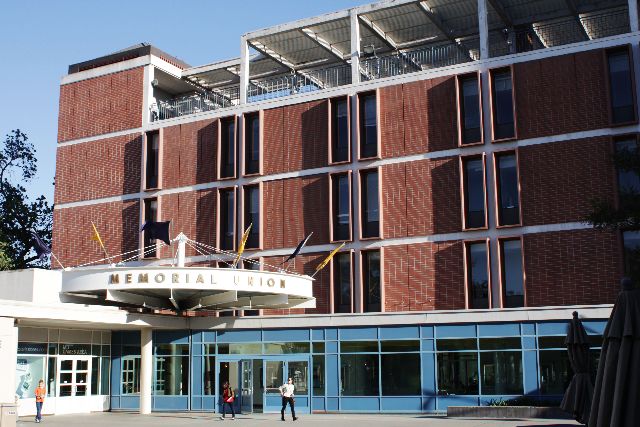
Memorial Union renewal to begin next year

Next year, the Bookstore and the Memorial Union (MU) will undergo a renovation process, altering the existing space but not actually constructing new buildings.

“We are taking the existing footprint of the facility and basically renewing the interior and modernizing it,” said John Campbell, Executive Director for Campus Recreations and Unions, who is overseeing the project.

According to Campbell, the cost of the renovation is around $19 million. However, there will be no additional fees charged to students. He said all funds are coming from current reserves, and bonds will be used for extra costs.

ASUCD Senator Miles Thomas said he is concerned about the amount of money that will be taken from student government, and therefore student fees. The figure being discussed is $500,000, he said, though student leaders haven’t determined where exactly that money would come from.

The renovation project will consist of two phases. Phase one will begin in January 2014, with the renovation and renewal of the Bookstore. Phase two is scheduled to begin May 2014 and will include the first two floors in the MU, outdoor spaces on the Quad, South Quad and North Quad.

As part of the first phase, the entrances to the Bookstore will be changed. There will be a new entrance added to the North Quad, next to the Unitrans area, and another added to the East Quad area. The existing entrance located inside the MU will be closed.

The second phase, which includes the renovations of the first and second floors, will also bring significant changes. The Centennial Walkway from the Unitrans buses to the MU is planned to extend all the way through Howard Way and the South Quad entry will be realigned.

The existing units such as Aggie Reuse Store and the post office may be reduced in size during the renewal. However, the current floor plan is tentative and decisions are still being made on how to preserve all of the existing units.

The space between the ASUCD Coffee House and the Bookstore, which includes Griffin Lounge, will be converted into a more open space, similar to the Student Community Center (SCC), where one can study and socialize. The lounges on the second floor of the MU are also expected to be converted into an open study space.

“What I am really excited about is the whole new open area,” said ASUCD President Carly Sandstrom. “Griffin Lounge will kind of be taken down and students can study throughout that space, instead of it being divided up as it is now.”

Sandstrom also said that there is a possibility that The Corral and CoHo To Go could be merged. She also said that the third floor of the MU could be renovated as well. Plans for how this will be developed have not been advanced.

According to Campbell, the MU will be fully functional during construction.

One of the most major changes will be a 2,800-square-foot pub located in the east wing where the post office currently resides. Students will be able to eat, study and socialize in the area. Students 21 and over will also be able to purchase alcohol. It is expected that the space will also be able to be converted into an entertainment venue for concerts and late-night events. There will also be an outdoor patio added to this space.

“With the pub, our hope is that students will like the convenience of it being on campus. If you are 21, you do sometimes want a beer in between your classes,” Sandstrom said. “It could be another place for you to study, because not everyone likes a quiet place to study, and it can also be an entertainment venue, which we so need.”

The revamping of the Unitrans bus terminal will also help make way for the 2020 Initiative, which will bring in more students and therefore increase the need for buses, Sandstrom added.

According to Campbell, there will be many services after-hours as well.

“It is really going to embrace the opportunity for students to utilize this as their living space,” Campbell said.

The renovations are expected to reach completion in July 2015.

“While I have my hesitations about the funding, I’m really excited for the Memorial Union to be converted into what it should have been,” Thomas said.

SASHA COTTERELL can be reached at campus@theaggie.org.

Students seek Adderall for academic boost

With the pressure of financial and social success riding on academic performance, a growing trend has emerged: Students seeking an upper hand are turning to a little orange pill.

Beating the deadlines
“I needed to read 250 pages of my political science textbook before a test and I ended up doing it in two hours,” said Matt, a first-year biochemistry major. “It just was such a desire to study. I’ve never read that fast in my life. I took the test the next day, and got an A. There was no way I could have caught up without Adderall.”

According to the National Institute on Drug Abuse, Adderall and other amphetamine salts are stimulants normally prescribed to patients who suffer from Attention Deficit Hyperactivity Disorder (ADHD). When taken as directed, the medications remove symptoms of these conditions and have a calming, focusing effect. Those who do not require the drug for medical purposes experience intense focus, inability to sleep and jitteriness.

“I had to write a big paper Fall Quarter,” said Dave, a first-year evolution ecology and biodiversity major. “I started at 8 p.m. and worked all through the night, wasn’t even tired, finished the paper and went straight to class to turn it in that morning. It’s intense. Adderall doesn’t make you want to eat, sleep or do anything other than study.”

In recent years, a national trend has emerged: College students such as Dave and Matt have begun buying and consuming Adderall without any medical need for the drug in an attempt to improve test scores, stay up late working or focus on assignments and tests. Although taking Adderall without a prescription is illegal and forbidden by colleges, some students see the benefits outweighing the risks.

“It’s not a test-cure all, it’s just a cramming genie,” said Brad, a second-year exercise biology major. “Before I started taking Adderall to help cram for finals, I had a cumulative 1.8 GPA and was on academic probation … Since I started taking it, my GPA has been increasing and I was able to get it up to around a 3.0.”

Supply and demand
According to The National Survey on Drug Use and Health, 15 percent of college students have admitted to using psychotherapeutic drugs for non-medical use. Of those 15 percent, seven percent claimed to use Adderall to either increase attention span, party or improve grades.

UC Davis students suspect that Adderall abuse on our campus may be even higher than those statistical findings.

“I’ve gotta say that at least 50 percent or more of the people I know use it or have used it. Probably about 30 percent are prescribed; ADD and ADHD are really common,” said Kate, an anonymous second-year who asked not to specify her major. Kate has a prescription for Adderall, and previously obtained it from dealers and friends before being diagnosed with ADHD and receiving her own prescription.

The U.S. has steadily reported increases in ADD and ADHD diagnoses, and the CDC’s Morbidity and Mortality Weekly Report determined from a 2010 survey that one in 10 children is diagnosed with ADHD. The condition is on the rise nationally, and due to the nature of self-reported symptoms, prescriptions like Kate’s were filled after only a few conversations with a psychologist and health care provider.

“If you can’t get a prescription for Adderall, you’re the worst actor ever,” Matt said.

The purchase
When a patient’s prescriptions don’t match a realistic dosage requirement, a black market opens up for students to buy or sell pills that are not critically needed. While some deal the pills to strangers, for the most part, friends share and sell their personal prescriptions to those that they trust in order to avoid legal trouble.

“I used to buy from a dealer. I would meet him [on] the Quad, hand him my money and get my pills. That’s sketchy, though — I wouldn’t do that,” Kate said.

Kate has shared and sold her pills to friends in the past. While she is currently trying to wean herself off of her reliance on the pill for worries of dependency, and suspects that she may not actually need the pill to function, she has a filled prescription that she will sell for $2 to $5 per pill if she finds herself needing some extra money.

Like any other market, students buying Adderall find that the price fluctuates and is susceptible to supply and demand shifts.

“The price goes up a lot during finals week, but I tend to pay around 20 bucks on three or four pills,” Brad said. “That’s enough to get me through finals. That’s the most I’ll pay for it. I’ve heard about kids dropping 50 bucks on pills, though, because they need it.”

The price
Finances and illegality are not the only drawbacks to abusing Adderall. Like all things too good to be true, Adderall and drugs like it come with a hefty number of side effects and impacts on health, the most significant of which is dependency.

Russell Boulevard Rite Aid Pharmacy Manager Rami Saad fills a number of amphetamine prescriptions per week for college students, and warns of Adderall’s habit-forming abilities.

“People become dependent on the amphetamines, and it stops working for them even when they keep taking the same dose. So what happens is the doctor [increases] their dosages so they can begin to see results again. When you take it more [frequently], you build a dependence,” Saad said. “When you build that dependence, you lower your ability to focus the same way you used to before taking it in the first place.”

Dependency has a weighty impact on long-term users. Adderall tricks the brain into stopping the production of dopamine, a chemical that helps regulate mood.

Studies conducted at UCLA found that long-term users of Adderall, when the natural levels of dopamine are reduced, experience “severe depressions and mood dysregulation,” which subsequently cause high rates of aggression, psychosis and suicide in those who take it.

Those who have taken the drug have their own descriptions of the physical toll it takes.

“I started my dosage with 20 milligrams in the mornings, and I’d almost have feelings of elation which would last until the late afternoon,” Kate said. “When it wore off, I’d start to feel awful. I’d feel really sick to my stomach because you don’t want to eat while you’re on it. I changed my dosage, and it helped. I also get headaches now, which never happened before Adderall.”

Brad also commented on the possible long-term effects of taking Adderall recreationally.

“I’ve been told by a paramedic that if you continuously take it without having ADD or ADHD that the receptors in your brain won’t make the connections normally anymore. It destroys the synapses in your brain, essentially,” he said. “It’s always in the back of my head when I do it. I’ll take one or two pills once every four months, though, so I don’t do it enough for it to be a problem. I only use them for finals.”

Need versus want

Due to the nature of the condition it is prescribed for, some are not worried about possible long-term effects of taking Adderall.

“It’s so funny because everyone [has] a little ADD, everyone can benefit from increased focus, everyone is a little absent-minded,” Kate said.

ADD and ADHD are relatively new diagnoses in the medical world, only gaining national attention in the 1970s. Healthcare professionals, as well as those who take the drugs themselves, question the legitimacy of being prescribed Adderall to treat symptoms.

“I have the feeling that [increased Adderall prescriptions] are a product of multitasking and our culture, that we have made it so that people are unable to focus more,” Saad said. “Some might actually have these conditions, but there’s no telling; they don’t give themselves a chance to really try and focus. But it all goes back to the doctors and their prescriptions.”

While some have legitimate medical requirements for the drug, others admit that poor study habits along with a cycle of procrastination and panic led to their reliance on the drug.

“Sometimes I wonder, like, am I always going to need to do this, will I ever be able to focus on my own?” Brad said. “I don’t know. I’ll cross that bridge when I get to it.”

DISCLAIMER: Names of those who discussed their Adderall use have been changed to protect their privacy.

HANNAH KRAMER can be reached at features@theaggie.org.

Hate crime allegations prompt questions, reflection

0

A preliminary hearing will take place on April 26 in Yolo Superior Court concerning the alleged March 10 hate crime against Davis resident Lawrence “Mikey” Partida. Suspect Clayton Daniel Garzon is scheduled to appear at the hearing on charges of felony battery and threat with hate crime enhancements.

“I just want to get it over with and move on,” Partida said in regard to the preliminary hearing.

According to The Davis Enterprise, Garzon’s attorney Linda Parisi argued that the anti-gay slurs reportedly used by Garzon during the assault were common slang terms and “not an expression of hate.”

“I just met with my lawyer for the first time,” Partida said. “[Parisi] is working to delay the hearing and we’re working to make sure that doesn’t happen.”

On April 3, a status update was posted on the Mikey’s Justice Fund Facebook page regarding the preliminary hearing, encouraging anyone with additional information regarding the crime to contact the Davis Police Department because “the most difficult thing will be proving this was a hate crime.”

Garzon is facing hate crime enhancements as part of the hate crime laws in California. According to Elizabeth Krause, assistant director of the UC Davis Lesbian, Gay, Bisexual, Transgender Resource Center (LGBTRC), these enhancements impose tougher penalties on crimes motivated by what Krause called “identity-based bias.”

“The argument in favor of hate crime ‘penalty enhancement’ statutes is that the criminal acts (violent acts) that are motivated by bias against someone because of an identity that they hold do not only victimize the one (or more) persons in the actual incident, they also victimize entire groups of people who share the identity of the person who was targeted,” Krause said via email. “The extra penalty is for this ‘ripple effect’ — the impact that many folks with that shared identity may experience.”

Shared impact
The impact felt among those with a shared identity after a hate crime might also be understood through a concept UC Davis psychology professor Dr. Gregory Herek described as “felt stigma.”

“There is this phenomenon known as felt stigma, this knowledge that people carry around with them about what the ‘rules’ are — who is stigmatized and who is not, and what is likely to happen in certain situations,” Herek said. “This is an abstract concept, but when a hate crime occurs it is likely to increase the feeling of felt stigma in the community, and the takeaway message from that is that these crimes do have an impact on the broader community.”

Dr. Herek did not comment on the Partida case or any specifics related to it, but referred to research he has conducted.

“In the 1990s, I conducted a study that looked empirically at hate crime victimization in the Sacramento-Davis area, with about 2,200 lesbian, gay and bisexual participants,” Herek said. “We asked people about their experiences with different types of criminal victimization and then looked at their scores on a variety of psychological measures.”

Herek also distinguished between a crime directly against a person, such as an act of violence versus a property crime, such as vandalism.

“When we looked at the results of lesbian women and gay men who had experienced a crime against their person which they believed was based on their sexual orientation within the previous five years or so, their levels of psychological symptoms were greater than those of other gay men and lesbian women who had experienced a crime which they believed was not based on their sexual orientation,” Herek said.

These symptoms include anger, anxiety and posttraumatic stress, according to the study, published in the 1999 Journal of Consulting and Clinical Psychology, Vol. 67, No. 6.

“Typically after a crime, especially a violent crime, victims experience psychological symptoms,” Herek said. “But generally these impacts hang on longer when the crime was based on sexual orientation than what might be called a ‘routine crime,’ and there is a general pattern that these sort of crime victims do suffer a more severe psychological impact.”

More instances of hate
“I would say that at least once a week a student shares an experience of feeling the impact of oppression in their lives in Davis,” Krause said. “These experiences range from being stared at to more forceful acts of hate like yelling of bias[ed]/hate language. Speaking from a personal place, I know that I have been impacted by the small and large ways that LGBTQI folks are devalued in daily interactions.”

Krause said she believes it is very possible that some individuals may be hesitant to reveal their sexual orientation in certain situations or come out due to the fear of hate and intolerance.

“I think that for some folks it is not optional to hide, for example — folks whose gender identity does not fall in the gender binary (woman/man) and who wish to present their gender in a queer way,” Krause said.

Criminal acts directed toward the LGBTQI community have occurred multiple times on UC Davis campus property in the past.

On Feb. 26, 2010, the UC Davis LGBTRC was vandalized, the door defaced with derogatory slurs. According to an open letter from the LGBTRC staff to the campus community, “this vicious hate crime demonstrate[d] the need for community centers like ours to exist in order to offer a safe space on campus and combat the homophobia, discrimination and hate that is still prevalent within our society.”

Facilities and administration immediately offered to clean up the graffiti, but according to the letter, the LGBTRC opted not to remove the graffiti immediately so as to educate the campus about the struggles their community continues to face.

“We feel it is easier to erase physical representations of violence than to heal from the ongoing impacts of this hatred,” the letter stated. “Erasing it makes it possible to avoid believing these things happen on our campus.”

The LGBTRC offers numerous programs for students as well as educational programming such as peer education and Safe Zone training in the residence halls as well as on campus. Jezzie Zimbardo, the community counselor, works with people who have experienced incidents of hate, too.

Support for Partida
Along with support from the campus community, many Davis businesses have shown their support for the Partida family in various ways.

On March 22, G Street WunderBar hosted “Mikey’s Night,” with a portion of the night’s proceeds being donated back to Partida and his family.

The Davis Food Co-op also participated in efforts to support Partida.

“Mikey is a valued employee of the Davis Food Co-op,” said Julie Cross, director of marketing and education for the Davis Food Co-op, via email. “The Co-op provided a $1,000 match to donations made to Mikey’s Justice Fund. We’re presently working on a 5K to benefit him and show our support, but it’s still very much in the planning stages.”

MEREDITH STURMER can be reached at city@theaggie.org.

Baseball preview

0

Teams: UC Davis at Long Beach State
Records: Aggies, 11-19; Dirtbags, 13-18
Where: Blair Field — Long Beach, Calif.
When: Friday at 6 p.m.; Saturday at 2 p.m.; Sunday at 1 p.m.
Who to watch: Sophomore John Williams has been the sure-handed outfielder that the Aggies have come to rely upon for more than his glove. Williams has played 25 games this year, starting 20 of them. After last weekend’s series against Fullerton, he is hitting .306 and has a team-high three triples. Williams’ .418 slugging percentage is good enough for third on the team. He is also tied for the lead in RBI as Williams has 19 so far this season.

The UC Davis men’s baseball team has struggled to bring in runs and Williams’ hitting has been a bright spot in an otherwise weak batting order. In the last game of the recent three-game series against Cal State Northridge, he went 2-4, with a double and an RBI. Though the Aggies eventually lost the game 5-2, Williams’ hits helped spark a stagnant UC Davis offense.

Williams has been spotless in fielding the baseball, having a perfect 1.000 fielding percentage. With the lack of offense, the Aggies will have to rely on their pitching and defense to win games. Williams definitely helps with the defensive part of the equation as he has yet to make an error this season.

As UC Davis heads into the weekend series against a decent Long Beach State team, Williams’ production, both with the bat and the glove, will be immensely critical in the Aggies’ chance for success.

Did you know? In last year’s season series against the Dirtbags, the Aggies came away with wins in two of the three games. They had impressive 6-5 and 5-0 victories against a Long Beach State team that went 15-9 in conference play during the 2011-12 season.

The Aggies’ ability to win against the 49ers is evidenced by their head-to-head records over the past few years. UC Davis has simply had Long Beach State’s number in recent games, winning three season series in a row. The last time the Dirtbags beat the Aggies in a season series was during the 2008-09 season.

As the Aggies head to Long Beach, they hope that the winning trend against the Dirtbags continues into this season. The Aggies will be looking to bounce back from a string of defeats by winning on Friday night.

Preview: The matchup against Long Beach State appears at a good time for UC Davis, as it has really struggled as of late. The Aggies have only managed to win two of their last 10 games. This stretch has included being swept by Cal Poly and Cal State Northridge.

However, the Aggies have hope as they face the Dirtbags, who have also had a subpar season up until this point. Long Beach State has struggled lately, winning only four of their last 10 games. This stretch includes a five-game losing streak.

Lately, the Aggies have been scoring runs at a low but consistent output. Including the Fullerton series last weekend, they have averaged 2.3 runs a game in the past 10 games. The Aggies will really need to find a spark in the batting order as their lack of runs has really hurt the team’s winning chances.

The pitching staff has been somewhat spotty this season but is slowly turning things around. Junior Harry Stanwyck has helped the Aggies with the amount of runs allowed during the latest series against a fourth-ranked Cal State Northridge team. In the first game of the series, Stanwyck pitched six innings, giving up only one earned run. The Aggies simply did not produce the run support needed for Stanwyck to win the game.

UC Davis will need to continue pitching at such a level in order to take advantage of the weekend series against Long Beach State. If they manage to pitch at such a level, the Aggies should have no problem winning against the Dirtbags, as history seems to indicate that the runs will come.

The Aggies averaged five runs a game during last year’s season series against the Dirtbags. Junior Nick Lynch definitely had a lot to do with those results, as during the two wins, he batted a solid .375 with two runs scored, one RBI and one walk. UC Davis will be looking for Lynch to continue the trend and provide some clutch hitting to beef up the batting order.

— Kenneth Ling

UCLA students create new social app for local bars, concerts

1

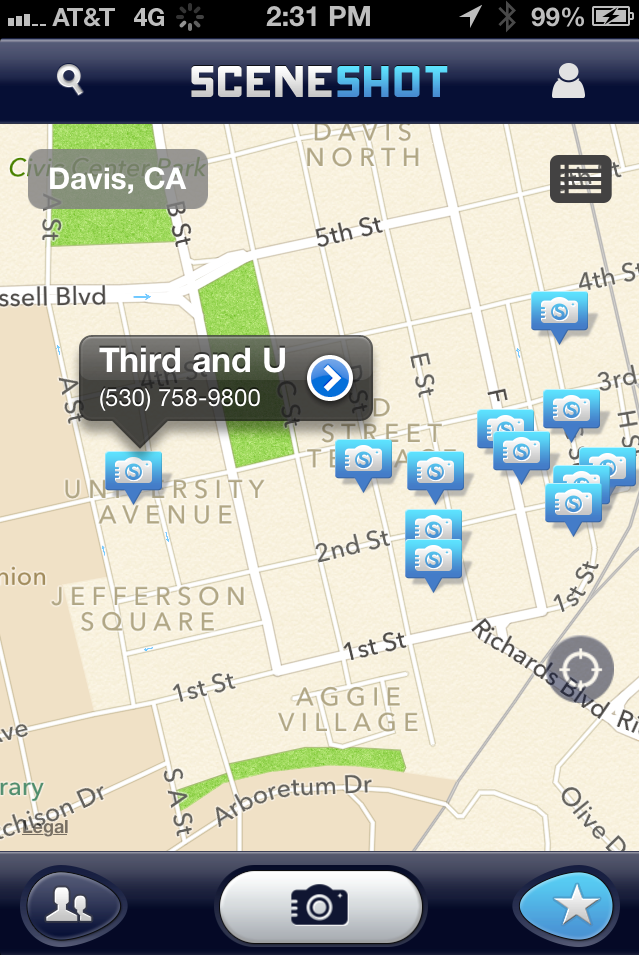
Ever wanted to go out to town and know which bars were busy so you could plan ahead? Ever wanted to know in advance how long a line at a concert would be? SceneShot, a new app for the iPhone designed by two undergraduates at UCLA, allows you to do this and more. Chase Hallerberg, one of SceneShot’s designers, talked about the app and its uses.

MUSE: What was the genesis of SceneShot?
Hallerberg: Two summers ago I was working in SF at a tech company that was working in mobile industry. My partner, Alvin Hsia, was working at another tech start-up. At the end of the summer, Alvin came up to me while we were getting drinks with the idea for the app. I liked the idea, and when we went back to school, I went up to him and told him that I would like to do it. We pooled our money together and got incorporated. Initially, we tried to outsource it to a group of developers in Russia, but it didn’t work because of the language barrier and because we basically couldn’t pay them enough to care about it. At the end of the the last school year, we got our family and friends to invest in us and we eventually contracted a company from Toronto, the Konrad Group, to develop the app.

How did you and Alvin come up with the idea for SceneShot?
It was Alvin’s initial idea. Whenever we went out at night, our friends would tell us where they were by sending us picture messages. We decided that it would be a good idea to make an app for that, where a whole community sends pictures to each other.

Can you describe SceneShot?
Basically, we’re [moving] community and friend-generated photos to in-app profiles. As a user, you can take a photo of a place while you’re out and can upload it on your profile. Taking a photo acts as a form of check-in, so you can see where your friends are by looking at their photos. You can also look at locations near you and see what the community as a whole is doing.

The app sounds primarily like a social app, but how can someone use it in regards to art events, such as a concert for instance?
For a concert, it would be a little bit different, but you can kind of see when the concert starts to get going. For example, if you didn’t know what time the artist was going to show up, you can kind of gauge when they’ll show up through the photos uploaded at the venue. Besides this, you can use the app to see when the concert will be crowded, or as a way to know how long the line will be. At bars with live music, you can see when the artist who is performing that night shows up and you can hashtag the artist’s name so the community will know. With more users, the information becomes more real-time.

So far the app supports six cities, including San Francisco, Chico and Los Angeles. Why did you decide to incorporate Davis?
Davis is a really unique college town, because you have a campus and right next to it is the town of Davis so all the bars are close together. It’s harder to do this for a big city like New York, because there are so many places to go that it becomes difficult to implement this. It’s easier to see where people go in cities like Davis or Chico, which are smaller and have like 10 bars.

What do you think about the evolution and popularization of smart phones? Apps such as yours really take advantage of these new advances in technology.
I think it’s making it much easier to use your location to find stuff. The GPS and Wi-Fi features in your phone really enable you to see where you are and to pull from different sources to find information. It’s relieving the need for you to plan out your night or even your day. Before, you had to call and set up reservations, but now it’s easier for you to just go out by yourself and sort of freestyle your plans.

JOHN KESLER can be reached at arts@theaggie.org.