


40.3 F
Davis

Davis, California

Sunday, December 28, 2025
Home Blog Page 951

UC Davis Farmers Market to return Wednesday

The UC Davis Farmers Market is scheduled to return Wednesday, April 3, with a Spring Kickoff. Starting with the kickoff, the zero-waste event will run every Wednesday of Spring Quarter from 11 a.m. to 1:30 p.m at the Silo Patio.

According to a March 28 news release, Wednesday’s market will include a photo booth, face painting, as well as live music organized by KDVS.

The first 50 people wearing Davis Farmers Market or UC Davis Aggie apparel will receive a $2 farmers market voucher.

The market, which first began in 2007, will offer a variety of produce items such as apples, avocados, beans, cherries, kiwis, peaches, onions, potatoes, dried fruits and flavored almonds. The Coffee House and Gunrock Pub will also be present to sell snacks and meals, respectively.

A full list of vendors can be found at farmersmarket.ucdavis.edu.


— Muna Sadek
Review: Spring Breakers

Spring Breakers, the new film from Harmony Korine, is a very weird, divisive movie. I saw it over a week ago, at the very start of my own spring break, and I am still not sure what I thought of it.
The film follows four college students (played by Selena Gomez, Vanessa Hudgens, Ashley Benson from “Pretty Little Liars” and Rachel Korine, the director’s wife) who rob a restaurant to fund a spring break trip to Florida. While partying, they meet a white gangsta named Alien (James Franco) who brings the girls into a criminal underworld and a conflict with a rival drug dealer (played by trap rap god Gucci Mane).
Now, the premise alone is great. I came into the film expecting an estrogen-charged crime movie, like “Heat” if the robbers were all women and crazy white men.
However, the execution is where the movie will divide people. Korine decided to make the movie rather surreal, employing film editing in a disorienting way, with cuts having no real rhythm about them. In addition, Korine frequently inserts visual flashbacks into scenes, which can be distracting. The editing ruined the film for one of my friends.
The biggest problem with the film is that it is very hard to relate to the characters and I’m not sure if this is intentional. The four girls spend the first half of the movie either bored or partying. They’re not characters, just pretty shells. The exception is Alien, who is a decently written character who is given life by James Franco’s great performance. There also wasn’t enough of Gucci Mane.
There are a lot of good parts besides James Franco’s scenes. There’s a memorable montage that juxtaposes Britney Spears’s song “Everytime” with an abstract dance sequence and slow-motion robberies. The soundtrack, which is dominated by Skrillex, is also great.
I saw “Spring Breakers” in a theater filled with a bunch of teenage girls who clearly didn’t like the movie and who clearly didn’t know about Gucci Mane (the phillistines!). Like “Drive,” this movie suffers from poor advertising that highlights the sex appeal. I can’t recommend it for everyone, but if you’re a fan of artistic movies you should check it out.

SCORE: 3 out of 5
SPOILER: Despite what the ads imply, you’re not going to see Selena Gomez naked. Ashley Benson and Vanessa Hudgens are vaguely naked in one scene. Sorry, guys!

JOHN KESLER can be reached at arts@theaggie.org.

http://www.youtube.com/watch?v=743A8NYeRlY

Morrissey at The Mondavi

I’ve been to very few concerts in my life, but I feel that this one was unique. I doubt that any other concert I will attend will be delayed for several months, feature a video montage of songs from the 60’s that is as long as the opening act and end with several members of the audience rushing onto stage to hug the performer.

Soon after transferring to UC Davis this year, I found out that Morrissey was set to perform at the Mondavi Center in November. I immediately bought tickets since Morrissey is my favorite lyricist and one of my favorite musicians. I revere him to the point that I go by my last name in my personal life as an homage. Sadly, the concert was delayed until March due to Morrissey’s mom unfortunately falling ill. Additionally, Morrissey fell ill with an ulcer at the end of January, which caused him to cancel several shows. I feared he would cancel again. Thankfully, he recovered and played the show on time.

The opening act was a performer named Kristeen Young, who previously opened for Morrissey on his 2007 tour supporting his album Ringleader of the Tormentors. I had heard bad things about her, which ended up being a good thing because I was pleasantly surprised by her performance. She ran the stage by herself for about 25 minutes, going between playing the piano and dancing around the stage. The music and vocals were incredibly loud, which led to the words becoming indecipherable. The biggest problem is that, while she was great, her music isn’t a stylistic fit for a Morrissey concert. It’s like having Daft Punk open for Bob Dylan.

After this, the lights came back on and a bunch of old music videos began to play. This was strange, because it negated the point of having an opening act. It was like an admission that Kristeen Young’s musical style is very different from Morrissey’s and so these old musicians Morrissey likes would be a better fit. Also, the montage began with a PETA advertisement that made me feel bad for eating fish and chips before the show.

At 9 o’clock – almost an hour after I sat down – Morrissey got on stage and I became overwhelmed with feelings of hero worship. I was actually seeing the man who soundtracked my life in high school. I wasn’t the only person there feeling this way, as I was sitting behind a man who listened to so much of Morrissey’s music that he was able to synchronize his arm movements with the guitar riffs. It was rather spectacular.

I was a little worried when he began with a song I hadn’t heard before, but thankfully he performed a lot of great songs from his solo career, such as the political “Irish Blood, English Heart” and the post-apocalyptic narrative “Everyday is Like Sunday.” Some of the song choices seemed a little absurd, such as the almost novelty sounding “Ouija Board, Ouija Board.” It didn’t matter, because Moz was tearing through the songs with the vigor of a man half his age. He and his band sounded almost exactly like the records.

It got even more impressive when Moz tackled a couple of his songs from The Smiths. While it would be ridiculous to expect him to just play Smiths songs (although “This Charming Man” and “There is a Light that will Never Go Out” are sorely missed), the few he played were all highlights. In particular, his performance of acoustic classic “Please, Please, Please Let Me Get What I Want” was ridiculously moving and obligatory vegetarian anthem “Meat is Murder,” which was combined with gruesome PETA documentary “Meet Your Meat,” moved my gut.

However, the best part of the show was the final song, the all time classic Smiths anthem “How Soon is Now?” The live version was distinctly louder and faster than the studio version, and it felt more like My Bloody Valentine than The Smiths. Especially since the last minute featured a light show so crazy that I wasn’t sure whether my vision was being damaged more than my hearing.

During the encore, which was “The Boy with the Thorn in his Side,” a woman jumped onto the stage and hugged Morrissey, which cements the dedication that Moz inspires in his fans. This led to the most thrilling ending to a concert I will probably ever see, as tens of people began to climb up onto the stage in attempts to hug Moz. The craziest part was that about half of the people climbing on stage were able to hug Moz before security threw them back into the crowd. It was kind of thrilling and frightening – since I didn’t want Moz to get hurt – but also strangely heartwarming.

I definitely hyped up this concert for myself (which usually ends in disaster), and amazingly, it lived up to the hype. Morrissey killed it. Hell, his opening act killed it. If you can go to any of his shows, do it. You won’t be miserable.

JOHN KESLER can be reached at arts@theaggie.org.

News in Brief: Davis resident arrested for hate crime

0

On March 14, 19-year-old Clayton Garzon of Davis was arrested for a hate crime that occurred on March 10.

According to a Davis Police press release, Garzon was booked at the Yolo County Jail on charges of assault causing great bodily injury, committing a hate crime, assault with a deadly weapon, stalking, committing a felony while on release from custody and inflicting bodily injury during the commission of a felony. At the time, he was released from Solano County Jail pending other felony charges.

Garzon was later released from the Yolo County Jail after posting a $75,000 bail. He will be arraigned on April 12 at the Yolo Superior Court.

On March 10, Davis resident Mikey Partida was leaving a house party at the 300 block of I Street when Garzon approached Partida and began a physical altercation, yelling homophobic slurs. Partida was transported to the UC Davis Medical Center. Currently, he is going through therapy at the Sacramento acute rehabilitation facility.

According to witnesses’ statements, the motive for the attack may have stemmed partially from the victim’s sexual orientation.

The Davis Police cannot release additional information at this time.

On Saturday, a candlelight vigil was held at Central Park for Partida. According to The Davis Enterprise, an estimated 300 people attended.

Additionally, the city’s Human Relations Commission will discuss the hate crime at its March 28 meeting.

In accordance with the incident, today at noon on the Quad, there will be an action event to bring awareness to the issue.

— Claire Tan

ASUCD executive officers say farewell

Rebecca Sterling, Yena Bae and Melanie Maemura were honored on Thursday evening as the former ASUCD president, vice president and controller gave thanks in a crowded Gunrock Pub.

The event began with Associate Vice Chancellor of Student Affairs Rich Shintaku, Yolo County Supervisor Don Saylor and Mayor Joe Krovoza, who all praised student leadership.

“These are not future leaders, these are grand leaders today,” Saylor said.

Sterling, Bae and Maemura all spoke fondly of their time in office, both in terms of accomplishments as well as individual growing experiences. They thanked those involved and gave awards to their staff.

ASUCD Business Manager Brett Burns was presented with an award for his year of work in the association. Later on during the ASUCD Senate Meeting, it was announced that Anne Myler, director of the Center for Student Involvement, will take over the post once Burns leaves for his new position at the UC Davis School of Law. Mark Champagne, who was the business manager for over 30 years, will also return in an advisory role.

— Janelle Bitker

How to be an adult

0

Being a grown-up used to be the glorified “someday” of our childish imaginations. Now it seems like the older we get, the less glorious it seems. Perhaps we’re afraid that growing up involves a bridle, reins and a wagonload of responsibility. Or perhaps we resist because we don’t know how to be adults.

According to Brandie To, a third-year sociology major, adulthood is a process of socialization. To her, it’s a phase that people spend their childhoods preparing for, and that through socialization, can be reached. Roxana Reyes, a marriage family therapist who works with CAPS in the Community Advising Network, also stated that the transition from adolescence to adulthood is different for everyone, based largely on culture, gender and economic status.

However, to Allyn Alves, a fourth-year transfer student double-majoring in managerial economics and psychology, there are certain personal responsibilities that can be used to identify new independence.

“For me being an adult means taking care of certain personal responsibilities, making a positive impact in the world and being able to support yourself financially and emotionally,” Alves said. “[It means] having respect for your family, friends and peers, helping those around you and making life decisions that will make you a better person and prepare you for a better future.”

Alves also noted that when she was younger, she thought being an adult was the final stage of “growing up.” Older now, she stated that it’s actually a continuous process, but that having a sense of stability is one of the best “adult” feelings, and that being a student at UC Davis helps to develop that.

Instant Adulthood

UC Davis students’ early exit from university dorms creates a student lifestyle closer to adulthood than our peers at other colleges are likely to be living. Students sign apartment leases, do their own grocery shopping and cooking and pay bills every month.

However, Reyes stated that though students are separated from their families, they aren’t all necessarily independent. Though it is a process that Reyes believes all students achieve by the time they graduate, they each do it at their own pace.

“I have so many people here who just don’t know how to write a check,” said Ray Ortiz, Sycamore Lane Apartments leasing agent. “[With apartment life] there’s going to be some impact, like — how do I cook? How do I pay the water bill? The PG&E bill? How do I even set it up?”

Ortiz suggested that the unknown always scares us, and that there is plenty that Davis students don’t know when they move into an apartment for the first time. As a leasing agent, he’s privy to student lifestyles and the changes that individuals undergo through their college years.

“There’s a pattern that we see regularly,” Ortiz said. “Straight from the dorms they’re almost always in a big group, and then in their third year, when school’s gotten harder, they start figuring things out, and start saying ‘I can’t be with roommates, I’ve got to study.’ So in their fourth year, they might move to a one-bedroom [unit]. Then they’re more focused, more driven and we see a lot [fewer] of them.”

The Financial Checklist

Home lifestyle is hardly the only thing adolescents have to learn when they grow into adulthood, however. With the exception of paying bills every month, Davis students often have very little financial experience.

“I think many students have limited experience financially,” said Hilary Hoynes, economics professor and co-editor of the American Economic Review. “If you have not had a job or had to stay within a budget, then your experiences are limited.”

Hoynes also said that American adults in general have very poor financial literacy, and she provided a short checklist of things adults should be financially aware of.

Paying taxes were the first on her list. Anyone with an income has to pay taxes to the federal Internal Revenue Service (IRS) and to their state. Employers will give their employees a W2 tax form around the end of the year, which states how much the employee earned and how much is being withheld as tax money.

With that information, employees can then fill out federal and state tax returns, and either pay more to meet their taxes or, if too much was withheld, get a refund.

Budgeting was next on Hoynes’ list.

“I think that the most important thing is to plan for spending given your income,” Hoynes said. “In order words, make a realistic budget and stick with it. This means you’ll avoid consumer debt, which has huge financial implications.”

Ortiz agreed that debt is a huge issue for new adults.

“I think the biggest problem is the student loan issue. That and credit card debt,” Ortiz said. “They make it very easy to get into debt. Money is so easy to get, and then suddenly you owe a lot. We can’t even think about 401ks and 403bs and Roth IRAs if we’re swimming in debt.”

Last on Hoynes’ list was longer-term financial planning, or planning for retirement. Though retirement seems a long way off when students are just moving out own their own, earlier is better when it comes to saving money. Through the power of compounding, the money young adults earn through interest or investments will make even more with time.

The Transition

Ortiz stated that maturity kicks in when people figure out what they want and find direction in life.

“No doubt, there is a turning point,” Ortiz said. “I think it happens for everyone at some point, but it sometimes doesn’t happen in adolescence — we wish it did!”

According to To, however, there’s some misunderstanding about the nature of this turning point.

“I think in American culture we kind of overemphasize it. We think once you’re 18 you’re an adult. Conceptually, we think of it as a very technical and dramatic change, but from actual experience, I think that’s it’s very gradual and it happens without you even knowing it. One day you’ll think, ‘Wow, I have matured so much,’ but you can only tell by looking back and comparing things to previous experiences. So it’s not like you’re going to wake up and be like, ‘Yep, I’m an adult today.’”

Managerial economics fourth-year Iris Quiroga had more of a situational transition from adolescence to adulthood.

“When I got to college, I decided that [now that I was] on my own and having to support myself financially, now would naturally be a good time to take those steps and really soak in everything that I learned and apply it to my life,” she said.

Quiroga stated that it was a natural transition for her, since she had thought about it and prepared for it ahead of time. She also said that though her first year was a lot of fun, she had to be aware that being on her own meant she had to live with the consequences of her own decisions.

Alongside mental realization and situational responsibility, personal development is also part of the trek toward adulthood.

“One of the most difficult parts of adulthood for me was when I first realized I had developed quite different values and spiritual and political beliefs from the vast majority of my family,” Alves said. “This has been hard over the years, but standing up for and acting on what you believe, while still respecting your family’s views, is important for growing as a person.”

Alves said that the most difficult and important aspect of becoming an adult is learning how to self-regulate; to change in a healthy manner, learning from experiences, and ultimately developing one’s consciousness.

Adulthood and Family Relationships

Though the transition out of adolescence can be stressful, it does not just affect the growing adult. Family relationships between parents and children are also affected, and changed, by this growth.

To begin with, according to Reyes, families can determine how quickly adolescents have to become independent.

“Some families require their son or daughter to live their lives as if they never left home,” Reyes said. “They may be expected to call every day and ask for permission to attend events. They may have a curfew or not be allowed to spend nights at their friends’ apartments.”

In contrast, Reyes stated that other families may be less involved, immediately trusting their children and giving their children the chance to experience total freedom while balancing classes, work, relationships and self-care.

According to To, the family aspect of aging can be depicted as a cycle.

“When we become adults, we’re socialized into a stage of life,” To said. “For example, 10 years ago I was a child. Now I’m a young adult, and 10 years from now I’ll be a full adult. Part of that stage of adulthood means having a family and having children of my own. That brings someone else into this stage of live, and then they begin the process of socialization where they learn about adulthood.”

According to Alves, one of the most striking changes that this stage brings about is the understanding that no one else is taking care of you anymore. She used housing as an example, stating that as an adolescent, she had a distinct feeling, knowing that her room in her parents’ house would alway be there for her. As an adult, she had to earn that feeling for herself.

“I developed a lot more respect for what my parents had done for me while I was growing up,” Alves said. “It is difficult just supporting myself, and I couldn’t imagine doing so with multiple children to take care for. My relationships with my mother and father got better when I moved out and became independent; I was able to relate to them better.”

NAOMI NISHIHARA can be reached at features@theaggie.org.

Honorable Mention: J.T. Adenrele

0

It would be impossible to mention sophomore J.T. Adenrele and not touch on his work ethic. During the offseason, Adenrele hit the gym every single day and stuck to a grueling training regimen that gave him the size and strength necessary to become a true center for UC Davis.

He also spent hours at the free-throw line, honing his “shooter’s touch” that allowed him to score 81 points from the line this year. Adenrele was one of two Aggies to start every game this season, and he put his minutes to good use.

The center scored 382 points, pulled in 180 rebounds, totaled 20 steals and 46 blocks while still earning a remarkable .664 average from the free throw line. J.T. is a fundamental component in the Aggies’ roster and he will certainly be a player to watch over the coming years.

— Kim Carr

Female Athlete of the Quarter: Samantha Shellem

0

Winning the Mountain Pacific Sports Federation was a long shot for the UC Davis swimming and diving team this year. With the addition of Hawai’i and Brigham Young University, the Aggies were simply competing with sports programs that were out of their league.

Yet, to stun the aquatics world, UC Davis pieced together an unlikely conference victory. Though the Aggies got point contributions from across the board, junior Samantha Shellem’s impact on the team could be the largest.

The junior transfer from swimming powerhouse California came from competing against the schools that churn out Olympic swimmers to the Aggies and simply shined with the new team.

The La Verne, Calif. native put up strong performances in every freestyle race. She won the 800-yard freestyle relay with her Aggie teammates, placed third in the 200-yard freestyle relay with the UC Davis team, took the 500-free race and put up a second place finish in the 200-free behind teammate Katie Edwards. A second place showing in the 1650-free and the 400-free relay rounded off Shellem’s contributions to the team.

All of her freestyle races culminated to a total of 160 points contributed by the freestyle-specialist. Yet, to confine Shellem’s influence on the team to one weekend would be unfair.

The junior came and performed well for the Aggies throughout the season, grabbing three MPSF Athlete of the Week awards, one each on Nov. 7, Dec. 5 and Jan. 30.

Shellem’s impact on the team began immediately when she jumped in the pool for UC Davis, and her influence will continue to persist as she leads the Aggies through the upcoming year.

— Matthew Yuen

Male Athlete of the Quarter: Ryan Sypkens

0

Last year, junior Ryan Sypkens was forced to sit the bench and watch as his teammates struggled through a 3-13 Big West Conference season. Sidelined with a knee injury, Sypkens was forced to take a medical redshirt year. He got his practice in shooting while sitting in a chair.

“There was a long time where I couldn’t walk,” Sypkens said. “I had to practice shooting from my wheelchair while I was sitting under the basket.”

This year, Sypkens has put all that form work to use. He has scored 104 three-pointers, ranking him second in the nation in total, and he leads the Big West in accuracy from beyond the arc with a 47.1 percent average.

“[Sypkens] is open when he’s in the parking lot. He’s put in an incredible amount of work and it’s a testament to him that his teammates and I are shocked when he misses from the three,” said head coach Jim Les.

Sypkens has also proved he is not all threes all the time. In the 860 minutes he has played this season he has tallied 92 rebounds, 44 assists and 12 steals. He also boasts a 73.9 percent free-throw average.

UC Davis is a vastly improved team this year and a large part of that is due to Sypkens. His knack for making threes means the Aggies are not without a momentum-building play for long. He is also a skilled defender and he has the height and jump necessary to contest shots from some of the taller players in the league.

This year is definitely an improvement from the last and Sypkens is reveling in it.

“It’s just nice to see all that hard work finally start to pay off,” Sypkens said.

— Kim Carr

News in Brief: Mondavi Center to host finals week study session

0

The Robert and Margrit Mondavi Center for the Performing Arts will host a finals week study session today from 3 to 9 p.m.

“We know that Finals Week is an especially stressful time for students and as part of the UC Davis campus we at the Mondavi Center feel it is our duty to help ease this stress in any way we can,” said Maizy Enck, an Aggie Arts Intern, in a Feb. 26 news release. “This event also offers students the chance to interact with the Mondavi Center in a new way.”

The Fall Quarter study session garnered nearly 250 students.

The event will include free coffee, ample study space with outlets and a door prize drawing for two tickets to a select event at the Mondavi Center, according to the release.

A selection of classical music will also be played.

More information can be found on the Aggie Arts Facebook Page.

— Muna Sadek

Honorable Mention: Michelle Ho

0

Senior Michelle Ho is from Los Altos, Calif. and attended Mountain View High School, where she won the bars, floor and all-around title at Western Nationals in 2009.

This season, she was All-Mountain Pacific Sports Federation for the second time on bars (9.680) and floor (9.805). Her best performance came at a meet at Sacramento State when she scored a personal best on floor of 9.875.

The honors are not surprising since she was named MPSF Gymnast of the Week for the week of Jan 6. It was the fifth time in her career to receive the honors. Ho scored a 9.800 on uneven parallel bars and floor exercise at the NorCal Quad meet held at San Jose State. Her contributions led the team to finish with the highest season-opening score in the school’s history.

Ho was named All-Academic by both conference and National Association of Collegiate Gymnastics Coaches/Women.

— Luke Bae

Dress for success

0

As we are all well aware of, finals are coming up.

This entails much-dreaded, sleepless nights of trying to relearn all the material we’ve learned this entire quarter. Amidst frantically going over homework problems, making sense of stacks of unorganized notes and lecture slides, and frantically attempting to understand long-winded textbooks, we tend to put a halt to caring about our appearances. Because when it comes down to the final crunch, every extra minute of sleep or cramming counts.

I have a small confession to make. Although I have a column focusing on beauty and fashion, I’m surprisingly lazy when it comes down to it. I would like to think that I usually look at least somewhat presentable, but I don’t wake up early enough to deal with cute outfits, much less painting on a face. In fact, I’m probably one of the bigger advocates for the no-make-up, somewhat messy high ponytail, T-shirt and sweats look.

However, I want to emphasize the importance of dressing for success.

In my Communication 134 class, my professor showed a video clip of a TED Talk by Amy Cuddy. In her talk, she informs us about the influence of our nonverbal behaviors. It doesn’t come as unexpected that our nonverbal behaviors influence how others perceive us, but surprisingly, they have a large impact on ourselves as well.

Cuddy focused on power dynamics and nonverbal expressions of power dominance. She notes a universal act that appears throughout the entire animal kingdom. Those who exhibit high power tend to open up, expand themselves and take up more space, while those who exhibit lower power tend to close up and try to take up less space.

From there, she performed a study in which a group of people pose in either high-power poses or low-power poses before they go into a job interview. Interviewers were specifically trained to give absolutely no nonverbal feedback during the taped interview.

Another set of people who were completely unaware of the purpose of the study watched the interview video, and, not surprisingly, everyone said they would rather hire the high-power posers than the people who were in poses that exhibit low power. The high-power posers also received higher ratings for overall presence and confidence during the interview, indicating that nonverbal behaviors do in fact affect how we think and feel.

I think this study is relevant and translates into what we wear. How we dress and present ourselves is part of our nonverbal behavior. Our clothing and our all-together look can be powerful forms of expression that can partly define who we are to others as well as to ourselves.

The aspect where our clothes send messages to others about who we are is apparent in an interview situation. If you show up disheveled and sloppy, the interviewer is going to assume you don’t care and not view you as a viable candidate.

Our look can also influence how we think and feel as well. As a kid, I grew up watching “Lizzie McGuire.” The popular girl, Kate, often had her hair tied up in a high ponytail. Nowadays, I still find myself more confident when my hair is tied up in a high ponytail. Although my ability to concentrate better without hair in my face may also be a contributing factor.

So to explain my casual, lazy attire, I tell myself that I’ll perform better if I’m comfortable and cozy. Since I have that attitude, I feel confident in myself, even if my attire doesn’t exactly send a message of confidence for others.

On the other end of the spectrum, if I put in some effort into my look, I feel prettier and thus, feel more confident.

Therefore, because our look is a form of expression, how we dress depends on how we feel day to day, as it should be. Ultimately, how you decide to present yourself is decided by you and for you. I am a strong believer that how you present yourself is not solely to impress others.

But if you insist on dressing to impress, well, there’s absolutely nothing wrong with wanting to look cute. Honestly though, you can probably take a break for finals week. Everyone’s probably too busy with their noses in their textbooks to notice your efforts.

Whatever you decide to wear, or not wear, good luck on finals. And have an amazing spring break!

EUGENIA CHUNG can be reached at ehchung@ucdavis.edu.

News in Brief: Sacramento Rite Aid offers free health screenings

0

On March 23 from noon to 4 p.m., the Sacramento Rite Aid Wellness Store at 4221 Norwood Ave. will hold a grand opening of their newly remodeled and upgraded store.

The store will feature increased staffing for customer service, a larger selection of wellness products and advanced clinical services.

To celebrate the grand opening, Rite Aid will give out product samples and free health screenings, such as cholesterol testing, blood glucose testing, blood pressure readings and information on the American Heart Association’s Life Check.

— Claire Tan

Sequester cuts to hamper research, student aid

Higher education can expect to be hit in two major ways because of the sequestration — cuts in financial aid and research funding. Pell Grant awards will begin to lose funding after one year, affecting over 1 million California students, and funds for new research projects will decrease by millions.

In 2011, Congress passed the Budget Control Act, outlining a series of budgetary cuts — projected at $1.2 trillion — that President Barack Obama said were designed to be “unattractive and unappealing” to compel parties to arrive at a compromise of sensible cuts.

Congress did not strike a compromise by the March 1 deadline. The original January 2013 deadline was extended by the American Taxpayer Relief Act of 2012.

According to University of California Federal and Governmental Relations, there is little information from the Office of Management and Budget regarding how the cuts will be implemented, but it is expected that federal agencies will have a level of discretion in doing so.

Gary Falle, associate vice president of Federal Governmental Relations, said that because agencies are still deciding on how sequester cuts will be distributed, it is too early to know what the broad impact will be on the UC Fall Year 2014 Budget. But it is clear that research funding will be heavily impacted by the sequester, as will student financial aid programs, he said.

“The automatic across-the-board federal cuts will harm funding to researchers across the university system. We are very concerned about new grants that may not be funded by agencies, graduate education opportunities as well as federal student financial aid, particularly in federal fiscal year 2014 and beyond,” Falle said in an email interview. “UC continues to urge Congress to stop the sequester and protect education, research and healthcare which are critical to California, the nation and our economy.”

It is expected that non-defense discretionary accounts, such as the National Institutes of Health (NIH), National Science Foundation and the Department of Energy Office of Science, will be impacted by cuts of five to six percent.

UC receives over $3 billion in research funding.

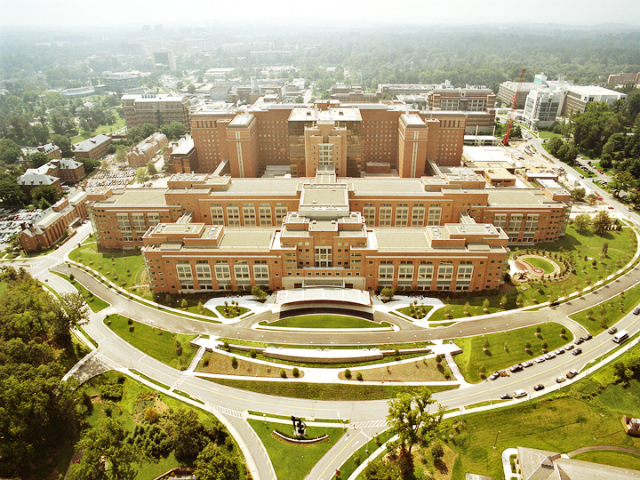
In 2010 the UC Davis School of Medicine became one of the top 40 schools in the U.S. for NIH funding, ranking 37th of 134. Currently, of the $200 million the School of Medicine receives in annual research funding, $120 million is from NIH, according to Dr. Lars Berglund, senior associate dean for research at the School of Medicine.

Berglund said that a lot of uncertainty still remains as to how existing research projects will be affected, as a grant from NIH can span from two to five years, but new research projects may be most impacted.

“Every year there is new research being done, new research being started and [since] there is less money, there will be less of those projects starting, so it’s really critical,” Berglund said. “There might be an impact already, in that some of our investigators who have applied for funding might not get any information … it takes a longer time for NIH to make decisions in funding now, so the process is slowing down.”

Berglund said that five percent of cuts in NIH funding will correspond to a loss of $6 million.

“It’s a lot of funding … We’re doing whatever we can to encourage people to apply for other types of funding and … be as efficient as possible in this situation,” he said.

In a Feb. 25 teleconference, NIH director Dr. Francis Collins said the agency will be unable to give funding to hundreds of new grants that would have otherwise been funded.

“This is a serious problem, and of course it is interesting when you look across the world and you notice that other countries have read our playbook for the last 50 years, even though we seem to have forgotten it,” he said.

In addition to research, financial aid programs will also be struck, resulting in 8.2 percent cuts to educational programs that assist California college and university students.

According to the California Student Aid Commission (CSAC), Pell Grant awards will face reductions after the first year of the sequestration.

There will be 5,700 Federal Work-Study recipients that will see a 9.8 percent cut in funding and 15,000 Federal Supplemental Educational Opportunity Grants that will encounter cuts of 8.7 percent — $16.7 million in total.

TRIO and GEAR-UP, programs benefiting California low-income and underrepresented students by the U.S. Department of Education, will also face considerable reductions.

“The Commission sent a letter urging the President and to the U.S. Congress to take all steps necessary to protect students from the harmful sequestration cuts to financial aid and educational support services proven successful in California and across the nation,” said Patti Colston, CSAC spokesperson, in an email interview.

Outgoing UC President Mark Yudof also sent a letter on Feb. 26 to members of the California delegation, urging for an agreement to be reached and to “ensure that federal research and educational funding is not indiscriminately harmed.”

The House and Senate each plan to develop budget resolutions by April 15.

MUNA SADEK can be reached at campus@theaggie.org.

City creates new position to generate economic stimulus

0

On March 6, the Davis City Council voted to add the chief innovation officer (CIO) position to their city staff. According to a staff report from City Manager Steve Pinkerton, the new position will be responsible for attracting and retaining technology businesses in the City of Davis.

“This is really a strategic move for the community, which includes UC Davis,” said Sarah Worley, economic development coordinator for the City of Davis.

According to Worley, the economic downturn’s persistence has made job creation imperative and the City of Davis wants to help graduates obtain highly skilled jobs in the City of Davis.

“I’m aware of the need for focusing on and supporting growth of technology companies that really are aligned with UC Davis’ research strengths,” Worley said.

Rob White, economic development department director for the City of Livermore and Interim CEO of i-GATE Innovation Hub, was selected to fulfill the CIO position. He will begin his work as the CIO at the City of Davis on March 25.

According to a City of Livermore document, “i-GATE (Innovation for Green Advanced Transportation Excellence) is a public-private partnership dedicated to helping small clean technology companies grow.”

Its goal is to create 5,000 jobs and $1 billion in revenue in five years. Ten cities, four federal laboratories and six universities — including the City of Davis and UC Davis — are involved with the iHub.

White’s $240,000 salary will be provided for by a 50 percent contribution from the City of Davis and the remaining 50 percent will be provided for by techDAVIS.

According to its website, techDAVIS is a local business association comprised of technology executives as well as ex-officio members from the government, academic and business sectors with the goal of helping the innovation economy in Davis grow.

“Part of the objective here is to focus on the revenue-generating side of economic development. For the city to be sustainable, we need to look at those opportunities as well as cutting where we can and being more efficient,” Worley said.

According to Dan Wolk, city council member and mayor pro tempore, a driving force for the creation of this position was to harness the potential energy from UC Davis.

“We’ve done OK in the past being able to harness the economic energy that UC Davis has created, but we haven’t done as good of a job as we could and there’s a lot of potential that we’re not realizing,” Wolk said.

Wolk said that hiring White, who has a lot of successful experience in creating innovation-based economic stimulation, especially with the creation of i-GATE in the City of Livermore, will help Davis and the region realize its potential.

“That potential is essentially ensuring that the technologies coming out of UC Davis stay here in the region, and employ these smart grads [and encourage them to] stay here, raise their families here, and work here for these high-paying and highly skilled jobs,” Wolk said.

White said his approach in Livermore is what he will bring to Davis — the creation of a knowledge-based economy.

“If you start at the top with the researchers and the folks that are in that space — CEOs, etc. — and you start to build down, all the other stuff comes with it,” White said.

White said that companies will need tech support, administrative staff, manufacturers and opportunities for retail, such as shops and restaurants, for innovation to stimulate the economy of the region.

When it comes to beginning his new position, White said he believes that the first 30 to 60 days will be filled with information gathering, creating action plans and convening for a lot of discussion.

White said that although he’s a 20-year Yolo County resident, he sees getting to know everyone at the City of Davis and making sure no one is left out in the process as his biggest challenges.

“It’s a new challenge. The swapping out of the University for the laboratory [in Livermore] changes the dynamic in more positive ways,” White said. “That’s what’s most exciting, that university dynamic.”

SYDNEY COHEN can be reached at city@theaggie.com.