


40.5 F
Davis

Davis, California

Sunday, December 28, 2025
Home Blog Page 953

Aggies fall to Matadors in conference playoffs

Women’s basketball finished their up-and-down season with a tough 61-40 loss to a thoroughly deserving Cal State Northridge team. UC Davis leaves the conference playoffs with a final overall record of 12-18.

Though the Aggies have been able to put points up in a hurry at multiple points in the season, they really struggled with shooting the basketball in the past few games. It cost them big-time on Tuesday night. In the previous four games before the quarterfinal matchup, UC Davis shot a rough 32.99 percent from the field.

Tuesday night was no exception to this trend as the Aggies once again struggled to find rhythm in their offense. They started off cold, shooting 28.6 percent from the field in the first half, and it would not get better in the second when they shot an even lower 18.8 percent from the field.

Sophomore Sydnee Fipps led the Aggies in scoring and rebounding once again, with 13 points and eight boards. However, she lacked her usual efficiency, shooting a lackluster 4-13 from the field.

The Matadors came out aggressive and jumped to an early 8-2 lead. Fipps fought back with back-to-back three pointers to tie the game.

From there however, the Aggies’ shooting struggles emerged and the Matadors continued putting up points. The Matadors shot 55.2 percent in the first half, including a 13-0 run, on their way to a 33-17 lead with 1:55 remaining in the first half.

The Aggies managed to enter halftime with a bit of momentum with jumpers from freshman Celia Marfone and senior Blair Shinoda. This closed the gap somewhat, allowing the Matadors to go into the intermission with a smaller 12-point lead.

The Matadors managed to gain control once again during the start of the second half. They managed to keep the lead, expanding it to as much as 18 points with 7:33 left in the game.

At this time, the Aggies went on a small run led by freshman Alyson Doherty. A layup, a three-point play, and two free throws by Doherty, along with Fipps’ three-pointer, allowed the Aggies to come within nine points of CSU Northridge with only 5:28 remaining in the game.

From there the Matadors exerted their will on the game and went on a 13-0 run to extend their lead to 23 points with only 25 seconds left in the game. A Marfone jumper managed to marginally close the gap to the final score of 61-40.

Marfone finished the game with four points and an impressive seven rebounds. Doherty, the catalyst for the second-half run, finished with seven points and two rebounds. She was the Aggies second leading scorer on Tuesday night.

In the end, the lack of scoring efficiency and output cost the Aggies their chance at advancing to the second round of the Big West conference playoffs.

“I think tonight we struggled offensively putting the ball in the basket,” Fipps said. “I don’t think we could put the ball in the basket as well as we typically do.”

KENNETH LING can be reached at sports@theaggie.org.
News in Brief: Yolo MoveOn to host community forum

0

On March 26, Yolo MoveOn will host a forum on “Creating Democracy and Challenging Corporate Rule” from 7:15 to 8:30 p.m. at the Davis Branch Library Blanchard Room, 315 E 14th St.

David Cobb, an attorney and organizer of the Move to Amend campaign, will be a guest speaker. He will discuss the recent U.S. Supreme Court’s ruling in Citizens United v. Federal Election Commission (FEC) and speak about how local residents can work to abolish “corporate personhood” and reestablish the government to be of, by and for the people.

Move to Amend is a coalition aimed at ending corporate rule, building a democracy accountable to the people and advocating for social and economic justice.

According to the Move to Amend press release, the forum will focus on ways Yolo County can join the national movement against corporate personhood.

— Claire Tan

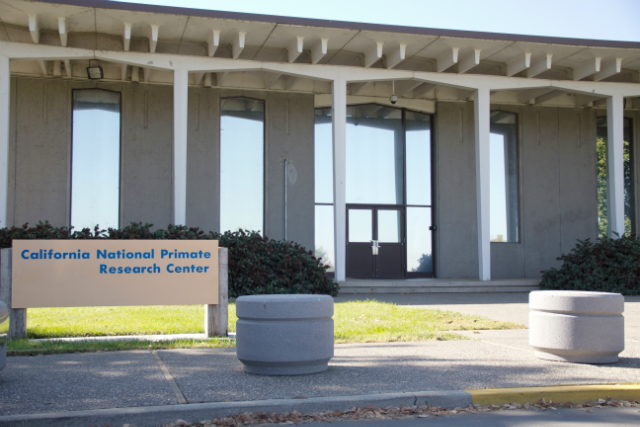
Primate research center appeals citation of maltreatment of monkeys

In response to a complaint filed by an animal rights group, the U.S. Department of Agriculture (USDA) cited the California National Primate Research Center at UC Davis for maltreatment from 2009 to 2010, specifically the death of 19 monkeys.

UC Davis appealed the citation, and after continued investigation, the USDA recently decided not to issue a fine due to improvements since the deaths occurred.

Between October 2009 and June 2010, 19 rhesus macaque monkeys died in the outdoor breeding colony, and in response Ohio-based animal rights protest group Stop Animal Exploitation NOW (SAEN) sent a complaint to the USDA. The USDA issued a preliminary intent to cite and inspected the research facility as well as the necropsy records of the 19 primates in February 2011.

However, since this number is within the acceptable rates of mortality in large breeding colonies, the Primate Research Center and the university appealed the citation. After a prolonged period of appeals protesting, the USDA publicly issued the inspection report on Monday. The USDA did not levy a fine for the research facility.

“There is no penalty action that will accompany the results of this inspection,” said David Sacks, USDA spokesman for the Animal and Plant Health Inspection Service. “The UC Davis primate center is working to improve the care of its primates, and that is a good thing.”

Dr. Dallas Hyde, center director and professor of veterinary medicine at UC Davis, said animals in the wild have a threefold death and illness rate than in the center’s colonies.

“The large majority of deaths occur in young animals in which there is a short window of time to discover and treat the illness or injury,” Hyde said. “We’re doing as well as any other facility in the country in terms of statistics. The USDA let the citation stand, but they didn’t fine us because the remedial steps that were taken to address the problem were impressive. We tried to find improvements everywhere we could.”

According to the inspection report issued by the USDA in February, and made public on Monday, appropriate methods were not used to prevent, control, diagnose and treat diseases and injuries of several non-human primates housed at the facility. A majority of the primates died from lack of adequate nutrition and/or parental care.

The Primate Research Center is one of eight primate centers supported by the National Institutes of Health and houses 5,000 non-human primates for breeding and research in areas including behavioral disorders such as autism and Alzheimer’s; infectious diseases such as HIV, tuberculosis and malaria; and respiratory diseases such as asthma and chronic disruptive lung disease.

Since the complaint was filed, according to Hyde, the facility has instituted a mortality review committee and now conducts afternoon health checks alongside the existing morning health checks in order to identify more animals that need assistance. The center pays especially close attention to infant primates, who are often protected by their mother and hard to inspect from the outside of the field cage. By implementing positive reinforcement training for mother primates at risk, he said, the center is better able to inspect both mother and infant.

“We do not want to disturb the social bond between mothers and babies,” Hyde said. “By training them to come up to the field cage side with the infant, it really gives us the opportunity to do a quick inspection daily to have a better handle on how the infant is doing. It’s the best, least stressful way to do an exam.”

SAEN executive director Michael Budkie issued a press release Tuesday, which stated that primate deaths continue, and alleged that negligence has increased at UC Davis, as a dozen infant primates died in 2011 from the same causes that affected the primates that perished in 2009 and 2010.

“[UC Davis] receives over $11 million per year, and they can’t even make sure the infant monkeys are surviving,” Budkie stated in the press release. “This is federal highway robbery combined with animal abuse on a massive scale. It is clear from UC Davis’s own veterinary records that infant animals are still suffering from maternal neglect and that the care given older primates has not improved — this negligence has led to multiple deaths. Nothing has changed; primates are still suffering and dying in violation of federal law.”

Hyde disagrees.

“We’re leading the field in how to raise animals in captive environments,” he said.

SAEN has filed another complaint for the deaths of a dozen infant primates in 2011, according to a news release on Tuesday.

More information on the California National Primate Research Center can be found at cnprc.ucdavis.edu.

STEPHANIE B. NGUYEN can be reached at campus@theaggie.org.

Raising the bar

0

Do you know what your first Miranda right is? How about the colloquial name for the London Underground, a rapid transit system in the United Kingdom? Or what noun/verb fits the description, “to fill various items”? Chances are if you didn’t get these answers right, The Scrambled Eggheads or The Ice Cream Socialists probably did.

Trivia nights throughout downtown Davis offer a night of puzzling questions and funny team names. Just follow the rules, feel free to buy food or drinks — especially if you’re there during happy hour — and collaborate with your teammates to pass this weekly bar exam.

Locations for these quiz nights include DeVere’s Irish Pub, hosted on Mondays at 7 p.m., Sophia’s Thai Kitchen and Bar, hosted on Tuesdays at 10 p.m., G Street Wunderbar on Mondays at 9 p.m., Ket Mo Ree on Wednesdays at 9:30 p.m., Woodstock’s on Thursdays at 9 p.m. and Froggy’s on Wednesdays at 7 to 8 p.m.

While there are many opportunities for trivia nights, DeVere’s Irish Pub and Sophia’s Thai Kitchen and Bar are rated the most popular on Davis Wiki. Jane Hildeburn, a fourth-year managerial economics major, considers DeVere’s to be her preferred pick.

“I really like the setup. Everyone gets space to sit [and] to relax … [versus] at Sophia’s, [where] it’s cramped and you have to stand [if] you don’t get a seat. I [also] like it better here [than I did at Bistro 33] because you can see everyone [versus] at Bistro [where] everyone’s kind of hidden in their own little pocket,” Hildeburn said. “The crowd here is super excited, too.”

Dr. Andy Jones, a University Writing Program professor, used to host the trivia nights at Bistro 33 until their last one on Sept. 26, 2011. He now hosts the trivia nights at DeVere’s Irish Pub.

“[My favorite part of this is] all the friends that I’ve made, and just hamming it up. That and making on-the-fly jokes about people’s answers or at their expense while I’m walking around because I have a lot of friends that come,” Jones said.

At DeVere’s trivia nights, there are usually around 40 teams, which translates into between 200 to 240 people. Teams must be between four to six members. Rules also include no shouting out the answers, no outside help — such as smartphone or use of other technological devices — and no arguing with the quizmaster.

Prizes at DeVere’s Irish Pub include a $50 gift certificate for first place, a $25 gift certificate for second place, a $15 gift certificate for third place and often a fourth prize of swag, which can include any number of special items.

The second-place team of this Monday night, also the night of Jones’ birthday, says they try to practice for each week by paying attention to top movies of the week or reading top headlines in the media. Since they come every Monday, they also cleverly vary their team name.

“[Tonight our team name] was Welsh for ‘Happy Birthday, Dr. Andy.’ We change names every week so people don’t hate us,” one of the second-place winners said.

Jones also stays tuned to the public trending news headlines, along with his reading and teaching, to help create questions for his weekly pub quiz.

“I’ve got a template for the types of questions that I use … if I write a good question then I’ll recycle it every couple of years. So my questions have about a three-year shelf life. If it’s good I’ll put it [back] at the bottom of the stack. I’ve got a document with about over 200 questions from over the years,” Jones said.

DeVere’s extends happy hour on Mondays until 7 p.m. instead of the usual 6:30 p.m. While DeVere’s pub quiz is open to all ages, the trivia nights at Sophia’s Thai Kitchen and Bar require a minimum of 21 years of age for admittance and at least one drink bought per group.

Two drinks purchased per listed team member will earn you a three-point bonus in the game. Drink stamping begins at 9 p.m. and teams can have up to six members, with three points deducted in increasing increments of three for each member beyond the six-person limit. There are two rounds, each with 20 questions and combined for a total score.

The prizes include a $60 to $100 gift certificate for first place, a round of drinks (redeemable the next week) for second place, a round of beer or well drinks for the third-place team, a round of drinks for the team with the median score to reward mediocrity, and bottles of wine that are awarded to the teams with the third-lowest score overall and the highest score in round two, and also to the team winning the tiebreaker question.

Creative team names at Sophia’s win a round of shots for the team with the best name.

“[Our team name tonight] was ‘Irony: The opposite of wrinkly,’” said Richie Winn, a third-year geology major. “We’ve placed third two or three times, but we’ve never won the whole thing.”

Winn says he likes trivia outside of the fun quizzes at the downtown bars, and does not try to prepare for the trivia nights.

“It’s not really something you can study for,” Winn said.

Despite his opinion, other contestants try to stuff their brains with as much cosmopolitan information as possible before heading to trivia night. While this strategy may help, it’s not guaranteed to help you solve the random difficult question at Sophia’s.

Monday night’s stumper question at DeVere’s was “What is the length of Thailand’s coastline in Mongolian alds?”

Even if you usually measure things in the unit of alds, which is equivalent to the length of a man’s forearm, this question still stumped the entire bar of participants.

Whether you study science, political science or English or are just a movie buff, there is always a category you can find a strength in, such as science and nature, geography, gadgets and gizmos, movies and verb/nouns. If you are too shy to go to your first trivia night, try quizzing yourself on Dr. Andy Jones’ yourquizmaster.com. The most important rule at every pub quiz throughout Davis is simple: Have fun.

The host of Sophia’s trivia nights, Kevin Wan, considers good times a must.

“[Have] a good time tonight and a cab ride home … and of course, happiness is mandatory, have fun tonight, it’s only a fucking game.”

(Answers to opening questions: the right to remain silent; the tube; stuff.)

ALYSSA KUHLMAN can be reached at features@theaggie.org.

Letter to the Editor: Thanks to volunteers

0

Safe Harbor Crisis House in Woodland was the fortunate beneficiary of the Winter Weekend of Service project of the Community Service Resource Center at UC Davis this past Sunday, March 10. Ten students came to perform much needed work at our facility. We want to recognize and thank Dianne Lansangan, Justin Ramirez, Kathy Rosales, Kevin Tam, Jonathan Chang, Henry Nguyen, Margarita Ramirez, Andy Yang, Virginia Hysell and Cynthia Ibarra for their service to our community.

Safe Harbor Crisis House is a program of Yolo Community Care Continuum. YCCC is a non-profit organization established to better the lives of people with a mental illness through direct services, advocacy, education and volunteer efforts.

Janet Rubenking
Associate Director
Safe Harbor Crisis House
Woodland, CA

Baseball Preview

0

Teams: UC Davis at Seattle University
Records: Aggies, 7-10; Seattle University 5-11
Where: Bannerwood Park — Bellevue, Wash.
When: Friday at 4 p.m.; Saturday at 1 p.m.; Sunday at 12 p.m.
Who to Watch: Junior Steven Patterson batted 4-9 over the weekend series against Cal State Bakersfield. The second baseman had a run batted in and scored a run.

He has played in 15 games this season and has a batting average that currently sits at .333. He has scored eight runs and has nine RBI thus far. Out of the regular starters, Patterson is second on the team in batting average to junior Nick Lynch.

Patterson grew up in Stockton, Calif. and attended St. Mary’s High School. He had a great junior and senior season for the Rams, winning consecutive CIF-San Joaquin Section Div. I championships and consecutive Tri-County Athletic League titles in 2009 and 2010.

In his senior season, he batted .341 with six homers and 34 RBI, which earned him a spot to All-TCAL honors.

This season is Patterson’s first with the Aggies after he transferred from San Joaquin Delta College where he was a 2012 California Community College Baseball Coaches Association All-American and a unanimous All-Big 8 first team selection. In his final season, he batted .380 with 11 doubles, six home runs, and 33 RBI.

Steven’s father, Fred Patterson, is a UC Davis alum of 1980 and played two years on the Aggie football team.

Did you know? After pitching 7 1/3 innings and allowing two runs in his win last weekend, junior Evan Wolf lowered his earned-run average to 2.42. He recorded his first win of the season in the four games that he has started.

Occasionally playing first base, Wolf found the majority of his playing time on the mound. Wolf has limited his opponents’ batting average to .229 on the season. He has pitched 22 1/3 innings, while striking out five and walking six batters.

Born in Fresno, Calif., Wolf attended Clovis High School and graduated in the class of ’09. In his senior year, he accumulated a record of 24-8. He played both football and baseball for the Cougars and played tight end for his football team.

He was selected to play in the 2009 Central Section City/County All-Star Game. He was also a 2009 Rawlings/Perfect Game Preseason All-California Region honorable mention. In his junior year, he was named to the TRAC All-Conference Team.

Preview: Seattle University holds a record of 5-11 this season and has played 13 of its first 16 games on the road. Currently, it is ninth in the Western Athletic Conference.

The Redhawks will be led by senior Sean Narby who has a batting average of .371, an on-base percentage of .451 and a slugging percentage of .532. He has started all 16 games and also leads his team in hits (23), doubles (eight), and runs (13).

The Aggies are 7-10 and are coming off a loss against Nevada. The slugfest resulted in the Aggies coming up short 11-10.

“We need to keep making strides in all areas. We have played better defense of late and that was a concern through the first nine games, but all areas of the game can improve for us,” said coach Matt Vaughn.

UC Davis comes into the series batting .296 as a team and consists of an offense of getting on base and doing the little things, such as running the bases well and stealing bases when possible, to win games.

The Aggies have a team ERA of 5.72 and have had strong starting pitching from Wolf (1-0) and relief pitching from freshman Max Cordy (3-1), whose ERA is 2.16.

—Luke Bae

Russell Park Apartments explosion court trial today

0

David Snyder, a junior researcher who allegedly caused the Jan. 17 explosion at the Russell Park Apartments, will be tried today in Yolo Superior Court. Snyder was released on a $2 million bail after he was arrested on Jan. 19 in connection to the explosion, according to a UC Davis News press release.

Under the conditions of his release, Snyder is not allowed to return to UC Davis without notifying the UC Davis Police Department (UCDPD), said Claudia Morain, UC Davis spokesperson, in an email interview.

After Snyder was arrested, he was placed on leave from his junior specialist appointment, which ended on Jan. 31. He is not currently employed at the university.

Snyder was also charged with felony violations of California Penal Code 18715, custody of an explosive, California Penal Code 18720, possession of substances or materials used for making destructive devices or explosives, and two counts of holding a firearm on campus, according to a press release. The UCDPD is conducting a criminal investigation of the case, and further charges may be made.

Several agencies are handling the case, including Yolo County Bomb Squad, FBI, UC Davis Fire Department and the Bureau of Alcohol, Tobacco, Firearms and Explosives (ATF), according to Matthew Carmichael, UC Davis Police Department Chief of Police.

Carmichael also said the explosive materials and substances that were in Snyder’s apartment were destroyed by bomb squad experts close to the scene of the incident. The volatile items were destroyed in a field on the Student Farm using a process called thermal treatment. Explosive items were also destroyed on the southwest side of campus on another open space of land.

“This was a critical incident that was handled the first night without injury to anyone other than Mr. Snyder,” Carmichael said in an email interview.

Morain said that though the public may be curious to know more details regarding the incident, the University is protecting Snyder’s privacy rights and the integrity of the investigation.

Some residents of Russell Park Apartments were disturbed to learn what Snyder was doing in his apartment.

Carmichael said a meeting was held for all of the residents who were affected by the incident, including inhabitants of The Colleges, Russell Park Apartments and Baggins End Domes. Residents expressed a combination of frustration for the inconvenience of being dislocated from their homes, as well as concerns about the well-being of Snyder.

“Tandem has done an excellent job ensuring displaced residents had lodging and were kept informed as best as possible. [UC Davis] Student Affairs also supported the effort by providing meals at the dining commons,” Carmichael said.

The University has launched a review to recognize how to appropriately control the use of explosive materials on campus, Morain said.

“Our policies are already extensive regarding appropriate use of materials, but cannot eliminate all risk of criminal acts,” she said.

Carmichael said he does not know of any previous incidents where a UC Davis researcher was arrested for an incident involving the possession of explosive materials or substances.

According to the news release, Snyder received a bachelor’s degree in chemistry from UC Davis in 2004 and a doctorate in chemistry in 2011.

KELLEY DRECHSLER can be reached at campus@theaggie.org.

Editorial: In with the news

0

As of next quarter, The Aggie will discontinue its four-day-a-week printing schedule and begin publishing weekly on Thursdays. If you didn’t know this already, that probably means you don’t read The Aggie enough.

Our goal is to have news readily available in your hands without the inky residue — a shift from having less print to having a greater online presence. Additionally, this transition will hopefully maintain viability and visibility.

So, what can be expected from these changes?

The Aggie’s website will be redesigned to feature a minimalist, streamlined look, with multimedia capabilities. There will be more online polls and the new website will be updated regularly with breaking stories — no more “I knew what happened before The Aggie published it.”

We will continue to tweet news in 140 characters or less, share news links through our Facebook page and upload photos on our Tumblr for those social media junkies out there.

But we’re not trying to phase out the print version of The Aggie. Due to the decreased number of printing days, the paper will be fatter and loaded in quantity and quality. That means longer, in-depth articles, and more photos and more graphics to highlight a newly improved layout.

Since next quarter will be a pilot run, we’d like to recruit you, the reader, to help us out by giving us feedback on the changes. We plan to hold weekly public meetings for our readers to come to us with any story ideas and improvements that can be made, giving readers the chance to be a part of The Aggie.

The last paper for this quarter will come out Monday. We encourage you to pick it up and maybe make huge paper cranes after you’re finished with it.

Editorial: In celebration of things worth learning

0

Amongst continued (and endless) debates about the financial value of an education and which departments deserve public funding, it is important to take a step back and give thanks and praise to the wonderful world of the humanities.

After all, what good is molecular biology, chemistry or physics if not to further and improve our existence as humans?

We saw such appreciation of haiku in The Aggie on Tuesday, an appreciation we would like to see more generously distributed throughout the minds and hearts of the people. (You people!)

Perhaps in an effort to demonstrate such appreciation, this editorial should have been written as a sonnet or a limerick, but this is a newspaper and we don’t have time for rhymes.

We do, however, have time to sincerely ask ourselves whether extending our lifespan through medicine is really that important in a world without art to visit for years to come. Is going to space worth anything if we aren’t moved by the poetic beauty of the infinite and unknowable? Is computer technology going to be used if we’re not instagramming photos?

Last summer brought a slew of Republican declarations that they would cut funding to cultural staples like PBS, adding on to the lifetime of endless articles on Yahoo! about useless majors. Hardly cultural icons, these media attacks are markers of mainstream and widely accepted beliefs about what constitutes an acceptable use of your brain.

In 2010, The Chronicle of Higher Education published a column by Massachusetts English professor James Mulholland, entitled “Time to stop mourning the humanities.” Instead of fueling the proverbial fire, the author endorsed a celebration.

“I propose that we stop talking about the ‘crisis,’ even stop using the word,” Mulholland wrote. “I suggest that we change our vocabulary and attitude, and begin to offer a cogent reassessment of what the humanities do and why they deserve to be maintained and expanded within the university. I want to link how we talk about the crisis with how we respond to it.”

So, here is to the humanities — the field that has inspired nearly every past high schooler that became an Aggie reporter; the field that created that weird University of California logo redesign and enabled the revolution that followed; the field that has very likely prevented society from making grave scientific mistakes that lead to robot revolutions and disembodied souls.

And, also, here’s to viticulture and enology. It may be a science, but what would the humanities be without it?

Chancellor’s 2020 Initiative to begin this May

0

Last week, Chancellor Linda P.B. Katehi announced new developments in the 2020 Initiative — a strategy she has been working on to improve the university, announced Sept. 21, 2011 during her fall convocation address.

As one of the main components of the initiative, there is a plan to increase the student population by 5,000 — international, in-state and out-of-state students — in order to increase the school’s excellence and create a more diverse campus by 2020.

To offset the increase in student population, there will also be an increase in faculty by about 300 and additional classrooms to support the growing campus.

While these changes are major, they will be occurring gradually.

“We are going to start slowly,” Katehi said.

Katehi said that she, along with her advisors, will be working to ensure they address every need of current and future students.

“We need more TAs, better advising, more advisors and a better environment for mentoring our students,” she said. “The most critical thing is to make sure we do it right … We are not going to allow ourselves to fail.”

Students, who fear that the increase in student population may lead to a decrease in access to services offered on campus, should not worry, Katehi said. According to her March 7 announcement, revenue generated by this initiative will support staff and services.

Rahim Reed, associate executive vice chancellor for Campus Community Relations and member of the chancellor’s cabinet, assures that this initiative will be focusing heavily on the needs of the students.

He also conducted the Campus Community Survey earlier this school year, which assists with the goals of the initiative.

“The survey is designed to give us feedback on what kind of campus climate we have, what it’s like to be a student, to be a faculty member and staff here, to teach here and to learn here. Knowing this kind of information will help us to address, and be proactive in addressing, some of these issues and concerns to make our campus a more welcoming and supportive environment,” Reed said. “We ought to think of it not from just what we, the institution, want, we also have to think of it in terms of what the students want and need, and what kind of experience they’re looking for.”

Irtqa Ilyas, a member of the Chancellor’s Undergraduate Advisory Board and a third-year neurobiology, physiology and behavior major believes that this initiative will be a positive influence on campus, but that improvements must also be made aesthetically as well.

“We need to invest in our university. We have the [Sciences Lecture Hall], we have the SCC [and] all the newer buildings, but we also need to maintain the older buildings,” she said.

Implementation if the initiative will begin in May. For more information on the 2020 Initiative, visit chancellor.ucdavis.edu.

SASHA COTTERELL can be reached at campus@theaggie.org.

Davis Shakespeare Ensemble’s ‘Nightingale’

0

After performing its current production, Nightingale, in the Oregon Shakespeare Festival in Ashland, Ore., the Davis Shakespeare Ensemble (DSE) will be performing an expanded version of the same production in Davis in April and in the San Francisco Fringe Festival in September.

Dedicated to the translation of classic texts into dramatic productions within a contemporary framework, the Davis Shakespeare Ensemble produces original renditions of two Shakespeare plays and one other classic text per season. The current production, Nightingale, is inspired by the medieval French narrative poem “Laüstic” by Marie de France.

At midnight of March 4, the 20-minute Nightingale production was performed as a part of the Oregon Shakespeare Festival’s Midnight Projects series. DSE’s Artistic Directors Gia Battista and Rob Salas co-wrote and directed the production in the exciting environment of one of the largest and oldest theater arts organizations in the nation.

“It was exciting to perform in the Midnight Projects series because of the fast-paced, collaborative nature of preparing for the show,” Battista said. “We had actors from the festival work with us, and a lot of the writing, directing, and staging was formulated on the spot and in a collaborative manner with members of the team. We rehearsed up until midnight, and everything came together at show time, completely surpassing our expectations.”

As an assistant director of a production of As You Like It in the Oregon Shakespeare Festival, Salas encountered the opportunity to produce DSE’s Nightingale for the Midnight Projects series while working in Ashland. Salas described the experience of performing in OSF and the relevance of Nightingale’s theme to current social issues.

“Working in OSF’s rehearsal rooms, with actors from the festival, and with an amazingly supportive production team helped creative energy flow in a way I have never experienced before,” Salas said in an email interview. “The subject matter of silencing women is something that we feel very strongly about. There is a tendency to turn away from this as a problem, but even on a subtle level, everyday women are too often ‘put in their place.’ Exploring this through articles, poetry and other sources was really great,” Salas said.

Battista described the storyline of the production and its integration of the contemporary stories of real women who have been silenced after being attacked.

“We open the play by telling Marie de France’s poem, so it begins with a ‘once upon a time’ feel, and it is a love story about a woman who is silenced. For our expanded, one-hour version to be performed in Davis, we’ve woven into it more contemporary narratives of women who have been silenced after being violated or abused,” Battista said.

The artistic directors use a fusion of various elements of theatrical design to tell the story of “Laüstic” and to depict the theme of the silencing of women in an artistic and visceral performance.

“The style of the production is a mix of physical theater and interview-based theater because there is a lot of movement, live sound manipulation, music, as well as shadow puppetry,” Battista said. “We integrate the true stories of women found through various sources. One story we use comes from a blog post about a woman who experienced sexual harassment on the street.”

Richard Chowenhill, DSE’s associate artistic director and resident composer, discussed how his musical composition contributes to storytelling in the production.

“In order to contribute a unique sense of character to each story line, I decided to compose a different musical theme for each of the stories. As the individual stories develop, so too do their respective musical themes. This design adds a feeling of continuity and sense of depth to the work while also serving as a guide for the audience, as the actors move swiftly between the various storylines,” Chowenhill said in an email interview.

DSE was selected to perform Nightingale in the San Francisco Fringe Festival in September, and aims to create a dynamic, visceral theater performance for both Davis and San Francisco shows. Their final production of the season will be As You Like It, which will be featured in June.

From April 5 to the 14 at 8 p.m. Fridays and Saturdays and 6:30 p.m. Sundays, Davis Shakespeare Ensemble’s Nightingale will be performed at Pamela Trokanski Dance Workshop & Performing Arts Center. Tickets are $12 for students and seniors, and $15 for adults. Tickets sales and information are available at http://www.shakespearedavis.com/box-office.

CRISTINA FRIES can be reached at arts@theaggie.org.

Letter to the Editor: In response to hate

0

In our very own town of Davis, Mikey Partida was a victim of a homophobic hate crime. Mikey was severely beaten on I and 3rd to the point to where he had to be taken to the hospital. As a Queer Jewish student of color, and as many students, the fact that I constantly find myself walking around this very area at night totally erases my sense of safety in our own town. This incident completely obliterates the notion that Davis is a safe open environment and in fact raises the issue that we encounter hate crimes in our town all too often. This CANNOT keep occurring. One of the reasons I chose to study in Davis was due to its small size and the erroneous belief that it would be welcoming and tolerant to the vast diversity of its students. Although this incident did not occur to one of our own students, it may very well have. Furthermore, the enormous amounts of hate crimes that have occurred in My short personal stay at Davis, the Graffiti drawn on the old LGBT Center, the Noose hung during the Students of Color Conference, the swastika drawn on the dorms to name a few, puts in highlight that Davis, in all the contrary, is unfortunately a haven of Hate and Intolerance. As a member of this student body and of ASUCD, I Will Not Passively Allow This to Continue and Neither Should the Press. The Enterprise’s dubious coverage of this incident in which they still question this act as a hate crime is incredibly hurtful and destructive. It is for this reason that I am making my voice heard. I plead with the Aggie to once and for all uncover the Hatred within Davis, as this is the only way to truly rid ourselves of this very unfortunate and horrendous vice. I refuse to leave this Institution with the same intolerance in which I have found it.

Luis Saïd Curiel
Fourth-year psychology major
ASUCD Gender and Sexuality Commissioner

Cornucopia: A Celebration of Mediterranean Agriculture

0

Dr. Margaret Eldred, a former professor in the English department, has recently taken to painting agricultural scenes from all over the world after noticing the similarity in climate between Morocco and California. An exhibition of her work, entitled Cornucopia: A Celebration of Mediterranean Agriculture, is on display at the Buehler Alumni and Visitors Center until the end of March.
She will be present at the Buehler Center on Monday from 5 to 8 p.m.

MUSE: What led you to start painting these pastoral scenes?
Dr. Eldred: I was writing a travel book and drawing pen-and-ink pictures for it, which are on my website. Around the same time, I took a color theory class at Sacramento City College and for my final project, I had to paint a landscape with just yellows, reds and blues mixed with white. I got intrigued by this so I started doing big paintings this way and it was sort of fun.

MUSE: Where are the locations you painted?
Dr. Eldred: At the Buehler Center, I have at least three paintings that were done within bicycling distance of Davis, along with several done in California. There are also paintings from Morrocco and Italy as well as one of Turkey. While I have also painted Spain, there are none on display in this exhibition. I haven’t visited the Mediterranean areas in Australia and South Africa, but maybe someday I will.

MUSE: Which painting was the most interesting to you?
Dr. Eldred: My first painting, which is of an olive orchard in Morocco. I like all the pictures of olive orchards because they’re so different in different parts of the world. In California, there’s a technique of planting olives known as super high density planting, in which the planters put the plants super close together and take the yield. It’s only been done for the past 20 years and it’s interesting to see how they grow olives differently in different parts of the world. That whole series has been fun because they’re so different and I’ve learned so much about agriculture from doing this.

MUSE: Why did you choose the colors you chose?
Dr. Eldred: I really did it because that’s what I did in class but it also suits the pictures. I’m painting things that were in hot climates during the summer and hot, vivid colors are sort of what you see anyway in the summer, as colors are more muted in the winter. I had no idea what to expect when I first started painting that way. At first, I painted a cypress tree by putting blue on yellow and it worked but I initially didn’t like it. I colored it out but then I went back, painted it again and liked it more.

MUSE: Any advice for younger artists?
Dr. Eldred: Work hard. I do a lot of work and research before the actual job of painting. If I want to paint something, I find out where some of these things are. For example, I want to do pomegranates so I emailed pomegranate grove owners. I find photographs of places where I’ve been and photographs my husband has taken. Before most paintings, I do black and white sketches of what I’m going to paint. During actual painting, don’t be afraid to paint over it and start over.

MUSE: Anything else?
Dr. Eldred: It’s been fun! It’s really been so nice pursuing all these Mediterranean climates all over the world. As I do a lot of research, I have several books, including one on Mediterranean climates as well as a book on California’s agriculture that I carry everywhere I travel. I’m quite pleased the Buehler Center allows me to display these paintings. I’ve lived here for 45 years and I love it. I don’t want to live anywhere else.

JOHN KESLER can be reached at arts@theaggie.org.

Column: Watts Legal?

0

Question: You said a few weeks ago that “ladies nights” are illegal in California. But if we have the right to free speech, can’t a bar just say that its “ladies night” is part of a religion? Would anyone still be able to sue for giving discriminatory benefits in favor of women?

— Faiq S., Davis, Calif.

Answer: The First Amendment to the U.S. Constitution indeed protects the “free exercise” of religion. California’s Constitution has a similar clause establishing a similar right to religious freedom. But this right is not unlimited.

Way back in 1996, the California Supreme Court considered this question in Smith v. Fair Employment & Housing Commission. A landlord tried to ban unmarried couples from living in her apartment complex, which violates California’s Fair Employment and Housing Act. When an unmarried couple sued, arguing that the landlord was discriminating against them, the landlord fought back. She said her religion forbade couples to live together unless they’re married, and she didn’t want to encourage such behavior.

The Supreme Court rejected the landlord’s position. Although her religion may not permit her to rent to unmarried cohabitants, the right of free exercise does not relieve an individual of the obligation to comply with a “valid and neutral law of general applicability.” In other words, the First Amendment will not defeat a law that applies to everyone regardless of religion.

The Court held that the statutory prohibition against discrimination because of marital status was a law both generally applicable and neutral toward religion.

The law is generally applicable in that it prohibits all discrimination without reference to motivation. It doesn’t say “religious people are banned from discriminating” or “you can go ahead and discriminate, but not if you’re discriminating because your religion told you to.” It just says, “you can’t discriminate.”

The law is “neutral” because its goal is to prohibit discrimination regardless of reason. Its goal is not to punish religious people; its goal is to stop discrimination.

If the law unduly burdened religion without a good reason, then the free exercise clause might defeat the law. But the Unruh Civil Rights Act, which prohibits sex-based discrimination in businesses, does not unduly burden religion.

Imagine a world where the free exercise clause allowed people to get out of laws by claiming their religion made them do it.

Rastafarians could smoke pot. Jonestown cultists could murder people. And I’d sign up as the first Pope of the new religion, “Destroy-all-leaf-blowers-ism.”

Question: Unitrans buses can get pretty cramped to the point of pretty awkward discomfort. When the bus is at what a normal person would figure is total capacity, the bus pulls up to yet another stop with 10 people, and we have to get even more packed. The driver will yell that we can’t keep going unless every person gets on the bus. Is there a legal capacity to how many people they can shove into one bus?

— Ibram G., Davis, Calif.

Answer: Though it might not seem like it, there’s a legal limit to how many people you can cram on a bus. According to California Code of Regulations § 1217(a), no driver shall drive a vehicle transporting passengers in violation of the following rule:

“…The number of passengers (excluding infants in arms) shall not exceed the number of safe and adequate seating spaces, or for school buses, school pupil activity buses, youth buses and farm labor vehicles, the number of passengers specified by the seating capacity rating set forth in the departmental Vehicle Inspection Approval Certificate.”

That sounds like the capacity is determined by seating spaces, not square footage. If some weird party bus had only two seats — but a huge dance floor — the maximum capacity would be based on those two seats, not the dance floor.

The only question is whether Unitrans is a school bus. If it’s a school bus, the “number of safe and adequate seating spaces” doesn’t matter. School buses must comply with the Vehicle Inspection Approval Certificate, which is usually issued by the California Highway Patrol.

It’s kind of like the “max seating capacity” signs you see in restaurants; the actual physical capacity doesn’t matter. What matters is the opinion of a state inspector.

And what did a state inspector say about the Unitrans buses? Check the sign at the front of the bus. There should be a Vehicle Inspection Approval Certificate that specifies the bus’ safe seating capacity.

Next time you feel cramped, start counting heads. If it exceeds the capacity, shout back at the ornery driver. Tell him the bus already exceeds the maximum legal capacity. The people waiting at the bus stop will hate you, the driver will hate you, but your fellow passengers will breathe a sigh of relief.

(Literally — they’ll be able to breathe. And they’ll thank you for that.)

Daniel is a Sacramento attorney, former Davis City Council candidate and graduate of UC Davis School of Law. He’ll answer questions sent to him at governorwatts@gmail.com or tweeted to @governorwatts.

Column: ASUCD, farewell

1

Sandbox Politico

We join student government to leave a legacy — whatever that means. To enact projects, bylaws, budgets and other machinations for the student body to enjoy and remember long after we’re gone.

You see these legacies all over campus — from a retired fire truck turned tube sock dispensary, to a coffee shop hippy hangout turned into one of the nation’s most successful university food services. These legacies rest in our state-of-the-art ARC, the bus system which wouldn’t exist without student money and our health center which we’re still finding out is a work in progress financially.

This is the kind of unprecedented, student-led magic student government can effect when run properly, and with the kind of fearless ambition so appropriate to the sandbox learning experience that is college. You build your castle, marvel at it for a time and then knock it down or build it bigger.

Are these pursuits always successful? Absolutely not. Just ask Darwin Moosavi, under whom Kid Cudi never came day or night but who also slapped a fee on plastic bags used on campus; actual policy even the state of California is too scared to implement.

It’s this kind of guess-and-check, try-and-die mentality that makes student government such a fitting analogy for the larger college experience. The willingness to try, and as my colleague Elli Pearson wrote on Monday, to make mistakes.

This column has been half advice to the senate, and half philosophical wax dripping off the candle that is my brain — trying to establish some emotional-philosophical connection between the student government and its student body.

But the one theme running consistently throughout was the need to care. All the way back to week one when I wrote on ASUCD’s paradoxes, the final line wasn’t grudging consent to systemic maladies, it was a cry for help — a call to arms.

Student government will only succeed when the most talented of us have a stake in its success — so bite off a slab (sorry for the metaphor vegetarian readers) (sorry for the pun everyone else).

And yet I don’t think I could give any better advice than that uttered at the most recent farewells by Vice President-Elect Bradley Bottoms: “Take your job seriously, not yourself,” a familiar mantra but one ASUCD so desperately needs.

Those great accomplishments I listed at the top — they were achieved when the actors took self, pride, ego and greed out of the equation. They put the pursuit above the person; that’s when the real work gets done.

That’s right, the personal does not have to be political, and we are all better off when the two don’t interact.

Because student government, like college, can be so easy when you let it. You have vast resources in front of you, augmented by years of historical fine-tuning, and readily enhanced by levers of power small enough to be easily reachable but big enough to shift the seismograph.

Current senators, that is the kind of power within your reach right now; don’t squander it.

Truth be told, I don’t have resolute faith in this current body. It’s a group of largely untested and untrained novices sitting at that table with the usual oversized platforms and good intentions.

Student government, prove me wrong. Please prove me wrong. No one is rooting for you to fail, least of all me. We attend university to have our ideologies tested and our ignorance quashed, here’s hoping you can teach me one last lesson before I don the cap and gown.

As for the rest of you, hold them accountable. As cynical as we’ve all become there’s still something magical about elections and the vote. Each of the 12 senators represents a kind of promise, a hope we imbued them with when we thousands of undergrads cast our ballots.

That promise is the notion that leaders and heroes do exist. Those who can elevate above the day-to-day malaise that too frequently plagues our sensibilities, and make things a little better for the rest of us.

Alright, enough said. When I exited senate a quarter ago I bid farewell to the crowded Mee Room and the senate table. This time The Aggie has given an impending graduate the ability to address the student body at large.

So ASUCD, and I mean all of you associated students, I bid farewell.

JUSTIN GOSS will actually be back with a bonus column on Monday but wanted to complete the ten-week arc he had intended. If you want to talk about obsessive adherence to continuity do so at jjgoss@ucdavis.edu.