44 F
Davis

Davis, California

Sunday, December 28, 2025
Home Blog Page 954

Is that your grandma’s coat?

1

If you’re looking to channel your inner 1970s Barbra Streisand, going with a $15 metallic pink sequin drop V-neck dress might be your best bet. Look no further, because Davis thrift shops and consignment stores have you covered.

“I actually really enjoy fashion and I love putting together different types of clothes and patterns,” said third-year nutrition science major Jessica Stark, who enjoys thrift shopping in Davis. “I think thrift shopping is cool because unlike retail stores focusing on one type or brand of clothing, there are many different types of clothing, and you can mix and match with them.”

Whether you’re on a search for a ridiculous Halloween costume, a hipster sweater, a Gucci purse or a sofa for your awkwardly cramped living room, there is one thing that most people will never pass up: a good deal. Most college students would agree that getting an item for over 70 percent off its original price, even if it may be used, is a undeniable offer.

“Quite frankly, I am broke,” said Emma Kurtz, a cashier at the Yolo County SPCA Thrift Store. “I’ve been paying my way since I was 13 years old. Thrift stores gave me the ability to find things I couldn’t find anywhere else.”

Kurtz has only been working at the nonprofit thrift shop, located in downtown Davis at 920 Third St., Suite F, for the past year and a half but said the store has expanded immensely in the past 20 years.

The Yolo County SPCA, a foster-based organization in Woodland for abandoned animals, is funded by the Davis thrift shop, which is completely independent from the national Society for the Prevention of Cruelty to Animals (SPCA).

“[The proceeds go] mainly towards feeding the animals, and medical bills are huge,” Kurtz said. “We pay for all [of] the animals’ shots and [for them to be] spayed/neutered so that more animals won’t overpopulate. It’s very driven towards keeping animals off the streets and out of shelters.”

All items sold in the store are donated, and buy-sell transactions are not accepted. Items for sale include clothing, furniture, electronics, jewelry, shoes, hardware and kitchen items.

“They had a wide variety of clothing, including purses and shoes,” Stark said. “It was pretty well-priced, I thought.”

Kurtz said that many UC Davis students assist in donations and act as customers for the store. In order to encourage more student support, the store offers 20 percent off all items to anyone with a student ID. Students are also offered the opportunity to volunteer time at the thrift store. Kurtz said most currently paid employees were volunteers at some point.

If you’re feeling thrifty, another place to go in downtown Davis is Bohème, located at 409 Third St.

Most items are between $6 and $12, with brands ranging from Old Navy and H&M to Banana Republic and Citizens for Humanity.

“Bohème has fun, quite unique and affordable clothing and items for women and men,” said Bohème owner Dawn Donahue. “We try to provide interesting, practical and affordable used clothing.”

Donahue described her store as different from most thrift and consignment shops, because she will buy selected clothes from the public immediately, as opposed to waiting for the item to sell before paying those who bring clothes to her.

“I believe in thrifting,” Donahue said. “If I don’t think I can sell [an item] or if [it’s] not selling, then I donate it.”

Combining the aspects of consignment and thrift stores is also a characteristic of the All Things Right and Relevant consignment store and R&R Thrift.

These two nonprofit stores are located next to each other at 2801 Spafford St. in Davis. If an item in the All Things Right and Relevant store is not sold after 45 days, it becomes the property of R&R Thrift. The longer an item sits on the shelf of the stores, the cheaper it becomes.

“The money [earned] is distributed equally to 10 different health and mental health agencies,” said store employee Renae Owens.

Along with the funds going toward mental health organizations in Yolo County, consigners get a portion of the proceeds. The store’s systems manager, Kay Ormsbed, said college students are always encouraged and invited to consign or volunteer with the store.

“It’s a positive environment for mental health clients to work and participate in the R&R family,” Ormsbed said. “People can make money from their treasure that will be valuable to someone else.”

Both stores sell a variety of items ranging from clothes to furniture.

Areas surrounding the city of Davis also boast many thrift shops that may appeal to students.

The Thrift Shop Outlet is known for having one of the largest varieties of items in town. The closest store to UC Davis is located at 106 West Main St. in Woodland.

“We sell a little bit of everything. We have all clothing, including kids’ clothing, [women’s] and also [men’s] clothing. We have miscellaneous items that can range from kitchenware to living room items for decoration, to furniture or electrical items,” said store manager Esther, who did not provide her last name due to personal reasons. “We try to have a little bit of everything that you need at home or for yourself.”

The store only accepts donations and does not perform any buy-sell transactions. A portion of the proceeds supports the United Cerebral Palsy organization.

With daily sales and prices generally ranging from 59 cents to $4.99, the Thrift Shop Outlet has gained much attention from customers of all ages.

“I think [thrift shopping] is an easy way to budget,” Esther said. “As a student, you have expenses you have to worry about, like tuition, books, gas and food. You can have great finds at a thrift store, but you might find other items that you weren’t thinking of buying as well.”

For a place closer to home, some students check out the UC Davis Bargain Barn, an on-campus, university-affiliated thrift store.

“[The Bargain Barn] was started because there was a need to keep things in reuse and help departments get rid of items that [they] didn’t use,” said Michelle Borba, coordinator of the Bargain Barn/Salvage Operations. “We sell computers, laptops, microscopes, lab equipment, office furniture and then an assortment of random stuff. Pretty much anything the university is getting rid of will come through here.”

The store opened in the 1970s and moved to its current location, across from the Tercero Residence Halls on La Rue Road, about eight years ago.

“It’s a constant Tetris game in here; we are always trying to figure out where to put stuff,” Borba said. “Students I think are attracted to it because they can get a really good deal sometimes. If they lose their power supply to their laptop, they can come in here and get one for maybe $5 to $20.”

Although the store is only allowed to sell university-owned property because departments are required by policy to dispose of their items through the service, all items are open for students and the public to purchase.

“We are a self-supporting unit on campus, so the majority of the funds that we generate do go to supporting our business,” Borba said. “If an item has a value of $75 or more, we give departments the opportunity to consign it through us, in which they get a part of the proceeds and we get a percentage as well.”

Along with being a great resource for students to use, Borba said using the Bargain Barn is environmentally friendly too.

“What is important to me is that I am helping to reduce landfill waste and I’m keeping things in reuse,” Borba said. “I think a lot of students these days are focused on recycling and sustainability and what they can do for their environment. There’s all kinds of stuff that they can get here for really cheap and [opportunities for them to] help support sustainability at the same time for UC Davis.”

Another option for thrifting in Davis is French Cuff Consignment, located at 130 G Street. According to the store’s website, the boutique was started by a mother and daughter who aim to “provide their customers with great clothes and accessories at great prices.”

In addition to finding unique treats while scavenging for a good deal, many appreciate the people they meet in thrift stores as well.

“You will just never find a more interesting group of folks; everyone here has an interesting back story,” Kurtz said. “Co-workers to customers, everyone I have met here has been a very interesting individual, and it’s very cool.”

The Yolo County SPCA Thrift Store is open daily from 10 a.m. to 6 p.m. Bohème is open Tuesday through Saturday from 11 a.m. to 6 p.m., Sunday from noon to 3 p.m. and Monday from 1 to 4 p.m. All Things Right and Relevant/R&R are open Tuesday through Saturday from 9 a.m. to 7 p.m. The Thrift Shop Outlet is open Monday through Saturday from 9 a.m. to 8 p.m., and Sunday from 10 a.m. to 6 p.m. The Bargain Barn is open Monday through Friday 9 a.m. to 1 p.m. and on the first Thursday of every month from 4 to 7 p.m. French Cuff Consignment is open daily from 10 a.m. to 7 p.m.

RITIKA IYER can be reached at features@theaggie.org.
Softball Preview

0

Teams: UC Davis vs. Cal State Bakersfield
Records: Aggies (11-13); Roadrunners (2-13)
Where: Roadrunner Softball Complex — Bakersfield, Calif.
When: Saturday at noon and 2 p.m.
Who to watch: Leading the Aggie offense during their weekend away in Tempe, Ariz., sophomore Amy Nunez proved to be a vital component to the team’s success, batting .600 in the Aggies’ two days of play. Nunez’s bat began to heat up during crucial situations in the Diamond Devil Invitational, recording five RBIs over the entire weekend, with four on the final day of play.

Coach Karen Yoder attributes Nunez’s recent success behind home plate to her diligent work ethic and constant strive for success. There is no doubt that the team will rely on Nunez as a go-to leader once the Aggies’ conference games begin starting on the 29th of this month.

“She has been really focused and has been doing a lot of extra things on the side in terms of tape analysis and asking a lot of questions, and really being open to help from the coaching staff,” Yoder said. “I think that that is key when an athlete is willing to study film and want their abilities to be even better. That hard work pays off and that is exactly what she has done. She has put in the extra time and energy truly preparing for competition.”

Nunez’s offensive prowess this season is displayed in her team-high batting average with .309, and the team’s highest slugging percentage by far with an enviable .471.

Did you know? During her first year as an Aggie last year, sophomore Justine Vela managed to boast an enviable 20-17 record, while finishing with 272 strikeouts and a 2.12 ERA on the year. Such stats landed Vela an endless list of awards including the title as the Big West Conference Freshman Pitcher of the Year, topped by her title as the Big West Conference Pitcher of the Year.

Currently with 24 games under her belt in her sophomore season and 28 more to go, Vela possesses a 7-1 record, accompanied by a 2.28 ERA and 76 strikeouts. Out of her 12 starts on the season, six have resulted in complete games, while her opponents’ batting average has been a dismal .183.

With not even half the season complete, and conference games still on the horizon for the Aggies, there is no denying that Vela has been and will continue to be an essential component to the Aggies’ continual success.

Preview: After splitting the weekend against a stacked schedule hosted by the nationally ranked No. 3 team in the country, Arizona State, the Aggies left the weekend with a successful record of 11-13.

Recently, the Aggies have been maintaining their pitching dominance, but have since improved their offense, capitalizing with runners in scoring position more consistently and leaving fewer runners stranded. A variety of players, including both Nunez for the offense and Vela for the defensive side, have proved themselves to be leaders for the entire team.

With a young and inexperienced team this year, the Aggies have proved themselves to be up to the multiple challenges featured in their schedule. In fact, Yoder believes that the team has not only benefitted significantly from their pre-conference schedule, but have also placed themselves in the perfect position with their conference starting in a few weeks.

“We are in a good position in the season, and we are just really excited about our last three non-conference games before we open up conference,” Yoder said.

The weekend ahead features a double header in Bakersfield against the familiar Roadrunners of CSU Bakersfield. Although the Roadrunners defeated the Aggies in UC Davis’ second tournament of the season, the Stanford Invitational, the Aggies have since refined their game and will be more than prepared for the challenge ahead of them.

Despite the Aggies’ previous loss to the Roadrunners, Yoder expressed positivity about her team’s prospects not only for the weekend, but for the rest of the season.

As for the strategy in the Aggies’ quest for redemption this weekend, Yoder stressed the fact that the team just needs to continue doing what they are doing.

“If we do the things that we need to do, that we did this past weekend, then the Aggies will prevail this weekend. It’s in our hands, not theirs,” she said.

— Alli Kopas

Column: Picking up

0

Some shake

According to Urban Dictionary, “shake” is all the “small bits of bud that settle to the bottom of your broken-up stash … some dealers try to sell it by calling it ‘pre-grinded,’ but don’t fall for that bullshit. Buying shake is like buying a bag of dorrito [sic] crumbs. Wouldn’t you prefer regular dorritos [sic]?”

As particular as this definition might seem, it brings up a lot of good points, not only about what decent weed should look like, but also about things that you should be careful about when making a purchase.

Again, shake is essentially weed crumbs, and is usually full of leaves, stems and seeds, all of which add up to an ugly bowl and a lousy high.

While it isn’t completely useless, it is pretty worthless. One gram of shake should not be worth anywhere near as much as one gram of good bud.

In fact, you can usually buy an entire sandwich bag full of shake for about $20, which is how much it costs for about two grams of good weed here in this lovely part of Northern California.

If a connect ever tells you they’re selling for $10 or $20 a gram, but then they bring out some shake, they’re most likely trying to rip you off, and you should just buy the lowest amount possible and never go back. Or, if you’re comfortable confronting them, ask if they’ve got anything else, or don’t buy anything at all.

If you’re going to pay anything over $10 a gram, expect sticky, stinky nugs. Expect bud that is mostly free of leaves and that is not so dry that you can easily crumble it up with your fingers.

Some weed is purple, some is covered in golden, syrupy crystals. Some weed smells like dead skunk, others like Fruit Loops.

It’s a little difficult to describe what good weed looks like, not only because good weed comes in all sorts of shapes and colors, but also because sometimes you just can’t know for sure if it’s good weed until you smoke it.

Some connects will actually roll something up or pack a bowl so you can get a taste of what you’re buying. But you shouldn’t expect this every single time, especially if you only pick up small amounts. And if you do get offered a sample, respect their time and try not to get too stoned and melt onto their couch for hours.

If you’re still new to everything and don’t feel like getting high at some strange apartment, just kindly decline the offer and I’m sure they won’t be too heartbroken about it.

Your connect is most likely going to tell you it’s real good weed, that theirs is the best stuff around right now. They might even show it off to you under a magnifying glass or a flash light. Humor them.

They might try to impress you with some fancy, exotic names, like “Baby Panda Champagne” or “Houdini’s Morning Dump,” but don’t think too much into these. Most strains are randomly named with something that’s meant to be weird or trendy.

And while some people might disagree, you also shouldn’t care too much about whether the weed you’re buying is a Sativa or an Indica. Sativas supposedly produce a body high, while Indicas are said to produce more of a head high.

But to be honest, it’s all the same (in a good way). Weed in general is going to get you high and it’s going to be great. It’s hard to expect certain things from a high when highs are already weird and trippy to begin with.

Finally, if you ever do end up with shake, you shouldn’t be too bummed, as it can come in pretty handy sometimes. It can be boiled into a tea, or it can be used to make butter, which can be used to make edibles.

First-time smokers might actually prefer smoking shake to actual weed, since it produces a lighter, less intimidating high. Those who are trying to slow down their weed intake might also benefit from shake, since it’ll allow them to continue their smoking habit without having to ingest as much THC.

Or if you’ve got some kief saved up in your grinder, sprinkle it over your shake for a cheap, but potent, high.

If you don’t know what kief is, check out Urban Dictionary, which is where I just happened to find out that a “Leo” is someone who is “gorgeous and funny and sweet and a gentleman.”

LEO OCAMPO is very thankful for your time. Email him at gocampo@ucdavis.edu and he’ll buy you some Doritos.

Cocaine addiction studied through brain activity

All people from all social classes and ethnicities are vulnerable to the ubiquitous presence of drug addiction. Yet research into a cure gets less than 2 percent of the funding of other, more mainstream diseases like cancer.

To make up for this discrepancy, Karen Szumlinski, professor of psychology at UC Santa Barbara, has paired her research with that of more designer diseases in order to gain the necessary funding she and her team would otherwise have been denied.

Fortunately, her method worked, and in an article recently published in The Journal for Neuroscience, Szumlinski and her team have found a potential site for attempting a cure for cocaine addiction: the prefrontal cortex.

“The prefrontal cortex is the part of the brain that is primarily implicated in making decisions and thus plays an important role in impulse control,” said Griffin Downing, a research assistant at the UC Davis Center for Neuroscience.

Through her research, Szumlinski has definitively shown diminished activity in this part of the brain, implying an inability to control the urge to take more of the drug. This finding fights the notion that addicts are just weak-minded people. Rather, they are physiologically unable to stop themselves from doing the drug. The circuit in their brain that would tell them not to just isn’t firing.

Though she focused primarily on cocaine in her study, Szumlinski points to similar findings from a plethora of other research showing that the diminished function exists in addicts of many different abused substances.

“For me, it’s not even about having a good time anymore. I’ll drink even when I don’t want to. I just see the bottle and the next thing I know it’s in my hand,” said an anonymous student with a self-described alcohol addiction.

These feelings of helplessness may be alien to some, but for people with a real addiction, it can control their lives.

Furthermore, such research begs the age-old question: which came first? Are people with less activity in the prefrontal cortex more likely to become addicted, or is the drug really damaging the prefrontal cortex?

To answer this question, Szumlinski and her team are focusing on cocaine and turning to animal studies using rats as the model organism. By doing so, she hopes to be able to prove the drug’s role in shutting down the prefrontal cortex.

Despite whether the diminished functioning is a cause or a result of the addiction, as far as Szumlinski is concerned, the effects are not necessarily permanent. Though certain brain circuits may be damaged, she does not believe they are too far gone to potentially be rebooted.

“We rationalized that if we could identify behaviorally relevant changes in protein function within the prefrontal cortex, and [if] the protein was ‘druggable,’ then we might be able to reverse protein dysfunction and return behavior closer to that of a non-addicted brain,” Szumlinski said.

So the goal was clear: find something to reboot the damaged brain. And find something they did. Using medications already approved by the FDA, they were able to reactivate the prefrontal cortices of cocaine-addicted mice.

Unfortunately, the news is not all good. Because our society does not fully recognize addiction as a disease, health insurance companies have very limited coverage for such medications.

According to Szumlinski, a person can only obtain coverage for drugs related to ameliorating addiction for a maximum of three months, but addiction is a chronic, relapsing disorder. Thus, such policies are ineffective for truly treating the disease and essentially only prolong the time until the next relapse.

In order for drug addiction to be truly treatable, at least through medication, substantial policy changes will need to be made to incorporate these new findings.

KYLE SCROGGINS can be reached at science@theaggie.org.

The Laundry Lounge extends services as others close

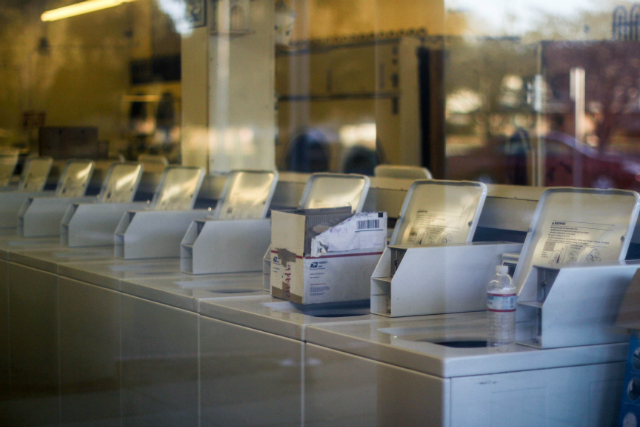
On Jan. 6, the Wash Mill Laundromat on East Eighth Street closed its doors after 40 years of business.

Another laundromat, the Quick Clean Center, used to be located on G Street but is no longer in business. After the closure of these laundromats, there remains only one laundromat in the city of Davis: The Laundry Lounge, located in the Anderson Plaza behind Save Mart.

According to Dina Connor, owner of The Laundry Lounge, they have expanded their hours to accommodate the increase in demand for laundry services. They now open at 8 a.m. on the weekends and 7 a.m. on weekdays and close at 10 p.m. nightly, with the “last wash” now at 9 p.m. instead of 8:30 p.m.

Prices to use washing machines range from $2 to $6.50, depending on the machine. Dryers are 25 cents for six minutes.

“I personally think there is a demand for only one laundromat [in Davis],” Connor said. “Sundays are a bit busier, but before the other ones closed we were barely scraping by.”

The recession of 2008 impacted many individuals, including small business owners.

“We signed our lease right before the recession started. We had to raise our prices, and we lost a lot of business to the Wash Mill,” Connor said. “It was hard. Our landlord’s rents are very competitive and in that sense, he’s very fair, but we haven’t been able to negotiate a rent decrease.”

Laundromats also face competition from companies such as Coinmach, the “industry leader in multifamily laundry equipment,” according to the Coinmach website.

Coinmach is the largest laundry equipment service provider in the U.S., operating equipment at over 80,000 locations in need of laundry facilities, such as apartment complexes.

Companies such as Coinmach partner with managements and provide and service the laundry equipment for communal laundry facilities.

“Apartments essentially have mini-laundromats,” Connor said. “The laundromats in Davis are competing against that. We have to pay our own utility costs, and they [companies such as Coinmach] don’t have to.”

Laundromats also face the issue of being privately operated enterprises that also provide a service, according to Max Connor, co-owner of The Laundry Lounge and brother of Dina Connor.

“Laundromats provide a community service, but they’re also a business,” Max said. “There are certain realities involved with running them as a business.”

These realities include the competitive nature of the market system.

“The Wash Mill was a typical laundromat — no attendant, open 24 hours a day and [the owner’s] costs were so low because she had no employees and a very low rent,” Dina said. “Businesses aren’t forced to be competitive when their rent is so low.”

The former owner of the Wash Mill, Sharon Miller, could not be reached for comment. On the Wash Mill door there was a sign that read: “To all of my friends that have used my Laundromat for 40 years, I would like to thank you. The landlord has given me 30 days.”

According to the Connors, the center that included the Wash Mill was sold, and the new leasing agent began charging market value for the rent. A Goodwill store will now be located at the Wash Mill’s former location.

The Connors looked into opening another laundromat at the former Quick Clean Center location on G Street, but they said it was not financially feasible. It is not evident that another laundromat will open in Davis any time soon.

“No one has signed a lease yet,” said David Macko, leasing agent for Nor Cal Commercial Real Estate in regard to the G Street property. “We are talking to several parties, but my role is to find the most suitable tenant for the building.”

The Laundry Lounge is considering other ways to expand their services for the community after the closure of the Wash Mill.

“We’re looking at something called laundry taxi — we’ll pick up your laundry for a nominal fee, you go here yourself and do your laundry and then we’ll drop it back off for you,” Dina said.

The goal of this service is to make laundry easier for those without cars so they do not have to haul loads of laundry by foot, bike or bus, according to Dina.

“We’re going to start offering it this spring and see if there is a demand for it,” Dina said. “So far we’ve heard from one person who is interested.”

MEREDITH STURMER can be reached at city@theaggie.org.

Memory networks

Researchers from UC Davis and the University of Texas Health Science Center at Houston have revealed the various parts of the brain that work together to recollect memories.

According to Andrew Watrous, the lead author of the study and a UC Davis graduate student, other researchers and doctors have looked at the brain through fMRI scans, but with less direct methods.

“The problems [with past methods] are first, indirect measurements and second, slow resolution or time to develop,” Watrous said.

In contrast, the new method provides new insights by taking far more detailed brain scans and taking scans of a larger area.

“[We] recorded different areas of the brain simultaneously such as the frontal and parietal lobe and areas that were thought to be key in memory retrieval. [The] advantage is that we’re recording brain activity in various areas while we are spatially aware of them,” Watrous said.

Using these recordings, the researchers could record not only which parts of the brain were activated, but when they were activated as well.

“We were the first group to combine these recordings and graph theory,” said Arne Ekstrom, senior investigator and an assistant professor at the UC Davis Center for Neuroscience.

The approach of graphing the recordings of areas of the brain provided a fresh perspective for the study of memory recollection.

In order to record the activity, electrodes were placed inside the skull.

“We work with a neurosurgeon, such as Nitin Tandon. He dissects part of the skull and places the electrodes on the brain in multiple locations, puts the skull back on and the patients recover,” Ekstrom said.

The patients were individuals suffering from epilepsy. Due to their history, the researchers understood what parts of their brain were affected by epilepsy and how they might have been involved in recollecting memories.

In addition, according to Watrous, the neurosurgeon placed the electrodes on both the healthy and the epilepsy-affected parts of the brain to fully comprehend the process of memory recollection.

“You can place the electrodes on top of the brain and they can be read through the scalp. So what is unusual [about this method] is the number of electrodes placed, [providing] unprecedented access to the different signals into the brain,” Ekstrom said.

The more electrodes are used, the more accurate the readings will be, since each electrode is responsible for recording a smaller part.

Through the study, the researchers found that there were different frequencies regarding the type of memory, such as temporal versus spatial.

“The brain resonated at a lower frequency [when considering judgments about space in comparison to judgments about order or time],” Ekstrom said.

The researchers observed these frequencies by considering their oscillation as recorded by the machinery.

“Think of a wave on the ocean. A surfer at the top of the wave has a lot of potential energy that they use as they ride down. We can use these recordings to estimate the frequency components using a variety of methods, such as Fourier transform and wavelet transform,” said Christopher Conner, a researcher on the University of Texas team responsible for data collection.

“Low frequency waves have very high amplitude. These are the huge waves the surfer actually rides. They come once every 10 to 20 seconds. Very high frequency waves have small amplitude. These are the little ripples you see on the top of the wave — just a couple inches tall, hundreds of them per second,” Conner said. “If you look at the wave, there are more ripples at the top than the bottom. It’s the same way with our recordings. What we did was to see how the high amplitude, low frequency waves coordinated the smaller ripples between areas. To push the metaphor to the extreme: Tsunamis travel thousands of miles, ripples don’t. So if you want to send information a long way, use the low frequency range to do it.”

Those ripples or frequencies were recorded while patients learned about new environments or a specific order of activities in the day. When patients attempted to recollect those memories, the researchers would examine the frequencies and the areas involved in recalling the memory.

From this study, researchers glean another insight toward how the human brain works.

“In that sense, we must know how they communicate with one another. This work represents a crucial step in that direction — that areas can use different carrier frequencies to align information transfer,” Conner said.

For future expansion of the study, Ekstrom has considered studying two ideas: what happens if we disrupt the network, and the use of fMRI to map graphs of the human brain to facilitate understanding of the memory recollection process.

According to Conner, brain function can only be truly understood in the context of how the whole brain network operates.

VICTORIA TRANG can be reached at science@theaggie.org.

Getting ready to rumble

As natural disasters go, earthquakes are among the most destructive, as well as the most mysterious. Originating beyond the range of direct observation, miles below the surface, they usually strike with little or no warning.

The magnitude 9.0 Tohoku earthquake and tsunami that devastated Japan on March 11, 2011 was a humbling reminder that even the world’s most earthquake-prepared nation could be overwhelmed by sudden catastrophe.

But such megaquakes are rare, once-in-a-1000 year events in a given region. The majority of earthquake damage, according to UC Davis geophysicist John Rundle, is caused by earthquakes in the range of magnitude 6 to 7. Because the magnitude scale is logarithmic, every whole number represents 10 times the power of the preceding whole number, meaning that a 9.0 earthquake releases 100 times the energy of a 7.0.

These relatively smaller, but still powerful, quakes might occur in seismically active regions every decade and can wreck a city, as in the case of the 7.0 Haiti quake of 2010 or the 6.3 Christchurch quake of 2011.

“These earthquakes are much more significant, they occur much more frequently and there’s a reasonable chance of forecasting them,” Rundle said, speaking from Japan. He traveled there last week to help establish an institute for multi-hazard studies as a collaborative venture of the Association of Pacific Rim Universities, which includes UC Davis.

Rundle is part of a team of physicists, geologists and computer scientists at UC Davis working to improve statistical models that forecast the likelihood of medium-to-large earthquakes in specific areas within intervals of months or years. The basic principle is to use sequences of smaller earthquakes to find patterns that can be used to predict larger ones. One of the key foundations of such work is the well-established relationship between the number of small earthquakes and the number of larger earthquakes on a given fault system, known as the Gutenberg-Richter law.

A major challenge facing earthquake researchers is the lack of direct measurements of the stresses along a fault system that lead to the rupture we feel as an earthquake. Instruments placed in boreholes can sample only isolated points along the system, and even then, only measure changes, rather than absolute values, of the mechanical stress of the constantly shifting crust.

By sticking to observables — the sequences of earthquakes recorded by seismometers around the world as well as sedimentary records of past events — some regularity in earthquake behavior can be detected over long periods of time. The challenge of forecasting has been working these statistical generalizations down to reliable forecasts on timescales relevant to disaster planning and risk management.

One outcome of this effort is Open Hazards, a company Rundle and his colleagues founded to make the practical results of their work on earthquake forecasting available to the public. Among other things, its website allows users to produce personal earthquake forecasts based on location. (Davis locals can rest easy, with a 0.09% chance of an earthquake greater than magnitude 5 hitting within 50 miles in the next month.)

Another approach to forecasting attempts to model the physical interaction of earthquake faults with each other to reproduce what researchers hope are naturally occurring patterns of earthquakes. Virtual California is one such program that models the crust in 3 x 3 kilometer sections overlaid with known faults that trade off stress to one another over long stretches of simulated time.

“We don’t know what the state of the earth is now, but we let it run forward and hopefully there will be regular patterns,” said Eric Heien, lead developer for the UC Davis-based Computational Infrastructure for Geodynamics, a group which develops computer model simulations for deep-earth processes.

While forecasts speak in the language of probabilities, short-term prediction has held out the promise of certainty — the type that would be needed, for example, to evacuate an area prior to an earthquake. But such certainty has been elusive, in large part because definitive precursor signals have been notoriously inconsistent.

UC Davis geology professor Donald Turcotte said that while laboratory studies of fracturing rock and other simulated earthquake experiments suggest that seismic precursors should occur as stresses build toward an earthquake, foreshocks are by no means consistent precursors to major earthquakes. This seems to suggest that the geophysical mechanisms of earthquake formation are still far from understood.

Turcotte said he is also skeptical of efforts to detect non-seismic precursor signals, such as electromagnetic emissions that some researchers have sought to connect to earthquake formation. The basic problem is separating any perceived precursor from background seismicity.

“There are periods of time where people think they see glimmers of hope, and then they seem to recede,” Turcotte said. “The hope of doing accurate short-range prediction is not all that good.”

Despite the many uncertainties inherent in earthquake science, one certainty stands out: the growing danger of natural hazards to global populations.

“One of the reasons that disasters are so much larger these days is because global populations are moving into risky areas,” Rundle said. “It’s certainly not true that the earthquakes are on average bigger, but people’s exposure is growing exponentially and therefore so is the cost and the death toll.”

OYANG TENG can be reached at science@theaggie.org.

Researchers working on cure for those wild weekends

The dreaded hangover — the punishment of a night out for college students. With the headache, nausea and sensitivity to light, it will ruin your next day and make you regret everything when you have three midterms and a lab report due that week.

What causes a hangover in the first place?

“[It is a] combination of factors including too much alcohol, which is a toxin and is metabolized to even more toxic substances, like acetaldehyde, that must be further metabolized and excreted to prevent further toxicity,” said Thomas J. Ferguson, the Medical Director at the UC Davis Student Health and Wellness Center. “The most important factor is to avoid ingestion of too much alcohol.”

UC Davis brewing professor Charles Bamforth has a similar opinion.

“I preach moderation and responsibility — i.e., do not get the hangover in the first place,” Bamforth said.

Dedicated partiers should not fear, for doctors have been researching a real hangover cure. Researchers at UCLA have put together two enzymes in a pill that, when tested, significantly increased the rate of alcohol metabolism in the body.

“We used two enzymes, alcohol oxidase, capable of oxidizing alcohol into acetaldehyde and hydrogen peroxide, and catalase, capable of decomposing toxic hydrogen peroxide into water and oxygen,” said Yunfeng Lu, professor of Chemical and Biomolecular Engineering at UCLA and the principal investigator for this project.

Paired together in a polymer casing, the two enzymes work as a team to help remove alcohol from your system. One enzyme will break down the alcohol while the other will complete the processes by then breaking down the hydrogen peroxide, which the first enzyme creates, to water and oxygen. These extra enzymes take the strain out of your liver and make your recovery much faster.

This product has been studied thoroughly and no side effects were reported in the researchers’ experiments. The lack of side effects is especially promising since the researchers hope to be able to use their product on humans.

“I am certain that as described, this medication would come under some pretty close scrutiny because the enzymes that metabolize alcohol may have other effects in humans. That is, they could interfere with other metabolizations and potentially place the individual at risk,” Ferguson said.

There are still some steps to go before the medication could be approved, but the researchers are already halfway there.

“The digestion of alcohol in the human body consists of two steps, from alcohol into acetaldehyde, and from acetaldehyde into acetic acid. We have developed the enzyme for the first step,” Lu said. “We are currently making the enzyme for the second step. Once this is done, we can pack the enzymes together and will have a complete solution, a product everyone can use within two years.”

Though this is a discovery on its own, Lu and his colleagues have done more than just fix your hangover. The creation of a nanocomplex of enzymes is the first step in creating solutions for a wide range of problems. The new doors being opened can potentially lead to a wide variety of “cures” for behavior-induced sickness.

KELLY MITCHELL can be reached at science@theaggie.org.

Column: How to study

1

Memory

Finals week is nearly here. There shall be too much caffeine. There shall be too little sleep. There shall be ramen and writing papers all night. There shall be the Scantron 2000.

Sharpen your No. 2 pencils, steel your minds and prepare to run the gauntlet. Normal working hours do not apply anymore, if they did at all before.

We will remember what we’ve learned, or learn to remember all of it the night before the exam. Whether we’re cramming or not, memorization is an inescapable ritual of finals week.

To be fair, UC Davis is not based on rote learning. Professors do not prioritize mindless memorization over a deeper understanding of material. Some repetitious drilling is necessary, but many teachers do well by requiring us to think critically about our subjects.

Nonetheless, we will memorize if we want that framed diploma, and the job that might come with it.

So, some information on how to memorize your way to an A:

Don’t find one quiet place to study. Find several. A study by UCLA’s Robert A. Bjork, detailed in an article by The New York Times, found that studying in two distinct locations is better than studying in one.

This is because our minds are constantly searching for ancillary associations for our memories. We may be focusing on reading Plato for a political science final, but we’ll also remember the smell of the dank corner of the library, the hum of the fluorescent lights.

Moving outside to the courtyard, with the fresh air and sunlight, to study tectonic plates for geology class will make those memories, and their associations, distinct. Thus, recall during the test will be much easier.

Next, remember that rehearsing the test is the best way to prepare. Studies done by researchers at the University of Purdue found that retrieval practice is the best way to retain information.

Students who took a memory test after reading did better than students that were made to study the material repeatedly, or draw elaborate concept maps to describe what they were taking in.

The tested students understood the material more fully, scoring higher when questions required them to make inferences about the text. They also remembered the information longer than their counterparts.

We shouldn’t spend too much time re-reading textbooks or scrolling through lecture slides. Instead, make flash cards, or devise some other way to directly test your recall ability. Practicing the art of remembering is essential to doing well on a test, no matter how well we feel we know the material just by reading.

Also, stop highlighting, stop underlining. A study published by the Association for Psychological Science found that these are among the least effective tools in test preparation.

The analysis shows there is no measurable benefit to highlighting. We might as well save the ink and just read the text. Similarly, researchers say summarizing the main points of material is time that could be spent more efficiently in other ways.

Covering a variety of material within one study session, like interspersing different types of math problems, aids recall and comprehension. According to a study done by the University of South Florida, this is superior to blocked studying. As they put it, instead of “aaabbbccc,” think “abcbcacab.” In this way, we can compare and contrast the things we learn more directly, giving them a more distinct place in our mind.

Also, committing to shorter study sessions, over longer intervals of time, aids recall. In other words, we should study smaller amounts of material each week, rather than cramming it in during a bleary-eyed all-nighter.

If you are anticipating an all-nighter, know that sleep is crucial in forming memory. There likely will be a point where sleeping will be more helpful than studying.

Finally, stimulants like Adderall should be treated warily. They offer inhuman focus and energy, but with serious risks attached. These medications are a class 2 controlled substance, the same as cocaine. Taking them irresponsibly can lead to dependency, needing higher and higher levels to remain functional. Anxiety, depression and sleeplessness are several other side effects. Taking Adderall may be self-defeating in the long run.

With that, may your pencils be unerring, and your papers and projects impervious to red ink. Best of luck everyone.

SEAN LENEHAN thanks you for reading this quarter. He can be reached at splenehan@ucdavis.edu.

Whistleblower report calls for change in UC Medical Centers

1

A whistleblower report was recently released alleging a myriad of issues within the UC Medical System that are supposedly detrimental to patient care.

The report, titled “A Question of Priorities: Profits, Short Staffing, and the Shortchanging of Patient Care at UC Medical Centers,” was released by AFSCME 3299, the statewide union of University of California service and patient care workers. It compiles a list of concerns about practices at the five centers that make up the UC Medical System: UC Davis, UC Irvine, UCLA, UC San Diego and UCSF. These concerns were brought forward by patient care advocates, independent investigations and frontline care workers at the medical centers.

The main problem alleged in the report is a fundamental shift in priorities in the UC Medical System, leading to a decrease in proper patient care.

“The biggest problem that needs to be addressed is the problem of priorities. There’s been a culture shift that is a result of the policy passed a couple years ago that gives budget autonomy to each medical center,” said Kathryn Lybarger, president of AFSCME 3299.

The UC Medical System earns $6.9 billion a year in operating revenues and millions in profits, according to the report. With each medical center keeping and controlling the money it brings in, the report states that there is incentive for management to run medical centers as individual profit centers instead of state institutions. Efficiencies, or cost-cutting measures, have been implemented across UC medical centers, but the report claims that many of these efficiencies are saving money at the cost of serving patients.

UC spokesperson Steve Montiel said UC is at a standstill with the union in negotiations regarding contracts.

“[AFSCME 3229] has a habit of trying to negotiate contracts in the news media rather than at the bargaining table. We have reached an impasse in negotiations and this is nothing more than a tactic to try to gain bargaining leverage. Our medical centers are some of the best in the country, with high-quality coverage and very high-quality treatment,” Montiel said in response to the report.

The university is still in negotiations with AFSCME 3229, according to Montiel.

Union workers have been attempting to gain the attention of management at medical centers for some time and put together the report in hopes that it may serve this purpose, according to Lybarger.

The report includes a number of accounts — from independent reports, inpatient discharge data and frontline care providers — that raise concerns about not only the quality but also the safety of care given at the medical centers.

Instances of patients falling when trying to go to the bathroom and dried blood being left in the crevices of operating tables are mentioned in the report. Lack of sanitation can lead to dangerous infections in patients.

“Some of the examples are really egregious,” said Todd Stenhouse, a member of AFSCME 3229.

The report highlights Findings of Immediate Jeopardy, which according to the report is defined by the State of California as “situations in which the licensee’s noncompliance with one or more requirements of licensure has caused, or is likely to cause, serious injury or death to the patient.”

Instances in the report include a sponge being left in a patient post-operation and a surgical incision being made in the wrong eye of a patient.

“Patients and their families suffer devastating consequences when infections occur during hospitalization. My own daughter suffered this fate and was left permanently disabled for the rest of her short life from a surgical site infection. I have personally witnessed the lack of cleanliness and surface disinfection that is needed in any healthcare setting,” said Julia A. Hallisy, founder and president of the Empowered Patient Coalition, in an email interview.

Understaffing is also an issue listed in the report.

“Bedside staff no longer [have] the time to comfort and educate their patients, which leaves them frustrated and questioning whether or not they want to stay in their profession. They have lost the joy that should be an integral part of being a healthcare provider,” Hallisy said.

The report also claims a lack of adherence to sanitation standards and VIP care being given to some patients over others. Financially, the report highlights a disproportionate amount of funds going to management income and hiring, while frontline care workers are being cut. There is also a focus on building new facilities when current ones are not being properly maintained, according to workers, advocates and AFSCME.

The report claims that all of these larger issues boil down to one thing: a shortchanging of patient care.

“We are not opposed to growth, but growth at the cost of patient care is not OK. It’s hurting real people,” Lybarger said. “The lack of care results in compromising patients’ dignity and maybe threatening their lives.”

A set of recommendations was offered in the report, focused around increasing oversight (with legislative hearings) and implementing more investigations by the California Department of Health. The report also calls for an increase in training to improve staffing and safety standards.

It remains to be seen if any changes will be made in the UC Medical System because of the report.

LAUREN MASCARENHAS can be reached at campus@theaggie.org.

Tech Tips: Save some time while studying

The problem:

Finals are just around the corner. We all know what that means: the library has never been so packed and you are Googling the symptoms of a caffeine overdose (just to be safe).

The icing on the cake? In that post-midterm slump you decided to treat yourself to a few days off of class. It’s no big deal, right? And besides, your professor podcasts each lecture anyway. All you have to do is listen to the podcasts on your own, sometime when you aren’t so tired, and it’ll be like you never missed class at all.

Well, time’s up. It’s now or never. That final date just keeps getting closer and nothing you can do will change the fact that you still actually have to sit there and listen to multiple hours of lecture.

The solution: Audacity

Shorten the podcast. How? “Audacity,” a program available for both Mac OS and Windows, that enables you to change the pace of almost any sound file. A quick Google search will take you to the app’s website, where you can download it for free.

Once installed, simply open the program and drag the podcast you need to shorten into the window. It may take a few seconds to upload. Then highlight the whole track (Ctrl + A), go to the “effect” menu and choose “change tempo.” From here, you can make it as fast as you want (or as slow, if you’re a tad masochistic). I recommend choosing 20 percent faster if it is your first time going through the material. This will shave roughly 10 minutes off of a 50-minute lecture.

At this speed, you can still clearly understand most professors and will be able to take notes on the most important concepts. If you want to listen to the podcasts of lectures that you actually went to, you can go all the way up to 30 percent faster. This will take off closer to 15 minutes, but it also starts to become a little too fast to understand easily, so having at least some memory of what was said will be useful. Though saving 10 minutes may not seem worth the hassle, just think of how many classes you have and how many hours of lectures that will be, and you might reconsider.

Pro-tip:

Don’t try the “change speed” effect. It will make your professor sound like a chipmunk, and trust me, it’s impossible to learn from a chipmunk. Also, this program is originally designed as a music editor. As such, it is capable of doing far more than simply speeding up podcasts.

So when finals are over, try your hand at making remixes. It’s pretty entertaining and a great waste of time if you don’t have plans for break.

KYLE SCROGGINS can be reached at science@theaggie.org.

News in Brief: Assault investigated as hate crime

0

An assault that occurred on Sunday at around 3 a.m. left 31-year-old Mikey Partida with major injuries after being severely beaten.

Partida was attending a house party at the 300 block of I Street. On his way back to the party to retrieve his keys, a man began kicking and beating Partida while yelling out homophobic slurs, according to the Facebook page Mikey’s Justice Fund.

The Facebook page was created to raise money for Partida.

Davis Police are currently investigating the incident as a hate crime. According to Lt. Glenn Glasgow, Partida may have been targeted due to his sexual orientation.

Partida suffered a fractured skull, brain hemorrhaging, multiple face fractures and a head laceration, according to Mikey’s Justice Fund. Additionally, he suffered bruising and swelling around his eyes, and trauma to his ear.

Glasgow said to The Davis Enterprise that details are still vague and Davis Police have not determined if there was a witness.

A UC Davis Medical Center spokesperson said to The Davis Enterprise that Partida was listed in good condition Monday afternoon.

Another man was involved and suffered minor injuries, but refused medical aid. His relationship to Partida is still being determined.

— Claire Tan

Column: Suckers

In some dialects, the term “sucker” refers to one who is easily swindled or deceived. The natural world isn’t without its share of suckers in this sense. For instance, the cuckoo is a species of bird whose key reproductive strategy involves laying eggs in the nests of unsuspecting other species. The unfortunate parents fail to notice the difference and raise the newborn at no cost to the cuckoo. A sucker could literally be born every minute.

Of course, suckers exist outside of the world of birds. There’s a story that involves a very specific relationship. But before we get into that, I’d like to talk about some of the troubles that face plants in their day-to-day lives. A plant doesn’t necessarily care about matters of immigration, the economy or if Kim Kardashian is getting married … again. Instead, they’re focused on more local affairs. More typically, a plant will dedicate the lion’s share of its energy to ensuring that most of its leaves are receiving proper light, and that any offspring will be properly protected and distributed. Counterintuitively, modern parenting in humans has seen a shift away from sunlight.

Humans like to consider themselves innovators. They’ve created spectacular transport systems like the Honda Odyssey and Chevy Suburban to facilitate the safe transit of offspring. It’s important to realize that plants are just as capable of dropping the kids off at the soccer field as the rest of us. They harness the wind to disperse spores, and produce a thick layer of cells around embryos called an integument. The integument and seed coat are incredibly resilient innovations and also protect from side-collisions. Some plants grow thorns to catch would-be predators.

One symbiosis that formed to aid the plants with dispersal came several thousands of years ago. Animals were drawn in by the carbohydrate-rich fruits that contained seeds. Through time they began to nest and live near these plants. In exchange for the sugary fruits of the plants, the animals provide protection. Essentially, for little to no cost, these plants would grow undisturbed and could actually experience higher reproductive success.

Of course, not all partnerships are equal. Often, circumstances change, one steps away a clear victor and the other is left a sucker. One literal sucker is the common carib hummingbird, native to Indonesia. These birds have long existed with a particular species of flower, the heliconia. Hummingbirds are burdened with an incredibly high energetic demand for daily life — they beat their wings absurdly fast, at a rate of 12 beats per second. This high energetic demand means that the birds cannot go too long between meals. The heliconia have evolved a cunning system to keep the birds coming back for more. By rationing the nectar released, the heliconia can keep the hummingbirds around to pollinate the plant indefinitely. The birds are enslaved by their plant and will fight beak and claw to ensure they have a steady supply, much like some Northern Californians.

As animals, people have a pretty high opinion of their own agency within relationships. That is to say, we often consider mobile animals as the ones who set the terms and conditions. But even in interactions with humans, some plants just scroll to the bottom and click OK. The modern iterations of corn, grains, legumes and even apples and oranges have integrated so perfectly into the prevailing system ensuring not only survival of their respective species, but many prosperous generations to come.

Humans have done a number of things to alter the success of these plants — they’ve selected for dramatically altered genomes, setting the stage for plants with high rates of disease resistance and low probability of detrimental mutation. They’ve cleared unfathomable areas of land for the growing and maintenance of crops, and they’ve developed efficient gathering and pollination systems to ensure an uninterrupted supply.

However, consider that millions of man-hours every year are dedicated to the proper maintenance of these crops. Yes, the effort isn’t wasted … people all over the world benefit from the rewards reaped from plants. However, the plants aren’t the ones dramatically changing their lifestyles for the sake of people. With or without the farmer, the orange tree will continue to photosynthesize and produce fruit. Ironically, it is us, the humans — tillers of fields and planters of seeds — who have unwittingly allowed ourselves to become slaves to the crops we think we control.

It is us who are the suckers.

ALAN LIN can be reached at science@theaggie.org.

Campus Judicial Report

0

Take one for the team
Transportation and Parking Services (TAPS) referred a student to Student Judicial Affairs (SJA) for using a stolen parking permit. In a meeting with a Judicial Officer, the student claimed that his friend gave him the parking permit and that he was unaware it was stolen. However, he would not disclose the name of the friend who gave it to him and therefore agreed to take responsibility for the use of the parking permit himself. The student agreed to accept a disciplinary probation as a result of his misconduct. In addition, he received a TAPS fine of $223.

Come what may
After a professor noticed two exams with similar incorrect answers to a short answer problem, she met with the students who had the highly similar responses. In separate meetings one student denied cheating and the other student admitted she had copied her answer from the other student. The professor then referred the student who admitted to cheating to SJA to help decide on an appropriate sanction. In a meeting with a Judicial Officer, the student agreed to receive deferred separation and perform 10 hours of community service.

Was that today?
A professor referred a student to SJA for suspected dishonesty when requesting an exam re-grade. When the professor met with the student, the student claimed that his scantron had been graded incorrectly and he deserved more points. The professor asked the student to bring his scantron so that he could take a look at it but the student kept saying he had forgotten the scantron at home or he had already made plans with his friends. This caused the instructor to suspect that the student was trying to buy extra time in order to borrow a classmate’s scantron, and when the student finally turned in the scantron for a re-grade, the professor noticed strange discrepancies on it. Suspecting dishonest conduct, the professor referred the student to SJA. In his meeting with a Judicial Officer, the student admitted that he had altered a friend’s scantron so it would appear to be his in order to receive a higher grade. The student agreed to accept deferred separation and to complete 30 hours of community service for his dishonesty.

Paleo with a Purpose: Green Curry with Shrimp

With all the Thai restaurants in Davis, you are bound to hit a crossroads at least once when deciding which place to try out next. Sophia’s Thai Kitchen or Thai Nakorn? Fast like Thai Canteen, or a more formal setting such as KetMoRee? There are eight Thai restaurants in downtown alone.

I can honestly say I’ve been to each and every one of them, and they are all unique in their own way. Each restaurant creates their own variation on popular dishes such as Pad Thai, Pad See Ew, Thai Fried Rice and various curries. Although I can’t pick a favorite restaurant, I can pick a favorite dish — green curry with prawns.

The best part? Curry takes only 15 minutes to throw together — perfect for the college student who doesn’t want to spend hours slaving away in the kitchen. Plus, by making it at home, you get the benefit of having your house smell like curry for the rest of the night. Yum!

Traditionally, curry is paired with steamed rice. But since rice is not in the Paleo food chain, I went for my cauli-fried rice recipe, which I’ve previously posted here.

Recipe
10 uncooked deveined shrimp
5 cloves garlic, minced
1 yellow onion
1 tbs. extra-virgin coconut oil
1 can (~14 oz.) full-fat coconut milk
1 chili pepper, sliced (optional)
2 tbs. Thai Kitchen Green Curry Paste
1 red bell pepper, sliced
1½ c. fresh baby spinach
1 c. prepared Cauli-Rice

Yields 2 servings

Directions
In a large stock pan, over medium-high heat, sautee shrimp with garlic and chopped onion in coconut oil. When shrimp turn a light pink, they are done. They will cook more inside the curry, so be careful not to overcook initially.

Add in coconut milk, chili pepper and curry paste. Mix in the curry paste well. I typically use a whisk, but a regular plastic spatula works as well. Get it all incorporated in — you’ll know it’s mixed in when the liquid goes from white (plain coconut milk) to a dark green.

Add sliced bell pepper to the curry and let simmer for 2-3 minutes.

Next, add in baby spinach. You don’t want to add the spinach in too early, because it only takes 1-2 minutes to wilt down.

Finally, in a large bowl measure ½c. of cauli-rice and top with piping hot curry. The heat from the curry will “cook” the cauli-rice through.

DEMSINA BABAZADEH invites you to send your favorite recipes to undergo the Paleo treatment to dbabazadeh@ucdavis.edu