38.1 F
Davis

Davis, California

Monday, December 29, 2025
Home Blog Page 964

College 101

0

While UC Davis seniors are gearing up to delve into the real world, it’s also that stressful time of year when high school students are getting ready for the much-anticipated college experience. Before this independent lifestyle, however, students need to actually get into college.

UC Davis offers multiple programs and student services which prepare middle and high school students for post-secondary school. Programs including Educational Talent Search (ETS), the Student Recruitment and Retention Center (SRRC) and the Early Academic Outreach Program (EAOP) provide these students with help for getting into colleges, as well as services to help them after they are accepted.

Founded in 1994, ETS is a federally funded program that helps about 1,700 students from 12 different high schools in Yolo, Sacramento and Solano counties. Sam Blanco, director of ETS, said that their program does not recruit students for UC Davis. Instead, it helps students throughout their high school and college academic careers, following them from their first year of high school until they graduate from college.

“We work with [high school] students throughout their years in high school and get them prepared for college,” Blanco said. “We help them graduate and continue to any type of higher education, whether it be community college, state, UC, private [or] out-of-state. We do workshops, presentations and work with them one-on-one.”

Blanco said that seven ETS staff members visit the high schools on a weekly basis, helping their students with “A through G” information (the requirements all California high school students must fulfill), such as time management, study skills, note-taking skills and advising. He said that high school seniors are given the most one-on-one time with their advisors.

“Our advisors make sure that they work with all their seniors on their college application, personal statements, scholarships [and] financial aid,” Blanco said.

ETS also contracts out to San Francisco-based Study Smart Tutors to offer students workshops on strategies for taking the SAT and ACT tests. Students in the ETS program can attend these workshops, which are held at UC Davis or the Davis high schools.

For further entrance exams help, EAOP also offers services designed to prepare students’ test-taking skills, according to the EAOP website. Designed for eighth to 12th grade students, the service teaches students how to take the exams, assess their strengths and weaknesses, and the importance of the tests. EAOP helps students with administrative preparations, such as registration and payment, as well as test preparation, including test-taking strategies, tips, test format and practice tests.

EAOP was founded in 1976 to help students meet requirements for college admission. With each UC school housing the program, EAOP is the University of California’s premier outreach program, according to the EAOP website. The UC Davis EAOP works with over 2,300 students in 28 schools.

“We outreach to high school and middle school students at underserved, under-resourced and underfunded schools surrounding [Davis], including Sacramento,” said Mai Moua Vang, a third-year community and regional development major and EAOP student outreach assistant. “We give them tools, guidelines and the extra support to help them get into college.”

While EAOP holds campus tours for students that visit the UC Davis campus, they also visit their middle and high schools weekly to hold workshops.

“The last workshop we held was called the ‘Game of Life’ [where] we placed students in the situation of an adult,” Vang said. “They had to make their own budget in terms of the career [they were] given, if they’re married or not or if they have children. [It] put them in their parents’ shoes and figure out how tough it is to be an adult.”

Vang said that these workshops help students develop life and decision-making skills. EAOP also offers Individual Academic Planning, where the staff talks to students one-on-one, looks over their transcripts and asks them how they are doing outside of school. EAOP helps students plan their schedules to make sure they take all required classes and meet college requirements.

The SRRC’s student-run programs also outreach to high schools and help students prepare for college. In the fall, SRRC hosts Apply Yourself, where they help high school seniors apply to colleges. In the spring, SRRC holds Senior Weekend Trip, where students admitted to UC Davis spend the weekend learning about UC Davis and spend nights in dorms or apartments with current students. This Spring Quarter, SRRC’s BRIDGE will also hold its first appeal process workshop for students who didn’t get into the UC they wanted.

“Speaking on behalf of the entire SRRC, our efforts are definitely to bring underrepresented and underserved communities into higher education,” said Kristian Marie Ocampo, a fourth-year communication and sociology — organizational studies double major and SRRC internal chair. “So we do various workshops that are academic, social justice or culture.”

Ocampo said that the SRRC holds College 101 workshops, in which high school students are educated about different forms of higher education and how to get into them.

“We look at students from a holistic perspective,” Ocampo said. “So we don’t look at just their grades and test scores. We look at their personal experiences. Being in California or out of state, [we look at] how they’ve experienced life so far and how that can benefit the kind of higher education they’re applying to.”

Other programs that help high school students are also available on campus. The Global Achievement Program offers international students with services such as academic and entrance exams preparation, advising and support. Also available is the UC Davis Young Scholars Program, a summer research program that introduces about 40 high school students to the world of research in the natural sciences.

While SRRC outreaches to the community, ETS and EAOP is a program students need to apply for. Everything, including application, is free, but students have to meet low-income requirements and must be economically disadvantaged. Students applying for ETS must also have higher than a 2.0 GPA.

For more information, visit ets.ucdavis.edu for ETS, eaop.ucdavis.edu for EAOP and thecenter.ucdavis.edu for SRRC.

“At every one of our huge events, we always do evaluations [afterward],” Ocampo said. “The evaluations we get from students are always positive, very validating. We’ve had a lot of good responses.”

JOYCE BERTHELSEN can be reached at features@theaggie.org.

Column: Why You’re Wrong

A little while ago, I wrote about how amazing plants are, and how they have been here longer than us, and will be here long after we are gone. I also promised that I would have some choice words for those individuals who did not believe in evolution’s capacity to bring about these amazing organisms.

Now, I need to clarify one point that many people often get confused. People who believe in evolution do not actually “believe” in evolution; they simply understand why evolution is true.

To be clear, there is no such thing as an “evolutionist.” You either understand it, or you don’t. Some people use cell phones. Some do not. Just picture a world where people who did not use cell phones called everyone else “phonists.” That is how stupid you sound.

Evolution does not mean random. It does not mean improving. It has nothing to do with the origins of the universe. It has nothing to do with morality, theological claims, atheism, racism, christianity, judaism or any other ideology. Evolution means change over time. To deny that things, and even the universe, change over time, is to deny what is right in front of your eyes. It is to deny reality.

Now, many of you may be thinking that this aggressive “preaching” of atheist, or even agnostic, ideology is just as bad as religious aggression.

Let me tell you exactly why you are wrong.

Religious aggression is telling everyone who doesn’t agree with you that they are going to hell. Religious aggression is going door-to-door bothering people with your beliefs. Religious aggression is threatening and killing atheists, homosexuals, or even other religious individuals who believe in a different sky fairy than you do. It is using taxpayers’ money to promote your dogma in public schools. Religious aggression is the astoundingly egocentric attitude that your beliefs entitle you to special privileges, and that the words in your book give you the right to deny people their basic civil liberties.

To put this in an even better perspective, “aggressive” atheists do not kill anyone for having a religion. Aggressive atheists promote the teaching of proven fact in schools, not archaic belief systems. They promote existing constitutional laws that prohibit the favoring of one religion over another. They write books about how illogical religion is.

But how can we have morals if we don’t learn them from our book? Well, sorry to burst your bubble, but morality and good morals existed long before the New Testament, or even the Old Testament. Nearly 4,000 years ago, Hammurabi’s code outlawed murder, theft and rape. The Hittite Code of Nesilim set forth similar rules 3,800 years ago, and added punishments for those caught breaking the laws. And 2,500 years ago, the 12 Tables of the Roman Empire outlawed theft, vandalism, tax evasion and assault. The New Testament was written less than 2,000 years ago … And it has some serious catch-up to do in many aspects of “morality.”

In the week of Feb. 3, 2013, scientists discovered a species of bacteria that makes gold as a waste product of its metabolism. The first bionic eye went on the market, allowing the blind to see. 3D printers were used to print living stem cells. Astronomical studies estimated that there are billions of habitable, earth-like planets in our galaxy. Scientists used genomic sequencing technologies to pinpoint the most recent common ancestor of all living placental mammals. All of this happened in just one week. That same week in religion? The Pope did what every good Catholic does … He pulled out early.

To those who still believe in creationism, I don’t blame you. I get it. It’s way easier to read (or not read) one fairy tale book than it is to read a bunch of difficult ones. You talk about how we all need a shepherd, but in reality, the only people who need shepherds are sheep.

If you think that your reasoning is more sound, and that you can do better than the scientists, then show us. The great thing about science is that the people involved are just as interested in finding out what is false, as they are in finding out what is true.

HUDSON LOFCHIE thinks that realizing he will never know everything is magnificent. The universe cannot fit in one man’s mind. He can be reached at science@theaggie.org.

News in Brief: Davis Downtown Parking Committee seeking input

0

The Davis Downtown Parking Committee would like individuals who typically drive to downtown by vehicle to take a three-minute survey regarding parking experience in downtown Davis.

The survey will help the committee evaluate parking in downtown, as well as provide information to the City of Davis’ Parking Task Force.

Individuals who wish to participate in the survey can do so at surveymonkey.com/s/AutomobileParkingSurvey until March 4. Those who participate may enter a drawing to win one of four $25 downtown Davis gift cards.

— Claire Tan

Paleo with a Purpose: Fried Plantains

Now that we’ve hit week eight, I can’t wait for spring break. When I think of spring break, I think of warm sun, beaches and most importantly, no midterms, finals or lab reports!

A couple years ago, we vacationed in Maui. I couldn’t help but reminisce in those memories while trying to avoid studying for my ochem midterm. One of my favorite things about Hawaii, besides obviously the beach, are the luaus. I’ve only been to one in my life, but that’s all it took to get me hooked.

My favorite items at luaus were plantains — the less-than-sweet sister of bananas.

The plantain is known for its “starchy,” firm texture. When plantains have a bright green exterior, the taste is totally bland and starchy. But as they ripen and get completely black on the outside (like bananas do) they become a bit sweeter.

The main difference between a ripe plantain and ripe banana lies in the cooking process. If you’ve ever gotten your banana to the point where it’s mostly black, you’ll know it’s a smushy, sweet mess. Plantains are entirely different, sure they are really sweet, but they hold their shape perfectly.

The luau we attended grilled the plantains with butter and brown sugar. But, the next morning for breakfast we had fried plantains with cinnamon and nutmeg, which were equally as delicious. The resort cafe used this dish on top of a short stack of pancakes, with some powdered sugar on top.

Well, I can’t eat those pancakes anymore, nor do I want to go anywhere near that powdered sugar. But the star of that dish were the plantains, and those I can paleo-fy.

Recipe
1 plantain, ripe
½ tbs. dark ground cinnamon
1 tsp. ground nutmeg
1 tsp. ground cloves
2 tbs. extra-virgin coconut oil

Directions:
Cut plantain into long slices. Sprinkle slices with cinnamon, nutmeg and cloves. In a saucepan over medium-high heat, melt coconut oil. Gently place seasoned plantains in saucepan. Cook for about 5 minutes on each side. They will crisp up but remain nice and soft inside.

DEMSINA BABAZADEH invites you to send your favorite recipes to undergo the Paleo treatment to dbabazadeh@ucdavis.edu

News in Brief: Day of Action information session today

0

UC Davis students and workers are organizing a Day of Action information session today in the Memorial Union Art Conference Room.

The one-hour session will address the Wednesday day of action, which opposes the University’s involvement in fossil fuels, the laying off of employees, cuts to wages and UC executives receiving annual salaries of over $400,000, according to the online event webpage.

Information sessions will be held from 5:10 to 6 p.m., 6:10 to 7 p.m. and 7:10 to 8 p.m.

Protests will be held on Wednesday at the Activities and Recreation Center (ARC) and Whole Foods Market.

— Muna Sadek

Textiles and clothing major withstands motion to close admissions

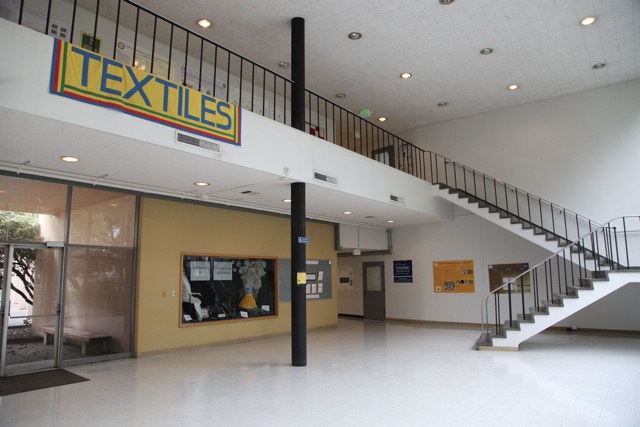
The Undergraduate Council at UC Davis rejected a proposal to suspend admissions to the Textiles and Clothing program Feb. 15. The program is currently undergoing a review by the Academic Senate’s Undergraduate Instruction and Program Review Committee (UPR).

The Textiles and Clothing program is part of the College of Agricultural and Environmental Sciences (CAES) and heads two majors: textiles and clothing and fiber and polymer science.

The program offers a number of classes for both graduate and undergraduate students. The division offers students the opportunity to earn a bachelors, masters or Ph.D. It is unique for a college program and the only one of its kind in the entire UC system, according to the Textiles and Clothing website.

“The unique strength of our program derives from disciplinary expertise in areas ranging from fiber chemistry, polymer science and textile engineering to consumer psychology and cultural studies as well as its interdisciplinary perspective on commodity-relevant issues,” the Textiles and Clothing website states.

Former graduate student in the Textiles and Clothing division, Margot Bennet, attributes her success in finding a job as a production assistant now to her time in the program.

“What I think is so extraordinary about our department is that we represent the importance not just of clothing but of textiles and the range of textile applications,” Bennett said in an email interview. “Textiles cross over with the agricultural sector, the chemicals industry among others, and have roots in the California economy. I think having a strong academic research program textiles is a no brainer and where better than at UC Davis?”

The range of topics covered in the program also allows for research to be conducted on an international level. The program is part of the National Textile Center, which is a federally funded university-research and graduate-education consortium.

“We have conducted research that has benefited hospitals, firefighters and fire safety; agricultural workers including pesticide applicators and customs workers, and as such have contributed to the public good on a state, national and global level,” Bennett said.

This is the second year in a row that the Textiles and Clothing division has been selected by the College of Agricultural and Environmental Sciences to possibly have its admissions suspended.

Concerns about the program brought to light in 2009 included the division’s small size and small number of faculty, as some were worried it would not be sustainable at UC Davis. Similar concerns about fewer amounts of students and faculty as well as lack of adequate lab space in a time when resources are limited were echoed by the UPR in 2012, sparking a motion to suspend new admissions to both majors in the Textiles and Clothing program.

“Funding is complicated with different types of money coming in at different times,” said department chair Margaret Rucker in an email interview. “Funding has been very much reduced lately due to the financial difficulties being experienced here in California.”

According to Tom Kaiser, Executive Assistant Dean of Administration in the College of Agricultural and Environmental sciences, the state general funding budget for the textiles and clothing department this year is $889,035. The college of agricultural and environmental sciences received $78,867,151 in state budget funding this year with a $1,720,000 reduction.

As of now, the Textiles and Clothing division is not in immediate danger of being shut down.

“At Friday’s Undergraduate Council meeting, we considered and rejected a proposal to suspend admissions to the major. We did the same thing last year, at which time we called for an expedited review of Textiles and Clothing,” said Matthew Traxler, Undergraduate Council chair, in an email interview. “Currently, there is no plan to either close the major to new students or to shut it down.”

If a proposal to close the majors altogether is ever suggested in the future, the process for closure will still not be simple.

“The formal process makes it possible to disestablish a major, but not without broad consultation and agreement or without careful planning so as to minimize the negative impact on current students, staff and faculty that could otherwise accompany a closure,” said Bruno Nachtergaele, Academic Senate chair, in an email interview. “A lot of thought, effort and resources go into creating and running a major. We cannot be cavalier about the process to disestablish one.”

LAUREN MASCARENHAS can be reached at campus@theaggie.org.

News in Brief: University administrators, ASUCD student leaders to hold press conference at UC Davis Jobs Initiative event

0

University administrators and ASUCD student leaders are scheduled to hold a press conference today at the UC Davis Jobs Initiative event at 8 a.m. in front of Freeborn Hall.

The press conference will include Interim Vice Chancellor for Student Affairs Adela De La Torre, Provost Ralph J. Hexter, as well as ASUCD President Rebecca Sterling, according to a Monday news release. The speakers will introduce the UC Davis Jobs Initiative.

The Jobs Initiative event, which will take place from 9:30 a.m. to 3:30 p.m., aims to assist undergraduate students acquire tools and information on pursuing a job after graduation.

The event will be also be divided into two sections: “Building your Experience” for first- and second-year students, which will assist students in developing strong resumes, and “Launching your Career” for upperclassmen, which will help anticipated graduates learn ways to market themselves to potential employers, the release states.

— Muna Sadek

Guest Opinion: Equal pay for equal work!

0

For the thousands of international students and researchers who come to U.S. universities each year, the academy is seen as a beacon of opportunity, where the people who work the hardest and the best ideas rise to the top.

As a union representing more than 6,000 postdoctoral scholars (also known as “postdocs”) at the University of California, this promise means something — the majority of our members are immigrants working in the U.S. on guest worker visas, and they are here because they have worked for years to reach the forefront of biology, physics, engineering and other fields. They have already earned Ph.Ds, and come to UC to perform cutting-edge research — think breakthrough cancer therapies, new models for the origin of the universe, stem cell research and more.

Imagine their surprise when after arriving at UC, they are told that although the contract the union negotiated states that health care coverage is available to all postdocs, it will not be extended to them. This is true despite the fact that their fellowships collectively bring in millions of dollars of research funding to the university each year and include salary support — making them effectively free labor.

Even though the contract provisions are clear, UC has decided to deny some international postdoctoral scholars the benefits to which they are entitled and that their lab mates receive. As a result, some have been forced to pay up to $1,200 a month for health insurance, and many simply go without or enroll in inferior plans they must pay for themselves. Some are covering small children or pregnant spouses, and they are all being put in an unfair, dangerous and extremely difficult position by UC.

For example, one UC Berkeley postdoc was told she would have to pay the full price of the plan herself — more than $400 per month — although all her colleagues in her department pay less than $10 per month to be covered by the same plan. She was not able to afford the high cost, so, with UC’s knowledge, was sold an inferior high-deductible plan by UC’s health insurance broker. Since then she has paid nearly $1,000 out of pocket for doctor visits and premiums.

Another UC postdoc came to the U.S. and was told he was on his own. Because as an individual he doesn’t have the purchasing power that large employers like the UC have, he was quoted over $1,000 a month for a similar plan the UC can buy for $400 a month. Postdocs work very tough hours and salaries start at less than $3,300 per month before taxes. $1,000 a month for health insurance just isn’t possible for them — which is why our union fought for access to affordable health care in our employment contract. UC’s unfair refusal to cover their benefits has already taken thousands of dollars out of their pockets, and every month costs them more.

Our members are dismayed to be adding another chapter to the UC’s troubling history of denying health coverage to people whom rightly and legally deserve it.

Late last month, UC graduate students and members of UAW Local 2865 made news after administrators exploited a loophole in the Affordable Care Act to enforce caps on students’ health care costs, causing one student to halt life-saving cancer therapy and another to experience near-paralysis after she was informed her treatment for a neurological disease was no longer covered.

It is hard to believe that these scenarios are unfolding in our own backyard, but they are. After all, it’s not just educational opportunities that attract great people to the U.S. — it’s hard-won rights like the principle of equal compensation for equal work. Our union has started a petition that has already gained hundreds of signatures — sign it today! We are demanding that UC end this discriminatory policy and reimburse the postdocs affected by this contract violation.

NEAL SWEENEY is a postdoctoral scholar at UC Santa Cruz and president of UAW Local 5810, the union for over 6,000 postdocs across all 10 UC campuses including about 900 at UC Davis. The petition can be found on Change.org.

Editorial: We vote yes

0

On Feb. 12, Senator Leland Yee (D-San Francisco/San Mateo) introduced Senate Bill 240. The bill would establish polling places at California State University and University of California campuses. It is slated to go through the Senate on or after March 15.

Senator Yee’s aim is to increase California voter turnout by focusing on student populations at public universities. As students who have a lot on our plates — we wish it were food — voting isn’t always at the top of our to-do lists. Just look at ASUCD Elections as an example, which often has a 20 percent turnout rate.

Historically, student voter turnout is low. Students living on campus are not able to vote as residents of Davis, and many opt to stay registered at their hometowns.

However, the number of youth voters is steadily climbing — one reason being the polls are located conveniently across college campuses.

According to an early National Exit Poll conducted by Edison Research, voters aged 18 to 29 represented about 19 percent of the national electorate in 2012. In 2008, youth voters represented about 18 percent and in 2004, 17 percent.

By instituting additional polling places on campus, students would feel obligated to vote. Additionally, closer places to cast votes would lend a sense of solidarity, with more students expressing increased interest in their community due to climbing voter turnout.

Luckily, UC Davis already has one established polling place at the Memorial Union. But only one. And who has time to wait in a long line just to cast a vote that will change how the country is run, how education is funded, when we live in a time in which waiting more than 20 seconds for anything is a bother?

So although student voters make up a small percentage of the national electorate, that doesn’t mean we can’t have a large influence. Size doesn’t always matter.

Tri-Cooperatives and Domes accepting applications

0

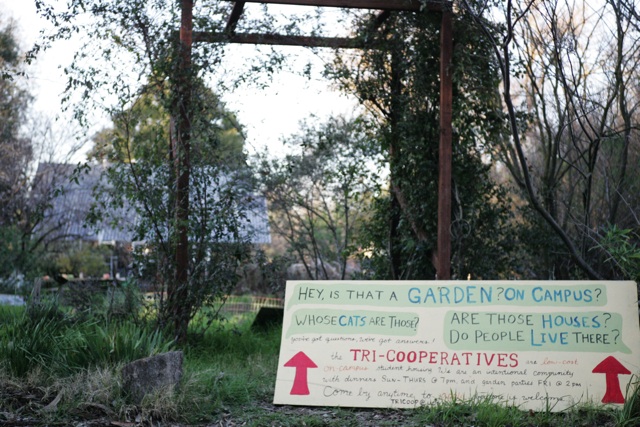
To dorm-room and apartment complex dwellers, the grassy pathways to the Baggins End Domes and the clotheslines hanging across Tri-Cooperative bedrooms seem like a remarkable way of life.

Both residences are cooperative communities which practice sustainable living. They follow Student Housing’s established practices, and are open to only UC Davis students. The Tri Co-ops are three on-campus houses across from the Regan Hall Circle which each rents out to 12 to 14 students. The 13 polyurethane-insulated fiberglass Domes are slightly farther from campus, and are home to 26. Both communities are now accepting applications for potential residents with an interest in cooperative and low-impact living.

“[Sustainability] is a concept that we’re really trying to work into our daily lives,” said Hillary Knouse, a fourth-year Spanish and education double major and Tri Co-op resident. “Some of the ways we do that are more attractive than others. There are cool things like gardening and getting food from our own gardens, and then there are things like, we don’t typically flush the toilets when there’s only urine in them.”

Both the Tri Co-ops and the Domes raise chickens and bees, and Knouse said that many of their sustainable practices are related to cyclical concepts — like using compost and the nitrogen in the chicken’s feces to fertilize the gardens.

Elli Pearson, a third-year sustainable agriculture and food systems major and resident Domie, however, pointed out that the definition of sustainable living varies from person to person.

“One thing that I can say across the board is that people here are very dedicated to eating non-processed foods. Nothing is a rule, but our dinners are always very healthy and always home-cooked,” Pearson said. “We like to grow as much food as we can, and people are interested in fermentation and baking their own bread. There’s a very distinct food culture here.”

According to Katherine Kerlin, public information representative from the UC Davis News Service, low-impact living is not the only prominent aspect of life in the Tri Co-ops and Domes.

“The Tri Co-ops look for students who will agree to live in a cooperative environment, [this involves] sharing chores for household duties, gardening and sharing meals,” Kerlin said.

Tri Co-op residents create a list of chores every quarter, covering everything from sweeping and raising the chickens and bees to taking care of finances.

“People pick things that they’ve either done before or that they want to learn about,” Knouse said. “That’s one of the really cool things about this community — chores are usually a really cool learning opportunity.”

One chore that every Tri Co-op student handles is cooking. Cooking in each house is handled by two people each night.

“It’s a lot like having a family dinner,” Knouse said. “Every day at 7 p.m., I know there’s going to be dinner.”

Like the family dinners, day-to-day living at the Tri Co-ops is highly social with a lot of people in relatively close quarters.

Knouse said that even with 14 people in the house, it’s easy to just close her door and have some alone time. If she’s feeling social and needs people, however, it’s a simple matter of going downstairs to the kitchen or living room where people are almost always around.

Socializing with each other is a large part of community living, according to Knouse, and one way residents encourage bonding is through house trips.

“Once a quarter we will decide on a trip. Usually it’s an overnight thing, and over the past years I’ve gone camping in different places like Point Reyes and Sonoma County, and stayed in a hostel in San Francisco,” Knouse said.

Like the Tri Co-op residents, the Domies also eat together and throw parties, and many of their day-to-day requirements are quite alike.

“Similar to the Tri Co-ops, [the Domes] attract students who are interested in living in a cooperative environment,” Kerlin said.

According to Pearson, living in the Domes is a pretty significant time commitment with four main responsibilities.

“One is that you have a cook night once a week. So four nights a week people will cook dinner, and you’re supposed to cook on one of them,” Pearson said.

The other chores include work parties, where all the residents get together and maintain the property, basic chores like collecting rent or caring for chickens, and lastly attending meetings every other week to discuss things like events and parties.

Pearson said that the community is a very social place as well.

“Dinners are always a social event — friends come over, and also people who are just interested in the community [attend],” Pearson said.

She also stated that there’s a lot of skill-sharing between residents, which can be seen through cooking, gardening and building things.

“What we’re most interested in is working in the gardens, growing things and doing creative projects,” Pearson said. “And there’s a lot of room within the chores to take on a project that interests you — if you are really excited about bee-keeping, that could be your chore.”

The main difference between the Tri Co-ops and the Domes seems to be in the property itself, rather than the social and low-impact way of life. While the Tri Co-ops are houses with living rooms, dining rooms, kitchens and approximately eight colorfully decorated bedrooms, the 13 Domes house only two students each.

Inside, the white semi-spherical abodes are surprisingly spacious, with a living area and work space on the first floor and a loft up above. In some, the loft is divided into two bedrooms, while other domes have a first floor bedroom and a single-person loft.

Though they provide different styles of sustainable living, both Knouse and Pearson agree that that cooperative living is far more social and interactive than typical apartment lifestyles.

“One of my friends moved in with me after living in an apartment — she felt like she never saw her roommates,” Knouse said.

Pearson also lived in an apartment for a year, and though she was close to her roommates, she said it was still too isolated of an experience.

“I didn’t know the names of the people who lived next to me, above me or below me. There’s no sort of interaction that occurs there,” Pearson said.

Knouse and Pearson also agree that the social aspects are their respective communities’ highest benefits.

“I think that living here, I’ve identified how to cohabitate — how to live alongside other people and get used to all their ticks,” Knouse said. “I’ve learned how to work with other people and not take things too personally.”

Pearson also maintained that living cooperatively teaches communication skills, which are invaluable in and beyond college life.

“I think a majority of problems stem from miscommunication, and living here you learn how to communicate in a really productive, experiential way,” Pearson said.

The Tri Co-ops are currently accepting applications for this coming spring and both locations are accepting applications for next fall.

“The most important thing for [the Tri Co-ops] is that we get to know our applicants,” Knouse said. “There’s a requirement of coming over for two dinners and a garden party. Applicants come by and we see A) do we get along with you and B) is this a community that you’re interested in?”

Knouse stated that this is important, since not everyone is cut out to live with 13 other people and urine in the toilet.

According to Pearson, the Domes are looking for people who can commit to a long-term residence, as a lot of knowledge needs to get passed over when students leave.

For further information on the how to live in the tri-co-ops for the upcoming year, email tricoop@ucdavis.edu or call 530-754-1310.

NAOMI NISHIHARA can be reached at features@theaggie.org.
Editor’s note: Full disclosure, Elli Pearson is a columnist for The California Aggie and Hilary Knouse writes for the The California Aggie’s food blog.

Aggies lose multiple nail biters, come home with two impressive wins

0

The central theme of the NFCA Leadoff Classic in Clearwater, Fla. proved to be “heartbreak” for the Aggies, as three out of the four losses could have just as easily gone in their favor.

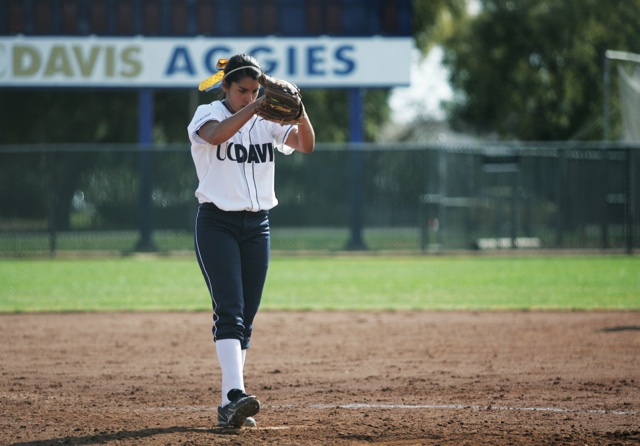
The weekend as a whole followed the same pattern, resulting in the addition of two more tragic losses to the Aggies’ record. Despite the losses, sophomore Justine Vela assumed position as the team’s leader for the weekend, posting two complete game shutouts which served as the team’s two sole wins.

Although the weekend proved to be grueling, the Aggies exited the tournament with more experience under their belts, and an overall record of 7-9.

Friday — UC Davis 7, Southern Illinois 8; UC Davis 3, James Madison 4 (8 innings)

To kick off play at the NFCA Leadoff Classic, the Aggies’ (5-5) first matchup of the tournament pitted them against the Southern Illinois Salukis (4-6).

The Aggies took the early lead in the first and added another two runs in the third to increase their lead to 4-0. The offensive streak was highlighted by senior Kelly Schulze’s addition of another RBI to her resume after doubling to score sophomore Krista Bava from second.

Going into the final inning, the Aggies trailed by two with the heart of their lineup coming up to bat. After seniors Megan Guzman and JJ Wagoner put themselves into scoring position, freshman Christa Castello came up with a clutch double to score both and tie the game at seven apiece going into the bottom of the seventh.

With the bases loaded and two outs away from victory for the Aggies, the Salukis managed to steal the win away with an RBI single which sealed the final score at 8-7. The heartbreaker moved the Aggies’ overall record of 5-6, while the Salukis improved theirs to 5-6 as well.

Immediately following the culmination of the agonizing defeat in their first matchup, the Aggies then set their sights on the next challenging opponent ahead, James Madison (5-1).

The first inning proved to be strong all-around for the Aggies, as freshman Leah Munden posted a one-two-three top of the inning to set the stage for the Aggies’ first run in the bottom of the inning.

Neither team posted another run until the fourth inning when the Aggies added another two runs off junior Chandler Wagner’s double to increase their lead to 3-0.

Once again, the score remained stagnant until an inning later in the sixth when James Madison’s offense caught fire, exiting the inning after adding three runs to level the score at three all.

With two outs and two on in the bottom of the seventh, the Aggies were unable to capitalize in scoring position, sending the game into extra innings.

Stranding 11 runners on base throughout the course of the game, the Aggies were unable to capitalize with key opportunities, picking up their second heartbreaking loss of the tournament to make their record 5-7.

Saturday — UC Davis 0, Michigan 6; UC Davis 1, USF 0

Kicking off the second day of play for the tournament, the Aggies’ first game of the day pitted them against the 15th-ranked Michigan Wolverines (8-2).

The Wolverines came out guns-blazing, scoring three in the first with the help of an error and timely offense.

In the second, Thweatt was replaced by Vela after walking the leadoff batter. Despite loading the bases, Vela allowed only one unearned run after a ground-out RBI. In the third, Vela was replaced by freshman Marissa Chapa, who occupied the pitcher’s circle for the rest of the game.

After scoreless third, fourth and fifth innings which showcased stellar pitching from both teams, the Wolverines struck again in the sixth, increasing their lead to 6-0 after two hits and an error.

In the end, the Aggies added another loss to their record (5-8) with the 0-6 defeat, while the Wolverines’ record skyrocketed to 9-2.

Despite the loss, Chapa’s brilliance proved to be a force for the Aggies, as she gave up only one earned run and one walk through five innings.

After losing to their first nationally ranked opponent of the day, the Aggies transitioned from the loss to prepare themselves for their second top-20 team, the 14th-ranked USF Bulls (6-6). The Aggies placed Vela on the mound in the hopes of relying on her experience and command to bolster the squad for the challenging task ahead of them.

Vela proved to have total command over her pitches, opening the game by striking out all three leadoff batters swinging to give her team the upper hand early. Into the second, the Vela show continued to dominate the game, striking out another two to increase her total to five through two innings.

With the first two innings proving to be a pitcher’s duel — only one hit recorded between both teams in the first two innings — the third featured the first sign of wavering for Vela as she gave up two hits, resulting in a close play at home which very nearly produced a run for the Bulls.

The bottom of the third inning proved to be the offensive highlight of the game, as it featured the first and only run scored by either team. With Castello on second, a double off the bat of Wagner proved to be the only run necessary to seal the deal in a 1-0 upset against USF.

Vela’s performance proved to be the focal point in the Aggies’ match-up against the Bulls, as she struck out 12 in her first complete game shutout of the season. What was even more miraculous was the fact that the Aggies (6-8) were able to come away with the win having only posted two hits in comparison to the Bulls’ six.

Sunday — UC Davis 1, Illinois State 2 (8 innings); UC Davis 2, Fordham 0

On the final day of play, the Aggies’ first matchup scheduled them to take on a tough Illinois State team (6-8).

In the first inning, UC Davis drew first blood, posting their first and only run off of an RBI single by Bava.

However, in the bottom of the third, the Redbirds tied the game at one apiece after a leadoff double, followed by a triple.

After the third, both the Aggies and Redbirds were unable to fire up their offenses, holding the score at 1-1 through the seventh to push the game into extra innings.

An unsatisfactory close to a close-fought battle came in the bottom of the eighth when the Redbirds’ runner on second moved to third on a sacrifice bunt, only to score on the next at-bat on a wild pitch.

The Redbirds claimed the 2-1 victory, adding yet another heartbreaking loss to the Aggies’ list for the weekend. With the loss, the Aggies’ overall record moved to 6-9, while the Redbirds’ became 7-8.

To close out the weekend of play on a high note, the Aggies looked to their final matchup against the Fordham Rams (4-5) with hopes of redemption from the multiple intense losses on the tournament.

Vela lived up to expectations in the pitcher’s circle, improving on her first complete game shutout from the previous day by allowing only a single hit in her second complete game shutout against the Rams.

The Aggies managed to score once in the fifth and again in the sixth off of clutch RBI sacrifice flies to swing the score of 2-0 in their favor. Vela closed out the top of the seventh in fashion by striking out two to secure the win for the Aggies.

Vela’s brilliant performance not only moved her win-loss ratio to 4-1 on the season, but also picked up the Aggies’ second win of the tournament, moving their overall record to 7-9.

Though the weekend featured numerous “down-to-the-wire” losses against challenging opponents, highlighted by two top-20 teams, the weekend proved to be an invaluable learning experience for a young Aggie team. UC Davis’ two recorded wins served not only as morale boosters after multiple heartbreakers, but also highlighted the team’s untapped potential.

The upcoming weeks’ schedule continues to provide the Aggies with formidable opponents as the team takes on rival Sacramento State in a double header this Wednesday, while on Saturday the team will travel to Moraga, Calif. to challenge Saint Mary’s in a two-game series on the Gaels’ home turf.

ALLI KOPAS can be reached at sports@theaggie.org.

New Harmony Mutual Housing opens in East Davis

0

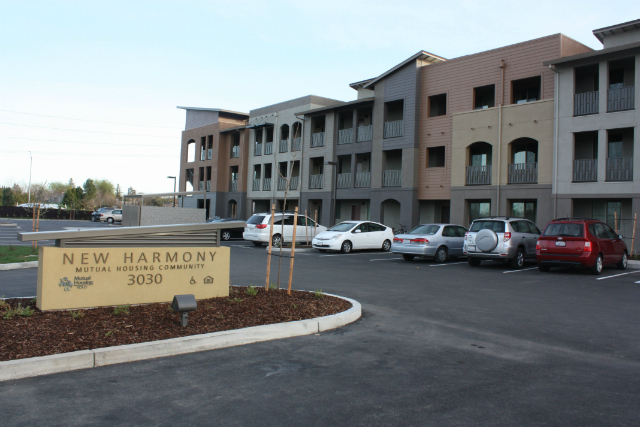
New Harmony Mutual Housing Association at 3030 Cowell Blvd. held its grand opening on Feb. 13 and opened for residential move-in on Feb. 1. Since then, New Harmony has met 57 percent of its occupancy.

There are 69 units available, made up of one-, two- and three-room apartments. To date, there are 200 residents.

According to a Davis City Council staff report, the city and its former redevelopment agency provided $8,434,391 for the project. Of the amount given, $6,643,895 was provided by the redevelopment agency and the remaining amount was given by federal HOME grants that the city receives to assist low-income households in Davis.

New Harmony is wheelchair accessible and environmentally friendly. The housing complex features solar panels — key contributors to its low price of housing — located on top of the roofs of the buildings. The panels produce 79 percent of overall energy consumption.

In addition, the complex is a green community with low-water landscaping because of the solar power that generates 75 percent of energy needs and electricity use.

“This saves the cost of energy since many living there have limited means to cover expenses,” said Vanessa Guerra, project manager at California Mutual Housing Association.

The pre-development started in 2009 by the California Mutual Housing Association. After the City of Davis approved funding, people in the neighborhood grew concerned about building low-income housing, thinking that the people living there would cause more crime, said Rachel Iskow, CEO of the California Mutual Housing Association.

Iskow said neighbors also expressed concerns about the location of New Harmony. Some believed the housing association is located too close to the freeway where there is particulate matter, which can be harmful to kids with asthma.

“Some pre-development concerns were dealt with by having studies done on the prevailing winds in that part of Davis, which were actually found to be cleaner on that side of the freeway,” Iskow said. “Also, a police chief came to a council meeting and said that the affordable housing development is not the typical cause of disturbances, but that student housing is the usual cause.”

California Mutual Housing Association was able to get the Davis City Council vote to move forward, and since construction started, there have been fewer concerns voiced. New Harmony apartments are primarily home to working families who work in Davis but cannot afford to live in the Davis community.

“I support the introduction of these complexes as there really is no denying that we need more affordable housing. The project was done in a manner that embodies Davis values and is respectful to the surrounding neighborhoods, so I see no compelling reason not to have them there,” said Cameron Smith, a third-year business major at Sacramento City College and Davis resident, in an email.

New Harmony is now fairly accepted in the community and is helping low-income Davis worker, according to Iskow.

“New Harmony helps get people out of their cars and reduces the commuting of Davis workers that live outside of Davis. Hopefully, now people [in the City of Davis] will drop their concerns,” Iskow said. “New Harmony is high quality housing. The people living there are just like them, working in schools and theaters.”

MELISSA GAHERTY can be reached at city@theaggie.org.

Editorial: Thanks, business manager

0

As members of ASUCD, we know how important the Association is to so many students. And most active members know how important Brett Burns is to the Association.

Burns is the ASUCD Business Manager, meaning he works with student government and unit directors to ensure financial stability within the Association. He’s the man behind the scenes, and he’s been dedicated to student success since he joined the UC Davis staff in 1998 and specifically ASUCD in February of last year.

Burns has accepted a position as Senior Assistant Dean for Administration at the UC Davis School of Law. It’s a level up, and we’re happy for him, but we’re also sad to see him go so soon.

Before Burns, we had former Unitrans General Manager Geoff Straw acting as interim manager, and before that, we had the legendary Mark Champagne, who held the position for a whopping 32 years. We hope the next manager is as enthusiastic as the others have been, and that they stick around a little longer.

We student leaders have lofty goals, with the Association acting as a training ground for bigger things. We need a financially solvent Association, but also one with a business manager that will allow students to take risks.

The ASUCD Coffee House started out as a hippie dream — a student-run alternative to corporate food service. Now it’s a thriving business and a major staple of campus life. The Bike Barn, Unitrans and Whole Earth Festival were once crazy ideas thought up by students, and now they’re respected institutions. Other, newer ASUCD units, like The Pantry and Aggie ReUse, could be similarly established sources of pride in the future.

We know that when the interim business manager is chosen, Burns will make the transition as smooth as possible. In the meantime, we encourage student leaders to continue dreaming big and hope the next business manager can assist with those dreams. And, of course, we thank Burns for all his hard work and mentorship over the past year.

Not always fun

0

You may not have noticed, but I think sex is awesome. In my perfect world, as long as everyone is being safe and consensual, I want them to have whatever type of sex makes them feel amazing and happy. And, importantly, I want refusal of or abstention from sex to be respected just as much as desire for sex.

Unfortunately, sex in the real world can play out very differently than the ideal. People can be careless, selfish and, at their worst, terrible and lacking in empathy. And that means that sex, in certain circumstances, can be an awful experience and/or leave you to deal with difficult consequences.

Today, we’ll go over what to do if you’ve had unprotected sex and what to do if you’ve been sexually assaulted. Reading about these topics (especially the second one) can be very difficult for some people, so if you need to stop reading now, do so.

When I say unprotected sex, I am referring to both instances in which there was hormonal contraception but no barrier and instances where there was neither. In both cases, I recommend calling the Student Health Center Advice Nurse first, as this allows you to discuss your concerns and get suggestions about the next steps to take.

The advice nurse hotline is 24/7, so they are available even when the health center is closed. So, if something happens Friday night, you don’t have to spend all weekend wondering what to do.

A main concern of having sex without a barrier is getting tested for STIs — particularly if your partner was not someone who knew/revealed their own STI status. You can schedule a rapid urine test for chlamydia and gonorrhea at the Student Health and Wellness Center (SHWC) via Health-e-messaging. If you don’t have access to campus resources, Planned Parenthood offers testing for a variety of STIs (the nearest clinic is in Woodland).

I also suggest that, as a preventative measure, you pick up a packet of emergency contraception (it’s cheapest at the SHWC pharmacy) and store it next to your condoms. That way, if you have unprotected sex, a condom breaks or something else goes wrong, you have backup on hand.

Depending on the circumstances, much of the above advice is applicable in the instance of sexual assault. However, before you worry about any of it, there are a few steps you should take.

First, get yourself to a safe place as soon as possible. If you want to report the assault, notify the police immediately (many people find that doing so helps them regain a sense of personal power and control). And, as much as possible, preserve the evidence of the assault. Save the clothes you were wearing at the time, and do not bathe, eat, drink or brush your teeth.

On the emotional/mental end of things, if there ever was a time to call in your support network, now is that time. Call a friend, family member or someone else you trust, who can be with you and take care of you while you deal with the aftermath.

Survivors experience a variety of emotions, from shock and disbelief, to anger, vulnerability and guilt. You may experience some or all of these reactions, and they may occur immediately or in a few days, weeks or months. So, try not to add more mental stress to yourself because you feel you are not reacting “appropriately.” Everyone deals with sexual assault in their own way. Most importantly, keep reminding yourself that what happened was not your fault.

If you are part of the UC Davis community, the biggest piece of advice I can give you is to contact the Campus Violence Prevention Program (CVPP). Their services are confidential, they refer survivors to the campus and community services that best fit their specific needs, as well as act as advocates.

The CVPP also supports survivors by accompanying them to hospital visits and interviews with law enforcement. Not only does this lessen the stress and anxiety that a survivor may feel about those situations, but it also helps those whose support networks are far away and cannot be physically present.

SAM WALL can be reached for questions at sewall@ucdavis.edu.

Mackey’s capitalism

2

As many of you are aware, John Mackey, the co-CEO of Whole Foods Market, is a supporter of capitalism. He has written a book along with Raj Sisodia, another businessman, called Conscious Capitalism, in which it is argued that capitalism has been misrepresented and unfairly criticized. Mackey believes that in fact capitalism has been responsible for incredible increases in standard of living and technological progress.

I agree with Mackey on these points, and I think even most opponents of capitalism agree with this last point. I also should say that I like Whole Foods immensely and enjoy buying their products — and here I want to set aside the issue of evaluating the business venture and instead focus on Mackey’s political views.

Mackey believes that we should all recognize that business is often not only, or even primarily, about maximizing profit. Instead, Mackey argues that most businesses start with a purpose or vision, such as providing people with healthy organic foods or making it easier and more efficient to navigate the internet, as Google has done.

There’s certainly a sense in which this is true, and important: It’s not the case that businesspeople are concerned with making money by whatever means necessary. Often they are passionate about providing good services or products that consumers value. But does this mean that capitalists do not or should not act selfishly?

Clearly, Mackey thinks so. But since it’s obvious that the majority of capitalists are not acting altruistically, there’s a gap in his argument. What ultimately motivates them? To Mackey, it is the flourishing of the business and the achievement of a certain vision.

But why does Mackey view profit pursuit and selfishness as lower purposes and therefore less praiseworthy?

It’s because Mackey accepts an erroneous view of self–interest. If we hold people like Bernie Madoff or the Enron executives as archetypes of selfishness, then of course it is evil and wrong.

But observe what this does: We group these corrupt, short-sighted, self-destructive individuals with others who are primarily interested in promoting their own lives but do so in a rational, productive and honest way — people such as Henry Ford or Steve Jobs, who pursue their own profit by providing others with values through mutual gain.

Clearly, there is an enormous difference between these examples. And Conscious Capitalism, despite many of its interesting points and arguments, ignores this.

What is evil is not the fact that dishonest or corrupt capitalists are pursuing their self–interests (in the long-term, they aren’t even pursuing their self–interests at all) — it’s that they see others as obstacles to their values, and seek to subvert others and turn them into victims.

Ayn Rand noted that if we accept the false, conventional view of selfishness, this “permits no view of men except as sacrificial animals and profiteers-on-sacrifice, as victims and parasites … it permits no concept of a benevolent co-existence among men …” (The Virtue of Selfishness)

Mackey’s defense of capitalism ultimately fails because it fails to acknowledge that capitalists are primarily after profit (in the broad sense that they are pursuing their self–interests), and that this is totally compatible with being passionate about one’s work and having a vision.

It is moral and just to reap the benefits of one’s efforts and judgment in creating wealth. Laissez–faire capitalism is the system that allows people to pursue their rational self–interest free from the coercive force of government regulations and wealth-redistribution, and this is why it is the ideal system.

When TRISTAN DE LIEGE is not busy shopping at Whole Foods, he can be reached at tflenaerts@ucdavis.edu.


Editor’s note: The print edition of this article ran on Feb. 26 with the incorrect headline, “Religion as power.” The headline in the online edition is correct.