57 F
Davis

Davis, California

Monday, December 22, 2025
Home Blog Page 149

Culture Corner

The Art Desk’s weekly picks for music, movies and more


By OWEN RUDERMAN — arts@theaggie.org 


Album: “The Head on the Door” by The Cure (1985)

I know that for a lot of people, choosing a favorite album is hard. It’s difficult to pick between albums that are consistently good throughout and albums that have a few mind-blowingly good songs. For me, though, the decision has never been difficult. That’s because The Cure’s sixth album, “The Head on the Door,” consists purely of mind-blowingly good songs from start to finish. Robert Smith’s legendarily ethereal, tragic and sometimes whispered lyrics are accompanied by swinging guitar, pounding drums and sinking bass. And you don’t even have to be emo or goth to enjoy the album — there’s something on it for everyone. Give this all-time classic album a chance.


Book: “The Stories of John Cheever” by John Cheever (1978)

This book, possibly more than any other, changed the way I view everyday life. Cheever’s stories evoke a sort of universal American nostalgia, featuring unforgettable imagery, scarily realistic characters and plots that leave you thinking, “Uhm, what just happened?” The book consists of 61 short stories, making it easy to read just a chunk or two at a time. It’s a timeless book that contains some of the best stories ever written by an American author. But don’t just take it from me — in 1979, “The Stories of John Cheever” won the Pulitzer Prize for Fiction, and in 1978, the book won the National Book Critics Circle Award.


Movie: “The Emperor’s New Groove” (2000) dir. by Mark Dindal

I’ve been watching “The Emperor’s New Groove” almost every year since its release in 2000, and let me tell you personally that no movie has aged so gracefully. This semi-hidden gem from Disney is hilarious and incredibly quotable. But it’s also incredibly well-acted, with heavy hitters like David Spade and John Goodman starring in the film. Trust me, this isn’t just a kid’s movie — there’s something in here for all ages to enjoy.


TV Show: “Spongebob Squarepants” (1998 – 2007)

Let’s get something clear right off the bat: I’m talking only about the first five seasons of “Spongebob Squarepants.” These are the quintessential episodes I grew up with. Now, I’m not trying to discredit the neo-modern episodes — in fact, I hear they’re pretty good. But for me, nothing comes close to the first few seasons. The humor and writing are just so incredibly well done, and the art and visual gags still hold up today, even if some think otherwise. Recently, I’ve heard deplorable comments like, “Phineas and Ferb is just a better Spongebob.” First off, the shows aren’t really comparable, and it isn’t against the law to enjoy both. But also, watch the second season of “Spongebob Squarepants.” You’ll be surprised at how much it makes you laugh.

Written by: Owen Ruderman — arts@theaggie.org

Food shouldn’t just be about calories

Eating healthy and sharing food with family and friends can help boost physical and emotional well-being


By MAYA KORNYEYEVA — mkornyeyeva@ucdavis.edu


Most of the time, we don’t think about what we eat. Sure, we often try to figure out a balanced diet, or at least fight impulses to go to In-N-Out every couple of days. But a majority of the time, we just scarf down a granola bar before heading to our 9 a.m. class and then heat up some water for a ramen packet for dinner. 

I know that, as a college student, time is always in short supply, and spending it eating can feel like a waste when there’s a mountain of work to get through before midnight. Then again, money is also in short supply, and rationing out what to spend on a good meal versus on affording your rent can be just as stressful. 

All that being said, I am in favor of eating good food with good friends. Hear me out. 

Historically, food has been tied with social tradition and creative expression. In fact, “food culture” — defined as practices, beliefs and attitudes associated with creating and eating food — is a part of every country around the globe. 

For instance, I grew up eating the traditional recipe for borscht, a Ukrainian beetroot soup that my family would often share with other Ukrainian families in our area as a sign of kinship and bonding. Dim sum, originally from China, is another example of food tied to culture, as it is specifically served as an assortment of small Cantonese dishes that are shared with a large group of people in a social event that can last for several hours. Finally, Turkish coffee is an example of a special brewing tradition that creates a thick coffee from super fine grounds and is made in a group setting where people can sip the coffee and tell stories.  

In this way, food has always been a means of expression, social bonding and communication. It is no secret that food makes people happy — eating healthy, nutritious food and, most importantly, sharing it with others, has been proven to promote feelings of well-being and belonging. 

I, for one, always feel proud of taking care of my body when eating a good bowl of brown rice, bok choy, pork, green onion and a fried egg. By putting healthy food into my body, I ensure that I am setting myself up for success. This, in turn, boosts my self-esteem and sense of accomplishment.

 Besides nutritious food acting as a foundation for our physical well-being, it can also be a source for psychological health. In fact, research from the University of Oxford has shown that the more we share food with others — whether it’s a simple boba date with your roommates or a family dinner — the more likely we are to feel satisfied and content with our lives. 

Food is also associated with identity: how many of your memories can you recall right now that contain food? Moments are created around food; from memories of childhood to memories of individual people and places, food is a sensory experience that we can capture not just through our eyes but also our senses of touch, smell and taste. 

With all of this in mind, I encourage you to put more consideration into food as a significant factor of your life. Cook and share meals with friends, go out to eat nutritious food and reconnect with your family by trying out some traditional recipes. Remember that food isn’t just something that we need to put into our bodies to survive: it can also be an emotional experience that connects your mind, body and soul.


Written by: Maya Kornyeyeva — mkornyeyeva@ucdavis.edu

Disclaimer: The views and opinions expressed by individual columnists belong to the columnists alone and do not necessarily indicate the views and opinions held by The California Aggie.

Commentary: Heartbreak can be an opportunity for growth

Things to take away from experiencing the uncomfortable feeling


By RUMA POUDELL — arts@theaggie.org


Heartbreak: whether it’s over a romantic relationship, a crush or maybe even an unrequited love, it sucks. All of the cliches come to life as you sob to rom-coms and eat ice cream while sitting in bed. You wake up everyday with that person on your mind, then feel guilty about having them in your mind in the first place. Overall, being heartbroken is a nuanced, heavy feeling that requires time and attention for it to pass.

Perhaps the most interesting thing about heartbreak is the fact that you’re heartbroken over what you can’t have or what you have just lost. If your life outside of what is causing this feeling is going well, why does it suck so much? 

The answers to questions about love and heartbreak come with time and personal experience. On heartbreak, here are some things that I have learned. 

Once you let that go of the person or situation that is weighing on your heart, it clicks. A newfound sense of freedom and a fresh start feels better than almost anything else. And then, of course, that feeling can be fleeting and two days later you can still be thinking of them and missing them. The healing process is not linear in nature — cyclical is a better word. 

Throughout that healing process and the ups and downs of it, you might realize many things about yourself and the other people involved. 

You may ask yourself questions, such as “Why did I allow myself to get treated in a way that was not so great and even go back to them afterwards?” Or maybe you’ll think, “Sheesh, I will never go back to texting anyone daily ever, ever, ever again.” Perhaps you’ll even decide that you want the way you approach relationships as a whole to change in the future. 

Each relationship that you have, romantic or not, can teach you. And, in particular, romantic relationships can teach you a lot about yourself and things you need to work on. For example, there are well-known attachment styles, such as anxious and avoidant. If you identify which you are, it can be a lot easier to outline ways to become more secure in your relationships. 

One of the biggest things that a breakup can do for you is align you with your heart. Yes, at the time it will suck. You may even feel physical pain. But being able to experience your emotions, walk around and function while you go through it, and, eventually, overcome it, will help you understand what others may be going through. 

Having a broken heart can be an opportunity to grow kinder and more sensitive not only towards yourself, but others as well.


Written by: Ruma Poudell — arts@theaggie.org

Yolo County district attorney’s restorative justice partnership to receive 2.1 million grant

Grant funds will go toward maintaining the existing Restorative Justice Partnership, developing two new positions


By MADELEINE YOUNG city@theaggie.org


Last month, the California Board of Community Corrections approved a grant of $2,145,000 over the course of three years that will go toward the Yolo County District Attorney’s Restorative Justice Partnership (RJP).

Nicole Kirkaldy is the director of Yolo County’s Restorative Justice and Diversion Partnership and manages the program. She spoke about where the District Attorney’s office will allocate the grant funds.

“This grant will maintain the existing RJP by funding a paralegal, legal process clerk, social services assistant and social worker practitioner, along with a modest allotment for equipment, supplies, and training,” Kirkaldy said. “The new grant replaces RJP’s outreach specialist and a second legal process clerk, funded by the prior grant, with a behavioral health case manager and a second social services assistant. The two new positions will allow RJP to provide clients with mental health and/or substance use needs additional support in the areas of mental health services and connections to social/behavioral/physical/health services.”

This grant amount awarded to Yolo County ranked #1 out of 10 mid-sized counties competing for funding. Kirkaldy said that the RJP, and many other innovative and collaborative programs that they work closely with, rely on grant funding. 

“Like RJP, the majority of these programs rely on grant funding for their staffing and operations,” Kirkaldy said. “This can present a unique challenge to program development and sustainability. When funding opportunities arise, we work incredibly hard to pursue the resources needed to allow our programs to continue. The grant process took long hours and countless meetings, but we knew success was the only thing that would enable us to continue RJP’s work. The BSCC uses scoring panels to rate and rank JAG proposals based on specific criteria and scoring matrices. Scoring panel members bring their own professional expertise to bear in reviewing proposals”.

Kirkaldy also said that much of the funding will be put toward mental health services, which require staffing.
“ RJP-CM currently has only one social worker practitioner and one social services assistant assigned to support these clients,” Kirkaldy said. “Their caseload is constantly growing, often in excess of 100 individuals, and includes a population that can require a very high level of support. Doubling our staffing for this program area will allow for a reduction in caseload per staff and an increase in time spent per client which we believe will result in improved success in connecting clients to services and a better ability to track/monitor ongoing engagement.” 

The Yolo County DA’s office also plans to use these funds to help RJP reach individuals who haven’t been able to get the support they needed in the past. 

“Many are unable to access the benefits of diversion due to their inability to engage with or complete program requirements due to their struggles with mental health, substance abuse and socioeconomic issues,” Kirkaldy said. “By creating supported pathways to successful completion with the help of staff whose focus is on stabilizing and improving performance in those specific areas, these grants go a long way to reducing some of the historical barriers to successful community reintegration and recidivism avoidance for system-impacted individuals.”

The RJP project has been demonstrated to prevent recidivism. An independent evaluation in 2017 found that RJP graduates were 37% less likely to recidivate and only 5.9% of the program participants were rearrested within one year of completing the program, according to the District Attorney’s press release on the grants. The new funds will allow for the program to not only continue, but to improve moving forward. 

“It was a great honor for Yolo [County]’s proposal to be ranked so highly amongst our peers, and reflects the years of work, critical thought, reflective analysis and data-driven decision-making that have informed this program’s growth and development in its nearly 10 years of operation,” Kirkaldy said.


Written By: Madeleine Young city@theaggie.org

UC Davis study improves measurements of galaxy composition

Knowing what makes up a galaxy can tell us about how it first formed


By LILLY ACKERMAN — science@theaggie.org 


A new study from researchers in UC Davis’s Department of Physics and Astronomy measured the composition of oxygen in the Markarian 71 galaxy, which is about 11 light-years from Earth. 

The researchers looked to improve upon previous methods for measuring galaxies’ oxygen composition, which have been in question in the field due to a consistent discrepancy between results. 

Oxygen is the element of choice to measure when exploring galaxy formation because it is abundant in galaxies, third only to hydrogen and helium. Measuring hydrogen or helium composition does not give insights into when or how galaxies formed, since these elements existed before stars and galaxies arose in the universe. On the other hand, oxygen and other heavier elements only came into existence once stars began creating them via nuclear fusion, making these elements more useful in analyzing the birth of galaxies. 

According to Dr. Ryan Sanders, a postdoctoral researcher in the department and a co-author on the study, two methods have been widely used to measure oxygen concentrations in galaxies. They both rely on spectroscopy, which breaks the light from a galaxy into its individual colors, each corresponding to a certain wavelength of light. 

“Atoms of different elements emit light at a combination of very specific wavelengths (colors), and we can use the unique fingerprint of wavelengths from each atom to measure the chemical makeup of the gas in a galaxy,” Sanders said via email.

One method involves finding the temperature of the gas inside a galaxy and using this temperature value to calculate the amount of oxygen. The other requires extremely precise measurements of oxygen emission features using state-of-the-art telescopes. 

“The problem is that these two techniques do not agree,” Sanders said. “The temperature-based method gives oxygen abundances that are a factor of 2 lower than the temperature-independent method [does]. Unless we know which of these two techniques gives the right value, we can’t be certain about the exact chemical makeup of galaxies.”

A theory has been proposed to explain this disagreement; if the temperature is different throughout different regions of a galaxy, then the temperature-based method would give inaccurate results. However, these temperature fluctuations have not been proven to exist yet.

In this recent study, the authors used a different temperature-independent method that they could compare to the two disagreeing methods, allowing them to determine which method is accurate. Instead of solely using light in the visible spectrum, the new method also used spectroscopy in the infrared spectrum, which is not visible to the human eye.

The observations were taken with a telescope called SOFIA, which is flown in a 747 airplane to a height of 40,000 feet, where it has an easier time observing these infrared wavelengths. 

“In the galaxy we observed, we found that the infrared method agrees with the temperature-based optical method,” Sanders said. “This result implies that large gas temperature fluctuations are not present in this galaxy and that the optical temperature-based method is accurate.”

Sanders noted that despite this groundbreaking finding, it will need to be tested in other galaxies in order to safely say that the temperature-based method is truly accurate for measuring galaxy composition.

However, in the meantime, this study serves as an important first step in improving the accuracy of composition measurements. It also informs scientists that the James Webb Space Telescope (JWST), which makes use of spectroscopy with the temperature-based method, has likely been taking accurate measurements of galaxies’ oxygen composition. 

“Our results provide important evidence that measurements of galaxy chemical makeups from JWST are reliable,” Sanders said. “Knowing that, we can use these chemical composition measurements to understand how some of the first galaxies formed.” 


Written by: Lilly Ackerman — science@theaggie.org

Love Lab’s safer sex materials now include bubble wrap and knee pads

Yeah, pregnancy is a big deal. But what if I scrape my elbow?


BY ANNABEL MARSHALL — almarshall@ucdavis.edu 


What’s the worst thing that could happen as a result of sex? Unwanted pregnancy? STIs? Emotional damage? What about jamming your finger?

Sixty percent of college students will injure themselves during sex, with 15% breaking bones and 7% losing teeth or nails. These figures are startling, and not just because I made them up.

Safer sex is possible and practical. Across Yolo County, California and the U.S., educators are making a conscious effort to promote safe sex. I visited a new Love Lab workshop, where Ava Gillian teaches the best practices for avoiding injury. Sixteen students sat at rapt attention. “Don’t bend it,” Gillian instructed, writing the words out on the whiteboard. “It’s not a toy.”

These workshops are part of a UC Davis initiative to reduce sex-related damage on campus. Attendees are invited to share their intercourse injuries: sprained ankles, accidental piercings, broken toes, dislocated shoulders, scalping, etc. 

“If you weren’t a contortionist before, you are not a contortionist once you take off your clothes,” Gillian reminded them.

The education is paired with resources for UC Davis students. Alongside condoms, dental dams and lube, students can also find knee and elbow pads, safety goggles, helmets, bubble wrap and more at the MU and Silo. Stickers promoting the project read “Safe is Sexy!” 

“My safe sex icon is Bob the Builder,” Aidan Brunette, a student at the workshop, said. “Because he always wears protective gear. We all know he pulls.”


Written by: Annabel Marshall — almarshall@ucdavis.edu 

Disclaimer: (This article is humor and/or satire, and its content is purely fictional. The story and the names of “sources” are fictionalized.)

UC Davis women’s lacrosse closes out the season with a win over San Diego State

On senior day, the Aggies played their last Big West Conference game before their move to the PAC-12 Conference next year


By ELOISE ENGS — sports@theaggie.org


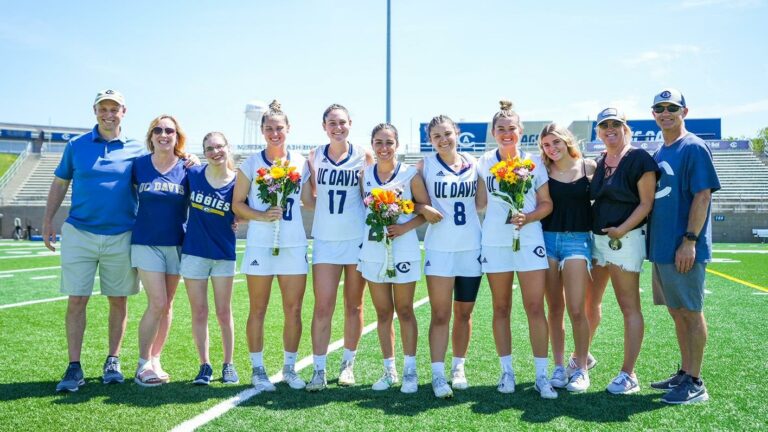
On April 29, the UC Davis women’s lacrosse team played their last game of the season against San Diego State University at UC Davis Health Stadium. The Aggies secured a win over the Aztecs with a score of 11-9. 

Typically, at the end of a season, a conference tournament would be held, but due to Fresno State University’s loss of their women’s lacrosse team, the conference was only left with UC Davis and SDSU. The PAC-12 Conference made a statement on May 31, 2022, saying that they would extend the invitation for UC Davis and SDSU to join the conference beginning in the 2023-2024 season.

PAC-12 Deputy Commissioner Teresa Gould said that women’s lacrosse is rapidly growing in popularity and that the PAC-12 hopes that the addition of these two teams to the major west coast conference will further promote growth in western regions of the United States. PAC-12 will be going from six total teams to eight.

UC Davis and SDSU’s final battle against each other — before their addition to the PAC-12 next season — was a close match.

In the first quarter, SDSU started the game off strong with a goal at the 11:34 mark of the 15-minute quarter. The first quarter showed both teams’ defensive strengths, as neither was able to score for nearly 10 minutes. With five minutes left in the quarter, though, UC Davis fourth-year midfielder Alex Agnew secured a goal to tie the score at 1-1. 

It was looking like the first quarter would end in a tie, but the Aztecs put up a goal just before the 15 minutes was up, making the score 2-1 going into the second quarter.

The second quarter did not have a score on the board for over five minutes, when the Aggies’ second-year attacker Grace Gebhardt netted a second goal for the team with an assist from Agnew.

“I was feeling fired up,” Gebhardt said. “[Our] attack had a bit of a drought in the first half with such a low-scoring first quarter. That being said, we knew we had to step it up on the offensive end and generate more shots and contribute more to the game. We were focusing on riding off each other’s energy and putting the ball in the back of the net.”

Then, between minutes 9:31 to 6:33, SDSU netted four goals, putting them ahead at 6-2. 

“When SDSU had a four-goal lead during the second quarter, we knew it was time to step up,” Gebhardt said. “I was thinking one play at a time, […] and trying to control the controllables. At this point, there wasn’t much time left in the quarter, but we were able to put one more goal on the board which gave us a little bit of momentum going into halftime.” 

Fourth-year attacker Mia Lawrence started to cut in on SDSU’s lead with a goal at the 5:58 mark in the second quarter. After Lawrence put the ball through the net, there was not another goal scored in that quarter, so the Aggies trailed 3-6 going into the second half of the game. 

“We needed to value our attacking possessions by initiating to be able to find the best shot. On defense, we needed to make big stops, which would take the entire defense upping their communication to stay on the same page,” Lawrence said. “The energy from the sideline to the field was amazing, smiles were everywhere and we knew if we continued to go hard and keep our energy high we would win.”

The Aggies’ offense had a strong third quarter; they scored five straight goals, which put them ahead 8-6 with 5:41 minutes left in the period. Gebhardt contributed two of those five goals and Lawrence contributed to one.

“We had a slow start to the game, and we knew we needed to step it up on the offensive side and on the draw to get more possessions,” Gebhardt said. “Defense was doing exactly what they set out to do, but we were not translating their hard work into goals. At halftime, we all agreed that offense was going to step it up, and we were going to win this game together.”

SDSU ended their scoring drought with 1:34 left to go, but UC Davis responded with a goal in the last five seconds of the game. Agnew scored with an assist from Lawrence, making the score going into the fourth quarter 9-7, Aggies’ lead. 

“Leading by two, we knew we needed possession,” Lawrence said. “Our attack knew we had to be smart; we wanted to take time off the clock to not allow them to be able to get the ball and score with limited time on the clock. With the shot clock winding down, we all knew we needed one last shot to either score or reset the shot clock.”

The Aggies looked pretty confident going into the fourth quarter, but so did SDSU, who scored a goal in the first 40 seconds of the quarter and another less than a minute later. The score was tied at 9-9.

“I think I can speak for the whole team when I say we had confidence in one another,” Gebhardt said. “No matter where we were on the field, we knew whoever was near us or the ball was ready to carry out the game plan, and we didn’t let our opponent get in the way of that.”

While SDSU failed to score another goal, Agnew scored again, putting UC Davis ahead 10-9 with 4:58 remaining in the game. The Aggies’ game plan was to dominate defensively and prevent the Aztecs from scoring another goal to tie the game.

Lawrence made a crucial goal with 2:08 left in the game — it would be very difficult for the Aztecs to come back from the two-point deficit in just two minutes. The game ended with a score of 11-9, the Aggies taking out the Aztecs and their lead when it mattered most, in crunch time.

“It felt great going out with a win. The UC Davis lacrosse team is filled with love, support, sisterhood and grit,” Lawrence said. “The success that we have had over the years started from our alumni; they have built the program, and we are continuing to grow. I am excited to see what this team does in the PAC-12 next year; I know they will do great.”

The senior ceremony was held before the game where three seniors were recognized. There are more than three fourth-year students on the team, but a couple will take an extra year of eligibility. The graduating seniors were Julie Byrne, Miriam Lebastchi and Mia Lawrence. 

“With my last game, I wanted to go out having fun,” Lawrence said regarding her experience. “I wanted to be able to look around and see everyone smiling and loving the sport that we are able to play together.”

Written by: Eloise Engs — sports@theaggie.org


How the strawberry breeding program at UC Davis is cultivating ‘the next best strawberry’

UC Davis’s selectively bred, high-quality strawberry varieties are used in approximately 60% of the world’s strawberry production


By LYNN CHEN — features@theaggie.org

Lea este artículo en español.


A customer visiting the supermarket most likely has no second thoughts while picking up their usual carton of strawberries. They may glance here and there for any under ripe ones, but then they move on to the next item on their list. However, getting those strawberries into a shopping cart is a surprisingly long, complex and scientific process, designed to perfectly cater to consumer taste buds. Everything begins with the development of a quality strawberry variety, an area of expertise at the Strawberry Breeding Program at UC Davis.

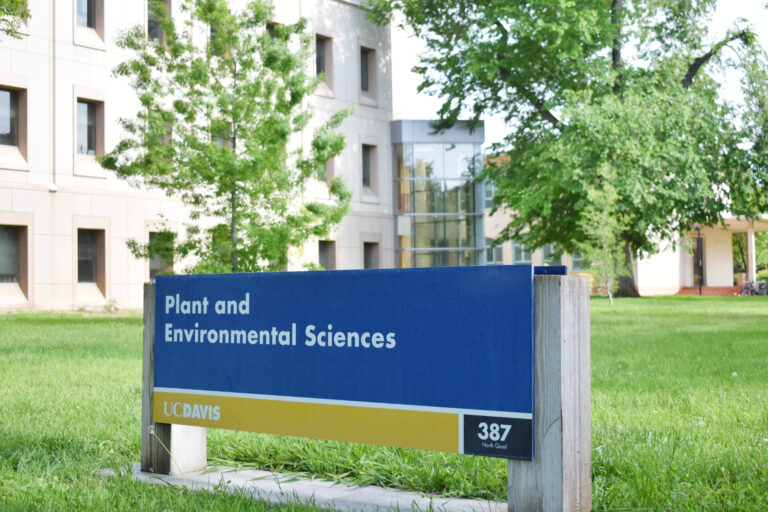
Researchers at the Strawberry Breeding Program have been breeding commercially useful varieties of strawberries since 1952. The program is currently housed in the Department of Plant Sciences in the College of Agricultural and Environmental Sciences and includes a teaching component for UC Davis students to learn hands-on. Varieties developed here at UC Davis constitute about 60% of the strawberries consumed worldwide. 

In order to develop high-quality strawberries for growers, researchers at the program enhance different key traits of the berries, such as disease resistance, aroma, flavor and post-harvest traits like firmness, which are important for packaging and shipping.

“Disease resistance is a big one,” Dominique Pincot, Ph.D., a postdoctoral researcher with the program said. “There are so many different diseases that are of concern for growers.” 

In recent years, a disease on growers’ radar was the Fusarium wilt, a soil-borne disease that, as the name implies, causes wilt in strawberry plants, according to Glenn Cole, a staff research associate. 

Fusarium was a disease that [took] off the last 10 years and even more rapidly in the last few years,” Cole said. “The disease started to pick up because a lot of acres are grown with susceptible varieties.” 

According to Mitchell Feldmann, Ph.D., an assistant professor of strawberry genetics at UC Davis and direct-elect of the breeding program, the spread of the Fusarium pathogen was originally combated by the fumigant methyl bromide. However, in 2005, the product was banned by California legislation. 

“Methyl bromide was a huge tool that protected strawberries against a ton of pathogens,” Feldmann said. “Unfortunately, it’s also a really bad greenhouse gas and carcinogen.”

A year after the ban on methyl bromide, Fusarium spread from the soil, causing increasing cases of wilt in strawberries. It even led to concerns that a Fusarium epidemic could destroy the strawberry crop in California. Fortunately though, in mid-April this year, UC Davis announced the release of five new strawberry varieties, or cultivars: UC Eclipse, UC Golden Gate, UC Keystone, UC Monarch and UC Surfline — the first to be resistant to the deadly fungal disease.

“It was critical for us to release this current set of varieties to address the [Fusarium],” Cole said. “There have been other products on the market with Fusarium resistance, but they’re older genetics, so they don’t yield as well. Growers have started to move away from those varieties, and so we need to have a new set of higher-yielding varieties that are more relevant for today’s market.”

Other than having high yield rates and resistance to Fusarium wilt, the new varieties also have improved flavor and characteristics that enable year-round growing in California. According to Feldmann, the new varieties are tailored to grow in various regions that belong to three different market segments distinguished by temperature and daylight hours, including fall-planted, short-day varieties; fall-planted, day-neutral varieties; and summer-planted, day-neutral varieties.

Developing these strawberry cultivars was no easy task. To find plants that had the Fusarium wilt, the team at the Strawberry Breeding Program had to obtain and analyze the DNA of thousands of plants in a five-acre strawberry selection nursery. In September, new breeding crosses are planted in the field, and these seedlings grow throughout the winter until they begin to flower and fruit in spring. It is during this time that Cole collects data on the new experimental varieties.

“When fruiting begins, I walk the fields and make phenotypic or visual observations for different trait qualities for the strawberry varieties that we’re trying to develop,” Cole said. 

This process has been made faster through genetic tools such as markers. 

“Instead of picking fruit from 10,000 plants, we can pick fruit from 2,000 plants because we know which ones have the traits we want,” Cole said.

Breeding strawberries does not end with the development of immunity to one disease, though. 

“There’s a very common analogy that you see pop up in plant pathology classes: There’s a constant arms race between a pathogen and the crop that you’re breeding resistance to,” Pincot said. “That’s the whole Fusarium story. We had race one in California. We found five different resistance genes that protect against that race. And now a race two has popped up, and we have to catch up finding a deliverable gene and get that into our material.”

Researchers have to be constantly wary of new pathogens, such as the destructive Macrophomina. According to Feldmann, the research program has placed a new plot of seedling nursery in Wolfskill Experimental Orchards to develop genetic resistance to future cultivars of the soil-borne disease.

Along the way, strawberry growers from different regions are heavily involved in the process of selecting strawberry varieties. Growers eventually help whittle down the advanced selections of cultivars UC Davis plans to release to commercialized farmers.

With enough time, strawberries that make the cut end up beside a person’s kitchen sink as a juicy study snack they might casually munch on. The berries they just washed represent hours of experimentation and selection by a group of people in a research facility.

While it is an endless, arduous task to develop the “perfect” strawberry, it is nevertheless rewarding to continuously improve and pursue the next variety. 

“My favorite strawberry is the ‘next strawberry,’” Cole said. “The strawberries we’re releasing right now — I’ve looked at them for three to five years. I know their values, and I know what’s good about them, but I also know what’s coming. There are [strawberries] that are going to have better disease resistance [and] better taste. And so, I think it’s the next best strawberry. That’s my favorite strawberry.” 

Written by: Lynn Chen — features@theaggie.org

De cómo el programa de cultivo de fresas en UC Davis está generando ‘la mejor nueva fresa’

Las variedades de fresas de alta calidad cultivadas especialmente en UC Davis se utilizan en aproximadamente el 60 % de la producción mundial de fresas


Por LYNN CHEN — features@theaggie.org 

Traducido por HANNAH JIMÉNEZ y SAMANTHA TORRES 

Read this article in English.


Un cliente que visita el supermercado probablemente no tiene dudas mientras escoge su caja habitual de fresas. Puede que miren aquí o allá para detectar algunas que estén verdes, pero luego pasan al siguiente artículo de su lista. Sin embargo, obtener esas fresas y ponerlas en el carrito de compras es un proceso sorprendentemente largo, complejo y científico, diseñado para satisfacer a la perfección las papilas gustativas del consumidor. Todo comienza con el desarrollo de una variedad de fresa de calidad, un área de maestría en el Programa de Cultivo de Fresas en UC Davis. 

Los investigadores del Programa de Cultivo de Fresas han estado cultivando variedades de fresas comercialmente eficientes desde 1952. El programa se encuentra situado actualmente en el Departamento de Ciencias Botánicas de la Facultad de Ciencias Agrícolas y Medioambientales, e incluye un componente de enseñanza en el que los estudiantes de UC Davis aprenden de forma práctica. Las variedades desarrolladas en UC Davis constituyen alrededor del 60 % de las fresas consumidas a nivel mundial. 

Para desarrollar fresas de alta calidad para los productores, los investigadores del programa mejoran diferentes rasgos clave de las bayas, como la resistencia a enfermedades, el aroma, el sabor y rasgos posteriores a la cosecha como la firmeza, que son importantes para el empaque y el transporte. 

“La resistencia a las enfermedades es un tema importante”, afirma la Dra. Dominique Pincot, investigadora posdoctoral del programa. “Hay muchas enfermedades que preocupan a los productores”.

En los últimos años, una enfermedad en el radar de los agricultores era la marchitez por Fusarium, una enfermedad transmitida por el suelo que, como su nombre indica, causa marchitez en las plantas de fresas, según Glenn Cole, investigador asociado. 

Fusarium fue una enfermedad que despegó en los últimos 10 años, e incluso más rápidamente en los últimos años”, dijo Cole. “La enfermedad empezó a avanzar porque muchas hectáreas se cultivan con variedades susceptibles.” 

Según el Dr. Mitchell Feldmann, profesor adjunto de Genética de Fresas en UC Davis y director electo del Programa de Cultivo, la propagación del patógeno Fusarium fue combatida originalmente con el fumigante bromuro de metilo. Sin embargo, en 2005, el producto fue prohibido por las leyes de California. 

“El bromuro de metilo era una gran herramienta que protegía a las fresas de un montón de patógenos”, explicó Feldmann. “Desafortunadamente, también es un gas de efecto invernadero y carcinógeno realmente malo”.

Un año después de la prohibición del bromuro de metilo, Fusarium se propagó por los suelos, causando un aumento de casos de marchitamiento en las fresas. Incluso se llegó a temer que una epidemia de Fusarium pudiera destruir la cosecha de fresas de California. Afortunadamente, a mediados de abril de este año, UC Davis anunció el lanzamiento de cinco nuevas variedades o cultivos de fresa: UC Eclipse, UC Golden Gate, UC Keystone, UC Monarch y UC Surfline, las primeras resistentes a la enfermedad fúngica mortal.

“Para nosotros era fundamental lanzar este conjunto actual de variedades para combatir a Fusarium”, dijo Cole. “Han habido otros productos en el mercado con resistencia a Fusarium, pero son genéticas más antiguas, por lo que no rinden tan bien. Los productores han empezado a alejarse de esas variedades, por lo que necesitábamos un nuevo conjunto de variedades de mayor rendimiento que fueran más relevantes para el mercado actual”. 

Además de tener altas tasas de rendimiento y resistencia al marchitamiento de Fusarium, las nuevas variedades también tienen un sabor y unas características mejoradas que permiten el cultivo durante todo el año en California. Según Feldmann, las nuevas variedades son creadas especialmente para crecer en varias regiones que pertenecen a tres segmentos de mercado que se distinguen por la temperatura y las horas de luz, incluyendo variedades plantadas en otoño, de día corto; variedades plantadas en otoño, de día neutro; y variedades plantadas en verano, de día neutro.

El desarrollo de estos cultivos de fresa no fue fácil. Para encontrar plantas que tuvieran el marchitamiento por Fusarium, el equipo del Programa de Cultivo de Fresas tuvo que analizar el ADN de miles de plantas en un vivero de fresas de cinco acres. En septiembre, se plantaban nuevas combinaciones en el campo, y estas plántulas crecían durante el invierno hasta florecer y fructificar en primavera. Era durante este tiempo que Cole juntaba datos sobre las nuevas variedades experimentales. 

“Cuando comienza la fructificación, camino por los campos y hago observaciones fenotípicas o visuales sobre diferentes rasgos de las variedades de fresas que estamos tratando de desarrollar”, dijo Cole.

Las herramientas genéticas, como los marcadores, hicieron que el proceso fuera más rápido. “En lugar de recoger frutas de 10,000 plantas, podemos recoger frutas de 2,000 plantas porque sabemos cuáles tienen los rasgos que queremos”, dijo Cole.

Sin embargo, el desarrollo de variedades fresas no termina con el logro de la inmunidad a una enfermedad.

“Hay una analogía muy común que aparece en las clases de patología de plantas: existe una carrera armamentista constante entre el patógeno y la variedad que se desarrolla para crear resistencia a ese patógeno”, dijo Pincot. “Esa ha sido la historia con Fusarium. Tuvimos la primera carrera en California. Encontramos cinco genes resistentes al patógeno. Y ahora ha surgido la segunda carrera, y tenemos que ponernos al día encontrando un gen que se pueda distribuir y colocarlo en nuestro material.

Los investigadores deben tener constante cuidado con los nuevos patógenos, como la destructiva Macrophomina. Según Feldmann, el programa de investigación ha colocado una nueva parcela de vivero de plántulas en Wolfskill Experimental Orchards para desarrollar resistencia genética en cultivos futuros contra enfermedades transmitidas por los suelos. 

En el camino, los productores de fresas de distintas regiones están muy involucrados en el proceso de seleccionar variedades de fresas. Con el tiempo, los productores ayudan a reducir las multitudes de selecciones de cultivos de fresas que UC Davis planea lanzar a los agricultores comercializados. 

Eventualmente, las fresas con buenas características terminan al lado de un fregadero como merienda de estudio para picotear. Las bayas que se acaban de lavar representan horas de experimentación y selección por parte de un grupo de personas en un centro de investigación.

Aunque desarrollar la fresa ‘perfecta’ es una labor difícil e interminable, es gratificante la mejora y la búsqueda continuas de una nueva variedad mejor.

 “Mi fresa favorita es ‘la nueva fresa’”, dijo Cole. “A las fresas que estamos lanzando en este momento las he estudiado durante tres a cinco años. Conozco sus valores y sé lo bueno que tienen, pero también sé lo que viene. Hay fresas que van a tener mejor resistencia a las enfermedades y un sabor mejor. Y entonces, creo que es la mejor nueva fresa. Esa es mi fresa favorita”.


Escrito por: Lynn Chen — features@theaggie.org

Traducido por: Hannah Jiménez y Samantha Torres

‘Rage and Resilience:’ UC Davis celebrates Pride Month in May

Tristan “TK” Morton, the director of the LGBTQIA+ resource center, discusses pride programming and the inspiration for this year’s theme


By EMMANUEL FONSECA — features@theaggie.org 

Lea este artículo en español.


May is UC Davis’s Pride Month, an annual tradition dedicated to bringing visibility and educating people on the lives of LGBTQIA+ individuals. UC Davis Pride centers around building a safe space for the queer community and is a movement that affirms the existence of queer people and brings the community together to partake in a celebration of self-expression. 

This year’s theme, “Rage and Resilience,” takes us back to the origins of Pride, which began at the Stonewall Inn in 1969, according to Tristan “TK” Morton, the director of the LGBTQIA Resource Center at UC Davis. Morton supervises, leads and manages services supporting the success and retention of queer students of color through center resources. 

“With the rise of anti-trans legislation and anti-LGBTQIA legislation,” Morton said, “as well as from the fascism we have seen not only across the country but on our very campus […], our team came together and decided we wanted to focus on rage and resilience because we know that, as a community, we are really resilient and have every right to be angry.”

At the Stonewall Riots, New York City police raided the Stonewall Inn, a gay bar that served as a safe haven for the local queer community. Continuous raids of gay bars across the city that were heavily rooted in the vilification and criminalization of racialized queer folk influenced social unrest among community members and sparked a six-day protest. 

At the forefront of this movement were Black and Brown trans women who advocated for equity and recognition for LGBTQIA+ individuals and rejected harmful ideas that plagued the everyday lives of queer people of color.

The Stonewall Riots remain important to LGBTQIA+ history. One year after the monumental social movement, activists organized the first gay pride parade, a tradition that is still celebrated today. 

“A lot of the focus in this year’s theme is honoring that history, the rage and the fight we have had as a community, specifically in this country,” Morton said. “At the end of the day, no institution in this country was made for trans people by trans people. We want to support LGBTQIA people in their rage and bring queer and trans joy to our community.”

UC Davis Pride serves to honor the legacy of rage and resilience of queer and trans communities in the face of oppression. With this year’s pride theme, the community aims to acknowledge the struggles and hurdles queer folks have historically overcome to make it to this moment in history. 

Pride is a commitment to solidarity among our most marginalized community members, and this month, in particular, is dedicated to celebrating those who have faced adversity for trying to live their true and authentic lives. 

While Pride is generally celebrated in June, UC Davis recognizes Pride during the month of May due to normal campus operations ending in June with the end of spring quarter. LGBTQIA+ Resource Center staff, campus partners and the volunteer Pride Month Planning Committee are committed to supporting queer communities by organizing a month of programming with workshops and events. 

“A couple programs I want to highlight happening in May [are] a new student group that is hosting a ‘Gayme Night,’ which aims to center and support queer men and masculine folks within our center and space to connect with one another,” Morton said. “Another event the center is collaborating on [with Asian & Pacific Islander Queers (APIQ)] is Queer Prom, a space where students are able to be in a formal space as their authentic self. I believe this is a great way to demonstrate resilience. Other events are queer and trans mixers, movie nights, voguing class and workshops.”  

Organizers of UC Davis Pride hope people realize community and togetherness are vital for the joy of queer and trans people and that challenging yourself to open your mind is the first step to a bigger conversation. 

Written by: Emmanuel Fonseca — features@theaggie.org

‘Furia y Resiliencia’: UC Davis celebra el mes del Orgullo en mayo

Tristan “TK” Morton, el director del Centro de Recursos LGBTQIA+, habla acerca de programas sobre el orgullo y la inspiración del tema de este año


Por EMMANUEL FONSECA — features@theaggie.org 

Traducido por SYDNEY ROBINSON e ISABELLE SCHLEGEL

Read this article in English.


Mayo es el mes del Orgullo en UC Davis, una tradición anual dedicada a brindar visibilidad y educar a la gente sobre la vida de las personas LGBTQIA+. El Orgullo de Davis se centra en la formación de un espacio seguro para la comunidad queer y es un movimiento que afirma la existencia de personas queer y une a la comunidad para participar en una celebración de la autoexpresión.

El tema de este año, “Furia y resiliencia”, nos lleva a los orígenes del Orgullo, en Stonewall Inn, 1969, según Tristan “TK” Morton, director del Centro de Recursos LGBTQIA de UC Davis. Morton supervisa, dirige y administra los servicios que respaldan el éxito y la permanencia de los estudiantes queer de color a través de los recursos del centro. 

“Con el surgimiento de la legislación anti-trans y la legislación anti-LGBTQIA”, dijo Morton, “así como con el fascismo que hemos visto no solo en todo el país sino en nuestro propio campus […], nuestro equipo se reunió y decidió centrarse en la furia y la resiliencia porque sabemos que, como comunidad, somos realmente resilientes y tenemos todo el derecho a estar enojados”.

En los disturbios de Stonewall, la policía de la Ciudad de Nueva York asaltó Stonewall Inn, un bar gay que servía como refugio seguro para la comunidad queer local. Las redadas continuas a bares gay en toda la ciudad que estaban fuertemente arraigadas en el vilipendio y la criminalización de las personas queer racializadas generaron malestar social entre los miembros de la comunidad y provocaron una protesta de seis días.

En el frente de este movimiento estaban las mujeres transgénero negras y morenas que abogaban por la equidad y el reconocimiento de las personas LGBTQIA+, y rechazaban las ideas dañinas que plagaban la vida cotidiana de las personas queer de color. 

Los disturbios de Stonewall resultaron importantes para la historia LGBTQIA+. Un año después del monumental movimiento social, los activistas organizaron el primer desfile del orgullo gay, una tradición que se celebra hasta el día de hoy.

“Mucho del enfoque en el tema de este año es honrar esa historia, la furia y la lucha que hemos tenido como comunidad, específicamente en este país”, dijo Morton. “Al final, ninguna institución en este país fue hecha para las personas transgénero o por personas transgénero. Queremos apoyar a las personas LGBTQIA en su furia y traer la alegría queer y trans a nuestra comunidad”.

El Orgullo de Davis sirve para honrar el legado de furia y resiliencia de las comunidades queer y trans cuando se enfrentan a la opresión. Por medio del tema del mes del Orgullo de este año, la comunidad apunta a reconocer las luchas y los obstáculos que las personas queer han superado históricamente para llegar a este momento en la Historia.     

El Orgullo es un compromiso con la solidaridad entre los miembros de la comunidad más marginados, y este mes en particular, está dedicado a celebrar a aquellos que han enfrentado adversidades por tratar de vivir vidas verdaderas y auténticas. 

Si bien el Orgullo generalmente se celebra en junio, UC Davis reconoce el Orgullo durante el mes de mayo debido a que las operaciones normales del campus terminan en junio, al final del trimestre de primavera. Los empleados del Centro de Recursos LGBTQIA+, los ayudantes del campus y los voluntarios del Comité de Planificación del Mes del Orgullo están comprometidos a apoyar a las comunidades queer organizando un mes de programación con talleres y eventos.

“Algunos programas de mayo que quiero destacar son: un nuevo grupo de estudiantes que organiza una velada llamada Gayme Night con el objetivo de reunir y apoyar a hombres queer y personas masculinas de nuestro centro y espacio para conectarse entre sí”, dijo Morton. “Otro evento con el que el centro colabora es Queer Prom, un espacio donde los estudiantes pueden estar en un espacio formal y ser auténticos. Creo que esta es una gran manera de demostrar la resiliencia. Otros eventos son fiestas queer y trans, noches de cine, clases de moda y talleres”.

Los organizadores del Orgullo de Davis esperan que las personas se den cuenta de que la comunidad y la unión son vitales para la alegría de personas queer y trans, y que desafiarse a uno mismo a tener la mente abierta es el primer paso hacia una conversación más grande.


Escrito por: Emmanuel Fonseca — features@theaggie.org 

Traducido por: Sydney Robinson e Isabelle Schlegel

ASUCD to host first ever Asian American and Pacific Islander night market

 The free market will be held at the CoHo on May 19


By KAYA DO-KHANH — campus@theaggie.org

Lea este artículo en español.


On Friday, May 19, ASUCD is hosting the first-ever ASUCD 530 Market: AAPI Community Health and Culture Fair at the CoHo from 7-10 p.m. The market is meant to celebrate Asian American and Pacific Islander (AAPI) identities during AAPI heritage month, as well as create a community care space and provide mental health and other basic needs resources to students. Inspired by the 626 Night Markets hosted in Southern California, the market will include a variety of student-group performers, a fashion show, local food vendors and resource booths. All undergraduate students are welcome to attend and are encouraged to wear cultural clothes. Entry is free, and students only need a registration form and student ID.

While planning this event, ASUCD has been working to facilitate outreach and ensure events like this one are welcoming to underrepresented groups within UC Davis’s AAPI community such as transfer, international, undocumented and LGBTQIA+ students.

Fourth-year environmental policy analysis and planning major and ASUCD Senator Priya Talreja proposed the event to the Division of Student Affairs and was awarded $5,000 through the Equity in Student Mental Health Grant. Talreja said that she is especially excited about the basic needs resource booths that are going to table at the event, such as Student Health Counseling Services, the Love Lab, Aggie Compass and the Pantry.

“I want students to have access to and know about free health resources they have on campus,” Talreja said. “I want to help us work towards increasing mental health equity for the AAPI community.”

In order to reach diverse parts of the community, ASUCD is partnering with the ASUCD Office of International Affairs Student Representative, Office of the Transfer Student Representative and the DREAM Committee for outreach efforts.

“One of the big things is we want students and staff to celebrate our identities and realize that the AAPI community is not a monolith and that there are varied educational experiences across different groups within the community,” Talreja said. “The event will really showcase the diversity that we have because the AAPI community is culturally, economically and socially diverse in a lot of ways.” 

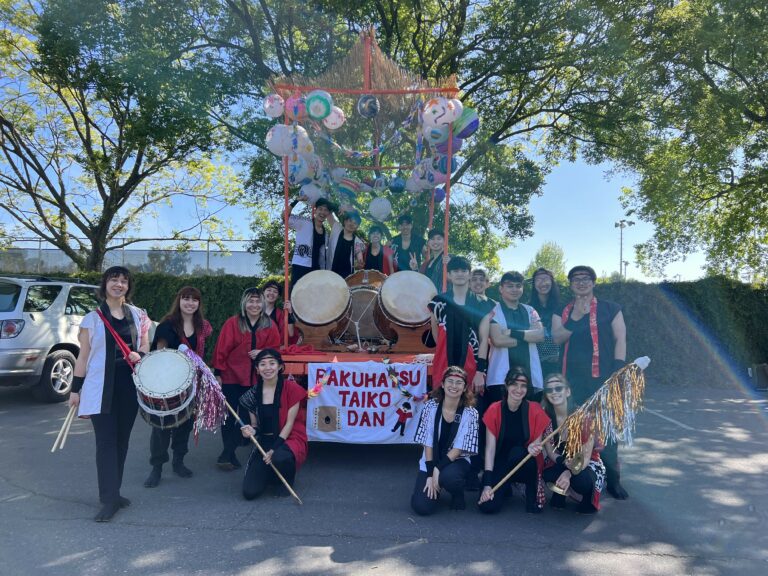
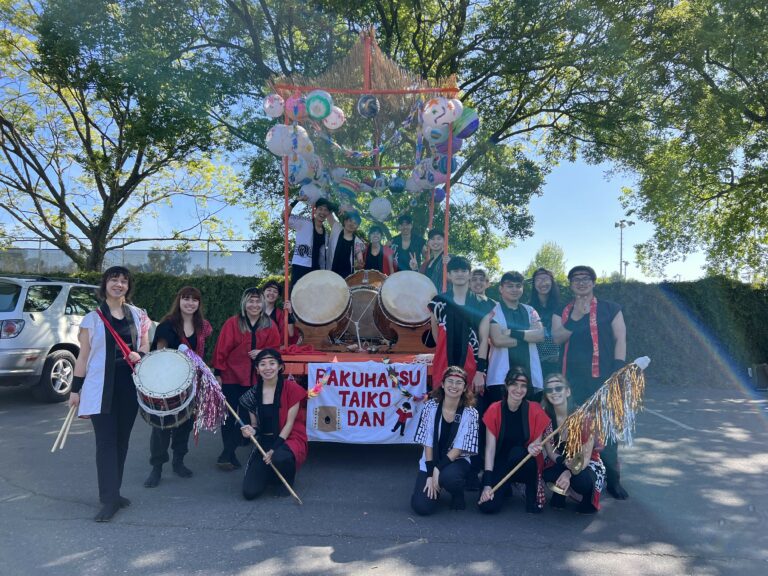
Fourth-year cognitive science and statistics double major and ASUCD Senator Stephen Fujimoto coordinated the event’s performances. The six student-group performers are Bakuhatsu Taiko Dan, Jhankaar, EKHO, Raasleela, MK Modern and Sunatya

Fujimoto said that regardless of whether students identify as Asian American or not, they should come to enjoy the performances and free food. One of the group performers, Bakuhatsu Taiko Dan, is a student-run Japanese cultural drumming group that has performed during other events on campus including the Picnic Day parade and the fall welcome rally. 

“I hope that people recognize the wide diaspora of Asian American identities and art forms,” co-president of the group Madeline Do said. “The taiko that we play isn’t emulating the taiko from Japan but instead represents the political consciousness and community-building efforts of Japanese Americans and Asian Americans in North America. I would like people to share their energy as we do and continue to learn with open hearts.”

The headliner performance of the AAPI night market is Rudy Kalma, a Filipino American musician and rapper. Kalma is an alumnus of UC Davis who graduated with a degree in English in 2016. 

“It feels great to return and perform for my alma mater, especially headlining AAPI night,” Kalma said. “I haven’t performed since the Pilipinx Youth Conference in 2021 — and still, that performance was virtual. Coming back always feels full circle because [UC Davis is] where it all began for me as an artist.”  

He also performed at Lawntopia in 2015 and at an earlier version of what is now Sunset Fest. He said that he is happy that these events have expanded, taken on new forms and are still relevant to current students.

The local food vendors that will be present are Roline’s Uniquely Filipino, Dumpling House and Yeti Restaurant. 

“As someone who is also Asian American, to have all of these different diverse parts of the Asian American culture come together and be able to celebrate our unique and diverse cultures and also be able to learn about different mental health resources is important,” Fujimoto said. 

Written by: Kaya Do-Khanh — campus@theaggie.org

ASUCD organiza el primer mercado nocturno de culturas asiático americanas y de isleños del Pacífico

El mercado gratuito será en CoHo el 19 de mayo


Por KAYA DO-KHANH — campus@theaggie.org

Traducido por SONIA GARCÍA-SEDANO y MARISOL ROMERO 

Read this article in English.


El viernes 19 de mayo, ASUCD presentará el primer ASUCD 530 Market: AAPI Community Health and Culture Fair (Mercado ASUCD 530: Salud Comunitaria AAPI y Feria de Cultura) en CoHo de 7 a 10 p. m. El mercado ha sido diseñado para celebrar las identidades asiático americanas y de isleños del Pacífico (AAPI) durante el mes del legado AAPI, así como también crear un espacio de atención comunitaria, proporcionar recursos de salud mental y otras necesidades básicas a los estudiantes. Inspirado en los mercados nocturnos 626 Night Markets organizados en el sur de California, el mercado incluirá una variedad de artistas de grupos de estudiantes, un desfile de modas, vendedores locales de alimentos y puestos de recursos. Todos los estudiantes de grado son bienvenidos a asistir y se les anima a usar ropas tradicionales. La entrada es gratuita y los estudiantes solo necesitan un formulario de registro y una identificación de estudiante.

Durante la planificación de este evento, ASUCD ha trabajado para facilitar la divulgación y garantizar que eventos como este acojan a los grupos poco representados dentro de la comunidad AAPI de UC Davis, como estudiantes internacionales, indocumentados, de intercambio y LGBTQIA+.

La estudiante de cuarto año de la especialización de Análisis y Planificación de Políticas Ambientales y senadora de ASUCD, Priya Talreja, propuso el evento a la División de Asuntos Estudiantiles y recibió $5,000 a través de la beca de Equidad en Salud Mental Estudiantil. Talreja dijo que está especialmente emocionada con los puestos de recursos de necesidades básicas que se presentarán en el evento, como los Servicios de Consejería de Salud para Estudiantes, Love Lab, Aggie Compass y la despensa.

“Quiero que los estudiantes tengan acceso y conozcan los recursos de salud gratuitos que tienen en el campus”, dijo Talreja. “Quiero ayudar a trabajar para aumentar la equidad en salud mental para la comunidad AAPI”.

Con el fin de llegar a diversas partes de la comunidad, ASUCD se asoció con el representante estudiantil de la Oficina de Asuntos Internacionales de ASUCD, la Oficina del representante de estudiantes de intercambio y el Comité DREAM para los esfuerzos de divulgación.

“Una de las cosas más importantes que queremos es que entre los estudiantes y el personal celebremos nuestras identidades y entendamos que la comunidad AAPI no es un monolito, que hay experiencias educativas variadas a través de los diferentes grupos dentro de la comunidad”, dijo Talreja. “El evento realmente mostrará la diversidad que tenemos porque la comunidad AAPI es cultural, económica y socialmente diversa”. 

El alumno del cuarto año con doble especialización en Ciencia Cognitiva y Estadística y senador de ASUCD, Stephen Fujimoto, coordinó las presentaciones del evento. Los seis artistas del grupo de estudiantes son Bakuhatsu Taiko Dan, Jhankaar, EKHO, Raasleela, MK Modern y Sunatya. 

Fujimoto dijo que independientemente de que los estudiantes se identifiquen como asiático americanos o no, deben venir a disfrutar de las presentaciones y la comida gratis. Uno de los grupos de artistas, Bakuhatsu Taiko Dan, es un grupo de percusión de cultura japonesa dirigido por estudiantes que ha hecho presentaciones en otros eventos en el campus, incluyendo el desfile de Picnic Day y el mitín de bienvenida de otoño. 

“Espero que la gente reconozca la amplia diáspora de identidades y formas de arte asiático americanas”, dijo la copresidente del grupo, Madeline Do. “El taiko que tocamos no está emulando el taiko de Japón sino que representa la conciencia política y los esfuerzos de construcción de la comunidad de americanos japoneses y americanos asiáticos en América del Norte. Me gustaría que la gente comparta su energía como nosotros y continúe aprendiendo con el corazón abierto”.

La presentación principal del mercado nocturno de AAPI es Rudy Kalma, músico y rapero filipino americano. Kalma es un exalumno de UC Davis que se graduó con un título en Inglés en 2016.

“Se siente genial regresar y presentar para mi alma mater, especialmente encabezando la noche de AAPI”, dijo Kalma. “No me he presentado desde Pilipinx Youth Conference en 2021, y aún así, esa actuación fue virtual. Regresar siempre se siente como cerrar un ciclo porque UC Davis es donde todo comenzó para mí como artista”.

También actuó en Lawntopia en 2015 y en una versión anterior de lo que ahora es Sunset Fest. Dijo que está feliz de que estos eventos se hayan expandido, tomado nuevas formas y que sigan siendo relevantes para los estudiantes actuales.

Los vendedores locales de comida que estarán presentes son Roline’s Uniquely Filipino, Dumpling House y Yeti Restaurant.

“Como asiático americano, es importante que todas estas partes diferentes y diversas de la cultura asiático americana se unan y puedan celebrar nuestras culturas únicas y diversas, y también poder aprender sobre los diferentes recursos de salud mental”, dijo Fujimoto. 


Escrito por: Kaya Do-Khanh — campus@theaggie.org

Traducido por: Sonia García-Sedano y Marisol Romero

The Editorial Board’s springtime playlist

Brace yourself for the heat with these upbeat tunes from your favorite student journalists


By THE EDITORIAL BOARD


While we’ve all enjoyed the past week or so being cooler than expected, we knew it couldn’t last forever — heat, bugs and blooms are on the horizon. What better time than now to curate a springtime playlist to celebrate the warmer, flower-filled months here in Davis. Find the playlist here.


Sophie Dewees — Editor-in-Chief

When I think of spring in Davis, I think of laying in the grass on the Quad, chatting with friends and sipping on an iced coffee while enjoying the sunny, cloud-free weather. That’s why “Blue Sky” by the Allman Brothers Band, to me, is a perfect song to celebrate the season. From their iconic 1972 album “Eat a Peach,” “Blue Sky” is such a feel-good love song, featuring the lyrics “You’re my blue sky, you’re my sunny day.” Listening to Gregg Allman’s soulful voice is sure to put you in a good mood as you walk to class. 


Katie DeBenedetti — Managing Editor

I never had allergies in my life — until I toured UC Davis on a 100-degree day in April. While the sweating and sneezing were certainly not ideal, I knew immediately that spending spring time in Davis would be. On that car ride, and still every year when the weather goes from sub-zero to scorching overnight (not an overstatement), I return to an all-time favorite song: “Dog Days Are Over” by Florence + The Machine. 


Whether I’m singing in the back of my childhood minivan on a goose chase for some Claritin or sitting in my backyard having dinner with friends — allergy routine on lock after four springs — the song always brings me back to those first Davis memories and fills me with so much gratitude for the dog days of college, though unlike Florence, I’d prefer they weren’t so close to over.


Sonora Slater — Campus News Editor

When I was a kid, I was scared of the dark — but not because I thought a monster was lurking in my closet, or even because of the ever-present danger of stubbing my toe on my bed frame if I got up to go to the bathroom in the middle of the night. Instead, every time that the sun went down, I had an irrational fear that it would never rise again. But of course, I’d wake up every morning to the light streaming through my open window, and it would be okay. This is sort of how spring feels to me. After countless times biking to class in the rain, cursing the wind, sequestering myself in the library to study on gloomy days, it was easy to convince myself that the fabled spring quarter in Davis — with its baby ducklings and bustling sunny quad — would never materialize. But here it is! Spring has come again. All this to say, “Daylight” by Taylor Swift is the quintessential spring song for me. In terms of explanation, I think I’ll let the lyrics speak for themselves:

“I’ve been sleeping so long in a 20-year dark night

And now I see daylight, I only see daylight”


Chris Ponce — City News Editor

Regardless of the allergies and oven-like weather that come with spring, it truly is a beautiful season. The longer hours of daylight and blooming flowers represent an optimistic new start to the year for me. It’s the perfect time to take beautiful hikes or just surround yourself with nature. The other day I ended up at the arboretum with friends and I took a moment to sit underneath a tree, listen to the birds sing and just journal. It’s moments like this that remind me of the beauty of spring on campus.


A song that captures this feeling to me is “Passiflora” by Archer Oh. This song makes me feel like I am surrounded by flowers and taking in all of its beauty. It’s difficult to not feel uplifted when listening to this song. 


Owen Ruderman — Opinion Editor

There’s a lot of things I remember from my first few days in Davis: the move, the excitement, the feeling of starting fresh. But the thing I remember most is the 106 degree heat — thick, superheated air the likes of which I had never felt before. I had to lug my dresser up three flights of stairs in this crushing climate, and I remember standing under my air conditioning, gasping, wondering how I was ever going to live here.


But here we are nearly two years later, and I’m gearing up for graduation. The truth is, I’m going to miss this abysmal heat (you can be sure I won’t be living anywhere nearly as hot after I graduate). Luckily, I’ll always have music to remind me of my time here. I think that “Blister in the Sun” by the Violent Femmes is a song that almost perfectly captures Davis’s weather and vibe. The song is upbeat, catchy and super easy to sing along to, but also slightly melancholy, expressing the struggles of growing up. I hope the song will resonate with you as much as it has with me. And to all you newer students: don’t worry. You get used to the weather.


Levi Goldstein — Features Editor

When the sun comes out at the start of spring, my mood instantly improves, and the music I listen to changes along with it. Sad winter songs are out; happy spring songs are in. These tracks remind me of lying on a picnic blanket on the grass with the sun peeking through the trees, and running gleefully through falling flower petals (which doesn’t actually happen, but I like to pretend it does). Romanticize your life with “Honey” by Kehlani, a chill love song, and “Way It Goes” by Hippo Campus, which reminds you to just go with the flow. 


Clara Fischer — Arts & Culture Editor 

Spring is one of my favorite seasons. I love (almost) everything about it: the warmer weather, the flowers, the knowledge that summer break is just a few short weeks away — the only downside to this glorious season is the onset of allergies. Another appeal of spring is the sense that it brings an opportunity for rebirth. Whether that be biologically, like for the ducklings in the Arboretum, or mentally, like for me when the UV index goes above a six, these warmer months embrace growth. The perfect song to reflect this feeling is “Yes I’m Changing” by Tame Impala. The track comes from “Currents,” Kevin Parker’s third studio album with virtually no skips. This song in particular is a piece of psychedelic-pop perfection that fits the spring vibe perfectly, with lyrics that represent growth and acceptance of change and a groovy synth-heavy beat to match.


Marlon Rolon — Sports Editor

As the sun begins to break away from the dark clouds, you can immediately feel the warmth that radiates from the bright sky — colorful flowers that were dormant for so long begin to bloom, butterflies and bees flutter through the air, squirrels joyfully climb trees — these are an indication that spring is finally here. This means that we are on the last leg of the academic year when students can be relieved of their school duties and relax for the next three months. For others, spring signifies the end of a journey as they prepare to graduate and start a new chapter in their lives. With that being said, “Beach Ballin’” by Yung Pinch and “Rockin’ Robin” by Bobby Day perfectly encapsulate these vibes of relaxation and renewal.


Brandon Nguyen — Science & Tech Editor

When I think of spring, I am reminded of the longer days, the blooming poppy fields and of course, the seemingly endless sneezing and wheezing. But beyond the abundance of blown tissues that accompany this season are the rejuvenating fresh air and the gentle warmth of the sun that bring a smile to my face. I can finally stow my winter pjs and rain jackets, have a picnic with friends in the Arboretum while watching a family of ducks waddle along the stream and take a refreshing Saturday morning stroll through the farmer’s market in downtown Davis. 


With every renewal, there is an end, and this transition during the springtime is something I know all too well, as an end to yet another chapter of my life is near with graduation. Songs like “So Long” by Abhi the Nomad and “Ghost of Chicago” by Noah Floresch capture the duality of spring — upbeat rhythms and melodies with an underlying bittersweet nostalgia in their lyrics. In the meantime, I’ll be listening to “Kingston” by Faye Webster, enjoying the chill, easygoing vibes of the season and my last quarter in Davis while they last.


Written by: The Editorial Board