52.4 F
Davis

Davis, California

Tuesday, December 23, 2025
Home Blog Page 189

Commentary: House music concerts offer a unique experience for listeners

How artists such as Rúfüs Du Sol are creating a calm, safe escape through their performances

By ANA BACH — arts@theaggie.org


On Oct. 7, I had the opportunity to attend a Rüfüs Du Sol concert at Shoreline Amphitheater in Mountain View, CA. For those who don’t know, Rüfüs Du Sol is a musical group composed of three men from Sydney, Australia who produce music mainly in the electronic dance-pop genre intersected with house music beats. I’ve been eager to immerse myself in the house music scene after being an active listener of the genre for years without ever experiencing a live performance. 

Initially, I was intrigued by the electronic music experience and how it naturally differs from the typical style of a concert that many may have become accustomed to. Rather than chanting anthems and sharing the joy of the artist’s presence, concert-goers listening to house music enjoy an experience that caters to them rather than catering to the appreciation of the artist. 

The music creates a sort of hypnotic sensation where the listener is really just trying to match the beats of the song and focusing on that alone. The musicians don’t have as overwhelming of a presence as the music does. 

I was quite interested in the history behind the sound, since I previously assumed it was a niche genre with little knowledge among listeners about the importance of its background. I wanted to unpack these assumptions more before going to the concert and decided it would be beneficial to explore the origins of house music. 

One of the key pioneers of the house music genre, Frankie Knuckles, has been dubbed by many as the “Godfather of House.” Originally born in New York, Knuckles played many shows at the Chicago Warehouse club in the late 1970s. He laid the roots of the house sound we now know and love out of a combination of disco, funk, R&B and other similar styles of dance music.

I noticed the combination of these styles throughout Rüfüs Du Sol’s set. Their songs don’t follow the well-known formats that most acoustic music does — instead, their beats seem calculated, with each matching the others in sequence. All you are really left listening to is sounds on a loop, which creates a soothing consistency.

In a time where everything seems so hectic and unpredictable, music provides a safe haven for many. House music in particular creates a calming escape from reality, as anyone can vibe to the beats, even if they’re not familiar with the artist.

Rüfüs Du Sol’s sounds were synchronized with a mix of real instruments and electronic recordings that worked hand in hand to create a calming wave of binaural beats. During the concert, I felt an overwhelming feeling of relaxation, and the open-space venue really made it feel like a comfortable individual experience in a sea full of people. 

Overall, I was completely taken aback by the experience and impressed by the impact that the group had on audience members. As the concert went on, I noticed each song seamlessly transitioning to the next, with little distinctions in the shifts. This kept the energy levels rather consistent throughout the show.

If you are like me and are curious about the live house music experience, I would highly suggest attending a concert and observing its unique aspects for yourself.


Written by: Ana Bach — arts@theaggie.org



Native American UC Davis professor’s photograph featured in New York City’s Museum of Modern Art

0

Professor Hulleah J. Tsinhnahjinnie’s work in the MoMA, at UC Davis and at the C. N. Gorman Museum fosters Native American representation in art and academia 

By ANVI KALUCHA — features@theaggie.org


Walking through the Museum of Modern Art in New York City during the past few months, you would have seen a familiar name on a picture titled “Vanna Brown, Azteca Style.” The black-and-white photograph features an Aztec woman in a traditional headdress, framed by a vintage, animated television border.

This artwork was created by UC Davis Native American Studies professor Hulleah J. Tsinhnahjinnie, who has been photographing and reinventing Native American portraits for many years. “Vanna Brown, Azteca Style” was part of the installation “Our Selves: Photographs by Women Artists from Helen Kornblum” from April 16 to Oct. 10 and can now be viewed online on the MoMA’s website

Tsinhnahjinnie has been involved in the creative arts since she was a child; her father and his friends were artists, exposing her to painting and photography early on. She created her first pieces very young under the guidance of her father and has continued since.

Tsinhnahjinnie said she has been at the forefront of documenting many pinnacle moments for the Native American community in California, including, notably, the removal of the Pioneer Monument from the Civic Center in San Francisco. The statue depicted a colonizer and missionary standing over a nearly naked Native American man, serving as a graphic reminder of the years of abuse Indigenous people have faced in California.

“Once the statue was removed, on the plinth that it stood, community members from the San Francisco Native community posed, and I took portraits of them,” Tsinhnahjinnie said. “It was a reclamation of space and having something really racist finally taken away.”

Tsinhnahjinnie has worked with many women in the Indigenous community throughout her photography career, including in her collection of posters titled “Women of Hope,” which features influential Native American women leaders including poet Joy Harjo and surgeon Dr. Lori Arviso Alvord.

Tsinhnahjinnie’s work has spread far beyond the Davis community to inspire many individuals around the world, according to Kimberly Johnson, a Ph.D. student in the Department of Native American Studies. 

“I was at Indigenous People’s Day in LA,” Johnson said, “and I started talking to this person, and he was like, ‘Oh, you’re a Ph.D. student at UC Davis? […] you work with the most famous, wonderful Hulleah Tsinhnahjinnie.’ And I said, ‘Yeah.’ And then he was like, ‘Oh, my god, they’re amazing.’ And he was from France. So it was like, people in France knew of her work.”

Johnson has known Tsinhnahjinnie since she took her Visual Sovereignty class (NAS 233) last fall, during which Johnson was exposed to a new perspective on the subject. Tsinhnahjinnie’s teaching style and patience in the course inspired Johnson to continue learning more, and they have worked together for over a year.

“Because I’m an older student, I didn’t really have these types of images or these people that I knew that looked like me that were able to do such impactful work,” Johnson said. “And, so now that I’m a graduate student, I don’t care how old I am, but it’s impactful. It’s like, she could do it, I could do it, and I love sharing who she is with my family and my community.”

Tsinhnahjinnie brought her passion for art to UC Davis and has continued to spread it with thousands of students. She is also the current director of the C. N. Gorman Museum, located in Hart Hall, which is currently closed for renovation. 

Michelle Villegas-Frazier, the director of the Native American Academic Student Success Center (or Native Nest), said that Tsinhnahjinnie’s work is uplifting Indigenous communities in Davis. 

“I believe Davis is the only [UC] that has a Native American museum on its campus,” Villegas-Frazier said. “And so with her leadership, […] with the work that she did at the MoMA and all the work that she’s doing now, it’s amplifying Davis as a community that’s supportive of its Native community. I think it’s also giving power and voice to a community that may never have had it before. It’s just really providing amplification of Native folks and Native communities.”

Tsinhnahjinnie is actively working on expanding the C. N. Gorman Museum to double its previous size, and it will feature more Indigenous artwork by students and faculty, upon reopening. She hopes that her pieces depict a sense of community and inspire a new generation of artists at UC Davis.

“When one looks at being an artist from a holistic, Indigenous type of beautiful […] you don’t just focus on yourself, which is more Western, but you really include community, and community is paramount, and that’s who you’re doing your work for,” Tsinhnahjinnie said.


Written by: Anvi Kalucha — features@theaggie.org


On my plate: Imagining the perfect third place 

And no, the Metaverse does not count 

By NADIA ANEES — nsanees@ucdavis.edu 


Some of my favorite childhood memories are of the annual block parties my street would throw. On that one day each year, all of the neighbors on my street would come out of their houses, lawn chairs and potluck items in hand, to join each other in the middle of the road closed off with traffic cones. We’d spend the afternoon meeting and catching up with neighbors both new and old. 

My street actually gained notoriety in the neighborhood for our annual block parties — classmates and friends in elementary school would try to get invited to join in on the unique event. But since the pandemic, these block parties have struggled to make a comeback and neighbors have grown more distant. 

People from suburban cities, like myself, often dream of small-town moments like being a regular at a coffee shop where the barista remembers our name. Or we romanticize a “Gilmore Girls” moment, walking through a cozy downtown, befriending the local bookseller, having our daily meal at the local diner we’re loyal to. 

An unfortunate reality of living in the U.S. is that our lives are deeply private and separated. We reside in large, similar-looking homes with big backyards but we don’t know who our neighbors are and our parks remain empty, bland and scarce. 

Compare this life, for a moment, to the streets of small European cities like the port city of Málaga, Spain, which I had the privilege of visiting for a moment in the winter of 2019. Streets were lined with mom-and-pop shops with beautiful apartments stacked above. Couples, friends and families filled the streets with chatter and laughter. Charming coffee shops and cafes could be found on every street corner. The norm there is to sit and chat for hours with a cigarette in one hand and an espresso in the other. Lives blend together in these spaces and people seem generally happier when they spend time together in these abundant gathering places. 

In the book “The Great Good Place,” author Ray Goldenberg writes, “The typical suburban home is easy to leave behind as its occupants move to another. What people cherish most in them can be taken along in the move. There are no sad farewells at the local taverns or the corner store because there are no local taverns or corner stores.”

In my last article on walkable cities, I briefly mentioned Goldenburg’s term for the “third place.” A perfect third place is a place where people feel a strong sense of belonging, where conversation is the main activity and where there are low or no economic barriers to entry. In the era of working from home and the loneliness epidemic, we need to imagine how third places can help bring communities together and revive social connection. 

The block parties of my childhood embodied many aspects of the perfect third place. In a perfect third place, people should feel able to talk to each other as equals. At our block parties, both new and old neighbors were welcome to join — and they would, chatting with others without a sense of invasiveness. 

In his book, Ray describes the following characteristics of the third place throughout the second chapter, “The Character of Third Places,” as: 

  • On Neutral Ground
  • The Third Place Is a Leveler 
  • Conversation Is The Main Activity
  • Accessibility and Accommodation
  • The Regulars 
  • A Low Profile 
  • The Mood Is Playful
  • A Home Away From Home

I’m grateful for the libraries, local coffee shops and independent bookstores that do exist today. These spots serve the community as third places in the sense that they provide a place to spend time outside of home and work. 

In the perfect third place, it would be normal and welcome to strike up spontaneous conversations with anyone. Third places can revive communities and create a feeling of togetherness in a society where individual lives are deeply fragmented. I dream of a world where the third place that Goldenberg defines can be found throughout most neighborhoods. Although it seems distant, I hope that one day, my dream becomes a reality.


Written by: Nadia Anees — nsanees@ucdavis.edu


Disclaimer: The views and opinions expressed by individual columnists belong to the columnists alone and do not necessarily indicate the views and opinions held by The California Aggie.


Yolo County and city of Davis host vaccine clinics to protect against flu season and COVID variants

0

The Davis Senior Center hosts vaccine clinic for Davis residents to receive influenza and bivalent boosters

By ANTHONY W. ZAMMIKIEL  — city@theaggie.org


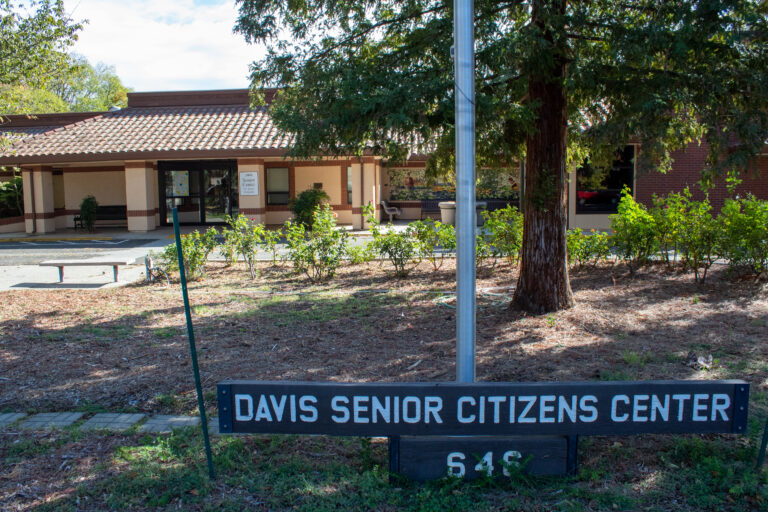
On Nov. 8, the city of Davis and the Yolo County Health Department co-hosted a vaccine clinic at the Davis Senior Center. Residents at the center were able to receive the standard influenza vaccine and the latest bivalent booster to protect against the latest Omicron variant of COVID-19, free of charge. 

On Oct. 25, the city of Davis announced the pop-up clinic on the City Hall page of their website. The announcement provided directions to the Davis Senior Center, located at 646 A St., and information about the vaccines that the clinic would be offering.

“The bivalent booster provides expanded protection against the SARS-CoV-2 virus, including the currently-dominant Omicron variants,” the announcement read. “Everyone six years old and older who have already completed their primary COVID vaccine series is recommended to receive a single dose of a bivalent booster if at least 2 months has passed since their last dose of a COVID vaccine. Those who have had COVID-19 recently can come to the clinic once they have completed their isolation period.”

The announcement also said that this winter, there will likely be a significant level of influenza spread given the increase in COVID-19 cases, and recommends that everyone six months old and older receive the annual influenza vaccine to protect against the disease.

Barbara Archer, a representative of the Public Relations Office for the city of Davis, talked about the importance of the relationship that the city has with the county and said that they would be hosting more collaborative activities in the future, including another vaccine clinic.

“The city promotes county programs on city social media, and the city is always happy to open a city facility for these important programs,” Archer said. “There is another flu and COVID booster clinic at Emerson Junior High at 2121 Calaveras Avenue on Nov. 15 from 4:30 p.m. to 7 p.m.”

Directions to Ralph Waldo Emerson Junior High can be found on the school’s website. Archer reiterated that the city and the county want to distribute influenza and bivalent booster vaccine doses as soon as possible to ensure that the Davis community is protected going into the winter. 

  More information about each vaccine can be found on the Health and Human Services page of the Yolo County website. Additional information about immunizations can be found on the Immunization Program page, also located on the county website. Inquiries regarding public programs to support Yolo County residents can be addressed by calling the number (530) 666-8552 during its scheduled business hours, which are 8 a.m. to 5 p.m, Monday through Friday. 


Written By:  Anthony W. Zammikiel  — city@theaggie.org


Los Angeles Football Club crowned Major League Soccer Cup champions

In what has been dubbed the ‘greatest game in MLS history,’ the match showed just how much professional soccer has grown in the U.S. 

By MARLON ROLON — sports@theaggie.org


Just 10 miles separate Hollywood from the Banc of California Stadium, which is home of the Los Angeles Football Club (LAFC). On Saturday, Nov. 5,  arguably the greatest game in U.S. Major League Soccer (MLS) history took place between LAFC and Philadelphia Union. It was a thrilling game, so dramatic that it resembled something out of a Hollywood movie script. 

The game featured a game-saving goal in the waning minutes of stoppage time and an unlikely hero in penalty kicks that helped LAFC win its first MLS Cup.

“For 10 minutes or 15 minutes, [it] was like a Halloween movie,” said LAFC’s striker Carlos Vela regarding the drama that ensued in the final minutes of overtime. 

“And then we finished with a Hollywood movie, like [we’re] dreaming things, like something you can’t imagine happen[ing], it happened.” 

 The star-studded event featured Hollywood’s brightest stars; Will Ferrell, Magic Johnson and Justin and Haily Bieber were in attendance to support LA’s team. 

Midfielder Kellyn Acosta was the first to score, giving LAFC the lead in the 28th minute of the first half after deflecting a free kick. At this point in the match, LAFC appeared to be in control, relishing the home-field advantage at the Banc. 

However, it didn’t take long for Philadelphia to level the game, with Daniel Gazdag scoring for the Philadelphia Union in the 59th minute of the second half. 

The remainder of regular play was a back-and-forth between the two teams, reminding spectators of the groups’ — who were both the No. 1 seed in their respective conferences — dominance throughout the season. 

With the clock winding down in the 83rd minute, LAFC defender Jesus Murillo scored on a header, giving the home team the lead once more. With six minutes left in regulation play, LAFC appeared to be on the cusp of lifting the trophy — but the game was not quite over.

Philadelphia roared back the following minute with a header from defender Jack Elliott, tying the score 2-2 and sending the game to overtime. 

“It’s a classic final; a lot of finals throughout many competitions around the world are decided by set plays and those moments where mistakes are made, not so much of the run and play, and I think we saw more of that tonight,” LAFC Head Coach Steve Cherundolo said of the match.

The biggest mistake of the match came in the 109th minute, during stoppage time, when LAFC’s Murillo miscalculated a back pass intended for goalkeeper Maxime Crepeau. That mistake resulted in not only a red card but also a right-leg fracture for Crepeau as he collided with Union striker Cory Burke during a one-on-one breakaway. Crepeau had to be carted off the field, and LAFC was down to 10 men as substitute goalkeeper John McCarthy was forced to come into the match without warming up. McCarthy had only made one appearance in the regular season in a 2-0 loss back in May. 

The Banc of California Stadium was silenced in the 123rd minute of stoppage time when Elliott scored a second goal for the Union. With LAFC down a player,  Elliott’s late goal seemed to secure the MLS Cup win for Philadelphia. But LAFC didn’t give up. 

LAFC’s Gareth Bale scored in the 128th minute of play, evening the score once more with just one minute left in stoppage time.

The prior Real Madrid star signed to LAFC during summer 2022 on a one-year contract. Surprisingly, Bale started in just two games and appeared in 12 for LAFC throughout the season as he dealt with a slew of injuries throughout the regular season. 

“It’s Gareth being Gareth, he does it in training, he’s done it this season when he’s feeling well and healthy, he makes a difference in games and that’s why we bring him in those moments,” Cherundolo said of his decision to bring in Bale in the 97th minute. 

“It’s always nice to score in finals, and I seem to have the knack in doing that,” Bale said in regard to his last-minute goal. 

With the score tied after stoppage time, the match then progressed to penalty kicks. McCarthy, LAFC’s substitute goalkeeper, came up big for his team in arguably the biggest game of his career thus far. 

“To be a Philly kid and play against my hometown team — it’s their first final ever — it’s something special,” McCarthy said. “It was just a moment that you dream of as a kid, to play in a final. I wish it was against somebody else, honestly, because I feel for the team and the city. If we weren’t in it and Philly was in the final, I would for sure root for them.”

After multiple rounds of back-and-forth scores on penalty kicks, the game came down to Philadelphia’s Martinez. McCarthy dove to his right, blocking the PK and eliciting roars from the crowd sporting LAFC’s black and gold colors. 

LAFC defender Ryan Hollingshead midfielder did his part in making the next penalty kick, and McCarthy ended the game with another stop, this time of defender Kai Wagner’s PK attempt.

 “It’s the highest game I’ve ever played in; it’s the highest game I’ve ever been on the bench in; it’s an amazing moment,” McCarthy said in an exclusive interview with The Aggie after the game. 

McCarthy’s heroics earned him the MLS Cup MVP honor. From only playing in one regular season game to coming off the bench into one of the most important games of his life, McCarthy played an integral role in delivering the city of Los Angeles the MLS Cup.

“You can see how happy everybody is now — the fans, the city,” Bale said. “It’s important for this club to go to the next level, and I think by winning this trophy, it shows that we are.”


The Growth of the MLS in Recent Years

As soccer continues to grow in popularity within the United States, the MLS has been expanding. Since 2015, the league has introduced 11 teams. Of those new clubs, three have won the MLS Cup since their inauguration into the MLS — Atlanta United in 2018, New York City FC in 2021 and now LAFC in 2022. Many of these squads were also featured in this year’s playoffs.

With this growth, star players with extensive backgrounds in top-flight European leagues, like Javier “Chicharito” Hernandez, Carlos Vela and Gareth Bale, have come to play in the MLS. These players have been crucial to the growth of the MLS because of their notoriety at the international level. 

Ultimately, more clubs and internationally-known players have meant more eyes on MLS as a whole. The 2022 MLS Cup drew a combined 2.155 million viewers between Fox’s English-language broadcast and Univision’s Spanish-language broadcast, up from 2021’s championship, which drew 1.557 million viewers. 

MLS ratings in general are also up across ABC and ESPN. The average audience across both networks is 343 thousand per game, which is a 16% increase from last year. 

MLS has partnered with Apple TV+ to help grow soccer in the United States. MLS reached a 10-year agreement worth $2.5 billion with Apple TV+, set to begin in 2023. Subscribers will be able to stream every MLS game on a global scale. 

MLS is no longer considered an “irrelevant” league; it’s turned the corner in American sports, and with the World Cup coming to North America in 2026, soccer is only going to keep growing.


Written by: Marlon Rolon — sports@theaggie.org


Executive office, Library Committee and Ethnic Cultural Affairs Commission positions confirmed by Senate

Former Mayor of Davis Robb Davis presented to the Senate about free speech on campus

By LEV FARRIS GOLDENBERG — campus@theaggie.org


On Thursday, Nov. 10, ASUCD Vice President JT Eden called the Senate meeting to order at 6:12 p.m., read the UC Davis Land Acknowledgement and called roll.

As the first agenda item, the Senate confirmed four nominees for ASUCD committees and commissions.

Third-year managerial economics major Allyson Francisco was confirmed as Vice Controller in the executive office.

The Senate then confirmed Nicky Fondale, a second-year political science and managerial economics double major, as Library Committee Chair.

Next, two students were confirmed as members of the Ethnic and Cultural Affairs Commission (ECAC). The students have requested that their full names not be included in this article in order to protect their safety. However, the students did share their last names. 

Commissioner Chhem, an art history major, said that they have an interest in cultivating community to help mitigate mental health issues, and Commissioner Gaysinsky, an international relations major, said that they hope to ensure the Jewish community is represented on campus.

The Senate then heard a presentation from Robb Davis, the assistant director for student expression at the Center for Student Involvement.

Davis, the former mayor of the city of Davis, discussed hate speech on campus and fielded questions from senators about the university’s methods and response to the Oct. 25 Turning Point USA event and the subsequent clash between protesters and counter-protesters.

“I’m going to be really careful with my words,” Davis said. “I’m not asking you to shut those events down. I don’t think that’s right. Opposing, speaking against, creating alternatives, this is what I’m hoping students and student groups will do. And that never seems like enough when you come up against hate. But it’s what we can do and what we should do.”

The Senate then shifted to quarterly reports, starting with a presentation from the Disability Rights Advocacy Committee. Chairperson Ryan Manriquez, a fifth-year political science and communications double major, listed recent committee accomplishments, including offering accommodations at Sunset Fest for the first time. According to Manriquez, these accommodations included having an American Sign Language interpreter on stage and offering noise-reducing headphones, KN95 masks and refreshments.

Third-year political science major and Chair of the Academic Affairs Commission (AAC) Megan Chung followed with the AAC’s quarterly report.

Chung said the commission’s primary focus is working toward a Pass/No Pass deadline extension. They have released a survey for students in order to gather information about when students believe the deadline should be moved to.

After Chung’s report, fourth-year English and history double major Isabella Chuecos, this year’s Creative Director for ASUCD Creative Media, gave her team’s quarterly report.

The Senate then moved into public comments, during which they discussed the Union of Academic Workers strike.

“Solidarity forever,” Senator Stephen Fujimoto said.

Moving on, fourth-year environmental science major Mackenzie Field, the chair of the Environmental Planning and Policy Commission, gave her organization’s ex-officio report, and Chung followed with an ex-officio report from the AAC.

The Senate then returned to hearing quarterly reports and heard from fourth-year political science major Logan Ueno, the Transfer Student Representative (TSR).

Ueno said he is working on building the TSR office’s presence and visibility on campus to better represent transfer students on campus.

After Ueno’s presentation, fourth-year economics major Derek Neyer, the co-chair of the Executive Advisory Council (EAC), gave the EAC’s quarterly report.

Following a break, the Senate moved into consideration of old legislation and reviewed SB #33, which amends the Section on Special Committees of the ASUCD Bylaws to restructure the elections administration apparatus. SB #33 was amended to adjust the membership of the newly-established Elections Reform Task Force and tabled for a future meeting.

The Senate then approved past meeting minutes, and Eden adjourned the meeting at 10:45 p.m.


Written by: Lev Farris Goldenberg — campus@theaggie.org


This Thanksgiving, educate yourself on Native American history

Acknowledging the violent origins of the holiday is a start; supporting Native communities with ongoing issues is the next step

By THE EDITORIAL BOARD


Thanksgiving is next week, and while we’re all excited for a much-needed break from this stressful quarter, the Editorial Board encourages you to learn about the historical origins of the holiday, as well as the issues still affecting Indigenous people today.

The origins of the Thanksgiving holiday are often taught from a watered-down and historically-inaccurate perspective in U.S. classrooms. When the Mayflower arrived at Plymouth Rock in 1620, the Wampanoag tribe offered an alliance to its passengers as a way of defending themselves from ongoing intertribal conflicts. However, this relationship quickly crumbled when settlers abused the tribe’s resources, introduced new diseases and waged war against the Wampanoag. The Wampanoag people weren’t the only Indigenous tribe targeted by colonizers; during the period of settlement and Western expansion, the estimated population of Native Americans in the U.S. decreased from 10 million to 300,000 by 1900 and has been labeled by many scholars as a racial genocide.

To this day, Indigenous communities face distinct, ongoing discrimination; examples include forced assimilation, health disparities, higher than average poverty rates and lower mean household incomes, and recently,  the controversy surrounding the Indian Child Welfare Act (ICWA). This law, passed by the Supreme Court in 1978, ruled that child custody cases involving Native American children must be handled with cultural and familial ties in mind; essentially, authorities must place foster children in Native American homes whenever possible. 

This ruling is being challenged on the idea that it places the interests of tribes ahead of the interests of children. However, many Indigenous people argue that overruling the ICWA could endanger the political sovereignty of tribes nationwide, as the case set the precedent that allows reservations to function independently from the state.

This debate surrounding the sovereign status of tribal governments sparks concern that Indigenous people might lose what little political power they have. Indigenous communities face a variety of social, political and economic disparities, largely stemming from a history of unequal treatment and current discriminatory policies. According to the Center for Native American Youth, suicide rates among Native Americans aged 15 to 24 are 2.5 times that of the national average, more than one in three Native American children live in poverty and Native American children are 2.4 times more present in the foster care system than the general population. Clearly, these issues have persisted for generations, and questioning the legal soundness of the ICWA is just the latest in a long history of debates over the rights of Native Americans.

For many Native Americans, Thanksgiving is not an occasion to be celebrated. It is rather a reminder of the blatant and deep-rooted violence directed toward Indigenous people in the U.S. During Thanksgiving, we encourage you to acknowledge this history and take the time to educate yourself about the space that you occupy. 

UC Davis, for example, is on the land of the Patwin tribe. Members of the Patwin tribe are keepers of the land and even collaborate with the Arboretum in service of environmental stewardship. If you’re heading home this holiday season, find out what tribe is native to the land you are on and keep that in mind as you express your gratitude for friends and family alike. 

It’s also important to listen to Native organizations and support their initiatives. The Indigenous Peoples Movement offers a plethora of resources, with their Instragram in particular being a great way to stay up to date on the latest movements, events and other happenings. For UC Davis students specifically, there are several resources available on campus to support members of Indigenous communities, including the Native American Student Success Center (also known as the Native Nest), as well as the Native American Student Pages and more

Wherever you go this Thanksgiving, whether it be near or far, keep in mind the history of the land that you occupy and consider how you can support Indigenous people in your community. 


Written by: The Editorial Board


Climate models can more accurately simulate atmospheric conditions by including vapor buoyancy

Researchers at UC Davis determine that the lightness of water vapor should not be excluded from climate models

By LILLY ACKERMAN — science@theaggie.org 


A recent study from researchers in the UC Davis Department of Land, Air and Water Resources has determined that the lightness of water vapor in the atmosphere has significant impacts on clouds and temperature, and should not be overlooked in climate modeling. 

Climate models are an important tool for simulating atmospheric conditions that help predict trends in climate change. However, not all climate models include the same variables in their equations. 

Seth Seidel, a co-author of the study and a Ph.D. student in the Atmospheric Science Graduate Group at UC Davis, explained vapor buoyancy, a variable that was the focus of the study. 

“Vapor buoyancy derives from the fact that the molecular weight of water vapor is a little bit less than that of dry air,” Seidel said. “So if you take air that’s otherwise dry, and you mix in some water vapor molecules […] it’s going to be less dense. It’s going to be lighter and more buoyant.”

This means that more humid areas of the atmosphere exhibit slightly lower air density than drier areas. According to Siedel, leading up to this study, some major climate models choose not to include vapor buoyancy as a variable in their governing equations because of its minimal effects on air density. 

“Buoyancy governs vertical motions [in the atmosphere] and is thus among the most fundamental quantities in understanding atmospheric circulations, clouds and climate,” the study reads. “However, water vapor is a trace gas in Earth’s atmosphere, so [vapor buoyancy] has traditionally been considered small and often neglected in studies of climate dynamics.”

By using reanalysis data and atmospheric models, the authors determined that vapor buoyancy has effects beyond just small differences in air density. It also increases the atmospheric temperature in the tropical troposphere, the lowest layer of the atmosphere, and increases the low cloud fraction, or the amount of low cloud cover, in the subtropics. 

“Both quantities [temperature and low cloud fraction] affect Earth’s energy balance and climate,” the study reads. “These biases may amplify with [global] warming due to increasing water vapor and then contribute to uncertainties in predicting future climate change.”

An increase in the amount of low cloud cover is a particularly crucial effect of vapor buoyancy that can heavily influence other climate factors, including lowering temperatures. This is why failure to accurately simulate clouds can lead to a cascade of other inaccuracies that may make a model unreliable. 

Clouds play a critical role in Earth’s energy balance […] Therefore, faithfully modeling clouds is necessary to improve our climate projections,” Seidel said via email. “[Vapor buoyancy] increases the amount of low clouds (‘low cloud fraction’), likely increasing their cooling effect on Earth’s surface.”

With this discovery of vapor buoyancy’s importance in climate modeling, the authors show that models that include vapor buoyancy may be more accurate and that those that do not should consider doing so to more accurately predict climate change trends. 

Additionally, the study found that rising air in the tropics is colder than the surrounding air because of vapor buoyancy’s warming effects on the tropical atmosphere. This is an exception to the fact that warm air rises and speaks to the significance of vapor buoyancy’s effects on the atmosphere.

“We hope to build a body of evidence to help persuade the modeling community to include this in their models,” Seidel said. “What this hopefully will give us is a more physically faithful set of climate models in the future.”


Written by: Lilly Ackerman — science@theaggie.org


Commentary: Why you should embrace your bad writing

Start treating writing as a process, not a singular race to perfection 

By Adhithi Anjali — arts@theaggie.org


We’ve all been there — in the only seat you could find, hunched over your laptop, convincing yourself that now you’re going to get it together. If you could just sit down, maybe in the library — or no, the atmosphere of the coffee shop will definitely get you going — the essay will spill out from your head. But it doesn’t. Instead, you’re writing a word, deleting, rewriting, rewording and searching up Thesaurus.com as you trap yourself in the perpetual loop between writer and editor. 

You desperately try to lay down each syllable with enough precision that your future self won’t regret it, but maybe it’s okay if they do. Now might not be the time when you establish yourself as the perfect writer, whether in personal or academic works. But, you can work towards being the disciplined essayist you need to be by learning to embrace your bad writing. 

Learning to shut down your inner critic, the voice that is convinced you do not have enough research, enough knowledge or enough skill to get your work done, is the first step. The fact is, you do not know if this criticism is warranted until you actually start writing. 

The goal has to shift from trying to fulfill an ideal breadth of knowledge to just getting started. If you find yourself struggling more than usual, try stepping back and simply writing out your thoughts. Empty all the ideas from your mind, no matter how tangled or unfinished, onto the page. 

Whether it comes to essays, fiction or poetry, the intention of throwing your mind at the wall is to unravel your own insecurities when it comes to filling a page. It is about treating writing as a creative exercise, a way for you to reorder ideas in your brain. This is a game won with all your cards on the table, so there is no need to hide ideas from your own paper. 

This kind of writing technique might look like just writing down every sentence, phrase or word that crosses your mind within a certain timeframe. Be warned, the result might be rather disappointing — you probably will not end with a magically in-depth and surprisingly intelligent masterpiece. Rather, the accomplishment will be in the fact that you actually committed to writing. Change the purpose of writing from a method of flaunting your intelligence to a method of communicating the frenzy of your mind. The bonus, after all this, is that you will have generated the foundations of your work.

By embracing your terrible writing, you can turn something paralyzingly difficult into something mindlessly easy. Your first draft will highlight the ingenuity of your mind, producing a visual representation of your ability to build connections and generate exciting ideas on your own. But, how do you refine this messy draft into the work you initially sat down to make?

Now, you bring that critical scholar back in. Yes, the one who stalled you for so long. But at this stage, they actually have material to mold and tinker with — something to critique. This is the stage where you find the holes in your analysis or your story that would have stumped you if you tried to write and edit simultaneously, as we all have tried to do. Separate and organize your ideas, add in those transitional phrases your professor will love so much and focus on fluency rather than content. 

Ultimately, it is just a matter of breaking the writing process into multiple jobs and allowing yourself to create a bad piece of work for the sake of creating. You will need to churn out something, but you can make the journey a bit more bearable when you give in to the rambling creative inside of you.


Written by: Adhithi Anjali — arts@theaggie.org


The Editorial Board stands in solidarity with UC academic workers

The UCs must do better to prevent disruptions that affect the entire academic community 

By THE EDITORIAL BOARD

On Monday, Nov. 14, an estimated 48,000 academic workers across the UC academic system, including teaching assistants (TAs) and post-graduate students, went on strike in light of alleged “unlawful actions” on the part of the UC system. According to the United Auto Workers (UAW 2865) union, the strike is the largest at any academic institution in history. 

UAW representatives are demanding higher wages, childcare subsidies, dependent healthcare, extended family and medical leave, sustainable public transportation passes, affordable tuition for international students and better campus accessibility for workers with disabilities.

As of today, graduate students, who serve as teaching assistants, earn about $24,000 a year for their services which include grading assignments, instructing classes, tutoring students and holding office hours. This type of work is time-consuming and can be difficult to manage on top of their academics. Their yearly salaries do not reflect their significant contributions to the UC system and are not enough to cover living expenses. 

Additionally, some UC Davis academic workers at the picket line said that they have had to take on a second job to support themselves. For these reasons, those on strike are demanding an increase to a base salary of $54,000. 

The Editorial Board stands in solidarity with striking academic workers. We believe their core demands are reasonable and that they should be paid a living wage. Every member of the Editorial Board has had a class or discussion section led by a TA, and we want to thank these workers for the important role they play in our education.

University worker protests against unfair labor practices are nothing new. In the past, the UCs have been able to negotiate with union workers before any action was taken, so strikes, historically, have been preventable. But, in many cases, the UC system hasn’t met union demands in time. 

The strikes that result from the UC’s inaction also affect students and professors. Classes and discussion sections are canceled and some assignments are not posted or graded. This is a massive disruption to our education, not to mention that tuition is expensive and we pay per unit for each of our classes. 

The strike has also disrupted transportation services on campus. Unitrans has delayed its operations and shut down some lines, which means students have had to find alternative routes to get to their classes. Further, some roads have been closed, resulting in unnecessary traffic for those who drive to campus. 

Undergraduates, academic workers and professors shouldn’t have to bear the consequences that result from unfair labor practices and the UC’s inadequate response to union demands. The UC can and should prevent strikes from occurring. Put simply, student workers are essential for our campus to operate smoothly, and they deserve to earn a living wage and have their core demands met.


Written by: The Editorial Board

Academic workers participate in UC-wide strike for higher wages, better labor practices

Unions representing teaching assistants, student researchers, academic researchers and postdoctoral students authorized the strike began on Monday

By SYDNEY AMESTOY — campus@theaggie.org

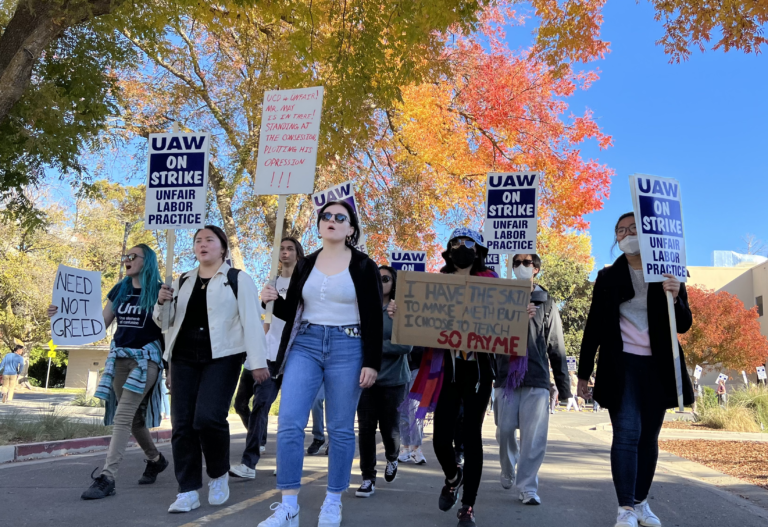
On Nov. 2, unions representing graduate students, teaching assistants, student researchers and postdoctoral scholars authorized a strike at all 10 UC campuses — the largest academic strike in the history of U.S. higher education. The strike officially began on Monday, with many academic workers ceasing to perform work duties related to teaching and research and instead joining picket lines across campuses to increase the visibility of the strike.

Academic workers gather on Hutchison Road on Wednesday. (courtesy / David Kwon)

On the first day of the strike, picketers blocked the intersection of Hutchinson and La Rue Rd., and lined the entrance to campus on Howard Way holding a sign that read, “Strike Means Strike: Undergrad Solidarity.” 

The unions, United Auto Workers (UAW) 2865, Student Researchers United (SRU-UAW) and UAW 5810, are asking for a significant pay increase from about $24,000 to $54,000, annually. This demand is in response to the rising cost of living throughout California, as 92% of graduate workers in the UC system are currently rent-burdened, meaning that more than 30% of their salary goes toward rent each month. 

Other demands include sustainable transit benefits, smaller class sizes, equity for international scholars, disability justice and childcare benefits for working parents. 

As a result of the strike, there have also been disruptions to the Unitrans Memorial Union bus terminal, and according to the Unitrans website, these delays and temporary suspensions are expected to continue during picket line hours for the duration of the strike. 

The UC Student Body Presidents released a joint statement in solidarity with UAW on Monday, signed by the student body presidents of UC Berkeley, UC San Diego, UC Santa Barbara, UC Riverside, UC Merced, UC Los Angeles and UC Davis. 

“We acknowledge that our academic experience as students may be impacted,” the letter reads. “However, we stand in full support of actions such as class cancellations, delayed grading, and the absence of feedback on work in order to stress the importance of our workers, researchers, postdocs, teaching assistants, and graders. […] Our union colleagues’ working conditions are our learning conditions.”

Thirty-three members of the California Legislature also released a letter of support for academic workers, urging the UC to bargain in good faith with UAW in order to support student workers and avoid further disruption to the education of UC students. 

“Their talent, innovation, and labor contributes greatly to the University’s mission and its ability to secure funding,” the letter from the California Legislature states. “The UC is one of the top public university systems and research institutions in the world, in no small part because of its ability to attract the most talented scholars from a wide array of backgrounds. But the UC system cannot live up to its mission and reputation if its own employees do not feel respected.” 

According to UAW 2865, strike authorization votes in which union members decided whether or not to authorize a legal strike were held on UC campuses between Oct. 26 to Nov. 2. A total of 36,558 union members voted, with 98% agreeing to authorize a strike, according to the Fair UC Now website. These votes came after many meetings with UC administrations that failed to achieve the unions’ desired goals.

Representatives of the unions at UC Davis held a celebratory event on the night of the authorization vote results, during which they spoke about their demands on behalf of the student workers they represent. 

“The negotiations leading up to [the strike authorization] have been repeatedly stalled or undermined by the University of California,” said Diana Sernas, who has been part of the negotiation process with UC Davis administration on behalf of UAW 2865. “We find the UAW has filed over 20 [reports of] unfair labor practices at the bargaining table.”

Academic workers marched from Hutchison Road through campus on Wednesday. (Academic workers gather on Hutchison Road on Wednesday. (courtesy / David Kwon)

According to the Fair UC Now website, the unions’ demands have historically sought legal protection from bullying practices in the workplace. Negotiations about legal protection from bullying reached a tentative agreement in August according to Neal Sweeney, the president of UAW 5810, which represents UC postdoctoral students and academic researchers. 

“[Bullying] is a big problem, particularly in research fields and in academia due to the power dynamics,” Sweeney said. “Usually the professor holds a lot of power over people’s lives and careers. The university had broken the law by refusing to bargain on this topic, which we felt [constituted] unfair labor practices.” 

While negotiations for this demand were successful, other core demands have not been met. These include pay increases, childcare benefits, international scholar rights and transit incentives. 

“One example of a sustainable transit incentive that the UC could provide would be a subsidy for purchasing a bike, because Davis is a very bike-friendly town, and it is very cumbersome to drive,” Sernas said. 

The strike authorization comes out of a collaboration between the three previously mentioned unions, which is historically notable according to Ximena Anleu-Gil, who is on the bargaining team for SRU-UAW.

“It’s very important that [the three unions] could align all of our bargaining,” Anleu-Gil said. “[There are] 48,000 workers actually in negotiations with the university, and [we’re] working very closely together. Our demands were very much in coordination so that we could have a unique power.”

As the strike authorization vote took place and before the strike began, Michael Brown, the provost and executive vice chancellor for academic affairs for UC Office of the President, sent out an email to faculty members with an update on the university’s position. 

“The University and the Union remain far apart on some […] key issues not related to economics,” the email reads. “The union is taking a strike vote across all four bargaining units. In the meantime, the University is taking active steps to prepare for work stoppage, while also continuing to bargain in good faith with the Union.”

Picket lines are on Russell Blvd. and Howard Way, as well as Hutchison Drive and La Rue Rd., from 9 a.m.-1 p.m. and from 12-4 p.m. for the remainder of the strike.

Kaya Do-Khanh and Sonora Slater contributed to this report.

Editor’s Note: This story is developing. Check back for updates. Last updated: Nov. 15, 4:30 p.m.

Written by: Sydney Amestoy — campus@theaggie.org


UC Davis students advocate for buying clothing second-hand 

0

According to students, thrifting is a more sustainable and affordable alternative to fast fashion 

By REBEKA ZELJKO — features@theaggie.org 


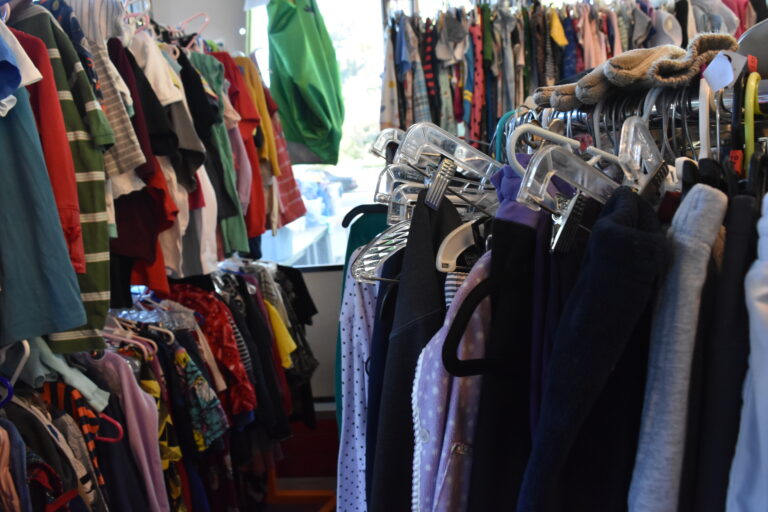
Chloe Harmon, a second-year global disease biology major, is one of many who believes buying second-hand is economically and environmentally important. As an organizer for Aggie Trading Post, a student-run free clothing exchange, Harmon contributes to the effort to make second-hand, sustainable clothing more easily available in the Davis community.

“There are many things we can do as consumers: care, repair and rewear,” Harmon said. “It’s important to upcycle, buy from second-hand retailers and to take care of the clothing you already own to make it last, and buy only what you really need.”

But Harmon is not the only one working to make an impact. In recent years, thrifting, online clothing resale apps and vintage stores have become increasingly popular. The global second-hand apparel market is expected to grow three times faster than the overall global apparel market, according to the ThredUp resale report.

“Buying second-hand forces you to develop a personal style,” Harmon said. “It’s all

about using what you have and cultivating your own closet […] you don’t really have the option to do that with fast fashion where the trends are chosen for you.”

The appeal of buying second-hand and creating a unique style is prevalent in Davis. Olivia Hurley, a third-year design major, focuses on students’ expression and second-hand fashion through the popular Instagram profile, @ucdfits

What began as a hand-me-down tradition with her mom turned into a good eye for style and thrifting, a forte Hurley uses to co-run the account. 

“A lot of it started with my mom,” Hurley said. “Most of the time I’m wearing a piece from my mom […] she saved a lot of her clothes from when she was younger and she has always been a second-hand shopper.”

Hurley helps run this account to capture the unique and often thrifted pieces students wear on campus. 

“I would always see people wearing their cool outfits and unique pieces so me and my friends thought, let’s just start hyping them up,” Hurley said. 

The account is one of many on social media that advocates for shopping second-hand and turning towards sustainable alternatives in fashion. Odinaka Okegbe, a fourth-year biological sciences major, said social media originally convinced him to begin thrifting and buying pre-owned clothing.

“[Thrifting] was really getting popular to the point where I wasn’t just seeing people thrift on YouTube or Instagram, but also some of my close friends were doing it as well,” Okegbe said. “So I decided to try it, and I’ve been doing so ever since.” 

Beyond aesthetics, there is an urgent environmental reason to buy second-hand. Just 15% of the world’s discarded clothing gets donated or recycled, while 85% of it goes to landfills, according to the Environmental Protection Agency (EPA). That is 21 billion pounds of textile waste going to landfills every year. The EPA also estimates that the United States generates an average of 25 billion pounds of textiles per year, which is about 82 pounds of textiles per US resident.

The overproduction, waste and overconsumption within the fast fashion industry are detrimental to the environment, according to Kenny Gagni, the owner of Treehouse Vintage in Davis. 

“Sustainability is important to us at Treehouse Vintage,” Gagni said in an Instagram Direct Message. “We believe in our anti-fast fashion mantra because fast fashion causes excess in landfills, destructive carbon emissions, as well as questions in ethics [at] factories.”

 Second-hand shopping offers a solution and is oftentimes even more affordable than buying from fast fashion retailers, according to Maryah Gilbert, a third-year political science major.

“I think clothing is a really easy way for people to consciously do better at being less wasteful and promoting sustainable habits,” Gilbert said. “I just recently got a dress from the art market, and everyone there is a student or a community member which is great to keep things circulating in the community. It’s a really nice thing.”

In addition to its environmental benefits, Harmon believes second-hand clothing is better quality than fast fashion clothing. 

“Clothing items from Shein are so poorly made,” Harmon said. “You’re going to throw it out immediately. That’s why I like vintage clothing; I can imagine these clothing items pretty much lasting me my whole life. It’s an investment to buy second-hand.”

Similarly, Okegbe also refrains from buying fast fashion because of its lack of longevity. 

“I’m not a fan of fast fashion whatsoever,” Okegbe said. “I never liked the idea of buying a clothing piece that wasn’t going to last me at least two years. It’s just wasteful and honestly pointless,” Okegbe said. 

On the other hand, thrift stores can be inconvenient for people to buy all their clothes from. Okegbe said that not everyone has the time to sift through racks of clothing, and not everyone is guaranteed to find the exact size or item they are looking for. 

“While I do endorse thrifting and stuff akin to it, it has its downsides,” Okegbe said. “For people like me with larger builds, it’s difficult to find second-hand clothes that actually fit you, especially bottoms.” 

Additionally, Gilbert said buying second-hand, especially from curated vintage stores or online resellers, is not an affordable option for some people. 

“It’s definitely important to me that cheap and sustainable clothing is accessible to me and something that really bothers me is when [online resellers] buy and resell thrifted clothing for a billion dollars,” Gilbert said. “It takes away from the people who need it.”

For these reasons, many people turn to fast fashion when purchasing their clothes. However, many resources are available throughout Davis that accommodate these difficulties, like the Society for the Prevention of Cruelty to Animals (SPCA) thrift store, Treehouse Vintage, Aggie Reuse and Aggie Trading Post. 

According to Harmon, Aggie Trading Post has a “three for free” policy, which means that you can donate one item and take three home for free in return.

These and many other members of the Davis community think it’s important to shop consciously when you can. Not only can you develop a unique, personal style, but you can do your part in reducing the textile waste that is growing each year.


Written by: Rebeka Zeljko — features@theaggie.org


Davis community rallies in support of Davis Teachers Association amid ongoing contract negotiations

0

Residents gathered at the Davis Joint Unified School District meeting to demand better pay and benefits for teachers

By JILLIAN MARCH — city@theaggie.org


On Nov. 3, residents gathered in front of the entrance to Davis City hall during the Davis Joint Unified School District Board (DJUSD) Monthly Meeting in a show of support for the Davis Teachers Association (DTA) amid ongoing contract negotiations with the local school district.

 “Davis students deserve the best!” cheered the crowd as DJUSD Superintendent Matt Best arrived at the most recent School Board Meeting. Parents, teachers, school site staff and students were in attendance to protest what they considered the school district’s unwillingness to negotiate in good faith with their teachers’ association.

According to California School Employees Association (CSEA) President Sande Royval, over the course of the past few months, DJUSD has seen a large number of teachers and other essential faculty members leave the district for neighboring ones. She attributes this to DJUSD’s salaries and benefits, which she explained have not kept up with the city’s high cost of living.

“We are an important and essential part of the school community,” Royval said. “Unfortunately, we’re not feeling that way. Our families and our lives are being threatened by historic inflation and it seems like [DJUSD leaders] don’t care.”

During his initial presentation, Victor Lagunes, the DTA president and educator at Da Vinci Junior High, said that due to the district’s teacher shortage, remaining teachers have a shortened prep time period and increased difficulty obtaining substitute teachers. Negotiations have focused heavily on increasing the pay of school-site staff members, but so far, offers from the district have been disappointing.

Attendees in support of DTA negotiations were especially concerned by the district’s recent proposed solution of one-time payments and bonuses for teachers instead of salary increases, which the DTA argues will begin to remedy the district’s main problem, teacher retention.

Before the floor was opened for public comments, Lagunes talked about the impact that teachers have on students.

“Our students deserve the best,” Lagunes said. “DJUSD must invest in students by investing in and attracting great educators.” 

Lagunes said that DJUSD is unable to find and retain quality teachers and that this is a main concern during the negotiation process. 

“I think about all the teachers that have taken on an extra FTE (full-time equivalent) than what they had planned on this year because we have not hired sufficiently to cover the staffing needs and how that has impacted their ability to prep effectively for their classes, groups and interventions.”

In some cases, students have been left without a permanent teacher for the 2022-2023 school year. Christopher Fluetsch, a teacher and librarian at Willett Elementary, elaborated on this concern during public comment.

 “You have four elementary school classrooms here full of students who have been denied a full-year, long-term teacher for the entire year,” Fluetsch said.

Katelyn Moseanko, a special education teacher at North Davis Elementary, said during public comment that particular groups of students will face harsher educational deficits if DJUSD does not come to an agreement with DTA. 

“Who will replace us?” Moseanko said. “Davis students deserve the best, and I am one of the best. We can’t afford to live here and when we compare salary and benefits not only now, but in 30-some years when we retire, we can’t make the commitment to stay. And so what if we leave? Who will replace us?”


DTA negotiations are still developing. The next DJUSD Board Meeting will take place this upcoming Thursday, Nov 17 from 6-11 p.m. at Davis City Hall.


Written by: Jillian March — city@theaggie.org


Why it’s important to have hobbies

Partaking in extracurriculars is essential for a balanced life

By JENA TUFAIL — jjtufail@ucdavis.edu

Looking back on my first year at UC Davis, I realize that I did absolutely nothing besides school work, hanging out with friends and surviving. My life revolved around academics and nothing else.

For me, it has become increasingly difficult to separate my academics from the rest of my daily life, and as a result, I haven’t taken up any hobbies. 

I remember being in elementary school and having an immense amount of different activities. From horseback riding to school clubs, to reading and more, I had the time to pick up and do anything I wanted when I was younger. However, when I entered high school and then college, it became much more difficult to fit hobbies into my schedule — and sometimes I don’t even feel like I have the energy to do something fun outside of school.

I’ve recently realized, however, how important hobbies are in college. They offer a way to relieve stress by taking your mind off of school and help break up work by creating time to do something that you enjoy. 

They can also help you develop new skills, improve your efficiency, enhance your creativity, better your time management and patience and so much more.

The lucky few can find a job or major that combines their passions with work, but that’s not the case for most of us. It is important to experiment and try new things until you find something you truly enjoy.

This past year, I have tried to revert back to activities I used to like when I was younger. When I was a kid, I found that it was sometimes hard to commit to a hobby for a long time. Because of this, I would try a new activity for a few months and then switch it up. I have been adhering to this pattern over the last year as well. For example, in winter and spring, I taught myself to crochet and knit again, whereas in the summer I read books and drew. 

The number of potential hobbies is endless. Just remember, it’s just as important to avoid burnout from your hobbies as it is to not get burnt out from your classes. 

It can be difficult working non-stop towards your goals in college, so it’s important to have a way to take a step back and relieve your stress through a hobby. We don’t want the same routine to define the rest of our time at Davis. Break up your days by including a hobby and see how much more productive you can be when you’re not just focused on your academic and social life.


Written by: Jena Tufail — jjtufail@ucdavis.edu 

Disclaimer: The views and opinions expressed by individual columnists belong to the columnists alone and do not necessarily indicate the views and opinions held by The California Aggie.

Standout NFL rookies halfway through the 2022 season

0

Chris Olave, Ahmad “Sauce” Gardner and others are making immediate impacts for their teams

By PATRICK FIGUEROA — sports@theaggie.org

In the NFL, it is essential that teams replenish their rosters with young talent from the draft each season. While not all rookie players’ first-year performances determine their future success, there are often a few rookies who immediately contribute on the field for their respective teams, leading them to become superstars. Some of the rookies from the 2022 draft class who are doing so are New Orleans Saints wide receiver Chris Olave, New York Jets’ cornerback Ahmad “Sauce” Gardner and multiple players for the Seattle Seahawks. 

When the Saints lost their star wide receiver, Michael Thomas, during week three of the 2022 season, they needed another wide receiver to step up, and rookie Chris Olave did so. Through seven games, Olave has 37 receptions, 547 yards and two touchdowns. His best performance came during the previously mentioned week three game versus the Carolina Panthers, in which he racked up nine catches for 147 yards. Olave has also made multiple highlight-worthy plays, including a catch in traffic to get the Saints near field goal range in the last 30 seconds of their game against the Minnesota Vikings. With Thomas expected to miss the rest of the season, Olave will be the Saints’ primary wide receiver. 

The Jets badly needed secondary help after the 2021 season — during which they gave up the third-most passing yards in the NFL. To address this issue, they drafted cornerback Ahmad Gardner with the fourth overall pick in the 2022 NFL draft. Through eight games, Gardner has only allowed 197 yards on 46 targets. He also got his first interception against the Dolphins in week five. Wide receivers have certainly been lost in the “sauce” when playing against Gardner and the Jets. 

After trading away their franchise quarterback Russell Wilson for multiple draft picks during the offseason, the Seahawks entered a rebuild — or phase during which teams trade older talent and search for younger talent so that they can win in the future. With all of the contributions they are getting from their 2022 rookies, the Seahawks’ rebuild is progressing quickly. These rookies include offensive tackles Charles Cross and Abraham Lucas, running back Kenneth Walker and cornerback Tariq Woolen. 

Prior to 2022, the Seahawks’ offensive line was a major concern — they gave up 46 sacks in 2021, ranking 25th in the NFL. Needing to rejuvenate their offensive line with young talent, the Seahawks drafted offensive tackle Charles Cross ninth overall and offensive tackle Abraham Lucas in the third round. Both Cross and Lucas have looked promising so far, but maybe even more importantly, they have provided stability for the Seahawks’ offensive line by starting every game this season. 

The Seahawks lost starting running back Rashaad Penny for the season in week five when he suffered multiple lower leg injuries. Luckily, they drafted Kenneth Walker in the second round of the 2022 NFL draft. In the three games that Walker has started since Penny’s injury, he has 62 carries for 315 yards and four touchdowns. In addition, Pro Football Focus tracked Walker as having the highest missed tackle rate (minimum 40 carries) among running backs so far. 

Possibly the biggest steal the Seahawks acquired during the 2022 NFL draft was cornerback Tariq Woolen, who they drafted in the fifth round. Woolen showcased elite athleticism and phenomenal physical upside at the NFL combine after running the 40-yard dash in 4.28 seconds and showcasing a 42-inch vertical. Woolen earned a starting job and looks like he could be a star cornerback for the team. Through eight games, Woolen is tied for the most interceptions in the NFL (four) and has allowed just 278 yards. Quarterbacks have also had a below-average passer rating when targeting Woolen (50.8). Other NFL teams probably regret not selecting Woolen sooner. 

There are a few other rookies worth mentioning. Houston Texans’ fourth-round pick, running back Dameon Pierce, has 121 carries for 539 yards and four touchdowns in seven games. Pittsburgh Steelers’ second-round pick, wide receiver George Pickens, is a fan favorite with arguably the two most impressive catches so far this season during weeks three and seven. The Jets’ second-round pick, running back Breece Hall, looked very promising before he tore his ACL during week seven and Jacksonville Jaguars’ first-round pick, linebacker Devin Lloyd, has 68 tackles and two interceptions through eight games.

Going forward, all of these rookies will need to continue to perform at a high level to help their respective teams during the second half of the season. While it is still early in many of the mentioned players’ careers, the 2022 NFL draft class looks like it could produce multiple superstar players. 


Written by: Patrick Figueroa — sports@theaggie.org