55.9 F
Davis

Davis, California

Tuesday, December 23, 2025
Home Blog Page 190

Culture Corner

The Arts Desk’s weekly picks for movies, TV, music and more 

By VIVI KIM — arts@theaggie.org

Album: “Tradition” by Monsune (2019)

This album, which is R&B singer-songwriter Monsune’s debut EP and latest release, is filled with an eclectic set of sounds ranging from soft acoustic to psychedelic guitar arrangements. It uses a variety of samples and draws inspiration from artists of several genres, including hip-hop and alternative pop. “Mountain,” one of my favorites of the five-track album, is an interesting blend of both soft, subdued vocals and a vibrant, distorted guitar instrumental, abruptly switching between the two throughout the song. In an interview with Ones to Watch, Monsune describes the album as embodying the chaotic transition from adolescence to adulthood, where just about anything can be pieced into a confusing yet novel combination of ideas. If you are looking for a versatile and collectively soulful set of indie tracks, I recommend giving this album a listen. 


Movie: “Weathering With You” by Makoto Shinkai (2019)

In honor and anticipation of Makoto Shinkai’s upcoming film, I recommend watching one of his past celebrated works, “Weathering With You,” a visually astounding animated fantasy that truly lives up to the name of the distinguished Japanese director. The film tells the story of Hodaka Morishima, a poor high school runaway, and Hina Amano, a young orphan with the miraculous ability to manipulate the weather. As Tokyo is flooded with unceasing rain and is in desperate need of a clear sky, the two meet and turn Hina’s gift into a traveling weather service. Shinkai builds an engaging story while also incorporating themes of old Japanese myth, culture and geography. Melancholic yet spirited and overall beautifully illustrated, this film is equally worth watching now or saving for a rainy day.


Book: “The Time Machine” by H. G. Wells (1895)

Considered a pioneering work of science fiction, H. G. Wells’s novel “The Time Machine” is a must-read for sci-fi enthusiasts and casual book lovers alike. The story is both an inspiring time travel classic and a social commentary on emerging concepts of the late 1800s. An anonymous scientist sends himself to the year 802,701 A.D., where he discovers two evolved species living in what was once 19th-century London. The Upperworld society of Eloi is depicted as a gentle and frail group of creatures, preyed upon by the grossly inhuman Underworld society of Morlocks. Wells uses these two groups to illustrate his views on class division, social degeneration, a world refined by natural selection and the impending dangers of human civilization. Despite the heavy themes, I’d say the novel is a fairly short read and definitely worthwhile.


TV Show: “Hellbound” (2021)

Endlessly thought-provoking, cynical and verging on philosophical, the fantasy horror drama “Hellbound” is perfect for those unafraid to explore darker genres. Through two compelling story arcs, it takes a strong jab at themes of mortality, religion, justice and corruption. To sum up the brutal exposition of this series in a single question: What would you do if death literally came knocking on your door? Or, rather, stampeding from the depths of hell and vigorously pummeling down your door? It’s a horrifying reality to imagine but entertaining nonetheless. What truly marveled me about the show is how it took this seemingly outlandish plot and formulated a narrative that was complex and full of conviction, speaking to audiences about the power of mass manipulation. Following the first episode is a disturbing plot twist and a tear-jerking cliffhanger as the season finale, both making the series worth a watch.


Written by: Vivi Kim — arts@theaggie.org
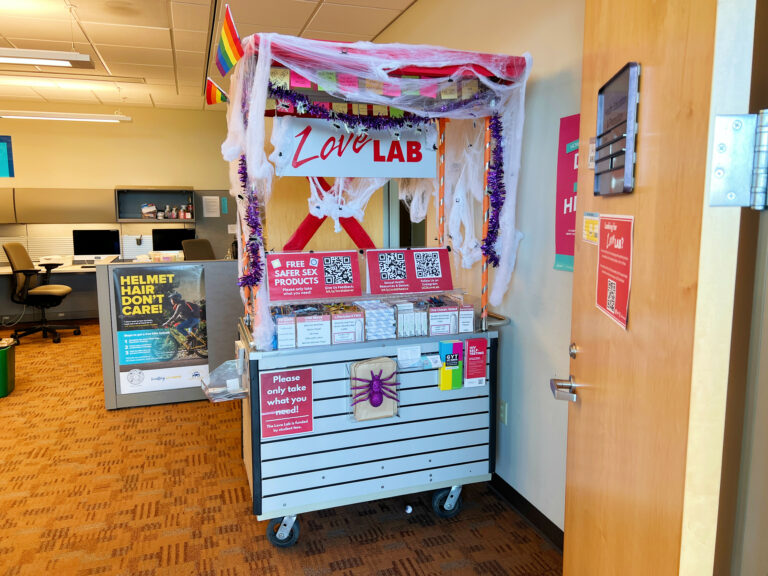
UC Davis’s Love Lab is here to remind students of the importance of sexual well-being

0

Through comprehensive education, the Love Lab is advocating for sexual health on campus

By UMAIMA EJAZ — features@theaggie.org 

The UC Davis Love Lab, founded in 2007 and located on the third floor of the Student Health and Counseling Services (SHCS) building, is a mobile cart that offers educational materials, provides information about birth control and other services offered by SHCS, and gives out free safe sex products such as condoms and free swag for students. They also collaborate with the LGBTQIARC to make rapid HIV testing kits available there. But the Love Lab does much more than supply students with condoms and coveted stickers, according to Blake Flaugher, a sexual well-being specialist in the Health Education and Promotion (HEP) Department at SHCS.

“Our work is about life and death and not just throwing condoms at people,” Flaugher said.

It’s true, Flaugher’s work is a lot more than just selling students commonly available products — it involves frequent collaboration with other student groups to create awareness around sexual health initiatives for students. This includes educating students about reproductive health, consent, communication, sexual violence prevention and safer sex.

Flaugher has been working at UC Davis SHCS for six years and said that he thinks sex education is “more important than ever” since Roe v. Wade, a Supreme Court case that legalized abortion nationwide in the United States, was overturned in 2022, according to Planned Parenthood. But despite the importance of the topic, he thinks that because of the stigma surrounding sex, many people undermine the seriousness of sexual and reproductive health work. 

Stephanie Ha, a fourth-year human development major and student coordinator with the sexual well-being team of the HEP, said that while presenting at residence halls, the team sometimes faces behavior from students that is disrespectful or otherwise conveys a lack of interest in the presentation.

“Educating them is our goal,” Ha said. “If they ask us something that they think is funny or disrespectful, we answer it very seriously to give them the best care that we can provide. And that usually that kind of makes them and the people around them realize that we are a resource, and we are here to support them. [Student coordinators] make sure that, if anything does get a bit too out of hand at the forefront, they handle it, and we only deliver a presentation if we are comfortable.”

Allyson Kahn, who, like Ha, is a fourth-year human development major and student coordinator with the sexual well-being team, said that talking about sex can be difficult. She said that because sexual activity is such a personal matter, tackling a project centered around sexual health in a respectful way can be challenging. 

Every quarter, the students involved with the Love Lab read books and articles and discuss different aspects of sexual health in order to become better equipped to provide information to students.

“We are in charge of reading ‘Sexual Citizens: A Landmark Study of Sex, Power, and Assault on Campus,’ [which is] a book by Jennifer S. Hirsch and Shamus Khan,” Kahn said. “It’s a chapter a week. Then, we discuss it at the end of the week at our weekly meeting. In the past, […] we were each in charge of bringing in an article to the meeting […] It definitely changes quarter to quarter, but we’re making sure that we have some way of taking in material about sexual health while we’re doing the work.”

The Love Lab team also gets a lot of feedback and information from the students that they serve. 

“We’re always doing a survey, a focus group, putting polls on our Instagram stories,” Flaughter said. “We really try to get a lot of student feedback so that it is student-centered, and so that we can tailor information and resources that way.” 

But it isn’t all serious conversations. The Love Lab acknowledges that sex is supposed to be fun. They hold Kahoot game nights at residential halls to engage with students and educate them on sexual health and safety in fun ways as well. 

Flaughter said students are often so under-educated about sexual health on campus that they have no idea what is covered by their insurance and what is not. According to Kahn, this is when SCHS jumps in. 

“The services that the Student Health and Wellness Center provide are covered by UC SHIP for students who have it, so they don’t pay anything when they come to the Student Health Center,” Kahn said. “But then we have more than half of the students we see not having UC SHIP, and they have to pay a $15 visit fee, plus $10 per test. It’d be great to provide free testing.” 

Everyone has a different relationship with sex and approaches it in a different manner. Flaughter said that while some people will accept new information provided by sexual education organizations, others may outright reject the information based on their own views and beliefs or deflect from their own discomfort with humor and irreverence. The Love Lab tries to meet these students where they are in a respectful manner, toeing the line between providing serious information and having fun with the work they do. 

“I do think it is important for us to recognize no matter your beliefs, everyone needs sexual health support,” Flaugher said. “There are always going to be challenges in the work. I definitely think stigma is always going to exist in some form because everyone’s different — unanimous approval does not exist. That’s one reason why we try to focus so much on policy work, organizational development and campus-wide initiatives — we want to try to change the culture, not just educate stigma out of people. We want to really change policies, to make our work and discussions about sexual health more normal and approachable.”

Ha said it is vital to make sure you and your sexual partners are safe, but it can be a daunting task to learn how to acquire those skills. Thankfully, students don’t have to do this alone. Even when it may be uncomfortable to open up about specific concerns, the Love Lab is a safe place to do so. 

Written by: Umaima Ejaz — features@theaggie.org

Correction: A version of this article published in print incorrectly stated that the Love Lab provides birth control and rapid STI testing and sells products to students. The article has been updated to correct this error.

‘The Macabre: A Harpsichord Halloween’ displayed the harpsichord’s versatility

Harpsichordist Faythe Vollrath performs a wide selection of pieces, from classical fugues to popular Halloween music

By Sarah Han — arts@theaggie.org


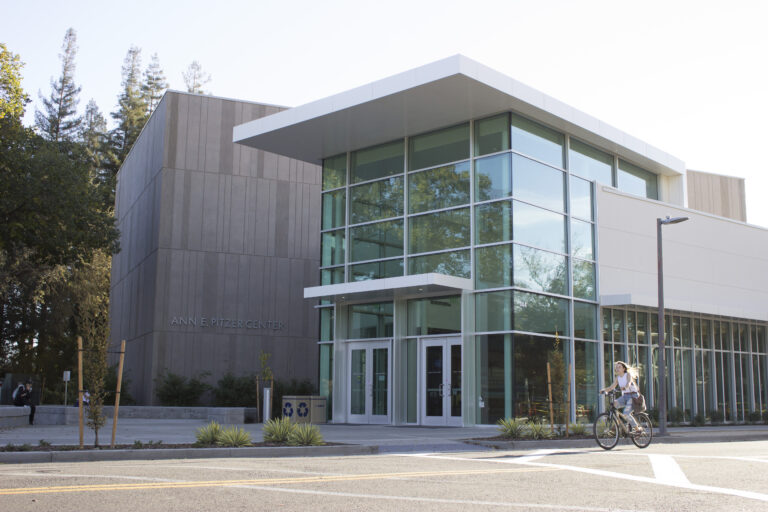
On Oct. 27, harpsichordist and UC Davis lecturer in music Faythe Vollrath gave a performance at the Recital Hall in Ann E. Pitzer Center in honor of Halloween. From pieces by Bach to Rorem, she demonstrated the various capabilities of the harpsichord.

The performance began with “Prelude in B minor, BWV 923” by Johann Sebastian Bach. The piece immediately started with quick, successive notes, which gave the illusion of dynamics, even though the harpsichord can’t actually produce them. Vollrath utilized a lot of facial expressions, which helped establish the intense, dramatic and subtle sections of the piece. The piece itself consisted of variations of the main theme, which was unexpected but engaging.

Vollrath then played Domenico Scarlatti’s “Sonata in G minor, K. 31” and “Fuga in G minor ‘Cat Fugue’ K.30.” The sonata had a choppy beginning, with short spurts of chords that grabbed the audience’s attention. A falling set of notes followed these chords, creating a nice contrast. The Fuga, on the other hand, was distinctively fluid. The last note was particularly dissonant, and Vollrath did a great job in making the usual harpsichord sound, which is quite choppy and detached, sound connected and streamlined.

The next piece was “Carnival of the Souls” by Verne Langon. What stood out to me the most was the bassline, which was structured yet different with every phrase. This established the typical creepy mood of Halloween, which was a nice change from more classical pieces. The audience seemed to notice the Halloween aspects in the piece, which created a light-hearted atmosphere in the hall.

Following that piece was “Larghetto in G minor, Inspired by Mozart” by Rosemary Brown. Contrary to “Carnival of the Souls,” this piece was far more melancholic and empathetic. Vollrath played in such an emotional way that I felt as though I understood the composer’s thoughts when writing the music.  

Vollrath played “Jekyll and Hyde” by James Dorsa next, which was the complete opposite pace of the previous song; there were dramatic pauses in the beginning, unexpected, almost rampage-like spurts of notes in the middle and pleasant running notes sprinkled throughout the piece. This is one aspect I noticed and enjoyed about Vollrath’s performance — she ordered songs of different tones and pace to create a contrast and keep the performance engaging.

Fraçois Couperin’s “Les ombre errantes from the twenty-fifth ordre” came next. I noticed that the entire piece consisted of similar variations of a single melody. The tone was despondent yet accepting because of the mixture of major and minor sections. This was definitely my favorite piece out of the entire performance.

Changing the pace, Vollrath performed “Danse Macabre” by Camille Saint-Saëns next. In this piece particularly, the harpsichord resembled the harp, especially in the beginning. Whether Vollrath did that intentionally or not, I enjoyed listening to a different sound from the harpsichord. The piece itself had a Halloween feel, with a progressively fast rhythm that sounded like someone creeping up on you. The audience also joined in by snapping every beat, which was entertaining.

The performance ended with “Spiders” by Ned Rorem; indeed, the individual notes sounded like spiders speedily creeping around. In honor of Halloween, I thought that this piece was not only appropriate but also a spirited way to end the performance.

Overall, I enjoyed “The Macabre: A Harpsichord Halloween” very much. Although I wasn’t a fan of the harpsichord’s sound initially, after this performance, I grew to enjoy it a lot more. Vollrath showcased her talents through various pieces of music and I definitely recommend attending her concerts, as well as other performances hosted by the Ann E. Pitzer Center.


Written by: Sarah Han — arts@theaggie.org


48,000 UC academic workers strike for better wages across all 10 UC campuses

The union’s demands include salary increases, childcare reimbursements and dependent healthcare

By KAYA DO-KHANH — campus@theaggie.org

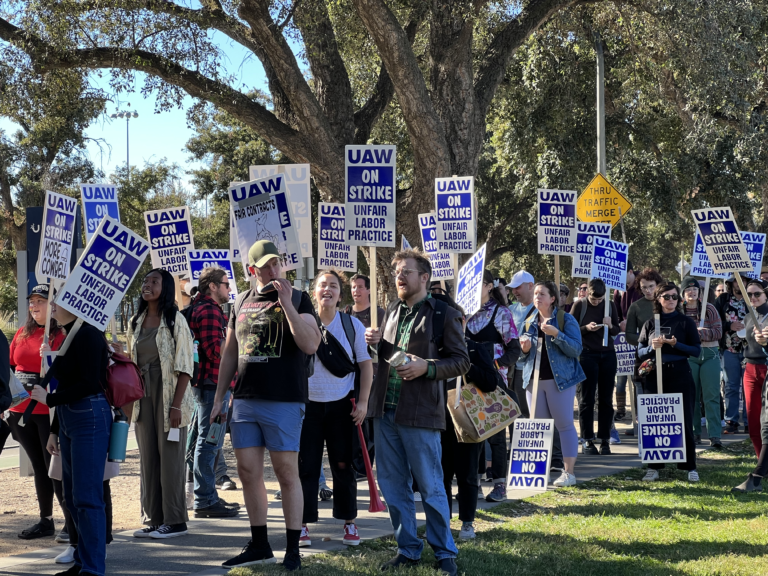
On Monday, Nov. 14, as early as 8 a.m., thousands of teaching assistants, graduate student instructors, readers and tutors across the University of California (UC) system went on strike to protest what the worker’s unions have said is “unlawful behavior” from the university system.

During the strike, many academic workers are walking off the job, ceasing to perform work duties related to teaching and research and are instead participating in picket lines across campuses to increase the visibility of the strike. According to the labor union UC Academic Workers 2865 (UAW 2865), the strike “will last until the University corrects its bad faith conduct or until union membership decides to cease striking.” 

Some of the issues that the unions are concerned with include salary increases, childcare reimbursements and dependent healthcare. The average salary of a graduate worker in the UC system is currently $23,000 a year.

“During many months of bargaining, we have made strong proposals to guarantee dignified compensation and equity in the workplace, but progress is being thwarted by UC’s unlawful conduct,” a statement from UAW 2865’s website reads. “The University has committed wide-ranging unfair labor practices impacting each of the four respective UAW units. These unlawful actions, be they bypassing the union, unilateral changes or failure to provide information, remain uncured and are impacting our ability to achieve necessary change at the bargaining tables with UC.”

According to UAW 2865, strike authorization votes were held from Oct. 26 to Nov. 2 across the campuses. There were a total of 36,558 total votes cast, with 98% of student-workers voting yes to authorize a multi-unit strike. The UC strike is the largest academic strike in U.S. history, with 48,000 UC academic workers across all 10 UC campuses participating. There will be picket lines on Russell Boulevard and College Park/Howard Way and Hutchison Drive and La Rue Road from 9 a.m. to 1 p.m. and from 12 p.m. to 4 p.m during the strike.

On Nov. 10, Interim Vice Provost and Dean for Undergraduate Education John Marx sent a message to all UC Davis undergraduate students informing them of the strike. 

“Negotiations with the union are continuing in an effort to avoid a work stoppage, and we are hopeful about an agreement,” the message said. “That said, given the roles that graduate student employees play as instructors, TAs and tutors, you may experience classroom disruptions.”

Written by: Kaya Do-Khanh — campus@theaggie.org

Senate answers public questions during quarterly Town Hall meeting

During Nov. 3 meeting, senators answered questions about June’s canceled commencement ceremony and ASUCD’s response to the TPUSA protest

By SYDNEY AMESTOY — campus@theaggie.org


Vice President JT Eden called the Nov. 3 Town Hall meeting to order at 6:35 p.m. in the CoHo inside of the Memorial Union. He then recited the UC Davis Land Acknowledgement.

The format of the hour-long Town Hall meeting consisted of members of the public asking the Senate questions, both in-person and over Zoom. Answers from the Senate were two-to-three minutes long. 

The first question asked for the Senate’s thoughts on June’s canceled commencement ceremony, and their ideas for how to improve future graduation celebrations.  

President Radhika Gawde was in attendance at the canceled commencement and provided her answer to the question. 

“As of right now, [next year’s] ceremony will not be outside,” Gawde said. “No one wants to do that again. But the questions right now being considered are, should it be in Sacramento or should it be in Davis? Should they be scheduled ceremonies, or should it be [divided] by major?”

Another speaker in the crowd asked the Senate about ASUCD’s stance on recent antisemitic incidents and about what should be done by campus administration in response.

Senator Francisco Ojeda spoke on his recent meetings with Aggies for Israel, a Jewish student organization on campus, about the rise in antisemitism.

“[Administration] has not handled the antisemitism on campus very well, which is really disheartening to me,” Senator Zeph Schnelbach said. “However, beyond meetings with [administration], there’s not much we can really do, because our association only represents the student body and we can only act with the student body in our own capacity.”

Another member of the public brought attention to delays in pay for specific student workers who were women of color. 

According to Eden, there are more incidents of this happening to a variety of other student-workers. 

“I’ll take personal accountability that some of these instances are basically poor 

communication,” Eden said. “But overall, it has to do with how payroll is processed.”

Gawde also responded to the question, elaborating on Eden’s answer by explaining how pay is processed.

“They’re all very unsatisfying answers that I have to give,” Gawde said. “A lot of it is because of the transition to UCPath. Their one little office does hiring and onboarding for the entire UC system.”

Next in the discussion was the question of what ASUCD has done besides holding meetings with the administration following the Turning Point USA (TPUSA) protest.

“Hypothetically, if there was a [Registered Student Organization] on campus that espoused what I thought to be bigoted speech and I wanted to get rid of them, [there isn’t a way to do so],” Gawde said. “I’ve looked into every ethical way possible.”

Gawde went on to say that supporting the Student Community Center and continuing to hold meetings with administrators are the two ways that ASUCD plans to move forward. 

Each senator and chairperson in attendance, by the request of a member of the public, then reported on the legislation they’ve contributed to or actions they’ve taken to serve the student body this quarter.

Senator Aarushi Raghunathan said that she has been working on reducing rent at The Green at West Village.

Senator Celeste Palmer said that she has been collaborating with various ASUCD units and committees, as well as working on student sustainability efforts.

Senator Alexis Reyes said that she has been working with The Pantry and on numerous mental health directives on campus. 

Senator Vaneza Gonzaga said that she has been working alongside the Student Health and Wellness Committee.

Senator Julia Shurman said that she has been meeting with the Disability Rights Advocacy Committee and working on making Senate meetings more accessible to members of the public with disabilities.

Senator Ojeda said that he has been working with Senator Stephen Fujimoto regarding the rules for collecting a certain number of signatures for elections.

Senator Gaius Ilupeju said that he has been talking with, and trying to secure more funding for, immigrant centers on campus.

Senator Schnelbach said that they helped organize this quarter’s ASUCD-sponsored drag show in the CoHo, which will now become a quarterly event. 

Transfer Student Representative (TSR)  Logan Ueno said that he has been holding transfer student-specific events with the goal of helping transfer students utilize all available resources on campus.

External Affairs Vice President Shruti Adusumilli said that she has been working on making Election Day an approved day off so students have the ability to vote without class interfering.

Academic Affairs Committee Chairperson Megan Chung said that she is working to extend the pass/no pass deadline to the last day of instruction in future quarters, a return to pandemic-era policy.

Senator Juliana Martinez Hernandez then announced that this Town Hall would be her last act as Senator before resigning.

Schnelbach then shared a letter that he received from a student who was at the TPUSA protest.

“I ran to the private security company that was hired, […] and pleaded with them to do something [about the counter-protesters],” the anonymous letter read. “They laughed at us, they sat back and recorded us.”

The Town Hall then came to its conclusion, and the Senate members took a break to move to the Mee Room for the rest of the meeting.

Eden called the Senate meeting to order again at 8:02 p.m., took roll call and once again read the UC Davis Land Acknowledgement.

The first order of business was confirming a new Senate President Pro Tempore following the resignation of Martinez Hernandez. Ilupeju was nominated and unanimously confirmed for the role following his acceptance of the nomination. He then took his seat next to Eden.

Martinez Hernandez then gave a final farewell to the Senate.

Following Martinez Hernandez’s exit, second-year political science major Daniel Mojica was unanimously confirmed as the new chair of the External Affairs Commission. Mojica has previously served on the Internal Affairs Commission and on the Elections Committee. 

The Ethnic and Cultural Affairs Commission then had a new vice chairperson confirmed. After brief deliberation, the new vice chair was unanimously confirmed.

In public comments, Fujimoto congratulated the teaching assistants, student researchers and post-doctoral students’ unions for their vote to strike if demands are not met soon by the administration. 

The Whole Earth Festival (WEF) then gave their quarterly report. The festival has finished receiving applications, and will now move to hire 40 new employees. WEF has also taken steps to remove cultural appropriation from its festivities by ending the non-university-affiliated drum circle, typically performed by alumni, and by having a more active land acknowledgment with members of tribes at the event.

WEF also cited plans to rent out their solar-generated light towers to other ASUCD units in order to continue being self-sufficient. 

The IAC then gave their brief quarterly report. IAC chairperson Thuyanh Truong gave the report, which described their past projects over the quarter, including their involvement in new legislation. The report clarified the process by which new legislation is sent to the commission from the Senate, and then back.

The quarterly report from the Entertainment Council (EC) was delayed, and senators

instead filed ex-officio reports before moving to open forum.

Ueno brought attention to a letter he had received from a member of the student body regarding a lack of gender-neutral bathrooms in the library. Gawde suggested talking to the Library Committee Chairperson to work toward a solution to that issue.

Fujimoto brought up concerns for the Elections Committee in regard to flaws in the system for candidates registering and for students signing petitions. 

“I was able to encourage one of the people I know on campus to run, and they’re super confused on what’s required,” Fujimoto said. “What’s not required, the date of what’s required and it’s just a little bit icky because I really want to have a competitive election.”

“I’ve had multiple reports from first-years and first-year transfers that they have been unable to sign my petition,” Fujimoto said.

Raghunathan expressed similar concerns.

“Just in general as a candidate, it’s been pretty confusing for me too,” Raghunathan said. “I was unable to figure out the date for when things were due. It seemed like the document changed every time I looked at it.” 

The EC then gave its quarterly report. The council operates Sunset Fest, as well as other smaller events and performances on campus throughout the year. The council reported recruiting over 50 volunteers, as well as two new paid directors. However, some of these directors have yet to be paid because of payroll delays, as addressed in the Town Hall. 

The status of previous legislation followed the quarterly report. Fujimoto moved to overturn Gawde’s veto of SB #14 by reconsidering the bill. The bill seeks to remove the Judicial Council’s power to enact permanent injunctions on legislation, especially when it is voted on by the student body. 

Fujimoto said that he decided to reintroduce the legislation after not receiving a response to multiple requests for a meeting with the Judicial Council to speak on the current legislative process.

Schnelbach shared their stance on the issue.

“The Judicial Council’s job is only to review legislation that we pass and determine whether or not it’s constitutional,” Schnelbach said. “When redefining their injunction powers we are infringing on their constitutional right to determine whether or not what we are passing is constitutional.”

After lengthy deliberation, the bill failed to override its veto with a 5-6 vote. 

Consideration of old legislation came next. 

SR#2 seeks to outline the implementation of constitutional amendments #78 and #77, which would move the election for International Student Representative and Transfer Student Representative to the spring ballot. While this kind of legislation is unprecedented, according to Eden, the bill passed unanimously.

SB #10 seeks to introduce more flexibility in the operations of the Outreach and Engagement Board. After deliberation on clarifications in the text, and some discussion on whether the board should be a committee, the bill passed 6-3-1.

The next piece of legislation was CA #79, a constitutional amendment that seeks to allow student voters to vote for a replacement candidate at the same time they are voting for a recall. 

“If or when the next recall happens, students will have a say on who gets to be in charge,” Fujimoto said.

Academic Affairs Committee Chairperson Megan Chung explained why she believes it is important for the president to be able to choose a vice president that they trust.

“I understand that the point of this amendment is to make [recalls] more democratic, and mirror whatever process we have in California,” Chung said. “But I think it’s important to understand that as an association we don’t operate the same way that any other government would. We’re sending the vice president and president to administration meetings that others don’t have access to.”

A motion was called to see a raise of hands on how senators planned on voting. Seeing as the majority raised their hands for no, the amendment was tabled for the Dec. 1 meeting.

Following the approval of past minutes, Eden adjourned the meeting at 11:16 p.m.


Written by: Sydney Amestoy — campus@theaggie.org


Meet UC Davis’s very own ‘Storm Chaser’ Colin McCarthy

0

The UC Davis student behind popular weather Twitter account @US_Stormwatch discusses weather reporting, climate change concerns and family bonding

By UMAIMA EJAZ — features@theaggie.org 


For as long as he can remember, Colin McCarthy has been chasing thunderstorms. The UC Davis first-year atmospheric science major covers extreme weather all over the world on his Twitter page, @US_Stormwatch. He started the account when he was in eighth grade, looking to learn more about weather, and today, he has over 64,000 followers. Most recently, his coverage of Hurricane Ian attracted over 30 million views in a week on Twitter. 

“I knew there was a great presence of meteorologists and climatologists on Twitter that I could learn a lot more from,” Colin said. “But after joining Twitter, I started doing my own updates. I originally stuck to California, and then over the last couple years, I’ve expanded out to national and then international.”

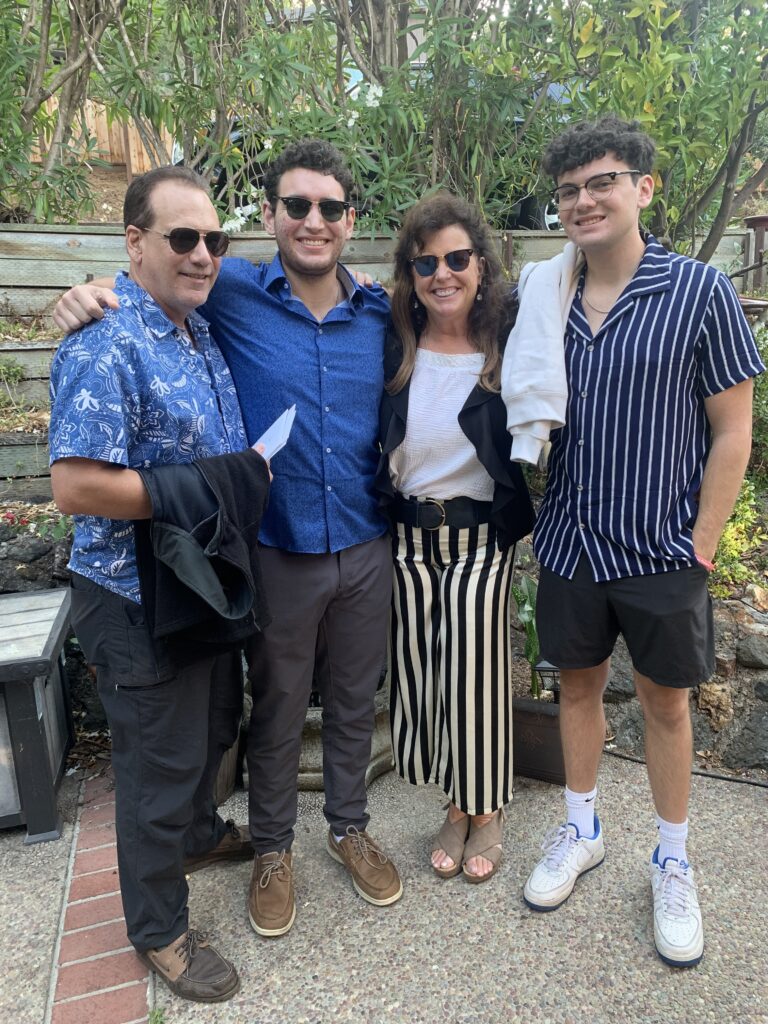
From a very early age, Colin said he would backpack in mountain regions with his family and discuss weather conditions with his father, Kevin McCarthy, who is a UC Davis alumnus. In 1988, Kevin was in the first environmental policy and planning class that the university ever offered. 

Colin said that he and his father have developed a strong bond through their shared interest in weather. They’ve been through a lot together, from reading weather patterns on top of mountains to running away from a hail storm during their trip to Yosemite in 2015.

“I’d never seen such dark clouds in my life,” Colin said. “We’re all like, ‘We’ve got to outrun the storm,’ but just then, all of a sudden, this big piece of hail falls down on the back of my dad’s shirt. And after that, hail just starts pounding the ground. This didn’t stop for multiple hours. There was heavy rain, hail and lightning. And I still remember when there was one flash, one strike so close that it struck right behind me. My whole vision went white for half a second. I had never experienced something so wild.” 

The year after their Yosemite trip, Colin got a weather station for Christmas, which allowed him to stay up-to-date on the weather through his own observations. 

“After he got the weather station, he would track the data,” said Kathleen Gallagher, Colin’s mother. “He would watch highs and lows and study the wind patterns. As a mother, it was quite incredible to watch.”

Colin’s brother, Jack McCarthy, recalls that spending time together was always about “chasing storms.” He said his younger brother’s fame wasn’t unexpected. 

“As a brother, I’m so proud of him,” Jack said. “I knew this was his passion, and that he would do something great with it, but to experience all of this with him seems surreal.”

This year, weather conditions have been severe globally. In addition to Hurricane Ian, Colin has reported on floods in Pakistan, heatwaves in Europe and a record-breaking heatwave in China. These events and other weather-related crises have been linked to climate change and global warming, according to the Environmental Protection Agency. Colin expressed his specific concerns for California as the world experiences severe weather.

“My biggest concern at the moment is ‘climate whiplash,’” Colin said. “It’s about average precipitation risk in the future in California. [Precipitation is] not really supposed to decrease or increase significantly, but we will have these huge periods of drought and floods — a huge kind of whiplash between these really wet years and then these really dry years. It’s very hard to tackle from a water storage standpoint.”

Water reservoirs like the Colorado River are suffering due to an ongoing drought, according to CalMatters.org. Floods may seem impossible when California is seeing so little rain and extreme water shortages, but historical patterns say otherwise. Colin said that, while the earthquakes predicted to occur at the San Andreas fault are concerning, he is more worried about a potential mega-flood in the future.

“We don’t exactly know when, but very likely, in the next several decades, we’ll see the biggest flood in centuries,” Colin said. “It’s happening every 150 to 200 years in California on average. But with climate change, there’s more water in the atmosphere. The last mega-flood that happened was around the 1860s, and it was such a severe flood that the Central Valley actually became an inland sea for a certain period of time.”

Colin said he never expected he would discover his career interests at a young age or find fame through social media reporting, but he said he hopes to continue on this path.

“I didn’t imagine getting verified or seeing this amazing, amazing growth,” Colin said. “It’s hard to know where I see myself in the future, but I’d like to think I could be anywhere across the world, honestly. Weather and climate applies to anyone on Earth, so I expect to be traveling a lot and hopefully have a job that I love.”


Written by: Umaima Ejaz — features@theaggie.org


ASUCD fall 2022 election results announced

Despite popularity, The Green Initiative Fund fails due to a lack of voter turnout

By SONORA SLATER  — campus@theaggie.org

In this fall’s election, seven candidates ran for six seats in ASUCD Senate, one candidate ran for External Affairs Vice President, one candidate ran for International Student Representative and one candidate ran for Transfer Student Representative.

Voter turnout was 5.58% of UC Davis’s undergraduate population — a 132.5% increase from  2.4% last fall.

Celene Aridin ran uncontested for External Affairs Vice President and was elected.   

Keven Zhou ran uncontested for International Student Representative and was elected. 

Logan Ueno ran uncontested for Transfer Student Representative and was elected. 

For Senate, Stephen Fujimoto, Jacob Klein, Gaius Ilupeju, Zeki Xu, Aarushi Raghunathan and Erek Leschyn were elected.

The Green Initiative Fund fee referendum, which sought to reinstate a $3.50 fee per student per quarter for the 2023-2024 school year in order to offer students funding to develop and launch innovative sustainability projects within the UC Davis campus community, did not pass. Although 79.85% of voters voted yes on the referendum, it ultimately failed to meet the required 20% voter turnout threshold. 

CA #77, which moves the elections of the ASUCD Transfer Student Representative and International Student Representative from fall quarter to spring quarter, passed with 85.91% of the vote. 

CA #78, which moves the election of the External Affairs Vice President from fall quarter to spring quarter, passed with 82.31% of the vote.

CA #80, which establishes an ASUCD Elections Officer to handle administrative aspects of the elections process and lead promotion of each election, and changes the composition of the Elections Committee, passed with 95.87% of the vote. 

CA #81, which moves ASUCD spring general elections from the seventh week of the quarter to the fourth week of the quarter in order to enact student fee initiatives more efficiently, passed with 80.94% of the vote.

Written by: Sonora Slater — campus@theaggie.org

ASUCD’s Entertainment Council Sunset Fest brings together UC Davis community

Directors, volunteers and performers share what makes the cost-free concert so memorable 

By ANA BACH and RUMA POUDELL — arts@theaggie.org


Last week, ASUCD’s Entertainment Council hosted Sunset Fest, an immersive concert for students that featured Remi Wolf, student performances and fun activities.

The event is one of many actions taken by ASUCD in an attempt to nurture the student community and promote a diversity of arts and culture on campus. The main goal is for students to have an outlet to create new connections and instill relationships within the school’s community. 

Remi Wolf was the featured artist for this event. Her music borders indie pop and a modernized alternative R&B sound. 

When she performed her most well-known song, “Photo ID,” the crowd responded enthusiastically. For one song, she switched with her drummer to play the percussion while they covered vocals. She absolutely nailed the drum set, while the drummer performed an anthem of affirmations centered around Dua Lipa. It was amazing to see how her versatility shines in every song of her set.

Beyond the music, Wolf and her band ensured that the crowd on the Quad was in good spirits. In honor of Halloween, her band came dressed in costumes and encouraged the crowd to dress up as well. This energy was a huge factor in the overall experience of the concert and what really made everyone have as much fun as they did. 

Performers, directors and volunteers of the event shared remarks with us about Sunset Fest and how it has positively impacted both community health and individual development. 

Alyssa Landis, third-year cognitive science major, and Cassidy Farm, third-year animal science major, who are both a part of the Polynesian Dance Group on campus, spoke about why they wanted to be involved in the student production. 

“Getting to share our culture, or the culture of our clubs, like Polynesian dance, is just really exciting,” Farms said. “As soon as I am on stage, I feel inspired to perform.” 

Alyssa Labdis continues on about the community ideals within the club that work towards creating a nurturing environment and has provided them with a support system in multiple areas of their lives. 

“It’s kind of like having a piece of home, even just besides dance — I just love it so much,” Labdis said.

Nyla Hinston, second-year communication major and the director of Entertainment Council, spoke about the benefits the event brings the UC Davis community.

“It’s welcoming, especially for freshmen— to get them engaged, actually want to be on campus, and make friends and connections,” Hinston said.

“We’re all broke college students,” said Chloe Peterson, second-year undecided agricultural sciences major and new volunteer for Entertainment Council. “Sunset Fest gives us a way to have fun and relieve stress for little to no cost. Not a lot of college students can say they have this.”

For those interested in gaining hands-on experience in the field of entertainment, Sunset Fest and Entertainment Council could be a first step on that journey according to Hinston. 

“You could come here and enjoy the show, then actually want to be a part of it like I did,” Hinston said. 

“It’s cool,” Peterson said. “I was able to learn how to manage a live stage and get hands-on experience.”

Entertainment Council, as well as the other ASUCD units, provide students with learning opportunities for different career fields in addition to networking opportunities with others who are working on the production. 

This year, Sunset Fest cemented its ongoing legacy as an annual concert which brings together the UC Davis community amidst the academic challenge of midterms, giving students a way to relieve stress in a healthy manner and make lasting memories, all while providing a space for creatives to share their practice.


Written by: Ana Bach and Ruma Poudell — arts@theaggie.org


No need to pry, mate: noninvasive testing of mountain gorilla saliva 

Researchers at UC Davis use chewed plants to test gorillas for human viruses

By LILLY ACKERMAN— science@theaggie.org 


A recent study by faculty at UC Davis School of Veterinary Medicine’s One Health Institute has found no evidence of human herpesviruses (human HSV-1) in mountain gorilla populations. The study did, however, find a new noninvasive sampling technique, the first of its kind used to definitively test for disease in mountain gorilla saliva. 

The saliva sampling technique was introduced by Dr. Tierra Smiley Evans, the lead author of the study and a Ph.D. veterinarian researcher at the One Health Institute and Wildlife Health Center (WHC) at UC Davis. The method involves extracting the saliva contained in mouthfuls of chewed up plants that gorillas discard and testing it for a variety of diseases. In this case, Evans and her team tested the samples for human herpesviruses, which pose concerns to wild gorilla populations. 

“I think what’s really exciting about this method is that it can be done entirely noninvasively, and you don’t need to interrupt [the gorillas’] daily activities at all,” Evans said. 

The saliva in chewed plants is collected without direct gorilla contact as opposed to a blood or saliva sample, which has to be taken directly from the animal after anesthesia. This method not only keeps human disruption to the animals low, but it also keeps any disease transmission risk to a minimum. 

Since 2009, UC Davis’ WHC has been partnered with the Mountain Gorilla Veterinary Project, an organization dedicated to the conservation of mountain gorillas in Central Africa. Their collaboration, known as Gorilla Doctors, was created with the goal of monitoring and providing veterinary care to mountain gorillas. 

Remaining mountain gorilla populations are small and have been habituated to human presence because of research, ecotourism and gorilla trekking. These qualities have been helpful to the veterinarians in the Gorilla Doctors, as they allow them to offer the gorillas individualized care and closely monitor the populations for diseases.

“We know the individual [gorilla], and we have a biospecimen from them, which is really unique for a lot of endangered species,” Evans said. “[It] allows us to do some pretty cool stuff.”

Mountain gorillas are an endangered species, limited to only small ranges in Rwanda, Uganda and the Democratic Republic of the Congo (DRC), according to Evans. They live in biodiverse forests, so they have a wide variety of vegetation to choose from for a tasty bite. Much of their day is spent eating the fleshy parts of plants and discarding chewed-up piles of remains that they dislike. 

One gorilla’s trash is a researcher’s treasure though. Evans and the Gorilla Doctors team would wait nearby for these piles to be dropped as the gorillas continued their quests for food. When a gorilla had moved on to another plant, the veterinarians collected the discarded mouthful and recorded the identity of the gorilla that discarded it.

Using this technique, Evans and staff at Gorilla Doctors were able to test remaining populations of mountain gorillas for human herpesviruses. Fortunately, the study found no evidence of human HSV-1 in the species. 

“Our results indicate that wild mountain gorilla populations were not infected with human HSV-1 at the time of sample collection, despite known frequent direct contact between mountain gorillas and humans,” the study reads. 

Dr. Kirsten Gilardi, the executive director of Gorilla Doctors, director of UC Davis’s WHC and co-author on the study, discussed the value of the chewed plant method for future use in gorilla research and conservation.

“We don’t need any more evidence to know that this is a perfectly viable method for us to use,” Gilardi said. “I anticipate that it’s now going to be a standard tool that we can use going forward.” 

While even the most common viruses to humans, such as some herpesviruses, may not be a threat to the human population, they can be lethal to gorillas. Due to the problems that could ensue if a mountain gorilla were infected with a human virus, close monitoring and testing is not the only measure in place to prevent an outbreak among the population. 

“Recognizing that habituating great apes puts them uniquely at risk for potentially getting a disease from a human, great ape sites around the world have adopted best practices around being near [them],” Gilardi said. 

These practices include keeping a minimum distance away from gorillas, designating specific eating areas within visitation sites and wearing masks near gorillas, which has been more widely enforced since the start of the COVID-19 pandemic. 

With the Gorilla Doctors’ efforts and the chewed plant technique, Evans echoed sentiments of optimism towards the future for the conservation of the wild mountain gorilla population in Central Africa. 

“As a result of Gorilla Doctors’ work, mountain gorillas have actually increased in numbers,” Evans said. “The most exciting thing for me is probably seeing the positive impacts of conservation and this kind of work. The mountain gorillas really are a positive story.”


Written by: Lilly Ackerman— science@theaggie.org


UC Davis men’s basketball 2022-23 season preview

UC Davis Head Coach Jim Les and a new Aggies’ roster seek a return to the NCAA Tournament 

By MARLON ROLON – sports@theaggie.org


After losing to Cal State Fullerton in the quarterfinals of the Big West Conference Tournament in Henderson, Nevada last season, the UC Davis men’s basketball team also lost prominent players in the transfer portal, leaving many who follow the team wondering how they would look at the start of the 2022-23 season. 

In the 2021-22 season, the Aggies posted a 13-11 overall record (5-6 in conference play) and advanced to their sixth straight quarterfinal round of the Big West Conference Tournament. Despite the team being eliminated from the conference tournament in the quarterfinal round, last season could be deemed a success due to the team’s improvement as the year progressed.

 Throughout the season, the Aggies’ dealt with COVID-19-related issues. The team had to cancel eight games due to the outbreak of COVID-19 — the most of any team in the Big West. The lack of continuity played a role in the team’s lack of rhythm and consistency during the season. 

“It was a factor throughout the year,” UC Davis Head Coach Jim Les said following the team’s exit from the Big West quarterfinals. “The stop, the starts and not getting as many game opportunities. Maybe developing rhythm and being able to experience 30-plus games at this point is really helpful because you tend to grow.”

Despite playing the least amount of games in the conference, the Aggies came together at the end of the season when many thought they wouldn’t even make the postseason. 

“When we look back at it, we’ll appreciate what was accomplished and what was done despite the fact that we had a lot of adversity that this group went through, and we still kept a great attitude and continued to work really hard,” Les said.

Following the season’s end, a few players departed from the roster, most notably Ezra Manjon, one of the Big West’s best players. Manjon, a senior point guard, left Davis to join Vanderbilt University, who play in the Southeastern Conference (SEC). Last season, Manjon averaged 15 points per game, ranking sixth in scoring in the Big West. During his three seasons at UC Davis, Manjon was selected as Freshman of the Year in 2019-20 in the Big West, All-Big West second team in 2020 and 2021 and All-Big West first team in 2022. His departure from the team leaves an offensive hole on the roster, as his scoring and passing abilities are a big part of what made UC Davis a contender in the conference year in and year out. 

Another notable player who left the program via the transfer portal is graduate student Caleb Fuller, who joined Montana State in the Big Sky Conference. Fuller spent four years under Les, averaging 7.8 points per game, shooting 46% from the field and 35% from the three-point line. However, last season was Fuller’s best season under the Aggies’ emblem, posting 12.1 points, 5.5 rebounds and 2.2 assists per game. Fuller’s versatility and leadership qualities are what the Aggies will miss the most, as he is a strong rebounder, three-point shooter and defensive specialist. His toughness and grit will certainly be missed at the University Credit Union Center. 

“If I could go four years back, I would make the exact same decision,” Fuller said in tears after UC Davis’ postseason exit in the Big West Tournament last season. “I loved playing under Coach Les. I’ve grown as a basketball player but more importantly as a man. I’m getting a little emotional speaking about it, but he knows I love playing for this team.”

The loss of these two players is significant, so much so that the Big West Preseason Poll has predicted that UC Davis will finish as the sixth seed this season. However, with so many new players on the roster, the team’s potential remains a mystery. The list of new players recruited to the program includes second-year guard Ty Johnson, third-year guard Robby Beasley III, third-year forward DeAndre Henry, third-year forward Sam Manu and second-year forward Niko Rocak.

With Fuller’s absence, adding defensive players to the backcourt is a necessity for Les. Johnson, a transfer from Loyola Chicago, will hopefully provide much-needed support on the defensive end. 

Last season, UC Davis was relatively a small team size-wise. For that reason, the Aggies acquired Henry, who is 6-foot-7, from Nevada. He appeared in 33 games in two seasons with Nevada, scoring 17 points and grabbing 21 rebounds in 15 games last season. 

Les also signed 6-foot-7 forward Manu from the College of San Mateo. Last season, Manu averaged an outstanding 16.6 points, 5.7 rebounds and 1.4 steals per game. Size is what the Aggies lacked, but these two players will immediately boost their frontcourt. 

The last transfer to be added is Beasley III from the University of Montana. He averaged 11.8 points per game with the Grizzlies and was their second-best scorer on the team last season. Beasley III’s ability to consistently put the ball in the basket could help fill the hole that Manjon left. 

Other notable signings are first-year forwards Joaquin Strong and Jac Mani. 

Although the Aggies have a relatively young roster with these new additions, familiar faces that are essential to Les’s system are returning. Third-year guard Elijah Pepper, who is taking over as the leader of the team, was elected to the All-Big West Men’s Basketball Preseason Coaches’ Team. Pepper was phenomenal last season, posting big numbers for the Aggies with 15.1 points and 5.4 rebounds per game. He was fifth in scoring in the conference and ranked second in steals. Pepper is also able to score three-point shots off the dribble, making 119 three-pointers last season. If the Aggies want to compete for a championship, Pepper is key. 

Another important player who is returning from last year’s team is defensive standout Ade Adebayo. The third year is the Aggies’ best defender and he often guards the best offensive players from the opposing team.

With so many new players, UC Davis has a tough task at hand. Les will rely on the established players on the roster to set the tone for the newcomers and push for a spot in the postseason. 

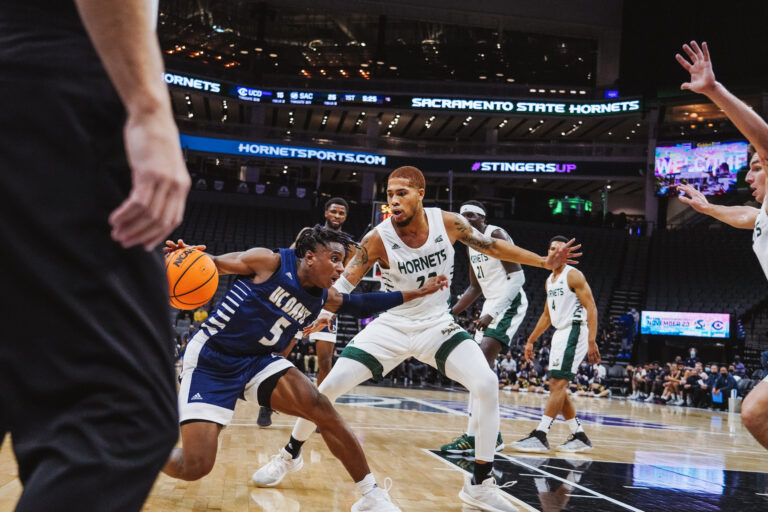
The journey began on Nov. 7. as UC Davis traveled to Berkeley for the season opener. The Aggies beat the Golden Bears 75-65 to start the season 1-0. Two days later, on Nov. 9, the Aggies will host Cal Maritime in the first home game of the season. Then, UC Davis will travel to Southern California to play LMU on Nov. 12. The team will return home to host Arkansas State on Nov. 18, and four days later, the Aggies wrap up their California games against crosstown rivals Sacramento State in the Causeway Cup on Nov. 22. 


Written by: Marlon Rolon – sports@theaggie.org


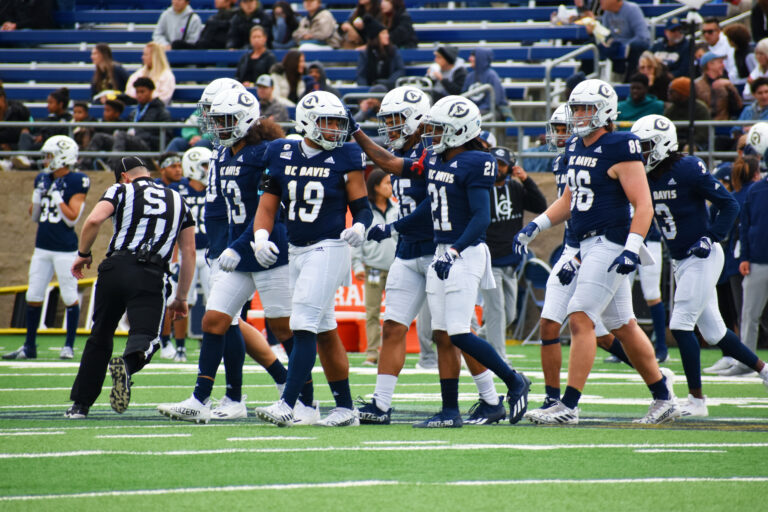
The Aggies take down Idaho State in final home game of the season

UC Davis extends their winning streak with a 43-3 victory

By GABRIEL CARABALLO — sports@theaggie.org

On Nov. 5, the UC Davis football team entered UC Davis Health Stadium pitted against the Idaho State Bengals for their last home game of the season. 

Idaho State started the game with possession of the football and put together an emphatic first drive featuring a 19-yard run from second-year Benjamin Omayebu and a pinpoint pass from second-year quarterback Hunter Hays to second-year wide receiver Christian Fredrickson for 23 yards. The Bengals’ offense put pressure on the UC Davis defense and entered the red zone, but the Aggies’ defense responded, forcing a fourth-and-goal situation. Idaho State took the safe route and attempted a 35-yard field goal. First-year kicker Ian Hershey successfully converted the attempt and gave Idaho State the early 3-0 lead. 

In a surprising move, Idaho State decided to go for an onside kick but the team was unable to recover the attempt. This failed sequence gave UC Davis incredible field position. On their first drive after the kick, the Aggies gained a first down via a 19-yard pass from second-year quarterback Miles Hastings to third-year tight end McCallan Castles before being halted by the Bengals’ defense. The Bengals caused a fourth-and-long, prompting UC Davis to attempt a field goal. Fourth-year kicker Isiah Gomez stepped up and made a 45-yard field goal to tie the game 3-3. 

The Bengals’ next drive was cut short by a quick four and out, courtesy of the Aggies’ second-year safety Kavir Bains. This was Idaho State’s first punt of the game, but it wouldn’t be their last in the game. On UC Davis’s next possession, their offense put together a five-play, 65-yard series. Hastings threw a 22-yard pass to second-year receiver Justin Poerio and a 15-yard pass to second-year halfback Lan Larison. Second-year halfback Matteo Perez also had an impressive 15-yard run to get them into scoring position. The series was capped off by a direct snap to second-year Trent Tompkins, who rushed for a seven-yard touchdown to make the score 9-3. UC Davis went for a two-point conversion but unfortunately failed to convert. 

The first quarter ended with UC Davis in possession of the ball, which carried over to start the second quarter. However, the Aggies’ offense was stopped by the Bengals’ defense early in the quarter, and UC Davis was forced to punt. Idaho State received the punt, but special teams graduate student Cole Hansen forced a fumble on the Bengals’ returner. Second-year Abe Del Real recovered the football for the Aggies, giving them incredible field position. On UC Davis’s next drive, they would convert a third-and-long after a holding penalty with a 22-yard pass from Hastings to Poerio. However, the Bengals held the Aggies, forcing a 34-yard field goal attempt. Gomez hit his second field goal of the game and added three more points to the team’s lead. 

The successful field goal made the score 12-3 with Idaho State back in charge of the football. Hays started their next drive with a patient 15-yard pass to second-year wide receiver Shane Dailey Jr. to convert a third-and-long. On Idaho State’s next play, Aggies’ fourth-year cornerback Devon King made an athletic play to pick off Hays’ pass. 

However, shortly after the turnover, the Bengals’ defense retaliated with an interception of their own. Bengals second-year safety Quantraill Morris-Walker intercepted Hastings’ pass and returned possession to Idaho State. Unfortunately, in the following play, Idaho State would waste possession with another fumble. 

Second-year linebacker Teddye Buchanan recovered the football for the Aggies and ended the lively turnover battle. This led to UC Davis having optimal field position but the Bengals’ defense held the Aggies to another field goal attempt. Gomez stepped up for his third field goal of the game and extended the Aggies’ lead to 15-3.

Idaho State was down by 12 points and had four minutes left in the second quarter to make a stride for the endzone, but the Aggies forced the Bengals to punt the football once more. Idaho State only used up one minute on that drive and gave the Aggies the ball back with three minutes left in the half. 

UC Davis started with a 22-yard run from fourth-year running back Ulonzo Gilliam Jr. to give them momentum;  he continued to run the football to wind down the clock. After a strategic timeout with 45 seconds left in the half, Hastings threw a 20-yard pass to Larison and entered the red zone. With no timeouts left, the Aggies’ offense hurried to the ball to save time and get in another play. Hastings then threw a quick pass to second-year wide receiver CJ Hutton, who stepped out of bounds to stop the clock. Immediately after, Hastings targeted Hutton once more, ending their drive and the half with a touchdown. UC Davis put together a tactical 11-play, 71-yard scoring drive and made the score 22-3 at the end of the first half.

Idaho State was down 19 points at the half and Davis retained possession of the football to start the third quarter. Things seemed bleak for the Bengals, but Idaho State’s defense refused to give up. Second-year defensive tackle David Rowe delivered an eight-yard sack and forced UC Davis to punt, giving Idaho State another opportunity to put points on the scoreboard. However, the Bengals’ offense couldn’t capitalize on the play and punted again. 

In the following sequence, UC Davis marched down the field on a nine-play, 75-yard scoring drive with a 29-yard reception from Tompkins and a four-yard touchdown run from Gilliam Jr. to make the score 29-3. 

Idaho State, down by 26 points, continued their offensive slump and punted for the fifth time in their next offensive series. This gave the Aggies another opportunity to put points up on the board, and so they did, with a conservative 12-play, 52-yard scoring drive that took the remainder of the third quarter and concluded with Gilliam Jr.’s second rushing touchdown of the game. 

As the fourth quarter began, the score was 36-3 with UC Davis in the lead. The Aggies would go on to score one more time with a passing touchdown from Hastings to Tompkins to make the score 43-3. The Bengals couldn’t get past the Aggies’ defense and were forced to punt until the final seconds of the game. The Aggies, down by three at the start of the first quarter, would score 43 unanswered points to end the game. 

The Aggies are now on a four-game win streak going into the last two games of the season. 

“It’s fun; I enjoy it. We take everyone seriously since that’s what yields results, and it makes football really enjoyable,” said fourth-year left-tackle Nick Amoah of UC Davis’ winning streak. 

The offensive lineman said the team’s perspective on this streak is that preparation yields progress. 

“I’m happy for the guys, and they’ve put us in a position where we can do some things,” said UC Davis Head Coach Dan Hawkins. 

After starting the season 1-4, the Aggies have won four straight games. They now sit at 5-4 on the season and 4-2 in conference play. The Aggies are in fifth place in the Big Sky Conference and need to win their two remaining games if they hope to get into the playoffs.

However, the road will be tough as they face  third-place University of Idaho next. The Vandals are 6-3 overall and 5-1 in conference play. The Aggies will travel to Moscow to face off with the Vandals on Nov. 12 and end then the season against rival Sacramento State Hornets on Nov. 19. The Hornets are in first place in the conference and boast a record of 9-0 overall. The road to the postseason goes through Idaho and Sacramento, and it will be a tough mountain to climb, but the Aggies just might have the firepower on offense to overcome the final two opponents on the schedule.


Written by: Gabriel Caraballo – sports@theaggie.org


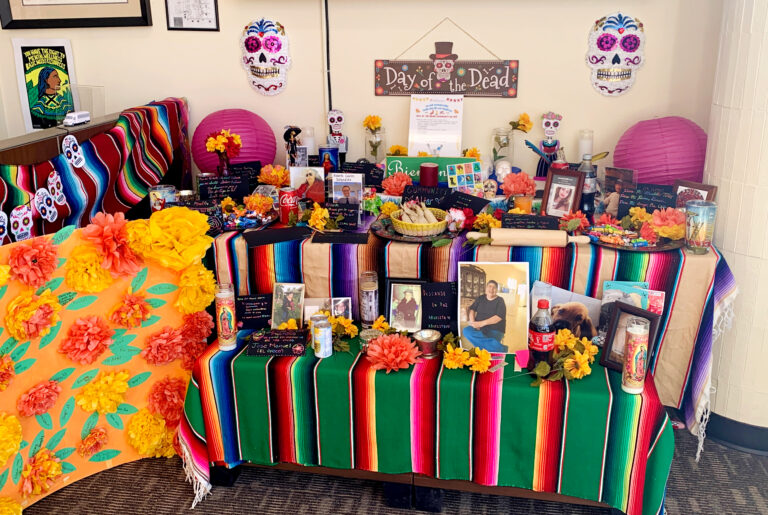
Student centers celebrate Día de Los Muertos with community altars 

0

Día de Los Muertos altars and celebrations on campus foster a home away from home for Latinx students 

By MARIA MARTINEZ CASTRO  — features@theaggie.org 


Nov. 1 and 2 mark a celebration of remembrance, community and love for many people of Mexican heritage all over the world and Latinx communities in the United States. Día de Los Muertos (Day of the Dead) is an opportunity for people to celebrate and honor the lives of loved ones who have passed. Many people celebrate by curating beautiful and colorful “altares” (altars) with “ofrendas” (offerings) in the form of a loved one’s photograph, favorite food or another representation of their character and lived experiences. 

This year, student resource centers on campus celebrated the holiday by organizing community altares.

The Center for Chicanx and Latinx Academic Student Success (CCLASS or El Centro) has continued its annual tradition of organizing a community altar since its opening in 2017. Roxanne Flores, Office Coordinator of El Centro, shares that the center’s altar is meant to garner a sense of community on campus and beyond. 

“We invite all,” Flores said. “It doesn’t matter [if it’s] students, faculty, staff, community members, people who live in Davis. We just want everyone to contribute to our altar to build a sense of community [and] belonging and help our students feel at home if this is something that they do in their homes too.” 

 In organizing culturally relevant programming for Latinx students, student centers allow students to thrive by creating safe spaces that recognize their identities and culture. Flores views the curating of the altar as an opportunity to connect with students and uplift them in their journey throughout higher education. 

“I think first and foremost it’s because [the altar] really helps us to retain our students,” Flores said. “So when our community has a sense of a home away from home, which is what we try to provide here at El Centro, they feel more empowered to do well. They feel more supported to reach out, to ask for help.” 

Karla Carranza and Penny Diaz, who are community leaders at the Women’s Resources and Research Center (WRRC), took the opportunity to celebrate community on campus and honor lives lost to gendered violence. Carranza, a second-year political science major, shared the importance of honoring and celebrating the lives of people who are not recognized properly. 

“We have all these different altares going on around campus, but one component we wanted to remember is that there are a lot of victims to gendered violence, and I feel like their stories often go unheard and untold,” Carranza said. “One of the big things of Día de Los Muertos is remembering all these people and their lives, and we wanted to make sure we’re keeping their memories alive, all while reminding people that there’s still a lot of work that needs to be done.” 

Diaz, a third-year English major, emphasized the importance of seeing victims of gendered violence through their humanity rather than through their suffering. 

“Unfortunately, a lot of victims of gender-based violence are just turned into statistics,” Diaz said. “They’re defined by the very gruesome aftermath of their death and are painted as victims and only remembered in the ways that they died or in the ways they suffered or [were] persecuted. But our focus for Día de Los Muertos is to remember that they were people first and not defined by what other people did to them.” 

Beyond honoring lives lost to gendered violence, Carranza and Diaz organized the Día de Los Muertos altar to create a sense of community and belonging for Chicanx and Latinx students on campus and in the WRRC. 

“With Día de Los Muertos, at least as a Latinx student, I feel like oftentimes it’s hard to find representation on campus,” Carranza said. “Like, I don’t want to say the altar is just meant for Latinx students, but it’s nice to see more of our culture be represented in these spaces. We’re trying to get more Latinx students to come into the center and interact with us and understand that these spaces are meant for you as well, not just for other people. It’s meant for everyone to enjoy and participate.” 

While UC Davis is a campus committed to diversity and inclusion according to its Principles of Community, Carranza explained that there are times when some students feel that they and their celebrations and traditions are not represented.

“I think also, at least I can speak from my experience, it is very hard to find community in college,” Carranza said. “It’s so hard to relate to other people because, regardless of anything, Davis is a predominantly white institution. It’s so hard to embrace your culture. I feel like I lose touch a lot. So, I think that’s why it’s important to have these culturally based programs so that students know that Davis can still be their home away from home. We need to make adequate steps for that.” 

Diaz commented on the importance for Chicanx and Latinx students to continue cultural celebrations beyond their home space. As people move away from home, they act as vessels of their culture and celebrations. 

“I think especially for Chicanx and Latinx students, so much of our cultural identity is family- and community-based,” Diaz said. “I remember I went to a Día de Los Muertos festival over the weekend in Woodland, and I was crying in the crowd because I miss that sense of community or being able to reminisce about the memories of my loved ones with my own family. I think part of the celebration of those that we have lost is held in the ritual of setting up the altar. We’re in communion with the people you are remembering and then also the people that are still with you.” 


Written by: Maria Martinez Castro — features@theaggie.org


Recipes to celebrate the cozy season

In honor of the changing seasons, the members of the Editorial Board share their favorite fall and winter recipes

By THE EDITORIAL BOARD


Sophie Dewees — Editor-in-Chief

Recipe: Braided Cardamom Bread

Alright, alright, I know choosing a Christmas recipe in a fall recipes editorial is a little controversial, but hear me out. Every year, my mom and I make a kind of braided Swedish bread, flavored with cardamom and cinnamon that fills the house with the scents of sugar and spice. Making this delicious treat that my mom first tried when studying abroad in Sweden has become one of our favorite holiday traditions. And although we have always made it to eat on Christmas morning (paired with jam or plain, it’s good either way), this recipe can easily be enjoyed in the fall, or any time when you feel in the mood for a sweet, spiced snack to accompany your afternoon coffee. 


Katie DeBenedetti — Managing Editor

Recipe: Butternut Squash Mac n’ Cheese

Yes, I did get this recipe from TikTok — but before you dismiss it, I urge you to at least try it, because I think it’s gone viral for a very good reason. Deep into my nightly scroll, I stumbled upon this @justine_snacks recipe, and when I say I immediately got up and made it, I mean I made it the next day, but that’s pretty close considering I had to find a butternut squash, three different kinds of cheese and a grater (because what college student just owns that?) This recipe is somewhat labor intensive if you roast your own squash and grate your own cheese. But while it takes some time, the steps are fairly simple, which makes cooking it the perfect cozy night-in activity. Plus, what could be better than seasonal produce, pasta and cheese?


Sonora Slater — Campus News Editor

Recipe: Sonora’s Slice of Heaven Apple Cake

Did you ever bake something with your mom as a kid, and she told you not to eat all the frosting? And you promised yourself that when you were an adult and had complete autonomy to make bad decisions, you would make it and eat as much frosting as you wanted? (Okay, maybe that’s niche, but I feel like some version of this is a universal experience). 

Well, here’s your chance: I give you full permission to make this apple cake with caramel frosting and eat it with a fork for breakfast. In week 7, we have to take advantage of anything that provides us an ounce of serotonin, so I hope this comfort recipe, passed down from my mom to me, and now to you, gives you autumnal vibes and some degree of sugar-fueled joy. 


Chris Ponce — City News Editor

Recipe: Abuelita (Spicy Abuelita)

Sure, hot chocolate is good and all. I’d even go as far as to say it’s great. But why would you choose to have basic hot chocolate when you have the option of Abuelita? Yes, like hot chocolate, it’s typically a Christmas drink, but November in Davis is already cold enough to enjoy drinking it. For those of you who don’t know what Abuelita is (I have not been talking about a grandma this whole time), it is a Mexican hot chocolate that contains cocoa, cinnamon, brown sugar and sometimes vanilla and chile powder. 


Drinking Abuelita reminds me of cozy memories from my childhood during the holidays. Whether or not you share that nostalgia, it’s a great way to warm up in the fall or enjoy during seasonal festivities. 


Owen Ruderman — Opinion Editor

Recipe: Green Bean Casserole

Nothing says fall to me quite like the classic Thanksgiving dishes. Bread rolls, mashed potatoes, steamed carrots, cranberry sauce, turkey and stuffing with gravy and pumpkin pie all make their appearance on my table, to the glee of grandparents and children alike. But the star of the show, at least to me, is always my grandmother’s famous green bean casserole. I can’t seem to get enough of the stuff; it’s creamy and buttery, crunchy and savory and, of course, incredibly delicious. The recipe is simple, but be careful — you might get hooked.


Levi Goldstein — Features Editor

Recipe: Kale and White Bean Soup

I love a good soup, especially when the weather starts to get cold. Who doesn’t? Nothing is more comforting than curling up with a bowl of hot, delectably-seasoned broth and hearty vegetables on a rainy day. A good healthy food choice (but also just purely delicious), this vegetarian kale and bean soup is a family staple. I picked up this recipe from my mom — it was her favorite and it’s now mine too. It’s easy to make for cooking beginners and is a must-have in every recipe book. This meal returns to my table every year, and for good reason. It is the perfect fall comfort food. 


Clara Fischer — Arts & Culture Editor 

Recipe: Apfelstrudel

(Note: This recipe is in German but Google Translate works, and it is the most authentic to the Fischers’ family recipe available online.)

Although technically an Austrian dish, I have so many fond memories of my mom, my dad, my brother and I making apfelstrudel (apple strudel) during the colder months as a way to bring a piece of our German heritage with us to California. We would completely clear our kitchen table, spread the dough out thinly on top and smother it with cinnamon-spiced apples, raisins and sugar. After baking, we were left with a flaky, tart and buttery pastry that is an absolute hallmark of the fall and winter seasons in my house. Beyond the delicious taste, this dessert has the power of linking generations of my family (with my grandma still having an unbeatable technique when it comes to rolling out and stretching the dough) and bringing with it a sweet nostalgia for childhood holidays. If you have spare apples lying around, try your hand at making this recipe — I promise the smell of the strudel baking alone will make it worth your while.


Marlon Rolon — Sports Editor

Recipe: Tamales

Typically, tamales are prepared during the best time of the year — Christmas — when the entire family gets together. I know we’re in early November, but this recipe can also be enjoyed during the Thanksgiving holiday and it has been a tradition in my household ever since I can remember. I especially love it because most of my family helps my grandmother make it from scratch which is a great way for the family to bond. Aside from this, tamales can be made in a variety of ways, including pork, chicken and cheese with chile poblano, all of which fill my kitchen during the holiday season. Be warned that tamales are a lot of work. Though it’s a lengthy process that takes hours throughout the day, it’s definitely worth it if you have the patience. My favorite tamal is the one with chile poblano and queso fresco. It sounds very simple, but the taste of melted cheese with chile is the perfect combination that will have you wanting more. 


Brandon Ngyuen — Science & Tech Editor

Recipe: Japanese Curry 

Picture this: the savory aroma of caramelized onions, carrots and potatoes sizzling in a pot and drifting throughout your apartment as you prepare Japanese Curry. Having a warm, home-cooked meal is one of the most comforting things to enjoy after having been outside in the cold all day. I have fond memories of making this dish and cozying up with some delicious beef curry on a steamy bed of rice as I watch my favorite Studio Ghibli movies. Cooking this nutritious dish is convenient, especially for beginners, since it requires minimal chopping and mostly waiting as the dish cooks itself in a pot. You can find the curry cubes used to make this recipe at your nearest grocery store or any Asian mart. The best thing about it is that there are so many different versions and combinations you could make: pork, beef, chicken or tofu along with whatever veggies you’d like to add to spice up your meal! 


Written by: The Editorial Board


The Editorial Board encourages you to be more inclusive of the aromantic and asexual communities 

Become a better ally by educating yourself and including ace and aro people in your conversations

By THE EDITORIAL BOARD


Asexual Awareness Week, or “Ace Week,” started on Oct. 23 and ended on Oct. 29. Ace Week aimed to educate the public on the many different asexual (ace) and aromantic (aro) identities that exist. While Ace Week has come to an end, The Editorial Board recognizes the continued importance of understanding this diverse spectrum on college campuses. 

While living in a college town like Davis, it’s not uncommon to hear your friends talk about hookup culture, discuss their sex lives or even ask you about your own. It is important for people to have healthy discussions about sex and sexuality, and the progress here should not be undermined, but it can be a very isolating experience for those on the ace spectrum, also known as the acespec. 

According to the Asexual Visibility and Education network, approximately only 1% of the population identifies as asexual, but this number is generally debated by the ace community. While it is possible that only 1% of the population is ace, this low percentage could also be explained by a lack of common knowledge about the ace spectrum. 

In recent years, education about the LGBTQIA+ community has improved. However, society still has a long way to go, including increasing representation of the ace and aro communities, as some people hold false stereotypes such as assuming that being asexual just means “not liking sex.” 

However, in the same way sexuality is a spectrum, asexuality is also a spectrum. The generally accepted definition for asexuality is “little to no sexual attraction.” Ace people can chose to have or not to have sex. Identities like demisexuality include people who only feel sexual attraction to someone they have a deep personal relationship with. Other identities such as gray-asexuality, graysexuality or gray-ace are ace people who feel little sexual attraction. As the label suggests, there is a gray area between asexuality and sexuality. 

Ace people generally fall into one of three categories regarding their attitudes towards sex. They can be sex-repulsed, meaning they are disinterested in sex, sex-neutral or sex-indifferent, meaning not minding sex but not desiring it, or sex-positive or sex-favorable, meaning they can enjoy sex without feeling sexual attraction to others. This might come off as confusing to those who aren’t acespec, but it’s important to understand that someone’s libido is different from sexual attraction.

While asexuality describes an identity on the spectrum of sexual attraction, aromantic is an identity on the spectrum of romantic attraction, and these identities are not mutually exclusive. Some aro people are gray-romantic, which means that they rarely experience romantic attraction, while others feel little to none at all.

We encourage you to be aware that there are people who may feel differently about sexual and romantic relationships and to use more inclusive language in your conversations about these topics. Understanding these definitions is a good first step in doing so. 


Students who are questioning their identity, looking for community or who have questions can visit or contact the UC Davis LGBTQIA Resource Center on the first floor of the Student Community Center. UC Davis also has plenty of LGBTQIA+ clubs and ace clubs available for students.


Written by: The Editorial Board


English classes can be fulfilling for any major 

Learning to be clear and concise will help you in your daily life

By OWEN RUDERMAN — opinion@theaggie.org


It’s no secret that the humanities are being deprioritized by the workforce and, consequently, by students. The end of 2021 marked the eighth consecutive year that the number of college graduates with degrees in the humanities has declined. STEM fields like computer science, on the other hand, have grown tremendously. According to one study, computer science bachelor’s degrees rose by 74% between 2009 and 2015, compared to a 16% growth rate across other fields.

However, even though the job market seems to be prioritizing STEM-related fields, that doesn’t mean that other majors are useless. The skills I’ve learned as an English major, for example, have helped me tremendously in my daily and professional life — it turns out that being able to critically think through an argument and then synthesize a coherent response is a useful skill. 

I strongly believe that a well-rounded curriculum makes for a well-rounded person. That’s why I recommend that students take English classes regardless of their major. After all, no matter what career you secure after school, having to write professionally is inevitable. 

For example, many companies may require you to fill out paperwork or draft memos. At the very least, you’ll be sending emails or using something like Slack to communicate with coworkers. Learning how to properly express yourself and present information through the written word is an invaluable skill in these situations.

Because skills like these are so universally important, taking an English class is never a waste of time. You will be able to take these skills and apply them in a number of different situations, including your daily life. For example, after learning to write clearly, your emails to professors will become more persuasive and writing a synopsis of a lab report, for example, might get easier.

Now, I know that you’re probably thinking something like, “This guy’s an English major, of course he’s going to tell me to take these classes.” But I actually started my college career as a computer science major, and I’ve taken a variety of STEM courses in my time. I can confidently tell you that the skills you gain from an English class are beneficial to any career.

But don’t take my word for it. According to Yale University, experience in English gives you “tools that never lose value,” “the ability to write intelligently, beautifully, and persuasively” and “the potential to become a holistic person,” to name a few.

It seems like, in many cases, skills in English are falling to the wayside. Humanities and liberal arts are being deprioritized in favor of majors that promise bigger paychecks. But the truth is that universal skills, like proficiency in writing, are always going to be useful. It’s important to use your time in college to mold yourself into a well-rounded and capable person.

After all, who do you think is going to get the job; the person who has the slightly more impressive grades in school but composes the worst emails of all time, or the person who has decent grades but crafts the most persuasive job application of the decade? Trust me when I tell you that it’s the latter.

Written by: Owen Ruderman — opinion@theaggie.org


Disclaimer: The views and opinions expressed by individual columnists belong to the columnists alone and do not necessarily indicate the views and opinions held by The California Aggie.