52.4 F
Davis

Davis, California

Tuesday, December 23, 2025
Home Blog Page 197

Campus Ready update for fall 2022

Masking indoors and testing biweekly no longer required, other changes made to Campus Ready requirements for students


By JADE BELL and SONORA SLATER – campus@theaggie.org


Students have returned to the UC Davis campus for fall quarter with many COVID-19 mandates lifted, such as wearing masks indoors and biweekly asymptomatic testing, according to the latest Campus Ready update

Student Health and Counseling Services (SHCS) explained the process of altering protocol in order to maintain the health and safety of returning students.

“We are excited to welcome students back to campus this fall,” SHCS said via email. “We continue to work closely with our county public health department, including consistent implementation of their COVID-related recommendations.”

The Division of Student Affairs sent out an email to students on Sept. 16 detailing the COVID guidance for fall quarter. 

The Daily Symptom Survey will no longer be required for students to enter university facilities, and, while recommended, masks are no longer required indoors except at the COVID-19 testing kiosk on campus and in on-campus settings where healthcare services are provided, according to the email. 

Students who have no COVID-19 vaccination information reported in Health-e-Messaging or have not submitted a medical, temporary deferral or religious exception request by Sept. 21 will have a temporary registration hold on their account, prohibiting them from making class schedule changes or editing their grade options. 

UC Davis is currently not enforcing any requirement for staff and students to get the new bivalent vaccine booster, according to the email; however, this may change in the future when the booster gains widespread availability.  

While regular testing is no longer required, students are required to get tested for COVID-19 once between Sept. 9 and Oct. 7, according to the email, or within a week of arrival to campus if arriving after Oct. 7. This can be done by making an appointment for on-campus saliva testing via Health-e-Messaging or by using an at-home antigen test and reporting the results in Health-e-Messaging.

Audrey Pangemanan, a fourth-year psychology major, said that she is excited to be able to participate fully in in-person events and classes this year with restrictions lifted.

“I’m most excited about being back in person with my clubs,” she said via Instagram Direct Message (DM). “[Like] my co-ed Professional Community Service Fraternity: Alpha Phi Omega. Especially since it’s [fall quarter] — new people, new experiences.” 

However, Pangemanan also shared some concerns. 

“Being back at school with no COVID restrictions makes me feel pretty wary,” Pangemanan said. “I still wear my mask from time to time but now that symptom surveys aren’t being checked anymore and bi-weekly COVID testing isn’t required to enter facilities, I feel less protected on campus.”

Despite the lifted restrictions, SHCS said that student health remains a high priority.

“The health and well-being of our students and our campus community [are] of the utmost importance to UC Davis,” SHCS said via email. “The public health division of [SHCS], formed in response to the COVID-19 pandemic, is working to proactively prepare for public health crises on our campus, in close collaboration with our Yolo County public health officials and campus partners.”


Written by: Jade Bell and Sonora Slater — campus@theaggie.org
 

Global Learning Hub relaunches summer study abroad programs 

Students and professor share their experiences studying abroad amidst COVID-19 pandemic


By KRISTIN TRENT — campus@theaggie.org


Beginning in summer 2022, the Global Learning Hub (GLH) resumed its first full offering of summer programs after a hiatus from sending students abroad during the beginning of the COVID-19 pandemic.  

According to an interview with the GLH, the decision to resume study abroad programs was not taken lightly. With consultation from numerous health organizations and UC Health partners, they developed protocols for risk mitigation, testing, care and operational contingencies in the event of a COVID-19 outbreak in a study abroad location. 

Fourth-year sociology major Lo Bellard said that she was nervous about the risk of contracting COVID-19 while studying abroad but did not end up getting sick on the trip.

Fourth-year psychology major Gavin Bowen, however, did contract COVID-19 abroad. 

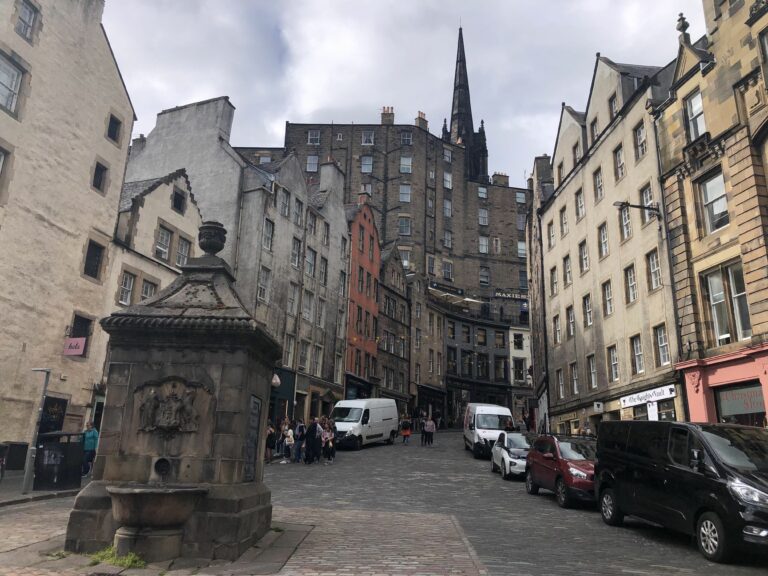
Bowen said via email that he tested positive for COVID-19 two days before the end of his study abroad program in Scotland and experienced complications traveling back home as a result.

Bowen’s airline required an official test from a pharmacy in order to delay his flight without financial repercussions, so he said that he contacted more than 10 pharmacies in the attempt to acquire an official test. 

Because no locations had any appointments before his flight, and store-bought tests were not accepted by aircraft carriers, Bowen said that he had to travel back to the U.S. on his original flight date, COVID-positive and double-masked. 

“I had to choose between exposing others to [COVID] or paying for a plane ticket that I couldn’t afford,” Bowen said in an email. “I shouldn’t have had to make that choice.” 

David Masiel, a UC Davis professor for the University Writing Program who led the summer 2022 ‘In Search of Scotland’ journalism study abroad program in Edinburgh, said that during the four-week class, three out of his 22 students tested positive for COVID-19. Due to COVID exposures and positive cases in the program, the class shifted to hybrid instruction in the second week.

Masiel, who has been teaching the program since 2012, said that the changes to the longstanding program were made after talks with study abroad administrators in order to mitigate spread.

While course material on the Scotland program was the same as it was pre-pandemic, Maisel said that he had to adjust his itinerary due to staffing shortages at restaurants, services and attractions he attended with previous classes. 

Masiel’s summer 2022 class experienced a few new activities that previous years had not taken part in, including a Fantastic Beasts-themed treasure hunt around the city of Edinburgh. According to Masiel, trying new things that the group had not done in a normal year was a positive that came amid the modifications that had to be made to the trip. 

Reflecting on the trip, Masiel said that he is appreciative of his class’s resilience. 

“For all the talk of students being harmed by the pandemic, and I know plenty who have, I also sense that they’ve learned to adapt to the unexpected,” Masiel said. 


Written by: Kristin Trent — campus@theaggie.org


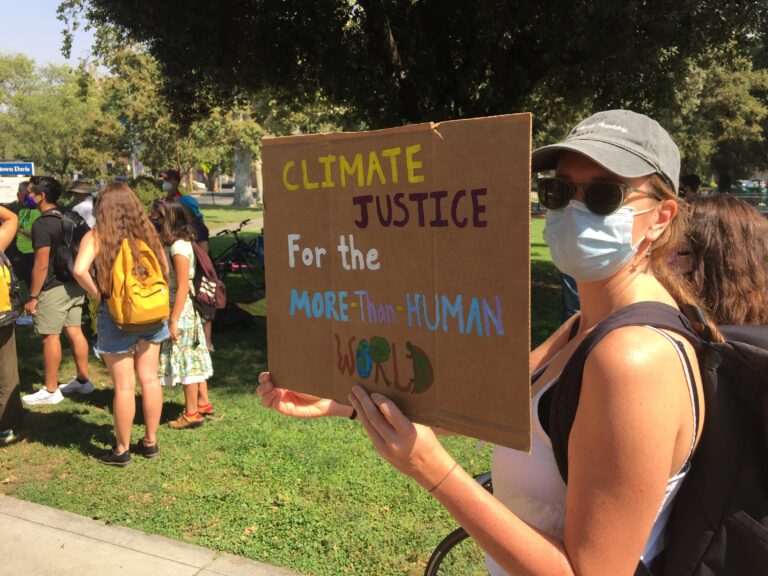
We can learn from Pakistan’s prolonged monsoon season and California’s extreme heat waves

0

How is climate change related to the weather anomalies in recent years, and what can we do to help?


By JENA TUFAIL — jjtufail@ucdavis.edu


Pakistan has a yearly monsoon season that typically lasts from April through September. Despite it being late in the normal season, the country is currently facing one of the worst floods in history this year, with devastating effects on the nation. 

Pakistan is the fifth-most-populous country in the world, with over 230 million people. However, I haven’t heard much through U.S. media outlets about this storm and its effect on Pakistanis. So what, exactly, is taking place? 

As someone who is of Pakistani descent, I myself did not understand the extent of the monsoon season this year. Having heard my parents talk about the yearly monsoons, I nearly brushed off this year’s occurrence as the norm.

Growing up in Northern California, I have been fortunate enough to never witness devastating floods caused by climate change. California, however, has been impacted in other ways such as prolonged heat waves in recent years. 

The difference is that while the U.S. is responsible for 11% of the world’s carbon emissions (the second largest contributor in the world), Pakistan emits less than 1% of that annually and is still experiencing extreme consequences of climate change. 

The provinces of Sindh and Balochistan are primarily being affected by the flooding. A total of one-third of the country is underwater, with over 33 million people displaced and more than 1,200 killed. The devastating effects of the flood have been estimated to be over $10 billion in damages, which could take the country decades to recover. Towns, crops and livestock have become fully submerged in water, including the country’s agriculture belt, prompting food shortages across the country.

I believe it is time for us to actively take part in helping the climate crisis in any way we can, no matter how big or small. You must be thinking, “How can I make a difference or change that may potentially help individuals on the other side of the globe?” For starters, taking small steps to help reduce your carbon footprint is a great way to help mitigate the effects of climate change. 

Greenhouse gases are emitted when goods are produced or consumed. Our “carbon footprint” is a quantifiable measure of the emissions of these gases that we cause through our consumption and daily activities. In order to lower your carbon footprint, there are several things you can do: 

  1. Shop seasonally — buying fruits and vegetables in season can not only save you money, but it can also help reduce your carbon footprint as these goods can be produced in your region.
  2. Take shorter showers.
  3. Buy only what you need (limit your waste).
  4. Use public transportation, ride a bicycle or walk as much as you can. 
  5. Unplug electronic devices when not using them.
  6. Avoid fast fashion, donate clothing you no longer wear and consider thrifting instead of buying new clothing.
  7. Delete junk emails, and clear out unnecessary data from the Cloud.


Another way to help mitigate the effects of climate change is to get involved in local climate related initiatives. UC Davis has its very own initiative called Fossil Fuel Free Davis, which is run by UC Davis staff, faculty, alumni and students. They are committed to ending fossil fuel use on the Davis campus by 2030 and have more information and ways to get involved on their website.

If you are also looking to aid those who have been affected by the floods in Pakistan, an organization whose donations go directly to those affected is the Alkhidmat Foundation Pakistan


Written by: Jena Tufail — jjtufail@ucdavis.edu

Disclaimer: The views and opinions expressed by individual columnists belong to the columnists alone and do not necessarily indicate the views and opinions held by The California Aggie.


Slug: 220922_climate_op

Edits: OR AT KD SD JL

Notes:


Title: Column

Headline: We can learn from Pakistan’s prolonged monsoon season and California’s extreme heat waves

Layercake: How is climate change related to the weather anomalies in recent years, and what can we do to help?


By JENA TUFAIL — jjtufail@ucdavis.edu


Pakistan has a yearly monsoon season that typically lasts from April through September. Despite it being late in the normal season, the country is currently facing one of the worst floods in history this year, with devastating effects on the nation. 

Pakistan is the fifth-most-populous country in the world, with over 230 million people. However, I haven’t heard much through U.S. media outlets about this storm and its effect on Pakistanis. So what, exactly, is taking place? 

As someone who is of Pakistani descent, I myself did not understand the extent of the monsoon season this year. Having heard my parents talk about the yearly monsoons, I nearly brushed off this year’s occurrence as the norm.

Growing up in Northern California, I have been fortunate enough to never witness devastating floods caused by climate change. California, however, has been impacted in other ways such as prolonged heat waves in recent years. 

The difference is that while the U.S. is responsible for 11% of the world’s carbon emissions (the second largest contributor in the world), Pakistan emits less than 1% of that annually and is still experiencing extreme consequences of climate change. 

The provinces of Sindh and Balochistan are primarily being affected by the flooding. A total of one-third of the country is underwater, with over 33 million people displaced and more than 1,200 killed. The devastating effects of the flood have been estimated to be over $10 billion in damages, which could take the country decades to recover. Towns, crops and livestock have become fully submerged in water, including the country’s agriculture belt, prompting food shortages across the country.

I believe it is time for us to actively take part in helping the climate crisis in any way we can, no matter how big or small. You must be thinking, “How can I make a difference or change that may potentially help individuals on the other side of the globe?” For starters, taking small steps to help reduce your carbon footprint is a great way to help mitigate the effects of climate change. 

Greenhouse gases are emitted when goods are produced or consumed. Our “carbon footprint” is a quantifiable measure of the emissions of these gases that we cause through our consumption and daily activities. In order to lower your carbon footprint, there are several things you can do: 

  1. Shop seasonally — buying fruits and vegetables in season can not only save you money, but it can also help reduce your carbon footprint as these goods can be produced in your region.
  2. Take shorter showers.
  3. Buy only what you need (limit your waste).
  4. Use public transportation, ride a bicycle or walk as much as you can. 
  5. Unplug electronic devices when not using them.
  6. Avoid fast fashion, donate clothing you no longer wear and consider thrifting instead of buying new clothing.
  7. Delete junk emails, and clear out unnecessary data from the Cloud.


Another way to help mitigate the effects of climate change is to get involved in local climate related initiatives. UC Davis has its very own initiative called Fossil Fuel Free Davis, which is run by UC Davis staff, faculty, alumni and students. They are committed to ending fossil fuel use on the Davis campus by 2030 and have more information and ways to get involved on their website.

If you are also looking to aid those who have been affected by the floods in Pakistan, an organization whose donations go directly to those affected is the Alkhidmat Foundation Pakistan


Written by: Jena Tufail — jjtufail@ucdavis.edu

Disclaimer: The views and opinions expressed by individual columnists belong to the columnists alone and do not necessarily indicate the views and opinions held by The California Aggie.


Letter from the editor

0

Dear readers,


I am so excited to welcome you to the first official issue of The California Aggie for the 2022-23 school year. For those of you who did not happen to pick up a copy of our summer issue, I would like to introduce myself. My name is Sophie Dewees, and I am the editor-in-chief of The Aggie. I’m a fourth-year majoring in economics with a double minor in Spanish and history, and outside of the classroom, I love exploring the outdoors, rock climbing and learning new songs on guitar. 


I applied to The Aggie on somewhat of a whim my freshman year. I had experience with journalism from high school, but I was unsure if a college newspaper at a university as large as UC Davis would have the same chaotic yet homey feel as the features publication I had worked for, with doodles on our classroom whiteboards, old copies of the magazine pinned on the walls and an exercise bike in the corner. But when I walked into Lower Freeborn for my staff writer interview, I immediately felt at home. The beat-up couches, photos and memes from various TV shows such as “Freaks and Geeks” and signatures from old editors on the walls felt so familiar. I had my interview with the then Managing Editor Hannah Holzer (a lovely human being who endlessly encouraged me throughout my first year at The Aggie) and I knew almost instantly that this would become an important part of my college career.


I worked on the features desk for two years, first as a writer, then assistant editor and then editor. I loved the creativity that came with writing features articles, and I had the opportunity to work alongside Anjini Venugopal, who went on to become our fearless editor-in-chief from 2020-22. The following year, I became the campus news editor where I tackled breaking news pieces, Senate reports, campus protests and more. 


Although much of my time at The Aggie was interrupted or altered by the COVID-19 pandemic, I have made some of my best friends in college through working for this publication, and I can honestly say that it has been one of the most rewarding experiences I’ve had at UC Davis so far. I am honored and excited to serve as the editor for a staff of tenacious, talented and passionate student journalists. 


As we begin this new year, there are many ways in which I feel The Aggie can grow, one of which being in staff diversity. In journalism, we strive to report honestly, without any of our personal biases coloring our writing or presentation of the facts. Perfectly unbiased reporting, however, is often elusive — it is difficult to leave out such biases in not only one’s writing but also in the stories one chooses to write about and the sources selected for interviews. Diversity is thus essential for any newsroom to have the widest range of ideas when it comes to reporting. For the past three years, we have produced an annual diversity report through the efforts of our Outreach and Engagement Board. Our past reports have revealed that The Aggie is lacking in diversity in many areas, and I hope that through hiring initiatives and increased community engagement organized by our outreach director and the Board, we can work to rectify this issue over time. I also plan to implement internal source diversity reports to track the breadth of sources covered across The Aggie’s different desks. 


While The Aggie has been in existence since 1915 and I will only be the editor for one year, I hope that in this role I will build upon the work of my predecessors and improve the content that we produce for the UC Davis community. As journalists, we strive to question, educate and inform in an act of service for our community. And as editor, I hope to provide guidance for this group of spunky student journalists so that we can fulfill these duties with passion and vigor. I look forward to a wonderful year. 


Sincerely,

Sophie Dewees

Editor-in-Chief


If you ever wish to contact me, please send me an email at editor@theaggie.org.


Early NFL Season Takeaways

0

Super Bowl “hangovers,” unfortunate injuries and impressive wide-receiver performances stand out in first two weeks of NFL action


By PATRICK FIGUEROA — sports@theaggie.org


The NFL season kicked off on Thursday, Sept. 8 with a matchup of the 2022 Super Bowl champion Los Angeles Rams and the 2023 Super Bowl favorite Buffalo Bills, who ran away with a 31-10 win. The rest of the NFL teams began their season the following Sunday on Sept. 11, and week one wrapped up on Monday, Sept. 12, with a game between the Seattle Seahawks and the Denver Broncos. The Seahawks upset their former quarterback Russell Wilson and his new team with a 17-16 win. 

Week two began on Thursday, Sept. 15 with a highly anticipated contest between division rivals, the Kansas City Chiefs and Los Angeles Chargers. The Chiefs won a competitive game 27-24.  Sept. 18 featured lots of upsets, such as the New York Jets’ victory over the Cleveland Browns, led by backup quarterback Joe Flacco. Week two concluded with a Monday night doubleheader in which the Tennessee Titans faced the Buffalo Bills and the Minnesota Vikings faced the Philadelphia Eagles. The Bills once again dominated, beating the Titans 41-7. The Eagles beat the Vikings 24-7

With two weeks of NFL action in the books, many fans are jumping to early conclusions about the teams, and players, to watch this season. 


The Super Bowl Hangover is Real 

The “Super Bowl Hangover” refers to the previous season’s Super Bowl teams having a slow start in the following season. This seems to be ringing true for the Super Bowl 56 teams, the Cincinnati Bengals and the Los Angeles Rams, who are both off to an underwhelming start to the 2022 season. 

The Bengals lost their first two games of the season against the Pittsburgh Steelers and the Dallas Cowboys. Both games came down to a three-point difference, but there are reasons to be concerned about the Bengals. First, the Bengals’ quarterback, Joe Burrow, has been sacked 13 times through the first two weeks of the season. Burrow has also turned over the ball frequently and is tied with Matt Ryan for the second most pass interceptions through two weeks. 

The Rams have also had a slow start to the season. The week following their opening season loss to the Bills, they nearly blew a 28-3 lead against the Atlanta Falcons. They managed to win the game 31-27, but it would have been a smoother victory if they had not turned the ball over three times and allowed a blocked punt return for a touchdown in the fourth quarter. Their quarterback, Matthew Stafford, also leads the league in interceptions thrown

Both the Rams and Bengals have talented teams, but their slow starts have left fans concerned about the rest of the season. These teams will have to adjust their game plans and take better care of the football if they want to emulate their previous season’s success.


Notable Injuries

As with any football season, injuries will occur throughout, but injuries to star players can be especially detrimental to a team’s effort to make the playoffs. Some of the most impactful injuries so far include injuries to Pittsburgh Steelers’ edge rusher TJ Watt, Dallas Cowboys’ quarterback Dak Prescott and San Francisco 49ers’ quarterback Trey Lance. 

Watt, the Steelers’ edge rusher and 2021 Defensive Player of the Year, suffered a torn pectoral in the opening game of the season. Originally, there was speculation that Watt’s torn pectoral would require surgery, thus ending his 2022 season. However, because the injury does not require surgery, he is expected to return in about six weeks.

Cowboys’ quarterback Dak Prescott suffered a fractured thumb in the Sunday Night Football opener against the Tampa Bay Buccaneers. The injury was expected to sideline the franchise quarterback for four to six weeks, though there are rumors that Prescott could return much sooner than originally anticipated. 

Unfortunately, the 49ers’ young second-year quarterback Trey Lance will miss the rest of the season after suffering an ankle fracture in a week two matchup versus the Seattle Seahawks. Fortunately for the 49ers, they were able to keep Jimmy Garoppolo, their 2021 starting quarterback, as their backup quarterback. He will now step back into the starting lineup for the 2022 season.


Wide Receivers Shine with Big Performances 

` Football fans noticed that there were several wide receivers with elite production for their respective teams in the first two weeks of the season. Some of these wide receivers include Miami Dolphins’ Jaylen Waddle and Tyreek Hill, Minnesota Vikings’ Justin Jefferson and Detroit Lions’ Amon-Ra St. Brown. 

The Miami Dolphins have spent a lot of draft capital and financial capital to upgrade their receiving corp in recent years. First, during the 2021 draft, they traded their 2022 first-round pick to move up to the sixth overall pick and selected Jaylen Waddle. Then, in the 2022 offseason, they acquired Chiefs’ superstar Tyreek Hill in exchange for multiple draft picks, including their 2022 first- and second-round picks. Upon receiving Hill, they immediately signed him to a four-year, $120 million contract extension

Through two weeks, it seems these trades are paying off, with Waddle and Hill having a combined 34 receptions, 524 yards and five touchdowns. Their performance especially stood out in the Dolphins’ week two matchup against the Ravens, where they had a combined 22 receptions and over 300 yards. By acquiring these two players, the Dolphins increased their pass production and — arguably more importantly — are helping their young quarterback, Tua Tagovailoa. 

There are also plenty of reasons to be excited about Minnesota Vikings’ wide receiver Justin Jefferson. The young receiver is already a two-time second-team all-pro through his first two seasons in the NFL. In the 2022 offseason, the Vikings hired former Rams offensive coordinator Kevin O’Connell as their new head coach. This decision excited many fans, who hoped O’Connell would utilize Jefferson the way he did the Rams’ wide receiver and the 2021 offensive player of the year, Cooper Kupp, last season. This appears to be O’Connell’s plan after Jefferson torched the Green Bay Packers in week one with nine receptions, 184 yards and two touchdowns. Fans hope that this type of production will continue for the rest of the season. 

Amon-Ra St. Brown went viral during the offseason after the HBO show Hard Knocks: Training Camp with the Detroit Lions showcased him reciting every wide receiver drafted ahead of him in the 2021 NFL Draft. As the video highlights, St. Brown said that this fall to the fourth round of his draft class motivated him to work hard and perform on the field — which he has. Through two games, St. Brown has 19 touches, 248 scrimmage yards and three touchdowns. The young second-year receiver looks promising for the Lions. 

There are still 15 weeks remaining in the NFL season, during which time lots can change. After witnessing so much action in the first two weeks, NFL fans are excited for the rest of the season. 


Written by: Patrick Figueroa — sports@theaggie.org


Culture Corner

The Art Desk’s weekly picks for movies, TV, music and more 


By CLARA FISCHER — arts@theaggie.org


Music: “Spooky” by Dusty Springfield (1968)

Like clockwork, when the evenings start cooling off and the mornings have a brisk quality to them again, I feel the need to listen to this song. An oldie but a goodie, there’s just something about the feel of this song that puts me in the fall spirit. With lyrics like “In the cool of the evening/ When everything is getting kind of groovy,” and a funky beat to match, Dusty Springfield has created the perfect tune for the changing of the seasons. 


Book: “Invisible Women” by Caroline Criado-Perez (2019)

A must-read for everyone, not just those who identify as women, Caroline Criado-Perez’s 2019 work has been declared a “feminist manifesto” by some reviewers. Compiling various data (and lack thereof), Criado-Perez argues her theory that women are adversely impacted by society’s research methods in a way that men are not. The read is at times shocking and there were many moments that forced me to look up and take a second to process what I had just learned. While not fully comprehensive, as there is not nearly enough emphasis on intersectionality (largely due to an even larger data gap for BIPOC women than white women, as Criado-Perez herself mentions), it’s a great starting point for a broader discussion on the importance of inclusive research. 


TV Show: “What We Do in the Shadows” (2019)

If you’ve ever wanted to see a spinoff of “The Office” with vampires, this is the show for you. The series, based on the 2019 film of the same name, is a mockumentary-style telling of four vampires who live in Staten Island. Naturally, hilarity ensues, and the spooky-yet-silly vibe of the show makes it a deliciously devious watch as we near the Halloween season.


Movie:The Fault in Our Stars” dir. by Josh Boone (2014)

I know, I know — this is 2022, not 2014. While it’s true that Green is a divisive writer, with some dubbing him as pretentious and others loving his melodramatic woes of teenage-dom, the movie adaptation of the infamous novel emotionally hit me just as hard when I first watched it in theaters as when I rewatched it last week on the couch of my college home. Playing hard into viewers’ sentimental nature, the flick is a tearjerker for all ages. If you too have fond memories of Hazel Grace and Augustus Waters from your teenage years, I would highly recommend a rewatch to feel many of the same emotions.  


Written by: Clara Fischer — arts@theaggie.org


From farm to fork: How local agriculture in Davis cultivates a vibrant community 

0

Yolo country celebrates local farming and small-scale production during “Farm to Fork” month


By LEVI GOLDSTEIN — features@theaggie.org


In 1908, UC Davis first opened as an extension of UC Berkeley in the form of an agricultural school — hence why students are known as “Aggies.” Ever since, the University’s agricultural roots have remained central to its image and academics. According to Yolo County residents, agriculture is a fundamental part of the local community. 

Davis’ location in the Central Valley means it is right in the center of the largest source of agricultural exports in the United States. The Sacramento Valley is known as the “Farm to Fork” capital of the country, according to a Yolo County press release

For Vince Marchese, the marketing manager of the Davis Food Co-op, the local farms are a gift worth appreciating. 

“It’s a shame, really, sometimes that people are […] buying products that come from other places in the world when we have such good, high-quality local products that we all can benefit from,” Marchese said. “Not only are we giving them the best high-quality products that there are because they’re grown right in our backyard, but we’re also keeping our local economy alive and helping out our neighbors.”

The local food is delicious, and it also offers an opportunity for human connection. The Davis Food Co-op, a local grocery store cooperatively owned by over 8,000 Davis residents, openly tries to create a space where community members can gather and socialize, according to Marchese. 

“We’re not just here to function as a grocery store,” Marchese said. “Food is such a big part of all of our lives. On a weekly basis, usually, people are coming and […] they’re spending a lot of time at the grocery store getting the food that’s going to nourish them throughout the week. We feel the importance that while we have you there, we can really show you the deeper sense of connection that goes into everything we’re doing in the store.”

Marchese said that the Davis Food Co-op also prioritizes forming strong relationships with local farms. 

“If somebody is shopping [for] produce, right beneath the apples, they may see this local farm guide, pick that up, and now they get to learn a little bit more about the farmer that picked that apple, or the farmer that grew the tomatoes that are just right across from there,” Marchese said. “We have very direct and personal relationships with the farmers [who] grow that produce. We want you to feel that connection too. We are just a part of this bigger ecosystem, and we want to try to show the ways in which that entire ecosystem fits together.”

In addition to in-store guides, the Davis Food Co-op publishes articles and recipes on their online blog and offers classes in their teaching kitchen for a hands-on cooking experience.

Another local educational resource is the Hanna and Herbert Bauer Memorial Garden, located just outside the Yolo County Health and Human Services Agency (HHSA) Bauer Building in Woodland. Founded in 2013, it serves as an “outdoor classroom space” for programs hosted by the HHSA and the CalFresh Healthy Living program, according to HHSA Program Coordinator David Linebarger. 

“I’m a farmer at heart,” Linebarger said. “I really like to teach people how to grow food, and I like to see their journey with growing food and people getting better at it and seeing their surprise when they learn things that they didn’t know before, and just the satisfaction that gardening brings is really what keeps me doing it.”

Yolo County celebrates local agriculture by hosting “Farm to Fork” month every September. This month, the Hanna and Herbert Bauer Memorial Garden offered a class on food preservation, its first since the COVID-19 pandemic, according to a Yolo County press release. The garden also leases plots for residents to grow their own food. 

Linebarger said teaching residents how to grow their own food has helped reduce food insecurity in Yolo County. 

“People save money by growing their own food,” Linebarger said. “There’s a lot of resilience involved. It’s increasing food security for residents. When there’s more local produce being grown and accessible to people, it’s less that they have to buy at the store.”

Small-scale production can also help mitigate climate change, according to Linebarger. 

“It’s less miles to the store, less driving time,” Linebarger said. “And then you’re not supporting ‘Big Ag’ with more environmentally unsustainable farming practices when produce is being grown and eaten at a local level. Large farms — the kind of farming that requires tractors, that uses a lot of fertilizer, […] the high overhead costs of big farming, plus the fossil fuels that are being used […] — it’s not as environmentally sustainable as small-scale local agriculture.”

Davis residents can visit the Davis Farmers Market to purchase fresh produce and baked goods directly from local farmers and businesses and meet some of the people who grow the food that stocks local kitchens. 

UC Davis students can also get involved in small-scale agriculture on campus at the Student Farm, which sells produce to campus dining halls and organizes programs to address food insecurity and environmental devastation. 


Written by: Levi Goldstein — features@theaggie.org


A case for studying abroad

0

Everyone should consider studying abroad


By OWEN RUDERMAN — opruderman@ucdavis.edu


Choosing to study abroad was one of the best, most formative decisions I’ve ever made. Back in 2018, I took a semester-long trip to London through my community college. It was a big step for me — I didn’t know anyone else in the program, and it was the first time I had ever traveled alone. But I firmly believe that if I didn’t take the risk and study across the pond, I would not be here at UC Davis, and you would not be reading this.

That semester in London is the reason that I’m an English major, the reason I ended up at one of the top universities in the country and the reason that I’m the person I am today.

After my incredible experience studying abroad through my community college, I decided to do it again when I got to university. When I finally arrived at UC Davis, however, I found myself a little apprehensive. I was worried that I would lose some of the essential “Davis experience” if I left for an extended period of time. I was also concerned that I might not be able to find a program that could give me the classes I needed to graduate. Additionally, program fees are expensive; the cost alone can make many students feel like studying abroad is not an option.

Despite all my concerns, I decided to look into the programs that the Global Learning Hub offered, just in case there was something that could work for me. I was shocked by the number of programs that UC Davis offered in comparison to my community college. It really seemed like no matter what you were looking for, there would be a program for you.

For me, I had the opportunity to study abroad in Scotland this past summer. The class I took while I was there went toward my major, I was able to afford the program and I didn’t feel like I was jeopardizing my “Davis experience” since the program was just one month long. On top of all that, I made many new friends and had some of the best experiences of my life so far. 

I understand why some students might assume that studying abroad could never work for them, but if you’re at all interested, I highly recommend at least checking out the UC Davis Study Abroad website. They have extensive information about different programs, including internships and exchange programs. 

There is quite literally something for everyone, and even if the classes don’t exactly align with your requirements, your advisors can help you make it work. When I signed up for my program, I had already taken the class that would be taught, but the advisors were extremely helpful, and, in the end, the units ended up going toward my minor.

The Global Learning Hub website also has a helpful page dedicated to financial aid and scholarships. If you’re concerned about fees, you should see if there is a way to get some help paying for it. It’s possible that some students could end up with their trip completely paid for through aid and grants.

At the end of the day, traveling seems to be a passion for many of my fellow UC Davis students. So why not combine schooling with your passion? There is no better time than the present to start looking into studying abroad. Who knows? It might just change your life.


Written by: Owen Ruderman — opinion@theaggie.org

Disclaimer: The views and opinions expressed by individual columnists belong to the columnists alone and do not necessarily indicate the views and opinions held by The California Aggie.


UC Davis alum completes solo row from San Francisco to Hawaii

0

By JADE BELL – campus@theaggie.org


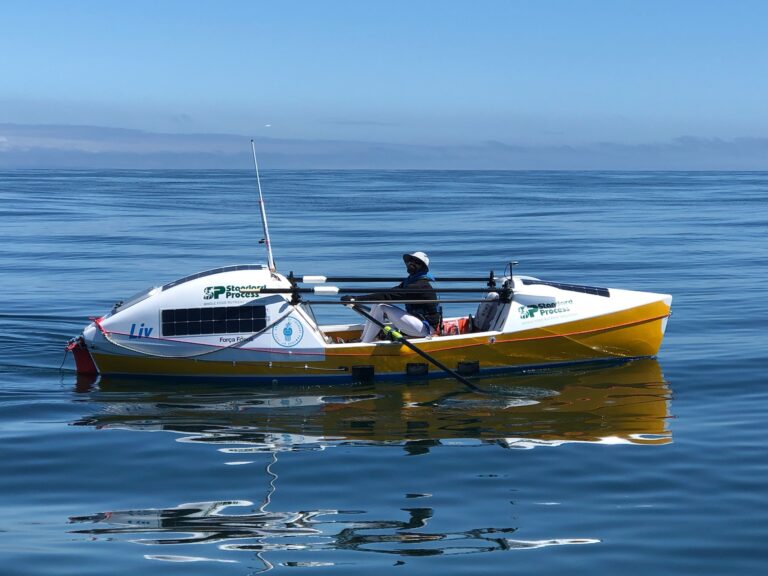
UC Davis alumnus Carlo Facchino set out on his 2,400-mile row from San Francisco’s Golden Gate Bridge to Hawaii at 8:30 a.m. on July 5 and completed it on Sept. 15, 72 days later.

Prior to this, Facchino competed in the Great Pacific Race with Team Uniting Nations from Monterey to Hawaii in 39 and a half days, a Guinness World Record, with a four-man crew. In 2017, Fachinno rowed to the edge of the Arctic ice pack — the northernmost latitude ever reached by an ocean rowing boat — with a six-man crew. But for this row, Facchino set out alone in an attempt to beat a prior record for the row across the Pacific.

“My primary goal is to safely cross the Pacific with the hope of completing the row between 50 and 70 days,” Facchino said on his website before the row began. “I would love to try and break the solo record set by Rob Eustace in 2014 at 52 days, 13 hours, and 17 minutes.”

The challenges Facchino faced on his row go beyond the sheer distance of the journey. Specifically, a big challenge was managing his nutrition on the row, according to his website. By partnering with the Nutrition Innovation Center in North Carolina, Faccino’s fitness was tracked by three factors: pre-row fitness, performance capacity and nutritional levels.

Facchino explained on his website that he collected weekly blood samples throughout the row in order to see how his body and immune system adapted to the extreme endurance event.

Betsy Everett, Facchino’s rowing manager, explained how Facchino prepared for the brown through nutrition management and a workout regimen. 

“We carefully planned and packed Carlo’s daily rations with the appropriate calorie and nutritional needs, which was a crucial step in helping him manage his nutrition for the row,” Everett said via email. 

Everett also shared that managing Facchino’s nutrition was a collaborative effort between Facchino and his team. He self-regulated his needs and was able to communicate those needs with his rowing support throughout the trip. 

“Land support and his medical director are in regular communication with Carlo and we rely on his self-reporting about what he has been eating,” Everett said while Facchino was in the middle of the row. “Each day’s food and nutrition is packed separately so it is easy for him to know what he should be eating each day. We check in regularly to talk through the amount of food he has left and what he has been eating each day, as well as how he is feeling and any [medical] issues that may come up.”

In addition to following a nutrition plan, Facchino maintains a year-round workout regimen that incorporates CrossFit workouts, running, erging and long-distance rowing, according to Everett. 

In addition to the fitness level required to complete long-distance rows, Everett explained that rowers have to learn to manage watercraft and navigate ocean waters.

“Carlo has had to become an expert at knowing how everything on his boat operates and works,” Everett said. “He has needed to learn skills to become a mechanic, electrician, navigator, doctor as well as an athlete.”

Issues that arise on the water, according to Everett, must often be addressed with creative problem-solving since they are hard to predict.

“I found myself watching a 60-minute video online at 11:30 pm one night trying to learn how to untangle a specific kind of parachute anchor,” Everett said. “So I could pass on the instructions to Carlo in the middle of the night, so he would be able to stabilize his boat again and hopefully avoid a capsize.”

Even with Facchino’s level of expertise, completing a row of this kind requires a large team. 

“The main, everyday team […] consists of his weather router who provides daily weather information and waypoints to get him into the best conditions to row [and] his medical director and backup EMT who helped plan Carlo’s med kit and training,” Everett said. “And then myself as his mainland support contact, as well as manager of communications, his social media, and logistics for his trip and arrival in Hawaii. This main team is essentially on call 24/7 for the duration of his trip in case of an emergency.”

Everett explained that in addition to providing practical support, this daily team focused on keeping morale up throughout the over two months Facchino was on the water. 

“Emotions can run pretty raw when out there on the ocean by yourself for so long, so it has been pretty easy to sense when Carlo may need a little pick me up,” Everett said. “We continue to remind him on a regular basis that he can, and is doing this! […] Carlo is an incredible man and for the most part, he has remained positive and determined throughout the row.”

According to his website, issues like bad weather conditions and a broken water maker contributed to Facchino’s inability to beat the 2014 rowing record during this trip. However, he did manage to complete the row. 

“I would like to thank everyone who has lent a hand, cheered me on, encouraged me and supported me in my endeavor,” Facchino said on his Facebook page. “Your support has meant the world to me. Making it to the start line of a grand adventure IS an adventure in itself.” 


For specifics regarding Carlo’s row, the FaceBook page linked here includes daily updates from Carlo himself that he posted during the row.


Written by: Jade Bell — campus@theaggie.org


Annual Davis Neighbors’ Night Out to be held on October 16

The citywide social event will feature potlucks, tea parties and more

By RIDDHI PURANIK — city@theaggie.org

Davis Neighbors’ Night Out is a yearly event hosted by the city of Davis along with UC Davis and the Associated Students of UC Davis (ASUCD), according to the city of Davis website. The event is a celebration of the community and an opportunity for residents to foster a sense of camaraderie in their neighborhood.

According to Carrie Dyer, Management Analyst for the City Manager’s Office, this year’s Davis Neighbors’ Night will be the 16th annual — it has been held every year since 2006 with the exception of 2020. 

“Davis Neighbors’ Night Out is an opportunity for neighbors to get together, connect and meet due to COVID-19 health and safety protocols,” Dyer said. “The true goal is to build connections and establish relationships because connected neighborhoods are ones that tend to be safer.”

The day’s events will be held all over Davis and can be located using the locator map available on the city of Davis website. Programming will be hosted by event sponsors which consist of apartment complexes, neighborhood watch liaisons and homeowner associations. 

The city of Davis website lists that there will be between 100 to 125 events held throughout town on the 16th. Elizabeth Wisnia, a long-time Davis resident, has been hosting one of these events, a neighborhood potluck party, for the past 13 years. 

“We do a potluck in our neighborhood,” Wisnia said. “We use the foldout tables, set sidewalk chalk out for the kids and close off the streets. Everyone comes and shares the food. It is a fun way to get to know our neighbors and catch up with the people we wouldn’t otherwise get a chance to.” 

Nine-year-old Sarah Luckenbill has also been hosting tea parties for the Davis Neighbors’ Night Out since age four. 

“Every year we celebrate with our neighbors by having a tea party get-together,” Luckenbill said. “My family brings tea and biscuits, you can bring food and Pattie brings a big inflatable cat and it is very fun to go underneath it.  We all share everything we bring and enjoy hanging out with old neighbors and getting to know new neighbors better.” 

In addition to Wisnia’s and Luckenbill’s parties, the locator map shows a wide array of events that will be held all over town, including picnics, scavenger hunts and talent shows.

Wisnia explained why the Neighbors’ Night Out event is so special to her, especially after the COVID-19 pandemic.

“With everyone being so busy, we don’t always make the time to get together and hear about what is going on with the neighbors,” Wisnia said. “Especially after 2 ½ years of not being able to congregate in the ways we all need, it is a wonderful way to integrate newcomers into the neighborhood and meet the bigger community.”

Written by: Riddhi Puranik — city@theaggie.org

Students share their experiences during Sept. 16-19 orientation events

0

Participants and leaders expressed mixed opinions about the four-day mandatory programming 


By SYDNEY AMESTOY — campus@theaggie.org


This year’s orientation process saw swarms of incoming freshman and transfer students across campus who were led by orientation leaders to various programs and events. However, student participants and orientation leaders shared mixed opinions about the mandatory event.

“Some of the […] programs were very specific,” Samual Ospinal, a first-year mathematics major and a participant in orientation, said. “Some subjects were touched on in-depth, and others were not considered.” 

The programs Ospinal referred to, according to the UC Davis orientation website, include events such as “Health, Wellness, and You,” “Aggie Success: A Professor’s Guide” and “Violence Intervention and Prevention,” as well as college-specific programming. 

Orientation leaders, the students in charge of guiding the first-year and transfer students through these programming events, offered a different perspective.

“I thought the overall orientation program had improved greatly from last year, as the programs were more exciting,” Katie Tran, a second-year managerial economics and psychology major and an orientation leader, said. “Overall, I thought Aggie Success was very useful for the first years. They got to hear from professors and orientation leaders on their experiences at UC Davis, as well as how to succeed while being a student here.”

The official description of orientation on the UC Davis website describes the four-day event as an opportunity for “building support networks with faculty, staff, and peers, learning to navigate our campus to access relevant people and resources, addressing academic questions and concerns, experiencing first-hand the academic rigors of UC Davis, and finding support and community on our diverse, global campus.”

However, not every participant said that they felt that these general goals were necessarily sufficient for a successful orientation.

“We could have reviewed things like the halls our classes could be in,” Ospinal said. “If I did not take a tour of the university earlier in August, I would have been lost.”

The weather also proved a challenge during orientation. On both Sept. 18 and 19, the final two days of orientation, there was significant rainfall in the Davis area, as well as on campus. 

Ultimately, Ospinal said that despite both the weather challenges and some room for programming improvements, orientation did promote community.

“My orientation leader can only do so much, I reckon,” Ospinal said. “I think our orientation had a tendency to consist of team building and spirit. These are all details, and orientation was most likely a good thing for everyone.” 


Written by: Sydney Amestoy — campus@theaggie.org


Meet the Editorial Board

The California Aggie editors share our backgrounds and express excitement for the start of a new year

By THE EDITORIAL BOARD

As the official student-run newspaper at UC Davis, The California Aggie is the best way for students to gain experience in the field of journalism, especially because the university does not offer a journalism major. We publish a weekly print newspaper on Thursdays and post articles on our website five days a week including breaking news and guest opinions.

Early in the morning, between classes and late into the night, journalists, designers and many others at The Aggie keep the Davis community informed and entertained. And like magic, the paper appears on stands around campus every Thursday. But it’s the unrelenting teamwork and dedication of our student staff (close to magic, but not quite) that keeps the cogs turning, through the first chaotic weeks of class to the stress and triumph of finals.

As the nine editors that make up the Editorial Board, it’s our job to produce two weekly editorials in which we address topics and issues that we think are relevant to the Davis community. Because seven of the nine of us are new to the Board this year, we wanted to take the opportunity to introduce ourselves and share our passion for student journalism.

Sophie Dewees, Editor-in-Chief

Oddly enough, I first became interested in journalism in fourth grade. We had a special, highly-anticipated event known as “Gold Rush Day” in which we created a tiny cardboard town — complete with storefronts for banks (to trade in rocks painted gold) and bakeries (serving tasty, homemade snacks). We each chose our career for the day, and instead of being a banker or a baker I chose to work on a newspaper. While our paper only consisted of a few printed pages of our written work, I remember feeling extremely proud of it, and I had an immense desire to continue writing in some shape or form as I continued my education. Six years later, I discovered journalism in high school. It was the perfect outlet for my love of writing, allowing me to speak with new people and learn how to articulate the important and interesting stories of my community members. While I couldn’t have fathomed becoming the editor of a college newspaper when I opted to be a journalist for a day in fourth grade, I feel so honored to take on this role this year and to have the opportunity to guide our staff as they pursue (or discover) their passion for storytelling.

Katie DeBenedetti, Managing Editor

I often think about my first memory at The Aggie — sitting down in Lower Freeborn after a 30-minute search for the stairs to the basement of the Memorial Union, I felt like the hardest part of my interview must be over. That was until I was asked to complete a “quick and simple” mock news brief (which I then had to frantically Google the definition of). Coming into college with zero journalism experience and a pretty big fear of talking to strangers, I don’t think I would have believed you if you told my freshman self that I not only got the job, but stuck with it for all four years of my college career. 

Now, at the start of my senior year, I’m so grateful that working for The Aggie has been the throughline of my time at UC Davis. During my freshman and sophomore years as a writer, I was able to speak to local environmentalists, business owners, teachers and so many more inspiring and intelligent people in the Davis community. Last year, as the features desk editor, I had the pleasure of working with an amazing team of student journalists and Editorial Board, and this year, in my new role as managing editor, I am excited to support our editors, reporters, photographers, graphic artists and whole team of incredible students who make it possible for The Aggie to publish impactful stories each week.

Sonora Slater, Campus News Editor

When I was five, I wanted to become a teacher. I loved school — the only goal every day was to learn something new. I figured if I was a teacher, I could stay in that perpetual learning environment forever. But in high school, when I started writing for the school paper, my goals changed; I found another place where I never had all the answers and my mission was to find them. So, knowing that I wanted to become a journalist, I went to UC Davis, a school with no journalism program, and majored in managerial economics. Makes sense, right? 

That’s a story for another time, but part of the reason why I chose UC Davis was because I believed The California Aggie would be a place where I could gain real-life reporting experience. Two years later, having written about space lettuce, dark matter, helium recycling and more for The Aggie’s science desk, I can say with certainty that I have learned about things I never expected to understand. This year, shifting to campus news editor, I’m excited to learn about things a little more directly applicable to UC Davis students. Plus, my mom wrote news for The Aggie when she was at UC Davis, so… I had to continue the tradition.

Chris Ponce, City News Editor

I began working for The Aggie last school year, and throughout my time, I have come to understand the vital impact student journalism can have. During spring, I covered a story about a Ukrainian candlelight vigil held downtown, and the words spoken by the organizers have weighed heavy on my heart ever since. People in attendance, many of whom had family in Russia or Ukraine, took center stage to share their stories of hearing air raid sirens, evacuating their homes and seeking refuge. Every single voice that night deserved to be heard. As I stood before the vigil, wax dripping down my fingers from the candle in my left hand and my phone documenting in my right, only one thought echoed in my head. Every student in Davis needs to hear these stories. I rushed home to transcribe the speeches. As I listened to pieces of the testimonies on repeat, being sure to make no errors when transcribing, a tear ran down my cheek. At this moment, I knew exactly what I wanted to do for the rest of my life. I understood the value of giving a community a microphone. That’s what journalism is to me — it’s taking a community’s voice and sharing it with the world. Being an editor is certainly a different beast. I’m aware there will be mistakes and challenges ahead, but I’m optimistic of what the city news desk can accomplish this year.

Owen Ruderman, Opinion Editor

I remember being incredibly pumped when I picked up a copy of The Aggie, flipped to the opinion section and saw the article I had written appear before me. Ever since that moment one year ago, I’ve been endlessly chasing that high. Now, as the opinion editor, I have the opportunity to give other people that same experience. Student journalism is, I think, as fun and fulfilling as it is useful and necessary. I’m honored to be a part of The Aggie and hope I can make just one person’s day brighter — and maybe inspire another person to think critically — in my limited time as an editor. As a transfer student, it’s inevitable that I will have less time to be a part of this wonderful paper than some of my peers. But you can be sure I’ll make the most of it. 

Of course, I can’t write about being the opinion editor without mentioning Eden Winniford, my predecessor. Without her encouragement I wouldn’t be as strong of a writer, and I definitely wouldn’t be the opinion editor. Even though I’ve got big shoes to fill, I’m looking forward to delivering the hottest takes, wittiest satire and most relatable cartoons I can. Here’s to a great (and heavily opinionated) year!

Levi Goldstein, Features Editor

Since I started writing for The Aggie, I’ve interviewed a high school principal, a Davis city council member, a hobbyist astronomer, a mother-daughter duo who co-own a small local business, a baker carrying on family traditions, a racial justice educator, a local activist very passionate about trees, more than one climate scientist and many others. My favorite part of being a journalist is talking to people and learning about the diverse experiences that make up our community. To me, journalism is about connecting global issues to local voices and being a megaphone for those without a platform. It is both an incredible gift and a tremendous responsibility. I’m grateful for the people in our community whom I’ve had the privilege of meeting and having inspiring, thought-provoking conversations with. I’m also grateful for the people that make up The Aggie’s Editorial Board and managing team with whom I can’t wait to build meaningful friendships. As an editor, I’m looking forward to being a mentor to Aggie writers, as the previous city news desk editor, Maddie Payne, was for me, and to cultivating a passionate next generation of student journalists.

Clara Fischer, Arts & Culture Editor

If you had told my high school self that I would be working at a college newspaper, let alone as an editor, I never would have believed you — but I probably would have wanted to know more about where you got the time machine from. Joining The Aggie on a whim in April of 2020, perhaps fueled as much by a search to find community in a COVID-marked year as by a deeper-rooted desire to emulate Carrie Bradshaw, has set my career at Davis on a different path than I ever imagined. My time at this organization has taught me that one of the best parts of working as a student journalist is the conversations you get to have with people that you wouldn’t have ever thought you’d have a connection with — small business owners, artists, musicians (shoutout Carpool Tunnel) and students alike. Being able to not only continue forming those relationships, but also help guide others through that process, is something I am honored to have in my job description. I’m so happy I took a chance on this publication, and would like to give a special thanks to my predecessor, Allie Bailey, for mentoring all of us on the Arts desk and always offering her sage guidance when it was needed. 

Marlon Rolon, Sports Editor

Last year during a cold night in mid-October I covered my first game for The Aggie. There’s nothing like being under the bright lights at UC Davis Health Stadium. Having the opportunity to interview coaches and student athletes at a prestigious university is by far the best hands-on experience I can get as a student journalist. Fast forward to one year later, that statement still rings true. Being part of The Aggie has opened so many doors for me and working with my fellow staff members has been truly amazing. I’ve met so many wonderful people with bright minds and endless potential. I’ve learned so much from those who came before me; my previous editor, Omar Navarro, helped me grow as a journalist. His guidance has led me to be the new sports editor. I hope to make the most of my last year at the Aggie and inspire the person that will come after me. This is what it’s all about — creating a culture of inspiration and getting the most out of student journalists to maximize their potential. I couldn’t be at a better place, and I’m forever grateful for having the opportunity to be a part of The Aggie.

Brandon Nguyen, Science & Tech Editor

When I initially joined The Aggie, I only saw student journalism as a hobby, but it became more than just that. Having interviewed countless UC Davis researchers at the forefront of science, physicians and nurses at Davis’ School of Medicine and patients who had undergone transformative experiences, I realized the impact and the weight that my writing carried. I will never forget my interview with the mother of a child who was born with a condition called an omphalocele, where the abdominal organs develop outside of the body. She trusted me with her child’s story imbued with the rollercoaster of emotions she felt through the entire process. Now, as a Science and Technology editor, I better understand my role in journalism — one where I am both an informed listener and a responsible reporter of the truth. I am so grateful that I ventured my way into The Aggie, being able to meet and grow with fellow passionate writers and editors, and I look forward to the many more stories I will get to write with my new team.

Written by: The Editorial Board

Biking is great — here’s how to do it right

The Editorial Board shares advice, tips and tricks on how to make biking enjoyable for you and the people around you

By THE EDITORIAL BOARD

You might have noticed that parking prices on the UC Davis campus have increased. If you’ve been driving to campus every day and you’re worried about how this change might affect your finances, we’re here to remind you that there are other, cheaper modes of transportation that you can take advantage of — and there’s one in particular that UC Davis is famous for. 

Davis was the first city to earn the Platinum Bicycle-Friendly Community Award from the League of American Bicyclists, and is also home to the US Bicycling Hall of Fame. With an excess of bike lanes and bike paths, as well as several protected intersections for bikers, Davis has put into place the infrastructure to make biking safe and easy.

Biking is a pollution-free mode of transportation and it conserves roadway space, which makes room for less concrete and more plant life in urban areas. It’s also great exercise, which is especially beneficial for busy college students who might not otherwise have time to fit in a workout.

Despite the protocols Davis has put in place to make biking safe for everyone, it can still be dangerous if you don’t know what you’re doing. As seasoned Davis bikers, we feel it is our duty to provide some tips for how to make biking on campus and around town a better, safer experience.

First things first: supplies. Obviously, you’ll need a bike, and don’t worry if it’s second-hand or cheap; in our experience, older bikes seem less likely to be stolen. You should also purchase a bike lock to prevent theft — we recommend a U-lock since it’s more difficult to cut through than a cable lock. When locking your bike, be sure to secure both the frame and the tire to the bike stand. This will minimize how much of your bike can be easily stolen.

There are a couple of other important biking accessories that you are able to get for free from campus organizations. The UC Davis Police Department gives out free bike lights during regular operating hours and at their community events. Additionally, students, staff and faculty can get a free bike helmet from the Bike Barn on campus by completing a short bike education training and virtually signing the “Helmet Hair Don’t Care” pledge.

If you were expecting only sunny weather at Davis, the first couple days of fall quarter this year may have surprised you, so we wanted to share a couple of essential pointers for biking in the rain.

Attaching a fender to your back tire is the best way to avoid “the freshman stripe,” which is what students call having a stripe of water down your back, resulting from your back tire spraying up water from puddles when you don’t have a fender to block it. We also recommend a bike seat cover to protect your seat from the rain — even a reused grocery bag or shower cap can work.

Bike maintenance is also important, as issues are bound to crop up from wear and tear if you’re biking to school every day. If your tires have low air pressure, there are several pumps on campus that you can use for free, including one attached to the side of the Bike Barn, one on the west side of the Memorial Union and more. 

For other bike-related issues, the Bike Barn is a great on-campus option. We also recommend checking out other businesses in town and nearby in Sacramento that offer similar services.

With thousands of students biking on campus daily, and many more walking, scootering, skateboarding and so on, biking etiquette is incredibly important. This includes using hand signals when you’re making a turn, respecting pathways that are designated for pedestrians only and understanding how to properly use a bike circle. 

Bike circles travel counterclockwise; no matter where you enter from, you will always turn right into the circle. Even if the bike circle does not appear to be crowded, do not bike straight across the center of the circle — this can result in accidents, as other bikers will be expecting you to traverse the bike circle in the correct way. 

Biking is a staple of UC Davis and the city of Davis at large, and for good reason. It’s fun, environmentally friendly, affordable and simultaneously acts as transportation and exercise. We highly recommend taking part in this long-standing Davis tradition; just make sure you have the right supplies and a good understanding of the rules of the road (or should we say, the bike path).

Written by: The Editorial Board

Aggies’ men’s soccer team off to a rough start through six non-conference games

UC Davis’s late rally falls short against San Jose State, leaving them with a 0-5-1 record


By MARLON ROLON — sports@theaggie.org


On Wednesday, September 14, the UC Davis men’s soccer team faced off against San Jose State at Aggie Soccer Field. Despite being down 3-0 in the first half, the Aggies stormed back with two late goals in the second half but they fell just short of tying the game.

Coming into the match, the Aggies were expected to be on the offensive early, but that wasn’t the case. They started playing defensively, with San Jose State dominating the early portion of the first half. The Spartans controlled the pace of the game early on, keeping UC Davis away from the ball with their quick passes.

In the first half, the Aggies could hardly generate any offense against a tight Spartan defense that broke up almost every play the home team attempted. On offense, the Spartans spread the field with their superb ball placement on the wings, which also gave the home team issues.

However, in the fifth minute of play, Aggie first-year striker Chase Tanon brilliantly curved a shot from outside the box, narrowly missing the top post. The Spartans midfielder, graduate student Herminio Padilla, immediately responded with a lob pass across the field to first-year striker Riccardo Scarafia, who cut inside the pitch in a one-on-one maneuver, creating enough space to shoot the ball into the net. Within the first seven minutes of the first half, UC Davis trailed 1-0. 

The goal gave momentum to the visiting team, playing team ball with patience throughout the pitch, countering every time the Aggies pressured. In the 27th minute, San Jose State capitalized on an error made by the UC Davis defense, scoring a second goal. The Aggies attempted to pass to the backfield when Spartans’ third-year defender Joel Garcia stole a pass that came up short in a three-on-one scenario. Garcia cut through the traffic and put the ball through the bottom center of the net to make it 2-0.

The Aggies could not contain the Spartans’ offense; just under 10 minutes later, San Jose found the back of the net once again. The goal came off of a header from a well-placed corner kick; second-year midfielder Beau Leroux placed the ball perfectly near the left post to put San Jose State up 3-0. 

UC Davis looked deflated as the first half came to a close. The Spartans’ dominance was evident in the stats; San Jose State shot nine times compared to two shots from the Aggies. 

Coming together as a team has been an issue for the Aggies so far this season — growing pains are to be expected with 13 newcomers.

Heading into the second half, the Aggies needed a miracle to make up for their early deficit. UC Davis Head Coach Dwayne Shaffer swapped goalkeepers, subbing out second-year Spencer Gillen for redshirt second-year Charles Janssen in hopes of preventing the opposition from scoring. The change paid off, and the home team looked like a completely different team in the second half.

 The Aggies came out with a sense of urgency, something they lacked in the first 45 minutes of play. Within the first two minutes of the second half, second-year striker Keegan Walwyn-Bent let his presence be known with a brilliant shot that sent the Spartans’ goalkeeper diving to get a hand on it, sending the ball out of bounds.

From here, UC Davis took control of the game, finding success from the wings attacking with crosses and long passes throughout the second half. Eventually, the Aggies got on the scoreboard in the 68th minute thanks to a precise lob pass from third-year striker Ethan Hoard to second-year midfielder Kevin Welch. Seeing a two-on-one scenario, Welch drew the goalkeeper toward him and brilliantly passed to fourth-year Max Glasser, who tapped the ball into the net to make it 3-1. 

This goal broke a scoreless drought for UC Davis who hadn’t scored a goal since Sept. 4. After scoring, the Aggies looked rejuvenated. The offense played with high intensity, pushing the ball into Spartan territory, and threatening the defense with crosses inside the box in the waning minutes of play. 

In the 69th minute, UC Davis missed a crucial goal-scoring opportunity that could have changed the result of the game. Glasser used his speed to cut into the right side of the box and crossed the ball across the middle to third-year midfielder Ryan Dieter within five feet of the goal, but Dieter missed the wide-open shot. 

The final 11 minutes of regulation were arguably the best 11 minutes the Aggies have played so far this season. Dieter magnificently crossed the ball toward the far post into the box, but the goalkeeper somehow managed to flicker the ball away before the Aggies could head it.

Three minutes later, UC Davis threatened to score once again. This time off, Hoard headered the ball into the crossbar. Dieter attempted to shoot off the rebound, but his shot was deflected away by a defender. 

In the 82nd minute, the Ags notched their second goal of the game thanks to a fantastic finish by first-year defender Zack Lillington — the goal was his first at the collegiate level. UC Davis trimmed the score 3-2, but there wasn’t enough time left on the clock to equalize the game.

San Jose State held off the Aggies’ late rally as time expired. With the loss, UC Davis extended their winless streak in non-conference play. They now sit at 0-5-1 with two non-conference games left on their schedule. 

UC Davis is going through a transition phase due to the departures of 15 players. Some of last year’s graduates were key pieces of the team that made an appearance in the 2019 NCAA tournament, their lone appearance in program history. With 13 new additions and 15 returning players, it will take some time for the players to gel with one another. Moreover, the Aggies are a young team with 11 freshmen, and their lack of experience has been evident thus far on the pitch. 

As the season progresses, the relatively young group will hopefully gain confidence and valuable experience. There is still time to right the ship, but they have to start stringing wins together sooner rather than later if they plan to finish in the top three in the Big West Conference, as was predicted by a Preseason Coaches Poll.


A look ahead

UC Davis will be on the road starting Sept. 20 against the University of Pacific. Then, the Aggies will travel to Santa Clara on Sept. 24 to finish their non-conference run.

UC Davis will host the first conference game of the season against Cal Poly on Sept. 28. On Oct. 1, the Aggies will travel to Riverside to face off against UCR. The Aggies will host UC Irvine on Oct. 5, and on Oct. 8, UC Davis will travel to Northridge to play against CSUN. On Oct. 12 and Oct. 15, the Aggies will host home games against CSU Bakersfield and Cal State Fullerton. UC Davis will hit the road again to play against UC Santa Barbara on Oct. 19. The Aggies will host the last home game of the season on Oct. 22 against UC San Diego and will close the season on the road against their cross-town rivals Sacramento State on Oct. 29.


Written by: Marlon Rolon — sports@theaggie.org


UC Davis Aggies gallop to a 30-point win over USD

UC Davis Health Stadium saw a record-breaking opening night on Sept. 17


By GABRIEL CARABALLO — sports@theaggie.org


On Saturday night, the Aggies came into their home opener with an 0-2 record but were greeted by a thundering roar from a record-breaking 14,392 fans in attendance at UC Davis Health Stadium. As the University of San Diego started their opening drive, the Aggies’ defense swarmed their offense, leading to a tackle and a loss of yards, taking it to second down. On the next down, Aggies’ fourth-year linebacker Justin Martz delivered a sack straight to the opposing quarterback. The sack dragged San Diego back 12 more yards, causing a fourth down. 

Next, the Aggies took their opening drive of the first quarter, and it couldn’t have started better. After rushing the ball for a couple of first downs, second-year quarterback Miles Hastings threw his first of three touchdowns of the game to third-year wide receiver Justin Kraft for a 16-yard completion, putting UC Davis up 7-0 early in the game. 

 “It’s been a long road,” UC Davis Head Coach Dan Hawkins said. He went on to credit his team’s “grit, perseverance, and resiliency” that brought home the win. 

The Toreros continued their offensive slump when quarterback Judd Erickson threw an interception to the Aggies’ first-year linebacker Porter Conners, who returned it for an extensive 22-yard gain. It was on this offensive drive that fourth-year running back Ulonzo Gilliam Jr., who rushed for 107 yards and completed a touchdown by the end of the contest, rushed for an epic 44 yards and broke the UC Davis rushing record with 3,590 career-rushing yards. This led the team to another endzone score, extending their lead to 14-0 at the end of the first quarter. 

“I’m really proud of him […] to see Ulonzo break all the running back records is surreal,” Hawkins said. “We’ve got a very good offensive line and talented backs. If you want to win the championship or win the last game, you have to run the ball and stop the run that’s just eternal.”

The Aggies garnered a total of 194 yards and three touchdowns while rushing the football against the Toreros. 

The second quarter started with a bang as linebacker graduate student Evan Tattersall blocked USD’s punt attempt, allowing the Aggies to start at the Toreros 19-yard-line, which ultimately led to a rushing touchdown, putting the Aggies up 21-0.

“Evan Hicks, our special teams coach, has worked hard and [has] done a nice job […] — as well as Brett Arkelian — getting things schemed up,” Hawkins said. “We wish we would’ve scored on it, but that was big.”

 By the end of the second quarter, UC Davis led 35-7. 

To start the third quarter, the Aggies missed a field-goal attempt and allowed the Toreros to make it into the endzone, making the score 35-13 in favor of the home team. With about four minutes left in the quarter, Hastings threw his longest pass of the game, an epic 62-yard touchdown to second-year Josh Gale. 

“He can run; it was fun to see [Gale] have some success. He’s talented,” Hawkins said. 

This touchdown ended the third quarter, and with it, any hope for a comeback by the Toreros. The score was 43-13 after a successful 2-point conversion. 

 The Aggies rushed for a total of 196 yards and passed for a total of 281 yards while the Toreros totaled 166 yards rushing and 186 yards through the air. The Aggies scored on all five of their end zone chances.

“We’re going to enjoy this win and tomorrow get crankin’ on Weber [State],” Hawkins said. 

Next, UC Davis will host Weber State on Saturday, Sept. 24 at 7 pm/pst. Following Weber State, UC Davis will travel to face Montana State, Saturday, Oct. 1 at 7 pm/pst.


Written by: Gabriel Caraballo — sports@theaggie.org