53.5 F
Davis

Davis, California

Tuesday, December 23, 2025
Home Blog Page 198

Upcoming Events in October

Museum exhibits, concerts and more to kick off the school year in style 


By CLARA FISCHER — arts@theaggie.org


Fall Season Celebration (Manetti Shrem Museum, 4:30 – 7 p.m. on September 25) 

Join the Manetti Shrem as they celebrate their new season with a night of live music, discussions, artistic activities and more. Along with “Young, Gifted and Black: The Lumpkin-Boccuzzi Family Collection of Temporary Art,” which is already on display, the Shrem will gain two more stand-alone exhibits for visitors to enjoy — “Loie Hollowell: Tick Tock Belly Clock” and “Roy De Forest: Habitats for Travelers / Selections from the Manetti Shrem Museum.” Find out more here, and be sure to check out the festivities! 

International Festival (Davis Central Park, 11 a.m. – 6 p.m. on October 2)

“Cultural Awareness, Global Appreciation, and Belonging for All.” That’s the slogan of the 2022 International Festival, hosted by our very own International House. Featuring a variety of cultural events, performances and music, the festival is the perfect way to kick off the new school year and celebrate the diversity of our community. Details about the performance line-up as well as more about the logistics of the event can be found here


San Francisco Symphony (Mondavi Center for the Performing Arts, 7:30 p.m. on October 6)

San Francisco’s world-renowned symphony orchestra is coming to cowtown! Enjoy a selection of classical pieces, including Stravinsky’s “The Firebird,” as the Mondavi Center celebrates the orchestra’s first performance in Davis in two decades. Tickets can be purchased at this link.


Salon Series: How Art Became My Life with Kurt Fishback (The Barn Gallery, 5:30 – 7:30 p.m. on October 20)

YoloArts is hosting the Salon Series, events at which members of the community can connect with artists of Yolo County in a more intimate setting. This installation of the series features Kurt Fishback, a California artist and juror of the 15th annual Art Farm Exhibition. He will be giving a talk on his over sixty years of experience in the field, including his beginnings under mentorship from the likes of Ansel Adams and more. Register for the free event at this link.


The Macabre: A Harpsichord Halloween (Ann E. Pitzer Center, 12:05 – 1 p.m. on October 27)

Rounding out the spookiest month of the year, Dr. Faythe Vollrath, UC Davis lecturer in music and harpsichord player, is putting on a chilling celebration of the season. She will be performing a variety of pieces that encapsulate the Halloween spirit and are sure to send a chill down your spine. Free to everyone, Halloween lovers of all ages are sure to enjoy the recital. 


Written by: Clara Fischer — arts@theaggie.org

 

A snapshot of G-nails & Spa: where great service meets artistry

G-nails & Spa is the place to go for so much more than a gorgeous fresh set 


By ANGIE CUMMINGS — arts@theaggie.org


Sometimes picking a salon to get your nails done at can be as easy as crossing the street and walking in, but there are times when it feels as difficult and complex as finding a life partner. There is so much that goes into the decision to commit to a new salon; one must factor in prices, reviews, ambiance and so much more. Luckily for those of you who have yet to find a nail salon to return to for the remainder of your time at UC Davis, I have done the due diligence and investigative journalism to confirm that G-nails & Spa provides the most satisfying and even enriching nail experience in Davis. 

Run by husband and wife duo, Kiet Le and Tina Tieu, G-nails sits comfortably right on 2nd Street, in close proximity to the myriad restaurants in the heart of downtown (in case one were to be a bit peckish post-salon visit). Upon first entering the storefront, G-nails looks to be set up much like any other nail salon, with its rows of spa chairs, comfortable waiting area and minimalist yet cozy decor. Once you are seated for your appointment, however, you may start to notice the lack of any harsh overhead lighting (which is replaced by warmly lit hanging fixtures) and unique photography across the walls of this spa. 

“The photos [in G-nails] cheer it up instead of just a picture of the nails or a foot with a flower,” Le said of his choice in decor, in comparison to the standard types of ornamentation in nail salons. 

While I might not be an expert on quality photography, it is clear to see that the photos Le has chosen are of a high standard and possess artistic character you just cannot obtain from stock photos or decor at a department store. When I had my first appointment with Le last year, I asked where he got all these photos and learned every single one was taken by him. This was when I knew I needed to know more about his and this salon’s story.

“I’m not a nail guy, I’m a photographer,” Le said towards the outset of our interview. 

Le attended San Francisco Art Institute for photography, and has been featured in numerous exhibitions and galleries throughout the Bay Area. To this day, he works as a professional photographer when he’s not delivering excellent service at the nail salon. 

“[I used to do] travel photography, but after she [his wife, Tina] opened up here, I helped her out and we had more and more customers coming back requesting me,” Le said about his transition from traveling six days a week to having a prominent role in the running of G-nails. While he admits photography is still his primary passion, “nails are art too […] if you don’t have an artistic eye you can’t paint a nice nail or a design,” Le said as he effortlessly applied the gel polish to my right hand. 

When asked if he had a favorite of his photos up on the walls, Le promptly stated, “they’re just like your children, you know, they all equally get love […] each of them has their own story and memories.”

Le’s deep connection to these photos is quickly revealed as he discusses the stories behind them. 

“I go home to visit family in Vietnam and sometimes Thailand […] to document the places I’ve been before as a refugee […] to bring back the memories of the old days,” Le said. “A lot of my work is historical. I know Vietnam is a developing country so it changes a lot […] even my own house I can’t recognize.”

The backstory of these beautiful photos adds to their artistic value — with each framed photo on the wall, Le is able to give a deeper glimpse into the country and culture he grew up in. From stories of how plants are transported on motorcycles to a look into the covered markets he remembers his mother working in, Le provides so much more than just nail services. 

“It’s something you can look at and learn more about another culture,” Le said. 

Le not only takes pride in his passion for photography but also in the quality of the experience and service at G-nail. 

“We’ve got a lot of local regulars […] but it gets crazy busy when [UCD students] come back. Customers only give you a hard time when you don’t do a good job — so we don’t get that very much,” Le said with a smile on his face. 

By the end of my interview with Le, I had a flawless set of maroon squoval gel nails and a new breadth of information and appreciation for the rich histories and cultures he shared with me. 

“You got your nails done by a photographer today, so don’t complain, I’m no specialist,” Le said jokingly and all too modestly. 


Written by: Angie Cummings  — arts@theaggie.org


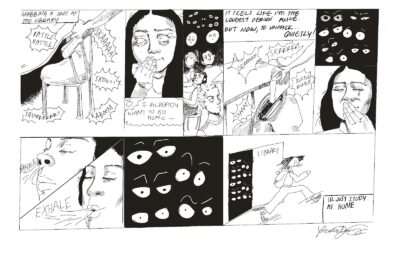
Getting a Spot at the Library

0

Drawn by PRISCILA JIMÉNEZ CORRALES –– pjimenez@ucdavis.edu

Drawn by: Priscila Jiménez Corrales –– pjimenez@ucdavis.edu


Disclaimer: (This cartoon is humor and/or satire, and its content is purely fictional. The story and names of “sources” are fictionalized.)


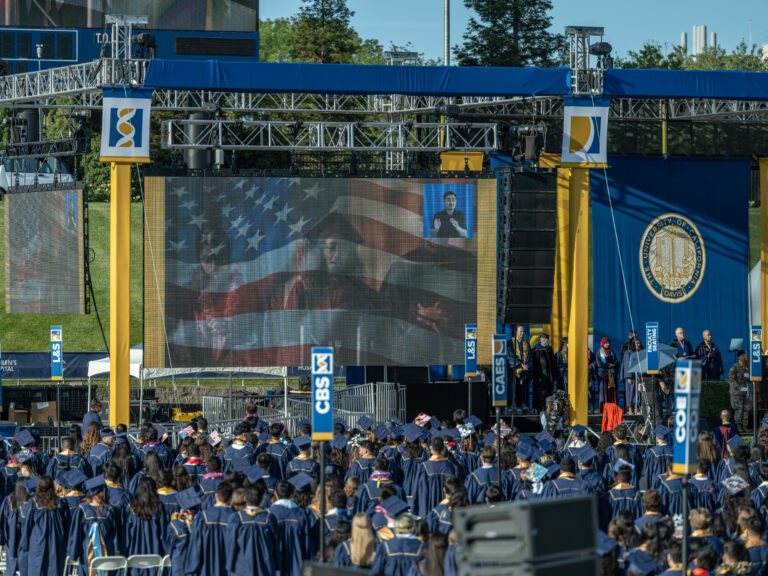
Makeup commencement ceremonies held for spring 2022 graduates

0

The ceremonies took place indoors on Aug. 26 and 27 to make up for June’s ceremonies that were cut short due to extreme heat


By SONORA SLATER — campus@theaggie.org


Makeup commencement ceremonies for spring 2022 UC Davis graduates were held on Aug. 26 and 27, according to a recent press release, providing an opportunity for about 300 graduating students to celebrate their milestone accomplishment after June’s ceremonies were cut short due to extreme heat. A third makeup ceremony is scheduled to take place on Dec. 10.

The university sent out a survey to spring 2022 graduates following the canceled ceremony, asking them to vote on suggested times for makeup commencement ceremonies, as well as to rank the importance of various graduation elements. 

Erin Klausen, a member of the class of 2022 who graduated with a degree in environmental sciences and management, described the survey after she took it in July. 

“[They] asked us to rank the importance of certain graduation elements from not important to very important,” Klausen said via Instagram Direct Message. “I hope they actually take some of that feedback to heart.”

According to the press release, both days’ programs were streamlined, lasting only around 30 to 45 minutes. The release went on to say that speakers included biology graduate Sana Sayyid and UC Davis Chancellor Gary May, who announced a gift for students who registered to graduate as part of the class of 2022. 

Graduates will either receive a one-year complimentary membership to the California Aggie Alumni Association or, if they were already a lifetime member, a $30 gift certificate to the campus bookstore, according to the release.

The release also explained the process involved in reading names as students crossed the stage. 

“The university used professional name readers — with acting and voice-over experience — to announce the students,” the release reads. “Alongside the ramp to the stage, Neil Tanner and Maura Soden shared duties for checking with students on pronunciation and reading their names.” 

Receptions that followed the ceremony included cookies and lemonade. 

Marielle Rikkelman, a member of the class of 2022 who graduated with a degree in animal science, described her experience at the Aug. 27 makeup graduation.

“[It ran] smoothly and it was very fast, but the whole time I still felt like […] the original thing […] was stolen since I wasn’t graduating with all my original friends,” Rikkelman said via Instagram Direct Message. “Only about 1/4 (give or take) of the people who could have come did, so it still felt foreign the whole time despite being run quite well.” 


Written by: Sonora Slater — campus@theaggie.org


UC Davis Health pilot clinical study aims to restore speech in patients with paralysis 

Researchers are attempting to use brain-computer interface technology to read and convert neurological signs


By BRANDON NGUYEN — science@theaggie.org


Anarthria is a severe motor speech condition that prevents an individual from entirely articulating speech, usually a result of a neurological injury or progressive disorder, such as a spinal cord injury or amyotrophic lateral sclerosis (ALS). Recently, UC Davis Health researchers have begun a pilot clinical study to develop neurological prostheses or devices that can restore speech and improve patients’ quality of life.

Joining BrainGate, UC Davis will collaborate with other academic institutions with the overarching goal of restoring neurological function for people with paralysis. 

The collaborative, diverse BrainGate team creates and tests the devices that are ushering in a new era of transformative neurotechnologies,” BrainGate’s website reads. “Using an array of micro-electrodes implanted into the brain, our pioneering research has shown that the neural signals associated with the intent to move a limb can be ‘decoded’ by a computer in real-time and used to operate external devices. This investigational system called BrainGate has allowed people with spinal cord injury, brainstem stroke and ALS to control a computer cursor simply by thinking about the movement of their own paralyzed hand and arm.”

To restore speech, the researchers are testing a device called a brain-computer interface (BCI). Dr. Sergey Stavisky, a neuroscientist co-leading the study and co-director of the UC Davis Neuroprosthetics Lab, explains the function and purpose of a BCI. 

“You can think of a BCI as a bypass of the damaged part of the nervous system,” Stavisky said. “The person is cognitively fully there, but those signals from their brain aren’t reaching their muscles in ALS or spinal cord injury, for example. If we know that the parts of the brain that would normally produce movement — speech, in our case — are working more or less normally, just not reaching the speech muscles, we can use a BCI to interpret the brain neural signals and translate them into speech through a computer.”

According to Stavisky, the idea is to place tiny electrodes in parts of the brain controlling speech and record the activity of a few hundred neurons. From there, the researchers can apply machine learning and other statistical signal processing techniques to interpret the activity and accurately output the intended speech through a computer. 

Dr. David Brandman, a neurosurgeon serving as the site-responsible investigator for the study and co-director of the UC Davis Neuroprosthetics Lab, provided insight into the inspiration behind his pursuit of neuroprosthetic devices to restore function in patients suffering from paralysis. 

“What we hope to do is restore naturalistic speech to people that are living with various [neurological conditions], and so the question is: what inspired me to do it?” Brandman said. “The answer to that is by meeting patients. I mentioned that I wear two hats, and the first that I wear is that of a surgeon, and I have met patients firsthand that want to interact with their environment. They live with diseases that prevent them from clearly speaking, and that they’re quite frustrated, and have difficulty communicating with existing assistive technologies that are slow and cumbersome. And so what really inspired me to pursue this line of research is recognizing that there are people in need of this technology.”

Currently, the pilot study is recruiting participants within three hours of driving distance of UC Davis Health. Ultimately, Stavisky and Brandman hope to offer patients a device that can improve their overall quality of life and allow them to speak to their loved ones comfortably again.

“I’d like to get to a point within the next decade where I’d be able to meet a patient and say, ‘Look, I’m sorry Mr. or Mrs. Smith that you’ve had a spinal cord injury. But your brain computer interface surgery scheduled for next week will get you feeding yourself a week afterwards,’” Brandman said.


Written by: Brandon Nguyen — science@theaggie.org


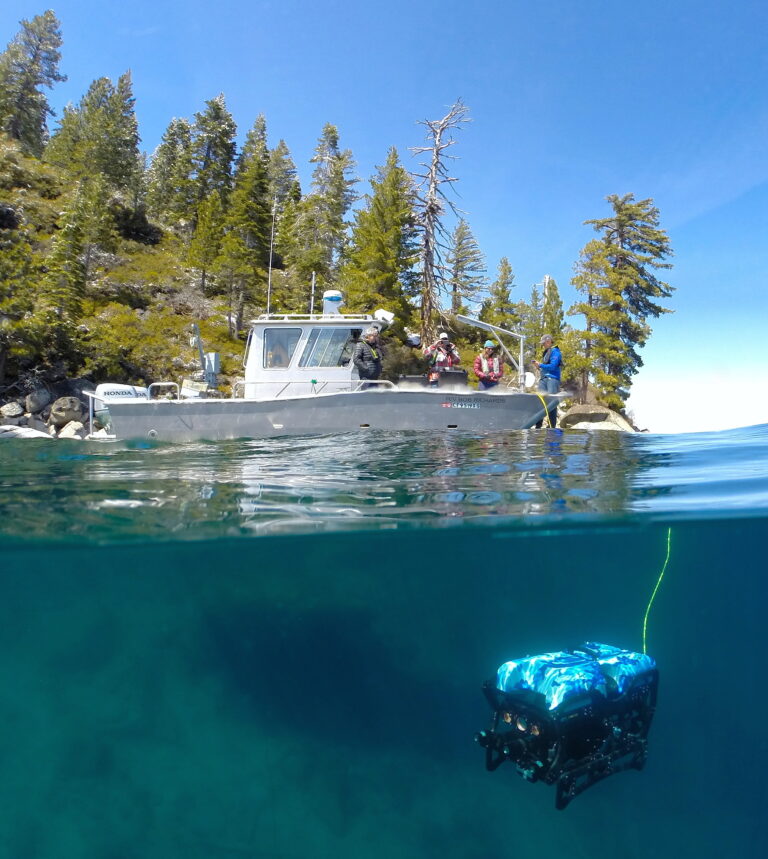
UC Davis Tahoe Environmental Research Center working with state departments to ensure the health of Lake Tahoe in the face of climate change 

0

The 2022 Tahoe State of the Lake report informs programs to combat environmental destruction and maintain Tahoe as a popular vacation spot


By LEVI GOLDSTEIN — features@theaggie.org


Lake Tahoe is a popular retreat destination throughout the year for outdoorsy Californians, including hikers and boat enthusiasts in the summer and skiers in the winter. But with climate change and global warming leading to the deterioration of the environment, the future of the lake is uncertain. However, students and professors at UC Davis have hope that scientific research may help preserve Tahoe’s beauty. 

The UC Davis Tahoe Environmental Research Center (TERC), founded in 1958, conducts research on the status of Lake Tahoe through regular monitoring practices and programs involving the lake’s diverse ecosystem. As part of a mission for education and public outreach, the TERC’s annual State of the Lake Report informs government agencies and community organizations on the best practices for maintaining the lake’s health, according to Director Geoffrey Schladow. 

“Every year, we’re building on that long-term record, seeing how trends are evolving, seeing whether the last year is in some way very different than the previous years or the previous trends and trying to explain why it was different [or] why it was the same,” Schladow said. “[The State of the Lake Report] is an opportunity to present these latest research results to give the broader community a sense of what UC Davis and scientists, in general, are doing.”

The Tahoe Regional Planning Agency (TRPA), founded in 1969 through a bi-state contract between California and Nevada, is one of the many organizations that uses data from the TERC’s State of the Lake Report. The TRPA’s Environmental Improvement Program (EIP) seeks to reverse environmental destruction and create sustainable communities, and according to Sustainability Program Manager Devin Middlebrook, scientific studies inform its programs. 

“We do have a lot of science that has gone into studying the climate and climate change at Tahoe, and that has told us what impacts on the environment are most likely to occur and how they’re going to occur,” Middlebrook said. “We then use that science to inform policy and programs and implementation of projects. […] This year, we created an updated climate resilience strategy for the region that outlines a 10-year project list for building climate resilience in the Tahoe basin, and that revolves around five focus areas: sustainable recreation and transportation, wildfire forests, watershed biodiversity, infrastructure and communities and science and stewardship.”

The TRPA’s EIP relies on research conducted by its own scientists and by leading organizations such as the TERC. One trend the TERC has measured and reported on in the State of the Lake Report is the declining population of crustaceans in the lake, which is concerning because it may have repercussions for the lake’s food web, according to Schladow. Another recent trend that is of concern to scientists is increasing algae growth. 

“We’ve seen almost an explosion in algae, particularly around the shore of the lake,” Schladow said. “It used to be that you would go to the beaches and the sand was golden brown and the water was clear. This year, in many parts of the lake, the water is bright green and dead algae washes up on the lake and starts to rot and decompose. It smells, there are flies […] it defies your memories or your imagination of what [Tahoe is] like. It’s totally unlike most people’s experience.”

The algae bloom directly impacts one of the reasons why it’s essential to keep Lake Tahoe healthy — tourism. Tahoe as a vacation destination is important to the region both culturally and economically, according to Schladow. 

“Lake Tahoe is iconic to people in the west, people who have had the fortune to go up there as children with their parents or their grandparents and they have these memories of it,” Schladow said. “It’s regionally extremely important. Something like 50 million people a year go to Tahoe. […] It generates a five-billion-dollar economy. There’s a lot of people in that region who depend on Tahoe being healthy and being perceived as healthy.”

The research being conducted at Lake Tahoe, including at UC Davis’s TERC, is also influential to the scientific community around the world. 

“Because of [Lake Tahoe’s] iconic status, a lot of people look to it to see what progress is being made,” Schladow said. “Anything we do to improve its health is looked upon, not just in the U.S. but all around the world. […] Because it’s in the richest state in the nation, there are resources available to study it, and what we learn from having those resources people in other locations build on that. In a way, we’re helping other people maintain their own lakes, their own reservoirs, their own aquatic systems.”

Schladow expressed that the future of Tahoe is uncertain and that scientists are unsure of how extreme the coming changes will be. However, studying Tahoe and monitoring its health to inform communities and guide sustainability programs should help reduce the impact of climate change and keep Tahoe an iconic destination. 

“The science has shown us that climate change is here and the impacts of climate change will be more severe into the future,” Middlebrook said. “We want to ensure that Lake Tahoe and the beauty that it holds can be here for future generations to enjoy and the communities that call this place home or the visitors that love coming to Tahoe can continue to have that experience.”  


Written by: Levi Goldstein — features@theaggie.org


UC Davis women’s soccer loses home opener to Pacific Tigers 

0

After two wins on the road, the Aggies fall 1-0 against the University of the Pacific


By MARLON ROLON — sports@theaggie.org


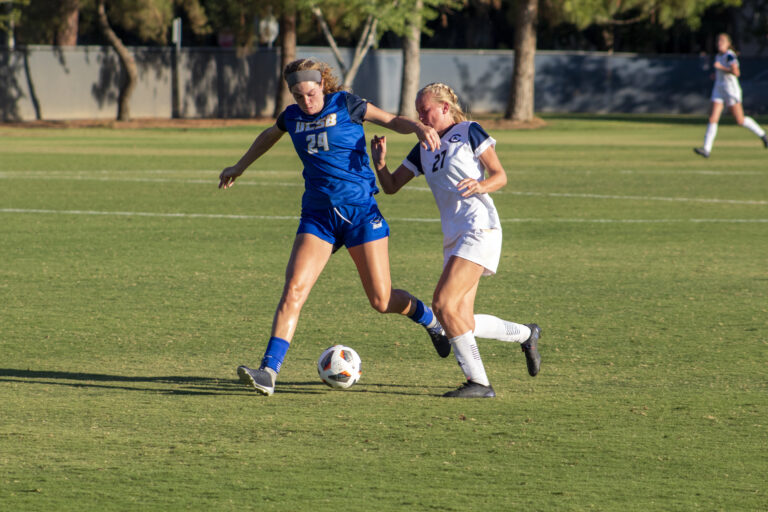
Despite stringing together two wins on the road, including a program first win against the nationally ranked No. 5 Santa Clara Broncos, the Aggies lost a close contest against the University of the Pacific (UOP) in their first campaign on their home turf at Aggie Soccer Field on Thursday, August 25. 

Going into the match, UC Davis was looking to collect their third straight win but the Tigers’ dominant midfield game spoiled the Aggies’ plan. 

The first half consisted of a lot of back and forth, the Tigers pressing the ball down the pitch while the home team played the counter-attack tactic. 

Trouble spelled for UC Davis in the 20th minute of action when UOP fourth-year forward Lauren Frohan came close to scoring off of a shot just outside the box.

In the 22nd minute of play, UCD’s Sarah Canavan, a redshirt first year, responded with a stellar shot that was destined to touch the back of the net; however, Tigers’ goalkeeper, fourth-year Brenna Crump, managed to get a hand on the ball to stop the Aggies from scoring. 

For the majority of the first half, Pacific played beautiful soccer, controlling the pace at the midfield while the players shared the ball with one another via quick passes. Meanwhile, UC Davis attacked with speed. The first half came to a close with Pacific having five shots while the Aggies had just three. 

The Tigers came out hot in the second half; fourth-year striker Jade Enalen ran through the defense to get a shot off coming up just short in the first minute since the break. The momentum was in the Tigers’ favor at this point.

UC Davis had trouble keeping possession of the ball due to Pacific’s defensive pressure. On offense, the Tigers turned up the tempo, forcing the Aggies to drop back on defense while Pacific put the pressure on. 

The pivotal point of the match came after a corner kick from the visiting team. The lone goal came in the 58th minute of the second half off a corner kick inside the crowded box. The Tigers celebrated fourth-year striker Melani Medina’s goal as she put the team up 1-0. 

Davis’s head coach Tracy Hamm decided to make a change on the pitch in an attempt to swing the momentum in the Aggies’ favor. In the 65th minute, second-year striker Devyn Simmons was subbed into the match. The switch helped the flow of the offense with Simmons taking a great shot five minutes later that was blocked in dramatic fashion near the top right corner of the net. The play drew loud cheers from the home crowd. 

Simmons’ energy helped the Aggies take control of the game. The pace changed and the Tigers were forced to switch to their defensive scheme. Simmons once again tried her luck blasting the ball from outside the box; however, the goalkeeper blocked the shot. This was the last major play of the game for UC Davis — Pacific held onto the win with just one goal. 

Despite the loss, redshirt second-year goalkeeper Caeley Goldstein continues to be a bright spot for the Aggies. After leading UC Davis to shutouts in the first two games of the season, Goldstein was named the Big West Conference Defensive Player of the Week. Against Pacific, she had six saves, two of which were featured in highlights. In three games to start the campaign, Goldstein has only allowed one goal. 

Another player that deserves credit is Simmons, who came onto the pitch as a late substitution. Her presence in the game sparked some life into the Aggies and she had two shots in 25 minutes of play.

With the loss, the Aggies drop to 2-1 in non-conference play and they will look to rebound in their next fixture against San Francisco State on Sunday afternoon at Aggie Soccer Field.


A look ahead

UC Davis will travel across the Causeway on Sept. 1 to play rivals Sacramento State. Then, they will be back at home on Sept. 4 and Sept. 8 to play Oregon State and Boise State. On Sept. 15, they will play their first conference game in Hawaii, and on Sept. 18, they will travel to Arizona. The remaining games are conference opponents; on Sept. 22 and Sept. 25 UC Davis will host UC Irvine and CSU Northridge. They will go on the road on Oct. 2, Oct. 6 and Oct. 9 to play UC San Diego, Cal Poly and UC Santa Barbara. The last home stretch of the season will be on Oct. 13, Oct. 20 and Oct. 23 against CSU Bakersfield, Cal State Fullerton and UC Riverside. The season will end in Long Beach on Oct. 27.


Written by: Marlon Rolon — sports@theaggie.org


Bring back a Davis Pub

The closing of de Vere’s has left a hole in Downtown Davis


By OWEN RUDERMAN — opruderman@ucdavis.edu


The Downtown Davis area has a lot to offer students and residents alike. Unique little shops like the Kobe Mini Mart and Armadillo Music dot the busier streets of downtown, and there always seems to be a restaurant nearby to grab a snack or sit down for a filling meal. You can spend a whole day wandering around downtown, window shopping and exploring.

When the day turns to night, you can head to the G Street area to get a drink or two, and, if you’re lucky, you might end up participating in a trivia night or singing karaoke. Despite the plethora of options that Downtown Davis offers, however, it feels like there’s a piece missing.

That missing piece is, I think, a pub. And we used to have one — de Vere’s was an Irish pub that opened in Downtown Davis in 2011. The first and only time I visited de Vere’s was a magical experience. A friend and I went in the evening to grab a few drinks and chat, and de Vere’s was the perfect backdrop. The music wasn’t too loud and the atmosphere was calming. We had delicious European-style drinks to sip on as we sat and talked for hours. It really felt like a hidden gem — a classic Irish pub experience. 

But since de Vere’s permanently closed in October 2021, there doesn’t seem to be a place in Davis where you can find that sort of vibe. Where else am I supposed to get a delicious plate of fish and chips and a Guinness? Where else can I go to feel like I’ve been transported across the pond? After de Vere’s closed, it left a hole in Downtown Davis. 

You might point me towards a place like Three Mile Brewing Co. or University of Beer, claiming that these places are similar enough. But the sad truth is that there simply isn’t another place in Davis that can declare itself a pub. Luckily, not all hope is lost.

A new restaurant is filling the space where de Vere’s used to be, and I’m cautiously optimistic that it could be the place I’ve been looking for. The new place, called Bull ‘N Mouth, is aiming for a September opening and is a “modern American pub.” While I was hoping that the new restaurant would also be UK-themed, I’ll take what I can get. I’m just hoping that Bull ‘N Mouth can replicate the chill vibes that de Vere’s Irish Pub had cultivated over its decade of operation in Davis.

If not, I’m worried that we might never get a proper pub in Davis, but it’s important to give new establishments a chance. I’ll be going to Bull ‘N Mouth in the fall to see if it can fill the empty space left by de Vere’s. 

If you’ve also identified this gap in Davis’ nightlife, I’d encourage you to voice your interest in a pub in Downtown Davis. Who knows, maybe one day we’ll finally find that missing piece.


Written by: Owen Ruderman — opruderman@ucdavis.edu

Disclaimer: The views and opinions expressed by individual columnists belong to the columnists alone and do not necessarily indicate the views and opinions held by The California Aggie.


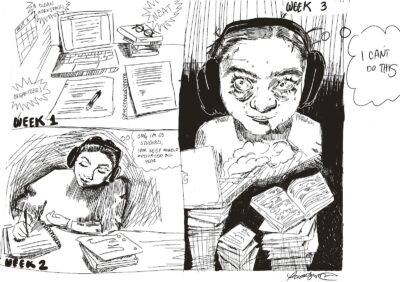
Excited for School

0

By PRISCILLA JIMÉNEZ CORRALES — pjimenez@ucdavis.edu

Drawn by: Priscila Jiménez Corrales –– pjimenez@ucdavis.edu

Disclaimer: (This cartoon is humor and/or satire, and its content is purely fictional. The story and names of “sources” are fictionalized.)


Antisemitic banners hung from overpass determined ‘hate incident’ by UC Davis police

Chancellor Gary May later released a statement condemning the act

By SONORA SLATER — campus@theaggie.org

Content warning: This article includes discussions of antisemitic language which some readers may find disturbing.

The UC Davis Police Department sent out a crime alert to campus community members at 6:07 p.m. on Aug. 28, reporting a “hate incident” involving signs that were hung on the Highway 113 overpass facing vehicle traffic with antisemitic messages written on them. 

According to the crime alert, the signs read, “HOLOCAUST IS ANTI WHITE LIES” and “COMMUNISM IS JEWISH.” 

The alert states that witnesses reported seeing three or four white male adults wearing black clothing and masks standing on the Blue Ridge Road Bikeway overpass at Highway 113 and hanging the signs at around 3 p.m. on the day of the crime report. One of the witnesses confronted the subjects and tried to take the signs down which led to a verbal argument but no reported injuries. 

“The subjects were filming encounters with counter-protesters and law enforcement and may have been trying to [elicit] responses,” the alert reads. “They took down the signs and left on foot, later displaying their signs on the Russell Blvd overpass according to [the UC Davis Police Department].”

The subjects were last seen on foot headed into the city of Davis through West Village, according to the alert. 

The incident “did not rise to the level of a hate crime,” according to the crime alert, but the UC Davis police did determine it to be “a hate incident of concern for our campus community.” 

UC Davis Chancellor Gary May issued a statement about the incident on the day the event occurred, noting that he had recently received a report indicating that a similar incident took place during the weekend of Aug. 20-21. 

“We are sickened that anyone would invest any time in such cowardly acts of hate and intimidation,” May said in the statement. “We encourage our community to stand against anti-Semitism and racism. White supremacy, hate and intimidation have no place here.”

May also directed students who need support in light of the incident to reach out to Student Health and Counseling Services and for faculty and staff to reach out to the Academic and Staff Assistance Program.

Written by: Sonora Slater — campus@theaggie.org

Commentary: “Grease” stands the test of time in unexpected ways  

In tribute to the late Olivia Newton-John


By CLARA FISCHER — arts@theaggie.org


If you are anything like me, you were raised by parents with an avid love for all things old school. Many of my earliest and fondest memories take place listening to songs from the ‘70s or watching retro movies — including one of the most successful movie-musicals to ever hit the big screen: “Grease.” This movie-musical stars Olivia Newton-John as Sandy and John Travolta as Danny.

As a kid, I can’t say that I fully understood the meaning (or the myriad innuendoes) of the film. All I took to heart were the fun, flashy costumes and a killer soundtrack that I could easily dance to. Now, rewatching “Grease” as an adult who has been through the tumultuous qualms of the teenage years, I can relate to some of the movie’s themes on a personal level. 

At its core, the premise of “Grease” is about identity and the struggle to both find and maintain your identity amid the pressures of society — in this case, a brutal, unforgiving and dystopian landscape also known as high school. The beginning of the movie shows Newton-John’s Sandy as an outsider in the school’s social scene because of her demure, naive “goody two-shoes” persona, which is presented in stark contrast to the bold, provocative and even crass aura of the Pink Ladies and their male counterparts, the T-Birds.

Spoiler alert: Sandy doesn’t retain her overexaggerated sanctity. As she herself puts it in the reprise of “Look at Me, I’m Sandra Dee,” Sandy is “wholesome and pure, oh so scared and unsure.” She doesn’t fit in with those around her — even those who are more accepting of her personality, such as Frenchy and (to an extent) Danny, sometimes find her to be awkward in social settings. She sees a need to change in order to get what she wants.

And thus was born one of the most iconic moments in film history: Sandy’s transformation. Her all-leather, skin-tight ensemble, complete with red lipstick and a cigarette, has been chosen by many throughout the years as their Halloween costume of choice, signifying it as a cultural phenomenon. Much like Natalie Portman in “Black Swan,” our formerly virtuous heroine has stripped her good-girl persona and spends her final moments on-screen fully embracing a new, dark alter-ego.

While there is an argument to be made for denouncing this moment — and, in fact, “Grease” in its entirety —  as deeply problematic and anti-feminist, maybe there’s something to be said for Sandy’s complete 360. Through shedding her pure, girl-next-door image, she is able to shock everyone in her world by embodying the polar opposite feminine ideal; sexy, sultry and mysterious. She takes power into her own hands by playing into what society both reveres and detests: a confident woman. 

In some ways, Newton-John’s career has its own parallels to Sandy’s storyline. Rising to fame at a young age through an Australian singing competition, she landed the role of Sandy, complete with a personal recommendation from Travolta, who described her as “every guy’s dream.” Following the film’s instant success, Newton-John continued with her already impressive career and catapulted herself into ‘80s superstardom with the release of “Physical.” 

Where Sandy donned leather pants and a head of teased, curly blond hair, Newton-John rocked a turquoise leotard and pink tights while imploring listeners to get physical. Still, the two moments both represent turning points at which the women break from society’s simplistic view of them. 

Like Sandy, Newton-John also had doubts about breaking away from her good-girl image, reportedly calling her manager, Roger Davies, at one point and telling him “I’m afraid I’ve gone too far with this song.” Luckily for both her and the ‘80s pop cop music scene, Davies persuaded her to press on with the song, which went on to become one of the biggest hits of her career and a defining moment of the time period. 

Apart from being one of the leading pop trailblazers of her time, Newton-John also contributed hugely to medical research efforts following her breast cancer diagnosis in 1992. The Olivia Newton-John Cancer Wellness and Research Centre was founded as a place to both conduct research and serve as a public hospital, combining modern medicine with holistic wellness. The Olivia Newton-John Cancer Wellness and Research Centre was largely successful due to the unwavering support of Newton-John herself. After over 30 years of being a public figure for advocacy against breast cancer, the icon passed away at the age of 73 on Aug. 8, 2022.

So, thank you Olivia Newton-John for being an inspiration in many ways — I’ll have “Hopelessly Devoted to You” on loop for a long time to come. 


Written by: Clara Fischer — arts@theaggie.org

 

ASUCD Senate holds position confirmations

Interim senators, judicial council members and new chairpersons for the various committees confirmed during special session

By SYDNEY AMESTOY — campus@theaggie.org

On Thursday, August 11, at 6:00 p.m, Vice President JT Eden called the special session meeting of the Senate to order over Zoom, then read the UC Davis Land Acknowledgement. 

The purpose of this special session was the confirmation of numerous seats within ASUCD, including senators and chairpersons for various committees. 

The first action of the meeting was a quick, in-meeting, unanimous election of Juliana Martinez Hernandez as interim Senate president pro tempore for the duration of the meeting. Her term as interim Senate president pro tempore was just for the duration of the special session and ended at the conclusion of the meeting.

The Senate then confirmed nominees for interim senators for the rest of the summer session and fall quarter 2022. 

The first nominee was fourth-year cognitive science and statistics major Stephen Fujimoto, nominated by Eden. Fujimoto has worked for ASUCD for two years, as both an executive staffer and as the chairperson of the Research and Data Committee. 

“Nominating Stephen to become an interim senator was probably one of the easiest decisions this administration has made during our short term,” Eden said. “Stephen will make a fantastic addition to this table, and I look forward to working with him in the upcoming quarter.”

Fujimoto was confirmed unanimously by the Senate, and will serve as an interim senator until the end of fall quarter 2022.

Vaneza Gonzaga, the second nominee for interim senator, was unavailable for the scheduled time of confirmation. Calls for the confirmation to be held virtually, without Gonzaga present for questioning, were challenged, and confirmation was postponed until Gonzaga arrived. 

Gonzaga was confirmed unanimously for the position later on in the meeting.

The next nominee to be confirmed for interim senator was Aarushi Raghunathan, a second-year economics and political science double major, and previous member of the Internal Affairs Committee. 

“I don’t have specific plans for the bylaws,” Raghunathan said in response to questions regarding her plans as interim senator. “I do have other plans more related to the entire student body, such as having the lectures being recorded mandatory, or at least having much more detail than the professors are providing, and I also wanted to work on having to-go boxes in the dining commons.”

 Raghunathan was confirmed unanimously as an interim senator.

The next item on the agenda was the confirmation of a new Academic Affairs Committee (AAC) chairperson. Nominee Megan Chung, a third-year political science major and previous AAC commissioner, was confirmed unanimously.

The AAC vice chairperson nominee, third-year public service and communications major Paige Szabadi, was then confirmed unanimously as well.

Due to difficulties with the preplanned schedule, the Senate postponed Gender And Sexuality Commision (GASC), Student Sustainability Career Fair (SSCF), Disability Rights Advocacy Committee (DRAC) and Judicial Council chairperson confirmations and skipped ahead to confirm a new Director of Communications. 

Rhea Bains, an incoming neurobiology major, was the nominee for this new ASUCD position. Bains was confirmed unanimously.

The Senate then confirmed Mary Padilla, a third-year international relations and gender and sex studies major, for the GASC vice chairperson.  

Dustin Tran, a political science major and former International Affairs Commission (IAC) commissioner, was then confirmed unanimously as the new IAC vice chairperson.

Kelly Abey, a third year environmental policy and sustainable design major and former EPPC commissioner, was then confirmed unanimously as the newly paid role of Environmental Policy and Planning Commission (EPPC) vice chairperson.

 Emma Riginski, a first-year environmental planning major, was unanimously confirmed by the Senate as the new Associate Vice President of Internal Communications, a role involved in the hiring of ASUCD employees.

Next on the agenda was the confirmation of three new members of the Judicial Council.

The first candidate for Judicial Council was second-year international relations major Hadil Djadri, who was highly recommended by the interview committee, according to Eden. 

“I really wanted to be involved on campus, and serve our community in a way that I thought was most in line with my personal goals with the legal field,” Djadri said when asked why she applied for Judicial Council. “If my nomination is confirmed, I’d be really excited to serve our community and uphold the constitution.”

Djadri was confirmed for the position unanimously by the Senate.

Samantha Figglieti, an incoming first-year student also highly recommended by the interview committee, was then questioned and confirmed unanimously by the Senate.

“This position is also very similar to the roles I played in my previous student government experience, as the student government vice president [in high school], and within that position I interpreted the school’s constitution,” Figglieti said.

Madison Whittemore, a second-year political science major, was the third nominee for Judicial Council, and said that she had plans to help foster a more active Judicial Council.

“One of my main goals is to make sure all legislation passed is reviewed by the Judicial Council in a timely manner,” Whittemore said.

Whittemore was confirmed unanimously.

The Senate then moved to confirm former ASUCD president Ryan Manriquez as the new DRAC chairperson. Manriquez, a fifth-year political science and communications major, was confirmed unanimously for the position.

After a short break, Senate moved on to confirming the new SSCF chairperson Mariah Padilla, a third-year community and regional development major and long-time member of the SSCF.

Jordan Kosai, a third-year environmental design major, was also unanimously confirmed as a SSCF member.

The Senate also confirmed second-year public service major Amanda Hamblin as chairperson of the Donation Drive Committee.

The last confirmations of the evening were new members being confirmed for the various groups and committees of the AAC. Chung, the new AAC chairperson, recommended all nominees.

The Staff Diversity Committee’s nominees were first, with Lil Jansen, Ociano Lazo and Cassandra Perez all being unanimously confirmed as members.

Following that, Spoorthi Giridhar, Agueda Berlot, Perez, Edward Chan and Britney Cao were confirmed to the AAC Media Board.

The Disability Issues Administrative Advisory Committee saw the unanimous confirmation of Manriquez and Cao by the Senate.

The Status of Women at Davis Committee confirmations followed, with Serena Broome, Gabriella Tsudi and Michelle Estrada all confirmed.

The Public Art Committee nominees, Eavin Leitner-Woolf and Hiyab Berhe, were unanimously confirmed. 

Aidan Carr, Jessica Lee and Morgan Wong were all unanimously confirmed for the Mondavi Center Committee.

Grace Gallop, Wong and Berhe were confirmed for the Child and Family Care Committee.

The Course Materials and Service Fees Committee saw the unanimous confirmations of Lazo and Estrada.

Finally, the Transportation Services Committee saw the unanimous confirmation of Chloe Cheung and Tracy Zhu.

With the final confirmations of the special session complete, the Senate moved to temporarily open the 2022-2023 budget and consult ASUCD Controller Derek Neyer.

The first recommendation brought up by Neyer was a move to begin the pay period for both Aggie Reuse and Whole Earth festival staff, as recommended by the respective staff. This comes as Lower Freeborn Hall, the home of KDVS radio, faces demolition and seeks to move into the EcoHub, which is the office space currently occupied by Aggie Reuse and Whole Earth festival staff members. The respective staff seek to move their starting date to August 14, with 19 hour work weeks, to move out of their office. 

The proposed measure would see $2100 taken from the general fund for payment to the respective staff. Neyer responded to questioning from Senator Fujimoto about how this measure would affect the budget.

“Of course we have a balanced budget, and this would mean we’re [$2100] out of balance,” Neyer said. “I would say we should explore requesting the funds from student affairs because […] they would take on the cost of the move, and I consider this part of the move. If that is not fruitful, we can pursue other options for funding, but at this time it would come out of the general fund.”

The measure was ultimately passed unanimously.

The final change to the budget was a change to the salary of a new executive position in ASUCD, the Deputy Director of the communications branch, which seeks to absorb some responsibilities currently held by the Chief of Staff. This measure was also passed unanimously, and the 2022-2023 budget was motioned closed by the Senate.

The conclusion of the special session was a forum held by Eden thanking the Senate and congratulating new members of ASUCD. In this forum it was unanimously decided that another special session would be held before the start of fall quarter 2022 to finish confirming all paid positions.

At 9:45 p.m., thirty minutes ahead of schedule, Eden officially adjourned the special session of the ASUCD Senate. 

Written by: Sydney Amestoy — campus@theaggie.org

Review: “Marcel the Shell With Shoes On” and his growing stardom

From a niche internet sensation to the big screen

By CORALIE LOON — arts@theaggie.org

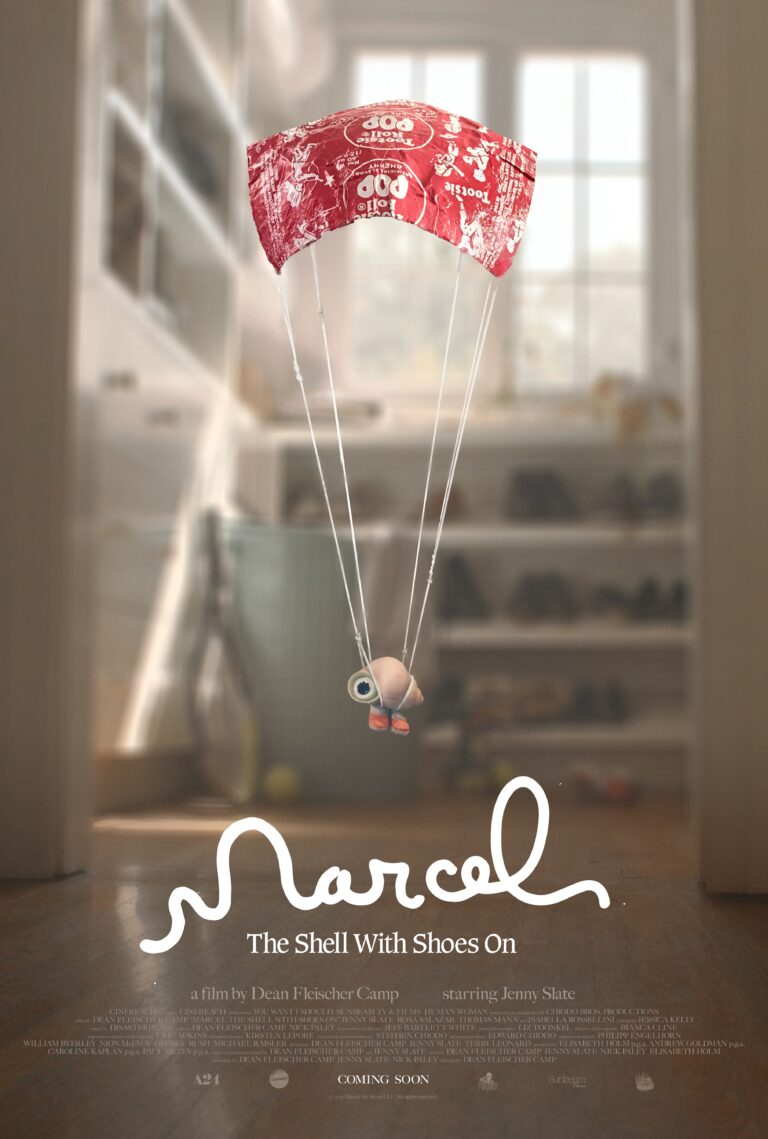
On June 24, 2022, a new film with a long history, “Marcel the Shell With Shoes On” (2022), hit theaters in the U.S. and Canada. This sweet mock documentary extends the storyline of a few videos, first uploaded to YouTube over 10 years ago, into an hour and a half of heartwarming conversation, lighthearted comedy and emotional nuance.

For those who missed the series of YouTube videos titled “MARCEL THE SHELL WITH SHOES ON,” the concept of the 2022 movie may seem random and at least a little bizarre.

The original premise of Marcel the Shell is simple: he is a 1-inch tall shell fashioning a googly eye and a pair of brightly-colored sneakers, living alone and spouting innocent wisdom about the trials and tribulations of being a shell.

It wasn’t until the release of the motion picture this year that fans of Marcel became privy to new information: that Marcel identifies as a he (not a she, despite being voiced by actress Jenny Slate), living with his grandmother Connie in an Airbnb, and used to have an entire family before being separated from them in a traumatic incident.

The unusual concept for a full-length movie could be attributed to its story’s humble origins, which perhaps allowed it to break from normalcy and enter a realm as unpredictable as it was charming.

It all started in 2010, when Slate and her then partner Dean Fleischer-Camp spontaneously created a video with items bought from a craft store, creating a video in 48 hours that was only ever intended for a friend’s stand-up comedy show. As Slate improvised Marcel’s questions and answers, Fleischer-Camp (who never appears on screen) voiced a human who conversed with Marcel from behind the camera.

 It wasn’t until later that the film was uploaded to YouTube, quickly becoming an internet sensation that has now gathered over 32 million views.

Maybe it was the series’ unique combination of humor and strangeness, or sweetness and depth, that made it so likable. It was hard for me not to fall in love with Marcel in the first minute, when his tiny raspy voice introduced himself: “I like myself, and I have a lot of other great qualities as well.” One of the most tender moments in the movie — when Marcel quietly asks: “Guess why I smile a lot?” (What?) “Because it’s worth it” — was also in the second YouTube film.

The success of the original “MARCEL THE SHELL WITH SHOES ON” short film on youtube led to a second (and finally a third) installation, each expanding the character of Marcel by a few minutes. In total, the three YouTube videos don’t even add up to 15 minutes, leading some (like myself) to wonder what a 90-minute movie could do to both honor Marcel’s spirit of smallness and sustain the audience’s attention.

As an original Marcel the Shell fan, I was excited for the theatrical release but also a little nervous that the filmmakers wouldn’t succeed in doing Marcel justice. After over a decade of anticipation, the pressure was on the movie to either go big or go home.

“Marcel the Shell with Shoes On” definitely did go big — in the smallest and most spot-on way possible. It took some of the most iconic lines from the original videos and refashioned them, such as the phrase: “Sometimes people say that my head is too big for my body and then I say, ‘compared to what?’” 

These small references are scattered within a larger story about loneliness and how one both grows into and out of it. As Marcel begins the search for his long-lost family, he experiences the hugeness of feeling lost, of belonging to a world that is partially out of his grasp.

The film couldn’t have captured the tone of the original videos any better, quietly and comedically exploring what it’s like to be so small in such a big world. It neither dragged nor lost its simplicity in the midst of a flashy plot, reminding me of the true heart and purpose of indie films in showing life just as it is: silly and fiercely profound.

“Marcel the Shell with Shoes On” is a phenomenon that all ages can enjoy; while the youngest viewers may be enthralled by its cleverness and charm, older viewers are even more in touch with its heart, truthfulness and timelessness. This is a film that every person, whether they feel especially human or not, should watch.

The major motion picture is playing until August 17 in select theaters in the U.S. and Canada, but will hopefully be available to stream or rent digitally in the near future.


Written by: Coralie Loon — arts@theaggie.org

UC Davis Health finds biomarker for detecting early melanoma

Analyzing S100A8 expression can indicate early evolution of melanoma in the surrounding cells of the skin tumor microenvironment

By BRANDON NGUYEN — science@theaggie.org

According to the National Cancer Institute, melanomas, a type of skin cancer that occurs in cells that produce melanin, are the fifth most common cancer type in the United States and cause the vast majority of skin cancer-related deaths. UC Davis Health recently published a study that established reliable cellular biomarkers that point to early development of melanoma. 

Within the top layer of skin, there are different skin cell types, including melanocytes that produce melanin skin pigments and keratinocytes that produce the protein keratin, which is important for skin durability and hair strength. The study published in the Journal of Investigative Dermatology notes that “[e]arly diagnosis of melanoma is critical for improved survival. However, the biomarkers of early melanoma evolution and their origin within the tumor and its microenvironment, including the keratinocytes, are poorly defined.” 

Melanomas arise from a multi-step process in which melanocytes mutate and proliferate uncontrollably, in effect producing a tumor of skin cells. Curing this cancer involves properly diagnosing and treating it early in its development. 

Dr. Maija Kiuru, a practicing dermatologist and dermatopathologist at UC Davis Health and the lead author on the study, explained how melanomas are typically detected and treated.

“Melanomas are typically found on skin exams, either by a physician or by the patient or a family member,” Kiuru said via email. “One screening tool is the ABCDEs of melanoma (a lesion with asymmetry, irregular borders, variable colors, large size, and evolution over time). Diagnosis is made by a skin biopsy and histological examination. Treatment for most melanomas include surgical removal, and in more advanced cases, the treatment will include lymph node sampling and systemic therapies.”

Dr. John McPherson, a professor in the Department of Biochemistry and Molecular Medicine at UC Davis Health and corresponding author on the study, elaborated on mutations that lead to melanomas.

“You have about 3 trillion cells in your body, and every day in every cell, there’s about 10,000 damages to your DNA, which are repaired,” McPherson said. “There are very amazing biological mechanisms that find and fix the damaged DNA, and if they can’t, then they usually program the cell to die. Mutations in these mechanisms can lead to cancers like melanomas, and about 40 to 50% of melanomas have a very specific mutation in a gene called BRAF with a very specific amino acid change in the 600th position.”

BRAF is a signaling molecule that takes signals from outside that come down a cascade and then tell the cell to grow and replicate, according to McPherson. Mutations in this signaling molecule — that acts as an accelerator for the cell— lead to uncontrolled growth or cancer. 

The study that both Kiuru and McPherson collaborated on focused on identifying genes that can serve as markers for melanoma development and to improve diagnosis of melanomas. 

“We all have moles and funny little things on our skin, and sometimes they might look like melanoma, and the idea is to identify what really is melanoma and what is not,” McPherson said. “So many things are cut off and then they’re biopsied, and even when they’re biopsied and analyzed under the microscope, pathologists sometimes aren’t sure. If you get a bunch of pathologists in a room and say, ‘is this melanoma?’ you might get varying opinions. What we really want to do is be able to clearly say ‘okay, this funny-looking thing that we’ve biopsied is definitely melanoma.’” 

Both authors examined the expression of over 1,000 genes in 134 regions of interest enriched for melanocytes as well as neighboring keratinocytes or immune cells. The tissue examined came from patient biopsies from 12 tumors, ranging from benign to malignant. 

“We utilized an approach that looked at gene expression of hundreds of genes directly on glass slides that contained melanomas and nevi ([also known as] moles, the benign counterpart of melanoma), without disrupting the architecture of the tumor,” Kiuru said. “This is called spatial gene expression profiling and [it] is helpful in better understanding the interplay between tumor cells and their neighboring cells, like immune cells and epithelial cells.”

According to McPherson, molecular tests for diagnosis and prognosis of melanomas are on the rise, but markers for early melanoma development remain lacking. This study serves as a stepping stone to shed light on potential biomarkers that allow for early treatment of melanomas and increases the odds of curing the cancer in patients.

“We found that melanoma biomarkers are expressed by specific cell types, some by the tumor cells but others by neighboring cells in the so-called tumor microenvironment,” Kiuru said. “The most striking observation was that S100A8, which is a known melanoma marker thought to be expressed by immune cells, was expressed by keratinocytes that make up the outermost layer of the skin called the epidermis. Melanoma biomarkers in the epidermis have been largely overlooked in the past.”

The study found that S100A8 expression was exclusively found in melanoma cells and not benign tumor cells, which make this biomarker a potentially good indicator of early melanoma. Kiuru said that this biomarker is one of many that shows how important having a cellular tool for early detection of a cancer is key to the overall survival of the patient.

“This study revealed new markers of melanoma and new roles for previously-identified markers that may facilitate a more accurate diagnosis of melanoma, leading to improved survival of patients with melanoma,” Kiuru said. “A similar approach can be taken with other cancer types.”

Written by: Brandon Nguyen — science@theaggie.org

The benefits of studying humanities and social sciences

0

An undergraduate degree in STEM is not strictly better than one in the liberal arts  


By JENA TUFAIL — jjtufail@ucdavis.edu


Have you ever felt the pressure to choose a major simply because you believe it may lead to the most profitable career, rather than because it is what you are most interested in? Many students, myself included, have struggled with balancing interest in a major with the potential payoff of a lucrative career.

“What are you going to do with that?” is a question many of us are asked at family gatherings before receiving a lecture about how “it’s not too late” to change our majors to something more proactive or “money-making.” But does having a non-STEM degree really impede salary potential?

Research has shown that although students who major in Science, Technology, Engineering and Mathematics (STEM) do, on average, have higher starting pay than arts majors, by the age of 40 salaries between the two are basically the same. The retirement age in the U.S. has continued to rise, and retirees can’t receive full social security benefits until the age of 67. As a result, many of us are going to be working for a very long time — most of our lives. So isn’t it important to be passionate about your work, rather than having your job be something you loathe? 

As someone who had always believed they would be a STEM major when they went to college, taking core classes in my intended field made me realize how much I truly do not enjoy it. Once I recognized my strengths and found subjects that I was passionate about, going to school became much more enjoyable. I believe the knowledge I acquire from my social science majors will be able to help me in the real world as a future attorney, even if, to others, they are seen as “useless.” There are many skills you can gain as you work toward your humanities degree, which will be a huge benefit wherever you end up working. 

As I mentioned before, there is also always the option to further pursue education if you hope to have a higher-paying job in your field of interest; gaining a master’s, for example, can help increase your salary by almost 20%. Attending law school doesn’t even have a degree requirement to apply. Both choices allow you to study topics during your time as an undergraduate that you are passionate about, rather than spending four years of your life studying something that makes you feel miserable. 

Even if you do not decide to continue your education after your bachelor’s degree, there are many career options available for social science and humanities students. Certifications can also help you gain specialized skills, advance in your intended career, increase your knowledge and more.

Studying a subject because you have a genuine interest in it will always be more fulfilling than picking a major out of obligation. It’s quite possible to gain both enjoyment and a high profit margin all while studying and working in fields that you love. Major in STEM if that’s what you’re passionate about, but don’t do it just because you feel like you have to.

Written by: Jena Tufail — jjtufail@ucdavis.edu

Disclaimer: The views and opinions expressed by individual columnists belong to the columnists alone and do not necessarily indicate the views and opinions held by The California Aggie.