55.5 F
Davis

Davis, California

Tuesday, December 23, 2025
Home Blog Page 201

Commencement ceremony cut short following heat safety concerns

The ceremony was halted after six people were hospitalized for heat-related medical aid and was rescheduled for this Sunday

By SONORA SLATER — campus@theaggie.org

UC Davis’ Friday undergraduate commencement ceremony was cut short following concerns about extreme heat.

Temperatures in Davis were in the mid-90s Friday morning, with an excessive heat warning in place in the area. The ceremony was held outdoors at the UC Davis Health Stadium, scheduled to begin at 8 a.m. According to the Sacramento Bee, UC Davis received 35 calls for heat-related medical aid during the event, and six of those people were later transported to local hospitals.

Around 11 a.m., UC Davis posted a message on Twitter and Instagram encouraging graduates who had already crossed the stage to leave with their families.

“It is extremely hot,” the message reads. “If you have crossed the stage, you do not need to stay to the end. Feel free to leave and head over to Hutchinson Field where there is COLD water and air conditioning at the UCenter.”

Soon after this message was released, the ceremony was halted, and an announcement was made in the stadium telling all graduates to leave the field. At 12:59 p.m., UC Davis posted a message and a link to a press release about the situation on Twitter.

“Based on health and public safety concerns due to heat and at the urging of the UC Davis Fire Department, Fire Prevention Services, and Environmental Health and Safety, we had to end today’s commencement ceremony early,” the press release reads. “We deeply regret that some students did not get a chance to walk across the stage. […] We appreciate your understanding and know this has been frustrating.”

The message goes on to invite any students who did not have the opportunity to walk graduation to return with their families for a separate ceremony this Sunday, June 12. According to the release, more information for graduates and their families will be available soon on the UC Davis News website.

UC Davis is holding three undergraduate graduation ceremonies this year for the first time, with the other two planned for Saturday, June 11, and Sunday, June 12. According to an update to the original press release from the university, those graduating on Saturday will not have their names read or walk across the stage. 

After receiving student feedback, another update from the university on the morning of June 11 announced that Saturday’s ceremony would include the reading of names until all had been read or Safety Services determined that it was too hot to continue. All graduates who attended Saturday’s ceremony had their names read and were able to walk across the stage. 

Heat safety precautions for both Saturday’s and Sunday’s graduations were modified, with misters, fans, shade tents and water stations available on the field, and an option for family members to watch a livestream of the ceremony in the University Credit Union Center if they wished.

Following Saturday’s ceremony, the university released an update about plans for Sunday, and accommodations for students who were unable to cross the stage on Friday or attend the commencement on Saturday.

Sunday’s ceremony will begin at 7 a.m., according to the updated post. Students will begin crossing the stage by 7:30 and have their names read. Students who did not have the opportunity to walk across the stage on Friday or Saturday will be contacted at a later date to give their input on a future ceremony, according to the update, and the speakers who were scheduled to talk at the commencements are recording their speeches to be sent to graduates.  

Erin Klausen, who graduated Friday with a degree in environmental sciences and management from UC Davis, described her experience during the ceremony.

“We got there at [6 a.m.]” Klausen said over Instagram direct message (DM). “There was never any shade at any point. No fans. No misters. We all were able to sit down by 9:15, over an hour after the ceremony was supposed to start. I knew some people were getting water cups but the line was long and they were running out.”

​​Bea Rondon, a graduate at Friday’s ceremony with a degree in cinema and digital media, said she was standing in line for about two hours waiting to walk into the stadium. 

“I’d consider myself one of the ‘lucky ones’ because I was among the first batch of students to walk in, so I got to sit earlier than others,” Rondon said via Instagram DM. “[It] didn’t help that we were wearing our thick dark-colored gowns [and] standing up for a long time. […] I personally didn’t feel like passing out from the heat […] but I was uncomfortably sweaty for the entire duration of the commencement.”

Klausen said that because of the heat conditions, she and her friends left before the ceremony was canceled. She said that she isn’t planning on walking at the rescheduled ceremony on Sunday because her family wouldn’t be able to come. 

“So many of us can’t afford to continue schooling after undergrad — this was our one shot at walking and getting recognized in some way,” Klausen said. “We didn’t get that.”

Rondon said that her family flew from the Phillipines to watch the ceremony and that they may or may not be able to attend the rescheduled graduation.

“Because of the heat warning, we advised my grandmother to not attend the in-person commencement,” Rondon said. “I’m not sure if I’ll attend the rescheduled ceremony, because if it’s going to be in the heat again or conflicts with our prior commitments, then we probably won’t go. […] I’m thankful that my family came all the way from the Philippines to support me, and I know they’ll try their best to attend the rescheduled ceremony, but the last thing I want to do is further inconvenience them or put their health at risk.”

Rondon went on to note that they were thankful that the UC Davis Fire Department was considerate of attendees’ health.  

“I’m thankful that the Fire Department was considerate of our health, so I’m not mad at the cancellation itself,” Rondon said. “I’m more frustrated at whoever organized this event and thought it was okay to push through with it outdoors when the temperature was forecasted to be in the hundreds. I’m deeply disappointed in the lack of foresight that could have prevented this unfortunate turnout.” 

As of June 10, the UC Davis Director of Ceremonies and UC Davis Safety Services did not respond to requests for comment. 

Written by: Sonora Slater — campus@theaggie.org

Editor’s note: This article was updated at 8 p.m. on June 11. 
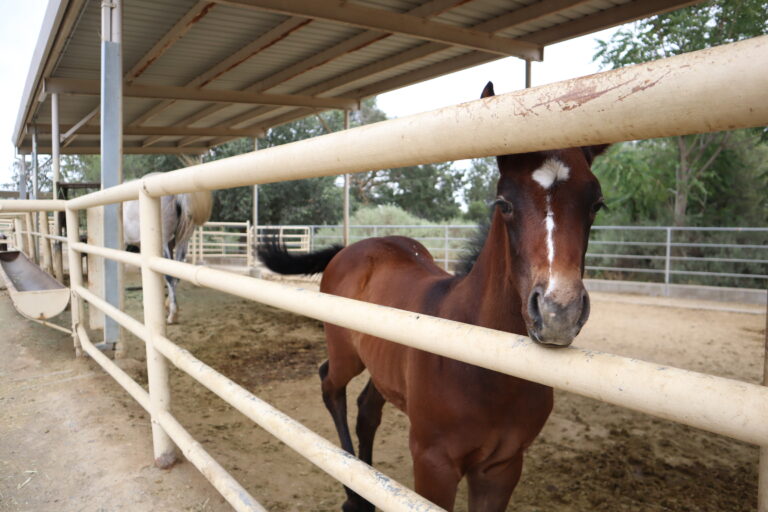
UC Davis Horse Barn to hold 29th annual production sale

The annual Horse Barn sale returns in person this June, with hybrid formatting options available

By ANGELINA ANGELO— campus@theaggie.org

The UC Davis Horse Barn plans to hold their 29th annual production sale on Saturday, June 18. While this event is back in person this year, there are also options for bidders to use an online platform to participate. 

As seen in the official catalog, there are 10 horses up for auction this year. The auction is set to begin at 6 p.m. after a live sale preview and barbeque. Annual online bidding this year will take place through the online service ShowWorks. 

All of the horses up for auction have been trained by Horse Barn interns, under the supervision of Barn Manager Kelli Davis. The mare and foal management internship allows students to train these yearlings to be ready for auction. 

The yearlings are trained in tie and standing for grooming, farrier work, bathing and clipping. They also have been exposed to large crowds and trailers, for instance, by participating in the 2022 Picnic Day, and are trained in basic groundwork exercises. 

“We are excited to present a well-rounded and diverse group of yearlings at this year’s sale,” said Bailey Abi-Nader, a horse barn resident and a fourth-year animal science major. 

This year, according to the sale catalog, there are a total of 12 interns. More information on the different internships, residencies and how to get involved are available on the website

Many of the interns expressed excitement about and pride for this year’s horses. 

“I’m excited to see all of our hard work that we put into these horses to be shown,” said Katie Anoskey, a mare and foal manager and a fourth-year animal science major. 

Keeley Poloni, another mare and foal manager and a second-year animal science major, shared similar sentiments. 

“I’m ecstatic to see how much these horses have grown throughout the past six months of training and where they will go in the future,” Poloni said.

Written by: Angelina Angelo — campus@theaggie.org

There’s room in the world to love both a book and its movie adaptations

Both artforms work together in their own unique ways to convey the intended meaning of the story


By CLARA FISCHER — arts@theaggie.org


There are certain things that are just universally agreed on — the sky is blue, the sun will rise and “Cats” (2020) was a terrible movie. However, a topic that could not be more filled with hot takes even if it tried is the age-old argument over whether a book or its cinematic counterpart is better. 

 One example that comes to mind as having a particularly viciously divided fanbase over this subject is the beloved YA series, “Harry Potter,” penned by its equally divisive author, J.K. Rowling. The first installment in the literary series hit shelves in 1997, almost immediately becoming a classic. After its initial success, the books were elevated from their status of bestselling series to total cultural phenomenon with the inception of their movie adaptations.

Both the books and the movies experienced immense success, and one could even go so far as to say that the “Harry Potter cinematic universe” has become a force of its own, existing independently from the books. However, many die-hard Harry Potter fans (otherwise known as “Potterheads”) maintain the firm stance that the books contain key details and elements that contribute to the Wizarding World in such a way that cinema simply cannot. 

Now, this is probably a good time to confess that I hadn’t been exposed to the Harry Potter series until as recently as last summer, so I may not be considered a true, original fan of Rowling’s work.

 However, the movies were able to pull me in and capture my devotion from the very first viewing — which is more than I can say for the copy of “Harry Potter and the Sorcerer’s Stone” that I picked up in the third grade. I was a huge bookworm (arguably the world’s biggest) and Rowling’s writing just didn’t manage to reach me in the same way that Danielle Radcliffe and the rest of the cinematic cast were able to. 

Though I do concede that film as an art form certainly has its limitations, one of its main appeals is how it brings a magical world to life; the characters are there for you to see, hear and empathize with, which is most likely one of the reasons the films have become such a mainstay in pop culture.

Another subcategory of cinema worth considering in the fiery debate over movies or books is the popular trend of taking the classics (think along the lines of those novels likely to be found in the curriculum of an 11th grade AP English class) and putting them on the big screen. 

Stories by both Jane Austen and Shakespeare have been adapted countless times for the big and small screen — so often, in fact, that there are lists ranking these versions that are in the double digits. Now, I recognize that it would be bold to say that films made in the 21st century are able to outshine their predecessors (though “Clueless” does give Austen’s “Emma” a run for its money), but there is something to be said for the ability of filmmakers to translate stories from days long past into a tale fully palatable to a modern audience. The authors wrote novels with classic themes, but it’s the work of the film’s cast and crew that keeps them pertinent to our time.

Another example of a great book with an equally fantastic movie is the children’s classic “Fantastic Mr. Fox.” Originally created by British author Roald Dahl, the whimsical children’s tale was taken under the wing of iconic filmmaker Wes Anderson and turned into an ingenious stop-motion film. Though not necessarily a success by box office standards, the movie is a beautiful work of art that remains true to the sentimental nature of the original source material. The movie, though undoubtedly made for children, has all the trademarks of a classic Anderson film, and therefore doesn’t limit its reach to a younger audience — something which Dahl’s book might find itself inadvertently doing.

Though I will always have a special place in my heart for books — especially children’s books — as I have grown older, I’ve come to realize that there is no point in pitting books and movies against each other. Both are their own unique, thrilling art forms, and while they may be cut from the same cloth, they don’t seek to compete; rather, they act as perfect complements to each other.


Written by: Clara Fischer — arts@theaggie.org


Why every vegan college student should have canned chickpeas in their cupboard

Plus some college-friendly recipes that anyone can try


By CORALIE LOON — arts@theaggie.org 


The most common rumors surrounding a plant-based (or plant-heavy) diet often break down to a few main points: vegan or vegetarian food is either too expensive, time-consuming or lacking in nutritional value. Of course, any diet can be any of these things, depending on your purchasing and lifestyle habits. But veggie alternatives to meat products don’t have to be expensive or inconvenient.

For college students in particular, affordability and convenience are some of the most important traits of a good diet. As someone who started their college experience as a fairly fresh vegetarian, I’ve often felt simultaneously unsatisfied with the limited on-campus options and too overwhelmed or exhausted to cook a full meal.

That is, until I discovered canned chickpeas. When it came to other types of beans such as pinto, black beans or kidney beans, I viewed them as necessary but not particularly enjoyable. For a non-bean-lover, chickpeas changed the game, tasting more like a nutty, oversized lentil than a bean. 

Chickpeas, also referred to as garbanzo beans, are a high-protein legume that offer many health benefits. As well as containing 14.5 grams of protein per 1 cup serving, they also supply hearty amounts of fiber, manganese, vitamin B9, copper and iron. Having chickpeas in your diet would make it harder for vegan-skeptics to question whether or not you’re getting enough nutrients.

Chickpeas can be purchased either raw or pre-cooked, coming in a canned or boxed form. While cooking your own chickpeas from scratch might sound like a nice, leisurely night to some, it certainly isn’t the most practical way to go, especially if you’re a college student.

Sure, the canning process may slightly reduce the protein content of beans, but the ease and convenience of going the canned way outweighs any slight losses. A 15.5 oz can of chickpeas can be between $1 to $1.50 per can, a bargain compared to meaty alternatives.

Open Nature organic ground beef, for example, is $6.99 for 84 grams of protein, which is about 12 grams of protein per dollar. Safeway’s organic canned chickpeas, on the other hand, cost $1.69 for 24.5 grams of protein, which is about 14.5 grams of protein per dollar. Even for calories, organic chickpeas outpace organic beef with 249 calories per dollar (compared to beef’s 132).

In terms of nutrition and cost, canned chickpeas check every box. They are also deliciously versatile and surprisingly easy to prepare (partially because they come ready to eat). Chickpeas, either whole or mashed, can be used as a replacement for almost any meat product in a recipe.

For those looking for specific recipes, here are a few of my favorites:

Jessica in the Kitchen’s “Curried Chickpea Salad” can be eaten alone or turned into a filling sandwich. 

This Apricot, Almond & Chickpea Tagine from Hello Fresh is a delicious and flavorful dish for those with a bit more time on their hands.

Crispy toasted chickpeas (from Love & Lemons) can add spunk to any salad, wrap or rice bowl, or be eaten on their own as a crunchy snack.

On a cold day, Good Faith Fitness’ Creamy Chickpea Curry is a warm and comforting treat.

For those interested in my favorite dish, a hearty chickpea pasta sauce, keep reading for a personal recipe. 

While there are hundreds of chickpea recipes around the internet to try, one of my favorite things to do is create my own recipes, using chickpeas to alter the dishes I grew up eating or invent new ones. At the same time, as a college student, sometimes I need a simple and reliable recipe that will just do the bare minimum. For both of these reasons, canned chickpeas deserve much more love and appreciation, from veggie-lovers and meat eaters alike.


Coralie’s hearty chickpea pasta sauce

Ingredients:

  • 1 ½ cups marinara sauce
  • 1 15-oz. can of chickpeas
  • ½ tablespoon olive oil
  • 1 teaspoon Italian seasoning
  • large spoonful cream cheese (or vegan alternative)
  • 2 cloves garlic, minced
  • 1 box rotini, fusilli or gemelli pasta
  • salt and pepper to taste
  • chili flakes (optional)


Instructions:

  1. Cook pasta in a medium pot using box instructions. In the meantime, heat the olive oil and minced garlic in a large skillet over medium heat until fragrant.
  2. Drain and rinse chickpeas. Add to skillet along with Italian seasoning, chili flakes or salt and pepper. Cook chickpeas over medium-high heat until lightly browned.
  3. Turn off heat on skillet and mash chickpeas with a fork until mostly crushed. Add marinara sauce and heat again.
  4. Once sauce is hot, add large spoonful of cream cheese and stir until melted. Drain pasta once done and return to pot. Mix sauce with pasta.
  5. Serve in bowls and top with cheese or nutritional yeast.


Written by: Coralie Loon — arts@theaggie.org


Yolo County Office of Education accepts James B. McClatchy Foundation Grant

The $100,000 grant will go toward civic engagement in Yolo County schools


By SOFIA BIREN — city@theaggie.org


On April 28, Yolo County announced that its Office of Education had accepted a $100,000 grant from the James B. McClatchy Foundation to build civic engagement among its students. This grant was received in conjunction with the Yolo County Youth Civic Initiative (YCYCI), which helps foster student engagement in the local community. 

The James B. McClatchy Foundation was founded in 1994 by Susan and James B. McClatchy to help support English learner students and foster the First Amendment in the Central Valley. However, it eventually grew to include an expansion of this First Amendment ambition to support local journalism and civic engagement, especially in underserved communities. It was originally called the Central Valley Foundation, but after the passing of James B. McClatchy, the name was changed in 2019. 

The Yolo County Office of Education will use the money toward youth engagement initiatives within the county. In a press release, the county said that the “YCYCI will utilize the new cycle of funding to create and build curriculum modules for 12th grade government courses in Yolo County, to be focused on interacting with local government and developing media literacy.” 

The vision of the YCYCI aligns directly with the vision of the James B. McClatchy Foundation to foster civic engagement in communities. The Yolo County Office of Education was one of 25 recipients of the grant and serves public schools within the county. According to their website, the YCYCI since its inception in 2017 aimed to “increase civic engagement by building teacher and student awareness and understanding, connecting youth involvement in the civic process with the end result of creating, promoting, and enhancing school and community improvement of efforts.” 

In 2020, the YCYCI was awarded a LIFT Grant, partly funded by the James B. McClatchy Foundation to raise awareness about the First Amendment. Additionally, the YCYCI is working with the History Project at UC Davis to help teachers engage with their students. 

In a press release, Garth Lewis, the Yolo County superintendent of schools, said that Yolo County will always value civic education. 

“In Yolo County, we continue to prioritize the importance of civic participation from youth,” Lewis said. “We are grateful to the James B. McClatchy Foundation for their continued support which allows us to connect local youth to the civic process in our schools.”

In 2005, James B. McClatchy said, “As time goes by, I hope this organization will continue to fight to protect the dreams and hopes of ordinary people.” The YCYCI has done that since its inception in 2017 with the help of funds provided from the James B. McClatchy Foundation. Yolo County students, with the help of the generosity of the foundation, have attended the Youth Empowerment Summit, have been acknowledged by the Latino Policy Bootcamp and have also engaged with the community regarding voting. 

Grants are essential to many school districts beyond Yolo County. Lucy Soriano, an LAUSD teacher, said that projects and initiatives like these keep students engaged. 

“Grants are really appreciated by teachers because it allows teachers to expand the classroom in a more engaging way,” Soriano said. “Grants like these are especially helpful for the student because it gives them the resources they need to develop important skills they wouldn’t have developed otherwise.” 

Written by: Sofia Biren — city@theaggie.org


May designated as Mental Health Awareness Month in Yolo County

The community encourages talking about mental health to raise awareness and increase access to resources


By SHRADDHA JHINGAN city@theaggie.org


In a press release published on May 16, Yolo County proclaimed the month of May as Mental Health Awareness Month. According to the press release, the Yolo County Board of Supervisors met on May 24 to pass a resolution that would designate May 2022 as Mental Health Awareness Month.

“Promoting awareness, recognition, and intervention of mental illness proves critical,” the press release reads. “To meet the mental health needs in our community, the Yolo County Health & Human Services Agency (HHSA) has taken a collaborative approach and prioritized program development to reach underserved populations.”

John Fout, the public information officer for Yolo County, explained that Yolo County has proclaimed May as Mental Health Awareness Month in the past. By doing so, it helps to raise awareness of mental health.

“So, I think we’ve had a tradition of proclaiming May as Mental Health Awareness Month,” Fout said. “Our Board of Supervisors and our Health and Human Service Agencies have always had a very large commitment to mental health and [are] trying to take action about mental health.”

Fout added that because there is often not enough awareness around mental health, this results in there being a lack of, or fewer mental health resources. 

“So one of the problems with mental health is that often, there’s not enough awareness or recognition of the problem,” Fout said. “And that means that a lot of times, there’s not the intervention when it actually needs to be necessary. So it’s really important to make sure that we step up, we talk about it, and we get people to realize what’s going on, and that action does need to be taken.”

According to the press release, Yolo County was recognized as a Stepping Up Innovator County by the National Association of Counties for its “expertise in using data to drive decisions and better outcomes on the number of incarcerated people who have serious mental illnesses.” As a result of this, almost 6,000 individuals who are booked into jail “are screened for mental illnesses” annually.

The data used has been integrated across various systems such as behavioral health, program design, resource development and evaluation to help decrease the baseline rate of individuals who enter jail with behavioral health needs. According to the press release, this number is currently 50%. More data can be found in the press release.

“Mental Health Awareness Month gives us an opportunity to raise awareness of those living in our community with mental health and behavioral health symptoms and to help reduce the stigma that so many experience that can impede access to care,” said Karleen Jakowski, the interim health director for Yolo County, in the press release. “Collaboration is the cornerstone to improving access to mental health services throughout our community.”

Jakowski added that through collaboration, this will help to increase the number of people who get access to mental health services, as well as the quality of these services. 

“By working together, we can align our efforts, maximize our impact and realize a shared vision of ensuring that every resident of Yolo County can get the appropriate services and quality of care they need to support their resiliency, health and wellness,” Jakowski said in the press release. 

The press release also acknowledged that the COVID-19 pandemic has “exacerbated feelings of isolation and stress,” while also increasing public awareness regarding mental health. To celebrate the month of May as Mental Health Month HHSA staff wore the color green “and gathered for a moment of recognition”.

According to the press release, in order to create an environment in which everybody is able to safely access mental health services, people can show compassion because they may not know what someone else is going through. Furthermore they can take part in awareness opportunities during the month or even create their own awareness opportunities to teach and foster awareness — even by simply asking if other people are feeling okay. More information can be found on HHSA’s website.


Written by: Shraddha Jhingan — city@theaggie.org


The Menstrual Equity for All Act gives students access to free menstrual products on campus

The Pantry also supplies menstrual products to students, faculty and staff


By KRISTIN TRENT — campus@theaggie.org


Beginning in October 2021, California Governor Gavin Newsom signed AB-367, also known as the Menstrual Equity for All Act of 2021. The bill specifically requires that sixth through 12th grade public schools in California with 40% of the student population at or below the poverty line supply half of all bathrooms with menstrual products, including at least one men’s bathroom per school. Furthermore, the bill encourages the UC Regents, private universities, colleges and institutions of higher learning to stock an adequate supply of free menstrual products at a minimum of one central location.

UC Davis has followed these guidelines, installing dispensers with pads and tampons during fall quarter 2021. The dispensers are located in 23 campus restrooms including those at Wellman Hall, the Memorial Union, the CoHo, Bainer Hall and Giedt Hall. 

Montserrat Morales, a fourth-year psychology major, said she remembers the first time she saw the dispensers in the bathrooms. Morales felt that having access to menstrual products on campus made her feel more protected if she forgot her own at home. 

“You have to rely on other girls [for menstrual supplies] sometimes, but with the dispensers I know I’m covered,” Morales said.

Because the dispensers are not campus-wide, Morales suggested having QR codes in bathroom stalls that list other restrooms with menstrual products available.

Students, faculty and staff can also access free menstrual products at The Pantry. 

According to Operations Manager Ian Lawrence, The Pantry goes through 296 pads everyday. Data collected in the fall shows that The Pantry supplied 22,200 pads over the course of two and a half months. 

As a result of the demand for menstrual products, Senate Bill #77 was passed on May 4, 2022, allocating an additional $3,767.52 from Senate reserves to purchase more menstrual products. 

The bill cites the impact period poverty — the lack of access to menstrual products, hygiene facilities, waste management and education — can have on students’ educational success. With as many as 1 in 10 college students lacking the funds to afford menstrual products monthly, period poverty is prevalent on college campuses. 

Furthermore, as many as 1 in 4 teens have missed class due to period poverty, so students with limited access to menstruation supplies may also experience decreased academic performance. Insubstantial resources can lead to poor mental health and leave menstruators resorting to unhygienic alternatives. 

According to Viet-Long Nguyen, the external affairs manager, The Pantry previously relied on cash donations, and passing the Senate bill will allow them to more reliably supply students, faculty and staff with these necessities.

All students, faculty and staff are eligible to get menstrual products regardless of their income or perceived need at The Pantry, according to Nguyen. Students or employees can show their respective IDs to access The Pantry’s resources. 


Written by: Kristin Trent — campus@theaggie.org


UC Davis is not leading with equity or science

By ADAM J. MOORE — ajmoo@ucdavis.edu


“Tested Positive for COVID” — I received yet another email from a student, informing me of their diagnosis and need for lecture and exam accommodations in the class I TA, the seventh such email in three days. The UC Davis campus, much like the rest of the U.S., is experiencing a massive surge in COVID-19 cases. However, the UC Davis administration has given no indication that more safety measures will be put in place.

Despite the White House sharing its prediction of 100 million new COVID-19 cases this fall, with hundreds of thousands of deaths, the UC Davis administration decided to remove the campus testing and symptom survey requirement for the summer and fall 2022 terms. This comes after rescinding the indoor mask mandate, one of our last, easiest and most equitable protective measures. Additionally, the Healthy Davis Together partnership with the city of Davis will be dissolved. This is a recipe for disease and death within and beyond campus as UC Davis does not exist in a bubble; the virus does not care what’s on-campus and what’s off. The broader Yolo and Sacramento counties are classified as highly vulnerable communities. That is, communities with economic, social and physical conditions that may make it hard to respond to and recover from a COVID-19 outbreak.

Allowing the virus to spread uninhibited on-campus puts off-campus communities at risk. The university has a responsibility to protect the surrounding communities as much as its own. Right now, UC Davis isn’t protecting either.

In the wake of the Delta wave last fall, UC Davis no longer made remote options for classes required, which had been in place the previous year. Without a guaranteed remote option, high-risk members of the UC Davis community like me have been forced to make an impossible decision everyday: expose ourselves to a debilitating and deadly virus or forgo our education and income. Those who live with high-risk people are forced to decide between keeping their roommates and loved ones safe, or attending a lecture that can easily be offered remotely.

UC Davis offers accommodations, but it involves a lengthy bureaucratic process that disabled students have identified as inaccessible. The UC-wide disability advocacy group, UC Access Now, delivered a Demandifesto to the UC system in 2020, outlining in detail how universities can provide an accessible and equitable environment for disabled people. As of June 2022, the university has not made any moves to adopt the recommendations and make the necessary accommodations.

New data suggests that 1 out of every 5 adults who get COVID-19 will experience a range of debilitating symptoms that can last for months to years, a syndrome known as “long COVID.” The majority of patients with long COVID-19 symptoms would have initially been classified as having a “mild” case. That is, when they first got sick, they didn’t need to be hospitalized. Early in the pandemic, it was believed that vaccination could at least prevent long COVID-19. To our community’s credit, UCD does have a high vaccination rate; however, new data indicates that vaccination may not provide substantial protection from long COVID-19. UCD is putting tens of thousands of people at risk for a life-changing condition by implementing policies that disregard the seriousness of this virus.

UC Davis should immediately reinstate an indoor mask mandate for the remainder of the school year, graduation ceremonies and anticipate masking for the fall term given the haunting prediction from the White House. The university needs to plan for all in-person campus activities (class, events, seminars, etc.) to be offered remotely as well to allow everyone the option to stay safe. Finally, the university must reverse course on its plan to drop the testing requirement. Regular testing is how we know the current transmission levels and what public health protection measures are necessary.

UC Davis must act with equity and science in mind. Over the last two years, the university has demonstrated that it has the knowledge and resources to keep its communities safe. Not doing these simple measures is an active choice to risk lives for the sake of “normalcy” that very few have the privilege to experience.


Written by: Adam J. Moore — ajmoo@ucdavis.edu


Adam is an infectious disease epidemiologist and Ph.D. student at UC Davis studying viruses and public health. He has research experience with a variety of infectious diseases, including the virus that causes COVID-19.


Disclaimer: The views and opinions expressed by individual columnists belong to the columnists alone and do not necessarily indicate the views and opinions held by The California Aggie.


Gardening improves mental, physical health during the pandemic

UC Davis conducted a survey that suggests increasing the number of green spaces for urban farming can be helpful


By MONICA MANMADKAR — science@theaggie.org


Gardening has always been a refuge for people to rely on in moments of crisis, and the COVID-19 pandemic was not dissimilar. In a global survey conducted by UC Davis and UC Agriculture and Natural Resources (UC ANR), researchers collected stories from old and new gardeners who looked at the green spaces around them to find comfort from stress and escape the barrage of negative news from the media. 

In uncertain times dominated by lockdowns and deaths, gardening and plants have provided certainty and a positive daily routine for many. According to the survey, people who never gardened before tried to give it a shot and enjoyed it. Experienced gardeners felt that their lifetime passion offered a reliable way out the pandemic. 

The survey found that gardeners valued many things about their gardens. For many, gardening was therapeutic, offering a reprieve from the stress of the pandemic. Other gardeners observed that their gardens had become a place where they could safely socialize. 

“Sometimes family members who hadn’t been interested in gardening before, now joined in caring for the garden,” said Lucy Diekmann, an urban agriculture and food systems advisor with UC ANR who helped write the report, via email. “For others, gardens became a place to engage with neighbors, and food production was another common theme, with gardeners interested in growing more food for themselves and to share with their communities.”

Diekmann explained how the members of their research team were curious about the apparent boom in gardening in the very early months of the pandemic. 

“We pulled together quickly to develop a survey that we hoped would capture a broad snapshot of gardeners’ experiences in the pandemic and give us a better understanding of the pandemic gardening phenomenon,” Diekmann said. “As researchers, each of us had studied different aspects of gardening before — its impacts on health, food security, social connection — and we were also curious to see how these aspects of gardening played out in the context of a global pandemic.” 

Alessandro Ossola, an assistant professor of urban plant sciences in the Department of Plant Science at UC Davis, explained the main three results from the social survey. First, most respondents were middle-aged females from an educated background. However, many young people tried to garden for their first time, suggesting that urban agriculture still has the potential to entice younger generations. 

“Unfortunately, people from more disadvantaged backgrounds did not reply to the survey, possibly because they did not engage with gardening or because [they] were worried about how to find jobs during layoffs,” Ossola said via email.  

Second, the researchers found that the most important reasons for gardening were to better connect with nature and escape from daily stress. The garden became “a refuge, where even birds felt louder,” as put by one of the respondents. 

Connection to nature, relaxation and stress relief were by far the biggest reasons gardeners cited. Some of them did this alone in their backyards and balconies. Others saw gardening as an opportunity to socialize and connect safely in community and allotment gardens. In several instances, people reported that they convinced family members and friends to try gardening in a sort of collective movement and shared positive experiences to cope with the COVID uncertainties. 

Third, a few gardeners were moved by altruistic reasons. As stated by a home gardener from Stockton, CA, “since I have five acres, I realized that I could supply some food needs for my community, if there was a great need for it. I never really thought about doing that before.” Ossola detailed how the pandemic changed people often in positive ways and gardening enabled that.

“Our findings reinforce recent research evidence on the incredible benefits that urban nature and greenspaces can have on individuals and communities; personal well-being, public health benefits and environmental awareness,” Ossola said.

Given the benefits of gardening for health and wellbeing, the researchers hope that this study will encourage local governments, nonprofit organizations and others to improve access to gardens by offering space and support for gardening. Access to green space broadly speaking is often unequal, so using an equity lens to expand gardening opportunities is especially important.

“As the end of COVID is hopefully approaching, it [is] still difficult to predict what will happen to gardening once people get back to their busy lives,” Ossola said. 


Written by: Monica Manmadkar — science@theaggie.org


In loving memory

By PRISCILA JIMÉNEZ CORRALES –– pjimenez@ucdavis.edu


Drawn by: Priscila Jiménez Corrales –– pjimenez@ucdavis.edu 


An endless bounty of opportunities

The Aggie showed me how expansive Davis really is

By MAYA SHYDLOWSKI-BESMER 

As anyone who has attended UC Davis knows, there’s a magical charm about this bubble-like town. For my family and friends from home, Davis is a stop in for food on the way to Tahoe or a destination for a middle school soccer tournament. It amazes me to think about the Davis you would see from the outside while driving up I-80 and all the Davis you would miss. 

Davis is a town of passionate, hard-working people who want to change the world. I saw that the second I stepped into the office at The Aggie in the fall of my senior year. 

I’m regretful that it took me so long to find the little house on A Street, but I am all the happier to have found it at all. More than anything, working at The Aggie has given me the opportunity (or excuse) to talk to amazing people who are living inspirational lives or doing life-changing work — from Ukrainian refugees here in Davis to the geniuses behind the campus sheep mowers (shoutout to Haven Kiers). I tell them I’m a student reporter for The Aggie, and no one questions why I want to know so much about their lives. It’s great.

I’m regretful that it took me so long to find the little house on A Street, but I am all the happier to have found it at all.”

I’m so honored to be able to add The Aggie to the list of organizations I’ve been involved with on campus. Davis filled up my resume just as much as it filled up my heart. I am grateful to the Arboretum, the Student Farm and my lab in the plant sciences department for the experiences that have shown me the beauty of Davis and introduced me to so many incredible people.

Nonetheless, I feel as if I did not get to spend enough time in this magical town — I transferred in as a sophomore and proceeded to spend half of my college career online. I’ve spent considerable time writing articles for the features desk this year, with the rest of my time trying my hand (or legs) at running with the cross country and track club. Although I feel like I made the most of my disrupted time at Davis, writing for The Aggie only showed me how much more Davis has to offer that I didn’t even begin to dip my toes into. 

I love the reactions people have when they hear that I write for The Aggie and am a plant sciences major. But that says more about how welcoming and dynamic The Aggie is than how strange my combination is. I was given the opportunity to use my voice (and my words) to grow as a person and as a writer. I’m sad to leave but excited to bring everything I have gained from this experience into the *real world* (eek!). 

Written by: Maya Shydlowski-Besmer

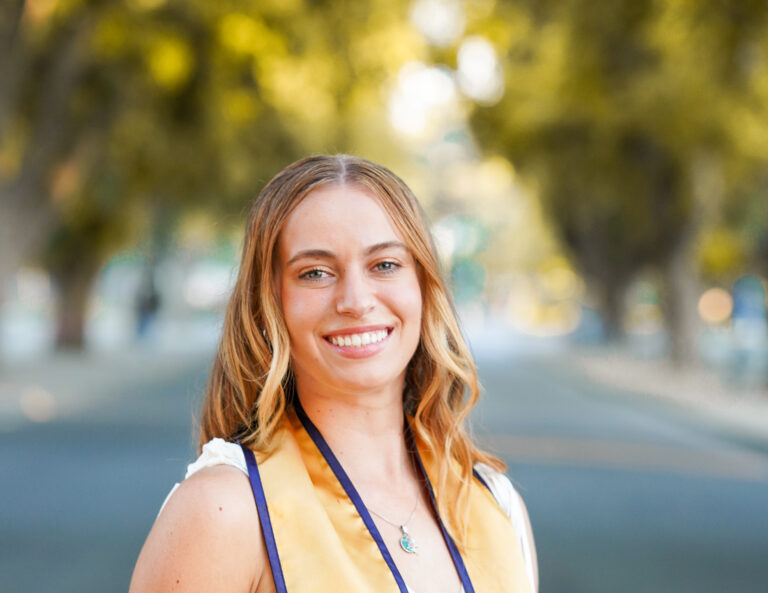
Maya Shydlowski is a staff writer for the features desk, which she has covered since fall of 2021 when she joined The Aggie. She is graduating with a B.S. in plant sciences and a minor in professional writing.

Discovering myself

In the wise words of Kacey Musgraves, “Everything is alright now, ‘cause the sky has finally opened”

By JOELLE TAHTA 

I grew up as a somewhat domesticated version of a granola kid, never anticipating my first 18 years would lead me to a town similar to my upbringing. Fortunate to have spent much of it exploring the outdoors of my home state of Montana, my granola youth was juxtaposed with my interests in acrobatics and dance, studio art, graphic design and modern architecture. I felt like any other average white girl then. 

However, the past four years have helped me see myself for who I truly am in all my unique glory. Davis showed me how different I actually was, and why I should appreciate all that I am — the good, the bad and the ugly. Who knew Davis would be the perfect blend of just enough yee yee, hippie bulls*** and modern tech to bring it out of me.

Discovering my true self came with some of my highest highs and lowest lows. I’ve lost touch with a lot of close friends from my first years. I’ve found that my anxiety and depression can get so much worse than I thought. I have explored new states and beautiful outdoor spaces. I’ve felt the worst loneliness in my entire life, poured my entire self into my schoolwork and extracurriculars and found those who truly appreciate me through doing what I love and trusting myself. I have all those I’ve interacted with to thank for my experience, for without them I may have remained lost. Even though I am leaving California knowing it wasn’t all I made it up to be (sorry y’all), the individuals I have spoken to over these years have given me all I need to succeed. I now know my worth, and I will never settle for anything less. 

I am Joëlle. I am a hard-working, creative, goofy, efficient, outdoorsy, loyal, energetic, independent, honest and tenacious human being. Being here through California’s worst wildfires, a shooting, a tornado (warning), a bear on campus, a machete man — and not to mention a global pandemic — has taught me to, above all else, rely on only myself to get through each day. I am my biggest supporter. (Okay you’re right, maybe my parents beat me to that one.)

Even though it wasn’t an easy ride, I have those who have stuck by my side through thick and thin to dedicate my experience to.

To my high school besties — you have stayed alongside me during my greatest and lowest moments. Annie, Kate, Maeve, Molly, Gabri, I am so beyond proud of y’all, and you have no idea how much you have helped me through university. Coming home to you all (luckily more times than expected with the pandemic) will forever be one of my favorite feelings. Goodbyes were frequent and difficult, and now as we all move on to the next, please know I will be there for each of you every day as you were for me. I love you so much.

Thad — you saved me when I needed you the most (even though I was the one who reached out to you). Long distance has been one of the hardest things I’ve emotionally gone through, but I have kept peace in knowing you are my best friend, and we have finally gotten through it together. I love you so much and I am so proud of you (NAU Forestry Class of ‘22!).

“recognizing your roots will help you discover your true, genuine and unique self.”

To my parents — I would not still be here if it weren’t for you. You know when I am hurting before I even realize it myself. You have encouraged me to continue challenging myself, try new things, embrace the unexpected and advocate for what I believe in. I am so lucky to have you. I love you.

Mom — even though you call me asking me to do design work for you, expecting my classes to be going well and telling me to do things I probably should but won’t (like scheduling a dentist appointment, oops), you have given me advice that has gotten me through everything. You have supported me every step of the way, even when you didn’t want to. You make me laugh when I’m low, and you know some chocolate or a good cocktail with you is always the perfect pick-me-up. You have done so much for me, and I can’t thank you enough for all of it.

Dad — you have pushed me to continue being my best. Even though you don’t say it, I have always anticipated you had high expectations for me, and I hope I have met them. I have never had anyone else tell me how proud they are of me, and it means so much to me when you remind me that you’re always there for me. Even though I know I should have called you more, I knew you were at home cheering me on each and every day. Even though you know I probably wouldn’t because my work ethic is too much like your own, I might have dropped out if it weren’t for you helping and encouraging me through each leg of school.

Stef — somehow you always see right through me. You probably could have predicted the way my relationships with everyone here panned out before I had even seen it coming. You have always been one of my biggest supporters no matter what, and you always prioritize my happiness and comfort. I really appreciate all you do for me, especially keeping Dad sane back at home. I know you, Maya and Koda will always be there to lift me up when I need it. 

Special big thank you to Claire and Stephen (Mom and Dad) for funding this roller coaster ride I’ve been on. I hope I can make it up to you one day.

Lastly, to The Aggie — one of the only constants in my university experience. Not only did you provide me with some of the easiest, yet most stressful work, but you have given me something to look forward to each week. Without a doubt, layout with Anjini, Margo and Janice every Tuesday (JJAM!) had me smiling by the end of it, no matter how I was feeling that day. It has given me an escape from the rest of the stressors in my life, and a community I will value forever. Even though my team and I might be the most overlooked desk (oop), we wouldn’t be able to publish each week without all my wonderful layout artists and I have all of them from over the last two years to thank! Chloe, Sophia, Gennifer, Emily, Shraesht, Abby, Ariana, Allison, Jolene, Cassidy and especially my Assistant Layout Director Janice. Thanks for dealing with my perfectionism and always implementing my edits. Y’all rock. I love you, The Aggie. Despite my lows, you were always a positive in my life and I’ll miss our crazy shenanigans. Wherever we all end up, we will always have this community and the good times we had on A St. (and Zoom! Especially sitting on Stargazer’s face).

I leave you with a message to my 18-year-old self. You too, have these qualities within you, whether you know it or not. I know you can get through this, even if you feel like you can’t. Your hardest decisions will be the ones you make for the betterment of yourself, but if you can put yourself first, you will ultimately have no regrets. Embrace and love yourself (and your true supporters) because you are great, and you are capable of so much more than you think you are. You will always be a Montana girl at heart, and recognizing your roots will help you discover your true, genuine and unique self. (This is probably only applicable to myself but you get me.)

If you know me well you’ll know I’m not usually able to put such a positive spin on an experience like I’ve had, but I guess that’s just a part of growing up and discovering yourself.

Written by: Joelle Tahta

Joelle Tahta is The California Aggie’s layout director. She joined The Aggie in winter 2020 as a graphic designer. In fall 2020, she took on the role of layout director, which she has been serving in since. She is graduating with honors with a B.A. in design with an emphasis in visual and graphic design and a minor in managerial economics.

My favorite college moments

“Your best camera is the one on you”

– By BENJAMIN CHENG

In the 1,344 days since my first day of school, so many life-altering events have collectively formed my college experience. Since starting, I’ve coughed my way through wildfire smoke, I’ve fought my way through hordes of ruthless turkeys, I’ve hidden from the rain — and a machete man and two wild bears — I’ve sought shelter from an uncaged tornado, I’ve evaded the tabling efforts of clubs at the MU, I’ve cried my way through a Chem 2A midterm and a Chem 2B midterm and ran out of tears for a Chem 2C midterm, I’ve escaped freshmen riding bicycles in the roundabouts, I’ve ruined my 20/20 vision from long hours of Zoom meetings, I’ve been injected with vaccines, I’ve voted for the first time, I’ve driven a double decker bus, I’ve broken a double decker bus (sorry Jeff Flynn), I’ve posted 216 photos of sunsets, sports, landscapes, drone work, musical artists and photography on my Instagram @ben.cheng, I’ve pet Cheeto, I’ve voted for a cow to end Gunrock’s reign as mascot…  I’ve, I’ve, I’ve made so many lifelong memories on this campus, which I will cherish.

As the photo director for The California Aggie, one thing that I’ve learned from my predecessor Justin Han is that your best camera is the one on you. It is what allows you to document your memory and capture what a million words can’t describe, so I want to share some of my favorite and most cherished memories I’ve made throughout my college experience. 

I’ve made so many lifelong memories on this campus, which I will cherish”

Captions:

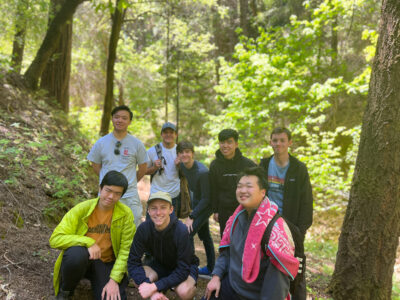
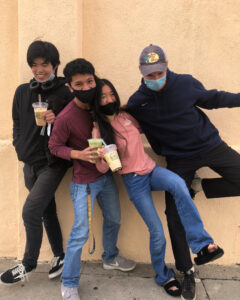
  1.  My friends Neil, Job, John, Judah, Jack, Nathan and Alcuin.
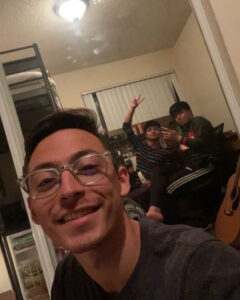
  2. My friends Jerome and Ethan hanging out during the pandemic #snip (inside joke). 
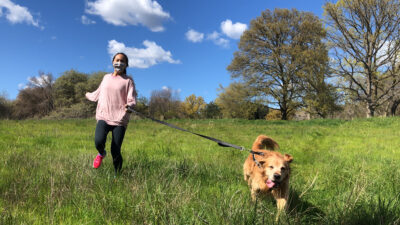
  3. I let my dog-loving friend Lea borrow my dog and let them run around in the Arboretum. 
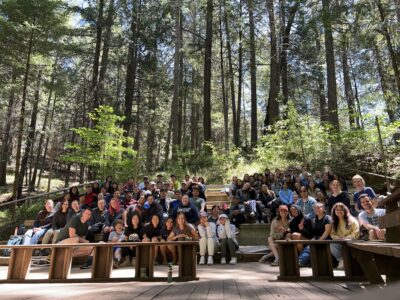
  4. A retreat I went on with Davis Christian Fellowship in 2022.
  5. My favorite photo I took of a sunset in Palos Verdes while attending Zoom university. 
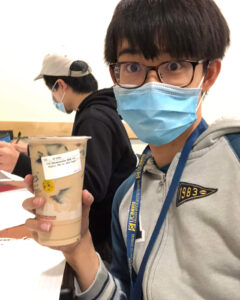
  6. I blame Jonathan for my boba addiction.
  7.  My favorite drone photo I took in Davis.
  8. A photo I took with my drone coming back to Davis from LA after graduating from Zoom university and being promoted to in-person classes.
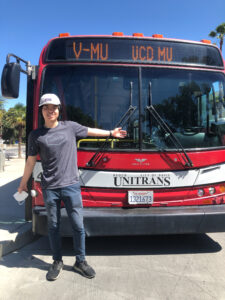
  9. I got licensed to drive a bus!
  10. Hanging out with my friends Megan, Chris and Jerome for the last time.
  11. My favorite photo I took of the Golden Gate Bridge while on a day trip. 
  12. During a football game, a dense fog descended over the stadium.
  13. Image of the tornado that touched down in Davis, also my first photo featured in The Aggie. 
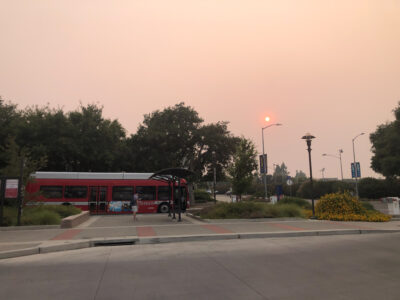
  14. One of the wildfire days, during which smoke consumed the skies and our lungs.
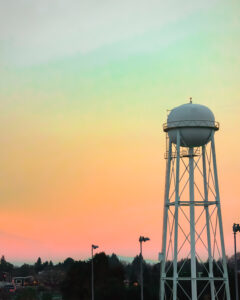
  15. One of my favorite Davis sunsets from the Hutch parking garage.
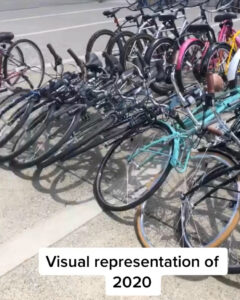
  16. A friend and I were distracted while walking and caused all of the bikes at the Bike Barn to fall over like dominoes.
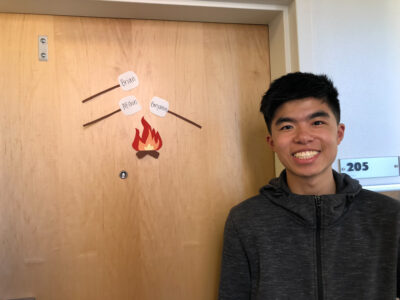
  17. My freshman dorm, Sequoia 205, in Tercero.
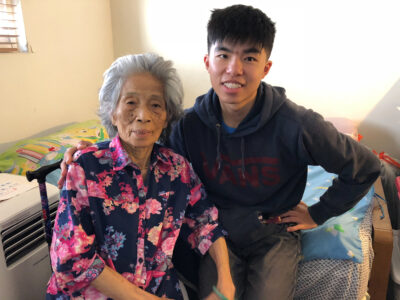
  18. I say goodbye to my grandma the day I leave for UC Davis, not knowing that it would be the last time I would get to see her before her passing. 
  19. These are the individuals who grind each week to bring you the news occurring at UC Davis. They write and lead with passion and care about the UC Davis community. They investigate, they advocate, they laugh, they cry, they love what they do with a burning passion.  
  20. A goofy llama.

I thank The Aggie for being my family for the last few years, Justin Han for mentoring me in my photojournalism career, Kaelyn for being a role model, Sierra Jimenez for helping me hold down the fort when it was just us on the new media team, Anjini and Margo for listening to my complaints and Joelle for being patient with my recurring late photo submissions. 

Written by: Benjamin Cheng

Benjamin Cheng is The California Aggie’s current photo director. He joined The Aggie in fall of 2019 as a photographer. In summer 2020, he took on the position of social media manager, and he became the photo director in June 2021. He is graduating with a Bachelor of Science in managerial economics with an emphasis in business economics and minors in statistics, technological management and professional writing. 

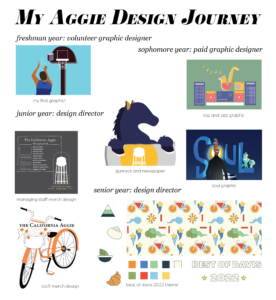
My Aggie design journey

Graphic by Katherine Franks.

– By Katherine Franks

From childhood bookworm to UC Davis English alumna

Straying from tradition and paving a new path for myself 

By JELENA LAPUZ

When I first began my undergraduate career at UC Davis as an English major, I felt extremely apprehensive about the future that lay before me. As the eldest daughter in an immigrant family, I did something rather unexpected: I strayed from a more traditional career path and decided to pursue a degree in the arts. My family and friends had initially expected me to pursue something in business or medicine, but I had been an avid reader and writer since childhood and could not ignore my love for stories. I knew I wanted to pursue a career related to writing, but at the time, I did not know exactly what that would entail. 

Although my family and friends came to support my decision, I started my undergraduate career feeling a bit insecure. Being the only English major in my graduating class at high school, I became accustomed to hearing questions like “What can you do with an English degree?” and “Do you want to be a teacher?” There was this notion — whether it was directly or indirectly stated — that pursuing a degree in English guaranteed limited career outcomes and poor financial prospects.

There is a common misconception that people who major in the arts do so because they are not intelligent enough to pursue something in STEM, but my decision to pursue an English degree had less to do with my (perceived) intelligence level and more to do with my passion for writing.”

Oftentimes, I felt like others looked down on me for pursuing a degree in the humanities. There is a common misconception that people who major in the arts do so because they are not intelligent enough to pursue something in STEM, but my decision to pursue an English degree had less to do with my (perceived) intelligence level and more to do with my passion for writing. 

Although I initially struggled with getting involved in writing-related endeavors on campus, the COVID-19 pandemic allowed me more time to write. In April 2020, I became a staff writer for The California Aggie. I wrote weekly articles for the city news desk for a little over a year, during which time I was able to interview and build supportive relationships with various industry professionals and Davis and Sacramento area residents of diverse backgrounds. By making a continuous effort to understand the people I interviewed, I was able to gain a better understanding of the needs of our community and write more well-rounded articles as a result.

Throughout the pandemic, I had the opportunity to explore different types of writing. My position as staff writer for The Aggie allowed me to explore journalistic writing while I explored other genres of writing on the side. My blog post “Exploring and Expressing Creativity in Animal Crossing: New Horizons” was selected to be featured on the Mondavi Center website. In addition, some of my poems were featured in Third Iris Zine

In June 2021, I became the outreach director for The California Aggie, and I stopped writing articles in order to focus on more communications-related writing. Although I realized towards the end of college that I wanted to pursue other styles of writing instead of journalism, that same love for stories that made me pursue an English degree never changed.

Written by: Jelena Lapuz 

Jelena Lapuz joined The Aggie in spring 2020 as a staff writer on the city news desk and later became the first outreach director for The Aggie in June 2021. She is graduating with a bachelor’s degree in English with a creative writing emphasis and a minor in professional writing.