58.6 F
Davis

Davis, California

Monday, December 22, 2025
Home Blog Page 202

Taking the scenic route

Thirteen years later than expected, but right on time

By KATHLEEN QUINN

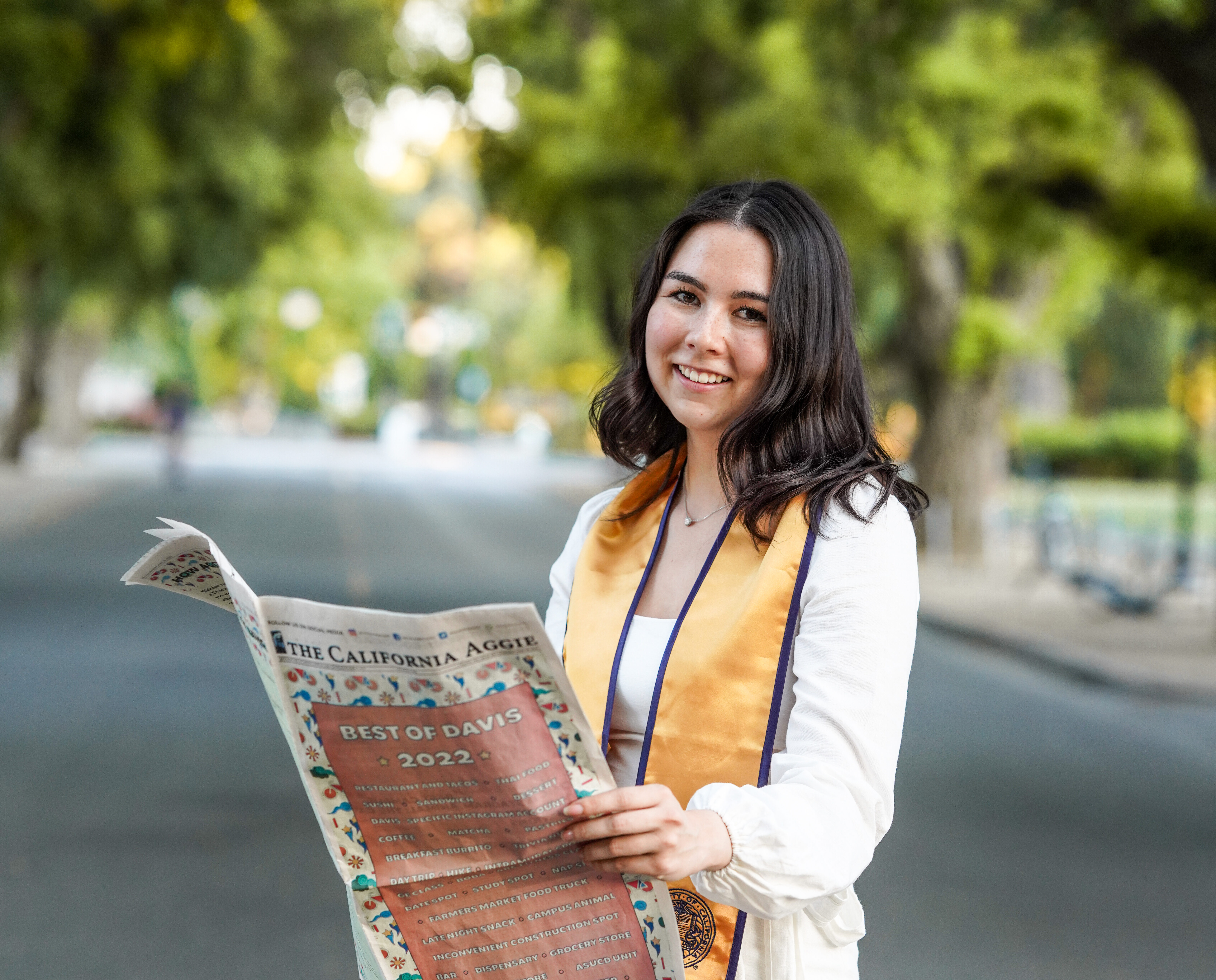
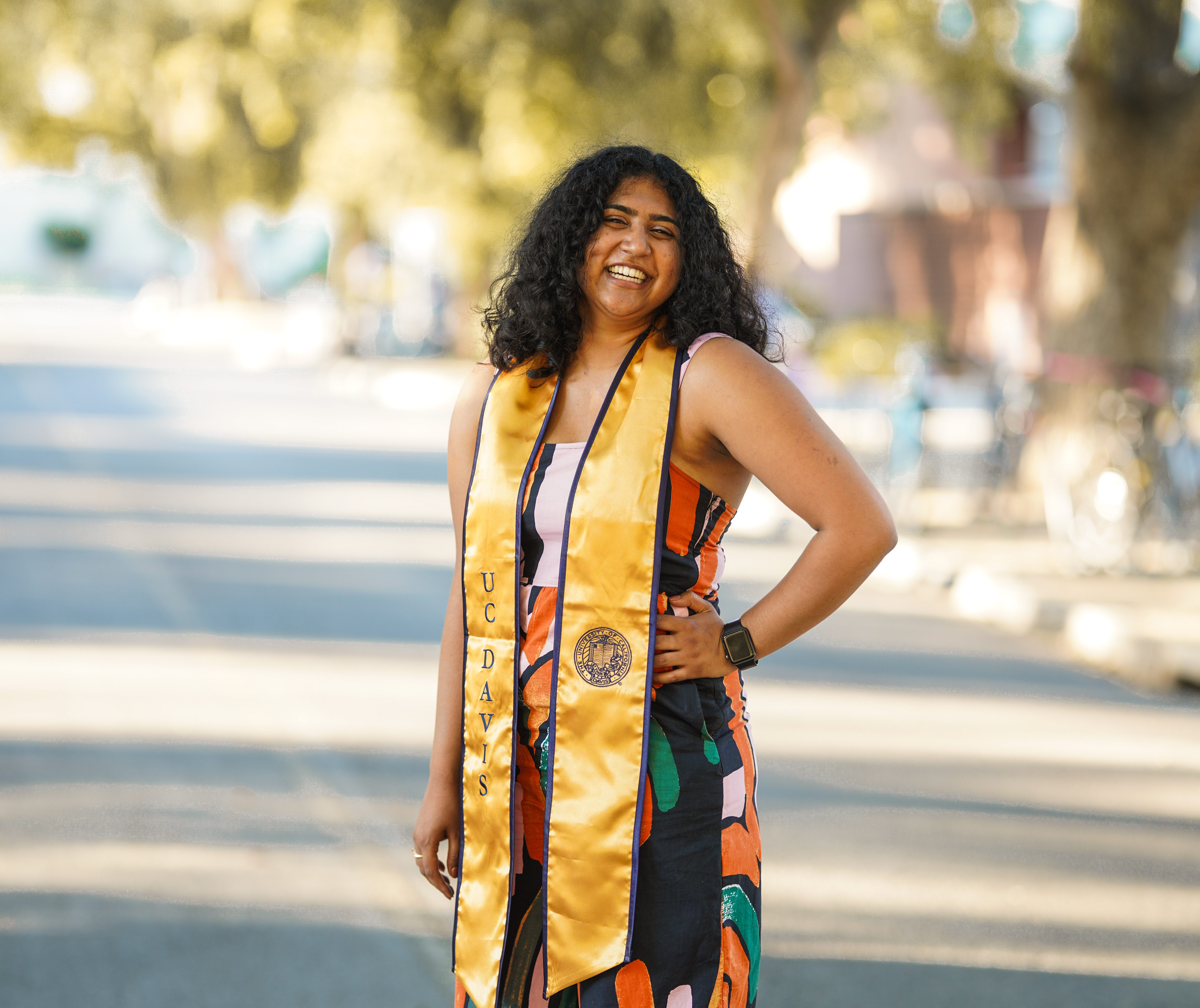
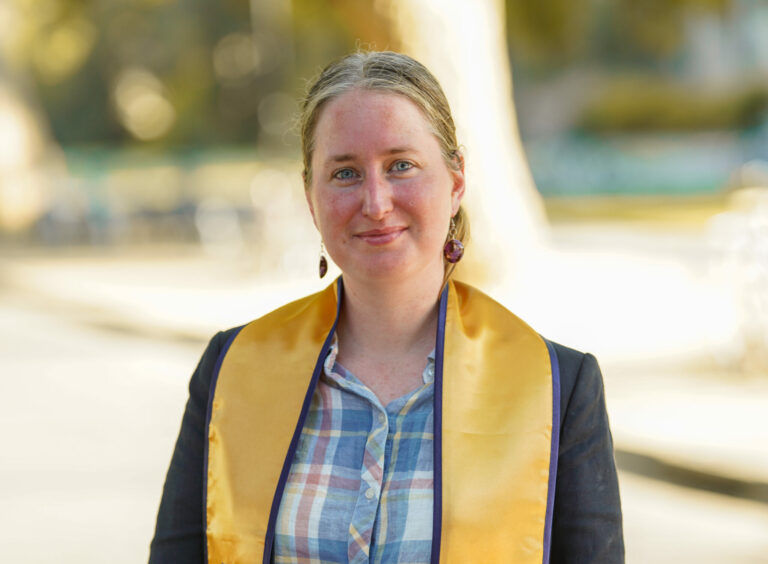
As I walk across the stage to receive my undergraduate degree on June 12, I will be 34 years old. When I passed the California High School Proficiency Exam at 16, I thought I would be graduating from college a couple of years early, not 13 years late. Life has a funny way of derailing your deeply-held expectations.

Though it took a while to return to school in full force, I managed to take a class at community college here and there, even while working full-time. I slowly accumulated general education requirements until I could take the time off to pursue my undergraduate degree as the main focus.

Before arriving at UC Davis, I worked in a role that was rewarding but all-consuming. As a project coordinator for the city of Los Angeles, I worked with neighborhood councils to build capacity and increase participation in the democratic process. Through that work, I gained a deeper understanding of the barriers that exist for people trying to gain access to their representatives. Often, some of the most impactful conversations in people’s everyday lives are happening at 10 p.m. in a high school gym with no air conditioning. All politics are local, but additionally, all politics are hidden in plain sight. 

The stories of these communities are the same stories that make national news, but on a much smaller scale. Issues of housing insecurity, climate change, gun violence and racism were laid bare by people in folding chairs with name placards made of printing paper. As a public servant, there were many things that I couldn’t intervene in and couldn’t address head-on. For all the times I was able to make headway in helping a council advocate for their community, there were just as many opportunists using the system for personal gain. 

Without a degree, I had limited options for where I could go. I had gone much farther than I would have expected, but I had reached a ceiling on my potential. I come from a highly-educated family, and the expectation had always been to get an undergraduate degree as a base, with a graduate degree or doctorate preferred. I felt I was letting them and myself down, and no amount of professional success was going to bridge that gap for me. 

I was worried that going back to school would be awkward at best and a disaster at worst, but when I was accepted into UC Davis, I was ecstatic. I can’t explain exactly why, but something in me was overwhelmed by the prospect of going to a school that had cows on campus in a town overrun with bicycles. It was completely different from my life as a project coordinator in Los Angeles. The pace was different. I am so grateful, after all of this time, to say that I received a quality education at UC Davis. It was indeed the right place for me.

 I want to use the knowledge I gained from my role with the city to be an ethical journalist. UC Davis has provided me with the knowledge and critical lens to do that effectively.

I’ll be going to graduate school at UC Berkeley. When I walk across the stage now, it won’t be when I expected to, but it will be the right time for me. 

Written by: Kathleen Quinn

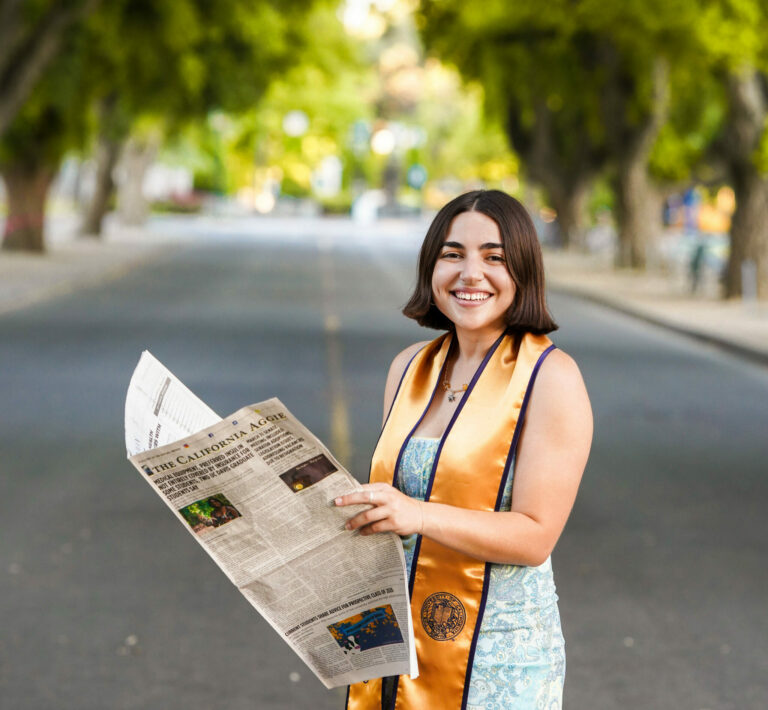
Kathleen Quinn is The California Aggie’s current new media manager. She joined The Aggie in fall 2020 as a campus news staff writer. In winter 2021, she took on the role of assistant campus news editor, serving in that role until becoming new media manager in June 2021. She is graduating with a bachelor’s degree in communication with an emphasis in media studies and continuing on to graduate school for journalism at UC Berkeley.
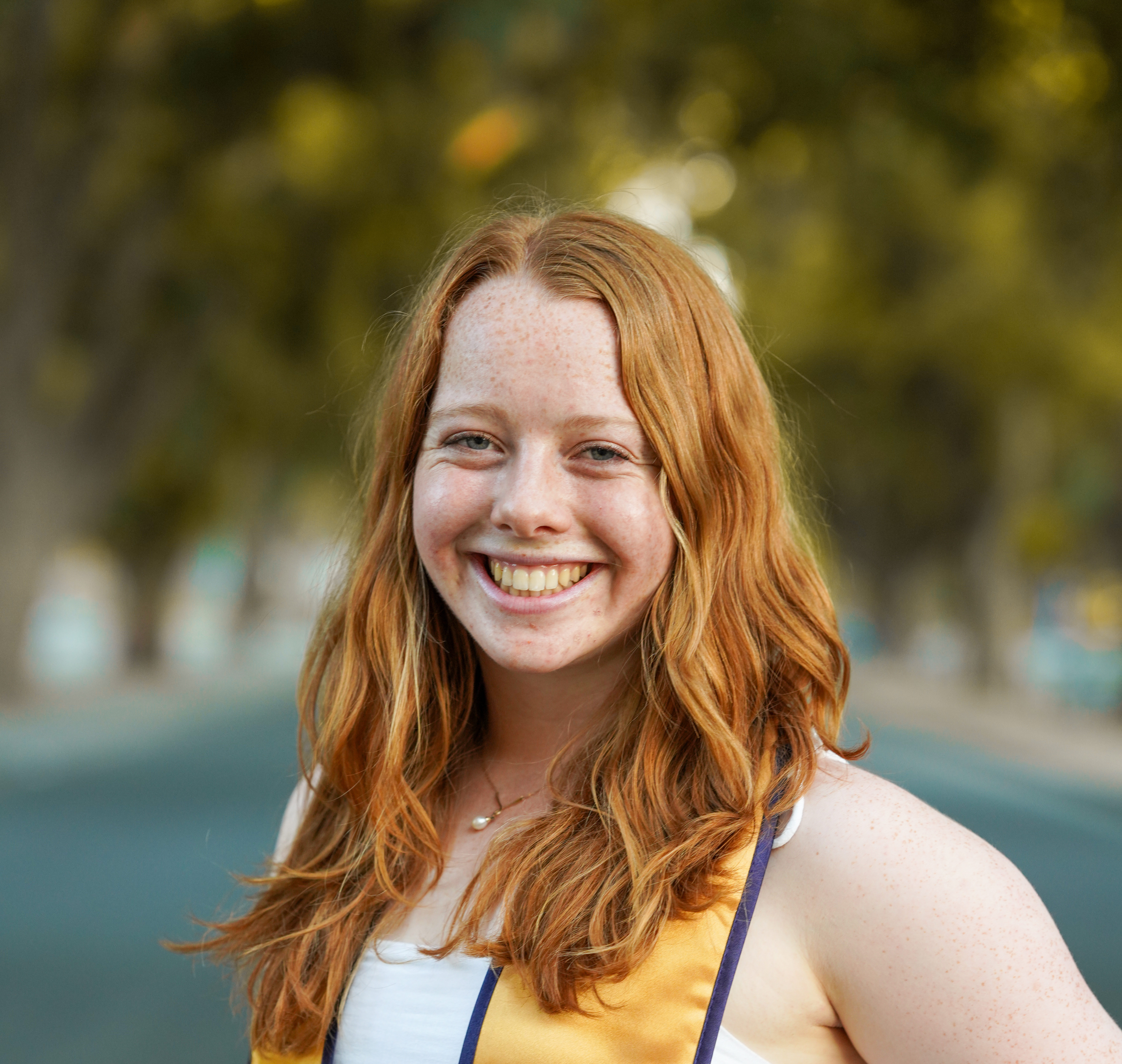
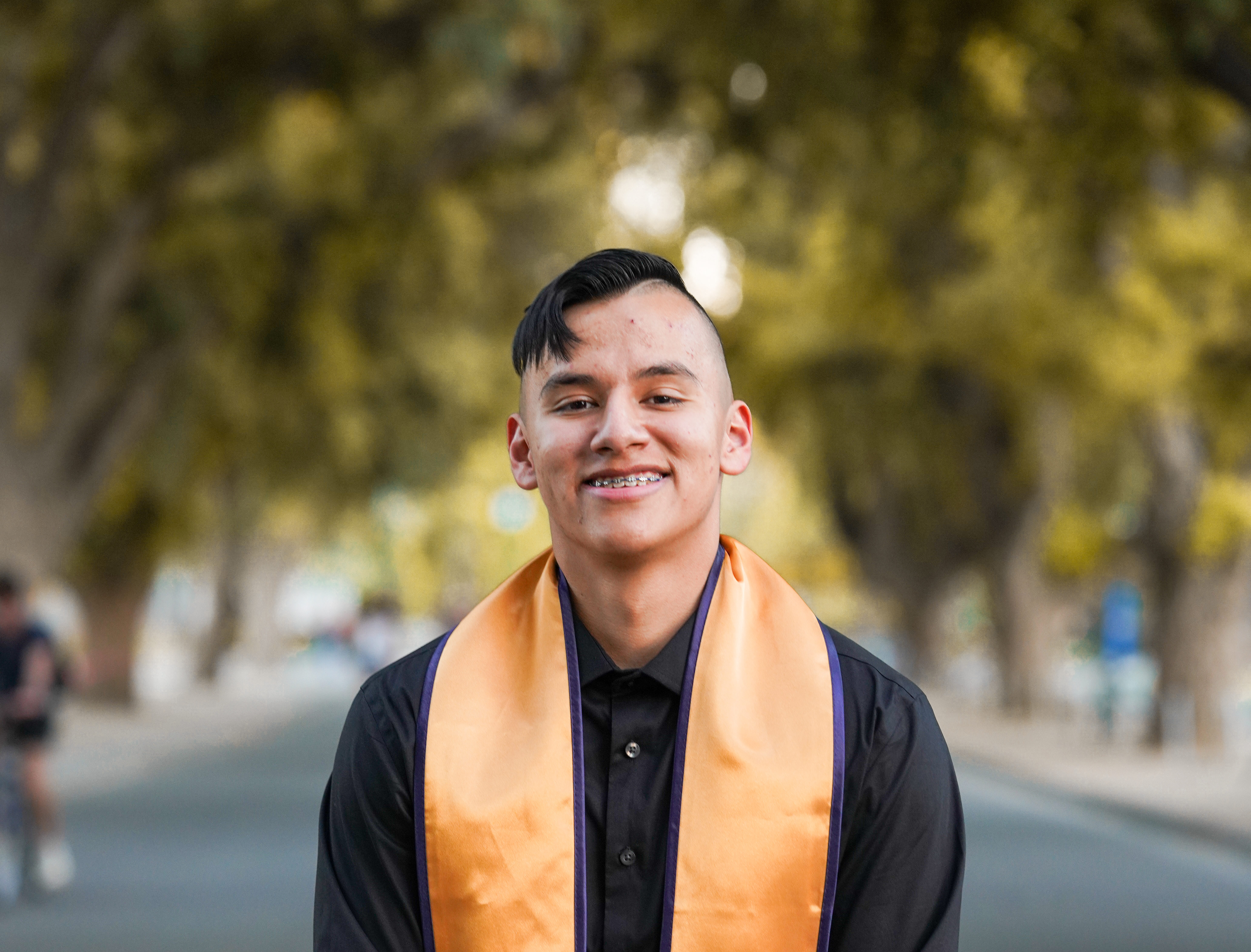
From science to city, thank you, The Aggie, for everything

“Yesterday brought the beginning, tomorrow brings the end, though somewhere in the middle we became the best of friends.” — Unknown

By MADELEINE PAYNE

Reflecting on these past three years, it’s hard to put into words how much The Aggie has given me. When I walked into my first city news desk meeting as a nervous English major in October 2019, I remember eagerly taking in all the details of Lower Freeborn Hall: the walls decorated with the names of current and past editors, the stacks of newspapers being prepared for distribution and the sheer number of people working together to get a newspaper published every week — everything seemed so professional and official to sophomore me. I was intimidated yet excited at the thought of covering real events and being published in a newspaper, but never did I imagine that I would be walking into an organization where I would meet some of the most incredible and life-changing people, ones I have the pleasure of calling my best friends.

That day, I met the first person at The Aggie that had an impact on me: the city news editor at the time, Stella Tran. Through editing sessions and Slack messages, Stella taught me about what it meant to be a journalist and instilled confidence in me about my writing. Without her as a mentor, I would have never been able to apply to the Editorial Board the following year, eventually entering her role as the city news editor — thank you, Stella!

One quarter later, I was given the opportunity through The Aggie to cover a breaking news story on the first case of COVID-19 in the country. I remember feeling intimidated as a 19-year-old standing at a news conference next to reporters from national organizations like CNN and Politico, but it was invigorating knowing I was reporting on something critical to the Davis community and the world. This experience inspired my interest in science journalism, eventually leading me to change my major and follow a career path in science communication and public health. 

So much has changed since that school year, not only for me, but also for The Aggie. The wall-quote covered walls of Lower Freeborn have turned into the wall-quote covered walls of 116 A St., both us and the paper have transitioned to and from a virtual setting while surviving a pandemic and I’ve been lucky enough to serve two years on the Editorial Board as the science editor and city news editor, the best opportunity I’ve been given as a college student.

We used to joke that it’s not often you get to work with some of your best friends, but as we enter the last few days of our spring quarter, those words have never rung more true. This experience of serving on the Editorial Board — spending countless hours editing, writing and interviewing every week — has flown by because spending time with you all just doesn’t feel like work. From weekly phở dates to backpacking trips in Point Reyes, from attending Aggie formal to tournaments on the pickleball courts, I’m grateful for every second that we’ve shared together, whether it was at the office or out and about in Davis; this community is the one I dreamed to find as a freshman, and I’m so lucky that my favorite college memories have been surrounded by the people I used to call coworkers, but now call best friends. 

To Omar, Allie, Anjini, Margo and Michelle, thank you for not only pushing me to be a better writer and editor, but also a kinder, stronger and more thoughtful person and friend. I have loved learning with you and from you in all our experiences together, and I can’t wait to see where the next chapter of life takes us. To Eden, thank you for being there for me for the entirety of our Aggie journey. You’ve always been someone I can count on and I can’t wait to hear about everything, from your small business endeavors to gardening work, for years to come. To Katie and Sophie, I know you two will be excellent leaders next year and I look forward to seeing you flourish in your roles leading this organization — you got this! To Calvin and Sabrina, thank you for always being two people I can look up to and showing us soon-to-be-graduates how to enter the world of post-grad so gracefully (we miss you). To Levi and Chris, thank you for being such excellent writers to work with and congratulations on your roles for next year; I know you both will make strong editors and leaders. To all the editors, writers and staff I’ve been able to work with at The Aggie, thank you, thank you, thank you for giving me this incredible experience — it’s one I will treasure for a lifetime. And for one final time, die in, go Ags and grED!


Madeleine Payne is The California Aggie’s current city news editor. She joined The Aggie in fall 2019 as a staff writer on the city news desk. In winter 2020, she took on the role of assistant city news editor, serving in that role until becoming science desk editor in July 2020. She is graduating with a Bachelor of Science in psychology with a biological emphasis and a minor in public health sciences.

How different it all could’ve been

A farewell to the place that allowed me to find myself

By OMAR NAVARRO

How do you say goodbye to something you’ll cherish forever? That’s kind of what I kept asking myself as I wrote this column. I’m terrible at goodbyes and for the longest time, I avoided doing this just because I don’t want to think about leaving. The Aggie holds a special place in my heart not only because I found myself here, but because it allowed an 18-year-old me to continue to do what I love — talking about sports. 

I remember being in my senior year of high school, getting sad thinking about how once I went to college, I wouldn’t have the time to watch as many games and keep up with sports the way I did. Well, I was partially correct. It wasn’t the same — it was even more than I already did. 

Coming into UC Davis I, like many others, had no idea what I wanted to do. I was just trying to find myself. It was easy to just hide behind everyone and just go through the motions, but I knew I needed to find something for myself. Through luck, fate or whatever you want to call it, I found out about The Aggie while searching through the ASUCD vacancy site on a late night in December. The thought of writing never even came to mind, and I had absolutely no journalism experience at all, but this weird confidence came out of nowhere and I applied anyway.

Fast forward to three years later, and I can’t imagine what my life would’ve been like without The Aggie. I would probably be doing some career I didn’t like and feeling even worse about what’s next. From the countless interviews of players and coaches to the times I was up late trying to figure out what to write, I enjoyed every second of it. Even when life got in the way countless times, this always felt like an escape to do what I love. 

If there’s anything being at The Aggie taught me, it’s that I have to trust myself. I’m right where I need to be.”

I have met a lot of amazing people through The Aggie that I probably would’ve never talked to without it. I don’t know if I can put into words how much everything meant to me. When I say I couldn’t talk to people, I mean it, and I owe this publication for getting me out of my shell.

To Dominic, the editor of the sports desk when I joined in winter of 2019, thank you. I don’t know if I could’ve asked for a better editor. You instilled the confidence in me that I could do this, and because of that, I kept going. I always had these doubts in my head when I started, but your feedback and openness to questions meant more than I could ever put into words.

To the sports desk, thank you for the amazing things you all wrote throughout my time here. I know sometimes I was probably all over the place, but you all stuck with me, even when we were all remote. I can’t explain how many times I felt like I wasn’t doing enough to help or doing a good job, but your engagement and eagerness to constantly improve is something that I don’t take for granted, and I can’t thank you all enough. I wish you all the best in your future endeavors because I know you will all do amazing things.

To the Editorial Board, I don’t even know where to start. Anjini, Margo, Sophie, Maddie, Eden, Katie, Allie and Michelle, I can’t thank you enough. Thank you for always being there for me and making me feel supported when life got in the way sometimes. Thank you for never failing to give me a laugh in our meetings on days when I couldn’t even crack a smile. Thank you for giving me all the confidence in the world (even if you didn’t realize it), even though sometimes I felt like I wasn’t doing enough. Thank you for always making me look forward to our meetings regardless of whether they were in person or on Zoom. I could go on forever with a list of things, but most of all, thank you for all for helping me find myself. It was a pleasure working with all of you and to be able to call you all friends.

And to the countless other people I’ve worked with over the years — Calvin, Sabrina, Carson and many more — thank you. You have all been a big part of my journey. 

Was writing this column only hard because I’m scared of what’s next? I think that’s the conclusion I came to. It’s difficult to leave something you love doing and start a new journey, but now, I feel like I’m ready for it. If there’s anything being at The Aggie taught me, it’s that I have to trust myself. I’m right where I need to be.

I will be forever grateful for The Aggie. It is something that I will never forget no matter what direction life takes me. In more ways that I can explain, I would be lost without it and the wonderful people I’ve met. Like I said, I’m really bad at giving goodbyes, and this has been one of the hardest ones.

When I look back on my college experience in the future and someone asks me what the best part about it was, the answer will be easy.

Written by: Omar Navarro

Omar Navarro is The California Aggie’s current sports editor. He joined The Aggie in winter 2019 as a sports staff writer. In spring 2020, he took on the role of assistant sports editor, serving in that role until becoming sports editor in August 2020. He is graduating with a bachelor’s degree in communication and sociology. 

The uncanny pursuit of a degree and the surprises I encountered along the way

Creating four years of college memories in two during the pandemic era

By KRISTIN TRENT

Few outcomes can be predicted in life, and the destination we land in is often achieved by unforeseen circumstances. No matter how much I had planned in high school for a future at UC Davis, I could have never predicted the trajectory of my college experience, and I know I’m among many. Walking to graduation with a degree is just about the only thing that stayed part of my original idea of college. But these unpredictabilities have been essential in creating a noteworthy future.

Changing my major

Coming to UC Davis to pursue veterinary medicine, I could have never predicted that I would graduate with an English degree in hand. Reaching this decision was the result of many late night conversations, a couple of grueling finals and a change of heart. No matter how much I had believed that my plan — four years of undergraduate work at UC Davis followed by an additional four years of vet school — could work out, I was struggling to excel with a science-heavy workload. 

The moment I started taking English classes, I found my love for learning again. It was refreshing to discuss and muse over interesting texts with classmates who were just as interested as I was. Not every class was my favorite, but with that spark to motivate me, it became even more important to show up and work hard.

I knew I was a writer when I decided to reach out to one of my first English professors in college and ask for advice about my relationship with writing. She emphasized my ear for poetics and encouraged creative writing practice.

 It was difficult explaining to friends and family why I made such a drastic change, but I knew that polishing my skills, I could take advantage of the many opportunities for writers at Davis. 

The future you have in mind will change, but always aim for something”

Writing for The California Aggie

I had been a reader of The California Aggie since my freshman year. In fact, I remember leafing through the pages of one when I toured. The isolation of the pandemic motivated me to get more involved, and the result of connecting with organizations like The Aggie kept me informed when they were looking for new staff writers. During that time, I applied on a whim and ended up with a position writing for the campus news desk. 

Working as a journalist, I have been able to meet and speak with campus leaders, advocates and representatives from different parts of the Davis community. Interviewing helped me gain a deeper understanding of the value of a large community. I saw it as a goal to represent the different sides of Davis and their respective issues, publishing articles about discrimination against students with disabilities and period poverty. 

Joining Greek life

If you had asked me in high school, rushing a sorority would be my last thought when it came to college plans. Most of my non-Greek life friends still can’t believe I am in a sorority. However, within a couple days of rushing, it became clear to me that the stereotypical depiction of the sorority girl was far from the reality at Davis. In fact, I found that my sorority sisters came from diverse backgrounds and were involved all over campus as club leaders, athletes, dancers and more. 

We all came here for the same reason, to join a found family. From family dinners to sports sisterhoods, each experience I have with my sisters brings us closer together. I know that after graduation, I can count on them for life. The connections I have with my sisters have helped me become more confident in myself and made me love this part of the Davis community. 

Writing a creative honors thesis

My application to the Creative Writing Honors Program started as a new year’s resolution: to get as many rejection letters as possible. If rejection was an inevitable step of submitting applications, it was easier to simply try. The day I heard that the project proposal was accepted, I called my partner and said “I can’t believe it, It feels like I’m dreaming, really!” The project is a poetry collection with the goal of capturing the community consciousness of Davis. I think of the classes and opportunities I’ve had at Davis as preparatory work for the cultivation of this longform creative project. I look forward to the time I’ll be spending at Shields next fall quarter researching and writing my project to life. 

I am a strong believer that it is never too late to get involved. Writing for The Aggie, joining Greek life and writing a creative honors thesis are all opportunities I undertook during my last year (and a quarter) at Davis. Even though you cannot predict when a pandemic will hit or that you will hate chemistry, things can work out. The future you have in mind will change, but always aim for something. 

I can be sure of my values when I walk off that graduation stage. Getting involved in different areas of UC Davis culture was the best thing I did (aside from getting my degree). Throwing myself into things and joining clubs I found interesting helped me cultivate my own interests and develop appreciation for community. It has been a privilege to say that I work for The California Aggie, and I will be taking the skills I’ve acquired forward into my future endeavors.

Loyally,

Kristin Trent

Written by: Kristin Trent 

Kristin Trent is a staff writer for the campus news desk. She Joined The Aggie during her senior year, in winter 2021. She graduates in the fall as part of the Honors Creative Writing Program with a bachelor’s degree in English.

No RAGRETS

It’s all the experiences — the good, the bad and the ugly — that make it all worth it 

By SIERRA JIMENEZ

“Where’d All the Time Go” by Dr. Dog rings through the chilled, air-conditioned car as I lounge in the backseat on the way to Shasta for the final time this glorious Memorial Day weekend. I find it ironically humorous that I complete my very last article at The Aggie as a senior, on my phone and on my way to a weekend which holds surprises I itch to explore. 

I was struggling to find a specific memory or a lesson that I’ve learned from my time in cow town, but this seems almost too perfect. Spontaneity. Adventure. A f*** it mindset. This is what college is all about. 

The long barren roads of the outer Davis area make me nostalgic for my time in a small little town where everyone knows each other to a point where it can get annoying. When else in my life will I be in a town like this, having the experiences I’m having now? Never. And I wouldn’t change a thing. 

“Everything that happens to you, everything that you do, is a part of that experience of learning, of riding that wave.”

I hate the word “mistake.” To be quite honest, I don’t believe in so-called “mistakes” — I call them experiences. Not to bring up the pandemic, but, bringing up the pandemic, I’ve learned you cannot plan every detail of your life, things change and sometimes (most of the time) you have to roll with the punches. Everything that happens to you, everything that you do, is a part of that experience of learning, of riding that wave. 

Hence, here I am, last minute, writing my senior column on my phone, in a car, reminiscing and appreciating all the experiences I’ve had at Davis. I think this moment right now is a perfect embodiment of my senior year, of my perfectly hectic time in the lovely Davis, California. 

Written by: Sierra Jimenez

Sierra Jimenez is an arts staff writer for The California Aggie. She joined The Aggie in fall of 2019 as an arts desk writer and loved it so much, she came back to the desk this year after taking a break from writing during asynchronous learning. She is graduating with a bachelor’s degree in international relations with a minor in communication. 

My words are who I am

On searching for myself and finding I was there all along (with a little help from my friends)

By ALLIE BAILEY 

Growing up, I was lucky enough to learn two languages in addition to English. I always loved learning new phrases and being able to communicate in new ways, but it took me until college to realize why this ability resonated with me so much. I didn’t know it at the time, but by being able to express myself in different languages, I was discovering parts of myself not present when I communicated in any other one. Each language comes with its own history, culture and nuances, and connecting with and utilizing these differences, I was creating identities in each linguistic world, separate from who I was while speaking anything else. 

Creating an identity was my top priority when I arrived at college — I was getting a new start, with new people, in a new place where I was a blank slate to decorate with the person I wanted to be. But unlike my linguistic identities, which arose without my intention (or knowledge), trying to reinvent who I was proved to be an impossible task. Enter The Aggie, where writing became a new language through which I found another version of myself I had yet to uncover.

Prior to joining this organization I now hold so dear, I was never particularly fond of writing; I did it well enough, but I usually dreaded having to write anything of much substance. But writing for the Arts desk wasn’t like other writing (yes, that phrasing is a nod to my and fellow Arts desk alum Ilya Shrayber’s joint article on Sally Rooney’s “Normal People,” one of my favorite contributions to The Aggie). Throughout my academic experience, I was always told what to write, and how, but on Arts, I was able to explore my interests, express my ideas and experiment with my words. Just like the languages I spoke, I saw another person appearing in my stories. Each article gave me the chance to share a part of myself through a topic I was passionate about, collectively forming the journalist and the writer I didn’t know I had in me. 

 it’s impossible to do what we do and be who we are without it.”

This new identity quickly went from an extracurricular to the most defining component of my college experience. After a few quarters on the Arts desk and having taken some linguistics courses I adored, I finally registered why my love of language and newfound love of writing felt so central to who I was: language is identity, and the many iterations I saw within myself were a product of the innately, uniquely human capacity of using language to communicate who we are to the world. Whether spoken, written or signed, it’s impossible to do what we do and be who we are without it.

Language itself and the joys of writing for Arts have clearly been influential to my identity, but the impact of The Aggie as an organization and a community have been equally as pivotal in my college experience. In my first year, as a writer, Arts desk meetings were the highlight of my week: Up to ten of us would gather on the couches in Lower Freeborn to discuss all things arts and culture, from pop culture to new exhibitions to social issues. The friends I made inspired my writing, my interests and my love of The Aggie as a whole, and are a big reason why I pursued a position on the Editorial Board. As I started dedicating more and more time to the newspaper, including being entrusted with the associate arts editor position, I realized how much more I wanted to do, and be, here. 

Despite my first year on the Editorial Board being over Zoom, I wouldn’t have traded the experience for the world. The nine of us, all new to Ed Board, went through it all together: from day-long Zoom meetings to never ending pickleball matches, I’ve never seen a team work so well, and I’m so proud of what we accomplished together. This year’s Ed Board was no different; we came together to discuss and deliberate on the most pressing issues of the moment, and supported each other through projects, ideas and the challenges of bringing this publication back to an in-person operation. Anjini and Margo, I will forever be in awe of how you ran this newspaper; it’s no small feat, and I am so proud of and grateful for you doing your jobs so well.

As important as the work we do here is, this organization wouldn’t be what it is without the friendships it creates. Meeting with this wonderful group of people, both this year and the year before, got me through the toughest days of the pandemic, pulled me out of a funk with a 100% success rate and brought me to tears with laughter more times than I can count. Each and every member of Ed Board I’ve had the pleasure of working with has made a direct impact on my life, and I feel so fortunate to have found a job I loved doing as much as I loved the people I did it with. 

While I’m giving shoutouts, a few more are owed: I may have never found this family without Caroline Rutten, who encouraged me to apply in the first place, and whose friendship, mentorship and unwavering support not only made me a better writer, but a better person. Liz Jacobson, the best editor the Arts desk ever saw, taught me what it takes to lead this special desk, and while I never felt I truly filled her shoes, having her as a role model was integral to any success I’ve had in this position. My pho girls, whether it was deciding which combination of broth and sauce tasted best or (not) doing work in the reading room, I am so appreciative of your ability to brighten my day without fail. And Farmhouse, you will always be my number ones for putting up with constant Aggie shenanigans and being the best friends (and girlfriend) I could ask for. 

Lastly, to all the wonderful writers I’ve had the pleasure of working with: thank you. You allowed me to learn as I went, handled more than a couple hiccups along the way and gave me the opportunity to develop my skills as an editor, something I now know I love to do. I can only wish I had half as much of an impact on you all.

Looking back, deliberately deciding who I wanted to be was never going to work, but what I now know is that the person I was looking for was always within me, I just hadn’t recognized — or yet found — the many ways I could express myself through the words that make us who we are. My journey with language, writing and creating identity through these forms of self expression is far from over, but I can safely say I’d be lost without what The Aggie has given me throughout my run at Davis. It has been an honor to lead the Arts and Culture desk for the past two years, and I can’t wait to see what Clara and the rest of the Editorial Board does next. I hope it gives you everything it gave me and more. 

Written by: Allie Bailey 

Allie Bailey is currently The California Aggie’s arts and culture editor, a position she has held for the past two years. She joined The Aggie as an arts staff writer in the fall of 2019 before taking on the role of associate arts editor in winter 2020. She joined the Editorial Board as arts and culture editor in July 2020. She is graduating with honors with a Bachelor of Science in computational cognitive science and a minor in linguistics.

A journalist’s love letter to writing

How The California Aggie allowed me to pursue my passions

By MICHELLE WONG

Throughout my time at The California Aggie, I’ve learned a multitude of lessons — how to stay composed when interviewing professors, how to meet deadlines, how to speed-write an article in an hour to meet said deadline, etc. But above all, what The Aggie has taught me is my unrelenting, inescapable love for writing.

My undergraduate career has been a whirlwind of assignments, midterms, research, extracurriculars, plans with friends and more. There was always so much to do but not enough time. In this flurry of chaos, I have learned the art of letting go — that no matter how much I want to experience, I can’t do everything I want to and I have to prioritize some things over others. The problem was always determining what was worth prioritizing, what was most important to me.

I joined The Aggie as a volunteer staff writer for the science and technology desk back in fall quarter of my freshman year of college, October 2018. The one regret I had about my time in journalism during high school was not starting sooner, so I was determined to get involved right away. With a newfound confidence and a determination to empower those whose voices have been ignored, I dove headfirst into the challenges college journalism brought — intimidating professors, new writing standards and an unfamiliar campus. 

“If you find something that you love, something that brings you joy, something that brings you toward the person you want to be, don’t let go of it.”

Just in my freshman year, I learned so much about how to converse with various doctors and researchers, how to write professional emails and how to write science articles that could be understood by the general public. I felt my passion for journalism grow and was excited that I was producing content I could be proud of. Finally, I had found the perfect medium for combining my love for science with my passion for writing.

But I suppose all writers’ highs eventually ebb — despite the joy journalism gave me, as I was promoted to being a paid staff writer and I took on more and more outside of The Aggie, writing became more of a job than something I did for fun. Initially, writing was my escape from the STEM classes that consumed my time, a way to stay connected with the part of me that loved the arts and humanities. But as my mental and physical health deteriorated due to my inability to balance my schedule, I began to view my journalistic responsibilities as a hindrance to my academics and my goals of becoming a doctor. Ultimately, I made the decision to take a break from The Aggie. 

Looking back, although I regret taking this short hiatus, I suppose it was an occurrence that had to happen for me to realize how much I need — not want, but need — to write. No matter how busy my commitment to The Aggie made me, I was not content pursuing an education in science if I was not able to pursue my love for writing simultaneously. 

My friends in the STEM field often comment on how different and far apart my interests of medicine and journalism are. But I beg to differ. Both journalism and medicine have an ability to empower others, just in slightly different ways. To me, both professions involve listening and understanding someone’s story — their background, their pain, their joy — and serving as an advocate for them. Without my experience as a journalist, I am certain I would not be as confident in becoming the kind of doctor I aspire to be. Journalism has taught me not only professionalism, but compassion, kindness and understanding towards people from all walks of life. 

But back to the original plotline. My hiatus didn’t end up lasting for long — in fact, it was a few months at most. Despite “resigning” at the end of the school year, I offered to continue writing articles throughout the summer and ultimately reapplied in February 2020. Once again enveloped in the warm, welcoming environment that is The Aggie, I went on to become the assistant science and technology editor and ultimately joined the Editorial Board as the official science and technology editor where I have met some of the kindest, most inspirational people here at Davis. 

Being a journalist has become a part of my identity now, a part of myself that I am actually proud of. UC Davis is full of insanely accomplished and intelligent people, and it is so easy to become discouraged and spiral in one’s insecurities — believe me, I still do. Not often do I feel fit to be among such people, and oftentimes I dislike myself for not being smarter or, for lack of a better word, better. But when all else fails, my love for writing and journalism is something that I do, and always will, like about myself.

My love for writing has shown me the part of myself that needs to create. It is not a sharp pull, but rather a constant longing to produce something that has the potential to move others and evoke change. It is hard to put into words and it is rather unexplainable, but I think everyone has found, or will find, something that produces this feeling.

If you find something that you love, something that brings you joy, something that brings you toward the person you want to be, don’t let go of it. Perhaps you don’t know what you’re passionate about yet or you’re scared to pursue it. Maybe you’re like me and you think it’s better to push it off, to concentrate on “logically” how you should be spending your time at college. But I’ve found there’s something funny about passions — they don’t really go away. So do yourself a favor, and even if it goes beyond all reason (well, maybe shoot for a little within reason), pursue it anyway.

Written by: Michelle Wong  

Michelle Wong is The California Aggie’s current science and technology editor. She joined The Aggie in fall 2018 as a science and technology staff writer. In summer 2020, she took on the role of assistant science and technology editor, serving in that role until becoming the science and technology editor in July 2021. She is graduating with a bachelor’s degree in neurobiology, physiology and behavior with a minor in psychology.

Where’d all the time go?

This column is sponsored by Mishka’s, “Surfing with the Alien” and the urge to say “thank you” rather than “goodbye”

Four years, three cracked screen protectors, two majors, one minor and an (ongoing) pandemic later, I still remember my first venture to The California Aggie on a fateful Friday in October 2018. I made my way over for my staff writer interview after having finished a math midterm in Giedt. The whopping four-minute bike ride took a little longer because my floral pants got caught in my bike gears. I reached 25 Lower Freeborn 20 minutes early, and once I was called in for my interview, I shared what I’m sure were ever-so-insightful answers about prior journalism experience and why I wanted to work at The Aggie. Less than 24 hours later, I got an email entitled: “Welcome to The Aggie!” and thus began the chaos. 

Actually, I guess the chaos began much earlier — I won’t bore you with details about being a sportswriter at my high school’s newsmagazine, but just know that I knew almost everything there was to know about field hockey. By the time I graduated high school, I had settled into being a student journalist. I even wrote a senior column about words — it was a love affair with words, my 17-year-old self gushed, and it was no surprise that my need to be enveloped by words led me to the magazine. I pretty much knew I wanted to write for a college newspaper wherever I ended up.

The past four years have taught me a lot — notably, journalism really isn’t only about words. It’s about nuance, respecting your sources, investigating and holding institutions accountable. It’s about knowing the privilege that comes with being a journalist and realizing the trust that is placed in us.

In my first year at The Aggie, I learned an immense amount from Friday editing sessions and observations of potentially biohazardous bagels with the most incredible editor (and fellow Gemini). By my second year, I saw Lower Freeborn as more than a workplace — it housed history and was a beloved spot for seasoned Aggie editors. As I started to spend more time there, I took on more tasks, met new people and tried to solidify who I was within and outside the walls of that structurally unsound basement. And then it was March 2020, short months after which I was selected to lead The Aggie for the next year.

Over the pandemic, we’ve all faced loss in so many different, substantial ways. Those losses, still being processed, are so significant. But in this time fraught with grief, The Aggie has provided a space to heal and grow and has given me so much.

I could write all about the articles I’ve written, the hiring interviews I’ve conducted, the emails I’ve fielded or the Senate meetings I’ve cried after. But I’d much rather tell you about the pickleball games I’ve almost won, the book about beavers I recommend to everyone, the most absurd jokes we’ve shared at layout and the people who have become some of my closest friends. 

Someone I don’t know too well once criticized me and The Aggie, claiming the Editorial Board consisted of a bunch of friends who blindly supported each other and didn’t care to produce “quality journalism.” I never worked on a news desk, but I’ll break it to you — that could not be further from the truth. 

Existing in a pandemic, especially in a completely remote year, was hard on everyone, and in spite of that, the staff at The Aggie tackled tough stories with integrity and grit. When contentious topics came up, we had meaningful discussions with a fair share of disagreements, as we aimed to hold others and ourselves accountable. We care a lot about quality journalism. Becoming friends along the way — through meeting daily on and off Zoom, leaving comments on shared Google Docs and preparing questions to ask the chancellor and other leaders — was, frankly, an unexpected bonus. My fondness for pickleball and Aggie inside jokes isn’t to say that I don’t value my work as a student journalist, but that the work is simply impossible without the people behind it.

Of course, I knew that previous Editorial Boards had become close, but I joined the Editorial Board in 2020 and things were unprecedented. How was I to expect that the people I saw over Zoom (and two extremely socially-distanced picnics) would become some of my closest friends? In any case, I am so, so grateful that I have had the opportunity to be among this fiercely intelligent, incredibly kind and generally chaotic group. Finally moving to our new home on A St. and having 120 Editorial Board meetings this year (in addition to the 120 meetings last year, trips to Sophia’s and other assorted shenanigans) probably means I’ve spent more than enough time with them, but as I write this, it’s hard to comprehend that this chapter is about to end. To the greddest board of all: Thank you for the games of fidget toss and pickleball, for late night library runs, midday pho breaks and Warriors game margaritas, for your commitment to The Aggie and for fostering an empowering environment for us and future generations here at UC Davis. There’s no group I’ve been more proud to be a part of.

To everyone else I’ve had the pleasure of working with over the past four years, thank you as well. Your contributions have made me a more thoughtful writer, editor and person. To my professors and instructors, thank you for broadening my perspective and preparing me to challenge lines of thinking I disagree with. To my incredible friends and housemates, thank you for all the advice and for putting up with my lengthy monologues. And to my family, thank you most of all.

Honestly, I did not expect to fall in love with Davis when I wound up here. I prefer walking to biking, it can be unpleasantly hot for a lot of the year and there are far too many squirrels for my liking. But here I am 12 quarters later, just a little obsessed with this cow town; it’s in no small part due to the people and places The Aggie has led me toward. 

I’ve been incredibly lucky to exist, learn and find some of my best friends in this wonderful place, and all of that has prepared me to graduate. That said, I am still somewhat terrified to leave behind the best Egghead (Stargazer), the best patch of grass to take a nap on (I’ll keep that to myself) and the cat we’ve deemed Newspaper (though it certainly already has a name and owner). But Calvin from “Calvin and Hobbes” is right. It is a magical world, and I’m ready to go exploring. 

Written by: Anjini Venugopal 

Anjini Venugopal is The California Aggie’s current editor-in-chief. She joined The Aggie in fall 2018 as a features staff writer. In spring 2019, she took on the role of assistant features editor, serving in that role until becoming editor-in-chief in July 2020. She is graduating with honors with a bachelor’s degree in linguistics and cognitive science with a computational emphasis and a minor in computer science.

An ode to snails, snakes and storytelling

A farewell to four years of nerding out at The Aggie

By MARGO ROSENBAUM 

I’ve always loved stories. I spent much of my free time growing up at the library with my nose tucked into a nonfiction book — of course, when I wasn’t doing my other favorite things like poking starfish in tide pools, hiking with my dogs in the woods, pulling snails off sidewalks, nerding out over nature documentaries, making mud pies full of worms and riding any horse in need of exercise.

It was this love of storytelling (especially about animals) that brought me to the world of journalism. After much encouragement from my mom (shoutout to Pam, the strongest, coolest woman ever), I joined my high school paper. She was right: I was a natural storyteller and needed a place to share my writing. In the words of one of her favorite artists, the great Brandi Carlile, “… these stories don’t mean anything / when you’ve got no one to tell them to.”

After discovering journalism, my reality exploded: I could talk to anyone, write their story and share it with the world. I could do exactly what I saw in my favorite National Geographic books so many years before: write nonfiction! I soon realized how easy it was for me to articulate my thoughts in a clear, thoughtful and concise (well, I’m still working on that one) manner through writing. I’m quite ebullient with the friends I’m closest to, but struggle with shyness and communicating with new people. With writing, everything flowed easily. 

As my love for journalism grew, I knew I’d want to write for the paper when I got to college. When I visited UC Davis on Decision Day in 2018, I stopped by The Aggie’s booth and was encouraged to apply by the smiling faces of the student journalists who worked there (including the talented Hannah Holzer who would later train me as managing editor).

Ultimately, I picked UC Davis for a few reasons: It was a public school in California, not too far from home, had a student barn for my horse and lastly, because of The Aggie. As soon as staff writer vacancies opened up in the fall, I applied right away and settled into my work on the features desk. I loved the flexibility of the section and the many random animal stories I soon became known for writing. The desk also introduced me to Anjini, whom I biked past on the way to every desk meeting that year, and would later lead The Aggie with for two years. She’s one of the smartest people I have ever met and shares my affirmation for storytelling, student journalism, Stargazer (the Egghead) and dinosaurs (but sadly, not birds or lizards).

My time on the features desk was glorious, but short lived. After one dinosaur course and a marine biology class, I got hooked on the sciences at UC Davis and decided to add a second major related to biology. Many of my features articles also started swaying toward research, so I switched to the science and technology desk during the summer before my second year. As the only science writer on the desk at the time, I worked with the editor Cecilia and learned how to cover science in an exciting, digestible manner.

Suddenly, everything just clicked: I learned I could combine my compassion for animals, fascination with research, zeal for saving the environment and love for storytelling. Writing about science in a clear, jargon-free manner felt like my contribution to combating misinformation and protecting the Earth. 

After one year on the science desk as a staff writer and assistant editor, I made the gigantic leap to becoming managing editor. While yes, there were many overwhelming, chaotic moments, I could not be happier to have worked in this role for the past two years. I came to love my cozy Sunday editing nights, spending hours reading all the content coming out that week. My editing and reporting skills improved tremendously by reading so many stories by The Aggie’s many talented writers. As managing editor, I also continued reporting and assigned myself multiple challenging articles that took weeks to write. I investigated barriers to voting in Davis, UC health care coverage, agricultural research in Davis and so much more.

“From the friendships I’ve made to the pickleball games I’ve lost, The Aggie made me fall in love with this cow town so much more than any club I tried out, class I took or professor I nervously chatted up during office hours.”

I can easily proclaim these past years with The Aggie as the best four years of my life. I’m extremely grateful and lucky to have worked with one incredible editor-in-chief, two talented Editorial Boards and managing staffs as well as too many staffers to count. I’m humbled by the impressive reporting of all the great friends I’ve made at The Aggie. 

From the friendships I’ve made to the pickleball games I’ve lost, The Aggie made me fall in love with this cow town so much more than any club I tried out, class I took or professor I nervously chatted up during office hours. Despite this, I’ll still miss banding baby Western Bluebirds and Tree Swallows, eating out way too often in Downtown Davis, catching snakes and lizards at Lake Berryessa, chaotic tubing adventures along Putah Creek, late night study sessions at Shields Library (sponsored by Scandinavian Swimmers), BBQs at home, sneaking into the Arboretum on my horse Nina and way too many more favorites to list.

It’s true what they say about UC Davis: the nicest people you’ll ever meet go to school here. I’d say that I’ve picked some of the greatest as my friends. Kylie, you get me like almost nobody else. Thank you to the student housing gods for placing us in the same dorm room, and somehow four years later, I still absolutely love living together. You’re an incredible writer and plant biologist, and I’m so excited to see all the places you go. Alana, thank you for cooking me the most gourmet meals and for nerding out about Star Wars with me. Thank you to everyone on the Editorial Board for the past two years — I appreciate all of the shenanigans, the stories, the support and the snorts of laughter. 

Ben, while you’re not a UC Davis student, it almost feels like you are. Thank you for being such an integral part of my college career: waking up with me at 6 a.m. on Picnic Day, performing at Whole Earth Festival, taking care of Nina and helping me write this senior column every time I got too sad and overwhelmed to finish. I’m so grateful to enter this next part of life with you.

Thank you to my family for their nonstop support throughout my life. Mom, thank you for pushing me to become a journalist so many years ago (and for birthing me) — I literally wouldn’t be here without you. Dad, thank you for imparting your love of adventure and will to do it all onto me. You’ve made me a dreamer and helped me realize that I can achieve anything. Laurel, thank you for being my role model and a very cool older sister. I hope to be half as successful as you one day. Nina, thank you for having the squishiest nose and for being my emotional support horse all throughout college.

As my time at UC Davis comes to a close, The Aggie will surely be the hardest goodbye I have to make. I’m sorry to say goodbye to editing on Sunday evenings, Editorial Board meetings, Tuesday layout sessions with JJAM, the many stacks of old papers, the coziness of Lower Freeborn, my dark (but lovely) corner desk at 116 A Street, all of our wall quotes, my many beautiful Doodle Polls, all of my wonderful colleagues/friends and so, so, so much more. It’s bittersweet to move on, but I’m so glad to see The Aggie left in such proficient hands. 

My journey into the world of storytelling is far from over. Whatever my next job in life ends up being, I know I’ll never stop writing and loving every minute of it. Stay tuned for loads more weird, nerdy (but interesting!!) science content I plan to write. As I bid farewell to my incredibly fond days of student journalism, I give a delighted hello to my professional science writing career. 

Written by: Margo Rosenbaum

Margo Rosenbaum is The California Aggie’s current managing editor. She joined The Aggie in fall 2018 as a features staff writer and in the summer of 2019, she switched to writing for the science and technology desk. In January 2020, she began working as the assistant science and technology editor, which she continued until June 2020 when she became managing editor. She is graduating with a Bachelor of Arts in evolution, ecology & biodiversity and communication, with a mass communication emphasis, as well as a minor in professional writing.


2022 NBA Finals preview

The Warriors and the Celtics face off in the NBA Finals for the first time in 58 years


By GABRIEL CARABALLO — sports@theaggie.org


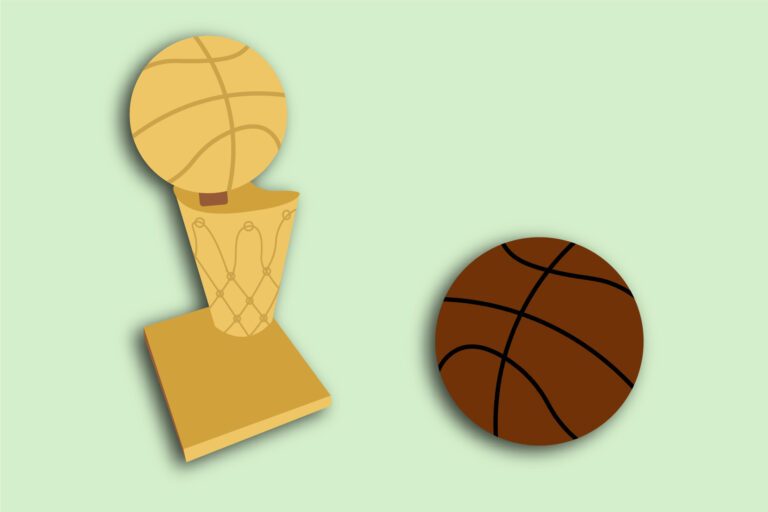
The 2022 NBA Playoffs have reached the end game — the NBA Finals. The Golden State Warriors are set to play the Boston Celtics for the coveted Larry O’Brien trophy. 

In the regular season, the Warriors and the Celtics split the two games against each other. This is only the second time these clubs have met in the NBA Finals, their first meeting coming in 1964 with Boston winning the title. Both clubs have won numerous championships since then, the Celtics with 17 and Warriors with six.

The road to the Finals wasn’t easy for either of these teams. The Warriors had to take on the Denver Nuggets, who have the NBA’s regular season MVP in Nikola Jokic, in the first round. Then they had to beat the up and coming Memphis Grizzlies, who had the league’s Most Improved Player in Ja Morant, in the Conference Semifinals. In the Western Conference Finals, Golden State faced the Dallas Mavericks and their superstar Luka Doncic, beating them 4-1 to secure their place in the Finals representing the West. With point-guard Stephen Curry winning the inaugural Magic Johnson Western Conference Finals MVP trophy, averaging 23.8 points, 7.4 assists, 6.6 rebounds and shooting 43.9% from the three-point line. 

Boston’s road was just as tough, they were able to sweep the Brooklyn Nets who have Kevin Durant and Kyrie Irving in the first round. In the semifinals the Celtics dethroned Giannis Antetokounmpo and defending champions Milwaukee Bucks, which concluded in an exhilarating seven game series. Then, the Celtics took on the Miami Heat in a defensive battle for the Eastern Conference Finals, which ended in another epic seven game series in Boston’s favor. The Celtics all-star small forward, Jayson Tatum played exceptionally well averaging 25 points, 8.3 rebounds, 5.6 assists, and all while shooting 46% from the floor. Tatum’s performance was awarded with the first ever Larry Bird Eastern Conference MVP trophy, it’s almost poetic that it was awarded to a very promising Celtic. 

With the NBA Finals set, it’s time for a closer look at each team’s strengths, weaknesses and key match-ups. To start, both Golden State and Boston were the two-best defensive teams in the regular season, the Celtics ranked one and the Warriors following after both of these clubs have carried that trait into the postseason. Meaning, this series is going to be a defensive war of who wants it more. 

A prominent key difference between the teams is their experience. The Warriors have been able to retain their championship core of Stephen Curry, Klay Thompson and Draymond Green. Because of this, their chemistry is almost unrivaled in all of the league. However, even though the Celtics have a young team, they’ve been at the cusp of reaching the NBA Finals in recent years going to the Eastern Conference Finals four out of the last six years. Part of that success is that they too have kept their core players of Jayson Tatum, Jaylen Brown and Marcus Smart. Even though Golden State has a lot of championship experience, Boston’s chemistry shouldn’t be discredited. Each team’s defensive prowess and core chemistry are some general strengths which apply to both clubs. Whichever team can capitalize on those, especially defense, will have a good chance of winning the championship. But each team has their own key strengths and weaknesses.

A key strength for the Warriors is their ball movement and movement away from the ball. Each player on their offense usually touches the ball at least once before a shot go’s up. While doing so, each player, most notably Curry, is constantly moving without the ball to find an open shot. This slight, but completely effort based, difference in their offense contributes to easy Warriors assists which means points. The Warriors average 28.3 assists per game in the playoffs translating to almost double the points. 

Another strength for the Warriors has been their role players, exceptions being All-Star Andrew Wiggins and an ascending player in Jordan Poole. Both of these players are averaging 15 plus points and despite this being Poole’s first playoffs, he’s the Warriors third best scorer on the team. Then there’s Kevon Looney, who’s tied with Wiggins for averaging the most offensive rebounds among active players in the playoffs. These three players alone need to be accounted for whenever they’re on the floor. Not to mention the Warriors talented rookies Jonathan  Kuminga and Moses Moody who have had big moments and minutes in these playoffs. Kuminga with a few double-digit point games throughout the playoffs and Moody who’s shooting 53% from the three. If both rookies get playing time, they could serve as a boost if Golden State needs it. Because of these role players, Golden State’s bench leads the playoffs in scoring at 37.8 points per game. The combination of their role players and star players leaves Warriors with the highest scoring offense in the postseason at 114.5 points per game.

Now for the Celtics who’s main strength is their defense. Anchored by the Defensive Player of the Year, Marcus Smart, this team only allows an average of 101 points per game. The Celtics perimeter defense allows for that low opponents points per game, with the team only allowing opponents to shoot 31% from deep. It’s going to be tough to contain the best shooter in the history of basketball, Stephen Curry and one of the best shooting teams in the Warriors, but the Celtics have proven their defense is the best in the league. 

Another key strength for the Celtics is their front court. Head coach Ime Udoka has made excellent adjustments in terms of who’s playing in the front court. The Celtics can start with a tall lineup in Al Horford and Robert Williams, or go with a small ball line-up with Grant Williams. Horford and Grant average double-digit points with Robert close behind. Not to mention, all three of them average more than four plus rebounds a game, and each gets a block per game. These rotation adjustments and depth in the front court, if capitalized on offensively, could be big for the Celtics. 

Even with these and other strengths, like the Warriors shooting percentage being better than the Celtics or the Celtics defense being better than the Warriors, there are caveats in each club’s game. One of them being their turnovers as the Warriors average almost 15 turnovers per game and give up an average of 16 points off them. The Celtics are no better, averaging 14 turnovers while also giving up 16 points. Because both teams share this undesired trait, whichever team plays the best defense and can play within those turnovers has a good chance of winning the championship. 

An individual weakness for the Warriors is how they settle for shots. Instead of possibly passing for a better shot, the Warriors tend to settle for contested shots, or pass up open lanes to the basket. This combined with the turnovers can hinder Golden State’s offensive potential immensely. They are also lackadaisical on offense at times, which could be bad against a formidable defense like the Celtics. Fortunately for Boston, they average a little more points off turnovers than Golden State which can be an issue for the Warriors. 

However, the Celtics’ key individual weakness is their tendency to foul. They commit an average of 22 fouls per game, which is not significantly more than Golden State, but any game could come down to free-throws. This is a hindrance to the Celtics overall great defense and could potentially bite them in the back in clutch situations. Another, often overlooked weakness is Marcus Smart in the clutch. Oftentimes, he tries to overmanage while having two of the best players in the league around him. Smart then makes bad decisions, for instance letting the ball roll in without starting the clock while up in a close game as he did this past Game Seven against the Miami Heat. These factors together or alone can make or break a game for the Celtics.

Last are some key matchups between the two teams. Considering each team starts with their tallest and most played line-up of players these matchups are one’s to look for. The most notable matchups are Draymond Green guarding Jayson Tatum and Marcus Smart on Stephen Curry. Each of the team’s best defensive players against their best offensive players. Both these matchups will make for some great highlights and possessions. Now depending on who’s on the court for the Celtics and Warriors, meaning whether or not they go small ball, you could see a mix of Klay Thompson and Andrew Wiggins taking turns on Tatum while also switching against Jaylen Brown and of course vice-versa. With Tatum, Brown and Smart switching between Curry, Thompson and Wiggins, the Celtics are going to need to find an answer for Jordan Poole off the Warriors bench.

An underlooked matchup is going to be on the glass, between the Warriors’ Kevon Looney and the Celtics’ Robert Williams. Whichever one of those two is able to come down with the most rebounds is going to heavily impact the outcome of the series. More rebounds leads to more possessions for one team and less for the other, allowing for more control over the game. Not to mention, the Warriors average 14.5 second chance points compared to the Celtics 11.8. Another front court matchup is between Draymond Green and Al Horford. Whoever wins between those two, will no doubt be beneficial for their squad. However, the Celtics have more front court depth than the Warriors meaning winning these matchups is crucial in determining a champion.  

Getting to the NBA Finals isn’t easy and neither is winning the championship. Both the Warriors and Celtics have proven to be the best this year’s conferences have to offer. Each club has numerous strengths and weaknesses which will either be expanded upon or imploded upon. Both teams have great head coaches with Steve Kerr for the Warriors and first-year head coach Ime Udoka for the Celtics. One of these teams will be crowned the 2022 NBA champions, however, this series is going to be the most competitive battle the league has seen in quite some time. 


Written by: Gabriel Caraballo — sports@theaggie.org


The new look Aggies look to take over The Big West in the upcoming season

After a five-year drought from the big dance, the UC Davis men’s basketball Head Coach Jim Les hopes that his new players will be the key to reach the NCAA tournament 


By MARLON ROLON — sports@theaggie.org


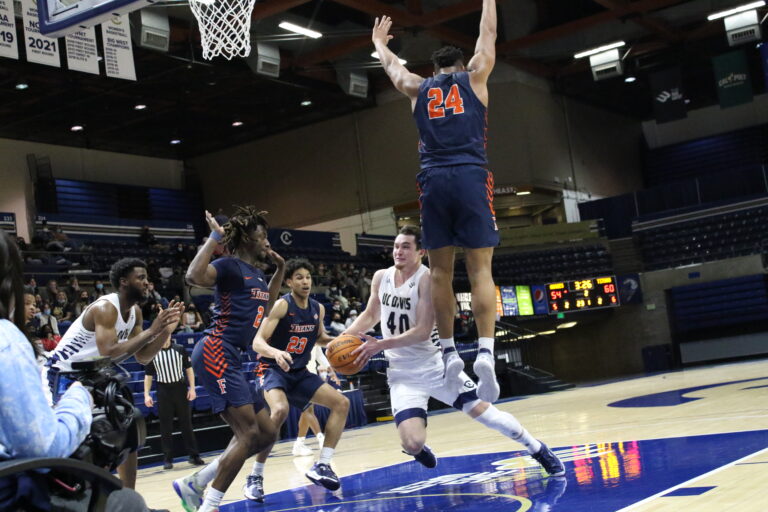
UC Davis Men’s Basketball is still trying to figure out ways to formulate a return to the prominent NCAA Tournament, with a lone appearance in 2017. Head Coach Jim Les and company will attempt to replicate the 2017 season in what is arguably the best season ever in program history.

Since their historic run, it’s not the lack of talent that has plagued the Aggies, they’ve compiled talented players on both ends of the floor since their run, it’s been consistency that has derailed their chances at another tournament appearance. 

The pandemic has played its part in disrupting consistency. The 2020 postseason was canceled and in the 2021 season, 11 games were canceled due to the outbreak of COVID-19.

That trend continued into the 2022 season when eight games were called off, the most of any team in the Big West. The disruption in between games disrupted the rhythm within the team. 

“It was a factor throughout the year,” said Les after last season’s second round exit in the Big West Tournament. “The stop, the starts and not getting as many game opportunities. Maybe developing rhythm and being able to experience 30 plus games at this point is really helpful because you tend to grow and over the years our team continues to get better.” 

Despite the cancellation of games last season, the team still managed to make it to the quarterfinals, losing to the eventual Big West Tournament Champions in Cal State Fullerton. 

The roster played a big role in UC Davis managing to get into the postseason. The Aggies had three players in the top 25 scoring list in the Big West, shooting guard Elijah Pepper ranked fifth averaging 15.1 points per game. Point guard Ezra Manjon ranked sixth, averaging 15 points per game and Caleb Fuller ranked 14th in scoring, averaging 12.1 points per game. 

Pepper wasn’t just a weapon on offense his defensive abilities landed him as number two in steals averaging 1.6 steals a game. Another defensive stand out for the Aggies at the forward position Christian Anigwe, ranked third averaging one blocked shot per game in the Big West. 

The talent was there last season to make some noise with a deep playoff run but the distractions interrupted the teams flow and never really established rhythm. Game cancellations became a common theme towards the end of last season which affected the Aggies going into the postseason. 

Following their exit in the quarterfinals in Henderson, Nevada, UC Davis lost one of their best players and a top player in the conference in Manjon. The standout point guard entered the transfer portal and ended up going to the SEC and joining Vanderbilt University. 

Manjon is a talented player with tons of potential. A player of his caliber can play in a Power Five conference. His list of accolades back that up, as this past season he was selected to the first team All-Big West Conference First Team. In 2020 and 2021, he got the nod for All-Big West Conference Second Team and he was selected for Freshmen of the Year award in the Big West Conference in the 2019-20 season.   

The Aggies lost another key player, senior forward Fuller. He graduated and continued his playing career through graduate school joining Montana State in the Big Sky Conference. Fuller spent four years playing under Les in Davis and was a key contributor for the Aggies. 

Other players worth mentioning that left entered the transfer portal are Caleb McGill, Aaron Murphy and Cameron Niles. 

With Manjon and Fuller being two key players that were significant pieces to Les’ system gone from the roster the team was left with question marks regarding the future of the program. Many were left to wonder about the uncertainty of the direction of the team. 

However, Les and his staff wasted no time in recruiting new talent that provided some ease to those who follow the team. They recruited three talented transfers: Second-year guard Ty Johnson, third-year guard Robby Beasely III and third-year forward DeAndre Henry.

  Johnson, who transferred from Loyola Chicago, is a defensive specialist, an area where the Aggies needed help last season. Johnson appeared in 13 games for Loyola Chicago last season, his team was 11-2 in that span and 3-0 when he started. 

The Aggies bolstered their offense with Beasely III who transferred from Montana. He was second in scoring for the Grizzlies last season, averaging 11.8 points per game. He also shot 36.9% from the three point line last season. This signing fills a hole on offense and could help the scoring gap at guard left by Manjon’s departure. 

Lastly, Les added size to his roster by adding Henry, the 6’7 Nevada transfer. Henry played two seasons for Nevada. He played 33 games in the span of over two seasons and could help in adding some size that is missing. 

The signings did not stop there, UC Davis added depth with the additions of their freshman class. Joaquin Strong, the 6’7 forward from Villa Park high school in Southern California, averaged 16.7 points along with 8.9 rebounds and 4.3 assists per game. He was ranked the no. 1 forward in Southern California by the Press Sports app.

Jac Mani, the 6’9 forward from Beverly Hills, averaged 18 points per game in his four years at Beverly Hills High School. He averaged a double-double with 20 points and 11 rebounds per game in his junior year. His large presence in the paint could help, but the question remains whether it will be next season of the following season after that since the transition from high school to college ball could take some time. Still, Coach Les has not shied away from first-year player’s if they are ready, as recent examples like Manjon and Pepper came onto the scene as first year players.  

This Aggie team will look different from last season’s team. UC Davis added size with their new guards that could help the team with defensive assignments on and off the ball. 

Many questions have been answered regarding which pieces will be added to replace the players that departed. However, many questions still linger as to how good will this team be come October. They are very young with a ton of potential, expect to see some growing pains with this young unit.

The transfers bring in quality experience from different conferences. They will be the key in unlocking and maximizing the team’s overall potential. The freshman can contribute from the start if they are managed well but the transition from high school to Division One will be challenging. 

The Aggies already have established players on their roster such as Pepper, Anigwe and defensive specialist Ade Adebayo. These players are proven and need help from the transfers to get this team to contend for the Big West Championship. If they can reach their potential, the Aggies hope it translates into their second NCAA Tournament appearance. 


Written by: Marlon Rolon — sports@theaggie.org


CivicSpark AmeriCorps application open for the 2022-2023 school year 

Sacramento County is offering greenhouse inventory and building electrification in support of the fellowship position 


By SOFIA BIREN — city@theaggie.org


The AmeriCorps CivicSpark program, is a more state oriented subdivision of Americorps according to the Americorps website. Americorps CivilSpark applications are currently open for the 2022-2023 school year. Each region of the state has a region specific focus based on an issue that the community wants to address. In the Sacramento Valley, the programs center on climate mitigation and adaptation. 

AmeriCorps was founded in 1993 under the National and Community Service Trust Act which was signed into effect by President Bill Clinton. The National and Community Service Trust Act was an extension of the National and Community Service Act of 1990 under President George H.W. Bush. The 1993 Act aimed to solve domestic programs with resources no longer being directed toward the Cold-War, with the mission to engage young Americans in civil service. 

There are three tracks within the program and each of them focus on a different issue. The three tracks are climate, water and opportunity access. The applicants who are selected then become Americorps CivilSpark fellows, and receive a range of benefits. These can include a stipend, health insurance and some Americorps Programs offer tuition assistance. 

The Sacramento Valley program’s main focus is on climate change. According to CivicSpark website, “Climate Fellows will work on projects that focus on a range of issues including energy efficiency, climate adaptation and mitigation, and greenhouse gas reduction.”

This year Sacramento hosted two projects, these were titled “Urban Heat and Resiliency Support” and “Climate Planning and Equitable Clean Mobility.” The first project is being done in conjunction with the City of Sacramento Department of Public Works to research and collect data associated with climate change. The second project is a collaboration with the Sacramento Metropolitan Air Quality Management District and focuses on research and urban planning. 

According to recent research by the University of Washington, urban planning is one of the tools that can be employed to mitigate the effects of climate change. This emphasis on utilizing urban planning to combat climate change will be implemented in Austin, TX under the Austin Climate Equity Plan. Under this plan passed in 2021, Austin intends to become a carbon neutral city by 2040. Tyler Fuertez, a first year sustainable environmental design major, said that urban planning is an important component to achieve this goal because high density housing within a city offers a multitude of benefits when it comes to climate change.

“When trying to increase the efficiency of a city in terms of mitigating the expenditure of carbon emissions,” Fuertez said. “Planning is a crucial component. In a high density area for example, you can cut carbon emissions by building more public transportation. That way more people can use it, and will be more compelled to do so if it is more efficient than alternative methods.”

Furthermore, more recent climate change action plans have been putting an emphasis on racial equality when discussing different approaches toward combating climate change. According to a study by Princeton University, racial minorities are more likely to fall victims to environmental hazards, live in highly polluted areas and die from environmental causes. Valerye Trevizo, a second-year community and regional development major, said that including historically underrepresented groups in the conversation about climate change is crucial to solving this problem because it is groups at the bottom of the socioeconomic ladder that experience the harsher effects of climate change. 

“Including minorities is essential to reaching a solution,” Trevizo said. “Minorities, especially those within the Latino and Black community are the ones who are affected the most by climate change. For example, air quality is generally known to be worse in poorer areas as a result of environmental racism.”

The AmeriCorps CivilSpark program will be selecting 100 applicants to be fellows in California. These fellows will be placed in different projects around the state, but those who are selected to do their fellowships in Sacramento will help create solutions to combat climate change in the local area. 


Written by: Sofia Biren — city@theaggie.org


Woodland opens COVID-19 test-to-treat site

The new site will provide prescriptions for antiviral medication if necessary


By RACHEL SHEY city@theaggie.org


Yolo County recently opened its first “test-to-treat site” in Woodland, located near the OptumServe testing site at 2780 E Gibson Road. The new site allows Yolo County residents to take a rapid antigen test and potentially receive a prescription for the antiviral medication, Paxlovid, according to Yolo County Public Information Officer John Fout. 

Residents can walk in, take a rapid antigen test and get their results back,” Fout said. “If they test positive and have symptoms, they can get screened by the nurse to find out more about them and then they do a telehealth call with a doctor, and about an hour later they can walk out with five days worth of pills, which is the amount they would take to finish the series.” 

Paxlovid is the most effective anti-COVID-19 treatment that the county currently has, Fout said. It must be prescribed by a licensed health care provider. 

“If you take Paxlovid within the first five days of symptoms, it has 90% efficacy to reduce the risk of hospitalization or worse outcomes,” Fout said. “It is specifically meant to be for anybody who is over the age of 65 or anybody with specific health issues.”

Paxlovid consists of two different drugs taken together, according to the Food and Drug Administration. A clinical trial showed that the drug reduced the proportion of people who were hospitalized or died from COVID-19 by 88%. 

Paxlovid consists of nirmatrelvir, which inhibits a SARS-CoV-2 protein to stop the virus from replicating, and ritonavir, which slows down nirmatrelvir’s breakdown to help it remain in the body for a longer period at higher concentrations,” the website reads. 

Due to a shortage, Paxlovid use is being restricted only to those at high risk for hospitalization from COVID-19. This shortage is caused by a lack of the reagents used to make the drugs, according to medicinal chemist Derek Lowe

…making DIBOC [a reagent needed to make Paxlovid] needs… another reagent called sodium t-butoxide,” Lowe wrote in a blog post for Science. “But to make that, you need t-butanol and sodium metal, and it turns out that there is, of all things, a bottleneck for sodium t-butoxide because there’s not quite enough sodium to go around.” 

Thanks to the new test-to-treat site, it’s still easy to get free Paxlovid if you are eligible, Fout said. The site is designed to help Yolo County residents get access to Paxlovid during the window in which they are still eligible to take it. 

“One of the things that’s important is that it’s free, both the testing and the treatments, and you don’t need to have health insurance of any kind,” Fout said. “Part of the issue is that people can’t immediately get an appointment, either for testing or with their doctor. That kind of delay can be really critical to make sure the treatment is taken within the five day period. That’s why this is such a nice important option for people to be able to utilize.” 

Although COVID-19 cases are on the rise, heartening news comes in the form of Yolo County’s low hospitalization rate. Since there are now many effective treatments for COVID-19, the burden to the county healthcare system is reduced, and it seems unlikely that mask mandates will return, according to Fout. 

“We have seen cases rising, we have seen testing positivity rates rise, but what we’re still seeing, which has been consistent with these newer variants of Omicron, is that the symptoms are relatively mild and most people aren’t winding up in the hospital, and our hospitalization rates are very low,” Fout said. 

Written by: Rachel Shey — city@theaggie.org


Culture Corner

The Art Desk’s weekly picks for TV, movies, books and music 

By ANGIE CUMMINGS — arts@theaggie.org

TV Show: “The Night Manager” (2016)

With just one season, this show can be a quick weekend binge — you just need to devote about six hours to some serious (and very British) drama, romance, scandal and other spy-esque stuff. The main character is a hotel manager turned spy named Johnathan Pine (played by Tom Hiddleston) who must infiltrate the inner circle of an international arms dealer — during which he becomes well-acquainted with said arms dealer’s girlfriend, Jed Marshall (played by the effervescent Elizabeth Debicki). Sure, Hiddleston is a good actor and everything, all 6’1” of him, but the true gem of this whole cast is Debicki (all 6’3” of her). At this point I should divulge the way I discovered this show: it was way back in 2017 when I searched up Debicki’s filmography and found out that this whole show was available on Amazon Prime! Even if you’re not familiar with Debicki and her always-mesmerizing performances — whether it’s in a serious drama like this one or her stellar voice acting in “Peter Rabbit” — “The Night Manager” is a fun and exciting story with good chemistry and complex characters. 

Movie: “Vita & Virginia” dir. by Chanya Button (2018)

This slightly cheesy and seemingly low-budget film is nonetheless a beautiful retelling of the whirlwind romance between famed writer Virginia Woolf and socialite/less-famous author, Vita Sackville-West. Surprise! Virginia is played by none other than Elizabeth Debicki. To me, no performance of Virginia Woolf comes anywhere close to Debicki’s (apologies to Nicole Kidman and her prosthetic nose in “The Hours”). In addition to learning an incredibly important part of literary history, and honoring the creative prowess of Woolf while acknowledging her struggles, this movie might make you want to pick up a book and feel moved. Bonus: it’s a movie about women, and it’s directed and written by a woman, so even if it is a little cheesy, it’s never painful to watch. 

Book: “Orlando: A Biography” by Virginia Woolf (1928)

Can you guess why I read this book? Yes, I was heavily inspired after watching “Vita & Virginia.” One fun little thing this book does right off the bat is lie — this is, in fact, a fictitious novel and not a biography of a real person. Yet again, while the character of Orlando is technically made up by Woolf, the basis of the character comes entirely from her deep understanding and careful studying (and interviewing of) her lover Vita Sackville-West. It follows the life and adventures of Orlando, who reappears across the centuries as a man and a woman at different times in life. The book has been praised as a classic piece of feminist and queer literature, and having the (false) idea in your head that Elizabeth Debicki wrote the book only makes the reading experience that much better. 

Song: “Dear Angie” by Badfinger (1970)

Here, sadly, is where we depart from this Culture Corner’s theme… and move onto another topic (my own name). This is truly a great song about what one could only imagine is a truly stellar girl. Besides the obvious appeal of the name in the title of this song, it catches your ears with its smooth classic rock feel and keeps you engaged with a cute love letter. Give it a listen and consider finding yourself an Angie of your own to feel this strongly about. 

Written by: Angie Cummings — arts@theaggie.org

Senate holds special session on May 24 that included a presentation from the chancellor

Chancellor Gary May shared end-of-year remarks with the Senate table

By ANGELINA ANGELO— campus@theaggie.org

Chancellor Gary May began his presentation at the Senate meeting at 6:16 p.m. by sharing highlights from the year, such as the first in-person Picnic Day since 2020. He also emphasized the campus’s resilience against COVID-19 as well as the COVID-19 testing program. 

May then discussed undergraduate admissions — freshman and transfer applications saw a 4% increase.

 “We are near the top in our rankings,” May said. “We are No. 4 among all public universities in the U.S. These rankings are great because they show graduating students going into jobs with above-average salaries.” 

May then briefly talked about how UC Davis is ranked No. 1 in the nation for campus sustainability and for campus diversity, and No. 3 for Hispanic graduates in STEM programs.

Next, he gave a special shoutout to the Environment Policy and Planning Commission, the Entertainment Council and the Gender and Sexuality Commission. 

“During this uncertain time, I am grateful for [President Ryan Manriquez] for his leadership, for ASUCD as a whole and for [Internal Vice President Juliana Martinez Hernandez],” May said. “Thank you for making UC Davis a great place.”

Following May’s presentation, senators asked him questions and brought up various issues. 

In response to a question from the table, May discussed the lifting of COVID-19 protocols for fall 2022.

“Case positivity rates are not the right metric to be following,” May said. “The right metric is hospitalization and death rates. We have a 98% boosted community with lower risks to hospitalization.”

Multiple senators brought up a proposed policy that would allow students “wellness days” to support students’ mental health. May responded by saying that this decision is up to the Academic Senate.  

Martinez Hernandez thanked May and then adjourned the meeting at 6:36 p.m. 

Written by: Angelina Angelo — campus@theaggie.org