55.4 F
Davis

Davis, California

Monday, December 22, 2025
Home Blog Page 203

Letter from the Editor

Congratulations to the class of 2022, and goodbye! 

I can say with certainty that I never anticipated becoming the editor-in-chief of a college newspaper during a pandemic. I found my way to the role in a not-quite traditional way, after having attended just a handful of storyboard meetings as an assistant editor. Though it felt overwhelming at first, I soon got used to quick turnarounds and even more deadlines. It wasn’t all that bizarre for me to constantly have work to do — and I loved it.

I’ve been lucky enough to support our staff as they tackled challenging projects. With countless stories on changing COVID-19 guidelines, articles on the ongoing discussion on student fees, investigations into UC healthcare coverage and so much more, The Aggie’s staff has worked to uphold its commitment to keeping our community informed.

Over the past two years, I have updated our code of ethics and staff manual per changing professional standards, facilitated a website redesign, contributed to an overhaul of our editor-in-chief selection process, developed an outreach and engagement board and compiled sensitivity guidelines for Aggie reporters. We’ve also committed to compiling annual diversity reports to inform us on staff demographics — being aware of where we fall short and have room for growth is essential for supporting our staff and promoting responsible reporting. As I’ve learned from my time at The Aggie, journalism is about nuance, and I have tried my best to impart that to everyone I know. 

I wouldn’t have reached where I am without the people who came before me. So thank you to some legendary Aggie editors (Olivia, Kaelyn, Hannah, Kenton and Liz, just know that I will always be in awe of you and that you’ll forever have a place in my heart for responding to my texts). A tremendous thank you is also owed to my partner-in-crime, the one and only Margo Rosenbaum. I am so grateful to have you as my managing editor and that through the rollercoaster that has been the past two years, we have been around to support each other in such intensive roles both in and out of the newsroom.You’ve already accomplished so much and I can’t wait to see you continue to shine. 

It has been a privilege to serve on Editorial Boards with Allie, Calvin, Eden, Katie, Maddie, Margo, Michelle, Omar, Sabrina and Sophie, and it’s a gift to call them friends. I don’t take for granted that during a pandemic, I had a support system, always ready to share insight and provide advice — journalistic or otherwise — when I needed it most. 

It is weird to even think about leaving this publication that has shaped my college career more than anything else, but I feel confident leaving Sophie Dewees and Katie DeBenedetti to captain this ship next. They both started their Aggie journey on the features desk (just like me and Margo) and have demonstrated commitment to journalism and community over the past three years. I can’t wait to see where they take The Aggie.

Over my four years at UC Davis, I have taken empowering courses toward two majors and a minor, engaged in valuable and rewarding work and finally learned where to obtain the best lunch on campus (the CoHo coconut curry pho with tofu, all the vegetables, two packets of sriracha, half a packet of Hoisin sauce and an extra lime). And I’ve done this over a college career that involved over a year of online school. Dare I say, it’s pretty impressive. But I have to admit: It is my work at The Aggie that I am most proud of. 

The Aggie has given me so much both personally and professionally, and I will forever be honored, grateful and humbled to have served as the editor-in-chief for two entire years (and in a pandemic). Go Ags, and go The Aggie.

Signing off,

Anjini Venugopal, Editor-in-Chief
Column: You should be taking advantage of clubs and student events

Extracurriculars can be the key to a good college experience

By OWEN RUDERMAN — opruderman@ucdavis.edu 

UC Davis has a lot to offer its students, with a variety of engaging classes and fun school events like Picnic Day. But if these are the only things you’re taking advantage of during your time at UC Davis, you should consider checking out of some of the greatest experiences college has to offer you — extracurriculars.

There are a bunch of different extracurricular activities that you can participate in at UC Davis, from clubs focusing on specific majors or careers to ones celebrating video game music or baking. There are also club sports, like tennis, and various events, like comedy or poetry night. With so many different clubs and activities to choose from, there’s bound to be some that snag your interest.

One of the best things about these extracurriculars is that they are, for the most part, run by students. As a result, joining them allows you to easily meet with your peers outside of the classroom. Clubs also let you meet people who have a different major than you, who you might never meet otherwise. Because you’re in the same club, it’s likely that you have similar interests as well, so making friends becomes a whole lot easier.

We’re all coming out of a long lockdown, and sometimes it feels a little awkward to try to make new friends. For me personally, I’ve kind of forgotten how to effectively socialize. But when school came back in person, I went ahead and got involved in the clubs and student culture that I was interested in. Even though I was a little nervous, I’m glad I took that leap. It definitely helped kickstart my social life again.

One thing I’ve noticed, though, is that it can be hard to find a club that seems interesting. And even if you do, it can be confusing to find out where you need to go or what you need to do to join. I think this is an area where the school falls flat. I’m a transfer student, and I’ve actually attended two different colleges before I arrived at UC Davis. Both of those other colleges would host a club rush day once each semester. All of the clubs, or at least most of them, would gather around the central area of campus and set up a booth. This made it so much easier to find clubs that were interesting and people who seemed nice. I got to walk around and talk to current club members, ask questions, maybe sign up for the email list and then be on my merry way. 

UC Davis has the student involvement fair, but not everybody hears about it in time. More outreach would be helpful to get the word out to more students, and it would be nice to have it once every quarter than once a year in the fall. For many incoming students, fall quarter can be hectic, and you might not know what you want out of a club until you’ve had time to settle in. 

But even with the student involvement fair, we should update the club website to be a bit less overwhelming. There are hundreds of clubs that are sorted alphabetically, and even though there are filters for specific interests, I often don’t know exactly what I’m looking for and am waiting for a club to catch my eye.

In my opinion, one of the best things about college is the friends you make along the way. It can be rough out here, and having a good group of people to support you can help a ton. By taking advantage of the various extracurriculars during your time at UC Davis, it’s possible to form many relationships. A lot of clubs are free, or at least give you a two-week trial period. It doesn’t hurt to show up to a meeting or two and see if it’s your vibe. My advice to you — get out of your comfort zone a little bit and go to that club meeting you’re on the fence about. For most of us, college only happens once. Make the most of it!

Written by: Owen Ruderman — opruderman@ucdavis.edu 

Disclaimer: The views and opinions expressed by individual columnists belong to the columnists alone and do not necessarily indicate the views and opinions held by The California Aggie.

Column: What to eat when it hits 100 degrees

A focus on fresh, quick and heatless recipe ideas 

By NADIA ANEES — nsanees@ucdavis.edu 

Maybe it is just me, but when the weather outside hits triple digits I’m hit with a lack of appetite — eating anything that requires heat to make sounds unappealing as anything. Here’s what to make when the temperature gets to 100 degrees, for college students or those with little time and minimal ingredients. 

Unfortunately my brain doesn’t start functioning until I’ve had my coffee, and yes, I still have a hot coffee — even in the summer. This will be my one and only exception for heat in food preparation for this piece.

For breakfast I’m focusing on what feels refreshing and easy: a yogurt parfait made with nonfat Greek yogurt, diced strawberries, my favorite gluten-free granola, Bob’s Red Mill’s maple and sea salt with a drizzle of nut butter. This keeps me full, takes a second to make and avoids the heat. Meal one is done! 

After class it’s a bit past noon, I’ve been walking around campus a bit, and I’m starting to feel the beginning of a need for more fuel. I need something to satisfy me without turning on my stove. A cooling greek chicken salad bowl is my go-to. Prepped baked chicken, feta crumbles, Trader Joe’s Tzatziki, cucumbers, grape tomatoes and a base of greens. To add a little extra satisfaction and fulfillment, I’ll add avocado for some delicious, healthy fats. 

For afternoon snacks, I’ll grab pretzel thins and spicy hummus, sliced fuji apples dipped in Greek yogurt mixed with peanut butter or a watermelon, mint and feta salad.

For dinner, I’m going with my nostalgic favorite: pasta salad. What’s better than tri-color pasta cooked perfectly al dente with a tangy dressing and fresh crunchy vegetables? My favorite kind is made creamy by a dressing composed of olive oil, salt, pepper, a dash of apple cider vinegar and a generous addition of the two condiments almost everyone has: (vegan) mayonnaise and mustard — yes, the classic yellow kind. Not dijon or honey or spicy — just classic yellow hot dog mustard. 

I don’t hold back on the sliced black olives, tomatoes, diced bell peppers, red onions and thinly-sliced carrots. If pasta salad isn’t your thing, try making your own Vietnamese spring rolls dipped in a homemade peanut sauce that can likely be made with pantry staples you already have. Biting into these fresh and crunchy spring rolls in the summer is a true treat. 

For dessert, have ice cream. Take care of yourselves, eat well and stay cool, friends. 

Written by: Nadia Anees — nsanees@ucdavis.edu

Disclaimer: (The views and opinions expressed by individual columnists belong to the columnists alone and do not necessarily indicate the views and opinions held by The California Aggie.)

Leaving doesn’t mean we’ll lose this community

Once an Ag, always an Ag

As spring quarter comes to a close, thousands of UC Davis students, including most members of the Editorial Board, are gearing up to graduate next week. Completing an undergraduate education might mean many different things to the soon-to-be graduates, but regardless of what this experience holds for you, it is undeniable that receiving your bachelor’s from UC Davis is a big deal.

With a competitive job market and what seem like impossible-to-reach standards, this feat may not seem so great to some; it is said that a college degree is becoming the new high school diploma, a comparison that severely minimizes this achievement. But focusing on how much a college education bolsters a resume also ignores that this accomplishment is so much more than where it can take you next.

Over the past few years, UC Davis has shaped its students in life-changing ways. The courses we’ve taken have piqued our interest and motivated us to change our majors (or taught us to steer clear of certain departments); the clubs and organizations we’ve joined have inspired passions and given us fulfillment outside of the classroom; and the people we’ve met have gotten us through the toughest points of college and become lifelong friends. Most of all, the past few years have given us the gift of a strong, resilient community. 

Despite the invaluable impact Davis has had on us, it’s hard to focus on our time here as we prepare to leave. Once graduated, and even in the months leading up to it, most of us are expected to look forward and plan for the future, not look back on the experiences that have led us here. 

In a culture that glorifies hyperproductivity and equates success with how much money you make, young people, especially recent grads, are left with the narrow-minded belief that leaving college requires us to immediately move on to work and enter “the real world,” where we should climb ladders and keep our sights set on salaries. This prevalent expectation may well be a path for some, but it also restricts the many young adults who have other goals in mind, or at least punishes them for straying from the path society teaches us to choose. 

And even if that is the path you choose, it doesn’t need to be the first one you take. Taking time to reflect on the past few years, traveling to a new place, pursuing interests you never had time for throughout 16 years of education or simply just existing are all valid — and maybe even necessary — to do after graduation. Especially at a highly-ranked institution like UC Davis, and during a pandemic no less, college can be a busy, draining experience. What most people probably need afterwards is to take a breath, not take on a 40-hour workweek.

That is not all to say that buying a one-way ticket across the globe is the only way to relax post grad; as great as it’d be if money could be ignored in this equation, that is not a realistic option for most people. But cherishing all that your college education has given you — beyond a fancy piece of paper — instead of solely focusing on the rest of your life is something that can be done no matter where you are or what you’re doing. 

With all the life we have ahead of us, it can feel impossible to take in the last few days we have as college kids, but that’s exactly what we should be doing: being present in this community while it’s still within arm’s reach. To anyone graduating, the Editorial Board strongly encourages you to take the long route, to stick around on campus a little longer and try as hard as you can to focus only on what’s happening right in front of you, because it won’t be there for much longer. 

But even as we continue on to the next stage of our lives, the community we’ve built here isn’t going to just disappear. Graduating doesn’t mean that we need to leave all this behind, it means we get to take it all with us. We wouldn’t be walking away from any other experience as the people we are now; how lucky we are to carry what we’ve learned and who we’ve become with us for the rest of our lives. 

No matter how big or small receiving this degree feels for you, the Editorial Board hopes that all graduates will be walking across the stage (even if metaphorically) filled with pride and the assurance that UC Davis will be a part of us all forever. As you move on to whatever comes next, don’t forget: Go Ags (and go The Aggie).

Written by: The Editorial Board

2021-22 Goodbye Editorial

The Editorial Board looks back on a wonderful year together (and cries)

Anjini Venugopal, Editor-in-Chief

By Madeleine Payne

As I write this, you’re sitting across from me at a table in the Main Reading Room, vigorously editing stories before tomorrow’s layout while sipping on some Tazo Zen tea, pausing to ask my opinion on two pictures for the graduation issue. I think that sums up our library experiences pretty well — chaotic productivity in between spurts of laughter (or post-grad cries); time flying not because we’re doing our work, but because we end up chatting about everything from our favorite Scandinavian Swimmers to the million different things we might do after college. 

Whether it’s been in the library or at our weekly pho dates, discussing our love for Madewell clothes or groaning about our theses, you’re always someone I can count on to give me honest feedback on everything, like what fit to wear or how to write a stressful text. While you’re one of my most dependable friends, you’re also one of my most driven ones. You work so incredibly hard at everything you do, whether it’s running The Aggie or grinding out a thesis, devotedly transcribing wall quotes or developing a style guide at a tech company (cue stereotypical honors kid jokes). I can’t wait to see you succeed in wherever your post-grad plans take you — be that teaching in an elementary school, becoming a girlboss tech leader or following your inner Elle Woods to law school — and know that I’ll always be a 30-minute drive away if you ever need to bawl while listening to Dr. Dog or a last-minute shopping spree at Nordstrom Rack. You’re such a strong, kind and hardworking individual, and just by being around you, you make me a better (not dimmer) friend — congratulations on graduating and get yourself a Tres Hermanas pitcher to celebrate, you deserve it!

Margo Rosenbaum, Managing Editor

By Anjini Venugopal 

It feels sacrilegious not to start my ode to Margo Rosenbaum with our origin story: As two of the newest additions to the features desk at The Aggie in October 2018, we made our way to Monday afternoon desk meetings in Lower Freeborn from over yonder in Tercero. Every week as I walked to the office, Margo, whose well-researched articles about animals made me think of her as a true representative of the Davis spirit, would hurtle past me on her bike (more Davis spirit) with a friendly smile and a holler of “See you soon!” 

Margo is equally intelligent, thoughtful, hilarious and supportive — she’s quick to liven the room with a witty joke or the latest she’s learned from a nature documentary. Beyond being one of the best people I know, she is a wonderful-beautiful-sensational journalist; her strong contributions spark conversation and help us all be more attentive and responsible in our reporting and in our (minimal) lives outside The Aggie too. As my managing editor for two whole years, she is often one step ahead of me (just like the good old days of her biking past me), putting out fires before they happen. Somehow, she makes time for it all — to be the greatest managing editor, to edit every single article on Sunday evenings, to be a nature (and horse, on the down low) girl, to band (and befriend?) birds and to create a Lord Farquaad costume — and she makes it look easy.

Margo — I’m so grateful to have led The Aggie at your side, and I can’t imagine the past two years without you. Features babies forever <3

Sophie Dewees, Campus News Editor 

By Margo Rosenbaum

Sophie, I still remember meeting you at Aggie formal in 2020 and chatting about your interests in songwriting. Despite a global pandemic shutting the world down right after that day, we’ve gotten so much closer, connecting over our shared interests of journalism, Sidney Gish, the outdoors and most recently, Ali Baba’s thick cut fries. It’s been an absolute pleasure getting to know you better over two years of Editorial Board meetings and on the trails of Desolation Wilderness and Point Reyes, and I dearly appreciate how you never fail to laugh at all of my terrible jokes (it’s quite the ego booster). Because you live with equestrians, I can officially call you an honorary horse girl and I absolutely love you for that reason (among many others). Your dedication to The Aggie, strong work ethic and desire to get the story right is so admirable and essential for any news editor, but especially for a future EIC. I can’t wait to see all you accomplish in this role next year, and all the mountains you will climb (both physically and metaphorically). Here’s to many more song recommendations, backpacking trips and good laughs together! 

Madeleine Payne, City News Editor

By Eden Winniford 

We started out together as writers on the city news desk (and English majors, but that didn’t last long), then became co-assistant editors and finally fully-fledged editors a year after joining The Aggie. I’m so glad I got to go on this journey with someone as funny and kind as you. I can’t imagine Editorial Board meetings without you there to brighten up the room and make everyone erupt in laughter over the smallest joke. There are so many iconic Maddie moments: committing “hummucide” (aka spilling hummus everywhere), naming your pet rat Madeleine, and, of course, being born2plays0ccer. 

Even more than your joy, I’ve always been incredibly impressed with your determination — whether you’re hiking up Mount Diablo or training for a half marathon, you never give up. I can’t wait to see what you end up doing after graduating, because I know you’ll do it your way, with persistence and humor. 

Eden Winniford, Opinion Editor

By Allie Bailey

When I sat down to write this blurb about Eden a year ago, the bulk of the time I had spent with her was through a screen. Though this was enough to grow a deep appreciation for her — I believe the analogy was fine wine and good cheese — I am so glad that I had the opportunity to spend almost every day with her in person this year. Eden, I am so proud of how you’ve taken on the opinion editor role. I never doubted that you’d excel, but I was consistently impressed by how well you balanced letting us all share our thoughts (even if they weren’t worth sharing) with taking control of the conversation when it was needed, always leading us in the right direction. You always brought original ideas and a sense of calm to what are often hectic meetings; I can’t thank you enough for coming up with headlines and layercakes as the rest of us went off on a tangent while editing. I was lucky enough last year to wrap up this message with a see you later rather than a goodbye, and I’m tearing up now that I don’t have your bright smile and witty replies to look forward to this time around. I’m really going to miss you, and I wish you so much love and luck with all that comes next for you.

Katie DeBenedetti, Features Editor

By Sophie Dewees

Katie, you are one of the people I have known the longest at The Aggie, and I feel so grateful to have worked with you over the past three years. From starting as writers on the features desk our freshman year to hiring you as my assistant editor last year to working with you on Ed Board this year you never fail to inspire me with your insightful ideas, positivity and joy. As we step into our new positions, I have full confidence that you will handle the transition with the poise and grace that you bring to all of your work at The Aggie. From the challenges we’re sure to face to the rewarding moments, I know there is no one I’d rather have at my side. Despite the headline of this editorial, I’m so happy we don’t have to say goodbye; I’m so looking forward to a year full of editing, laughter and (hopefully) only a little bit of chaos with you.

Allie Bailey, Arts & Culture Editor 

By Omar Navarro

It feels bittersweet because it feels like I just got to know Allie a little more this year that we were in-person. Zoom made getting to know people a little harder, but I quickly realized that she was one of the most thoughtful, caring and welcoming people I had ever met. Not only was she the voice of reason in a lot in our meetings (although she did have some great, funny comments), she also never shied away from saying what a lot of us were thinking. Not only that, but even when she said she was not enthusiastic about writing a certain ed, she would produce some of the best, most insightful writing and I always knew whatever the topic was, it was going to be great. Plus, the amount of time and effort Allie put into the arts & culture desk, whether it was events or articles, was something I always admired and noticed because I could tell how much it meant to her — she was the best arts & culture editor we could’ve asked for. 

Although the time at Davis is coming to an end (and so are the gatherings at the Farmhouse aka, the best house in Davis), I know you are going to do great things on your next journey Allie, and I can’t wait to see what amazing things you do in this world. It’s been an absolute pleasure getting to work with you and getting to know you the past two years. 

Michelle Wong, Science & Technology Editor

By Katie DeBenedetti

Michelle, I’m so thankful to have been able to join Ed Board with you this year, since I think we can both agree that coming into such a well-established, close-knit group was a little bit intimidating, but having someone as kind, intelligent and welcoming as you to do it with made it so much easier. I remember that one of my first impressions of you during the first few weeks of fall quarter was, yes, that you were quiet. But I’m so glad that throughout the year, I have gotten to see so much more of your funny, thoughtful personality — when all of the huge personalities and louder voices (guilty) would quiet down and give you the chance to speak! 

Your ed-writing speed is faster than anyone I know and your incredible editing skills have shown on the science desk, which I’ve got to say, is probably my favorite section of The Aggie to read (not to choose favorites). I’m also amazed by your ability to somehow be a student, do research, work at The Aggie and take the MCAT all at the same time, and oh so gracefully. Even though I’m so sad to lose you — and your thoughtful mask tapping while you wait for us to stop debating where a comma should go or what flavor of Scandinavian Swimmer is the best — next year, I can’t wait to see all that you accomplish post grad.

Omar Navarro, Sports Editor

By Michelle Wong

Omar, from the day I joined the Editorial Board, I knew that you were the quiet backbone of the group. Transitioning into this role when almost everyone else already had a year of experience was intimidating, but your kind, welcoming demeanor made me feel more at ease. As I have had the pleasure of getting to know you throughout the school year, I have realized that not only are you a kind person, but you are someone who is incredibly genuine and caring. You are the type of person who is hard to come by, and I feel so honored to have had the opportunity to meet you — to anyone who has not met Omar yet, he is truly one of the good ones. I have never met someone who lives and breathes sports to the extent that Omar does; I have so much respect for the work you do for the sports desk, especially since I have never felt so lost writing an article than when I covered that baseball game. But aside from our time spent at work, thank you for being a wonderful friend and for the kindness you have extended to me and all those around you. I have no doubt that wherever you end up after college, you will continue to positively impact those around you and become immensely successful — I am so excited to see all that you are going to accomplish.

Written by: The Editorial Board

First ever robotically-assisted bronchoscopy performed by UC Davis Health physicians

Combining bronchoscopy and surgical platforms through robotic technology allows for quicker diagnosis and treatment for lung cancer patients

By BRANDON NGUYEN — science@theaggie.org

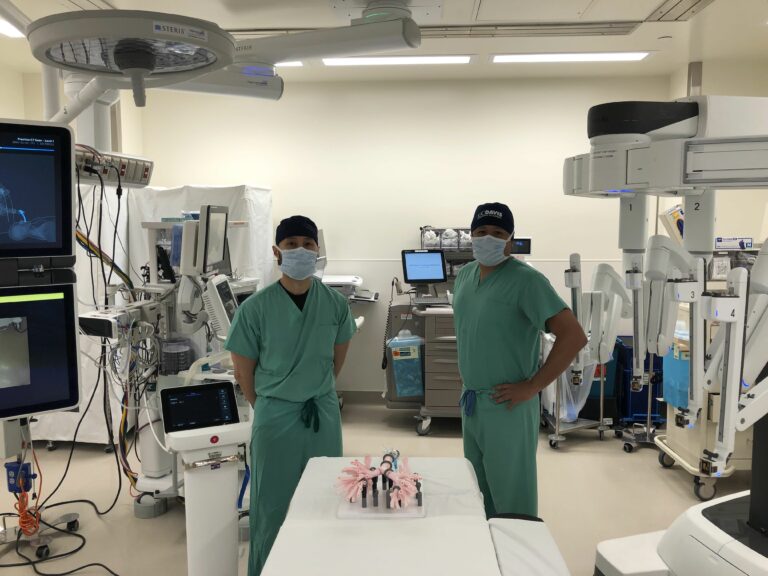
For the first time, physicians at UC Davis Health performed a robotically-assisted bronchoscopy, a procedure that examines lungs, for diagnosis and treatment of a lung cancer nodule within one operation. 

Dr. Chinh Phan, an interventional pulmonologist at UC Davis Health, described the general procedure for a bronchoscopy.

“A bronchoscopy is basically a camera that you insert either through the nose or through a patient’s mouth that you can use as a diagnostic or therapeutic tool, depending on the abnormality,” Phan said. “So it essentially is a scope with a camera at the end. And recently in 2018 and 2019, the evolution of bronchoscopy has shifted towards robotic assistive technology.”

Conventionally, a patient would set up an appointment with a physician for a biopsy and bronchoscopy, which would take a few weeks before the results return. In addition, results might indicate the need for surgery, which must be booked weeks in advance. The robotically-assisted bronchoscopy procedure removes the extra waiting time and creates a one-stop shop for both diagnosis and surgical removal of any abnormalities, all in one visit.

A huge landmark lung cancer trial over a decade ago revealed that low dose CT scans enabled earlier diagnosis of lung cancers, leading to a 20% reduction in mortality and extended life from an average of 50 to 80 years old, according to Phan. To treat earlier stages of lung cancers, which often took on the form of smaller masses, new intricate technology was needed.

“Here’s the problem: because we pick up these lung cancers sooner, that means that these lesions are a lot smaller we’re talking millimeters,” Phan said. “The older technology for diagnosing or to biopsy the lesion was difficult, using the traditional methods with the old sprocket scopes. Now this newer technology allows us to be more precise and get to these lesions safer and more efficiently.”

Aside from reducing patients’ anxiety during unnecessarily prolonged waiting times, this new approach has undoubtedly become the solution for enhanced precision and safety. Dr. Luis Godoy, a thoracic surgeon at UC Davis Health, underscored the significance of this procedure incorporating robotic assistance.

“The uniqueness of what Dr. Phan and I did was that we were able to combine both robotic approaches, the robotic bronchoscopy platform and the robotic surgery platform, in order to diagnose and stage the patient and then ultimately treat the patient, all within one single anesthetic event,” Godoy said.

The robotically-assisted bronchoscopy procedure uses a platform called the Ion Endoluminal Platform by Intuitive. The high-tech system creates a 3D map of the patient’s lungs using a CT scan. According to Godoy, the software then generates the safest and most efficient route through the lung to the nodule or mass. Once the most optimal route is determined, Phan would guide an ultrathin and ultra-maneuverable catheter to the site of the lung nodule or mass, where it is marked and biopsied with precision and stability. Lymph nodes are also biopsied during the same procedure and samples are evaluated on-site, all of which are completed within as little as 45 minutes.

If the lung nodule is determined to be an early-stage cancer, the surgical team led by Godoy uses the same navigational route to mark the area with dye to prepare for its removal. Then, the patient, still asleep, has a second robotic procedure using a platform called the Da Vinci Robotic System to remove the lung cancer mass on the same day.

“Dr. Phan was able to use the navigational robotic bronchoscopy to biopsy the lung nodule, confirm the cancer stage of the patient, and then I was able to do a lobectomy where I essentially remove the entire upper lobe of the right lung,” Godoy said. “We were able to do that all within a matter of hours and the patient went home the next day less than 24 hours later. I think that that’s one of the benefits of using the robotic system, which allows us to perform this complex operation minimally invasively and allows us to ultimately provide better care for the patients and get them home sooner with less pain than traditional open surgeries.”

Dr. Bahareh Nejad, the medical director of robotic surgery at UC Davis Health, echoed the sentiments of Godoy and Phan on how robotic assistance platforms have revolutionized interventional pulmonology.

“Innovations such as the robotic bronchoscopy platform are patient care at the absolute highest level, from diagnosis to treatment with a multidisciplinary team approach,” Nejad said. “We are excited to facilitate more growth with robotic surgery in our Robotics Program to make patient treatment better and more efficient.”

With the advent of successful robotic technologies, Godoy envisioned the continual rise in robotically-assisted procedures. 

“I think in the future we’re going to be seeing a lot more of these procedures that are going to ultimately decrease that time from the moment that the patient gets diagnosed with a lung module to performing the diagnostic steps and ultimately the surgical treatment of their lung cancer in a shorter period of time,” Godoy said. “This patient I just saw in the clinic this past Wednesday was doing great; his recovery was phenomenal. He and his wife, who live six hours away, actually reported that they were so happy that they didn’t have to wait weeks, worrying and being anxious about their lung nodule and whether it was cancerous or not.”

Post-operatively, Godoy hoped to be able to extend and offer combined procedures such as the robotically-assisted bronchoscopy to patients who live remotely in order to expedite and enhance accessibility of treatment options.

Written by: Brandon Nguyen — science@theaggie.org

UC Davis Baseball season ends with loss against Long Beach State

The Aggies were unable to bring runners home, resulting in a 0-3 loss to cap off the season

By MICHELLE WONG  — sports@theaggie.org 

The Aggies were unable to break their season’s losing streak against Long Beach State Saturday afternoon as they closed off the season with three consecutive losses against the Dirtbags. Playing shorthanded and with limited depth, the Aggies were unable to cash in with runners in scoring position as they closed off their season.

In their first game against Long Beach, the Aggies were able to take a lead in the first inning off of a Mark Wolbert double to right center field. After the Dirtbags took the lead again in the 8th, the Aggies caught up with them to tie it, leading to an 11-inning game. Yet despite their efforts, Long Beach was ultimately able to overtake the Aggies and won with a score of 5-4 off of a sacrifice fly in the top of the 11th. The freshman Wolbert led the Aggies in the series opener going 3-5 with a double and three RBI’s. 

The Aggies suffered a difficult loss during their second game of the series. With the Dirtbags already leading 6-1 in the seventh inning, they were able to bring in seven more runners in the 8th and win with a final score of 13-1. The Aggies struggled offensively and while they had five hits, third baseman James Williams III produced the lone RBI.

The UC Davis baseball team started off the last game of the series strong defensively in the first two innings with Carson Seeman as pitcher, until a single into right field by Long Beach’s junior designated hitter Chase Luttrell and a single into left field by freshman left fielder Rocco Peppi allowed Luttrell to come home, scoring the first run of the game for the Dirtbags.

Despite an error in the fourth inning that gave Long Beach’s freshman second baseman Eddie Saldivar on first with right fielder Peyton Schulze on third, amazing plays by James Williams III and Raul Sandoval prevented Long Beach from scoring any runs. Williams III, who played catcher on Saturday afternoon, was able to throw out Saldivar as he attempted to steal second, while Sandoval threw out freshman Schulze with an almost perfect throw to home after a sacrifice fly attempt into right field. 

Although the Aggies worked hard on defense, they were still unable to advance any players home in this fourth inning. Pitcher Andrew LaCour replaced Seeman as they entered the fifth inning. Tensions were high in the top of the fifth as Long Beach had the bases loaded, but UC Davis held them off and kept the deficit at one.

The score stayed stagnant in the sixth inning, but things soon took a turn for the worse for the Aggies. The bases were once again loaded by the Dirtbags after a walk and a couple hits. A hit deep into left field by Peppi brought home two of the runners, increasing Long Beach’s lead to 3-0.

While the Aggies’ fielding kept Long Beach from scoring any more runs, they were also unable to advance any runners past second the rest of the game. Despite this loss, graduating senior Kyler Arenado was able to end the game on a high note as he struck out Long Beach’s final batter of the game. Both Wolbert and junior Nathan Peng also served to be solid players, going 2-for-3 this game. The Aggies ended their last game of the season with a final score of 0-3. 

The team finished the season with a 6-35 overall record. Despite struggling, the Aggies finished 10th in the Big West Conference, ahead of UC Riverside.

Although they ended the season with a seven game losing streak a high point of the season was when the Aggies were able to take the series win over UC San Diego. While the Tritons were leading 5-3 in the 8th inning of the second game of the series, the UC Davis baseball team was able to score 4 runs in the ninth inning and took the victory, 6-5. In the third game of the series, the Aggies kept their lead and were able to win with a final score of 8-5, securing their series win. 

Throughout these games, Wolbert has shown great potential as he continues his collegiate career with a batting average of .351. and a fielding percentage of 0.990. Williams III also shined, as he had a .295 average and drew a team-high 22 walks this season. Sophomore pitcher Kaden Riccomini and freshman Bryan Green demonstrated to be key pitchers throughout this season, having their moments this season as well as pitching a lot of innings as well. These young players bring hope for the next season.  

To wrap up the season, the team honored four graduating seniors — J.D. Mico, Kyler Arenado, Nate Lemos and Raul Sandoval. Most of the team will be continuing on to next season, as the majority of the team is still very young. This extensive playing time under first-year head coach Tommy Nicholson can serve as crucial as the UC Davis baseball program looks toward the future.

Written by: Michelle Wong  — sports@theaggie.org

Commentary: Disingenuity in diversity reverses representation efforts in film and entertainment

The industry’s forced depiction of diversity proves to be more damaging for marginalized communities than a lack of it

By SUN YIE — arts@theaggie.org 

Retconning, also known as retroactive continuity, is a term used to describe creators who retroactively add details that alter fundamental elements of their work; for instance, they might revive a dead character, add details that solve gaping plot holes or address other illogical discontinuities. However, some creators, like J.K. Rowling, might retcon their work to shoehorn in disingenuous representations of diversity to pander to their audience, causing more damage to marginalized communities through their forced attempts of representation than the harm caused by the lack of it.

In 2007, Rowling sent fans reeling when she declared in an interview that the beloved, wise wizard Dumbledore of her “Harry Potter” series was gay. While a few fans interpreted this information to mean that Rowling would include more diversity in her work going forward, most were outraged by her performative activism and blatant queerbaiting. Though Rowling justified the dubiousness of this choice by claiming that her series was told through Harry Potter’s lens, thus making Dumbledore’s sexuality entirely possible, many fans retorted that there could have been queer relationships among students as well, especially during the Yule Ball, the wizard-world version of prom. This drove fans to claim that Rowling’s retconning had given her the space to act as an ally for marginalized communities without losing her profits, since none of this so-called allyship has been legitimized in her actual works — at least, not until her most recent work, “Fantastic Beasts: The Secrets of Dumbledore.” 

Rowling’s latest film begins with a younger Dumbledore locked in a battle with a younger Grindelwald, the wizarding crime-lord who wants to rid the world of Muggles, or non-wizards. While the two exchange magical battle spells, Dumbledore declares, “I was in love with you,” and then the screen cuts to Newt Scamander, the protagonist of the “Fantastic Beasts” series. Dumbledore’s grand proclamation of love lasts a total of five seconds on-screen, an accurate exhibit of Rowling and the Warner Brothers’ idea of adequate diversity and queer representation. 

Even worse than forcing these fragments of representation, though, is the fact that the Warner Brothers have admitted to erasing more scenes that would have supported Dumbledore and Grindelwald’s romantic relationship. They claimed to have done so to appease their Chinese audience, demonstrating their desire for profit at the cost of queer erasure. Considering Rowling’s ties to the Warner Brothers, this erasure makes her claims of allyship even more disingenuous and performative, demonstrating the growing need for the media industry to spotlight creators who represent marginalized communities in a healthy way. 

This erasure of queer representation by Rowling and the Warners Brothers has been mirrored by other streaming companies, like Netflix and Hulu, and bigger film franchises, like Star Wars and Marvel. Take, for instance, the unnamed Resistance fighter pilot couple who shared a kiss in “The Rise of Skywalker” that was so brief, it might have been missed by a blink. From the same franchise, Finn, one of the trilogy’s protagonists played by John Boyega, was erased from movie posters that were advertised to Chinese audiences and subsequently marginalized throughout the rest of the trilogy. Likewise, in his own series on Disney Plus, Loki had been confirmed to be bisexual, but the possibility of exploring his fluid sexuality was soon after abandoned by the showrunner. 

By providing their audience with these breadcrumbs of acknowledgment to these marginalized communities, the entertainment industry is able to continue garnering praise while maintaining these hollow acts of inclusivity. Though there has been an increase in well-written, constructive portrayals of queer and other marginalized communities, such as “Steven Universe,” “Sex Education” and “Heartstopper,” these shows are few and far between. The truth remains that the entertainment industry still has much more room to grow in terms of adopting real methods of change in the name of diversity. 

Written by: Sun Yie — arts@theaggie.org

Davis Pride Board, LGBTQIA+ Resource Center host events throughout May, into June in honor of Pride Month

Board members share their perspectives on Pride celebrations, planning the first Pride Festival on campus and goals for future years

By MALERIE HURLEY — features@theaggie.org

If you were near Dunloe Brewing Co. on the warm evening of May 21, you would have heard an outpour of cheers from a large group of Davis students tucked into the back patio of the bar. On a small makeshift stage, drag performers donning exuberant clothing and makeup performed in celebration of the Pride Month festivities put on by the LGBTQIA+ Resource Center

Students in the crowd were ecstatic, applauding the performers’ joy and the art of drag and singing along with as much intensity as those onstage. The event was one of the many that the LGBTQIA+ Resource Center has put on throughout May, which is Pride Month at UC Davis, to give visibility and celebrate LGBTQ+ joy among Davis students. This year, UC Davis’ Pride Month will conclude with the first-ever Pride Festival on campus, set to take place on June 3. This festival will come at the tail-end of Pride on campus, but it will kick off nationally-recognized Pride Month, held in June.  

While Pride is commonly thought of as a celebration of queer and trans love and identity, it has its roots in protest and rebellion against the oppressive social norms that rendered LGBTQ+ people to the margins of society throughout history. 

The story of Pride begins at the Stonewall Inn in Greenwich Village, a bar popular among LGBTQ+ New Yorkers in the 1960s. Since it was illegal to serve alcohol to a gay person in New York until 1966 and homosexuality was considered a criminal offense in the state until 1980, LGBTQ+ people flocked to bars like the Stonewall Inn, which did not have legal liquor licenses, because these spots were less likely to discriminate against customers.

On June 28, 1969, police raided the Stonewall Inn with the intent to “investigate the illegal sale of alcohol” and began to question those inside. According to witness records from the Library of Congress, officers and bar-goers began to fight and continued throughout the night and into the following morning. 

This event was later dubbed the “Stonewall Riots” and on its one-year anniversary, the first Pride March was held to commemorate the event. The tradition has grown since and LGBTQ+ people and their allies continue to march and celebrate every June to provide visibility for the community and fight for gay liberation in society.

At Davis, Pride today means different things for many LGBTQ+ students. For some, it’s a chance to be represented and find community; for others, a chance to spread awareness about LGBTQ+ issues and fight against discrimination; for many, the month is a time to have fun with other queer and trans people. 

Emma Bishoff, a third-year American studies major and the director of the ASUCD Pride Board, said that the modern-day “corporatization” of Pride by many corporations is a vast departure from the original radical intentions which brought freedom to LGBTQ+ people of all backgrounds. She explained that her own understanding of Pride has evolved away from that presentation of Pride in recent years.

“I think recently it’s become a more radical thing for me, as opposed to ‘rainbow capitalism’ and the Pride that corporations want to benefit from — which actually harms queer people,” Bishoff said. “Focusing on things that actually benefit queer and trans people, like their liberation and their joy, while addressing really serious issues within the community and the history of Pride, is important.”

Bishoff said that the Pride Festival at UC Davis hopes to honor the original intentions of the first Pride while taking a more intersectional approach to LGBTQ+ activism and visibility. Working with organizers of the Davis Art Market, the festival will showcase local queer and trans vendors and artists selling their work, allowing students to support LGBTQ+ people in their local community. Additionally, the event will give students a chance to enjoy queer performers, art and music. 

Gracyna Mohabir, a fourth-year student double majoring in economics and environmental policy analysis and planning and the co-chair of the ASUCD Pride Board, said that one of the goals of the festival is to offer students of all backgrounds a space to explore queer identity and community — including those who are questioning their sexuality or have not come out.

“Large-scale private events are a very low-commitment way for people who are closeted or questioning to introduce themselves to that space in their own time,” Mohabir said. “Personally, when I came to campus, I did not step foot in the LGBTQIA Resource Center. No fault of theirs, but I was very nervous to openly enter a queer-specific space like that. A lot of my formative queer experiences came from more low-key events where I could just participate as an observer.”

Festival organizers also hope to connect queer and trans students with a multitude of student organizations and resources that aim to address issues that adversely impact them, especially those who may not come from accepting family or social circles. 

One of these organizations is Aggie House, which will be helping LGBTQ+ students who are disproportionately impacted by housing insecurity access campus resources that can help them find safe spaces to authentically be themselves. 

Since this is the first student-run Pride festival to be held at UC Davis, Ashley Chan, a second-year political science major and the co-chair of the ASUCD Pride Board, hopes that the event will be a success and lead to the creation of a permanent Pride Board that will solidify Pride into the UC Davis calendar for years to come.

“Ultimately, I hope […] it will be proof and evidence that student leaders can create something so large and wonderful,” Chan said. “Hopefully we can make it into an [ASUCD] unit, because we’re essentially doing the work of a unit, like the Whole Earth Festival or Picnic Day, and LGBT+ students deserve nothing less. So I think institutionally and long term, I really hope that this festival can kind of signal that Pride is here to stay and that we can make this bigger and better in future years.”

While the festival will represent an exciting start to Pride month for LGBTQ+ students, the end of the year can bring mixed emotions for many, especially those returning to homophobic or transphobic family and social circles for the summer, Bishoff said. While visibility and community are so important to sustain queer joy, some students don’t have the same level of freedom and acceptance that they experience in queer spaces at Davis upon returning home. 

There have been several legislative attacks on queer and trans people from our highest levels of government in recent months, and many might be entering this June with mixed feelings. For those sharing these sentiments, Emma Bishoff said that prioritizing self-care and self-love are necessary to combat harm and can be one’s armor when returning to spaces that may not be accepting. 

“Taking care of yourself as a trans person is radical,” Bishoff said. “It truly is, and just making sure that you have those safe spaces, whether it’s online, in person, with other people in the community or by yourself just in a quiet place is so important. Take care of yourself, and just know that you are worthy. […] No matter what somebody says to you, you’re still worthy.”

Written by: Malerie Hurley — features@theaggie.org

For those looking for mental health assistance related to sexual orientation or personal identity, visit www.thetrevorproject.org to get connected with resources and care. 


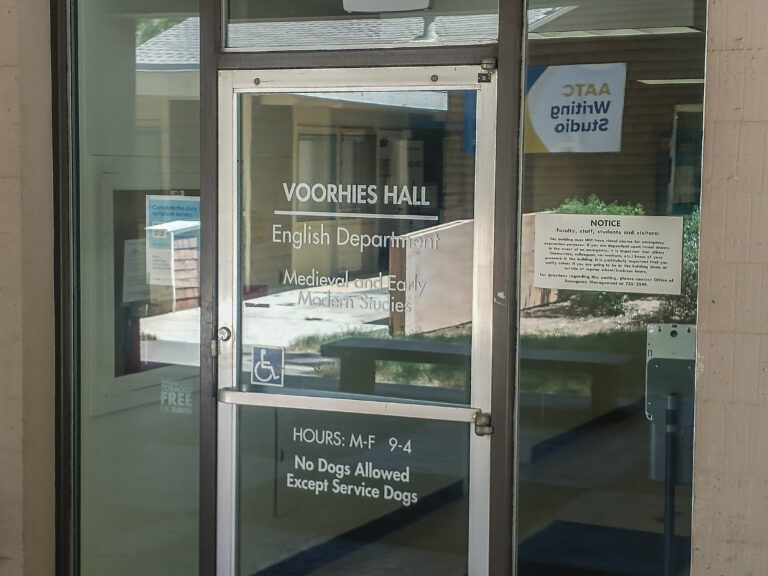
English graduate students with disabilities cite the university as putting up unnecessary barriers

Multiple application processes for requesting accommodations have impacted graduate students with disabilities in their studies and employment

By KATHLEEN QUINN— campus@theaggie.org

Graduate students with disabilities have expressed frustration over the process of seeking accommodations at UC Davis. 

Heather Ringo, a second-year Ph.D. candidate in English, requested remote learning accommodations. After her accommodation was approved by the Student Disability Center (SDC), one of her professors refused to implement it, according to Ringo.

“It’s basically poisoned the well for me,” Ringo said. “I literally depend on them for my recommendations, and now I’m in this contentious situation and they’re denying my rights.” 

Jennifer Billeci, the director of the SDC at UC Davis, said that she was not aware of any outstanding complaints that have come to their office, but encouraged students who have concerns to contact them. 

Ringo said that, in her experience, the amount of work necessary to get remote accommodation weeds out students with disabilities in graduate programs.

One of the main barriers is the process of applying to the SDC and Disability Management Services (DMS), according to Emily Breuninger, a Ph.D. candidate in sociology who worked with students with disabilities to file grievances through UAW 2865, the graduate student union.

“There’s this separation between SDC and DMS so they’re always applying twice for everything,” Breuninger said.

SDC does not coordinate with DMS, the office that addresses employee accommodations. Instead, they will refer a student to DMS upon the request of the student. 

“Accommodations are made on an individualized basis, tied to the student’s functional limitation,” Billeci said. “You have a different role as a student than you have as an employee and different factors to consider.”

DMS has a separate process for requesting remote accommodations as a teaching assistant. All other requests go through the graduate student’s supervisor, such as a chair or instructor, according to DMS Director Elizabeth Hammond Delo. 

Claire Waters, the chair of the English department at UC Davis, said that one of the concerns she heard from students was that people did not request accommodations because the process was frustrating. 

Billeci said that the SDC’s focus is to provide quick access to accommodations for students. Long-term concerns are addressed by the university through a committee that includes SDC and DMS. 

“I know that we do not have a particularly accessible campus in general,” Waters said. “But I would say within the constraints, I think the [SDC and DMS] did a good job.”

Delanie Harrington Dummit, a second-year Ph.D. student in the English department, who identifies as hard of hearing, said that she had mostly positive experiences with accommodations within her department.

“A lot of that is that deafness is a little easier for people to grasp than other disabilities and chronic illnesses,” Dummit said. 

Breuninger said that she started to understand the issues associated with receiving accommodations better once she started handling grievances as part of her work with the union.
“The school imposes these things, and there is no mode of recourse,” Breuninger said. “I’ve seen graduate students leave their programs. That’s the saddest part, usually, folks end up getting pushed out because everywhere they turn it’s like impossible, it’s a constant fight.”

The Planned Educational Leave Program (PELP) is a program for students to temporarily suspend their academic work at UC Davis. Breuninger said that during the pandemic the university repeatedly mentioned the PELP program as an option for students who have struggled to get an accommodation request approved. 

Ringo said she has concerns that her efforts toward getting accommodations have jeopardized her chances of receiving fair treatment within her department.
Ringo’s Ph.D. program requires her to be evaluated by leaders in her department, and she said that after raising such complaints, the committee to evaluate her preliminary exam was restructured due to objectivity concerns.

“They had to go outside the department to find somebody to be on my committee,” Ringo said.

There is currently no mandatory disability-specific training at UC Davis for faculty, though compliance to the Americans with Disabilities Act is included in two of the mandatory supervisory training, according to DMS Director, Elizabeth Hammond Delo

The SDC, in conjunction with DMS, offered a faculty-only training in April at the request of the English department. 

Sarah Theubet, the president of the ASUCD Disability Rights Advocacy Committee (DRAC), also organized training for the department after hearing concerns about the refusal of accommodations.

Though the concept of training had been brought up before, Ringo’s SDC accommodations were refused. This refusal was a catalyst for the training, according to Dummit.

Waters said that their department wanted to mandate training on disabilities, but was told they could not mandate anything that the school itself did not require. 

“I personally think that it would be useful,” Waters said. “Insofar as we have other trainings, sexual violence, sexual harassment training for example.” 

As a member of the English Graduate Student Association, Dummit has advocated for mandatory disabilities training. 

“We as grad students said ‘We want to encourage you to mandate this training,’” Dummit said. 

For the department, Waters said that the plan is to regularly set aside time to discuss disability, as well as other topics, in a formal way coupled with graduate and faculty workshops.  

“The thing that we realized, and we were sorry to realize, was that there were some pretty fundamental things that maybe people weren’t thinking carefully about,” Waters said.

Ringo, who is currently on PELP, said her experience with pursuing accommodations and advocating for herself made her experience unnecessarily difficult. 

“They are already treating me like I’m gum stuck on their shoes,” Ringo said.

According to Dummit, well-meaning instructors and advisors may make common mistakes related to when to talk about a person’s disability due to the lack of education about disability. 

“People don’t think of themselves as ableists, they don’t think of themselves as creating barriers,” Dummit said. “There are tangible things you can be doing to make your class accessible regardless of whether or not you get a letter from the SDC.”  

Written by: Kathleen Quinn— campus@theaggie.org

It’s time to tune into pro cycling

Professional cycling embodies true humanity in sport


By ALEX MOTAWI — almotawi@ucdavis.edu


There is something special about professional cycling. When I first tuned in, I thought it was just like every other sport on television, but it’s different. I had a hard time putting my finger on why it was, but now that sports are veering back towards normalcy, it dawned on me. Unlike in other sports where games might not take place on consecutive days, it can take weeks to finish a pro cycling race. The emotion that comes from that length is why cycling is so beautiful to watch. 

The main event in the cycling season is the Tour de France, which consists of 21 separate stages over the four-week grand tour. Winning the general classification, which means finishing all 21 stages in the fastest cumulative time, is the greatest achievement in the sport. Last year, it was won by the Slovenian phenom Tadej Pogacar, who, after almost 83 total hours of racing, won by just five minutes. He also took the win two years ago by 59 seconds, not racing into the lead until he pulled off a miraculous time trial on stage 20. For a general classification (GC) rider like him, even just one bad stage in the 21-stage race can lose them the entire race — and it happens often. Every single day matters.

For riders who don’t have the chops to compete in the GC (almost everyone), it’s a dream come to life to win a stage in one of the three grand tours. Winning a stage in a grand tour almost guarantees you a long career in the peloton regardless of how you were seen before. For a lower-division team that received a chance invite into a grand tour (or even a lower-ranked World Tour team), winning just one stage can define season success for the entire team. This means every single day is full of riders doing everything in their power to cross the line first, and it shows. Watching an underdog cross the line in first place and break down in tears after pushing their bodies for what can be over six hours is a special experience.

In that respect, the one-day classics are even better. These races are special. They average 160 miles and take over six hours to complete and are designed to be incredibly difficult courses full of hills as well as cobblestone or gravel sections. In races like grand tour stages, an underdog can get lucky and win a stage; in a race like this, luck can only hurt you (bad luck in the form of mechanical issues or crashes). In races like these, the strongest person out of the roughly 150 riders takes the win, every time. The endings of one-day races are, in my opinion, peak cycling. These are the races where riders collapse after the finish line in tears that represent both joy and heartbreak.

Cycling is not just a men’s sport, either. The women’s pro peloton is the strongest it has ever been and its racing circuit is adding new prestigious races every season. While women’s cycling has been neglected in the past, it is quickly becoming an institution fans can be proud of and an integral part of the overall sport. It’s just as entertaining and its growth as a sport is a blast to watch — I often feel like men’s cycling rides on the coattails of tradition, while women’s cycling is blazing a new path.

Fans of athletes or entertainers have seen emotional interviews before. They are right after a team wins the Super Bowl or gives the onstage performance of a lifetime. They are the rare scenes that memorialize such great moments and if you are a sap like me, you are crying right along with them. In cycling, scenes like these happen after almost every race and are stronger than ever, as there are few sports that can push a person further past their limits than cycling. The finish of last year’s Paris-Roubaix is quintessential cycling. The winner (Sonny Colbrelli) is covered in mud, bawling his eyes out on the ground after six hours of racing, and the rider who lost by less than a second is doing the same. While that is one of the most emotional scenes in recent memory, riders leaving their hearts on the field is commonplace, and the true reason why watching pro cycling is such a treat.

I watch sports to watch people push their boundaries. I watch sports to see people give everything they have and more to try and reach something greater. I watch sports to see the greatest humanity has to offer. I watch sports to see people be people — and that is what you get from pro cycling.


Written by: Alex Motawi — almotawi@ucdavis.edu

Disclaimer: The views and opinions expressed by individual columnists belong to the columnists alone and do not necessarily indicate the views and opinions held by The California Aggie.


Student switches from major they hate to major they will end up hating equally

Guys, guys, guys — this is my life’s passion. For real this time

BY ANNABEL MARSHALL — almarshall@ucdavis.edu 

Two people crossed paths in front of the CoHo. From an outsider’s perspective, they had nothing in common, no reason to stop or even glance at each other. Two ships passing in the night. 

But soulmates are real, at least for this one time.

Sophia Frances. Art history major. She’s an amateur scorpion breeder, much to her landlord’s delight. She only shaves above the knee. When she types “Grindr,” it autocorrects to “Gryffindor.” 

In her apartment, all of the walls are painted a shade of green she found at the thrift store. The paint probably contains uranium. On her desk, she has a framed photo of J. D. Salinger that she tells everyone is her grandfather from “the war.”

Liam Gallagher, no relation. Biochemistry and molecular biology major. His best attempt at a pick-up line is, “Do you know Italian?” He doesn’t know Italian. His ex-girlfriend just came out as straight again. She thought she was gay, but it turns out it was just him. 

In middle school, his claim to fame was that he could vomit on command. Currently, he receives about four texts per week. All of the remaining notifications are from Reddit. When he types Grindr, it autocorrects to Gryffindor.

Lately, Sophia has been mulling over something. She’s been pondering it in the way only Elliot-Smith-listening, Doc-Martens-wearing, Emerson-reading new-age hippies can. And she’s come to a conclusion: It’s time to switch majors. 

Turns out art history isn’t just appreciating the old masters with a reverence that grants inner peace. You also have to memorize an avalanche of names, and the ones that aren’t Ninja Turtles are hard to remember. 

And all of her friends are in bands, which is emotionally exhausting. It might sound fun to have friends in bands, but that’s only until you’re being asked to three gigs a week at different janky bars, and someone is always trying to hand you a CD of their latest LP, and you don’t have the heart to tell them that you don’t even have a CD player. Also, it’s not actually the most lucrative major. Pause for surprise. Now she thinks it’s time for a 180 into everyone’s classic Plan B: pharmaceutical research.

Liam isn’t doing too hot either. He just heard a professor say, “Actually, everything you’ve learned about this up until now was massively oversimplified,” for the fourth time this quarter. It has been weeks since he’s made eye contact with someone who didn’t look like they wanted to set their backpack on fire.

He buys four cartons of ice cream in different flavors to prepare for the aftermath of a conversation he’d been dreading for nine months. He is telling his parents that he is dropping out of biochem to pursue a graduate program in museum studies, the first step in which was majoring in art history. In fact, he is on his way home to call them up. 

He doesn’t even register Sophia as she passes, flouncing in a skirt that was forty dollars more than the retail price because it was from a vintage store in Portland. She doesn’t bother to look at him, his lab goggles still imprinted on his face, running on forty minutes of sleep. 

In this moment, they are perfect. And they are oblivious. They have no idea of the harmony of their souls, that they vibrate at the same wavelength. They have no idea that exactly one year later, they will be in exactly the same place, walking the same way. Liam will be wearing Teva sandals and sipping an oat milk latte. He will have spent half of his paycheck on oat milk. Sophia will be clutching an unfinished pre-lab and will be texting her friends to say, no, she can’t make it tonight. Or any other night. 

They will be exactly as happy as they were a year ago.


Written by: Annabel Marshall — almarshall@ucdavis.edu 


Disclaimer: (This article is humor and/or satire, and its content is purely fictional. The story and the names of “sources” are fictionalized.)


Sacramento, Yolo County aim to make voting accessible to all who are eligible 

With the California primary election coming up on June 7, The Aggie explores accessible voting options for voters with disabilities and discusses how county officials are attempting to increase voter turnout

By LEVI GOLDSTEIN city@theaggie.org 

The California primary election mail-in ballots have been delivered and ballot drop boxes are open. But the turnout of voters ages 18 to 24 was lowest compared to other age groups in the 2020 presidential election, according to a press release from the U.S. Census Bureau. The percentage of UC Davis students who vote in ASUCD elections is even lower. 

With this in mind, The Aggie spoke to Yolo County and Sacramento County officials to discuss how they are working to make voting accessible for all and increase voter turnout in the greater Sacramento area. 

 Student voters are highly valued, with the Yolo County Elections Office installing a permanent drop box on campus on April 19 this year. In addition, according to Jesse Salinas, Yolo County’s chief election officer, a voting center will be open in the ARC Ballroom from June 4 to 6 from 10 a.m. to 6 p.m., as well as on Election Day, June 7, from 7 a.m. to 8 p.m.. 

Yolo County aims to make voting more accessible for all county residents, Salinas said. Yolo fully transitioned to be a Voter’s Choice Act county this year, according to Salinas, meaning voters can cast their ballots however they want, in-person or by mail, and at any polling place in the county. Every voter was mailed a ballot despite what they listed as their voting preference when they registered. Moreover, Yolo will have three voting centers open for a full 11 days starting on May 28, including one in Davis at the Veterans Memorial Center at 203 E. 14th St. 

Yolo County also recently started a mobile voting service center for remote communities. 

“We can bring democracy out to voters that may not be able to make it into a bigger city that we have our vote centers located at,” Salinas said. 

Barriers to access for students with disabilities on the UC Davis campus are an ongoing issue, and it is the same for voting access across the country. Yolo County provides alternative voting options to ensure voters with disabilities can cast their ballots. 

At polling places, there are machines with touchscreens with a variety of font options, audio listening and a joystick for navigation. There is also curbside voting where the polling staff can come to you in your car. If a person needs additional assistance, they can contact the office to arrange a remote vote by mail option.

For Sacramento County, the ​Sacramento County Voter Registration & Elections department works with a citizen Voter Accessibility Advisory Committee to ensure voters with disabilities have access to election materials and a Language Accessibility Advisory Committee to ensure voters who speak other languages have access, according to Janna Haynes, a county public information officer. 

“Our registrar of voters is very available to people for feedback and to talk through the latitude that we have based on election code,” Haynes said. “Some things the election code dictates that we don’t have any say in and other things we do have the opportunity to change based on the needs of our county. We are in a constant dialogue with our constituents.”

Options for voters with disabilities in Sacramento also include touch screen machines at voting centers. Voters can also request to use a more accessible website to vote at home. 

According to Haynes, in terms of language accessibility, the U.S. federal government requires that ballots are written in Spanish and Chinese in addition to English. Counties can add additional languages as needed. 

“This is our first election adding Vietnamese because we received quite a few requests from our constituents for Vietnamese,” Haynes said. “We also do have the ability to print out ballots at our vote centers in other languages.” 

Ultimately, the goal is that everyone eligible to vote has the opportunity to vote. 

“We need to be able to help make democracy accessible and available to all voters because the decisions that are being made by your local elected officials are very impactful,” Salinas said. “I want everybody to have the opportunity to have a voice determining who are the leaders that they want. […] Your way of making change is by voting and putting people into office who believe in the same values as you do. As a result, you can have an impact on your daily lives.”

A complete list of ballot boxes and voting centers in Yolo County is available at www.yoloelections.org/voting/polling_place and for Sacramento County at https://elections.saccounty.net/votecenters/pages/locations.aspx


Written by: Levi Goldstein — city@theaggie.org


UC Davis students with food allergies share their experiences in recognition of Food Allergy Awareness Month 

Students describe dining common accommodations and offer advice for how peers can support friends with food allergies


By SONORA SLATER — science@theaggie.org


May is Food Allergy Awareness Month, which recognizes a condition that affects around 6-8% of adults in the U.S. and ranges from causing mild hives and itchiness to life-threatening reactions, according to a recent press release from UC Davis Health.

If you’ve ever contemplated how your dairy-free roommate lives without cheese, or struggled to remember not to bring a peanut butter and jelly sandwich to lunch with your friend, this might be a chance to learn about how you can support them. 

UC Davis students with food allergies talked about their experience so far at college, especially when they were freshmen eating at the dining commons (DCs).

Melinda Ma, a third-year animal science major with a dairy allergy, said that it was sometimes difficult to find options at the DCs.

“I’m very grateful that [Segundo] was pretty consistent with labeling the allergens so I didn’t have to worry about accidentally eating dairy,” Ma said over text. “But some days there weren’t that many options for me except the salad bar or one soup and the vegan option that wasn’t always great.”

Alex Chang, a third-year biological sciences major who is allergic to dairy, seafood and peanuts, said that he was pleasantly surprised by the availability of allergy-friendly dishes at the DCs, although the options were still somewhat limited.

“When I went to the Tercero DC, my diet consisted of burgers, salads, Mongolian wok, soups, and vegan cookies,” Chang said over text. “They also usually had some sort of meat dish either at the Pacific Fusion or the Bistro.”

The staff was very accommodating and helpful if they had specific requests, such as removing cheese from burgers, removing a sauce that contained dairy or asking for dairy-free ice cream, according to both Ma and Chang.

“There was never a day that I went to the DC where I could not find something to eat,” Chang said. “Although, sometimes when my friends got salmon or cheesy pasta, the smell was so overwhelmingly good that I was jealous that I couldn’t eat it.”

Dietary accommodations for food allergies are only available in the Residential Dining Commons — Segundo, Tercero and Cuarto — which does not include Latitude. Student Housing and Dining Services was contacted for comment but did not respond as of May 23.

Latitude features cultural cuisine from around the world and attempts to accurately represent authentic culinary traditions, according to the website. Because of this, the dishes served may contain major food allergens, which is why dietary accommodations through the Dietary Support Program are not offered at Latitude.

Chang said that he did find it hard to eat at Latitude due to a lack of variety. 

“Almost every single dish there had either seafood or some kind of dairy, either mixed into the dish or baked into it, so it was impossible for the staff to serve it dairy-free,” Chang said. “On most days, the only thing that I was able to eat was the shawarma. My friends kept on going to [Latitude] to try out all the exotic dishes, but I quickly tired of the shawarma and returned back to the comfort of Tercero DC.”

Daily menus for each DC are published online in order to help students know what is being offered, according to the Student Housing website. These are resources that Chang said he regularly took advantage of. 

“I would check both menus online to see what kind of foods that they had to offer, and would choose my dining common accordingly,” Chang said. “There were the rare days that Latitude served ramen or steak, both of which were allergen free, and I was always the first of my friends to know about it.” 

All dishes in the DCs are also labeled for wheat, gluten, soy, dairy, shellfish, eggs, tree nuts, peanuts, sesame and coconut. Allergy-friendly options in each DC are available at the Bistro, where a variety of dishes without any major allergens can be found. However, the DCs are not certified allergy-free or gluten-free facilities since other dishes served may contain major allergens, according to the Student Housing website. 

Chang said that while he did know about the daily online menus for the DCs, he wishes he had known about some of the other resources available to UC Davis students with food allergies. 

“I […] recently learned of the ‘Food Allergy and Dietary Accommodations’ page on the Student Housing and Dining Services Website, which detailed all the information and accommodations that the dining commons and other on campus food offerings would make,” Chang said. “I wish that I discovered this page sooner, as there were many options that I was not aware of in my freshman year.” 

Apart from the accommodations the university offers, there are also ways that students can help support their peers who have food allergies. In a recent press release from UC Davis Health, pediatric allergist and immunologist Victoria Dimitriades suggested some tips to help those with food allergies.

These include taking the time to learn what your friend is allergic to, reading labels, washing your hands to reduce cross-contamination, disclosing allergens in cooked food and knowing what to do if your friend is exposed to allergens. 

Ma offered some advice of her own to students wanting to support their friends in this way. 

“We feel very loved when you remember and check in with us about food options,” Ma said. “But no worries if you forget [because] we can always make do with the options we have. And no need to feel bad or feel like you are restricted to not eat what we are allergic to in front of us, unless it’s a severe nut allergy or something. […] We want you to enjoy what we can’t eat.”


Written by: Sonora Slater — science@theaggie.org


Emily Tran discusses choosing her major, favorite college memories, career trajectory

This spring, seniors reflect on their time at UC Davis and share their plans for post-grad 


By JALAN TEHRANIFAR — features@theaggie.org


This is the third story in The California Aggie’s five part series profiling seniors graduating from UC Davis this spring. Throughout the quarter, The Aggie will be speaking with seniors about their UC Davis experiences, favorite memories and plans for after graduation.


Emily Tran, a fourth-year biological sciences major from Alameda, CA, will be saying goodbye to UC Davis at the end of the quarter — but she said that the university will always be a part of her. 

Although Tran’s deep-rooted interest in science is what led her to choose biology as a major, she said that her mother’s career played a role in her choice of minor: education.

“I chose education as a minor partially because my mom is a teacher,” Tran said. “I wanted to learn more about what she does and also I had to take a few education classes to become a peer tutor. I had already taken half the courses required for a minor so I thought I might as well take the rest and the classes were super interesting.”

Tran said that she ultimately chose UC Davis after visiting the campus because of the college town environment.

“I actually toured twice before I decided to come here,” Tran said. “I really liked the environment here. Davis is close to home too, so that was a plus.” 

During her undergraduate experience, Tran joined clubs and interest groups that mostly involved working with children, including Princess Pals. Club members dress up as princesses and visit children in foster homes, hospitals and shelters who love Disney with the hopes of brightening their days. Tran said that she served as a general member of the club during her first and second years at Davis before serving as the outreach director and eventually president of the club. 

“It’s honestly my favorite club because it’s such a fun group of people to be around and you get to do fun activities with kids, which I really like,” Tran said. 

Tran is also a part of Project Catalyst, which, she explained, combines her interests in education and science.

“What [Project Catalyst] does is go to the elementary schools around Davis and Woodland and give them science experiments to do,” Tran said. “We give them a presentation and walk through it with them. We’re just trying to inspire the next generation of scientists and get them interested in the stem fields.” 

Tran said that though she chose to major in biology, her interest in science extends to other specializations, including chemistry. 

“I’ve been doing research with Dr. Gulacar, who teaches the General Chemistry series,” Tran said. “His research is focused around Chemistry education, which is really fun. I have a couple papers published and we’ve been presenting at conferences too.”

After graduation, Tran hopes to take a gap year to travel and reconnect with friends before attending medical school and possibly specializing in pediatric care.

Her advice for future and current students is to be open to exploration and adventure. 

“I feel like I’ve always been a very cautious person and I always hesitate to do things, but I think I’ve learned to be more spontaneous,” Tran said. “Everything always works out and ends up being fun.”

As she prepares to say goodbye to UC Davis, Tran said that she has been recounting the many great memories she has made over the past four years — especially during her freshman year. She said that though she will be leaving in just a few weeks, Davis will still feel like her home.

“I feel very connected to this place now,” Tran said. “After the four years I’ve spent here, I feel like I’ll always have a very strong attachment to this school and this town.”


Written by: Jalan Tehranifar — features@theaggie.org