58.6 F
Davis

Davis, California

Monday, December 22, 2025
Home Blog Page 204

Is your study music helping or harming your productivity?

UC Davis students weigh in on their study music preferences


By CORALIE LOON — arts@theaggie.org


It isn’t uncommon for students to pop in some headphones and listen to a favorite Spotify playlist when in need of some extra motivation. Music can be a fun way to help make studying more interesting and make the hours feel like they’re speeding by. But does listening to music while studying actually improve productivity? And if so, what’s the secret?

I sent out an anonymous survey through both text messages and an Instagram story to UC Davis students and of the 15 respondents, the majority (about 90%) reported listening to music while studying either “always,” “often” or “sometimes,” with “always” being the top response. While listening to music is a popular study habit, not everyone agrees that it helps productivity.

Nova Tambke, a first-year computer science major, sometimes listens to music when studying but finds it distracting for reading. 

“If I want to maximize my productivity, no music would probably be best,” Tambke said.

In fact, when asked about listening habits while reading, the number of students who responded to the survey with never listening to music jumped to around 70%. A few studies have shown that listening to music lowers reading comprehension and might harm the retention of information, a slightly discouraging finding for study-music lovers.

However, reading a difficult passage in a textbook is only one type of studying. When it comes to non-reading forms of studying, music shows more promise in helping productivity and focus.

One well-circulated theory dubbed the “Mozart Effect” argues that listening to classical music is the superior way to go and that it can even boost intelligence and cognitive abilities. However, despite its continuous reappearance in online media, it has been debunked.

In reality, any benefits classical music might have on productivity probably have more to do with its lack of lyrics and relaxing effect (which anyone who has listened to “Flight of the Bumblebee” knows is not an intrinsic quality).

Genevieve Hasslen, a third-year neurobiology, physiology and behavior major who is trained in classical ballet, understands the benefits of classical music. 

“Listening to classical ballet music and different concertos and sorts helps me relax and take deep breaths,” Hasslen said. “I typically will do that, the classical music, if I’m needing to read or it’s something that I need to put a little bit more analysis into.”

But while being “relaxed” may help focus to a certain extent, is it really the right mindset for studying? The fact that many students turn to coffee to alleviate productivity slumps, a stimulant that can increase anxiety, argues for a different perspective.

When asked about what music helps her feel the most productive, Hasslen’s preference was a Lofi hip hop playlist she listens to on YouTube. 

“It’s weird, every beat almost keeps me accountable, keeps me going,” Hasslen said. “It’s nice listening to it.”

“Lofi,” which a Forbes article describes as an “instrumental blend of traditional hip-hop and jazz,” is arguably one of the most popular study music choices.

In the same survey of UC Davis students’ listening preferences, the top responses to the question “What type of music makes you feel the most productive?” were “upbeat music” and “instrumental music.” Coincidentally, lofi hip hop might be the perfect combination of the two, combining relaxing instrumentation with more motivational electronic beats.

Those who find lofi to be an effective studying genre may even want to try out video game music, which is designed to be stimulating without being distracting, two traits that study music benefits from, and has been shown to help with focus and efficiency. 

Of course, there are many options of music to study to, and some students seem to have no problem listening to traditional pop or rap while grinding. However, the overarching theme seems to be that wordless yet stimulating music is the key to a rewarding study session.

Of course, a quiet environment can be just as helpful, if not more helpful, for memory retention. But in a public setting, silence can be hard to come by, and music can be a slightly more entertaining version of white noise.

“[Music] doesn’t make me more productive than if I just didn’t have any music,” said Megan Midkiff, a first-year sociology major. “It just makes me focus a bit better when there’s distracting noises.”

Both study habits and music habits are deeply personal preferences that vary according to the individual. In the end, the bottom line for study music is: do what works for you, but keep an open mind. Who knows, the Super Mario Bros soundtrack may just be what gets you through your next essay.


Written by: Coralie Loon — arts@theaggie.org

 

Yolo County hosted ‘Rethink Your Drink Day’ on May 11

Program encourages people to replace sugary drinks with water


By SHRADDHA JHINGAN city@theaggie.org


In a press release published on April 27, Yolo County announced that Rethink Your Drink Day would be held on May 11. The event was held at various CommuniCare health centers throughout Yolo County.

The press release explains that Rethink Your Drink Day is part of a larger movement across the state of California encouraging people “to ‘refresh better’” by replacing sugary drinks with water. At the event, people had the opportunity to try infused waters for free alongside recipes to create on their own. Attendees were also able to obtain resource guides that can help track how much sugar is in various popular drinks.

Laurel Denyer, the outreach specialist for Yolo County, explained further what the program consists of.

“The Rethink Your Drink program happened […] in the month of May in California, so it’s a statewide program and it’s done by local public health departments like ourselves where we promote having […] water instead of sugary beverages,” Denyer said. 

Denyer added that in addition to water in place of sugary drinks, the program also promotes healthy eating options such as produce and fruits. 

“[…] The number one source of added sugar in American diets is through beverages,” Denyer said. “So, it’s all about two things: water for health reasons – prevent obesity and types of diabetes – as well as tooth decay and cavities.”

According to Healthy Food America, soda composes 65% of the sale of sugary drinks. In Yolo County, in addition to water, an alternative to sugary drinks is the apple juice sold at the Apple-A-Day stand at the Farmer’s Market, whose only ingredient is apples. 

Carlene Upton, the manager of the Apple-a-Day stand, explained that the product is a staple in Davis, and many people come to try it. 

“We’ve been here — I want to say — about 30 years, and it has been popular with the students and the residents of Davis all along,” Upton said. “Even today, a young person came back and said they had it as a kid. They bring their children back. Every time that people have had Apple-a-Day apple juice, they come back.”

Denyer further explained that the event held on May 11 was held in three different CommuniCare health centers across Yolo County: Davis, West Sacramento and Woodland. 

“We had free infused water samples, as well as stickers and freebies for kids, as well as recipe cards for the water that we had as well as other recipes people could make, they could try at home,” Denyer said. 

In addition to samples for people to try and other ways people could make their diet healthier, there were also interactive activities. Denyer explained what the activities consisted of. 

“And then we had a wheel that would spin and it lands on different kinds of [sugary] beverages, and we would help them figure out how much sugar was actually in that beverage,” Denyer said. “So that’s what we did on May 11, last week, and there was a KCRA 3 interview as well […] to promote it.”

For those who are looking for other ways to cut back on sugar, and replace sugary drinks, UC Davis also offers the Healthy Beverage Initiative. More information can be found on its website.

Denyer explained that in addition to the Rethink Your Drink program on May 11, the team was also at the Aggie Compass Basics Need Fair and among other things was also distributing water.

Such programs help Yolo County residents, as well as the foster community in Yolo County, make healthier choices. This is especially important after more than two years of the COVID-19 pandemic, where many local businesses struggled.

“It’s been a pleasure trying to stay open in spite of all the difficulties, but what made it much easier is the fact that our regular customers showed their support by showing up and by generously tipping our employees,” said Sinisa Novakovic, the owner of Mishka’s Café, in a previous interview with The Aggie about the transition to purple tier for local businesses during the pandemic.

Yolo County Supervisor Don Saylor highlighted the importance of retaining community and positivity, which such programs can help to do, especially as a result of the pandemic.

“We are catching sight of the light at the end of the tunnel, but our culture has been forever changed. I see this in the businesses I frequent and hear about it from people in our community and beyond,” Saylor said via email. “In general, prices are higher, personal interactions are different, and our way of navigating the world has shifted.  I am hopeful that our resilience, our determination, and our commitment to each other and our community will keep us strong as we persist through this, and any future, challenges.”


Written by: Shraddha Jhingan city@theaggie.org


Tipsy Astrophysics: Sudwerk Brewery’s Astronomy on Tap

UC Davis students behind Davis’s AoT chapter discuss the organization’s mission and what community members can expect at monthly presentations


By MONICA ROBERTS — features@theaggie.org


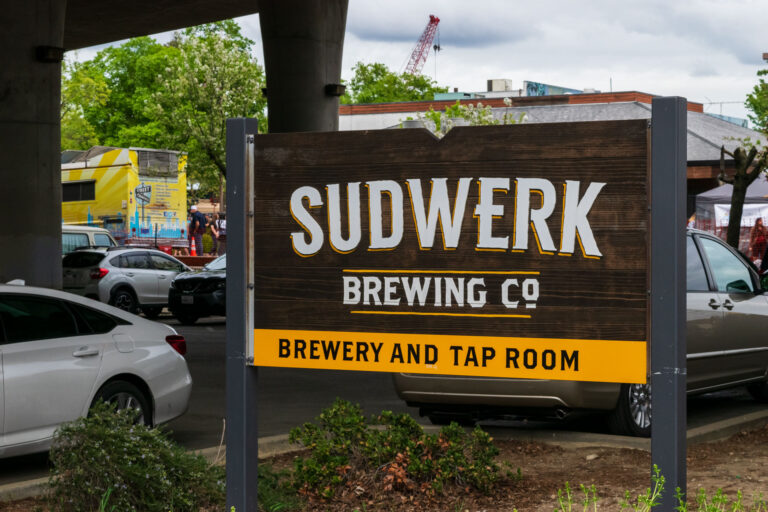
Physics majors and astronomy lovers alike are gathering at Sudwerk Brewery Co. every third Thursday of the month for a chance to crack open a cold beer and learn about the stars.

Astronomy on Tap (AoT), an organization founded by Yale researcher Meg Schwamb and astronomer Emily Rice, began hosting events in 2013 in New Haven, CT and has been a boozy staple for astrophysics students ever since. 

Since then, AoT has expanded across the country and even to four different continents

“There is a [astronomy on tap] chapter almost anywhere with an Astronomy department,” Bolan said.

Victoria Strait, a UC Davis alumni and astrophysics researcher, opened Davis’s very own chapter of AoT at  Sudwerk Brewery Co in 2018, according to fourth-year UC Davis astrophysics grad students Pratik Gandhi and Patty Bolan.

AoT at Sudwerk grants customers a free astronomy lecture with their beer, but drinking isn’t required. Sudwerk Brewery is an all-ages venue and welcomes curious minds — no matter how young or old — to come and learn about our planet and beyond. 

Both Gandhi and Bolan help organize Davis AoT events and introduce guest speakers as MCs. They also keep audiences engaged during event intermissions with a donation-based raffle and free-for-all trivia.

“When you have that age range from kids to people in their 60s to 70s, it is hard to find that common ground,” Gandhi said. “Sometimes we will have talks that are geared toward understanding everyday phenomena such as phases of the moon, but other talks are going to be [about] Starlink [or other things] that can affect all of us in the future,” Gandhi said. 

According to Gandhi and Bolan, the majority of guest speakers at Davis Aot events are associated with the Physics and Astronomy Department at UC Davis.

While the two joked that they have pretty much hosted every UC Davis astronomy and physics professor as speakers, there is no degree requirement to speak at AoT. People of all experience levels are welcome to share their interests in astronomy. 

“Typically a lot of the topics are about people’s personal research, but people are allowed to talk about whatever they’re interested in,” Gandhi said. “Often, people [present their research] because it’s the easiest thing to talk about and something they know very well.” 

Second-year UC Davis astrophysics grad student Kelsey Glazer said that AoT is a more digestible way for people to learn about astronomy. 

“I think that astronomy is meant for everybody,” Glazer said. “We may be stuck in our labs with our heads pointed to the sky, but it’s nothing if we can’t share it with others and get other people excited about it too. […] That’s really what science is; It’s the sharing of studies and thoughts with other people in whatever setting you can.”

Although the crowd is typically older — Gandhi said that many are usually retirees — not all audience members are experienced in astronomy. Michael Spiegel, a third-year condensed matter physics graduate student, said that he wished more astronomy beginners felt comfortable coming to AoT events, since their goal is to teach the science in a more laid-back and approachable way.

“The thing about astrophysics and astronomy is that it’s super relatable,” Spiegel said. “There are always profound applications of topics like extraterrestrial lives and black holes. It always stays interesting.” 

UC Davis undergraduate students have also spoken at AoT events at Sudwerk. Chloe Neufeld, a fourth-year astrophysics major, presented for the first time on April 21 of this year, delivering her research on early galaxies to the crowd. Neufeld said that the non-formal setting of AoT made her first in-person presentation easier. 

“This was a lot of fun because it was less serious and more laid back and I could talk about what made me excited specifically about the field rather than going super deep into the science behind it,” Neufeld said. 

Daniel Polin, a fifth-year astrophysics graduate student, added that the unexpected setting brought in a broader crowd that can benefit from the information presented. 

Polin’s work heavily focuses on astronomical cameras such as the LSST camera (now called the Rubin Observatory, according to Polin) and Starlink’s impact. 

“I want to raise awareness about Starlink and what it’s going to mean for astronomy,” Polin said. “I don’t feel enough people are paying attention to it. I think we are boiling the frog by slowly adding more satellites in the sky and 10 years from now, it’s going to be a pool of lights. People don’t realize that is happening.” 

Ultimately, the students behind Davis’s AoT chapter said that their goal is to provide an opportunity for the Davis community to learn about astronomy in an understandable yet meaningful way. 

“With all the anti-science movements and societal attitudes about whether people should trust scientists and if they have a hidden agenda, It’s a way of showing people that there are people doing really cool research, there are people doing really important research, and that it’s something that you can trust,” Gandhi said. 


Written by: Monica Roberts — features@theaggie.org


Review: Finding meaning amidst ‘Everything Everywhere All at Once’

Through the exploration of infinite possibilities in a multiverse, the film reminds us that we should cherish and celebrate our finite, current lives


By SUN YIE — arts@theaggie.org 


Spoiler warning: The following article contains spoilers about the film “Everything Everywhere All at Once.”


A24’s latest film, “Everything Everywhere All at Once,” follows the story of Evelyn, a Chinese-American immigrant, as she struggles to navigate the complexities of American life with her family. Divided into three arcs, the film defies any traditional classification of a genre, stitching together elements of absurdism, sci-fi and fantasy to produce a narrative that is concerned with mending generational trauma and finding individual purpose in the absolute mayhem of the universe. 

The film opens with Evelyn engaged in a heated discussion with Waymond, her kind and soft-spoken husband, about Gong Gong, her father, and his arrival from China. Their conversation is conveyed mostly in Mandarin, but the flow of their dialogue is often interjected with bits of Cantonese and English vernacular, reflecting their precarious attachment to their identities as immigrants. Though Evelyn’s husband does his best to allay Evelyn’s anxieties, she seems locked in a frenzy and unable to situate herself in a stationary setting — in fact, she is quite literally everywhere at once, flitting between a desk flooded with tax receipts and other legal documents about their failing laundromat business, and the rest of the room, which is shown to be equally claustrophobic in its chaos. 

Evelyn’s pride and stubbornness prevents her from turning to Waymond or Joy, their daughter, for help, and her forced insistence that things are fine has pushed all of them to their breaking points. She remains ignorant of the pain she inflicts on others, as she harbors a deep resentment toward her husband, who she often calls “stupid,” and blames him for the failure of their laundromat business; yet, it is only through Waymond’s efforts that their family survives, although she isn’t conscious of this until much later in the film. 

Additionally, she introduces Joy’s girlfriend, Becky, as a “friend” to Gong Gong when he visits, invalidating her daughter’s sexuality and identity and rendering their already damaged relationship almost irreparable. Evelyn is too concerned with impressing Gong Gong to stop Joy from storming out, and she is then left alone to navigate her tax files with Mrs. Deirdre, her IRS auditor, without a translator. This event triggers Evelyn’s exposure to the multiverse, where she meets “Alpha” Waymond, another version of Waymond that has traveled from the “Alpha” universe to enlist her help in stopping Jobu Tupaki — the villain of the multiverse who has grown fond of hunting and murdering multiversal Evelyns. 

Given Evelyn’s proclivity of hurting the people closest to her, it comes as no surprise when the villain is revealed to be Joy or, at least, another version of Joy. Alpha Waymond teaches Evelyn to “verse jump” to help her acquire necessary combat skills from other versions of herself to defeat Jobu Tupaki. He informs her that the jump into different multiverses can only be achieved if she acts in improbable and illogical ways — she later proves to be quite adept at this, as she snorts houseflies and even pees herself during her confrontations with Jobu Tupaki and her henchmen. 

“Everything Everywhere All at Once” seems to have fun playing around with the concept of infinite possibilities existing through a multiverse, as this is where the elements of absurdism, sci-fi, fantasy and even pop culture references intersect; for instance, Evelyn travels to one universe where she is a chef and her coworker is controlled by a raccoon, because she confuses “Ratatouille” for “Raccacoonie.” There are other universes in which Evelyn and Joy fight as two-dimensional scribbles, glutinous blobs, styrofoam puppets and even rocks with googly eyes — truly, these artistic decisions reflect the limitless possibilities of storytelling in itself.

The film’s multiverse exists between the boundlessness of imagination and liminal spaces, and suggests that even though people might appear to live in stasis, as Evelyn does with her failing laundromat business, there is that much more room for their unfulfilled potential — they’re presented with bottomless possibilities of who they could be. Alpha Waymond relays this wholesome message to Evelyn, who at first doubts her ability with a comedic twist: “Every rejection, every disappointment has prepared you for this moment. You’re the worst Evelyn, but that’s why you’re the key to saving reality.” 

The culmination of all of these different elements produce a pandemonium, making the film’s overall message a little difficult to follow, although I wonder if this was a deliberate artistic choice as well — perhaps the directors, Daniel Kwan and Daniel Scheinert, had intended for the audience to find their own meaning within the chaos of this film, as the characters do in its closing scenes.

In Joy and Evelyn’s last confrontation, they have exhausted themselves from fighting, and Joy has been reduced to her original self, although the effects of Jobu Tupaki’s influence still linger within her. She is left with the nihilistic belief that nothing matters, because the universe is so large and humans are such an insignificant part of it, but Evelyn counters: “Since nothing matters, the only thing that can matter is the choice you make.” 

Within their last confrontation, the two also nod to the possibility of leaving the movie’s interpretation in their audience’s hands. Joy laments, “Here, all we get are a few specks of time where anything actually makes sense,” to which Evelyn then replies, “Then I will cherish those few specks of time,” emphasizing the importance of choosing to find value in the present moment and redefining what it means to be human. 


Written by: Sun Yie — arts@theaggie.org


Yolo County launches textile recycling program 

Yolo County Central Landfill now accepting fabrics for resale and reprocessing


By LEVI GOLDSTEIN city@theaggie.org


The Yolo County Central Landfill (YCCL) opened a textile recycling program for Yolo County residents, according to a press release on May 9.

Marissa Juhler, the Yolo County landfill operations and waste reduction manager, said that YCCL operates several waste disposal and recycling programs in order to meet Yolo County’s strategic plan sustainability goals and California state law SB 1383 targets for waste reduction, including for electronics, hazardous materials, liquids, soil and even mattresses. 

“[We’re] running an efficient operation here for our customers so that we’re a one stop shop,” Juhler said. “That’s probably the most important thing is that when folks come out here to the landfill that we have something — to its highest and best use — to divert the stuff they’re trying to get rid of.”

Davis Community Meals and Housing (DCMH), a local non-profit organization that serves individuals experiencing housing insecurity, receives donations of second-hand clothing that they redistribute, according to DCMH Executive Director Bill Pride.

“Living in the streets, you go through clothing pretty fast,” Pride said. “It gets dirty. There’s not a real easy way to wash it. What happens is you end up looking for new stuff quite frequently.”

DCMH won an Environmental Recognition Award for their efforts to reduce food waste. However, they currently do not have a textile recycling program, nor has Pride heard of one existing in the county. The new fabrics recycling program fills a niche that is greatly needed in the community. 

“People just tend to overbuy stuff,” Pride said. “You either wear it or don’t wear it, and after a little bit, it gets thrown out.”

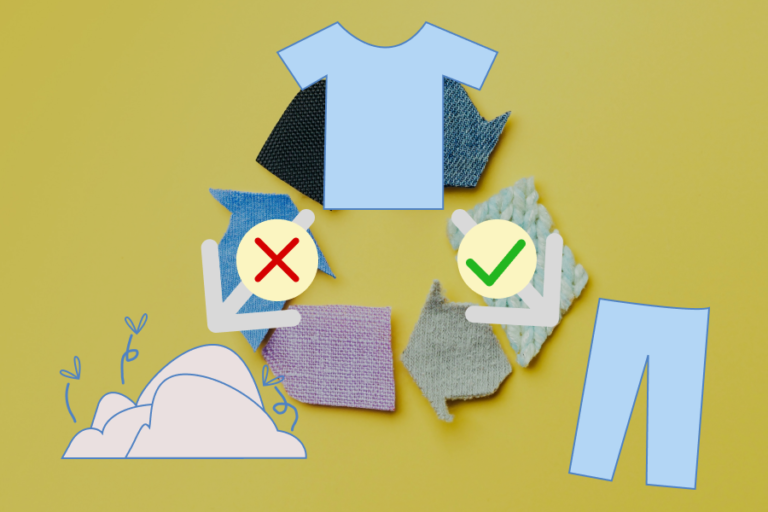
Now, Monday through Saturday from 6:30 a.m. to 4:00 p.m. and Sunday from 8:00 a.m. to 4:00 p.m., Yolo County residents can bring clothing, rags, bedsheets, shoes and sleeping bags to the YCCL textile recycling bin. According to Juhler, the collection is sent to the ICL Thrift Store in Woodland, which sorts the items into what is to be resold in their store and what is to be shipped to facilities in Los Angeles to be reprocessed into area rugs. 

The program has certain limitations. Currently, it cannot accept wet fabrics. Juhler said they are still trying to get operations to run as smoothly as possible.
“When things get wet and soiled, they start to mold, and they can contaminate the whole entire bale of clothing,” Juhler said. “We’re going to have to figure out the staffing to be able to monitor that bin and that area in the public dropoff so that things that need to truly go to landfill go to landfill and that we can still recover as much as possible.”

Residents are encouraged to continue to donate to organizations like DCMH and local thrift stores. Still, the new recycling program is proving to be helpful, with about 4.6 tons of fabric brought to the YCCL since its founding.
“There wasn’t a place to take the stuff that doesn’t have a reusable life,” Juhler said. “Really getting the word out that we have a home for that material now is important.”

Written by: Levi Goldstein — city@theaggie.org


Analyzing the NFL quarterback landscape

Elite talent, big money and questionable quarterback rooms make an interesting quarterback landscape

By PATRICK FIGUEROA — sports@theaggie.org

The major portions of the NFL offseason, such as free agency, the draft and the schedule reveal, have passed. While there still may be transactions in the future, it is a good time to analyze the current quarterback landscape in the NFL. With elite names, controversies, young players looking to take the next step and questionable quarterback rooms, the quarterback position around the league is at an interesting spot. 

Starting with the upper echelon of the position, the elite quarterbacks in the NFL right now include Patrick Mahomes, Aaron Rodgers, Tom Brady and Josh Allen. These quarterbacks have all played at very high levels in big moments, along with being the primary reasons for their teams’ success. 

Patrick Mahomes is arguably the most talented quarterback ever and despite having a regular season below fans’ expectations, he still managed to throw 48 touchdowns along with 5,896 yards across the regular season and postseason. Aaron Rodgers is coming off back-to-back MVP seasons after posting an efficient 37 touchdowns to just four interceptions. Tom Brady continues to beat father time after finishing second in the MVP race and posting 5,316 yards, 43 touchdowns and a passer rating of 102.1 during the 2021 regular season. Josh Allen is a new face in this tier of quarterbacks, but has earned this spot after a phenomenal 2021 postseason where Allen threw nine touchdowns, had no interceptions and had a passer rating of 149. 

The next tier of quarterbacks are franchise quarterbacks whose teams are comfortable paying a high salary because of their talent. All of these quarterbacks have the potential to move up to the upper echelon of quarterbacks as well. In this tier, there is Justin Herbert, Joe Burrow, Matthew Stafford, Dak Prescott, Russell Wilson, Kyler Murray and Lamar Jackson. 

From this list of players, one of the more notable players is Arizona Cardinals quarterback Kyler Murray. Coming off a season where he threw 24 touchdowns for 3,787 yards while also accumulating 423 yards and five touchdowns on the ground in 14 games, Murray was an early season MVP candidate before suffering an injury. However, the season did not end well after a disappointing 34-11 Wild Card loss versus their division rival, the Los Angeles Rams. Murray was in the headlines earlier in the offseason after unfollowing the Arizona Cardinals and scrubbing the team from his social media in early February. Analysts speculated that Murray wanted a new contract and the lack of negotiations upset Murray. However, he would later restore all of his Instagram posts in March and respond to questions regarding these decisions.

“I’m an Arizona Cardinal,” Murray said. “I’ve done nothing but give my all to the Cardinals and will continue to do that.” 

Murray is tied to the Cardinals for at least two more years before his rookie contract is up. He will be worth keeping an eye on to see if he will receive a contract extension anytime soon. 

Another quarterback from this tier worth mentioning is Russell Wilson. Traded from the Seattle Seahawks to the Denver Broncos, Wilson looks to return to elite form after an underwhelming 2021 season highlighted by a thumb injury. The injury hampered Wilson as he only threw for 3,113 yards and 25 touchdowns in 14 games. However, going to the Broncos will give him an opportunity to bounce back. The Broncos have talented offensive players like wide receiver Jerry Jeudy, wide receiver Courtland Sutton and running back Javonte Williams that can help Wilson do so. 

In the next tier of quarterbacks, these are guys who are good quarterbacks but are heavily reliant on having a good surrounding core of offensive players around them to succeed. This tier includes Derek Carr, Ryan Tannehill, Kirk Cousins, Matt Ryan and Jimmy Garoppolo. 

Derek Carr recently signed a contract extension for three years that is worth 121.5 million dollars. While making him the fifth-highest paid quarterback in the NFL stands out, Carr has performed well in recent years. He looks to help the Raiders compete in a competitive AFC West, especially after adding star wide receiver and his former college teammate Davante Adams. 

Matt Ryan was traded to the Indianapolis Colts for a third round pick prior to the NFL draft. He is yet another new quarterback in this Colts’ quarterback carousel, which has now featured a new starting quarterback every year for the last five years. The Colts hope the 37 year-old quarterback can offer some stability for at least a few years, and help the Colts make the playoffs. 

Jimmy Garoppolo was expected to be traded earlier this offseason, but is yet to be moved. Possibly due to shoulder surgery, the quarterback was not traded and remains on the San Francisco 49ers’ roster. This makes the 49ers’ quarterback room intriguing, as second year quarterback Trey Lance appeared to be the team’s new starting quarterback for the 2022 season. Will Jimmy Garoppolo be traded soon or will there be a quarterback competition between Garoppolo and Lance for the starting job? That’s the question that will follow the 49ers the rest of the offseason.

Speaking of Trey Lance, he and other young quarterbacks make up a tier of quarterbacks with uncertain futures. Many of these players have the potential and opportunity to be franchise quarterbacks, as well as a high draft pedigree. However, they must make a successful transition to the NFL. In this tier, there is Trey Lance, Trevor Lawrence, Zach Wilson, Justin Fields, Mac Jones, Tua Tagovailoa, Jordan Love, Jalen Hurts, Davis Mills and Kenny Pickett. Some of these players have much higher potential than others, but there is an element of uncertainty with each one. 

Green Bay quarterback Jordan Love is in an interesting position. A first round pick in the 2020 NFL draft, Love’s in-game action has been limited because he is playing behind Aaron Rodgers. With Rodgers signing a contract extension worth 150.8 million dollars over three years, this means that Love’s rookie contract is set to expire before Rodgers’ new contract. Ideally, Love should have been traded this offseason, but he was not. The former first round pick’s future is uncertain. 

The final tier of quarterbacks are players who are low-end starters and are more likely to be short-term options for their respective teams. In this tier, there is Carson Wentz, Jared Goff, Jameis Winston, Baker Mayfield, Daniel Jones, Drew Lock, Sam Darnold and Marcus Mariota.

Baker Mayfield stands out in this tier of quarterbacks. The former first overall pick of the 2018 NFL Draft is sitting on the trade block after the Cleveland Browns acquired quarterback Deshaun Watson from the Houston Texans, leaving Mayfield to look for a new team. 

Mayfield was rumored to be traded to the Panthers on draft night, but the negotiations fell apart as there was disagreement on which side would pay the rest of Mayfield’s $19 million dollar salary. The Panthers also drafted young quarterback Matt Corral from Ole Miss in the third round, which effectively ended any chance of the Panthers acquiring Mayfield. With no clear trade partner, Mayfield remains on the Browns roster. Cutting Mayfield would result in the Browns taking nearly a 19 million dollar cap hit, but it may be their only option at this point. 

The quarterback position is vital to team success. When comparing the best quarterbacks in the NFL to the bottom tier, it is night and day. With a high-end quarterback, there is much less uncertainty regarding what on-field product teams will receive, and a clearer picture of teams’ futures for the 2022 season and beyond. It is why teams will do anything to get “their guy.” With offseason training ramping up, it is time for these quarterbacks to step up and lead their team into the 2022 NFL season. 

Written by: Patrick Figueroa — sports@theaggie.org

Plastics can carry land pathogens to sea

Pathogens can attach to microplastics and affect sea life 

By MONICA MANMADKAR — science@theaggie.org

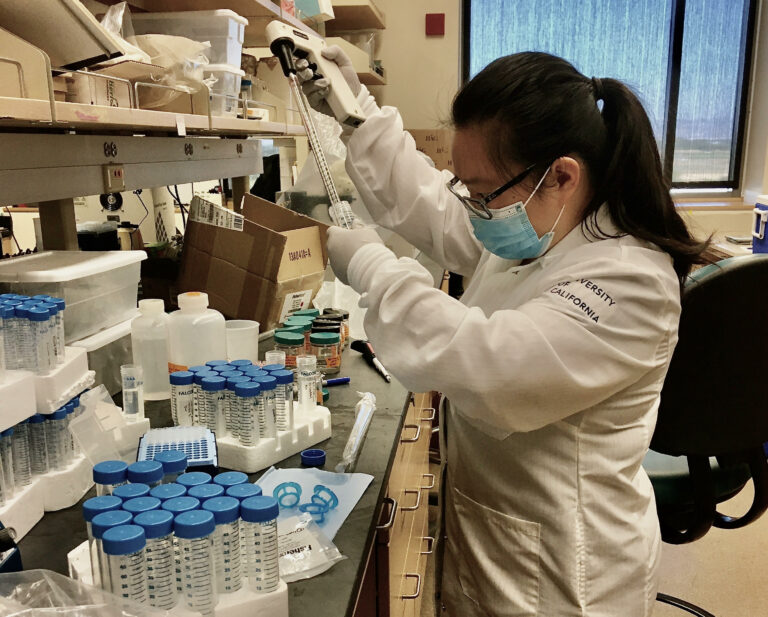
Microplastics can carry pathogens from land to sea, which can affect wildlife and overall human health, according to a study conducted by UC Davis researchers. Published in the journal Scientific Reports, researchers found that microplastics make it easier for disease-causing pathogens to cluster around plastic-filled areas of the ocean and impact wildlife.  

In a previous study, the team had investigated how land-based pathogens can enter the marine food web through natural oceanographic processes such as marine snow and biofilm entrapment. However, with an increase in attention and research devoted to plastic pollution in the environment, researchers started asking themselves whether similar processes of ‘trapping’ pathogens can occur through these man-made pollutants. 

“Once they reach different water bodies, plastics start forming a sticky biofilm layer just like many other materials in the sea, and we were interested in figuring out whether there could be some interaction between these two different types of pollutants: pathogens and plastics that both end up in the coastal ocean,” said Emma Zhang, a doctoral candidate at the UC Davis School of Veterinary Medicine, via email.

There have been very few studies investigating the interaction between pathogens and plastics. The researchers investigated zoonotic protozoan pathogens that are widespread and have variable effects on human health and animals. Examples include Giardia and Crypto, which cause gastrointestinal disease such as diarrhea and can prove deadly in very young children as well as those who are immunocompromised. The parasite Toxoplasma mostly causes asymptomatic infections in animals and people but can also be deadly for certain groups.

“We are specifically concerned about pregnant women who become exposed for the first time to Toxo, where the parasite can infect the developing baby and cause miscarriage, abortions, or life long illness (if the baby survives) with a disease called congenital toxoplasmosis,” Zhang said. 

The main driver of these issues is plastic pollution, which is caused by society’s dependence on everyday products made from synthetic polymers that do not readily degrade in the environment. These polymers include synthetic textiles like polyester clothing and cosmetics containing microbeads. The researchers also considered the industrial use of plastics and the use of fishing nets throughout the ocean, which eventually break down into microfibers. 

“There is no one solution, rather we really need an integrated approach that shapes policy and human decision making to help reduce our dependence on plastic products and their eventual pollution in aquatic systems,” said Dr. Karen Shapiro, a professor in the department of pathology, microbiology and immunology at the school of veterinary medicine, via email. “Everyday actions that we all should and can take are reducing or even better eliminating use of single-use plastics (plastic bags, disposable plastic dishes, etc.), choosing natural fiber clothing when possible, line drying clothings instead of using the dryer (which release plastic fibers from our synthetic clothes) and also integrating use of microfiber filters on washers and dryers at home.”

Shapiro noted that their results showed for the first time that land-derived zoonotic pathogens, germs that can infect both animals and people, can stick to the surfaces of plastics that end up in the sea. 

This association between pathogens and microplastics could impact disease transmission in two important ways. One, shellfish can ingest plastics and any particles that hitchhike along, including parasites. Two, researchers now know that plastics can disperse very far from the original source of pollution. 

Plastics can reach the deep ocean and remote locations far from where humans live, including arctic regions. Zhang said that their findings imply that microplastics may act as important mechanisms for pathogen transport in the ocean. 

On the other hand, microplastics that sink may concentrate these pathogens in the benthos where filter feeding marine invertebrates such as oysters, clams and other shellfish live, thereby increasing the likelihood of their ingestion and leading to the contamination of marine food webs.

Looking to future work, Zhang and the other researchers would like to perform experiments in live oysters to determine if they are able to become infected with these pathogens when placed in seawater contaminated with microplastics that have pathogens associated on their surfaces. 

However, in general, Zhang asserted that their study highlights the importance of the One Health approach, which recognizes that the health of humans, animals, plants and the shared environment are deeply connected. Collaboration across human, animal and environmental disciplines will be required to address a challenging problem affecting the shared marine environment, as everyone is dependent on the ocean.

Written by: Monica Manmadkar — science@theaggie.org

UC Davis Film Fest highlights student talent while bringing community together

The two-night event was back in person this year after being celebrated virtually for two years


By CLARA FISCHER — arts@theaggie.org


On May 16 and 17, Varsity Theater held the annual UC Davis Film Fest. Back in person for the first time since the start of the pandemic, the event showcased works under eight minutes that were directed, filmed and edited by undergraduates, graduate students and alumni. 

The first night featured 16 short films, while the second saw 10 showings. Ranging from experimental cinema to stop motion to documentary-style films, the selection of genres was eclectic and widespread. This was fitting, given the variety of students that occupy the Department of Cinema and Digital Media Department at UC Davis.  

A plethora of related artistic departments, including Art Studio, Art and Art History, Cinema and Digital Media, Design, Music as well as Theatre and Dance, are also involved. The incorporation of various departments demonstrates all of the best parts of the fine arts — a sector that is truly enriched by collaboration in a way that few others are.  

The energy in the theater was high as the community gathered to watch the selected works. The excitement reflected the love that the Davis community feels for the arts, whether from well-established artists or, as in this case, passionate students who are just starting out. 

For someone who doesn’t consider themselves an expert in cinematography, the selection of films was perfectly balanced: innovative and intriguing without being too experimental or trite. 

One of the crowd’s favorites, “Perspective,” directed by students Milou Korthouwer and Dominic Dal Porto, featured a clever, Matrix-esque storyline that started as a humorous depiction of the average college student’s day, which then devolved into something deeper and more philosophically provoking. This was accomplished with the help of several kinds of visual effects, including glitches and play with the picture’s saturation level. 

Seeing this kind of visual manipulation on the screen was a testament to the skills that students of these various departments have obtained during their time at UC Davis and emphasized the importance of the Film Fest’s mission  “[to showcase] the variety of student talent through animation, documentary, narrative shorts, and experimental films,” according to the event’s program.

Other standouts included “unconditional.,” directed by students Jada Simone Hayes and “Welcome to Sunnyvale,” directed by Miranda Comstock and Sarah Sy. Both of these shorts were recognized in the awards ceremony at the second night’s conclusion, and the directors went home with both a titular win and a cash prize. 

Following the conclusion of the awards ceremony on the second night, the audience gradually wandered out and eventually ended up congregating outside to mingle and talk amongst themselves; filmmakers, family, friends and plain old lovers of the arts included. 

This impromptu gathering after such a long period of virtual meetings and anxiety around social gatherings reminded me of just how much we were missing out on and how crucial the arts are as a facilitator of our culture. The coordinators of the event acknowledged this and described the UC Davis Film Fest as “a vibrant supporter of voices that do not often get the chance to be heard” — which is just about as accurate of a description of the festival’s significance as anyone can give. 


Correction: A previous version of this story incorrectly stated that “Welcome to Sunnyvale” was directed by Bea Alexa Rondon. The article has been corrected to state that the film was directed by Miranda Comstock and Sarah Sy. 


Written by: Clara Fischer — arts@theaggie.org


Election for Yolo County’s next sheriff coming up

Deputy Tommy Hayes challenges current sheriff Tom Lopez

By RACHEL SHEY city@theaggie.org

Voters in the June 7 primary election in Yolo County will be able to select Yolo County’s next sheriff. Tom Lopez, the current sheriff, is running for re-election, while a current deputy, Tommy Hayes, challenges Lopez. The sheriff’s department patrols the unincorporated portions of Yolo County, according to Lopez, in addition to performing many other important duties. 

“We provide patrol just like a police department does, however, our patrol area is the unincorporated area of the county, which means that the folks that live there don’t live in a city,”  Lopez said. 

Lopez described the sheriff’s department as quite far-ranging, taking care of many other integral services in Yolo County. Lopez is not only a sheriff but also the public administrator, which addresses the burial and belongings of people who die without someone to arrange their burials. 

“We also have several different divisions that a police department doesn’t have,” Lopez said. “One of those is a detention division; the sheriff has a county jail and we house all inmates in Yolo County. We are in charge of the care and custody of up to 450 inmates. Currently today we have about 280 inmates in our jail.”

Both candidates strongly emphasize the importance of treating people with respect. According to Lopez, his respect for Yolo County citizens comes from his days as a resident deputy, a role which involves policing your own neighborhood. 

My philosophy is that when we come in contact with folks out on the street, everybody should be treated as a neighbor,” Lopez said. “One day you might be helping your neighbor build a fence, and the next day you may have to arrest your neighbor for a crime they may have committed. But the day after that, you’re still neighbors. You need to treat people with dignity and respect.” 

Hayes cites the same need to respect those that the deputies deal with, but said that this as a function that the current sheriff’s department has failed to perform. He said he hopes to address this issue if he is elected. 

“Starting off, I want to change the dynamics on how it’s run from the management,” Hayes said. “Our management runs it in the old ways of doing things. Policing used to be basically, ‘You’re gonna do this because I have a gun and a badge.’ Nowadays things have changed, now you ask people to do things before you use force or anything like that.”

One of the ways that Hayes hopes to increase transparency between citizens and the sheriff’s department is to create an advisory committee, which would include citizens from several cities in Yolo County. 

“Another thing I want to do is provide a citizen’s advisory board, which will work in direct communication with citizens throughout the whole county,” Hayes said. “There will be select citizens from each area in Yolo County and they can directly have meetings with the sheriff and discuss what they need for their area and what they expect.”

Lopez is currently working on body cameras for deputies, a project which has been underway for two years. Although the sheriff’s department is one of the last departments in the county to obtain body cameras, it was the first to have dash cameras. 

“Anyone can go out and buy a camera and put it on their shirt, but there’s a lot of work that goes on in the background, like where do those recordings go, when we get public records request, who’s going to redact the information?” Lopez said. “In this fiscal year, we received the positions that will make the body cameras work, and we are in the process of selecting the body cameras that we are going to be using. By December, we will be up and running with body cameras.”

Hayes also stated that body cameras would be part of the changes that he hopes to instate among the deputies. He was not aware of Lopez’s plan, and cited this as an example of the lack of transparency in the department. 

“Our agency is the last agency to have body cameras in the county,” Hayes said. “I know other agencies are looking at newer technology. If our agency is looking at body cameras, it has not been communicated to us, which a lot of information isn’t, since we aren’t very transparent with our own employees let alone our own community.”

Written by: Rachel Shey — city@theaggie.org

Senate table confirms DRAC nominee, hears CALPIRG presentation, introduces SR #32 at a virtual meeting

The meeting took place over Zoom following a member of the Senate table testing positive for COVID-19

By ISABELLA KRZESNIAK campus@theaggie.org

Internal Vice President Juliana Martinez Hernandez called the meeting to order at 6:14 p.m. and recited the UC Davis Land Acknowledgement. The meeting was held over Zoom after a member of the Senate table tested positive for COVID-19.

Disability Rights Advocacy Committee (DRAC) Chair Sarah Theubet nominated third-year pharmaceutical chemistry major Rima Vyas to become a member of the committee. One of Vyas’ goals as part of the committee is to work toward the full implementation of lecture capture.

“I think what’s important is making lecture capture available to all classes,” Vyas said. “I find it absurd how it hasn’t been implemented already.” 

Vyas was confirmed.

The UC Davis chapter of the California Public Interest Research Group (CALPIRG), which aims to protect the environment and encourage civic participation, provided a presentation on its recent accomplishments and future goals. Representatives from the group discussed their Beyond Plastic campaign, which aims to reduce plastic use.

“We want to move beyond plastic by not producing plastic in the first place, and we’ve made a lot of progress on this,” said CALPIRG Representative Philip Mariam. “Our long term goal is to pass a ballot measure in August at the State Assembly to vote ‘Yes’ on our bill AB 2026. Overall, despite the organizational difficulties we’ve had this quarter, we’ve been successful.”

Representatives also discussed their pledge drive, where students support CALPIRG by paying a voluntary $10 fee every quarter. They received around 2000 pledges.

They also discussed their intent to canvas for their Save The Bees campaign, which aims to ban pesticides that are harmful to bees. The group also seeks to increase voter registration through their New Voters Project. 

Additionally, they discussed their Make Textbooks Affordable campaign. Their goal is to spur the UC Regents to pass an open textbooks grant, where students could reduce the amount of money they are spending on textbooks. CALPIRG would like to host a roundtable discussion with students of different majors to discuss textbook costs.

Martinez Hernandez then moved to approve minutes from the previous Senate meeting.

Next, the table moved into a discussion of new legislation. SR #32, authored by Senator Owen Krauss, was introduced. The resolution calls on the university to allocate funding currently being used for the “design and fabrication of parts and systems for earth-propelled nuclear weapons systems” to environmentally-beneficial research. The measure was amended and passed on May 22.

Martinez Hernandez adjourned the meeting at 7:03 p.m.

Written by: Isabella Krzesniak — campus@theaggie.org

UC to waive tuition, fees for Native American students

UC campuses will begin waiving tuition and fees for Native American students who are state residents and members of federally recognized tribes 


By JENNIFER MA — campus@theaggie.org 


On April 22, UC President Michael Drake announced the launch of the UC Native American Opportunity Plan, a program that aims to make the university more affordable for California’s Native American students. 

This program will fully cover tuition and fees for California residents who are members of federally recognized Native American, American Indian and Alaska Native tribes. There are 109 federally recognized tribes in California, according to the Bureau of Indian Affairs’ Office of Federal Recognition.

The plan will be funded through a combination of existing state and university financial aid programs as well as other resources. 

California residents from non-federally recognized tribes could still benefit from this program, according to the letter Drake sent out to UC chancellors.

“Tuition scholarships for California residents from California’s non-federally recognized tribes may be available through external organizations,” Drake said in the letter. “More information about these scholarships will be provided by [UC Office of the President] at a future date.” 

The program is set to begin in fall 2022. Both Native American undergraduate and graduate students are eligible as long as they meet the previously stated requirements. 

“This program will provide opportunities and support for Native American, American Indian and Alaska Native students — a community that contributes to the academic and student achievements of our campus,” Chancellor Gary May said via email. “At UC Davis, we recognize this program as another step on a path of atonement and respect to the Native community and Native Nations. This program will help us remove barriers for Native students and reaffirms UC Davis is within reach.”

Data from fall of 2021 shows that 1,467 combined undergraduate and graduate students identified as American Indian or Native American across the UC system. At UC Davis specifically, there were 185 students that identified as American Indian or Native American; these students constitute 0.5% of the student body.  

“Native American students are among the most underrepresented groups within higher education, including at UC, and we hope this program will encourage more of them to apply for and choose to enroll at a UC campus,” said Ryan King, the associate director of media relations for the UC Office of the President.

As of May 19, the Native American Academic Student Success Center at UC Davis did not respond to a request for comment. 


Written by: Jennifer Ma — campus@theaggie.org  


Pediatric patient born with organs outside of abdominal cavity transformed by multidisciplinary UC Davis Health team

Everly Jacobsen was diagnosed with an abnormally large omphalocele, a birth defect that only affects one in 5000 children


By BRANDON NGUYEN — science@theaggie.org


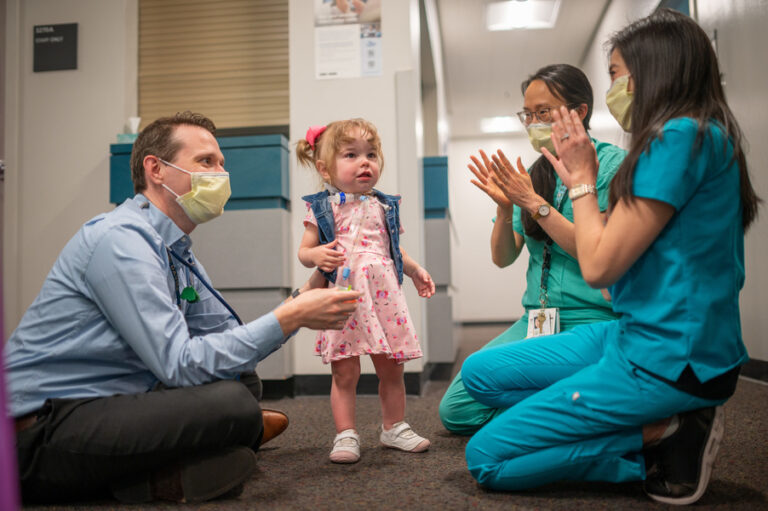
Born in 2020 with her internal organs protruding outside of her abdomen, Everly Jacobsen was diagnosed at UC Davis Health with a birth defect known as omphalocele, a condition that only affects one in every 5000 births. However, Everly’s omphalocele was larger than most omphaloceles, which is associated with higher mortality rates and a high risk of comorbidities. 

Brianne Jacobsen, the mother of Everly Jacobsen and resident of the city of Redding above the Sacramento Valley, described feeling overwhelmed upon discovering her child’s condition through an ultrasound. 

“As a first time parent along with the fact that it had taken us a while to get pregnant, I of course didn’t want anything to be wrong,” Jacobsen said. “So when I first found out about Everly’s condition, it was like a gut punch lots of tears, lots of anxiety and I didn’t know what to do next.”

Fortunately, with the help of a multidisciplinary team of UC Davis Health professionals ranging from cardiologists, pulmonary hypertension physicians, pediatric surgeons, nurse practitioners and many more, Brianne’s anxiety turned into optimism. Robyn Huey Lao, a pediatric surgery outpatient nurse practitioner at UC Davis Medical Center, grew close to the Jacobsen family and supported Everly’s development throughout the process.

“All of Everly’s abdominal organs were encased in a membrane when she’s born, and hers was a giant omphalocele, three times what we usually observe in babies with this condition,” Lao said. “Usually the usual treatment is we just ‘paint and wait,’ and what we mean by that is we put on a cream called silver sulfadiazine, a white cream that you kind of paint all around. You then use a wrap to keep it moist to help that membrane become more durable, because when they’re born, it’s pretty thin.”

Silver sulfadiazine is typically administered to patients with second and third degree burns to toughen the skin. Once the membrane becomes durable, the omphalocele can then be slowly compressed over time into the abdominal cavity, after which a surgical operation can be conducted to close the skin. However, due to the abnormally large size of Everly’s omphalocele, the team had to adopt creative measures to resolve her condition.

The team tried several topical creams including the default cream of silver sulfadiazine, but after much trial and error, Lao found the right formula:  Vashe, a solution of hypochlorous acid that cleans wounds, paired with UrgoTul silver, a flexible, polyester mesh contact layer bandage. Once the skin fully healed over the omphalocele, compression dressings were applied over time to gradually push Everly’s organs back inside.

From the size of a cantaloupe to a mere outie belly button, this successful progression could not have been possible without the UC Davis Fetal Care and Treatment Center as well as the pediatric pulmonary hypertension multidisciplinary clinic. Dr. Brian Goudy, a pediatric pulmonary hypertension specialist and leading physician for the clinic, described the significance of the case for the team of UC Davis Health medical professionals.

“She exemplifies a case where families are really benefiting from the multidisciplinary approach where multiple providers are able to manage her care on an outpatient basis,” Goudy said. “And that makes it easier for families, because it not only allows them to have less visits to the hospital, but it directly puts providers in the same room, and we can collaborate on her management in ways that would be much more difficult if you’re treating the patient individually.”

Everly is now two and half years old, and Brianne Jacobsen reflected on the miraculous journey that her daughter had undergone with the help of UC Davis Health. 

“I really thought Everly was never going to eat and she’s never gonna be able to drink properly, as she’s always going to have to use this feeding tube,” Jacobsen said. “Then one day it just clicked with the help of the amazing staff, and now she’s doing all this stuff. She couldn’t walk because she had that giant belly and all she could do was sit up, but now she’s started sliding across the floor on her little bottom and then like a month later, she was up walking, no longer needing the ventilator or impeded by her stomach, doing what energetic little kids do outside.” 


Written by: Brandon Nguyen — science@theaggie.org


Name, image and likeness guidelines could change college sports

New NIL guidelines lay groundwork for the future of college athletics


By KATHERIN RAYGOZA — sports@theaggie.org 


The question whether college athletes should get paid is often brought up and is constantly enduring changes in the legislature, especially for future athletes. Name, image and likeness (NIL), the elements comprising “right of publicity,” is the only thing able to answer this question.

Part of the debate includes that the National Collegiate Athletic Association (NCAA) generates over $1 billion annually from athletics. The other part of the debate is that college athletes are considered amateurs and paying them would mean they have to be considered professionals.

One of the NCAA’s greatest obligations to players,” writes Erik Cilburn, a writer from Insight Into Diversity. “Especially those who come from communities of color and low-income households, should be ensuring they are prepared for a future that may not include a lucrative professional sports career.”

Federal legislation has allowed NCAA Division I student athletes to receive pay by their NIL. That includes receiving endorsement deals, using social media to profit from their sport and they can now use their signatures on memorabilia for profit. 

“With the variety of state laws adopted across the country, we will continue to work with Congress to develop a solution that will provide clarity on a national level,” said NCAA President Mark Emmert in a statement. “The current environment — both legal and legislative — prevents us from providing a more permanent solution and the level of detail student-athletes deserve.”

In the past, the NCAA prohibited athletes from receiving any sort of income from their sport by arguing that it would change the sport and that it would make fans less likely to watch or buy tickets. Fans who are college sport enthusiasts support NIL, and 63% of them said that NIL should continue on in the future. 

“I’m fired up,” said P.J Fleck, head coach for the Minnesota Golden Gophers football team. “I’m fired up about name, image, and likeness. I think it’s tremendous. Our location, the Twin City area, the three and a half million people we have in our city, the 18 Fortune 500 companies, this isn’t a small, little college town. We have businesses galore and now have the ability for our players to benefit off their name with all of these companies.”

Since athletes can get profit from personalities and identity, this means that they can benefit financially by “providing services for their pay.” This can be seen in the form of being paid millions of dollars to promote a company or get a few hundred dollars from starting a YouTube channel or helping run a summer camp. 

“Before the NIL floodgates opened in 2021,” said Alex Kirshner, a writer from Global States Matter. “Plenty of people around college sports claimed that compensating athletes would distract them, overwhelm them, or make it harder for them to focus on competition and schooling. In the months since NIL deals were allowed by the NCAA, athletes have instead found that the new rules are not only often lucrative but freeing.”

Universities and colleges benefit financially from these athletes, especially basketball and football players. While these student athletes work hard — not only in their sport, but also are full time students. These players win championships for their schools, and the schools are profiting from the athletes. Championships bring in revenue such as championship merchandise and the student athletes don’t receive any percentages from the profits. 

An example of this is Texas University running back Bijan Robinson who after returning from an injury in April 2022, signed his sixth NIL deal with a Texas Lamborghini dealership a month later. He announced his partnership on Instagram. 

The biggest downside about NIL is that international student athletes cannot receive any sort of payment in the U.S. and more than 20,000 NCAA athletes are left out. Visas that are provided to students-athletes only allow limited employment, whether that is on or off campus work. If these rules are broken serious consequences can occur such as being removed from the team, deportation and unable to renew a visa. 

Canadian hammer thrower Camryn Rogers, who attended UC Berkeley, is a supporter of loosening endorsement plans for athletes. But a UC Berkeley compliance officer warned international athletes they could possibly be deported. 

“That word hit me very, very hard,” Rogers said. “To see it come to fruition is so exciting, but at the end of the day for international student-athletes, it’s like it never happened.”  

There is no clear prediction what will happen with the name, image and likeness of the athletes in the future. But with several opposing viewpoints on NIL, it will continue to be one of the most talked about topics of this next season. 


Written by: Katherin Raygoza — sports@theaggie.org


Culture Corner

The Arts Desk’s weekly picks for television, movies, books and music


By JACOB ANDERSON — arts@theaggie.org


Movie: “Bonnie and Clyde” dir. by Arthur Penn (1967)

Seen by many critics as the turning point of American independent cinema, “Bonnie and Clyde” was highly controversial at its release for both its frank depiction of violence and sexuality and its presentation of the eponymous criminals as proletarian heroes —- frustrated symbols of depression-era class hatred, loved by everyone except the police. Penn’s most famous film is also possibly his best: Bonnie and Clyde come across extremely well as a pair of misfits carving an idyll out of one of America’s most troubled periods by any means necessary. Beyond the fantastic performances and script, “Bonnie and Clyde” also carries one of the most explosive and memorable endings of any film from the decade. It’s thrilling and genuine in every frame — so check it out if you get the chance.


Book: “A Tomb for Boris Davidovich” by Danilo Kiš (1976)

“A Tomb for Boris Davidovich” is one of Yugoslav author Danilo Kiš’s best works. It’s a collection of stories about rebellion and death, all occurring under the omniscient, opaque, almost supernatural panopticon of Soviet bureaucracy. Each is reported by Kiš in his famously terse and perfect style, which injects poetry into simple sentences without fail. The world of “A Tomb for Boris Davidovich,” more than just a setting of dreary tyranny, manages to create something funny and wondrous out of the impossible plots, imprisonments and murders experienced by his menagerie of eastern-European thinkers and killers. Every page of this book is full of life, even when the characters within are chained or dead. Harold Bloom included this in his canon of 20th-century fiction for a reason — there’s very little else that approaches Kiš’s mastery. Plus, at a slim 140 pages, it shouldn’t be too hard to make the time to finish this. Couldn’t recommend it more.


Album: “Cull Ficle” by Asian Glow (2021)

Internet darling and prime representative of a recent explosion in emo-shoegaze-esque Bandcamp releases from South Korea, Asian Glow has quickly earned a name in the world of independent rock. “Cull Ficle” sounds a bit like if Indian Summer’s self-titled album and Neutral Milk Hotel’s “In the Aeroplane Over the Sea” were played at the same time — blown-out acoustic guitars and percussion blare over invisible, boyish vocals. Sometimes tracks halt and resume at different tempos or seem to dissipate completely into a wave of crushed noise. One of the most impressive things about this album is how adroitly it fuses the extremes of musical intensity: an ambient break can crackle and detonate in a way indistinguishable from the climax of another song. There’s not much — outside of the South Korean group Parannoul and a few western analogues like Weatherday — that sounds like Asian Glow, and despite some roughness in the production, “Cull Ficle” was without a doubt one of the best releases of last year.


TV Show: “Mythbusters” (2003)

Jamie Hyneman and Adam Savage’s notorious show is probably best known for its stunts. Every week, Hyneman, Savage and a crew test the veracity of various myths, and at their disposal is a huge workshop with all sorts of industrial machinery and heavy-duty explosives. Despite a relatively standard presentation and format, “Mythbusters” remains one of the most rewatchable and pleasant shows on television. It’s not quite as good nowadays, but the cast is eminently likable and the experiments are always distinct and interesting. If there’s one episode that deserves recognition among the others, it’s doubtless the 72nd, in which Savage nearly dies while testing whether a car door can open after falling into a body of water before it’s fully submerged. As it turns out, Savage could have easily died while filming.


Written by: Jacob Anderson — arts@theaggie.org


UC Davis plans to hold graduation ceremonies in-person for the first time since before the pandemic 

This year, commencement has been consolidated into three ceremonies

By ANGELINA ANGELO — campus@theaggie.org

UC Davis will host graduation commencement ceremonies in-person for the first time since 2019. In lieu of holding college-specific graduation ceremonies, there will be three commencement ceremonies for all undergraduates held on June 10, 11 and 12.

“The campus is energized to be holding the first full, in-person commencement season since the pandemic began,” said Julia Ann Easley, a news and media relations specialist for UC Davis. “Chancellor Gary S. May wanted to change the emphasis to ‘UC Davis’ commencement, instead of college commencement, to put more emphasis on our institution as a whole, as one of the leading public universities in the nation.”

UC Davis announced this consolidation of ceremonies on May 29, 2019, but this year’s ceremonies will be the first to occur in this new format.

“Our students are graduating from ‘UC Davis,’ and we want the world to see them as UC Davis grads,” May stated in the 2019 announcement. 

  In the past, college-wide ceremonies were held in the University Credit Union Center. This year, the three commencement ceremonies will be held in the UC Davis Health Stadium. Each ceremonial date is designated for particular majors, and students can view these assignments online.

  One challenge associated with graduation that some students may face is acquiring sufficient tickets for friends and family members, according to Maddelyn Hunt, a fourth-year global disease biology student.

“It is frustrating; my friend from Chico State has more extra tickets than the number of tickets I have,” Hunt said. “I am still waiting on my request for extra tickets.”

 This year, each graduate was allotted four tickets, and students were able to request extras via an online portal. 

“An update about tickets will be provided this week, and beginning May 31, students will be issued tickets,” Easley said.

  With limited ticket options, graduation will be live-streamed for family and friends who cannot attend. After each ceremony, festivities, photo-ops and more will be provided for graduates on Hutchinson Field. Attendance is not limited in this portion, so the whole family can join.

Written by: Angelina Angelo — campus@theaggie.org