55.7 F
Davis

Davis, California

Monday, December 22, 2025
Home Blog Page 205

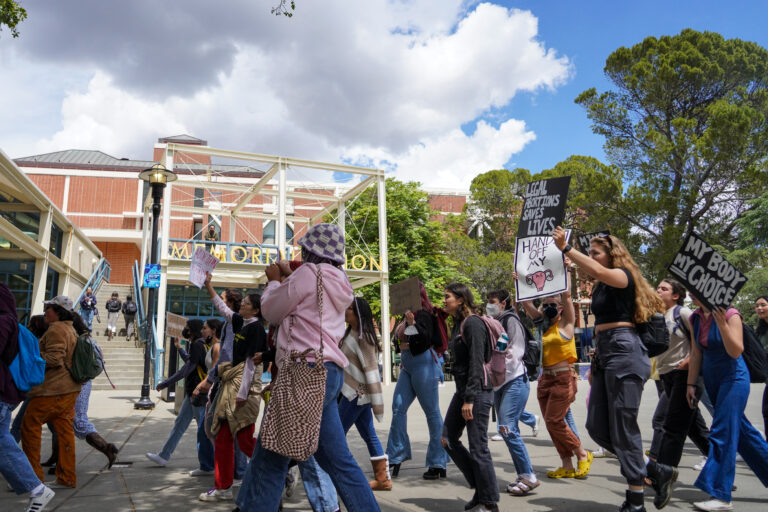
UC Davis students rally for abortion rights in response to Supreme Court draft opinion

The voices of the protesters at UC Davis’ “Rally for Roe” march 

By CHRIS PONCE — city@theaggie.org 

On Monday, May 2, a leaked Supreme Court draft majority opinion revealed the Court plans to overturn the long-standing 1973 Roe v. Wade case. This decision by the Supreme Court would end federal protection over abortion access in America. States would have the final say in the legal standing of abortion and 26 states are expected to outlaw abortion should the decision be put into place, according to the Guttmacher Institue, a pro-choice research organization. 

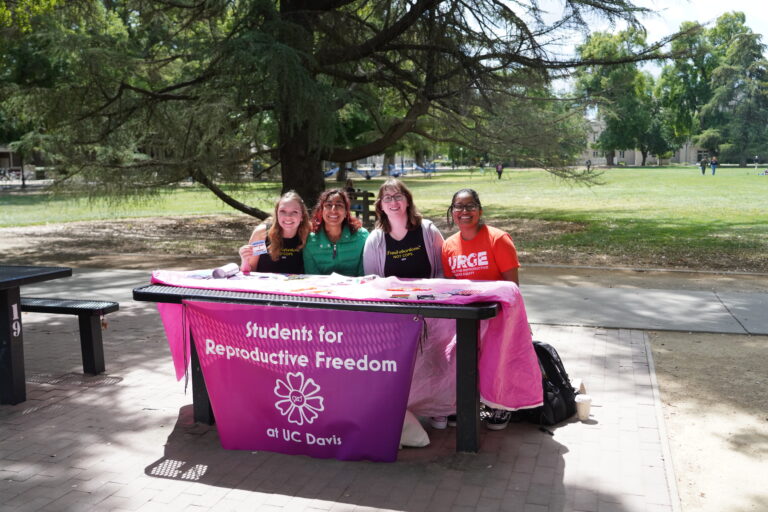
Students swiftly responded to the majority opinion: On Monday, May 9, the Instagram for the ASUCD External Affairs Vice President advertised a protest called “UC Rally for Roe” on May 10. The protest was organized by multiple associations such as the Gender and Sexuality Commission (ASUCD GASC), Students for Reproductive Freedom (SRF) at UC Davis and the Office of the External Affairs Vice President. 

Come out tomorrow to join us in the quad for our UC Rally For Roe and make your voices heard!!” read the caption of the Instagram post by the External Affairs Vice President. 

One of the organizers was Isabella Holmes, a fourth-year English and communication double major. Holmes is the co-president of SRF, a student-led organization that advocates for intersectional reproductive justice, according to the SRF Instagram. Holmes shared her reaction to the Supreme Court draft surrounding Roe v. Wade. 

“It’s obviously super upsetting, but I wasn’t surprised,” Holmes said. “People in reproductive justice and I think a lot of people have known this was coming for a long time.”

As students began showing up at the Quad at 11:30 am on May 10, protesters made cardboard signs and shared markers and materials to help create rally signs that read slogans like, “Bans off my body.” Holmes spoke about why people were gathered that day. 

“We wanted to have a protest at Davis to kind of just show students that like we’re there for them and we care and people right here on campus are doing something about it,” Holmes said. “I know a lot people want to get involved but they don’t know where to start. So I’m really hoping this will kind of direct people towards like joining the [organizations] that are on campus and donating to abortion funds and local clinics if they can.”

SRF’s Instagram highlights the importance of intersectionality related to reproductive justice. Holmes talked about the organizers’ attempts to keep the rally diverse and inclusive to all people. 

“Another thing is, we kind of wanted to have a protest that is explicitly catered to everyone who is impacted by this,” Holmes said. “We wanted [to have] a protest that is very gender-inclusive and is very pro-abortion and intersectional. Because, a lot of times more like centrist feminism takes that away and it only caters to, like, middle-class white women.”

At 12:00 p.m., protesters began marching around the Quad. The organizers led the march, emphasizing the importance of using gender-inclusive language in their chants. For eight minutes students marched around the quad chanting slogans such as “Bans off our bodies,” “Trans rights are human rights” and “Protect Roe v. Wade.”

After eight minutes, students walked to the center of the Quad where everyone gathered to speak about Roe v. Wade. A student read a poem that described the importance of abortion. The organizers invited other students to share their opinions. 

Students proceeded to march in front of the library and then loop back to the quad. As they marched, they were met with cheers of support from onlookers. A first-year neurobiology, physiology and behavior major, Valeria Cera, attended the rally and shared her reaction to the news regarding Roe v. Wade.

“I was kind of pissed, man,” Cera said. “I do believe a woman should have the right to abortion and the abortion laws already set in place already have limitations to protect the child. Even though we are pro-abortion doesn’t mean we’re going to take a child out of a woman who’s in her third trimester.”

At approximately 12:30 p.m., the organizers thanked everyone for coming out as they ended the rally. Some people in the crowd chanted, stating they wanted to march downtown next. 

Cho, a molecular and cell biology major from UC Berkeley who did not provide their last name, joined their friend Cassandra at the rally. They are very active in their local community and try to stay politically active, so they proudly attended the rally with their friend. Cho said what they would tell a student who is pro-life.

“I’d encourage people to take a pause,” Cho said. “It’s really easy for us when we have our ideology [to] really hold to it and not be open to listening to anything else. Really take a pause and realize what that means for you and what does it mean to have control over somebody’s entire life and somebody’s entire choices with their body. Take a deep breath and listen to what people are saying.”

Written by: Chris Ponce — city@theaggie.org

Lawntopia brought the funk — and more

Headlined by Duckwrth, and featuring local and student openers, this concert on the Quad was the ultimate springtime celebration

By ANGIE CUMMINGS — arts@theaggie.org

In case you somehow missed it, Lawntopia was an event put on by ASUCD Entertainment Council (EC) on Thursday, May 19, serving as spring quarter’s biggest show that highlights a variety of performers and school organizations — providing students with an exciting and free concert right on the Quad. 

 “This is the first one since covid […] the focus is definitely on the music and musicians,” said Vanessa Gonzalez, the assistant director of Entertainment Council and a fourth-year cinema and digital media major. “We try to get local artists and one big headliner. We also work to spotlight student orgs [organizations] and have activities for students to enjoy while the show’s going on.”

Due to the pandemic, the hunger for live entertainment is at an all-time high, and Lawntopia delivered on its promise to serve up a good time to the UC Davis student body. Put simply, “it’s a great opportunity to get outside and have fun,” said Caden Velasquez, a second-year international relations major who goes by stage name DJ Mellax and was one of the openers at the show. 

Right at 7 p.m., the show started with pulsing beats and exciting remixes by three opening DJs, two of them being current students and one a recent UC Davis graduate, followed by a local Sacramento singer, Yelly. The whole event was brought home by a lively set from the much-anticipated headliner Duckwrth. 

“We’ve had him [Duckwrth] in consideration for several months now; we were so excited that he agreed to come!” Gonzalez said. 

 The entirety of the East Quad was filled with students taking part in all that Lawntopia had to offer, including sitting on the grass and painting on vinyl records, chowing down on snacks from the food trucks parked alongside the grass and dancing to the electrifying music. It was an extremely joyful scene, only amplified by the perfect weather and greenery, something artists appreciated.

“The fact that it’s in the Quad, with all the trees around, it’s like the perfect venue,” said Gino Lacson, also known as GMunny, a managerial economics major who graduated this past winter quarter and was another one of the opening acts of the night.

The three opening DJs — DJ Homsy, DJ Mellax and GMunny — got everyone up and the energy high, with a wide variety of musical inspirations for their respective sets. 

“I started djing with Latin reggaeton and really got into house music and techno bass … I definitely have a large repertoire,” DJ Mellax said. 

GMunny described equally vast yet distinct musical influences: “I play house music … I’ll go into techno and I’ll find that in-between … I’ll do disco. I just try to keep it funky,” he said. 

By about 9 p.m. the whole crowd (myself included) was properly hyped-up and ready for Duckwrth to take the stage. With a small band of just a drummer and bassist, as well as his amazing backup singer Liv (who some might argue almost stole the show with her own charisma and talent based on cheers from the crowd), Duckwrth’s set felt as intimate as it could get with hundreds of people cheering from across the Quad. 

Just after the first song, there was a small pause in the show, as Duckwrth got the crowd to make space for a student who had passed out right in the front row — safety comes first, even at a concert. After the student was out of the crowd the party resumed, with an uninterrupted almost hour-long set that had everyone (safely) jumping, singing and dancing the whole time. 

“Feel free to shake your a**,” Duckwrth said partway through his set — an entirely understandable suggestion given the grooviness of the music booming across the Quad. After every song the crowd was begging for more, and at approximately the halfway point of the show, Liv (Duckwrth’s fantastic backup singer mentioned before) received a much-deserved several-minute long standing ovation. One student held up a phone with the words “you are carrying miss thing” which perhaps is what incited the extended cheers of admiration. 

Even though Duckwrth was not able to be interviewed for this coverage of his show through ASUCD EC (and did not respond to my request for a quote via my phone screen in the crowd), it truly felt like he was having just as much fun as everyone dancing to his music. After that performance, it’s likely he attracted some more regular listeners, or at the very least earned himself a spot on some playlists this summer.

Written by: Angie Cummings — arts@theaggie.org

Despite the recent loss, Canelo Alvarez continues to show boxing greatness

In an era where fighters duck the best, Alvarez continues to dare and be great

By MARLON ROLON — sports@theaggie.org

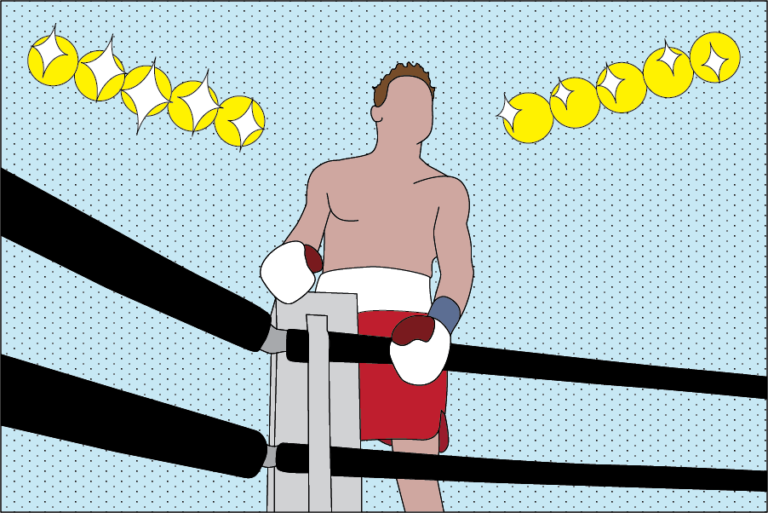
Every generation has one or two prize fighters who are the face of boxing. Between 2003 to 2017, Floyd Mayweather and Manny Pacquaio carried the sport. They dominated opposing fighters, collecting championship belts in multiple weight classes.

For years fans wanted to see arguably two of the best fighters of all time go head to head. Unfortunately, boxing promoters were in the way of letting that come to fruition. However in 2015, Mayweather and Pacquaio finally stepped into the ring — six years too late. Pacquaio was on the decline due to his come forward fighting style that takes years of a fighters career.

The fight sold 4.6 million pay-per-views, a record that has not been broken since. This was at a time when Maywether, who is considered “The Best Ever,” was selling one million PPV’s no matter who he fought and so was Pacquaio. No matter the opponent, these two fighters sold out the arena and had the boxing world buzzing. They attracted casuals, fans, and people who didn’t watch boxing but tuned in because they were can’t miss attractions.

However, in 2017 Mayweather retired from boxing and in 2021 Pacquaio, who was a shell of himself retired way past his prime — a common theme in the sport. It seemed like boxing followed these two fighters into retirement. 

That is until Saul “Canelo” Alvarez arrived. Alvarez started to gain popularity in 2010 when he was 19 years old fighting veteran champions. At 23, he fought Mayweather. Although Canelo lost to Mayweather, his stock rose as more eyes outside of boxing started to recognize his fighting style. 

Capturing a world title at just 20 years old, Canelo was considered the one to carry the sport. After his first professional loss to Mayweather, Alvarez did just that, beating 16 world champions to go along his 57-2-2 record. 

Canelo undeniably is the face of boxing, selling out arenas wherever and whoever he fights. In 2021, Canelo beat Billy Joe Saunders at the AT&T Stadium in Arlington, TX — the home of the Dallas Cowboys. He set an indoor boxing attendance record of 73,126 fans filling the arena. Primarily, the prize fighter tends to fight in Las Vegas where he sells out the T-Mobile Arena every time he fights. 

However, Canelo’s PPV numbers are not what Mayweather was accustomed to. In fact, his biggest PPV sold was against Mayweather himself — the fight generated 2.2 million PPV buys. His second biggest PPV fight was against Gennady Golovkin at 2 million buys. His average is between 8,000,000 to one million sales in PPV which is not bad considering the lack of star power that’s missing in the sport. 

Since boxing sales through PPV’s are not what they used to be, companies like DAZN have offered contracts to fighters like Canelo to fight under their streaming services which is available to audiences who subscribe to the streaming service for an affordable monthly fee of $19.99. In Canelo’s case, DAZN offered him a lucrative 365 million dollar contract for 11 fights within five-years. This ensures to generate substianal revenue for both parties involved.

Besides Canelo, there is no one else that can sell close to his PPV numbers. Boxing has been on the decline for a few years now. This has to do with promoters and the addition of so many championship belts in every weight class. 

Promoters dislike each other in the world of boxing. For example, Golden Boy Promotions run by Oscar De La Hoya, has been feuding with rival promoter Top Rank owned by Bob Arum. Mayweather Promotions is also feuding with Top Rank. De La Hoya and Mayweather used to fight under the Top Rank banner but due to allegations against Top Rank taking the majority of the purse percentages, they don’t want to do business with Bob Arum. 

It’s not just with Top Rank though, other promotion companies don’t want to do business with other promoters and that’s how it is in boxing. Promoters create their own stable of boxers and fight their fighters with other fighters within the same stable in order to maximize the profits associated with sales. This is done so that promoters don’t have to split a certain percentage of revenue with other promoters. However, there are times when a fighter from a particular promotion company has to or requests to fight other fighters from opposing companies. For example, if a fighter holds a title belt and wants to unify a belt which a fighter may have from an opposing promotion company, then they have to fight each other. 

Another relevant issue that is holding boxing back is the addition of so many championship belts. There are four sanctioning world titles, the World Boxing Association (WBA), the World Boxing Council (WBC), the International Boxing Federation (IBF) and the World Boxing Organization (WBO). 

These sanctioning bodies hold multiple title belts under the same organization. For example, the WBA holds the “regular” and the “super” champions. If a fighter wins the regular belt then they hold the WBA belt. If that fighter wins a belt from the opposing major sanctioning body then they become the “super” champion of that organization. This then leads to the regular belt being vacant for other fighters to fight for it.

  This can be said about the WBC, they have the “Diamond,” “Eternal Championship” and the “Silver” belt. Every major sanctioning body also has the “Interim” champion. The reason for this is because if a fighter can’t defend his belt due to medical issues then two other fighters fight for the belt. When the true champion is back from his injuries he still holds the championship belt. This means there are multiple champions in each division. It is a very complex order that can make it clear why some people would rather not keep up with boxing that closely. There are a lot of moving parts.

With promoters keeping their fighters from fighting the best fighters out there, boxing has hit a wall. Fighters now avoid the best challenges out there to avoid a loss in their record. In today’s boxing, promoters along with fighters protect their boxing record by fighting the easiest possible opponent. If they can maximize PPV sales with minimal risk to their record then they’ll do it. 

With the addition of more championship belts, fans are sold on a “championship fight” with low risk and high reward. The more a promoter can keep his fighter with an undefeated record, the better it sells. This leaves the promoters making more money, the fighter significantly more profits and holds a belt while leaving the fans unsatisfied. 

In an interview conducted by Showtime, Mayweather sounded off on his displeasure with the sport of boxing having too many champions. With so many champions in each weight division, the fans are left wondering who the real champion is within the division. The addition of multiple champions defeats the purpose of the meaning of “champion” which in turn is suffocating the sport. 

“There’s too many champions in the sport of boxing right now. It’s no such thing as a super champion, not at all,” Mayweather said.

Due to the involvement of politics amongst promoters and too many belts in each weight class fans are left with unknown fighters being champions and predictable match-ups. This is why boxing is on the decline in terms of popularity and PPV sales. 

However, Canelo Alvarez is changing the dynamics of boxing and setting the tone in terms of the best fighting the best. Canelo has won titles in four different weight classes. Starting at Jr. middleweight (154 pounds), then he conquered the middleweight division (160 pounds), super middleweight (168 pounds) and light heavyweight (175 pounds). Boxing has never seen anything like this, a fighter moving up in weight after every fight and capturing world titles against established champions within those divisions. 

Canelo has already cemented his legacy into the conversation of the best ever. Yet, he is still seeking to challenge himself in every fight. He wants to continue to make history, something he has stated in post fight interviews after every fight.

“It’s important for me and Eddy [trainer] because very few people have achieved becoming undisputed champions,” Canelo said. “And that’s a short-term goal for us. To win all the titles at 168 pounds.”

On Nov. 6, Canelo accomplished his goal. He beat all the champions at 168 pounds and unified the belts to become the first undisputed champion of Mexican origin.

Canelo aimed to unify all the belts at 175 pounds, already claiming one belt at light heavyweight, Canelo bit off more than he can chew. He suffered his second defeat of his illustrious career against Dmitry Bivol. Canelo himself looked shocked, however instead of losing stock it seemed as if the boxing world praised him for taking on such a challenge. 

Fighters like Canelo aren’t around anymore, he is an old school mentality with swift boxing abilities. That is the reason why when Canelo fights fans tune in to watch the legendary fighter. 

“I’ll fight anybody, I don’t care,” Canelo said in an interview conducted by multiple reporters during fight week.

Fighters like Canelo are what fans want to see. They want someone who isn’t afraid to lose, someone who has the courage to seek the best challenges out there, someone who is willing to maximize their potential, someone who wants to make history, someone who wants to be the greatest fighter of all-time, someone who dares to be great.

“I think it’s important, not just for me, but for all fighters,” Canelo said in an interview with RingTv. “To make history in boxing is very important, I think. It’s very important to me to leave behind a legacy in this sport. And that’s why we’re doing this. To keep making history and so when people talk about boxing, they always remember me.”

Canelo’s mantra is “Dare to be great.” If fighters in boxing can live by this, then the sport can potentially rise back to its glory days, where boxing should be. With so much young talent on the rise at the moment, they have an opportunity to revive the sport.

Written by: Marlon Rolon — sports@theaggie.org


As Roe v. Wade faces potential reversal, UC Davis organizations and larger community have resources for people seeking abortions

UC Davis students gather to protest Supreme Court decision, amplify local resources

By MALERIE HURLEY — features@theaggie.org

On Tuesday, May 10, students gathered on the Quad to march in response to the recent leaked draft of the Supreme Court majority opinion that would overturn Roe v. Wade. Two students, fourth-year English and communication double major Isabella Holmes, co-president of Students for Reproductive Freedom, and second-year international relations major Celene Aridin, organizing director from the External Affairs Vice President’s Office of ASUCD, worked their way to the front of the circle waving their arms for silence to share resources for abortion access on campus and lay out guidelines for the march, attempting to corral the passionate students in their midst. 

“Last week, we all saw what the Supreme Court’s thoughts were, and it was just honestly devastating to see, especially in a country that says that everyone has political freedom and rights,” Aridin said. “Clearly there are people that no longer are allowed to have them, especially in some states. It’s super important to make sure that people know that they have support and that people know that we want to reach the pinnacle of what we can get.”

Students marched around the Quad chanting a variety of pro-choice slogans in conjunction with rallies occurring simultaneously at UC Riverside, UC Santa Barbara and UC San Diego. Students were angry, pouring out their frustration at the reversal of the SCOTUS decision that has protected citizens’ reproductive freedom and that will adversely impact so many marginalized groups in red states. While the expected overturn will likely have little effect on California residents, many students, especially out-of-state students returning home to red states for the summer, may be feeling a lot of anxiety about the state of abortion access in the future.

In the face of this uncertainty, coordinators at the Love Lab, a cart operated through Student Health and Counseling Services (SHCS), are committed to providing safe sex products and helping direct students who need abortion services to local providers. Located on the third floor in the Health and Promotion office of the Student Health and Wellness Center, the Love Lab is a mobile cart stocked with safe sex products and informational pamphlets on STI testing, HIV awareness, pelvic health and other important sexual health information. 

Staffed by knowledgeable student coordinators and sexual health specialists trained to advise students of all backgrounds, the Love Lab also provides counseling, and is able to talk pregnant students through their options and support their needs. 

Alyson Kahn, a third-year medicine major and Student Coordinator for the Sexual Wellbeing Team at Health and Promotion, shared Love Lab’s approach to providing abortion counseling and directing students to local services available.

“We do not currently offer abortions in house as SHCS, but in January of 2023, all college health centers in California will be required by law to provide medical abortions, which involves taking two pills,” Kahn said. “A medical abortion is not the same as a surgical abortion, and as of right now we will be referring [pregnant] students, if they want to have an abortion, to the Women’s Clinic at Sutter Health in Davis, or Planned Parenthood in Woodland or Sacramento. For students with the UC Health Insurance SHIP plan, these services will be covered.”

Medication abortions, or self-managed abortions, involve taking two pills, mifepristone and/or misoprostol, and can be done at a doctor’s office or with guidance at home. 

Holmes recently led a Students for Reproductive Freedom meeting educating students about self-managed abortions and said that she hopes to spread the truth about these procedures to students who may rely on this option — especially those returning home to red states for the summer.

“Self-managed abortion is available, even when it is illegal,” Holmes said. “You can access the abortion pills online, and it can be delivered to your house. In a lot of places it’s not illegal, and it’s more of a telemedicine thing, but in some states where it would be against the law, it’s pretty accessible if you have the funds, very safe and 95% effective.”

According to Plan C, a site which provides abortion seekers with information about how to obtain abortion pills delivered right to their door,Abortion pills block pregnancy hormones (mifepristone) and cause cramping and bleeding (misoprostol).This causes the pregnancy to end and come out of the body. It is like a miscarriage. You can expect a few hours of heavy bleeding and cramping and several days of lighter bleeding.” Websites like Plan C and Hey Jane also offer medical professionals on hand to guide users through the process. 

It’s important to note that medication abortions should be performed within the first 11 weeks of a pregnancy, as the procedure is more painful and less effective if used later. The first method of medication abortion, using both mifepristone and misoprostol, is the most common and effective form of medication abortion. 

But, because mifeprostone is an abortion pill and requires a prescription to obtain, the first method may not be accessible to those in red states where medication abortions may be restricted or banned should Roe v. Wade is overturned. Thus, another medication abortion method, which involves taking only misoprostol, can be used for those in states where abortion is illegal. Commonly sold as an over-the-counter anti-ulcer drug, misoprostol does not require a prescription, is 85% effective in ending pregnancy and is endorsed by the World Health Organization for those who don’t have access to mifepristone. 

 While many have negative associations with self-managed abortions, self-managed abortions are incredibly safe, with a less than 1% risk of complications, according to Doctors Without Borders.

While health services like the Love Lab and other organizations remain committed to ensuring students have access to abortion, organizations like Students for Reproductive Freedom aim to fight restrictive laws that will likely be triggered in some states once the formal decision is released from the court sometime in June. In collaboration with organizations like Planned Parenthood and Unite for Reproductive and Gender Equity (URGE), student activists are now engaging in lobbying work and direct actions to demand that Congress codify Roe v. Wade into law through the Women’s Health Protection Act

Indira D’Souza, a third-year global disease biology major and co-President of Students for Reproductive Freedom, shared resources for students who want to get involved in fighting for reproductive justice and ensuring access to abortion nationwide.

“People should call their representatives at the national level to tell them to pass the Women’s Health Protection Act,” D’Souza said. “I know that it got voted on and failed recently […], but continue to keep the pressure on your elected officials. Additionally, donating to abortion funds and local clinics is probably the most immediately impactful thing that you can do that has a tangible difference in the life of someone who needs an abortion.”

UC Davis students should understand that there will continue to be abortion services available in the state and local and national organizations fighting these laws and restrictions until equitable abortion access is a reality for all.

Written by: Malerie Hurley — features@theaggie.org

Column: The CIA vaccination sham in Pakistan was abhorrent

The aftermath of the mistake is more relevant than ever

By ALEX MOTAWI — almotawi@ucdavis.edu

Vaccines have been a part of our society for ages, with the first vaccine being given way back in 1796 (for cowpox). That means scientists spent over 200 years establishing the virtues of vaccines and how beneficial they are to society. In those 200 years, we’ve come a long way towards normalizing the use of vaccines and making them widely available, but not everyone is on board yet. It’s not easy to gain the trust of groups that have been historically mistreated by governing bodies. When medical professionals need enough trust to physically inject someone with something that may cause side effects for an ailment that doesn’t affect their day-to-day life(people don’t go walking around thinking about the dangers of measles every day, for example), the challenge is multiplied. 

Scientists have created vaccines for many diseases and have even eradicated some of them (smallpox is one of them, according to the World Health Organization), but the work is far from over. For example, polio was eradicated from the U.S. in 1979, but it still exists in other countries today. Vaccines should be seen as an incredible invention by humanity and something celebrated everywhere. That’s why the fake vaccination program run by the Central Intelligence Agency (CIA) was very dangerous and put the lives of many humans in jeopardy.

The CIA set up a fake vaccination program in 2011 giving fake Hepatitis B vaccines to children in Pakistan in order to collect DNA samples and aid in the search for Osama Bin Laden. Bin Laden was caught in May 2011, but the scheme proved unhelpful towards the result and eventually reached the public eye, to the detriment of everyone involved. The CIA and the U.S. government had to do damage control and eventually announced the end of fake vaccinations as a military tactic in 2014, but they are the perpetrators, not the victims. The victims are people all across Pakistan that are now unwilling to take vaccines from outsiders — with good reason. After being blindsided by a ploy like that, I would be hesitant too.

Vaccination workers and local police were getting killed trying to spread the polio vaccine in Pakistan as of 2020. The true tragedy is the impact it’s having on the Pakistani people. If it wasn’t for the CIA sham, polio may have been completely eradicated in Pakistan. Instead, polio cases spiked in 2014, going up to 306 cases and leading to Pakistan being one of three countries with polio as a health emergency. Leslie Roberts, an epidemiologist for the World Health Organization, predicted in 2014 that the CIA ploy could postpone the eradication of the virus in Pakistan by 20 years and 100,00 cases. Thankfully Pakistan has only had one case in the past 12 months, but the vaccine distrust caused by the CIA still endangered innocents and made them hesitant to trust not only the polio vaccine but other vaccines as well.

Vaccine trust is a constant battle, and the CIA’s efforts are counterproductive. It’s not a battle only fought in Middle-Eastern countries either. Similar sentiments have sprouted up in the U.S. concerning the COVID-19 pandemic. People of color in the U.S. have been and continue to be systematically mistreated by the medical system. The U.S. and medical researchers have perpetrated similar tragedies that have bred a base level of distrust that needs to be overcome. 

The CIA’s usage of fake vaccines isn’t a small battle that was fought and won years ago. This is something that is still relevant today. While everyone worldwide should be getting lab-proven vaccines to stay healthy, we need to recognize why certain groups choose to abstain and foster a better culture that establishes trust and safety across the world.

Written by: Alex Motawi — almotawi@ucdavis.edu

Disclaimer: The views and opinions expressed by individual columnists belong to the columnists alone and do not necessarily indicate the views and opinions held by The California Aggie.

Column: What makes a good video game?

Depth in gameplay, replayability and community all contribute to making a game great

By OWEN RUDERMAN — opruderman@ucdavis.edu 

If you’ve been paying attention to the world of video games, you will have heard of “Elden Ring,” an unforgiving open-world role-playing game by Japanese game company FromSoftware. Despite its popularity (12 million copies sold in just over two weeks and overwhelmingly positive reviews from critics), “Elden Ring” got some backlash from western game developers who couldn’t seem to wrap their heads around its success. These developers complained on Twitter about “Elden Ring’s” lack of traditional user experience and quest design, among other things.

The popularity of “Elden Ring” without these video game staples got me thinking: If it isn’t user experience or quest design that makes a video game “good,” what exactly is it? I’ve played hundreds of video games in my time, spanning all different genres. After giving it some thought, I’ve managed to extract the one thing that every enjoyable game has — depth. Depth comes in many forms, but to me, the top three that contribute most to a positive game experience are gameplay, replayability and community. 

For a game to be enjoyable, the gameplay has to have depth. This means that the player needs to have some way to express themselves through the game or be able to choose how they want to play. “Elden Ring’s” lack of intuitive quest design is outweighed by its incredible amount of gameplay depth. The player is allowed to choose the way they want to build their character and approach battles, and they have the opportunity to explore any part of the map that they want. The sheer amount of things to do and ways to play makes “Elden Ring’s” gameplay rich and complex.

Replayability is another important aspect of depth that can enhance a game. Once you complete “Elden Ring,” you can start a New Game+, where you carry over your current character and play through the game again with harder bosses. Or you can create an entirely new character with new weapons and spells to tackle the game in a different way. If you get tired of single player, you can try invading other players’ worlds. The replayability of “Elden Ring” is staggering for a game that is mostly single player. Some extremely popular games, like “League of Legends” and “CS:GO,” push replayability to its maximum potential with the inclusion of multiplayer. The play area and goals never shift in these games, but the unpredictability of human opponents always keeps it interesting.

The last aspect of depth that makes a good game to me is community. “Super Mario 64” was released in 1996, and yet its speedrunning community is still going strong to this day. I’m willing to bet that if the speedrunning community didn’t exist, “Super Mario 64” would have faded into obscurity long ago. The community and the competition gives people a reason to play, keeping the playerbase alive. For a game to be successful, it needs to foster an engaging community. “Elder Scrolls V: Skyrim, released in 2011, is another example of a game with a lively community. The modification support that was implemented makes the amount of community content nearly endless, thereby keeping it interesting and adding to the overall depth of the game. 

It turns out that to me, it isn’t just user experience and quest design that is important. It isn’t even graphics or animation. What’s important is that a video game has depth to it in the form of gameplay, replayability and community. Next time you’re wondering why the game you’re playing is boring, ask yourself: does this game have depth? 

Written by: Owen Ruderman — opruderman@ucdavis.edu 

Disclaimer: The views and opinions expressed by individual columnists belong to the columnists alone and do not necessarily indicate the views and opinions held by The California Aggie.

The Editorial Board meets with Chancellor May, UC Davis administrators

May and administrators discuss Cow4Mascot, COVID-19, California Building Code standards and more

The California Aggie’s Editorial Board met with Chancellor Gary May, Provost and Executive Vice Chancellor Mary Croughan, Chief Campus Counsel Mike Sweeney, Director of Athletics Rocko DeLuca, Vice Chancellor for Diversity, Equity and Inclusion Renetta Tull, Faculty Advisor to the Chancellor and Provost Ari Kelman, Chief Marketing and Communications Officer Dana Topousis, Vice Chancellor of Student Affairs Pablo Reguerín and Associate Vice Chancellor for Safety Services Eric Kvigne.

Below is a transcript of the meeting that has been edited for length and clarity. 

What student resources do you think are the most underused on campus and how can students access them more effectively?

May: We just had a meeting with my Chancellor’s Undergraduate Advisory Board and this was the topic. We have so many resources and so many things we can point students toward that it’s often a matter of getting the right resources at the right time because we do it all at orientation and they forget everything. Which I understand because it’s so much. But I think there’s something for almost every circumstance, it’s just a matter of how we get a student that needs a resource [to a resource] at the time they need it. 

Reguerín: As the chancellor mentioned, we have a wide array of services, from health services to housing to retention and community centers. The level of utilization fluctuates depending on what’s happening. Different weeks in the quarter, different points in time. It’s not always easy to understand exactly what you get from what department, so part of it is [that] regardless of where one student connects to one particular office or another, they have a sense of connection. It could even be at their work-study job, talking to their supervisor. It could be by joining a student organization. Once they make connections somewhere, usually they’ll get someone who can service them, like a translator or promoter, someone who can connect them into the office that they need at that point in time. So really for us, it’s about students feeling a connection somewhere. We try to describe our programs, different marketing tactics like social media or emails — although we probably overuse email too much. We’re trying to use more graphics, less words and trying to explain the values of the various services. We’re always open to getting more help in that area, so we are certainly open to feedback on an ongoing basis on how we can describe and connect services to students. Finally, I’d like to say, one issue that can be a barrier for students using services can be a sense of stigma. So, we really try to address stigma. We’re very open. As I said, our various offices will have peaks and lows on utilization at different points in time, so we try to offer them just in time so that people feel a sense of connection. 

Tull: This is something that I learned today from a couple of meetings. I thought it was really exciting to find out that every student on campus will get one free ticket to the Mondavi Center for a show of their choice. That helps keep them engaged and there are other discounts and things like that for different shows. Another thing I learned today through [Center for Student Involvement] is that they have an involvement calculator that helps students get involved with different organizations. There’s now an ambassador or mentor who can help to connect students to different things. I know that some of the leaders are trying to make sure there are more ambassadors and more mentors to help with some of that one-on-one and help those other connections. I know that our office is trying to see if we can do more with social media and other methods to supplement and partner across campus. 

How does the university plan to address COVID-19 in the 2022-23 school year? What mandates or recommendations will be in place for masks, testing, isolation housing, and other COVID-19-related precautions? If the plans haven’t been finalized yet, when should students expect these announcements? 

May: Of course you know, we’ve accurately predicted every step of the COVID pandemic. I’ll repeat some of the stuff you already know then I’ll get into next year. We’re ending our required surveillance testing at the end of the quarter. We will continue having testing available on a voluntary basis through the end of the calendar year. But we haven’t quite figured out where it’s going to be and other logistical stuff yet. But we have at least figured out the budget for it. So, everyone will be able to get a saliva PCR test as you’ve been doing through the end of the calendar year. It just won’t be required every 14 days for the vaccinated people or every four days for the unvaccinated. We do campus planning on a regular basis, and it’s not something we do just for COVID. There’s a lot that can happen between now and then as you’ve seen. It’s been a rollercoaster in terms of new variants, etc. Luckily, it appears that now things are more normal than they’ve ever been, the campus is as normal as it’s ever been. Positivity has been up, but I’m starting to think positivity isn’t the right metric to monitor anymore, it’s hospitalizations and deaths which are down significantly. For vaccinated populations, it’s a four day head cold. It’s not terrible and you get better.

Croughan: The CDC is even going to move from case positivity or, for those who have taken any public health class or learned it through the process of living through the pandemic, incidence rates. Even among hospitalizations they’re distinguishing now someone being in the hospital because they have COVID, or someone who has COVID and is in the hospital. So, every single person walking in gets tested for COVID. Most of them are not there because of COVID. Our dashboard for UC Davis Health has shown that from the beginning, but that hasn’t been the case in most places. We also have always distinguished between if you have COVID, the ICU or general ward. It’s the ICU cases of COVID that are the serious ones. That’s where someone is at risk of being placed on a ventilator or dying from COVID. We have two of those right now, but we had zero for the last two months. We’ve done the calculations for the fall, we don’t know what variants will be in place but the virus is doing the mutations exactly like it’s always done in history: mutate into something that is more likely to be transmitted and less likely to kill the host. Every variant has been doing exactly what we think it’s going to do. As long as we stay on that standard trajectory, fully expect summer and fall to be exactly as it is right now and probably even lower cases, lower hospitalization, lower death rate. That’s not to say that the five million people who’ve died from COVID are insignificant, but we are also still far below the deaths that occured in 1918 which is another thing to keep into account. We do have treatments, we do have antibiotics, ventilators and things that keep people alive most of the time. So, I’m not worried about summer or fall, unless we have a very odd strain. 

Kvigne: We do stay connected to our county public health officials at minimum twice a week. They’ve been great partners with us along the way. We’ll continue to take their advice and recommendations, and if there are changes on the horizon, we get a heads up on what that might look like. We’ll certainly continue to do that. I agree with what the chancellor said wholeheartedly in that case rate is no longer a baseline measure for where we’re at in the pandemic. Our public health officials are indeed saying that and updating data and metrics that reflect that and so are we. I don’t have a timeline yet but our dashboard will be updated so that it reflects the severity of disease as best as we can manage it. Right now that means a link to the CDC page that tracks by county hospitalization rates. So, we’re going to do something with our dashboard that puts that on top because right now at the top of our page is our vaccination rates, which we do very well there, so it’s not very important anymore. That will be something that will be coming soon. 

May: And if we have to, for any reason, ramp up to full testing as we’re doing now, we’ll be able to do that quite easily. It’s just a matter of staffing and other things, but we can do that. And if there’s another booster or vaccine that’s required, the vaccination policy allows us to have another mandate for that. 

When planning new buildings on campus, what considerations does the University make to accommodate students with physical disabilities? Does the University consider building accessibility beyond just meeting baseline ADA requirements?

May: We certainly always meet ADA requirements. It’s much easier to add to new constructions than existing constructions. It’s simpler and less expensive for new buildings. There’s a California building code, which means we meet or exceed federal ADA requirements. All projects get reviewed and signed off on by the state architects for our state-funded projects. There’s campus standards and design guidelines policy manual that exceeds California Building Code and federal ADA requirements for power-assisted doors, restrooms that are accessible and all those sorts of things. There’s a campus accessibility funding committee that provides funding to install power-assisted entry doors to existing buildings. Lately, there has been discussion on neurodivergence and how we design classrooms and laboratories for neurodivergent people. It’s very early in the stages of planning so I don’t know if I could say specifically what will happen as a result of that, but our campus architect and others have been involved in those discussions and are aware of accommodation needs. That will be a part of our thinking as we go forward with new construction. 

Croughan: I’ve been talking to the campus architects about that as well. There’s Gallaudet University in Washington D.C. If you attend you either have to have a hearing impairment or be classified on the spectrum of deafness, and I’m using their terminology. They have designed their buildings so that people can always use sign language and there’s sufficient room for people to be able to sign which means, elevators have to be built a little bit larger than we typically do because you might have multiple people do it. Sidewalks are about [one and a half times] as wide. Those are the things that we’re looking at for new construction as well. Again, it’s challenging to do that in older construction but in the new constructions, making sure we have that capability as well. 

Reguerín: It’s critical that we try to create a welcoming environment for all students, including students with disabilities. To create a welcoming environment, if there are issues or parts of buildings or areas that aren’t accessible, those are things that we definitely want to hear about. We have thousands of buildings on the go-forward basis of new construction that was already discussed but if there are issues or concerns from students at specific locations, we can work with our campus accessibility committee or identify what can be done. That may require moving a program or class, depending on what the situation or the specific context is. We’re happy to follow up on specific concerns that have come up. 

Sweeney: At the risk of giving you too much technical detail, the ADA standards are like a floor. California has elected to adopt even higher standards that we are very pleased to comply with. That is called the California Building Code, which has much higher standards than the ADA. During the process of building something, at the design and approval of the plans, during the construction and before the building is open, there are stages where an ADA expert has to approve moving on to the next stage. It’s very rare for something to get through that process and not meet the highest standards for accessibility. 

When budget cuts are made, how is student feedback gathered and considered? 

Croughan: In terms of students’ roles in budgets generally speaking, it’s actually the faculty that play the largest role other than the administrators of each unit. Where students can come in is in the individual colleges for undergraduates or schools for graduate and professional students. When they do town halls on what the proposed budget is for the next year, that’s one time when students are able to have a voice. Certainly COSAF is on the student fee side of things and that is completely on students’ voice. I will admit, we don’t reach out for students on the entire $6.2 billion budget because not all of it affects students. It probably seems that way to all of you when it comes to teaching or something like experiential learning and so forth, but there’s so much of the university like grounds, utilities, facilities, maintenance and all of that that end up being part of the budget process as well. But, if you have suggestions about what we can do better or differently, I’m definitely open to that. 

This year, many unsettling events have occurred in the U.S. and throughout the world. How does the University view its responsibility to support students during these stressful times? How much of the responsibility is placed on individual instructors, and how does the University advise them to support students? 

May: At the highest level, we have a protocol for if and when we should make university statements. Whenever we do make such a statement, we make sure we list all of the resources available for students that are feeling anxious or stressed. In terms of the individual faculty, we try to remind them to be supportive and to be appropriately accommodating to students. It’s more challenging in some cases than others. 

Kelman: I’m going to sound defensive but I don’t mean to. The overwhelming majority of the faculty, as most of you know, are pretty good about this. It’s just that every now and then, there are one or two people who are much less good about it and it’s awful. I don’t know what to say about that other than it’s terrible and I’ve seen the impact it has on students. It’s very challenging. As the chancellor said, we work very hard to communicate with faculty that students are facing extraordinary stress at the moment for a variety of different reasons. Some predate the pandemic, some independent of the pandemic and some having to do with the pandemic. Most faculty hear that and understand that their students have a lot of need for support right now and are eager to provide that support. Some don’t hear it and why they don’t hear it can be for a variety of different reasons. I’m not asking you to be sympathetic for those members of the faculty that are not doing their job in a way we might want them to, except to say that they’re also under a lot of stress. They’re dealing with a difficult set of circumstances. Their children aren’t in school because of the pandemic, they haven’t seen their parents for a long period of time so their capacity for empathy might be somewhat diminished compared to what it otherwise would be. Again, that’s not a plea to feel sympathy necessarily, but just understand that they’re human too.

Croughan: If I might add, one aspect we learned last week is that summer school enrollments are down about 7-8% this summer so [Kelman] and the team really dug in to look for why. Is it that we have fewer classes offered? Which turned out to be part of it and I think that speaks to the fact that the faculty is just exhausted and burned out. Having a summer off sounds better than what they might be paid to teach a summer school class. It’s an opportunity to have a vacation with their family or friends that they probably haven’t done in at least two years. The other part is that fewer students have failed classes during the pandemic than pre-pandemic. I think that’s pretty interesting that our fail rates are significantly lower than they were pre-pandemic, and I think that speaks to some of the empathy and flexibility that faculty provided. Honestly, there are probably a lot of other things we need to study and learn from this, but it may be that in fact we can turn to the faculty and use that as partial evidence for looking at what we can do looking forward as well. We’ll do a deep dive. 

Reguerín: We’re adding some additional positions both in our counseling area and in other areas through our equity mental health funding. We’ve been putting in some resources into ongoing training support for faculty. Last fall, we did a training that was well-attended for faculty around supporting students in crisis. They too need support and instead of doing it only when it’s requested, we’ll be able to offer regular and ongoing training. It’s going to be more like what’s called mental health first aid. Common information everyone needs to have at a base level. There’s also a CARE educator position to do outreach. There’s a number of investments we’ve made this year that we’re just beginning to roll out in providing support. 

Many students are experiencing distress about the recently leaked decision to overturn Roe v. Wade. What do you view as the Student Health and Counseling Services and the University’s responsibility to support students and ensure access to reproductive healthcare? 

May: It’s the position of the University of California that all of our students should have access to comprehensive, affordable, convenient reproductive healthcare of their choosing. Now, it won’t change no matter what happens with this opinion. [Sweeney] might want to comment on the legalities but California is not a state that is in danger of changing its stance on reproductive rights. The only possible risk is if eventually things go down the road and there’s some new law that prevents abortion, but that’s not where we are now.

Sweeney: I had a conversation with Margaret Trout, executive director of our Student Health and Counseling Services. You have a true champion as the executive director. Whatever it is, she’s going to do the max. 

Reguerín: I know through the Health Education and Promotion they are doing a campaign. We’ve been looking at what kind of communication we want to put out to reaffirm this message to students. We already have comprehensive services through our health center. We’re also going to be adding medication abortion this fall, as compliant with California state law, so that’s not going to change. We’ve been trying to promote the term medication abortion and not medical abortion because people confuse the two. We’re using that term intentionally and those services will launch this fall quarter. We are looking at how we can get this message out there better in terms of reassuring what services are available. There’s no big changes but it’s one additional tool. We already have comprehensive services and referrals set so we don’t think access to abortions has been in any way limited. This is just going to add to it and what’s available.

Does historically low voter turnout (close to 12% of undergraduate students voted in the ASUCD elections this spring) impact the way in which you consider measures and referenda and input from the ASUCD Senate?

May: I would say it this way. We certainly respect and value the input from our student government, ASUCD. But, there are hundreds of student organizations and all of which have student leaders. We look for input from all students across the spectrum. The voter turnout does not impact our desire to be supportive and responsive to student needs.

Since the Cow4Mascot measure passed in the spring ASUCD election, if the alumni association approves the change, will UC Davis change its official mascot? How do you feel about some students’ push to change the mascot? 

May: I met with that group, the Cow4Mascot students, this morning in fact. Let me just say a few things. You’re correct, the Alumni Association is generally not in favor of changing the mascot. Gunrock is the mascot. The same ballot measure we were just discussing, only 12% of the students voted so even though it won by 70-80%, I wouldn’t say that’s a mandate electorally. I do applaud the spirit, enthusiasm and passion students had and all the work they put in to generate those promotional items and thought process. They are coming from a good place, they want to generate more school spirit around that mascot and that’s wonderful. But, it’ll be expensive to do that. We have 290,000 alumni and I’m pretty sure most of them would question that decision. What I encourage the student group to do is to meet with Cal Aggie Alumni Association leadership, with Intercollegiate Athletics leadership and try to come up with a compromise that works for everyone. Maybe we have a secondary symbol or mascot. Many schools have multiple mascots. I came from one at Georgia Tech that has Ramblin’ Wreck and a Yellow Jacket, and it works fine. So maybe we might do something similar here, but I encourage them to work with the people that are stakeholders to come up with a solution.

DeLuca: We’re open to working on some solution where Gunrock is still involved. I think our alumni, fans and donors were actively watching the news articles whenever things came out that Gunrock was on his way out. We did hear about certain people who were worried about what we were doing. I think we’ll be able to strike the right balance without having the entire barnyard on the football field. 

May: By the way, I’m not opposed to the cow. I don’t really have a personal position. I just know when you try to change traditions in institutions like this, alumni have really strong feelings and you have to respect them. 

Students enrolled in spring quarter 2020 received a small refund of up to $7.76 due to the modification to campus services during the pandemic. How did the administration reach this decision? Why were students not refunded for other quarters disrupted by COVID-19?

May: This wasn’t a campus decision, it was a system wide one. I’ll let [Sweeney] answer this question. 

Sweeney: A lot of lawyers got on a Zoom call and argued that some services were not being provided, but students were paying for them. The converse was, actually the services were more expensive under the circumstances. So, you had this massive increase in expenses to deliver services, but students weren’t receiving some services. We argued over it and then, working with the president of the University of California, came up with this plan to go through each program and identify where there was unspent money and where there was not to come up with that number. On a positive note, UC Davis tried hard to adapt to online, but it was very expensive and not all students were able to benefit from that, but it used those fees.

Reguerín: There was an agreement of a process and formula that happened systemwide around unencumbered, unspent campus-based fees. That was applied and there was a third-party accounting firm to validate the results in the review of those fees. Our budget and institutional analysis team went through and worked with all the departments to identify that funding. We could see what was spent in that quarter and what was not. From that, the accounting firm did the validation to confirm the process and how that was done. I convened student leaders from ASUCD, GSA, the law school, COSAF. At the time, we knew there was an approximate amount and so we consulted on what we might do with that money. Overwhelmingly, a number of different student leaders wanted to, rather than give the $7.76 refund, invest it in The Pantry or some kind of service for students that would benefit all students. Based on how the criteria was developed and the process, we were not able to do that so our remaining choice, although it wasn’t really a choice, was to give it back. We also had to make a decision. We thought about going through each student’s account and identify for example, if your fees were paid by the Veterans Administration or through CSAC for a Cal Grant. Some campuses were only giving back to the students if they had actually paid it, so we made a decision here. Also, with the NCAA after they said we can give the students the money back without any challenges or issues. After we cleared up all the issues around that, we gave every student back that refund. It was actually less expensive to give everybody the refund than to go through account by account. I think our process wasn’t what we wanted to see overall and what we heard from student leaders, but it was done through a process that was validated through a third party. 

Sweeney: I will validate that the Student Affairs leadership wanted to give it to The Pantry, but the lawyers intervened and said legally, you can’t do that. 

Reguerín: Even for students who left, if they had already set up direct deposit on their portal, the money went back to them. I think there’s a 180-day rule. Anytime we reimburse money, if there’s a stale check for 180 days we try to find the person. It’s an expensive process to even give the money back but I think we added our UC Davis values to honor the results of the process overall. 

Given that the 2022 UN Climate Report suggests that global emissions need to be cut in half by the end of the decade, how is UC Davis prioritizing this goal and preparing to adapt this campus and its operations for a warmer, drier future? 

May: In higher education, UC Davis is a national and probably global leader in sustainability. We won the Green metric, number one in North America for the sixth straight year this year. That includes everything relating to carbon neutrality. The Big Shift, as you all have seen, is a $50 million project to change from steam to water heating, which will have many benefits. We had a 40% reduction in business operations relating to greenhouse gas emissions since 2007. We’re using less energy today than we were 20 years ago even though we’ve added 4.4 million square feet in business space and 11,600 students over that same timeframe. We have the nation’s largest solar installation around the university campus and I recently formed a campus advisory committee on sustainability in response to the Fossil Free UC movement and I will get a briefing on their current activities next week at my chancellor’s leadership council meeting. One of the things I asked that committee to do is could we realistically be fossil free by 2030 and how much would it cost. I’m not one to say let’s set arbitrary goals like we will be fossil free by 2030. For one, there’s nothing magical about 2030, it’s just a year with a zero at the end. It could be 2029 or 2031 that we could do it. But, the committee is charged with evaluating all of that and reporting it. I’m pretty proud of what we’ve done. [Regarding] the UN’s sustainability goals, we were the second campus to have a comprehensive review. 

Tull: That particular report is called the VUR, the Voluntary University Review. One of the nice things about that is that UC Davis has been recognized not only in the U.S., but around the world. I was actually online at a UN conference and there were researchers from Spain and Italy who were talking about what UC Davis was doing in that regard. I think we can be really proud of our university. 

Reguerín: The Green is a net-zero energy housing community and adding 3,300 beds and having it be net zero is very impressive, and we’re really proud of that. 

As you are all aware, an assistant water polo coach was arrested last Thursday by the FBI. When can students expect the results of the investigation into the coach’s activities to become public and will the university be taking further action beyond this investigation?

May: Most of what I would say was in our statement; I hope you had a chance to read it. We can’t really comment on personnel matters anyways as we’ve said in the past. Mr. Noble has been terminated. The FBI investigation continues, and we’ll cooperate with that investigation. 

Sweeney: Chancellor May and Chief Compliance Officer Wendi Delmendo have appointed an outside investigator to review his activities and determine if anyone in our community was harmed by this behavior. Chancellor May is completely committed to transparency of these reports. They will be posted on the UC Davis website to the fullest extent that the law provides. I don’t want to pigeonhole them into a timeframe because I want them to do what they think is necessary and have complete access to everything they feel is necessary. I can assure you that they started on [May 20] and they are on it. I don’t know if it’s going to be a week or a month, but they’re committed to expediting this and I know Dana is going to post the report as we receive it. Hopefully no one was harmed, but there’s a possibility that individuals were and we care very much about that. 

DeLuca: We’ll continue to work with [Sweeney’s] office and law enforcement. I met personally with the water polo team on Friday before the news was public and we’re just trying to provide the support we can because we don’t know what we don’t know yet so let’s see how it plays out.

Given the recent spike in student-athlete suicides across universities, there has been a greater discussion about student-athlete mental health. Is UC Davis Athletics planning on further supporting student-athletes and ensuring they are encouraged to prioritize their mental health? 

DeLuca: That’s been a big focus for everyone and they have provided an opportunity for us to try and destigmatize mental health and make sure it’s something we talk about and continue to talk about. Tegan Adams, our psychologist for ICA, has been very active this spring quarter. We’ve had her meet individually with teams and I’ve also sent out emails directly to student athletes, encouraging them and making sure they’re mindful about their mental health. Our student-athlete group that’s focused on mental health awareness among our student-athlete population just had an event last Friday where they were trying to support each other. Again, as we head into the final quarter, we want to make sure that there’s support there. Jennifer Chow and her team through OSSJA also do a really nice job with their case managers providing support for student-athletes when it reaches that level. We recognized [Chow] and her team as our external teammates of the month this month just because they’ve done a great job supporting the student-athletes. It is something that I don’t know if it’s something we can ever do enough, but we can continue to lean in as much as we can in supporting them.

May: I wanted to tell your readers that [May] is Mental Health Awareness Month and we have this RELATE hotline you can text RELATE to 741-741. It applies to everybody, not just student-athletes. 

Support local art in Davis

All artists should be compensated for their work and time

Whether it is dancing at a concert, reading poetry, perusing a gallery or watching a film, almost everyone can find a way to enjoy and appreciate art. Local art is especially important to celebrate and support. Smaller artists must be celebrated as their work provides unique perspectives, often very different than mainstream art and pop culture.

Throughout the pandemic, we missed opportunities to see live art and music, and as the world returns to normalcy, the Editorial Board is so happy to visit art galleries, markets, museums and music venues once again. With the pandemic being especially hard-hitting on the arts, now more than ever is a time to support local artists and spaces. 

Artists should be paid fairly for their work. Some say there’s “an assumption that artists can and should work for free,” which we believe should not be the case. Just like other jobs, artists should be adequately compensated for their time and effort. When attending free galleries, concerts or shows, some artists ask for donations — we strongly encourage everyone to offer this support if feasible. If you cannot purchase their work or donate, showing up to their events, posting on social media or promoting them via word of mouth is also very helpful for growing artists. 

If you’re interested in supporting the local art scene, check out the many small venues, galleries, theaters, art markets and more that host frequent events in Davis. The Pence Gallery, John Natsoulas Gallery and The Artery are just a few of the local art galleries we recommend checking out in Downtown Davis. If you want to support student artists, the Basement Gallery is run by undergraduates and features exhibitions of student work. The Varsity Theatre, which is over a century old, features smaller films and offers a more intimate experience than larger chain theaters. Armadillo Music is locally owned and sells records from many smaller artists.

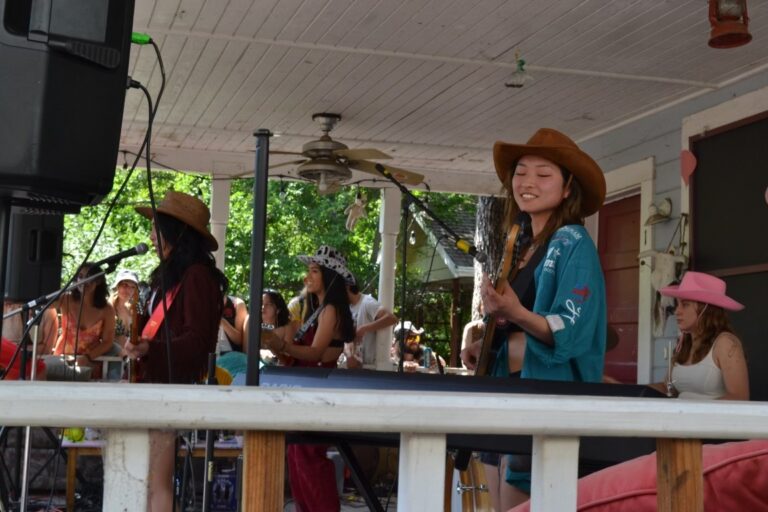
Local DIY shows are a great way for students to engage with local musicians, many of them students, and also support smaller traveling artists. Turtle House, the well-loved blue house on 2nd Street, hosts semi-regular shows in their basement and on the porch. Their Picnic Day shows featuring a long bill of artists are especially enjoyable. The Domes, a co-op housing community based on the principles of “affordable living and learning,” also host music shows both inside the classic round structures and on the surrounding land.

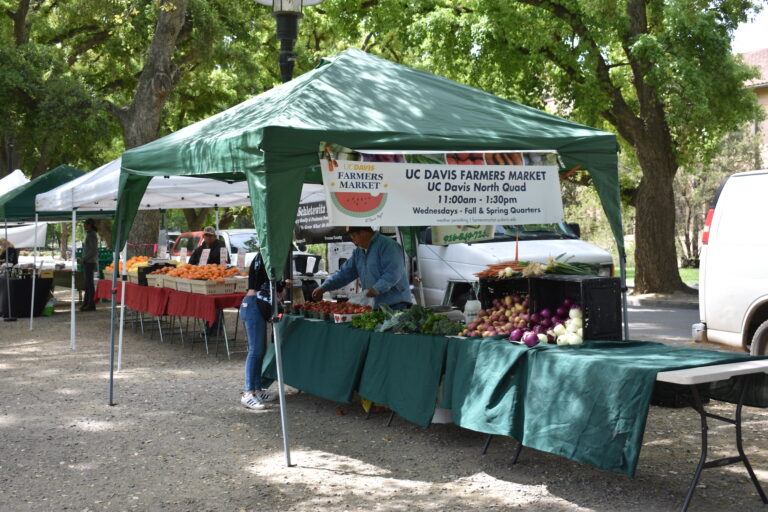
Lastly, art markets are an enjoyable way to meet local artists and browse through their work. The Davis Craft and Vintage Fair, held at Central Park two Sundays a month, features local vendors, homemade arts and crafts as well as vintage clothing. Additionally, if you are already downtown for the Farmers Market, you can check out the Davis Art Market, which occurs every Saturday on 3rd and B Street. This community-organized market offers a space for local artists to sell paintings, jewelry, stickers, music, clothes, zines and more.

While this list does not include all of the amazing spaces for local artists, it provides some suggestions for where to seek out the local art scene. At The Aggie, we acknowledge the importance of local art, and we strive to ensure our coverage includes smaller artists, bands, art markets as well as DIY venues and galleries in Davis. Through our Couch Concerts, we provide a space for local musicians to share their work and reach new audiences.

Enjoying art is a wonderful way to destress, learn new things, build community and celebrate work created by others. By compensating artists for their work and effort, the local art scene can continue to flourish in Davis and elsewhere. And by attending local art fairs, galleries, music venues and shows, we can help support and promote the work of smaller creators who would likely appreciate it much more than larger, mainstream artists. 

Written by: The Editorial Board

The Editorial Board highlights valuable resources for UC Davis students

Here are some ways for students to receive support and save time and money

While being in college isn’t always easy, there are many perks associated with being a student at UC Davis. From unique discounts with certain companies to invaluable on-campus resources, Davis has many often underutilized resources that can save students both time and money. As six of the nine Editorial Board members are graduating this year, these are the resources we wished we knew earlier in our college career:  

Aggie Compass Basic Needs Center

From financial to mental wellness resources, the Aggie Compass Basic Needs Center is one of the most useful organizations for students on campus. It is built and designed specifically to serve students; according to their website, the mission of Aggie Compass is to “ensure that every student has safe, secure housing, access to healthy food, and financial stability, that will help them succeed at UC Davis and in life.”

Their housing resources are valuable for students experiencing any level of housing hardships. The Aggie Compass website provides information on specific student-based programs like its rental assistance program, which offers grant assistance for students who may be struggling to pay rent due to unforeseen circumstances, and contacts and organizations on campus and in the city of Davis that can provide help with broader housing issues. Aggie Compass recently helped an Editorial Board member’s housemate acquire a hotel room when their roommate tested positive for COVID-19 and wasn’t eligible for isolation housing. 

Aggie Compass also can direct students to programs aimed at reducing food insecurity that every student can access. For example, the ASUCD Pantry offers free perishable and nonperishable goods, menstrual products and toiletries for all students. It operates within the MU and is open daily. Another program, Fruit and Veggie Up!, distributes fresh fruit and vegetables twice a week that are sourced from local farms. Aggie Compass also can help students fill out applications for CalFresh, a state-run program that offers long-term food assistance. 

Peter J. Shields Library Resources 

The Shields Library is a helpful resource when it comes to academics. Not only can you schedule an appointment with a librarian who specializes in a specific field to help you research for papers and projects, but you can also parse through their pre-prepared research guides on how to organize your research and utilize library resources. Better yet, there are a number of indoor and outdoor spaces available for those looking to collaborate and talk with others and those looking for quiet study spaces. (There’s a reason Shields was voted Best Study Spot in the Best of Davis this year.)

Shields offers a number of practical resources as well. These include first-come, first-serve private study rooms on the second and fourth floors and a number of rentals from the front desk, including laptop and phone chargers, portable battery packs, white boards and markers, graphing calculators and noise-canceling headphones. It also has computer rooms and workstations as well as printing, copying and scanning for a small fee. 

Student discounts

Being an Aggie and a student also means getting some pretty sweet discounts. This includes complimentary access to The New York Times using your UC Davis email address, a bundle subscription of $4.99 for Spotify, Hulu (with ads) and Showtime for students and reduced subscription prices on apps like Headspace and free access to Microsoft’s Office 365. Also, students enjoy access to the ARC through student fees and educational pricing and tech support for various products at UC Davis Stores.

Mondavi Center

Not only does the Mondavi Center draw performers from around the world, students get half off single ticket prices for all Mondavi Center events, as well as one free ticket for any event presented by the Mondavi Center or the UC Davis Department of Music over the course of their time at UC Davis. Once a quarter, the Mondavi Center also hosts a study session before finals, during which students can prepare for their final exams while listening to classical music.

While this list is not exhaustive, these resources are some of the Editorial Board’s favorites — we encourage you to utilize these as well as others to help save time and money while working hard in school.

Written by: The Editorial Board

Couch Concert: Decent Action is far from just decent

The recently-assembled local student band is getting their spotlight in the hot Davis music scene

By SIERRA JIMENEZ — arts@theaggie.org

When asked about the meaning behind the band’s name, Decent Action band members chuckled to themselves, saying they usually ambiguously respond with “it what you think it is.” While this answer intentionally leaves questions unanswered, the band decided to reveal to The California Aggie the true story behind this unorthodox name. The “big reveal,” as they called it, was simply a typo. 

Yes, a mistake. While brainstorming names for their band in a group note, Siri autocorrected “Deceptacon” — a reference to the hit Le Tigre song — to, you guessed it, Decent Action. 

“And then I went, okay, I think that’s it,” said Cassie Eng, a third-year managerial economics major. 

The group comprises Eng, who is the lead guitarist, Kinu Koide on keys and bass, drummer Molly Sadler and Candice Mitra, the lead singer. Funnily enough, the band’s name perfectly embodies the dynamic of this group that “all kind of fell into place unintentionally,” Eng said. 

At a Halloween party this past fall, Eng picked up a guitar and started to play. Drawn in by the magic of music, they all chimed in with their musical talents, and joked around that right then and there they could make a band with all their various instrument strengths. Little did they know that this would be the beginning of a friendship, let alone a prominent name in the Davis music scene. 

Soon enough, the band was offered their first gig at an Eclectic Collective, a “community space for the artists and musicians and tree climbers/huggers and silly little people everywhere,” as stated in their Instagram (@eclecticcollective_) bio, during Winter quarter in Davis. They had two weeks to figure out their band dynamic, songs to play, and of course, a band name. The genesis of the band, like its name, was sporadic and accidental — but for them, it works, and the Davis music community sure appreciates their recent involvement. 

“It was one of those things where, at the beginning of fall quarter, you just say yes to everything and then see what sticks. And this was one of them,” said Koide, a fourth-year design and political science double major. 

“Decent action stuck,” Eng added. 

Playing gigs all over Davis, Decent Action has been far from decent. This small town’s music scene has become a hot spot for both up-and-coming and acclaimed bands from around the area, and Decent Action has played a prominent role in this legacy. 

“It’s crazy to be on the other side of [the music] where we’re able to see all these really crazy creative people putting this together, it’s so cool,” Eng said. “There’s a lot of energy to the Davis music scene, and we’re really lucky to have that.” 

Having played shows over three consecutive weekends, starting with their performance on Picnic Day, followed by the ASUCD Entertainment Council Local Limelight show and finally Whole Earth Festival, Decent Action has made their mark in the Davis music community. Practicing nonstop while having nonstop fun, their passion for music makes the commitment (compared to the equivalent of 25 units at UC Davis, according to Eng) fun and worth it. 

“It’s not a chore,” said Sadler, a third-year religious studies and history double major.

They’re not only bandmates, but now, also close friends jamming together. 

“Most of our practices are really just us hanging out,” added third-year design major Mitra. 

When asked about what their creative process looks like, they responded “dynamic” and as an “open environment,” where anything and everything is accepted and respected without judgment. 

Writing and performing songs that they have written either together or from years prior to the band forming is considered an emotional and personal process. Sadler explained how although it is strange to express those deep parts of herself while performing her songs, it is also exciting to see the audience enjoy that intimate side of her. 

Considering the growth from their first performance to their most recent at Whole Earth Festival, Mitra said, “I feel like we’re all at a point where we could just have fun on stage and not really care about how we look or making a mistake. If anything, that makes it more fun.” 

“I also think it’s important that people know we don’t always know what we’re doing,” Eng said. “We’re kind of just bouncing things off of each other and it kind of just falls into place.” 

Along with their playful energy in and out of the music environment, their sound as a band is not just one thing, but a “million things,” Sadler said. With influences from rock to experimental to late 80s industrial punk, this relatively new band is still figuring out a concrete sound to stick to; as of now, they’re just drawing influences from their shared interests. 

From their song “Maneteen” which makes Eng feel like she’s “underwater” with its simplistic Kurt Cobain-esque lyrics and beachy vibe, to “Not a Girl Band” which gets the crowd moshing, it is fun to see how the audience reacts to each song, the band explained. 

“Not a Girl Band,” written by Mitra, they revealed, is about a worm. They explained that the thought behind this idea was a little earworm constantly telling you what you are, something you can’t get out of your head.

As a non masculine-dominated band in a predominantly male industry, this song reacts to that evident issue in the industry by directly responding that they are not just a girl band. 

“We just have this expectation that we’re supposed to prove ourselves that we can play just as good as any other boy band,” Mitra said. “But we’re not playing to prove ourselves, we know that we can play well, and we do. We just play because we want to, not to show that we can do this too.” 

Decent Action pours their heart and soul into their music, and this far into their journey, “it feels like we’ve played like 400 years at this point, in the best way possible,” Sadler said. 

Not knowing that jamming at a Halloween party would lead to “having a song that we made stuck in my head,” Eng said, “that’s a crazy sentence to say.” This speaks to their evolution as not only a band but as friends too. 

Busy with constant shows, they hope to practice more and write songs together over the summer, and eventually record some songs and put out an EP. After the Couch Concert, Decent Action will be playing at the next Eclectic Collective event tentatively scheduled in early June, so keep an eye out on their Instagram, @decentactionband, for more information to come.

Decent Action was featured in a Couch Concert on May 25 with The Aggie. A video of their performance will be posted on our YouTube channel.

Written by: Sierra Jimenez — arts@theaggie.org

UC Davis student dies after traffic collision on campus

An incident at the intersection of Hutchison Drive and Dairy Road has resulted in the death of a UC Davis student

By SYDNEY AMESTOY — campus@theaggie.org

A UC Davis student has passed away after a collision with a garbage truck at the junction of Hutchison Drive and Dairy Road just after 8 a.m. on May 25. 

The student was transported to UC Davis Medical Center following the crash. The incident is being investigated by UC Davis and Davis Police departments, with assistance by the West Sacramento Police Department, according to a press release from the university.

“On behalf of UC Davis, we share our deepest condolences with [the victim’s] family,” Chancellor Gary May said in the press release. “We share in the pain of their loss. In this time of grief, I do want to thank our first responders who worked heroically at the scene as well as the UC Davis Medical Center team who did everything they could to save [the student’s] life.”

For those in need of support, Student Health and Counseling Services offers immediate assistance at 530-752-0871. Faculty and staff for both the Davis and Sacramento campuses can call Academic and Staff Assistance Program at 530-752-2727.

Written by: Sydney Amestoy — campus@theaggie.org

This story is developing. Check back for updates.

Editor’s note: The original version of this article used the word “accident” in place of “collision.” The cause of the incident on May 25 is being investigated, and the article was updated on May 27 with language that reflects this.

Sol Blume returns after three years

The R&B festival, now held at Discovery Park in Sacramento, featured all female headliners and brought in 40,000 guests

By ALLIE BAILEY & ANJINI VENUGOPAL — arts@theaggie.org

Sacramento R&B festival Sol Blume touched down at Discovery Park on April 29 and 30, bringing concert-goers from around the world to California’s capital to enjoy a weekend of long-awaited live performances. 

After a promising first two years, Sol Blume had planned on returning in 2020, but like most events in the past two years, the festival had been on hiatus due to the pandemic. But the break didn’t get in the way of a third successful weekend this year: Sol Blume welcomed 40,000 attendees from 46 states and at least five countries.

With countless live performances canceled over the course of the pandemic, it’s no surprise that guests were eager to make up for lost time, though this year’s turnout was quite the jump from 6,500 guests in 2019.

The performances were staggered throughout the two-day festival, so attendees didn’t have to miss a single artist: Thousands traveled back and forth between the “Blume” and “Bless” stages to catch as much of the next set as they could before venturing back over to the other stage.

This year, the festival presented an all-female headlining lineup — Jhené Aiko, Jazmine Sullivan, Summer Walker and Jorja Smith each brought their unique styles to the Blume and Bless stages. Sol Blume’s founders’ emphasis on culture and diversity was evidenced not only by the choice of headliners but also through a lineup consisting mostly people of color as well as an apparently culturally and ethnically diverse crowd. Other notable performers include Thundercat, Syd, Tinashe, SiR, Alina Baraz, Smino and many other rap and R&B musicians that fans filed in to see. 

We were especially impressed by standout performances from Lucky Daye, who kept the crowd amped-up with an engaging set during which he ripped off his shirt, Victoria Monet, whose powerful vocals and dance moves blew us all away (bonus points for performing on her birthday) and Foushee, whose alt-rock vibe was a fun switch from the mainly R&B sound of most other artists.

While some fans were visibly ecstatic to be seeing their favorite musicians live, the overall energy of the crowds was low — some attendees swayed to the music, but dancing crowd members were few and far between, with many simply standing and sometimes putting their hands in the air. Halfway through their set, singer Majid, of Majid Jordan, even told the audience he wouldn’t continue singing until he saw dancing in the crowd, eventually bringing up an energetic dancer from the front who appeared to be a backup dancer from a previous performer. 

The less-than-animated audiences might have underwhelmed some, but this may also be a nod to the more lowkey nature of the festival. As compared to bigger music festivals like Outside Lands or Coachella, attendees may seek out this boutique festival at a smaller venue with the hopes of a chill live music experience.

In addition to a stacked lineup and a constant stream of performers, the festival’s borders were lined with food trucks, bars and a few activities to try out if anyone wanted a break from the music. Thanks to the Sacramento heat, the shaved ice line was always long, but it didn’t stop guests from taking a spin on the rollerblade rink. Other popular spots included the Nash & Proper food truck, but for the long-line-averse, there were plenty of other options for food to keep guests fueled up for the long day of music.

In 2019, Sol Blume was just a one day event held at Cesar Chavez Park, and, likely due to this tremendous increase in festival size and location, there did seem to be a few missed considerations. One was the festival’s exit plan for Sunday night — there probably shouldn’t have been a mass of pedestrians blocking the entire Green Bridge out of Discovery Park if that was the way for vehicles to exit as well. Aside from obvious safety concerns with that, some attendees definitely seemed a bit disgruntled, with comments on the official Sol Blume Instagram including complaints about the late shuttles.

Other than that, the Blume stage seemed to have some audio issues and it was difficult to hear some of the performers — things seemed to (mostly) clear up by the time headliners performed each night, but people in the crowd, including us, were visibly disappointed at not being able to hear Syd or Alina Baraz well over the bass. 

Despite a few blips, Sol Blume’s third year was an overall success, bringing together a group of artists who were just as excited to perform as the crowd was to watch them. Only a quick train ride away, this Sacramento festival may be worth looking into next spring for students seeking the chance to see a slough of impressive performances and come together for a weekend full of celebrating R&B and the joys of live music.

Written by: Allie Bailey & Anjini Venugopal — arts@theaggie.org

SOS at UC Davis calls on the CNPRC at UC Davis to end research on primates

By SOS at UC Davis — peaceatucd@gmail.com

This is a letter from the students of the Students Opposing Speciesism hub here at UC Davis. We have been working around the clock with People for the Ethical Treatment of Animals (PETA) and People for the Elimination of Animal Cruelty through Education (P.E.A.C.E.) to get the California National Primate Research Center (CNPRC), run by UC Davis, shut down.

Thousands of monkeys — including ones who may be just hours old — are being placed under stressful conditions, infected with deadly viruses and painful diseases, surgically mutilated and killed for cruel and ineffective experiments at CNPRC.

Experimenters have cut open monkeys’ skulls and severed part of their spinal cords — even though these kinds of experiments haven’t been useful for humans. They tear terrified babies away from their mothers to study the impact of early-life stress on the regulation of hormones. Macaques are purposely kept thirsty to compel them to comply with experimenters in exchange for a few drops of water or juice. And that is just a small fraction of the horror that goes on at the CNPRC.

We don’t want our tuition being used to fund these painful and wasteful experiments. The CNPRC needs to retire the monkeys from their facility to reputable sanctuaries where they can live in peace and transform into a scientific center that’s dedicated to using modern, human-relevant, ethical, animal-free research methods. Harvard University has already shut down its primate center, proving that accurate scientific research can be conducted without the use of non-human animals. We are asking our university to follow in its footsteps and end the use of non-human animals at the CNPRC.


Written by: The students of UC Davis SOS — peaceatucd@gmail.com


Students Opposing Speciesism (SOS) is a national student-led animal rights organization. UC Davis SOS, run by Davis student activists, aims to end the exploitation of animals for food, entertainment and science. They strive to educate the public on speciesism (the discriminatory, misguided belief that one species is more important than another), and the many alternatives available to using animals in all walks of life. Their ultimate goal is to end all animal suffering, and utilize educational events, protests, outreach and demonstrations as catalysts for change. SOS at UC Davis has recently been leading a campaign to end the use of non-human animals at the California National Primate Research Center. They hope to help the university transition into an institution that relies on accurate, modern forms of scientific testing, more valid and ethical than using animals. 

Initial Signatories:

Kara Long (Psychology)

Sarah Allanach (Nutritional Biology)

Erica Arroyo (Biological Systems Engineering)

Erin Bird (Neurobiology Physiology and Behavior)

Victoria Alvarez (Animal Science)

Anahi Zarate (Animal Science)

Alawna Thompson (Animal Science)

Stacia Paramo (Animal Science)

Shreya Voonna (Biological Sciences)

Francisco Magana (Economics)

Brenda Damian (Psychology & Sociology)

Victor Hernandez (Sociology Organization Studies)

Thomas Seibel (Communications)

Antonia Gomez (BioMedical Engineering)

Liliana Santos (Sociology)

Craig Ciampa (Linguistics)

Silvia Rodriguez (Mathematics)

Claire Armstrong (English)

Leora Galindo (Linguistics)

Juliana Martinez Hernandez (Political Science)

Summer Camporesi (Landscape Architecture)

Daniela Alcazar (Sociology)

Emma Joanna Padilla Zavala (Animal Science)

Julissa (Psychology)

Marissa Otto (Environmental Toxicology)

Disclaimer: The views and opinions expressed by individual columnists belong to the columnists alone and do not necessarily indicate the views and opinions held by The California Aggie.


UC Davis Farmers Market concludes spring season

The campus location experienced a slump in sales this quarter, according to Randii MacNear, the Davis Farmers Market Alliance executive director


By ISABELLA KRZESNIAK campus@theaggie.org


The UC Davis Farmers Market, located at the West Quad, concluded its spring 2022 season on May 18. Similar to the Central Park location, this farmers market has produce vendors and features tabling from programs like Healthy Aggies and UC Davis Sustainability. 

This quarter, the campus farmers market experienced a slump in sales, according to Randii MacNear, the executive director of the Davis Farmers Market Alliance. MacNear estimated that the traffic flow at the Quad was 25% of what it used to be, and said that this could be due to heavy class scheduling around noon, which coincides with the time at which the market is open.

“We used to have a lot more staff, students and professors that came out,” MacNear said.

Linda Adams, a registered dietitian who works with MacNear to organize the UC Davis Farmers Market, attributes the decrease in sales to inflation and remote work.

“I think that sales are down because there are fewer people working on campus and costs are escalating everywhere,” Adams said. “I can see how [inflation] can have an impact on people’s buying habits, and I think it’s just the perfect storm of a lot of things happening.”

The slump in sales stands in contrast to fall quarter, which Adams described as a fruitful season for the campus location.

“Fall of 2021, as far as I know, was a very good season for the market,” Adams said. “[MacNear] had no problem with sales and it was the best market she’d seen on campus.”

The UC Davis Farmers Market is primarily organized by the UC Davis staff and faculty for the Health and Well Being program in conjunction with the Davis Farmers Market, and was one of the first farmers markets on a college campus. ASUCD originally introduced the idea of hosting a farmers market on campus in 2003. 

“At that time, we weren’t actively looking to bring a farmers market onto campus, but the students in ASUCD reached out to us and asked if we’d consider it,” MacNear said. “It made perfect sense.”

However, ASUCD concluded that the project would not be financially feasible under student leadership alone. It wasn’t until 2006 that the UC Davis Farmers Market would be established through collaboration between multiple campus departments.

According to MacNear, the pandemic has had a mixed effect on farmers markets in Davis. On one hand, she believes that it has solidified its customer base for the Central Park location.

“COVID has actually helped and cemented the attendance of university students because they had a time where [going to the farmer’s market] was the only thing that a lot of people could do and feel safe,” MacNear said. “It was like, ‘I don’t want to go inside a supermarket, but I can go outside and shop.’”

On the other hand, COVID-19 might have contributed to some hesitance among potential customers, according to MacNear.

“We’ve been [on campus] for 16 years and it marches along, but I don’t know what the answer is to get more people there,” MacNear said. “This quarter in particular is our first real quarter back, and people are starting to get nervous and wear masks again.”

First-year civil engineering major Guillermo Carranza frequents the farmers market on a biweekly basis and finds the location convenient.

“I buy stuff because it’s pretty good quality,” Carranza said. “It’s a little expensive, but it’s fine — there’s fresh fruit and during the winter, I come here specifically for the persimmons. […] I haven’t gone to the [Central Park location] yet because it’s a little far for me.”

The sponsorship committee for the UC Davis farmers market will meet in June to discuss plans for upcoming seasons at the Quad.


Written by: Isabella Krzesniak — campus@theaggie.org


Patriotism is warping U.S.’ history of conflict

We are teaching about conflict the wrong way


By ALEX MOTAWI — almotawi@ucdavis.edu


War is patriotic. War is full of emotion and is an avenue taken by nations or other entities to build a world more favorable to themselves. The U.S. wouldn’t be around today if it wasn’t for ordinary people willing to stand up and fight for their rights during the American Revolution. However, war is only a small fraction of our history. U.S. history often gives biased accounts of our world to inspire patriotism as compared to teaching students about their causes and resolutions. Patriotism is getting in the way of our history, and it needs to stop.

We need to remember the peaceful dissolutions of tensions to emulate those instead of defaulting to war. War should always be seen as a worst-case scenario only required once all peaceful options are exhausted and not something to cheer for. However, U.S. history teaches war and often ignores the deeper causes of conflict and how to make sure they don’t happen again. How are we supposed to advocate for peace during times of strife when all we learn about is war through the lens of patriotism

A prime example of this phenomenon is the complete lack of emphasis in history books and broader society on what the U.S. did in Haiti just over 20 years ago. The mission was called “Operation Uphold Democracy,” which was governed by the Clinton administration. Why is the Haiti mission unknown to most of us (myself included)? 

“Operation Uphold Democracy” isn’t lauded or remembered because it ended in peace. However, that’s why I think it should be one of the interventions we research the most. We need to see what happened there and learn to avoid war, instead of replaying the U.S.’ most patriotic achievements in our heads over and over. War is inherently destructive — it needs to be our utmost priority to find peace instead.

Like a lot of the U.S.’ international interventions, the mission was to reinstate democracy in Haiti after their first-ever popularly-elected President Jean-Bertrand Aristide was removed in a military coup led by their Lieutenant General Raoul Cedras in 1991. The U.S. placed a United Nations-sanctioned naval blockade on the regime, however, Haitian spies thought an invasion was a hollow threat, so the military junta refused to back down. War felt inevitable and the U.S. even had 25,000 troops heading overseas to invade Haiti. Thankfully, a diplomatic group led by Former President Jimmy Carter was able to reach an agreement with Cedras to transition power before the troopers landed, but it was close.

Many, many lives were saved in the making of that agreement that would’ve been lost otherwise. It would’ve been extremely easy for either side in the negotiations to stonewall and choose war, but I am extremely thankful that both groups were strong enough to reach a peaceful agreement, and they deserve credit for it.

It takes incredible skill and motivation to maneuver dangerous situations peacefully, and the people who are able to do that need to be recognized for it. I want my leaders to be peacemakers instead of warmongers, and the way to do that is to emphasize our past full of diplomatic success and illustrate the true cost of war. We are currently presenting a warped view of our history by over-emphasizing patriotism and war. If we don’t talk about more peaceful resolutions of conflict and educate the next generation on why wars get fought in the first place, then over time war will seem like the only way to solve our problems. 


Written by: Alex Motawi — almotawi@ucdavis.edu

Disclaimer: The views and opinions expressed by individual columnists belong to the columnists alone and do not necessarily indicate the views and opinions held by The California Aggie.