54.1 F
Davis

Davis, California

Tuesday, December 23, 2025
Home Blog Page 200

MLB 2022 Season Review

Contenders emerging, stars dominating and MLB becoming more exciting


By PATRICK FIGUEROA — sports@theaggie.org


With the 2022 MLB season nearing the halfway point, the teams who will likely be competing for spots in the playoffs are becoming increasingly clear. The division title race is heating up, and some teams have created separation from the rest of their division while others have little room for error if they want to win. An expanded wild card spot that will feature an extra playoff team in both the National League (NL) and American League (AL) will also make this season’s playoff race interesting. 

One of the most stacked divisions in baseball is the AL East. This division holds four teams that are battling to make the playoffs. Through 66 games, the best team in this division, and in baseball this season, is the New York Yankees, who have 49 wins and 17 losses so far. Led by slugger and AL MVP-favorite Aaron Judge, they have an 11-game lead over the second-place Toronto Blue Jays. The Blue Jays are 38-28 and currently hold the first wild-card spot in the AL. Behind the Blue Jays, third place in the AL East and the third wild-card spot in the AL is the Tampa Bay Rays. Despite not having two key infielders, Brandon Lowe and Wander Franco, the Rays are still 36-30 this season. In fourth place is yet another team above .500, the 36-31 Boston Red Sox. Their high-powered offense, led by third baseman Rafael Devers and shortstop Xander Bogaerts, is looking to beat a division rival in order to secure a wild-card spot. 

While this season’s team won’t be competing for a playoff spot, it is still worth mentioning the 30-38 Baltimore Orioles. Amid a rebuild, the group has reason to be optimistic, as their No. 1 prospect catcher Adley Rutschman recently had his first career major league home run

Another very competitive division is the NL West. The Los Angeles Dodgers are in first place in the division with a 40-25 record. Behind the Dodgers by half a game are the 41-27 San Diego Padres. In third place is the San Francisco Giants, who are 37-28. Following the Giants in fourth place are the 32-36 Arizona Diamondbacks and in last place are the 30-37 Colorado Rockies. The division has been less competitive in the past two months since the Diamondbacks and Rockies’ records dropped below .500 in early May, but the division is still tough and has the potential to send three teams to the playoffs. 

NL West has also been affected by many injuries. The Dodgers suffered a crucial blow, as outfielder and 2018 AL MVP Mookie Betts will be out for some time with a cracked rib. Betts was having a phenomenal season with 17 home runs, 40 RBIs and a .884 OPS. The Padres recently lost third baseman Manny Machado, who was having an MVP-caliber season, when he sprained his ankle on June 19 in a game against the Colorado Rockies. Machado avoided the injury list, but he will still be out of the Padres’ lineup for some time. The Padres are also still waiting for shortstop Fernando Tatis Jr. to make his 2022 season debut after breaking his wrist. A recent MRI showed that Tatis Jr. is not going to be ready to make his return as quickly as was previously anticipated. 

Teams in the NL East are closing the gap amongst each other in terms of overall record compared to a month ago. The New York Mets currently have the best record in the NL (45-24) and the Atlanta Braves recently had a 14-game win streak that propelled them to second place and a 38-29 record. The Philadelphia Phillies have also been incredibly hot. They are 36-32 and currently out of wild-card contention, but they have made substantial improvement to their record since firing manager Joe Girardi on June 3. At the time, the team was 22-29. Despite having NL Cy Young candidate Sandy Alcantara, the Miami Marlins are 29-36 and eight games behind a wild-card spot. The 24-46 Washington Nationals are one of the worst teams in baseball this season, despite having young star outfielder Juan Soto

The NL Central division features a two-team race for a playoff spot between the Milwaukee Brewers and the St. Louis Cardinals. Through 68 games, both teams are tied with a 38-30 record. The Brewers have a great pitching team that features 2021 NL Cy Young winner Corbin Burnes and closer Josh Hader, but their offense is lackluster. Outfielder and 2018 NL MVP Christian Yelich currently has a below-average OPS of .698. Meanwhile, the Cardinals are a much more balanced team that features 2022 MVP candidate and first baseman Paul Goldschmidt, 2021 NL Platinum Glove winner and third baseman Nolan Arenado and veteran pitcher Adam Wainwright. However, they are 15-18 against teams above .500. The rest of their division consists of some of the worst teams in baseball this season, including the 26-39 Pittsburgh Pirates, the 25-41 Chicago Cubs and the 23-43 Cincinnati Reds. Baseball fans can expect that the Brewers or Cardinals will likely win this division. 

The AL Central division is full of surprises. For starters, the Minnesota Twins sit in first place in the division with a 38-30 record and the 34-28 Cleveland Guardians are in second place. 

The Chicago White Sox, who were the 2021 division winners and favorites to win the division this season, have underperformed with a 31-33 record. While the White Sox have dealt with injuries to star players, like pitcher Lance Lynn and shortstop Tim Anderson, they have also made questionable decisions that might have been impacting their poor performance. In a matchup against the Dodgers, manager Tony La Russa intentionally walked shortstop Trea Turner in a 1-2 count with two outs to face first baseman Max Muncy instead. Muncy hit a three-run home run on that play, and the White Sox would later lose the game by two. 

Despite having one of the lowest payrolls in baseball, the Cleveland Guardians currently hold a playoff spot. Their star third baseman Jose Ramirez has been impressive through 62 games, with a 1.039 OPS, 16 home runs and 62 RBIs. Ramirez might even challenge Judge to be AL MVP this year. The Twins were also an unlikely playoff team coming into this year, but have performed very well. Their offense is strong and features utility man Luis Arraez, who has the highest on-base percentage in MLB, outfielder Byron Buxton and shortstop Carlos Correa. Baseball fans should look to see if these teams can hold off the White Sox and other potential wild-card suitors to make the playoffs.

After looking competitive early in the season, the AL West division is not even close with the Houston Astros ahead of the Seattle Mariners, who are in second place, by 13.5 games. The Astros are 41-25 through 66 games and are likely looking to return to the World Series this season. Designated hitter Yordan Alvarez, pitcher Justin Verlander and second baseman Jose Altuve are having phenomenal years that could help the Astros do so. The Los Angeles Angels were on a 14-game losing streak, during which manager Joe Maddon was fired, but they are now 33-36. The Texas Rangers are overachieving this season, with a record of 31-35, despite free-agent acquisition and second baseman Marcus Semien underperforming. The Seattle Mariners, who won 90 games in 2021 and added 2021 AL Cy Young winner Robbie Ray and outfielder Jesse Winker during the offseason, are disappointing with a 29-39 record. Lastly, the 23-45 Oakland Athletics have the worst record in the MLB this season through 68 games. 

Many things happened during the first two-and-a-half months of the 2022 MLB season, but there are still three months and 90 games of baseball to go before playoffs begin, leaving lots of time for the standings to change.


Written by: Patrick Figueroa — sports@theaggie.org

 

The California Aggie’s MLB All-Star team picks

Aaron Judge, Jose Ramirez, Manny Machado and other stars make the California Aggie’s MLB All-Star team


By PATRICK FIGUEROA — sports@theaggie.org


Major League Baseball’s (MLB) All-Star week is approaching, with the All-Star game scheduled for July 19 at Dodger Stadium in Los Angeles. MLB released data from fans’ All-Star team voting on June 27. With these results in mind, The Aggie highlights who could potentially be an All-Star starter on July 19. However, this article will not feature starting pitchers because fans do not vote for pitchers on the All-Star ballot. While this list highlights some players that could be on the All-Star team, much can still change as official voting doesn’t close until July 8.


National League (NL) first baseman: Paul Goldschmidt, St. Louis Cardinals 

Paul Goldschmidt is one of the most popular picks to be an All-Star starter. In 73 games, he had 19 home runs, 65 RBIs and a 1.068 on-base plus slugging (OPS). With numbers like this, Goldschmidt seems in the running for his first MVP award as well. 


NL Second Baseman: Jazz Chisholm Jr., Miami Marlins 

Jazz Chisholm Jr. is a bright spot for a young Marlins team with 14 home runs, 45 RBIs and 12 stolen bases in 60 games. Baseball fans should be ready for excitement if he is an All-Star starter. 


NL shortstop: Dansby Swanson, Atlanta Braves

Despite not playing well in April, Dansby Swanson has been able to help the Atlanta Braves go on a 14-game win streak earlier this year. Swanson has 84 hits, 13 home runs and 43 RBI in 75 games this season. However, it is worth mentioning that the Los Angeles Dodgers shortstop, Trea Turner, has done very well and is also a contender for the starting spot. 


NL third baseman: Manny Machado, San Diego Padres  

Another NL MVP candidate, Manny Machado is having one of the best seasons in his career thus far. Before getting injured (after playing 66 games), Machado was batting .328 with 83 hits and a .945 OPS. When Machado gets healthy, he will likely look to get back into the MVP race. 


NL outfielders: Mookie Betts, Los Angeles Dodgers, Joc Pederson, San Francisco Giants and Ronald Acuña Jr., Atlanta Braves

Even after getting injured, Mookie Betts is a strong choice as an All-Star starter with 17 home runs, 53 RBIs and a .884 OPS in 60 games. His return is likely important for the Dodgers to make a push for the first seed in the NL. 

In his first year as a Giant, Joc Pederson has been a surprising star. In 64 games, Pederson has been crushing the ball with 17 home runs and a .928 OPS. He is especially good against right-handed pitching with 15 of his 17 home runs against right-handers. 

Despite suffering an ACL injury last season, Ronald Acuña Jr. is back to All-Star form. After 43 games, Acuña has racked up seven home runs, 13 stolen bases and a .828 OPS. 


NL catcher: Willson Contreras, Chicago Cubs

While the Cubs have been struggling recently, Willson Contreras has been one of very few bright spots. With 12 home runs, 32 RBIs and a .881 OPS in 65 games, Contreras is an offensive threat at the catcher position. With only one year left in his contract, fans should be on the lookout for Contreras to be traded to a contender before the trade deadline. 


NL designated hitter: Bryce Harper, Philadelphia Phillies

Despite playing with a torn UCL that restricted him from playing in the outfield for part of the season, reigning MVP Bryce Harper has still made an offensive impact in many games. Harper has 15 home runs, 48 RBIs and a .985 OPS through 64 games. Unfortunately for the Phillies, Harper will be out for six to eight weeks after Blake Snell missed with a high fastball that fractured Harper’s thumb. 


American League (AL) first baseman: Vladimir Guerrero Jr., Toronto Blue Jays

With Seattle Mariners’ first baseman Ty France injured, Vladimir Guerrero Jr. has a good chance of getting the starting spot on the AL All-Star team. Following a season in which he finished second in the AL MVP race, Guerrero Jr. continued to be an elite offensive threat this season. In 73 games, he has had 18 home runs, 46 RBIs and a .869 OPS. 

AL second baseman: Jose Altuve, Houston Astros

32-year-old Jose Altuve continues to put up impressive numbers at second base. In 2022, Altuve has 15 home runs, a .272 batting average and a .890 OPS through 58 games. An honorable mention for the second baseman position is Andres Gimenez of the Cleveland Guardians.

AL shortstop: Xander Bogaerts, Boston Red Sox 

Despite a very talented Red Sox offense, Xander Bogaerts still stands out. Through 72 games, Bogaerts has 88 hits, 31 RBIs, six home runs and a .874 OPS. The Red Sox will need Bogaerts to continue performing at a high level if they want to hold onto a playoff spot in a competitive season in the AL. 


AL third baseman: Jose Ramirez, Cleveland Guardians

One of the best in his position, Jose Ramirez is the starter at third base for The California Aggie AL all-star team. With 16 home runs, 63 RBI and a .993 OPS in 69 games, Ramirez is also in the AL MVP conversation. An honorable mention goes to Rafael Devers of the Boston Red Sox.  


AL outfielders: Aaron Judge, New York Yankees, Mike Trout, Los Angeles Angels and Byron Buxton, Minnesota Twins

Aaron Judge has arguably been the best player in the 2022 baseball season. He has 28 home runs, 57 RBIs and a .992 OPS in 73 games. He has also played an impressive part in the Yankees’ best record in baseball this season (56-20).

Mike Trout has continued to prove that he is one of the greatest players to ever play baseball throughout this season. In 68 games, Trout has had 23 home runs, 46 RBIs and a 1.042 OPS. 

Byron Buxton gets the final outfield spot for the AL on the California Aggie’s All-Star team. In 57 games, Buxton has had 20 home runs, a .585 slugging percentage and a .900 OPS. 


AL catcher: Alejandro Kirk, Toronto Blue Jays 

The young catcher, Alejandro Kirk, is in the hunt to be a starter for his first All-Star game. Through 65 games, Kirk has been a pleasure to watch with 10 home runs, a .325 batting average and a .941 OPS. 


AL designated hitter: Yordan Alvarez, Houston Astros

Yordan Alvarez might be one of the best hitters in MLB right now. Alvarez is beating out Shohei Ohtani for this spot in The California Aggie roster, Alvarez has had 23 home runs, 56 RBI and a 1.081 OPS through 66 games. He rounds out an AL team that is filled with great hitters. 


Written by: Patrick Figueroa — sports@theaggie.org
 

Don’t worry too much about your grades

Grades aren’t the only thing that matters when applying to graduate school


By JENA TUFAIL — jjtufail@ucdavis.edu


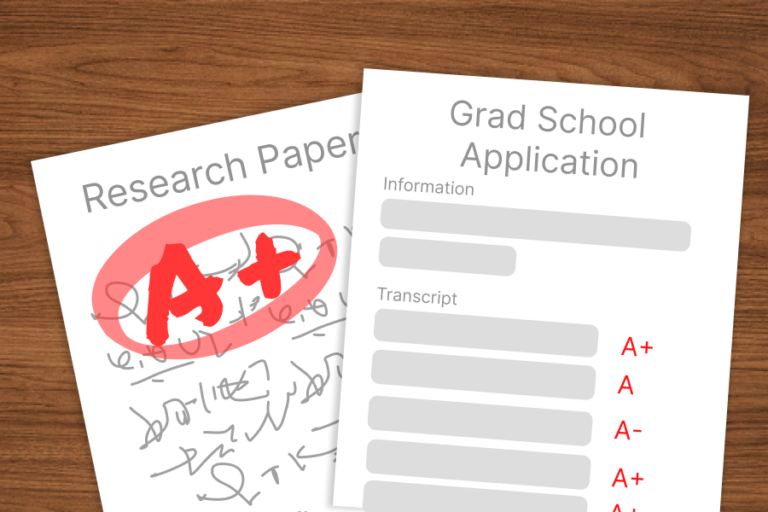
Have you ever taken a course while at university and put enormous pressure on yourself in order to receive the highest possible grade? For individuals who hope to attend a graduate program after obtaining their bachelor’s degree, their most frequent thought when taking classes is: “How do I get an A?”

There is a common fear among students that no graduate education program, whether it be law, medical school or another graduate school, will accept you if you do not have a high grade point average. I’ve been led to believe that one must receive the highest grades possible to have a chance to be accepted into any graduate program. 

But while grades are considered in admissions decisions, they are not the only factor. It is important to understand that there are many key factors on your application besides grades that help determine your eligibility for these competitive programs. We must stop putting pressure on ourselves to have “perfect” grades, as there is much more to the application process that admissions counselors look for.

Academic compatibility is also a significant factor in determining who is the “right fit” for a university’s program. If you have similar goals as the department or institution you are applying to and make this apparent in your application, universities will take note of this. Admissions committees want to make sure that you know about the resources and tools that they have available. When applying to graduate programs, it is also important to create general cover letters, as well as statements of purpose, and to tailor these for each program you apply to. 

Another part of the graduate school process is to have letters of recommendation from professors. It is important to request these letters from professors who you know will be able to make a strong recommendation on your behalf. These letters not only allow programs and admissions committees to see more of who you are but also show that you have the potential to succeed in their programs.

Professional and other “unique” experiences are also factors that can help your application stand out. Admissions counselors are known to favor individuals who have original or out-of-the-ordinary experiences, as they do not want to only admit people who are all very similar to each other. Your writing samples and interviews (if you have them) are both ways to reveal and expand on these experiences. It is important to use your assets to your advantage and to explain how these make you a great fit for a program — and what you can offer to the program because of them. Professional experiences during your undergraduate career can also show your dedication to the field you are applying to. 

Next time you stress about a certain grade or outcome in a course, remember that grades are not the only factor that affects admissions to graduate schools. It is important to enjoy your time during your undergraduate education, find what you love and enjoy your educational experience. Above all, passion for a subject will reveal a lot more about who you are than your transcript can. Remember: don’t lose your passion for the sake of “perfect” grades.

Written by: Jena Tufail — jjtufail@ucdavis.edu

 Disclaimer: The views and opinions expressed by individual columnists belong to the columnists alone and do not necessarily indicate the views and opinions held by The California Aggie.


South Fork Preserve Open Space opened on May 21 with public accessibility improvements 

New walking paths, signage and seating areas aim to make the preserve more inclusive to people with physical disabilities


By RIDDHI PURANIK — city@theaggie.org


This spring, the city of Davis completed a series of improvements to the public accessibility of the South Fork Preserve. These improvements were made available to residents on May 21 with a grand opening ceremony. 

According to the city of Davis website, the public accessibility improvements include “a new gravel trail that is accessible to people with disabilities, a short boardwalk and large creek overlook, new walking and seasonal trails through the preserve’s riparian habitat, 10 new interpretive panels, new trail signage, trail improvements and natural seating areas.” 

These improvements make a larger section of the Open Space Preserve more accessible to people with physical disabilities, like the new gravel trail, which is built on geocells that will provide a safer surface for wheelchair users. 

Tracie Reynolds, Manager of the Leases and Open Space Program, commented on why the city felt it was important to make the above improvements. 

“We noticed that none of our Open Spaces were accessible to people with disabilities,”

Reynolds said. “We removed the old gravel trail and replaced it with geocells…[which provides] the experience of walking on a gravel path while also being accessible for wheelchairs.”

According to the city of Davis website, “The improvements were needed to protect the preserve’s sensitive habitat and provide the public with more views of the creek.”

In 2017, the city was awarded a $230,000 grant from the California Department of Parks and Recreation to fund public accessibility improvements at South Fork Preserve. The website also details that the preserve was acquired by the city in 1993 when the land still contained row crops. The U.S. Army Corps of Engineers planted several trees and shrubs to restore the land’s natural beauty, which allowed it to become the habitat that it is now. 

In the press release issued by the city of Davis, Mayor Gloria Partida commented on the reopening of the space.  

“South Fork Preserve Open Space allows our community to commune with nature locally,” Partida said. “I am especially grateful that the main trail and overlook of the preserve are now open to people with disabilities.”

At South Fork Preserve, one can take a walk, run through different facets of nature, view birds and wildlife, learn about the area through interpretive panels that are placed alongside trails or take a tour that is offered by the Putah Creek Council. 

Reynolds explained that improvements to the Open Space were prompted by the limited accessibility features of its trail system, as well as a lack of signage on its trails, which led to the habitat “suffering from the effects of unrestricted access to sensitive areas,” according to the project description

“Because the trails weren’t marked, people walked wherever they wanted,” Reynolds said. “The problem with that is that it degraded the habitat. It caused erosion in certain areas, at the edges of the creek. Making the trails more obvious, adding signage was an effort to direct people towards the trail and away from areas we are trying to preserve.”

The Open Space Program in Davis was established in 1990 to implement policies that protect the farmlands and habitat areas that surround the community. At present, the Open Space Program actively maintains 240 acres of open space for the residents of Davis and wildlife species, with South Fork Preserve being the largest at 110 acres. 

In a commission meeting for the Open Space and Habitat Commission on May 2, Reynolds invited members of the meeting and city council representatives to the grand re-opening of the South Fork Preserve Open Space. 

For those interested in visiting South Fork Preserve Open Space, the route follows Mace Boulevard south until it runs into County Road 104. Visitors can then travel about 1.5 miles from the city limit on Montgomery Avenue. The preserve is located on the left after crossing over the South Fork of Putah Creek. Visitors can park in the small gravel parking lot or along County Road 104. 


Written by: Riddhi Puranik — city@theaggie.org


UC president, California Secretary of State sign joint resolution to increase student voter participation

The resolution encourages UCs to facilitate easier access to a variety of voting options


By SONORA SLATER — campus@theaggie.org


A joint resolution signed by UC President Michael Drake, Board of Regents Vice Chair Richard Leib and California Secretary of State Shirley Weber on June 29 announced an initiative that seeks to increase student voter participation across UC campuses. 

The resolution plans to build on progress that has been made in the past few years, according to a recent press release, including a permanent ballot dropbox installed on the UC Davis campus on April 19, 2022, and a UC student voter turnout of more than 75% in the 2020 election, up from less than 50% in 2016.

Specifically, according to the press release, the partnership is committed to “facilitating greater access to ballot drop boxes or voting locations on [all UC] campuses,” as well as increasing awareness of voting options. The press release also states that the resolution requires each campus to designate someone to coordinate “the dissemination of voting information and […] voting center locations” prior to the November 2022 elections. 

The University of California plans to conduct outreach through both social media and the UC Votes webpage, which, according to a press release on April 21, was recently redesigned and relaunched ahead of the 2022 primary and general elections. The page includes information about voter registration, mail-in and in-person voting options and ballot content, as well as an email sign-up option for Election Day reminders. 

In a speech at a media event announcing the partnership, Weber reflected on her first voting experience as a student at UCLA and described progress that she has seen in both students’ and Californians’ voting access.  

“I remember how difficult it was to vote — I had to go all the way home to do so,” Weber said. “I remember how difficult it was, but nonetheless how determined I was to make sure that my vote was there, that it was counted, that I was making a difference in California. I am pleased that we are working constantly to make it easier for people to vote, to give them more days and more ways that they can vote.” 

Weber added that she wants to make students aware not just of the opportunity they have to vote, but also of their “responsibility [to vote] to make sure that this democracy lives.”

“We can’t just be driven by the issue of the day,” Weber said. “We should be driven by the fact that we are Californians, that we are Americans, that we have the right to vote and we have the responsibility.”

UC President Michael Drake also spoke at the media event, offering his view on the goals of the partnership and echoing Weber’s sentiments regarding the importance of voting.

“We want to do all that we can to raise awareness of options to vote, and the obligation that we really have to participate in our democracy and to vote,” Drake said.

According to a press release about the event, Drake later stated that the University of California was “committed to cultivating and supporting civic engagement” among students, and that he was “pleased to sign this resolution affirming [the UC’s] partnership with the Secretary of State.”

Weber also said that she believes it is important to ensure that college students — a historically underrepresented demographic — take the time to vote, and do so in an informed manner. 

“I could be a student, and I get one vote,” Weber said. “I could be secretary of state, and I’m going to get one vote. I could be the governor, and I get one vote. I could be the president of the United States, and I still only get one vote. That one vote is power.” 

Gwen Chodur, the President of the UC Graduate and Professional Council, also spoke at the media event, focusing to the “importance of the student voice.”

“Even though it’s not always convenient, it’s not always conducive to a quick answer, we benefit from having more voices in the conversation,” Chodur said. “For UC Davis students, we want to turn voting into something that is a norm, a practice, a habit for the rest of their lives.” 

UC Davis Chancellor Gary May commented on his view of the culture of civic engagement at UC Davis, saying that he felt it was strong, in part because of its proximity to Sacramento, which allows students to see “democracy in action,” but also because of a “strong culture of activism” among students. 

“UC Davis is committed to making voting easy and accessible to students of our community, who really are the future of our country,” May said during the media event. “The partnership we’re announcing today will help to advance that commitment.” 


Written by: Sonora Slater — campus@theaggie.org


Five pieces of legislation passed, quarterly reports heard at May 26 Senate meeting

The Disability Rights Advocacy Committee, the Office of the International Student Representative and others gave reports on this quarter’s activities and plans for the future


By JENNIFER MA — campus@theaggie.org 


The Senate meeting on Thursday, May 26 was called to order at 6:20 p.m. by 2021-2022 Vice President Juliana Martinez Hernandez, who then recited the UC Davis Land Acknowledgement. 

Shortly after, Vice Provost for Academic Affairs Phil Kass presented to the Senate table. He discussed faculty promotion initiatives such as the Step Plus system, which is currently in place at UC Davis and, according to Kass, is now spreading to other UCs.

Within this system, when a faculty member is eligible for a pay raise or a promotion, the candidate is considered for advancement of 1, 1.5 or 2 steps based on their record of professional accomplishments. The department that the faculty member is part of votes on all Step Plus options with no knowledge of or regard to availability of funding. Kass said that the goal of Step Plus is to prioritize hiring and promoting researchers at the university who are also passionate about and good at teaching.

Fair Trade Committee Chairperson Itzel Gallardo provided her recommendation for nominees Noreen Auyoung and Elise Gustilo as chairperson and member of the Fair Trade Committee (FTC), respectively. After discussion of their qualifications, Radhika Gawde, who was the President pro tempore at the time of the meeting, moved to confirm the nominees with Senator Harris Razaqi seconding the motion. With no objections, Gustilo is now a member of the FTC, and Auyong was chairperson of the FTC until he decided to step down a few days after the confirmation.

2021-2022 Chairperson of the Research and Data Committee (R&DC) Stephen Fujimoto provided his recommendation for nominee Jahanvi Narwal as chairperson. Senator Ambar Mishra moved to confirm the nominee and Senator Razaqi seconded this motion; Narwal is now the chairperson of R&DC.

Chairperson for Environmental Policy Planning Commission (EPPC) Mackenzie Field provided her recommendation for nominees Laila Penny and Benjamin Hodgson, Meron Gebre, Mateo Alliende, Ivy Schlosser, Mina Bedogone, Daphne Crother, Kelly Abey, Leo Hecht, Lydia Rice, Sarah Pando and Annie Kanjamala as Unit Director and members of EPPC, respectively. Senator Rashita Chauhan moved to confirm the nominees, Senator Razaqi seconded this motion and with no objections, the nominees are now EPPC Commissioners.

Sarah Theubet gave a quarterly report on behalf of the Disability Rights Advocacy Committee. Training for the UC Davis English department, an Aggie Studios project and a peer support group were all projects that the group worked on this quarter, according to the presentation. 

Issac Ocampo of the Sexual Assault Advocacy Committee also presented a quarterly report. The committee collaborated with Senator Owen Krauss and Senator Chauhan in raising awareness about sexual assault by posting on Instagram, according to the report. They have also been working on reforming the Harassment & Discrimination Assistance and Prevention Program (HDAPP) to work toward a stated goal of fostering a safer community for students. Ocampo went on to say that the committee’s future goals are to rebuild a connection with the UC Davis Center for Advocacy, Resources & Education and the Women’s Resources and Research Center, as well as continuing to work on the HDAPP reform project. 

Maya Jones, Huda Saleh and Vivek Shome from the Club Finance Council gave a presentation explaining what the council does and how they can help fund certain aspects of clubs. The representatives reported that, this quarter, they were able to distribute more than $50,000 to 89 student organizations.

Dhanya Indraganti presented the Library Committee quarterly report, stating that the committee struggled to get new members during spring quarter, and as a result, did not have many projects going on. 

The Senate table then moved into public comments. Senator Krauss suggested a vigil for the student who lost her life on campus in a traffic collision on May 25, and Senator Sergio Bocardo-Aguilar asked if everyone could send in their complaints about the dining commons ahead of a meeting he was having with administrators from Student Housing and Dining to try to tackle relevant issues.

After public comments, the Senate table went back into quarterly reports with Fujimoto presenting for the R&DC. They continue to have a large membership, according to the report, with 15 members staying on. The committee has administered 10 surveys this year that have garnered more than 2,800 responses. Looking ahead, their stated goals include monetary efforts like making committee chair a paid position and securing funds for volunteer appreciation. 

Field presented the EEPC quarterly report. She announced that they have completed a recycling guide for laboratories and will send it out soon. Their social media and website team have been posting for events, vacancy information and general sustainability tips, according to Field, and the events team organized the sustainable cooking workshop, the textile recycling drive and the clothing swap.  

Chairperson JT Eden gave a quarterly report for the Internal Affairs Commission (IAC). The IAC has authored 12 pieces of legislation this quarter, including SB #67, SB #70 and others. They will also be hiring a new chairperson soon. 

Logan Ueno presented the quarterly report for the Office of Transfer Student Representative (OTSR). The OTSR is currently working on their website to make sure it has relevant resources for all transfer students and is easy to navigate, according to Ueno. They also held a transfer student survey that received 260 responses, and, according to the report, findings showed that first-generation transfer students were more likely to feel academically unprepared than non-transfer and non-first-generation peers.  

Lastly, Keven Zhou presented the quarterly report for the Office of the International Student Representative (OISR). This quarter, they have been working on translation of the Unitrans boarding instructions into Korean and Japanese, and making sure that everything they do is multilingual. The office is also planning an international student orientation which will focus on how to become academically successful, how to adjust to life in America, how to access resources on campus and so on. In the future, Zhou said that the OISR’s goals include increasing outreach with WeChat and collaborating with the international undergraduate admissions team to help incoming first-year students. 

This was followed by elected officer reports, where elected officers detailed what they did during the week. 

The Senators then moved on to introduce new legislation. 

SR #32 urges the UCs to divert funding from the design and fabrication of parts and systems for nuclear weapons, and instead direct funding toward lowering the recently imposed tuition increase, for the UCs, as well as calling to designate UC Davis as a nuclear weapons-free zone. The resolution passed unanimously.

SB #86, which dissolves Refrigerator Services as an ASUCD unit, passed unanimously. 

SB #87, which amends the ASUCD Elections Code to address immediate concerns with the signature gathering process, passed unanimously. 

SB #88, which dissolves the Aggie Public Arts Committee and Undergraduate Student Parent Committee, passed unanimously.

SB #89, which seeks to improve the reach of the Quarterly Town Hall by including virtual options for attendance and engagement through social media, passed unanimously. 

Martinez Hernandez adjourned the meeting at 11 p.m.


Written by: Jennifer Ma — campus@theaggie.org


UC Davis researcher unveils how brains learn through inference 

Study shows how problems are mapped throughout the brain


By MONICA MANMADKAR — science@theaggie.org


It is known that humans and animals represent choice-outcome relationships in a manner traceable by many researchers and observers. Humans and animals can also represent the hidden structure of the environment that relates certain events and entities to each other. 

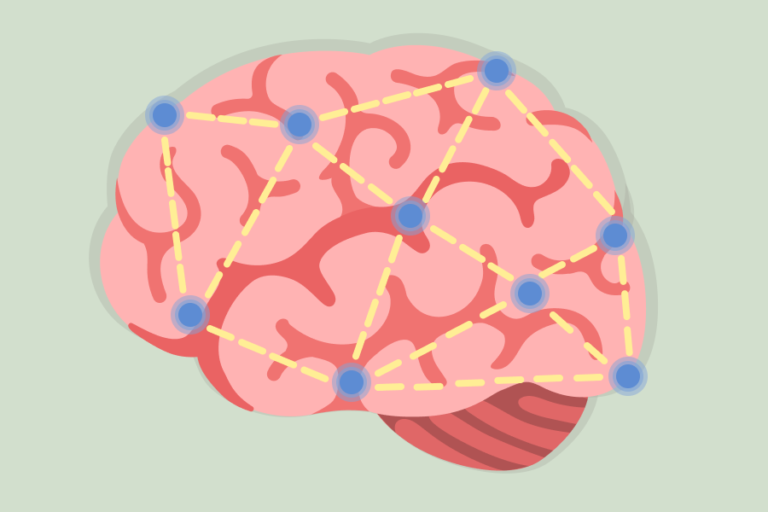
New research from the UC Davis’ Center for Mind and Brain reveals how brains build a spatial map to represent conceptual relationships. The goal of the study was to illuminate the neural mechanisms in humans that support this kind of reasoning and help close that gap in our understanding of “hidden structures” in the environment to learn faster. Psychologists and neuroscientists further predict that the brain may use this system not only to guide navigation of physical spaces, but also in non-spatial abstract conceptual spaces. 

A recent study found ‘place cells’ and ‘grid cells’ in rodent brains.The brain uses these cells to find a specific location and create a direct route between two locations in space. In this study, researchers tested if the brain uses the same system to represent abstract concepts, such as hierarchical relationships, in social networks. By using a mental map, the researchers also found a new method to test how the brain makes novel inferences.

Phillip Witkowski, a UC Davis graduate student in the Department of Psychology, explained the study’s goal through an example: He said that the quality of all fruits is governed by the season, and the fruits grown in the same season are likely to be ripe at the same time. Because he knows this, he can infer information about fruits without having to directly observe it. If he buys a poor quality apple, he can assume that pears will likely also be of poor quality. Knowing this means he does not have to waste any money buying a pear only to find out that it is bad. 

“Wasting a bit of money may seem trivial, but reasoning like this can be very advantageous to foraging animals and early humans who have to waste time, energy and risk predation to get to a food source,” Witkowski said. “However, at the time it was unclear how the brain knew about the hidden structure to assign credit for an inferred outcome that wasn’t directly observed.” 

Dr. Seongmin Park is a project scientist at UC Davis in the Boorman Lab. Park explained that throughout the study, researchers found that while learning social hierarchy between individuals, our brains integrate them into an abstract low-dimensional graph structure and use this map-like representation to infer novel relationships between individuals who have not been directly compared. More importantly, they found that the brain combines separately-learned relationships into a single unitary representation. 

“By having this two-dimensional representation of the hidden structure of social hierarchy, our findings show that the brains compute the angles and distances between individuals and accurately infer their relationships without direct social interactions,” Park said. “This finding shows how our brain generalizes previously learned information and makes novel inferences.”

Many artificial intelligence/machine learning (AI/ML) models are good at classifying images and doing certain tasks because they are trained through thousands if not millions of samples. However, Witkowski explained that “many models, including advanced neural-network models, often don’t know about the ‘hidden structure’ of certain tasks, which can hinder their ability to learn quickly or generalize to new samples that have never been seen before. Humans, on the other hand, are very good at this sort of quick learning and can easily generalize to new situations.” 

The study is part of growing scientific literature that argues for the importance of representing these structural relationships in the task or environment, which offers the potential to help rapidly train AI/ML systems and increase their performance when generalization is required. 

Looking to the future, Park detailed a few ways in which they would like to continue their research. First, they are planning to examine how the structural representations in the brain evolve in the process of learning. Second, they want to determine if the different structures of cognitive maps explain the biases and differences in decision making across individuals. Finally, they will also test if neural networks in AI/ML systems have similar or different representations in their hidden layers after training them to learn the same relationships as tested in the human participants and how the performances change according to the representational structures.


Written by: Monica Manmadkar — science@theaggie.org


Gena Harper sees her cane as a symbol of ability, not disability

Davis resident with visual impairment shares her journey of losing her vision and learning to use tools around her to excel

By MAYA SHYDLOWSKI — features@theaggie.org

An ode to the time when she could see bright lights and high contrasts, Gena Harper’s living room is scattered with Christmas lights and checkerboard patterns. Next to her dogs’ leashes hangs a bronze medal and a picture of her at 22 years old.

Harper won the medal in the National Handicapped Ski Championship in her 20s. In her 40s, she competed for the U.S. National Para-cycling Team. She did that as she worked toward being a senior vice president of investments at Morgan Stanley and a mother of two.

Harper’s daughter, Sarena Solodoff, 22, refers to her mother as “a powerhouse, in every sense of the word.” 

Harper, now 59, was born with congenital glaucoma, a disease that damages the optic nerves and causes impaired vision. At the age of three, she ran into a spigot, which further impaired her vision. However, she was not completely blind at the time. Her biggest trouble was reading from far away, so she remained in elementary and middle school without much aid aside from reserving a spot at the front of the classroom. Harper calls herself a “high-functioning blind person.”

It wasn’t until high school that Harper’s vision started to become worse and she began relying on different tools to help her with school and everyday activities. She said that at first, she was resistant to some of these changes, explaining that at the time, she had stigmas about how she would be perceived — and how she would perceive herself.

“I could still see, but I’d stay up until three or four o’clock [in the morning] trying to read my textbooks with my face in the book,” Harper said.

Harper finished high school in three years and immediately started classes at community college. She remembers not wanting to use a cane at the time and instead relying on other methods of getting around.

“When I went to college, I had people teach me the way to my classes and I just memorized that,” Harper said. “Then one day, they put up a construction site, and I went around it, but I fell down some stairs. I wasn’t hurt or anything, but I knew that I really needed to learn how to use a cane.”

Soon after, Harper enrolled in the Orientation Center for the Blind in Albany, California, where she spent eight months learning critical skills like how to use a cane or a guide dog, how to read braille and how to cook.

Although she retained some vision at this point in her life, Harper remembers the instructors at the center making her wear a blindfold so that she wouldn’t rely on any working vision to complete tasks. This helped prepare her for the day when she would lose more of her sight, she said.

That day didn’t come all at once, but rather gradually; words that she used to be able to read up close were no longer readable. When this happened, she was able to use computer software programs that enlarged the type to read some materials, and in 1995, the Job Access with Speech (JAWS) screen reading software came out, which allowed her to navigate technology more easily without relying on sight. 

Harper said that while she was able to find ways to complete many tasks without relying on sight, she had always been embarrassed to be left out of a lot of sports because people assumed she couldn’t play very well. While in Albany, though, she was also introduced to what she calls “modified sports,” launching her competitive downhill skiing career.

Sports, Harper said, gave her back confidence that she had lost as her vision began to decline. 

“At the center, I found skiing,” Harper said. “I tried every activity. I did everything.”

Harper explained that during downhill ski races, athletes with visual impairments ski with a companion skier who tells them where the obstacles are in their path. From her early skiing days in Albany, she went on to win a bronze medal in the 1985 National Handicapped Ski Championship — beating skiers from around the country and the world — and still skis today.

Harper continued to pursue her skiing dreams while taking college classes and eventually beginning to work as a transcriptionist. She also began giving speeches at conferences and events about her life and experience, through which she made connections that led her to her career at an investment firm. Harper became a successful financial wealth advisor, but despite her success, her disability still challenged her confidence.

“I wouldn’t let any clients meet me in the first year because I was afraid that they’d wonder how or if I could do the job,” Harper said.

Without a college degree, Harper became a certified investment management analyst (CIMA) and a senior vice president at Morgan Stanley, a global investment and wealth management company. She also served on various boards and committees for organizations that support the blind. Now retired, she serves as a board member for LightHouse for the Blind and Visually Impaired, a nonprofit that provides work and trade training to those who are visually impaired. 

In addition to continuing to ski, Harper is currently training for a triathlon. She also documents how she completes her everyday activities as a person who is blind on her budding TikTok and Instagram accounts. 

Her son, Shiya Solodoff, 20, has always been impressed with his mother’s independence and drive. He said that she knows how to do more than most sighted people do.

“She’s always finding a way to try new things,” Shiya said. “Whatever it is, she’ll find her own way to do it. If it’s something that you’d imagine is harder for somebody who is visually impaired to do, then she’ll want to try to find a way to do it even more.”

This “drive for life,” as her daughter Sarena calls it, is one of the reasons so many people are drawn to her — including her current husband, Mike May.

“One of my favorite things about [Harper] would probably be her tenacity,” May said. “Because, whether you want it or not, she is going to get it done.”

Harper met May, 68, on the ski slopes early in her life, but they reunited in the mid-2000s. By then, Harper had two children and was far into her career. The skiing “hotshot” that Harper had written off on first meeting many years ago was now a successful businessman, she said. 

They dated throughout the late 2000s, and in December 2013, they got engaged at Stevie Wonder’s annual House Full of Toys benefit concert, an event that raises money for families in need during the holiday season. 

Just before he sidled up to sing “As,” Stevie Wonder dedicated the song to his friend and business partner, May, and May’s soon-to-be fiance, Harper. Stevie Wonder announced the proposal as May got down on one knee and proposed to Harper backstage at the concert. 

The two know Wonder through May’s work on an app called GoodMaps that assists with indoor navigation for those with visual impairments.

May lost his vision completely at three years old due to a chemical explosion, but in 2000, he underwent a stem cell transplant procedure that partially restored his sight. Now, he can see figures, especially when they’re moving. This, coupled with Harper’s ability to see and read high-contrast objects and words, made them a perfect match, May said. 

While having a visual impairment can add a myriad of obstacles to life, Harper and May continue to speak at conferences on accessibility and have successful careers. They travel around the country and the world to attend conferences — bringing their trusty guide dogs Yuli and Jonnie with them. 

Harper and the people in her life stress the importance of supporting the visually impaired. Early in her life, Harper said that she was embarrassed by her disability, but once she learned how to work with it and look at life differently, she gained confidence that helped her to excel.

“People assume that the things that visually-impaired people do are by default lesser than things that sighted people do,” Sarena said. “Often, blind people can do things way better than sighted folks.” 

In fact, Sarena said that while May has trouble reading and writing, he almost always beats her in ping-pong because he can see the movement and is more in tune with it. Shiya has also noticed that his mom uses her other senses to perceive objects and figure out how to do new activities.

Harper welcomes questions about how she does things, whether that’s cooking, skiing or being a mom. She said that sometimes she is overwhelmed by the need to constantly educate others on how able she is, but that asking about how she does something is better than assuming she is unable to do it. 

“Don’t assume [people with visual impairments] can’t do something,” Harper said. “We find a way. There are tools we use to function just like everybody else — sometimes even better.”

Written by: Maya Shydlowski — features@theaggie.org

Are dreams too personal to share or too impactful not to?

A discussion about the place of dreams in society


By ALEX MOTAWI — almotawi@ucdavis.edu


In a sense, dreams are mystical things — even though almost everyone has them, very few people understand them. While this may drive away some, their dynamic nature enthralls others. In some social circles, sharing them feels taboo, while in others, sharing them is celebrated. Some people view dreams as divine, while others see them as silly nightmares. For something that pervades so many of our lives, dreams are scarcely mentioned, and I’d like to change that.

Dreams are different for everyone, and though some people’s are more pleasant than others, they affect all of us. A lucky (or unlucky) 20% of people experience lucid dreams, in which one can act of their own volition and influence the happenings in their dreams, while 7.6% of people experience paralysis even after waking up. The wide range of experiences we dream up in our sleep can offer different viewpoints and share knowledge we would otherwise lack.

As you read on, please keep in mind that I am sharing my personal views and that you may feel differently; it is important to recognize these differences and come into conversations about personal topics like these with empathy at the forefront and an understanding that boundaries set by others need to be accepted in order to have constructive conversations.

Part of what makes dreams so interesting is that they are always full of familiar faces. Our brain constructs characters from people we’ve seen before — the awkwardness comes from the fact that you may see the person again. We know that the way someone is portrayed in our dreams is entirely unrelated to their actions in real life, but it can still be hard to divorce the two versions of the person. It also begs the question of whether to share with someone a dream you had that included “them” in it? I think it comes down to whether sharing it will be constructive or destructive. If it’s a silly thing that makes them laugh or a positive association, go ahead and tell them to make their day better; if it’s something negative, maybe keep it to yourself, or even better, forget about it entirely, as it doesn’t represent them as a person anyway. 

Some dreams, whether or not they include people I recognize, really do affect me personally and change my outlook on life and society. There’s nothing like getting a new perspective on a situation through a random dream — I think that the true value of dreams comes from moments like these. I recommend that you write these dreams down and try to remember them; they could make you a better person. And if they do so, maybe they are worth sharing with others, even if they are personal. If you experience something profound, why not share what you’ve learned with the people in your life?

I believe that dreams are an untapped source of wisdom and learning lying latent in everybody, and it would be amazing if we could make an effort to tap into that power and use it to improve our world. Dreams are very personal, but that’s the great thing about them. That means they have the ability to affect someone and give them a new perspective. If you are comfortable with sharing your dreams, give it a shot. As a society, we are learning new things every day. Make a contribution and get in on the fun.


Written by: Alex Motawi — almotawi@ucdavis.edu


Disclaimer: The views and opinions expressed by individual columnists belong to the columnists alone and do not necessarily indicate the views and opinions held by The California Aggie.


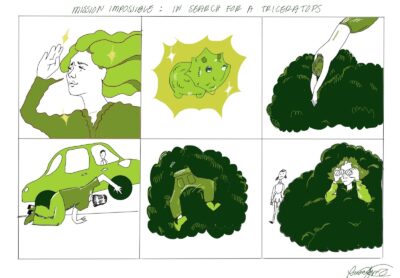
Mission impossible: In search for a triceratops

By PRISCILA JIMÉNEZ CORRALES –– pjimenez@ucdavis.edu

Drawn by: Priscila Jiménez Corrales –– pjimenez@ucdavis.edu


Disclaimer: (This cartoon is humor and/or satire, and its content is purely fictional. The story and names of “sources” are fictionalized.)


New ASUCD budget reflects efforts to support increased pay equity 

The new budget includes increases in ASUCD employee pay rates and the number of paid workers 


By ISABELLA KRZESNIAK campus@theaggie.org


ASUCD recently held budget hearings for the 2022-23 school year. As part of a continuing effort from ASUCD to more fairly compensate those who work as part of the association, according to 2021-22 Internal Vice President Juliana Martinez Hernandez, the new budget includes increases in employee pay rates. 

Sixty-two stipend positions are now paid hourly wages, 81 volunteer positions will now receive pay and a portion of existing positions already compensated on an hourly basis will receive a pay increase.

“There’s been a pretty large movement to get more volunteers paid,” said 2021-22 Academic Affairs Commission (AAC) Chair Gabriela Tsudik. “The association would fall apart without volunteers and the hard work they do. They really do deserve to get paid, and I think people have been starting to realize that.”

Martinez Hernandez reactivated the previously defunct Personnel Committee in order to explore and solve pay equity issues within ASUCD, she said. 

The committee made an effort to track the hours and type of work that ASUCD employees and volunteers performed this year in order to allocate salaries which compensated them appropriately. 

However, the members of the committee struggled to collect enough data to make informed decisions about worker compensation due to a lack of participation in the tracking program, according to Martinez Hernandez. 

“As a committee, we tried to improve the way we gather data […] through our tracking, and even just collecting more volunteer forms so that we’re aware of how many volunteers we have in the first place,” Martinez Hernandez said.

The Personnel Committee used the data they were able to collect to create the Hourly Wage Rate and Assistant Series Classification Levels Proposal, a nonbinding recommendation to the Senate which creates a framework for determining fair wages.

Stephen Fujimoto, the 2021-22 Research and Data Committee chairperson, is a strong advocate for increasing pay equity and worked within the Personnel Committee to keep the issue on the ASUCD agenda. Fujimoto’s role was previously unpaid, but since the new budget was passed, it will now be a paid position.

“I know how much work it takes to run a committee, be a committee chair, organize a bunch of fellow student volunteers and work on multiple projects at the same time,” Fujimoto said. “Even if I’m not going to be in the position next year, I want the person who’s succeeding me to be adequately and fairly compensated.”

The Personnel Committee also proposed the volunteer incentive line item, a part of the new budget which aims to recognize the work of unpaid volunteers within ASUCD. 

“Unit directors can use the volunteer incentive line item to either disperse gift cards to volunteers or hold an event where volunteers can have free food and things like that,” Martinez Hernandez said. “That was one step that we took to better reward people for the work that they do, since volunteers in the association do a lot of great work, but they don’t get compensated for it yet.”

Despite committee progress this year, Tsudik said she believes that efforts to ensure pay equity are far from over.

“More things could be done with working on the budget more, but lots of these changes can’t be immediate,” Tsudik said. “A lot of people have to want that change, and obviously it takes a lot of time to legislate the process. [The budget] definitely isn’t comprehensive, and there’s so much work that needs to be done.”


Written by: Isabella Krzesniak — campus@theaggie.org


Students vote to change UC Davis mascot to a cow

Proposition to change the UC Davis mascot to a cow passes in the ASUCD spring election


By SYDNEY AMESTOY — campus@theaggie.org


In this year’s ASUCD spring elections, students voted to change the UC Davis official mascot from Gunrock the mustang to a cow. According to the ASUCD elections website, 2,532 students voted “Yes,” and 936 students voted “No” on changing the current mascot. 

The vote was inspired by the Cow4Mascot campaign, which is a student-organized movement with the intention of having the UC Davis mascot become a dairy cow. The measure only seeks a mascot change, and the title of “Aggies” will remain in place.

“Seventy-three percent [of voters] voted ‘Yes.’ Students overwhelmingly decided that a cow better represents us than a horse,” said Elios Sgouros, a fourth-year computer science major. “Now, we just need to see if the administration listens to us.”

Third-year animal science major Chloe Bolanos shared why she feels the cow is a more fitting mascot for UC Davis. 

“I think it’s cool that we have a cow because it’s a unique mascot, a ton of other schools have mustangs,” Bolanos said. “Also, we should have something that represents our beginnings and how our school is now. We have a great animal science program and a great veterinary school, and we do a ton of research at the cattle facility.”

The Cow4Mascot movement was originally introduced to the ASUCD Senate by Senator Dennis Liang and Senator Gaius Ilupeji in March as SB XX, which sought to place the measure on the spring election ballot. Due to the wording of the bill, it was, at the time, tabled indefinitely.

However, the issue was later approved to be on the ballot by the Senate on March 22 in the form of SB #73, as introduced by Liang. 

According to Liang, the motivation behind the two Senate bills was to build a sense of camaraderie among UC Davis students.

“The interconnections between students, campus organizations and [Registered Student Organizations] had been severely dampened by the pandemic,” Liang said. “This was why we as Cow4Mascot entered into so many partnerships with other UCD groups, we wanted to use this platform to bring attention to other things around campus and give students a sense of campus culture.”

At a meeting with the Editorial Board on May 26, Chancellor Gary May and other campus administrators provided their comments on the vote.

The Alumni Association is generally not in favor of changing the mascot,” May said. “Gunrock is the mascot. The same ballot measure we were just discussing, only 12% of the students voted so even though it won by 70-80%, I wouldn’t say that’s a mandate electorally. I do applaud the spirit, enthusiasm and passion students had and all the work they put in.”

For those in favor of the mascot change, May recommended meeting with the Cal Aggie Alumni Association and Intercollegiate Athletics leadership to come to a compromise. 

“Many schools have multiple mascots,” May said in the meeting with the Editorial Board. “I came from one at Georgia Tech that has Ramblin’ Wreck and a Yellow Jacket, and it works fine. So maybe we might do something similar here, but I encourage them to work with the people that are stakeholders to come up with a solution.”

Representatives of Cow4Mascot are currently speaking with the administration and the Cal Aggie Alumni Association, according to a tweet from the movement on June 2. 


Written by: Sydney Amestoy — campus@theaggie.org


UC Davis Physics Professor Manuel Calderón de la Barca Sánchez, a team of Aggie researchers featured in IMAX film ‘Secrets of the Universe’

“Secrets of the Universe” film explores the powerful forces of the universe and the physics behind what happened shortly after the Big Bang 


By KAYA DO-KHANH — campus@theaggie.org


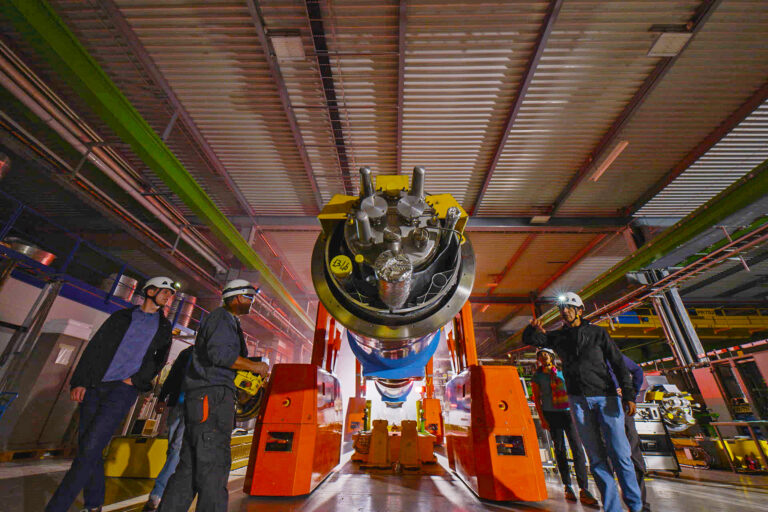
UC Davis Physics Professor Manuel Calderón de la Barca Sánchez and a team of Aggie researchers explore the mysteries of the universe, including the physics behind what happened shortly after the Big Bang, in the IMAX film “Secrets of the Universe.” The 3D film also features the discussion of scientific machines, such as the Large Hadron Collider and James Webb Space Telescope. 

During the filming of the documentary, Calderón de la Barca Sánchez and his team collected data at CERN, the European Organization for Nuclear Research, in Switzerland. Ph.D. student Graham Waegel shared that the filming of the documentary gave the research team an opportunity to explore parts of CERN they normally would not have been able to see.

“We knew that if we did this right, we could then give a virtual tour of CERN with the best medium possible: […] the IMAX screen,” Calderón de la Barca Sánchez said. 

Calderón de la Barca Sánchez was originally signed on as a scientific advisor for the film to help with writing grants and make sure the science portrayed was accurate, but Director Stephen Low wanted Calderón de la Barca Sánchez to narrate the film to make it more personal. Calderón de la Barca Sánchez disclosed that it was not what he originally signed up for, but he was happy and excited to help with the project.

On May 9, the local premiere of the documentary was shown at the UC Davis Multiverse Theater at the SMUD Museum of Science and Curiosity. There were many in attendance, including members from the UC Board of Regents and the UC Davis Department of Physics. After the showing, there was a Q&A session with Calderón de la Barca Sánchez as well as past and current Ph.D. students Ota Kukral, Jared Jay and Graham Waegel, whose research was featured in the film. 

“There was a nice reception with food and drinks, then Chancellor [Gary] May talked a bit,” Kukral said via email. “Then we saw the movie. It was interesting since it was [at] a planetarium, so it was projected on a ceiling. That made it look quite dreamy.”

Low shared that he and Calderón de la Barca Sánchez knew that scientific concepts could be technical and complicated, so they worked on portraying simple ideas that could be conveyed to everyone. 

 “The question I kept asking [Calderón de la Barca Sánchez] was ‘How do we simplify this so that kids get it?’” Low said. “He kept telling me the same thing — that what [he and his team] were looking for was indeed the simplest thing in the universe.” 


“Secrets of the Universe” features a diverse group of Aggie researchers, and the scientific concepts were communicated to appeal to all audiences, according to Calderón de la Barca Sánchez.

“We know that we have a long way to go to reach equity in many different ways in the sciences, so we really wanted to make sure that the film showcased the kind of diversity that we hope we achieve in the sciences,” Calderón de la Barca Sánchez said. “It was clear that we wanted science to be welcoming to everyone, that science is and should be done by everyone.”

“Secrets of the Universe” has been shown across the U.S. as well as in Europe and Asia. There are future plans to have the film shown at the Mondavi Center. 

“Getting people aware of and excited about science is so important, and film provides a unique medium for condensing and conveying the most exciting moments,” Waegel said via email. “Fundamental research in particular, such as the heavy-ion experiment documented in this film, is an important part of science that rarely gets much publicity.”


Written by: Kaya Do-Khanh — campus@theaggie.org


Can UC Davis prevent racehorses from dying?

UC Davis researchers strive to understand “hugely problematic” catastrophic injuries in racehorses

By MARGO ROSENBAUM — features@theaggie.org

With bottles of coat shine and thin layers of sweat, racehorses glitter in the sun and dance on spindly legs across the soft-dirt track. Jockeys adorned in colorful silks are slung onto the backs of skittering two-year-old horses as they parade past the grandstand at a jiggy trot. White-eyed, nostrils flared and still dancing, the horses are ready to run.

Up in the grandstands, the smell of the synthetic track burns in the noses of onlookers. Kids shriek and point to their favorite horses; parents soothe them while taking notes in their betting booklets. Odds flash on the screen — 9-5, 3-1, 7-2 — as the horses step into the starting gate. Members of the crowd rush to the betting booth; cash flows from their hands as they cast their bets. 

The bell clangs, and the horses are off.

A day at the races excites many people interested in racing, especially young Dr. Mathieu Spriet, who grew up going to the races in France with his father Alain and sister Sophie. Spriet has been surrounded by horses ever since he was a kid — his grandparents, Etienne and Jacqueline Savinel, bred sport horses as a hobby on their farm, Les Pres de Here, Rue in Somme, France. 

Spriet always enjoyed going to the races as a child, but at one race at Hippodrome du Croise-Laroche, Marcq-en-Baroeul in Nord, France, that all changed. When he was just under 10 years old, Spriet witnessed a horse break down and be pronounced dead on the track. 

“I remember that one time, when a horse fell,” Spriet said, reflecting on the experience. “That was my first introduction to breakdown in horse racing as a kid.” 

Spriet said that the horse likely suffered from a severe limb fracture, which the racing industry and veterinarians call a catastrophic injury or breakdown: a fracture that marks the end of a horse’s racing career and, often, their life. 

Unknown to Spriet at the time, these deaths are not uncommon in horse racing. In the 2018-19 racing season, 144 horses died at racetracks under the California Horse Racing Board’s (CHRB) jurisdiction. The number dropped to 72 in the 2020-21 season, but many say there are still too many deaths. 

While many race attendees never see one of these injuries firsthand, this experience was one reason Spriet became a veterinarian. Spriet, among many others at the UC Davis School of Veterinary Medicine, works to understand why these injuries happen and how to prevent them. 

“I remember […] my dad having to explain to me that this horse was dead,” Spriet said about seeing the horse breakdown. “As a kid, it was just super hard.”

These catastrophic injuries afflicting the racing industry are the result of cumulative mild overuse, similar to shin splints developing over time in runners, according to Dr. Ashley Hill, the associate dean of veterinary diagnostic laboratories at the California Animal Health & Food Safety Lab System (CAHFS). 

Hill’s coworker Dr. Francisco Uzal, a professor of veterinary pathology and the branch chief of the CAHFS’s San Bernardino laboratory, said catastrophic breakdowns often involve fractures that divide the bone into two, three or even many pieces.

“When a limb is overused, particularly at a younger age, little microfractures occur in the bone,” Uzal said. “If they are not detected and the animal is not rested, that’s when a catastrophic fracture [occurs].”

Soon after Spriet saw the horse break down, he wrote in a school paper that he wished to become a veterinarian to fix the same fractures he witnessed at the horse race. But when he entered veterinary school, he decided to focus on breeding, following in the footsteps of his grandparents. Later on, he changed his mind and refocused on lameness and diagnostic imaging. 

Spriet earned his veterinary degree in 2002 at the Ecole Nationale Veterinaire de Lyon in France and his master of science (MS) at the University of Montreal, St. Hyacinthe in Canada in 2004. After completing his radiology residency at the University of Pennsylvania, he came to UC Davis in 2007.

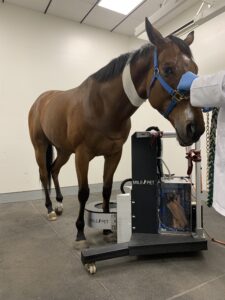
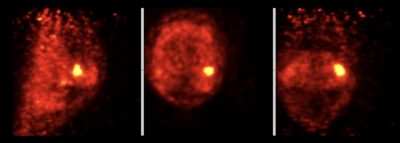
Horse in a standing PET scan (Courtesy/Mathieu Spriet).

Now, as a professor of diagnostic imaging at UC Davis, he worked on a positron emission tomography (PET) scanning device for horses and strives to detect early signals that cause these catastrophic injuries. 

“Breakdown in racing [is] a big issue,” Spriet said. “It’s not new. It’s not a California thing … I saw that in France when I was not even 10 years old. It’s something that is important to work on and there are a lot of things that can be done.”

“Hugely problematic” injuries plague the racing industry 

Since 2014, Horseracing Wrongs, a non-profit devoted to ending horse racing, and Patrick Battuello, its founder and president, have confirmed over 8,000 horse deaths at U.S. racetracks by filing Freedom of Information Act Requests. However, not all data on horse deaths are made available to the non-profit, such as deaths at private training facilities and farms. The group estimates over 2,000 horses die at U.S. racetracks every year, Battuello said. 

It is not just animal advocates who believe too many horses are dying. Industry members and researchers know catastrophic injuries are happening with high incidence.

Cecil B. DeMille’s grandson Joe Harper, the former child Hollywood star who has been the director, president and CEO of the Del Mar Thoroughbred Club since 1978, agrees that too many horses die from racing.

“We’ve seen this industry, and the dark side of it is that horses break down and have to be euthanized […] in our opinions, it was happening too much,” Harper said. 

Like Spriet, Dr. Jen Symons, who completed their mechanical and biomedical engineering Ph.D. at UC Davis, studies racehorse injuries, specifically the effect of racetrack surfaces on horse limbs and injury.

“Musculoskeletal injuries for racehorses are hugely problematic,” Symons said. “They happen with an incidence that is concerning.”

But some say these injuries are inevitable consequences of the sport, including Dr. Ferrin Peterson, a professional jockey and veterinarian who attended UC Davis for her veterinary degree. Peterson compared injuries in racehorses to those sustained by human athletes.

“When you’re training at the top level, there’s going to be injuries because you’re just asking so much out of your body,” Peterson said. “You obviously can’t prevent all of them.”

But some say these injuries are more dangerous than for humans. Severe catastrophic injuries usually necessitate euthanasia, and Symons said that as an owner, rider and lifelong lover of horses, this part of their job was particularly challenging. 

“That’s troublesome for anybody, but I think particularly for me because I really loved horses,” Symons said.

The No. 1 school of veterinary medicine’s role in the industry

As more people recognize the high incidence of racehorse mortality, researchers devote their work to preventing injury. As the No. 1 school of veterinary medicine in the country, UC Davis conducts research on general equine welfare and safety, and many researchers have a special focus on racehorses. The school says it is “committed” to its partnerships with the horse racing industry and “supports” the research efforts of the California Horse Racing Board (CHRB) and industry stakeholders to improve safety in the racing industry, according to a press release.

Through research on racetrack injuries, imaging technology, drug testing and postmortem examinations, UC Davis addresses challenges that have been present in the industry since the beginning.

Harper has been involved in racing for over 45 years and saw the growth of UC Davis’ relationship with the racing industry — the two have been “holding hands” for a long time, he said. Harper, among other individuals in the industry, encouraged UC Davis to study Thoroughbreds, explaining that racing interest groups would support their research. As a result, what is now known as the Center for Equine Health (CEH) was formed in 1973.

CEH’s website states that it was “originally commissioned by the horse racing industry to study problems faced by performance horses and identify ways to protect them from catastrophic injuries.” Since then, CEH has grown to include most of the equine research at the UC Davis School of Veterinary Medicine.

Individuals in the industry form CEH’s advisory panel, with Harper serving as its former chairman. “Joined to the hip,” the relationship between the CHRB, UC Davis and the horse racing industry has been “great” since its start in the 1970s, according to Harper.

The school is more tied to the racing industry than some may realize. Dr. Jeff Blea, the equine medical director for the CHRB, is employed by UC Davis but loaned to the racing commission. The equine medical director has no oversight responsibilities within the veterinary school or hospital.

Under California law, the equine medical director advises and is a member of the scientific advisory committee at the Kenneth L. Maddy Equine Analytical Chemistry Laboratory, housed at UC Davis. The equine medical director acts as the primary advisor to the CHRB for horse health at the lab.

Since 1990, UC Davis has led California’s postmortem examination program, receiving funding from the CHRB and CEH, among other sources. Every horse that dies or is euthanized at CHRB racetracks and training facilities must undergo a postmortem exam — also known as a necropsy — through CAHFS. 

The Veterinary Medical Board temporarily suspended Blea’s license in January in light of a controversy. The California Horse Racing Board removed him from the investigation of the death of Medina Spirit, a Kentucky Derby winner who died unexpectedly last year at Santa Anita Park in Arcadia, CA. Blea was also placed on administrative leave by UC Davis due to the suspension of his veterinary medical license.

UC Davis veterinarians, including Uzal of CAHFS’s San Bernardino lab, performed the necropsy and found no definitive cause of death for Medina Spirit although heart failure is suspected. Many say this was not surprising.

“Equine sudden death cases while racing and training are an internationally recognized phenomenon and are very frustrating as the definitive cause of death is found in only approximately half of all cases despite the considerable pathological and toxicological effort,” a press release from the CHRB reads

 Necropsies and drug testing provide answers for horse deaths

About 80% of racehorses necropsied at UC Davis have been euthanized because of catastrophic fractures, according to Uzal. In those necropsies, veterinarians study the horses’ bones to document fractures and to characterize preexisting conditions that could predispose the horses to break down.

“We really don’t think that the great majority of cases are accidents that just happened; we think that in most cases, there are predisposing factors that can be prevented,” Uzal said.

In the past 10 years, the number of horses necropsied at CAHFS dropped from around 300 to less than 100 per year, according to Uzal. This may be due to the work that the CAHFS lab, Stover’s lab and Spriet are doing, studying the prevention of catastrophic breakdown at UC Davis. 

The Kenneth L. Maddy Equine Chemistry Laboratory is also a part of CAHFS and operates as the CHRB’s primary drug-testing laboratory. The laboratory evaluates each sample for more than 1,800 substances and annually tests more than 40,000 samples from California racehorses. Dr. Heather Knych oversees research efforts within the Pharmacology section of the Maddy Lab.

In the racing industry, the goal of drug testing is to protect the safety and welfare of horses and jockeys, Knych said.

With the high incidence of betting in horse racing, testing is also important to protect the public interest in the sport. Testing helps to ensure “a fair and level playing field” in a race so no horses have an unfair advantage, or “at least not one that’s related to potential administration of a drug,” Knych said.

Knych also leads research to improve horse health and welfare by studying how nonsteroidal anti-inflammatory drugs (NSAIDs), which are used to treat musculoskeletal inflammation, are processed and cleared in horses’ bodies.

She also studies methods for detecting these drugs in horses. Racing committees set regulations to ensure these horses are not competing with high levels of drugs that could mask injuries that would otherwise keep horses from competing well, Knych said. 

Studies of catastrophic breakdown

Outside of necropsies and drug testing, the CHRB was always interested in the results of their research at UC Davis, Symons said. The CHRB wanted to know how to best implement their findings into policy and recommendations.

CHRB Executive Director Scott Chaney said in his December monthly report that new regulations at California tracks will “promote [animal welfare] with the goal of further driving down the incidence of catastrophic injuries.” 

With goals to decrease horse deaths and injuries at their tracks, CHRB reported a 50% decline in racehorse deaths in California between the 2018-19 and 2020-21 racing seasons. 

UC Davis reports that “decades-long efforts” between the CHRB and the school have contributed to the downward trend in horse fatalities at racetracks since 2005. At the same time, however, fewer racehorses are being bred and raced in recent years.

Dr. Susan Stover, the director of the J.D. Wheat Veterinary Orthopedic Research Laboratory at UC Davis, is one person devoted to studying racetrack safety. Her work focuses on studying racetrack surfaces and bone changes that precede fractures and put horses at risk for catastrophic breakdown. 

Symons worked with Stover for their Ph.D., studying how horses run differently on dirt, synthetic and turf surfaces. Softer tracks were less injurious, they said. 

Dr. Jacob Setterbo, who completed their biomedical engineering Ph.D. at UC Davis with Stover, also studied racetrack safety, creating a track-testing device and “track in a box” system to evaluate track surfaces. Based on his work with Stover, many tracks replaced their dirt tracks with safer, synthetic surfaces.  

“It was good that tracks were willing to redo their entire track for the chance that it’s going to help with the safety of the racehorses,” Setterbo said. 

As a diagnostic imaging professor, Spriet is also able to promote racehorse safety, since the standing PET scan can help veterinarians identify horses at risk for catastrophic injury. Spriet said he commonly focuses on imaging horses’ front limbs, but sometimes the hind or all four are imaged, depending on the injury.

Spriet said that trainers used to say their horses broke down in accidents, such as after taking a bad step or tripping in a hole, but new research shows this is not the case. Injuries leading to breakdown oftentimes accumulate over time and are preventable if recognized early and the horse is properly rested.

By catching these predispositions to injury early on, horses can be rehabilitated and safely brought back to train and race. These low-grade injuries are usually seen after a horse has already broken down, but Spriet wants to catch them before the catastrophic injury occurs. 

With 3D imaging, PET scans show bone weaknesses unseen in MRIs, particularly in the sesamoid bones of horses — the area most involved in the breakdowns, Spriet said. If he sees a few telltale signs on a scan, he knows these horses need a break from racing and training. 

“There [are] some horses that will show signs, and if you see that a horse has some issue or is limping, it’s probably a horse you should not push on the track,” Spriet said. 

Performed at UC Davis in 2016 by Spriet,  the first PET scans required horses to undergo general anesthesia, which is said to have potential dangers for their health. With these risks, horse owners were not as willing to scan their horses, especially if they were healthy. 

“Horses, unfortunately, break their legs on the racetrack, but horses are pretty good at breaking their legs in any situation,” Spriet said. 

This presented challenges for Spriet, as he wanted to scan healthy horses at tracks like Golden Gate Fields in Berkeley, CA to understand the bone patterns that proceed breakdown. Spriet realized that he needed a scanner for standing horses that would not require general anesthesia. 

In 2019, this scanner was developed by Brainbiosciences and Longmile Veterinary Imaging. Spriet said it could analyze horses lacking “specific issues,” since some horses show signs of breakdown, but others do not. A “big frustration” in the racing world is that some horses “look really good until they break.” 

By scanning horses that are not showing signs of injury, Spriet hopes to understand the few that are breaking down. A small portion of “normal horses” have abnormalities that warrant Spriet’s recommendations for rest and rehabilitation. 

“I mean there’s no question; there [are] too many horses breaking down,” Spriet said. “But when you look at the statistics, it’s ended up [that] the national average is 2.5 per 1000 starts. So that’s not easy. That’s not easy to find 2.5 in 1000 to sort them out.”

PET scan image of a sesamoid bone in a horse (Courtesy/Mathieu Spriet).

Research funded by interest groups benefits all horses

While many researchers at UC Davis — including Knych, Spriet and Stover — focus their research on racehorses, they hope their work impacts all horses.

“My research lab is within the drug testing lab for racing in the state of California, so that’s the industry we serve,” Knych said. “However, I conduct all of my studies with the intent of providing information to all performance horse disciplines. Furthermore, it is my goal to provide information that clinicians can use to treat backyard horses.”

Spriet’s work has been largely funded by the racing industry. By late 2018, Spriet and Brain Biosciences had developed the idea for the standing PET scanner, but needed funding. At the time, more people were becoming aware of catastrophic breakdowns in horses. 

In 2019, 37 horses died at Santa Anita Park. The Stronach Group, which owns Santa Anita Park, donated half a million dollars to Spriet’s research to develop the standing PET scanner, and in return, the first scanner is owned by Stronach and housed at Santa Anita. 

“It came pretty nicely together that we had an idea to try and prevent [horse deaths], and they had a problem that they wanted to fix, and that’s how it started working together,” Spriet said. 

Now, five scanners are in operation, located at Santa Anita, the University of Pennsylvania, UC Davis, Rood and Riddle Equine Hospital in Kentucky and the World Equestrian Center in Florida. With about 100-200 scans completed annually at each site, close to 1,000 scans in total have been compiled thus far. By the end of 2022, three more PET scanners will be installed across the U.S. and two more are planned for installation in 2023.

Animal advocates say this research is not enough

Will research, testing and veterinary care really improve safety for racehorses? UC Davis seems to believe so, but some anti-racing advocates, such as Elio Celotto, the campaign director for the Coalition for the Protection of Racehorses (CPR), think otherwise. 

“The reason why [researchers] are doing this research is not out of welfare for the horse, it is out of ‘how can we get more out of the horse?’” Celotto said. “So certainly, the work is being done on how you can avoid or sustain injuries, but it’s only so they can make more money out of them.”

However, not everyone agrees. Horseracing Wrongs’ Battuello said that regardless of what research is completed, all racetracks must be shut down and the industry must be eradicated.

“My question is always to anyone who would defend horse racing: you tell me what your acceptable loss ratio is?” Battuello said. “How many dead horses are you comfortable with? For a $2 bet? I always put it back on them.”

Since CPR’s start in 2008, the Melbourne-based animal welfare group has partnered with Battuello and Horseracing Wrongs to campaign for horse welfare and hold the racing industry accountable.

“It is a despicable industry, but of course, it had to be when you’re [to combine] when people try to make money out of animals,” Celotto said. “There’s always going to be exploitation and abuse of those animals.” 

PETA, CPR, Horseracing Wrongs and other animal advocacy groups all condemn horse racing and call for its ban.

“The only acceptable outcome for CPR is for horse racing to be abolished,” Celotto said. “And we believe that one day that’ll happen.”

Celotto has noticed changing attitudes toward horse racing throughout the years. It is no longer considered “the sport of kings,” he said. 

“Even people that worked in the racing industry have contacted us to say that they knew what was going on, that [they] needed somebody to actually say it,” Celotto said. “They’ve realized that as much as they love horse racing, they love horses more and have chosen to not support [the] sport anymore.”

 Changes in the industry 

Spriet understands concerns about horses breaking down at racetracks, but he does not see banning racing as the answer. 

“It’s legitimate that people have this concern, being worried about what happened to horses dying on the track,” Spriet said. “It’s pretty horrible, pretty tragic, and we need to prevent that.” 

Instead, he said that further research and regulations will protect horse safety and reduce these deaths. 

“If you stop horse racing, that’s the worst thing you can do to the horse,” Spriet said. “What’s going to happen to all these horses? What’s going to happen to all the people involved?”

Symons sees the racing industry as “representative of different positions of resources.”

“There are some racehorses that live better than you and I do, and there are some that live pretty rough lives,” Symons said. 

Spriet agrees, saying that there is a “misconception” that all horses are being pushed to their limits. He believes the “vast majority” of grooms, trainers, exercise riders, jockeys, trainers and owners have their horses’ best interests in mind. 

“It’s a fascinating world where people are just fully devoted and their work all day long is to take care of these horses [and] have them in the best condition for racing,” he said. “There’s a whole population that really lives for the horse.”

After being involved in the sport for over 45 years, Del Mar’s Harper said he has noticed a change in the industry’s culture. Many trainers do not try to get “one more race” out of their horses any longer.

“In order to do that, we have to really focus our efforts on the health of the horse rather than the business at hand,” Harper said.

At Del Mar, veterinarians monitor every horse during morning training and races to prevent injured horses from racing. He wants to make the track as safe as possible to ensure the longevity of Del Mar Thoroughbred Club.

“Let’s face it. If you pick up the paper and it says ‘dead horses at Del Mar,’ people are going to say we got to close this place down,” Harper said. 

For this reason, as well as the desire to protect horses and jockeys, Harper said that safety always comes before everything else.

“This is a sport [in which] horses do die … they die at the farm, everywhere else,” Harper said. “But nothing is being abused here and the racing-related injuries are certainly way, way, way down.”

Spriet said that veterinarians look at horses every morning before giving them “the green light” to train at Santa Anita.

“That’s something that has contributed to decreasing the number of breakdowns,” he said. “That’s something that has helped a lot. But then it doesn’t fix it all.”

At UC Davis, Symons said that most people were receptive to their research, but implementation was another hurdle. The CHRB must balance the needs of the industry with findings in research. They said that if regulations are too narrow, owners and trainers who do not wish to follow these rules will take their horses elsewhere to race.

“You have to strike a balance of ‘how do we how do we improve protections for racehorses in a way that is still palatable for people in the industry to participate?’” Symons said. 

Jockey and veterinarian Peterson said that there is still a long way to go with research but believes the future of horse racing will be positive.

“Now you see that people are really searching for answers,” Peterson said. 

One of those individuals, Spriet, has been on the quest to prevent catastrophic injury in horses ever since he came to UC Davis. Luckily, seeing the horse break down in France as a child was the only instance of catastrophic breakdown he directly witnessed in a race to this day. 

Spriet said the PET scanner, which was worked on and tested at UC Davis, could change racing for the better in the future. 

“I’m proud of it, and I think this is something that UC Davis can be proud of,” Spriet said.

Written by: Margo Rosenbaum — features@theaggie.org

Correction: The article previously stated that Blea was placed on administrative leave by UC Davis to prevent him from overseeing the necropsy of Medina Spirit. UC Davis placed Blea on administrative leave after the suspension of his medical license by the Veterinary Medical Board. The article has been updated to correct this factual inaccuracy. 

A map of mystery: How researchers discovered unique brain organization in bats

New research by Dr. Andrew Halley and the Krubitzer Lab at UC Davis details how bat brains are highly specialized for echolocation and flight

By MARGO ROSENBAUM — science@theaggie.org

People often wonder how the mammals we see swinging through trees, swimming in the ocean or flying over our heads relate to us. We ponder how millions of years of evolution resulted in so many mammals of varying intelligence and abilities.

If only we could look right into their brains.

Dr. Andrew Halley, a postdoctoral researcher in the Krubitzer Lab at UC Davis, did just that. With the help of fellow researchers at UC Davis, Simon Fraser University and UC Berkeley, Halley performed brain surgeries on anesthetized bats to better understand the motor cortex — the region of the brain controlling voluntary movement across the body.

Publishing the results on May 25 in the journal Current Biology, Halley and the other researchers discovered that bats’ brains are highly specialized for two unique aspects of their biology: echolocation and self-propelled flight.

To make this discovery, Halley, the lead author of the paper, and his colleagues mapped the brain regions controlling movements in these fruit bats, focusing on areas dedicated to echolocation and flight.

Bats represent a quarter of all living mammalian species, but until only recently, much of their brains and evolution remained a mystery. Halley and his fellow researchers sought to change that.

Before this study, a bat species’ full motor cortex had never been mapped. This achievement now allows researchers to understand the part of the brain involved in the planning, control and execution of voluntary movements.

Paths to studying evolution

Fascinated by evolutionary questions, Halley studies evolutionary neurobiology and comparative neuroscience. Originally from Philadelphia, he majored in psychology and worked in a genetics laboratory as an undergraduate at Pennsylvania State University. Halley said he grew up more interested in the humanities but always held a fascination for psychology.

Biology piqued his interest when he started taking biology classes in college, especially after learning about evolutionary theory. With the questions he started asking, he realized he needed to learn more about neuroscience to answer them and wanted to study brain evolution.

Halley completed his Ph.D. at UC Berkeley in 2016, after studying biological anthropology and working on a project tangentially related to neuroscience, in which he studied differences in embryonic development across species.

This fascination for evolution and neuroscience brought him to the ​​Krubitzer Lab at the UC Davis Center for Neuroscience as a postdoctoral researcher.

“The ​​Krubitzer Lab was sort of a natural fit; [Dr. Krubitzer] is one of the preeminent brain evolution researchers that’s around,” Halley said.

Dr. Mackenzie Englund, a former graduate student in the lab and co-author of the paper, shares Halley’s appreciation for evolution and sensory systems, which he said “are this medium through which we interact with the world.” Englund came to UC Davis for his Ph.D. to research similar questions.

“Evolution was always just one of those things that made me feel really close to the world,” Englund said.

Straying from the study of traditional model organisms

Led by Dr. Leah Krubitzer, the lab largely focuses on studying the evolution of the neocortex, which is “the part of the brain that most people think of when they think of a brain,” according to Halley. The lab is interested in multiple aspects of the neocortex: its function, interconnectivity within the structure and how it links to other parts of the brain.

By studying a range of mammals, the lab’s researchers seek to understand how evolution results in varied brain organization across species. Halley said the lab takes a comparative approach and studies animals that stray from traditional model organisms, such as mice and zebrafish.

The lab strives to understand whether parts of the brain have evolved to correspond to uniqueness in the bodies of mammals like opossums, platypi, primates, tree shrews and most recently — with the help of Halley — bats.

“You can learn a lot of things just by looking at extreme adaptations that you find in the natural world,” Halley said. “Comparative research on the one hand is just inherently interesting because we’re interested in understanding how evolution works, and specifically how brain evolution works.”

According to Halley, it’s important to study animals other than just model organisms, since studying only these animals tells researchers little about evolution’s role in altering brains across many different species.

“There’s a handful of biological models that are generally used to do sort of ‘bread and butter’ neuroscience, and they’re also really widely used for translational research for trying to develop medicines,” Halley said. “There are limits to the degree to which a laboratory mouse is a good model for a human.”

Brain surgery on bats

Halley’s recent work is part of a larger project in the Krubitzer Lab to illustrate how regions of species’ brains are organized according to differences in their bodies and behaviors.

This study focused on understanding the motor cortex in bats: its variation, what it represents and whether flight and echolocation have resulted in unique morphologies, such as the extra elongated fingers of bats, with membranes connecting the digits, forelimbs and hind limbs to form their giant wings.

“It varies from individual to individual … motor cortex is so much more variable than other sensory areas because the cortex may be built by things that we do, our behaviors,” Englund said.

All mammals have a motor cortex, so understanding this important part of the brain in bats could hint at understanding brain function and evolution in humans.

“What’s really important is figuring out the common themes of the motor cortex across all species, and what things can vary,” Englund said.

Using bats from a breeding colony at UC Berkeley, Halley, Englund and the other researchers performed brain surgery to study their questions.

After anesthetizing the bat under study, Halley and the scientists opened up the bat’s skull, exposed the neocortex and used electrodes to stimulate different areas of the motor cortex. By applying small bits of current, they sought to determine which muscle and limb movements were created by stimulating various parts of the motor cortex.

“Applying small bits of current to different parts of the brain was essentially an artificial way of mimicking what happened in a naturally-behaving bat,” Halley said

Halley and Englund worked together and took turns in the experiments, which often resulted in work days lasting from 12 to 15 hours. Because “every animal’s life is so precious,” they wanted to get the most data they could out of each experiment, Englund said.

“We’d be switching off in the experiment room, giving each other breaks so we could go slam some coffee and maybe a granola bar,” Englund said.

In the end, their novel findings were worth the grueling days.

The researchers notably discovered that in Egyptian fruit bats, large regions of the motor cortex are devoted to their tongue, which makes sounds for echolocation, and to the muscles propelling their limbs for flight.

Mapping a motor cortex

After the experiments, the researchers could create a map of the spatially-segregated areas of the brain that regulate body movements. The “map” is topographic compared to the body, meaning certain parts of the body are larger or smaller depending on the species. Larger areas on the map mean that part of the body is overrepresented in the brain, Halley said.

“The central findings of our study were that … different parts of the brain are enlarged in different species based on their behaviors or their body types,” Halley said.

Areas of emphasis in the motor cortex can likely be explained by their unique biology and adaptations. Egyptian fruit bats have unusual methods of echolocation — instead of using their larynx like most bats, these animals use their tongue. In the study, over 40% of the stimulated sensory and motor cortex controlled tongue movements. Additionally, the vast majority of the motor cortex was responsible for coordinated shoulder and hindlimb movements, explaining a possible reason for the special morphology of bat wings.

Despite all the work of Halley, Englund and others at the Krubitzer Lab, more study is necessary to understand the full scope of the motor cortex and other parts of the brain in bats.

These animals are becoming more common as model species of study, but still, many of their neurobiology basics remain poorly understood. Creating and maintaining colonies is complex, and their unique body morphology makes it more difficult to use them in neuroscience research, Halley said.

Future evolutionary neurology research could involve more study of bats based on Halley’s findings: Mapping the motor cortex is just step one.

Written by Margo Rosenbaum — science@theaggie.org