55.9 F
Davis

Davis, California

Tuesday, December 23, 2025
Home Blog Page 211

City of Davis presents 28th annual Environmental Recognition Awards

Recipients describe their environmental contributions to the Davis community and discuss the significance of the awards 


By LEVI GOLDSTEIN city@theaggie.org


On April 19, the city of Davis presented the 28th annual Environmental Recognition Awards to recognize individuals, non-profit organizations and businesses “that have gone above and beyond to improve the environmental quality of life in and around Davis,” according to the city of Davis’ website. The city also held an in-person ceremony on April 20 honoring the 2020, 2021 and 2022 recipients and celebrating Earth Day, according to Jenny Tan, the director of community engagement for the city of Davis.

The winners in the non-profit category included Bike Davis and Davis Community Meals and Housing (DCMH). The individual winners were Davis High School teacher Sherri Sandberg and Eric Newman of Friends of the North Davis Channel volunteer restoration group. The business category winner was Dos Coyotes Cafe. High school student Eliot S. Larson received a special youth activist award and the organization Tree Davis received a special environmental legacy reward for continued contributions to the Davis community. 

Tree Davis celebrated its 30th anniversary on April 30, according to Executive Director Erin Donley Marineau. The organization arranges tree-planting events and educates the community about the importance of urban forestry and how to care for trees.

“One of the things that makes Davis a really special place to live is our abundant green spaces, our parks, our green belts, our open spaces, and it’s a lot of space for a small community to care for,” Donley Marineau said in an interview for Davis Media Access. “So these folks came together with the idea that a public nonprofit partnership could help to enhance the way that these parks and green spaces are cared for by bringing the people of the community together […] to make public dollars go farther and making sure that we have beautiful green spaces for everyone to enjoy.”

Marineau said that Tree Davis has been successful thanks to the city’s sense of community. 

“I would say that the mainstay of this organization is that the people of the community pull together to make it what it is,” Marineau said. “It’s really that community glue that has kept Tree Davis strong for 30 years.”

Tree Davis’ 30th anniversary celebration will include a bike tour and storytelling about the organization’s and the city’s most loved trees. 

In addition to the green spaces, biking is also central to the city of Davis. Another Environmental Recognition Awards winner, Bike Davis, is a volunteer-run advocacy group that fosters a biking culture in Davis, according to Board of Directors President Nico Fauchier-Magnan. They work with the city council and city staff to improve biking infrastructure, carry out demonstrations in DJUSD schools and host events such as Loopalooza all to increase  biking and reduce vehicle transportation in the city. 

“It’s a huge honor, honestly, to be recognized, to have our work over the last 15 years recognized at that level by the city,” Fauchier-Magnan said. “[…] It is really really encouraging. […] It’s a really good validation of all the value we bring to the community.”

The final nonprofit winner, DCMH provides services to individuals experiencing homelessness such as shelters, transitional housing, meals and employment programs, according to Executive Director Bill Pride. Pride said that DCMH obtains ingredients for their meals from leftover produce that grocery stores would normally throw out, reducing food waste in the city.

“It’s kind of a nice merger between helping folks in need and helping the environment at the same time, it’s clearly kind of a nice symbiosis,” Pride said. “The community is working together to make a difference for a better life and a better community and a better Earth.”

Tan said that the Environmental Recognition Awards demonstrate that the city of Davis is truly committed to its climate goals and show that the efforts of both individuals and organizations for the environment really does have an impact. For Fauchier-Magnan, the awards are not just meaningful to him — they are also significant to the Davis community. 

“I think it serves as an inspiration for others to highlight all the work that is being done in the community, and inspire others to join in, and help volunteer for an organization, and help recognize some of the challenges we are facing in this society,” Fauchier-Magnan said. 


Written by: Levi Goldstein — city@theaggie.org

 

ASUCD endorsements: Consider the following

The Editorial Board endorses four candidates for ASUCD Senate and the single executive ticket

ASUCD Spring Elections began today on Monday, May 9, with seven Senate candidates running for six available seats, one executive ticket running for the president and internal vice president positions and one candidate running for student advocate. The Editorial Board interviewed the executive office ticket and all seven candidates running for Senate. The student advocate candidate did not respond to The Aggie’s request for an interview as of May 8.  

Executive Ticket Endorsements

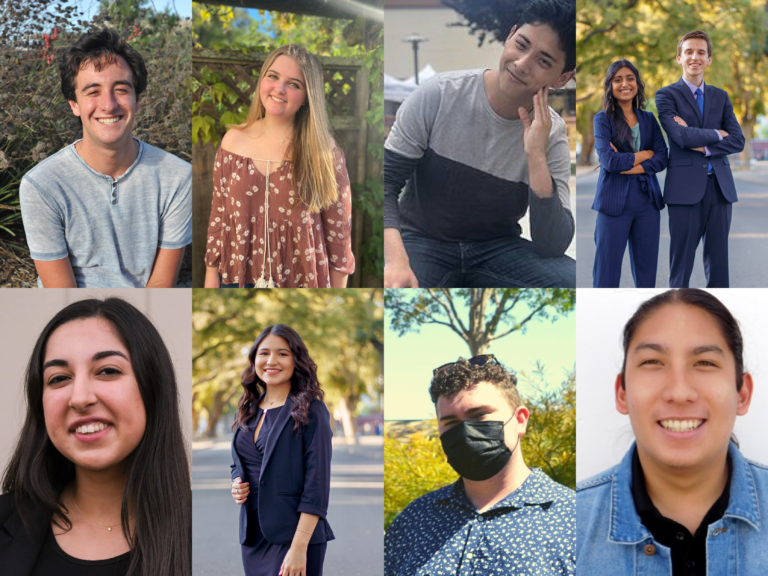
Radhika Gawde (she/her/hers), second-year political science-public service major, and JT Eden (he/him/his), first-year international relations and environmental policy analysis and planning double major — Rise!: Gawde and Eden are the lone and extremely compelling candidates on the executive ticket. Both have substantial experience: Gawde has served as the Internal Affairs Commission (IAC) as the chair and is currently the ASUCD Senate president pro tempore and Eden served as a senator at his community colleges and is currently serving as the IAC chairperson. They expressed dedication to their slate’s comprehensive nine-point plan, which includes specific action items for increasing transparency surrounding sexual assault and sexual violence reporting, broadening academic accommodations (including providing menstrual accommodations) and instituting a three-point basic needs advocacy plan aimed at providing direct, need-based aid to students and additional housing and parking reform. The candidates also emphasized their intention to increase mental health resources access for students and work on improving engagement with ASUCD in order to bolster advocacy. Ultimately, Gawde and Eden’s vast experience, knowledge of the commitment and drive required of people in these positions and detailed plan with specific actionable items make them promising and dedicated candidates.

Senate Endorsements:

Zeph Schnelbach (all pronouns), first-year political science major — Independent: We were incredibly impressed with Schnelbach’s knowledge of ASUCD and the concrete ideas he had for how to improve the organization as a senator, including tapping into what he understands to be an unused fund for student programs. Their platform emphasizes advocacy for mental health and addiction resources, LGBTQIA+ advocacy and campus sustainability. In addition to having taken trips with the External Affairs Vice President Office, Schnelbach has experience advocating for students in legislative offices and lobbying in her hometown, and her position as a student worker on campus provides her with the necessary perspective to support this group in the Senate. They demonstrated a clear passion for representing the study body and improving student engagement with the organization, and we feel they would make an invaluable contribution to the Senate table.

Eustacio Alamilla (he/him/his), second-year political science major — Independents!: 

As the current Housing Advising for Undergraduate Students (HAUS) unit director, Alamilla has relevant experience with supporting units and with ASUCD’S internal workings, making him an excellent candidate. His role has also prepared him well to manage projects, connect with student organizations and make an impact on the student body, made obvious by specific project ideas he hopes to implement as a senator. Key tenets of his platform are connecting students to affordable housing, increasing awareness and use of campus resources and promoting safe drinking habits on campus. Alamilla also demonstrated an interest in improving student involvement with ASUCD, citing concerns with low voter turnout and a goal of increasing outreach to students.

Juliana Martinez Hernandez (she/her/hers), third-year political science major — Rise!: Martinez Hernandez is a compelling candidate for senator with her plans for internal ASUCD reform and improvement of the association’s engagement and outreach. Her platform includes new internal reforms like increasing ASUCD volunteer compensation and more external aspects like improving students’ access to basic needs, but she also includes expanding on projects she developed in her role as ASUCD internal vice president, like building a human resources department. The Editorial Board was particularly impressed with her intention to encourage transparency for private companies operating in conjunction with UC Davis, especially in light of the recent lawsuit filed against UC Davis in relation to their work with Neuralink. Martinez Hernandez demonstrated an impressive drive for improving the internal efficacy of ASUCD and her advocacy for improving students’ access to basic needs and resources makes her a promising candidate for Senate.

Priya Talreja (she/her/hers), third-year environmental policy and planning major — Rise!: Talreja impressed the Editorial Board with her extensive previous legislative experience and well-developed platforms. Talreja served as a legislative director for an ASUCD senator and worked as an elected Delegate for the California Democratic Party. With her previous experience writing legislation and organizing campus programs, the projects Talreja plans to introduce will create tangible benefits for the student body. We were impressed with her desire to support students from BIPOC communities seeking mental health care by ensuring access to racially diverse and culturally competent student mental health resources. She also strives to increase student engagement and understanding of ASUCD — an issue brought up by many candidates that the Editorial Board believes is crucial to address. One of Talreja’s other platforms, creating stronger relationships between Registered Student Organizations, would also help address issues of low voter turnout and the lack of knowledge many students have about the inner workings of ASUCD.

Written by: The Editorial Board

Disclaimer: The Editorial Board can endorse up to six Senate candidates, one executive ticket and one student advocate. The Board also retains the right to not endorse any candidates for these positions.

Winona Lo on what Davis means to her, following her passion and ‘going for it’

This spring, seniors reflect on their time at UC Davis and share their plans for post-grad 


By JALAN TEHRANIFAR — features@theaggie.org


This is the second story in The California Aggie’s five part series profiling seniors graduating from UC Davis this spring. Throughout the quarter, The Aggie will be speaking with seniors about their UC Davis experiences, favorite memories and plans for after graduation. 


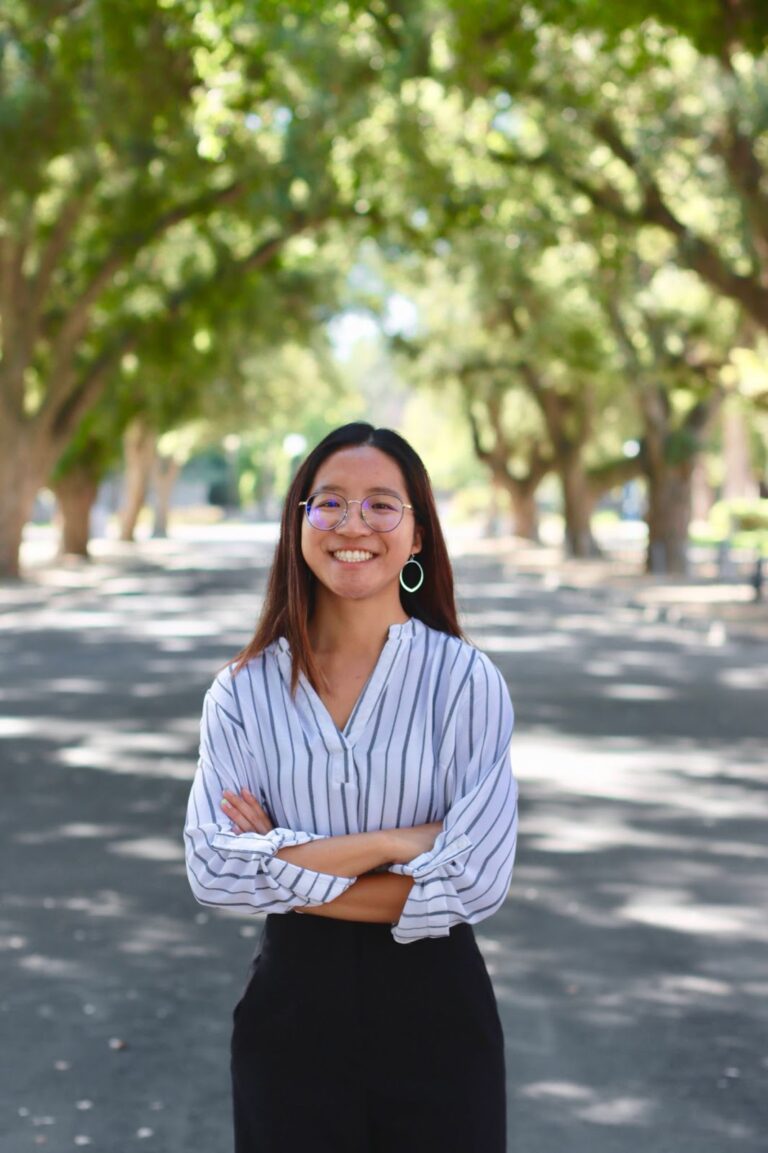
Winona Lo is a fourth-year cinema and digital media and communication double major  from Hong Kong. Lo began her freshman year at UC Davis on the pre-veterinary track, which heavily influenced her decision to attend UC Davis.

“I used to be in pre-vet so it just made sense to come here,” Lo said. “I [also] liked the campus and aura, so I chose Davis.”

When asked what influenced her choice of studies, Lo said her parents’ wishes for her future played a major role in her decision-making.

“I always knew I wanted to do film, but my parents expected me to do medical studies, and they saw that I really liked animals so they were gunning for me to do pre-vet,” Lo said. “I personally think my parents are really wise and have good intuition, so I followed their expectations until I went full into pre-vet.”

After beginning the pre-vet track, however, Lo realized that her parent’s wishes did not align with her own passion.

“During the fall quarter of my sophomore year, I shadowed this one vet and I followed her the entire day, practicing at different farms and doing surgery on different animals, and I realized that I’m not fit for the jobs,” Lo said. 

Lo said it took time to accept that she wanted to follow her heart and pursue her dream of working in the film industry, but she eventually did switch her major to cinema and digital media. In addition to changing her major, Lo also joined two on-campus communities that aligned with her goals.

“I joined Alpha Phi Omega, which is a national service fraternity, during my freshman year,” Lo said. “During my sophomore year, I [also] joined Aggie Studios.” 

Lo also participated in research and internship opportunities during the summers of her college years that have prepared her for her post-grad life — and were fun experiences to have along the way.

“During the summer after freshman year, I did a dolphin research internship in Hong Kong,” Lo said. “During the summer after sophomore year, I shadowed on some film sets. During the summer after junior year, I went to San Diego to intern at a local news station.”

Although Lo plans to take a break after graduation, she hopes to eventually work in Los Angeles and immerse herself in Hollywood’s film industry.

  “I really want to explore more of the film industry because I feel like I don’t really know about many of the roles that exist,” Lo said. “[I want to] take some art direction classes or try to find a job in Los Angeles, which is where I want to end up in the future.”

Lo’s favorite college memory at UC Davis was actually also the day that she decided to change her major.

“I shadowed a veterinarian, and that day she asked me to help her de-horn goats that she had,” Lo said. “It was Halloween, and my whole shirt was stained with goat blood when I left. I went home […] and when I walked in my roommates freaked out. Then they were laughing at me and saying that my outfit was my Halloween costume because I looked like a serial killer.”

If Lo could go back in time and give advice to her freshman self, she would tell herself to participate more.

“Try anything and everything,” Lo said. “Also, go big or go home. I feel like you should go all out if you really like something.”

When asked what UC Davis means to her, Lo emphasized the university’s welcoming environment.

“To me, UC Davis means an encouraging place to learn, grow and develop yourself,” Lo said. “I think personally, everyone here is above-average-nice compared to the rest of the world, and this is a place where a lot of people can be comfortable trying new things out, and I think that happened to me too.”

The most important thing Lo learned during her time here is the importance of embracing who you are.

“Go with your intuition and pursue what you really want to do in life,” Lo said. “I feel like a lot of people have a natural tendency to follow the expectations of people they admire and love, but at the end of the day, it’s your life. If there’s something you really want to do with your life you should just go for it … Be shameless.”


Written by: Jalan Tehranifar — features@theaggie.org


2022 ASUCD Spring Elections — Meet the Candidates

One executive ticket, seven senatorial candidates and one candidate for student advocate are running this quarter

By SYDNEY AMESTOY, KAYA DO-KHANH, ISABELLA KRZESNIAK, JENNIFER MA and CHRIS PONCE — campus@theaggie.org

The following candidates are running in ASUCD’s 2022 Spring Elections for elected official positions in student government. The candidate for student advocate was not interviewed because they did not respond to requests for an interview as of May 8. 

Elections will take place from Monday, May 9 at 12 p.m. to Sunday, May 15 at 12 p.m. Students can vote online at elections.ucdavis.edu.

Executive ticket:

Radhika Gawde (she/her/hers), second-year political science-public service major, and JT Eden (he/him/his) first-year international relations and environmental policy analysis and planned double major — Rise!: Gawde and Eden, who are running for president and vice president, respectively, said they want to increase transparency on sexual assault and violence reporting and make it easier for students to report such instances. Gawde and Eden also plan to address academic accommodations, such as increasing the Pass/No Pass deadline indefinitely. Other accommodations important to their campaign include religious accommodations — ensuring the ability of all students to successfully attend academic obligations while practicing their religion — and more accommodations for students who menstruate. The two candidates also have a three point advocacy plan that includes institutionalizing the Aggie Aid program that provides cash aid for students, working with Transportation and Parking Services (TAPS) to make parking violations more lenient for students, housing voucher reform and addressing food insecurity on campus. Gawde has served on the Internal Affairs Commission (IAC) as the chair and is currently the ACUSD Senate president pro tempore, and Eden is currently serving as the IAC chairperson. 

Senate:

Eustacio Alamilla (he/him/his), second-year political science major — Independents!: Alamilla said he is running for Senate because he has a passion for moving projects forward and wants to better connect students to resources on campus. He is currently in the position of unit director for Housing Advising for Undergraduates Students (HAUS) hopes to apply this experience to develop a unit director training program. His platforms include affordable housing, mental health and safe drinking habits. He intends to spread resources and knowledge to the student body through workshops if elected.

Juliana Martinez Hernandez (she/her/hers), third-year political science major — Rise!: Martinez Hernandez currently serves as the internal vice president of ASUCD, and, according to her, this role has given her a chance to learn about the association in depth. She currently does not get a vote on the Senate table, something she hopes to change with the upcoming election. She aims to carry out many of the projects that have been created during her term as vice president should she be elected as a senator. She also plans to advocate for safe animal research and has partnered with People for the Elimination of Animal Cruelty through Education (PEACE) to address UC Davis’ research with Neuralink. She also aims to expand communication between students and Senate through the coordination of a biannual ASUCD Involvement Fair, among other projects.

Francisco Ojeda (he/him/his), first-year political science-public service major — Independent: Ojeda said he is running for Senate because he wants to diversify the Senate as a member of the Latinx community. Although Ojeda has had no previous experience in ASUCD, he is confident his listening skills and like experiences will make him an effective Senator. His platform includes diversity representation, as Latinx students form 21% of the student body, and resources for survivors of sexual assault. Ojeda plans to work with a committees to tackle this issue, such as the Sexual Assault Awareness Advocacy Committee. 

Zeph Schnelbach (all pronouns), first-year political science major — Independent: Schnelbach said they are running for ASUCD Senate because they are passionate about mental health and addiction resources. She plans to work with the Student Health and Wellness Committee to make these resources more accessible to students. One of his ideas is to establish an Aggie helpline that would function to provide emergency therapy. Another one of Schnelbach’s platforms is advocacy for student workers, as they work at the CoHo and believe that having someone in the Senate with experience in that field is important. Schnelbach said she would like readers to know that while she is running for Senate, she is still a student and will always be acting in the interest of students. 

Julia Shurman (she/her/hers), third-year political science-public service and English double major  — Independents!: Shurman is currently a member of the Disability Rights Advocacy Committee (DRAC) and last quarter, she was operations director for HAUS. Her platform includes working toward making the campus more accessible, in terms of making more of the classrooms have lecture capture for hybrid options, and also working toward sexual assault prevention and mental health accomodations. She plans to incorporate more education programs for sober monitors as well as consent forms at social events. Additionally, Shurman will work toward offering accommodations for people with PTSD, depression and anxiety. Shurman said she believes her background in ASUCD makes her qualified to be an ASUCD Senator. 

Omri Steinberg-Tatman (he/him/his), second-year electrical and computer engineering double major — Independents!: Steinberg-Tatman outlined his platform stating he is advocating for “more financial transparency from the school, more advertisement of the ASUCD scholarships and then, something that is also close and personal to me is more communication between the school and the students, specifically in the STEM departments.” Steinberg-Tatman has experience working in local startups, working in labs and in being a part of an engineering team. He encourages students to get involved in ASUCD to help have a say in the decisions that get made. 

Priya Talreja (she/her/hers), third-year environmental policy and planning major — Rise!: Talreja said she is running for ASUCD Senate in order to make tangible changes on campus. Her platforms include increasing engagement between ASUCD and registered student organizations (RSOs), ensuring access to culturally and linguistically competent mental health providers and increasing student engagement with ASUCD. To accomplish these goals, Talreja intends to create an RSO representative position and listserv to foster direct communication with ASUCD, work with the Ethnic and Cultural Affairs Commission and Mental Health Initiative and reach out to the international and transfer student communities through their respective offices. Talreja has written legislation as a staff member for Senator Ambar Mishra and spearheaded projects in RSO leadership positions. She said she feels this experience will help her reach her goals in Senate if elected.

Written by: Sydney Amestoy, Kaya Do-Khanh, Isabella Krzesniak, Jennifer Ma and Chris Ponce — campus@theaggie.org

Campus News Editor Sophie Dewees also contributed to this report.

The art of mindful tea drinking

A UC Davis librarian and student team up to bring together meditation and tea for university community


By ALINA ISSAKHANIAN — features@theaggie.org


While some opt for a cup of coffee for their daily caffeine fix, many benefits can come from having a cup of tea instead. Erik Fausak, a UC Davis Student Services librarian in the area of health sciences, has started weekly mindfulness tea meditation sessions with the hope to introduce more people to the world of tea and the benefits it offers. 

“It was actually born out of the idea of me seeing that mindfulness seemed to be an effective tool in a lot of medical schools to deal with anxiety and stress,” Fausak said. “Having come from a veterinary professional background as a veterinary technician for close to 20 years, I’ve known the psychological toll it takes on everyone in the profession.” 

With a little consistency, Fausak said he believes that tea can help people become more relaxed and mindful overall. To help students and community members wanting to learn more about tea, the UC Davis Library website has compiled a guide, including Zoom links for virtual mindfulness tea sessions, information about weekly in-person sessions as well as podcasts, self-guided videos and infographics for those looking to get into tea independently. 

Interlibrary Loan and Document Delivery Billing Assistant Lilia Wright is studying to be a veterinary technician and is one of Fausak’s loyal meditation attendees. She said that she has found the sessions to be a great form of self-care. 

“Erik has a wealth of knowledge about tea,” Wright said. “I get to learn about different teas and explore what I like or don’t like. What I enjoy most is taking a moment to pause a busy work week and [take] the time for self care — just to be and breathe.”

Fausak hosts two different styles of tea meditation. One is a bowl style, which is easier to participate in, since Fausak said it has less rigid equipment and requirements. All that is necessary to properly participate is loose tea leaves, a bowl and hot water. The bowl sessions are held on Zoom on Tuesdays at 9:30 a.m. 

His other sessions, done in a gongfu style, require a more specific tea set. Gongfu is a popular Chinese mindful tea practice that utilizes the traditional teaware of a small teapot, or gaiwan, a fairness cup and a drinking cup. It is paired with breathing exercises and thought-provoking questions to create a relaxing experience. Fausak hosts the gongfu style sessions on Mondays at 4:30 p.m. on Zoom. He hosts an in-person outdoor gongfu session, which is limited to four people, on Fridays from 12 p.m. to 1 p.m. 

Fausak developed the program with a student who was in his first-year seminar in Global Tea Culture and Science during winter 2021. Gabrielle Tirsell, a second-year economics major, said that she met Fausak during her first year at UC Davis and has been working on the mindfulness tea program since, assisting with research and supplementary materials.

Growing up, tea was always a presence in my life, whether that be drinking it at home, at restaurants or at the Buddhist temple I grew up in,” Tirsell said. “I always enjoyed having it as a beverage but never came to appreciate it as an experience until taking the global tea first-year seminar where I was introduced to various types of tea ceremonies as well as the meditations that Erik and I have worked on.”

Fausak accredited the mindfulness aspect of these tea sessions to Buddhist practices. Although he said that mindfulness has become more secular than religious in the Western world, it has roots in Buddhism. Having a background in meditation through Buddhism, Tirsell was able to bring a helpful perspective to the development process of the mindfulness tea sessions.

I was taking the first-year seminar associated with the Global Tea Initiative when I mentioned the fact that I grew up doing meditations as a Buddhist,” Tirsell said. “Erik suggested that I assist him in establishing a tea-based meditation program at Davis. I had never really considered tea as a medium through which to practice meditation, but I was excited by the concept and got involved.” 

After learning more about Buddhist meditation practices, Fausak moved forward researching and seeking out academic work centered around the mindful practice of tea but found that the topic was lacking in academic literature. This is when he found Thich Nhat Hanh, a Vietnamese Buddhist monk who taught Oprah about mindful tea drinking on her show.

Using this knowledge as a jumping-off point, Fasuak began researching and developing his mindfulness tea meditations. Now, he helps those curious about mindful tea who are beginning their practice. Fausak said that UC Davis has been a leader in the growing tea education field, with the help of UC Davis’ Global Tea Initiative (GTI), led by founding director Katherine Burnett, and GTI’s Global Tea Scholars, which includes researchers, tea industry professionals and others interested in the academic study of tea.

UC Davis also offers the first-year seminar in Global Tea Culture and Science that Tirsell took, which is co-taught by Burnett, Fausak and a few other experts every winter. In this class, students learn all about tea, including, but not limited to, teaware, the origins of tea, mindful tea practices, tea’s benefits and its production practices. The class offers students the opportunity to grow and learn more about what goes into their cup of tea.

Originally a program created for the veterinary profession, Fausak’s mindfulness tea meditations, with the help of the GTI and the first-year seminar, has created a large community, with people from different backgrounds and professions. 

“Taking five minutes to just enjoy being where you are, enjoying the sounds around you, enjoying your tea and engaging all of your senses — it’s not a deep mindful practice where you’re supposed to have an empty mind,” Fausak said. “It’s just enjoying that moment or taking that moment for self-care.”


Written by: Alina Issakhanian — features@theaggie.org


Behind the scenes of the Fashion and Design Society’s 2022 ‘PRISM’ fashion show

The popular Picnic Day tradition is back in person


by CORALIE LOON — arts@theaggie.org


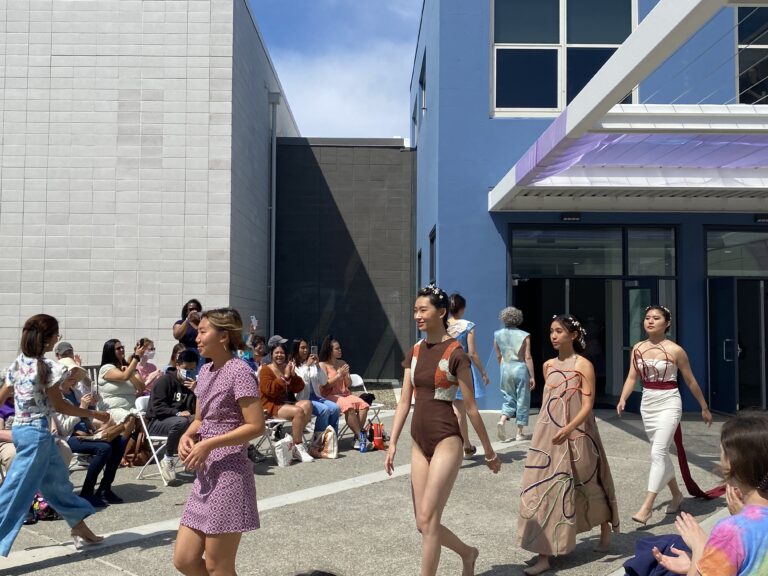
In the midst of a busy, post-pandemic Picnic Day, student models and designers strutted the sidewalk runway outside Cruess Hall, showing off the creative cumulation of months of sketching, measuring, sewing and imagining. The show was an assorted mesh of student visions, all united under the theme of wearable art.

The “PRISM” Fashion Show, run by the Fashion and Design Society (FADS), was made up of 10 featured collections and 11 single garments, all created by UC Davis students. 

Julia Dang, the chief of Internal Affairs and editor-in-chief of FADS, shared that the name PRISM was chosen collaboratively. 

“We chose PRISM because it’s supposed to represent shining a light on the future and finding light in darkness,” Dang said. 

The show started as volunteers modeled single garments from Introduction to Structural Design for Fashion (DES 77), in which students create jackets for their final projects, as well as from other garment creators across campus. From recycled textiles to Japanese prints, these statement pieces delivered singular visions of fashion as a place for sustainability and reuse.

During the second part of the show, student designers of the Signature Collections class (DES 179) presented a collection of three garments, each displaying an individually chosen theme and style. Lauren-Nicole Dorsey’s collection “Threshold” combines geometric collars with white, deep purple and vibrant orange color blocks. By comparison, Maya Tirumurti’s “stale interiors” is a more organic take on futurism, in which asymmetrical and even alien garments bubble in strange and surprising shapes.

Uriel Reyes, a third-year design major, created his first collection titled “Vividity” in DES 179 after learning how to sew last year. 

“It began with just wanting to emphasize the female physique, like different body types, making it very contoured to the body,” Reyes said.

His pieces emphasize bright colors, inspired from the colored buildings of coastal cities, and technical fabric manipulations such as pleating. Charlie Fornaca, a second-year Master of Science student in computer science, modeled for Reyes in the show.

“I got to see his process every step of the way and ask him about the different techniques he was using,” Fornaca said. “Just supporting them in their process was really cool.” 

While she’s modeled for different companies in the Elegant Goth and Lolita (EGL) niche, a Japanese street fashion, her involvement in the 2022 “PRISM” show was kickstarted by her joining FADS because of her interest in sewing and design as a hobby.

FADS, the only fashion club on campus, uses the publicity of the yearly fashion show to help support the Department of Design and design majors.

“When COVID hit, that was really sad, because this is how we rack in money for the design department,” Dang said. “This is how we get donors and sponsors to come and support our design community, because it is really small.”

After two years of streaming the yearly fashion show online through Twitch, the name “PRISM” seems even more fitting as an opportunity to shine a light on the future. The relief of finally celebrating in person was felt by everyone who attended the 2022 fashion show, including the designers. 

“I think the highlight was just finally getting to show it,” Reyes said about the completion of his collection. “I worked so hard at trying to complete it, that finally being able to just send them out and have everyone look at it and appreciate the work going into it was a big relief for me. I was like, ‘Damn, I really did that.’”

It’s no surprise that the fashion show is one of the most popular events on Picnic Day. Its flashy, daring and diverse collection of pieces are evidence of how fashion is a collaborative and constantly evolving process.

For those who are interested in fashion, design or simply supporting student artists, check out FADS’s website or visit their Designers Spotlight page to see more from the designers who are featured this year.


Written by: Coralie Loon — arts@theaggie.org


https://fadsatucd.org/fashion-show-2022/spotlights.html#collections 

Lauren-Nicole Dorsey

  • geometric and futuristic “midnight blues, ivory and egg whites” mixed with a “vibrant eye-catching orange” 
  • white, deep purple and vibrant orange shapes, collars 

Maya Tirumurti’s “stale interiors”


  • where the students are from (DES 179)
  • a few highlighted pieces
  • anecdotes from Julia and Charlie about FADS
  • first show in 2 years! – raising money


Interviews:

Julia Dang

  • Julia Dang, Pronouns: She/Her, Year: 2nd, Major(s): Design & English, Title: FADS Chief of Internal Affairs & Editor in Chief


I’m currently the chief of Internal Affairs…… I’m next year’s president of FADS, so it’s kind of nerve wracking to run the fashion show next year… I also am the editor in chief of the FADS catalog… I do the photography for the club and I’ve done modeling in the past, so I lead all the models and designers doing the fashion show, so I run rehearsals and modeling workshops.

  • (run email account, social media, treasurer)

The Fashion and Design Society is the only fashion club on campus and we’ve been here for many years now, probably since the 70s, and every year we host an annual fashion show in collaboration with a DES 179 class… We also collect different pieces from across campus and the community to be included in the show…. The most interesting workshop we’ve had was out fashion debate… where people came and debated on different fashion topics.

  • workshops based on fashion, photography, styling, modeling, etc


Covid:

When COVID hit, that was really sad, because this is how we rack in money for the design department, this is how we get donors and sponsors to come and support our design community because it is really small in UC Davis. The last couple of years we had it online and live streamed on Switch… 

The fashion part of the design department is really small, and there are three main classes” (DES 77, DES 107, DES 179)… 

  • single garments are from DES 77, in which students make jackets for their final project, as well as from different people across campus

It’s not just strictly for the design department, it’s for everyone, but so that we gain funds for the design department. 


PRISM:

It was a collaborative effort of the board. This year I was the person who suggested the name “PRISM”… We chose PRISM because it’s supposed to represent shining a light on the future and finding light in darkness… it started out as just ideas and became something bigger. 


Favorite things about FADS/design:

I love that this community, even though it’s so small, we accept anyone and everyone on campus, it’s not limited to a certain year or age range, it’s not limited to any major, anyone can join, there’s no fee…. All of our activities bring people together in a way that’s truly amazing… we watch movies together, we play games. And at the same time it stays kind of educational, we talk about topics such as sustainability, on fads which are destroying the planet…

Design is such a broad major, and you can do anything coming out of it… there’s so much in this field that’s open to anyone, and I feel like anyone can be a design major, no matter your skill set. I love how open and accepting this community and design department is.


UC Davis is the only UC that offers a design program, but we’re also the only UC that doesn’t have any access to Adobe Suite for free… It’s kind of unfair because we as the design department use it so often in every single class, but it’s not available to us. So we’re trying to get money for that…. The fashion show is a big way we get money other than donors or sponsors.


We’re lucky that this is one of the biggest events on Picnic Day, it gets a lot of attention and we’re so proud of it. We hope that we’re able to put on a good show.


Last thoughts…

People who attended should know that this was a collaborative effort, it wasn’t just our club… it was the entire UC Davis community coming in and doing this. 

Table of wearable technology… there was a glove that had sensors on it, it was mainly for people who had some neuro disorder. 


10 designers of the Signature Collection class (DES 179), 10 featured collections (30 pieces – 3 pieces per collection)

  • 11 single garments from individual UC Davis students

DES 107 (advanced fashion)

  • focus on draping and dresses
  • dress collection called “Red Dress” also in collaboration with medical department

DES 77

  • jackets as final project = single garments in fashion show
  • but also not

DES 179

  • students work the whole quarter to produce 3 garments based on a theme, which is features in the yearly fashion show


Charlie Fornaca

she/her/hers

2nd year MS grad student in Computer Science


Involvement

Because I’m involved with the club, there was a call for models and I’m a grad student so I’m always looking for opportunities to support the undergrads and be a mentor to them.

(been a part of FADS since fall quarter last year)

I joined FADS because I like sewing and design as a hobby, it has nothing to do with my major… prior to FADS I have had some modeling experience, I’ve done photoshoots here and there, mostly for this niche fashion called Elegant Goth and Lolita (EGL), it’s a japanese street fashion. So I’ve done a lot of modeling for different companies, mostly overseas, within that niche fashion


Modeling for PRISM

I modeled for Uriel. This was his first big foray into garment making. It was really cool because I saw the original mock-up and so that was the first garment I was fitted to. I got to see his process every step of the way and ask him about the different techniques he was using…

Just supporting them in their process was really cool.


It’s definitely not the biggest crowd that I’ve modeled for, but I think it was the most challenging, only because the sidewalk we walked on was cobbly, and I was in heels… It felt like there was a lot more pressure because there were a lot of people there and it wasn’t just for a niche, I think because it was so open to the general public and open to students and visitors… It was a little intimidating. 


Favorite thing about FADS/show:

It was really cool just being in person and returning to that physical community, being literally physically surrounded by people and you’re excited and you’re all supporting each other. 

I feel really excited to mentor younger students, being able to be that person and support and make sure they have a great experience is really nice.


I’m really grateful to FADS for welcoming me into their club. 


Uriel Reyes

  • Tell me about your collection, your inspiration and process?
  • How was your experience with the 2022 Fashion Show?
  • What made you interested in fashion/design?


Uriel Reyes (He/Him/His)

3rd Year Design Major


I was coming in as a SOC major, but my first year I found out they had a design major… I just fell in love with all the classes, and that’s when I decided I think that’s what I want to do.

The whole 10 weeks are dedicated to making them and finalizing them… My process was a little bit different from everyone else’s because my pieces were more form-fitting and had to be tailored specifically toward the models.


I was so stressed about finishing… I got a little behind, or a lot behind, because I didn’t finish until literally the night before the fashion show.


Inspiration:

It began with just wanting to emphasize the female physique, like different body types, making it very contoured to the body. And I’m just really drawn into a bunch of bold colors, so I knew color was something I wanted to incorporate. I was just looking at various cities from around the world and how some of their buildings are painted different colors, especially coastal cities… that was my inspiration too… I wanted to mix structural pieces and form fitting pieces with more flowy pieces… I wanted to play with some technical fabric manipulations, so there’s a lot of pleating in my collection, and also the use of unconventional materials, so I have a bunch of nut hardwares…


Highlight

I think the highlight was just finally getting to show it, like I worked so hard at trying to complete it, that finally being able to just send them out and have everyone look at it and appreciate the work going into it was a big relief for me. I was like, “damn, I really did that.”


Time management… I learned how to sew last year in one of the design classes. I was still fairly new, so I was still learning how to work the sewing machine while trying to make my vision work.

…It’s worth it in the end.


Right before the show, just tryna get everything together in under 30 minutes was just a big stress. But in the end I’m proud of the whole show and what I was able to accomplish in a couple months, 5 months. And for this to be my first collection is a proud moment for me, and being able to share that with all my friends and family… I’ve just received a lot of wonderful comments, and it’s just the best feeling ever.


Sistine Chapel exhibit comes to Davis

The interactive art exhibit opened at the University Mall


By SOFIA BIREN — city@theaggie.org


The Sistine Chapel began construction 1473 and was rebuilt over an older structure called the Cappella Magna. However, the restoration of the building itself did not begin until 1477. According to the Vatican website, the Sistine Chapel is named after Pope Sixtus IV della Rovere, who was Pope between 1471 and 1484 and commissioned the construction of the Chapel. 

The Sistine Chapel is renowned for its elaborate artwork, and as a home to some of the greatest Renaissance art. Michaelangelo is the most well-known artist to contribute to the renovation of the Chapel, however other artists contributed just as much. Some of these artists include Sandro Botticelli, Domenico Ghirlandaio and Cosimo Rosselli. 

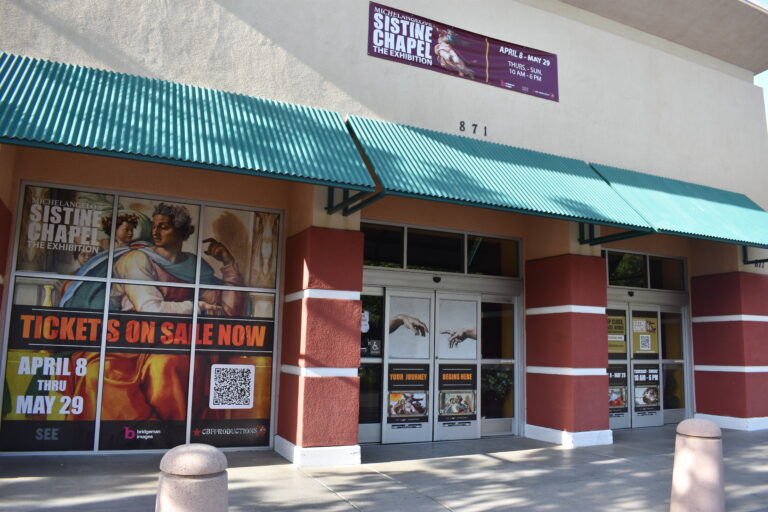
On April 8, a Sistine Chapel Exhibition opened at the University Mall. The exhibit solely focuses on the artwork on the ceiling of the Sistine Chapel which was painted by Michaelangelo. Special Entertainment Events, Inc. is the company responsible for the exhibit itself. In order for the exhibit to be displayed, however, a venue must offer to host the exhibit. 

Erin Akamine and Berenice Ramirez-Zurita, both students at UC Santa Cruz, happened to come across the exhibit while in Davis for Picnic Day on April 23. They arrived in Davis on Friday afternoon and decided to attend the exhibit because it was in such an ordinary shopping center. 

“We originally came to Davis for Picnic Day,” Ramirez-Zurita said. “But while we were waiting for our high school friend to meet up with us, we decided to go to the exhibit. Considering it was in a shopping center I didn’t expect much of it, but it definitely exceeded my expectations.”

The pieces that Michaelangelo painted in the original Sistine Chapel were scenes from the book of Genesis that outlined the story of creation and the fall of man vis-à-vis the beginning of original sin

Erin Akamine, a second-year English and Linguistics double major at UC Santa Cruz said that she really enjoyed the exhibit, but that it won’t ever compare to the grandeur of the real Sistine Chapel. She is currently taking Italian as part of her linguistics coursework, and will be studying abroad in Italy this summer. She says that she hopes to visit the Vatican again. 

“The summer before my junior year of high school I went on a trip to Italy,” Akamine said. “I remember looking at the ceiling and wondering how he painted it. I was staring at it for so long that my neck started to hurt, and found out later on the tour that Michaelangelo had neck problems later in life because he was painting the ceiling for four years.”

The website for the exhibition writes that, “The exhibition illustrates the restoration and allows us to view the monumental paintings from a distance of only 4 meters, as opposed to the usual 20 meters. ‘Michelangelo’s Sistine Chapel’ thus brings an entirely new perspective to this work by Michelangelo and acts as a form of art in its own right.”

Akamine says that although the grandeur was gone in the exhibit, it was nice to see Michaelangelo’s artwork up close and focus on the details. 

Ramirez-Zurita offered her perspective not as someone who visited the original Sistine Chapel, but as a Roman Catholic who feels a religious connection to the Vatican, and thus the work of Michaelangelo as seen in the exhibit. 

“I loved seeing the scenes depicted in a way that I have only imagined,” Ramirez-Zurita said. “I find it amazing that Micaelangelo was able to bring to life a God that is so infinite and depict Him as someone we could imagine and connect with on a more visual level.” 

The Sistine Chapel is where the Papal conclave is held to elect the next pope. Pope John Paul II said that the Sistine Chapel is an integral symbol of the papacy. 

“The Sistine Chapel is the place that, for each Pope, holds the memory of a special say in his life,” Paul II said. “Precisely here, in this sacred space, the Cardinals gather, awaiting the manifestation of the will of Christ with regard to the person of the Successor of St. Peter.”


Written by: Sofia Biren — city@theaggie.org


Senators hold an open forum to discuss possibility of an uncontested election

SB #78, SB #79 and SR #30 bills pass unanimously


By KRISTIN TRENT — campus@theaggie.org


Vice President Juliana Martinez Hernandez called the meeting to order at 6:10 p.m. on Thursday, April 28 and recited the UC Davis Land Acknowledgement.

Senator Owen Krauss then moved to confirm the Donation Drive Committee member nominees. The nominees were confirmed with no objections.

President Ryan Manriquez announced a $1,000 release from the special project fund and invited senators and registered student organizations to pitch ideas for projects.

Martinez Hernandez announced that Peer Education And Community Empowerment (PEACE) held a protest on Sunday, May 1 and encouraged those that believe in their mission to support them. 

Chairperson Gabriela Tsudik announced that the Academic Affairs Commission (AAC) is endorsing candidates for the upcoming election and encourages candidates to reach out to the AAC for more information. 

  Chair of the Student Sustainability Career Fair Committee (SSCF) Alana Webre then presented the SSCF quarterly report. Webre shared that over 20 organizations tabled at the career fair, connecting students with career opportunities in sustainable sectors that increase future sustainability. Prior to the fair, SSCF hosted a “Career Fair Prep Workshop” which helped students prepare to interact professionally with tabling companies. During spring quarter, SSCF has used social media campaigns to highlight sustainable summer job internships. They have also held a “Professional Prep” series, which gives students tips on professionalism in the workplace. 

Future plans for SSCF include electing new leadership and adding paid and volunteer positions. 

The California Aggie quarterly report was then presented by current Editor-in-Chief Anjini Venugopal and incoming Editor-in-Chief for the 2022-23 school year Sophie Dewees. 

Eustacio Alamilla then presented the quarterly report for Housing Advising for Undergraduate Students (HAUS). Alamilla stated that HAUS is looking to undertake more projects and will need to increase their budget to do so. 

SB #78 was passed unanimously to make structural changes to the Executive Advisory Council Unit Relocation and Space Allocation Committee (URSAC). 

SB #79, a revised bill to previous bill SB #73, was passed unanimously which changes the requirements of the ballot measure to change the UC Davis mascot to a cow. 

SR #30, a bill to make the month of April Sexual Assault Awareness Month, was also passed unanimously. 

An open forum was held in which Senator Rashita Chauhan discussed the possibility of candidates in the upcoming spring 2022 election running uncontested. Krauss requested that another special committee meeting on election reform be held in response to the current election climate. Manriquez said he remained positive, despite the possibility of an uncontested election, stating that many of the candidates are very qualified. 

Martinez Hernandez proposed to increase the amount of time candidates have to collect signatures in order to be allowed to run in ASUCD elections. Extending time may allow more candidates to have their name placed on the ballot, Marinez Hernandez said.

Members of the Senate discussed the possibility of increasing voter turnout and election participation through the use of social media promotion. Senator Radhika Gawde suggested that senators use their social media to promote election turnout. 

“It’s not a lack of engagement; it’s a lack of effort,” Gawde said.

The meeting was adjourned by Martinez Hernandez at 9:26 p.m.


Written by: Kristin Trent — campus@theaggie.org


Review: Bedroom pop star beabadoobee blasts off into indie-rock stardom on ‘beatopia’ tour 

Following her “Coffee” debut, the up-and-coming artist achieves success with her musical versatility

By SUN YIE — arts@theaggie.org 

When beabadoobee entered the stage at Sacramento’s Ace of Spades on April 22, the crowd was quick to adorn her with flowers and red paper hearts before she could even speak. She prefaced her performance by admitting that she was sick: “You guys, I haven’t been feeling well since Coachella, but, since I love you all, I’m going to do my best.” She then rode the exuberant and encouraging cheers from the audience to launch into the first song of her set, “Worth It.”

The drummer and bassist’s explosive passion almost overwhelmed bea’s soft voice. At times, it was difficult to hear her sing at all — but the crowd compensated for this by roaring the lyrics on their own. bea’s music and the audience’s energy reverberated against the walls of the venue, and the ground itself felt as though it would give way to the hundreds of jumping feet. 

“Worth It,” a song from one of bea’s newer albums, “Fake It Flowers,” demonstrates her transition from a lo-fi, bedroom pop style of music to one that leans more towards grunge and alternative rock. The polarity between the two encapsulates the expression of an artist who is still discovering her sound and even herself, as bea disclosed in an interview with Vulture. “I remember… thinking I knew myself,” she said. “I didn’t know myself at all. It’s all in ‘Fake It Flowers.’”

bea’s grapple with her dichotomous self-expression surfaces in her stage set, in which she intermits her more intense, rock-heavy songs like “Care,” “Dye it Red” and “Worth It” with her gentler acoustic songs like “Coffee” and “Tired,” which first granted her acclaim.

After bea made an unforgettable entrance with “Worth It,” the flashing and roaming stage lights dimmed, rendering her the only visible figure on stage. She was then handed a classical guitar by one of her band members and remarked, “Everyone knows this one,” into her mic before strumming the familiar chords of “Coffee.” 

Though this is a stark contrast to her preceding song, the crowd seemed to enjoy this ephemeral, lulling reprieve, as they began swaying to her music. bea’s sole voice echoed across the venue and shaped the audience’s energy so that the room felt more intimate than before. She wasn’t not alone for long, though, as the audience members raised their phone flashlights to accompany her through the rest of the song. The combination of this sea of lights and bea’s solo performance produced a moment that is half heartwarming and half haunting, yet wholly captivating.

bea continued her set with “Talk,” a song from her most recent album, and a few songs from her other albums such as “Yoshimi, Forest, Magdalene” and “Dance With Me” before closing with a return to “Tired.” She ended her set by introducing her band members and bowing before the audience, which greeted the performers with astounding applause, leftover paper hearts and flower bouquets. 

beabadoobee proves her talent through her ability to deliver successful performances in both bedroom pop and grunge indie-rock — two genres of music that could not be more different from each other. In doing so, she not only demonstrates her musical versatility but also indicates her potential for even more growth; for now, though, she has already made a name for herself as an artist who can reach the hearts of teenagers and adults alike. 

Correction: The print version of this article incorrectly capitalized the artist’s name. The article has been corrected to reflect the correct capitalization.

Written by: Sun Yie — arts@theaggie.org


UC Davis researchers find long-term benefits of having high self-esteem

A research review discovered multiple positive long-term benefits of self-esteem that varied distinctly from the known negative effects


By MONICA MANMADKAR — science@theaggie.org


In a recent study at the University of Bern and UC Davis, researchers suggested that having high self-esteem can influence people’s lives in a positive manner. 

Fascinated by self-esteem as a graduate student, Dr. Richard W. Robbins, a professor in the Department of Psychology at UC Davis, and Dr. Uli Orth, a co-author of this research review and an associate professor of psychology at the University of Bern, conducted many studies examining the relationship between self-esteem and success. Robbins stated that many psychologists also believe that there are several potential costs to having high self-esteem.

“In fact, some psychologists even claim that high self-esteem has a ‘dark side’ because it can lead (in their view) to narcissistic traits that are toxic for relationships and other life outcomes,” Robbins said via email. “My coauthor, Uli Orth, and I disagree with this claim, so we decided to write an article that reviews and summarizes the very large body of research examining the consequences of high vs. low self-esteem.”

The research review went over empirical evidence on the benefits of having high self-esteem. Robbins and Orth delved into the evidence in six categories: social relationships, education, work, mental health, physical health and antisocial behavior. Through their review, they were able to find that self-esteem is beneficial in most of these domains, which holds true throughout different stages of life, genders and ethnicities. 

“The findings of our review indicate that high self-esteem helps individuals adapt to and succeed in a variety of life domains, including having more satisfying relationships, performing better at school and work, enjoying improved mental and physical health, and refraining from antisocial behavior, [which refers] to delinquency in adolescence and unethical or criminal behavior in adulthood,” Robbins said. 

Although the findings did not change across different demographics, the benefits of self-esteem may be moderated by other factors, Orth said. 

“For example, having high self-esteem could be more important in some social contexts than in others,” Orth said via email. “More specifically, if an individual lacks a supportive social network, having high self-esteem could be particularly important.”

Orth also explained that the available longitudinal evidence suggests that high self-esteem leads to more satisfying relationships, improved health and better performance at school and work, whereas low self-esteem is a risk factor for problematic outcomes in these life domains.

Looking to future research in this field, Robbins would like to provide stronger evidence that high self-esteem actually causes the positive outcomes detailed in the research review. To prove this conclusively, researchers would need to create interventions to increase self-esteem and then test whether people whose self-esteem has been boosted by an intervention program do better in various life domains than people whose self-esteem was not improved through the program. 


Written by: Monica Manmadkar — science@theaggie.org


Upcoming events in May

Community gatherings, music festivals and more to check out in the Davis area this May 


By CLARA FISCHER — arts@theaggie.org


Whole Earth Festival (UC Davis Quad, 12 – 10 p.m. on May 6, 10 a.m. – 10 p.m. on May 7 and 10 a.m. – 6 p.m. on May 8)

Originally created after the United Nations’ declaration of Earth Day in 1970, the Whole Earth Festival at UC Davis is a three-day festival showcasing arts, music and vegetarian food galore, all with sustainability in mind. The event has five core values — acceptance, expression, sustainability, community and inclusivity — which it centers all of its activities around. Admission is free to all, and there are even ways to get involved if you want to help support the event even more. 


Block Party at the CO-OP (Davis Food Co-op, 5-8 p.m. on May 14)

Davis’ most beloved locally-owned grocery co-operative is celebrating its 50th anniversary in fitting style — with a block party for the community. According to the website, the event promises live music performances, food trucks, art vendors and more. If you frequent the store for their good deals on produce and people-focused business model, then consider showing out for a fun night celebrating the business. Admission is free to all.  


UC Davis Sustainability Summit (Student Community Center, Multi-Purpose Room, 10 a.m.-12 p.m. on May 20)

Open to any member of the Davis community who wishes to attend, the fourth annual UC Davis Sustainability Summit celebrates the campus’ sustainability efforts and honors student champions in sustainability through awards and other recognition. The summit will also feature an interview and live Q&A with social activist and author of “The Intersectional Environmentalist” Leah Thomas. The event is sure to be a stellar opportunity for anyone passionate about environmental issues to learn more about not only the ongoings of our own campus, but also the importance of a global intersectional approach to these topics. Those interested can register for free here


Best Fest (Red Museum, 4 p.m. on May 21)

Park The Van, a record label and management company, is coming to Sacramento’s Red Museum to present Best Fest, a mini-musical festival described on their website as a “party for the cone zone.” A variety of artists will be featured, including Sacramento-based band Best Move, indie artist Spencer Hoffman and more. Tickets are available to buy online and at the door, with presale being $15 and on-site purchases ringing in at $20.


Pence Gallery Treasure Sale (212 D Street, 11:30 a.m.-5 p.m. on May 27-June 1)  

Described on the Pence Gallery’s website as “an art-inspired rummage sale,” this annual event is back in person this year and offers a plethora of donated antiques, vintage art, jewelry and more. Donations are being accepted from May 22-26, no call needed. This is the perfect opportunity for vintage lovers to get creative and go on the hunt for a new piece to call their very own while supporting a good cause — all proceeds made from the sale go to the gallery’s exhibits and educational programs. 


Written by: Clara Fischer — arts@theaggie.org


UC Davis to host the 53rd Whole Earth Festival in person

The festival will include changes to eliminate past instances of cultural appropriation

By ANGELINA ANGELO — campus@theaggie.org

The 53rd annual Whole Earth Festival (WEF) is returning in person for the first time in two years on the UC Davis quad from May 6 to 8. This zero-waste festival focuses on promoting activism, sustainability, wellness and environmental consciousness, according to the WEF website

This year, festivities include live bands, arts and crafts vendors, educational workshops and food vendors. The history of the festival spans over 50 years and began as a small class project for UC Davis students. Since then, it has grown in size and attraction and become a self-sustaining ASUCD unit.

Over the past few years, student groups on campus have raised concerns about certain aspects of WEF. Some past events at the festival are now considered disrespectful to certain communities and cultures, according to Cozette Ellis, a fourth-year design major and a co-director of WEF.

“WEF was started in the late 1960s, so parts of the festival have become problematic due to cultural and religious appropriations,” Ellis said. “We have […] taken input from many different student-run groups. We have decided to not facilitate or allow a drum circle to take place. We hear what students have shared regarding not feeling comfortable or respected during WEF, and we are doing our best to make adjustments accordingly.”

WEF has been working to promote an inclusive space by making changes such as altering the title of the “Karma Dome” to “Festival Dome,” additional staff training, as well as working with the ASUCD Ethnic and Cultural Affairs commissioner to identify and eliminate issues of cultural appropriation, according to the WEF website.

In addition to inclusivity issues being addressed, COVID-19 will also have an impact on the festival.

 “While we have a student staff of about 41 people, most of our staff [has] never seen the festival in person before,” Ellis said. “This year, we will have less vendors and artisans present due to the impacts of COVID-19 on small businesses.”

WEF is a family-friendly event and historically has attracted around 30,000 people. Community involvement is critical to this event, Ellis said, and she recommends masks in order to keep the UC Davis community as safe as possible. 

Nancy Marshall, a recently graduated UC Davis student and a co-director of WEF, spoke about the importance of volunteers for this event. 

“This is a community- and volunteer-run event,” Marshall said. “We are taking volunteers up until the day of the festival. Visit our website to sign up, and you can receive a free meal and WEF T-shirt. We are also taking volunteers day of. Visit us at the dome in the quad, and we will direct you to the right place.”

Emily Marillio, a first-year Native American studies major, said she was excited to volunteer at the festival this year.

“I am looking forward to giving back to my community and seeing what the festival is all about,” Marillio said via email.  

Written by: Angelina Angelo — campus@theaggie.org


Aggies continue slump — drop two of three against the Gauchos

UC Davis Softball lose three-game series at home and are now 3-10 in the last 13 games 

By MARLON ROLON — sports@theaggie.org

Consistency has been an issue in the second half of the season for the UC Davis softball team — some games the pitching is firing on all cylinders but the batters can’t seem to connect, while other games the pitching is off and the batters are hot. 

“We’ve gotta come out with more people firing and more people ready to go,” said UC Davis Softball Head Coach Erin Thorpe in the post-game interview. “We’re trying to find that consistency; we’re still like some on and some off. Who’s on a good day today? We have to learn we have to be consistent as a group, and if we’re not consistent as a group, and if we don’t have all cylinders firing at the same time, anybody can take us down on any given day.”

UC Santa Barbara did just that on Friday afternoon beating the Aggies 3-2 at La Rue Field in game one of the series.

Pitcher Kenedi Brown, who leads the Big West in ERA 1.65, started the game on the mound for UC Davis. The sophomore has been sensational all season long but looked out of sync early in the game. She allowed one run with two hits in the first inning.

Brown had a runner on second and third base, but got out of trouble when she struck out Santa Barbara’s third-year outfielder Tyler Goldstein to end the inning. 

Despite the consistency issues for the Aggies, in the bottom of the first senior Delaney Diaz hammered the ball toward right field and out of the ballpark, marking her fourth home run of the season. 

“Delaney can come up big everytime that she comes up,” Thorpe said. “She’s working through trying to figure out how to attack each at bat. She does a really good job seeing the ball throwing a barrel at it; the biggest thing is she’s just a consistent fighter, and that keeps her as consistent as she’s been.” 

 Action picked up in the top of the third with the Gauchos at the plate. Brown got two quick outs but walked her batter third-year catcher Teah Thies. Things quickly went downhill from there — Goldstein singled to left field advancing Thies to second base. Then, second-year Korie Thomas attempted a bunt, but second-year infielder Bella Pahulu threw it wide to first base, recording an error while Thies crossed home plate. 

Still in the same inning, the Gauchos had their players on first and third base confuse the Aggies when they both attempted a double steal. Second-year Libbie McMahan threw it high to home plate after a rundown and the runner scored, increasing the Gauchos lead 3-1. Eventually, Brown got them out of there to end the inning.

In a move to start the next inning, Erin Thorpe pulled Brown. Typically, the star pitcher efficiency and stellar play allows her to play the entire game but Thorpe wanted to attempt something different. 

“We took her out, the score was 3-1, we haven’t been scoring a ton. We need to switch up the JuJu a little bit, I think that’s really what it was,” Thorpe said when asked why the change of pitchers. “We could feel the energy wasn’t where it needed to be, and I think we just needed to make some changes there. [It was] nothing that Kenedi did specifically; overall, we needed to do some things and shake some things up a little bit. Ken pitched fine, she threw a few too many balls today. I think we struggled in general figuring out what the zone was.”

Second-year pitcher Sara Reineman came in relief, playing well enough to keep Santa Barbara scoreless. Sometimes a fresh arm is needed to ignite some problems for the opposing batters and Reineman did just that.

Although she allowed three hits in four innings of play, she struck out one batter and did not allow any runs.

The Aggies’ opportunity came in the bottom of the sixth when first-year Reese Mattley’s base hit bounced to left field right through the legs of the outfielder, rolling to the wall and giving Anna Dethlefson enough time to cross home plate. Mattley reached third base. Down 3-2 with a runner in scoring position the Aggies could not bring Mattley home, as second-year Tatum Wentworth grounded out to end the inning.

Reineman pitched well in the seventh, keeping Santa Barbara hitless. The defense also did their part on a stellar double play to end the top of the inning giving the Aggie offense one last chance for a comeback. 

In the bottom of the seventh, third-years Alyssa Ito, Summer Kisling and Libbie McMahan were the designated batters. Ito popped a fly ball for the quick out and then Kisling hit to the shortstop in what looked like an easy out. But the ball bounced off the glove giving Kisling enough time to reach first off an error.

However, McMahan hit the ball to the shortstop for an easy out. With two outs and a runner on base, it came down to Delaney Diaz, who homered earlier. Diaz hammered the ball down to center-field near the wall it appeared it had a chance to be a home run — but the ball did not have enough under it and fell just short to end the game. 

“Runner in scoring position, but we had one to many outs before we could get it done. Delaney put a good barrel on the ball and unfortunately hit right to somebody, but if we adjust earlier and we do what we need to do earlier, we’re not put in that situation,” Thorpe said. 

A doubleheader awaited both teams the following day, and Brown got another opportunity on the mound. The second-year played fantastic, looking like one of the best pitchers in the Big West. 

Brown allowed two runs off six hits and struck out eight, helping the Aggies secure the win 10-2 in the first game of the double header. 

In the third inning with Dethlefson on second, Mattley came up big again with a single to left field that gave Dethlefson just enough time to run past third base and slide home.

Still in the same inning with the bases loaded, first-year pitcher Grace Kilday was walked to bring Mattley home making it 2-0.

In the bottom of the sixth inning with the score 2-2, UC Davis would let the bats fly scoring eight runs in the inning. With the bases loaded, McMahan hit her first career home run — a grand slam. The Aggies would score on walks with the bases loaded, prompting the game to end at the end of six innings 10-2. With the win, Coach Thorpe would earn her 399 career win — one win shy from the 400 club.

In the second game of the double header and the series finale, UC Davis would fall short 6-2. This time, Taylor Fitzgerald would get the nod to start on the mound for the Aggies.

The Gauchos got off to a fast start scoring two runs off two hits in the second inning. In the top of the fourth, Fitzgerald would find herself in a bit of trouble; she allowed a walk, a hit and a run scored. The Gauchos were in control 3-1.

Then in the bottom of the fourth, senior Sierra Hillman smacked the ball down the right field line for an RBI, cutting the deficit to two. 

In the top of the fifth, Thorpe pulled Fitzgerald from the mound for Reineman. However, Reineman allowed three hits right away and the Gauchos capitalized, scoring three runs to make it 6-1. 

In the sixth inning Thorpe would once again make a pitching change. Freshman Mia Hildebrand would come in relief for Reinemen who only pitched for one inning. Hildebrand did well, allowing just one hit in two innings of play. 

UC Davis would go on to lose 6-2, making it 10 losses in their last 13 outings. In game three of the series Thorpe’s team left 12 runners stranded, a problem that continues to haunt the Aggies.  

“It’s one of those things where we’re in the games and it’s just heartbreaking right now that we’re losing so many close games. But, we gotta find a way to claw through, and we gotta find a way to fight and be competitive and start turning some of those around and have the win come in our column. We’re working through trying to figure some things out right now, trying to see how we can flip that,” Thorpe said. 

The Aggies fell to 20-26 and 7-11 in conference play. They have six games left on the season – three games against Cal Poly on the road and three games against Hawaii at home on May 13 to 14. UC Davis will look to finish the season on a high note. 

“I think we’re all a little disappointed and heartbroken with not being able to get the wins that we wanted to get and that we feel we’re prepared to get,” Thorpe said. “It’s about time we start figuring it out and being able to put it together.”

Written by: Marlon Rolon — sports@theaggie.org

UC Davis’ chaotic bicycle culture needs to be addressed

By not following the rules of the road, bicyclists put themselves and others at risk


By OWEN RUDERMAN — opruderman@ucdavis.edu 


With UC Davis reopening and with classes in full swing, it seems like there are more people than ever on campus. In some ways, this is a good thing. It’s nice to be out of the house and off Zoom. It’s nice to see friends and classmates as you walk around campus. But it isn’t nice to be minding your own business when suddenly, a fellow student on a bicycle comes speeding out of left field, seemingly bent on running you down.

I think most of us can agree that the biking culture on campus is… chaotic, to say the least. Maybe this is because people forgot how to ride their bikes during the pandemic; perhaps many of us forgot the rules of the road. Or it could be that many students don’t care and are determined to get from point A to point B as fast as possible.

Perhaps the most compelling reason that bicycle culture at UC Davis is so chaotic is because of the sheer amount of bikes on campus. According to the 2020-21 Campus Travel Survey, sixty-four percent of respondents reported that biking was their primary means of transportation to and around campus at least once during the week. This indicated an increase since the pre-pandemic 2018-19 survey, which reported only 44%.

Don’t get me wrong. I think that the multitude of people riding their bicycle to campus is a good thing. It benefits the environment, and it improves the health and wellbeing of the bicyclists. I just think that there needs to be a shift in the way UC Davis students think about riding bikes.

I’ve experienced the frenzied bicycle culture myself. At the start of this quarter, I stopped taking the bus to campus and switched to riding my bicycle. Since then, I’ve slowly noticed myself conforming to the campus bike culture. Usually I would yield to pedestrians in the crosswalk, as California law stipulates. But since I started riding around campus, I’ve almost felt peer pressured into whizzing straight through crosswalks and into roundabouts without a care in the world. I feel bad when I don’t signal which way I’m turning or let a pedestrian pass, but I don’t want to rock the boat or stand out.

The bicycle culture doesn’t affect just the bicyclist, though. After I get to campus, I usually park my bike in one spot and walk around for the rest of the day. I’m getting pretty tired of having to bob and weave my way through crosswalks in an effort to dodge oncoming bicyclists. I haven’t been hit yet, but it’s looking more and more like an inevitable future. 

Some might say that I should just suck it up and accept that this is the way it is on campus. But I feel like yielding to pedestrians, signaling which way you’re going to turn and passing on the left is common sense. Riding straight through bike circles is especially dangerous, since it cuts off the entire stream of bicyclists in the roundabout. It would probably prevent a lot of accidents and cut down on the stress associated with riding bicycles around campus if these rules were followed. 

A good start to getting students to adhere to these basic rules would be some sort of initiative from the school about biking responsibly.

I’ve only been at UC Davis for a few quarters, but other than the whole “Helmet Hair Don’t Care” program, I’ve never heard any announcement from the school about bicycles on campus, let alone the chaotic culture that surrounds them. We need to end this vicious (bi)cycle. It’s time for UC Davis to do something about our chaotic bicycle culture on campus.

Written by: Owen Ruderman — opruderman@ucdavis.edu 

Disclaimer: The views and opinions expressed by individual columnists belong to the columnists alone and do not necessarily indicate the views and opinions held by The California Aggie.


Students must engage with the ASUCD elections process 

ASUCD makes important decisions about campus, so consider candidates and ballots carefully and encourage others to vote


Seven hundred and sixty-two students voted in the ASUCD elections this past fall quarter. To put that into perspective, there are over 30,000 undergraduate students who can vote — voter turnout was under 3%.

All students, regardless of their level of involvement in ASUCD, should acknowledge that this low voter turnout is a problem and work to combat it. Part of this recent lack of engagement likely stems from the upheaval of daily life during COVID-19. ASUCD affiliates have made an effort to address this issue, and hopefully it manifests in some capacity this election season. 

If you’re reading this and did not know about the election, here are some starting points we suggest. You can check out elections.ucdavis.edu to vote and learn a bit about elections as well as the candidates and measures. If you take a look at our website next week, you can also check out our election coverage, which will include the Editorial Board’s endorsements. The Editorial Board interviews all candidates who respond to our interview requests, asking them questions about their platforms and qualifications. As a group that is able to interact with all (or almost all) candidates, we have an opportunity that not all 30,000 students have and ask tough questions that inform our suggestions as to whom you should consider voting for.

Some of you may already be active voters in ASUCD elections. If that’s the case, we encourage you to go out of your way to convince less engaged peers to consider voting. After all, the student leaders who are elected represent all undergraduates, even the ones who don’t vote. Students who don’t make their voices heard by voting may not see the on-campus outcomes they want — selecting candidates whose platforms align with what they want to see can be a powerful step in advocating for change. 

Moreover, the more students that vote, the more students are actually represented. We don’t doubt that members of student government aim to represent everyone, but that has to be difficult when over 90% of students aren’t providing their input. Having such a large undergraduate community presumably means there is diversity in beliefs and opinions. It is in part up to student leaders to seek out more voices to inform their decision making, but at the same time, it is up to each student to provide their input — through voting and other ways of being engaged on campus.

This quarter, the ballot includes non-binding measures on the student fees funding athletics programs — a topic that gained attention across campus in the wake of the elimination of for-credit physical education classes. If this measure is passed, there will not necessarily be any direct administrative action to eliminate the fees; however, it will provide university administrators and student leaders insight into how students feel. 

For students who feel strongly one way or another, voting — and getting other people to vote — is critical. Frankly, if only 762 (or around that) students vote, it doesn’t provide much information for either student leaders or university administration. Students should tell their peers that this measure is on the ballot, guide them to informational resources and try to convince them to vote; if there is a significant increase in voter turnout, leaders can move forward with discussions and action that actually reflects what most students want — which should be the goal. 

Making informed decisions is an important aspect of this too. A friend telling you to vote for a candidate or to vote “No” on a certain measure doesn’t mean you should just take it at face value. Check out candidates’ platforms if available on the elections website and try to read the language of the measures. Our “Meet the Candidates” interviews can also provide digestible information about candidates’ platforms. And as we mentioned above, you can also check out the Editorial Board’s endorsements — whether or not you agree with our assessments, they are based on our interviews with candidates and may provide some additional insight. 

Voting in the ASUCD elections is a relatively easy process and grants all undergraduate students the opportunity to bring about change that affects not only us but also those who will come after us. After all, senators in term during the spring quarter budget hearings vote for the following academic year’s budget. And voting on fees can impact students years from now too, as we have seen recently with the two fees related to UC Davis Athletics (SASI & CEI). 

Week seven is a pretty busy time for many with midterms and other commitments, but taking the time to vote is incredibly important. Make sure you vote and spread the word! 


Written by: The Editorial Board