52.4 F
Davis

Davis, California

Tuesday, December 23, 2025
Home Blog Page 210

MLB season in full swing

Standout players, competitive play and league-wide issues highlight an exciting first month of baseball


By PATRICK FIGUEROA — sports@theaggie.org 


With the conclusion of April, MLB teams have played just over 20 games. While this is only a small fraction of the total season, there are still takeaways from this first month of baseball action. People say there are players shining in new places, teams looking impressive, competitive division battles just beginning and also, issues regarding baseballs and hitting. 


Takeaway #1: Matt Olson and Freddie Freeman both look great for their new teams 

One of the biggest headlines during the MLB offseason was about whether the Braves were going to re-sign 32-year-old first baseman Freddie Freeman, or look elsewhere. The Braves opted to trade for 28-year-old, former Oakland A’s first baseman Matt Olson instead of re-signing Freeman. They also gave him a contract extension worth $168 million over eight years. Freeman signed to play first base with the Los Angeles Dodgers for six years and $162 million. 

Both players have played well for their respective new teams. Through 29 games, Olson has a batting average of 0.267, an on base percentage of 0.386 and a slugging percentage of 0.457. Through 25 games, Freeman has a batting average of 0.316, an on base percentage of 0.400 and a slugging percentage 0.516. These numbers offer high-end production for first basemen. This seems to be a situation where both players and both teams won, as the players got paid and the teams are getting optimal production from their new acquisitions. 


Takeaway #2: The NL West looks like a gauntlet 

Speaking of the Dodgers, they are currently competing in the most competitive division in baseball — one with all teams at at least 0.500. With an elite lineup that consists of players like Trea Turner, Freddie Freeman and Mookie Betts, the Dodgers are in first place — but the rest of the division aren’t too far behind. The Padres are in second place thanks to elite pitching performances and solid offensive production from players like Manny Machado, Eric Hosmer and Jurickson Profar. Brandon Belt, Carlos Rodon and Logan Webb lead the Giants in third place. This battle among these teams will be worth watching for the rest of the season. 

However, we must also acknowledge the Colorado Rockies. The Rockies currently sit at fourth place with a record of 13-9 thanks to CJ Cron, Connor Joe and Chad Kuhl. What separates the other three teams and the Rockies is that the Rockies are the only team with a negative run differential. The other three teams have a positive run differential. Because of these four teams, they make the NL West the most competitive division in baseball. It is very likely that the NL West has three representatives in the NL postseason, and that one of these teams will represent the NL in the World Series. 


Takeaway #3: The Twins, Marlins and Angels are good!?

Some surprising teams that had a successful April include the Minnesota Twins, the Miami Marlins and the Los Angeles Angels. The Twins are currently the best team in the AL Central. Some standout players from the Twins include center fielder Byron Buxton, right fielder Max Kepler and pitcher Joe Ryan. The Marlins sit near the top of the NL East, slightly above the World Series champions Atlanta Braves. On their team, they have one of the most exciting, young players in baseball with Jazz Chisholm Jr, along with star pitchers Sandy Alcantara and Pablo Lopez. 

While the Angels have always had high-end talent with players like Mike Trout and Shohei Ohtani, they seem to finally be putting it together as they are fighting for the top spot in the AL West. One of the things that has stood out about them is their pitching, with Patrick Sandoval leading the way with no runs allowed through three starts. It is still early in the season, but if these teams can continue their success, they will be exciting additions to the playoffs. 


Takeaway #4: Tommy John who? 

Currently, the pitcher with the lowest WHIP (0.69), the top 15 ERA (1.93) and who has 31 strikeouts through five starts is 39-year old Justin Verlander. Verlander missed the entirety of the 2021 season recovering from Tommy John surgery. For most pitchers at this age, Tommy John surgery would likely end any chance of them providing high-end pitching. However, Verlander seems to be just fine. 

Another pitcher who also made his return after missing the 2021 season due to Tommy John surgery, is 29-year old Angels pitcher Noah Syndergaard. Syndergaard is off to a great start with an ERA of 2.63, a WHIP of 0.96 and 14 strikeouts through four starts. Both players overcame a tough injury and seem to be in elite form. They are worth keeping an eye on for the remainder of the season to see if they can maintain this early success. 


Takeaway #5: Fun, Young Players

It is also worth mentioning some rookies that are taking the league by storm only a month into their MLB careers. Starting with Seiya Suzuki, the 27-year old rookie Cubs’ outfielder from Japan, has had a very good April. Through 26 games, Suzuki has a batting average of 0.253, an on base percentage of 0.365 and a slugging percentage of 0.483. Although he has cooled off as of late, all of this is very impressive, especially when considering that he is transitioning to MLB after playing in Japan for the majority of his career. 

Another player worth mentioning is Jeremy Peña, the rookie shortstop for the Houston Astros. With high expectations to replace Carlos Correa, Peña has delivered with six home runs — including a walkoff home run versus the Blue Jays — 15 RBI and a respectable OPS of 0.787 through 26 games. 

Lastly, San Diego Padres’ rookie pitcher MacKenzie Gore has been phenomenal through his first four starts this season. With a 1.71 ERA, 22 strikeouts and a WHIP of 1.190, Gore has done a good job filling in for the injured Blake Snell. These players have helped their teams succeed and look to keep this success moving forward. 


Takeaway #6: MLB Baseball Situation

One of the memorable moments from the MLB season so far did not come from a game. Instead, during a post-game interview with Mets’ pitcher Chris Bassitt, Bassitt criticized the MLB for problems he has encountered with gripping the baseball. After seeing three of his teammates get hit by baseballs in a 3-0 victory over the St. Louis Cardinals on April 26, Bassitt expressed his frustration.

”MLB has a very big problem with the baseballs… Everyone knows it… We’ve told them our problems with [the baseballs]. They don’t care,” Bassitt said

Bassitt elaborated on his frustration with these baseballs, describing them as inconsistent from inning to inning and not allowing pitchers to get a grip. 

“The first inning they’re decent,” he said. “The third inning, they’re bad. The fourth inning, they’re OK… Everything’s different. There’s no common ground with the balls. There’s nothing the same, outing to outing.”

Through 20 games, Mets’ players have been hit by a baseball 19 times, the most in the league as of right now. There is a league wide concern for player safety. MLB is currently working to develop tackier baseballs, but it is unknown when these baseballs will make their way into regular season play. One can only hope that these issues will not persist throughout the rest of the 2022 MLB season.


Takeaway #7: All-Time Low Hitting

Another league wide issue throughout the first month of the regular season were all-time low hitting numbers. Specifically, this year MLB has all-time lows in batting average and hits per game. It is still early in the season, but if these trends continue, it would be one of the worst offensive seasons in MLB history. This is a problem because when teams hit the ball more and score more runs, this leads to a more exciting on-field product. Some speculate that this could be the result of a shortened offseason but will improve as the year goes along. There is also some hope that this issue can be fixed by next year, as MLB plans to implement a pitch clock and a ban on infield defensive shifts for the 2023 MLB season. However, baseball fans must be aware that this season could be one of the worst offensive seasons in MLB history. 

While there is still a lot of baseball yet to be played this season, April was an entertaining start for the 2022 MLB season. Considering that there were concerns on whether there would even be a full season this year due to the lockout, April was likely a treat for baseball fans. With so many storylines already and a long season ahead, it makes many fans excited to see how the rest of this season will unfold. 


Written by: Patrick Figueroa — sports@theaggie.org

 

‘Mirror world’ of dark matter may be key to solving Hubble constant problem

The universe is expanding faster than models predict; dark matter could be the missing piece


By SONORA SLATER — science@theaggie.org


Our universe grows bigger every second, the space between galaxies stretching for billions of years. A value called the Hubble constant tells us the rate at which this expansion is happening, and, indirectly, the size of the universe today. 

But there are other ways to measure the size of the universe as well — and as it turns out, the measurements that have been predicted and the ones that are being observed don’t match up. In other words, the universe is expanding faster than the standard model of cosmology says it should be. This discrepancy is known as the Hubble constant problem.

Multiple solutions have been proposed to account for the discrepancy, but the challenge is that any solution which changes the assumptions of the model must do so without breaking the agreement that exists between other cosmological measurements and model predictions. 

However, researchers at UC Davis, in collaboration with Francis-Yan Cyr-Racine, a professor in the Department of Physics and Astronomy at the University of New Mexico, are using ideas from particle physics to approach this challenge in a new way, according to a recent press release. It may successfully “[allow] for a faster expansion rate without changing the most precisely-tested other predictions of the [model].”

For this model to work, they need a “mirror world,” which we can only interact with through gravity, according to the press release. This mirror world is made of dark matter.

“Now, dark matter, we don’t know what it is,” Cyr-Racine said. “The only thing we know is that it forms this gravitational backbone. We see its gravitational effect on things like stars and galaxies and other things, but we don’t know its nature. It could be a new particle; it could be what we call primordial black holes; it could be something more exotic that we don’t really understand at all today.” 

Dark matter is already a part of the current standard cosmological model. However, what the researchers discovered was that for their new model to work, they needed some of the dark matter to have slightly different properties.

“There’s a tiny part of dark matter that needs to behave much more like the ‘visible sector,’ or matter that we are surrounded with on Earth,” Cyr-Racine said. “We call this small part of dark matter the mirror world, because it kind of mirrors our world in a sense — the properties of dark matter will be atoms, there will be equivalents to light, but it’s going to be dark light, if you will.” 

One of the things that led their team into considering the mirror world as a solution was the idea of symmetry, according to Fei Ge, a ​​graduate student at the UC Davis Department of Physics and Astronomy who worked on the research.

According to Lloyd Knox, a professor in the UC Davis Department of Physics and Astronomy, in the context of cosmology, symmetry means that you can change some aspects of a model and have certain observable properties remain unchanged. 

“What we found of the symmetry is that the absolute values [don’t] matter in our cosmological theory,” Ge said. “What really matters is the relative ratios.” 

The remaining issue to solve in this new model is similarly related to ratios; for the theory to work, according to Cyr-Racine, researchers will have to find a way to change the scale of the typical length that a photon travels in the universe in certain circumstances.

“This is hard to do, because this is, like, undergraduate physics that technically we understand very well,” Cyr-Racine said. “So the question is, can we find a mechanism that changes this physics by a little bit — but not by much?”

Despite this being a difficult problem to solve, it provides a direction for researchers about where to go next. 

“I now feel a clear target of what I’m supposed to achieve,” Cyr-Racine said. “We’ve whittled down the problem that was a very complicated problem into one problem, and that, I can focus on and try to solve without getting scatterbrained with other ideas.” 

However, according to Knox, there’s no guarantee that a mirror world is the true solution to the problem — especially because so far, attempts to reconcile the photon scattering rate haven’t worked.

“I really think that’s a strong indicator that as far as solving the problem, we’re probably not on the right path,” Knox said. “We haven’t given up on it, but I think it’s important to get across that I’m not actually that hopeful that this is going to turn out to be correct.” 

But even if this theory is eventually disproven, Knox believes that their work is valuable for the sake of building an improved understanding of the system, and why it is so challenging to gain agreement across cosmological models and observations. 

“What is correct is that this model has helped us to understand what’s going on,” Knox said. “It’s not as exciting as discovering the mirror world, but I think it’s important to say. But on the other hand, who knows? That’s part of the fun of working with a puzzle we don’t know the solution to.” 


Written by: Sonora Slater — science@theaggie.org  


Permanent ballot dropbox installed on UC Davis campus 

Students discuss the importance of on-campus voting options and how the dropbox might affect their voting habits


By JALAN TEHRANIFAR — features@theaggie.org


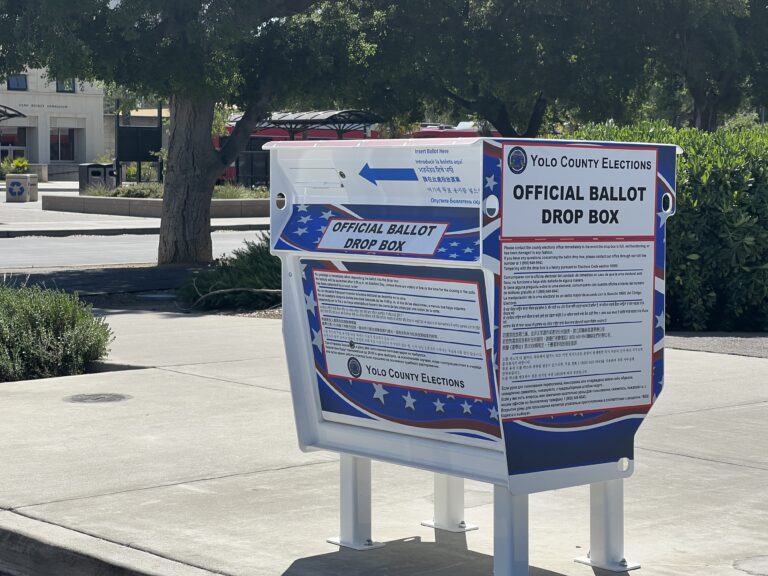
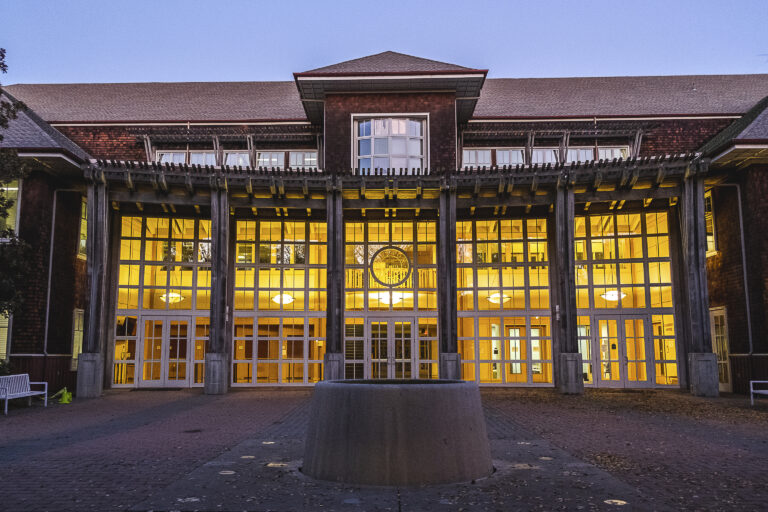
On April 19, UC Davis and the Yolo County Elections Office co-hosted a ribbon cutting ceremony to celebrate the installation of an official ballot dropbox on campus. The ballot box will be permanently located outside the bus station at the Memorial Union (MU) on the northeast corner of Hunt Hall. 

Chancellor Gary May made a statement in regard to the ballot box, according to the UC Davis website.

“One of the primary goals of UC Davis is to help our students become citizen leaders in our democracy who exercise their right and duty to vote,” May said. “We also welcome other county voters who find UC Davis a convenient place to drop off their ballot.”

The ballot dropbox is in the center of campus, offering a convenient location for students, instructors and other members of the UC Davis community to cast their ballots. Additionally, many UC Davis students who are not from Yolo county may not be aware of their options for submitting absentee ballots. 

Kimberly Bautista, a first-year nutrition science major, said she wouldn’t know where to submit her vote if it weren’t for an on-campus ballot box.

“I’m a student, I’m practically here every day, so having one close by would make voting so much easier,” Bautista said. “Also, I’m not from here, so if there weren’t a ballot box here, I wouldn’t know where to go to find another one, if I’m being honest.”

Daniela Ocampo, a first-year managerial economics major, also said she hadn’t thought about where to go to vote, and the placement of a ballot box on campus has brought that to her attention.

“Actually, now that I think about it, I’ve never really thought about what it would be like when the time came and I’d actually be able to vote,” Ocampo said. “I remember being younger and wishing I was 18 already so I could vote, but now I’m here; I just turned 19, and I wouldn’t even know where to go to vote if you hadn’t mentioned it.” 

Even if students know where they can drop off their absentee ballots, getting to a ballot box off campus can be inconvenient for students who bike or ride the bus. 

Gabrielle Osorio, a first-year biological sciences major, said that having a ballot box on campus makes voting much easier for students, since they can now drop off their ballots while biking to class or catching the bus.

“I always intended to vote, but I think it’s really nice to have a ballot box so accessible for students,” Osorio said. “It kind of, in a way, gives students no excuse for not voting, which I think is good. As students, we are here most of the year, which means during voting times, so being able to have a designated box on campus to put our ballots in kind of takes the stress away from making a submission.” 

The California Primary election is on June 7, and early voting began on May 9 across the state. The new on-campus ballot dropbox will be available to use for this upcoming election, and will accept ballots for the first time since its installation this month.

“We know students have busy lives. A drop box on the campus of UC Davis is a wonderful innovation to help meet young voters where they are and help them develop the habit of voting,” said Secretary of State Shirley Weber, according to the UC Davis website.


Written by: Jalan Tehranifar — features@theaggie.org


‘Figuratively Speaking’ kickstarts the Spring Senior Shows

Three senior undergraduate artists display years of work as the first installment of the Basement Gallery’s annual exhibit 


By SIERRA JIMENEZ — arts@theaggie.org


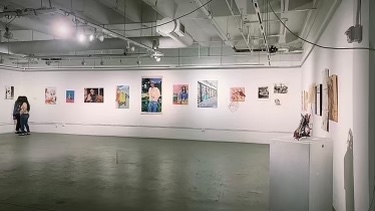
The Art Building’s Basement Gallery annual Senior Shows began on Friday, May 6 with the first of the five senior exhibitions, “Figuratively Speaking” including work from graduating seniors Layne Takahashi, Julia Walters and Charlotte Grenelle Krayenbuhl. 

Including a range of pieces from class assignments to personal work, the Senior Show allows graduating undergraduates to showcase their years of work for other Davis students to enjoy. 

“It just feels kind of like an accumulation of years worth of work and seeing kind of where I started and how it progressed and changed and morphed into something else,” said Julia Walters, a fourth-year design and art studio double major. “It’s also really cool to be sharing that space with Layne and also Charlotte because you get to see that for them as well.” 

A completely student-run space, student artists have the freedom to showcase anything and everything on campus grounds. Layne Takahashi, a fourth-year design and art studio double major, expressed her appreciation for the community-based environment the Basement Gallery grants and the significance of art in the student population in Davis. 

“It’s so centered around the art community within college students specifically. I think it brings out more people that are genuinely trying to see your work versus maybe if it were more of an academic setting,” Takahashi said. “It’s a very central part of Davis and to have the senior show, it just really ties everything back to the community that has helped us create what we’ve created in the past four years.” 

Walters also acknowledged the Davis art community that helped shape the artist she has become. 

“​​I think that [Davis is] such a community and art itself is such a community, and so it’s been really great having a smaller program at Davis that is small but mighty,” Walters said. 

Working closely with other graduating seniors, the artists are put into groups to create an exhibition curated by their own liking. Takahashi, Walters and Krayenbuhl decided on their show’s theme title “Figuratively Speaking” based on their interest and similarities in their pieces. 

“We chose ‘Figuratively Speaking’ because the phrase itself doesn’t necessarily mean for real,” Takahashi said. 

With pieces incorporating the human figure, abstractionism or other elements based off of some element of reality, “it circles back to the idea that it’s figuratively speaking, it’s not exactly what you think it is,” Takahashi said.  

Each provided with a full wall to display their pieces, this smaller Basement Gallery exhibit allows for the seniors to truly show off their art from all the years they have studied at Davis at large. 

“It’s much more intimate,” Takahashi said. “The basement gallery doesn’t filter out any [pieces], the artists decide what they put up.” 

From her favorite piece, “8:12 am,” a personal piece inspired by the first chapter of her favorite book “Top of Mason,” to various assignments for classes such as her piece, “The Ditch,” an experimental piece made of various materials, she incorporated a range of her pieces from her time in the design and art studio department and in her spare time at the exhibit. 

Fond of portraiture, Takahashi and Walters compliment each other with similar color palettes and interests in figure painting. They originally paired up for their senior show based on their artistic similarities and after hours spent working late nights in the studio together. 

“[Our pieces] have similarities, especially within the color palettes,” Walters said. “Seeing the work up and getting it all ready and it was really cool to see how harmonious and how they really complemented each other in terms of color.” 

Walters’ favorite piece of her friend at a gas station, “Caught a Vibe,” was the painting that made her realize how fun colors could be and encouraged her to be more bold with her color palette, she said. 

“I feel like this [was] the beginning of a new era of art for me,” Walters said.

Both Walters and Takahashi have their friends in most of their portraiture pieces, further influencing the theme of their exhibition. Krayenbuhl, also a fourth-year design and art studio double major, on the other hand, feels it is “me all over the place,” she said. 

From multimedia projects, such as her favorite piece “Finding the Minotaur” — a three-canvas piece with music based on the novel “House of Leaves” — to her silk screen print “Crow Woman,” she feels she is very much a “product of [her] education,” and the influences from her professors and mentors. 

Incorporating Native American influences into her work, Krayenbuhl adds her personal background of various California tribes — Achomawi, Atsugewi and Yana — but is clear that “I don’t want to make [my art] political. It’s just part of who I am,” she said. 

All three seniors root their art in various personal influences and all create individually unique pieces, and then come together in this space to build an irresistible show. 

“I feel really proud of this show. And I’m really proud of the work I am presenting and I’m really proud of my co-exhibitors as well,” Walters said. “I hope everyone enjoys it as much as we did, putting it together and making the art.”

After an exhausting amount of work put into these pieces throughout their time in the programs at Davis, the artists produce one last hoorah before graduating and pursuing their futures as artists and designers. 

If you’re interested in seeing other Senior Shows, the exhibition will be showing “Displaced Amnesia” on Friday, May 13, “Obstructive Metaphors” on Friday, May 20 and “Fresh Stains” on Friday, May 27, all from 6 to 9 p.m.  


Written by: Sierra Jimenez — arts@theaggie.org


Carbon Footprints are a scam

Why did the fossil fuel industry invent the carbon footprint?


By ALEX MOTAWI — almotawi@ucdavis.edu


Everyone knows the concept of having a “carbon footprint.” The idea of reducing your carbon footprint has been around for a while (first coined in 2000) and is known almost universally due to its prevalence in the school curriculum for young kids. It caught on for a reason — many people want to be better and make a difference in keeping our environment healthy, and outputting less carbon is a way to do that. However, the movement did not sprout from the minds of altruists trying to be helpful — it was birthed by savvy marketers working for British Petroleum (BP). The third-largest oil and gas company in the world, which took in $300 billion of revenue in 2004 when their concept of the carbon footprint was reaching national popularity. 

The concept of the carbon footprint was popularized by one of the biggest carbon-emitting companies in the entire world. And it wasn’t created out of goodwill and a desire to do better on their behalf; it was a smokescreen designed to keep people from recognizing the carbon emitters that actually matter — big oil.

According to the BP-sponsored website “Know Your Carbon Footprint,” “The world needs smarter, more sustainable energy. When we work together, small actions can make a big difference. Use our calculator to find out how much carbon you use each year — and take the first step towards shrinking your footprint.” 

Let me tell you straight: the “we” they use is refering to us normal humans trying to live our lives, not oil companies actively destroying the environment and contributing to global warming.

The truth of the matter here is that our carbon footprint is minuscule compared to these large oil companies. Beyond that, it is impossible for someone in the U.S. to maneuver their carbon footprint to even just 8.5 metric tons, which is still over double the world average (4 metric tons, data from 2007.) This 2007 data places the average American at about 20 metric tons of emissions, but 8.5 is spent on your own behalf by the government — so it’s impossible for someone living in the U.S. to emit less.

Basically, you can only control part of your carbon footprint, probably around 20 metric tons per year. Now I’m not saying nothing you do to shrink your footprint matters. It all matters when we are in a fight to save our Earth, one we are currently losing. What I am saying is that the big oil companies talking about the carbon footprint of an individual like it’s the number one way to save the environment isn’t just disingenuous — it’s false.

BP’s operations in 2020 emitted 374 million metric tons of greenhouse gases (it was 490 pre-covid in 2018). Shell, the giant in an industry full of giants, emitted 1.337 billion metric tons of greenhouse gases in 2020. Shell itself is responsible for 1.6% of the entire world’s carbon emissions. 

These are the companies that are “fighting for” a greener earth by trying to get the average person to save an amount that is a drop in the bucket compared to what they themselves emit into the atmosphere. The Shell company emits 66,850,000 U.S. citizens’ worth of carbon into the environment every year and isn’t legitimately even trying to shrink their contributions and instead pawning it off to us by pushing the idea of a “carbon footprint.”

While we should do everything we can to lower our emissions, the onus to actually make a difference falls on the big oil companies as well as our government. They know climate change is killing our world (and even knew and hid the knowledge of it from us for over 20 years) yet choose to ignore it for the sake of profit anyway. If we want to truly save our world from climate change, we need to look past the marketing facade that is our carbon footprint — and hold big oil companies accountable instead.


Written by: Alex Motawi — almotawi@ucdavis.edu

Disclaimer: The views and opinions expressed by individual columnists belong to the columnists alone and do not necessarily indicate the views and opinions held by The California Aggie.


On my plate: Why Dutch Bros is my favorite coffee shop experience    

How to relieve and reduce Dutch Bros anxiousness  


By NADIA ANEES — nsanees@ucdavis.edu 


“Dutch Bros?” My friend asks me in a text that I wake up to on a Friday morning. That one question alone holds the power of making me look forward to rolling out of my comfortable little bed and beginning the day. “Dutch Bros” I reply without a second thought.  

Dutch Bros is a carefully crafted experience designed to make you, the coffee consumer, delighted. You can arrive to Dutch Bros in any state — still half asleep with bedhead and morning voice, in a state of complete anxiousness about your midterm tomorrow for which you are not prepared or hyper and gleeful at midnight after a night out with friends. Everybody has a different Dutch Bros style. But no matter what your style is, Dutch Bros is there for you whenever you need it —  morning, day or night. 

The experience of going to Dutch Bros is unlike visiting any other coffee chain. Going to Dutch Bros carries an excitement in my mind that is unlike a casual stop at Starbucks or Peet’s. 

It starts when you first see the blue hut in the distance. The warm and slightly retro  Dutch Bros sign invites you in. Then you’re met with the expected long line of cars that nearly meets oncoming traffic on Richards Boulevard. 

Once your turn to order arrives, an employee greets you with excitement, ready to get your order(s) in. They assure you that they can accommodate your drink needs exactly how you’d like. After a bit more of a short wait comes the handoff. At last you are met with a delicious concoction of a drink. The first sip makes your eyes dazzle.  

Despite rainy nights or windy Davis days, the Dutch crew brings uplifting energy and stays swaying gleefully to the music blasting inside their small, magical hut. Essentially I’m saying Dutch Bros employees are my heroes. 

Despite my clear fandom for Dutch Bros, I’m aware of how many people simply do not get the hype of the coffee shop or find visits to be a highly stressful experience. Here are some of my tips to make this experience one you can embrace, like I do. 

First, keep the Dutch Bros mobile app on your phone so that you can easily browse the menu from your screen well before you place your order. Take all the time you need while waiting in line to decide on the drink that sounds the best to you. Be sure to scan the app so you can start to accrue points for every drink purchase to eventually earn yourself a free one, too! 

Next, visit on the first of the month. You’ll be met with an exciting surprise of a free sticker when you request one for as long as supply remains. If Dutch Bros’ drinks are not convincing enough for you to make the trip, perhaps the vibrant and free stickers will be. 

Also, be sure to bring a buddy with you. Coffee obsessed or not, anyone can find something to enjoy off the menu. I will highly recommend that you stick to the classic menu, of course making alterations to the milk choice and sweetness preference, as needed. But with the classics I truly think you can’t go wrong. You can share the pre-Dutch nerves with your friend and enjoy your drinks together on a slow ride around cow town. 


Written by: Nadia Anees — nsanees@ucdavis.edu


Disclaimer: The views and opinions expressed by individual columnists belong to the columnists alone and do not necessarily indicate the views and opinions held by The California Aggie.


Remember to take time to appreciate what’s around you

Sometimes it’s easy to forget where we are


By OWEN RUDERMAN — opruderman@ucdavis.edu 


Being a college student can feel like a full-time job. Schedules packed full of classes, deadlines and club activities need to be balanced with social lives and work. It’s extremely easy to become overwhelmed with the variety of tasks and responsibilities placed on us. Entire days spent worrying about what’s around the corner are exhausting. Luckily, though, there’s a way to put things in perspective.

It all started with my daily commute. Every day I hop on my bike, pop my earbuds in and ride to campus. At a certain point, the bike ride became part of my daily routine. The people and places around me blended into the background of my day as I rode through Davis, desperate to get to class on time. 

But a few weeks ago I had a sort of revelation. I had forgotten my earbuds and was heading back from campus in the evening. I was lost in my thoughts as usual, but then, for some reason I can’t quite explain, everything around me came into focus. I felt the soft breeze on my face. The nostalgic sound of crickets chirping in the grass nearby mingled with the sound of my tires on the asphalt. I looked up and saw the most stunning golden sunset I’d ever seen, accompanied by brilliantly white, fluffy clouds. I smiled to myself. I felt so incredibly present. It felt like everything was going to work out.

Since that day, I’ve been trying to take some time to stop whatever I’m doing and take in my surroundings. It’s easy to forget about the beauty of the simple things around us. I’ll be walking to class and stop to admire the quad. Or I’ll be sitting on the second floor of Wellman Hall and, instead of scrolling through my phone, I’ll peer out the balcony and people-watch. Taking time to admire the little things makes my day just a little better.

It’s not just my surroundings, either. Being more present in the moment has made me more appreciative of my relationships, with both myself and with others. I was in the Memorial Union the other day, eating a CoHo chicken quesadilla with my friends, when I decided to take a moment to soak everything in. I realized how fortunate I am to be at UC Davis, to have people in my life who care about me — to be alive.

While being more present has definitely improved the quality of my own life, don’t just take my word for it. A 2017 study reported that being more present in the current moment can actually decrease stress and increase resilience and well-being. As college students, I think we could all use a little of that.

So the next time it feels like everything is crumbling down around you, try to take a second to look up and really appreciate your surroundings. I’m willing to bet that your upcoming midterm might not seem so bad after all.

Written by: Owen Ruderman — opruderman@ucdavis.edu 

Disclaimer: The views and opinions expressed by individual columnists belong to the columnists alone and do not necessarily indicate the views and opinions held by The California Aggie.


Student-athletes’ mental health is just as important as their physical health

It’s crucial to build a supportive environment for student-athletes 


With the recent news of multiple student-athlete suicides across the country, changing the culture of mental health among the student-athlete population has become a priority. The pressure to compete at a high level in addition to the already stressful college life is something that needs to be reevaluated. 

In addition to managing their rigorous academic schedules, student-athletes essentially take on the workload of a part-time job with the amount of practice they have during the season and sometimes in the offseason as well. Even when practices are labeled as “optional,” students may still feel pressured to go for any number of reasons. With such a busy schedule, a lot of people can stress themselves out and with little mental health support, it can be costly. 

Expectations to perform at a high level while focusing on grades and meeting the GPA minimum requirement to remain eligible to play can make student-athletes put mental health on the back burner. In the culture of sports, prioritizing mental health can be seen as an invalid excuse, but this shouldn’t be the case. Even if a school has resources available to student-athletes, athletics administrators and coaches have a responsibility to support student-athletes and encourage them to take advantage of these resources.

“Key barriers include more negative attitudes towards help-seeking amongst athletes than the general population, as well as greater stigma and poorer mental health literacy,” read a 2019 study in the Journal of Sports Medicine. “Fear of the consequences of seeking help (e.g. loss of selection) and lack of time are also influential.” 

As we have seen with DeMar DeRozan, Kevin Love, Naomi Osaka and Simone Biles, professional athletes aren’t invincible when it comes to mental health struggles. Student-athletes face similar pressures to compete at a high level, but also must juggle academics and limited time to study for exams.

That’s not even mentioning the stressors that come from outside sources. For some student-athletes, athletic scholarships are their only pathway to education, which can lead some to heavily prioritize performance over wellbeing.

Getting injured can further strain mental health; it can be difficult to cope with and requires adjustments to everyday life. Student-athletes may feel a burden from not wanting to lose a spot or not being able to compete and help the team.

At UC Davis, there have been many student-driven efforts to support mental health in athletics, including Athlete Guidance and Support. This resource group works to promote mental health awareness and offers support in the athletic community, among other initiatives. 

For the most part, the emphasis on health in sports has been with regard to physical injury. It’s time for every university (if they haven’t yet) to begin putting mental health at the same level as physical health. Sports teams and their fans should equally respect these concerns and create an environment where student-athletes are understood and can comfortably ask for help. 


Written by: The Editorial Board


ASUCD endorsements: Consider the following

The Editorial Board endorses four candidates for ASUCD Senate and the single executive ticket


ASUCD Spring Elections began today on Monday, May 9, with seven Senate candidates running for six available seats, one executive ticket running for the president and internal vice president positions and one candidate running for student advocate. The Editorial Board interviewed the executive office ticket and all seven candidates running for Senate. The student advocate candidate did not respond to The Aggie’s request for an interview as of May 8.  


Executive Ticket Endorsements


Radhika Gawde (she/her/hers), second-year political science-public service major, and JT Eden (he/him/his), first-year international relations and environmental policy analysis and planning double major — Rise!: Gawde and Eden are the lone and extremely compelling candidates on the executive ticket. Both have substantial experience: Gawde has served as the Internal Affairs Commission (IAC) as the chair and is currently the ASUCD Senate president pro tempore and Eden served as a senator at his community colleges and is currently serving as the IAC chairperson. They expressed dedication to their slate’s comprehensive nine-point plan, which includes specific action items for increasing transparency surrounding sexual assault and sexual violence reporting, broadening academic accommodations (including providing menstrual accommodations) and instituting a three-point basic needs advocacy plan aimed at providing direct, need-based aid to students and additional housing and parking reform. The candidates also emphasized their intention to increase mental health resources access for students and work on improving engagement with ASUCD in order to bolster advocacy. Ultimately, Gawde and Eden’s vast experience, knowledge of the commitment and drive required of people in these positions and detailed plan with specific actionable items make them promising and dedicated candidates.


Senate Endorsements:


Zeph Schnelbach (all pronouns), first-year political science major — Independent: We were incredibly impressed with Schnelbach’s knowledge of ASUCD and the concrete ideas he had for how to improve the organization as a senator, including tapping into what he understands to be an unused fund for student programs. Their platform emphasizes advocacy for mental health and addiction resources, LGBTQIA+ advocacy and campus sustainability. In addition to having taken trips with the External Affairs Vice President Office, Schnelbach has experience advocating for students in legislative offices and lobbying in her hometown, and her position as a student worker on campus provides her with the necessary perspective to support this group in the Senate. They demonstrated a clear passion for representing the study body and improving student engagement with the organization, and we feel they would make an invaluable contribution to the Senate table.


Eustacio Alamilla (he/him/his), second-year political science major — Independents!: 

As the current Housing Advising for Undergraduate Students (HAUS) unit director, Alamilla has relevant experience with supporting units and with ASUCD’S internal workings, making him an excellent candidate. His role has also prepared him well to manage projects, connect with student organizations and make an impact on the student body, made obvious by specific project ideas he hopes to implement as a senator. Key tenets of his platform are connecting students to affordable housing, increasing awareness and use of campus resources and promoting safe drinking habits on campus. Alamilla also demonstrated an interest in improving student involvement with ASUCD, citing concerns with low voter turnout and a goal of increasing outreach to students.


Juliana Martinez Hernandez (she/her/hers), third-year political science major — Rise!: Martinez Hernandez is a compelling candidate for senator with her plans for internal ASUCD reform and improvement of the association’s engagement and outreach. Her platform includes new internal reforms like increasing ASUCD volunteer compensation and more external aspects like improving students’ access to basic needs, but she also includes expanding on projects she developed in her role as ASUCD internal vice president, like building a human resources department. The Editorial Board was particularly impressed with her intention to encourage transparency for private companies operating in conjunction with UC Davis, especially in light of the recent lawsuit filed against UC Davis in relation to their work with Neuralink. Martinez Hernandez demonstrated an impressive drive for improving the internal efficacy of ASUCD and her advocacy for improving students’ access to basic needs and resources makes her a promising candidate for Senate.


Priya Talreja (she/her/hers), third-year environmental policy and planning major — Rise!: Talreja impressed the Editorial Board with her extensive previous legislative experience and well-developed platforms. Talreja served as a legislative director for an ASUCD senator and worked as an elected Delegate for the California Democratic Party. With her previous experience writing legislation and organizing campus programs, the projects Talreja plans to introduce will create tangible benefits for the student body. We were impressed with her desire to support students from BIPOC communities seeking mental health care by ensuring access to racially diverse and culturally competent student mental health resources. She also strives to increase student engagement and understanding of ASUCD — an issue brought up by many candidates that the Editorial Board believes is crucial to address. One of Talreja’s other platforms, creating stronger relationships between Registered Student Organizations, would also help address issues of low voter turnout and the lack of knowledge many students have about the inner workings of ASUCD.


Written by: The Editorial Board


Disclaimer: The Editorial Board can endorse up to six Senate candidates, one executive ticket and one student advocate. The Board also retains the right to not endorse any candidates for these positions.


‘Suffering cries for resolution’: as COVID-19 cases rise, memorials do too

Davis Cemetery District & Arboretum begin planning a memorial dedicated to the lives lost to COVID-19


By CHRIS PONCE — city@theaggie.org 


COVID-19 cases have seen an uptick throughout April, according to a press release from Yolo County published on April 26. The increase in positive cases can be attributed to the subvariant related to omicron, as shown by evidence of the uptick, according to the press release. 

“Testing positivity rates have sustained increases over a one-week period,” the press release reads. “Elevated levels of the virus have been detected in wastewater in Davis, which often indicates wider community spread ahead of clinical testing.”

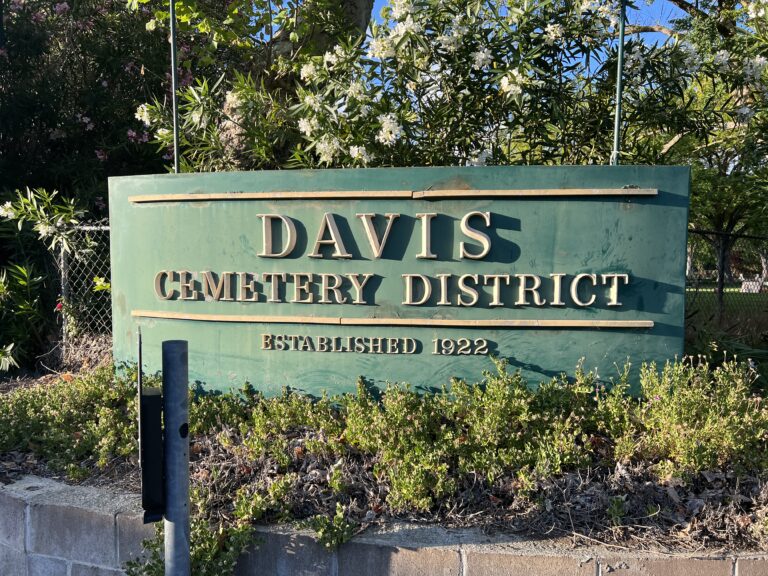
As cases are on the rise, the Davis Cemetery District & Arboretum is currently in the planning stages of a new project. They intend to install a permanent memorial to the cemetery that recognizes the lives lost to COVID-19. Fundraising is a key aspect to the project plan, according to Heidy Kellison, a member of the Davis Cemetery District & Arboretum Board of Trustees.

When Davis Cemetery & Arboretum announced its plan for installation, it stated that the memorial will consist of three pillars, representing remembrance, honor and acknowledgement and resiliency and strength. A statement on their website highlights these aspects of remembrance. 

“This memorial will provide a space for community members to remember those we lost and how the pandemic has impacted them personally,” the website reads.

The architecture of the memorial will highlight all of the lives lost from the pandemic and  appreciate the strength of the Davis community, according to the Davis Cemetery District & Arboretum website. Five pillars will be a part of the memorial representing the lives lost to COVID-19. Visitors can walk through a path to view each pillar. The end of the path will include a reflection area where people can not only remember what was lost, but also look forward to what is to come.

District Superintendent of Davis Cemetery District Jessica Smithers gave credit to Heidy Kellison and Stephen Souza for their work in leading the project. Smithers praised their work via email. 

“[They are] the visionaries behind the permanent COVID-19 memorial,” Smithers said. 

The Davis Cemetery District & Arboretum is focusing on raising funds for this project, as it is still early in the planning phase. They are asking for donations and sponsorships. Heidy Kellison, who is tasked with fundraising and outreach for the memorial, talked about the importance of fundraising for this project via email. 

“By way of background, we are still in the planning phases for the memorial,” Kellison said. “Community input is being sought and we are raising the necessary funds. This work is happening currently.”

The Davis Cemetery & Arboretum website has three tiers for sponsors based on the amount of their donation. The individual sponsor, who can donate anywhere from $50 to $999, will have their name featured on the website and marketing materials. They will also be given recognition at the memorial. The memorial partner, donating $1,000 to $2,499, will receive the same benefits as well as a feature plaque within the memorial. The community champion, donating over $2,500, will be asked to speak at the dedication event and in addition to benefits from the other tiers. 

Kellison stressed the emotional importance of the memorial to the local Davis community. The memorial will be designed to not only remember and mourn the lives lost, but also serve to display the resilience of the Davis community. Kellison further elaborated on the impact the pandemic has had on people’s lives, and how the memorial will help to provide closure. 

“Pandemic trauma has impacted everyone. People lost and continue to lose loved ones. Our entire way of life, including our sense of security, has been upended,” Kellison said. “This is worsened by a lack of access to mental health services and to family and friends who offer essential support. The memorial will perform a critical function by acknowledging loss — something that is missing from our understandable rush to forget. Suffering cries for resolution. The Davis Cemetery District wishes to be a healing resource by offering a space to grieve, reflect, and recover in a way that is available to all people.”


Written by: Chris Ponce — city@theaggie.org 


New names need to be normal

Changing names should be a celebrated experience


By ALEX MOTAWI — almotawi@ucdavis.edu


Names are super interesting. They are oftentimes the very first thing that you judge and envision new people by, yet it’s often not something they choose for themselves. It really is essential that everyone has a name that feels true to themselves, and general fear as well as a negative stigma is getting in the way of that.

When you truly think about it, how can you expect a parent to pick a name for their newborn child that will fit the person throughout their entire life? People often come to accept or at least bear their names, but it should by no means be a requirement. This applies to when we pick our own names too — nothing says it has to be your name forever. Changing your name shouldn’t be a big deal nor should it be permanent, yet we treat names like they are.

What it boils down to is that names do not define a person. A person is defined by their actions and the way their actions are perceived by themselves and others, not a name chosen by someone else at birth.

We already change names often in the form of “nicknames” — why is that seen as different from actual names? People pick up new nicknames and drop old ones all the time and can identify with these nicknames more than their original names due to the memories behind their creation and their personal choice in the matter. The keyword there is “choice.” The fact that we can choose to introduce ourselves by our nickname as something that represents us really does matter — it gives us power over our own names.

As an Alexander, I can choose from a variety of nicknames until I reach something I’m happy with. But besides keeping the sentimental value my name may or may not have, why should I have to constrict myself to traditional shortenings of Alexander? Nobody judges me if I go by Alex instead of Alexander, but people would question me if I picked a different name like Jordan or Lily. This has to stop.

Depending on the name, people may get judged as humans before even their first interaction with someone new. It’s often the first piece of information available to someone, so it’s no wonder why they are going to form a cursory opinion of someone based on name alone, myself included. I will get instantly batched into all of the other “Alex’s” and that will lead to assumptions about me that I don’t want, regardless of if they are good or bad.

People should be allowed to do what makes them happy if it’s not at the expense of others, and being able to change names without judgment is the first step in the process. Plenty of people are unhappy about their name. Change it — nobody should feel stuck with a name they don’t identify with purely for continuity’s sake. Whether you just want to try something new or you want to keep your old name in the past, please don’t be afraid to make the leap of faith! I and others will support you every step of the way and hopefully soon, nobody will bat an eye.


Written by: Alex Motawi — almotawi@ucdavis.edu

Disclaimer: The views and opinions expressed by individual columnists belong to the columnists alone and do not necessarily indicate the views and opinions held by The California Aggie.


Unions rally to call attention to equity demands

The rally followed one held in March, which centered on rent burden and housing insecurity


By ISABELLA KRZESNIAK campus@theaggie.org


On April 26, members of Student Researchers United (SRU-UAW), United Auto Workers (UAW) 2865 and UAW 5810 marched from the Memorial Union to Dutton Hall to bring attention to demands for their upcoming contract negotiations. ​​United Auto Workers (UAW) 2865 represents graduate student instructors, teaching assistants, readers and tutors, and UAW 5810 represents postdocs and academic researchers. Union members presented an open letter outlining their demands, which include eliminating rent burden, creating a safe and inclusive workplace and expanding benefits related to childcare.

This action follows a union rally held on March 3, which called attention to bargaining demands centered on housing.

The rally on April 26 was intended to bring attention to demands to create a more equitable workplace, according to Neetha Iyer, the chair of the UC Davis branch of UAW 2865.

“Over the lifetime of our contracts, administrators […] have refused to move on some important equity measures, including things like support for fair housing, paid family leave and decent compensation,” Iyer said.

The 48,000 members of the three unions aim to bargain under one contract for 2022, according to Conor White, the campus recording secretary for UAW 5810.

“The idea is that with a larger body to negotiate with, we’ll have a stronger negotiating position,” White said. “We’re making concessions on different things for different unions, and we’d rather just bargain collectively.”

Among the bargaining demands is support for international scholars. The open letter insists that the university cover immigration and visa costs and eliminate Non-Resident Supplemental Tuition (NRST), an additional cost of up to $15,000 that non-resident workers pay as part of tuition. As an international student, Iyer believes that eliminating NRST is a step toward creating equity in the workplace.

“One thing that the university can do to make our lives better is to bargain with us over immigration issues and tuition issues,” Iyer said.

According to the National Academies of Science, Engineering and Medicine, academia reports the second highest rates of workplace harassment. White believes that the UC does not completely fulfill its contractual obligations when it comes to helping those with harassment grievances.

“Oftentimes we find ourselves impeded with our ability to seek justice for people who have to go through that sort of thing,” White said. “[The UC] likes to put their image forward and say they care […] and we’re trying to hold them to account. But unfortunately, they’re dragging their feet on that, especially when the things that we’re asking them for aren’t that radical — they’re commensurate with a lot of academic workplace standards.”

The UC Davis Harassment & Discrimination Assistance and Prevention Program did not respond to a request for comment as of May 8.

Iyer and her colleagues emphasized that their working conditions impact the learning conditions for undergraduate students.

“If our workers aren’t paid or treated correctly that directly affects the education that’s provided to undergraduates, which the university prides itself on,” Iyer said. “We’re the ones that teach classes, grade papers and do the research for the UC.”

According to Wes Westerfield, a guide for UAW 2865’s executive board, the bargaining sessions that are taking place now will define the graduate student experience for the next four years. He said he is hopeful about the impact of the rally.

“We don’t always see an immediate result, but I think with the level of media attention that was drawn at some of the other campuses and the level of noise that we made in the administrative building, I think it will pressure the UC into giving into our bargaining demands,” Westerfield said.


Written by: Isabella Krzesniak — campus@theaggie.org


New Pediatric Pulmonary Hypertension Program at UC Davis Health establishes one-stop shop for pediatric patients’ families

The program takes a multidisciplinary approach to make the standard of care more patient-centered


By BRANDON NGUYEN — science@theaggie.org


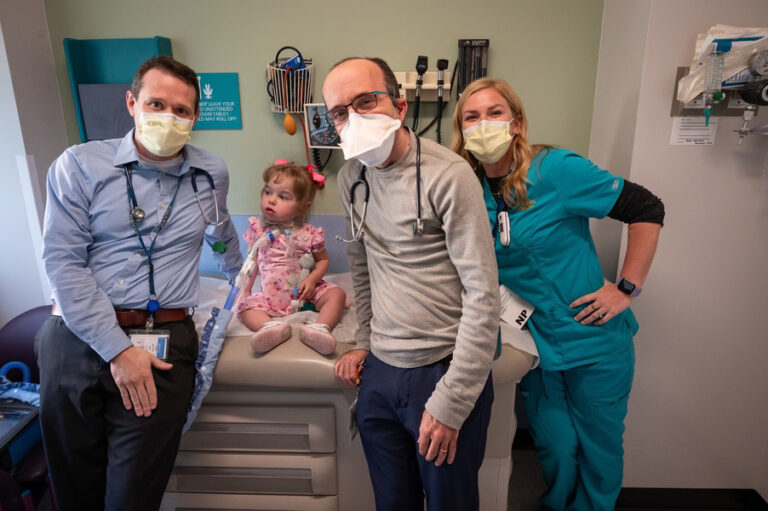
UC Davis Health has recently developed the Pediatric Pulmonary Hypertension Program to provide a multidisciplinary approach to treating children with pulmonary hypertension, a condition that can be difficult to diagnose in children. 

Dr. Brian Goudy, a pediatric intensive care physician at the UC Davis Medical Center and director of the program, described what pulmonary hypertension is.

“Pediatric pulmonary hypertension is just defined as increased pressure in the blood vessels that go to the lungs,” Goudy said. “It’s similar to if you were to have hypertension in your other blood vessels, so the blood vessels go away from the heart and toward the body, but it’s just a little bit more difficult to measure the blood pressure in the lungs the way you measure blood pressure in the body.”

It is difficult to diagnose a child with pulmonary hypertension, largely due to the numerous factors that may lead to the condition.

“The definition really is so broad that it encapsulates lots of different types of causes for that increased pressure,” Goudy said. “Most frequently the results of increased pressure in the lungs are a result from lung injury from prematurity, where many of our patients are premature infants that have chronic lung disease, which causes blood to not flow as smoothly through their lungs. The other large subset of patients that have pulmonary hypertension have congenital heart disease, meaning they were born with some sort of heart defect and in association with that heart defect, they have developed increased pressure in their lungs.”

Due to the complexity and difficulty of the condition in pediatric patients, doctor visits often required families to spend many days per month meeting with the multiple specialists involved. However, with the advent of the program, these visits have been reduced to a one-stop shop where a family can see all of the specialists in one visit.

Dr. Payam Vali, a neonatologist at the UC Davis Medical Center, spoke on the importance of a multidisciplinary team when approaching pediatric pulmonary hypertension cases. 

“The reason we developed the program is again because it’s a fairly complex disease that requires a multidisciplinary approach,” Vali said. “In developing this team, we can create this niche expertise that when we identify patients that have pulmonary hypertension, we can rely on this team to provide the most up-to-date evidence in treating these patients so it’s a little bit more cohesive in the approach.” 

The program is an example of advocating for a patient-centered approach. Dr. Rory Kamerman-Kretzman, a pediatric pulmonologist, further highlighted what the team hopes to achieve in the future while improving and expanding the program.

“Number one on my list would be improving the quality of life for families, and I think that what we call patient or family-centered research outcomes are increasingly recognized but still remain under-emphasized across all health conditions,” Kamerman-Kretzman said. “So I’m interested in getting more family input on how we can be more effective, as a team and then eventually, I’d like our research efforts to ramp up as well. Right now, we are a very clinically focused team, but I hope that we can contribute to the network of children’s hospitals and medical centers that are advancing the care of pediatric pulmonary hypertension.”


Written by: Brandon Nguyen — science@theaggie.org


Uncovering the art of the song cover

It’s a well-established tradition for artists to cover others’ songs, so let’s take a look at some of the best out there 


By ANGIE CUMMINGS — arts@theaggie.org


Covering an already beloved song is a risk almost every artist takes, whether they are already a household name or just coming onto the scene. While many covers are nothing special, some have truly succeeded in making something amazing out of someone else’s song. The beauty of a cover is varied, with some outshining the original and others just bringing a whole new experience to the song. Today, we will dive deep into some of the best covers out there for your listening pleasure — while this list encompasses a variety of genres and time periods, it is not at all exhaustive, but instead provides a solid footing in the world of iconic covers.

 It is worth saying that this is not in any way an objective list of the world’s most iconic covers (although some are included), since that article can be found with a simple Google search. Instead, today I am providing you with a curated mix of classic covers, essential auditory experiences and some hidden gems by smaller artists (all but one are available on music streaming services). While I could have easily gone into extensive detail about each song, I’ve picked out the highlights that really deserve some special attention.  


“Doin’ Time” by Lana Del Rey (2019) (Originally by Sublime)

In all honesty, this song is probably one the main reasons this article even exists. My deepest apologies to Sublime fans, but Lana Del Rey breathed new life into this 1997 hit and made it the song of the summer in 2019. Regardless of how you feel about Lana (I personally have a drought relationship with her), there is no denying that this song is basically perfect. 

“Same Ol’ Mistakes” by Rihanna (2016) (Originally by Tame Impala)

Thank you Rihanna for introducing me to Tame Impala. Great cover, everyone agrees.

“Africa” (Originally by Toto), “Sweet Dreams (Are Made Of This)” (Originally by Eurythmics) and “Billie Jean” (Originally by Michael Jackson) by Weezer (2019)

My top three songs from their album of covers, “Weezer (Teal Album)” from 2019. 

“Bad Religion” (Originally by Frank Ocean) and “White Mustang” (Originally by Lana del Rey) by Cat Power (2022)

Cat Power’s rugged and soulful voice brings something you didn’t know you needed to both of these already beautiful and solemn songs. They are both from her cover album that came out earlier this year — which itself is a beautiful listen at any time. While her rendition of “Bad Religion” is undoubtedly amazing, “White Mustang” is the one that really stands out to me, usurping Lana’s much softer original recording. 

“I’m A Believer” by Smash-Mouth (2001) (Originally by The Monkees)

It’s from “Shrek,” everyone knows it, everyone loves it. Probably more culturally relevant than the original.

“Baby I’m Yours” by Arctic Monkeys (2006) (Originally by Barbara Lewis)

While this is one of those songs covered countless times over the years, I feel very strongly about what the Arctic Monkeys made of it. 

“All Along The Watch Tower” by Jimi Hendrix (1968) (Originally by Bob Dylan)

Apparently, this is not an original song by Jimi Hendrix, sorry Bob. 

“Make You Feel My Love” by Adele (2008) (Originally by Bob Dylan)

It kind of seems like Bob Dylan made songs for other people to sing them. While I can be known to enjoy listening to Dylan’s hits, his unique twang just cannot compete with Adele’s divine voice singing this beautiful song.

“Mr. Tambourine Man” by The Byrds (1965) (Originally by Bob Dylan)

Again, no denying that Dylan is an incredibly talented artist and songwriter, but for most of my life I really did believe The Byrds had ownership of this song, and many of the other Dylan songs they have covered. 

“…Baby One More Time” by The Marias (2019) (Originally by Britney Spears)

So different from the (iconic) original, and so incredibly good. You should definitely check  this one out if you want to feel cool and indie while listening to a Britney Spears song.

“Do Ya Think I’m Sexy” by Paris Hilton (2006) (Originally by Rod Stewart)

This cover is so incredibly fun and perfect, it really does make you feel like a blonde, rich, gorgeous socialite. Paris somehow took a song beloved by (usually annoying) old men and transformed it into an anthem for confident cool girls who know what they want. Definitely better than the original, no doubt about it. 

“Across The Universe” by Fiona Apple (1998) (Originally by The Beatles)

We have finally made it to the Beatles covers, perhaps the most covered band of all time (not fact-checked, just a strong feeling). In my eyes, Fiona Apple wrote this song. 

“What Goes On” by Sufjan Stevens (2005) (Originally by The Beatles)

Good song, really just sounds like another Sufjan Stevens song. 

“I Want To Hold Your Hand” by Al Green (1995) (Originally by The Beatles)

If I was The Beatles I’d be pretty embarrassed that someone sang one of my most famous songs so much better than me…

“Because” by Eliott Smith (2000) (Originally by The Beatles)

Just admit that this song is perfect and move on.

“In My Life” by Johnny Cash (2002) (Originally by The Beatles)

Again, it must be embarrassing to be The Beatles. Johnny Cash really blew those brits out of the water with this one. 

“I Will” by Allison Krauss (1995) (Originally by The Beatles)

In my heart, this is an old folk song that Allison Krauss found and introduced to the world. So incredibly good. 

“Oh! Darling” by Florence + The Machine (2009) (Originally by The Beatles)

At this point, it probably seems like I hate The Beatles, but it just happens to be that some incredibly talented artists have covered their songs, this cover being yet another prime example. Thank you, Florence. 

“Jolene” by Miley Cyrus (2012) (Originally by Dolly Parton) 

This cover that Miley Cyrus originally did as an acoustic performance on Youtube back in 2012 was a foreshadowing of her now-iconic covers of powerful rock and country songs of the past few years. 

“Break Up With Your Boyfriend” by Lana del Rey (2019) (Originally by Ariana Grande)

Sadly this is the singular cover that is only available on Youtube. Because of this performance, I would like to formally request that Lana put out an entire cover album of just Ariana Grande’s songs. 

“Smooth Criminal” by Glee Cast (2012) (Originally by Michael Jackson) 

It was a lot of work to keep myself from including a plethora of Glee covers, let alone narrow down my favorites to just one. Every bit of the tension from the scene between Santana Lopez (played by Naya Rivera) and the loathsome Sebastian Smythe (played by Grant Gustin) is felt in every single second of this recording. Of course, it doesn’t top Michael Jackson’s original, but it comes pretty darn close.


Written by: Angie Cummings — arts@theaggie.org


Things to do on Unitrans that aren’t technically illegal

Those drivers have it too easy


BY ANNABEL MARSHALL — almarshall@ucdavis.edu 


  1. Lick the side of the bus. 
  2. Enter the bus by walking backward. 
  3. Read a copy of my newest book, “100 People Who Have Died Gruesome Deaths on a Public Bus.” (Signed copies are very much available.)
  4. Ask people on the top of the double-decker what the weather is like up there. Laugh before they respond.
  5. Wear between four and seven pairs of glasses at the same time. 
  6. Talk a first-year biological sciences major out of pursuing pre-med.
  7. Mumble 17th-century poetry and glare at other passengers in a way that implies that, as a teenager, you empathized too much with Holden Caulfield from “The Catcher in the Rye.”
  8. Tell people, “This is my first time. I’m so nervous.” Refuse to clarify.
  9. Turn your earbuds all the way up so that the person next to you is forced to hear Justin Bieber’s debut album, “My World,” the way they might hear it if their upstairs neighbor played it through a janky speaker. 
  10. Talk a third-year film major into pursuing pre-med.
  11. Smell really good. Like, suspiciously good.
  12. Drop a massive stack of papers into a puddle just as you’re about to step onto the bus. Scream, “My research! My research!” Get on your knees. Try and fail to gather your papers. When passersby try to assist you, cry “It’s gone! My research!” When you try to stand, fall into the puddle. 
  13. Grind someone else’s teeth.
  14. Sit down next to someone wearing a shirt with the logo of your favorite band. Mention that you’re a fan. Watch her eyes light up as she tells you she’s going to their concert next week. Realize that, without even thinking about it, you’re flirting. Talk with her the whole ride, learn her major, that she hates the flavor of oranges, she thinks Pulp Fiction is a solidly B+ movie, she follows college baseball. She loves your favorite books and grew up just down the block from you. She doesn’t drink coffee, but she loves root beer. When the bus arrives at its destination, accidentally drop your phone and thank her when she picks it up and offers it to you. Think about asking her for her number, asking her to coffee sometime, asking her anything witty and engaging instead of standing there like an idiot. Stand there like an idiot. Get nudged by someone behind you trying to get off the bus. Realize you’ve missed your chance when she gives a half-wave goodbye. Think of her the rest of the day. Think about her when you’re trying and failing to fall asleep. Think about her every time you take the bus for a week and hold your breath when her stop comes around like that might make her appear. Move on with your life. Go to school, go to work. Ignore when someone brings up what a perfect movie Pulp Fiction was. Wake up late for your morning discussion. Run to the bus. Slide into the last available seat. Check your phone and watch the time tick as you become five minutes, six minutes, seven minutes late. Finally arrive at the Silo, dash onto the curb, nearly smash into someone carrying a brightly-colored smoothie, and end up face to face with her. Say “Thank God” without meaning to and then, in the same breath, ask if she wants to get a root beer sometime. Watch her smile. Get her number and practically skip to class, forgetting that you’re 27 minutes late. Go out with her. Watch baseball games with her. Introduce her to your friends. Move in with her. Graduate, get a job, marry her. Have no kids and two dogs. Celebrate every anniversary. Grow old together, really old, and pass away peacefully in your sleep. Her first, then you, 20 minutes later, utterly content. 
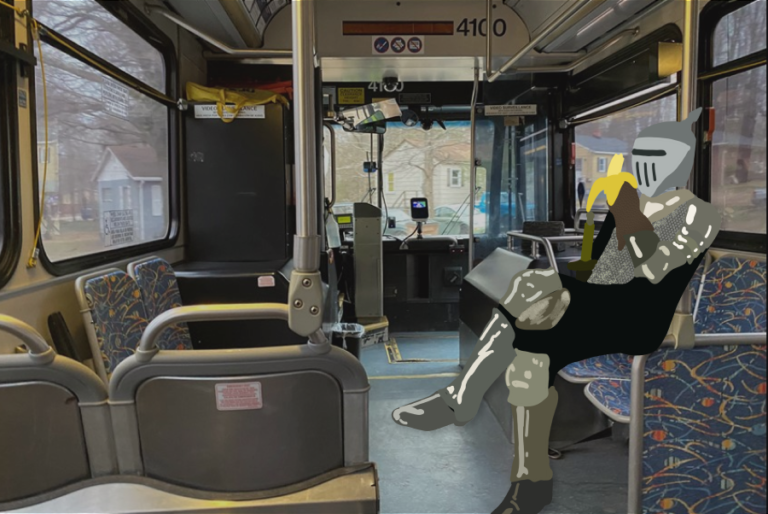
  15. Wear a full suit of chainmail. 
  16. While riding the bus, hold some water in your cupped hands. Aquafina or Dasani preferred.
  17. Hold your feet exactly 12 inches above the ground while seated.
  18. As you step off the bus, tell the driver, “You’re welcome.”


Written by: Annabel Marshall — almarshall@ucdavis.edu 


Disclaimer: (This article is humor and/or satire, and its content is purely fictional. The story and the names of “sources” are fictionalized.)