55.9 F
Davis

Davis, California

Tuesday, December 23, 2025
Home Blog Page 212

2022 NFL Draft Recap

Several teams shine with their selections, while other teams underwhelm


By PATRICK FIGUEROA — sports@theaggie.org 


After one of the craziest offseasons in NFL history, the 2022 NFL Draft is now complete. While nobody knows how any of these prospects’ careers will turn out, we can still predict which teams will have future success based on the moves they made during this draft. Multiple teams had drafts that are worth highlighting, while other teams’ drafts were more questionable. 

Winner: Baltimore Ravens 

As per usual, the Ravens had a successful NFL draft. With two first round picks, they acquired two high-end prospects — safety Kyle Hamilton from Notre Dame and center Tyler Linderbaum from Iowa. While there are concerns about Hamilton’s athleticism and Linderbaum’s size, both were elite college football players that produced on the field. They followed up day one of the draft with an impressive day two, as they acquired high-upside pass rusher David Ojabo from Michigan in the second round and Senior Bowl standout Travis Jones from UConn in the third. Ojabo was a first round talent before he tore his Achilles tendon during his Pro Day. Despite the injury, this second-round acquisition could be a steal given Ojabo’s high potential. Travis Jones was also a potential steal, as he was projected to be a second round pick. This haul was impressive, and it’s also worth mentioning some of their later picks, like Minnesota’s offensive tackle Daniel Faalele and Iowa State’s tight end Charlie Kolar, both of whom were selected in the fourth round. 

Winner: Kansas City Chiefs 

A team that has played in the AFC Championship game for the past four seasons seemed to only get better with this draft. The Chiefs addressed two of their biggest defensive needs in the first round — selecting cornerback Trent McDuffie from Washington and edge rusher George Karlaftis from Purdue. They also addressed an offensive need by selecting wide receiver Skyy Moore from Western Michigan in the second round. Additionally, the Chiefs were able to add some positional depth in the third round with safety Bryan Cook from Cincinnati and linebacker Leo Chenal from Wisconsin. This was an important draft for the Chiefs after they traded away superstar wide receiver Tyreek Hill earlier this offseason. It is safe to say that they delivered with good draft picks that should allow them to continue their success and fight for another AFC title.

Winner: New York Jets

The New York Jets, amid a rebuild, were in desperate need to add starting caliber talent to their roster. After a solid free agency where they added players like offensive guard Laken Tomlinson, cornerback DJ Reed and safety Jordan Whitehead, they followed it up with a good draft class. With three picks in the first round, the Jets selected cornerback Ahmad “Sauce” Gardner from Cincinnati, wide receiver Garrett Wilson from Ohio State and edge rusher Jermaine Johnson from Florida State. They were also able to get one of the best running backs in this year’s draft class, Breece Hall from Iowa State, in the second round. All of these players addressed major needs on the Jets’ roster, and they should be able to instantly contribute to the team. Keep an eye out for some of their late round picks, like third-round tight end Jeremey Ruckert from Ohio State and fourth-round offensive tackle Max Mitchell from Louisiana, as well. 

Loser: Minnesota Vikings 

The Minnesota Vikings made a questionable decision during the first round of the NFL Draft when they traded away the 12th overall pick to their division rival, the Detroit Lions. Not only did this allow the Lions to address a need, but this meant that the Vikings would move down 20 spots in the first round. As a result, they missed an opportunity to get a high-end, instant impact player. Also, the return on this trade was underwhelming, as they only moved up in the second round and acquired a third-round pick in return. With some of their picks, they reached for players that were not projected to go until later in the draft. At least they acquired cornerback Andrew Booth Jr. from Clemson, who can help their thin defensive back room. 

Loser: Arizona Cardinals 

The Arizona Cardinals did not have a first-round pick. This was because they traded their first-round pick to the Ravens for wide receiver Marquise Brown and a fourth-round pick on draft night. The former first round pick, Marquise Brown, has been underwhelming during his NFL career. Also, the Philadelphia Eagles acquired an elite wide receiver, AJ Brown, for a first-round pick. This made the Cardinals trade look worse, but if there is any reason to be optimistic about this trade, it is the fact that Marquise Brown and Cardinals quarterback, Kyler Murray, were a dynamic duo in college. Also, the Cardinals did need a receiver, so at least they addressed a need with their first round pick. Despite some reasons to be optimistic, this trade was questionable for the Cardinals. 

Loser: Chicago Bears

The Chicago Bears made solid selections with their three picks on the second day of the NFL draft. They added cornerback Kyler Gordon from Washington, safety Jaquan Brisker from Penn State and wide receiver Velus Jones Jr.  from Tennessee. Despite these being good picks for the team, the Bears needed to provide more offensive support for their young second-year quarterback Justin Fields. After an underwhelming free agency that added little offensive support, the Bears needed to address their offensive needs, most notably offensive line, during the draft. Failing to do so puts Justin Fields in a tough spot. He will need to do a lot more than what a second-year quarterback should be asked to do. While Chicago acquired players who should have good NFL careers, there is uncertainty if the same can be said for their quarterback. 

With the conclusion of the 2022 NFL Draft, the beginning of offseason training for NFL teams, like OTAs, minicamps and training camps, is right around the corner. Also, the NFL schedule release is imminent, as the full schedule is set to be released on Thursday, May 12 at 5 p.m. PT. While there are still some free agents still available to be signed, such as Julio Jones, Tyrann Mathieu and Odell Beckham Jr., the conclusion of the NFL draft signals that the beginning of the 2022 NFL season is getting closer. 


Written by: Patrick Figueroa — sports@theaggie.org 

 

New human reference genome is complete for the first time since 2001

At the Telomere-to-Telomere consortium, researchers around the world collaborated to sequence the gaps left out by the initial human reference genome


By BRANDON NGUYEN — science@theaggie.org


The Telomere-to-Telomere (T2T) consortium, an international group of researchers focused on developing the human reference genome, recently filled in the last 8% of genomic DNA that had been left out in the initial Human Genome Project in 2001. 

Release of the first human genome assembly was a landmark achievement, and after nearly two decades of improvements, the current human reference genome (GRCh38) is the most accurate and complete vertebrate genome ever produced,” the consortium website reads. “However, no one chromosome has yet been finished end to end, and hundreds of gaps persist across the genome. These unresolved regions include segmental duplications, ribosomal rRNA gene arrays, and satellite arrays that harbor unexplored variation of unknown consequence.”

Several UC Davis investigators contributed to the series of papers recently published on the completion of the human reference genome. Dr. Megan Dennis, an assistant professor of biochemistry and molecular medicine at the UC Davis School of Medicine and MIND Institute, explained the human reference genome.

“The human genome has been sequenced since 2001, and the human reference genome represents a single example of a human genomic sequence that the community uses as a reference to be able to compare subsequent sequences of other humans against,” Dennis said. “So we use it to understand genes and proteins producing those gene regulatory elements and so forth. The original reference genome comprises a collection of multiple different individuals in which different parts of their genomes had been sequenced and stitched together.”

Dr. Charles Langley, a distinguished professor of evolution and ecology at the UC Davis College of Biological Sciences, explained the process of filling in the gaps of the original sequence.

“The way we sequence genomes is we break it into pieces and try to read the little pieces and then notice differences in the repeats and pieces and where they overlap so we can put them back together into a whole chromosome,” Langley said. “With this T2T project and molecular technological advancements, we are now reading pieces of DNA that are 50,000 base pairs to up to a million base pairs in one read. So even if the thing is highly repetitive over that million base pairs, you will find one or two differences between another read, and then you can then line up those differences and piece them together.”

Areas left out by the original human reference genome included centromeric regions, which are important for the separation of chromosomes during cell division and ribosomal DNA arrays, which are important for creating ribosome machinery in our cells to make proteins. These were too difficult to sequence at the time due to the large number of repeats, according to Langley. However, they now offer a new basis for scientific studies and potential explanations for genetic variations and defects.

“We were able to find a lot of new genes, and we can start to characterize variation of these genes and do comparisons across species but also actually try to take sequence samples from individuals who have disorders or diseases and see if maybe there’s variation within these genes that hadn’t been queried before,” Dennis said. “So we can get parts of the genome that we hadn’t been able to, so that was really important to us. That took about a year, and it brought in lots and lots of different folks all over the world, so it was over 100 scientists that contributed to completing the human reference genome.”


Written by: Brandon Nguyen — science@theaggie.org


Some UC Davis students say college life isn’t always Ramadan-friendly 

UC Davis students discuss challenges balancing observing Ramadan while away from home, attending Picnic Day and living on campus


By UMAIMA EJAZ — features@theaggie.org


As UC Davis celebrated its beloved Picnic Day in person for the first time in three years on April 27, some Muslim students felt like they were not as welcome as others at the event. 

Parwana Mehr, a third-year psychology major, returned home on Picnic Day early. She was among the many Muslim students whose Ramadan fasts coincided with the event. 

Mehr, along with her friends, had woken up early to join in on Picnic Day festivities, but said that there weren’t many options for her. 

“The lines for any of the things were easily over 100 people,” Mehr said. “We were all fasting, and it just didn’t seem like it would be a healthy thing to be under the sun like that … I couldn’t check [out] the foster cats and the dog races merely because of the lines and heat. And obviously, I couldn’t eat or drink anything from the food truck.”

Mehr is also the social media manager for the UC Davis Afghan Student Association. She said she tried advocating for a push for this Picnic Day to be more Ramadan-friendly, but because it had been planned a year in advance, she found that there wasn’t much she could do. 

“It was Ramadan this month,” Mehr said. “But next year, it could be something for another religion. They should definitely have more representation when making decisions like this.”

Shukla Ahmad, a second-year biochemistry and molecular biology major, was also among the students who were disappointed because they couldn’t enjoy the Picnic Day to the fullest. 

“All my friends were drinking cold water and eating ice cream,” Ahmad said. “But, I couldn’t. After I went back home, the first thing I checked was whether Picnic Day next year would be during Ramadan or not.”

The Aggie reached out to the organizers of the Picnic Day for comment. 

“Traditionally, Picnic Day has been held during the month of April,” UC Davis News and Media Relations representative Julia Ann Easley said via email. “We are always looking for ways to make the experience more inclusive for our students. We will work with the Middle Eastern, North African, and South Asian (MENASA) Student Resources unit and Picnic Day organizers to consult with students and understand how we can meet the needs of students who are observing Ramadan.” 

Ahmad said that she’s found that some other aspects of college life aren’t Ramadan-friendly either. Ahmad, who lives on campus, was excited to find out that the dining commons would be providing additional breakfast items that students were allowed to take with them for later consumption for suhoor, the meal with which one closes their fast before the sunrise, but to her surprise, it didn’t seem to be very much food. 

“I went and tried it on the first day for suhoor,” Ahmad said. ”It was just dates and yogurt that day. I just went back home, and now I don’t go to the dining commons I just cook for myself at home.”

Harris Razaqi, a fourth-year economics major and ASUCD senator, said he has tried to push for more halal food options at The Pantry on campus and ways to accommodate students who are fasting. 

Razaqi chose not to fast on Picnic Day this year, both because of his workload and because it happened to be both the first and last Picnic Day that will occur within his time as a UC Davis student, but said that more options should be available for students who do choose to fast. He said that the CoHo and other dining options with limited operating hours put strain on Muslim students, leading many of them to make a choice between their religious obligations and their academic ones. 

The Aggie also reached out to the Student Housing and Dining Services for comment. 

“[The MSA] requested a meeting in my office to go over the needs of Muslim students,” Branden M. Petitt, the director of Student Housing and Dining Services said via email.

“Out of those conversations, we have expanded to a more extensive Halal food menu and better accommodations during Ramadan. They were very pleased with the outcome and we’ve continued since.” 

The Muslim Student Association UC Davis (MSAUCD) has made efforts to support students fasting during Ramadan who feel that the school has not done enough to support them. MSAUCD has arranged community meals for iftar and suhoor, the meal one has before the sun rises and the fast begins, but also distribute their own packed meals for iftar, providing more options in addition to what the dining commons offered. 

Naziba Awrin, a second-year economics major and an international student from Bangladesh, expressed gratitude for the efforts made by MSAUCD.

“Ramadan and school schedule being hand-in-hand is tiring,” Awrin said. “But such community iftars, or just having people together celebrating this holy month while you’re away from home feels good. But I wish there were more of these.”

According to Awrin, for students trying to find a balance between Ramadan and college life, this likely isn’t the first time the issues of inclusivity and representation have suddenly become especially relevant. 

Parwana Mehr might’ve not enjoyed much of her Picnic Day but is advocating for change for others and argues that just a week could have made a difference.

“This could’ve been next week, and Muslim students would have enjoyed it like others,” Mehr said.


Written by: Umaima Ejaz — features@theaggie.org


Ditch the filters, let’s be real 

Emerging app BeReal invites users to be authentic with their social media presence 


By SIERRA JIMENEZ — arts@theaggie.org


Amidst all the social media platforms that entice users to carefully contrive their lifestyle for the public, the up and coming app BeReal quite literally promotes the opposite — the opportunity to be real on a social media platform. 

“It’s not super stylized,” said Ava Bostock, a third-year political science and managerial economics major. “Everyone gets a notification at the same time… and it’s what you’re doing at the moment. It feels more genuine than Instagram, where people really curate their posts on their feed.” 

The app is designed to notify all its users at the same time at a random point every day. Upon receiving the notification, users are supposed to open the app right away and snap a picture of whatever they are doing at that specific moment without any filters, edits or likes. 

What is special about the design of this app over others like Snapchat is the use of both the front and back camera at the same time. That way, your friends on BeReal can view both what you as the user are seeing from the back camera, and also what the user is doing at that time with the front camera. In other words — you can’t fake what you are doing at the time the notification comes on your screen. 

“I personally love it,” said India Markus, a second-year human development major. “It’s a super cool way to show exactly what you’re doing at one point in the day and see what all your other friends are doing.”

Markus goes on to suggest that BeReal is more, well, real than Instagram or Snapchat for example, because it is a once a day thing. Rather than having new content constantly tempting you to keep scrolling, it is a one and done activity. 

“I’d say one of the better parts is seeing what everyone else is doing,” Markus said. 

Instead of a fully curated feed of the best pictures specifically selected to show followers what you want them to see, people are showing off the most random everyday activities that are not typically shared on other social media platforms. 

Benji Fine, a third-year wildlife fish and conservation biology major, who said he posts maybe once a year on Instagram and rarely uses Snapchat, loves the BeReal app because for him, it seems more genuine. 

“I like the whole ‘be real’ idea because I can’t really get validation from it,” Fine said. “I just post a picture of whatever I’m doing and that’s it. I’m just sharing with the people who I care about, the people [who] I want to see what I’m up to.”

According to Fine, some of his favorite BeReal moments he’s taken have been slacklining with friends, when he’s outside and “being myself, truly being happy.” 

Instead of picking and choosing photos out of your favorite photos album to post on Instagram for thousands of random followers to see, BeReal shows an unfiltered, unplanned authentic picture to the select people you choose to be friends with on the app. 

When asked if she ever staged her BeReal posts, Bostock said, “oh yeah, of course!” — seemingly many people choose to stage their BeReal’s once in a while for fun. 

Markus said her favorite staged BeReal moment was when a friend dressed up as her with a wig and her clothes while holding her student ID in front of her laptop simply for the BeReal moment. 

Not necessarily making a mockery of the app, Markus said, it more so makes the once-a-day online experience more exciting and fun. Whether your BeReal is staged or true to what you’re doing at the given moment, BeReal is a fun, simple way to show your pals what you’re up to on a daily basis and see what they’re doing in return. 

Seemingly blowing up out of nowhere, BeReal has made its mark in the Davis community and is spreading all over. Markus said how she can see her friends live their everyday lives from other colleges, keeping up with their simple pleasures and activities through the app. 

BeReal, a promising app that has made its way onto our phones, has made a mark on the social media world and proves to be a low-commitment, fun way to stay in the loop with friends and be real on social media. 


Written by: Sierra Jimenez — arts@theaggie.org


‘A rite of passage’: Davis kicks off National Bike Month with 12th annual Loopalooza

Davis holds it’s 12th annual Loopalooza, a 12 mile bike loop ride throughout the city 


By CHRIS PONCE — city@theaggie.org 


National Bike Month began this May 1 with Davis’ 12th annual Loopalooza. The Loopalooza is a 12-mile bike ride that is hosted by Bike Davis, the city of Davis, The Bike Campaign/Bike Garage and Yolo-Solano Air Quality Management District. This celebrated community event was on hiatus in 2020 and has returned for its second year since the start of the pandemic. 

Nico Fauchier-Magnan, the President of the Board of Bike Davis, talked about the small hiatus that the Loopalooza faced early in the pandemic. 

“We took one year off, the first year of Covid, so 2020,” Fauchier-Magnan said. “We decided not to do the event. It was just as Covid was starting, and nobody really knew much of what was going on.”

The Loopalooza is a large event that brings the community together according to Fauchier-Magnan. Before the event he talked about how it is a great way to kick off National Bike Month.

“May’s bike month is coming up,” Fauchier-Magnan said. “And Loopalooza is a really good kick off to that event. I mean I’m looking forward to Loopalooza itself. You know, it’s just a really fun ride. We have every year about 500 people coming out over those 4 hours of the event to just ride the bike loop. People really like all the stations along the way.“ 

Maria Contreras Tebbutt, the founder and director of The Bike Campaign/Bike Garage, discussed the sentimental significance to completing the Loopalooza. Tebbutt has a long list of experience in regards to biking. Tebbutt is a Nationally Certified Cycling Instructor and is the Outreach Director for the Davis Bike Club. 

Tebbutt described the bike loop as “A rite of passage for many bike riders is to find the entire Davis Bike Loop, approximately 12 miles of designated bike path that goes around the entire city, crossing over the freeway three times.”

Daniela Tavares, the safe routes to school coordinator for the city of Davis, made a statement via email that discussed the history associated with the Loopalooza. According to Tavares, the city of Davis saw a decrease in bikers in 2010. Tavares said that in 2010 a committee worked to understand the decrease in biking.

“The Schools Committee identified the need for community wide education on navigating the existing infrastructure around bike friendly Davis,” Tavares said via email. 

Tavares referenced that this need to educate Davis citizens of bike infrastructure was what led to the creation of the Loopalooza in 2010.

“Parents were unfamiliar with the safe bike paths and routes that lead directly to Davis schools,” Tavares said via email. “The realization of this gap [led] to the creation of the much loved Loopalooza, a yearly event that directs families and community members around the 12 mile Davis bike loop with fun activities set up along the way.”

However, Tavares mentioned that the Loopalooza has only increased the bike culture in Davis. 

“For many residents it is this event that solidifies their understanding of how easy it is to get around our community without a car,” Tavares said via email. “Loopalooza is now in its [12]th year and has conservatively introduced 5000 people to the joys and practicality of the Davis Bike loop. This event is now run in partnership with Bike Davis and Bike Campaign.”

Fauchier-Magnan talked about the work he has done for Bike Davis and the advocacy Bike Davis continues to fight for. Fauchier-Magnan said he has been serving as president of the board for 3 and a half years. According to Fauchier-Magnan, Bike Davis has been advocating for safe biking in Davis for 15 years. The group has been closely working with the city to foster better bike infrastructure and other biking related issues.

Fauchier-Magnan mentioned the array of events at this year’s Loopalooza. 

“This year we have e-bike test ride with a local shop,” Fauchier-Magnan said. “We have improv with a group from campus. We have a band that’s going to play. We have bike mechanics who are going to be along, posted at several stations around the bike loop. It’s just a really fun way to see everyone come out, [to] see people seeing their neighbors and saying hi to everybody. “

Bike Davis is continuing to advocate for biking in the community throughout the month according to Fauchier-Magnan. He gave a roadmap of the group’s upcoming ambitious plans. 

“After that, we also, our next big thing [is that] we do have the big day of giving coming up in early May so we’re excited for that too,” Fauchier-Magnan said. “Then we have a lot ambitious projects for this year that [lean] more on the advocacy realm of things. We’re working to finalize to reduce bike theft in the city. We’re working with City Staff and other organizations on that. We want also continue to improve infrastructure in several key segments. [To] make riding bikes more comfortable and safe for everybody.”


Written by: Chris Ponce — city@theaggie.org 


On my plate: Toast is cooking, actually! 

Turning simple ingredients into beautiful meals


By NADIA ANEES — nsanees@ucdavis.edu 


I came into this academic year feeling very confident about my cooking abilities. Last summer in my Bay Area home, I was cooking away, creating cool concoctions with fresh ingredients from the farmers market and other ethnic grocery stores nearby. Two or three weeks into fall quarter, I received a flattening reality check — the colorful dishes I was spending hours on at home over summer break would likely not happen often in my college apartment during fall quarter (or winter… or spring). 

I simply don’t often find myself with the remaining energy to put into making a beautiful and exciting meal for myself. The extra time I do have on my hands is put into resting, letting my brain go numb on Netflix or doing nothing with friends. 

I started to feel bothered by my lack of creative production in the kitchen. In fact, it was impacting my ego because something I hold so close to my identity — making beautiful food —  was something I was neglecting. “Yeah, I never cook anymore,” I started telling people. 

On Instagram, I started to watch how people were making something beautiful even out of the most simple to put together foods — I’m talking toast! 

Toast became a culinary palette for me to paint on. I started to imbue my toast with whichever flavor combinations I was craving. When it’s warm and sunny out –- cool whipped ricotta on rye, topped with extra virgin olive oil from my mom, cracked black pepper, ultra-ripe  yellow and red heirloom tomatoes and fresh basil leaves I would pick from a nearby garden. When it was cold and dim and my sweet craving was particularly prominent, the classic cinnamon and sugar sprinkled generously on sourdough, which I’d toast on a skillet with salty butter. On a chilly spring morning — peanut butter and a dollop of Greek yogurt with strawberries, honey and mint on wheat.

I’m here to say that if your cooking skills are an area of low confidence, turn to the simplest possible foods and create art out of them. Toast is cooking. Now go be a chef!  


Written by: Nadia Anees — nsanees@ucdavis.edu


Disclaimer: The views and opinions expressed by individual columnists belong to the columnists alone and do not necessarily indicate the views and opinions held by The California Aggie.


ADA compliance cannot be equated with accessibility 

The UC Davis campus presents serious accessibility issues for students with disabilities


Simply put, even though UC Davis buildings comply with the Americans with Disabilities Act (ADA), this is not the same as having an accessible campus. 

For many students with physical disabilities, parts of the UC Davis campus can be difficult to access. Students have cited Wellman 126 as an example of a lecture hall that has accessible seating in the back but only offers a staircase down to reach the front of the class. This is unacceptable — all students should have the opportunity to talk with instructors after class, turn in assignments and sit near the front of the classroom if they so choose.

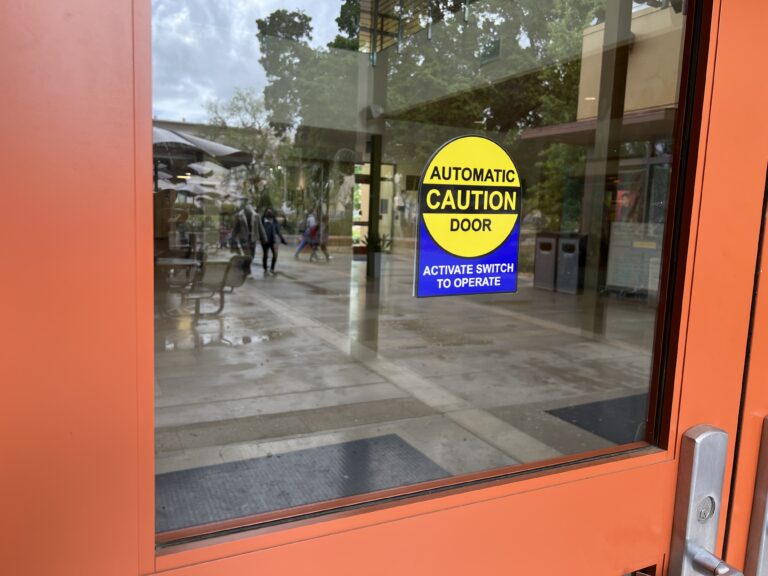
The layout of other spaces on campus may not be accessible for students with physical disabilities. Members of the Editorial Board have noticed that there are tables in buildings that a person in a wheelchair would not be able to use due to chairs built into the floor. Further, accessible entrances are often located in the back of buildings, in inconvenient areas or require traversing uneven pathways. 

In the words of a representative from the Autism and Neurodiversity Community from an interview with The California Aggie in 2020, “It’s really telling when, say, you have the wheelchair accessible entrance out in the back of a building along with the trash and the freight.”

The members of our community with such disabilities should not be disregarded in the classroom or anywhere on campus. 

There have been multiple efforts pushing for increased accessibility on UC campuses in recent years. A UC-wide coalition for disability rights created a “Demandifesto” in July of 2020 that identified problems with the infrastructure on UC campuses and the issue of only meeting ADA standards, rather than looking for ways to create the most accessible campus possible for all students. Last month, Senate Resolution #25, drafted by the ASUCD Disability Rights and Advocacy Committee, was passed by the Senate table. The resolution notably demands that instructors grant students all accommodations approved by the Student Disability Center (SDC), as they must in accordance with the ADA.

It is essential that our instructors and administrators listen to those advocating for disability rights. As the resolution states, students with disabilities “have worked and continued to work hard for their educational goals, [and] giving them grief about accommodations only hinders those goals and adds to the systemic ableism that is rampant in higher education.”

The administration must prioritize those with disabilities when making decisions about the UC Davis campus and include people with disabilities in these conversations. It’s critical for construction and renovations to increase accessibility, rather than to just meet ADA standards. 

In terms of obtaining accommodations, the SDC serves a vital role on campus. That said, the center has its limitations. It can be difficult for students to have a record of their disability if they lacked health insurance before attending UC Davis or could not afford diagnostic assessments associated with their disability; assessments for autism, for example, can cost between $2,400-$3,200

Thus, not all students with disabilities will be registered with the center. Instructors must provide students with the accommodations they need and be understanding of each student’s situation.

It shouldn’t have to be said, but the campus environment should promote equity for all students. And though administration has the largest role in improving campus accessibility, it’s not only up to them: organizations, individual students and instructors can all contribute to making a more inclusive environment for people with disabilities.


Written by: The Editorial Board


Non-binding ballot measure eliminating student fees that fund athletics programs to be placed on spring 2022 election ballot

ASUCD Senate discusses university policy about referenda for the athletics portion of student fees 

By KAYA DO-KHANH — campus@theaggie.org

On April 14, ASUCD Senate passed SB #68 and SB #69, which places a non-binding ballot measure on student fees for university athletic programs on the spring 2022 election ballot. When the elections begin on May 9, students will be able to vote on whether or not they want to continue paying $571.41 in annual fees that goes toward funding UC Davis Intercollegiate Athletics through the Student Activities and Services Initiative (SASI) Fee and the Campus Expansion Initiative Fee (CEI). 

Voting member of COSAF and fourth-year history major Calvin Wong has been pursuing the referenda since the summer of 2021. He said his involvement with the issue is primarily because of the context of the discontinuation of the university’s physical education (PE) program. 

In the 1990s, the SASI fee was put into place to help fund athletic programs, which came with the promise of an athletics program with multiple sports and other benefits such as a credit-bearing physical education program, according to a petition to save the UC Davis PE program in 2020. In winter 2021, the PE program was cut

Wong said that with the termination of the PE program and since the fees had not been voted on in 20 years, he wanted to have a revote by the student body. 

“[I] saw this connection between the SASI and CEI and our PE program and how because we no longer have the PE program, it’s really difficult to justify why we’re continuing to pay […] for athletic operating expenses that don’t benefit the 98% of students on this campus that are not student-athletes,” Wong said. 

With this referendum, Wong stated that his main goal is not to cut athletics funding but to re-establish the credit-bearing PE program, which would justify the fees. The ballot measure states that “Yes” vote “may also result in one or more of the following: student leaders may use an affirmative result to negotiate the return of the credit-bearing Physical Education program.”

“Fundamentally, why I started all of this was to give ASUCD a stronger negotiation ground to be able to bring back the PE program,” Wong said.

ASUCD President Ryan Manriquez stated that there are many fees that many students are not aware that they are paying, and with the SASI and CEI, he saw the inequities of students paying fees for things they might not have access to. 

“I certainly use myself as an easy example; as a student with a disability, I’m paying into athletic scholarships that I will never be able to access,” Manriquez said. “But it’s not just about that; it’s about [how] every other section of that fee is something that I can access, like the Coffee House [and] the Student Health and Counseling Services. There are other things that I am paying into within the fee that I can benefit from and I can access whenever I want, but for athletics, it’s not the same.” 

According to UC Davis Director of News and Media Relations Melissa Lutz Blouin, impacts of the elimination of athletic fees from SASI and CEI on athletic programs would include athletic program cuts, lower-level competition and layoffs and maintenance deferral on venues used by club sports and students such as the Hickey Gym, track and the beach volleyball courts. 

“Five student fees — including SASI and CEI — accounted for $24.9 million, or 66%, of total funding sources in 2020-21,” Blouin said via email. “This percentage of student institutional support is in keeping with other Football Championship Subdivision schools — at some of these schools, that percentage is included in tuition instead of fees.”

With the ASUCD leaders having worked on the referenda for a year and the students most familiar with the topic set to graduate this quarter, the leaders said they wanted the student body to vote on the referendum this spring. However, the university’s referendum policy does not allow for that as there was a section added to the campus’ Guide to Creating a Student Fee Initiative last summer, indicating that student fee initiatives could only be voted on in the fall. 

On March 31, ASUCD Senate passed SR #26, declaring the guide invalid, as UC Davis policy on Compulsory Campus-Based Student Fees and Referendum Elections states that “voting arrangements may be conducted by student governments according to agreed upon procedures” between ASUCD and the vice chancellor of Student Affairs, but ASUCD never agreed to the document, because it violates Article V of the ASUCD Constitution that states that at any time during the academic year, a referendum may occur through a special election. 

According to Manriquez, the fee referendum that was focused on an environmental sustainability grant was on the spring 2021 election ballot, and he put emphasis on the fact that it was seen in the spring. 

Chancellor Gary May told the Davis Enterprise that upon hearing the student government’s plans to place the referendum on the spring ballot despite it not passing the campus’ fee initiative guide, he could not promote the elections with a measure that did not comply with university policy. 

“UC Davis has supported the referendum process as it is laid out in policy and related guidelines, which have been followed by faculty, staff and students for years, even decades,” Blouin said via email. “We plan to work with current ASUCD leadership to review the guide, but that review process has not yet started. In the meantime, we will continue to follow the current university policy.”

Through the debate with campus administrators over election policies, ASUCD leaders have decided to place the item as a non-binding ballot measure, meaning that if it is passed, there will be no direct administrative action to eliminate the fees. Manriquez said he hopes that the ballot measure will spark conversation regarding the university’s spending of student fees and to generate student opinion on the issue. 

Wong expressed similar sentiments to Manriquez. 

“I think that it’s necessary to have these conversations about the university trying to exploit the student body’s ignorance, and that’s a lot of what I’m doing,” Wong said. “Indirectly, it’s like an educational initiative. I want to inform the student body about how student fees are being used and make sure that they understand everything that has happened.”

Written by: Kaya Do-Khanh — campus@theaggie.org

Barriers for students with disabilities bring learning inequities, according to two students

Students with disabilities continue to face accommodation barriers and discrimination on campus


By KRISTIN TRENT — campus@theaggie.org


While 3% of students on campus have a registered disability, students like Ryan Manriquez, a fourth-year political science and communication double major, still face inequities in communicating with professors after class due to accessibility barriers. 

Newly-renovated classrooms, such as Wellman 126, have seating that complies with the Americans with Disabilities Act (ADA) at the top row, with steps leading down to where an instructor lectures. Manriquez said he uses a wheelchair due to his spinal muscular atrophy. In Wellman, the lecturing floor is only accessed by stairs, making it impossible for many students with physical disabilities to go up to the professor after class and ask them a question, according to Manriquez. This issue is furthered because the professor may leave out the lower side door, he added.

Manriquez said he has tried to ask a question from the back of the classroom and has not been heard. 

“[Not] being able to ask questions to my professor after class like any of my peers brings inequities to learning,” Manriquez said.


Discriminatory Acts Against Students With Disabilities

Professors’ comfort levels vary in addressing students’ accommodation needs at UC Davis, according to Manriquez and Sarah Theubet, a fourth-year communication major and the chair of the ASUCD Disability Rights Advocacy Committee (DRAC). The Student Disability Center (SDC) is in charge of processing and granting accommodations to students, which are then sent to their professors. 

While Theubet said she has encountered a professor who refused to address her accessibility needs pertaining to course materials, Maniquez said other professors have been more flexible in his experience.

Discrimination against students with disabilities is a violation of section 504 of the Rehabilitation Act of 1973 which provides free appropriate public education to students with disabilities and is enforceable upon any organization that receives federal financial assistance from the U.S. Department of Education. 

The center can help ensure that academic accommodations are being enforced, according to Jennifer Billeci, the director of the SDC. She encourages students to reach out immediately to their SDC specialist if they encounter difficulties. 

Theubet is immunocompromised, and said she has experienced difficulty attaining appropriate accommodations through the SDC for remote learning. She contracted Epstein-Barr virus as a child, compromising her immune system and lacked insurance for proper treatment  from a doctor. As a result, she does not have documentation of the disease that has rendered her immune system vulnerable and cannot receive the remote learning accommodation which allows her to view lectures recorded through the SDC.

“We are being told to go to different schools, to take quarters off and drop classes because teachers do not want to make classes accessible,” Theubet said.

Billeci encourages students to request accommodations even if they do not have proper documentation of their disability. The SDC will partner with students to help gather historical information and supply them with provisional services in the short term with the intent of providing accommodations in the future, according to Billeci. 


Outdoor Accessibility Barriers

Barriers to an accessible campus extend past lecture halls. Theubet also manages type 1 diabetes that, due to its late diagnosis, has caused visual impairments. She finds that navigating campus at night is especially challenging because of Davis municipal lighting codes that aim to decrease light pollution. 

Theubet has walked into low-hanging trees, which she said makes her feel unsafe on campus. Cracks in the sidewalk also present a hazard, as Theubet uses a cane that has gotten stuck in them and caused her to trip. Additionally, due to her visual and mobility impairments, Theubet uses the bus to commute to school, although she experiences anxiety due to crowding and her limited vision. 

“[Campus] is not a safe place for me to go,” Theubet said.


Proctored Exam Inadequacies

The use of online proctored tests continues to be a barrier for students with disabilities, according to Theubet and Manriquez. 

Manriquez shared a specific instance when his class required him to take a proctored exam. Using online testing software, the exam proctors asked Manriquez to lift his laptop as a pre-test check. He could not perform the task as a result of his disability and had to wait for approval of this change to the testing requirements, which he said caused him to feel unfit for the university environment. As Manriquez waited for approval to take the test, he said he found himself questioning his belonging at the university. 

Theubet said she experienced similar barriers using proctored online testing; she was told by the proctoring service that she could not use her screen reader or scratch paper. 

“I ended up failing the exam because they would not give me my accessibility needs,” Theubet said.


A Future Forward

During an ASUCD Senate meeting on April 7, SR #25, a bill drafted by DRAC, was approved by an 11 to one vote. The resolution demands that professors accommodate all students with disabilities in compliance with section 504 of the ADA. 

Manriquez believes that his position as ASUCD president can help further the dialogue about disability advocacy. 

“I ran [for ASUCD President] in 2020 […] because I saw a lack of representation in the association,” he said.

According to Manriquez, more disability topics and policies have been addressed at the administrative level this year. However, he still believes there is much work to be done. 

“Prioritizing our mental health is just as important as prioritizing our physical health and that should definitely be included in the conversation about accommodations as well,” Manriquez said.

Additional work can be done to address accessibility inadequacies towards buildings like the testing center, which lacks accessible pathways, Theubet said. Because it would cost more than the yearly budget for campus accessibility improvements, future construction projects should ensure accessibility for all students, according to Theubet.

“Accessibility should not be an afterthought,” Theubet said.

Furthermore, with most buildings on campus only having accessible entrances on their backs, Theubet believes that in order for accessibility to be truly equitable, entrances should be equally accessible. 

“We should not be hiding our disabled members,” Theubet said.


Written by: Kristin Trent — campus@theaggie.org


UC Davis to hold its first-ever ASUCD Pride Festival on June 3 

The ASUCD Pride Festival will celebrate the LGBTQIA community at the Quad with vendors, food, activities and live music 


By KAYA DO-KHANH — campus@theaggie.org


On Friday, June 3, ASUCD will host its first-ever Pride Festival. The festival is a celebration of the LGBTQIA community on campus, and it is open to UC Davis students, as well as individuals from the greater Davis and Sacramento community. The event will take place at the Quad from 3 to 7 p.m. 

Before second-year political science major and Pride Festival Board Chair Ashley Chan was the ASUCD Gender and Sexuality Commision chair, the previous board chair had planned on holding a pride event, but after COVID-19 hit, such a large-scale event was no longer possible. According to Chan, when she was appointed as the Gender and Sexuality Commission Chair, she made it a priority to hold a pride event if feasible. 

“I made it clear in my confirmation hearing that if the pandemic allowed for it, if the public health situation allowed for it, I wanted a pride event,” Chan said. “At first, I thought maybe a parade would be the way to go, but I thought about it, and a pride festival makes more sense, because it allows for the ability to honor LGBT businesses and help them out, especially since they’ve been so hard hit in the pandemic.” 

The first two hours of the event will include a variety of local businesses owned by queer and transgender individuals serving as vendors, and there will be different planned activities. Some of the vendors will sell pride-related products like pronoun pins, jewelry and stickers. The second half of the event will have live performers and musicians.

“I’m excited to see our community supported, to see people come to our event because they feel represented, they feel cared for, they’re looking to get something out of the event,” said Gracyna Mohabir, a fourth-year economics and environmental policy and analysis major and the co-chair of the Pride Festival Board. “I feel like with the pandemic, we’ve been robbed of the spaces that queer communities usually share at pride events.” 

The ASUCD Pride Festival Board has a goal of connecting students to resources on campus and in the area, providing access to housing and mental and sexual health resources like the LGBTQIA Resource Center, according to Mohabir. Additionally, the board has reached out to organizations in the City of Davis such as the Davis Phoenix Coalition, which puts on the Davis Pride event each year. The board hopes to promote open discussion about topics that are not often addressed, like overall health as a queer or transgender person. 

“I’m really excited that we have a group of diverse individuals who are a part of the queer and trans community on our board,” said third-year American studies major and board member Emma Bishoff. “I think it’s really cool that this is run by students for students.”


Written by: Kaya Do-Khanh — campus@theaggie.org


Sacramento clears long term encampment for people experiencing homelessness, community shares thoughts 

Activists call into question of the legality of the move after Sacramento makes a deal with property association


By CHRIS PONCE — city@theaggie.org 

The city of Sacramento is facing pressure after clearing an encampment for people experiencing homelessness that was located at the area of Howe Avenue and Fair Oaks Boulevard. The area of the encampment was located on public land, and the city was restricted from clearing the encampment due to the Martin v. City of Boise decision made by the 9th Circuit Court of Appeals. The court decision states that cities are required to offer people experiencing homelessness housing if they are living on public property and has stopped the city of Sacramento from clearing the camp in the past, according to a statement from the city.

According to the Martin v. City of Boise court decision, the government cannot criminalize sleeping on public property for people experiencing homelessness. 

 “The panel held that, as long as there is no option of sleeping indoors, the government cannot criminalize indigent, homeless people for sleeping outdoors, on public property, on the false premise they had a choice in the matter,” the court decision reads.

The city of Sacramento has been accused by the Sacramento Homeless Union via a Twitter post of breaking the law for its clearing of the encampment. The post stated, “Stop wasting so much time and money on avoiding Martin versus Boise and actually implement the solutions needed.”

The Office of the Sacramento City Manager declined to make a statement on April 20 regarding the legality of its decision to The California Aggie. Instead, they referenced official statements that the city of Sacramento has made in response to the encampment over the last few months. According to a statement made by the city, Sacramento was prohibited from clearing the encampment due to Martin v. City of Boise. 

The statement on the city website acknowledged its limited power in clearing encampments stating, “At present, there are a greater number of persons experiencing homelessness in the City than there are beds in shelters. Consequently, the City may not criminally enforce a law that prohibits camping or sleeping on all public property.” 

However, over the past few months, the city has shared its interest in clearing the encampment, according to another statement released on Tuesday, Feb. 8.

“The frustration of those whose homes or businesses are impacted by the issues arising from encampments is real and legitimate,” the press release read. “We understand the desire for public agencies to take swift and decisive action to resolve these issues. However, the fact is recent court cases now require cities to follow strict protocols when addressing homeless encampments.” 

UC Davis Political Science Assistant Professor Adrienne Hosek commented via email about Sacramento’s increasing pressure to sweep encampments and the uncertainty of the situation.    

“In Sacramento, the city council and Mayor Steinberg have come under increased public pressure to remove homeless encampments,” Hosek said via email. “At the same time, the mayor’s proposal to construct homeless shelters in all Sacramento neighborhoods has faced stiff opposition from residents, particularly from more affluent neighborhoods like Fair Oaks. I’m not sure where things stand at the moment.”  

In the same statement made by the city on Feb. 8, the city invited the Sacramento District Attorney’s Office and Sacramentos Sheriff’s Office to get involved. The city announced in a statement made on April 7, four days before the clearing, a deal was made between Sacramento and Howe and Fair Oaks Property Owners Association. This deal allowed Sacramento to clear the encampment. 

“The City has entered into a lease agreement with this group and anticipates transferring the property to them by mid-April after certain requirements are met,” the statement read. 

Paula Lomazzi, a member of the Sacramento Homeless Organizing Committee (SHOC), shared their thoughts regarding the sweeps via Facebook Messenger. According to SHOC website, the Sacramento Homeless Organizing Committee aims to share the voices of people experiencing homeless. 

“Those swept are rarely given any alternative, such as housing, and are merely displaced into another equally illegal and unwelcoming neighborhood” Lomazzi said. “Or they are forced into hiding so far from public view that service providers will never be able to help them.” 

Esteban Rodas, a 28-year-old resident from Elk Grove, shared their perspective on the matter. Rodas grew up experiencing homelessness and believes that while encampments can increase crime rates, clearing the encampments is never justified and causes more harm than good. Rodas shared their unique perspective via Reddit messaging.   

My family was formerly homeless and I spent most of my youth living in a car,” Rodas said via Reddit messaging. “What does clearing a camp accomplish? People are displaced, they lose their sense of community and safety and once again feel like society does nothing but look down on them. What hope is being offered to them?” 

Rodas also mentioned the good that comes with encampments, such as easier access for volunteers to help those experiencing homelessness.

“Tent cities also make it easier for volunteers to give food or attend to the needs of the homeless,” Rodas said via Reddit messaging. “And a final observation? It’s always the poor areas that have to put up with these tent cities. The rich neighborhoods–which incidentally tend to fight tooth and nail against anything that would actually help solve this crisis–always remain insulated from this. The entire thing is disgusting.”


Written by: Chris Ponce — city@theaggie.org 


Guest Column: The Spring 2022 ASUCD Presidential Election will be uncontested thanks to your student government

By STEPHEN FUJIMOTO — ssfujimoto@ucdavis.edu

This quarter, like many spring quarters preceding it, elections for the president and internal vice president of ASUCD are scheduled to be held. However, unlike recent elections, this race will be uncontested — and it is clear to me that our elected student leaders are unfortunately at fault.

While many students here on campus are unaware of what each student government role does, both the president and internal vice president have many significant responsibilities and opportunities. The ASUCD president is able to veto legislation passed by the ASUCD Senate, has a vote on COSAF (an advisory body on student fees) and, notably, is the only voting student in the Academic Senate, the faculty body making decisions about course, academic instruction and policies that affect students. The ASUCD internal vice president leads the ASUCD Senate (holding a vote in the event of a tie) and chairs the Personnel Committee, allowing them to influence decisions about the ASUCD workplace and pay that affect hundreds of ASUCD student workers and volunteers. Both positions also have serial meetings with Chancellor Gary May and top administrators as well as being part of the team that crafts the annual ASUCD budget of around $15 million, allocating where revenue from student fees should go. 

Both roles are given these responsibilities and opportunities to speak for students on the premise that they are elected by their fellow students and that they are who the majority of students want in these roles. These are not roles students should win by default or because of procedural technicalities. But that is exactly what is happening this year.
Currently, the race for president and internal vice president takes place as follows. Two UC Davis students form a ticket, one being a candidate for president, the other for internal vice president. They then must gather 400 signatures from the student body to get on the ballot. This number was increased from 250 signatures by SB#17, an amendment to the Bylaws that was passed by the Senate during Fall 2021. It is important to note that signatures are not equivalent to votes, as a signature is just an indication the signee wants the candidate on the ballot. After all, petitions must be signed toward the beginning of the election season, before students are able to fully consider platforms, watch candidate debates and ask candidates questions about their stances. 

This year, three tickets filed to run but only one was able to meet the signature requirement imposed by ASUCD Senate. We are not looking at a case where only one candidate was interested in running and therefore will win by default; instead, candidates were boxed out of running due to gatekeeping by a student government that has maintained this signature cap. Despite discussion amongst elected leaders about what the number of necessary signatures and the amount of time to collect them should be, the current policy that they settled on has brought us here. 

In one salient example of this, the Elections Committee unilaterally pushed back a deadline to submit a slate declaration to the Friday of Week 4 in direct violation of ASUCD Bylaws (see: Section 1408(10) which says that the Elections Committee must be notified “no later than the last business day of the third week in the quarter when the election is held” about all members running on a slate), a move that benefited those who formed a slate. However, when it came to the deadline for petition signatures, the Election Committee did not find it in themselves to violate the bylaws again and push back the deadline. Such a move would have provided more time to collect signatures and possibly resulted in more candidates getting on the ballot. I find it unsurprising, then, that the ticket that qualified was formed by two current student government members who also formed a slate. 

More importantly, there are steps ASUCD can currently take towards preventing the election for the next president and internal vice president being uncontested. If the current candidates for president and vice president care more about a competitive election than securing a position, they could choose to withdraw themselves from the race. In an absence of candidates for president and internal vice president, the ASUCD Senate could then call a Special Election, in which there can be multiple candidates running for these positions.

As of right now though, thanks to the choices made by our elected student leaders, our next president will have come to the position just because they were able to collect 400 signatures. They will be able to talk with faculty and administrators about important issues such as academic accommodations and student fees on behalf of students who were unable to compare their stances with other candidates. How can such a leader claim they speak for students if students were not given an alternative to vote for? Student representatives gain their mandate to speak for the body from votes, not signatures. 

As a student and voter, it is my firm conviction that I and my fellow students should have the opportunity to consider all interested candidates and choose which candidate will best represent our individual views and priorities. That choice does not belong to elected leaders but the people they claim to represent. I hope ASUCD student government will either recognize that or stop claiming they speak on behalf of students. 

Written by: Stephen Fujimoto — ssfujimoto@ucdavis.edu

Stephen Fujimoto is a third-year cognitive science and statistics double major and serves as the chair of the ASUCD Research and Data Committee. 

Disclaimer: The views and opinions expressed by individual columnists belong to the columnists alone and do not necessarily indicate the views and opinions held by The California Aggie.

Cache Creek Canyon Regional Park reopened, people able to make camping trips

The camping season runs from April 1 to Oct. 10


By SHRADDHA JHINGAN — city@theaggie.org


Recently, Cache Creek Canyon Regional Park, located close to Rumsey, CA, reopened all of its features. Though various parks reopened after May 2020, following shutdowns caused by the COVID-19 pandemic, Cache Creek Canyon Regional Park remained closed, according to an article from the Davis Enterprise.

However, after reopening all of its features this year, people have been able to make camping reservations, starting on April 1. This will be an option until Oct. 10, after which camping season for the year will end.

Though people are able to make walk-in reservations, they are encouraged to do so online, which is possible at least two days before the intended date of arrival, according to the park’s website. There is a maximum of eight people allowed per camp-site.

The park’s description provides a further insight into the park’s location, stating that it is located about six miles north of Rumsey, alongside State Highway 16. It has more than “600 acres of natural wilderness,” which ranges from pines, cottonwoods in grassland meadows and more.

“The Regional Park sits in the beautiful Cache Creek Canyon area, with peaks reaching higher than 2,200 feet in elevation,” the website reads. “The Regional Park is divided into three use areas: the Cache Creek Upper Park Site, the Cache Creek Middle Campground Park site, and the Cache Creek Lower Park Site. The three park use areas offer a range of activities such as white water rafting, rural hiking, kayaking, fishing, and nature walks.”

The Upper Day Use Park Site is often used for rafting during the summer, though cell phones may not work in that part of the park. The same goes for the Lower Day Use Site, although there are various trails around for people to go hiking. More detailed information can be found in the park’s information website.

Before making a reservation, campers should note that the park is closed on Mondays and Tuesdays during camping season, and no overnight camping will be permitted in this time period. 

With the opening of Cache Creek Canyon Regional Park, and others during the camping season, residents of Yolo County will be able to spend more time outdoors this spring and summer. One such program at UC Davis is encouraging students and members of the community to do so — Healthy Outside. 

Members of the UC Davis community are encouraged to spend more time outdoors under the program, and can share photos of them doing so in order to be eligible to win prizes. According to the website, this helps with mental and physical health.

“Most of our campus community missed the last two spring quarters at UC Davis,” said Stacey Parker, the Healthy Outside lead and UC Davis Arboretum and Public Garden director of public horticulture, in a news release. “It’s really quite a spectacular time of year, so we want to celebrate all that our campus and community recreational spaces have to offer.”

In a webinar by the UC Davis Arboretum and Public Garden, they highlighted the importance of spending time in nature. Additionally, they also described how nature should be something that is accessible for everybody.

“As I mentioned before, nature is a necessity that should be universal,” Arboretum Ambassador Cassie Eng said. “It’s extremely important to address these vulnerable communities in order to close the nature gap for all.” 

The webinar also noted that the UC Davis Arboretum features collections from places around the world. These include the East Asian Collection and Southwest U.S. and Mexican Collection.

“The collections at the Arboretum and Public Garden are diverse and representative of plants from all over the world,” Arboretum Ambassador Michelle Lester said. “In this way the Arboretum and Public Garden is demonstrating inclusivity with our biodiversity as well as making sure to highlight different cultures and then plants native to those lands.”

In a webinar, Dr. Jean Larson, who is the “director of nature-based therapeutics at the Bakken Center and the Minnesota Landscape Arboretum” spoken about the benefits of spending time outdoors, specifically in nature. In addition to being mentally healing, it can also help in forming a community, Dr. Larson said.

“There is scientific evidence that being in nature or even viewing scenes of nature reduces anger, fear, stress and increases pleasant feelings,” Dr. Larson said. “Exposure to nature not only makes you feel better emotionally, it also contributes to your physical well-being: reducing blood pressure, heart rate, muscle tension and the production of stress hormones.”

Ultimately, through the reopening of Cache Creek Canyon Regional Park, many residents of Yolo County can have more chances to get outside and enjoy the benefits of spending time in nature.


Written by: Shraddha Jhingan — city@theaggie.org


‘The Photographer’s Moment’ celebrates photography at every level

From novice to seasoned professional, the exhibit at Gallery 625 has a place for everyone


By CLARA FISCHER — arts@theaggie.org


When it comes to photography, many say that the modern age is undoubtedly unique. Gone are the days of having skilled professionals snap portraits with pewter plates and completely dark rooms. Now, almost anybody who has a cell phone has the capacity to snap a picture instantly and immortalize any given moment in time. 

“The Photographer’s Moment,” an exhibit by Joseph Finkleman, explores this concept and celebrates the joy in the everyday photographer.

“[Camera phones] allow a person to make a pretty image and not have to do anything beyond aiming the glass at what you want to record and push the virtual button at the precise moment in time,” writes Finkleman in the artist statement displayed at the exhibit.  

The installation, located in Gallery 625 at Yolo County’s Erwin Meier Administration Building, is a showcase of photos capturing photographers of all kinds, from professionals to amateur selfie-takers. Albeit not extensive, the assortment is effective at delivering its message. Something about the simplistic setup — and the almost inceptive feeling I got when I realized I was taking pictures of pictures showing people taking pictures — lets the photos stand for themselves, which is what the exhibit is all about.

“In general, every image we make, consciously or unconsciously, that image in some manner is utterly unique,” writes Finkleman in his artist statement. That idea comes through in the range of photos on display. From the shot of a bride and the photographer standing in the snow to the group of hikers posing with a selfie stick on a large rock, and even the blonde model posing in a silver sequined jumpsuit against a vibrant red backdrop, all of these seemingly different pieces have a common thread connecting them at their core. Each of the photographers pictured has a goal in mind: capture the moment that’s in front of them (or in the case of the selfie artists, behind them). 

It was also interesting to see the different perspectives presented in each photograph. There were a variety of ages and genders on display, each photographing a different subject. This shows how diverse the artform can be, if only given the opportunity to pick up a camera. 

Another thing worth noting is the location of the exhibit itself. Housed in an administration building located in downtown Woodland, admission is free to all, and there was no one there regulating entry or providing extra information when I visited. The pictures, along with the brief artist statement posted on the wall, speak for themselves. 

“The Photographer’s Moment” is open Monday through Friday from 8 a.m.- 5 p.m., and will remain open through May 31 — perfect timing for those who want to celebrate May as National Photography Month. 


Written by: Clara Fischer — arts@theaggie.org


The hidden power of Elizabeth Catlett

How the printmaker and sculptor explored the unacknowledged contributions of mothers of color


By CORALIE LOON — arts@theaggie.org


Content Warning: This article contains descriptions of violence which some readers may find disturbing.


April 15, 1915: The artist Elizabeth Catlett is born. If her name isn’t familiar to you, you are not alone. For those who do know about her, it is usually for her “intensely political art,” many in the form of lithographs (a type of hand-made print). But alongside her pieces dedicated to moments of the Civil Rights and Black Power movements, a different but equally important story emerges.  

Elizabeth Catlett, born in Washington D.C., began her career as an artist when she was denied admission to the Carnegie Institute of Technology because she was Black. Instead of backing down, she enrolled at Howard University, a historically Black research university in Washington, D.C., where she studied printmaking, drawing and sculpture.

After getting an MFA in sculpture at the University of Iowa, she spent time in the American South, where she witnessed the regime of Jim Crow-era segregation. For a brief amount of time, she was the chair of Dillard University’s art department in New Orleans. According to the New Orleans Museum of Art, she was devastated at the fact that many of her students were denied access to racially segregated art museums and “defied segregation orders” to take them to see Pablo Picasso’s paintings at the Isaac Delgado Museum. These experiences would greatly influence her political artwork later on.

In 1946, she moved to Mexico City, where she worked at “Taller de Gráfica Popular,” an artist and printmaking collective that “worked to better the social conditions of the working classes, the poor, and the dispossessed.” She became increasingly interested in printmaking, sharing a dedication to accessible and affordable art with others in the collective.

In her series of lithographs titled “The Black Woman,” she honors influential Black women in history, including Phillis Wheatley, Harriet Tubman and Sojourner Truth. “And a Special Fear for My Loved Ones” (1947), instead of a celebration, is a portrait of fear: the sketched body of a Black man on the ground, a noose around his neck.

In addition to the struggles of Black people in America, Catlett was also greatly influenced by Mexican culture through her creation of terra cotta sculptures, many of which show female bodies that resemble the large, muscular bodies in Diego Rivera’s paintings. Her experience with sculpting techniques led to a collection of sculptures that at first appear to diverge from her previous subjects, all titled the same thing: “Mother and Child.”

These sculptures span years and come in numerous styles and shapes, but they all display women of color as mothers, protectors and as hidden symbols of power. 

The mother in her 1956 “Mother and Child,” made of a pale and organic terra cotta, is detailed to exhibit “aspects of Black physiognomies” while also remaining anonymous, her body a generalization of motherhood, of the sturdiness and softness of a body whose job it is to keep another life going.

The intimacy of this sculpture, signaled by the mother’s down-turned head and inward posture, is challenged by her 1983 “Mother and Child,” where the mother is standing upright with her head raised. Both her posture and the sharp, geometric lines carved out of wood create a more powerful image.

Her other 1956 “Mother and Child” combines soft terra cotta with a pose that disrupts the one-on-one intimacy of her other mothers. The woman looks out at the viewer and holds the baby facing outward. In this sculpture, she both confronts the viewer and asks them a question: what do you expect of me? Among the stereotyped image of a mother and child, there is room for power, for purpose and for strength.

Through her many sculptures and portraits of women of color in motherly positions, Catlett confronts the inevitability of motherhood and challenges its need to exist separately from politics, social change and the more overt power she depicts in her other pieces. Standing alongside her political lithographs, her portraits of mothers and children acknowledge the joy, the difficulty and the pain of bringing a Black child into an unfair world and, most importantly, of not being acknowledged for your contribution.

In this way, her “Mother and Child” series is a symbolic culmination of elements of her own life: the combination of American and Mexican cultures, the multidimensionality of motherhood and the constant devaluation of the worth of Black women in politics and in personal life. She expertly explores each of these things, while returning through her title to a place of commonality, to the essence of what it means to be a mother and what it means to have a child.

In 1971, Catlett wrote: “Art for me now must develop from a necessity within my people. It must answer a question, or wake somebody up, or give a shove in the right direction–our liberation.” Every woman she paints or sculpts is a part of that liberation.

Elizabeth Catlett continued creating artwork into her 90s until her death in 2012. To this day, her art remains an example of power that knows no boundaries, and that can never remain hidden for long.


Written by: Coralie Loon — arts@theaggie.org