55.5 F
Davis

Davis, California

Tuesday, December 23, 2025
Home Blog Page 234

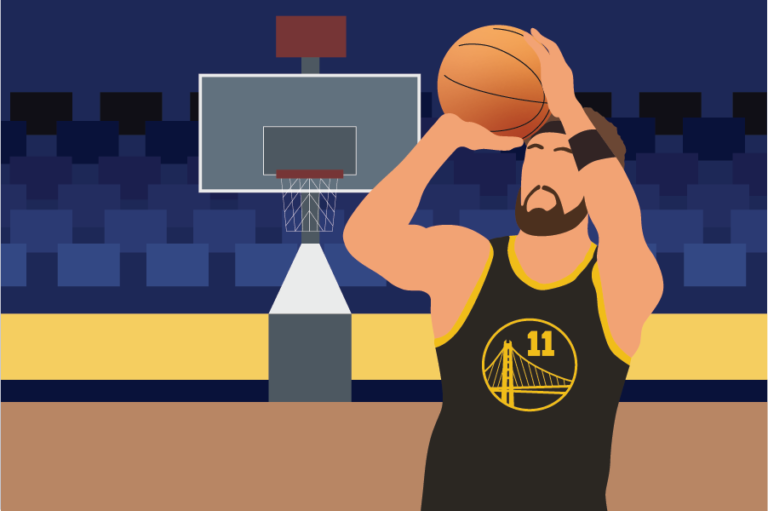
Klay Day reinvigorates the Golden State Warriors, their fans

Klay Thompson’s return means more than just basketball

By GABRIEL CARABELLO — sports@theaggie.org

On June 13, 2019, Golden State Warriors shooting guard Klay Thompson tore his ACL in Game 6 of the NBA Finals against the Toronto Raptors. This led to Thompson fully recovering from his major injury during the 2019-2020 NBA season. After recuperating from his ACL tear, many seemed hopeful that the three-time champ and five-time all-star would return during the 2020-2021 season. However, in November of that season, reports about Thompson sustaining an Achilles tear instantly pushed back his return, ultimately making Thompson miss two NBA seasons — a total of 177 games.

Fast forward to December 2021, news about a return — either later that month or early January 2022, started to circulate. Thompson’s return to the court was imminent. Many would say that the world changed so much since last seeing him play, and the Warriors nation was ecstatic.

Warriors fans couldn’t be more ready to see the other “Splash Brother” back in action. Peter Mazzotta, a UC Davis sophomore and Bay Area Native, was asked about the return. Mazzotta described the shooting guard’s comeback as “exciting.”

Mazzotta continued, “[I] missed seeing him [Klay]. It feels like a completed team. He was the missing part they needed.”

This sentiment was felt by many Warriors fans across the globe, displaying just how much Thompson’s absence meant to the longtime fan. He was more than just a player — he was a key part of their franchise’s history. Rumors settled on Jan. 8, as Klay Thompson took to Instagram to announce his comeback that on Jan. 9 against the Cleveland Cavaliers, Klay Thompson was set to make his season debut.

After over a two-year injury hiatus, Thompson finally laced up his sneakers and set foot on the hardwood. Scoring 17 points off 18 shots and snagging three rebounds, Klay was finally back in front of his home crowd. During the post game interviews Thompson couldn’t be more joyous to return. 

“I’m just so happy right now,” Thompson said. “I did not shoot as well as I wanted to, but I am just so happy that I can even look at the stat sheet and see my name there and all the stats again.”

The positive emotions Thompson felt from just seeing his name on the score sheet, spread throughout the Warriors fanbase. Issac Appiah, a Bay Area native, basketball fan and Warriors fan, summed up how he felt after seeing Thompson make his debut. 

“I’m really happy to see him playing,” Appiah said. It’s almost nostalgic since it’s been so long.”

This feeling of nostalgia exemplifies the sentimentality Warriors fans have with Thompson. He’s done so much for the basketball club and individually accomplished so much. It only makes sense that a fan would feel this way after not seeing him play for two seasons. 

Thompson’s return is meaningful for Warriors fans from an emotional standpoint but now also adds another element to a Warriors team that is off to a great start this season

“Curry will have a high caliber three-point shooter to take pressure off him,” Appiah said.

With Thompson back in the line-up, everything seems good for the Western Conference contender Golden State Warriors. However, some questions still loom.

 Thompson said during his debut post-game interview that he did not shoot as well as he wanted to. Thompson still needs to get back into NBA game shape. Thompson is known for his shooting, but also as a great defender. Being in game shape is crucial for good defenders. Also, scoring 17 points off 18 shots isn’t exactly efficient, but after his long layoff, it is going to take time and patience before he gets his legs under him again. Another thing the Warriors must figure out is what his comeback means for the other players. Those who helped the Warriors get to where they are now like Jordan Poole, who stepped up during Thompsons absence, and has played well so far this season — how will the team maximize his role with another player taking shots. Will Thompson be able to relieve pressure off of Curry soon? 

Playoffs are still a while away, so there is ample time for the Warriors to work out these chemistry kinks. Warriors fans are now eager to see more of the reunited Splash Brothers and what’s to come for their favorite team, as Klay’s return marked a long time coming for everyone — the NBA included.

Written by: Gabriel Carabello — sports@theaggie.org
UC Davis nursing students enhance interpersonal skills, clinical practices in intimate simulations

Three different simulation spaces at the Betty Irene Moore School of Nursing provide a plethora of real-life scenarios for nursing students to prepare and apply their clinical knowledge

By BRANDON NGUYEN — science@theaggie.org 

From tears and grief to newfound intimacies and growth, students at UC Davis’ Betty Irene Moore School of Nursing are placed into authentic, complex simulations to apply clinical practices learned in the classroom. As part of the nursing school’s curriculum, these dynamic simulations are created by faculty — sometimes even involving them as actors — to create potential real-life scenarios that nurses may encounter. 

Terri Harvath, a professor at the Betty Irene Moore School of Nursing and a nurse educator for over 20 years, is the mastermind behind developing simulations for the nursing students and has guided countless nursing students toward applicable real-life practices. 

“Clinical practice of tasks has always been a part of nursing education, but I would say in the last 20 years, we’ve really been looking at how to introduce simulation, and we’ve gotten more and more sophisticated over time with how those simulations can emulate real life situations,” Harvath said. “What we know about the research that’s been done in simulation as a part of nursing education is that the more authentic the experiences are, the more students learn and the more they grow in both their psychomotor and their interpersonal skills.” 

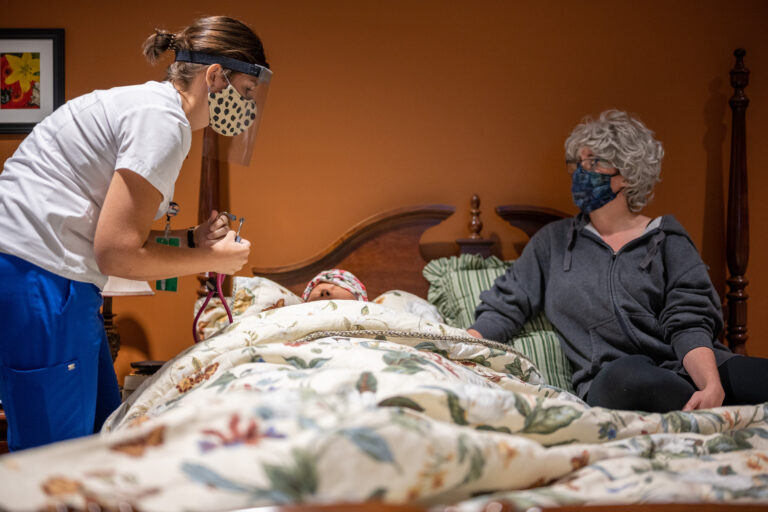
To reproduce real-life experiences, faculty have focused on creating an environmental atmosphere in which nurses would most commonly find themselves. In Moore Hall on the UC Davis Sacramento campus, there are three different simulation spaces. The first involves a setup similar to that of the inpatient hospital unit that looks like an eight-bed hospital ward. The second simulation space comprises a 15-room primary clinical care space that patients typically enter to see their primary care providers. Unique to the UC Davis campus, the last space has been deliberately set in a one-bedroom apartment that emulates the home environment as health care shifts more into the community to tend to elderly patients, according to Harvath. 

Megan Hansen, a communications and marketing specialist supporting several departments at UC Davis Health including the UC Davis Health Center for Simulation and Enhancement, has played the role of the partner of a dying patient in a simulation and reflects on the powerful experiences that simulations offer for both the students and herself.

End-of-life care and death can be such a taboo topic in American culture, so I’ve been impressed by how this training session handles those discussions while imparting valuable knowledge and information to the students,” Hansen said via email. “I was so impressed with the students’ reactions. They were so soothing and kind, one even asked if she could hold my hand. I felt cared for and their sincere care and concern was so evident to me.”

How the nursing students handled the simulations impressed Hansen, and she emphasized the importance of empathy in the health field.

“This [simulation] exemplified for me the types of warm, sensitive, caring and incredibly capable students we have at the nursing school,” Hansen said via email. “These are just the types of people we want out in the real world caring for our loved ones and us.”

The simulation Hansen volunteered to partake in involved a two-part end-of-life care situation that two nursing students immersed themselves in as the other students watched. The first part involved a woman in the hospital who decided to end treatment for cancer and go on hospice care. She was supported by her partner, which was the role that Hansen played. During this training, the two women discussed next steps with the care team. 

In the second part of the simulation, which was held in the one-bedroom apartment environment, a woman who was ill was in her final moments and died while the nurses were visiting. It was up to the nurses to tell the partner that she had died.

Emily Boone, a second-year graduate nursing student, was one of the nursing students in this same simulation who had to deliver the news of the recently passed patient to Hansen. 

“I had a lot of nerves going in, and I wanted to be someone who could provide a therapeutic space for a person going through a difficult time,” Boone said. “I went all in and was completely immersed. There’s a reason I want to be a nurse, but after this experience, I’m more sure of my purpose. I know how to be present and helpful, without being overwhelmed by emotion. I feel much better prepared when that moment inevitably comes.”

After simulations, students are led by faculty in intimate group debrief sessions to discuss their experiences and learn from each other. 

“The debrief sessions are where the magic really happens,” Hansen said. “These take place after the simulations are done and we discuss what worked and what didn’t work and how to make improvements. This is where faculty, staff and students share their experiences and knowledge, and in this session everyone was so willing to be vulnerable, to cry, to discuss those difficult topics in a safe, nonjudgmental environment.”

With countless scenarios instrumental to students’ growth as nurses, Harvath has high hopes for the impact simulations can have on students not only in the nursing field but also various medical fields.

My hope is that we expand the use of simulations, and what we know from the research is that students can actually use 50 to 75% of their clinical learning and simulation and they do just as well or better than students who are in traditional clinical experiences,” Harvath said. “And again, it’s because these are such potent and well-designed learning experiences. The pandemic is especially helping us understand that we need to be able to engage students in clinical learning outside of the clinical setting, and I think simulation really allows us to give that potent clinical learning experience, so my hope is that we use more of it because it’s a very intentional approach to curriculum and clinical design.”

Written by: Brandon Nguyen — science@theaggie.org 

UC Davis researchers use high-tech methods to improve agriculture in the face of climate change

0

New project hopes to combat effects of climate change in African countries by combining technology and agriculture

By MAYA SHYDLOWSKI — features@theaggie.org

UC Davis researchers in the College of Agricultural and Environmental Sciences and College of Engineering are using plant genetics, artificial intelligence and three-dimensional (3D) modeling to develop new varieties of crops that will be able to withstand future climates. 

GEMINI stands for GxExM Innovation in Intelligence for climate adaptation. The acronym GxExM is a common abbreviation in agricultural science that relates plants’ features as a function of genotype, environment and management. The team is focusing on three major crops grown and consumed in various African countries: common beans, black-eyed peas, also known as cowpeas, and sorghum. The team hopes that with the help of this new technology, they will be able to predict the effects of future and ongoing changes in climate and then develop varieties that will be best suited to grow in those conditions. To do this, three researchers are utilizing their different strengths to tackle this issue.

Christine Diepenbrock, an assistant professor in the Department of Plant Sciences at UC Davis, has a lab that focuses on abiotic stress tolerance and improving the nutritional quality of crops through understanding crops’ genetics and genomics. Abiotic stresses are nonliving conditions like drought and high temperatures that may reduce a plant’s function. These are the types of stresses that the GEMINI project aims to address, especially as the world’s changing climate puts new and evolving stresses on agriculture

“I am on what we call the pre-breeding and genetics side of the project, where we are working with breeding partners in West and East Africa,” Diepenbrock said. “We are partnering with breeders in Senegal, Nigeria, Uganda and Tanzania on ways to further inform and improve the sorghum and grain legume, namely the common bean and cowpea breeding pipelines.”

Breeding is a huge industry worldwide, and working on staple crops like sorghum and grain legumes is crucial for feeding the world now and while the climate changes and population grows.

Meanwhile, Mason Earles, an assistant professor in the Department of Biological and Agricultural Engineering and Department of Viticulture and Enology, is working on a different aspect of the project. Earles is focusing on artificial intelligence (AI) sensors to speed up the existing phenotyping process for new potential crop varieties.

“The process of making measurements of different traits that are potentially desirable for breeding is called phenotyping,” Earles said. “That phenotyping process usually consists of some form of sensors, whether that be cameras […] or other types of sensors that measure various things that could be desirable. You want to find a way that you can speed up that phenotyping process.”

The way they want to speed up phenotyping is through machine learning and AI. Although most people do not think of agriculture as a high-tech industry, AI has helped growers and scientists improve the industry in a variety of sectors, including pest management and harvesting — which helps to feed the world’s growing population and makes it easier on farmers. Earles’ sensors will do that too. Using AI sensors will cut down on the time and cost of labor, as well as help assess traits that require special machines to measure.

Brian Bailey is the third leg of this team and an assistant professor in the Department of Plant Sciences, working on 3D modeling to predict how all the changing climate conditions will affect crops and what traits will be most resilient and necessary as the world faces these changes. 

“My portion is about developing the modeling, specifically biophysical modeling tools, to complement and enhance some of the things that Mason talked about,” Bailey said. “There’s really two veins of that. One of them is helping to more accurately and across a wider range of conditions extract traits from sensor measurements.”

Bailey is essentially using modeling to predict how different traits will affect the measurements from the AI sensors that Earles is working on. The modeling will also help predict how plants will react under different climate conditions that are expected to become the norm in these African countries.

“The other part is about predicting the future,” Bailey said, “so being able to say which traits will be advantageous or what we might breed for the future.”

Diepenbrock said that combining her breeding and genetics knowledge with the AI sensing from Earles and the 3D modeling from Bailey gives the GEMINI project a lot of promise. 

“I think that the tools that Brian and Mason bring to the table, separately and in collaboration with our team, is a really interesting combination,” Diepenbrock said. “It’s something new coming to the breeding process. I’ve worked with a different type of crop modeling, but I think the approach that Brian and the team have is very unique and gives us a lot of strengths that are going to be really interesting to deploy.”

The three researchers are also working with collaborators around the world to aid them in their endeavor. One of these is CGIAR, a global research organization whose mission is to build a “food-secure future” through research developments and collaborations. They have a large network of breeding and agronomy centers around the world that work on breeding crops to have increased abiotic stress tolerance. While the organization works on abiotic stress tolerance in staple and specialty crops, Diepenbrock said they have done some work on increasing the nutritional value of crops as well. Members of CGIAR will help test the new technologies as the GEMINI team develops them. 

In the U.S., the GEMINI team will collaborate with UC Riverside and the USDA’s Agricultural Research Service (ARS). Researchers at UC Riverside have conducted experiments and published a notable amount of work specifically on black-eyed peas, one of the crops GEMINI focuses on. The USDA-ARS has collected information and data on the common bean, another crop that the project is targeting. With the help of the various organizations and sources that will collaborate with the team, GEMINI has huge potential to make a big contribution to agricultural productivity and sustainability in West and East Africa.

So, why these crops and why these countries? While these crops may not be commonly consumed in the U.S., they are staple crops in other countries. Sorghum is a grain crop, part of the grass family like wheat and oats. Its grains are good sources of protein, iron and zinc, and it is commonly grown in West African countries instead of other cash crops like corn because of its ability to grow in dry and hot conditions. Sorghum stalks can also be used as fiber for materials. 

The black-eyed pea, or cowpea, is a legume crop that is popular in many African countries. It is high in protein and also withstands hot, dry conditions. Legume crops have additional benefits as they can fix nitrogen in the soil with the help of beneficial soil microorganisms. Similarly, common beans are also legumes and high in protein, and according to the USDA, the common bean is one of the most important food legumes around the world. All three of these crops provide consumers with high nutritive value, especially in terms of carbohydrates and proteins. These crops have the potential to not only feed but also nourish the people of these countries as long as agriculture can keep up with the growing population and withstand the changing climate. 

Many hot, dry countries in Africa are already feeling the crippling effects of climate change. According to the United Nations, West Africa is considered a “climate-change hotspot” that will experience the most dramatic effects in the near future. Growers are already dealing with rising temperatures and drier seasons, which are hurting crop growth and yield which will continue to impact food security and nutrition for people in those and surrounding areas. Breeding is one important tool for being able to keep yields of these crops high and growing efficiently now and in the future. 

New technologies and collaborations will be needed to feed people globally with the ever-changing conditions of the world, and the GEMINI team said they believe that, through collaborative partnerships, their work can have lasting effects on agriculture, food and nutritional security in Africa and beyond. 

Written by: Maya Shydlowski — features@theaggie.org

The heartwarming history of ‘Sesame Street’

This loving community of humans and puppets from all walks of life promotes comprehensive early education for all

By ANGIE CUMMINGS — arts@theaggie.org

Recently, an adorable red monster went viral on Twitter for his feud with a rock, reminding many of the quality entertainment they consumed almost daily as children. With the world-famous cast of muppets — including Elmo, Big Bird, Cookie Monster, Oscar the Grouch, Bert and Ernie and many more — “Sesame Street” has captivated audiences (both toddlers and adults alike) and provided educational entertainment across the U.S. for over 50 years. 

Besides offering an enjoyable TV show, “Sesame Street” was founded on basic principles that at the time of its creation in 1969 were almost revolutionary. Instead of children’s programs revolving around selling breakfast cereal or the newest toy, the creators of “Sesame Street” (Joan Ganz Cooney and Lloyd Morrissett) founded their public access show on providing research-based education for all children. The show was actually created as an initiative to close the educational gap that began at the pre-K level for children in low-income families. 

In addition to the typical TV producers, writers and artists, the show had a team of developmental and educational researchers, child psychologists and other specialists to not only teach children their ABCs and 123s, but a myriad other crucial skills many would otherwise miss out on during these formative years. From skits of the muppets modeling conflict resolution to segments tackling abstract and difficult concepts like grief, “Sesame Street” has been helping children understand the world and people around them in a much deeper way than most TV. 

From the very beginning, the show has known the importance of having a realistic reflection of who is watching their content on the screen. In 1970, “Sesame Street” was banned by the Mississippi State Commission for Educational Television for being too integrated. Unlike the majority of TV or movies, the diversity on “Sesame Street” has always been unapologetically realistic. Besides having a diverse human cast that appropriately reflects the people who live in this country, the show has continually brought in muppets experiencing things many children do but never get to see represented in the media. 

We all know the phrase “representation matters,” and when it comes to a show watched by the majority of this country’s population in their formative years, representation is a crucial part of identity formation and acceptance. In 2015, the show introduced a four-year-old muppet by the name of Julia, who was their first autistic character, providing neurodivergent children with an example of someone like them being accepted and understood, rather than ostracized or made the butt of a joke as so often used to be the case in entertainment. 

There are segments and characters that help children understand familial homlessness, dealing with a loved one affected by drug-addiction and incarceration — topics typically entirely avoided by anything made for children, branding them unspeakable or shameful. Teaching about the things thousands of children and adults go through and helping them get through it is what “Sesame Street” is all about. The show’s history and continuing legacy inclusion and accessible education fosters a renewed sense of hope for future generations of audiences who are gaining skills that some adults have yet to learn. 

Written by: Angie Cummings — arts@theaggie.org

Students call for termination of employment of UC Davis orchestra conductor

Previously, Christian Baldini was temporarily removed without pay after substantiated allegations of sexual harassment toward an undergraduate student

By JENNIFER MA — campus@theaggie.org 

Content Warning: This article contains descriptions of sexual harassment which some readers may find disturbing.

In September 2017, a university investigation was conducted and found that Christian Baldini, the UC Davis symphony orchestra conductor, sexually harassed a female undergraduate student. Baldini was temporarily removed without pay for four months before returning to campus, and the undergraduate student left the university after the incident, according to an article in The California Aggie from 2018. 

In December 2021, a petition was created calling for Baldini’s removal. The petition states that the university should not wait for future misconduct to pursue dismissal. As of Jan. 21, 5,888 people have signed. 

“Baldini creates an unsafe and uncomfortable environment for UC Davis students, causing many to avoid joining orchestra,” the petition states.

Alumna Alana Joldersma shared her experience as a member of the orchestra prior to the allegations and the university investigation in 2017. 

“I joined the UC Davis symphony orchestra my freshman year,” Joldersma said. “After I competed [in the concerto competition] and then before a concert in spring quarter, we had a few hours of downtime from rehearsal until performance. Baldini came up to me and was like ‘Hey, you did a great job performing at the concerto competition, and I just want to commend you on doing that as a freshman. Would you like to talk about your results, would you like any feedback?’” 

Instead of talking backstage, Baldini took her to his dressing room and closed the door but did not lock it.

“During the 20 minutes I was there, we didn’t talk about my performance,” Joldersma said. “He was just asking me a bunch of weird, personal questions that didn’t pertain to my performance at all. Like where I’m from, what ethnicity I am, do I have a boyfriend, what does this tattoo on my arm mean. Definitely made me feel uncomfortable. I do remember him taking my arm to point at a tattoo.”

Joldersma ended up not joining the symphony orchestra the following year; she attributes it to multiple factors, including a busy schedule and this experience. 

“Maybe what he did was not intentional, maybe he can blame it on whatever he wants to blame it on, but, at the end of the day, him being here, if it creates an environment where students are uncomfortable and don’t want to join the orchestra or drop out of UC Davis, that’s not fair,” she said. 

A first-year undeclared major, who was granted anonymity to protect her identity, also shared her experience, which occurred after the university investigation. She previously auditioned for orchestra but afterward decided not to join because of time and money constraints.

“I told [Baldini] that I didn’t want to do [orchestra] and my reasons,” she said. “I found it really strange that he still came to me after and said ‘Even though you’re not playing proficiently yet at a college level, we can take you in and develop yourself later on.’ I told him no on that, but I gave him my musical background information, just basically said my mom’s already put in so much money and effort into musical education. And he started to say, ‘You’re so talented, I don’t want to lose you.’”

According to the student, she found it odd that he said she was talented, as he had previously told her she was not playing proficiently. 

“That’s when he told me he would sponsor my lessons, like pay $100 out of the $300 required for 10 half-hour lessons,” she said. “I also told my family and friends. There was this one girl who I knew, she was in the school orchestra and she felt scared for me. She said it was like he was trying to get a handle on me, so I didn’t [accept the offer]. I just didn’t want anything else to do with him; I didn’t reply to his emails after that.”

  The student said she signed the petition because many music majors are required to take classes that he teaches, and she does not want other students to feel uncomfortable like she did.

While Baldini declined The Aggie’s interview request, he directed The Aggie to Melissa Lutz Blouin, the director of news and media relations, who emailed a letter written by the university to ASUCD on Jan. 3.

“Reopening the investigation without new information would not result in a changed outcome, nor were there any deficiencies in the original investigation that would merit reopening it,” the letter states. “Moreover, as a public institution, we are not legally permitted to discipline an employee twice for the same conduct. However, we are firmly committed to ensuring an environment free of sexual harassment and will promptly address new allegations of sexual harassment involving Professor Baldini, including commencing an investigation if appropriate.”

Dana Topousis, the chief marketing and communications officer at UC Davis, shared the same letter with The Aggie when approached for comment.

Written by: Jennifer Ma — campus@theaggie.org

Students can contact the UC Davis Harassment & Discrimination Assistance and Prevention Program (HDAPP) to report incidents of sexual harrassment and sexual violence.

Additionally, the Center for Advocacy, Resources, and Education (CARE) provides free, confidential crisis intervention, advocacy and accompaniment services for all UC Davis student, staff, faculty and others who experience sexual violence in the context of a university program.

Other off-campus resources include empoweryolo.org for local resources and rainn.org, the nation’s largest anti-sexual violence organization.

UC Davis staff to develop plan ending fossil fuel use by late 2022

This plan is a big step forward for UC Davis, following a series of other actions and efforts to reduce on-campus emissions

By SHRADDHA JHINGAN city@theaggie.org

In a meeting held on Jan. 4, Chancellor Gary May directed staff to create a plan to eliminate the use of fossil fuels at UC Davis by the end of the year. This decision comes after members of the Davis community had signed a petition encouraging UC Davis to end the use of fossil fuels as an energy source by 2030. 

Stephen Wheeler, a professor in the department of Human Ecology and who is also involved with Fossil Free UCD, the organization behind the campaign and petition, said that this new step forward will also “help lead all the UCs” and could make UC Davis the first college to completely end the use of fossil fuels.

The Fossil Free UCD’s FAQ page provides a background into how the approach to fossil fuels within the UC system has evolved over the years. According to the website, UC campuses were required “to reach 2000 GHG emissions levels by 2014, 1990 levels by 2020, and carbon neutrality eventually at an unspecified date.”

Then in 2013, Janet Napolitano, the UC President at the time, announced the Carbon Neutrality Initiative, which means that UC campuses committed to emitting a net zero of greenhouse gasses by 2025. For UC Davis, this process has been staged in “scopes”. 

Scope 1 emissions refer to “direct emissions from a source owned or controlled by an organization,” which at UC Davis are those from “campus operations,” according to UC Davis. Scope 2 however “are indirect emissions from sources that are owned or controlled by an organization’ for UC Davis these are purchased utilities, primarily electricity.” Lastly, Scope 3 emissions refer to “emissions from sources not owned or directly controlled by the university but related to campus activities.”

This was followed by faculty across all UC campuses voting to request UC Regents to end investments in fossil fuels, known as fossil fuel divestment, which the UC Chief Investment Officer approved.

As of 2020, $215 billion in investments were fossil free, however in order to meet the Carbon Neutrality Initiative goal by 2025, UC campuses would have to depend heavily on carbon offsets. Thus, climate activists aimed to completely end the use of fossil fuels across the UC campuses. 

The meeting held on Jan. 4 represents the most recent development in this process and is a major step forward for reducing greenhouse gasses and their effect on the environment. There were previously other actions taken as well to work towards this goal. For example, in 2020 3,375 staff, faculty and students across the UC campuses signed a petition, with endorsement “by two major unions representing 50,000 staff” and “sponsored by Green New Deal,” known as the UC Energy Systems Petition, according to the FAQ page. 

Stephanie Holden, a psychology Ph.D. student and member of Green New Deal, San Diego explained in a video that “we’ve experienced about 2 degrees Fahrenheit of Global Heating since the Industrial Revolution began.” 

In a presentation by Fossil Free UCD held on Dec. 15, 2021, members of the organization noted that “our group today represents a much larger collaboration of students, faculty, staff, alumni, and researchers who want to see UCD play a global leadership role by ending its GHG emissions.”

In that presentation, they also noted that the UC system has been focusing on the 2013 Carbon Neutrality Initiative (CNI). This is not a viable solution however because “carbon neutral is not as good as fossil free. On-campus emissions are not going down at any UC. The CNI depends on carbon offsets after 2025.”

Wheeler noted that other universities such as Stanford University are “ahead.” Stanford for instance aimed to use 100% renewable electricity in the form of solar power by 2021. UC Davis however is also making huge strides in this aspect.

In another Fossil Free UCD meeting held on Jan. 18, they debriefed on the meeting with the Chancellor and further discussed “climate efforts” at UC Davis.

The presentation notes that “Davis has made progress in reducing Davis campus emissions[…], but heating and cooling emissions (from gas) remain high, as do Sacramento campus emissions.” However, UC Davis has made great progress in buying cleaner electricity.

Wheeler said that an Advisory Sustainability Task Force was recently formed and will “oversee the planning process.” It is led by Director of Sustainability Camille Kirk and Jim Carroll, the associate vice chancellor who handles design and construction management.

Ultimately, the plan that will be developed by the end of 2022 will not only provide the details for “a road map for ending fossil fuel use,” the presentation said, but will also be a major advancement for combating climate change at UC Davis.

Written by: Shraddha Jhingan — city@theaggie.org

Let’s change the narrative surrounding post-graduation plans

It is important for graduating seniors to enjoy the last few months of college and not stress too much about the future 

The five months until spring commencement will pass swiftly, especially for graduating seniors. The stressful, anxiety-inducing — yet also quite exciting — search for jobs after college has already begun for many Aggies set to graduate this spring. While it is exciting to ask friends and classmates about their post-graduation plans, students should be conscious about these questions to not further worry students. 

One of the most distressing parts of graduating for many students is the uncertainty of where to go, what to do next and how to support oneself after college. Graduating is an incredibly thrilling (but also, scary) time for students to have more freedom to start something new. For many, their lives up to this point have been planned out and directed by school, but now there are more opportunities. Post Commencement Stress Disorder (PCSD) affects some recent graduates “facing the task of choosing, changing or pursuing a career beyond the protective bubble provided by the traditional college campus,” Psychology Today reported. 

It can be hard for students to feel excited about these new opportunities when they are so wrapped up in the application process. Whether they are applying for jobs, internships or graduate schools, the process is quite taxing and requires ample time, effort, energy and even money. It takes an average of three to six months for college students to secure a job after they graduate. With many requiring unique cover letters, letters of recommendation or personal essays, applying to jobs is a job in itself

With the job market becoming increasingly competitive, many students fresh out of college must apply to many jobs to be hired for just one of them. While there are some programs specifically for recent graduates, many job listings recommend or require several years of experience. These extensive prerequisites inherently disadvantage new graduates, especially those who do not have prior work experience. It can be challenging for students to find time in their busy schedules to apply to many jobs, which heightens the stress and anxiety of students.

Some of the anxiety induced by graduation also comes from feeling judged at the kind of work students want to go into right after college. Some students are not looking to get a professional 9-5 p.m. desk job right away — or ever. Some students need a financially stable job right after college; some want to return home to be with their families; some want to take time off. Regardless of what students decide to do, it is important to remember that they do not have to land the most prestigious job right after college. Students should never feel judged by their plans as there is no right way to spend time after graduation.

We understand the excitement of asking about your friends’ and classmates’ post-grad plans, but for many, these questions heighten the already intense anxiety. Likely the best way to avoid stressing someone out is to wait for them to tell you. But, if you must ask, bringing up these questions casually can help prevent them from sounding judgemental or like an interrogation session. Everyone will have different preferences for how they like to be asked about their plans — or if they even like to be asked these questions at all. It is important to be conscious of others’ body language during these conversations, and if someone looks uncomfortable because of the questions, it is best to ease up on asking. 

Supporting oneself after graduation takes a lot of different forms depending on so many factors and will always differ from person to person. Students must also take care of themselves during the job application process. With so much time and effort demanded by applications, students should make decisions about how to best support themselves — and not to please others — throughout the process.

It is important to think about the future after graduating, but it is not worth stressing too much about these plans. There is not one correct direction for students after college and everyone will find a path that works best for them. In their last few months at UC Davis, graduating Aggies should be enjoying the end of college, because for many, this will be their last time going to school or living in Davis.

Written by: The Editorial Board

Letter to the editor

0

To the Editor:

We would like to clarify recent coverage regarding UC Davis Student Fees and Services Initiatives (SASI).

SASI covers a diverse range of programs, centers and services that not all students take advantage of, by choice or by need. It supports most student services and activities, including NCAA Division I sports, but also intramural sports clubs, recreational programs and the Equestrian Center.

We have checks and balances in place. Our Council on Student Affairs and Fees (COSAF) reviews SASI regularly. COSAF hears from the units that are supported through SASI and keeps campus leaders accountable for SASI use. The Council is comprised of 12 undergraduate students, four graduate students, one faculty member and two staff members. We remain confident in and appreciative of their feedback.

Needless to say, we remain committed to regular dialogue with students on a range of topics. Campus leaders, from the chancellor to vice chancellors to the athletics director, meet regularly with student leaders and student representatives.

A top 10 university like UC Davis attracts students from diverse backgrounds because of the range of experiences available here. Our student body of 40,000 brings diverging interests and needs. Some love music, others enjoy Marvel movies and some want to play Division 1 sports. An athletics program attracts student-athletes and non-athletes to choose UC Davis, just as our art department and the Manetti Shrem Museum inspires others to come to campus.

Like many of our student-focused programs, Intercollegiate Athletics receives a mix of support from student fees, generated revenue, donors and institutional support. With that support, Athletics attracts students to apply to UC Davis, both to play sports and to cheer on their teams. Athletics brings the campus community together, inspires students to be active, raises school pride and contributes to high performance both on and off the field.

Sincerely,

Kelly Ratliff, Vice Chancellor for Finance, Operations and Administration

Pablo Reguerin, Vice Chancellor for Student Affairs

SB #35 passed unanimously at Jan. 13 ASUCD Senate meeting

The table discussed isolation procedures and pandemic procedures

By SHRADDHA JHINGAN campus@theaggie.org

Internal Vice President Juliana Martinez Hernandez called the meeting to order at 6:10 p.m on Jan. 13 and recited the UC Davis Land Acknowledgement.

Student Affairs and Student Housing and Dining Services then provided a presentation. Associate Vice Chancellor for Housing, Dining and Divisional Operations Mike Sheehan and Vice Chancellor of Student Services Pablo Reguerín discussed the pandemic, its impact on university life and the university’s COVID-19 policies.

Regarding isolation procedures, Sheehan said that those in apartments should isolate at home if they test positive, but those living in conglomerate housing, specifically the residence halls, will be provided with isolation housing, either on or off campus.

Sheehan added that when students are released from isolation, transportation will be available. Food will also be provided for those staying in on or off campus isolation housing. For students who test positive and may live in a crowded apartment, such as sharing a room with a roommate who has not tested positive, in partnership with The Hyatt and Aggie Compass, the roommate may be provided a space to stay in.

Next, Internal Vice President Juliana Martinez Hernandez recommended Rose Kazempoor for the position of senate recorder. Internal Affairs Commission (IAC) Chairperson Kabir Sahni made a motion to confirm Kazempoor, which was seconded, and Kazempoor was confirmed for the position.

Jason Kwan, the unit director of The Pantry, provided an overview of how the unit works and highlights from fall quarter 2021. Kwan also discussed what each team has been working on, such as onboarding 100 volunteers within a week, hitting 3,000 Instagram followers, the spice rack program, a Notion website and more. Kwan also highlighted what’s next for the Pantry such as making the budget, purchasing freezers and 150 more boxes of almonds, and being able to adapt to any future changes .

Subsequently, An Do, the unit director for Aggie Reuse, discussed its goals and each team’s plan for the quarter. Do also took any questions that arose.

Anjini Venugopal and Margo Rosenbaum, the editor-in-chief and managing editor for The California Aggie, respectively, provided The Aggie’s quarterly update.

Cozette Ellis and Nancy Marshall, the unit directors of Whole Earth Festival, provided an overview of what Whole Earth Festival is, and highlighted how remote learning has affected them, such as being able to meet in-person after meeting all other members of the team in fall quarter 2021. Ellis and Marshall mentioned however that the Whole Earth Festival is still scheduled to happen as it is outdoors, and they are currently in the process of preparing for it.

Next, executive cabinet appointments took place for External Affairs Vice President Shruti Adusumili, Transfer Student Representative (TSR) Tariq Azim, International Student Representative (ISR) Keven Zhou and Press Secretary Isabella Chuecos. After discussing with other members of the Senate Table, President Ryan Manriquez tabled the discussion for a different day.

The Elected Officer Reports followed, where senators discussed what they worked on in the past week.

The table then moved into Public Announcements, after which Public Discussion was scheduled. This was followed by the Status of Previous Legislation and Consideration of Old Legislation, during which SB #33, a spending bill to increase the salaries of the TSR and ISR, was discussed and subsequently tabled. 

SB #35, a spending bill to increase the hours and pay of the Student Advocate, was also discussed and passed unanimously. 

The table then considered SB #36 which proposes changing the ASUCD Champagne Award to fall and spring quarters, instead of fall and winter quarters. The bill passed unanimously. 

Martinez Hernandez adjourned the meeting at 11:15 p.m.

Written by: Shraddha Jhingan — campus@theaggie.org

UC Davis’ Substance Use Navigator Program is first of many to normalize substance abuse as a treatable medical illness

Stigma surrounding drug overdose is a serious issue, and the pandemic has only led to further relapse due to inaccessible health care 

By BRANDON NGUYEN — science@theaggie.org

Over 100,000 deaths were attributed to drug overdoses, largely due to the opioid epidemic, during a yearlong period that ended in April 2021, according to the Center for Disease Control and Prevention (CDC). This was a 28.5% increase in deaths compared to the year prior during the same time frame. 

Dr. Aimee Moulin, a professor of emergency medicine and the director of behavioral health at the UC Davis Medical Center, described what it means to be a victim of substance abuse. 

“Usually people with addiction experience a lot of barriers in terms of getting addiction treatment: long intakes, long waits, paperwork and insurance,” Moulin said. “So we need to treat addiction as an emergency.”

Starting treatment as early as possible will help with recovery  and will reduce the high overdose rates from fentanyl and opioid use disorder. With the Substance Use Navigator Program under the Department of Emergency Medicine at UC Davis Health, patients with addiction are quickly identified and are offered support and treatment 24/7 from both clinicians and counselors. 

Patients are placed on medications such as buprenorphine, morphine or methadone, which are effective at reducing withdrawal symptoms. Then, they are connected with patient navigators, who are certified drug and alcohol counselors who help connect patients with rehabilitation programs and can customize treatment plans.

Tommie Trevino, a former patient and now a patient navigator at UC Davis Health for over five years since the program’s establishment, described how his experiences resonate with the patients and how his motivational counseling has helped many of his patients turn their lives around. 

“Learning recovery takes time and does not happen in a day,” Trevino said. “When I talk to people now, it’s like, ‘Hey, you’re not going to get straight today; you’re not going to stop using drugs today.’ You’ve developed a lot of bad habits; addiction is like a disease. It’s like a trigger bag, because once you have it, it’s with you for the rest of your life so you have to learn how to manage it, and I‘ve had great success teaching not only patients how to manage it, but also the families and everyone around them.”

Both Moulin and Trevino recognize addiction as a “disease” and emergency that needs to be normalized and emphasize the need to eliminate the stigma associated with substance abuse.

“Substance abuse is a treatable medical illness, and it’s life-threatening,” Moulin said. “So we just need to kind of normalize treatments so that people can feel safe to come in and disclose that they’re suffering, and we can offer help. There’s this myth that it’s a moral failing, which is demonstrably not true, and there’s this bias that we have in our society, and then compounded on that is the fact that it’s really the only medical disease that is also a crime.” 

In efforts to spread and normalize addiction as a medical illness, UC Davis Medical Center is collaborating with CA Bridge, a nonprofit organization with operations built around the Substance Use Navigation Program to provide support and treatment to all substance abuse patients. 

Most medical providers do not view addiction treatment as part of their job, so people who use drugs are often stigmatized, sometimes treated for other conditions and sent on their way with a list of often inaccessible specialty addiction clinics,” according to the CA Bridge website. “Our goal is to transform addiction treatment by ensuring that every hospital in California provides 24/7 access to evidence-based care.”

Written by: Brandon Nguyen — science@theaggie.org 

Editor’s Note: An earlier version of this article contained language to describe addiction that is not in accordance with Aggie standards. The article has been updated, and we apologize for any harm caused. Writers and editors are trained in our sensitivity standards and will be reminded — if you have any questions, concerns or comments, please do not hesitate to reach out to managing@theaggie.org and editor@theaggie.org.

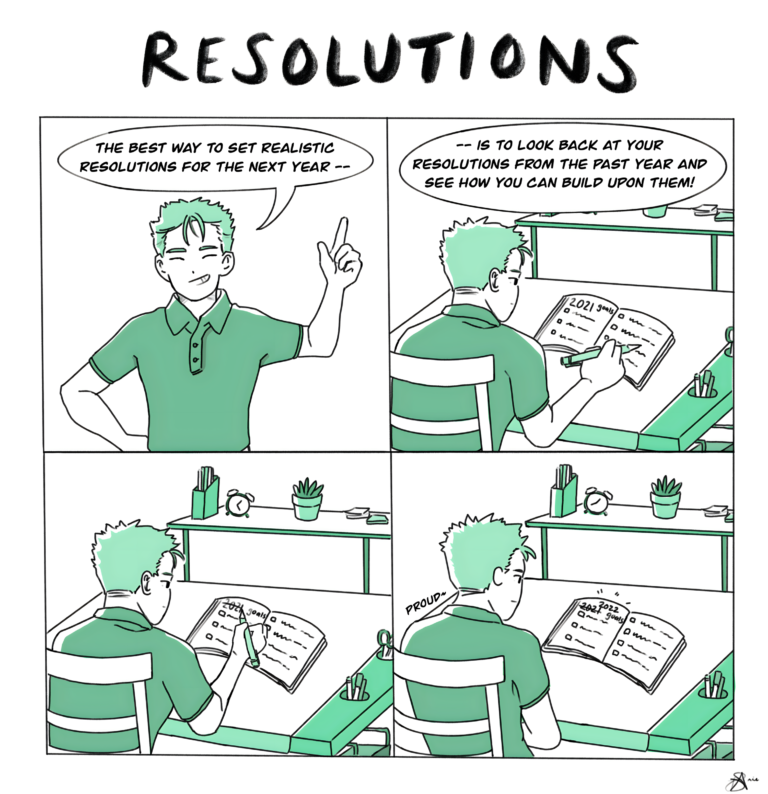
Cartoon: Resolutions

Drawn by: SEANNE JAVIER –– sajavier@ucdavis.edu 

Disclaimer: (This cartoon is humor and/or satire, and its content is purely fictional. The story and names of “sources” are fictionalized.)

Column: What happened to reading?

Books offer a lot more than you think

By ALEX MOTAWI — almotawi@ucdavis.edu 

Almost nobody reads for enjoyment anymore. Reading used to just be a part of life, but it feels like those days are gone now. It was less than a decade ago when you could have a casual conversation about books with almost everyone. I remember showing up to school to talk about developments in the classics like “Percy Jacksonand “Harry Potter” or having to rush to finish the last book in the “Divergent” series before it was spoiled in passing. Moving into the science realm, people all over were enamored with authors like Malcolm Gladwell and Jared Diamond in a way that just doesn’t happen anymore. The love for books is gone. 

People have abandoned books during their leisure time in favor of streaming and games (with television still being relevant for now) and are missing out because of it. Reading is a form of entertainment that is healthy, feels good and is just as enthralling as your screen — people who are not reading are missing out big time.

Science fiction and fantasy books are the sources behind so many successful shows standing in the spotlight. Producers are scooping up the rights to turn books into hit TV shows all the time now, and while the shows often end up good, they rarely give the original books their due. Hop on the hype trains before they leave the station by reading the books first! It keeps your brain growing, gives you a break from screens, shows your favorite characters in depth unrivaled by TV and follows the plot that the author intended. Here are a few recent book franchises that have turned into successful shows topping the lists of your favorite streaming sites: “Game of Thrones,” the “Foundation” series, “The Witcher,” “The Handmaid’s Tale,” “The Expanse and Dune, along with a “Lord of the Rings” TV show in production. 

If you like any of those shows on TV, give the actual books a shot and try some similar books; you won’t regret it. If you want some fiction from popular franchises and legendary authors, here are a few options I highly recommend: “The Foundation Trilogy” (series called the genesis of science fiction by Isaac Asimov), “The Licanius Trilogy” (a James Islington high-fantasy series), “Star Wars: Phasma” (requires no “Star Wars” knowledge to be worth reading), “Wake of Vultures” (gender-inclusive) and “Mistborn” (incredible book series with a movie in production).

In addition to being self-improvement simply by choosing a book over a screen, psychology and self-improvement books can be used to really turn your life around if you invest just the slightest bit of your leisure time. I know many of you have never picked up a book like this before, so before you cringe and run, let me remind you that they are not textbooks. They are written by actual authors to stretch your brain in a way that’s actually enjoyable. Even if you are just leafing through a brain-health book to congratulate yourself on the advice you already follow, you are getting way more out of reading than you would be staring at a screen. You can find good books from quality authors on almost every subject, but some books that everyone will enjoy are “Freakonomics,” “Blink” and “Talking to Strangers.”

Reading has been steadily decreasing for decades now, but its benefits are so worth it that we need to fight for a resurgence. Maybe textbooks and the idea of reading for school as compared to reading for entertainment has blemished the shine of relaxing with a good book, but with school being entirely through a screen nowadays, taking a break with a book is a great refresher. If nothing else, authors have been writing classics for hundreds of years while showrunners have only been creating streaming originals for a couple. The horizon of great books to read is endless, and with everything books offer, it would serve you well to take a few steps toward it — trust me, it’s worth it.

Written by: Alex Motawi — almotawi@ucdavis.edu 

Disclaimer: The views and opinions expressed by individual columnists belong to the columnists alone and do not necessarily indicate the views and opinions held by The California Aggie.

UC Davis to return to in-person instruction on Jan. 31

With positive case numbers for COVID-19 declining, the campus will fully reopen to students, staff and faculty next Monday

By KATHLEEN QUINN and ISABELLA KRZESNIAK campus@theaggie.org

The UC Davis campus will resume in-person instruction on Jan. 31, according to an email sent to students by Chancellor Gary May on Jan. 24.

“While we began winter quarter with much of our work being done and many classes being held remotely, we look forward to welcoming students, faculty and staff back to our Davis campus and classrooms, Monday, January 31, as planned,” the announcement states.

As of Jan. 24, the positivity rate for COVID-19 has decreased to 1.78% with 321 positive results in the last seven days, according to the UC Davis COVID-19 dashboard.

All students, faculty and staff must upload a copy of their vaccine booster, or approved a medical or religious exemption to the UC Davis health portal by Jan 31, however, the requirements for testing remain unchanged for students outside of dorms.

For those living within dorms, the administration added an additional requirement for students who do not have their boosters; as of Jan. 31, they will need to be tested once every four days. This is more frequent than a previous requirement, having students regardless of vaccination status test once a week while living in residence halls

The return to campus was originally scheduled for Jan. 10, but after a push from students, faculty and staff and a dramatic rise in positivity rates, the return to in-person instruction was delayed on Jan. 6.

Students were encouraged to stay in Davis in order to prevent another spike upon returning to campus. 

We are thankful so many of you stayed in town as we recommended,” May stated in the announcement. “If you’re not in the area now, you should come back as soon as possible so you can receive your test results before January 31.”

This leaves students with one week to test in order to gain access to campus lecture halls and facilities. 

“If you are already here, please get tested this week to help avert long lines at the ARC next week,” the announcement states.

While students are being encouraged to obtain and use N95 or KN95 masks, and the Campus Ready website includes tips to extend their use, cloth masks still meet the university’s requirements to attend class, according to the announcement. 

The administration directed students to reach out to the major departments to acquire a single N95 or KN95 mask, but no further information on this process was provided in the announcement.

ASUCD President Ryan Manriquez is working to provide N95 masks at the Aggie Compass Basic Needs Center and the third floor of the Memorial Union for student convenience.

I’m making sure masks are provided for everyone,” Manriquez said. “[The announcement] was a bit vague.”

Additionally, the announcement discussed the launch of an opt-in lecture capture program in order to make learning easier to access.

“I’d say that UC Davis is behind the times in terms of technology inside the classroom, in terms of how you record lectures,” Manriquez said. “We’re transforming education and the fact is that more people are going to need a hybrid option.”

As a representative of the UC Davis student body, Manriquez believes that this quarter has been especially difficult.

“We want to make clear that out of all the quarters of COVID-19, this has been the most disruptive one for students,” Manriquez said. “Having the mindset that we’re online for the first week, then having three more weeks online, and then having to come back halfway through to a completely different teaching style is really hard for students and faculty to adjust to.”

Written by: Kathleen Quinn and Isabella Krzesniakcampus@theaggie.org

UC Davis Immunology researchers engineer a bone marrow to research early osteosarcoma

Through macrophages and bone cancer cells, researchers hope that the new 3D model will help them better understand osteosarcoma growth 

By MONICA MANMADKAR — science@theaggie.org

UC Davis researchers employ tissue engineering to study the interaction of macrophages, a special type of immune cell involved in the detection of foreign bacteria and tumors. There have been many studies that linked macrophages to osteosarcoma progression. In this study, researchers delved into how studying these macrophages could be a potential opportunity to develop immunotherapies. 

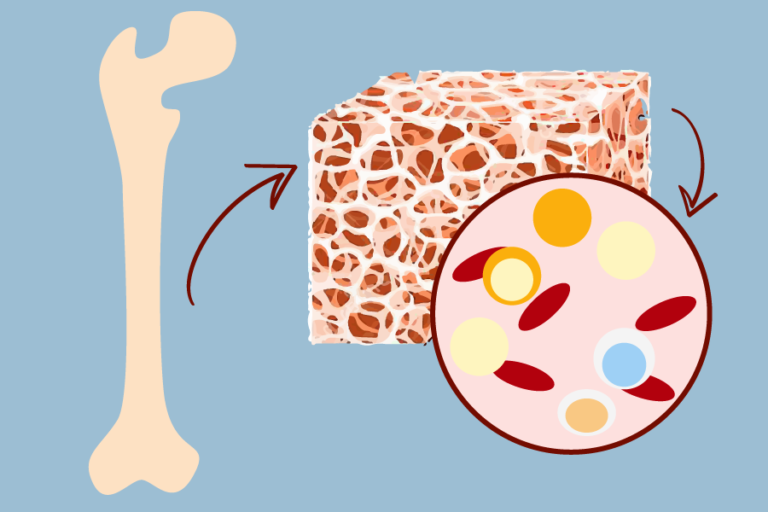
Given this understanding, the Leach Laboratory at the UC Davis Department of Orthopaedic Surgery created an artificial bone marrow model that could help them better understand osteosarcoma, a common type of bone cancer in children.  

Osteosarcoma begins to develop in the bone marrow but can spread to other bones around the body, especially around the knees and upper parts of the arms. With its treatment barely making progress, less than 25% of people with this cancer survive five years post-diagnosis. This cancer grows in a complex bone marrow environment, making it harder to study. Current models do not account for its key features and 3D structure. Hence, the researchers at the Leach Lab created an engineered bone marrow (eBM) to mirror the native bone marrow and study the tumor’s progression. 

“The eBM provides a 3D environment as opposed to 2D, which can greatly affect cell behavior, and since it can be maintained in vitro, it gives us a culturable way to control microenvironmental factors like oxygen tension,” Katherine Griffin, a dual doctoral of veterinary medicine and immunology candidate and a researcher at the Leach Lab, said. “There aren’t many models out there that are capable of this. It’s very novel to approach a cancer immunology question with a tissue engineering approach.”

The lab will use the eBM to study osteosarcoma cells with and without macrophages added. Macrophages are extremely important in creating the tumor’s environment and their addition can be related to disease development. Using dyes, the researchers will record the movement of the cells over time. 

“We are combining immune cells which would be commonly interacting with the tissues and adding macrophages that have different characteristics,” Dr. Kent Leach, a professor of orthopedic surgery and biomedical engineering at UC Davis, said. “Adding these different types of immune cells may be contributing to tumor growth, which is a new area in the fight against cancer.”

Leach hopes to create a combination of cancer biology, tissue engineering, immunology and patient care through his laboratory’s research and future work. 

Bringing immunology knowledge to the table, Griffin works as the main graduate student on the project although this is a combined effort between the faculty collaborators, Dr. Kent Leach, Dr. Steven Thorpe, Dr. Lor Randall and Dr. William Culp. 

Osteosarcoma is rare enough that clinical trials and other more common methods for cancer research are less effective at efficiently figuring out its biology. 

“The current model is only for mouse cancer cells hence [we] would like the eBM to translate to human and canine samples so we can really capture those natural populations and better understand patterns in osteosarcoma tumor progression,” Griffin said about their future research goals. 

Written by: Monica Manmadkar — science@theaggie.org

Five students share their experiences forming college friendships

0

Students talk about the unexpected ways they met their best friends on campus and offer tips for others

By JALAN TEHRANIFAR — features@theaggie.org

Making friends in college can be intimidating when first arriving on campus, especially since most students are living alone and moving away from home for the first time.  

Parents’ advice to their kids going off to college is often to keep their dorm room doors open and meet people on their floor at the beginning of the year, but Natalie DiMeglio, a second-year cinema and digital media and communication major, chose a different method. She found her best friend in the laundry room. 

“I was doing laundry when this girl walked in and — without introducing herself — goes on a rant about Tide Pods and how people don’t know how to use them,” DiMeglio said. “After [that], she introduced herself and invited me to go to the farmers’ market with her all in one sentence. I agreed, and the rest is history.” 

Now, DeMeglio and her laundry buddy are housemates and best friends. 

           Alyssa Contreras, a second-year sustainable environmental design major, said she also met her best friend in an unexpected way. Contreras explained that the first time she met her now best friend, they didn’t get off on the best foot.

“She was driving me to one of the locations for our project, [and] one of my favorite songs came on, and I regrettably reached for the volume button and blasted the music,” Contreras said. “She was shocked and froze for a second until she quickly reached for the volume button and turned the volume down. She told me she had sensitive ears, so I apologized and lucky enough we were both able to laugh it off.” 

Contreras had been working for the girl at the time, and though they started off not liking each other much, they ended up becoming close.

“Honestly, I think having such a bumpy start to things allowed us to be really unfiltered around each other without being afraid of what the other would think,” Contreras said. “Thankfully, we both gave each other a second chance because nearly a year has passed by, and I can’t say I have a friend better than her.” 

Unlike Contreras’ experience with her best friend, others find friends that they click with from the very start. Farah Mustafa, a first-year animal biology major, shared that she and her on-campus best friend met through their orientation group and clicked immediately.

“We spent a lot of time together the first few days before the first quarter and we got along really well,” Mustafa said. “After orientation was over, we decided to meet up for dinner one night and we’ve just gotten closer since then.”

With the help of social media, some students have even been able to make college friends before stepping on campus for their first quarter. Rachel Guaer, a first-year communication major, shared that she made most of her campus friends online. 

“I used Instagram a lot over the summer to connect with other freshmen coming to Davis,” Guaer said. “I talked to a lot of people and was able to meet up with them right when I got here, which was super helpful because it gave me a sense of ‘knowing’ my new friends before I came here. A good majority of the people I am friends with now are people I talked to over social media before arriving.” 

Some friendships take a bit longer to develop than others, so don’t fret if you and your acquaintances don’t immediately become best friends. Angela Kim, a third-year cinema and digital media major, met her best friend in middle school, but they weren’t necessarily close friends up until recently.

Kim explained that though she and her best friend met at a young age, they didn’t become friends until senior year of high school.

“I got the surprise of getting to be reacquainted with her in our yearbook class,” Kim said. “[And] after graduating high school, we got closer after finding out we were both accepted and committed to going to UC Davis. Since we were both pretty anxious about not knowing anyone in our freshmen year, my friend and I talked more through that experience.” 

Though Kim explained that COVID-19 prevented them from hanging out last school year, this fall, they were both back on campus and ended up getting really close.

“This year, returning to in-person classes, we found out we live super close,” Kim said. “[We] hung out almost every week in downtown and finally got the chance to talk about everything. I got to meet her cats, and we even decided to house together next school year.”

Friendship takes time, consistency and effort, but if you don’t put yourself out there, you might miss out on making lifelong friends. It might feel scary to approach someone and ask to hang out, but the worst that’ll happen is that they’ll say no and you’ll never see them again. Eventually, you’ll find someone who says yes and, who knows, you might find that they’re the person you’ll want to be stuck in a senior home with for many years from now.

Written by: Jalan Tehranifar — features@theaggie.org