59.3 F
Davis

Davis, California

Wednesday, December 24, 2025
Home Blog Page 283

Natural Selection Tour is back

0

A recap of stop #1

Thursday, Feb. 4, 2021, Jackson Hole, WY.

The first day of YETI Natural Selection Tour snowboard contest took off Thursday morning, in bounds, at Jackson Hole Mountain Resort. The contest is the brainchild of world-renowned snowboarder Travis Rice, and has been years in the making. 

Quicksilver ran the original event in Jackson Hole in 2008 under the name “Natural Selection,” and it was run again in 2012 as “Red Bull Supernatural” at Canada’s Baldface Lodge. 

Twenty four professional snowboarders were selected to participate in the event this year: 16 men and eight women, ranging from backcountry veterans like Eric Jackson (also known as E-Jack) to slopestyle competitor Jamie Anderson and halfpipe rider Ben Ferguson, to newer faces like Zoi Sadowski-Synott. The format followed eight head-to-head heats for the first day, two runs each, with a tiebreaker if needed, overall score not counting. 

Each run was scored on each rider’s use of the course, flow and creativity. Fresh snow gave each rider plenty of powder to slash and to cushion the landings on some of the bigger enhanced natural features that were built over the course of the summer. 

The head-to-head format and unique judging offered a chance for newer backcountry and freeride competition riders like Sadowski-Synott and Mark McMorris to advance on to the next day of competition.

Day two saw the elimination of event-hopefuls such as Austin Sweetin, Olympian Sage Kotsenburg, Pat Moore and even Travis Rice all in the quarter finals. 

Women’s backcountry pioneers Hana Beaman and Elena Hight were eliminated in their rounds, while the world champion French freerider Marion Haerty and Zoi Sadowski-Synott faced off in the finals. 

Eighteen-year-old New Zealander Sadowski-Synott dominated, taking the win at this first competition of its kind for women in snowboarding. 

In the mens’ semifinals, Jackson native Blake Paul was knocked out of the competition by Oregonian Ben Ferguson. Ferg went on to face Mark McMorris, who barely slid past Norweigian Mikkel Bang in their heat. 

In the final round, Ferg found some difficulty staying on his feet throughout his two runs while McMorris managed to stay up and put together two full lines. McMorris was crowned, adding a Natural Selection win to his already highly-decorated career in snowboarding. 

The next stop of the Natural Selection Tour is set to begin the first week of March at Baldface Lodge in Canada. 

Written by: Cameron Perry — arts@theaggie.org

Connecting gut health to mental health

0

Doctors and professors explore the intricacies of gut health and its connection to mental health and overall well-being

This article is the second installation of The California Aggie’s Mind and Body series, which discusses nutrition, physical well-being and mental health. 

Recently, the issue of gut health has gained an online presence as more people have created videos on platforms such as TikTok discussing their gastrointestinal issues and ways to create a healthy internal environment. 

One famous claim states that 90% of all our serotonin is produced in our gut, and that maintaining our gut’s biome corresponds to greater well-being. Dr. Michelle Dossett, an assistant professor at UC Davis’ department of internal medicine, affirmed the truth of this claim and stated that our gut is responsible for a large portion of our serotonin and melatonin production. 

“That is something that we are still trying to understand, but there very clearly is a link with gut health and mental health,” Dossett said. “Studies have suggested that the gut microbiome, the bacteria that you have in your gut or that you don’t have in your gut are linked with depression or other mental health issues.” 

Dr. Asha Gupta Cogdill, an assistant professor and gastroenterologist specialist at UC Davis, stated that there is a strong connection between gut and mental health.

“These two systems are closely linked by the ‘gut-brain axis’,” Cogdill said. “Gut health affects anxiety and mental illnesses and vice versa.”

Though studies have acknowledged this link, Dossett emphasized that there is no definitive evidence that proves specific foods can boost serotonin. Instead, both Dossett and Cogdill promote eating a healthy diet in order to maintain a healthy gut. 

Specifically, Dossett mentioned the importance of integrating probiotics into one’s diet as well as prebiotics, which is what probiotics eat. She also recommends a Mediterranean diet with plant-based foods that contain soluble and insoluble fibers to mediate and maintain one’s gut. 

Similarly, Cogdill also recommends eating a diet high in vegetables, fruits and whole grains while also adding probiotics.

“Consuming probiotic foods such as Greek yogurt, kefir and kombucha can help some people who have had disturbances in their gut microbiome,” Cogdill said. 

Angela Zivkovic, an assistant professor in UC Davis’ department of nutrition, also asserted the necessity of a well balanced diet. Zivkovic believes in the importance of integrating essential nutrients, vitamins and minerals into one’s diet, but also stated that these ingredients can come from more basic options than trendy superfoods.

“There’s no reason to spend more money on ‘fancy’ superfoods when you can get so much from simple and inexpensive standbys like carrots, spinach [or] broccoli,” Zivkovic said.  

Dossett also stated that incorporating elements of fad diets can be a way for people to feel like they are eating healthier, citing the superfood movement as an example. 

“People sort of think that if I eat the goji berries, then I can have the Red Bull or double chocolate ice cream,” Dossett said. “It’s a way of giving oneself license to maybe not eat the healthiest foods sometimes.”

Zivkovic also stated that eating a healthy diet to maintain gut health is futile without drinking water. 

“One of the most critical things to do is hydrate,” Zivkovic said. “No superfood can stand up to the benefits of drinking enough fluids and being well hydrated.”

Beyond mental health implications, poor gut health caused by stress correlates to common gastrointestinal issues (GI), according to Cogdill.

“Stress and anxiety play a major role in many GI conditions, particularly chronic nausea, functional dyspepsia and irritable bowel syndrome,” Cogdill said. “The first step is to recognize this connection to prevent worsening your anxiety by worrying about your GI health.”

Furthermore, Dossett stated that a lack of sleep may also cause poor gut health and make it more likely for someone to succumb to stress. 

In addition to eating a healthy diet, pivoting one’s lifestyle is also necessary for more sustainable outcomes, Dossett said. She recommends mind and body activities that include meditation and breathing exercises. For college students, she recommends new study habits that divert the need to procrastinate and pull regular all-nighters. To curb stress, anxiety and possible nausea, Cogdill mentioned the process of medical therapy, under the direction of a physician. 

As the gut is responsible for important cognitive actions and productions, its maintenance is essential to curb pains and improve energy levels and mood, according to Zivkovic. 

“Well if you think about the fact that we have roughly seven feet of intestinal tract, and that as much as 80% of the cells of our immune system reside there, we can start to appreciate how important a healthy gut is for our overall health,” Zivkovic said. 
Written by: Farrah Ballou — features@theaggie.org

Butterfly observations indicate insect populations are declining due to climate change

UC Davis and University of Reno faculty teams work together to understand the relationship between butterfly abundance and climate change, land use and pesticides

Climate change is affecting Sierra butterflies studied on land areas not exposed to human interaction, according to a recent study led by Chris Halsch, a doctoral candidate in the ecology, evolution and conservation biology program at the University of Nevada, Reno.  Halsch’s findings indicate that the changing natural environment—not direct human contact—is causing these effects, although butterflies are not always perfectly isolated from human contact.

         Halsch aided in writing the recent paper detailing these results, including a review of previous literature as well as new findings in the most recent observations of butterflies. The review consisted of findings from previous studies on the topic, which had no less than 10 years of continuous sampling, examined at least 10 species and took climate change into consideration, according to the study

The new findings were from a long-term time series that Dr. Art Shapiro, a professor in the UC Davis Department of Evolution and Ecology, started. Shapiro visited 10 sites across North Central California every other week for over 40 years to look for butterflies. It could be one of, if not the longest, insect-monitoring study in North America, according to Halsch.

         Over the past four years, Halsch collected butterfly data at higher-elevation mountain sites. He and his advisor, Matt Forister, are responsible for those sites and have provided the data from recent time series of the study to add to Shapiro’s observations.

         Shapiro is responsible for the creation of the Shapiro Transect, a series of 10 locations across North Central California where Shapiro monitors a variety of butterfly species activity. It benefits from the butterfly season occuring all year round at sea level, according to Shapiro.

         “At an interval of two weeks, I walk the transect and record everything I find,” Shapiro said.

         According to the data, changes in fauna and timing of butterfly activity were found to correlate with climate change. Each site included in the Shapiro Transect is matched to a long-term weather station and contains chronological data available on changing weather patterns. The Shapiro Transect is very important to the study, according to Halsch.

“It is one of the two best data sets we have in the world for understanding insects decline,” Halsch said.

         The other site referenced is overseen by the United Kingdom butterfly monitoring team. They have monitored hundreds of sites in their country for decades, while the Shapiro Transect mostly consists of Shapiro conducting the observations. Including the U. K. butterfly monitoring team eliminates the potential of an observer effect, which is a scenario where the observer has more impact on the findings than what the site has to offer.

         Butterflies have been the source of Shapiro’s research for the past 50 years.

         “They have certain advantages in this type of research,” Shapiro said.

         Butterflies are large enough to study with the naked eye and do not require special equipment to see them. They are also small enough to raise in large quantities in a laboratory setting, according to Shapiro.

         The conclusion of the study is that climate change negatively affects generalist butterflies—butterflies that can live in different environments— the most. The number of generalist butterflies, also called the weedy species by Shapiro, are declining in the mountains, and there are fewer moving up its slope. 

This is counterintuitive, according to Shapiro, because most people would think that specialist species, ones that can only survive in one type of environment, would have the most trouble with climate change. The colonization of the mountain depends on immigration from below, but there have been observations of long-term declines in butterflies generally in low elevations in California.

         The pesticide neonicotinoid, chemically related to nicotine, is an insecticide produced naturally by plants and is suspected to play a part in butterfly decline, according to Shapiro.

“Reducing the impacts of climate change is a societal problem, and it’s going to take so much work, but making an effort to plant better plants, reduce use of pesticides, not immediately remove weeds that might be good for butterflies will reduce impacts of other stressors because the threat of climate change is only increasing,” Halsch said.

The study of butterflies being negatively affected by climate change is part of a variety of other studies that include different insects that are also declining in population. Even when not all insect populations are declining, the phenomenon is widespread, according to Shapiro.

“The vast majority of insects are not pests, and the vast majority deliver important ecosystem services,” Shapiro said. “We should be concerned if insects are in decline, and we should try as good citizens to find what we as individuals could do to help.”
Written by: Francheska Torres —science@theaggie.org

Why my polluted blood is boiling and yours should be too

0

It’s time for the Biden Administration to protect the American people from “forever chemicals,” forever

Teflon. An invention as American as apple pie, it has been used in everything from coating pipes in the Manhattan Project to everyday use in kitchens to coat non-stick pans. Teflon was so popular that in the 1980s that former president Ronald Reagan was affectionately nicknamed “The Teflon President,” because no scandals ever seemed to stick to him. Teflon’s “non-stick” ability was attributable to a surfactant called Perfluorooctanoic Acid (PFOA), which was only fully phased out of use by Dupont in 2014

Today, it is common knowledge that PFOA has been linked to a vast amount of human health impacts, including kidney, testicular, liver and pancreatic cancer. Recent studies have also indicated that it is found in nearly every living thing on Earth, even in the most remote locations. You’re probably wondering: How is this even possible? How did this harmful chemical go undetected for so long?

The easy answer is it didn’t. Dupont, the company who makes Teflon, knew that PFOAs had potentially severe health impacts from their own study on dogs and rabbits, by 1961. Over the next few decades, 3M Company and Dupont did a series of internal studies, which linked PFOAs to birth defects, testicular cancer, pancreatic cancer and liver tumors in various species. Ultimately though, Dupont argued that they had no reason to believe that there were any adverse human impacts. This was fairly convenient considering they knew that there were high concentrations of the chemical in the blood of their workers at the Washington Works Plant since 1984. In fact, between 1951 and 2003, 1.7 million pounds of PFOAs were released into the environment around the plant meaning that the surrounding community was also likely impacted. The bottom line is that Dupont knew that PFOAs were likely dangerous just 10 years after they began using them, yet never informed the federal government or the Environmental Protection Agency (EPA). 

It is likely that PFOAs toxicity might’ve gone undetected to the present if it hadn’t been for a persistent farmer named Wilbur Tennant. In the late 1990s, Tennant, whose cattle had been dying mysteriously, blamed Dupont’s new landfill which had opened adjacent to his land. Unable to find legal help within Parkersburg, Tennant resorted to reaching out to Robert Bilott, a corporate chemical defense lawyer whose grandmother lived in Parkersburg. Ultimately, Bilott was able to win a settlement for the Tennants, but was unsatisfied with the outcome as it allowed Dupont to continue to pollute the local community. 

Bilott, among others, went on to sue Dupont in a class action lawsuit which Dupont settled on the basis that an independent science board would look into the toxicity of the chemical. With 70,000 participants involved in one of the largest epidemiological studies in history, the board took 7 years and concluded that there was a probable link between PFOA and a plethora of cancers. In response to this, Dupont rejected the evidence from the independent review and tried to fight every individual lawsuit on a person-to-person case. Many of the plaintiffs were terminally ill, and it was likely that Dupont was banking on the fact that many people would die or give up before getting a verdict. After several individual cases (and losses), the company settled with the entire class for $670 million dollars, less than what the company makes on Teflon in a single year

To this day, the EPA has only marked PFOAs as a “chemical of concern,” and cannot enforce any guidelines or health suggestions set by their review of the chemical. Bilott’s battle with PFOAs illustrate the greater problem with the EPA’s review process for unregulated chemicals. The loophole which allowed Dupont and 3M to continue to pollute the entire country for decades essentially relied on self regulation which has historically never worked. 

Additionally, PFOAs are only one of many chemicals that fall under the category of “forever chemicals,” named for their persistence in both the environment and the human body. There are dozens of other chemicals that fall under this category, mostly unregulated, that must be a priority for the Biden administration’s EPA. Despite increasing public outcry, change is slow. It’s not a good sign that President Joe Biden’s EPA transition team included an ex-Dupont consultant, but there have been significant strides towards increased regulation. 

“I am cautiously optimistic that, with increasing public awareness of the global PFA [PFOAs] “Forever Chemicals” public health threat, we may finally see significant steps taken at the national level to effectively address the issue and to make sure that those who actually caused this problem are held responsible,” remarked Bilott earlier this month over email.

If you are interested in learning more about PFOAs, Bilott’s novel “Exposure” chronicles his decades long legal battle around the chemical or you can see the film “Dark Waters” starring actor Mark Ruffalo. Want to know more about forever chemicals or what’s in your water? Check out the Environmental Working Group’s Tap Water Database. It is essential for the health of our communities that the Biden Administration implements strong regulations around the production and use of “forever chemicals,” like PFOA. 

Written by: Joe Sweeney — jmsweeney@ucdavis.edu 

Disclaimer: The views and opinions expressed by individual columnists belong to the columnists alone and do not necessarily indicate the views and opinions held by The California Aggie.

Water conservation programs show potential to save water, energy and greenhouse gas emissions

Minimizing intensive energy operations in water systems can reduce water usage and costs comparable to current energy efficiency programs

In an innovative time where power and energy have evolved tremendously in the past few decades, efficiency and conservation have become new focal points, constantly being optimized in balance with costs. A study conducted by UC Davis’ Center for Water-Energy Efficiency illuminates the possibility of saving not only water but also energy and greenhouse gas emissions through water conservation programs.

Edward Spang—an assistant professor at UC Davis’ food science and technology department who played a pivotal role in starting the Center for Water-Energy Efficiency—explains the findings of a previous statewide study following the urban water conservation mandate back in 2015. Due to the mandate, all urban water utilities were required to reduce water usage by 25%. 

“We found that the cost [of water conservation programs] was competitive with direct energy efficiency programs,” Spang said. “That is to say that you can actually save water and energy at the same cost as saving just energy alone.”

In his most recent study, Spang conducted a case study on the Los Angeles Department of Water and Power (LADWP), a major water utility that has implemented water conservation programs, and by working with an individual public utility company, he reaffirmed the broad findings from his previous statewide study. 

“The study found that LADWP saved a considerable amount of energy through its water conservation programs,” according to a UC Davis press release. “Across the various scenarios, the estimated energy savings secured through water conservation programs (e.g., high-efficiency washing machines, toilets/urinals and irrigation systems) was cost-competitive with LADWP’s energy efficiency programs (e.g., more efficient lighting, HVAC and refrigeration systems).”

Though the findings offer a remarkably optimistic duality in saving energy and water, they highlight the complexity in measuring costs and energy savings purely due to water conservation programs—as Spang describes from a systems perspective—which, in turn, could be why many utilities have yet to adapt these programs.

“We’ve been working for a while to try to come up with methodologies to measure the amount of embedded energy in water systems,” Spang said. “This meant looking at a particular volume of water delivered to a customer, how much energy did it take to extract that water from groundwater, convey that water to a treatment plant, treat the water and then distribute it to the customer. You can actually trace the pathway of these water sources and come up with an energy footprint to deliver a particular quality of water to a particular location.”

Katrina Jessoe, an associate professor in the agricultural and resource economics department, offers an economist’s point of view as to why it can be difficult to adopt water conservation programs. 

“What the engineers find can differ from what the economists say,” Jessoe said. “The engineers tell us there are these huge savings from these programs, but the economist comes and looks at it, and finds that maybe that is not the case because behavior matters. Some water conservation instruments may yield energy savings, while some may not.”

Despite the many barriers and limitations that establishing water conservation programs may bring, the LADWP is a model that future conservationists and economists can follow to better understand and optimize energy and resource conservation in the future. 

According to Spang’s broad vision of what the future may hold for energy efficiency, California has done such a remarkable job with its programs that transitioning to another level of optimization of energy, and costs will be the next challenge.

“California, we have done such a good job that there’s not much low-hanging fruit as there used to be for these programs,” Spang said. “For example, changing out lightbulbs: We’ve done a really good job with that. And there are still lightbulbs we still need to change out, but at a certain point, we need to move onto the next phase of energy efficiency, which is a little bit more difficult. You can think of another analogy where you go from a lightbulb to the whole house, where you’re looking at window glazing and insulation.”

Indeed, water conservation may have opened a new door to this “whole house.” Jessoe highlights a holistic approach on water conservation, looking at agricultural users rather than just residential users, which may even further expand Spang’s findings.

“One thing we focus a lot on is residential water conservation. In California, urban users account for 20% of human water use while agricultural users account for 80%. The marginal cost of trying to wring out that last drop of water out of residential users is really high. So you might be able to, for the same cost, get a whole lot more conservation out of agricultural users.”

Written by: Brandon Nguyenscience@theaggie.org

Local tattoo shops note decline in business due to COVID-19 pandemic

0

Tattoo shops changed their business models to adhere to social distancing guidelines

Businesses that pride themselves in creating a unique and personal experience for customers, such as tattoo shops, have been impacted by the COVID-19 pandemic. 

George Hernandez, the owner of Sacred Tiger Tattoo in Davis, noted how there were slow and busy seasons even before the pandemic. 

“Before the pandemic—with the student population—the business already fluctuated,” Hernandez said. “There was a busy season when the students were here, and when they were gone during summer, it would dip down quite a bit.” 

Chelsey Daskalos, the business manager of Death or Glory Tattoo in Davis, described the spontaneity that came with operating a tattoo shop. 

“It’s always been really fun,” Daskalos said. “Every day is something different. You meet people from all different spectrums and levels.” 

Hernandez explained that when the pandemic began, he faced more difficulties when the county shut down tattoo shops. Since he is self-employed, Hernandez didn’t qualify for unemployment until the policy was changed in late April of 2020. 

“Being an independent business and self-employed, I had no unemployment right off the bat,” Hernandez said. “It was very stressful.”

Daskalos noted the continuous decline in business since the pandemic began. 

“It’s drastically changed our business and our business model to try and acclimate and adjust,” Daskalos said. “Our business has been cut by probably over 30%.”

Cynthia Perez, the manager of Urban Body Piercing & Tattoo in Davis, described the changes made in order to comply with social distancing. 

“We had to drastically cut back on the amount of people we can allow in the building at one time,” Perez said. 

Perez described how other precautions include coming to the appointment alone or only coming with a few guests if they are part of the same household. Walk-in visits are no longer allowed. 

Daskalos added that masks and pre-screening are now necessary for Death or Glory Tattoo prior to a tattoo appointment. As a result of the mask requirement, nose and mouth piercings are no longer allowed, although they were popular among UC Davis students prior to the pandemic. 

Daskalos added a positive note regarding the future of Death or Glory Tattoo.  

“We pride ourselves on carrying on the tradition of tattooing and piercing, to craft something we love, and the people who support us are part of that,” Daskalos said. “In the future, we’re hoping we can get back to that: to working with our community.”

Daskalos emphasized her gratitude for the community’s continued support.

“We’re very thankful for the support from the community,” Daskalos said. “We’ve got such a great community of people who supported us through this. Our business is very word-of-mouth, and without our people, we’re nothing.” 

Hernandez added his own perspective regarding the future of Sacred Tiger Tattoo. 

“I’ve managed to adjust to living with less, so I find that I still have a future here,” Hernandez said. “I’m going to keep it open.” 

Perez reflected on the trajectory of Urban Body Piercing & Tattoo since the pandemic.

“As much as I was a downer about this over the past year, I definitely think that it’s a new beginning for a lot of businesses,” Perez said. “We were able to slow down and kind of refocus where we want the business to go and how we want to continue to provide our services to the public.” 
Written by: Jelena Lapuz — city@theaggie.org


Cartoon

0

The new home school. Are you really going to school if you attend in bed?

 Drawn by: Ke Lin –– keylin@ucdavis.edu  
Disclaimer: (This cartoon is humor and/or satire, and its content is purely fictional. The story and names of “sources” are fictionalized.)

Civil rights are not a trend: Black lives still matter in 2021

0

America has a long road ahead before truly uprooting issues of police brutality, white supremacy and systemic racism

Last year, the deaths of George Floyd, Breonna Taylor, Ahmaud Arbery and many others underscored the pervasiveness of racial inequality and police brutality in America—it also marked an important year for the Black Lives Matter (BLM) movement. In May 2020 alone, thousands of Americans rallied in solidarity with the Black community, protesting racism, demanding criminal justice and police reform and calling for long-term change. In addition to demonstrations spreading across major cities, the Black community’s call for action was also echoed on social media. For a while, it seemed impossible to scroll through Instagram or Twitter without seeing posts calling out racism and threads highlighting what can be done to help. 

However, it appears as though people are already beginning to move on from their activism. Profile pictures that were once blacked out in solidarity with the movement have slowly been deleted, and links to petitions on Instagram bios have been removed. Many have also taken President Joe Biden’s 2020 win as a sigh of relief for Black lives, although America has a long road ahead before truly uprooting issues of police brutality, white supremacy and systemic racism. As a new year rolled around and we once again welcomed Black History Month in February, it’s time we remind ourselves that upholding racial equality and civil rights are not trends to participate in for a few months before returning to business as usual. Black lives always matter, and we must continue to do our part in demanding greater equality.

The BLM movement was founded by activists Alicia Garza, Patrisse Cullors and Opal Tometi in July 2013 following the acquittal of policeman George Zimmerman in the shooting of Trayvon Martin. Although the movement has existed for nearly a decade, 2020 was arguably its most momentous year with successful developments in police reform, the removal of racist symbols from state flags and increasing international solidarity for Black lives everywhere. 

Philadelphia, Los Angeles and Baltimore are just a few of the cities that have reduced funding for police departments by over hundreds of millions of dollars, choosing instead to divert funds to mental health programs, education services, increasing affordable housing and tackling homelessness. In many cities, policies were passed to ban the use of chokeholds by law enforcement—the very tactic that led to George Floyd’s death—as well as the institution of Breonna’s Law in Louisville, KY, which bans “no-knock” search warrants. Statues honoring Confederate leaders, colonizers and slaveholders have been removed, including those of Confederate General Stonewall Jackson in Richmond, VA and the Athens Confederate Monument in Athens, GA.

Moreover, pressure to uproot racist sentiments caused sports teams and food products to change their names. Just recently, PepsiCo announced that they would be renaming the Aunt Jemima pancake mix and syrup brand to “Pearl Milling Company,” in addition to pledging $5 million to “support the Black community.” The momentum from last year’s BLM protests also prompted people outside of the U.S. to reflect on their own issues of racism and police brutality, from protestors in the U.K. toppling the statue of slave trader Edward Colston to viral Twitter threads about systemic racism and colorism against Papuans trending in Indonesia. 

Throughout 2020, the BLM movement incited important public conversations around racism and efforts to address individual prejudice, as well as nationwide changes in policing, criminal justice and government. The fight for racial equality, however, is far from over. Mass incarceration and sentencing disparities continue to disproportionately harm Black people. Qualified immunity remains a factor in facilitating police misconduct. Many victims of police brutality, such as Jacob Blake, Tony McDade and Elijah McClain, have still not seen justice. 

In order to truly create long-term change, we must hold our leaders to a higher standard. Centuries of white supremacy and systemic racism will not disappear after just one year of protests and petition-signing. This can only be done through consistent, long-term efforts from both white and Black communities to address individual and structural racism. As lawyer and civil rights activist Derrick Bell once said, “Black people achieve civil rights victories only when white and Black interests converge.” Hopefully, 2021 will mark a year where positive change is not presupposed on tragedy and national outrage. Black lives still matter—let’s not forget. 

Written by: Amara Putri — aputri@ucdavis.edu 
Disclaimer: The views and opinions expressed by individual columnists belong to the columnists alone and do not necessarily indicate the views and opinions held by The California Aggie.

Davis has had 0 bike crashes since March 2020; university promises to change that

0

I mean, if I’m not getting yeeted off my bike once a quarter, why am I paying to go here?

Throughout the COVID-19 pandemic, many Davis students have been frustrated with their current education experience. Student complaints range from “Zoom creates a difficult environment to learn and stay motivated” to “I can’t say ‘My dog ate my homework’ anymore because everything’s online.” But the most logged complaint from current UC Davis students is the most obvious: “I haven’t been in a bike crash in months.”

The administration sympathizes with students. Being a bike-centered school, the lack of bike crashes on campus is a complete embarrassment. While tuition isn’t necessarily the most iron-clad contract, the administration understands that bike crashes are non-negotiable. 

“I mean, who are we as a university, if we’re not the school with the most bike crashes on campus? One of the top schools in mental health? The #1 veterinary school in the world? It’s just not the same,” an administrator said.

“I get that you can’t always control this sort of thing. But I paid for it. If I’m not getting yeeted off my bike at least once a quarter, why am I here? I should’ve gone to Sac State,” a student said. 

The administration has been working fervently on a way to bring back the bike crashes, insisting that by the end of the month “You’ll be breaking your wrists again in no time!” The current plan includes three major steps: deconstructing all bike paths to ensure as many potholes and bumps as possible, cutting every publicly accessible bike’s brake lines and having designated student “crashers” hired to run into as many student bikers as possible. 

But without the usual biking population of pre-COVID-19 shape? While we at The Aggie are hopeful, who knows what the future holds.

So that’s why The Aggie is pushing the new “Crash It” initiative for Spring 2021. We ask that all UC Davis students do their part and attempt as much bike-related chaos as possible throughout the entire quarter. We know a bike crash can be inconvenient and sometimes detrimental, but we ask that you help support and reestablish this staple of the Davis experience. So get out there and make a difference. From our bikes to yours, we hope to run into you soon. 

(The University of California, Davis and The California Aggie are in no way responsible for any harm or injury caused by the “Crash It” initiative and cannot be held legally responsible.) 

Written by: Ian Cosner — iacosner@ucdavis.edu 

Disclaimer: (This article is humor and/or satire, and its content is purely fictional. The story and names of “sources” are fictionalized.)

Cops Off Campus group opposes Chancellor Gary May’s Campus Safety Task Force

0

Although May says that task forces are an effective way to bring about change, many members of the Cops Off Campus group say that task forces legitimize policing

Months after the murder of George Floyd and the widespread racial justice protests that followed, there have been extensive calls to end policing as we know it; some scholars have suggested that national, systemic change must begin within the UC system with the abolition of UC police departments (UCPD).

In response to the events of this summer, Chancellor Gary May founded the Next Generation Reforms to Advance Campus Safety Task Force, charging the group in a letter written on June 11, 2020.

 “The name wound up longer than I wanted it to be,” May said. “But the goal is basically to reimagine what campus safety should look like. It was, like many other efforts, fueled by the George Floyd incident and other things during the summer that got people to rethink and refocus on policing: why we do it and how we do it.” 

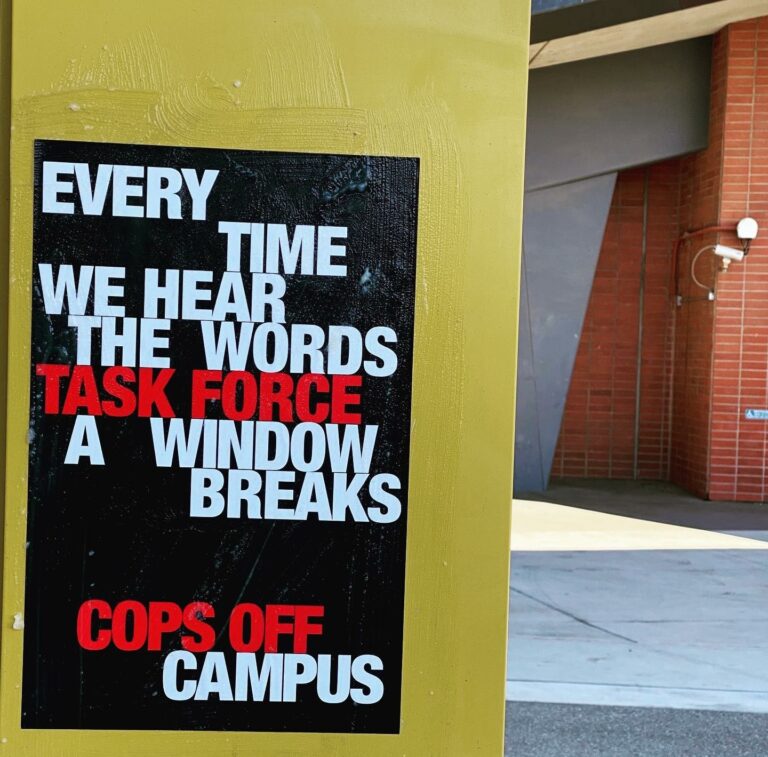
More recently, students have noticed flyers appear on campus in opposition to the task force which read “EVERY TIME WE HEAR THE WORDS TASK FORCE A WINDOW BREAKS.” These flyers were put up by the UC Davis Cops Off Campus group, according to the flyers themselves. The group’s aim is to “see a campus without police,” according to Emily Rich, a third-year English Ph.D. student and member of the UC Davis Cops Off Campus group. There is also a larger UC-wide coalition, UC F*** The Police (UCFTP), which is pushing for the abolition of UCPD across all 10 campuses.

“I think the message speaks for itself,” Rich said via email. 

May said that he does not think that the group’s message is constructive in the greater dialogue regarding campus safety. 

“I don’t really understand [the message],” May said. “Their message is not constructive to me at all. They’re not trying to get to the better situation or better solution. I think that’s why we have a group of people thinking deeply about these issues and trying to come up with recommendations and solutions. I think if you’re serious about it, then that’s what you do. Anybody can make a flyer; it’s harder to make a solution.”

In terms of working together to find a solution in which everybody can feel safe and cared for, members of the UC Davis Cops Off Campus group said they are not interested in participating in the task force, claiming that task forces enable police and ultimately lead to increased funding and resources—outcomes that they feel are counterproductive to abolition.

“Some of the most highly visible instances of police violence—such as in Minneapolis—were committed by police departments that had been through extensive reform processes,” said Dr. Seeta Chaganti, an English professor and Cops Off Campus member, via email. “Deciding to join these conversations suggests that there is some good way that the conversation could go that would somehow produce the end of policing, but the evidence does not suggest that this would be the case. Aligned with the intercampus faculty group UCFTP, I take a position of nonparticipation in task forces.”

  Rich concurred with this sentiment, and, consistent with the language of the flyer, suggested that obstruction rather than simple nonparticipation is the preferred mode of group members’ interaction.

In the discussion of previous UC-systemwide policing task forces, which the UC Davis Cops Off Campus group views as repetitive and futile, May said he thinks task forces are effective and strongly disagrees with the idea that task forces are a tool of the administration.

“I think [task forces] can be a useful tool to make subsequent changes,” May said. “I don’t know what happened in those other years before I came, and I’m not going to take any responsibility for that.” 

Recently the task force has held an ongoing series of town hall meetings to bring more voices to the table. Members of the Cops Off Campus group have declined to participate. 

Students that did participate in the task force’s town hall expressed opinions in contradiction to those of these vocal critics, even expressing a desire for increased police presence on campus.

UC Davis Police Chief Joseph Farrow attributed participants’ distaste for task forces to their being symbolic of the status quo. He said that their fears of radical calls for defunding, disarming and abolishing the police will not be answered with yet another task force. However, Farrow is very optimistic about May’s use of the task force mechanism to effect change.

Farrow said that, unlike a city police department, UCDPD, the smallest police department in the UC system, is already quite innovative and proggressive with respect to its composition and the roles and presentation of its employees. 

“The majority of my employees are actually Aggie Host—they’re actually students, not police officers,” Farrow said. “We also have police officers who work the core of the campus in plain clothes. They just have a polo shirt on that says UC Davis police. They’re unarmed. We’re trying to change the way we go about our business, so just seeing us on campus doesn’t trigger people.” 

The Aggie Host Security program employees are 120 students that provide services like Safe Ride. They escort students home from late-night classes, drive the wheelchair van and patrol sporting events. 

 “I am trying to hire a police department that is very reflective of the campus,” Farrow said. “I think the difference [between on and off-campus law enforcement] would be that your police department is mainly made up of students who understand the campus and college life. They really buy into the service philosophy. The philosophy is that I don’t think we’re there to police you. That’s not our job. Our job is that we’re there to protect you and to make sure that you can participate in and take advantage of everything the university has to offer.”

Farrow views his department as one that is already in motion away from that of a traditional enforcement unit. Farrow said abolition is an incomplete plan. 

“You have to be careful when you call for the complete abolition of policing,” Farrow said. “What are you going to put in its place? What does that look like and who is it going to be?”

Among abolitionists, students and faculty on the UC Davis campus have worked for a long time to answer these essential questions, according to members of the Cops Off Campus group.

 “Abolitionists have, for years, offered numerous other possibilities for addressing situations of crisis and for repairing harm and injustice,” Chaganti said.  “I would encourage everyone to take opportunities to learn more about transformative justice and community care and accountability as alternative solutions that would address their safety concerns.”

Chaganti also noted the historical implications of police officers in the U.S. 

“The police in the U.S. carry a terrible history; police forces were formed to capture escaped enslaved persons and reinforce the notion of people as property, as well as to suppress labor strikes,” Chaganti said. “Wouldn’t we want something without such a horrifying legacy in situations where folks need help?”

Cops Off Campus members, May and Farrow agreed that students, faculty and staff need to both feel and be safe on campus. Part of feeling safe, especially for Black, Indigenous and people of color (BIPOC) members of the community, will require the administration and police force address the existing and well-warranted fear of police in general, according to Farrow. Ideally, there should be trust between the protectors of the community and those whom they serve, but it is clear that this goal has not been reached on the UC Davis campus, according to Rich.

“I believe that UCPD makes BIPOC students feel unsafe on our campus,” Rich said. “Surveys at the campus and systemwide level have shown this repeatedly, and on an anecdotal level, it’s something a number of my students have shared with me, especially in the past year.”

The lack of trust stems from a flawed history which cannot be erased. The UC system isn’t devoid of brutal instances of police force, such as the infamous pepper spray incident by UCDPD that occurred on UC Davis’ campus nearly a decade ago, which the university isn’t proud of. May said that students should understand that the other notable instance of use of force against students (the Picnic Day 2017 altercation), was committed by the City of Davis Police, who are not under the jurisdiction of UC Davis.

Both May and Farrow said that there have only been a small number of complaints or incidents in both of their respective terms. 

“We don’t arrest students,” Farrow said. “I don’t do anything where we really involve ourselves negatively with any of our students. We’ve had no use of force on a student in five years. I’ve only had like three to four complaints total from every interaction that we have on the entire campus—not from students, by the way, from other people.”

 Although May and Farrow did not hold their current positions during the pepper spray incident, in which students were the targets of police violence, there have been more recent incidents of force by UCDPD in both the tenures of May and Farrow, including a 2019 incident at the UC Davis Bookstore. May said that the “non campus-affiliate” involved didn’t file complaints against UCDPD and was put into a restorative justice program.

The possibility of abolition hasn’t been completely dismissed and ignored, according to May. But, he shut down faculty’s call to immediately disband UCPD for now, explaining that there are major holes in the abolitionist approach; he also said their subsequent vision for community safety is already closely aligned with the campus safety model that UC Davis is working toward.

“I have an open mind,” May said. “We talked about abolition. Abolition is a possibility, but we have to be prepared for the consequences of abolition, which means we don’t eliminate police from the campus, there just are other police that are out of our control. Police officers from other jurisdictions. As I said before, I just don’t think that’s a good solution.”

Looking forward, the task force made eight initial recommendations on Jan. 29, including increased training for the public—not the police—that is intended to “educate members of the public on the basics about the campus police department.” The task force will make their final recommendation in June, after being granted an extension of the initial December deadline. Although flyers posted by Cops Off Campus suggest that the group demands immediate action, members acknowledge that truly making systemic change is a difficult process that realistically may not occur instantly.

“It’s important for there to be room for a spectrum of ideas even within the abolitionist position about whether the strategy is a gradual transition or a demand for an immediate end,” Chaganti said. “I feel that even though that latter end of the spectrum will sound unrealistic or threatening to many, it needs to exist as a point on the spectrum, speaking to urgency, creating the difficult but necessary momentum.”

There is common ground among all parties in that they share a genuine desire for a system that is better for all.

“The reality is that many people already are very unsafe at the hands of the system that we have; abolition represents a genuine effort to make things better for everyone,” Chaganti said. “Everything I’ve said here indicates a major learning and restructuring process for everyone (including for me, I know), and a lot of work and working together and that will be true no matter what the timeline.”

May said he hopes that restructuring and reimagining safety is a conversation that all groups can have together. 

“If you come to the table with a genuine desire to make the environment better, expressing whatever concerns that you have and trying to look for solutions to those concerns that are constructive, I think we can reach that common ground,” May said.

Chaganti said that abolishing the police is inextricably tied to a larger abolitionist project that is fundamentally centered around dismantling oppressive systems and learning to care for each other as a community.

“I think for a lot of abolitionists, the term means something bigger than just police and prisons,” Chaganti said. “You hear the phrase ‘abolitionist horizon’ a lot; a horizon means something that’s always there, shaping the ways you navigate the world even if it’s not fully attainable. It’s within that structure that I understand the work of reimagining how campus communities could be set up.”

Written by: Rebecca Gardner — campus@theaggie.org

Datamatch brings love to UC Davis

0

UC Davis students introduce Datamatch, a matchmaking service for students

This Valentine’s Day, students had the opportunity to try a dating platform new to UC Davis: Datamatch. Created by students at Harvard University, Datamatch is a free service that helps students find love in college. 

To begin the process, students register online with their college email and fill out a survey specific to their college. On Valentine’s Day, students received the information of 10 other users and have the opportunity to reach out and create a match.

Since its start in 1994, Datamatch has spread to a number of different college campuses, including UC Davis this year.  

Nina Steinkemper, a third-year design and communication double major and the campus leader of Datamatch at UC Davis, first discovered the service through her friends attending universities on the east coast. After hearing about their experiences with matchmaking through the site, Steinkemper was motivated to introduce the service to UC Davis online. 

Upon being accepted through Datamatch’s application process, she created a team for the project and completed tasks, like creating questions for the survey, that were specific to the UC Davis campus. Steinkemper’s initial goal was to have 500 students sign up during this first year and ultimately exceeded her expectations with 985 participants. 

“It was definitely a lot more successful than I expected,” Steinkemper said. “Especially since we’re online and just seeing an Instagram account that’s like, ‘We’ll matchmake you with other students,’ I definitely see a lot of hesitation with that.”

Steinkemper shared that she enjoyed watching the Datamatch process unfold this Valentine’s Day. 

“I’m definitely very glad I did it,” Steinkemper said. “It was a lot of fun this past week, just seeing the numbers go up, hearing about people telling their friends. Especially when the matches came out, […] everyone [was] excited.”

Next year, Steinkemper hopes to grow the Datamatch team at UC Davis. Additionally, she explained that the decision to find love during the pandemic is different for everyone.

“It’s perfectly fine to not be on the lookout for love right now, I know that I’m not,” Steinkemper said. “But I think that, especially since we’re in college, and this has been going on for almost a year now, it’s normal for students to still try to have that experience.”

Kendall Roberts, a third-year managerial economics major and a campus member for Datamatch at UC Davis, helped coordinate the social media and outreach efforts involved in the project. Roberts joined this project with her friends, including Steinkemper, in an effort to bring people together. 

“We thought it would be really cool if we did it, especially because we’re all off campus right now, and it’s really hard to meet people who are in similar situations to ourselves,” Roberts said.

For Roberts, the experience working on Datamatch was valuable, and she relayed that above all the matchmaking service provided students with something to smile about during this difficult time. 

“I think it was definitely worth it; people […] got a fair amount of entertainment out of it,” Roberts said. “I think that was the goal anyway: you might not be finding your forever match on Datamatch, but […] we’re all separated and I think it brought everyone together.”

Isabelle Zheng, a third-year computer science major at Harvard University and the supreme cupid for Datamatch, explained that she decided to get involved with Datamatch because she could gain experience in design and web development in addition to contributing to a service that creates positive experiences for students.

“My freshman year, it was the extracurricular I most wanted to get involved in because I thought it was so cool—and unlike many other extracurricular activities, there’s not really an ulterior motive attached to it,” Zheng said via email. “It’s just fun and makes people happy.”

Zheng’s role as supreme cupid involves coordinating all of the teams across campuses, while also setting goals to ensure efficiency. She shared that Datamatch began expanding to new schools around 2018 and that they continue to be open to students willing to write their own survey questions and publicize the service on their campuses.

Zheng’s hope is that Datamatch offers students new connections that they otherwise might not seek out, and she encouraged new universities to introduce Datamatch. 

 “All too often, it’s easy to get caught up in work and other stresses, and not have the opportunity to meet new people just for the sake of it,” Zheng said via email. “Datamatch’s main goal is to offer an excuse for people to meet each other, especially if they otherwise wouldn’t have met. If you think that your school would benefit from that, then you should introduce Datamatch.”

Written by: Nora Farahdel — features@theaggie.org

An ode to sitting in the grass under the sun

0

Sitting in the grass under the sun is one of the best things the world has to offer

Believe it or not, whoever said that it’s the little things in life that matter most was absolutely right. One of the best feelings in the world is that sense of bliss you get just sitting (or laying) in the grass as the sun covers you in the nicest, warmest blanket. This can be achieved alone or with a group of friends—one is much more meditative than the other, yet both yield equal amounts of bliss in the end. 

It is possible I’m saying all of this due to a great sense of nostalgia I have for this time almost exactly one year ago—regardless of the reason, I am perhaps the world’s biggest fan of sitting in the grass and doing absolutely nothing. For the last month of Winter Quarter of 2020 (right up until about March 13), a huge percentage of my days were spent sitting on the West Quad of UC Davis, and that is when I had this epiphany. 

The routine for me—and by the looks of it, for many other people—was to go to class, to get food at the beloved CoHo, to sit in the grass and ultimately to run into almost every person I knew, until it was time for my next class (unless said class was simply not compelling enough to abandon the Quad for). While those few weeks have a special place in my heart in terms of grass sitting, I have a hope they will come again, and in the meantime, we can all safely partake in a modified version of this Edenic experience. 

The next time the sun is shining, perhaps with a perfect little breeze in the air, I urge you to find the nearest patch of luscious grass (whether it is in your backyard, at a park or even the Quad), and bring only the essentials to successfully find bliss in the sun—a mask, music or a book and maybe a snack to energize yourself after your sitting. What is it that makes this experience the perfect little slice of paradise? Is it the connection to the outdoors, the abundance of the color green or merely its meditative nature? As it turns out, it is a mixture of all three—green (like the perfect green of the Quad and the surrounding trees) has been found to make people feel “grounded and calm” due to its innate connection to the natural world. Simply sitting among all those shades of green and soaking in the sun might not solve everything, but it will surely aid in relaxation, and will hopefully improve your mood. 

If you’re bored, stressed or slowly getting cabin fever from being in a pandemic for almost 12 months now, go find some grass to sit in under the sun for even just 15 minutes. It is time to reclaim the phrase “go touch some grass”—together we can change it from the current insulting connotation and take it entirely literally. Touch some grass today or sit in some tomorrow to perfect your grass-sitting technique for when it is time to return to campus and miss class in the name of the Quad. 

It takes time to find your own favorite way of sitting, place to sit and ways to pass the time as you sit in the grass—just don’t give up. A pro-tip is to sit along the edge of some shade, preferably near the middle of your preferred patch of grass (to avoid people walking by and interrupting your bliss) and bring a jacket you really do not care for—or a blanket if you have that much foresight—to protect from those hidden bits of especially wet earth. Sitting in grass might be seen as simply something to do, but in reality, it is a way of life, a mindset and above all else, it is one of the best feelings in the world.
Written by: Angie Cummings — arts@theaggie.org

Opioid misuse concerns remain amid pandemic

Study reveals counties with increased number of cannabis dispensaries have decreased rates of opioid-related deaths

As COVID-19 continues to dominate public health concerns, another epidemic still remains prevalent in the background—the opioid crisis. According to the Centers for Disease Control (CDC), the U.S. saw the highest number of deaths within a 12-month period during the pandemic due to overdoses, the primary driver being synthetic opioids. Recent research conducted by Greta Hsu, a professor of management at the UC Davis Graduate School of Management, sheds light on a potential direction for researchers to take in addressing opioid misuse. 

“Given how serious the epidemic of opioid misuses and drug overdose deaths has become, we thought this was an important public health question worth investigation,” Hsu said via email.

When Hsu and her collaborator Balazs Kovacs, an associate professor of organizational behavior at the Yale School of Management, began looking at the increased prevalence of legal cannabis stores, they realized that looking at cannabis dispensaries on a county-level could shed light on whether the availability of legal cannabis had any implications on opioid misuse. 

They found that counties with a higher number of cannabis dispensaries were associated with reduced opioid-related mortality rates. Hsu elaborated that this was the case for both medical dispensaries, which only serve patients with a physician’s recommendation, and recreational dispensaries, which cater to any adult 21 years and older. 

Naileshni Singh, an associate clinical professor in the department of anesthesiology and pain medicine at UC Davis Medical Center, explained that opioids are commonly used in pain management, such as for cancer-related pain, acute pain and post-surgery pain. While the substance used to be the primary treatment for chronic pain in the mid 1990s and early 2000s, according to Stephen Henry, an assistant professor of general medicine at UC Davis Medical Center, present-day clinicians know that the long term use of opioids may not necessarily be better or safer compared to alternative treatments such as anti-inflammatory medicine or exercise-based treatments. Singh also emphasized the need for clinicians to understand more about how to treat pain with non-opioid based methods. 

“It’s not just prescribing a medication, but it’s encouraging patients to exercise, to engage in physical therapy, to engage with family members, to try other medications that are not opioid based, to lose weight, to get on a healthy noninflammatory diet,” Singh said. “There’s a lot of things that patients can do other than take medication to alleviate their pain.”

For the past couple of years, Singh has been incorporating more opioid education into the medical school curriculum so students can have more knowledge when prescribing and using opioids for medical cases. She believes opioids are an important aspect of pain management and have many benefits such as helping patients be more functional and less socially isolated. However, it is important for medical students to understand the balance between the risks and benefits of its use. In some cases, opioid use could result in respiratory depression, constipation, osteoporosis, unintentional overdose or death.

“You need to understand what the opioids can do, what the opioids can’t do and how it’s one piece of the bigger pain management puzzle,” Singh said. “So if the benefits appear to outweigh the risks, then it could be an appropriate therapy.” 

Henry explained that one of the barriers patients and primary care clinicians face when dealing with effective pain management is having difficult conversations about opioids and chronic pain, often involving mutual mistrust. Such barriers make pain treatment difficult in a climate where opioid prescriptions for pain are already strongly discouraged. 

“In some of my research, I found that many times primary care physicians can have a very difficult emotional conversation with a patient about opioids that leads them to be suspicious of all patients who are taking opioids for chronic pain, even though the majority of patients just want to get better treatment for their pain,” Henry said. “On the other hand, patients often have experience being stigmatized or mistrusted by primary care physicians and so can be on guard and suspicious of clinicians.”

He expressed that although opioid use disorder and opioid overdose are major public health problems, the vast majority of patients who are taking opioids for pain management only take low doses for short periods of time. He stated that it is important to be able to identify high risk patients, such as those with a history of a substance use disorder, in order to minimize opioid misuse. 

Hsu explained her study cannot demonstrate whether there is a causal relationship between increased prevalence of cannabis dispensaries and reduced opioid-related mortality rates, but may be able to help inform public health policies. While Henry stated that there haven’t been many studies looking at cannabis as a potential pain treatment option, he hopes regulations guarding it may be reduced for more research to be conducted with the substance. Singh also named cannabidiol (CBD) oil and tetrahydrocannabinol (THC) related products as possible alternatives. 

“Overall, we believe greater understanding [of] the public health outcomes of cannabis legalization on opioid misuse is needed so that policymakers can properly weigh the potential benefits versus harms of promoting cannabis legalization,” Hsu said via email. 
Written by: Michelle Wong —science@theaggie.org

Review: ‘WandaVision’

0

Disney’s newest original series is everything we miss about Marvel movies

“WandaVision” takes place after “Endgame” in a suburban town where Wanda Maximoff (played by Elizabeth Olson) and Vision (played by Paul Bettany) settle down in hopes of raising a family together and living in the comfortable peace they never reached throughout their lives. 

“WandaVision” started out as a playful sitcom, but it lacked that classic energetic and adventurous component of Marvel movies. Each episode takes on a different decade as the setting, with the first episode set in the ‘50s. The show begins as a scripted black-and-white sitcom, where everything seems eerily perfect as two superheroes try to make their lives seem normal. “WandaVision” is the first collaboration with Disney+ and Marvel, so I blamed the bland beginning on Disney+, but the show definitely picks up and becomes the classic Marvel story that we love. 

Fans expected “WandaVision” would be a chance to show Wanda’s Romani and Jewish roots. The controversy first started when they hired the talented—but blonde—Olson to play Wanda. Fans of the original comic were upset that casting directors missed an opportunity to have a character that followed the original comic. Understandably, whitewashing the character made fans upset when she first entered the Marvel Cinematic Universe (MCU). This addition was a possibility for Olson’s character to gain more depth and provide representation, but it fell short and merely referenced Wanda’s Sokovian roots (a fictional country in the MCU) as well as raises questions as to where her once very noticeable accent went. 

Despite the ongoing disappointment of missed opportunities for representation, the show is entertaining, and I will be tuning in to future episodes. Olson plays Maximoff beautifully; she’s an amazing actress, and I’ve loved her since she was first introduced, even if she did try to kill off a bunch of different characters—we all make mistakes. The first two episodes were a bit boring, but mostly because it started off as a type of “I Love Lucy” sitcom that included a cringeworthy laugh track. The episodes were not as intriguing as what we are used to seeing with the fast-paced Marvel environment, but I stuck through it, and in the middle of the first episode, they gave us a sneak peek into something that gave me hope that the show wouldn’t be as bland as it seemed. By episode four the show took a quick turn toward entertainment. 

I don’t know exactly what I was expecting when I first saw trailers for “WandaVision,” but it certainly was not that Wanda was turning into an antagonist, abusing her abilities. The show is full of surprises, but the one that I am most grateful for is the trio star of the show: Monica, Jimmy and Darcy. The three characters are the best ones in the entire series; their interactions with each other make this series entertaining and fresh. It’s nice to see side characters take a step into action, and I loved seeing how they turned out since the last time we saw them in their respective movies and shows. Because I’m not a comic reader, I was always left to guess and look up conspiracy theories about the fate of the side characters, so their addition into the show as main characters was happily welcomed. 

The newest episode brings in Evan Peters as Quicksilver, a potential crossover between superhero universes. By universes, I mean franchises—Peters plays Quicksilver in the “X-Men” movies. While I loved seeing him in the newest episode, mostly because it’s always nice to see him as a character that’s not a brooding teenager, his appearance meshes the worlds together. Nevertheless, Peters was a nice surprise, and he plays the role of the pesky twin brother who is sarcastic and lovable all at once. But he brings in a very different role than what fans would have thought he’d take on. He essentially encourages Wanda to continue torturing people to live out her cruel fantasy with her dead husband. There are also ideas that this recasting of her brother (in Darcy’s words) is because of Mephisto, the villain that people are assuming is taking over this show. While the show hasn’t overtly alluded to him just yet, fans have guessed that the demon character is the one behind Wanda’s altered reality.

Overall, the show has an interesting take and is a beautiful addition to the Marvel Universe. We’ve always known that Wanda is one of, if not the most, powerful Avenger in the MCU, but this show illustrates exactly how powerful Wanda is. When we take a second to think about exactly what Wanda is doing and how she is taking control of an entire town, it’s frightening. “WandaVision” is an entertaining show that feels like a Marvel movie, giving me the same excitement I had watching all of my superheroes take the screen for the first time so long ago. 

Written by: Itzelth Gamboa — arts@theaggie.org

Culture Corner

0

The Arts Desk’s weekly pick of movies, TV shows, books and music

Movie: “Black Dynamite” dir. by Scott Sanders (2009)

Seriously one of the funniest movies ever made. Sanders shot using Super 16 color reversal Kodak film stock over the course of 20 days to ensure it looked as crummy and distended as possible. A boom mic is in frame basically every other scene. Not a moment goes by that the movie isn’t doing something insane and captivating. You will be laughing the whole time.

Book: “Novel with Cocaine” by M. Agayev (1934)

It’s pretty rare that a work of art in any medium goes out of its way to make the protagonist completely unlikable, and for good reason. “Novel with Cocaine” is an unpleasant read—rarely is a book capable of making the reader hate a human being so much, and the dubious pleasure of being so deep inside the thoughts of such a terrible, terrible person allows the reader a glimpse into a world otherwise inaccessible. Penned by an anonymous author, “Novel with Cocaine” is the written equivalent of peeling off a scab just because you can. Nevertheless, it’s tightly written and almost impossible to put down. As it turns out, disgust is a fantastic engine when in the hands of an adept writer.

Album: “Songs About Leaving” by Carissa’s Wierd (2002)

Carissa’s Wierd (yes, that’s how it’s actually spelled [the Aggie’s talented copy team would never miss such an obvious error!]) was, for their whole lifespan, apathetic. It’s in all of their music, in its nature: slow, vulgar, depressive and carrying an unapologetic air of jaded malice. For a band that played a part in setting the stage for a good chunk of our standard modern, isolated indie folk, they seemed to pride themselves on not caring in an unexpected way. Despite this energy, the band managed to deliver some absolutely stellar albums, like “Song About Leaving”—an introspective, muddled, comfortingly sad little nugget of indie from the early 2000s.

TV Show: “Legend of the Galactic Heroes” (1988)

The true accomplishment of “Legend of the Galactic Heroes” isn’t the show’s 110-episode run or the efficacy and deft skill with which it adapted its million-word, totally un-visual source material, but the fact that it manages to make forty hours of well-dressed military officers talking chastely in cramped rooms exciting. This is no small feat—and especially for a show that’s animated despite the dialogue-heavy, often actionless essence of the original novels. The two protagonists, Reinhard von Lohengramm and Yang Wen-li, embody lofty ideas and act out, in an elaborate manner, a battle between ideologies that does exactly what fiction should—contemplate and examine things far beyond the scope of the conflict. The show is  slow and heavy in a good way; the lamentable elevator pitch would be that it’s basically “Game of Thrones” in space but more reserved and with less of a juvenile edge. And the remake sucks—don’t watch it.

Written by: Jacob Anderson — arts@theaggie.org