56 F
Davis

Davis, California

Wednesday, December 24, 2025
Home Blog Page 282

Con-drag-ulations, winners!

0

A list of predictions for RuPaul’s Drag Race Season 13

If you have been avidly watching the newest season of “RuPaul’s Drag Race,” you’ll know that the competition has been close over the past few weeks with the tops and bottoms switching constantly based on minor mistakes throughout the challenges. 

As we saw in the last episode, the smallest thing can get you booted off the show, but Ru can come in and change things up at any time with a save. While few queens have proven themselves as top material time and time again, other queens have consistently flopped. 

My predictions for who is next to get eliminated are based on how these queens have been doing and how I anticipate they will be in upcoming challenges.

First on the chopping board will have to be Miss Elliott with two Ts. Elliott’s runway looks have been a bit repetitive, coming through with a shoulder-heavy blazer more than once, and outfits that seem to lack the extra wow-factor that’s needed to win. Her dancing is phenomenal, but in any other challenge, she seems to miss the mark. Knowing that Snatch Game, a season-regular challenge that has queens impersonate celebrities, is coming up soon, Miss Two Ts’ acting chops might get her “pork-chopped.”

Next to be eliminated would probably be Miss Utica Queen, who is lovely on the runway and has killer looks, but has not been showing out in the challenges, landing at the bottom the past few weeks. Although acting and improv are this quirky queen’s assets, they have not been coming through to her full potential. Paired with the facial expression she has constantly gotten critiqued for yet does not change, this year’s most-likely Miss Congeniality will likely go home soon.

With those two queens gone, elimination predictions for the last spot in the top 6 can go in any direction.

Kandy Muse might be next to go home, especially since she has been ranked at the bottom the past two weeks. But with that in mind, and with the epic save she was given from RuPaul herself, she might come back with a passion in Snatch Game.

If not Kandy, it must be Tina Burner. While this queen’s fiery drag is iconic and hails back to that campy New York style, she has yet to win a challenge or wow the judges with her looks. Consistently playing it “safe” has never boded well for queens, especially in a competition as cutthroat as this, so unfortunately, this flaming queen might have to go home. 

After either of those queens go home, Rosé and Denali will make it close to the top three. Both queens have that “charisma, uniqueness, nerve and talent” that Ru looks for in a winner, but Rosé leads a bit because of her acting and singing abilities. Rosé also has the upper hand, having won the last challenge and wowing the judges. 

Denali, on the other hand, is a dancer and has shown that she is able to keep up in areas that are not her speciality. After her first acting flop in the “RuPaulmark Channel” episode, she has tried to push herself and grow from her critiques.

With only one win under both queens’ belts, Denali and Rosé still need to move away from the “safe” zone and into the winner’s circle. 

With that being said, my predictions for the top queens are Symone, Gottmik and Olivia Lux. These queens have been consistently on top and show out in almost every challenge. They have both won multiple mini and maxi challenges while also creating unique and amazing runway looks. They all also have been praised multiple times by the judges for their abilities in the challenges and with their fashion.

While Gottmik sometimes struggles with acting challenges, she always manages to come out on top during the runway with her avant garde looks. Symone is not able to deliver with dancing or singing challenges, but always puts her own spin on things, which have proven to get her to the top, even when she does not do her best. Olivia has a sparkling and charming personality, which often shines through in the challenges and on the runway.

As we’ve seen from the beginning of the season, it seems like Ru is spicing things up and deviating from the traditional. Who’s to say? At any moment, any of these queens can be eliminated. 

Written by: Mariah Viktoria Candelaria –– arts@theaggie.org

UC Davis Strawberry Breeding Program releases latest strawberry varieties: UCD Finn and UCD Mojo

The program contributes to California’s agriculture industry by crossing and releasing new strawberry varieties every year

The UC Davis Strawberry Breeding Program added two more varieties of strawberries to its long list of released cultivars that have improved the strawberry growing industry. The UCD Finn and UCD Mojo were designed to replace the Portola strawberry due to its lack of flavor and to introduce a large, sweet fruit to the market that will ripen in the winter.

         Glenn Cole, the breeder and field manager of the UC Davis Strawberry Breeding Program, is responsible for selecting and testing all the strawberry varieties that are being studied by the program. Cole, along with Professor Steve Knapp, the director of the UC Davis Strawberry Breeding Program, sat down five years ago and discussed what they were working on in the program and where they needed to improve.

After talking to growers, they learned that the Portola variety was successful in terms of high yield, but the quality of the fruit was dissatisfactory to end users. They spoke with representatives from Costco and Whole Foods, retail companies that play a key role in strawberry sales, who supported the replacement of the Portola. This motivated them to create a strawberry that had the high yield of a Portola with the addition of quality taste.

         “These two new varieties, UCD Finn and UCD Mojo, are both sweeter, firmer fruit and that is important for the industry for the ability to ship strawberries across the country,” Cole said.

         Mitchell Feldmann, who graduated from the Ph.D. program at UC Davis and was part of the graduate group of Horticulture and Agronomy, worked closely with Knapp and Cole in the program during testing in the field trials. Much of his role consisted of evaluating the fruit quality, yield, size and shelf life while out in the fields.

         Since strawberries are clonally propagated, or asexually reproduced, it is important to make these observations and take down measurements because the information will be useful when extrapolating the method to other environments where it might also grow. In California, most of the strawberry production is in coastal valleys, so the environments are all similar.  According to Feldmann, observations in field trials can predict how the strawberry varieties will perform in multiple production areas.

         The UC Davis Breeding Program has been around since the early 1900s and has created the varieties that produce about 60% of the strawberries grown and sold in California, according to Cole. Their mission is to improve the strawberry varieties for California growers.

         “Our goal is to address the California grower needs because 85-90% of the strawberries that are sold in the U.S. come from California farms,” Cole said.

         For the past five years, disease resistance and building publicly available genomic resources have been two of the major focuses of the research aspect of the program while the breeding component focuses on fruit quality. Crosses are made every year to get new combinations of traits in hopes of developing a variety that will stand out and be a potential candidate for the market, Feldmann said. This is the reason there have been a large quantity of released varieties before UCD Finn and UCD Mojo and there are plans for more to follow. 

         Randi Famula, a lab manager for the UC Davis Strawberry Breeding Program, is more involved in the research side of the program than in the breeding side. In her work, Famula extracts DNA from leaf tissue and uses markers, or locations in the genome, to decide on which traits are present in the individual strawberry plant. For example, a marker can indicate whether a plant is resistant to a disease or not. This makes it unnecessary for the researcher to expose the plant to the disease and test its resistance, risking its death, according to Famula.

         A major initiative of the program is developing disease resistance. From the 1960s to early 2000s, soils were fumigated to control soil-borne diseases and pests, so breeding for resistance was not yet an issue. This changed when the best fumigate, methyl bromide, was no longer permitted to be used in the field. Some fumigates are still allowed but they are not as effective. Now, disease is a bigger problem in the strawberry growing industry, according to Cole.

“Our efforts are to go after rebuilding genetic resistance in the cultivars that we are developing that the industry needs,” Cole said.

The lab program has Ph.D. students working on these issues to identify genetic resistance. Dominique Pincot, a postdoctoral researcher as of January who worked with the UC Davis Strawberry Breeding Program as a graduate student, focused on disease resistance in strawberries, specifically resistance to vascular wilts, a soil-borne disease.

There are two scenarios that researchers deal with in terms of disease resistance of a strawberry plant. The ideal situation would be to have a major resistant gene that prevents the plant from getting the disease. The second scenario would be for the resistance to be obtained from a culmination of many little genes across the whole genome in an individual plant. This is harder to select for resistance because it would be required to take the sum of the entire genetic complement of an individual, according to Pinot.

Pinot assessed the new varieties for disease resistances. UCD Mojo is resistant to Macrophomina phaseolina, a fairly novel disease in California. The underlying genetics of this phenomenon are unknown, but Pinot hopes this will be resolved in the future.

Cindy López, a research associate with the UC Davis Strawberry Breeding Program, overlooks the breeding trials in various locations and cooperates with students on their thesis projects. Past graduate students, such as Feldmann and Pinot, are known to learn about the academic and industrial perspective of the food industry. It is a great opportunity for potential professionals to study plant breeding, according to López.

Along with helping students, the program has the goal of interacting with the growers and the consumers to understand their needs. This is what defines the program as a public one.

“The program is hoping to hear from growers, field workers, and consumers to bring all these issues to the lab and do research to try to improve them,” López said.
Written by: Francheska Torres — science@theaggie.org

Woodland adopts resolution on Feb. 16 that condemns anti-Asian violence

0

The move follows a rise in anti-Asian racism hate crimes during the pandemic

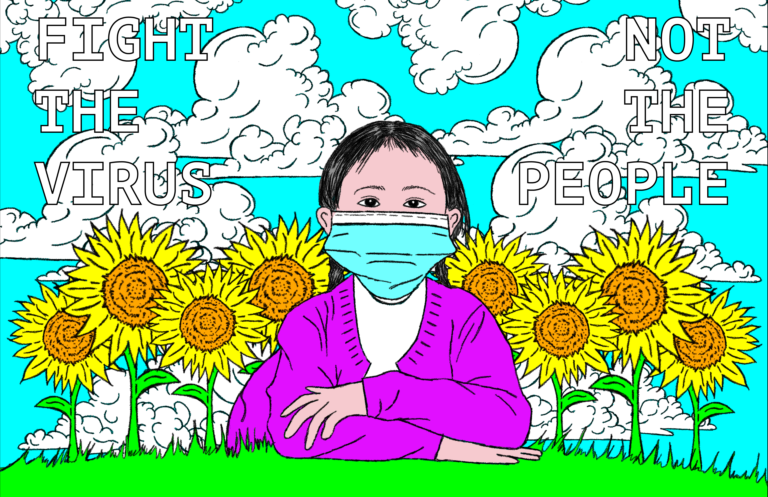
Hate crimes towards Asians and Asian Americans have been on the rise since the start of the COVID-19 pandemic. Recent attacks against Asian and Asian American seniors have caused outrage in the community that has called for an official resolution that would condemn anti-Asian violence. 

During the Woodland city council meeting on Feb. 16, the city of Woodland adopted a resolution that condemns anti-Asian violence. 

Council Member Rich Lansburgh explained the importance of adopting this resolution during the Woodland city council meeting.

“We need to stay as one because we’re all Americans,” Lansburgh said. “We live in this country, we live in this county, we live in this city. Let’s act as one people, and we’ll all get through this.”

Wayne Jopanda, the associate director of the Bulosan Center for Filipino Studies, noted that there are multiple factors that have contributed to the recent rise in anti-Asian discrimination. 

“One major factor that’s really prevalent is the heightened sense of xenophobia or anti-Asian sentiments that have been attached to and wrongfully connected to COVID-19 and the pandemic,” Jopanda said. “It’s increased in a sense because of a lot of anti-Asian sentiments—xenophobic sentiments—but to be clear, those sentiments have been there before COVID.”

He further described how the virus has been dubbed the “Kung Flu” and “Chinese virus.” As a result, Asians and Asian Americans of various ethnicities have faced discrimination.

Jopanda emphasized the uniqueness of every individual’s racialized experience, even among the Asian community. 

“Even though we all are underneath the umbrella of ‘Asian identity,’ we all have different ways of how we’re racialized under this experience of U.S. imperialism, white supremacy and heteropatriarchy,” Jopanda said. “And the same goes on with our black and brown brothers and sisters and other community members who have been historically marginalized.”

Council Member Victoria Fernandez explained in the city council meeting the necessity of having conversations about racism. 

“It is a conversation that we need to have,” Fernandez said. “Within our community, there is racism, there is fear about the unknown or the others, and unfortunately we are addressing this because it is a real issue for many residents, not only in Woodland but throughout our nation.”

Woodland Mayor Pro Tempore Mayra Vega explained in the Woodland city council meeting that individuals should feel safe within their own community. 

“We just want to challenge our community to speak about these things, to educate our children, to have conversations in our community,” Vega said. “No community member should feel any danger by going to the grocery store. We shouldn’t have fear of being attacked because of the color of our skin or our national origin.”

Woodland Mayor Tom Stallard explained in the city council meeting his reaction upon hearing about recent anti-Asian discrimination.

“I don’t know what kind of weakness of character causes people to feel that they’re somehow better or that they can attack another human being,” Stallard said. “It just simply escapes me.”

Woodland Police Chief Derrek Kaff explained in the Woodland city council meeting how he encouraged community members to reach out to the police department for help. 

“The Woodland Police Department absolutely stands with all members of our community,” Kaff said. “We are committed to remaining impartial, but to upholding the tenets not only of our nation but of our good community. This behavior can’t be tolerated here.”

Jopanda encouraged folks to speak up for others during their time of need. 

“If you see something, say something,” Jopanda said. “Centering victims first and foremost is always important, and then also unpacking and recognizing the systems in play. Collective action is needed and collective liberation has to be centered.”

Vega explained that adopting the resolution would be the first step, but more work needs to be done within the community. 

“This is just the first step,” Vega said. “Let’s think about how else we can address these racist issues to make Woodland a community that’s welcoming of all members of our community.”
Written By: Jelena Lapuz — city@theaggie.org

Couch Concert: Cierra Brown

0

The local musician shares her philosophy as an artist

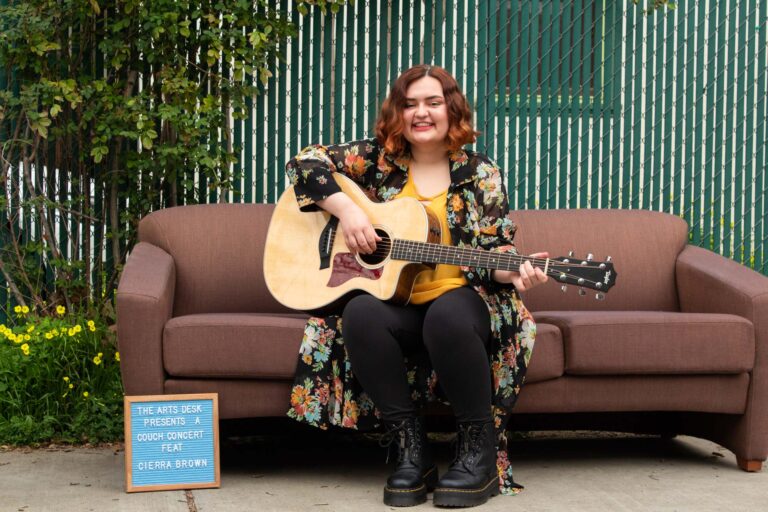
“Amy Winehouse was my first music love,” said Cierra Brown, a fourth-year English major. “I just love her voice and how unique it is and how organic her music is.” Brown also mentioned “artists like Daniel Caesar, John Mayer [and] Lady Gaga” when asked about her musical inspirations, because of “their different creative processes, the way that they express themselves.”

Brown has loved music from a young age, and her passion has been growing ever since. She regularly performs at open mics and posts covers of existing songs on Instagram. 

“I’ve been in love with singing ever since I was 3, but I didn’t really start to take it seriously until middle school,” Brown said. 

Although she mainly does covers, Brown has plans to release her own material. She shared that the process is akin to “releasing your diary to the world, almost. But it’s also kind of exciting in its own way.” Her style, both in these covers and her (thus far) unreleased material, is “alternative, soulful.” It’s marked by “R&B influences for sure. Pop influences.” 

Brown continued, “I’m sort of indie. I’m kind of a mix of all the different genres I admire.” She spoke carefully in our interview, considering each question before providing an answer.

When it comes to producing her covers, she takes an equally methodical approach: “The first thing I’ll do is I’ll listen to a song that I want to cover on loop, and I’ll remember the way it sounded in my head. But then, before I cover it, I won’t listen to it. And I do that so that I distance myself from the original work, and I can apply [the song] to my own life.”

Injecting her own personality and style is an instrumental part of Brown’s music-making process. 

“I’m often covering songs that I can relate to because I think emotion is one of the most important aspects of at least the kind of music I like singing,” she said. “I appreciate it when artists can put themselves out there and be like, ‘Hey, this happened to me,’ regardless of what it is.”

This personal aspect she attempts to harness is something Brown believes to be a prerequisite for success in music, on top of other qualities such as “being open, but also being open to honest and helpful critiques, and also not allowing a ‘no’ to be a ‘no.’” By this, she means pursuing your dreams regardless of how discouraged you might get—always aiming for something more. She’s even tried out for “The Voice” before. 

“Not giving up is the one of the primary ingredients of being a musician, or just an artist of any sort,” she said. “You need to believe in your own vision, and you need to see the strength in that, and you just need to keep on with it, even if outside things don’t look promising at times.”

Brown believes music, but also art in general, is important for everyone, “even if they aren’t naturally artistic.”

“Say they’re a science major, someone who’s more analytically minded—I just encourage everybody to try some creative outlet,” she said. “Especially during times like this.”

“Times like this,” of course, being emotionally and physically trying for many. “Music has always really empowered people through whatever they may be experiencing,” Brown said. “And I feel like in times of distress, or just world chaos like we’re experiencing right now, it can bring people together.”

Cierra Brown will be featured in one of The Aggie’s upcoming Couch Concerts. The video will be posted to The Aggie’s YouTube channel. 

Written by: Jacob Anderson — arts@theaggie.org

Academic Affairs Commission pushes for ethnic studies GE requirement at Feb. 18 ASUCD Senate meeting

0

A one-course ethnic studies GE requirement would follow in the footsteps of California state colleges that have already adopted the practice

Senator Amanjot Gandhoke called the meeting to order in the absence of Vice President Emily Barneond at 6:10 p.m. on Feb. 18. 

The Academic Affairs Comission’s quarterly report highlighted a collaborative effort with the Diversity, Equity and Inclusion Taskforce and the Ethnic and Cultural Affairs Commission to establish a general education requirement for ethnic studies. 

Commissioner Navreet Hundal, who presented the report, said she hopes they can put it into place in the next year or two, given that state colleges have already created a mandate for it

“It’s really important for us to follow in those footsteps,” Hundal said. “It’s just a one course requirement.” 

The commission is also looking into incorporating the syllabus for each class into Schedule Builder, mimicking similar course catalog layouts found at UC Irvine, according to Hundal. 

“It really helps if students are deciding if they want to take that fourth class to see if there’s a paper or a midterm, what the schedule is and how it aligns with their other courses,” Hundal said.

Other projects that the Academic Affairs Commission provided in the report include a survey requesting feedback about removing proctored exams due to accessibility concerns.

Clara Ginnell, the business manager for the ASUCD Bike Barn, and Meg Davis, the inventory manager, provided an update on how bicycle repair and the rental shop has navigated the ongoing pandemic since reopening in July. 

“We’ve taken a lot of COVID measures, which has allowed us to remain open without any exposures within the shop,” Ginnell said.

On top of a drop in sales, due to the lack of students on campus the shop will be losing its general manager Robert St. Cyr.

“He has worked with us for 24 years, so it’s definitely going to be a big change for us,” Davis said. “We’re going to miss him a lot.” 

The Bike Barn will be hiring a former employee as the general manager, and Ginnell said she is excited to see what comes next.

The ASUCD Entertainment Council presented their quarterly report, highlighting partnerships with HBO Max, the Mondavi Center and Healthy Davis Together which has been their main financial sponsor.

Galit Hara-Salzberg, the unit director for the council, said that they haven’t dipped into the funds that were allocated to the Entertainment Council this year because of the support.

“Because we got this funding from Healthy Davis, we’re going to be able to bring artists we would never be able to afford in a normal year,” Hara-Salzberg said. 

In partnership with the Mondavi Center, they have created free virtual open mics and have maintained virtual jackbox nights with students. 

Sammy Veres and Aparna Manoj, the co-chairs of the Mental Health Initiative, provided their quarterly report, which included a recent health conference as well as plans for mental health awareness month in May.

Senate bills #53 and #55 and Resolution #8, which is intended to recognize discrimination toward marginalized South Asian communities, were signed by ASUCD President Kyle Krueger with the resolution being forwarded to the administration. There were no actions taken on old or new legislation; the meeting ended early at 7:51 p.m. 
Written by: Kathleen Quinn — campus@theaggie.org


Does Major League Baseball have an ownership problem?

0

Even though the pandemic has brought everyone financial losses, the cost-cutting has been a long time coming

There is no question that COVID-19 has brought financial hardship to people across the world. The sports industry is no exception, as the loss of fans, sales and TV ratings were all factors that contributed to the substantial losses in these leagues. As much as it hurts these teams, they’ll likely recover, as the amount of money that they possess is enough to keep them afloat for however long this lasts. But although these losses may alter the future spending of some professional sports teams, the issue of money in Major League Baseball (MLB) runs deeper and began even before the pandemic. 

With an estimated loss of $1 billion, the shortened season coupled with no fans in attendance hit MLB hard. This caused many losses of jobs for minor leaguers, club employees and even workers in the stadiums as teams looked to save money. Even a big team like the Boston Red Sox cut the salary of anyone making over $50,000 a year as a way to lessen the losses. The Pittsburgh Pirates cut the 401k benefits for their baseball operations employees and some teams were even discouraging minor league players from applying for unemployment benefits, as this would affect the league if enough players received them. 

These financial issues bled into the regular season and also the offseason. Not only did many teams avoid major spending, but a lot of them unloaded talent for financial reasons. This may be seen as a result of COVID-19, but an in-depth look shows that it has been a long time coming for a lot of these teams, and recent losses are not a valid excuse.

The Cleveland Indians unloaded franchise superstar Francisco Lindor and starting pitcher Carlos Carrasco to the New York Mets in early January. Lindor is set to be a free agent after this upcoming season and is in line to get over $200 million for a long term deal. Even after making the World Series in 2016, Cleveland has been a fire sale since, determined to keep spending low, leading to subpar seasons. Although their owners’ valued net worth is over $4 billion and the team worth about $1.15 billion, the team will have a payroll of under $35 million this upcoming season, the lowest in the majors.

Speaking of low payrolls and subpar seasons, the Pittsburgh Pirates are on the same boat, as their lackluster past couple of years can be attributed to their unwillingness to spend. Valued at $1.26 billion, the Pirates have surpassed the .500 mark just four times since current owner Bob Nutting took over in 2007. Nutting, worth $1.1 billion, has long been known in the baseball world as an owner who complains about the finances of the game. The Pirates are not one of the richest franchises but their spending is not a result of lack of talent, since they have had some in the past. But, as many of these teams do, they preferred to trade or let them go rather than to pay them.

Another team that has fallen under the scope of penny-pinching is the Oakland Athletics. The Athletics’ money ways have been well-documented, and with an analytics-driven mentality, the team has found a way to field playoff teams without spending a lot of money. While they have been appreciated for finding ways to do so, they have hid behind their small success and found a way to avoid criticism of how cost-cutting they really are. The A’s mask as a small market team, but are a part of the sixth-largest media market in the U.S. Their owner, John Fisher, is the eighth richest owner in MLB, but his team constantly ranks near the bottom in payroll. Overshadowed by the image of Brad Pitt in the film Moneyball, the Athletics have long been seen as a feel-good, underdog-type team but in reality, it is more upsetting and frustrating for the fans than feel-good.

There are many more examples of teams like this in baseball, from the Kansas City Royals to the Baltimore Orioles and now recently, the Boston Red Sox, among many others. The common reasoning and excuse is that these teams do not have the same amount of money to pour in as the big market teams do. That, however, is untrue, as shown this same offseason with the San Diego Padres. Ranked 29th in biggest media market and being in the bottom half of the most valuable teams, the Padres have not been shy about spending to compete, giving Manny Machado $300 million and rising star Fernando Tatis Jr. $340 million as well as adding many more pieces like Yu Darvish and Eric Hosmer. Always known as one of the lower valued teams, their recent surge to try to compete has been evident by their willingness to spend, once again proving that a MLB team does not need to be in a big media market to compete. In contrast to public belief, the Padres have shown that spending to field a competitive team is more about the leaders in charge rather than the location. 

“We all lost money in the pandemic, but they’re all reading from the same script,’’ an anonymous West Coast-based agent told USA Today back in January in regards to this past offseason. “They say, ‘I have no idea what my budget is.’ Every single GM is telling me that. It’s all B.S. They don’t know what the budget is until they sign the player they want. They’re trying to manufacture a depressed market.”

All teams don’t make the same amount of money. Of course, there are some that bring in more than others, but there seems to be cost-cutting owners across all net worths Even with many using this pandemic as an excuse, the fact of the matter is teams rake in massive amounts of money every year, and hiding behind the pandemic losses does not erase the amount they’ve gained in previous years. 

Sports teams are supposed to exist to represent a community, not just to make their owners rich. Being that MLB is in a constant battle to try and garner the attention of younger viewers, the reluctance to spend may cause many younger viewers to turn away if their team is performing badly. Whether it is implementing a salary floor to at least set a minimum payroll or changing the luxury tax system, the MLB office has options as to how they can go about solving this issue, as its ramifications may not be evident until it’s too late. 

Written by: Omar Navarro — sports@theaggie.org

It remains unclear whether the COVID-19 vaccine will be mandatory for UC students

0

Amid statewide vaccine shortages and new coronavirus variants, herd immunity is unlikely in the near future

Although the UC anticipates reopening for in-person instruction for Fall Quarter 2021 due to advances in COVID-19 research and vaccine availability, university officials have not yet decided whether the vaccine will be mandatory for students. 

In an email sent to The California Aggie, UCOP Spokesperson Heather Harper said the UC “does not anticipate making the COVID-19 vaccine mandatory.” However, Dana Topousis, a spokesperson for UC Davis, said the decision has not yet been made for UC Davis students.

“Chancellor May and other campus leaders continue to consult with their counterparts at the other campuses and with UC,” said Dana Topousis, a spokesperson for UC Davis, in an email. “We will have further guidance once a system-wide decision has been made one way or another and once we’ve formulated our campus response based on consultation with public health officials.”

Dr. Cindy Schorzman, the medical director of Student Health and Counseling Services at UC Davis, also spoke via email about the UC’s reliance on changing public health guidelines when it comes to COVID-19 vaccine requirements for students during Fall Quarter 2021. 

“UC Davis will take into account any guidance and directives from UCOP, as well as those from federal, state and local public health authorities when determining vaccination recommendations for students in the fall,” Schorzman wrote in an email. 

Currently, UC Davis Health is vaccinating healthcare workers from both the university and non-affiliated health facilities. Other eligible individuals include people living in long-term care facilities, UC Davis Health patients 65 and older and UC Davis Health patients who work in education and childcare, emergency services and food and agriculture. 

A new COVID-19 variant has also emerged recently. Healthy Davis Together, in partnership with the UC Davis Genome Center, identified the B.1.1.7 COVID-19 variant in the Sacramento region the week of Feb. 8. 

This variant is considered more contagious than previous versions of the coronavirus. Health officials have predicted that the variant will double in relative frequency in the U.S. every 10 days. 

Accordingly, local public health representatives have stressed that while cases are declining in Yolo County, vigilance about current health guidelines remains crucial.

This may be even more important since access to the vaccine remains a challenge for many Californians, even if they are already eligible for the Pfizer and Moderna vaccines currently available to designated groups in the United States. 

Recent shipment delays and shortages in Los Angeles, Fresno, San Francisco and Yolo County—among other locations—have slowed down the vaccination process. An article in the Daily Democrat noted that Yolo County suspended vaccine appointments last week after shipments were delayed by storms in other parts of the country. 
Written by: Rebecca Bihn-Wallace — campus@theaggie.org

Give me your tired, your poor, your huddled masses to scapegoat

0

In times of crisis, American identity for minorities becomes conditional

We are born here, we have generations here and we have ties here. However, we are American until we are not. Scapegoating minorities during times of crisis has long been a trend in American history. Government leaders rear hateful, ill-informed rhetoric about minority communities during times of turbulence, sowing devastating seeds of blame to excuse injustice and civil rights violations.

We saw this occur in World War II. Just hours after the attack on Pearl Harbor, the government created lists of “enemy aliens”—mostly male Japanese American community leaders—to round up and detain. 120,000 Sansei (third generation), Nisei (second generation), and Issei (first generation) Japanese Americans were forced into internment camps per an executive order by former President Franklin D. Roosevelt. Before they departed, they sold their possessions, farms and livelihoods for next to nothing.

We see this occur now amid the pandemic: During his administration, former President Trump did little to soothe a nation wracked with worry, choosing to incite fear instead. Trump was persistent in framing COVID-19 as a “foreign” and “Chinese” virus despite the World Health Organization’s discouragement of associating a virus with its geographical origin. 

Asian Americans bear the brunt of this othering, racialized rhetoric when it is used to intertwine a virus to their identity.

Trump’s commitment to building walls of division during the pandemic has resulted in a rise of anti-Asian sentiment. Data collected by the Federal Bureau of Investigation (FBI) records 216 anti-Asian hate crimes in 2019. Data from the FBI for 2020 and 2021 has not yet been released, but organizations such as the Asian American Justice Center have recorded more than 3,000 hate incidents since late 2020.

An elderly Thai man was slammed to the ground in broad daylight, later passing away. A Southeast Asian American family was stabbed by a man who thought they were Chinese, with two children aged 2 and 6 among the victims of the attack. A 52-year-old Asian American woman was barreled into a row of newspaper boxes in broad daylight, now requiring a half dozen stitches. 

As anti-Asian hate crimes rise, it is essential to recognize that this is not an isolated trend. Scapegoating is only a distraction in perpetuating ill-intent rhetoric over searching for concrete solutions. By dehumanizing minority groups, their life and identity are effectively reduced to singular, hateful rhetoric. 

The malleability of minority groups’ American identity during times of crisis owes itself to the perpetual foreigner stereotype—where naturalized and native-born citizens are perceived as foreign because they are a part of a minority group. Asian American identity during the pandemic has become reduced to that of a foreign threat “carrying the virus that’s destroying our world.” Despite deep roots in this country, no amount of patriotism can betray a “foreign” face.

Asian American identity straddles the line of “foreign” and “American” but almost always, in times of crisis, strays closer to that of being “foreign.” Supreme Court case Ozawa v. The United States, for example, argued against the prospects of the Japanese being able to fully assimilate due to “marked physical characteristics.” The case argues it was not a mindset or merit that determined assimilation—and that compared to the other immigrant groups such as Italians, the “racial uniform” etched into a foreign face will serve as a barrier. 

The way Americanness is negated from Asian American identity is dependent on larger political forces. During the pandemic, Asian Americans are stripped of their American proximity, having their “foreign” faces emphasized to ingrain an association with COVID-19. Before the pandemic, Asian American culture was enjoyed,consumed and celebrated amid our nation’s “melting pot.”

As Jenny G. Zhang, a culture writer for The Eater, puts it, “Americans may love Chinese food, but they don’t love the people who make it. They reach for the products of Chinese labor and with the same hands knock them down on the street.” 

Celebrating Asian American culture amid the American melting pot still retains the conditional expendability of our American identity. The melting pot theory by design focuses on a homogenous society moving away from a heterogeneous one. If we expected to all “melt” into America, we would melt into a 76% white and 70% Christian nation. What is left is not a perfect blend of cultures, but the dilution of cultures minimized into a supposed version of American identity.

The melting pot expects a dilution of cultures to blend the stripping of one’s minority identity to stand in duality with Americanness. This is a consequence minority groups whose identities are scapegoated during a crisis are forced to grapple with.

Such is the case of Muslim Americans sharing in the #AfterSeptember11 on Twitter: One user shared how their 9-year-old brother was asked if he wanted to change his name and another how their mother had to display an American flag on their house so people do not throw rocks through their window. Because of society’s faulty association of terrorism with the Muslim American identity, individuals have to negate the foreign aspects of their identity, or hyper-emphasize a commitment to the U.S. in hopes of retaining some sense of security in an American identity now stripped away. 

 Anti-muslim rhetoric—such as the conflation of Radical Islam, Islam and Islamist, according to Ashalul Aden for the Sahan Journal—has led many to associate Muslim Americans with terrorism. This “dangerous mentality” has paved the way for anti-Muslim hate crimes. As Aden articulates, Muslims are not the enemy—terrorism is. Yet similar to the way the line between negative feelings towards COVID-19 and the people associated with its place of origin vanishes, the use of dangerous rhetoric to scapegoat a group makes it harder to distinguish humanity and easier to find blame in the matter.

Ho-Fung Hung, a sociology professor at Johns Hopkins University noted that “the virus itself doesn’t know ethnic boundaries.” This is true in the way the blame for COVID-19 has spilled beyond Chinese Americans and into other Asian American groups, and the way blame for 9/11 has spilled beyond Muslim Americans and into Sikh, South Asians and Arabs.

To reiterate the perpetual foreigner stereotype: Scapegoating is used to place blame, and a “foreign” face is all that is needed. There is no logic or reason in who is targeted. Vicha Ratanapakdee, who was slammed to the ground in broad daylight, is not of Chinese but Thai descent, yet his “foreign” face was sufficient as an instigating factor. Balbir Singh Sodhi, a Sikh man who wore a turban, was shot and killed in broad daylight by self-proclaimed patriot Frank Roque who stated that the shooting was in retaliation for 9/11.

Two decades after 9/11, the burden of blame onto Muslim Americans has left traumatic impacts: “Arab-Americans were traumatized three-fold […] the devastation of the attack itself, the backlash from individuals and new government policies targeting this population, such as the Patriot Act […] only added to existing trauma,” said Dr. Wahiba Abu-Ras, an assistant professor at Adelphi University’s School of Social Work. For many, a sense of safety has been eroded upon.

The actions and rhetoric of today will leave long-lasting impacts on the Asian American community. ShelterForce, a publication focused on community development, calls for a culture of sustained “empathy and solidarity beyond the crisis” as a solution. We need to hold onto the lessons we learned from Japanese internment, hate crimes in retaliation for 9/11 and COVID-19 beyond when life returns to “normal.” We need to address the way minority identity has been used as scapegoats in crisis, and how American identity is not given but constructed. 

Written by: Renee Wang — reswang@ucdavis.edu Disclaimer: The views and opinions expressed by individual columnists belong to the columnists alone and do not necessarily indicate the views and opinions held by The California Aggie.

Students and ICC staff member discuss pursuing remote internships during the pandemic

0

Students and staff share the pros and cons of virtual internships and tips for using this time to prepare for future careers

Internships in 2020 and 2021 look exceedingly different than they have in the past. Most have been remote, and many students’ internships set for last summer fell through last minute due to the COVID-19 pandemic. 

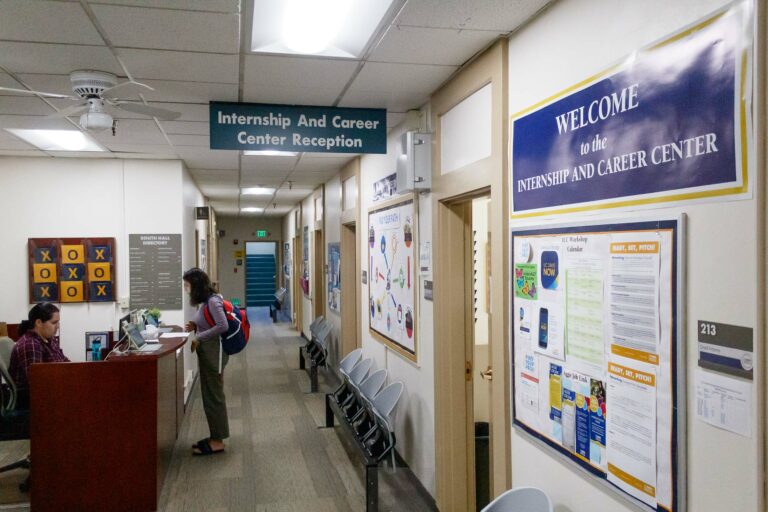
However, there are still many virtual options for internships and student jobs, according to Marcie Kirk Holland, the executive director of the UC Davis Internship and Career Center (ICC). Holland explained that the business world may look different during the pandemic, but student opportunities are still out there. 

“In many ways it’s changed, and in many ways it’s still the same,” Holland said. “Really, the important part of career development is that people know themselves and what their interests, values and skills are, that they know about the world of work and what’s out there [and] that they get some experience trying out the professions that they think they might be interested in. So, those things haven’t changed; the way we go about them [has].”

Not only are there still opportunities for students to find work experience, but Holland encouraged students to prioritize finding an internship even more during this time. 

“I promise you that every student that is in school right now, in an interview, is going to be asked, ‘What did you do during the pandemic?’ I think there’s no perfect answer, but people need to have an answer,” Holland said.

According to Holland, the pandemic has also given many students time to think about what career path they might want to take after graduation.

“I think that for many of us, our values have come into focus,” Holland said. “It’s not just COVID—it’s the bright light that’s been shining on disparities not only in healthcare, but in economic justice and political justice reform. All these things have converged to help people clarify what their goals are and what’s important to them. Not being able to be with people has made an impact on folks in terms of their priorities.”

In addition to giving students time to consider their job aspirations and what is meaningful to them, the pandemic has also opened up the world of remote interning, working and recruiting. In some ways such as location, the working world has become much more accessible to students.

“We’ve got companies that are recruiting at Davis that never used to,” Holland said. “An example that means a lot to some of the business-oriented students is Goldman Sachs, one of the top investment banking firms in the world, really. I’ve been trying to get Goldman Sachs to recruit at Davis for almost the entire 30 years I’ve been here, and all of a sudden in the fall, they had an information session that was virtual that they asked us to promote. So, it’s giving UC Davis students access that they would not have had.”

Another internship that is now more available to UC Davis students is with Each Green Corner, a Los Angeles-based company creating sustainable gardens to fight food insecurity in food deserts across the country. The non-profit had never recruited at Davis in the past, but this year, multiple students have been able to work remotely for Each Green Garden as grant writers or marketers. 

Holland credits more companies recruiting at Davis for the first time to Handshake.

“These companies that are posting on the East Coast can just push one more button and reach campuses like ours,” Holland said. “So we are on a platform that helps us take advantage of this opportunity as well.”

In the past, according to Holland, transportation has barred students from applying to internships farther away from Davis, but since the pandemic has proven that remote work can be done effectively, more companies are embracing work-from-home models. Especially for students, the ability to fit an internship or job into an already busy schedule is helpful. 

Sara Finkel, a third-year political science major, said working remotely allowed her to participate in her current internship.

“Honestly, I think just because it was online I was able to get [the internship] because it is located in Nevada in Vegas,” Finkel said. “I’ve been able to do it remotely fairly easily because it’s a lot of individual work.”

Finkel is working for the Susie Lee for Congress campaign, which is taking place in Las Vegas, NV. Although she is out of state, Finkel has been able to intern in finance—looking up donor history, contacting people for donations—from Davis. 

“I do really like that I can work on this kind of whenever I can,” Finkel said. “I work on it after business hours a lot which is nice. It’s good and bad, but I think the biggest pro is that it kind of fits with my current lifestyle.”

Jye Citizen, a fourth-year managerial economics major, agreed that online internships can be a better fit for students currently enrolled in classes.

“Being able to do it virtually is cool because I don’t necessarily have to commute,” Citizen said. “I don’t have to find a way to take a train or anything like that, […] but it also allows for a lot more flexibility. I’m able to fit my internship best with my class schedule.”

Citizen is on the men’s soccer team at UC Davis, so he has to balance both his class and practice schedules with his internships. Still, he has been able to do two internships this year: one during Fall Quarter working in real estate with Project Destined, a group that sponsors a real estate internship for diverse undergraduate students, and another with River City Bank during Winter Quarter. 

Both Citizen and Finkel said that despite the clear upsides of being able to intern remotely, they miss the face-to-face connection of in-person work. Finkel feels she is missing out on developing relationships with co-workers that could be beneficial later on.

“I think a big part of jobs, especially in politics, is who you know,” Finkel said. “I’m kind of missing out on running into people in the hallway and having a connection with them, or the other interns even, not really building a peer network.”

In addition to the communication challenge of remote internships, Holland is worried that many students are struggling to look for internships and jobs during this time.

“People are more stressed, things are just a little more challenging to do, and looking for a job is never top of the list,” Holland said. “It’s not like people wake up and say, ‘Well, I can’t wait to go look for a job,’ or ‘I can’t wait to get an internship and go interview and risk rejection and do this thing I don’t know how to do’ when you have plenty of other things that are demanding. So, we’re finding a […] ‘head-in-the-sand’ response to career, and I’m really concerned students are missing some great opportunities.”

There are ICC career fairs every quarter, so students looking for jobs or internships this summer can still register for the Spring Quarter fair starting on April 9. The ICC also has advisors who are holding virtual sessions where students can ask their personal, in-depth questions and get internship direction from ICC staff. 

Holland said that at this time, despite the challenges, it is important that students continue to work on exploring their future careers and building their skills for post-graduate life.

“Maintain hope, and take action,” Holland said. “Don’t let the uncertainty keep you from moving. Some movement is better than no movement. So, if the situation is that someone can’t do an internship right now, or their dream job is in an industry that is severely impacted by the pandemic, […] what can you do that will develop the skills that will make you competitive when the economy changes?”
Written by: Katie DeBenedetti — features@theaggie.org

Yolo County announces restaurant fee waiver program

0

Every little fee waiver helps, local restaurant owner explains

Yolo County announced in a press release that it launched a restaurant fee waiver program on Feb. 5 to support local businesses who are struggling due to the COVID-19 pandemic. The program will help restaurants with paying the fees to renew their Yolo County Environmental Health Division permits. 

The press release details that in order to be eligible to apply, restaurants must have current permits from the Yolo County Environmental Health Division and must have paid fees during the permit renewal from July 1, 2020 to June 30, 2021. The business also must have encountered a loss of revenue due to the pandemic that is greater than 25% of gross revenue. 

Businesses may apply in the online application, offered in English and Spanish. They must apply in the period between Feb. 5, 2021 and June 30, 2021. 

Tara Thronson, the supervisor’s deputy to Yolo County District 2 Supervisor Don Saylor, explained efforts made by Yolo County to assist impacted local businesses. 

“Depending on the impact they can qualify for a waiver of 50% or 100% of their fee,” Thronson said via email. 

Thronson mentioned that eligible bakeries, bars and restaurants have been sent an email, which includes information about the program and how they can apply. Businesses may also visit Yolo County social media or the press release.

Since businesses in Yolo County are battling to survive due to COVID-19 safety restrictions regarding operation manners, Thronson described how Yolo County searched for ways to provide relief. 

“The Board of Supervisors asked Environmental Health and Financial Services to look at what options were available to provide financial relief to restaurants that are struggling,” Thronson said via email. 

Kevin Wan, the owner of Sophia’s Thai Kitchen, applied to the fee waiver program and was approved. 

Wan explained that Sophia’s Thai Kitchen suffered losses during UC Davis’ Spring Quarter 2020. 

“We were down about 46%, which is not that bad—some restaurants are probably down, 60% or 70%,” Wan said. 

If a restaurant were to lose over 50% of revenue, they would be able to apply to receive a full fee waiver from Yolo County. Wan shared that their greatest loss was in April and May during strict lockdown orders, when they lost about 40% to 50% of revenue. As of February 2021, they are operating at approximately 30% less than usual.

Wan explained that one of the greatest challenges was following the government’s request to be only open for take out, since most of their orders had previously been dine-in.  

“Take-out pre-pandemic was probably only about 10% or 15% of our business,” Wan said.

On top of purely serving customers by take-out, Wan noted a general lack of customers, and he theorized that many people may not feel safe coming in. The volume of customers for take-out was not enough to sustain business operations in the restaurant, Wan commented, especially since they must pay fixed costs, such as rent and utilities.

“Those bills don’t stop coming, even during a pandemic,” Wan said.

Additionally, Wan explained that the ever-changing regulations can be expensive to follow. For example, to ensure that they are following social distancing guidelines, Sophia’s Thai Kitchen spent money on personal protective equipment for the employees. 

“We make all those investments, and then six weeks later, we could shut down again,” Wan said.

Wan mentioned how supportive the County’s Department of Environmental Health has been, from providing restaurants with guidance and safety expectations to notifying them when Yolo County falls into a certain tier.

“When a lot of restaurants right now are operating at a loss, every little fee waiver like that is a huge help,” Wan said. “The fee is not insignificant—it’s about $1,000 for just our little restaurant.”

Wan looks forward to seeing UC Davis students filling the streets again once the university reopens for in-person instruction. 

“It made us realize how symbiotic the university is to Davis, and how much students make up so much of the character of downtown Davis,” Wan said. 
Written by: Ellie Lee — city@theaggie.org

UC Davis female faculty, alumni discuss their achievements and offer advice to the future generation of female leaders

0

In honor of Women’s History Month, female faculty and alumni discuss their contributions to their local and global communities

This article is the first in a two-part series in honor of Women’s History Month in which The California Aggie will interview a few of the many distinguished women across campus who have made an impact on their community. These women discuss their various achievements, female influences and advice for young women as they pursue their future goals. 

Cindy Schorzman, MD, FAAFP, CAQUAM 

Medical Director for Student Health and Counseling Services 

Achievements 

Dr. Cindy Schorzman has been in the field of college health for 15 years. Schorzman has worked tirelessly to help college students get accessible healthcare. Recently, Schorzman has been heading the COVID-19 saliva testing project at UC Davis. In addition, she has been delivering COVID-19 vaccines through the on-campus clinic.

“We built and have maintained the team that stood up the initial testing kiosk, which has served as a blueprint for expansion into the community and beyond,” Schorzman said via email. “We built and continue to run the campus efforts for students for contact tracing and case investigation and coordinate with incredible partners, including Student Housing and Dining who continue to be amazing in their work providing [quarantine] housing for students with COVID-19 disease or exposure.” 

Major female influences 

Schorzman cited her seventh and eighth grade language arts teacher, Ms. Sue Lauria, as the most inspirational female figure in her life. 

“She was soft-spoken and kind,” Schorzman said via email. “But [she] was a fierce advocate for her students and constantly provided constructive feedback to encourage us to be at our best levels. She always wrote with a green pen instead of a red one because she wanted her feedback to be taken as positive and constructive, rather than punitive.” 

Advice 

Schorzman stressed the importance of connecting with female mentors and actively conversing with them. She also offered advice for women who might be entering a male-dominated field. 

“There is often a tendency for male colleagues to get credit for your accomplishments,” Schorzman said via email. “So keep good records and advocate for yourself when you can, in a professional and factual manner. Also, make sure to not make these same mistakes—recognizing those around you, and especially those who report to you, in a fair and accurate manner, truly acknowledging those who are doing the work.” 


Kelly Ratliff 

Vice Chancellor for finance operations and administration 

Achievements 

Kelly Ratliff has been at UC Davis since she was an undergraduate student and also went on to pursue her master’s degree at Davis. Currently, she has been coordinating COVID-19 testing and vaccination planning. Ratliff discussed her other achievements during her time at Davis. 

“My job is a lot like a city planner,” Ratliff said. “I do everything from finance and the budget to all the operations so facilities, safety services, campus police, fire and administrations like human resources. One of the things I have gotten really good at during my career is figuring out how to hire really good people who show qualities of leadership and support.”

Major female influences

Ratliff cited Susan Kovalik, the founder of the Center for Effective Learning, and Virginia Hinshaw, a microbiologist and a former executive vice chancellor for UC Davis, as the major influences throughout her academic career.

“Susan Kovalik was always a really strong mentor for me,” Ratfliff said. “She built her own company and was always off doing big public speaking engagements across the world. Another influential person in my life was Virginia Hinshaw, and she was our […] executive vice chancellor some number of years ago, and Virginia was a doctor of infectious diseases. I really learned a lot from her. She was just so smart and was able to use her knowledge to run a big university.”

Advice 

Ratliff offered some advice for women who are looking to make an impact on their community. 

“First I would say: find a good mentor,” Ratliff said. “Find someone who can give you advice and guidance. There is a lot of information out there on the internet, but connecting with mentors is so valuable because they can give you specific insight into your field and help you overcome any struggles. Another thing I would say is be curious and be yourself. If you stay true to yourself and bring your best effort to any opportunity you come across, it resonates with people.”


Heather M. Young 

Professor and Dean Emerita 

National Director, Betty Irene Moor Fellowship Program for Nurse Leaders and Innovators 

Achievements 

Heather Young began her undergraduate academic career at UC Davis and then became a nationally recognized nurse leader and educator. Young was also a founding dean of the Betty Irene Moore School of Nursing and the associate vice chancellor for nursing for UC Davis Health. Young also leads a fellowship program in which 10 Ph.D.-prepared nurses are given the opportunity to work on innovative projects and enhance their leadership skills. 

“It’s an exciting program because we’re investing in the next generation of leaders,” Young said. “These amazing people are going to continue to help the whole field move forward and grow, so I am excited to have the opportunity to work with all these individuals.” 

Major female influences 

Young cited Lucille Hurley, an international leader in nutrition research, as one of her greatest female influences. Young began working at Hurley’s lab as an undergraduate at UC Davis. 

“She gave me confidence and she saw something in me that I didn’t see in myself,” Young said. “She always set a high standard and encouraged undergraduates to contribute and step up to the research projects. It was because of her influence and her belief in me that I decided I wanted to go to graduate school and work toward my Ph.D.”

Young also noted attorney and former first lady Michelle Obama as a female figure she greatly admires. 

“I admire Michelle Obama tremendously,” Young said. “Her grace, class and ability to really motivate and inspire people is amazing. I look up to her a great deal because of her ability to navigate through very complicated situations and continue to be a strong, kind and loving human being and leader.”

Advice

Young offered some advice for women who want to make an impact on the world. 

“Know your passion,” Young said. “Know what you want, what the reason is for what you want to do and really think about why you want to do it. If you know all of those things [then] that will be like your North Star, and it will help you accomplish what you need to so you can achieve your goals.”

As an introvert, Young discussed how expressing herself through her written work has helped her make tremendous strides throughout her career. 

“Oftentimes when you are in a group, there will be a lot of people who will dominate the conversation and they might not listen very well,” Young said. “I find that when I write I can express myself more clearly than verbally, especially in situations when there is a sense of a power dynamic. When I have been on influential committees, I often offer to do the first draft because then I can get my ideas and thoughts out there on paper and then everyone else can work around or build on those ideas.”


Pam Ronald 

Professor in the Department of Pathology and the Genome Center 

Achievements 

As an undergraduate, Pam Ronald became interested in understanding how plants communicate with other species. Since she was about 18 years old, Ronald has worked toward understanding the mechanisms of immune responses in plants. Additionally, she has worked alongside other UC Davis professors to study a gene that is important for growing rice in flood areas. 

“This gene ended up being quite important because as the climate changes, rice farmers are seeing their fields flood more frequently and for longer durations, especially in South and Southeast Asia,” Ronald said. “Through our collaboration with the International Rice Research Institute, farmers now have flood tolerant rice that they can grow and harvest more grain from.” 

Ronald has also co-authored a book titled “Tomorrow’s Table: Organic Farming, Genetics, and the Future of Food.” 

Major female influences

Ronald cited Madeleine Albright as one of her major influences as a child because she held the position of Secretary of State, which was the highest national office held by any woman at the time. In addition, Ronald noted that her graduate advisor at Kansas State University, Jan Leach, also had a huge impact on her. 

“Jan Leach was a really excellent biologist, rice genetics and plant pathologist,” Ronald said. “She really helped me get started on my career. She helped me then, and she continues to help me now, and I am so grateful for her kindness and generosity. She’s done a lot for many young scientists, and she is a well-spoken and respected person.” 

Advice

Ronald offered some advice to women who are about to get started on their careers. 

“Keep going,” Ronald said. “Whatever it is that you want to do, don’t pay attention if people look at you strangely or discourage you. Find those people that want to support you and create your own community. It’s not worth worrying about people who are going to hold you back because there are so many people out there who will be willing to help you and guide you through things.”  


Jodi Nunnari 

Department Chair and distinguished professor in the Department of Molecular and Cellular Biology

Achievements 

Jodi Nunnari’s lab currently explores the mechanisms of the mitochondria in cells. Nunnari discussed how her greatest achievements include training and facilitating the success of young scientists who have been a part of her research endeavors. In addition to being a professor at UC Davis, Nunnari was the president of the International Forum for Cell Biology and an editor-in-chief at The Journal of Cell Biology. 

“Over the years I have loved working with students and watching them go on into other career paths,” Nunnari said. “Every person I have worked with has been so talented. Being a good scientist is not just about conducting research, but also mentoring and public outreach and policy are so important, and I have done quite a bit of all of those things throughout my career.” 

Major female influences

Nunnari cited her graduate advisor from Vanderbilt University, Lee Limbird, as someone who had a great impact on her development as a scientist. 

“Dr. Limbird made it in a world that was much more male-dominated than I experienced,” Nunnari said. “She became the chair of her department at the medical school in Vanderbilt, and she was a very strong and great role model for me.”

Advice

Nunnari offered some advice for women who are concerned with making decisions between family and career paths. 

“Women are typically expected to multitask if they have families and want to work,” Nunnari said. “Be kind to yourself, and be proud of the things that you have accomplished. You don’t have to make choices between careers and having a family, but choose the support system that works best for you—both in your career and personal life.”

Written by: Sneha Ramachandran — features@theaggie.org

Campus safety task force must consider greater institutional change when making its final recommendations

0

Although the task force’s initial recommendations are well-intentioned, more radical change is necessary to fundamentally alter campus policing

In response to large-scale national demonstrations and calls for local change to the system of policing in the aftermath of the death of George Floyd, Chancellor Gary May established the Task Force on Next Generation Reforms to Advance Campus Safety on June 11, 2020, to “examine what we can do to improve our community policing.”

On Feb. 2, the task force released its eight initial recommendations and will deliver its final recommendations in June, an entire year after its establishment last summer. 

Some groups such as UC Davis Cops Off Campus have criticized task forces as serving to delay the creation of change, proliferating signs that state “every time we hear the words task force a window breaks.” 

While significant change takes time and thoughtful planning and we appreciate the task force’s intention to evaluate the role of campus police and campus safety, a year should be sufficient time to accomplish more than just making official recommendations. 

Though Cops Off Campus opposes the campus safety task force, the Editorial Board hopes that the administration will still communicate with these individuals or otherwise involve them to discuss what a safe campus looks like to them. This would serve to take into account “a broad range of views,” as is the goal of the task force. 

Furthermore, the initial recommendations of the task force merely gloss over or do not even address many of the predominant concerns with policing such as the police budget and police unions. Instead, they focus on community outreach, open communication, transparency (all somewhat synonymous with one another) and an evaluation of police uniforms. 

While all of these goals are well-intentioned and important to discuss, the Editorial Board hopes for change beyond transparency and greater communication. Communication and transparency cannot fundamentally alter the flawed system of policing and deeper-rooted problems such as the quasi-military way police officers are trained to behave. 

There is some discussion in the recommendations of who should be responding to mental health crises, a greatly contested topic, as many departments are unwilling to move away from largely ineffective crisis intervention teams (CTIs). The task force stated that it would be “potentially worthwhile” to staff mental health and social workers to respond to such calls rather than police officers. 

The Editorial Board strongly feels that it is incredibly—not just “potentially”—worthwhile to reallocate policing funds toward staffing mental health professionals and social workers. We hope that the task force will recommend a reduction in the department’s extensive budgets in recent years ($8,550,000 in the 2019-2020 school year and $7,712,000 this year), as this money could be used to solve the issue of limited funds for hiring health professionals.

We also recommend that the task force and administration look toward models such as the reform experiment in San Francisco, in which health professionals respond to the majority of calls relating to mental health crises, as an example of change that could be implemented at UC Davis when making their final recommendations.

The Editorial Board also suggests developing digital student safety services that can easily direct students or community members in crisis to teams tailored to specific needs. These services would allow students to avoid contacting the police department for situations that may be better served by the presence of a mental health professional or social worker.

The last recommendation of the task force regards “continuing reforms,” but it greatly lacks clarity. In this section, the task force encourages Joseph Farrow, the chief of police at the UC Davis Police Department (UCDPD), to continue reforming the “culture and institutional nature of the department” which could take the form of “abandoning uniforms or other changes.” 

There does not, however, seem to be a logical jump between reforms to improve the culture of the department and abandoning uniforms. While wearing policing uniforms has been connected to officers’ behavior—”police departments wearing dark uniforms were more likely to act aggressively toward citizens than departments with lighter uniforms”—changing or eliminating police uniforms will not sufficiently change UCDPD’s institutional nature. Further action such as disarming campus police (which is only briefly mentioned under the uniforms section) must be taken if they truly want to impact policing culture. However, we are hesitant to condone additional police training as it could lead to an increased police budget without necessarily affecting change. 

Some community members, including Cops Off Campus, have called for the complete abolition of police departments. Although discussion topics for the town halls scheduled throughout the month of March include abolition and May has said that he is open minded about “significant, even radical reimagining of ‘campus safety,’” it is clear that campus police will not be abolished. Members of the task force, May included, have “expressed deep reservations about the viability of abolition upon learning that eliminating the UC Davis Police Department would cede the policing function to the Yolo County Sheriff’s Office.”

While we understand that these recommendations by the task force are not final, we hope that its members will seriously consider our suggestions and concerns when moving forward. We further hope that future task forces will strive to provide more timely recommendations or that the university will explore more effective alternatives to the creation of task forces. 

The Editorial Board strongly supports a significant transformation through aforementioned actions such as diverting funds from UCDPD to a mental health response team, in addition to decreasing police presence on campus.

Even after the final recommendations are made months from now, it will be a long and slow process to reform a more than 70-year-old campus institution. Providing severely lacking initial recommendations eight months after the upsurge of protests at a local and national level is simply not good enough. 

Written by: The Editorial Board

It’s time to start using person-first language

0

Words like “homeless” that we use to describe certain individuals can be used to oppress and dehumanize them

As Mark Twain so eloquently stated, “The difference between the right word and the almost-right word is the difference between lightning and lightning bug.” 

The words individuals use to describe others have an incredible effect on one’s perception of them and the attitudes and biases developed toward them. When people use words like “homeless,” “prostitute” and “drug-addict,” they are partaking in a potentially destructive behavior, as they are defining individuals based on a single aspect of their life, rather than focusing on them as people.

Person-first language aims to focus on the person first, and their situation or condition after, as those are only one part of one’s identity, rather than their entire identity. Using the word “person” first and their condition or situation last actively avoids the marginalization and dehumanization of people according to their condition or situation by enforcing their personhood before anything else. 

Jasmine Daragahi, a fifth year biological sciences major, and the undergraduate director of the UC-Davis affiliated, student-run healthcare clinic Joan Viteri Memorial Clinic (JVMC), discussed the importance of language and how it can be a vehicle of violence

“Humans are multifaceted,” Daragahi said. “Homelessness and drug use is just one aspect of someone’s identity, it’s not their whole identity, so we want to make sure that the language we use reflects this sentiment.” 

The word “homeless” has become a blanket term that misrepresents a large, marginalized group of society. These are human beings, but they are being defined solely by their home “ownership” status. Similarly, when talking about addiction, we must remember that it is a disease and not who a person is. Human beings are not addicts, they are suffering from addiction. 

When asked if the word homeless is derogatory, Alex Dillabaugh, a fourth year neurobiology, physiology and behavior and Spanish double major and a Clínica Tepati undergraduate volunteer said, “I believe it depends on the context, but no I don’t think it’s inherently derogatory… These terms are also used to offer assistance to these communities and [their] usage could be rooted in a lack of knowledge about… the most appropriate term for a group of people who share a common condition.”

But Dillabaugh still believes that “We need to transition to saying ‘those that experience homelessness’ rather than ‘homeless’.” Changing the terminology also shifts the perception of these individuals toward “a more humanizing alternative,” according to Dillabaugh.  

Conversely, Lillian Cheung, a fourth year human development major and JVMC volunteer, believes that the word homeless is derogatory.

“…Correct language absolutely matters in every part of our lives,” Cheung said. Especially when it comes to marginalized folks, she said, person-first language prevents people from distancing themselves from those groups. “We dehumanize them so much that it’s important to value them as people by using the correct terminology.” 

Correct language use is necessary when talking about marginalized communities, according to Dillabaugh. 

“Having broad, umbrella terms takes away the individuality of each person’s circumstances and these categories impact the way they are viewed and treated,” Dillabaugh said.

Person-first language enables individuals to talk about different groups of people in respectful ways, and avoid the marginalization and generalization described by Dillabaugh and Cheung. Examples of person-first language include: when referring to someone who uses alcohol or drugs, instead of calling them an alcoholic or a drug abuser, person-first language would refer to them as a person with a substance use disorder. Similarly, a person without a conventional home is not homeless—they don’t lack a home, since their home can be where anywhere they feel most comfortable. This person is not homeless, rather, they are experiencing a state of homelessness. 

There are potentially negative perceptions associated with these words, according to Hamad Arif, a third year political science and economics double major.

“I think the word homeless does have some sort of negative connotation,” Arif said. “What comes to my mind is people living outside, a sense of instability and bad luck somewhere down the road.” 

This type of description shows how referring to someone as homeless can cause people to base another person’s whole identity on their housing status and view them in terms of associated stereotypes.

At the end of the day, someone’s worth as a human being is not tied to the fact they have a mortgage or a rent to pay. No one is rewarding anyone for having a place to live. So why are people punished for not having the luxuries and opportunities that others might have?

“Using the right language is so important because a lot of these weighted words such as homeless and addict carry so much stigma,” Cheung said. “And there’s a lot of history of criminalization and violence from law enforcement and politicians, and it’s really important we are aware of the history of these words and ask community members how they want to be discussed and described in order to humanize them.”

Daragahi expressed similar sentiments. 

“As someone who has worked alongside and for vulnerable and marginalized populations, I want to make sure that my language reflects my thoughts and attitudes about such a diverse group of people,” Daragahi said.

Language is beyond just a string of letters and words used for communication. Language is art. Language can be kind. But language is also law. Language defines an individual’s attitude toward other people. 

“[Incorrect language use] dehumanizes those that society doesn’t really accept with open arms,” Arif said. “Those minority groups aren’t able to get the proper help they need, and rather than making it an individualistic problem, we put the blame on the person themselves and not on an issue with our own society.”

But individuals can actively choose the words they use and how they refer to people to change their inherent biases. It’s okay to not always know the “best” word for someone or their situation, but it’s the effort of trying to learn the most appropriate language that can lead to effective change. 

Trying is the least someone can do to change how people treat and discuss marginalized communities. It’s important to remember to convey one’s humanity through their words rather than using language that strips others of theirs. 
Written by: Muhammad Tariq — arts@theaggie.org

Students reconstitute ‘OWLs’ club for those 25 years and older

0

After a lapse in membership, the new executive board hopes to create a sense of community for non-traditional students at UC Davis

A group of older students have banded together to revive the Older, Wiser, Learners (OWLs) club which has been inactive since 2019.

OWLs is an identity-based club that aims to create a support network of students who are 25 and older to share life experiences and help navigate UC Davis. 

Sarah Theubet, a third-year communication major in her late thirties and the president of the newly revived OWLs, said she has had difficulty connecting to younger students.

“I don’t always feel like I can communicate with them in the same way that I can communicate with people closer to my age,” Theubet said. “I just felt it was really important to find those people.” 

Approximately 5% of UC Davis students are over 25 years old according to the UC Davis student profile from fall 2019. Many of them are transfer students and/or re-entry students.  

Rachel Mowbray, 31, is a third-year environmental science and management major who graduated from high school in 2007 and went back to school after a six- to seven-year break.

“Re-entry people have taken time off of school and decided to come back not because their parents want them to, but because they want to,” Mowbray said. “They understand the implications and sacrifices of that.” 

Michaela Boone, a fourth-year applied chemistry major, is the new treasurer for the club. She said, as she nears 39 years old, she feels lost at UC Davis.

“Because of my age, it’s hard to connect,” Boone said. “I’m usually the oldest in the class, everyone is younger.” 

The club is being resurrected after the last known officers were appointed in 2019, and it now has 37 active members. Theubut said she has not seen evidence that the previous officers met after the pandemic campus closures. 

“I know it was dormant all last quarter,” Theubet said. “From the looks of it, at least a year.”

Mowbray, who is now the club’s vice president, said she is really excited to get the club back up and running with the help of other members.

“Give it a new face, redefine it a little bit and get it back out there to support students like us,” Mowbry said. “It’s going to be great.” 

Theubet said that as far as school resources were concerned, there was still room for improvement working with older students—some mandatory seminars came off as condescending. 

“Personally, I felt like a five-day orientation was ludicrous,” Theubet said. “A lot of what they were talking about did not apply. It’s like, ‘No offense, but I’m a grown-up.’” 

Many older students have full-time jobs or children. Mowbray said she is looking for something different than what is normally associated with college life and would like more resources that understand where her priorities lie.

“A lot of the time we’re older and so we don’t have all these ideas of what college should be like as far as the sororities, fraternities or partying,” Mowbray said.

Theubet added that though there are some campus resources that miss the mark, there are also resources that have made a meaningful difference to her enjoyment of the university.

“I really have enjoyed the transfer center,” Theubet said. “They’re building a good community for us.”  

The Transfer and Reentry Center (TRC), which services transfer students who are 25 and over and/or student parents, will be partnering with the Women’s Resource and Research Center to launch a website to assist student parents, according to an email sent by Marissa Weiss, a transfer retention specialist at UC Davis. 

After immigrating from Germany to the U.S., Boone found that the degree she received in Germany would not translate into viable work and decided to go back to school.

“Within two years, I got my associates in natural science and math,” Boone said. “I was like, ‘Well I guess that works better than I thought, let’s shoot for a Bachelor’s.’”

Theubet said it’s important to remember that everyone has a different story about how they arrived at the university later in life. 

“I think we all have our own reasons for going back to school,” Theubet said. “It’s nice that we can share those experiences with one another.” 
Written by: Kathleen Quinn — campus@theaggie.org

Healthy Davis Together starting pilot for mobile COVID-19 testing at four Davis Joint Unified School District campuses

0

Project also expanding testing to Woodland, Winters and West Sacramento first responders

On Jan. 27, the City of Davis put out a press release announcing that Healthy Davis Together will be extending testing services to four Davis Joint Unified School District (DJUSD) campuses, as well as to firefighters and police in other Yolo County cities, such as Winters, Woodland and West Sacramento. 

UC Davis Health Director of Business Development Tod Stoltz explained that the project is also starting a pilot for COVID-19 testing at more DJUSD campuses.

“As we bring students back to campus in the school district, we want to be able to have testing operations at every campus, testing as frequently as is appropriate, either once a week or twice a week,” Stoltz said. “Students can get tested right there on campus, as well as the teachers and staff. With this pilot—it’s now expanded to six campuses—our goal is just to be able to effectively collect saliva samples from teachers and students that are going to those campuses and then get them to our testing center at the UC Davis Genome Center.”

Although the press release stated that four campuses will be included in the program, Stoltz said there will be six. The DJUSD website lists four new testing locations opening in March on top of their ten campuses that already offer COVID-19 testing. 

Stoltz also elaborated on the plans to test at other locations outside of Davis.

“All we’re doing in Yolo County outside of Davis is testing at skilled nursing and long-term care facilities,” Stoltz said. “We did that at the request of Dr. Sisson, who’s the Yolo County public health officer. We don’t yet have firm plans to expand into more testing at Yolo County, but we are thinking about it. If we can get everything done in Davis that we want to accomplish, then we will try to see if we have the budget to expand to other sites within Yolo County. Maybe that would be schools in Yolo County, maybe that would be other senior housing.”

City of Woodland Mayor Tom Stallard explained that there are few options for testing in Woodland.  

“The existing testing options in Woodland are mostly done through medical agencies and pharmaceutical agencies,” Stallard said. “For example, Woodland Memorial Hospital is providing testing, and also Walgreens and Rite-Aids [are providing testing]. The testing is pretty limited at this time. However, it’s my understanding that Healthy Davis Together is looking to become Healthy Yolo Together. That was a very generous thing, to expand the readily available spit tests to other parts of the county.”

Efforts are being made to locate a suitable mass-testing site in Woodland, according to Stallard.  

“I recommended that we look at the high school gymnasiums, because we would need a large, open space that has great air circulation. Of course, the gyms are not in use at the moment. Schools may go back into session, but that doesn’t mean we’ll have activity in the gyms at the beginning,” Stallard said. “Both Woodland High School and Douglas Middle School are campuses with two gyms each, so one could be used for COVID-19 testing—I’ve actually been in conversations with our school superintendent about this as a possibility.”

In addition to offering saliva testing, Healthy Davis Together is also monitoring the sewage system in Davis for COVID-19 genetic material, Stoltz explained.  

“The sewage monitoring system is really monitoring the whole population of Davis,” Stoltz said. “We’re doing that in two ways: we’re monitoring at the wastewater treatment plant, so that’s looking at the level of infection across the entire city, and then we’re doing more refined monitoring at certain locations within the city. There’s a lot of other cities that are doing monitoring at the wastewater treatment plant level. What is unique is that we are really aggressively monitoring within the sub-sewer zones within the city.”

Stallard, as a member of the 65+ community, recently received the vaccine, and he urged those who are eligible for the vaccine to get it as well.  

“The response to COVID-19 is an all-hands effort,” Stallard said. “Every one of us has to do everything we can. Get yourself tested if you have access, get yourself vaccinated if you have the opportunity, encourage others to do the same, and let’s all work together to get life back to as normal as possible.”  
Written by: Rachel Shey — city@theaggie.org