58.6 F
Davis

Davis, California

Monday, December 22, 2025
Home Blog Page 284

President Biden’s commitment to environmental and social justice are perfectly aligned with Catholic values

0

In parallel with the pope, U.S. must address the impacts of environmental issues on BIPOC communities

On Jan. 22, 2021, President Joe Biden became only the second Catholic president in history, with former President John F. Kennedy being the first. While I personally have no qualms with an Irish Catholic president named Joe, a lot of fundamentalist Catholics in the media and the church have slammed Biden for his moderate approach to issues like abortion and same-sex marriage. The claim that Biden is not Catholic because of his stance on these issues, which I have repeatedly heard over the past few weeks, is incredibly offensive and absurd.

I’ve been a practicing Catholic my entire life. I attended only Catholic schools until I set foot on campus at Davis, and I truly believe in the underlying values which Catholicism encourages. With that in mind, I do not think it is in any way “un-Christian” to criticize Catholic stances or to disagree with them. The church has repeatedly been wrong on many issues—going so far as putting Galileo under house arrest for promoting the theory that the Sun was the center of the solar system, not the Earth. 

Biden’s Catholicism is more in line with the intent of Catholicism in the first place, but you’ll need a bit of background to understand that. Traditionally, Catholicism has been rooted in what would be considered today as “conservative beliefs,” while also being on the fringe of American religious society. With the great social change of the ‘60s, the Catholic Church called together the Second Vatican Council in an attempt to modernize the church. Vatican II made sweeping changes to the church: getting rid of many outdated practices, calling for unity among the Christian churches of the world and, most importantly, officially recognizing the importance of religious freedom under democracy. 

Biden’s brand of Catholicism stems from the culture of deep systemic and progressive change that is best encapsulated by Vatican II. Although a turning point, Vatican II is not unique in the church’s history. From Saint Ignatius to Pope Francis, there have been progressive Catholics throughout the church’s history. And surprisingly, they didn’t always end up excommunicated or dead in a ditch. Pope Francis specifically has been criticized for his stances on a wide variety of topics ranging from gay marriage to the environment. In fact, Pope Francis’ first solo encyclical argues the importance of environmental justice and forming a global movement to fight climate change. This encyclical, “Laudato Si’,” was inspired by his namesake, Saint Francis, and argues that the governments of the world must address the systemic inequalities perpetuated by unregulated capitalism.

In his encyclical “Laudato Si’,” Pope Francis said, “There has been a tragic rise in the number of migrants seeking to flee from the growing poverty caused by environmental degradation. They are not recognized by international conventions as refugees; they bear the loss of the lives they have left behind, without enjoying any legal protection whatsoever. Sadly, there is widespread indifference to such suffering, which is even now taking place throughout our world.”

He continued, “Many of those who possess more resources and economic or political power seem mostly to be concerned with masking the problems or concealing their symptoms, simply making efforts to reduce some of the negative impacts of climate change. However, many of these symptoms indicate that such effects will continue to worsen if we continue with current models of production and consumption.”

This is a radical statement coming from the pope himself. It cements the fact that Biden’s commitment to environmental and social justice are perfectly in line with Catholic values. As an Irish Catholic myself, I find it incredibly frustrating when I see Catholics argue against radical climate action. If a directive from the pope can’t convince Catholics that we need immediate climate action, then I don’t know what will. 

An essential component of the pope’s directive is the importance of addressing the impacts of climate change on disenfranchised communities. In America, this means addressing the impacts of environmental issues on Black, Indigenous and people of color (BIPOC) communities, who are often disproportionately affected by pollution, climate change and environmental racism. It is the responsibility of Catholics and non-Catholics alike to call and take action for immediate systemic change.

Written by: Joe Sweeney — jmsweeney@ucdavis.edu 
Disclaimer: The views and opinions expressed by individual columnists belong to the columnists alone and do not necessarily indicate the views and opinions held by The California Aggie.
Alzheimer’s Buddies at UC Davis aims to create lasting connections with patients

0

The UC Davis chapter of the national organization educates its members to build an understanding of the devastating effects of the late stages of Alzheimer’s

Before the pandemic, the UC Davis chapter of Alzheimer’s Buddies (ABUD), a national student organization that builds connections with patients suffering from later stages of Alzheimer’s disease, took weekly trips to local senior facilities to maintain one-on-one contact with Alzheimer’s residents. Because in-person visits can no longer take place between the club and the senior facilities they were previously partnered with, the primary focus of the club is now to build understanding and compassion around the disease by educating their members on its physical, emotional and societal effects. 

The members of ABUD are currently working on holding virtual visits with their buddies. Certain senior facilities have allowed the club to compile and send care packages to residents during the pandemic. 

Vidushi Razdan, a fourth-year neurobiology, physiology and behavior (NPB) major and the external co-president of ABUD, looks for new members who demonstrate an interest in establishing emotional connections with residents.

“A lot of people who join our club are pre-med students or pre-health students,” Razdan said. “I know I am one too, so one of the big things we look at is someone who wants to make a lifelong connection with someone, not someone who’s just looking for patient care experiences because they’re not patients. They’re our buddies and we want to connect with them.”

Razdan emphasized that it’s important for new members to be aware of some of the behavior they may witness when visiting their buddies and to react with patience. 

“When I first went to my facility, there was one resident who always wanted to leave,” Razdan said. “You kind of have to take a step back and understand what is going on in the situation—what you can and can’t do—and I feel like with experience you get better at those kinds of situations.”

Arisha Kassam, a second-year NPB major and a new member of ABUD, stated that it is important to understand that the way an Alzheimer buddy acts toward you isn’t personal. An integral part of being a member of the club is having compassion.

“That’s just very important to remember that it’s not them, they’re not trying to attack you, they’re not trying to make you feel uncomfortable, they just don’t know any better for that matter,” Kassam said.

Sarkis Bouladian, a fourth-year genetics and genomics major and the Alzheimer’s awareness trainer of ABUD, is now in his third year as a member. Bouladian’s role in the club, which he created in part as a response to the pandemic, is to not only teach members how to interact with residents but to educate them on how Alzheimer’s impacts families.

“Sometimes minority populations are disproportionately impacted,” Bouladian said. “I like to talk about how those populations are also less likely to be able to pay for high-quality [assisted living facilities].”

For Kassam, it can be difficult to know that the club is not able to have the same kind of impact on residents during the pandemic, a time of uncertainty for many individuals. 

“It’s very very difficult for these patients to not have that human interaction and […] feeling of warmth where there’s someone who cares and it’s not just someone who’s [there] out of responsibility,” Kassam said. 

Bouladian recalls questioning if he was making a positive impression on the lives of residents when he was a new member of ABUD.

“I actually sometimes would think to myself, ‘What impact is this going to have? This person isn’t even going to remember, so what’s the point?’” Bouladian said. “But they actually do remember; you’d be surprised. Their face just lights up with a massive smile every time you sit next to them. They’re uplifted by your presence and you’ll be able to tell when that happens.”

Razdan recounted her visits with one of her buddies before the pandemic who first appeared to not be very interested in interacting with her. 

“She didn’t want to talk to me at all, so I thought she didn’t want me there,” Razdan said. “One day, I don’t know what compelled me to do it but I just kind of held her hand, and […] she wasn’t talking but you could see some tears in her eyes. I think that’s definitely a moment when I was like, ‘Yeah, I’ve definitely made an impact.’”
Written by: Lyra Farrell — features@theaggie.org

Woodland Memorial Hospital vaccinates vulnerable populations in Yolo County against COVID-19

0

Various other services are available for underserved populations in Yolo County, including relief funds and veterinary services

As various Yolo County clinics and healthcare providers continue vaccinating people who fall under stages 1A and 1B of the vaccine distribution plan, Dignity Health Woodland Memorial has partnered with Yolo County to vaccinate underserved populations.

Chief Nurse Executive and Chief Operating Officer of Woodland Memorial Hospital Gena Bravo explained via email that the hospital has been setting up vaccine clinics at “familiar and convenient locations” to immunize thousands of vulnerable residents against COVID-19, whether they’re migrant farm workers, undergoing homelessness or are from low-income neighbourhoods. 

“Each vaccine clinic is staffed by Woodland Memorial Hospital leaders and in some instances they will be joined by Woodland Clinic Medical Group physicians—all volunteering their time for this important endeavor,” Bravo said. 

Yolo County Public Information Officer Jenny Tan explained via email that vaccinating underserved populations shows members of these communities that they are being considered. Smaller areas or communities have also had postcards mailed to them and door-to-door visits, allowing Yolo County to answer any questions and focus on communication with these communities.

Tan also explained that communicating information through a broad variety of media is important to ensure that underserved populations have the same access to resources as others.

“It’s about finding out where people get their information,” Tan said. “Everyone is different. Some people get information from ethnic news media, others from radio, others from social media or the newspaper. For some, it may be even harder and have to be by word of mouth or phone calls. It’s important that we all take the time to learn which communication channels people use and invest the time, energy and money into them.”

In addition to the vaccine clinics, there are various other services available for vulnerable populations in Yolo County, many of which are continuing to operate during the pandemic. 

One example is the COVID-19 Local Relief Fund, which was created by the United Way California Capital Region for the five counties it serves in April 2020. It partners with local nonprofits to help low-income households weather the economic hardships caused by the pandemic. 

President and CEO of United Way California Capital Region Stephanie McLemore Bray explained via email that the fund has helped many families, and gifts to the fund have allowed crises to be averted for the community and these families.

“In Yolo County, we partnered with Yolo County Children’s Alliance, Rural Innovations Social Economics (RISE) and Empower Yolo to identify and qualify low-income families experiencing an increased financial hardship due to unpaid leave due to isolation, care of a vulnerable or infected relative, loss of wages due to involuntary cancellation of work, or unpaid leave of absence due to school or daycare closure,” Bray said. “One-time $500 stipends were awarded to these households.”

Through this fund, the COVID-19 Local Relief Fund gave $107,500 to 215 families in Yolo County by the summer of 2020. United Way California Capital Region is now working to help another 200 Yolo County families, aiming to assist over 400 households in Yolo County since the start of the pandemic with over $200,000. 

Another service that is available for vulnerable populations is Davis Pet Advocacy and Wellness (Davis PAW).

Rebecca Terrett, a UC Davis third-year graduate veterinary student, explained via email that Davis PAW is “a once-a-month pop-up clinic that provides veterinary access to the pets of the homeless community of Davis.”

Terrett listed the services that Davis PAW has provided for free since it started in October 2020. 

“We provide fundamental healthcare services including physical exams, vaccines, minor medical treatments, and basic diagnostics like bloodwork, and offer preventative medications such as flea, [tick] and heartworm prevention, all at no cost to our guests,” Terrett said. “After starting in October of last year, we continue to grow and most recently saw about 20 pets in February.”

Bravo noted that the pandemic has been difficult, but that Yolo County officials and the staff of local clinics have been working hard to keep residents safe and healthy. 

“It is not an easy feat but Yolo County has been an incredible partner and we also have amazing leaders at our hospital that continue to work overtime week after week for over a year since we began this fight against COVID-19 to ensure we’re able to get this done,” Bravo said. 
Written by: Shraddha Jhingan — city@theaggie.org

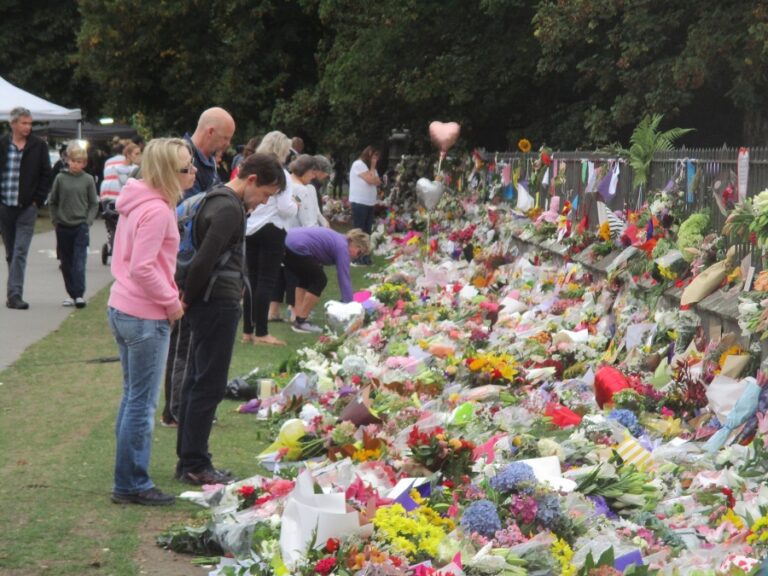
Why we need to understand the roots of riots

0

The Capitol riots signal the threat of extremism, leaving teenagers especially vulnerable for online recruitment

All hope was yet to be lost. During a “Save America” rally on Jan 6., former President Donald Trump rang the last battle cry. Holding on to claims of election fraud and ballot harvesting, Trump’s words gave his supporters the final spark they needed: “We fight like hell and if you don’t fight like hell, you’re not going to have a country anymore.”

A flurry of vandalism, violence and vitriol against President Joe Biden’s win in the 2020 election was unleashed onto the U.S. Capitol by an estimated thousands of Trump supporters. Riots aren’t built in a day, and Trump had been laying the inciting instruments throughout his term as president, from Tweets grounded in racist and xenophobic rhetoric to his reluctance to condemn white supremacist groups. The aftermath of the riot not only reveals the state of democracy in disarray, but cements Trump’s legacy for bringing far-right extremism into the mainstream.

The prominence of far-right extremism is especially concerning due to the historical ties between pandemics and extremism: “Since ancient times, pandemics have spurred sharp turns in political beliefs, spawning extremist movements, waves of mistrust and wholesale rejection of authorities,” wrote Marc Fisher for The Washington Post.

Isolation, blame and a paralyzing economy has people “in the absence of trust […] need[ing] to believe in something,” according to University of Maryland social psychologist Arie Kruglanski. Far-right extremism, according to Kruglanski, has picked up on these fears to manipulate people who may not normally subscribe to such ideology.

As the U.S. is facing mounting extremism, teenagers are left vulnerable especially during this pandemic. For many adolescents, their youth has been abruptly put on pause by the pandemic. A lack of social interaction and increased internet use compounds their vulnerability in being exposed to extremist ideologies at a time in their life when they are most malleable.

Cynthia Miller-Idriss of the Polarization and Extremism Research and Innovation Lab at American University lists an abridged version of extremist mobilization during the pandemic, from white supremacists targeting and scapegoating Asian Americans for COVID-19 to far-right extremists manipulating the protests following the police killing of George Floyd in an attempt to incite a race war.

Online gaming communities are becoming increasingly popular avenues to recruit teenage “culture warriors.” On streaming platforms like Dlive, white nationalists have been catapulted to top earnings, spewing hateful rhetoric as they stream. “Culture warriors” younger than teenagers are being targeted as well. An editor of the neo-Nazi website Daily Stormer has described the website as being designed to target children as young as 11.

Extremist groups are adept at converting bigotry into memes and humor—it is one of the prominent recruiting strategies. Jokes, as Twitch streamer Steph Loehr explains, remove accountability and create an othering narrative: those who aren’t laughing are “sensitive” snowflakes. Even if someone isn’t being directly targeted, they run the risk of absorbing this programming through social media algorithms that recommend similar content, according to William Baldét of the Center for Analysis of the Radical Right. 

Extremism is not just a growing threat within our homeland, but thousands of miles away as well—like a 16-year-old boy in my home country of Singapore. Recently detained for allegedly plotting to kill Muslims, inspired by the Christchurch mosque shootings. He is the first detainee to be inspired by far-right extremist ideology in Singapore. Extremism—and who is vulnerable to it—is not limited by geography, or a certain “type” of person.

In combating extremism on an individual level, I want to highlight the response by religious leaders in Singapore in understanding the importance of how we shape narratives around extremism. In particular, these religious leaders highlight the importance of “continue[d] efforts to engage and build relationships with youth. It is hard work […] [but] there are no shortcuts […] to fast-track this.”

Instead of passing judgement, or blaming extremism solely on factors like religion, it is important we tackle conversations about extremism with intentionality, lest we further isolate and radicalize individuals. A New York Times article outlines teaching resources for students to make sense of the riots at the Capitol and implores that we not only condemn the riots, but also understand the roots of it. 

Similarly, in order to combat extremism we need to understand its root causes: “These are people who have chosen hate and ideology as a drug of choice to numb the pain of underlying issues and grievances, and so we treat this the same way we treat addiction,” said Myrieme Churchill, the executive director of Parents for Peace. 

As Trump has encouraged far-right extremism to enter the mainstream, it is essential that we call out extremist tactics and behavior. When mother Joanna Schroeder voiced her concerns online about her sons being “softly targeted” by the alt-right on Twitter, she received 180,000 likes with many others sharing similar stories. By sharing her concerns, Shroeder exemplifies that extremism is not an isolated threat but growing within the trenches of the internet through social media platforms. Another mother chronicles in an online essay the journey of her 13-year-old son joining the alt-right, an honest depiction that extremism can happen to anyone—especially teenagers at their most vulnerable. 

Ultimately, it is essential we call out extremism as we seek to understand and recover from the riot of Jan. 6 and look more swiftly into identifying the causes that build up to extremism. We need to understand the roots of riots to protect those most vulnerable.

Written by: Renee Wang — reswang@ucdavis.edu Disclaimer: The views and opinions expressed by individual columnists belong to the columnists alone and do not necessarily indicate the views and opinions held by The California Aggie.

Aggies share their experiences as Trader Joe’s crew members

0

Two UC Davis students discuss working at Trader Joe’s during a pandemic

Located on Russell Blvd and Sycamore Lane, Trader Joe’s can be seen buzzing with students and community members in search of a new batch of groceries. With products like Chocolate Hummus and Scandanavian Swimmers, Trader Joe’s is the grocery store of choice for many students living off campus. Beyond providing a place to shop for food, Trader Joe’s also employs UC Davis students.

Shane Halpern, a second-year managerial economics and communication double major, has worked at Trader Joe’s for a year. Halpern began at a different location and transferred to the Davis branch this fall, continuing his role as a crew member. 

Prior to joining the staff, Halpern was a frequent shopper at Trader Joe’s and has fond memories of childhood experiences at the store. 

“I’ve been shopping at Trader Joe’s ever since I was little,” Halpern said. “I remember being a little kid and I would ride around in the cart and look for the mascot and go up front and get a lollipop. That’s one of the best experiences.”

Halpern’s role as a crew member involves a myriad of tasks such as working the register, restocking shelves and cleaning carts. Despite only being a part of the Trader Joe’s team for a year, Halpern stated that the experience has been undeniably positive. 

“I think it’s one of the most amazing companies that I’ve ever been with,” Halpern said. “They treat their employees really well and I like the atmosphere a lot.”

Halpern also shared that the store has taken the proper precautions to stay safe during the pandemic. 

“They’ve just done such a good job of keeping up to date with making their customers feel safe, limiting the amount of capacity of people that come in the store, trying to do social distancing, having hand sanitizer available [and] making sure everyone wears a mask,” Halpern said. “I think they’ve just done such a good job adapting to the changes over the global pandemic, and I haven’t really felt worried at all as an employee there.”

Moreover, Halpern sees his job at Trader Joe’s as beneficial for his future, as it gives him experience and knowledge in the business world. 

“I’m a managerial economics major, I want to go into food chain and supply,”  Halpern said. “And that’s kind of why I love working at a grocery store, [because I’m] learning the insides of it.”

While he enjoys many of the products at Trader Joe’s, Halpern’s current favorite is the Grilled Balsamic and Rosemary Chicken. 

Halpern said his experience working at Trader Joe’s has been valuable and was unable to name anything he did not enjoy about the job.

“I can’t name one thing,” Halpern said. “I’ve had multiple jobs in my high school career, and there hasn’t been a company that I’ve stuck with and wanted to stay longer with [other] than Trader Joe’s.”

Anthony Campbell, a second-year psychology major, has been a crew member at Trader Joe’s for four years. He began his career at Trader Joe’s in high school at a location near his hometown and then transferred to the Davis location after enrolling at UC Davis. 

Campbell’s role as a crew member involves the same responsibilities as Halpern, including restocking shelves and general cleaning. Amidst his tasks, Campbell values the special moments of community interaction he experiences while chatting with the customers. 

“I think one of my favorite parts is just talking to everyone, especially during the pandemic when we’re not going out doing too much,” Campbell said.

In addition to his conversations with customers, Campbell shared that the work environment among coworkers is positive as well. 

“Everyone’s happy to work with each other and always talking with each other and helping each other out,” Campbell said.

Similar to Halpern, Campbell praised Trader Joes’ efforts to stay safe during the pandemic, highlighting the strict cleaning protocols around the store. Additionally, Campbell described the store’s dedication to providing customers with a safe shopping experience, even if they do not feel comfortable coming into the store.

“If you call in you can give us a list and we can shop for you, especially if you’re immunocompromised and you don’t want to come into the store and risk yourself being exposed,” Campbell said.

Campbell’s favorite product at Trader Joe’s is the Jalapeño Flavored Corn & Rice Puffs, which he has been eating frequently since their introduction a couple of months ago. Looking forward, Campbell sees his future at Trader Joe’s continuing throughout his college career. 

“I definitely plan on working at least through college,” Campbell said. “It’s definitely a perfect job for being a student because the managers are pretty flexible with hours and accommodating to students, especially when you change schedules every quarter and have completely different classes at different times.”
Written by: Nora Farahdel — features@theaggie.org

The mRNA vaccine explained

0

The Pfizer-BioNTech vaccine creates antibodies just as effectively as other vaccination methods, but with the help of mRNA technology

Messenger ribonucleic acid (mRNA) vaccines have been making headlines this past year during the COVID-19 pandemic, but what exactly are they? 

Since the development of the smallpox vaccine in 1796, scientists have been continually searching for safer and more effective ways to inoculate the population. Mildred Unti, a pharmacology PhD student at Weill Cornell Medicine, explained the several ways viral antigens can be delivered through a vaccination.

“The three main types of ‘traditional’ vaccines are live-attenuated, where the entire virus is delivered to your body with a mutation that renders it ineffective at causing disease, inactivated, where the entire virus is delivered to your body after being completely inactivated, and subunit, where just a part of the virus (e.g. spike) is delivered to your body,” Unti said.

mRNA vaccines, such as the recently approved Pfizer-BioNTech’s SARS-CoV-2 vaccine, function in the same way as all vaccines: They take a safe sample of the virus and use it to train the body to fight off infection when it gets exposed to the full virus. The novel part of mRNA vaccine technology lies in the way in which this is achieved. 

According to an article from the Harvard Medical School, “mRNA, or messenger RNA, is genetic material that contains instructions for making proteins.” The proteins that mRNA codes for can be used for nearly everything in every cell, and each virus has its own specific mRNAs which code for its own proteins to make up the virus. This is analogous to the way every person has their own unique DNA that codes for everything that makes them unique. In a sense, the mRNAs serve as the recipe for making the virus. 

SARS-CoV-2, for example, contains mRNA that instructs the cells to make something called spike proteins. Under a microscope, these spike proteins look like a little crown on top of the virus, which is why SARS-CoV-2 is called a coronavirus, or “crown-virus.” The goal of the SARS-CoV-2 mRNA vaccines is to take a synthesized piece of the virus’s mRNA, one that encodes for a unique portion of the virus’s structure, and train the body’s natural immune response to respond to those unique structural characteristics of the virus. 

The Pfizer-BioNTech vaccine uses a synthetic piece of mRNA to target the spike protein of the SARS-CoV-2 virus. When this mRNA is injected into the body, the body’s natural immune system learns to recognize these distinct spike proteins, allowing it to create neutralizing antibodies that attack these distinct spike proteins and destroy any foreign bodies matching that pattern. It’s important to note that while mRNA vaccines do prompt your body to create antibodies, “mRNA cannot integrate into the [human body’s] genome and therefore doesn’t change the body’s DNA,” according to Unti. 

While the approved Pfizer and Moderna vaccines are currently effective at stopping 95% of infections, it still remains unclear how long this immunity lasts in the body, according to Unti. 

“There are two separate questions there. One: How long can the body’s immune system maintain immunity to the viral antigen delivered through an mRNA vaccine? And two: How long can the mRNA vaccine prevent you from actually getting sick?” Unti said. “Luckily, we don’t know either. Both may be virus specific and can realistically only be determined after long-term studies after mass vaccination.”

Unti added that COVID-19 variants may also impact the efficacy of the vaccine.

“As we are seeing with the South African and Brazilian variants, SARS-CoV-2 can gain mutations that render it somewhat resistant to vaccination,” Unti said. “This means that even if your body can still elicit an immune response from the vaccine, its efficacy may be determined by the changes in the virus.” 

While the pandemic has provided the most prominent use of mRNA vaccines to date, mRNA technologies have been in development since the 1990s, according to a 2012 article published in RNABiology. However, it wasn’t until recently that advancements in genetics have made mRNA technologies feasible. 

Part of what makes mRNA technology so exciting is the virtually endless possibilities. Moderna, originally founded as a cancer therapeutics company, has been exploring other uses for mRNA technology, according to Unti.

“Moderna has pipelines for heart disease, autoimmune disorders and rare genetic diseases,” Unti said. “mRNA technology is particularly useful for gene replacement because it’s a safer, cheaper and easier alternative to traditional gene therapies and doesn’t actually make any permanent changes to the body. With current technologies, however, mRNA gene replacement is relatively limited.”

From personalized cancer therapies to infectious diseases, mRNA vaccines can safely and effectively train the body’s immune system to respond. Now that the first mRNA vaccines have hit the market and have shown their effectiveness, the pathway for subsequent mRNA vaccines has been paved. As genetic technology advances, the mRNA fantasies of the 1990s are becoming a reality and have the potential to be used for far more than SARS-CoV-2. 
Written by: Justin Weiner —science@theaggie.org

New executive order revives highly conversed about topic in sports

0

As Biden introduced a new anti-discrimination law on the basis of gender identity, the sports world revisited the topic

The Biden administration signed an “Executive Order on Preventing and Combating Discrimination on the Basis of Gender Identity or Sexual Orientation” last month during President Joe Biden’s first day in office. 

The order mandates that all people should not face discrimination on the basis of gender or sexual orientation in schools, jobs or in any parts of life. 

“Every person should be treated with respect and dignity and should be able to live without fear, no matter who they are or whom they love,” the order reads. “Children should be able to learn without worrying about whether they will be denied access to the restroom, the locker room, or school sports.” 

The topic of gender identity has been heavily debated in the sports community. With this order in effect, the U.S. allows people to participate in a sport that aligns with their gender rather than the sex they were assigned at birth. 

 In the U.S., conversation about gender identity and high school athletics started a few years ago when two teenage transgender girls—Terry Miller and Andraya Yearwood—from Cromwell High in Connecticut were allowed to compete with the girls’ track and field team.

This decision came with a lot of criticism from people saying that Miller and Yearwood had an unfair advantage. Parents and students began to sign petitions to change the rules that allowed students to participate in athletics based on their assigned sex at birth.  

“There is no shortage of discrimination that I face as a young Black woman who is transgender,” Yearwood said. “I have to wake up every day in a world where people who look like me face so many scary and unfair things.” 

Today, 17 states, along with the District of Columbia, require transgender girls to be included in girls’ high school sports regardless of the sex they were assigned at birth. Six states do not have strict policies regarding sport and gender identity. The National Collegiate Athletic Association (NCAA) also endorsed a policy that allows transgender female student-athletes to compete if they have been taking gender-affirming hormones for more than a year. Their goal is to create “an inclusive environment for transgender athletes while also preserving the current level of competitive fairness in collegiate athletics.”

Not too long ago, some high-profile athletes as well as women’s sport advocates, including legendary tennis player Martina Navratilova, five former presidents of the Women’s Sports Foundation and five former Olympic gold medalists, proposed that the U.S. Congress and the Biden administration remove girls’ and women’s sports from the executive order who “have experienced all or part of male puberty (which is the scientific justification for separate sex sport)”. This group says it doesn’t want to remove transgender girls and women from all sports but would like to accommodate their sports participation in other ways, including separate heats, additional events or divisions among other things.

“We fully support the Biden executive order, ending LGBT discrimination throughout society, including employment, banking, family law and public accommodations,” Nancy Hogshead-Makar, a Title IX attorney and one of the leaders of the Women’s Sports Policy Working Group, told USA TODAY Sports in an exclusive interview. “Competitive sports, however, are akin to pregnancy and medical testing; these areas require a science-based approach to trans inclusion. Our aim has been on protecting the girls’ and women’s competitive categories, while crafting accommodations for trans athletes into sport wherever possible.” 

The order builds on a landmark ruling and extends protections against discrimination based on sexual orientation, gender identity and gender expression, and calls for the Supreme Court ruling to apply to Title IX, the federal law that prohibits discrimination in federally funded schools.

If schools are funded by the federal government, they are required by law to allow all girls to play on girls’ sport teams or face serious consequences.

“We understand that is a complicated issue and that one conversation won’t do it,” Hogshead-Makar said.

According to new research that examines testosterone suppression, even a reduction of testosterone will only slightly reduce the advantage of muscle mass retained by individuals assigned male at birth.

One of the researchers, Tommy Lundberg, recommends that individual sports set their own policies.

“It is easy to sympathize with arguments made on both sides,” Lundberg said. “It is going to be impossible to make everyone happy.”

With the new executive order being at the forefront of President Biden’s tenure, it has ushered in more clarity on this topic. The new order will provide transgender athletes more legal protection as they participate in the sports they love. Written by: Katherin Raygoza — sports@theaggie.org

Senate Bills #53, #55 and Senate Resolution #8 passed at Feb. 11 ASUCD senate meeting

0

ASUCD senators voted to support South Asian students and promote campus diversity

The Feb. 11 ASUCD Senate meeting was called to order at 6:10 p.m. by Internal Vice President Emily Barneond. 

Senator Tenzin Youedon was absent and Commission Chair Yalda Saii showed up late. 

The meeting moved into a presentation by Jeff Flynn, the general manager of Unitrans, who delivered a quarterly report.

 “We are still running what we’re calling an expanded summer schedule,” Flynn said. “This is what we used to run during summertime pre-COVID[-19]. We now have 30 minutes service [on lines D, G, J, K, M, P, Q, V and W] in order to ensure that there’s no more than 15 people on the buses.”

The buses carry approximately 1,100 passengers per weekday, according to Flynn. 

Additionally, Unitrans is instituting changes to achieve a smaller carbon footprint.

“We are currently rehabbing about a quarter of our fleets to replace their older, dirtier engines with the newest and low-emission technology for engines: near-zero emission engines,” Flynn said. “For those 13 buses that we are rehabbing, this [replacement] will extend their life another six years.”

Unitrans is also looking for more drivers. 

“We are about 100 drivers short for Fall ‘21,” Flynn said. “If we’re to go back to full fall operations, we need 175 drivers in a typical regular year, so we have a huge shortage.”

Julia Sullivan Pano, the Student Sustainability Career Fair (SSCF) commission chair, presented a quarterly report. 

“We started with our Green chats last fall, and that was when we interviewed environmental professionals,” Pano said. “We asked them a series of questions that we thought would be helpful for students when applying for jobs in environmental sustainability.”

During Fall Quarter, the Student Sustainability Career Fair also created a spreadsheet of job opportunities in the field and has been keeping up to date with over 200 job postings.

Creative Media then presented their quarterly report by Project Manager Suzanna Sim, Assistant Project Manager Morayah Horovitz and Aggie Studios Executive Producer Jillian Nguyen. 

“[We] will be offering numerous services for any and all ASUCD organizations for free, including integrated marketing strategy and social media campaigns,” Horovitz said.

Creative Media has been adjusting to COVID-19 by focusing on digital programs.

“We’re revamping a lot of websites, starting with the ASUCD website,” Horovitz said. “With everything going virtual, we wanted to update the website to display accurate and relevant information from using new photographs and including helpful information about UC Davis COVID[-19] guidelines.”

The presenters elaborated on their efforts to update the ASUCD website and to create social media posts for various organizations.

“We had a goal of hitting $10,000 by the end of the year, but I’m very happy to report that currently we have surpassed that, and we currently have $13,665 in earnings,” Nguyen said.

Barneond then directed the meeting to public announcements.

“The UC-wide Academic Senate is making a task force on the UC entry level writing requirement,” said External Affairs Vice President Maria Martinez. “CSA is going to be nominating four students, preferably from underrepresented backgrounds and those who are taking writing-intensive courses.”

Martinez elaborated that the deadline to apply for the task force is March 31.

UC Davis Pantry Director Ryan Choi then presented The Pantry’s quarterly report. 

The Pantry is currently spending $7,400 on expenses and receiving $9,100 in income, according to Choi. The Pantry’s new online ordering system enables volunteers and workers to track the quantity of food distributed to students.

Choi then discussed the UC Davis swipe system that allows The Pantry to see demographic trends.

“If a student swiped at this time and then placed this order, who would it most likely be in terms of the demographic information here?” Choi said. ”What trends do we see across a certain timeline?” 

Choi explained that this knowledge will cut additional costs and inform future decisions.  “From this swipe data, we’re able to look at their GPA, their time of admission, whether

they entered as a freshman or as a transfer student,” Choi said. “We’re [also] able to tell which major they belong to, which major or graduate school program they belong to, their ethnicity, their race, their citizenship status.” 

Senators expressed concerns over this new information in regards to the privacy of students, especially international students. 

“[Whenever a student swipes their card], it’s scrubbed cleaned,” Choi said. “There’s no way to track it back to that student. We only see the big picture, which is, ‘Out of the 709 students that utilized the pantry last quarter, ‘x’ percentage of them came from these demographics.’”

Senator Kristen Mifsud echoed several other senators by stating that the average student likely does not know this and making that disclosure is necessary. 

The table then reintroduced Senate Bill #53, which was authored by Senator Kabir Sahni.

“[The bill] draws in more international student-related resources on campus and assigns them as ex officios of the committee [while] also increasing the committee membership by one,” Sahni said. 

The bill passed unanimously.

The table then introduced Senate Bill #55, authored by Student Government Administrative Office Manager McKenna Weitzel. 

“This bill is another effort to kind of better organize the committee section of the bylaws,” Weitzel said. “[It] also [adds] some guidelines for when a committee should be dissolved and how it should be created to provide more incentive hopefully for committees, not just be sitting bacon.” 

Several senate members agreed that dead committees are a huge problem. However, they decided to remove the passage addressing them in Senate Bill #55. 

“There’s certainly issues that need to be solved here and that we need to put more thought toward,” ASUCD President Kyle Krueger said. “I don’t think that the way that this is framed is going to be the most productive solution.”

The amended version of Senate Bill #55 passed unanimously.

The table moved on to Senate Resolution #8, authored by Radhika Marwaha, a fourth-year global disease biology major.

“Davis is similar to many other American universities,” Marwaha said. “There is a gap in supporting the Dalit, Bahujan and Adivasi students, which refers to a caste of people within the broader South Asian student group.”

Marwaha praised UC Davis’ efforts to promote diversity and explained that this resolution strives to further that goal.

“There is a lack of institutionalization in that support,” Marwaha said. “It’s not present in our Principles of Community; there’s no distinct protected category around the issue of caste. As part of this resolution, my only goal is to institutionalize that support and make it possible for students to talk about this historically marginalized identity that they have.”

Senate Resolution #8 passed unanimously.

Barneond adjourned the meeting at 10:10 p.m.
Written by: Maddie Duley — campus@theaggie.org

UC Davis students discuss how social media influenced the 2020 presidential election

0

Social media has become the leading platform for voters to receive news regarding the election, according to students

In the 2016 presidential election, thousands of votes were attributed to the influence of social media. In the 2020 election, social media continued to be one the most widely used platforms for voters to gain information about presidential candidates. 

Fourth-year political science major Sasha Feuerstein explained that social media may have influenced many young voters who were participating in the election for the first time.

“I remember, right after the election, I was looking at all the different stats on voter turnout, and for this particular election there was a crazy amount of mobilization for the historically least-active voter base, which is 18 to 22,” Feuerstein said. “I think the turnout for that age group was almost double of what it was in 2016, and there were a lot more people who voted for the first time. And also people ages 18-22 have the largest social media presence, so I think there is definitely a correlation there.” 

According to Feuerstein, 2020 was a very “vocal social media year” that has never been seen before.  

“In 2016, we still had the same social media platforms,” Feuerstein said. “But the use of social media back then was nothing like we have seen in 2020. Now, everyone you follow and interact with on social media [is] trying to mobilize people by posting things about voter information, how to register and where to drop off ballots.”

Third-year political science major Gracy Joslin stated that in addition to social media’s influence on the 2020 election, it has also served as a means of communication and receiving news in her family. 

“I think media usage played a huge role in the 2020 election as well, especially for the Trump campaign since no outlet wanted to give him broadcast time as it could delegitimize their outlet,” Joslin said. “In general though, and having grown up in a politically polarized family, we have always tried to influence each other’s opinions especially through social media. Social media also [makes it] easier [to find] topics you are looking for instead of watching the news all day; something many of us don’t have the time to do.”

Fourth-year international relations major Manasa Gogineni discussed how social media usage has increased in part due to COVID-19

“I think that people use social media for news more than they ever have before,” Gogineni said. “Because of COVID-19, people don’t have in-person work or school as normal forms of social interaction, and I think people are starting to use social media to break this social disconnect.” 

Gogineni discussed how social media platforms have become a way for people to interact during a time of social distancing. 

“Social media has become a more normalized way of receiving and sharing information,” Gogineni said. “It has not only become a way for people to stay in touch with their friends, but it’s also a broader way for people to connect with their community, especially during the pandemic. I don’t really see us going back to using social media the way we might have pre-COVID or in the 2016 election.” 

Feuerstein detailed how social media has contributed to the spread of fake news, particularly during the election. 

“One of the drawbacks of the large influence of social media is how it can easily spread misinformation,” Feuerstein said. “With election news especially, there’s ways that people can manipulate videos to make candidates look worse or favorable and spread rumors—or even build up on the stereotypes of a candidate. And I think that is something that both parties do and supporters also play a role in.” 

In the 2020 election, social media platforms created algorithms to detect and censor misinformation in an attempt to prevent fake news from being spread. Feuerstein stated, however, that controlling information is easier said than done. 

“A lot of these platforms are kind of mitigating the spread of misinformation, but it’s still hard to control,” Feuerstein said. “Twitter and Facebook have things in place to address misinformation, and they censor things too, like Trump’s accounts getting suspended recently. But you can’t censor everything and catch every piece of fake news before it spreads. It’s crazy to think how quickly things can spread after just one post goes viral.” 

Gogineni said that, for her, social media is an untrustworthy news source.  

“I don’t think that social media is the best source of accurate information,” Gogineni said. “Social media often makes it harder to find accurate information and it’s much easier to come across misinformation. Also, now a lot of these platforms have algorithms in place that recommend content based on what you interact with more. So in that sense, you are likely to come across content that aligns with your values and that takes away from the greater perspective people should be getting from the news.” 

During the election, social media helped political parties gain traction and contribute to the polarization of political parties in the U.S., according to Gogineni.

“I think social media has played a big role in polarization, but at the same time it’s not like polarization has only existed on social media,” Gogineni said. “People can voice their opinions more readily on social media and we can look at things like Twitter memes of Ted Cruz. In some way, that is how people gain awareness on political issues. With this past election, we saw young voters especially use things like memes to advocate for a particular candidate or party.” 

According to Joslin, social media has had a great impact on the polarization between the two political parties. 

“Growing up, I was told that it was inappropriate to talk or ask someone about their party identification, but that norm has clearly changed a lot,” Joslin said. “Social media has increased the amount of political content, regardless [of] if the sources are valid or not, and I believe it has heightened polarization between candidates and their followers. Most of the people I connect with on different platforms are vocal and expressive when it comes to political beliefs.”

Supporters for both the Democrat and Republican parties have been using social media platforms to garner support for causes. Feuerstein explained how these platforms have been used to discuss opposing views.

“The days leading up to the election, I saw so many people put out statements or promotions on their Instagram stories in support of a candidate,” Feuerstein said. “Social media makes getting your opinion out there so easy, and it’s also become this platform of discourse. I think that has also made a contribution to the polarization we have seen.” 

Feuerstein noted that social media has become an incredibly accessible way for people to receive their news

“I think social media is going to continue to influence election turnouts on a larger scale,” Feuerstein said. “People in politics and the news are going to continue to use these platforms to reach more people, especially younger people.” 

Feuerstein cited Snapchat to be her go-to social media news source. 

“I personally like to watch those Snapchat subscriptions, and I always watch the Stay Tuned NBC stories,” Feuerstein said. “I like using [Stay Tuned NBC] because they have little clips of national and global news and it helps me stay informed, and the information is fast and accessible.”

Feuerstein encourages people to get their news from multiple sources in order to gain a greater perspective on world and national politics. 

“Every source has a little bias,” Feuerstein said. “I think the smartest thing to do is check out multiple sources and even read ones that you don’t agree with. A lot of these traditional media outlets like Fox News and The New York Times take really clear sides, but I think social media is kind of more in the middle because you can get both sides at once on your feed.” 

Joslin echoed Feuerstein’s beliefs on the validity of social media news, emphasizing the importance of being wary of the sources one receives news from.

“I think it is important to always be skeptical of what you read because you can frame almost anything to aid your preexisting beliefs or what you think your audience wants to hear,” Joslin said. “With traditional media, people will tune into the station that aligns with their party ideologies. With social media, it’s very similar because people will follow accounts that they feel they can relate to and believe.”

Feuerstein said that she believes the influence of social media will continue to grow in future elections. 

“I think social media is definitely going to play a big role in future elections,” Feuerstein said. “Now that we have seen the effects from the 2020 election and we know how important it is to have a call to action, I think that’s going to keep happening the more divisive people are in politics.” 
Written by Sneha Ramachandran — features@theaggie.org

As we approach the end of the quarter, now is a good time to reach out to instructors

0

Many of us are dealing with both school-related and pandemic-related emotional stress

The quarter system can be brutal even without the added emotional stress of living in a pandemic. Midterms start as early as the end of Week 2 and the next eight weeks can feel like a steady stream of never-ending exams, assignments and projects. If you feel burnt out, you are not alone. We are right there with you.

School can already feel emotionally stressful even without the added toll of being isolated from friends and loved ones, living through a violent riot at our Capitol, enduring climate change disasters and missing out on memorable events like in-person graduations. It is important to know when and how to ask for help when you need it. 

Although most of us are in classes so large that it is virtually impossible for professors to know everyone’s name let alone to get to know everyone personally, many of our professors truly care about their students and want to see them succeed. 

We know it is much more difficult than it should be to access mental health care and resources at UC Davis and other universities, but there are steps you can take to lighten your current academic burden. If you feel like you can’t meet deadlines without sacrificing your mental health, this is the time to email your professor and ask for an extension or for a different comparable assignment. If you do not feel like you performed as well on an exam or a paper as you know you could have if you were less distraught, now is the time to ask your professor for any opportunities to make up those points. The worst-case scenario is your instructor is unwilling to accommodate you, which is the same result as not reaching out at all—it is in your favor to at least consider doing so.

We are grateful for the instructors who have been so incredibly accommodating during remote instruction, and we hope others who have expected even more from their students than in a regular year will follow suit. There is more than one way to show competency of a subject matter, and one bad grade does not necessarily indicate a lack of understanding. Rather, it may indicate students are trying so hard to cope with emotional stress that they were not able to demonstrate their best abilities. We hope that professors will work with students to ensure they can still be as academically successful as they would have been in a year with in-person instruction, during which they would not be dealing with the emotional exhaustion brought on by pandemic life.

For students who set—sometimes unreasonably—high expectations for themselves academically, the following can be difficult to accept: One bad grade on an assignment, a midterm or even in a class will not determine your outcome in life, nor does it mean you are not an incredibly capable human being. The emotional rollercoaster that has been the last year of our lives is more than enough reason to forgive yourself for not doing as well as you feel you should have. Taking care of yourself will actually set yourself up for future success.

There are ways to make putting your best foot forward academically easier when you have to divert much of your time to emotional coping. Try setting aside time for the weekend or even part of your weekday during which you do not focus on schoolwork. We spend so much time on screens; if there is an activity you like to do that does not involve a screen, be sure to make time for it—The Editorial Board highly recommends pickleball. Days can start to blend together during this pandemic, and scheduling specific times to study during the week and fun activities for the weekend can help ground you in the present. Break up your assignments or studying hours into smaller, more manageable tasks. Grab a friend and enjoy the warmer weather by studying outdoors with some distance and masks.

You are so much more valuable than your midterm grade. Ask for help when you need it, take steps to make school work easier and more enjoyable and take it easy on yourself when you do not perform as well as you had expected. 

Written by: The Editorial Board

Who gets to censor what is on our social media platforms?

0

As social media and internet giants have banned political figures and platforms, some wonder how far their reach is

On Jan. 8, 2021, Twitter permanently suspended former President Donald Trump’s Twitter account. This was done primarily because of Trump’s alleged involvement with the Jan. 6 Capitol riots that left five people dead. 

In addition, following the attack on the U.S. Capitol, Amazon, Apple and Google removed Parler, the social media platform popular among far-right extremist groups, due to the backlash it received for being among the networks used to organize the Capitol riots. 

Social media platforms such as Facebook, Twitter, Instagram and even TikTok have since instituted some form of censorship or ban on Trump. 

According to the American Civil Liberties Union (ACLU), “Censorship [is the] suppression of words, images, or ideas that are ‘offensive,’ [and] happens whenever some people succeed in imposing their personal political or moral values on others.”

 In other words, censorship is the process by which offensive ideas are purposefully prevented by private entities or the government. However, when the U.S. government attempts to engage in censorship, it leads to issues with the First Amendment. 

Private companies are non-governmental agencies who are permitted to use censorship, through banning or suspending accounts, ideas or things, because they are not subjected to the First Amendment’s decree that “Congress shall make no law respecting an establishment of religion, or prohibiting the free exercise thereof; or abridging the freedom of speech, or of the press; or the right of the people peaceably to assemble, and to petition the government for a redress of grievances.” 

Simply put, the U.S. government shall not pass laws that undermine the constitutionally-outlined freedoms afforded to American citizens, notably in regards to free speech and press. 

Freedom House’s annual Freedom on the Net report found that 86.6% of respondents were in support of social media companies such as Twitter, Instagram and Facebook having power to engage in censorship. 

Other interesting findings include that 60.4% of respondents were in favor of the censorship of content encouraging violence, 54.3% for racist content and only 18.7% for conspiracy theories.

The censorship of Trump and Parler are potential examples of censorship used to protect American society as these two entities have often been engaged in dangerous online behavior. 

The fear that often arises is that social media platforms are private entities capable of easily censoring or removing anyone from their platforms, even arguably one of the most powerful people in the world—a sitting President of the U.S. 

Social media platforms’ main objective is usually to allow organic, unobstructed communication and sharing of varied ideas and content. However, by being able to easily censor such an influential goliath as a president, how much protection does the average user have? Furthermore, who is the rider of the moral high horse that gets to decide what is and is not worth censoring? 

As Americans who often value individual freedoms, it is troubling to some that the social media sites we use everyday are private corporations that can legally dim and censor our voices. However, when the content being published for millions of people to see can lead to immense danger, censorship may be necessary. 

Written by: Muhammad Tariq — arts@theaggie.org

A preview to Spring 2021 UC Davis Football

0

After long months of waiting, the Aggies are prepared to get back onto the field once again for the first time in over a year

In what’s been a whirlwind of an offseason, the UC Davis football team is now on the cusp of returning to the gridiron. A layoff of over a year has the team itching to get back on the field and what awaits them is a season unlike any other. 

“The hardest thing for us and for [the players] is the uncertainty,” said Dan Hawkins, the UC Davis football head coach. “It’s like some people say, ‘Don’t plan just prepare’ and we’re preparing. We’ll control what we know and the unknown you kind of have to let that go.”

The long offseason was one with many ups and downs, as changing county guidelines continued to shift the practices. Whether it was over Zoom, small groups or large practices, finding ways to stay connected with their old and new teammates was a big part of the Aggies’ offseason.

“It was very important for us to make sure that we were reaching out to the whole team,” said Bryce Rodgers, the defensive captain and a fifth-year psychology major. “I know the captains, we would stay in touch and talk about certain things. We would get groups going and we have other leaders that were making sure that every person on the team was being communicated with and nobody felt like they were on an island. During [COVID-19], where people might not be seeing too many people [or] people might not have been able to go back home to their family, you want to make sure that everybody feels not as lonely.”

After the National Collegiate Athletic Association (NCAA) announced their plans for a spring season of Football Championship Subdivision (FCS) back in September, many were skeptical about the odds of it happening. After the surge in COVID-19 cases during December, that doubt grew even larger. Nonetheless, 95 FCS teams are scheduled to play this spring, and even after all the questions and concerns, UC Davis is one of them.

“Coach [Hawkins] talked to us about having hope,” said Kooper Richardson, the offensive captain and a fifth-year communication major. “We never lost hope knowing we have such a great university here at Davis. We had a lot of faith that we would get it figured out at the end of the day.” 

The Big Sky Conference announced their plans for a six-game season which featured two bye-weeks that would be available in the case of a possible postponement. Montana, Montana State, Northern Colorado, Sacramento State and Portland State will not participate in this spring’s conference matchups, leaving it up to eight teams as they battle for a Big Sky Conference title. With this year’s FCS playoffs being only 16 teams instead of the usual 24, there will only be five at-large bids for the playoffs, making it even more crucial to win the conference.

Right off the bat, UC Davis’ season was put on hold. Cal Poly’s football program paused for a total of 17 days due to COVID-19 concerns, and both sides agreed to reschedule their Feb. 27 game. Because of that, UC Davis’ season opener will be delayed by one week, as they begin their journey against the Idaho Vandals on Mar. 6, in Moscow, ID. The last time these two teams matched up was in September 2018, when the Aggies handled the Vandals by a final score of 44-21 in Davis, CA. Being that Idaho has the luxury of playing a game before this matchup, there may be a rust factor that may play into the outcome of this game. 

After their matchup against Idaho, the Aggies will be back on the road once again the following week, as they travel to take on the Weber State Wildcats in Ogden, UT. The two teams met in October 2019 at UC Davis Health Stadium in a contest that saw the Aggies struggle on offense, not being able to keep up with the scoring and losing by a score of 36-20. After making last year’s playoffs, the Wildcats are poised to do so again, making the stakes for this game even higher. 

After two straight road games to start the modified season, the Aggies will finally host their home opener against the Cal Poly Mustangs on March 20 at UC Davis Health Stadium—the game that was postponed and originally scheduled for Feb. 27. UC Davis has won the last three meetings between the two teams and with this game coming in the middle of the season for both sides, it will be one to watch as they will have a better grasp on everything and the rust will almost entirely gone. 

The Aggies will remain at home for the following two weeks as they play host to the Idaho State Bengals and the Eastern Washington, both of whom they had recent memorable battles with. In one of the most notable UC Davis football games, the Aggies took down the Bengals in a 44-37 overtime thriller on homecoming. UC Davis trailed by 15 with 13 minutes remaining in the fourth quarter, but managed to string off 22 unanswered points to pull off the shocker. Later on that season, the Aggies once again found themselves in an unforgettable game—this time against Eastern Washington. After taking the lead with 1:13 remaining in the fourth, the Aggies gave up the go-ahead touchdown with :26 remaining, ending their magical 2018 season. 

In what will be the wrap-up of this short football season, the Aggies will once again see the Cal Poly Mustangs, but this time in San Luis Obispo. In the most recent Big Sky schedule release, they announced that all teams will play their closest drivable opponent in their first and last game. 

The preparation heading into this unorthodox season was one very different from others for obvious reasons. Those preparations took another turn, as offensive coordinator Tim Plough was hired by Boise State University, ending his productive time with the Aggies. There were some questions on whether they would be able to instill the new offensive coordinator, Cody Hawkins, and his changes with just 50 days before kickoff. But as head coach Dan put it, there wasn’t much change needed.

“The beauty of it is that we have a system here,” Coach Dan Hawkins said. “Cody will have a few tweaks that he likes that are different from Plough. The system of how we do it does not change. We didn’t have to go to square one to re-learn our offense.”

With Plough leaving, it added another layer of uncertainty on the offense, which lost its star quarterback of recent years Jake Maier to graduation. Maier’s production was record-breaking and while his historic production may not be replicated, there is optimism in the offense. 

“We have a great connection with all of our [quarterbacks],” Richardson said. “Obviously with Jake not being here, it definitely sucks because he was one of my best friends. Not having him back there is definitely different. But, I’m still friends with everyone else and we feel very comfortable with any [quarterback] that is back there. Our [quarterback] room is unbelievable. We have so many great guys.”

It remains to be seen how the long layoff will ultimately affect the team, but with a six-game season, the margin for error is very slim. The possibility of reaching the playoffs with an at-large bid has only been minimized, so with many big games against conference favorites, the Aggies will have their work cut out for them. 

“Just being able to get on the field for any amount of time has been a real blessing,” Rodgers said. “I think however long the season is going to be, I’m just really appreciative to get the time to be out here.”

In the end, after so much uncertainty surrounding whether this season would actually happen, the players feel it within arms reach and are amped up. With kickoff right around the corner, there is a sense of satisfaction and appreciation in returning to the field again, but the ultimate goal to win remains. 
Written by: Omar Navarro — sports@theaggie.org

Davis Blended Vacancy Rate rises to 12.2%

0

UC Davis Housing Department survey reveals highest vacancy rate in years as pandemic creates housing uncertainty

On Feb. 3, the UC Davis Student Housing Department released its annual vacancy survey for 2020, which revealed some of the highest blended vacancy rates since 1992. 

According to the survey, the Blended Vacancy Rate, or combined unit lease and bed lease vacancy rates for all rental units, is 12.2%. This is significantly higher than the previous two years’ at 0.5% and 1.0% for 2018 and 2019, respectively. 

Mike Sheehan, the associate vice chancellor for Housing, Dining and Divisional Operations, explained the purpose of the survey and why this year’s data differs from past years. 

“The survey is a tool for the university, local government and local property managers to understand key variables within the Davis rental market,” Sheehan said via email. “The 2020 vacancy survey is demonstrating the impact of the global pandemic as we now have the highest vacancy rate since 1992 (for apartments leased by the unit).” 

Sheehan explained what the increase in the vacancy rate means for the local economy.  

“Increased vacancy means fewer students living on-campus and within the City of Davis,” Sheehan said via email. “The financial impacts to the university, local businesses and local property owners are significant.” 

With UC Davis moving forward with planning for fall 2021 in-person instruction, Sheean explained that the Housing Department is also preparing for in-person learning. 

“We know students want to be on campus for instruction,” Sheehan said via email. “UC Davis has a record number of applications for the upcoming academic year. We are moving forward with all of our construction projects to ensure readiness for students’ return. The market is expected to rebound quickly once the pandemic is under control. We are planning for normal occupancy for the upcoming academic year.” 

Sheehan explained that observing proper health protocols is the most important aspect of an in-person return in fall quarter. 

“Safety is our top priority. UC Davis has been following and at times exceeding all state and local guidance to reduce the risk of transmission,” Sheehan said via email. “We will continue to work with the Yolo County public health office as we develop our plans for the next academic year.” 

Karen Mattis, the property manager for the Arbors Apartments, explained the financial difficulty the pandemic has caused for both residents and local property managers. 

“I think that it was a big adjustment for everybody,” Mattis said. “It’s a hard situation. It’s challenging because there are residents who were affected dramatically—but on the flipside, we had a contract with them, so we did our best to balance out where we could.” 

Mattis explained that safety is a top concern for apartment complexes, leading many to close amenities. 

“As of right now, our gym, pool, spa and clubhouse are closed completely,” Mattis said. “We opened [amenities] for maybe a month by appointment, but once we went to purple tier we closed again. Keeping everything and everybody safe [is] the most important thing.” 

Mattis explained that despite the difficulties of the past year, she is hopeful for the upcoming school year. 

“I’ve been doing this for 20 years, and we’re just not seeing the traffic that we normally see—everyone is waiting to see what happens next,” Mattis said. “I don’t want to say that I want everything to go back to normal, because I understand that things will be different, but I’m hoping that school will be back in person in the fall and that students and residents will be able to come back.” 

Lesile Diaz, a third-year pharmaceutical chemistry and Spanish double major, explained that she’s living with her parents while paying for an apartment room in Davis. 

“I’m currently living back at home in San Diego, CA, and paying for my room up in Davis,” Diaz said via email. “I’ve decided to live at home to be safer and spend some time with family during these times.” 

Diaz described her plan to return to campus, noting that it’s been harder to study and stay involved back at home. 

“I will be going back spring quarter since I realized it’s very difficult to study here at home,” Diaz said via email. “I’m hoping that going back to campus and having a different place to study will help motivate me to finish the year strong. I’m also hoping it’s possible to find more opportunities to get involved if COVID restrictions allow.” 
Written by: Yan Yan Hustis Hayes — city@theaggie.org

More positive impacts that students and staff have made in their community during quarantine

0

How volunteer and service organizations have continued to improve their communities in the pandemic

As a continuation of the pandemic positivity series, UC Davis organizations discuss more ways in which they have continued to support the local community. 

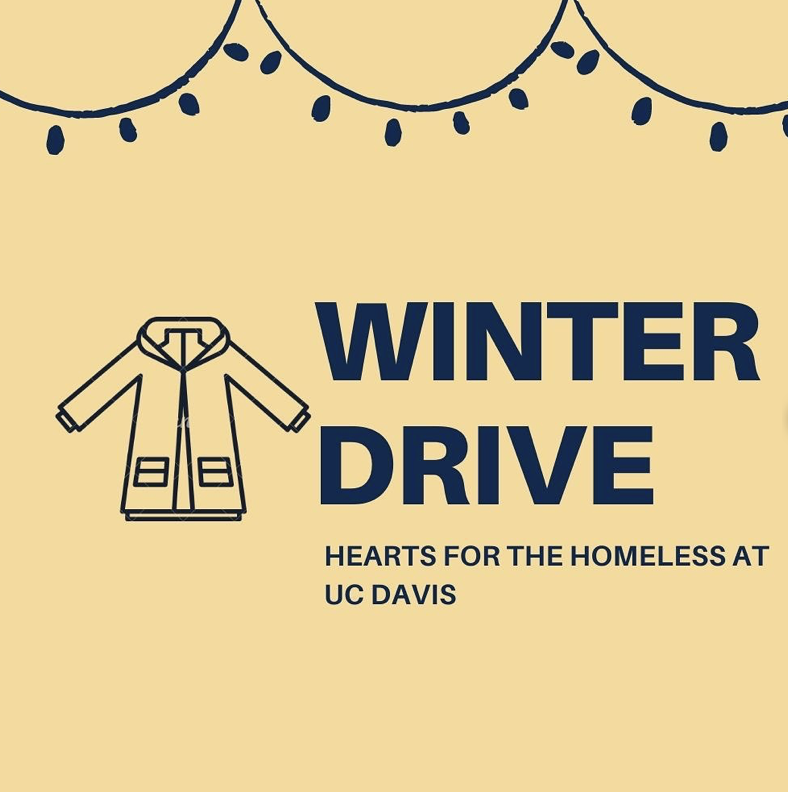
A social media promotion held by Hearts for Homeless.

Hearts for the Homeless

Hearts for the Homeless is an international organization that provides free services to the homeless population in the Davis and greater Sacramento areas. Fourth-year neurobiology, physiology and behavior major Shrushti Patel is the president and co-founder of the organization. Patel discussed the efforts being made by the organization during the pandemic.

“So far we’ve done fundraisers and drives to collect donations that we’ve given to local homeless shelters and churches for distribution,” Patel said via email. “We are currently in the process of planning our first telehealth screening event where we will be checking patients’ vitals and educating them on ways they can prevent cardiovascular disease through diet and exercise. In addition to that, we’ve made little COVID-19 care packages that included masks, hand sanitizer bottles and socks which were passed out in downtown Davis.”

Volunteers of Willow Clinic.

Willow Clinic 

The Willow Clinic is one of the nine student-run clinics in the Sacramento area. The clinic aims to provide accessible healthcare to the underserved homeless population. UC Davis undergraduate students work alongside medical students and doctors to provide health care services and health education. Fourth-year biochemistry and computer science double major Jeffery Hooper is an undergraduate volunteer at the clinic. Hooper commented on how the clinic has continued to help their patients during quarantine.

“We are trying to find new ways to serve and support our patients during this difficult time,” Hooper said. “Every Saturday we hold a telehealth clinic where patients can call in and receive medication refills. The medical students handle the majority of the visit while the undergraduates deal with the social service aspect of the patient care. We have also helped create care-kits for our patients to give away. And we have been developing a book to give to patients to help log information such as the exercise, blood sugar and meals so that they can better manage their health concerns like diabetes.” 

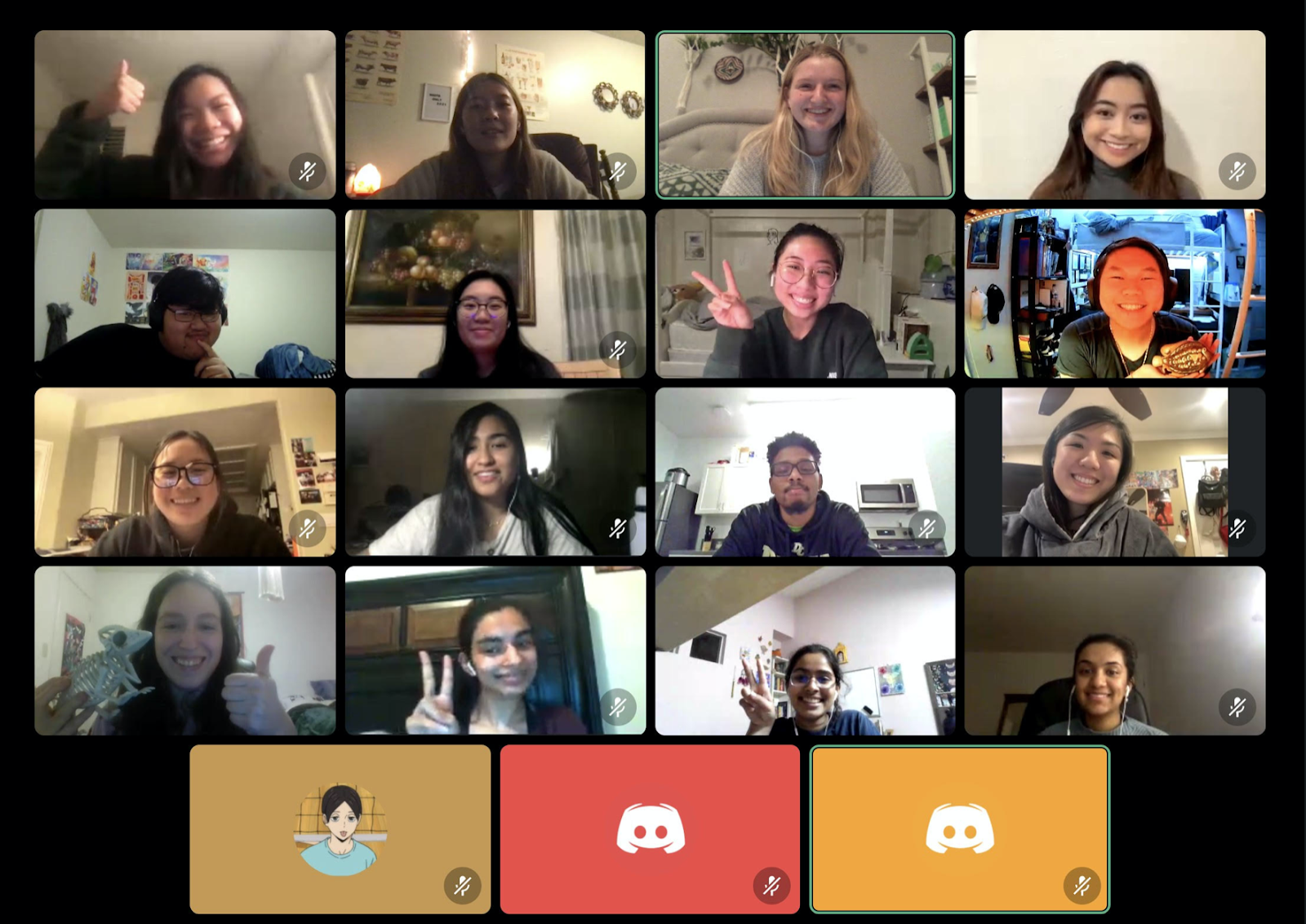
Zoom meeting of Alzheimer’s Buddies members.

Alzheimer’s Buddies 

Alzheimer’s Buddies is an organization that aims to bridge the gap of the social disengagement that many people diagnosed with late stages of Alzheimer’s experience. As part of the organization, volunteers participate in weekly visits to patients that suffer from dementia to provide them with support and companionship. Fourth-year neurobiology, physiology and behavior major Vidushi Razdan is a current member of the organization. Razdan discussed the efforts being made by the organization to continue to engage with the community. 

“During the pandemic we have focused on raising awareness, fundraising and having informational training sessions,” Razdan said. “We have also made care packages for our buddies and raised over $600 for the Alzheimer’s Association.” 

Zoom meeting of Global Medical Brigades at UC Davis members.

Global Medical Brigades 

Global Medical Brigades is a non-profit organization that aims to improve the health of underserved populations around the world. Under normal circumstances, club members are given the opportunity to spend time abroad to help local communities in countries such as Panama, Ghana and Greece. Fourth-year psychology major Kaitlin Zheng is the president of the UC Davis Global Medical Brigades. Zheng discussed how the organization has continued to partake in outreach efforts during the pandemic. 

“We decided that in order to continue making an impact [from] the safety of our homes during quarantine, we would redirect our efforts into virtually supporting our local communities at home,” Zheng said. “This was done by encouraging our members to fundraise for funds such as Habitat for Humanity, participating in the UC Davis Chi Omega Wish Walk, and our biggest impact was raising $698 for Feeding America, a nationwide network that works to reduce hunger in struggling families and individuals across America. Furthermore, we also provide non-monetary outreach opportunities for members such as using phone apps that track steps to reach 10K a day to donate a free meal to a person in need and another that donates grains of rice for correctly answered trivia questions.”
Written by: Sneha Ramachandran — features@theaggie.org

Student-run organizations advocate against housing insecurity

0

Representatives from several student-run organizations discuss their efforts to combat housing insecurity for Davis students

Winter Quarter is typically when students begin looking for housing for the next school year. This process can be daunting enough as it is, especially for first-time renters, but even more so due to the uncertainty brought about by the pandemic. Several student-run organizations are working to tackle different student housing challenges.

ASUCD Housing Advising for Undergraduate Students (HAUS) helps students to connect with property managers and learn about housing resources. Citlali Plaza, a third-year community and regional development major and the Unit Director for HAUS, said that their main event for Winter Quarter, Housing Day, was a week-long virtual event. During the week of Feb. 22 to Feb. 26, students listened to student panelists, met potential housemates, learned about renter rights and met with property managers to find a suitable home in Davis.

“It’s really a helpful event to know what to be prepared [for] when looking at a lease,” Plaza said. “Davis is a really unique setting where the vacancy rate is so low that you’re kind of thrown into this market, usually in the winter. For first-year students, especially, this is their first time leasing. And, especially with COVID, there’s a lot of questions about what it’s like to break out of a lease, what’s allowed under lease, or changes to rent.”

According to Plaza, COVID-19 has played a significant role in student housing, as many students decided to move back home. As a result, they had to figure out whether they could sublease their apartments in Davis. In addition to this, many students and their families were financially impacted, increasing the burden of rent. 

Another organization that seeks to address these issues is ASUCD’s Housing Task Force. This task force acts as a coalition between different offices of ASUCD, including the Executive Office and the Student Advocate’s Office. Allie O’Brien, a third-year sociology and political science double major, is the ASUCD Executive Office Chief of Staff and oversees the Housing Task Force. O’Brien noted that one of their earliest projects during the COVID-19 pandemic involved working with landlords to create more flexible lease terms for students who did not want to sign a full year’s lease.

O’Brien is also the co-founder of Aggie House, a transitional housing shelter opening this fall. While Aggie House is separate from ASUCD and the university, it aims to provide free temporary housing for UC Davis students experiencing homelessness or housing insecurity. They are currently raising funds for this project and are seeking donations. They are also taking on volunteers, with their second round of recruitment opening in spring quarter.

“We’re going to be considering a lot of factors, such as whether folks are experiencing homelessness, unsafe living conditions or domestic violence,” O’Brien said. “We’re going to try to do a holistic overview of what all of our applicants are facing, and try to accommodate those with the most need.”

In addition to supporting the work of the Housing Task Force, O’Brien stated that Davis community members can help by normalizing conversation around housing insecurity. According to a Housing Affordability and Insecurity Survey done by ASUCD and the Graduate Student Association (GSA) in the 2017-2018 year, 7% of Davis students were experiencing homelessness and 18% were experiencing housing insecurity.

“If people don’t know these numbers exist, then we won’t be able to destigmatize it and actually get people resources,” O’Brien said. “So talking about it is really important and has more of an impact than one might think.”

Another student-run organization, Homeless Outreach through Prevention and Education (H.O.P.E.) works directly with the homeless population. Megan Shen, a fourth-year global disease biology major and president of H.O.P.E., stated that their main goals are to provide resources and information to improve the quality of life for those who are experiencing homelessness or housing insecurity, as well as to destigmatize homelessness. They do so by hosting community events, such as providing free haircuts in Central Park for unhoused Davis community members.

“It’s definitely not impossible to learn how to advocate for these individuals,” Shen said. “It just takes someone with compassion and who wants to speak up for an often marginalized and neglected community.”

H.O.P.E. became more involved with student housing insecurity about one year ago, when they formed a committee within their organization that focuses on student resources. They also have a seat at the Basic Needs Advisory Committee, which is primarily made up of UC Davis faculty and staff. While H.O.P.E. does not directly provide aid to students, they act as a liaison between students and the university to support those who are seeking resources.

“Davis has been lucky, at least in terms from a student perspective, in that we have the Basic Needs Center to help out with housing resources and to support housing insecure students,” Shen said. “There are individuals here on campus who are really passionate about helping them. If they don’t feel comfortable, they could always reach out to organizations like H.O.P.E. to help redirect them to resources.”

ASUCD is also working to revive the Davis Housing Discrimination Committee, which focuses on outreach and advocacy for UC Davis students and helps them understand their rights as renters in the city of Davis. The committee will also support students in taking measures against inequitable actions by landlords in collaboration with the city of Davis and housing authorities. While this committee has been dormant for years, Senator Maahum Shahab, a second-year international relations major, is currently working to revive it.

“My focus is figuring out how it will fit into the scope of everything that’s housing advocacy related going on right now already under ASUCD,” Shahab said. “For example, the Housing Task Force is doing amazing work, but we don’t know if the next president is going to keep that task force. I want there to be some sort of long-lasting body that is dedicated toward housing advocacy. The Davis Housing Discrimination Committee has a specific niche of housing advocacy that I would love to see revived and more permanent on campus for the years to come.”

The Davis Housing Discrimination Committee recently closed applications for a committee chair. The role will involve recruiting members to build up the committee, as well as determine what specific projects they would like to carry out. These will involve making sure that students are knowledgeable about the opportunities they have to seek fair housing and are treated respectfully by their landlords.

While it can be intimidating to attempt to tackle the systemic issue of housing insecurity in Davis, Shahab stated that even taking small steps can make a big impact.

“It’s really important to take those little steps, even if it doesn’t feel like a lot,” Shahab said. “Every little piece of input counts, and the more you push for something, the more that you put effort into something, the more likely you’ll be heard. The louder you raise your voice, the more likely they’ll listen.”

Written by: Liana Mae Atizado— features@theaggie.org