53.5 F
Davis

Davis, California

Tuesday, December 23, 2025
Home Blog Page 309

Culture Corner

The Arts Desk’s weekly picks for movies, books, music, television shows

Book: “Factory Girls: From Village to City in Changing China” by Leslie T. Chang

I went in with low expectations. “Factory Girls” was part of my required reading and I predicted boring numbers and facts. I had no idea it would become one of my favorite books ever. The novel follows author Leslie T. Chang’s time spent in China, researching her own family tree and studying the effects of the country’s unprecedented economic growth in the early 1990’s on migrant workers from poor rural families. She tells the story of Dongguan, one of China’s largest manufacturing cities, and the stories of the migrant workers who make up its population. She depicts their lives as an adventure replete with villains and heartbreak. She portrays the objectively dismal living conditions, but also highlights the pockets of joy: “If it was an ugly world, at least it was their own.” The novel is consuming, entertaining, heartfelt and well written. If you’re looking for an easy read where you’ll learn something, go with “Factory Girls.”

Movie: “Magic Mike” (2009) dir. by Steven Soderbergh

As I sat in front of a newsfeed on the evening of Nov. 3, 2020, I was struck by an all-consuming thought: I should watch “Magic Mike” right now. What better way to spend your election night than indulging in this timeless 2009 classic. This was my first time watching and let me tell you, I was blown away. The saturated yellow color of Tampa in contrast with the purple atmosphere of an all male strip club cements this movie in the color grading hall of fame. Channing Tatum proves himself as the charismatic lead. He’s also really good at dancing and does a backflip (Hello? Academy?). I think we need more actors like him, the kind of men you look at and instantly think, “that man is very dumb.” “Magic Mike” doesn’t come near the emotional depth of fellow stripping film “Hustlers,” but it’s a good time. Honestly, the stripping parts were kind of eh, but the plot was riveting. What can I say? I like an underdog story.

TV Show: “Sharp Objects” 

Books adapted into miniseries nation, we win again. Author of “Gone Girl” Gillian Flynn’s debut novel adaptation follows a reporter (Amy Adams) as she returns to her small town to investigate the murders of two young girls. The eight episodes explore her twisted family dynamic through atmospheric and disorienting visuals until we reach the stunning conclusion. I can’t believe I didn’t watch it sooner. It has always been on my mind (mostly because Beth from “Little Women” is in it and I wanted to see what she’s up to). I finished it in two days, utterly consumed by the haunting gothic overtones. Directed by the same director as “Big Little Lies,” the series takes a much darker and more gothic approach to storytelling. The ending is so shocking it stayed with me for days. Please do not watch if you’re scared of blonde people. 

Album: “Brol La Suite” by Angéle

If you are a fan of pop and/or feminism, you’ve probably heard about the recent collab between Dua Lipa and Angéle. “Fever” marks the long awaited international debut of one of France’s biggest pop stars and it’s a perfect chance to immerse yourself in her body of work. The Belgian-born artist’s first album “Brol La Suite” is an hour of some of the best pop music released in the last decade. I don’t understand a word, but good electronic pop transcends language. Her style is very unique; most songs sound low-fi and semi-muted, but are still dance tracks. The production paired with her versatile soft vocals has a hypnotic quality. The standout tracks are the more upbeat ones, like “Flemme” and “Oui ou non,” but the slower songs like “Insomnies” and “La thune” are similarly captivating. Unfortunately, in terms of albums, “Brol La Suite” is all we’ve got right now. But keep your head up Angéntourage, there’s more incredible music on the horizon.

Written by: Livvy Mullen — arts@theaggie.org
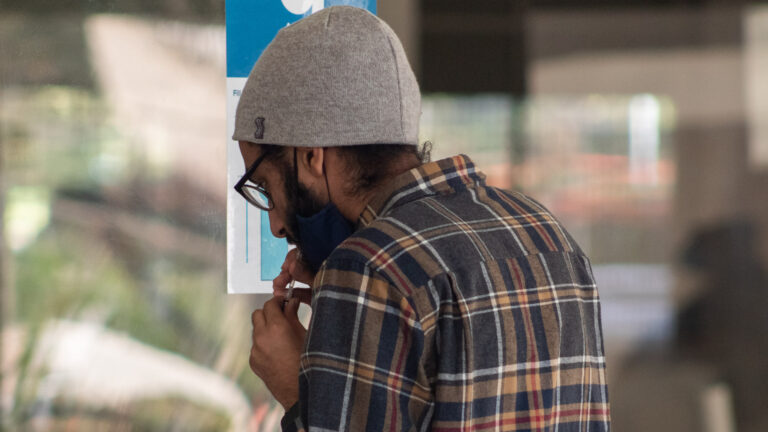

UC Davis unveils rapid test that can identify COVID-19 in 20 minutes

Test can detect both COVID-19 and flu in proteins

On Nov. 12, UC Davis unveiled a rapid COVID-19 test which will be able to check for coronavirus and the flu at the same time. The results will be revealed in just 20 minutes, the university press release said, and the test is one of just a few available in the nation at this time. 

The rapid test, notable for its accuracy, will be used primarily in urgent situations so that doctors and nurses can administer care quickly. 

“We have educated our physicians to use this test when urgent medical decisions need to be made,” said Dr. Nam Tran, an associate clinical professor in the department of pathology and Laboratory Medicine who spearheaded efforts to validate the test, via email. “So this is not just [necessary in] emergency situations. An elderly symptomatic person who would be at risk for COVID-19 and/or influenza would clearly benefit, even if they just had the flu.

Since March, the university has been running studies about the potential rapid test, and has also been testing the accuracy of the cobas Liat (lab in a tube) System in a study sponsored by Roche Diagnostics. UC Davis Health did not respond for comment after multiple requests at the time of publication of this article. 

The new Liat testing device relies on a high-accuracy PCR (Polymerase Chain Reaction)-based method. The PCR method takes place inside a robot operated by skilled clinical laboratory scientists, leaving little room for error. 

These molecular tests rely on the RNA of the coronavirus. In this case, only a very small amount of genetic material is necessary to detect COVID-19. The PCR replicates the RNA from the nasal or throat swab so that it will become visible. 

“By analogy, a microscope magnifies a small microbe so you can see it, PCR in this case ‘magnifies’ the number of DNA or RNA of a pathogen so we can detect it with a test,” Tran said.

According to the press release, most coronavirus tests until now have been antigen-based, using a throat or nasal swab to check for proteins identified with COVID-19. Although antigen tests are inexpensive and can be administered relatively quickly, they are less accurate, with a potential false negative rate of 20%. 

By contrast, the PCR method has become increasingly central to more accurate COVID-19 testing methods, because the tests are nearly 100% accurate. Previously, they took much longer to produce results, but the Liat rapid test expedites the process and can easily detect viral RNA, even among asymptomatic or pre-symptomatic cases of COVID-19. 

Amid a notable spike in coronavirus cases nationwide, the university also recently expanded its testing capacity on-campus, making a rapid saliva-based test available to select subgroups of employees and students who may not be experiencing COVID-19 symptoms. 

According to Vice Chancellor Kelly Ratliff, testing is expected to be made available to all university employees by December, and it will be required for those who use campus facilities. 

“We are all excited about expanding our testing capacity,” said Chancellor Gary May via email.


Written by: Rebecca Bihn-Wallace –– campus@theaggie.org


ARC closes due to increase in Yolo County COVID-19 cases

The ARC’s brief appointment-based open period early this month was cut short as the state moves Yolo County back to Purple Tier

After a brief reopening on Nov. 1, the Activities and Recreation Center (ARC) is once again closed as Yolo County COVID-19 cases increase.

The recreation center which contains the fitness center, equestrian center, pool and rock-climbing wall, is closed as of Nov. 17.

“The reason for the closure was Yolo County moving back into purple, mandating the closure of indoor campus recreation activity,” said Associate Director of Campus Recreation Andy Ramirez via email.  

The ARC had been open for appointments from Nov. 1 to Nov. 16, as county guidelines relaxed. However, as of yesterday, Yolo County cases are over 11,000 according to the New York Times—the highest they have been since August.

From Nov. 1 to Nov. 14, UC Davis has reported eight positive asymptomatic cases and increased its running total of positive self-reported cases to 130 since March.

The administration had been planning on re-opening the ARC to UC Davis staff at the beginning of December; however, the expectation is that the closure will continue until Jan. 4, according to an announcement by the campus recreation center.

Though students will no longer have access to the facility for recreation, the testing kiosk will be moved into the ARC, said Chancellor Gary May in an email to students.

“We relocated it from the Pavilion Parking Structure to the Four-Court Gym in the ARC, but only after we were certain it had good airflow (we tested it with smoke),” May said. 

It is unknown when the ARC will reopen again for recreational use, as it will depend on state and county health officials. In the interim, the campus recreation center is offering free virtual programs to help bridge the gap.

“We do however still have some opportunities for students, including our virtual programming,” Ramirez said. “Our virtual programming, Aggies at Home will continue.”

Written by: Kathleen Quinn — campus@theaggie.org


Yolo County moves back into most restrictive Purple Tier

94% of California now lives in Purple Tier as cases rise, Yolo County officials urge holiday safety

The state of California moved Yolo County back into the Purple Tier with more COVID-19 restrictions, effective Nov. 19. Retail stores can remain open indoors with a limited capacity, while all other services such as restaurants, gyms and places of worship can only operate outdoors. 

Yolo County Public Information Officer Jenny Tan explained that Yolo County’s rising case metrics and an abundance of caution leading up to the holidays led the state to move it into the Purple tier. 

“Our adjusted case rate actually went up,” Tan said. “The state of California decided to move multiple counties backwards—I believe there are now more than 40 in the Purple Tier. They’re seeing an increase in cases statewide, and so they definitely wanted to pull that emergency break to help mitigate the spread of COVID-19, especially as we’re moving into the holiday season.”

On Nov. 16, the state of California moved over 28 counties into the Purple Tier—94.1% of the state’s population now lives in the most restrictive tier, according to a press release. The press release states that these widespread restrictions will reduce the strain on hospitals and ultimately save lives.

“Immediate action will help protect individuals at higher risk of severe illness or death from COVID-19 and will help keep the state’s health care delivery system from becoming overwhelmed,” the press release reads. 

Yolo County Supervisor Jim Provenza described that gatherings with asymptomatic attendees have been driving cases up locally. 

“There have been a lot of gatherings in various communities,” Provenza said. “Various rules apply to those gatherings and people are just blatantly violating them. Some family gatherings have led to people getting ill. They bring family in from various places, and one person has asymptomatic COVID-19 and then they spread it to other people.”

Provenza specifically referenced a UC Davis Theta Chi Fraternity party that allegedly exceeded county limits and had at least one attendee who tested positive for COVID-19. 

Tan echoed the pervasive problem of gatherings causing infections to rise, whether they’re work-related or social. She underscored the importance of staying home this holiday season. 

“In our contact tracing efforts, we’ve seen that there is still a lot of community spread,” Tan said. “Workplace exposure and social gatherings are a cause of the increase in cases that we’ve seen. That’s why we’ve been telling people to restrict their gatherings—to either gather less or not gather at all. For the holidays, consider going virtual.”

Despite the news of regressing back into the Purple Tier, Provenza added that the new vaccine seems promising—although California will have to buckle down until it’s available. 

“A vaccine has been developed that Pfizer thinks is 90% effective,” Provenza said. “That means that there’s light at the end of the tunnel. But at the same time, since that is not coming for a long while, it’s important that people double up to be safe and to protect themselves and other people. We should try to protect as many people as we can and bide our time until there’s an end in sight.”

Written by: Eden Winniford — city@theaggie.org

Russia’s unfrozen Laptev Sea is not the only warning sign of climate change

Graduate students at UC Davis get a firsthand look at climate change through their research

Experts find it alarming that a body of water as big as the Laptev Sea in Russia is no longer freezing at its general rate. The sheet of ice on the Laptev Sea is nonexistent this year in comparison to past years. A growing quantity of greenhouse gases is to blame for the increase in ocean temperature, record breaking heat waves and the sea ice melting quicker—all factors contributing to the current lack of ice.

Climate change is also causing warm Atlantic currents to get pushed into the Arctic, which disrupts the stratification of warm waters at depth and cold waters at the surface, making it harder for ice to form. The ice that was supposed to form in the Laptev Sea normally drifts to the Fram Strait, carrying nutrients to the Arctic plankton. Since the ice is either not forming or just melting quicker, there will be less ice drifting and less nutrients for the plankton. This results in a dangerous cycle: the plankton is not able to retrieve carbon dioxide from the environment due to lack of energy from low nutrients available for consumption. As a result, the amount of greenhouse gases in the atmosphere increases.

The Laptev Sea not freezing is a global headline, and while it is important, there are other aspects of the ocean being affected by climate change, evident in the work being done by graduate students at UC Davis. Their research shows the biological side of climate change and how marine organisms are affected by the changes occurring in the ocean.

Helen Killeen, a Ph.D. candidate in ecology at UC Davis, connects the physical side of the ocean to biology and ecology. Her research focuses on understanding how larval fish move throughout the coast to better conserve fish populations within marine-protected areas. The fish studied move about predominantly by currents, and research has shown that patterns in the California current system are likely to change due to climate change.

Furthermore, research has shown that the northwesterly winds will get stronger, leading to more upwelling—vertical motion in the ocean where deep waters come up to the surface—according to Killeen. Although there are contradictory studies claiming that the winds will not be affected by climate change, Killeen noted that understanding the impact of wind patterns on animals now will help us determine the impact of climate change in the future. 

“If climate has an impact on wind and current patterns on the California coast, then we better understand how winds and currents are important for animals so we can make predictions about how climate is likely to impact marine populations,” Killeen said.

Killeen is not the only graduate student whose work is affected by climate change. Priya Shukla, a Ph.D. student at Bodega Marine Lab at UC Davis, is studying how warming is affecting oyster farming in California by working with the Hog Island Oyster Company in Tomales Bay, an estuary one hour north of the Golden Gate Bridge. 

“I would say climate change is driving my research questions,” Shukla said.

Every summer, a high mortality of oysters is normal and expected because of the higher temperatures of the season. But in Tomales Bay, there is another factor that increases oyster mortality in the species Crassostrea gigas, the Pacific Oyster—the Oyster Herpes Virus. 

This virus, also labeled as OsHV-1, becomes more infectious with higher water temperatures which are becoming more common—again due to climate change. Water at 60 degrees Celsius can cause an outbreak, followed by a  high rate of oyster mortality. Thus, global temperature rise may make this virus more prone to spreading and will hurt the oyster population. Although the virus is deadly in oysters, humans cannot get the virus from eating an infected oyster. 

Another organism that is affected by warming ocean temperatures is kelp. Kristen Elsmore, a Ph.D. candidate at UC Davis, researches kelp forests and aquatic vegetation in coastal waters. Kelp forests are important because they are a live habitat-forming species and their presence influences the currents and waves heading toward shore. Kelp is vulnerable to warmer waters as higher temperatures lead to more kelp populations dying. This has a dramatic effect on the whole ecosystem, according to Elsmore. 

“If we see these warmer waters and we lose kelp in [these] areas, then these massive structures and big habitats that support hundreds of species […] will also go away, and those species that rely on the kelp and the structure of the kelp will also disappear from our nearshore waters,” Elsmore said.

Commenting on the Laptev Sea phenomenon, Killeen said, “Scientists knew that these things would happen eventually, but the speed at which they are occurring and the scale at which they are happening is surprising scientists even now.” 

From what she is witnessing through her research, Elsmore emphasized that the effects of climate change are real and tangible.

“This is a problem that we can identify, see and quantify right now,” Elsmore said.

Written by: Francheska Torres — science@theaggie.org

Stand-up comedian tests material out against the toughest audience: a Zoom breakout room

He just wanted to make someone laugh

Laughter is truly the best medicine. That is why Arian Reeves became a stand-up comedian. Hearing the laughter of an audience is a magical feeling, and Reeves hoped to experience making someone laugh one day.

Jumping into a breakout room for his accounting class, the lull between conversation had passed and awkward staring ensued. Noticing the new material he had written in his notebook, then looking at the desolate faces on his screen, Reeves had an epiphany.

“You know what, guys?” Reeves said. “I think I’m going to make your day. I’m going to test out my new stand-up material with you guys. Let me know what you think, and don’t go easy on me, OK?”

“Do you know what every Among Us player has in common that I don’t?” Reeves began. “At least 10 friends to play with.”

No response.

I’m glad more people are using social media as a platform for activism,” Reeves tried again. “It’s much easier to slide into someone’s DMs and bond over voter suppression than a filtered selfie.”

On his left, Layla Ward’s camera remained off. Below him, Scott Gonzalez was typing furiously. Across from him, Krystal Ho was doing her makeup.

“Hey guys, is my mic like off?” Reeves asked. “I don’t know if you guys are hearing me.”

A chat popped up to everyone that read: “The second-hand embarrassment is strong omg.”

Are you guys like … talking about me?” Reeves probed. “I know I said don’t go easy, but let’s just loosen the reins here.”

Reeves tried again.

“So … we’re in unprecedented times right? Everything is closed, you can’t see anybody. I didn’t get how lonely I truly was until I realized that the only boost of serotonin I get is when someone replies to my Canvas discussion posts. Like they’re required to do it, but it meant so much to me I sent them a thank you email,” Reeves finished.

Everyone turned their cameras off. 

“Please guys?” Reeves prompted. “I’ll take any Zoom reaction. A thumbs up? You could just flash your cameras on and off really quickly? Just blink once at me? Anything in the chat? I’ll Venmo you for some feedback!”

The Zoom breakout room closes in 10 seconds.

“You know what? You guys suck. If this was real life I’d have at least gotten a pity applause or a grimace!”

Written By: Renee Wang –– reswang@ucdavis.edu 

(This article is humor and/or satire, and its content is purely fictional. The story and the names of “sources” are fictionalized.)

Last wolverine in California denied federal protection

0

As one of the rarest mammals in the U.S., the legal status of wolverines has long been contested by the government and environmentalists

Just outside of Yosemite National Park on a crisp February morning in 1922, prospector Albert Gardisky was checking his traps outside of his home in Mono County. Gardisky had been all over the West Coast before settling down in Mono County next to a lake that would later bear his name. On this particular cold winter day, Gardisky would discover a wolverine in one of his traps a few miles away. What might have seemed like an ordinary day to him was history—this was the last recorded wolverine in California for nearly a hundred years. 

As solitary creatures, wolverine populations are notoriously difficult to estimate, but it’s widely accepted that they were historically found across the Sierra Nevadas and some of the northern parts of California. Today, there is likely only one wolverine in the entire state of California. His name is Buddy, he’s from Idaho and he is adorable. Buddy will likely live his whole life in solitude, as female wolverines tend to travel shorter distances than males, so it’s unlikely that he will find a mate. Adding insult to injury, wolverines are not protected under any federal laws, despite having only an estimated 300 individuals in the U.S. today.

After nearly a three-decade-long battle, the federal government has reaffirmed its intention to not grant wolverines protection under the Endangered Species Act. When protection was first proposed in the nineties, the U.S. Fish and Wildlife Service (USFWS) claimed that there was not enough data on human impact on the species. This policy was repeatedly contested by conservation groups until 2013 when the service finally proposed listing the species due to the possible threat of climate change. A year later, this proposal was withdrawn resulting in a lawsuit from several environmental organizations which led to court mandated re-evaluation of the proposal by the USFWS, only to be withdrawn again last month

“It’s a continued pattern of wanting to stick their heads in the sand about climate change and not do anything about the impacts that greenhouse gas emissions will have on species,” said Brad Smith, of the Idaho Conservation League, to The Guardian last month. “With the current administration, there’s been a rollback of many protections for the environment and for listed or proposed species.”

The USFWS have even admitted that recent studies have shown that snow cover, which wolverines rely on for dens for their young, will be substantially impacted by climate change. Despite this, they maintain that this will have little impact on the survival of the species in the contiguous United States, citing a study by the National Oceanic and Atmospheric Association (NOAA) and University of Colorado. The study found that the upper elevations which wolverines den in will maintain their springtime snowpack while the lower will experience significant snow loss over the next 50 years. I don’t know about you, but my definition of population stability is not possibly losing 50% of viable snowpack. 

This is just one of many studies. Previous studies have painted even bleaker outcomes. For instance, a 2011 study identified increasingly hot August days as a major threat to wolverine survival, while another study found that wolverine populations will become genetically isolated and decrease in size as snowpack disappears. Now, I’m not saying that the study the USFWS is basing their decision on isn’t good science. I am saying that using exclusively that study, and ignoring all other facts that do not fit their narrative is the definition of confirmation bias. 

It is incredibly easy to ignore relatively antisocial species, even the iconic wolverine, with the kind of “out of sight out of mind” mindset that has already perpetrated the extinction of hundreds of species in my lifetime. In the Montana District Court’s 2016 ruling, Judge Christensen concluded, “If there is one thing required of the Service under the ESA, it is to take action at the earliest possible, defensible point in time to protect against the loss of biodiversity within our reach as a nation. For the wolverine, that time is now.” 

To support Wolverine Reintroduction efforts in California, you can donate to the Institute for Wildlife Studies’ ongoing proposal to reestablish wolverines in the Sierra Nevada Range. Many other species have been successfully reintroduced across the U.S., from lynx in Colorado to wolves in Yellowstone, and you could be part of making history. The symbol of California, the California grizzly bear, was driven to extinction by greed and development. Don’t let wolverines just be a comic book character––you could be their hero.

Written by: Joe Sweeney –– jmsweeney@ucdavis.edu


Disclaimer: The views and opinions expressed by individual columnists belong to the columnists alone and do not necessarily indicate the views and opinions held by The California Aggie.

Davis Downtown Business Association launches 7 Days of Halloween and Beyond initiative to save Halloween

0

Safe Halloween alternative during COVID-19, supported local businesses

In previous years, the Davis Downtown Business Association (DDBA) hosted an annual Trick-or-Treat Trail to celebrate Halloween. In order to comply with social distancing regulations due to COVID-19, the DDBA came up with a new way for folks to enjoy fun Halloween activities while staying safe. This new event was called the 7 Days of Halloween & Beyond.

The official website described the full agenda for the 7 Days of Halloween & Beyond.

“Bring your family and friends to visit your favorite downtown businesses to enjoy our 7 Days of Halloween from Oct 25–31st,” the website reads. “Experience downtown like never before while also supporting small businesses during this pandemic year.”

Aaron Wedra, the marketing coordinator for DDBA, reflected on how he hoped the initiative would help to bring more business to downtown Davis. 

“We were most excited about the 7 Days of Halloween & Beyond as a way for the public to support small businesses,” Wedra said. “With the 7 Days of Halloween, we actually set it up in ways that people are spending multiple days downtown doing the scavenger hunt and other activities.”

Davis Creamery Owner Jennifer Schmidt explained that her experience with the 7 Days of Halloween & Beyond was great overall, although business remained constant. 

“I don’t think it brought us more business, but it was fun,” Schmidt said. “I think we got a lot more out of that than anything, so I’m really glad we did that because I think people really enjoyed it.”

The website also listed the various activities that would be included in 7 Days of Halloween & Beyond. These activities included, but were not limited to, a downtown scavenger hunt, a candy giveaway, a storefront-decorating contest, a cookie-decorating contest and window displays to honor the Day of the Dead.

Schmidt reflected on her experience with the cookie-decorating contest that her business hosted. 

“We had a good participation with the cookie-decorating contest, which I really liked,” Schmidt said. “I think we might do it again for the holiday season.”

Yelena Ivashchenko, Bohème Used Clothing & Gifts owner, chair for DDBA marketing committee and member of the board of directors for the DDBA, explained how the idea for 7 Days of Halloween & Beyond was developed.

“We tried to come up with some sort of alternative where people could still have fun, but in a safer manner,” Ivashchenko said. “We also wanted to support businesses.”

Wedra further described the inspiration behind holding activities over a week-long period.

“The inspiration behind 7 Days of Halloween & Beyond was to save Halloween during the COVID year,” Wedra said. “We wanted to save Halloween by spreading our activities out over seven days.”

Ivashchenko further explained how 7 Days of Halloween & Beyond was partially inspired by a clever play on the 7 Days of Christmas, but adapted for Halloween-themed activities.

Schmidt also reflected on the help of the DDBA in drawing customers to downtown Davis despite the ongoing economic hardships.

“I think that [DDBA has] done a really good job at trying to get the community to come downtown more,” Schmidt said. “I think that it’s definitely helped for sure because if it wasn’t for the community coming out and supporting small businesses like ours, we wouldn’t be able to make it through this tough time.” 

Ivashchenko added that patrons can still shop and walk around downtown, but reminded everyone to do so safely. 

“We want to encourage people to come out to downtown,” Ivashchenko said. “Spread out, stay healthy and have fun.” 

Written By: Jelena Lapuz — city@theaggie.org

SB #5 changes number of signatures needed to declare candidacy

Pandemic influences marketing campaign for election

Voting for the Fall Quarter 2020 ASUCD elections began at 12 p.m. PST on Nov. 16, and will end at 12 p.m. PST on Nov. 19. 

Fifteen candidates are running for six open seats on the senate table, and one candidate is seeking re-election for the External Affairs Vice President position. 

On Oct. 8, ASUCD Senate Bill #5, authored by Karolina Rodriguez and co-authored by Samantha Boudaie, was passed by a 11-0-1 roll call vote. 

 This bill “temporarily changes the amount of signatures needed for declaring candidacy as defined in Chapter Four (4) of the Bylaws to 75 for the Fall Quarter 2020 elections,” according to the bill itself. 

This bill was introduced “due to our current health crisis,” since some students may have difficulty with finding the normal 125 signatories, according to the bill. 

After amassing 75 signatures from undergraduate students via Kerberos and attending a mandatory candidate workshop, candidates were considered officially running and were expected to write their platforms and develop their campaigns. 

“Because voting has traditionally been online via the elections website anyway, I don’t foresee any changes on that front,” said Senator Samantha Boudaie via email. “However, campaigning will look significantly different as candidates will have to rely heavily on social media and other virtual platforms to get their votes.”

The Elections Committee “ensures the smooth and fair administration of ASUCD elections […] coordinates publicity to encourage students to vote, and puts on candidate and ballot measure forums to better inform students of election issues,” according to the UC Davis elections website.

ASUCD Vice President Emily Barneond said that the Elections Committee chair has “been really active in planning early-on.” 

“[The Elections Committee chair has planned to] implement a comprehensive marketing plan so that students see not only Facebook timelines, but also Instagram [posts], at least just the faces, through some kind of spotlight post of all the candidates running,” Barneond said. 

Elections Committee Chair Karolina Rodriguez said via email that ASUCD Creative Media has been working on a completely digital marketing campaign. Creative Media is “an on-campus student design firm,” according to their website. 

Some components of the digital marketing campaign include an elections video made by Aggie Studios, an Instagram story takeover on the official UC Davis account, LCD screens in student housing, and social media posts on the ASUCD Instagram account, according to Rodriguez.

“We are in charge of hosting the mandatory candidate workshop that is required for candidates to officially run for a seat, we organize the candidate debate, we work with Creative Media and Aggie Studios to promote elections, we handle any election complaints and issue violation points as necessary,” Rodriguez said. 

To vote, students can visit https://elections.ucdavis.edu/vote/, log in with their Kerberos account and then make decisions on ballot measures and Senator candidates. 

“Elected officials represent all 35,000 undergraduate students on campus — we typically see about 3,000 voting students in a good fall election cycle,” Boudaie said. “Barely making 10% of the student population to represent the entire student voice is a pretty significant discrepancy. This is why it is incredibly important to have high voter turnout so we can have not only more accurate representation in our student government, but also so that we can truly engage with the campus.” 

Rodriguez also echoed these sentiments. 

“It is important to vote because ASUCD Senators are advocates in our campus community,” Rodriguez said. “Senators act as a liaison between campus officials and students, allocate budgets to ASUCD’s units and committee chairs and members […], write legislation to guide ASCUD’s operations and appoint commission and committee chairs and members who advocate for the issues you care about.”

Written by: Aarya Gupta — campus@theaggie.org

A perfectly splendid review of ‘The Haunting of Bly Manor’

Things don’t have to terrify us to haunt us for a long time

At least once in an individual’s life, the thought of fleeing to a new country might have crossed their mind, maybe to escape the difficulties of everyday life. 

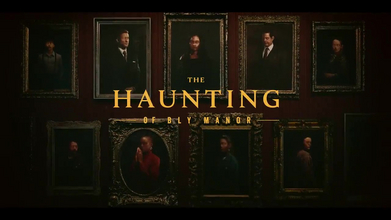
In Mike Flanagan’s highly anticipated follow-up to the incredibly enthralling “The Haunting of Hill House,” “The Haunting of Bly Manor’s” main heroine Dani does just that.

Set in the 1980s, the show follows Dani (Victoria Pedretti) leaving America to run from the trauma of her past and become an au pair in England, subsequently landing a job taking care of two orphans in a vast, beautiful estate in the English countryside. 

Her employer, the seemingly incredibly wealthy Lord Wingrave (Henry Thomas) explains that the manor comes along with a cook, housekeeper and gardener. Dani’s only job is to take care of the children. 

Maybe it was a suspiciously sweet deal by itself—it would be natural to throw in a couple hauntings here and there. Otherwise, the job would be like hitting the jackpot—no cleaning, no cooking, simply taking care of children.

While “The Haunting of Hill House” was based off of Shirley Jackson’s novel of the same name, “The Haunting of Bly Manor” was inspired by Henry James’ 1898, “The Turn of the Screw.” Yet Flanagan swaps corsets and Victorian wear for high-waisted jeans and suspenders by setting the story up in the ‘80s.

In a Netflix behind-the-scenes clip Flanagan explains that, “Hill House is about a very tight family, and Bly Manor is about strangers, a family that is created.”

To no one’s surprise, it turns out that things are not as picture perfect as they seem. We get a sense of the creepiness that follows the moment we meet the orphans. 

Miles (Benjamin Evan AInsworth) and Flora (Amelie Bea Smith) are too posh, even for upper-class English children, and Flora’s frequent repeating of the phrase “perfectly splendid” leaves the viewer with a sense of discomfort. 

We cannot forget about the mention of the children’s previous au pair Rebecca (Tahirah Sharif) who died on the grounds six months prior to Dani’s arrival. The question of what happens to her looms in the air, contributing to the mysteries hidden in Bly Manor. 

There are many narratives that Flanagan juggles throughout the nine episodes, and many different threads that he ties together by the end of it. We see the trope of a found family among the Bly workers play out nicely in the nine-hour Netflix original series. 

There is the housekeeper Hannah (T’Nia Miller), who is thoughtful and melancholic. We see Owen (Rahul Kohli), a chef training in France brought back to his hometown to take care of his mother, always ready to make eye-roll inducing puns and would gladly let you taste test his meals. The heartfelt gardener Jamie (Amelia Eve), though slightly distant at first, becomes increasingly important to Dani as the story goes on. 

When discussing Bly Manor, Flanagan stated that he wanted to use “Ghosts as expressions of emotional wounds that we do carry around.” Without any spoilers, this sentiment is addressed beautifully in the show. 

“The Haunting of Bly Manor” nails the nature and purpose of grief, and shows how it shifts and changes people from the inside out. Yet it does it in such a way that the audience is left with a sense of satisfaction, and maybe even a little sadness. 

Although “The Haunting of Bly Manor” isn’t as scary as “The Haunting of Hill House”—there are less jumpscares and not as many ghosts and ghouls lurking in the shadows—the emotions felt by the characters showcased throughout the episodes are what gives the show its haunting nature.

It is the way people let grief overcome them or be consumed by the playback of their traumas that is the truly scary part. We see how the characters are trapped in their own lives, and cannot escape the gravity of their traumas and memories. 

Flanagan does an excellent job conveying the struggle of letting go, through means of absolution, acceptance and forgiveness. 

Even though “The Haunting of Bly Manor” might not be as scary, the tale and lessons learned lodge themselves in one’s mind, making them hard to forget. It personifies emotions through ghosts and reminds us that stories, like people, do not have to terrify us to haunt us for a long time. 

Written by: Muhammad Tariq — arts@theaggie.org
Aggies share their experiences as activists on Instagram

0

Students explain their inspirations and goals with social activism

In a world full of instant posts and strong opinions, many have explored social activism on a variety of platforms in order to fight for change and share their beliefs with others. Some UC Davis students are among the social activists of the world who use Instagram to create accounts through which they share their activism with the public. 

Mariah Padilla, a second-year community and regional development major, first created her activist account @colorsofclimate on Instagram as a final project for a seminar class she took last year. Called “Climate Change in the Small,” the class ultimately led Padilla to continue using the account even after the quarter concluded.

“We discussed climate change in the context of race, gender, inequity, art and so much more,” Padilla said via email. “This class inspired me to explore the intersectionality of environmentalism and propelled me to share this newfound knowledge with others.”

Padilla’s account covers a wide range of social justice issues but mainly focuses on environmental issues.

“I am an intersectional environmentalist, meaning that my environmentalism focuses on centering the experiences of the Earth’s most marginalized communities and is rooted in the belief that climate justice is social justice,” Padilla said via email. “These core values of mine are the driving force behind the content that I create.”

Going forward, Padilla hopes to create a free newsletter that would inform her readers about environmental topics and shed light on those issues to make a broader impact. 

“I have a strong belief in the power of social media, I think that social media platforms are a powerful and effective way to share information with a large array of people,” Padilla said via email. “Social media also is not limited by geography, allowing me to reach people from all over the world.”

Camille Ty, a second-year psychology major, participates in social activism through her personal Instagram account. She began to use her account as a form of social activism in high school but increased her activity due to the political climate this year. 

“I definitely posted a lot about social activism before, but it’s definitely heightened over the last year,” Ty said. “I think that it’s just really important for me to show where I stand and to help inform people because not a lot of people have access to resources. Sometimes a simple graphic or another Instagram post might let someone learn something that they didn’t know before.”

Ty’s posts cover a number of social justice topics, such as Black Lives Matter, mental health, COVID protocols and the presidential election. In addition, on her Instagram account and story, she shares her opinions through her posts and reposts. 

To interact with her followers, Ty incorporates polls to gauge opinions on certain issues and occasionally reposts information her followers share as well. For Ty, it’s important to keep her account active and continue speaking about topics that are meaningful to her. 

“I make sure my account continually posts about these movements and doesn’t stop after the trend starts to go down, and after my is ‘back to normal,’” Ty said. “I wanted to keep people informed because these issues are still happening, and ignoring the problem isn’t going to solve anything. Pointing out the flaws in systems and in the country is what’s going to […] promote change and make people want to fix things.” 

Sofia Saraj, a first-year linguistics major, co-founded a social activism Instagram account, @degreeintea, with her two friends from high school last May. The account was first created as an extension of a podcast, called Degree in Tea, which speaks on academic advice and social activism.

With this account, Saraj hopes to spread awareness about ideas and issues inside and outside her community. She shared the importance of staying educated during this time and the platform’s ability to keep her accountable.

“With the political environment that we’re in, and everything that our generation has lived through, it’s either you choose to be educated, or you choose to be ignorant,” Saraj said. “I didn’t really want to be on the wrong side of history, and doing this is just my way of educating myself.”

The account was first run by three people—Saraj and two other co-founders—but quickly expanded to a 15-person team. These volunteer-based positions involve researchers and graphic designers who help create posts for the account. The account posts information about a number of social justice issues such as racism and homophobia, while also incorporating different series of posts; for example, sharing the anonymous stories of students from local high schools who have faced injustices.

While the team is working on creating a website, Saraj’s biggest goal for Degree in Tea is to inspire others to educate themselves and gain a greater understanding of the world around them.

“If we can help people have those uncomfortable conversations about activism and help to change some people’s opinions and help them understand the world in a broader sense […] I think that’s our biggest goal,” Saraj said.
Written by: Nora Farahdel — features@theaggie.org

Meet the ASUCD 2020 Fall Elections candidates

Fifteen students are running for six senatorial positions and one candidate is running for External Affairs Vice President

Senate:

JACK ANTHENELLI

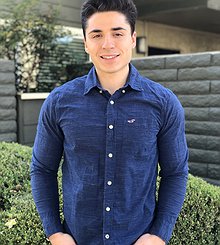
Jack Anthenelli (Thrive), a second-year undeclared major, said he is running for ASUCD to get more involved on campus and because he was encouraged to make an impact. His platforms include mental and physical well-being on campus, increasing campus-wide testing as much as is within his influence and making sure students are connected. Anthenelli plans on achieving these platforms by creating an environment or hosting events at which people can make connections while remaining healthy and safe—webinars, group meetings on Zoom or in-person socially distanced events—and advertising clubs to groups of students so they can make connections with communities. He said his platforms are intentionally broad because they reflect that he wants to make change and foster connections with people, particularly given the current circumstances of COVID-19.

EDEN BOUSKILA

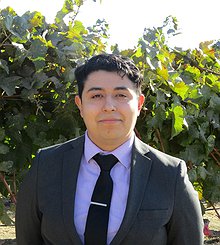
Eden Bouskila (Thrive), a second-year economics major, said he is running for ASUCD to remind students that Aggies are all connected and there needs to be understanding, tolerance and acceptance for all. Bouskila is running on the platforms of emphasizing the importance of having kosher and halal foods on campus, strengthening ties between ASUCD and Greek life and standing up for marginalized communities on campus. In order to accomplish these platforms, Bouskila plans on holding consistent meetings with units he was interested in adopting, such as The Pantry and CoHo, to ensure enough kosher and halal options are offered to students on campus. He also said he would meet with commissions like the Gender and Sexuality Commission (GASC) to discuss improving sexual assault awareness in the Greek life community and the Ethnic and Cultural Affairs Commission (ECAC) to discuss current issues the student population may be facing.

HUGO CHAVEZ

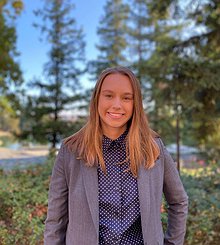
Hugo Chavez (Thrive), a fourth-year political science and history double major, said he is running for ASUCD Senate because of the current situation with the pandemic and because he wants to support students in any way he can. His platforms include COVID-19 relief, mental health and helping solve the housing crisis so students have access to affordable housing. He intends on accomplishing these platforms by working with ASUCD and the university to either reduce tuition for low-income and middle-class students or give direct payments to students by reallocating services, connecting students with employment opportunities and holding the university responsible. Chavez said he believes that students deserve all the help they need and hopes to represent the Hispanic and Dreamer communities, both of which he is a part. His prior experience in ASUCD includes volunteering for former ASUCD President Michael Gofman’s Administration in 2018.

LOGAN LEGG

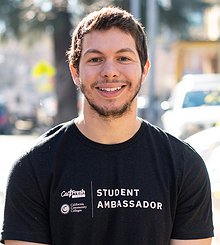
Logan Legg (BASED), a third-year international relations major, said he is running for ASUCD because he feels being in an elected position lends itself to the most accountability and representation for the student body. Leggs, a transfer student, served in collegiate student government before coming to UC Davis, and was involved with the Student Senate for California Community Colleges (SSCCC), which oversees all 115 community colleges within the state. He is currently on the Environmental Policy and Planning Commission and started on the committee shortly after being accepted to UC Davis in Spring Quarter 2020. His platforms are housing, sexual assault awareness, institutional reform and sustainability.

—————————————————————————————————————————————————————————————————————————————-

RYAN MANRIQUEZ

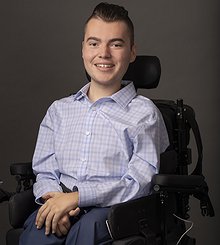
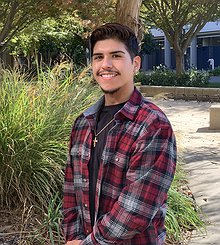
Ryan Manriquez (BASED), a third-year political science major, said he is running for ASUCD to make a difference and bring equal representation to the table. Manriquez hopes to represent the disabled community, as a disabled student himself, as well as the transfer community, being a recent transfer student. His platforms include fighting for the inclusion of those with disabilities, getting students involved in ASUCD and bringing awareness of mental health to college students. He believes his personal experience as a disabled student is fundamental, since he knows firsthand the obstacles students with disabilities face and was recently able to give his perspective in a meeting regarding the planning of surveys received by students registered with the Student Disability Center, the Executive Chief of Staff and Disabled Rights Advocacy Team. Manriquez said he will accomplish his platforms by working with the Executive Office and Disability Rights and Advocacy team to establish projects and bringing back the Disability Rights and Advocacy Committee (DRAC); reaching out and bringing people in to be involved in ASUCD; and drafting legislation in regards to mental health as well as working with the Mental Health Initiative (MHI) to establish emergency mental health counselors that can help students during a crisis.

KRISTIN MIFSUD

Kristin Mifsud (Thrive), a second-year political science major, said she is running for Senate because she believes she has the experience necessary to be a senator. Mifsud was previously on former Senator Camille Randolph’s legislative staff, has been involved with the Thrive slate since Spring Quarter 2020 and has been to almost every Senate meeting since Winter Quarter 2020. Her platforms include increasing neurodiversity awareness on campus, rebuilding and working with DRAC and increasing connectivity among students. Mifsud plans to implement these platforms by ensuring that there are Zoom accommodations, working with the academic affairs commission, implementing neurodiversity seminars and working with the Entertainment Council to create a virtual concert to increase morale and spirit on campus.

MICHAEL C. NAVARRO

Michael Navarro (Independent), a first-year political science-public service major, said he is running for Senate because he feels like first-year representation needs to be better addressed on campus, particularly in the light of the pandemic. Navarro has already joined the Internal Affairs Commission (IAC) and has been working with the IAC since July. His platforms include better COVID-19 awareness for the student body, advocating for safe same-sex practices that Navarro said are often overlooked and advocating for Dreamers and low-income students. He plans on accomplishing these platforms by having students who are on the university’s COVID-19 task force for student representation, listening to first-years’ voices, highlighting safe same-sex practices that many students may not be aware of and supporting Dreamers and low-income students with transitions to online learning. Navarro also plans on working with The Pantry and becoming involved with the GASC, DREAM Committee and MHI.

VALERIA RODRIGUEZ

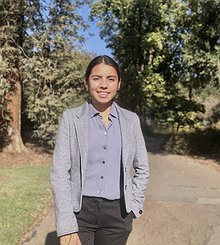
Valeria Rodríguez (Thrive), a third-year physics and chemistry double major, said she is running for ASUCD to represent the transfer community as a transfer student herself and anyone and everyone who feels like they are not being heard. Rodríguez said that as a Latinx student and woman, she personally understands what it’s like to feel unheard and does not want that to be the case at UC Davis. Her platforms are improved transportation, expanding student involvement and increasing outreach events—particularly with the AB540 Center and the DREAM committee—and promoting The Pantry as a resource while ensuring it has options for all students regardless of their dietary restrictions. Additionally, Rodríguez hopes to change the way a UC Davis-implemented program called Swipe Out Hunger works—a program she said also operates at other UC schools and allows students to donate unused meal swipes to students in need. Rodríguez plans on accomplishing these platforms by making sure students are aware of different programs and support services, working on how to evolve social events so that they are safe and still occur, advocating for a type of grant committee for The Pantry so it has the resources to apply for grants and change the Swipe Out Hunger program so that students can donate their Aggie Cash to others in need more than twice a year.

KABIR SAHNI

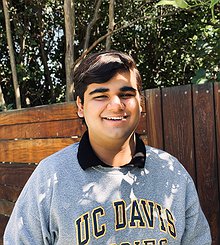
Kabir Sahni (BASED), a third-year international relations and communication double major, said he is running for ASUCD because he understands what kind of change and advocacy is needed, given the fact that he has been involved at almost every level of ASUCD. His platforms include utilizing cultural groups to help uplift marginalized communities on campus, making all of ASUCD for every Aggie by making sure people know about the scope, structure and benefits of units that tend to go underutilized, representing and advocating for international students and creating more channels for remote mental health resources. Sahni plans on achieving these platforms by being involved with the GASC and Ethnic and Cultural Affairs Committee (ECAC)—of which he is already involved in—making sure positions for units and on committees and commissions are filled, creating a social outreach program solely for international students and increasing ASUCD budget allocations to support mental health initiatives. Sahni’s position as a student leader for Global Affairs’ ambassador program led him to want to tie that into a student-run committee in order to create support and advocacy for international students.

DEVIN SANTIAGO-VERGARA

Devin Santiago-Vergara (BASED), a third-year political science and psychology double major, said he is running for ASUCD because he wants to change the mindset, attitudes and behaviors held at the Senate table as a result of seeing how senators behaved in past meetings, especially during emotional moments for members of the community. In ASUCD, Santiago-Vergara previously served in senate staff under Senator Tenzin Youedon in Spring Quarter 2020 and has been involved with ECAC since the beginning of Fall Quarter 2020. He also has been a part of the Filipinx cultural organization Mga Kapatid, which he said fostered his passion and leadership skills while also giving him the support and resources he needed to navigate college. His platforms include ASUCD transparency and making ASUCD more accessible to the student body, as well as supporting marginalized communities. He plans on implementing his platforms by encouraging students to become involved in units, commissions and other opportunities they may not be aware of as well as making sure ethnic and cultural organizations feel supported and their communities feel represented, which is something Santiago-Vergara is very passionate about as a member of the Filipinx-American community.

MAAHUM SHAHAB

Maahum Shahab (BASED), a second-year international relations major, said she is running for Senate to bring both voice and more perspectives from her community to the table, as well as the passion she holds for her community and communities similar to her. She currently serves as local director of legislative affairs for the External Affairs Office, a Muslim Student Association board member and the Middle Eastern/North African/South Asian Coordinator for the Cross Cultural Center. Shahab is also a liaison for the Aggie Shelter Initiative, which she said is modeled after the UCLA shelter and is intended to build some emergency housing for students. Her platforms include protecting student activism, housing advocacy, supporting registered student organizations, creating and revamping resources for sexual assault and harrasment survivors and being a listening ear and voice for all underrepresented student communities. Shahab plans on carrying out her platforms by working with ECAC and others to potentially create an activism committee as well as outsourcing to nonprofits and civil rights leaders to give workshops so students know their rights. She also is intending on promoting transparency about housing resources and expanding on the housing work already done, re-examining the policies of the club financing council in hopes of creating more compassion towards registered student organizations in terms of financial aid and helping to rebuild the Sexual Assault Advocacy Awareness committee.

LAUREN SMITH

Lauren Smith (Thrive), a second-year political science and communications double major, said she is running to be a Senator because she noticed some needs are not currently being met on campus no matter how much students advocate for them. Her platforms include promoting cultural awareness, increasing access to mental health resources and partnering with different businesses in Davis to support the economy and the student body. She plans on accomplishing her platforms by working with Student Judicial Affairs to help them take issues of students being mistreated on campus based on intolerance of their ethnicities or beliefs more seriously, endorsing different counseling opportunities for people who aren’t able to get help through UC Davis’ counseling program and highlighting one Davis business a week and potentially partnering with those businesses to secure funding for UC Davis students. Smith is currently the Chief of Staff for ASUCD Senator Juan Velasco and has spent the last year working with Thrive.

ERIKA VALLE

Erika Valle (BASED), a fourth-year political science major, said she is running to become a senator because, as a current interim senator, she realized there is value in student leadership and the change she can make, and she wants to continue being that voice for underrepresented groups on campus. Valle referred to her ability to co-author legislation supporting affirmative action in regards to her ability to make change as a senator. Her platforms are working closely with the External Affairs Vice President (EAVP) and housing and food insecurities, which she said she is working on right now. She is currently the only transfer student serving on the Senate table and said she wants to commit to being a voice for her community as well as those groups who are not represented at the senate table, given the extremely diverse student body at UC Davis. Valle said she will do her best to keep the administration accountable and call them out when they make decisions without consulting the student body, such as the decision to eliminate the PE program at UC Davis effective Winter Quarter 2020.

EAVP:

MARIA MARTINEZ

Maria Martinez (Independent), a third-year political science major, said she is running for re-election to the External Affairs Vice Presidency (EAVP) because she believes her office has been able to accomplish a lot over the last nine months and wants to finish the projects she has started. She believes she is the best person to finish out the year and continue the work her office has already started. Martinez was appointed as Interim Senator during her first quarter at UC Davis and was on the Judicial Council before being elected as the EAVP. Her platforms include continuing the office’s projects and focusing on civic engagement and external advocacy. She plans on implementing these platforms by working with the campus student voter coalition to come up with the “Aggies Vote” media campaign and include a voter guide on the voting website as well as by lobbying the UC Student Association, the California legislature and local representatives. 

Written by: Rebecca Bihn-Wallace, Hannah Blome, Lyra Farrell, Sabrina Habchi and Kathleen Quinn


ASUCD endorsements: Consider the following

The Editorial Board endorses five candidates for ASUCD Senate and one candidate for EAVP

ASUCD Fall Elections began today on Monday, Nov. 16, with 15 Senate candidates running for six available seats and one candidate running for external affairs vice president (EAVP). The Editorial Board interviewed 13 of the 15 candidates running for Senate and the uncontested candidate for EAVP. 

Senate Endorsements:

Ryan Manriquez — BASED

The Editorial Board was impressed with third-year political science major and transfer student Ryan Manriquez’s commitment to advocacy based on personal experience as a student with a disability and also as a patient ambassador for Biogen. Manriquez has specific goals and plans for ensuring that all students with disabilities have an equal opportunity to succeed at UC Davis—these include coordinating with Executive Office and the Disability Rights and Advocacy Team—and has already worked with Executive Office in strategic planning for a survey being sent to students with disabilities at UC Davis. The Disability Rights Advocacy Committee (DRAC) provides vital support for students with disabilities, and Manriquez seems passionate and equipped to restore it. His platforms of working to address mental health and increase student outreach are admirable, and his strong understanding of how ASUCD works and specific plans for implementing his platform are commendable.

Maahum Shahab — BASED

Maahum Shahab, a second-year international relations major, is dedicated to uplifting marginalized communities. The Editorial Board was impressed by her experience working within the Muslim Student Association (MSA) and the Cross Cultural Center as well as her extensive platform, notably covering student activism for students of color, housing insecurity and increased resources for sexual assualt and domestic violence. Although her platforms are ambituous, she demonstrated achievable ways of implementing them such as working alongside the Sexual Assault Awareness and Advocacy Committee (SAAAC) as well as the Ethnic and Cultural Affairs Commission (ECAC) and the External Affairs Commission (EAC). The Editorial Board was also impressed with her knowledge of ASUCD and senatorial responsibilities.

Kabir Sahni — BASED

As a third-year international relations major and international student, Kabir Sahni aims to be an advocate for his international student community. The Editorial Board hopes that, if elected, Sahni’s background working for the ECAC and SISS will allow him to skillfully work to represent and support students from both local and international marginalized communities. Sahni demonstrated clear ways in which he could accomplish his goals such as partnering with cultural organizations to foster a safe and interactive space and creating a new committee for international students. The Editorial Board also hopes that he will be able to accomplish his goals relating to increased accessibility for mental health resources on campus.

Erika Valle — BASED

As a recently-appointed interim senator, fourth-year political science major and transfer student Erika Valle showed a clear understanding of the inner workings of ASUCD and had realistic, well-thought-out goals for her term as a senator. In addition to her previous work with ASUCD, she also has experience interning with the Yolo County Democratic Party. The Editorial Board hopes she can achieve her goals of increasing transfer student representation through greater engagement with the Transfer, Re-entry and Veterans Committee (TRVC) and increasing diversity and off-campus advocacy. As Valle is a fourth-year, however, she will be unable to complete her term, and the Senate will have to appoint an interim senator to replace her for her final seven weeks. Consequently, the Editorial Board has concerns that she will be unable to accomplish the entirety of her platform during her limited time. Despite this possible issue, the Board ultimately chose to endorse her because her extensive experience is impressive and she appears capable of bringing thoughtfulness and skill to this position if elected. 

Kristin Mifsud — THRIVE

Second-year political science major and neurodiverse student Kristin Mifsud’s specific plans to work with the Academic Affairs Committee (AAC) to support neurodiverse students make her a compelling candidate to rebuild DRAC, which is vital to advocate for students with disabilities. Mifsud’s experience as a legislative staffer in her first year and familiarity with Senate meetings will equip her to accomplish her platforms of increasing neurodiversity awareness on campus. Mifsud expressed the necessity of expanding neurodiversity seminars to a wider audience, which the Editorial Board recognizes is critical and thinks that Mifsud’s commitment and experience will allow her to present her ideas to the table and advocate for neurodiverse students. Her platform of increasing student connectivity is a particularly relevant issue in light of COVID-19, and she impressed the Editorial Board with her commitment and passion to work with the Entertainment Council.

External Affairs Vice President:

Maria Martinez — Independent

Current External Affairs Vice President Maria Martinez told the Editorial Board about the difficulty in transitioning to virtual advocacy as a result of COVID-19 and said she has room to improve by way of advocating for local reform; that said, she has provided a presence in the University of California Students Association (UCSA), advocated for ASUCD and presented compassionate policies from other UC campuses that UC Davis should implement. Martinez mentioned that as a woman of color, she often provides perspective that administrators and others in the room may forget or fail to see, and the Editorial Board thinks that this is important to bear in mind. Her work toward UCPD policing reform, support for Double the Pell and emphasis on inclusion of undocumented students with the Pell Grant underscores her commitment to advocating for UC Davis students. 

Written by: The Editorial Board

Disclaimer: The Editorial Board can endorse up to six Senate candidates and one external affairs vice president. The Board also retains the right to not endorse any candidates for these positions.


The Aggie takes a look at this year’s unusual NBA draft

0

After an unprecedented season, NBA teams prepare for a unique NBA draft

After being pushed back several times, the NBA draft is scheduled on Nov. 18 at the ESPN Headquarters in Connecticut. Because the COVID-19 pandemic sent sports and the rest of the real world into a whirlwind, the main priority of the league was centered on making the Orlando bubble work. As they began to get settled in, they revealed their plans for this year’s selection event, and as we get closer to the date, the process of choosing players this year will be nothing like any of the teams have ever seen.

In a regular year, the NBA holds its combine in Chicago where collegiate athletes display their skills to NBA teams in a variety of drills, strength training and interviews. This gives prospects the opportunity to showcase their abilities and improve their stock. It is an event that previously involved a lot of interaction, with teams often identifying players they liked. This year, however, has been anything but regular. 

After finally settling on the Nov. 18 date, the NBA announced their plan for the pre-draft process. Beginning on Sept. 28, players began a process that included interviews with the league and with teams over video conference calls. The only differences between these interviews and those held at the combine was that they would take place virtually, but the content would be the same. In place of the combine itself, players had to report to the closest NBA facility and undergo medical testing, measurements, strength and agility testing and shooting drills, among other things. Players created their own workout video of up to 45 minutes that was sent to all teams and served as their showcase of skills. These videos could be live or edited, giving the player the chance to improve their case even more. 

Beginning on Oct. 16, the NBA allowed teams to workout players in-person up to two times per player. The maximum number of players a team could workout was 10, but they were not allowed to have more than one player in the building at a time. In a normal NBA Draft Combine, teams could have up to six players in the building at a time, often making them run 3-on-3 drills that gave them a chance to see how they matched up against their peers. But with this year blocking their ability to do that, NBA teams have had to get creative to figure out if that player was what they were looking for. The unique pre-draft process, coupled with the uncertainty of who’s available this year, will create an interesting NBA Draft. 

As opposed to last year’s draft, there are no clear-cut players at the top. By draft time last year, the world knew that Zion Williamson would go number one overall and Ja Morant would follow. This year, the draft prospects are anything but sure.

The Minnesota Timberwolves hold this year’s first pick after winning the NBA draft Lottery back in August. Having added former all-star D’Angelo Russell at the trade deadline in February to pair with their star Karl Anthony-Towns, the Wolves are looking to improve in the tough Western Conference. Having one playoff appearance in 16 years, the team is hoping another budding star can increase their chances of being a formidable opponent in the conference. The thing about this particular draft is that many players have high ceilings, but also have a good chance of not living up to expectations. This makes the decision at the first pick even harder, as the Timberwolves have to decide what route they want to take.

The player many believe has the highest potential is 6’8” point guard LaMelo Ball. Ball played last season overseas in Australia where he wowed with his ability to score in a variety of ways and with his passing ability. Coupled with his size and athleticism, Ball is the most intriguing prospect in this year’s draft. But maturity questions and defensive concerns have many teams contemplating whether he is worth a top three selection. At 19, there is still plenty of time for him to grow, but his struggles with pre-draft interviews have many teams preparing for the chance he falls in the draft. 

Another option to become the first selection is the Georgia Bulldogs’ shooting guard, Anthony Edwards. His athleticism, strength and scoring ability have many believing he could become a star in the league. The areas of concern when it comes to Edwards are his shot-selection and struggles at both the free-throw and three-point line. No one can question his build, but whether or not he improves his decision making will be key for potential success in his professional career. 

Before the season began, many believed that James Wiseman would be the consensus number one selection. But an NCAA suspension led to him finishing his college career with only three games played. At 7-1, his potential is through the roof and is exactly what the NBA is looking for: an athletic big man who can do more than just be a defensive presence. As much as an intriguing prospect he is, the lack of play has teams questioning whether or not to take him. He is known to be prone to mistakes, his motor has been questioned, and with such little tape of him being out there, it would not come as a surprise if he falls outside of the top five.

There are many more prospects in the top half of the draft that are interesting but have just as many questions. Deni Avdija, Onyeka Okongwu, Obi Toppin and Killian Hayes among many more are names that will likely be called in the top 10, but in contrast to other years, where they will go changes depending on who you ask. So, the Wolves’ choice will depend on what their front office prioritizes and,  for the Golden State Warriors who hold the second pick, there’s a good chance their pick will depend on who Minnesota doesn’t take. 

The Warriors had an off year after injuries to their stars Steph Curry and Klay Thompson. Expected to be back and fully healthy, the Warriors have an opportunity to add fresh talent to a veteran team. They have been linked with several prospects, but no one has a clear indication on who they will go with. Along with the Wolves, the Warriors might be looking to trade the pick for pieces that can help them compete for a championship this season. The lack of “sure-things” in this draft, however, puts into question how much value these picks have compared to other years. With the Charlotte Hornets, Chicago Bulls and Cleveland Cavaliers rounding out the top five, it is not likely that anyone will make a major trade to get to the top of the draft unless there is a prospect a team is dying to get their hands on.

Blame it on the set up of this draft or because the prospects simply aren’t up to last years’ standards, but it will surely be an interesting draft to follow regardless. With little certainty about anything, it could turn out to be one of the more entertaining drafts in recent memory. But something to keep in mind is that the time surrounding any professional leagues’ draft is one where fans must travel with a bit of skepticism. There are almost certainly always false rumors and smokescreens that are meant to pressure other teams, so trying to keep up with the daily flip-flopping can be a confusing and sometimes useless task. 

Whether your team is picking at the top of the order or down at the bottom, the lack of assurance in this draft will separate the NBA’s elite organizations from the rest. 

Written by: Omar Navarro — sports@theaggie.org

Members of Jewish student community discuss history of anti-semitism on campus


An insight into the Jewish student experience at UC Davis

Amid the discussion of Senate Resolution #25 at the Oct. 15 ASUCD Senate meeting, members of the UC Davis Jewish student community expressed concerns about recurring anti-Semitic acts on the UC Davis campus and ASUCD’s involvement in international conflicts.

ASUCD Senator Samantha Boudaie addressed recent anti-Semitic events that occurred during her time at UC Davis, including rocks being thrown at the Jewish fraternity Alpha Epsilon Pi (AEPi) house and anti-Semitic political flyers displayed on campus. Boudaie also described an incident in 2001, when the UC Davis Hillel house was set on fire.

“A pool ball was thrown through our [AEPi house] window in the middle of the night,” said Justin Weiner, a fourth-year neurobiology physiology and behavior major and member of AEPi. “When I was running for ASUCD, I had people direct messaging me anti-Semitic slurs and telling me they would never vote for a Jew. As a Jewish student, I’ve often felt unsafe and that I had to hide who I am for that reason. I know a lot of my friends and people in my community have felt the same.”

Weiner also described an incident in 2015, when swastikas were spray-painted on the AEPi house.

“In the past four years, our campus has seen multiple instances of swastika vandalizations and Nazi flyer postings all around the MU,” said Danielle Younai, a fourth-year political science major and the president of Aggies for Israel. “These instances of outright hate speech and hate crimes have made me and other Jewish students feel afraid for our safety on campus. Unfortunately, the administration is not very responsive. Every time a student goes to [the] administration asking them to show support or protect them in a meaningful way, the student is simply gaslit into believing anti-Semitism isn’t a problem in Davis. It 100% is.”

Weiner described incidents of Jewish students going to certain members of administration about concerns like anti-Semitic death threats and having them dismissed as “a joke or unlikely to happen.”

“I think certain people in the administration have done a good job [condemning anti-Semitism],” Weiner said. “The Chancellor’s statement after the anti-Semitic flyers were posted was nice. But, there are other people in this administration who have had a history of dismissing racism and anti-Semitism.”

“UC Davis stands with our community against anti-Semitism and other forms of discrimination,” wrote Vice Chancellor for Student Affairs Pablo Reguerín via email. “Our Principles of Community express our community’s dedication to mutual respect, understanding, compassion and caring for everyone, regardless of their religious affiliation, culture, ethnicity or gender. Student Affairs is working across communities and we offer our support to individuals and organizations, providing resources and opportunities to promote inclusivity. We are working to support student expression free of intimidation and to ensure all students have equal access and time to express themselves.”

Younai described personal encounters with anti-Semitism within the first few weeks of her experience living in the freshman dorms. 

“I distinctly remember being made fun of in the dorms for mentioning that I was fasting during Yom Kippur,” Younai said. “Then, later, upon finding out that I was Jewish, a student at the time joked about how he was going to throw pennies at me and other jokes related to the Holocaust.”

In a data report collected and prepared by Boudaie, the findings of 50 Jewish students who were surveyed over a six-month research span are presented. 

“A whopping 73.5% of Jewish Aggies have seen something on campus that made them feel uncomfortable as a Jewish student at UCD,” the report reads. “[Nearly 47%] of Jewish students personally experienced or witnessed any anti-Semitic incident(s) on campus [and] 36% of Jewish students do/did not feel welcome everywhere on campus.” 

Considering UC Davis’ experience with anti-Semitism and the cancellation of an ASUCD Anti Defamation League (ADL) workshop last year, the Jewish student community has called for more effort to combat anti-Semitism on campus. The ADL workshop ignited student disagreement and debate over the Israel and Palestine international conflict, which ended with the university making the swift decision to cancel future workshops. 

“The Jewish student body is very resilient,” Boudaie said. “We do our best no matter what. No matter what we encounter, Jewish students and Jewish people in general have always done everything possible to push through. It’s nothing new that we’ve faced very vicious anti-Semitism our entire lives. Persecution, anti-Semitism, is very familiar to a lot of us.”

Younai echoed these sentiments of perseverance and the presence of UC Davis’ Jewish community.

“Being a member of the Jewish community on campus has been one of the best parts of my college career,” Younai said. “We’re small, but we’re strong. My Jewish friends, faculty and staff at UC Davis have been my greatest support system.”

Written by: Hannah Blome — campus@theaggie.org