54.1 F
Davis

Davis, California

Tuesday, December 23, 2025
Home Blog Page 310

“Super Mario Bros.” is a retrograde corporate nightmare

Take a look into the desperate death of an era of movie production

When “Super Mario Bros.,” directed by Rocky Morton and Annabel Jankel, was first released in 1993, it was regarded as a monstrosity. Film critic Janet Maslin, writing for the New York Times shortly after the film’s release, called it “barely comprehensible” (this was one of the more charitable reviews), and audiences didn’t exactly connect with it either—to the tune of a minimum $12 million loss at the box office and more than a few utterly disgraced careers.

And who, exactly, can blame the children for not begging their parents to see it again and again when the movie is such a bizarre mess? I’m talking fungus neural networks, wildly inappropriate religious imagery, near fetish-level body horror and not a single concept actually reminiscent of the classic game the movie is supposedly based on.

Yet a sentiment that grows stronger the more time passes since its release is even though it’s a pointless, overproduced spectacle, the movie is actually great.

The key to this change lies in the film’s very conception: delusional executive millionaires—seeing a new-fangled trend among the children of the day—seek to profit off a cultural moment that they don’t understand. Not a pretty picture. As the few morsels I’ve provided about the content of the movie might suggest, this situation made its way from the page, to the set, editing room and ultimately into what children and unlucky adults saw on-screen for the first time in 1993. The veneer of creative interests subjugating financial realities—the principle myth of big-budget movie making—was peeled away in a dramatic fashion. There is no love here.

Nobody at any stage of production seemed to get the source material’s appeal. This was a movie about a video game, financed by people who had likely never held a controller in their lives. For them, trying to capture the popularity of “video games” was less translatory and more a femur-shattering exercise in futility—not even the color of the characters’ outfits are right. (Mario is green and Luigi is red. Chilling.) The final product is a screaming, frantic attempt to find something, anything, to bridge the apparent cultural gap.

At the time of release, this came across simply as an incompetent boardroom of fifty-somethings with no grasp of the market they wanted to capitalize on throwing around crazy film budgets like a child screaming for their mother—disgusting and offensive maybe, but nothing more than that. Now that time has more clearly illuminated the cultural circumstances of the film and highlighted every contour of its failures like a fine greek statue, the image has turned from sad to downright comedic.

A dark, gritty Mario movie? Dennis Hopper playing a lizard man with gelled hair? Hilarious.

This thing is almost 30 years old. It can’t hurt anyone anymore. What was once an ugly symptom of a struggle between generations is now an engine of morbid fascination. An answer to the question of what happens when every single decision made in the production of a film is wrong. Not just interesting, but entertaining, both as a testament to the eternal battle between generations and as just about the worst imaginable way to go about making a movie based on “Super Mario Bros.”

Not to mention the aspects of the movie that have been revealed to be charming, and to some degree, actually good. They are engaging and genuinely imaginative in a malformed way, the performances are fairly solid despite the ridiculous script and the movie is fun while also managing to simulate the experience of driving an aluminum baseball bat into the frontal lobe for 104 consecutive minutes.

You won’t be bored watching this. About the worst you can expect is developing some kind of mild psychosis from wincing in disbelief too often. Further highlights include: Goombas being the product of horrifically painful genetic engineering, Luigi being juiced by his girlfriend’s father—being the previously mentioned fungus neural network depicted by nauseating practical effects, 51-year-old Bob Hoskins as Mario seducing a dinosaur assassin, a cut scene in which Mario and Luigi visit an actual-no-joke strip club and Dennis Hopper saying “Bob-omb.”

Among the career casualties of “Super Mario Bros.” are Hopper, Morton and Jankel. The latter two, who directed the film, are especially tragic as it seems by all accounts that the final film was the product of executive meddling, to the degree that Morton was locked out of the editing room during post-production.

The end result of this more complete understanding we have of the film today is a fascinating Disneyland tour into the minds of an older generation of movie financiers collapsing in on themselves in response to the approaching cultural horizon of the twenty-first century. It made clear in standard definition the incommunicable differences between the old and young, laid bare on dusty VHS tape. Worth a watch.

Written by: Jacob Anderson — arts@theaggie.org
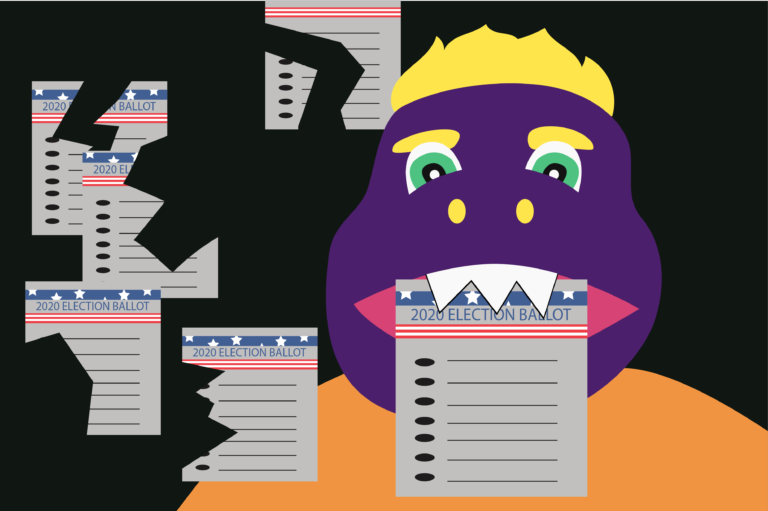

Voter fraud, shmoter shmaud! Your ballot is being counted by the Chuck E. Cheese Ticket Muncher

Prizes include the presidency and the future of our democracy

The following is an anonymous letter believed to be written by notorious supervillain, Mr. Munch. Written on Nov. 5, the letter seems to be an attempted plan by Munch to “stop the count.”

There’s been a lot of fancy politics talk recently. Election this, democracy that. Fraud. Suppression. Cheeto. Sleepy. It feels like I’m in my seventh grade civics class again, except now I’m not snickering through my braces about “pigeonholing the filibuster on your mom.” 

So, with all of the kerfuffle going on with this totally real and totally scary U.S. election, it feels like nothing is going right. Instead of picking the senile old dude to rule the country by a landslide, we’ve decided to make this a “nail-biter,” which is sort of an understatement considering there’s definitely much more at stake than our nail beds. 

The whole issue with this election lies with the mail-in ballots. Maybe we should’ve defunded the USPS after all, those dirty rotten slowpokes. There are two problems here: (1) ballots are being counted or (2) ballots aren’t being counted. I feel like there’s one right answer here, but I digress. There doesn’t seem to be a specific time period for when all of these ballots are going to be counted, and the country is waiting with bated breath to hear the results. 

You might be thinking, dear reader: “What the HELL are we gonna do about this counting issue?!” I’m asking the same thing. But listen: between you and me, there’s this guy I know in Clark County, Nevada. This one dude has been keeping me calm through all of this. His name? Charles Entertainment Cheese AKA Chuck E. Cheese. I doubt many of you forgot about the rat king of our childhood, and I assure you there is no one more equipped to take care of this ballot issue. 

Chuck told me a bunch of stuff about how they’re taking care of the ballots not only in Nevada, but in all of the other battleground states, but there’s one thing that’s really going to make a difference: the Ticket Muncher. I know, I know. It sounds improbable and highly stupid. But honestly, what hasn’t been in this election?

Here’s why the Ticket Muncher is going to save our precariously-positioned democracy. First of all, he’s so fast. Like, unbelievably fast. He is a fast little muncher. It doesn’t even matter who you voted for. All ballots are equal under the eyes of the Muncher. He will eat up your ballot so fast, you won’t even have the time to say, “Scoobidybop! Ballot selfie time!”

Secondly, the Ticket Muncher is unbiased. Between eating your ballots and making ballot-eating sounds, the Ticket Muncher can’t even choose between Coke or Pepsi, let alone who should be the President of the U.S. 

At the end of the day, with the Ticket Muncher at the helm of this sinking ship, we can be assured of one thing: this whole nightmare will be over in a few days. Besides, we can’t look back on this trainwreck of an election if all the results have been digested. 

Written by: Isabella Chuecos  –– ifchuecos@ucdavis.edu  

(This article is humor and/or satire, and its content is purely fictional. The story and the names of “sources” are fictionalized.)


Yolo County announces gathering guidelines: 16 people from up to three households allowed

0

Gatherings must be held outdoors for maximum two hours, important to slow virus’s spread

In a press release published on Oct. 21, Yolo County announced local gathering guidelines “with recommendations and conditions on how residents and family can more safely gather to protect” everyone’s health while reducing the transmission of COVID-19. 

In an effort to help stop Yolo County from moving back into the Purple Tier, the press release describes that Yolo County “updated the amendment to the local order” to limit gatherings to three households, with at most 16 people. These gatherings must only be held outdoors and can happen for a maximum of two hours. 

The recommendation also applies to business social gatherings, according to the press release. 

“These restrictions also apply to business social gatherings, such as holiday parties,” the press release reads. “Industries that manage gatherings as part of their operations, such as wedding venues, restaurants, and religious services should continue to follow state and local guidance for their specific industry.”

Chair of the Yolo County Board of Supervisors Gary Sandy explained in the press release the importance of continuing to be safe and follow guidelines, especially during the holiday season. 

“Gatherings have proven to be one of our most pressing challenges in containing the spread of the virus,” Sandy said in the press release. “With the holidays just around the corner it will be necessary for everyone to keep them small in size and among immediate family and close friends only. It is everyone’s responsibility to do what they can to stop the spread of the virus and in so doing protect our community’s health and safeguard the continuing operation of local businesses.”

Dr. Larissa May, a professor of emergency medicine and former interim health officer of Yolo County, further described the importance of the restrictions on gatherings.

“In terms of Yolo County, the state had some concerns, I think about equity, and therefore didn’t put a cap on the number of people that can be present at a gathering,” May said. “However, in order to prevent the spread of COVID-19, as we know that in Yolo County most of our cases and outbreaks are coming either from social gatherings, essential workers or long-term care and skilled nursing facilities.”

For this reason, May explained that Yolo County decided to place a limit on the number of people allowed in gatherings. 

“We really wanted to put a number on it to prevent very large gatherings from happening that involve multiple households, and really more for enforcement in cases where these gatherings were larger than they really should be for safety,” May said. 

May also noted that while cases in the county have been in a plateau, cases around the country and world are “surging,” so it is possible that in a few weeks Yolo County will also experience a rise in cases. 

If cases continue increasing in the next week, Yolo County could move into the Purple Tier, according to another press release published by Yolo County on Nov. 4 about the week ending on Oct. 24. 

“Yolo County’s metrics increased to meet the more restrictive purple, or widespread, tier in the State’s Blueprint for a Safer Economy (Blueprint) though the County is still classified to be the red, or substantial, tier,” the press release reads.

May also noted that guidelines for holiday gatherings will be released.

“We’ve already released guidance for agritourism, Halloween and handing out candy safely,” May said. “We know that the biggest risk with this virus is the transmission tends to occur in large groups, which we call superspreading events—where there’s someone who’s infectious, who may be mildly symptomatic or not be symptomatic yet or be even asymptomatic—and spread it to multiple other members of the group who then spread it to the people they’re in contact with.”

May explained that smaller gatherings are the safest, and people must wear face masks and physically distance.

“The activities that are safer are those that occur outdoors, those that are distanced where people are physically separate at least six feet from each other, and importantly also the use of face coverings—particularly when you can’t separate yourself,” May said. 

May also highlighted that while the potential of mass testing asymptomatic members of the Davis community and students may occur, it’s important to continue to be cautious and not have false reassurance. 

Important precautions to follow include wearing face coverings, avoiding large gatherings or parties (especially those with multiple households and indoors), minimizing gatherings and holding them outdoors. 

A full list of precautionary measures and the local guidance can be found in the local gathering guidance from Yolo County.

May added that although lockdown has been long and draining, everyone must continue to adhere to safety guidelines in order to slow the spread of the virus. 

“We understand that we’re all tired of this pandemic, but unfortunately the virus doesn’t care how we feel, and so we need to continue to be vigilant and continue to gather safely and continue to protect our vulnerable populations,” May said. 

 Written by: Shraddha Jhingan — city@theaggie.org


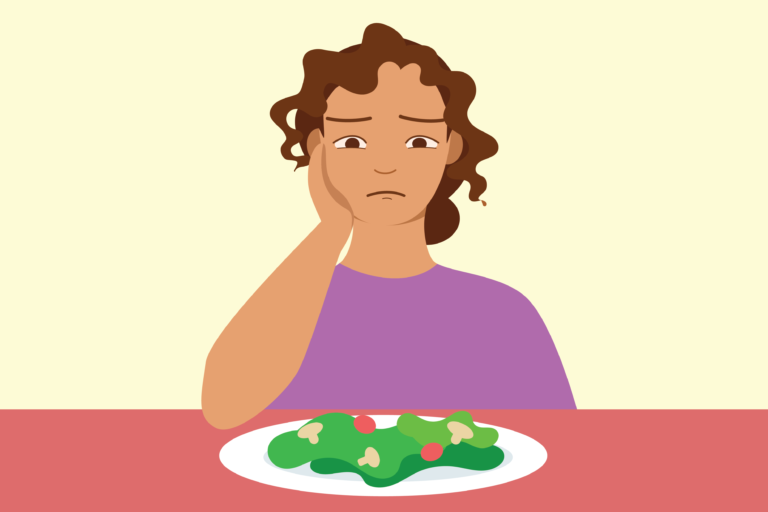
Strict diets can deprive us of our happiness and health

We need to focus on loving and listening to our bodies when it comes to our diet

In the U.S., diet culture began in the early 1900s and has since accumulated an exhaustive list of different dieting fads for people to attempt––cleanses, low-carb, ketogenic, paleo, etc. Companies like Atkins and Weight Watchers have made a profit by supporting the narrative that people need to lose weight in order to love themselves and to be considered healthy. Although these programs are not as popular as they once were, new diet trends that engender the same narrative have taken their place. 

A-list celebrities, popular magazines and social media influencers are at the top of the list for promoting these diet trends. By just posting pictures of their meals or grocery hauls, they influence thousands of people to start a diet they know nothing about. I, myself, have fallen into this trap before, just to quickly find out that I do not have the resources nor the education to be making these decisions about the food I eat. 

More importantly, what works for one person, doesn’t always work for everyone else. All bodies are different and therefore require different foods and methods for losing weight. Consequently, most diets aren’t tailored to individual needs––a potential reason why some people see progress and others do not while on the same diet.

Generally, people aren’t quick to share the negative outcomes or hardships we experience day-to-day. Instead, we tend to use social media to highlight the favorable and positive aspects of our lives. In regards to dieting, it’s more pleasing to show the successful results rather than the struggles and lack of progress. Sadly, this generates the idea that certain diets are easy and accessible for everyone. 

Self-control and deprivation are the two pillars of dieting. Diets require you to exercise self-control in order to deprive yourself of certain foods, and thereby satisfaction, depending on the rules of your diet. In reality, not all days can be good ones, and a quick mood fixing solution is the comfort food that tends to exist outside the bounds of our diet. Thus, the purpose of a “cheat day.” The name itself, however, carries a negative connotation that’s intended to make us feel guilty for defying the rules of our diet. It’s inherently dangerous to not only deprive ourselves of the foods we may actually need, but also to deprive ourselves of something that may bring us happiness. 

Although weight loss goals originally intended to motivate us to stay on track with our diet, setting them poses a threat to our well-being. Setting unrealistic and unattainable goals leads to disappointment and, more dangerously, unhealthy eating habits. Losing weight does not happen overnight, making it hard to stay inspired. As a consequence, people may lose hope and develop disordered eating habits.

This does not mean dieting is always ineffective and bad. In fact, many people have success stories. But it’s important to note that dieting and depriving yourself of certain foods is not the only way to become healthy. Listening to your body, tuning in to your emotions and being rational about the food you eat is a much more substantial way to live. Intuitive eating is not a diet plan, rather it pushes you to reject the diet mentality altogether. 

For far too long, diet culture has convinced us that our bodies aren’t good enough or that we need to change ourselves to appease society’s unrealistic standards. Rather than measuring our self-worth against the superficial wellness represented in movies, television and on social media, the focus needs to be switched from losing weight to loving and listening to our bodies. 

Written by: Kacey Cain –– klcain@ucdavis.edu 


Disclaimer: The views and opinions expressed by individual columnists belong to the columnists alone and do not necessarily indicate the views and opinions held by The California Aggie


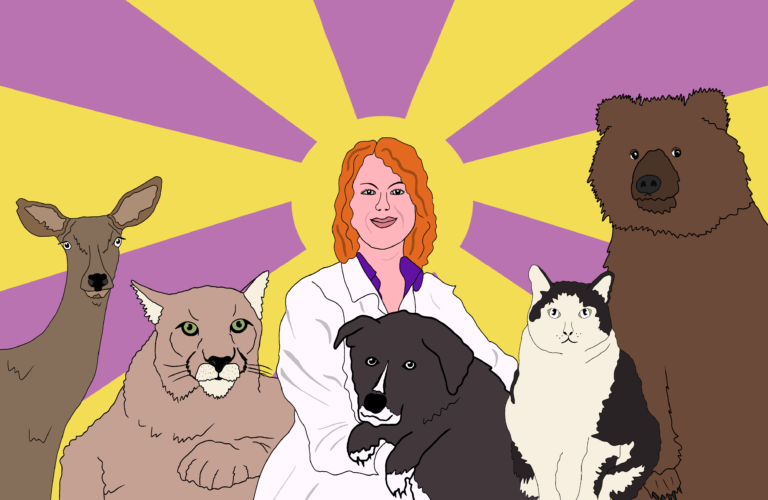
UC Davis partners with government agency to treat animals injured by wildfires

The Wildlife Defense Network combines academic expertise and government resources in a coordinated wildlife rescue effort

During the devastating and premature wildfire season this summer, one group of fire victims often went overlooked—wildlife mammals. One organization, The Wildlife Disaster Network, is using veterinary expertise and other resources to address the medical concerns of wildlife impacted by fires. 

The Wildlife Disaster Network—a partnership between the UC Davis School of Veterinary Medicine and the California Department of Fish and Wildlife (CDFW)—has a design similar to another partnership between CDFW and the UC Davis School of Veterinary Medicine: the Oiled Wildlife Care Network. Both of these partnerships combine the resources of the state government as well as the expertise of veterinarians and academics to aid animals in need. The CDFW provides resources including a physical facility in Rancho Cordova to hold large animals during an extended treatment, a wide network of employees throughout the state of California to respond to emergency calls and the legal authority to collect, hold and provide treatment to the animals. 

Prior to the founding of the Wildlife Disaster Network, the CDFW had largely been able to deal with most wildlife victims of fire on a per-case basis. There were few cases of burned animals being taken in, such as Tahoe’s L’il Smokey in 2008. It soon became clear, however, that these cases weren’t going to be quite as infrequent anymore. Kirsten Macintyre, the communications manager for CDFW, explained how the CDFW entered into the partnership with the UC Davis School of Veterinary Medicine.

“It became evident that these cases were no longer ‘one-off’ situations, and a formal, coordinated response would be necessary if we were going to be able to manage the continuing trend of having more than one injured bear or mountain lion in our care at once,” Macintyre said via email. 

The UC Davis side of the partnership is led by Dr. Jamie Peyton, chief of the Integrative Medicine Service with the UC Davis Veterinary Medical Teaching Hospital. In 2017, Peyton worked on an innovative burn treatment for wildlife animals—a fish scale biological bandage. The fish scales are a sustainable byproduct: safe for animals to eat should they take it off, while also providing pain relief and protection for burn wounds. 

With wildfires becoming more frequent in California, the Wildlife Disaster Network has been taking steps to refine response protocol. The network has worked with first responders to set up a Wildlife Disaster Hotline for reporting injured animals. Through this hotline, they’ve been able to gather information on the impact of disasters on species and their habitats and provide burn protocol to wildlife rehabilitation centers such as the Oakland Zoo on how to assist the network when an emergency arises. 

“We’ve been working with biologists throughout the state to prepare them for the possibility of deployment to seek out and retrieve injured wildlife, if and when we receive a report of an injured animal,” Macintyre said via email. 

There are still many challenges for the network to sort out and work through, such as making sure that the public is aware of the Wildlife Disaster Network and the work they do. Additionally, because the network also works in disaster areas, once the network gets word of an injured animal, it can be challenging to track and find these animals. 

“Finally, one of the most challenging issues for wildlife in disasters is finding the best habitat to release them since large areas are often destroyed in wildfires,” Peyton said via email. “Together as a team with veterinarians, biologists, wildlife carers and the public, we can help ensure that our wildlife has a chance to survive these disasters.”

The work that the veterinarians, biologists and wildlife experts do in these disaster zones is grueling, but rewarding. During the North Complex Fire this summer, the Wildlife Disaster network received a call from their hotline from a passerby about an injured bear cub. A team of veterinarians and a CDFW biologist drove to the area where the cub was sighted. Following the bear tracks, they found the cub with severe burns to his face and unable to walk. 

“Seeing his severe injuries, I was so proud that we were able to find him and help him as part of the WDN,” Peyton said via email. “He was an example of why this network is so important and the vital need to include our wildlife in disaster planning to ensure they do not suffer.”

The Wildlife Disaster Network is focused on expanding and growing so that they can serve as a resource for all wildlife in need, especially in disaster areas. The program is largely funded through donations from the public as it continues education and training programs across the state and works to develop treatment for the animals.

“The assistance of UC Davis staff – Dr. Jamie Peyton and her team, in particular – has been, and continues to be, key in making the Wildlife Disaster Network work,” Macintyre said via email. “Neither CDFW nor UC Davis has the staff or resources to provide treatment to these animals alone, but combined, this team of professionals is phenomenal.”

Written by: Simran Kalkat — science@theaggie.org


UC Davis establishes four-year program for people with intellectual disabilities

Groundbreaking program is first on west coast to offer a residential component 

The Office of Diversity, Equity and Inclusion, in partnership with the UC Davis MIND Institute, recently received a $2.1 million grant to establish a four-year college program for individuals with disabilities on the UC Davis campus. 

The MIND Institute focuses on researching neurodevelopmental disabilities like autism, Fragile X, Down Syndrome and ADHD, among others. It also provides support to families affected by these disabilities. 

“This is about opening UC Davis to all the citizens of California and beyond,” said Len Abbeduto, the director of the MIND Institute, in a video for the broadcast media about the new program. “Disability is not often thought about when we talk about diversity, equity and inclusion.”

The grant will facilitate the Redwood Supported Education to Elevate Diversity (SEED) Scholar program. UC Davis hopes that similar programs—geared towards students with autism, Down Syndrome, Fragile X Syndrome and other types of genetic disorders, for example—can be implemented on other college campuses in California.

The grant—funded by the U.S. Department of Education’s Transition and Postsecondary Programs for Students with Intellectual Disabilities (TPSID)—will be used across five years. TPSID program grants were originally established in 2010 under the Obama Administration.

At the time, awards totalling $10.9 million were provided for 28 grants under two federal programs. Some of the first grant recipients included California State University,Fresno and Taft College. The grants are designed to facilitate academic enrichment, socialization, independent living and professional skills for people with intellectual disabilities.

Renetta Garrison Tull, the Vice Chancellor of Diversity, Equity and Inclusion (DEI), highlighted the importance of the program’s connection to DEI. 

“While a lot of other programs haven’t been connected to DEI, Dr. Len Abbeduto wanted it to be a part of DEI,” Tull said. “When we think about inclusion, we want to think about it as a campus wide initiative.” 

Tull added that DEI and the MIND Institute will be “thought partners” in the implementation of the Redwood SEED Program. Personally, Tull has two adult cousins with Down Syndrome, and said she was excited to learn about the kinds of services that the Redwood SEED Program would be offering. 

“One of the things we have found is that there is a lot of philanthropic interest [in this program] for people whose family members have been affected by [disabilities],” Tull noted. 

According to Beth Foraker, a supervisor and lecturer at the UC Davis School of Education, the program at UC Davis—which will be implemented in Fall 2021—will be the first of its kind on the west coast because it includes a residential component. 

 Foraker explained the need for such a program.

“The impetus [behind this] is if you look at the data for adults with intellectual disabilities in the state of California, 97% do not make a living wage,” Foraker said. “They are living in poverty. That is an absolutely untenable statistic and people should be upset by it. What is the reason behind that? And what can we do to change it?” 

Foraker is the mother of a 21-year-old son with Down Syndrome. 

She said that flaws in the current education system have ensured the de facto segregation of disabled students in California schools. 

“When you have a baby with intellectual disabilities, you don’t know that’s going to happen,” Foraker said. “You don’t realize that your child is going to be segregated and separate throughout their schooling. Right away, [people with disabilities] are bumped into programs, into special-ed preschools and they don’t interact with [other kinds of] people.The vast majority of people with disabilities don’t graduate from high school, they don’t even have a certificate—they just age out. The whole system has perpetuated their separation, and it keeps these people oppressed.”

Abbeduto expressed similar concerns about the opportunities available for young adults with intellectual disabilities. 

“We talk about the importance of inclusion for people with intellectual disabilities, and then somehow we’ve forgotten about when they graduate, when they leave high school,” Abbeduto said. “For me it’s kind of really a civil rights issue […] they really need to have the same options as everyone else and the same opportunities to be successful and to make choices about their lives.Right now, postsecondary education is not even a choice for most people.”

With the funding currently available, the first two years of the Redwood SEED program will be free, and the university will accept its first 12 students in Fall 2021. Foraker also plans to work to make the full four years free. An application process—with the option to apply for financial aid—will be established once the program is certified.

“The only challenge [we are facing] is capacity, because as we grow we need to make sure we have enough resources to support the program,” Tull said. 

When asked about how COVID-19 might affect the program, Tull explained that it will be “contingent upon health and safety regulations,” adding that the program still anticipates admitting students in 2021. 

“Hopefully that will work out and we will be back to normal,” said Tull. 

She said that the program hadn’t yet considered implementing an online platform in case in-person instruction isn’t feasible.

The small program size is designed to provide individual learning support for each student. A mix of courses taken alongside undergraduate students, life-skills classes and quarterly internships will be offered. Foraker hopes that the program will enrich the undergraduate classroom experience too. 

“When you include students with significant learning needs in your class, what happens is that elevates the level of instruction,” Foraker said. “The grant also provides professional development for professors who want to do this. Once you let these kids in the classroom, there is a totally different learning community built, and it is very positive—it is academically better, it is socially-emotionally better. The reason we housed it in the [Office of] Diversity, Equity, and Inclusion is that everybody can be part of it.”

While the program will not mandate the inclusion of its students in all courses offered by the university, Foraker said that many professors have already been receptive to including these students in their classes. 

“We found that with inclusion you get a lot further by not mandating things and just letting the magic happen,” she explained.

Tull described the widespread support that the program has received from people both outside of and in California. 

“We are extremely excited about this,” Tull said. “One of the words that the MIND Institute has used a lot is joy—how joyful we are to be able to put together this program and plan for its success. We have had a lot of wonderful feedback from people around the country.” 

“It’s heartening to know that there’s support for the program, not just for UC Davis but for the success of the program [itself],” she said. “There are a variety of different advocates across the spectrum who want to be connected to the program and are rooting for its success.” 

Written by: Rebecca Bihn-Wallace


Resolution 25 was inappropriately characterized as anti-Semitic and dangerous

We can build understanding and respect on our campus by showing sensitivity to the rights of both Israelis and Palestinians

This past Spring, ASUCD Senate passed Resolution 25, which called for the university to divest from corporations that aid the Israeli government’s occupation of Palestine. The resolution was subsequently vetoed by ASUCD President Kyle Krueger. While this resolution presented a fairly nuanced call to action—argeting only corporations that were complicit with home demolitions, militarization in occupied Palestinian territory and human rights abuses—it has been portrayed by some as an all-out attack on Israel, the Jewish people and Jewish students. 

As a Jewish student myself, I strongly object to this disingenous mischaracterization that deliberately ignores the resolution’s intent, oversimplifies the complexities of the Israeli-Palestinian conflict, conflates criticism of the occupation with anti-Semitism and misrepresents the entire Jewish community as supporters of the current Israeli government.

Many Jewish students, like myself, are frustrated with prominent Jewish organizations about their handling of this resolution. We are not a monolith, the Jewish community has a wide range of views on Israel, the conflict and the occupation of Palestinian territory––these varied perspectives never invalidate their holder’s Jewish identity. But too many establishment groups have acted to silence alternative perspectives and to shut down debate. J Street U, the only left-of-center Jewish political group on campus, has been routinely excluded from conversations about Israel. This has deliberately presented the view that a uniform Jewish consensus against this resolution exists on our campus––it does not. Polling shows the position of right-leaning groups are not even popular among the broader American Jewish community off-campus, where support for human rights, fairness for Palestinians and a two-state solution is overwhelming. 

As a member of J Street U Davis’ board, I would also like to make clear our position on others’ attempts to conflate opposition to the Israeli government and opposition to the occupation with anti-Semitism. We reject the contention that Jewish identity itself or inclusion in the organized Jewish community demands unquestioning support for Israel or Zionism. We oppose the imposition of any form of pro-Israel litmus test to determine who should or should not be welcomed in the Jewish community. And we do not accept that all critiques of Zionism or opposition to the occupation of Palestinian territory should be automatically defined as anti-Semitic. J Street U does not oppose forms of economic protests or divestment initiatives which zero-in on the Israeli government’s occupation of Palestinian territory and explicitly recognize Israel’s right to exist. For us, this resolution strikes that balance. These kinds of initiatives are different than those advocated and initiated by the Global Boycott, Divestment, Sanctions (BDS) Movement. It is critical to be able to distinguish between divestment efforts which delegitimize the state of Israel and hurt all Israelis, from initiative efforts which target the occupation itself. 

There is a fundamental distinction between the state of Israel and the Palestinian territory that it occupies over the Green Line, on which it continues to build and expand settlements in violation of international law. That distinction must be maintained both for the sake of Israel’s own democratic future and in the interest of ending occupation and peacefully resolving the Israeli-Palestinian conflict. While we as an organization neither support nor oppose this resolution, we believe it’s important to recognize that it is designed not to oppose Israel’s right to exist, but instead is solely focused on divesting from activities in occupied territory. It is wrong, inappropriate and harmful to characterize this resolution as anti-Semitic or somehow dangerous to the Jewish community on our campus. In 2020, we face very real threats of anti-Semitism from groups like the Proud Boys and other white nationalist organizations; this threat should not be used by Jewish groups to score political points against progressives who stand as our allies in that fight. We urge everyone involved in this debate to examine this resolution on its merits, to show sensitivity to the rights of both Israelis and Palestinians and to refrain from making over-the-top accusations that only make it harder to build understanding and respect on our campus. 

Written by: Ethan Wellerstein

Ethan Wellerstein is a third-year International Relations and Philosophy major and a member of J Street U, a liberal-Zionist student group.

To submit a guest opinion, please email opinion@theaggie.org

Correction: The original version of this guest opinion incorrectly referenced Academic Senate passing Resolution 25, but it was passed by ASUCD Senate. The guest opinion has been updated to correct this error.

UC President Michael Drake discusses system-wide issues with members of student publications

Drake answers questions from UC student journalists at virtual press conference

During the Student Media Teleconference held on Tuesday, Nov. 9, UC President Michael Drake addressed questions posed by student journalists from all nine UC campuses. On the Zoom call, Drake discussed topical issues including student tuition, campus police budgets, diversity in light of the failure of Proposition 16 and the recent election. 

He began by welcoming the student journalists, mentioning his appreciation for the opportunity to speak with them. He also acknowledged the impacts of COVID-19 across the UC system, praising both students and faculty in their ability to adapt to the “new way of providing education.”

Regarding tuition, Drake said he hopes to make the UCs as affordable as possible to increase access, while still providing “outstanding value” for its students. 

“We’re really pleased about the quality of education, and that the combination of tuition and fees and our need-based aid programs are able to make the university affordable for so many people, and that will continue to be one of our hallmarks,” Drake said during the teleconference.

During the COVID-19 pandemic, however, Drake said it has been a challenge for the UC system to manage its costs. In the era of remote learning, the cost of instructional services has increased for the UC system, in part due to licensing fees.

“I’m sure that we won’t have an increase in tuition of any kind coming up in this year,” Drake said. “We wouldn’t think about anything like that during the time we are still remote. We’re just pleased that we can continue to offer the educational content that we can, so [students] can continue to make progress toward their degrees.”

Despite the difficulties the pandemic presents, the UC system has refunded over $300 million in fees for housing, dining and other services not currently used by students, even through “the cost of those enterprises remain.”

In terms of admissions, Drake said the UC plans to continue promoting diversity across its campuses, despite the failure of Proposition 16 in the recent election. This past year, the UC system admitted the most diverse class in history—Latinx students are the largest single ethnic group from last year, making up 36% of the admitted class. 

“I think there are many things that we can do to help continue to maintain access and affordability and excellence and a big part of that is to make sure that we can continue to champion diversity,” Drake said.

When addressing the presidential election, Drake congratulated President-elect Joe Biden and Vice President-elect Kamala Harris on their victory and said he looks forward to working with them for the next four years.

“Vice President Biden is somebody who has valued education throughout his life and sees it as an extraordinarily important part of what helps our country move forward,” Drake said.

With the help of the newly-elected administration, Drake wants to “simplify and clarify” protections for Deferred Action for Childhood Arrivals (DACA) students and other undocumented students.

When discussing the question of campus security, Drake said that he had experienced personal incidents of police bias and targeting.

“I certainly have lived the life of racist [policing] and the way that police have targeted certain communities like my own community disproportionately,” Drake said. “I myself have been stopped multiple times for no reason. My sons have been stopped multiple times for no reason. And I say no reason I mean, no reason. Just you happen to be there and you were stopped and detained.”

He maintained, however, that for college campuses security is essential.

“It’s critical that we protect the safety and security of all of you and guests and visitors to campus,” Drake said. “At the same time, people have to be treated with respect. We want to make sure that […] protected communities who have difficult relationships with the community police can learn that the campus safety and security people are there to protect them.”

To address student and faculty health and safety during COVID-19, Drake said that the UC campuses have developed “different and evolving ways” of testing. 

“Our University of California campuses have all been very low […] in the number of campus-related infections and we will do all we can to keep things that way,” Drake said.

When considering reopening UC campuses, Drake said the UC system must work alongside county health departments and inspect the status of infection rates. According to Drake, when campuses do start reopening for in-person instruction and services, it will be done slowly.

“As we find that this campus can be safe for students, faculty and staff, then we will open more and more functions,” Drake said.

Written by: Sophie Dewees, Sabrina Habchi and Margo Rosenbaum — campus@theaggie.org

Designed to attract: Social media has turned users into products

While corporations have unfulfilled responsibilities to their users, we can cultivate a healthier digital space

For many of us, our phone is the first thing we look at in the morning and the last at night. Filled with bright colors, responsive vibrations and countless friends during an increasingly lonely time, it’s obvious why we spend so much time on social media––it’s designed to attract. The COVID-19 pandemic has only increased our reliance on social media and digital platforms as a major form of entertainment and information. 

Our reliance on social media for information can be dangerous, and with more information available to us than ever, misinformation has run rampant. A 2019 study found that misinformation and falsehoods are 70% more likely to be retweeted on Twitter than the truth, and reach their first 1,500 people six times faster. 

With our polarized political climate, thanks in part to social media and the echo chamber it provides, many users are weaponizing false claims of voter fraud, fake photos and misinformation in an attempt to undermine our country’s democracy. With the increased reliance on digital campaigning in our recent election, the information we get online has become much more valuable––misinformation coming from and directed by the White House has no place in our country or our feeds.

For massive companies, users are the product, boiled down to an infographic of how we can be sold to and bought. Surveillance capitalism is the newest form of control for companies like Facebook and Google who use it to exploit our personal data for profit. The things that feel good about social media can make us docile and keep us wired-in so that these massive tech companies have access to our personal data. 

These companies are chasing profit and we are the currency. Shareholders measure the success of these apps by how long they can keep us engaged. Push notifications, infinite scrolling based on algorithms, autoplayed videos, gamification of our lives and pull-to-refresh gestures all play a part in keeping us hooked. 

These apps we use are intentionally addictive and potentially harmful. Positive intermittent reinforcement through comments, alerts and likes keep users refreshing and coming back for more. But the more interaction we get, the more addicted we become. Social media companies use addictive features to keep teenagers and college students on the hook for years, embedding them into the fabric of our social lives. 

The Editorial Board is not immune to these problems. An internal survey of The Aggie’s Editorial Board found that our average daily screen time was approximately 5.6 hours per editor, 2.5 hours of which was on social media. 

It is important to remember that social media is a tool used to share, connect and scroll. But how we use that tool is up to us. From posts to protests, social media can be used to organize and inform users across the world. 

A study by the Pew Research Center found that a majority of Americans think social media is important for getting elected officials to pay attention to issues and that about two-thirds of Americans think social media helps give a voice to underrepresented groups. In the last decade, massive movements like the Arab Spring and Occupy Wall Street have utilized social media to raise awareness, facilitate supplies and increase funds in the hope of change. 

Since the onset of COVID-19, online activism has fueled many activist efforts in response to the tragic deaths of George Floyd, Breonna Taylor, Ahmaud Arbery and countless others. The Black Lives Matter (BLM) movement has organized on social media since its origins in 2013 and continues to be a positive voice for change. Exposing the horrors of police brutality and systemic injustice are some of the many ways the BLM movement has used social media as a force for good. 

According to a survey from July, 23% of adult social media users say their views changed about an issue because of something they saw online, with many citing the BLM movement as an example. 

These movements and studies clearly demonstrate the ability of social media to be used for good. The Editorial Board recognizes the value that social media brings to us at this unprecedented time, but warns against the dangers of misinformation and loneliness the online world poses. Although corporations must assume the ultimate responsibility of fostering a healthy online culture, it’s up to us to fact-check information in our feeds, be proactive in recognizing bias and think critically about the content we repost. 

It’s important that we all take steps to make our engagement and relationship with social media healthier. We can all do this: It’s as simple as turning off our notifications, setting time limits on social apps or just finding time to go outside. Don’t limit yourself to mindless scrolling of social media for entertainment––substitute your time so that you are healthier, happier and more varied in your activities.

Written by: The Editorial Board


The potential impacts of Amy Coney Barrett’s confirmation

0

UC Davis professors and the Davis College Democrats and Republicans unpack Barrett’s confirmation as a Supreme Court justice and her possible stances on court cases

On Oct. 26, President Donald Trump’s Supreme Court Nominee, Amy Coney Barrett, was confirmed to be the next Supreme Court justice, filling former Justice Ruth Bader Ginsburg’s seat. This confirmation has brought controversy as Americans debate her confirmation and its possible impact on previous cases. 

Many have discussed her confirmation process in the context of the 2016 Supreme Court nomination, where Senator Mitch McConnell denounced Merrick Garland’s nomination by former President Obama under Article II, Section 2 of the US Constitution, stating that the Senate is allowed to withhold consent. McConnell refuted the nomination due to the upcoming election in November and a difference in parties between the Senate majority and the President. This year, the precedent of delaying a judge’s confirmation due to an election year was not upheld with Barrett’s confirmation. 

Ashutosh Bhagwat, a UC Davis professor of law specializing in constitutional law and the Supreme Court, clarified the legality of this situation. 

“Mitch McConnell had no legal obligation to confirm Judge Garland in 2016,” Bhagwat said.

Ethically, according to Bhagwat, the deliberate attempts to ignore past precedent for party gains is questionable, yet it is in the Senate’s legal right to do so. 

With Barrett’s confirmation, the Supreme Court has a 6-3 conservative supermajority. This new direction could allow for past cases to be overturned, and for tighter restrictions on previously set laws. 

Brian Soucek, a UC Davis professor of law specializing in constitutional law, gender identity and sexual orientation, explained that though past cases often hold significance in court, if the Supreme Court finds them unlawful, they can be easily overturned with a 5-4 vote.

“There is doctrine and there is tradition and there are norms, and if you’re going to overturn a prior decision you need a better reason to do that, to go that direction, than you would need if you were deciding something for the first time,” Soucek said.

In terms of abortion, both Soucek and Bhagwat stated that the reversal of Roe v. Wade and the criminalization of abortion is a possibility. Soucek, however, argued that there is a greater likelihood that the Supreme Court will focus on chipping away at abortion rights and granting states the power to dictate abortion laws. 

Even if Roe v. Wade is overturned, that does not equate with abortion being illegal. Rather, Bhagwat explained, this action would place the ultimate decision about abortion rights on individual states. California, for example, would be unaffected since its comprehensive abortion laws would permit unobstructed access, while conservative states are more likely to ban or severely restrict abortion and contraceptives. 

As abortion rights are expected to become more restricted, Lisa Materson, a UC Davis women’s and gender history professor, explained this moment as part of a broader, ever-changing political movement. According to Materson, the introduction of Roe v. Wade influenced the New Right movement—formed out of opposition toward abortion rights. Barrett’s confirmation, she said, is not a trend but rather a continuation of this movement.

“If we were to go back every decade prior to now after Roe v. Wade, there would be lots of different examples,” Materson said, referring to moments in history where female rights were constrained. 

It is also possible that Barrett’s confirmation will lead to the repeal of the Affordable Care Act (ACA). If the Supreme Court finds the ACA unconstitutional with the recent no tax mandate, then Congress will have to pass a new bipartisan health care bill as a replacement. 

The removal of this act, according to Bhagwat, could bring serious consequences, as it limits the coverage for people with pre-existing conditions. It also may cause 18-year-olds to need to find separate healthcare plans and could limit access to contraceptives.

“Striking down [the] Affordable Care Act would severely undermine women’s access to insurance that pays for birth control,” Bhagwat said. 

Similar to abortion, Soucek mentioned that the Supreme Court is less likely to overturn past cases regarding LGBTQ rights like Obergefell v. Hodges, but it may vote in favor of future cases that restrict these rights. 

“The almost certain path is that the 6-3 court will greatly expand religious exemptions and accomodations for people that have religious objections to same-sex marriage and related LGBTQ issues” said Soucek. 

In the case that the Supreme Court decides to overturn Obergefell v. Hodges, Soucek said it would be more impactful on California constituents than overturning Roe v. Wade. 

“[If] Obergefell gets overturned, California goes back to Prop 8 which says marriage is between one man and one woman,” Soucek said.

With this new direction in court, Americans have formulated varying opinions toward Barrett and her potential impact on our country. Karan Brar, the chairman of the Davis College Republicans (DCR), stated that the entire nomination process by the Senate in 2016 should have been controlled differently. 

“We do wish that in 2016 they would have at least voted on the nomination, just to not have set this precedent that we have to go back on,” Brar said. 

Though DCR is mostly in favor of the nomination, Brar stated that the organization’s largest rejection of Barrett is her probable stance against same-sex marriage.

 “All of us are absolutely against repealing same-sex marriage, but we also don’t think it will go up through the court,” Brar said. “We don’t think we are going to have an issue where a state tries to ban gay marriage.” 

The Davis College Democrats (DCD), according to President Aurora Schünemann, oppose the confirmation of Barrett and her overarching ideals. Schünemann and Executive Director Evan Cragin both shared the same message that the confirmation of a new judge should have followed the 2016 precedent and been postponed until after the election.

 Regardless of that decision, they disagree with Barrett’s probable stances on anti-abortion legislation, restrictions on same-sex marriage as well as the possible overturn of the ACA. 

“Part of the conversation that has been lost about the ACA was that it was always supposed to be a stepping stone,” Schünemann said.

 Schünemann and Cragin emphasized that President Obama introduced the ACA as an initial bill that would encourage citizens to obtain healthcare and pivot towards a publicized system. Though little can be done if the legislation that they support is overturned, both hope that more bills being passed in the House and the possible flipping of the Senate in 2022 would ensure stability within the courts as the concept of additional judges might become more realistic. 

As Barrett adjusts to her new position, many have already retaliated by threatening to initiate impeachment. Bhagwat, however, clarified that the impeachment of a Supreme Court Justice has only occurred once in the history of the U.S.

“The standard for impeachment is high crime or misdemeanor,” Bhagwat said. “How you vote in specific cases is not a grounds for impeachment. [The] Supreme Court is supposed to be independent of the political process.”

Though it’s possible that Barrett might opt in favor of overturning past cases, it is more probable that she will play a role in curbing the influence of these cases to limit abortion and same-sex marriages. Despite her potential impact, Barrett has not confirmed her stance on many issues that could turn into Supreme Court cases; only time will tell. 

Written by: Farrah Ballou — features@theaggie.org


Unit director for undergraduate housing advising, external affairs commissioner confirmed at Oct. 29 senate meeting

Senate Bill #4 tabled among other action items completed

The ASUCD senate meeting on Oct. 29, was called to order at 6:10 p.m. by Vice President Emily Barneond. 

Following ex-officio and elected officer reports, Citlali Plaza, a third-year community and regional development major, was confirmed as the unit director of the Housing Advising for Undergraduate Students. 

“We’ve been putting out the application for this position for months,” said ASUCD President Kyle Krueger. “[Plaza] was incredibly qualified and passionate about the position and is going to do a great job synthesizing our housing resources across the association to make sure that students have one of the most essential basic needs.” 

When asked about Plaza’s upcoming plans by Senator Annoushqa Bobde, Plaza responded that in addition to familiarizing herself with the position, her goals include launching a website to increase accessibility to housing-related resources.

“I truly understand the importance and need of affordable housing here in Davis, and I recognize the need for a more centralized unit […] so that we can better serve all of classmates in the UC Davis community,” Plaza said. 

Following Plaza’s confirmation, Cary Chen, a third-year international relations and economics double major, was confirmed as a commissioner to the External Affairs Commission, despite chairperson Shelby Salyer’s absence at the meeting. 

“I don’t know who can provide a recommendation, but let me do a bylaws check to confirm [Chen] anyways,” Barneond said. 

Despite only attending one External Affairs Commission’s meeting, Chen said that she hopes to use social media accounts to increase ASUCD’s visibility and reach new students. 

“I applied for this position because I hope to serve the UC Davis community by finding new ways to support our students and promoting equity for all students to ensure that all students at Davis are able to succeed,” Chen said. 

Senator Amanjot Gandhoke motioned to postpone the Judicial Council Chairperson confirmation and Barneond pushed the table into the next agenda item. 

“From the looks of it, ASUCD personnel somehow misplaced the applications and the supplemental questions and the resumes of two candidates that had applied for the position,” Gandhoke said. “There [were] apparently two people that applied for this position specifically, and did not receive an interview, nor were their applications reviewed, which is a violation of our bylaws.” 

No new legislation was introduced. ASCUD Senate Bill #4 was tabled. 

ASUCD Senate Bill #4, written by President Krueger and introduced by Senator Malik, is “an ASUCD Senate Bill to further delineate how members of an interviewing committee are chosen,” according to the bill. 

This bill addresses “a need to randomize selection of members of an interview committee” to ensure objectivity, according to the bill.

“I tried to create an unbiased method which would encourage participation amongst everyone,” Kruerger said. “It is a challenging piece of legislation to write.” 

Vice President Barneond adjourned the meeting at 8:36 p.m.

Written by: Aarya Gupta — campus@theaggie.org 

Claudia Rankine: “There is no justice, there’s ‘just us’”

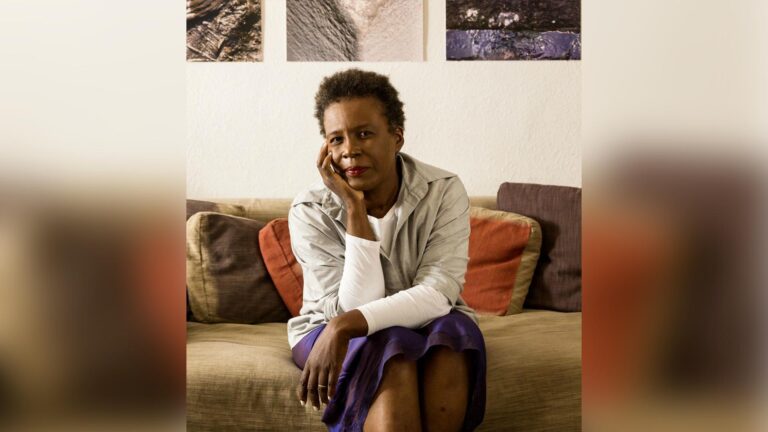
Poet Claudia Rankine presented her latest work, “Just Us: An American Conversation,” at UC Davis

Using a compilation of poetry, essays and images, Claudia Rankine’s newest book, “Just Us: An American Conversation,” tackles the issue of systemic racism’s persistence in American culture, specifically through the presence of white supremacy and the failures of the U.S. justice system in providing an equal opportunity to all Americans.

Rankine’s book features a series of difficult conversations held with friends and colleagues to demonstrate deeply embedded “white denial” in even the most well-meaning people and how to address and combat it effectively and with unity. 

The poet gave a presentation on Nov. 4 through UC Davis’ Manetti Shrem Museum. Her event began with an explanation of how the title of the book, “Just Us,” comes from a Richard Pryor joke regarding the injustices Black people are often subjected to by the police.

“You go down there looking for justice and that’s what you find, just us,” Pryor’s famous quote goes. While it was originally told in the ‘70s, the joke’s message still alarmingly resonates with how Black folks are treated by the U.S. justice system.

The poignancy of the quote allows readers of the book and audience members of her lecture to get straight to the point of the importance of her work: directly addressing the racial inequalities that manifest, from small instances of implicit biases to larger, violent acts of aggression supported by the American government. 

Her lecture, similar to her book, employed several types of media to engage her audience. She drew from videos to further emphasize the juxtaposition of “Blackness” and “whiteness” in America, like Richard Pryor’s performance, to the more severe depictions of Black bodies being violated and unlawfully harmed by the police. 

“Blackness and racism does not exist without the concept of ‘whiteness’” Rankine said. Rankine illustrated how the two coexist in devastatingly different lights and how it furthers the divide between the American people. 

During her lecture, she also explained the process of how the book was written and how she was able to navigate the conversations she describes in her book. Some conversations are more controversial than others, but Rankine describes how “white denial” is rooted in the ignorance of all their statements.

She detailed the process of heavy revision and fact-checking after a conversation before it was sent back to Rankine’s original conversation partner. In the case that her colleague took issue with how a certain statement is interpreted (often claiming “I didn’t mean it like that”), she would note that discrepancy in her book. The discrepancies further exemplify the implicit harmfulness embedded in these conversations, bringing Rankine’s point to a full circle.

“Just Us: An American Conversation” is well-worth looking into, especially given the  current social and political climate. It allows for people of all ethnic backgrounds to engage in a more comprehensive examination of the different ways implicit biases and racial injustices prevail.


Written by: Mariah Viktoria Candelaria –– arts@theaggie.org


How redefining ‘polluted water’ as ‘holy water’ could affect Barrett on water law cases

Clues to how Amy Coney Barrett might decide cases involving the Clean Water Act

There has been much discussion of how new Supreme Court Justice Amy Coney Barrett’s deep Catholic faith and membership of the Charismatic Christian group “People of Praise” could affect how she might rule on cases involving abortion access and LGBT rights. But there’s another area of law in which her deep religious and moralistic convictions could smuggle their way into her otherwise brilliant legal mind—an area of law that people aren’t talking about as much as they should right now: water law.

The website for “People of Praise” explicitly states that their movement began with beliefs in “charismatic gifts such as speaking in tongues and physical healing, as described in the New Testament book of Acts.” This means that they literally believe that blathering like blatherskites in incomprehensible, unintelligible, meaningless gibberish allows them to talk to God and that faith healing actually can work as a viable alternative to science and medicine. Cool! But this poses some interesting questions on laws and regulations regarding water pollution. And they all hinge on the legal definition of terms like “toxic pollutant” and what it actually means for water to be “polluted” or “impaired.”

Under the Clean Water Act, the term “toxic pollutant” is currently defined as “those pollutants, or combinations of pollutants, including disease-causing agents, which after discharge and upon exposure, ingestion, inhalation or assimilation into any organism, either directly from the environment or indirectly by ingestion through food chains, will, on the basis of information available to the Administrator, cause death, disease, behavioral abnormalities, cancer, genetic mutations, physiological malfunctions (including malfunctions in reproduction) or physical deformations, in such organisms or their offspring.”

In short, “toxic pollutants” are scientifically proven to be harmful to one’s health. It follows that drinking or swimming in “polluted water” would also be harmful to one’s health. But what if, just what if, through the power of faith, we could transform polluted water into holy water? Or if the “toxicity” and “holiness” of any waterway or source of drinking water could exist simultaneously? Well, if any of this is true, I think we’d have to take a real hard look at whether we actually need the Clean Water Act or the Safe Drinking Water Act at all!

Say that a factory discharges harmful toxic chemicals into a river that supplies drinking water and is a favorite place for locals to swim. Using the doctrines and logic of the “People of Praise,” we could easily just have a priest bless the water to make it holy. Problem solved! At least, if you have faith. Or perhaps we’re wrong to even think that the act of polluting water is the negative externality that science has always told us it is—what if discharging toxic sludge into a river or polluting groundwater with fracking chemicals is actually a positive externality, a beautiful sign of industry, corporatism and capitalism as benign forces of the Father, the Son and the Holy Spirit against the Godless wickedness of secularism, socialism and communism?!

By subscribing to this premise, we can easily claim that polluted water is holy water, by definition. And from there, it only makes sense that we should use this water as part of the practice of faith healing. Why shouldn’t people drink or bathe in polluted water if their faith tells them it just might heal them? If people believe that it can heal them, then it would clearly be morally wrong to use the science-prejudiced pretext of “protecting people’s health from harmful pollutants” in order to justify the enforcement of pollution regulations that outright deny people the opportunity to put their faith in the polluted water’s potential healing capabilities, nonexistent as they might be.

Using this faith-based reasoning, it becomes obvious that it’s a MUCH WORSE offense to prevent people from doing something they believe to have positive impacts (despite lacking evidence) than it is to help people avoid something that is scientifically proven to have negative impacts. By reducing faith-based reasoning down to this simple theory, we can clearly see that this is the same genius logic behind the Republican approach to the coronavirus pandemic. And to climate change. 

In fact, using this faith-based reasoning to justify ignoring the scientific evidence that supports wearing masks, practicing social distancing and avoiding large crowds—or to justify ignoring the overwhelming scientific evidence of climate change—is perfectly analogous to using faith-based reasoning used to promote “faith healing” over medicine (or as the “People of Praise” like to call it, “physical healing,” which certainly sounds a lot more credible, scientific and less totally f**king bats**t crazy than “faith healing”). 

It’s also perfectly analogous to having faith that it’s actually okay to allow big, beautiful, God-fearing corporations to pollute the air and water when there’s scientific evidence that drinking lead-poisoned water for “physical healing” purposes is harmful to human health. Hmm, is “lead-poisoned” the right word? No, how about something like “lead-infused,” or maybe something more neutral and politically correct like “lead-containing”? Or perhaps something with an even more propagandistic, positive and welcoming connotation, like “lead-hospitable”? Yesssss, “lead-hospitable water” it is. It can’t be bad if it’s hospitable, right? Of course not! Just like the church. And this is exactly why Americans should have no problem whatsoever with trusting Barrett to make decisions for them that affect their physical health.

Written by: Benjamin Porter— bbporter@ucdavis.edu 

(This article is humor and/or satire, and its content is purely fictional. The story and the names of “sources” are fictionalized)


Five courses to add to a Winter Quarter schedule

0

Through these classes, students can gain knowledge on current political and environmental issues

2020 has been a year full of calls for social change including more holistic education, such as ethnic studies. With Winter Quarter pass times coming out, students have the opportunity to sign up for a class that could provide valuable social knowledge, not just textbook knowledge. As students undoubtedly scramble to find that extra general education class for their schedule or meet their unit cap, here are five courses taught by professors that aim to teach lessons that go far beyond the classroom. 

ESP 10: Current Climate Issues

ESP 10 is a course offered yearly at UC Davis that teaches the science of the climate issues we are facing as a nation and a world today. Professor Steven Sadro, who will be teaching the course, said that it always covers climate change, but the students also have a say in what topics they are most interested in. Issues he foresees covering this year are forest management and wildfires, agricultural issues and waste generation. 

“In that sense I think there’s an immense value in taking the course because we deal with a lot of issues that are very topical to people, whether you’re just a citizen of California, or a citizen of the world,” Sadro said. 

POL 163: Group Politics

Professor Rachel Bernhard, who teaches this class, explained that she uses the frame of group politics to focus on identity and discrimination within groups in society. 

“We’ll be thinking about different kinds of groups, both historical and modern, in the US, and how both that group’s sense of themselves […] has evolved over time and also how those groups have been marginalized and countered that marginalization in politics over time,” Bernhard said. 

She expects to focus specifically on racial and ethnic groups, sexual orientation and religious identity. She also teaches a separate course on women in politics (POL166), generally available in the fall. 

“[The class is] a forum to educate ourselves and to have a space to learn and talk about it that is not just the social media sphere, nor is it just a history class that’s in the past and doesn’t really connect to what’s going on right now,” Bernhard said.

WMS 50: Introduction to Gender Studies

This course is a lower division class that focuses on feminist and LGBTQ history and activism, as well as all of the ways that these topics intersect. Isabel Alvarez, a fourth-year art history and gender, sexuality and women’s studies double major, recalled thinking that this was a course that students in many different majors would benefit from. 

“I remember being in the class and thinking that students who are pre-med should take classes on gender studies and race studies because a lot of STEM majors are not required to take classes that look at how what they study is influenced by things like racism and patriarchy,” Alvarez said. 

Alvarez also believes that this course provides important baseline education for students socially, apart from their degrees.

“For folks who are not marginalized in certain ways, it can be hard to understand why some people feel the way they feel about government policies, incarceration,” Alvarez said. “Through the readings, through the lectures, through the queer and feminist activism, [the course] helps to explain how other peoples’ lives are lived and have been lived throughout history. It makes it a little bit easier for other people to understand where people who are involved in a lot of different activism are coming from.”

ENL 165: Topics in Poetry

This Winter Quarter, the special topics in this poetry course will focus specifically on environmental poetry. This course aims to educate students about the climate crises going on in our world today through the subgenre of ecopoetics, including work by Craig Santos Perez, Rita Wong and Kathy Jitnil-Kijiner. These authors generally write about activist movements and the impact of climate change in their lives and their experience as activists. Professor Margaret Ronda, who will be teaching the course, has specialized in environmental literature, and she expressed that her choice to focus the class on the environment this year was extremely important. 

“It feels more and more urgent to talk about these issues with students and to think about the ways that […] poetry offers a means of thinking about and responding to global ecological crisis,” Ronda said. “Poetry might help us have more ethical relationships to our environments and […] a poem might actually show us something that we can’t see in a news story. So many of us are aware now of climate issues […] and yet there’s still a desire for poetry to show us something that empirical knowledge can’t provide.”

SOC 5: Global Social Change

This course, taught by Professor David McCourt, focuses on showing the connection between economics and social change over time across the world. McCourt said that throughout the course, students gain a better understanding of the “world system” and how the interaction between countries affects the patterns and pace of social change within their system. McCourt emphasized the relevance of this course for all people, not just sociology majors. 

“When it comes to engaged citizenship and just people who are trying to get a better sense of our world, I think it’s a really fantastic course because it shows you how […] you can’t just look at American politics, you have to look at the whole global system,” McCourt said. “[This course is for] anyone wanting to understand American life, American politics, American economics.”


Written by: Katie DeBenedetti — features@theaggie.org

College football enters a dangerous era

With COVID-19 cases increasing, the NCAA must be cautious

There was always doubt that the NCAA could even start a college football season amidst the COVID-19 pandemic. Adamant to hold a season in the fall, conferences like the Southeastern Conference (SEC), Atlantic Coast Conference (ACC) and Big 12 tried everything in their power to proceed normally. Being that they are home to some of the biggest college football teams in the country, the losses they would endure proved to be enough to try to have a season at all costs. With many universities across the country cutting sports programs due to the major financial losses, missing a football season could have doomed a lot of the NCAA schools as the sport serves as the majority of athletic revenue. So, they gave a green light to schools to hold their college football season as normal. 

Rather than implement strict guidelines to follow throughout the season, the NCAA stated that testing had to be done once a week among other general rules. Their lack of protocols to combat the virus, however, allowed conferences to dictate what rules the programs needed to follow. Initially, conferences like the SEC tested three days before the day of their game, but soon after, they followed the ACC and Big 12 who began testing three times a week. The Big Ten and Pac-12, who returned after initially cancelling their fall season, began to conduct daily testing. These decisions could influence the other conferences to follow suit as well, as many schools across the country have begun to feel the effects of the pandemic.

With some schools having as many as 110 student-athletes on the football team, it is clear why it has become so difficult to return to play. With everyone being in such close proximity to each other, it has been difficult to fully secure the health and safety of the student-athletes. Even with less travel, the risk is still there for everyone and there is only so much a program can do to stop it. It is impossible to hold an NBA-type bubble for collegiate sports because of the high number of teams and players involved. All the NCAA can do is hope for the best. 

As of Oct. 16, there were already 47 games cancelled or postponed because of COVID-19, and in the 10th week since games resumed, there were 10 games postponed. Right off the bat, high-profile teams were having to move around their scheduling because of positive tests. Teams like Virginia, LSU, Virginia Tech, FAU and many others have suffered massive outbreaks among their program that has put their activities on pause for at least a week. The Pac-12 and Big Ten had some difficulties with their returns as Arizona, Utah, Purdue and Wisconsin all had to postpone games in the early weeks of their conference play. Alabama head coach Nick Saban contracted the virus in October, and the team was forced to pause their activities for a couple of days. Projected No. 1 overall pick in next year’s NFL Draft, Trevor Lawrence, also contracted the virus and was forced to sit out two games while he recovered. There have been countless examples, but with so much to lose, the show must go on one way or another. 

An aspect that has become an apparent issue in certain schools is something that not only affects the team, but the university as well. With many schools allowing a percentage of fans to attend the games, there have been massive upticks in positive cases within their college communities. Georgia University was under fire back in early October because it had appeared that there were a lot of fans packed into the stadium, many of whom were not socially distanced or wearing masks. It is mandatory that fans both wear masks and socially distance, but with upwards of 20,000 people in attendance, it is extremely difficult to keep track of every single person to make sure they follow the rules. 

Communities where these universities are located have also been affected by these games. The CDC reported that out of the eight states with the highest infection rates, seven of them are home to SEC schools who allow a number of fans to be in attendance. In the majority of those communities classified as college towns, there has been a massive, uncontrollable spread of COVID-19. The lack of rule-following continues to affect a growing number of people. Still, some head coaches like Florida’s Dan Mullen are dismissive of the pandemic that has killed over 237,000 people in the U.S. With Florida having the ability to hold 20% capacity, Mullen believed that it was time for more. 

“I know our governor passed that rule, so certainly, hopefully the university administration decides to let us pack the Swamp against LSU,” Mullen said in October. “I certainly hope our university administration follows the governor. The governor has passed a rule that we’re allowed to pack the Swamp and have 90,000 in the Swamp to give us the home-field advantage.”

In reference to Florida Governor Ron DeSantis allowing for stadiums to be at full capacity, Mullen believed that regardless of the pandemic, it was more important to hold home-field advantage since it was now allowed than to continue taking certain precautions. Later that same week, the University of Florida paused all football-related activities as Mullen and 20 other members of the program tested positive for the virus.

Part of the profit that schools make from football comes from fans, so having even some in attendance seems to be a priority. Nonetheless, schools fail to realize the effect it is having on their community as a whole. 

“It’s really dangerous,” Thomas Huard, chief clinical laboratory advisor at the Texas-based Campus Health Project told Sports Illustrated. “It’s going to create spread. People don’t social distance even though the seats are spread apart. You go to the bathroom, hot dog stand, beer stand. I think it’s a disaster.”

The NCAA is hoping that nothing devastating happens to all of their programs, but they fail to see how disastrous it really is for the communities that have more leeway. Even with protocols in place, programs are finding out that it is impossible to try to control the thousands of people involved in the weekly games. As cases continue to rise and financial implications loom, not only this year, but possibly until 2023, the NCAA and colleges across the country are trying to find ways to survive and finish the season strong. The question is, at what cost? 

Written by: Omar Navarro — sports@theaggie.org