53.5 F
Davis

Davis, California

Tuesday, December 23, 2025
Home Blog Page 308

Ask Amy: Dear Amy, it’s me, Amy (you), and I’m stuck in a dead-end job. Help!

Advice columnist Amy Dickinson faces her toughest challenge yet

Dear Amy: As you probably know, I’ve been writing the nationally syndicated advice column “Ask Amy” for over a decade. Every day. For over a decade. Yes, that’s right, every single day in my daily column every day, I, Amy Dickinson, respond to three people who send me emails about their problems. Three people. Every single day. 

Sometimes people send me detailed descriptions of their various troubles and predicaments, their trials and tribulations, literal litanies of everything wrong in their lives. And I have to respond. Sometimes they send me short little comments criticizing me for every “wrong” or “incomplete” bit of advice I’ve ever given. And I have to respond. No matter what, I have to respond. I have to respond with sound, responsible, compassionate, empathetic, practical and helpful advice that can actually improve people’s lives. But sometimes this can be pretty damn hard. You know why? Because it turns out you Americans are actually really f**ked up! I know that as somewhat of a mental health professional myself, I’m not supposed to say things like this, but sometimes people like me need to f**king vent too! So let me be the first to tell you: All of you Americans are crazy! You’re bats**t crazy! Every last one a’ yas!

When I first started this job, I thought it would be more of a lighthearted, silly and humorous little gig. I thought I’d come to be known as a comedic personality by writing clever and witty responses to amusing but only mildly unfortunate stories from otherwise happy people. But this job has really destroyed my faith in humanity. Before starting my column, I genuinely believed that most people were “mostly happy,” “happy enough,” “just about happy” or at least “not unhappy.” I thought that people didn’t really have that many serious concerns in general. But NOPE! That is far from the truth! Y’all are coping with some serious s**t! And you’re not afraid to share it in the newspaper either! I mean it. People are surprisingly willing—much more willing than you’d think—to actually write in national newspapers about some of the most serious, deep, problematic, real, heartbreaking and messed-up s**t that used to be inconceivable to me!

I had to counsel a wife on whether or not to leave her husband who got caught going on sex benders after he was sent an email receipt for leaving an online review for a prostitute. I had to help a woman whose Catholic family was harassing her for not baptizing her child. I had to tell a couple whether they should ghost the friend who incessantly accused them of asking her to be in a threesome with them when they never made such a request. I had to explain to a woman that her husband was most likely not trying to ruin her life by telling her negative information about everything that she likes. I had to respond to concerns about a potentially racist dog! I had to coach someone on how to politely get a neighbor (who potentially had mental health or substance abuse problems) to stop going on their property and watering their lawn and windows. I had to mediate a spousal argument about whether sneaking up on each other in the house is funny or traumatic. I had to address someone who feared that they were facilitating adultery at their church fellowship group after noticing some “funny business” under the table and while “doing the dishes.” I had to set some wacko straight after he claimed it was “a farce” and not “morally right” for his wife’s niece to get married while wearing a white gown given that she is not a virgin. 

Some of this may sound funny, but I have to deal with these things every day! And you people aren’t getting any saner, despite my years of hard work! You see, I quite literally have people’s lives and future happiness in my hands. Sometimes, it can be tempting to play God and purposely give people bad advice so I can sit back and watch the show, knowing that I am the puppet-master behind the fortunes and misfortunes of a disturbingly large number of Americans. And sometimes, it can be tempting to just crank out the daily column in a minute or two, just throwing random advice at the wall to see what sticks. 

But I know I can’t do that. I used to think that this column might one day lead to a better job opportunity, but it’s becoming increasingly clear to me that having the mental health of the entire country in my hands is nothing if not a dead-end job. Help! What do I do, Amy? Can I quit this Godforsaken job at last? Or would the entire country collapse if I did that? 

—Disillusioned as f**k about the fact that my advice is quite possibly the one and only thing keeping a disturbingly large number of Americans from kidnapping their boss, vandalizing their neighbor’s car, stealing their ex’s cat, murdering their in-laws with their bare hands, finding themselves on the wrong side of a race riot “by accident,” passive-aggressively rearranging their housemate’s spice cupboard and/or drinking themselves to an early grave, a grave who’s eventual location would have to be determined in court after years of dispute between the Catholic and Jewish halves of their extended family.

Dear Disillusioned AF: It’s great to hear from you (me), Amy. It’s been a while. You (I) certainly have a demanding job and are under a lot of pressure to do your (my) job well. On one hand, I (you) hope you (I) might be able to take some of your (my) own advice from your (my) recent column titled, “If I’m ‘lucky to have a job,’ why am I miserable?” In this column, I (you) stressed that having steady employment during the pandemic is definitely something to be happy about, not miserable.

On the other hand, I (you) would advise you (me) to consider a sabbatical. Or, in other words, to go on a long break from your (my) relationship with your (my) readers. Based on all of the evidence that you (I) have presented to me (you), it seems like you’re (I’m) not in a “dead-end job”—rather, you’re (I’m) in what is best described as a psychologically and emotionally abusive relationship with America—and by extension, the millions of Americans who count on you (me) to help them with their problems. 

I (you) also encourage you (me) to realize that most people may not realize how stressful this job can be, so it might be healthy if you (I) gave them the benefit of the doubt. Start by having a heart-to-heart with these millions of people, every last one of them, and encourage them to empathize with your (my) unique position. If that doesn’t work, then you (I) need to get out of this relationship as soon as possible. Based on your (my) unfiltered and hysterical letter to me (you), it is possible that you (I) could be the crazed advice-seeker that finally pushes me (you) over the edge. Wait a second, if I’m (you’re) writing this to you (me), does that mean that I’ve (you’ve) already failed?? Oh no, I (you) think I’m (you’re) finally losing it! I (you) mean it! For your (my) own good, you (I) need to quit this job RIGHT NOW before it’s too la—

Written by: Benjamin Porter— bbporter@ucdavis.edu 

(This article is humor and/or satire, and it’s content is purely fictional. The story and or names of “sources” are fictionalized.)
Njideka Akunyili Crosby gives Betty Jean and Wayne Thiebaud Endowed Lecture

The skilled painter shed light on the behind-the-scenes of her artistic process

This year marks the fifth consecutive year of The Betty Jean and Wayne Thiebaud Endowed Lecture. The lecture, put together by The Department of Art and Art History and the Manetti Shrem Museum of Art, invites acclaimed artists to offer their knowledge to the UC Davis community. 

The occasion this year, which took place on Nov. 12, was special in many ways. First, the featured artist Njideka Akunyili Crosby, had to deliver her lecture over Zoom. Second, it was also a celebration of acclaimed UC Davis alumni and lecture sponsor Wayne Thiebaud’s centennial! And like any birthday that happened in the last nine months, it wasn’t complete without a ten minute compilation video of everyone you know wishing you happy birthday. After a warm celebration and welcoming, Akunyili Crosby began discussing her work.

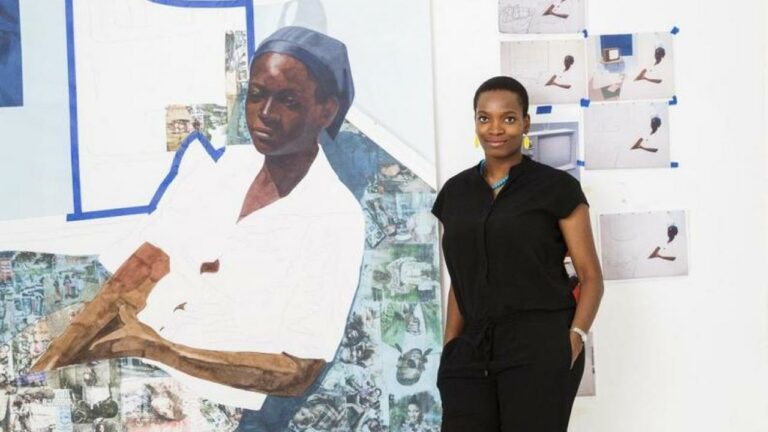
She called in from her studio in Los Angeles. Her Zoom background displayed the white walls behind her, filled with paintings in progress and various supplies. She first explained she was born in Enugu, Nigeria, spending her adolescence between her ancestral village and Lagos. She moved to the U.S. at the age of 16 and later went on to study painting at multiple institutions. Akunyili Crosby spoke of how this plays into her personhood and art, how she values her dual identities and the ways they intersect. She explained her perspective as “always experiencing life through a Nigerian lens” and emphasized that “the Nigeria part and America part sit side by side.”

Akunyili Croby continued her presentation with a brief history of Nigeria, clarifying that understanding the past is needed to understand her art. She scrolled through various images. All of them subtly depicted Britain’s colonial rule over Nigeria, featuring clothes and traditions adapted from Britain. Though Nigeria became independent in 1960, the remains of colonial rule linger. 

“The things they brought with don’t vanish. Leftover British presence, you can see in our culture,” she said. This adaptation is a driving force for Akunyili Croby. “200 tribes, British presence, and American pop culture weave together to build something new. This is what I’m trying to put my hand on.” 

In addition to change and adaptation in Nigeria as a country, she also talked about looking closer and noting the difference in it’s people. More specifically, generationally. She said that she liked mapping the changes in the country throughout her family’s different perspectives, stating “Tradition gets more complex with each subsequent generation.” She used fashion, language and opinion as evidence of this change. “Tradition is not static. It is something that is always shifting, changing and reinventing itself.”

As soon as she displayed her first painting, everyone could feel how personal her work is. The work she showed was Nwantinti, a piece she did in 2012. The effect of looking at one of her paintings for the first time is overwhelming. The eye is instantly captured by the incredible detail in the painting and the bold colors. When looking closer, individuals realize the dimension has a source. Akunyili Crosby’s paintings are all done on paper, normally seven-by-seven and are a mix of paint, photo transfer and collage. Individuals can zoom in to see much of the piece is made up of various small images. This detail makes her paintings compelling. The longer individuals look at them, the more interesting they get.

The audience can tell the images have been carefully chosen. A good work to emulate this is Predecessors, 2013. She walked the audience through painting, explaining “This is really an ode to Nigerian women doing amazing things I admire.” She can pick out each image and explain why she chose it and where it came from, giving the painting infinite layers and stories to tell. She briefly explained her process of acquiring the pictures. She has been collecting them since 2009 on an external hard drive she lovingly referred to as “an extension of my arm.” The process takes a long time; the image must resonate with her to be included.

She explained she is driven by “duality in work” and aims to present her pieces with various pockets of detail. This is evident. It is obvious her painting skills are masterful, but it is the contrast of the detailed areas and the purposefully simplified techniques that complete the composition. She wants to “create space that doesn’t fit in one box” and does it perfectly.

Despite slight technical difficulties, Njideka Akunyili Crosby delivered an impressive, engrossing lecture. Her work renders people speechless and descriptions of her work add layers beyond comprehension. Her paintings are an amalgamation of a person, each piece solidifying a lifetime of memories and meaning. 

Check out https://arts.ucdavis.edu/art-studio-events for future events.
Written by: Livvy Mullen — arts@theaggie.org


University encourages students to self-regulate amid pandemic

UC Davis police are not enforcing COVID-19 guidelines, and OSSJA is taking a ‘graduated response’ to reports of violations

As fears of a widespread outbreak on campus have decreased, the UC Davis Police Department has taken an educational approach to disperse gatherings during the pandemic, and the Office of Student Support and Judicial Affairs (OSSJA) has avoided affecting students’ standing for first-time offenders.

UC Davis Police Chief Joe Farrow’s approach to gatherings on the campus has been less about enforcement and more about encouraging positive behaviors. 

“We always thought that we should kind of be advisors, the educational arm of things,” Farrow said. “So we bought a bunch of masks, hand sanitizers, all that sort of thing.” 

According to an email response from the OSSJA Director Don Dudley, the university responds to all reports of gatherings that violate the university guidelines, and they are taking a graduated approach in providing discipline.

“Most first-time incidents result in a disciplinary outcome that does not affect a student’s standing,” Dudley said via email.  

UC Davis currently allows for gatherings of up to 16 people with social distancing outdoors and not between more than three households, according to the campus ready webpage.

Annie Andrews, a third-year philosophy and psychology double major, said she was the host of a game night off-campus that ended up having more people than originally intended, around 30.

She said she had planned to only have a couple of people over. 

“That turned into a lot bigger than we thought, like a lot more people showed up,” Andrews said.

According to Farrow, the Davis Police Department deals with any complaints of violations to state and county guidelines for students off campus. After multiple requests for comment, Davis Police Chief Darren Pytel did not respond.

The total self-reported positive cases since March have been 117.

Still, Andrews said she wasn’t concerned about the spread of COVID-19 from the gathering, and she said most people there were wearing their masks, except when drinking.

“Most of the people who showed up were from student housing, so they’ve been tested before,” Andrews said. “We didn’t hear anything about people being sick when they showed up or left, so it wasn’t too much of a worry for us.” 

According to the UC Davis COVID-19 Dashboard, there have been three asymptomatic cases between Nov. 1 and Nov. 7.

At the beginning of the pandemic, Farrow said the UC Davis police department received a lot of calls, but that has gone down considerably since the rules took effect.

“I think people realized it’s not necessarily a police call, it’s not really something that the police deal with,” Farrow said. “So our calls have gone way down for us; In fact, we very seldom receive a call.” 

Farrow said he was encouraged by the way students on campus acted during Halloween. He had originally prepared himself for more calls. 

“I think Halloween was a good example of a lot of people at this university taking things seriously,” Farrow said. “I think they tried really hard to social-distance, while at the same time enjoy themselves in some aspect.” 

 Students who violate campus ready guidelines will be required to get tested for COVID-19 weekly for four weeks at the ARC.

“I feel safe going to campus because I know it’s an institution,” Andrews said. “They have to keep their students safe, so they are going to put up decent regulations.”

For Farrow, he said it’s important to not grow too comfortable and let standards slip. 

“I think what we are all trying to guard against is complacency,” Farrow said. 

Written by: Kathleen Quinn — campus@theaggie.org

Oxytocin decreases social anxiety in mice, according to UC Davis study

New methods of research could help those with ADHD

Researchers at UC Davis have discovered that oxytocin, a stress-buffering molecule, exists in cells outside the hypothalamus and is located in the extended amygdala of the brain. The oxytocin produced in the extended amygdala can cause social anxiety behaviors to occur in mice, while oxytocin produced in the hypothalamus has been observed to induce prosocial behaviors. This new discovery shows that the location of the brain where this hormone is produced influences different types of behaviors.

The findings were published in the Proceedings of the National Academy of Sciences USA, and the lead author is Natalia Duque-Wilckens, a former doctoral researcher at UC Davis who now works at Michigan State University. The senior author is Brian Trainor, a professor of psychology at UC Davis and the vice chair of graduate education. 

Trainor started working on oxytocin about six years ago; he studied how stress affects oxytocin neurons in mice and how mostly-female mice that showed social anxiety behavior were seen to have more activity in their oxytocin neurons. The increased activity in their oxytocin neurons was originally thought to be a way to cope with stress, since oxytocin was known at the time to only reduce anxiety.

When these same mice were given intranasal oxytocin, the ones that were experiencing social stress did not change their behavior, according to Trainor. 

“It was kind of demoralizing, you know,” Trainor said. “We’ve gone through all the effort to learn the technique and we gave the oxytocin and it didn’t do anything.”

After that attempt, Trainor and his fellow researchers tried to give oxytocin to non-stressed females, which caused their behavior to change. The mice started acting like they have been exposed to stress and they started showing social anxiety behavior. 

“That was a turning point,” Trainor said. “We knew oxytocin was doing something to promote this anxiety behavior, but we didn’t know how, so Natalia, […] she’s the one who figured out how.”

Duque-Wilckens was able to use a drug to block oxytocin receptors in females that were exposed to stress, reducing social anxiety behavior. It was observed that one dose of the oxytocin receptor inhibitor had the same effect as four weeks of antidepressant treatment. She was able to prove that oxytocin receptors in the extended amygdala were important for this effect.

This study was a continuation of another paper where Duque-Wilckens explained how oxytocin is made in the hypothalamus and affects lactation and giving birth. The previous study explored how there is also some oxytocin in the brain and that cells outside of the hypothalamus can make oxytocin in the extended amygdala as well.

In that study, Duque-Wilckens injected small strands of DNA into the extended amygdala to prevent oxytocin from being made. The synthetic DNA strands then binded to the mRNA and prevented it from getting translated into a protein. The process of blocking the oxytocin synthesis caused the stressed mice to behave normally.

This differs from the regular process of giving the mice more oxytocin or giving it a drug that blocks the receptor, according to Trainor. 

“What’s very rare is to be manipulating the oxytocin production in specific locations in the brain,” Trainor said. 

Through this unique approach, the original hypothesis that blocking oxytocin receptors would increase anxiety has been proven false. Trainor explained that his ultimate goal is to confirm that the cells he is studying in mice are also present in the same part of the brain as humans, and to see if the results of new studies can be applied to humans with depression and anxiety.

“It turns out working with human brains is much more different than working with mouse brains,” Trainor said. “We still have more work to do.” 

Karen Bales, a professor of psychology at UC Davis, studies how oxytocin plays a role in the formation of social bonds and can be adapted for clinical uses. Bales applauded the researchers.

“Dr. Duque-Wilckens and Dr. Trainor’s finding suggests that it matters where the oxytocin is acting, and this is really important because oxytocin is used in humans both to induce labor and to treat social dysfunctions.” 

This finding will also help individuals with ADHD. According to a 2015 study, it was discovered that “rates of comorbid ADHD in social anxiety disorder patients were high (especially predominantly the inattentive type).” 

Faye Dixon, a professor of psychiatry and behavioral sciences at UC Davis, explained that ADHD is often associated with anxiety. 

 “What we are seeing in our studies is that it is not uncommon for people who have ADHD to also be diagnosed with anxiety, specifically generalized anxiety,” Dixon said.

When asked if having treatment for anxiety like the possible one indicated in Trainor’s study could potentially help individuals with ADHD, Dixon agreed. 

“If you address issues […] around worries just in general, that’s going to improve performance because the way some of the symptoms that ADHD and anxiety overlap are in attention,” Dixon said. 

Due to COVID-19, research on oxytocin has been slowed down, but efforts are still being made to apply what was learned through studying mice to humans as a way to help those with social anxiety.

Written by: Francheska Torres — science@theaggie.org

Those we didn’t know are ‘Among Us’

What do lies, murder, betrayal and famous politicians all have in common—Among Us

Lies, deceit, betrayal and the age-old question of “how to get away with murder” are all explored in the widely popular and addictive online game “Among Us.”

If you ever wanted to experience a murder-mystery in a fossil-fuel-powered alien spaceship or take the feeling of “imposter syndrome” to the next level, try playing one of 2020’s most talked-about games. 

In this multiplayer mobile and PC game, a group of ten players called “crewmates” are transported onto a spaceship where they have to complete tasks, survive murder attempts by an “imposter” who is another player posing as crewmate and identify the killer among them. 

The goal of crewmates is to complete all the tasks before the imposter murders a majority of them. The goal of the imposter is to kill as many of the crewmates as possible, all the while trying to prevent their identity from being uncovered. Crewmates report the deaths of murdered players and hold court to determine the identity of the killer and cast a plurality vote, which determines who gets ejected from the ship.

Players can choose to host their own local games or join online matches in which they are assigned an avatar in one of the 12 colors that can be customized with an assortment of 40-some hats.

“Among Us” was initially released on June 15, 2018 by the indie app developer InnerSloth, but didn’t reach its shocking fame and popularity until 2020—a consequence of COVID-19. Digital platforms and cellphone apps have seen a huge spike in their activity as people are spending more time inside their homes on the internet and less time out and about.

It is the 7th-most played game in July, August and September of 2020, and has been downloaded over 217 million times. 

When asked about the most appealing part of the game, Melody Shiau, a second-year biological sciences major said she liked its convenience. 

“I like the game ‘Among Us!’” Shiau said. “It’s a super convenient game especially during this pandemic because all you need is a code to play with all your friends. I probably play it once or twice a month.”

Malika Haji, a second-year managerial economics major, plays it with friends, family and strangers. 

“I feel like ‘Among Us’ became popular overnight… but I’m glad it did,” Haji said. “I love playing the game with my friends and with randoms online. Even my family members love it so much that we have a separate group chat dedicated to playing ‘Among Us’ together. I love it!”

“Among Us” has become ingrained into Generation Z’s culture in such a way that phrases such as “yellow is sus,” “purple vented” or “skip vote” are part of our daily vernacular. 

It is more than just a way for high school and college students to interact in a socially distant world. It has become a platform that can be used to capture the attention of the younger generation. 

This was the tactic used by Alexandria Ocasio-Cortez (D-NY), the U.S. Representative for New York’s 14th congressional district. AOC, as she is referred to by her supporters, tweeted on Oct. 19, “Anyone want to play Among Us with me on Twitch to get out the vote?”

And just like that, on Oct. 21, AOC hosted a Twitch stream which included Congresswoman Ilhan Omar of Minnesota’s 5th congressional district and famous streamers such as Pokimane, Disguised Toast and HasanAbi, a political commentator and one of the event’s organizers. 

In the 3 ½ hour Twitch stream, the Congresswomen attempted a hilarious and entertaining go at being both a crewmate and imposter. But more importantly, during their many “Among Us” matches, the Congresswomen attempted to energize the 444,000 viewers watching live to make a solid plan to vote. 

Ocasio-Cortez directed viewers to websites such as IWillVote.com, which aims to help voters create voting plans. Not only that, but Ocasio-Cortez’s “Among Us” stream was the third most watched livestream in all of Twitch’s history and has garnered an overall 5.4 million views.

Haji watched clips of the stream on Twitter.

 “I thought it was pretty cool actually for her to stream herself playing ‘Among Us,’” Haji said. “It’s refreshing to see politicians in a more fun and light-hearted manner instead of always seeing them behind podiums and on the news.” 

Tahla Bahnasy, a second-year cognitive science major and tech management minor also watched Ocasio-Cortez’s Twitch stream and commented on the tactic of politicians using popular platforms as a way to get the vote out. 

“I thought it was pretty fun watching her play,” Bahnasy said. “I think it’s great that politicians are using games to appeal to younger voters because a lot of the time voters our age feel like politics is so separated from their lives that it doesn’t even matter if they participate. But playing and streaming a game like this makes them so much more personable and relatable.”

It is not certain how many people felt energized to vote following Ocasio-Cortez’s “Among Us” stream, but given that the average person who uses Twitch is 21, the Congresswoman knew exactly what she was doing—succinctly capturing a large voting-eligible audience and galvanizing them to vote on their turf. 

At the end of the day, “Among Us” is synonymous to a group project—a few people do all the work and someone always sabotages the game plan. But for politicians or activists, it can be an invaluable platform for access to a treasure-trove of eligible voters who can be invigorated to vote. 

Written by: Muhammad Tariq — arts@theaggie.org


ASUCD fall 2020 election results announced

Of the six senator positions available, three candidates were elected from the BASED slate, two from the Thrive slate and one Independent

This past week, 15 candidates ran for six seats in the ASUCD Senate in the Fall Quarter 2020 elections. The voter turnout totaled 1,780 students, making up roughly 6% of the undergraduate student body at UC Davis and continuing the pattern of historically low voter turnout in student elections.

On the BASED Slate, which won half of the six seats, Senator Mahuum Shahab, Senator Kabir Sahni and Senator Ryan Manriquez were elected.

On the Thrive Slate, Senator Kristin Mifsud and Senator Lauren Smith were elected. Senator Michael C. Navarro ran as an Independent and was elected. 

In the senate race, 47.47% of voters voted for BASED candidates, compared to 37.08% for Thrive candidates, and 15.45% for Independent candidates. Most voters ranked close to 6 senators out of the total 15 candidates. 

Additionally, External Affairs Vice President (EAVP) Maria Martinez ran uncontested as an Independent and was re-elected. 

The constitutional amendment passed, with 1,756—or 96.38% of voters—voting for it, while 66—or 3.62% of voters—voted against it. Two hundred twenty-five voters abstained from voting for the amendment entirely. 
Written by: Rebecca Bihn-Wallace — campus@theaggie.org

ASUCD candidates debate issues, discuss their platforms

Of the 15 candidates for Senate, only four were present

The ASUCD candidates’ debate began over Zoom with an introduction of the moderators, as well as the participating candidates. The moderators were Elections Committee Chair Karolina Rodriguez and Executive Chief of Staff Allie O’Brien. 

The four Senate candidates present during the debate were Logan Legg, a third-year international relations major; Devin Santiago-Vergara, a third-year political science and psychology double-major; Erika Valle, a fourth year political science major; and Ryan Manriquez, a third-year political science major. There are 15 total candidates for Senate and one for External Affairs Vice President, Maria Martinez, who later joined the debate. A recording of the debate can be found on the ASUCD Elections’ website.

The first question, asked by O’Brien, was about the candidates’ platforms.

“Can you give us an idea of your platform?” O’Brien asked. “Explain two concrete steps you’re going to take in order to achieve what you had promised in your platform.”

Manriquez’s platform includes fighting for the inclusion of those with disabilities, helping students get involved in ASUCD and bringing awareness to the issue of mental health for all college students. 

Valle’s platform includes transfer student representation, off-campus advocacy and diversity and representation. 

Legg’s platform addresses housing insecurity, institutional reform (especially reform for the campus police department), sexual assault and sustainability.

Santiago-Vergara’s platforms include increasing ASUCD transparency and supporting marginalized communities.

O’Brien then asked candidates to explain the duties required of senators and how they plan on fulfilling them if elected.

All four candidates emphasized that Senators serve to bridge the gap between ASUCD and the student body. They noted the importance of advocating for the needs of all UC Davis students and writing legislation that holistically addresses their concerns.

Santiago-Vergara echoed these sentiments, adding that they should make sure other Senators follow through with what they promised during their campaign.

“It’s been an issue in the past where Senators say they advocate for these communities, that they want to serve the community and the student body and then after election, […] they kind of just disappear,” Santiago-Vergara said. “We want to follow through with action, staying involved and being active in the communities.”

Next, O’Brien asked if there were specific units, commissions or committees the candidates wanted to improve within the association.

Manriquez said he would like to revamp the Disability Rights and Advocacy Committee (DRAC), which hasn’t had a chairperson for the last few years.

Valle said she wants to improve the Transfer, Re-entry and Veterans (TRV) Committee so that communication is improved and the number of members the committee has is increased.

Legg said he would improve the Student-Police Relations Committee or the Next Generation Reforms Task Force, citing his belief that student representation is important in addressing these salient issues.

Santiago-Vergara said he would push for getting more students of color represented in spaces such as the Ethnic and Cultural Affairs Commission (ECAC) and KDVS, UC Davis’ student-run radio station. 

O’Brien’s next question required the candidates to describe a section about the bylaws that is unrelated to elections. 

Valle, the only candidate to answer, explained one section of the bylaws that describes the seven different ASUCD commissions and their roles.

“Representation is very important when you’re a Senator on the table, and you all have identified portions of the student body you would like to speak out for, but what makes you qualified to actually represent your constituents?” O’Brien asked next.

Manriquez listed his qualifications as a member of the transfer community and a patient ambassador for Biogen, a biotechnological company that promotes research with the goal of defeating neurological disease . Valle said she has been politically active since the age of 14: Her first job was working under Roger Dickenson for Senate in Sacramento County; she has volunteered for multiple political organizations; and interned at the Foundation for California Community Colleges.

“There’s 15 people running for ASUCD Senate, but only four of us showed up,” Valle said. “I think there’s a lot of people who just want to run for [their resume], and that’s very frustrating. You need to hire people who have experience in activism, who have experience volunteering, and I think every candidate here has shown that.”

Legg supported Valle’s call for consistent advocacy for marginalized communities. He said he worked with UC Davis Vice Chancellor for Diversity, Equity and Inclusion Renetta Tull to lobby for DREAMers and the Hispanic Educational Resources and Empowerment (HERE) Act.

Santiago-Vergara said he has been involved with ECAC and with the Filipinx-American community at UC Davis, having served two years on board for Mga Kapatid, a Filipinx-American organization on campus.

O’Brien then asked the candidates to explain the difference between commissions and committees. 

All four candidates voiced that the seven commissions are more broad, with commission chairs that act as non-voting members of the Senate table, while committees serve under these commissions and carry out more specific tasks. 

“Could you please discuss an instance when you feel ASUCD has or has not been a representative voice for students on campus?” O’Brien asked next.

The four candidates agreed that ASUCD has been lacking in representation of transfer students and students of color.

“UC Davis, both admin and even ASUCD, prides itself on being so diverse, but in a way it feels tokenizing to want these black and brown voices in these spaces without actually serving them and without actually listening to them,” Santiago-Vergara said.

The second part of the debate then began, during which O’Brien asked questions that were tailored to each specific candidate based on their platforms.

“How do you plan on bringing back the Disability Rights Advocacy Committee?” O’Brien asked Manriquez. “You mentioned mental health and student outreach in your platform. What ideas do you have for both? And are you aware of campus organizations and individuals that are already working on this?”

Manriquez reiterated his plan to work with the External Affairs Commission to hire a chairperson for the DRAC, one who will effectively advocate for the needs of the disability community. In order to increase student engagement while also following safety guidelines during the pandemic, Manriquez said he would like to reach out to students through social media platforms, inform them about all that ASUCD has to offer and help them get involved. He also expressed interest in working with the Mental Health Initiative to establish emergency mental health counselors who can support students during crises.

“I know from experience, it takes [about] three weeks to schedule a mental health appointment with the counselor,” Manriquez said. “Anyone in a mental health crisis knows that three weeks for an appointment is a lifetime.”

O’Brien then asked Valle how she plans on holding the administration accountable to serving Latinx students.

Valle stated that once UC Davis is officially recognized as a Hispanic-Serving Institution, she would find out how much money was awarded and how that money is being used and expressed willingness to directly email Chancellor May and other administrative staff until she obtains this information.

“I think that’s what I bring to the table, where I’m not afraid to email [the administration] and to call these people out, whether it be through email, or publicly on social media and tell them that students want to hear from them,” Valle said.

O’Brien followed up with questions about implementing Valle’s platform that refers to improving the TRV Committee.

Valle restated her desire to increase communication between ASUCD and the TRV Committee and to develop a subordinate committee, drawing inspiration from UCLA’s Office of the Transfer Student Representative, that would be dedicated to hiring transfer students and retaining their presence in ASUCD.

“You talk about housing insecurity in your statement,” O’Brien said, addressing Legg. “What will you do to ensure that all students have access to housing? What organizations and campus officials will you work with to make this a reality? And is it a realistic goal for you to accomplish in one year?”

Legg said addressing housing insecurity is a city-wide initiative, with multiple groups currently working on it. He would like to work with property owners, the City of Davis Planning and Zoning and task forces within ASUCD.

“If there were no groundwork done, it wouldn’t be a pragmatic thing to think about in one year,” Legg said. “So fortunately, I’m not working on the genesis of this concept. It’s something that I’m just building and improving upon, and making sure that it is a much more fervent effort than what it’s been historically.”

Legg was then asked about his familiarity with SR #16, a Senate Resolution to disarm the police.

Legg was not completely familiar with the outcomes of SR #16, but acknowledges its purpose in disarming campus police. 

“I don’t know if disarmament is a means to an end,” Legg said. “I definitely would like to look at the budget. I would love to see how many people are employed and look at the breadth of campus PD, […] then see if we can gradually kind of move away from them having an exhaustive presence on campus.”

Next, O’Brien asked Santiago-Vergara his plans for outreach to the student body.

Santiago-Vergara stated that he has been meeting with board members of different organizations and speaking directly to their communities, informing them about the structure and functions of ASUCD. If elected, he would like to collaborate with more people on his ASUCD presentation, allowing others to speak on behalf of their specific positions. 

“Could you go into specifics about how you plan to support Black, Brown and Indigenous students while on the table?” O’Brien asked next.

“I do love speaking to people and I love learning new things,” Santiago-Vergara said. “Getting down into these communities and actually speaking to them and listening to them, I think, is a really important way to actually advocate for them. Even with good intentions and to the best of my abilities, it would not be enough to serve these communities without actually listening to them and talking to them.” 

In response to a question about what she hopes to accomplish if re-elected, External Affairs Vice President Maria Martinez referred to projects such as increasing efforts of doubling the Pell Grant and including undocumented immigrants in this process. 

“Number one, we are going to roll out an awareness, or educational campaign, starting towards the end of this quarter,” Martinez said. “Once we get to winter, the game plan that we have will be hosting a couple of events where we can talk about doubling the Pell. From there we are going to best assess which elected representatives we need to lobby to get this to happen. 

A question from the public inquired about which ASUCD unit’s budget would candidates cut in light of the COVID-19 pandemic. 

“I think it is unfair for anyone to make a decision off the top of their head,” Valle said. “I think it is very important to remember in situations like this—involving finances and money—you have to look at the numbers, because the numbers will often speak for themselves. I would have to evaluate each unit on its own first.” 

Following this, a question about candidates’ positions on equitable access and textbook reform was asked. 

“Equitable access is not equitable,” Santiago-Vergara said. “Speaking from personal experiences and knowing from many other friends and classmates, opting out is honestly the best financial decision for a lot of students. It targets low-income students who don’t have the funds to buy $200 textbooks that they are going to use once and never use again.”

To make the debate more interactive, a live question about how candidates will set aside biases when voting on the Senate table, especially when legislation targets a specific community, was asked by current ASUCD Senator Juan Velasco.  

“I think step one is being an ally to all communities and being a good listener,” Manriquez said. “I am going to […] look at all the facts before I form an opinion about the thing being asked or talked about.”

A member of the public also questioned Legg’s plan to address the housing crisis in Davis. 

“There needs to be more advocacy from students into the residents,” Legg said. At the end of the day we feel there is a large student population that goes to Davis, but not everyone is there. I think it’s working with the city and doing more canvassing.”

Another large topic was the issue of sexual assault on campus. 

“Although sexual assault awareness is not on my plaform, it is something that I am passionate about,” Santiago-Vergara said. “It all starts with listening. I think UC Davis has a past with silencing individuals who they feel kind of harms their reputation, and it is […] disgusting.”


Written by: Liana Atizado and Aarya Gupta — campus@theaggie.org


Bulosan Center for Filipino Studies continues to grow during COVID-19 pandemic

0

The Bulosan Center expands its research and internship program this fall, driven by its community-centered approach to studying the Filipinx-American community.

Amid the COVID-19 pandemic, many organizations and institutions have had to navigate shifting to an online environment. The Bulosan Center for Filipino Studies at UC Davis has been able to expand their research and their internship program, propelled forward by its goal to support the needs of the Filipinx-American community.

Established in 2018 under the leadership of Robyn Rodriguez, a UC Davis professor and Asian American studies department chair, the Bulosan Center is the first collegiate center for Filipino studies in the U.S. While the center started as a grassroots organization, it received $1 million in state funding last year. This support from the state enabled it to continue striving toward its goals in research, advocacy and education.

This funding has allowed the Bulosan Center to expand its research projects, most notably its Filipinx/Filipinx-American Health and Well-Being Survey. Led by RJ Taggueg, a graduate student in the UC Davis department of sociology and director of research at the Bulosan Center, this survey aims to collect data on the health, well-being and ultimately the needs of the Filipinx-American community. 

“Very few folks actually do this kind of work, providing disaggregated data on [the Filipinx-American] community in and of itself,” Taggueg said. “As a center that focuses on the Filipinx experience, we want to make sure that we collect information on our community, information that our community needs, so that we can provide people with tools.”

After the rapid spread of COVID-19 early this year, the survey shifted its focus to the general state of the community during the pandemic. Significant findings from this study include the impact of COVID-19 on Filipinx-American healthcare workers. 

Over 40% of the 800 Filipinx-Americans who filled out the survey reported being healthcare workers or having household members in the health field. Only about 5% have been tested for COVID-19, and over 40% stated that they did not know where to find the nearest testing facility. Many healthcare workers also reported a lack of adequate protective equipment, sometimes having to reuse a single mask for up to an entire week. 

“These folks who are in the healthcare system, as a whole, are not accessing all the resources that should theoretically be at their fingertips,” Taggueg said. “So now, part of [our research] is trying to find out what’s preventing folks from getting the same access as everybody else.”

A significant amount of Filipinx-Americans also reported high levels of anxiety which they attribute to the pandemic. Many experience a growing sense of loneliness and difficulty with establishing a support system while in quarantine.

One way that the Bulosan Center strives to foster a sense of community during this difficult time is through their internship program. Wayne Jopanda, a graduate student in the UC Davis Department of Cultural Studies and the associate director at the Bulosan Center, has created a space for students to learn more about Filipinx-American history and current events, to carry out research projects and to become familiar with outside resources. 

While COVID-19 was an obstacle to this program at first, the shift to online learning allowed the Bulosan Center to open its (virtual) doors to interns across the globe. What started in winter 2019 as a quarterly program that included about 15 UC Davis students has now grown into a year-long program that has accepted over 150 students from around the world. 

“During quarantine, there was a need from folks to find a sense of community,” Jopanda said. “A lot of folks are living away from family and may feel isolated. We had folks who experienced family loss due to COVID or other issues, and they just needed a space. So I decided to open [the internship program] up to build larger circles of mentorship and support for our interns, no matter where they’re at.”

Annelle Garcia, a second-year transfer student with a major in sociology and a minor in Asian American studies, is now entering their second year as a Bulosan Center intern as part of the associate director’s team.

“One of the best things about the [shift to] work online […] is that we’re getting so many more perspectives, so many more voices and so many more talents,” Garcia said. “We’re able to diversify the work that we do, and we’re not just coming from a UC Davis undergraduate standpoint.”

Garcia was offered the opportunity to become an undergraduate team lead for this year’s internship program. As a strong advocate for transnational activism, they decided to direct their team’s attention to important issues in the Philippines. Their team has since been able to create educational resources about mental health in the U.S. and the Philippines, the Anti-Terror Law and COVID-related policies that impact the Filipinx-American community.

“For me, it was super important that we not only do work that connects our efforts back to the homeland, but it was also important that I make sure my interns get the same sense of recognition, attention and care that I received when I first came into the Center,” Garcia said.

Chloe Azurin, a second-year transfer student majoring in anthropology with a sociocultural emphasis, was a Summer 2020 intern for the Education Retention and Mental Health team, where she continues her internship today. 

“I was already feeling like I ran out of time, as a transfer student, to get to know and have a place at Davis, but coming to the Bulosan Center was my way of finding a family,” Azurin said. “No one’s expected to be perfect in our internship. Everybody just puts out ideas and we all learn and grow with each other.”

Azurin was able to conduct research on the mental health of first-generation Filipinx-American immigrants while also learning about issues that are important to the Filipinx community. Over the summer, the Bulosan Center hosted weekly workshops with guest speakers to facilitate discussions about these topics.

“Having people who came before us in the field and inspiring us to go forward and showing us actual steps to help was really important because we all want to care, but nobody really knows where to start,” Azurin said.

While the Bulosan Center is no longer accepting interns for the 2020-2021 school year, the faculty still strongly encourages interested students and community members to reach out to them. 

“We want to provide opportunities for our students to step up, take on leadership roles, to lead projects and visions that they are passionate about and to collaborate together,” Jopanda said.

They emphasized their desire to break away from the common hierarchical structure of internships and instead focus on building a supportive community.  

“The goal of the Bulosan Center is to serve not just our students at UC Davis, and not just the Filipinx community at large, but everybody who is hoping to build together collaboratively,” Jopanda said.


Written by: Liana Mae Atizado — features@theaggie.org

Students reflect on recent election

0

Aggies share their opinions and predictions on the recent presidential election

The 2020 presidential election came to a close on Saturday, Nov. 7, presenting the country with President-elect Joe Biden. While some students hoped for a Republican candidate and others for a Democratic candidate, the results of the election gave Aggies a chance to reflect on the past and look to the future. 

Karan Brar, a fourth-year year managerial economics major and the chair of the Davis College Republicans (DCR), went into the election supporting President Donald Trump’s re-election. Brar shared that he believes the election results were a result of the COVID-19 pandemic and would have otherwise been different.   

“I truly believe that if the COVID thing never happened, I think Trump would have cruised his way to re-election,” Brar said. “Because a lot of people would have said ‘Okay, yeah, he’s sometimes crude, he’s said some crude things I don’t like, but look at the economy, my life’s better.’ But the COVID pandemic just wiped it out.”

According to Brar, DCR was primarily concerned with electing a Republican candidate that agreed with their views on certain issues, rather than taking a specific stance for or against Trump. 

“I don’t think it was mainly [a] pro-Trump stance, more that we were just voting for the Republican person,” Brar said. “It wasn’t that we were really just pro-Trump, it was mostly we were voting for the person we believed would be best for the economy, best when it came to jobs, best when it came to foreign policy.”

While the presidency didn’t go to Brar’s candidate of choice, he remains optimistic about the future. He also pointed out that although the Republicans did not take the presidency, they left the election with many victories. 

“Overall, I do think that I am a forward-looking person, so even though Trump did lose, I think we are in a great place for the future,” Brar said. “Our party needs to have an internal conversation about the future of our party, and I think we could have that. I think that overall, it was a great night for Republicans and Trump.”

Daniel Bazargun, a fourth-year political science major and the political affairs director of the Davis College Democrats (DCD), went into the election supporting Biden. Bazargun hoped for the swing states to flip blue and for a peaceful transition of power. While DCD did support Biden as a club, Bazargun shared that members varied in their individual opinions. 

Given the shift in power, Bazargun predicted changes over the next four years with Biden’s presidency. 

“I think we’re going to have a calm four years overall compared to Trump,” Bazargun said. “We’re going to have less division in the country, and we’re not going to have so much hatred against other political parties. I believe we’re going to see some progress in terms of human rights, immigrants’ rights and hopefully more progress in environmental and climate change in the next four years.”

Bazargun has a personal connection to Biden’s win because he comes from a family of Iranian immigrants. He shared how Trump’s presidency caused many complications for his family, and he hopes for a brighter future for immigrants under Biden’s presidency. 

“Under Trump’s administration, everything was harder for us, bringing money was harder, just meeting family was harder in general,” Bazargun said. “I hope that the immigration system will work as it should, to serve people.”

Emily Wong, a second-year communication major, went into the election with the hopes of President Trump’s defeat. Wong participated in a fellowship called Generation Rising!, in which she called residents in swing states to increase voter turnout. While she is happy with the results and with Biden’s win, Wong stated that it is important to recognize the people who worked tirelessly to create this new future. 

“I see so many people posting on social media that, ‘We did it,’” Wong stated in an email. “Or worse, that Biden did it, that he won those swing states. […] He did not win those states on his own, there were so many organizers and volunteers who put in their emotional, mental and even physical labor into getting voters to turnout. So many people from around the country were making calls, sending texts, campaigning on behalf of him.”

Moreover, Wong believes that the fight is far from over. According to Wong, the public must continue to work to combat issues and push Biden to carry out his campaign promises. 

“Just because we’re projected to have Biden for president doesn’t mean we stop here,” Wong said. “There’s so much more for us to do, we still need to hold him accountable to all the promises he’s made. I’m relieved that we’re going to have someone in the White House that is going to prioritize this pandemic and [make] sure that people are going to receive the care and treatment we all deserve.”

Written by: Nora Farahdel — features@theaggie.org

Police logs

0

You’d better not carry that keg another step!

October 22

“Four wheels taken from truck overnight by unknown subject.”

October 23

“Electric guitar and loud bass.”

“Two minors asking customers to buy them restricted items.”

October 24

“Subject ‘aggressively’ trying to sit with customers/subjects in area and making everyone uncomfortable.”

October 31

“Parade blocking roadway.”

“Unknown subject threw red stuff on vehicle.”

“Trespassing in the pool and making lots of noise—pool is closed.”

November 1

“Noticed several vehicles parked near the residence and two people carrying in a keg. Respondent is worried they are going to have a party.”

“Male walking around dribbling basketball.”

Theta Chi fraternity quarantined after positive COVID case

The matter is being further investigated by the university as nine of 10 fraternity members are residing in campus quarantine rooms

Ten students living in the Theta Chi fraternity house were sent quarantine orders from Yolo County Public Health on Nov. 13.

The residents of the Theta Chi house on Russell Blvd are said to have held a gathering of 10-20 people despite a resident testing positive for COVID-19 prior to the gathering, according to a UC Davis press release. Theta Chi President Grant Hoffman responded to a request for comment with a referral to the fraternity’s national chapter. After multiple attempts to contact the national chapter, there has not been a response at the time of publication of this article.

The Office of Student Support and Judicial Affairs (OSSJA) holds jurisdiction over off-campus social misconduct. Factors considered by OSSJA in determining whether to exert jurisdiction over off campus social misconduct cases include whether injury, damage or risk of harm occurred and whether the “off-campus conduct occurred at or involved activities of a registered student organization,” according to the OSSJA website

“We are deeply disappointed and troubled by the alleged behavior and decisions demonstrated by these students,” said Chancellor Gary May in the UC Davis press release. “The majority of students, faculty and staff have taken Yolo County Public Health guidelines very seriously since the pandemic began earlier this year. We have awareness campaigns going strong on campus and in Davis.”

According to the UC Davis’s campus ready COVID-19 precaution plan, eligible groups for campus provided COVID-19 rapid testing include residents of sorority or fraternity houses. 

When a test result administered at the campus testing kiosk is positive, the campus contact tracing team contacts the student with information about campus provided quarantine rooms, where nine out of the 10 members of the Theta Chi fraternity house are currently residing.
Written by: Hannah Blome — campus@theaggie.org

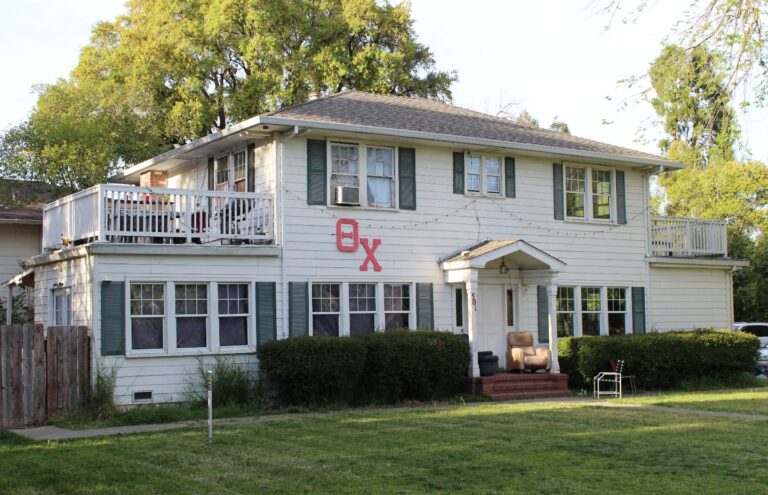
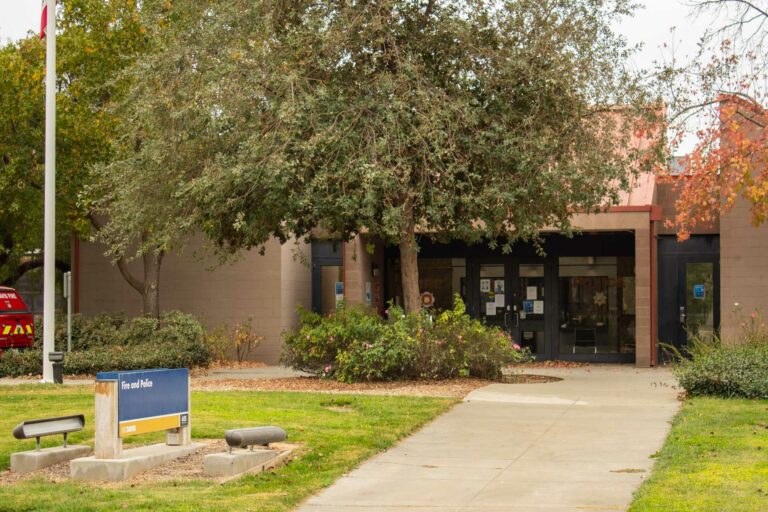
Correction: The original version of this article used a picture of the Theta Xi fraternity house instead of the Theta Chi fraternity house. The article has been updated to correct the error.

Editor’s Note: Since the publication of this article, the UC Davis Office of Student Support and Judicial Affairs (OSSJA) investigated the allegations against Theta Chi and found that there was not enough evidence to “establish a finding that there was a gathering that included individuals outside the household.”

UC system announces inclusive policy of nonbinary identification

 Under the new system, which will be implemented UC-wide, current and past affiliates can use their lived name and choose nonbinary as an option for gender

In a move towards increased inclusion, the UC system announced that there will be new options for gender identity and the lived name of the UC student, faculty or employee on UC-issued documents and in information systems. This means that individuals whose names are different from their legal names will be able to include this information, and their lived names will be the default on documents and within information systems that “do not require a person’s legal name.” Legal names that differ from lived names will be confidential. 

Past students or UC-affiliated individuals can also “retroactively amend their gender designations and lived names.” The updates to UC-wide information systems in regards to this information should be completed by the end of 2023, according to the press release.

“Under the Presidential Policy, University students completing university-issued documents may choose from man, woman or nonbinary gender identification options,” said Karen Altridge, a representative from the Univeristy of California Office of the President, via email. 

Altridge said the policy emerged as a result of collaboration between a number of different UC organizations, including the LGBTQIA+ Resource Center directors, as well as students and others.

“There have been significant developments in recent years at the campus and systemwide level to better support our increasingly [diverse] community,” Altridge said.

Written by: Sabrina Habchi — campus@theaggie.org

Cartoon

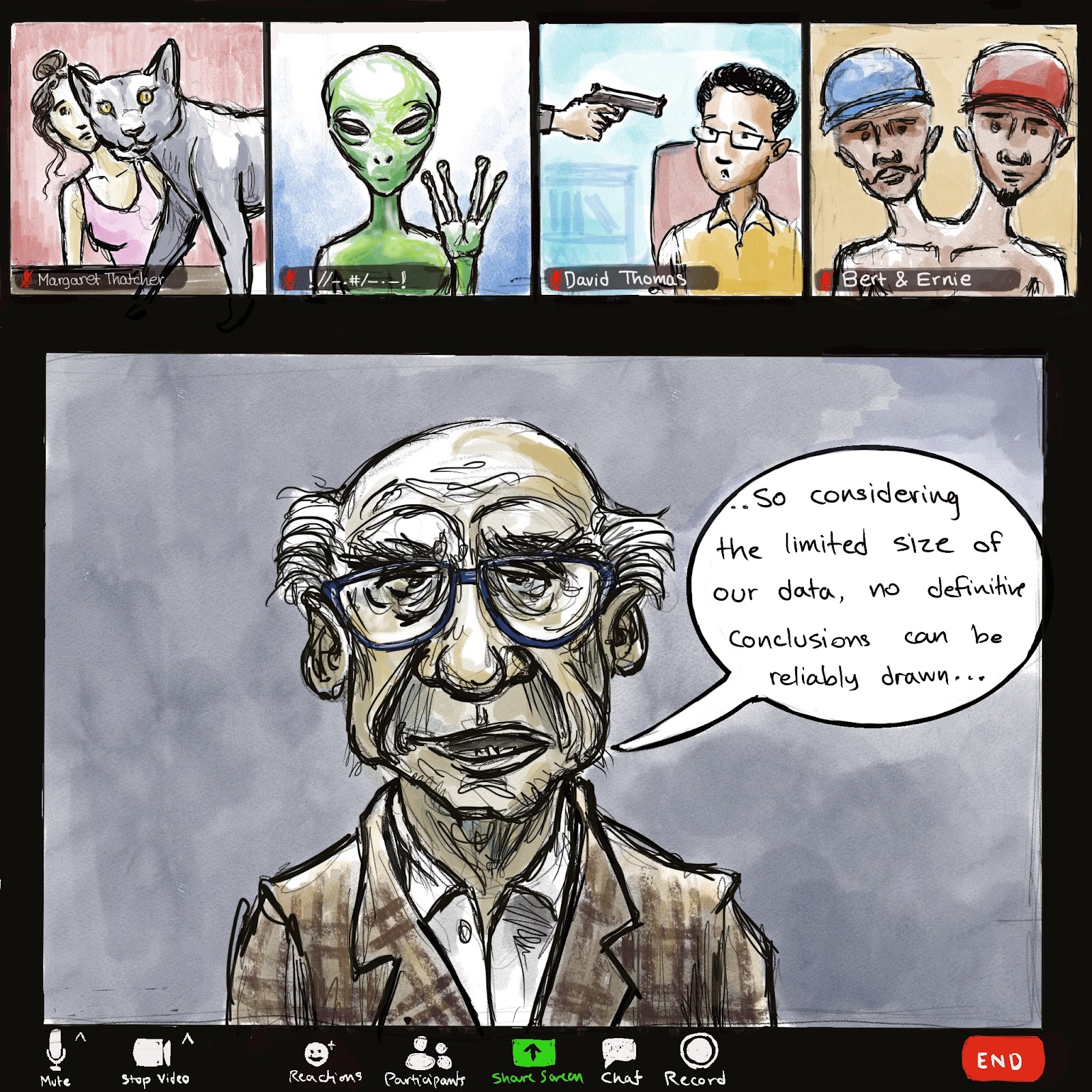
Just Another Zoom Lecture.

Drawn by: Rushi Tawade –– rntawade@ucdavis.edu

(This cartoon is humor and/or satire, and its content is purely fictional. The story and names of “sources” are fictionalized.)

A peek into a UC Davis student’s Redbubble business

Kathleen David’s advice to aspiring artists and Redbubble sellers is to trust their art

It’s a rite of passage for most UC Davis students to own a Hydro Flask and slap stickers on their cup. I remember very clearly my first year at Davis when I asked a girl where her stickers were from and exploded when I saw the wide variety on Redbubble. That day, I along with my roommates, who were just as surprised, ordered stickers and a laptop case. Redbubble has a special place in every student’s heart so I set out to find a student who is behind some of the UC Davis stickers we have pasted on our computers.

Kathleen David, a second-year biological sciences major, found that the best way to sell her art was through a Redbubble shop, kathdvd, where she can sit back and focus on school work, all while building up a passive income. 

“The great thing about Redbubble is that all artists have to do is upload their art,” David said via email. “There is no need to stress about financing, marketing, production, shipping and everything else involved in a typical business like one on Etsy. Sales come in every now and then—sometimes during times where I’m busy with school—so when they do pop up, I don’t have to worry about anything.”

In addition to David’s egghead stickers that represent our beloved sculptures, she has a total of 79 different designs. 

“My shop is all over the place in terms of a niche,” David said via email. “I’d like to think that my designs revolve around the things I enjoy most such as animals, music, gaming, and Netflix shows. I’m focused on expanding my shop. I feel that I can build my shop as if it were an art portfolio and eventually find my true aesthetic as an artist.”

The only thing needed to sell art on Redbubble is a free account and a bank account for direct deposit, but the account can be accepted in multiple ways including Paypal. According to Redbubble, payments occur on the 15th of every month but creators won’t receive any money until they reach a payment threshold of $20. 

“I was absolutely ecstatic when I woke up to find that I got my first sale,” David said via email. “There was something so satisfying in seeing that all my hard work had finally paid off.”

After artists upload their design, Redbubble creates an abundance of merchandise. This includes stickers, art prints, tote bags and even bed sheets. Redbubble created a post on what to think about before uploading a design in order to maximize all of the products on which they print the art.

“I recently just had a couple of sales that made me laugh only because you can never tell what someone might be interested in buying,” David said via email. “On that same day, two different people from two different states bought bedsheets of two different designs, both of which I never expected anyone to purchase. It’s kind of unreal to know that someone is out there sleeping with bedsheets of a design I doubted.”

Buyers from all over the country appreciate David’s unique designs just as much as UC Davis students love finding their egghead stickers.

“I had only found out about Kathleen’s shop a few months ago through a Phoenix Suns subreddit post she had made to display her artwork and I reached out willing to purchase it,” said Alex Thompson, a customer of David’s Redbubble shop. “Looking at the website now, it has grown quite nicely and I like how there are products for everybody with her many collections.”

David’s best selling products are based off of a role-playing video game where players enter a farming stimulation and restore a shambled community center.

“As an artist, I’ve been discovering new art styles while trying to find one for myself,” David said via email. “On Redbubble, the most successful shops have a niche that caters to a specific audience. While in quarantine, I began to play a popular video game called ‘Stardew Valley.’ After a few days of playing while putting my shop on hold, I realized that this game has a lot of potential for attracting a huge audience. I used my laptop to download sprite sheets of the characters from the game and got to creating what is now my best-selling collection.”

With over 70 designs in her shop, David is able to see the development of her work overtime. But her love for art started as a young child doodling on random pieces of paper. 

“I have never taken an art class to develop my techniques,” David said via email. “My mom has kept an album full of my doodles dating back to when I was only three years old. Throughout middle school and high school, I joined an annual drawing contest hosted by Kaiser Permanente’s anti-smoking program called ‘Don’t Buy The Lie’ and won as a school-site winner every time.”

David’s idea of opening up a Redbubble shop—which takes less than five minutes—started with a Youtube video. 

“I wanted to test out the Youtube video’s claim of passive income so I only uploaded a couple of designs,” David said via email. “I doubted myself the first few days of uploading my art on Redbubble and often questioned myself if my art wasn’t good enough. When I got my first sale, that’s when I felt motivated enough to upload a few more. I remember thinking to myself, ‘Oh wow, I just started up a small business.’”

Opening up a Redbubble shop meant David had to try new things with her artwork. 

“I’ve never really had the time to experiment with digital art before starting my Redbubble business,” David said via email. “It was more of a learning experience to somehow convert my usual techniques onto the digital format. I don’t use anything fancy. I only use Paint 3D, a digital art program that came with my HP laptop.”

Like many small student business owners, David’s biggest supporter is her mother who has been an advocate for David’s art long before her first sale. 

“My mom has supported me ever since the day I told her about uploading my first design on Redbubble,” David said via email. “We would celebrate every time I got a sale and check where the sale is coming from and what item/design the person has purchased.”

As she gets to track each purchase, David admits that like her mom, her family and friends have been immensely supportive of her art selling on Redbubble. 

“When my sales started to shoot up, my family was very supportive and persistent in buying my designs to wear in public,” David said via email. “My aunt bought three designs of mine on t-shirts, and my dad specifically asked for an NBA design that he wears around the house.” 

David’s Redbubble is organized to include the different types of art she sells. Her featured products include monochrome and animal designs. The small store consists of something for everyone, but her main source of inspiration comes from Andy Warhol, the American artist, film director and producer. Warhol even has a museum in Pennsylvania dedicated to him and the work he did throughout his career.  

“I look up to Andy Warhol and his concept of pop art,” David said via email. “My monochrome designs are inspired by his iconic colorful prints of celebrities, including Marilyn Monroe and Mohammed Ali. I’ve done a similar approach that focuses on one color scheme per celebrity. I’ve illustrated several members of the world’s biggest boyband BTS and the actors from the Netflix series ‘The Umbrella Academy’ using very vibrant colors as Warhol once did.”

David’s advice for aspiring artists and Redbubble sellers is to trust their art. David’s own sales have led her to realize that there will be someone out there that could potentially love the art you doubt.

  “If you have an idea about something, you shouldn’t doubt yourself, but you should go for it instead,” David said via email. “Doubt kills more dreams than failure ever will.” 
Written By: Itzelth Gamboa — arts@theaggie.org

Free COVID-19 testing available to Yolo County residents for month of November

0

Widespread COVID-19 testing vital during holiday travel season

Yolo County is offering free COVID-19 tests beginning Nov. 2 and ending Nov. 30, according to a press release. Testing is being offered at multiple locations throughout the county, including the Davis Senior Center. 

Testing at the Davis Senior Center will be offered on Nov. 2, 9, 16, 23 and 30 from 3-7 p.m. at 646 A St. Testing is also available in West Sacramento, Madison, Knights Landing and Clarksburg. 

In addition to the testing sites offered by Yolo County, OptumServe, the federal health services business of Optum and UnitedHealth Group, will provide residents with additional testing sites in Woodland from Nov. 3-28. Testing at OptumServe is also free and available to all California residents by appointment only. 

The press release explains that individuals who wish to get tested must be a Yolo County resident and need to bring proof of residency. 

“Participants of these testing sites must be residents of Yolo County and will need to bring a document displaying their address, such as a driver’s license, ID card, utility bill, or piece of mail,” the press release reads. 

Although it is not required, participants are encouraged to register in order to expedite the process. Registration, however, does not guarantee a test, and time slots will not be available for selection. 

Participants must wear a mask and maintain physical distancing at all test locations. There is no age restriction for tests and Spanish translations will be provided at most locations. 

Yolo County Public Information Officer Jenny Tan explained that testing is especially important as the holiday season approaches. 

“It is important as we move into the holiday season that we continue to provide testing,” Tan said. “We are trying to tell people that [they] should not gather, but we understand that there will be people that gather anyway. Get tested and quarantine in addition to physical distance and face covering.” 

The website for the U.S Centers for Disease Control and Prevention, which provides general guidelines for COVID-19 testing, recommends that people who have had symptoms of COVID-19, people who have been recommended by a doctor and people who have had close contact (defined as within six feet for a total of 15 minutes or more) with someone who has COVID-19 should consider getting tested. 

In October, Yolo County provided 3,300 COVID-19 tests, 740 of which were administered in Davis. The Davis site has a capacity of about 400 tests and averages about 200 per week. Tan emphasized that while getting a test is important, it does not guarantee immunity and should be used in conjunction with other preventative measures. 

 “We definitely have the capacity to test a lot of people in Yolo County, and we want people to take advantage of that,” Tan said. “We are definitely trying to stress upon students especially that getting tested negative once doesn’t mean that you can’t get it or that you don’t need to wear a face covering.”  

Crystal Tran, a third-year neurobiology, biology and behavior major, stressed the importance of testing for students who might not consider it a necessity. 

“We might think that we are more immune because we’re younger but it’s still important,” Tran said. “Especially because it is the holiday season and people are traveling. Some people even have to leave because the dorms are closing [for winter break].” 

Tran, whose job as an Aggie Public Health Ambassador requires regular testing, explained that while she was not aware that Yolo county was providing tests, it’s a great opportunity for Yolo County residents.

“I didn’t know that it was free for everyone, but it’s great that they are providing these tests,” Tran said.

According to Yolo County’s Health and Human Services website, which publishes daily updates on COVID-19, as of Nov. 4, Yolo county is still in the state’s Red Tier, or substantial tier; however, a recent rise in cases threatens a move back up to the purple, or widespread tier as soon as Nov. 10. 
Written by: Yan Yan Hustis Hayes — city@theaggie.org