53.5 F
Davis

Davis, California

Tuesday, December 23, 2025
Home Blog Page 320

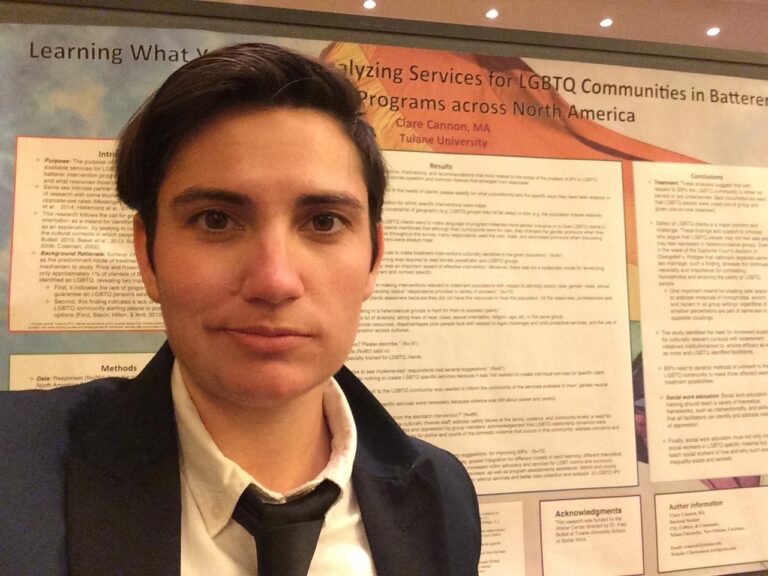
Women leading COVID-19 research at UC Davis: Clare Cannon, assistant professor in the department of human ecology

In an effort to showcase the work of UC Davis’ researchers, The California Aggie will be starting a series featuring women who have been contributing to a better understanding of COVID-19

When we hear the words ‘COVID-19 research,’ vaccine development and antibody testing are often the first thoughts to pop up in our minds. Yet, with everyone stuck at home with limited opportunities for social interaction, it is also important to consider the social factors affecting people’s psychological health during this ongoing pandemic. 

Assistant Professor in the Department of Human Ecology Clare Cannon brings these issues to light through her recent research paper examining how people’s differing socio-demographic characteristics and perceived stress correlated with their resilience. In this paper, resiliency is defined as an individual’s ability to cope with risk, adversity and stress despite exposure to a serious stressor that could contribute to physical, behavioral, cognitive and emotional symptoms. 

Having been working in disaster resilience for two decades, Regardt Ferreira, associate professor and director of the Disaster Resilience Leadership Academy, explained that it is important to identify predictors that increase resilience in order to better assist disaster recovery.

“We all have resilience in us, often we just need to be reminded what those resilience traits are,” Ferreira said via email. “Looking out for one another is important, and providing social support is so important.”

When Cannon and her colleagues surveyed people in April during the first spike in U.S. cases of COVID-19, they found those with a degree in higher education or those who were older did better on the resilience tests. Alternatively, those who reported English as a second language did more poorly. In terms of perceived stress, those with a higher perceived stress were found to have less resilience. 

Cannon noted that since their surveyed sample was skewed towards females and those with higher education, there is the possibility that people who are unemployed or may not have had the opportunity for higher education could be doing worse than they measured. 

“One of the things we measured was the number of days in lockdown, and at that point the average was 28 days,” Cannon said. “Now we’re up to like 160, 170 [days], and so we really expect that even in this group [that] is kind of insulated because of their socioeconomic status [and] educational attainment—[they] are probably still going to be pretty bad off if we did [the test] again.” 

As a social and environmental inequality researcher, Cannon and her colleagues chose to research resilience in order to determine how people can be better supported throughout the COVID-19 crisis. They have also been studying intimate partner violence for many years, and with rates spiking as the pandemic has progressed, they began to research how social isolation affected intimate partner violence to inform those making policies and help those suffering from abuse. 

Fred Buttell, professor at the Tulane School of Social Work, added that it is important to recognize that measures used to protect public health can also have negative mental health consequences.

“COVID-19 is so personal,” Cannon said. “There’s no one who’s not affected in some way by it, and I think as a researcher and as an educator and as a scholar, I have a certain set of tools. And so it’s kind of my way of trying to do something good with this really awful, devastating situation.”

After devoting herself to religious and American studies during her undergraduate career at Scripps College, Cannon’s mentor suggested  attending divinity school to continue exploring philosophy and religious studies. She attended Union Theological Seminary at Columbia University, where the school’s strong history of social justice inspired her to continue in the field. Although she had originally planned on going to medical school, she decided to pursue a PhD, and later become a professor.

“I think things happen at certain moments and junctures in our lives,” Cannon said. “And I think, for the most part, there’s no value judgement associated with that. There’s no right or wrong answer. It’s just, as your life unfolds, the choice and decisions we make, and the people we come into contact and the effects they had on our lives, I think can be really transformative.”  

It was through her PhD program at the City, Culture and Community program at Tulane University that she met Buttell and Ferreria, co-authors of this study. 

“I really admire her brain and her ability to think critically,” Buttell said of Cannon via email. “I think Davis is lucky to have her. She is the future of intimate partner violence research and that means that Davis will have one of the foremost experts on their faculty.”

Cannon advised conflicted undergraduate students to follow their hearts and intuition. She suggested those pursuing research get as much experience as they can, even if it does not directly relate to their interests, as any experience will help students discern their goals. As someone with a lot of passions, she empathizes with students’ struggle to determine which one of their interests they should pursue. 

“Particularly for a lot of us, the world spends a lot of it’s time telling us that what we feel [and] what we think is wrong,” Cannon said. “I would say what you feel what you think is not wrong, and to follow your intuition, which doesn’t mean that it’s going to be an easy path or there isn’t going to be conflict or sacrifice with that. In my experience, the courage and wisdom to follow one’s intuition leads them where they need to be more often than not.”

Written by: Michelle Wong — science@theaggie.org


Dance, yoga classes continue in new format, exercise important self-care during COVID-19

0

Businesses transition to outdoor studios, forced to pause live classes during wildfires due to poor air quality

The COVID-19 pandemic took a severe toll on businesses around the country, especially those based on in-person attendance such as dance and yoga studios. To comply with safety regulations, studios like Sac Dance Lab and Davis Barefoot Yoga Studio transitioned to an outdoor class environment. 

“Sac Dance Lab is Sacramento’s leader in dance training […]” the official website reads. “With a focus on commercial styles and professional dance advocacy, Sac Dance Lab is a unique, boundless place to train for aspiring and professional dancers, as well as non-professional enthusiasts.”

Jalen Tyre, a hip hop instructor at Sac Dance Lab, explained that classes prior to the pandemic were lively with many new faces and a lot of “good, new energy.”

When the  pandemic began, classes initially switched to a virtual format taught through Zoom and Instagram Live. Tyre explained how this alternative made the teaching experience feel very different, and that he preferred being able to see his students in order to “feel their energy.” 

Once the government allowed it, classes resumed in the studio’s parking lot, but with more safety precautions and modifications for dancing outdoors.

Darina Kellom, a jazz funk instructor at Sac Dance Lab, said that the studio made sure that each class had a maximum of fifteen people and students were spaced at least six feet apart.

This new format, however, was difficult for both students and instructors at first. Without mirrors, dancers could not as easily visualize their movements and were more exposed to distractions such as heat and excess noise. To combat this, instructors taught choreography at a slower pace and adapted certain moves, projected their voices and learned to be more vigilant in watching students. 

“I’ve become more patient because there are a lot of things that we take for granted being inside of a studio,” Tyre said. “The difference for me is making sure that I stay in tune with what I’m doing.” 

Tyre urged other dance instructors and similar businesses wanting to transition to outdoor services to think outside the box.

“As artists, teachers and creatives, we have the space to create our own lane again,” Tyre said. “We have control over what we can do and how we do it. It’s a time for us to be innovative.”

Kellom said that dancing and art in general is important for ourselves and those around us. 

“[Dance] helps give us ways to cope, it helps us with self-care, it helps with endorphins,” Kellom said. “In so many ways, the arts are so impactful.” 

Outdoor classes were canceled due to poor air quality from wildfires on Aug. 20, but resumed on Aug. 31 when private group classes were offered inside the studio again. New changes included a limit of 12 students per class, registering before class, wearing a mask, screening for symptoms upon arrival and keeping a social distance of six feet at all times. 

Davis Barefoot Yoga Studio also transitioned to an outdoor class format. The studio’s official website provided further insight on their goals. 

“We believe that yoga benefits our lives no matter what brings us into the studio,” the official website reads. “[…] Our goal is to support you through your journey and help your bodies expand safely and comfortably into new possibilities.”

Co-owner of the studio, Wai-Mei Yeung-Boswell, said that during the studio’s first two weeks of being closed, they offered classes through Facebook Livestream, then later switched to Zoom.

Robert Boswell, who also co-owns the studio, explained that yoga is going to rapidly transition to a different approach. 

“We have to adapt as much as possible,” Boswell said. “We have to rethink how we present yoga and how we present the physical space.”

The studio reopened on June 20 to transition to outdoor classes with more safety measures such as marking places on the floor for social distancing, minimizing contact by encouraging online prepay and wearing masks. During the wildfires, classes moved online due to poor air quality until Aug. 29. 

Boswell believed that the pandemic has presented a bigger need for yoga and exercise in general.

“Yoga offers the opportunity to release, go inward and use your physicality,” Boswell said. “This is a lesson about patience and seeking serenity and knowing that it’ll all work out. Yoga teaches us that everything changes.”

He also offered some advice for other studios in a similar position.

“Now more than ever, we see the necessity to adapt and flow with society,” Boswell said. “We’ve come to a challenge of what it means to be in community. Now more than ever, we need to learn new ways to have community.”

Written By: Jelena Lapuz — city@theaggie.org


Shop Sustainably: upcycling by UC Davis student

0

Priyanka Shreedar shares how she began a successful green business during quarantine.

The California Aggie spoke to Priyanka Shreedar as part of our Shop Sustainably series, which highlights a green business local to Davis each month.

Amid the COVID-19 pandemic, many students have found themselves looking for a way to stay busy. Some students have turned this boredom into a creative outlet, including Priyanka Shreedar, a fourth-year biopsychology major, who has started upcycling. Shreedar said that while stuck at home, she was deep cleaning her closet to pass the time when she had the idea for her upcycled scrunchies.

“During quarantine, I wanted to stay busy […] and also I’ve been working on downsizing my wardrobe, and I had a bunch of old t-shirts and dresses that I didn’t need,” Shreedar said. “But, not a lot of places right now are taking clothing donations due to the pandemic.”

Shreedar said that she was also looking for some new scrunchies, and with all the material she found in her closet, she decided to try to make one herself. In an effort to clear out some closet space and keep busy, she began making scrunchies for family and friends, and after sharing one of her creations on Instagram, her business started to take off.

“I ended up posting [a scrunchie] on my main Instagram story and a lot of people were like […] ‘If you made those, I’d totally buy them,’” Shreedar said. “So, I just started asking around who would actually be genuinely interested in buying them and that’s kind of how I got started.”

After taking orders from friends and Instagram followers, Shreedar expanded her business, creating a separate instagram account—@upcyclingbypri—which she uses to share new designs and take orders. Through her Instagram, Shreedar is not only able to show off her creations and reach more customers, but she has also been able to directly interact with customers and take some custom orders. Chloe Hofschneider, a UC Davis graduate, said that she actually reached out to Shreedar to see if she would be able to make “healthcare headbands.” 

“I was actually looking to purchase some [healthcare headbands] online, but because she was upcycling and working with scrunchies, I asked her if she could possibly make some and she did it really well,” Hofschneider said. “She was very accommodating and eager to try new things.”

Since then, Shreedar has expanded her product range to include “healthcare headbands,” as well as propagated plants and dog bandanas. 

Shreedar first began Upcycling by Pri in July, and in just two months she has shipped orders all over California, Oregon and even Maine. Shreedar says that even in the short time she has been doing this, she has gained a new perspective on what it means to be a small business.

“Every time somebody buys something I do a little happy dance,” Shreedar said. “I think it [has] really made me appreciate buying from other small businesses and realizing how big of an impact you’re actually having on that person’s day. When you get a sale in, it’s very different than if you go to Forever21 and buy a scrunchie there. It’s someone sitting at their desk and when they check their phone […] and somebody [has] ordered something, they’re going to remember your name.”

Shreedar is committed to getting to know her customers. She makes sure the fabric of the scrunchie compliments the buyer’s hair type, keeps them updated on her progress and allows them to customize their orders. Loren Estrada, a UC Davis graduate, said Shreedar’s commitment to her customers was memorable.

“I feel like it’s really unique with small businesses where they send you pictures as they go throughout the production process.” Estrada said. “I got to customize even like the threads for the embroidery and she sent me an update after she did the first scrunchie. She even made a tiny bandana for [my pet] snake.”

In addition to her focus on customers, Shreedar is also committed to running Upcycling by Pri as a sustainable business. Even before she started her business, Shreedar was passionate about sustainability in her personal life, which she largely attributes to the culture of Davis.

“I’ve always been a very sustainably-minded person but being surrounded by Davis’ various sustainability initiatives and the amount of effort that’s put into clean energy and upcycling and reusing supplies, […] I’ve been really trying to integrate that in every aspect of life,” Shreedar said.

In addition to using fully donated fabric, Shreedar has begun integrating natural dyes, such as avocado and turmeric, into her scrunchie designs. She has also begun propagating and selling plants in recycled kombucha jars. As for packaging materials, she uses recycled brown paper bags to label her products. Being a sustainable business is extremely important to Shreedar, but it does make for additional challenges in production. 

“I definitely want to work on ways to maintain my sustainability aspect if I continue to do larger productions,” Shreedar said. “What’s kind of different in what I’m doing than many other small businesses is that once a fabric is gone, a fabric is gone.”

Shreedar is passionate about maintaining the sustainability of her business, and also hopes to bring more awareness and tips regarding sustainability to her followers on Instagram, regardless of whether they are purchasing a product. Shreedar said that Instagram culture has significant sway over her generation, and hopes to use that to encourage others to lead more sustainable lifestyles. 

“My goal is to start putting out some more sustainability tips in the future and broadening this to more than just scrunchies and plants,” Shreedar said. “Social media has a lot of power when it comes to encouraging sustainability, but it should also provide realistic expectations. [For example], when it comes to going plastic free. It’s not realistic for everyone—it’s not for me—but maybe bringing a reusable bag every time you go to the grocery store is something you can do. Finding ways to make sustainability a habit is a great place to start.”

Written by: Katie Debenedetti — features@theaggie.org


UC must suspend SAT and ACT scores in admissions, scholarship decisions, judge rules

Lawsuit alleged that standardized testing requirements are “broadly biased”; UC may challenge ruling

The University of California must immediately suspend its SAT and ACT score requirements in its admissions and scholarship processes, Alameda County Superior Court judge Brad Seligman ruled yesterday, according to The LA Times

The ruling is in response to a lawsuit which alleged that SAT and ACT requirements are “broadly biased,” particularly when it comes to disabled students attempting to access testing spaces and help amid the COVID-19 pandemic. 

The Superior Court decision comes in the wake of significant testing reforms within the UC system: in May, the UC Board of Regents voted unanimously to remove the SAT and ACT requirements from the UC application.

The Regents concluded that the test scores were “unacceptably biased based on race, income, and parent education level.”

Therefore, the UC previously decided that SAT and ACT scores would be made optional for two years before being phased out entirely, and could continue to factor into scholarship decisions. Seligman’s injunction, however, rules that test scores may no longer affect the admissions or scholarship process at all. 

“[The] UC respectfully disagrees with the Court’s ruling,” a spokesman for UC said in a Sept. 1 statement. “An injunction may interfere with the University’s efforts to implement appropriate and comprehensive admissions policies and its ability to attract and enroll students of diverse backgrounds and experiences.” 

The statement indicated that the UC would also be deciding whether “further legal action” was necessary in response to the ruling, and suggested that individual campuses were better positioned to make executive decisions regarding admissions procedures.

The spokesperson also said that UC’s decision to “adopt a test-optional approach” for the applicant class of 2021 and the university’s decision to phase out SAT and ACT score requirements to become test-blind by 2023 minimized the potential academic obstacles caused by COVID-19. 

Three UC campuses–UC Berkeley, UC Irvine and UC Santa Cruz–have already removed the testing requirements. The other UC campuses, including UC Davis, initially planned on considering the SAT and ACT scores if students chose to submit them. 

But in the ruling, Seligman maintained that there isn’t much data to demonstrate that standardized tests are an effective barometer of future academic success in college. 

The Superior Court’s ruling will be applicable to all UC campuses, meaning that SAT and ACT scores will effectively be irrelevant in the admissions process until 2025. 

The UC, beginning this summer, is working on a test that more closely aligns with UC expectations for current students. If the Regents find the test unfinished or insufficient in 2025, the test score requirement will be scrapped altogether.

Written by: Rebecca Bihn-Wallacecampus@theaggie.org 

Student Housing counselor-in-residence approved in budget but paused amid pandemic

Current, former student employees still express concerns about communication, mental health support

Five current and former Student Housing employees spoke to The Aggie. Employee A, Employee B and Employee C spoke on condition of anonymity to protect themselves and their employment. Employee D and Employee E are former student staff of Student Housing who spoke on condition of anonymity so as not to jeopardize professional relationships. 

Students can schedule individual counseling from the SHCS by calling them at 1(530)752-0871. 

The number for the 24/7 National Suicide Prevention Lifeline is 1(800)273-8255; the number for the 24/7 Crisis Text Line is 741741; the number to speak with a trained counselor through The Trevor Project, available 24/7, is 1(866)488-7386 and the number for Yolo County’s 24-hour crisis line is 1(530)756-5000 for Davis callers.

With cancellations of housing contracts and reduced density of residence halls, Student Housing and Dining Services lost $22 million at the end of the 2019-20 fiscal year and anticipates losing the same amount in Fall Quarter 2020, according to Director of Business and Financial Services Ramona Hernandez. 

Student Housing and Dining Services’ budget has been especially affected by COVID-19 and students canceling their housing contracts because it is an auxiliary operation that “count[s] on student room and board costs for [its] entire budget,” said Director of the Office of Student Development Branden Petitt.

In light of the reduced density, Petitt said that Student Housing had to reevaluate the number of positions—the model they use has one resident advisor (RA) or community advisor (CA) for every 50 residents. An email sent on Aug. 6 stated that they would “need to reduce the team by an unknown number but likely by around 50%,” sparking concern and a Change.org petition on the same day. 

On Aug. 7, Petitt sent a follow-up email, apologizing for the “confusion and worry” the communication had caused. On Aug. 14, a staff meeting was held to clarify that those who needed room and board were still guaranteed it. After that meeting, Petitt said that he heard from students who were appreciative of the flexibility. But others expressed concerns around the vagueness of their role.

“I think there has been more clarity in what next year will look like, but there are still so many questions that I don’t think will be completely answered until we actually begin our position,” Employee A said. “It’s hard to predict what next year will entail […] All of the uncertainty is definitely stressful, but I am just glad Student Housing will not be cutting anybody from the job.”

In an interview on Aug. 17, Petitt stated that he had not seen the petition and said that the decision to provide room and board was never in question, but he understands how students came to that conclusion. 

He also said that 20% of residential student staff had already resigned and added that the 50% referenced in the email came from the number of students that were registered to live on campus. Other considerations that factored into Student Housing and Dining Services’ decisions include needing to sufficiently support living-learning and shared-interest communities, which could result in the CA number remaining the same or higher than 50%. 

The CA and After Hours Assistant (AHA) positions are new for the 2020-21 year. They were introduced to provide more structure and divide the responsibilities RAs previously held. CAs can concentrate on their floors while AHAs will handle rounds and similar duties. 

Regardless of how many individuals are needed as CAs, all student staff offered positions guaranteeing room and board will be housed so long as they continue to work 19.5 hours a week.

“We’re guaranteeing that they’ll have their room and board and will be assigned work that’s within the scope of their current position,” Petitt said, explaining that the assigned work will likely be desk shifts, helping at computer centers, being an Aggie public health ambassador or mail clerk.

Student staff say miscommunication is part of a longstanding pattern

According to all five Student Housing employees The Aggie spoke to, this incident speaks to a pattern of poor communication and student staff feeling that they are not sufficiently supported. 

“In different times, the communication has been, unless you’re personally going out to them [Student Housing], very limited,” Employee C said. “I feel like that was the case just throughout.”

With regard to such concerns, Petitt said that often he is “at the mercy of getting the information” himself, but acknowledged that there could be ways to improve communication.

“I totally get that people want information, and they want it right away, and I will certainly provide it when I can,” Petitt said. “Now, in all fairness, maybe that’s the email that goes out: ‘I don’t have the information, and I will get it to you as soon as I can, please hang in there.’ You know, maybe just more of that recognizing and empathizing with the situation.”

Employee E, who was an RA for a year and then an assistant resident director, agreed with Employee C and spoke to feelings that stemmed from a lack of communication. 

“I think when it comes down to it, student staff is very unprioritized,” Employee E said. “We’re expected to kind of just do whatever needs to be done for students, even though we are students ourselves. I just feel like that bleeds into their crises responses.” 

Employee D echoed this sentiment, adding that she feels student staff are not prioritized as individuals. 

“I don’t want to say they don’t care about us, because there is a sense of wanting us to be comfortable and in a good state of mind,” Employee D said. “But there’s just no follow through. It’s a lot of words and not a lot of action. That’s just been my experience.”

All five employees also expressed, to varying degrees, that they have been told to be careful about what they tell their supervisors. Both Employee B and Employee E said that they and other student staff they knew felt “replaceable,” which compounded concerns of speaking to supervisors—particularly about mental health. 

“What if my mental health isn’t the greatest and they take it as, ‘Oh, I don’t trust you to do a good job,’” Employee B said. “I felt like the only people I can really talk to are other RAs, but they don’t need that either because they’re already going through their own stuff, they’re struggling themselves.”

In response to this, Petitt said that if there are any concerns or “a general discomfort,” staff members should reach out to other on-campus resources such as the Ombuds Office or the Harassment & Discrimination Assistance and Prevention Program, and emphasized that Student Housing follows university policy and protocol to ensure student staff feels supported. 

“I would say that, in my heart, any of our staff members and people who supervise our students provide any help they may need,” Petitt said. “The problem I’m having right now is I can’t help solve the problem if I’m not aware of it.”

But some student employees feel that more proactivity is necessary, including Employee D. In her first year as an RA, a resident on her floor attempted suicide. She followed protocol, which included submitting an incident report and contacting her resident director, but said that she received “absolutely no follow-up from Student Housing.”

“I feel like in these instances, where it’s pretty obvious that an emotional toll has been taken on the RA, Student Housing should act faster and take the initiative to reach out first,” Employee D said. 

Employee D added that it depends on the person—while she said that she had the support of her own supervisor as well as other RAs and friends to talk to, she knows that some of her colleagues do not have the same support system and want more action from Student Housing. 

RAs give mental health support, but say they don’t receive it

In their role, RAs and CAs act as support for their residents. In training, they are told to talk to any resident who approaches them with mental health concerns and then refer them to Student Health and Counseling Services (SHCS), according to Employee A. 

In his experience, however, it often takes a while for residents to get an appointment with SHCS, during which time residents continue to use their RA as a resource.

“For the resident advisors, it’s not really a choice that we get, because it’s either that we hear them out or we don’t hear them out,” Employee A said. “There’s really no other good alternative.”

Employee A said that he has never felt the need to reach out for support personally. He said he felt sure that if he reached out, he would be able to get resources, but added that he knows others who have reached out for support and have not been satisfied with what was provided.

In the past few years, RAs have worked as a unit to express their concerns to supervisors and full-time staff of Student Housing through a group called RA Advocacy. According to Employee C, who held a leadership role in RA Advocacy, the group has biweekly meetings, after which the heads of the group speak with a representative from Student Housing. 

RA Advocacy has been met with support on some concerns; for example, nightly logs were required but were axed after RAs expressed that the logs made interactions with residents too transactional. But Employee C felt that “more major” issues that were brought up were not met with the same support.

“It definitely felt in my first year [as an RA], they were more receptive and actually had concrete things moving forward,” Employee C said. “But it felt like when there were more major issues—those were the issues where they just said, ‘We hear you,’ but they didn’t actually make a change.”

He said the two most major issues were the demonstrated need for mental health advocates for Student Housing and the current employees’ opinion that they should be involved in the student staff hiring process.

Employee C said that in conversations with Student Housing administrators about mental health advocacy, he was told that they would see what they could do, but there were budgetary limitations and other considerations. 

He added that after those discussions, though, RAs were provided access to an online mental health service for a number of free visits and a 24/7 chat functionality.

“Especially if people need an in-person one-on-one experience, it was nowhere near what would be required,” Employee C said. “But at the very least, it was some sort of effort [within] their constraints.”

 In response to these concerns and demands for increased mental health advocacy, Student Housing worked with SHCS to introduce a counselor-in-residence position. Although the position was approved for the 2020-21 budget, it has been placed on pause in light of the COVID-19 related losses, according to Petitt. 

“I definitely empathize and sympathize that there’s someone who needs that help,” Petitt said. “But I do think that help is there with Student Health and Counseling Services for Fall Quarter and beyond.”

While glad that the position has been approved, Employee A expressed some disappointment that the position was paused at a time when “residents will need emotional help more than ever.”  

“There’s been a lot to process this year, with COVID, social distancing, the current political climate of our country, natural disasters and more,” Employee A said. “All of this on top of academic work and the transition into college might result in residents needing more assistance than I am capable of giving.”

Employee D expressed how necessary the position is for student staff. She was somewhat surprised that the position was approved and that the approval hadn’t been communicated more to student staff.

“I’ve been fortunate enough to have supervisors who were really supportive of my mental health and my wellbeing, and this past quarter, my [resident director] would always check in with me and all of our staff members, but I know that that’s not the case for a lot of people,” Employee D said. “I think that having a counselor on-site would have been useful, and I honestly had no idea that it was even approved.”

Written by: Anjini Venugopal — campus@theaggie.org


ASUCD Interim Internal Vice President confirmed at emergency Senate meeting on Aug. 13

ASUCD President, Controller commit to improving student conditions by looking at impacts of COVID-19

The Senate table gathered for an emergency meeting called on Aug. 13 to confirm the new Interim Internal Vice President and Controller.

The meeting was called to order at 7:15 p.m.

The table moved into electing an Interim Presiding Officer. Senator Khalil Malik was elected and confirmed with no objections.

Malik then moved the table into electing an Interim Senate President Pro Tempore. Senator Pro Tempore Samantha Boudaie was confirmed with no objections.

Next, the table proceeded to confirm ASUCD Vice Controller Alexis Lopez-Perez as the incoming ASUCD Controller. 

Krueger offered his recommendation, stating that Lopez-Perez would be in a great place to handle ASUCD’s $14.5 million budget this coming year.

Lopez-Perez said that his previous experience as Vice Controller made him uniquely qualified for the position, meaning he wouldn’t need to undergo a transition or training period to take on the job.

He also said his biggest concern during his term would be mitigating financial losses from COVID-19.

“I don’t have specific projects on mind, because I want to make sure we leave a good [financial] foundation for the next executive team,” he said. “If we do that, I’m happy to share projects.”

Lopez-Perez added that for students who were upset about tuition and fees, he would be happy to explain which fees were going to ASUCD and which were going to UC Davis itself.

Boudaie motioned to confirm him as Controller, a motion seconded by Malik. Lopez-Perez was confirmed with no objections.

ASUCD President Kyle Krueger then explained the interviewing process for the Interim Internal Vice President. 

In a separate interview with The California Aggie, Krueger said that the former Internal Vice President, third-year Akhila Kandaswamy, had resigned from the position because she transferred to UC Berkeley.

“I didn’t know she had applied to transfer [out of Davis],” he said. “But I think it was an unexpected opportunity for her and I applaud her for it.”

The hiring process, he said, included Kreuger posting the Interim Internal Vice President opening on the ASUCD Vacancy website, interviewing several applicants after reading their essays and doing reference checks.

Ultimately, Kruger nominated Internal Affairs Commission Chair Emily Barneond for the position, saying he was “impressed” by her application and that she would improve ASUCD for “the sake of the students.”

Barneond, a third-year economics and political science major, said she was excited to embrace the challenges accompanying the upcoming academic year and hoped to see more unity and collaboration across the aisle, something the Senate struggled with this past Spring Quarter.

Member of the public Daniel Lincoln Burkey Wallace asked Barneond how she would set the agenda for Senate meetings in the position.

She said that, in accordance with the ASUCD Bylaws, she would ensure that presentations from ASUCD units—such as KDVS and Unitrans—would be evenly distributed throughout the quarter and that the presentations would be no more than 20 minutes.

“I also want to emphasize that the speakers list is a conversation happening with everyone at the table, not just between two individuals—something that’s appropriate to what we are discussing,” she said.

In response to questions about ensuring efficiency and effectiveness of the Senate from Boudaie and Senator Juan Velasco, Barneond said that she would seek more accountability from the table and direct her efforts to find out the best communication platform through which to share information.

She also said that she planned to continually check the temperature at Senate meetings, making sure that the atmosphere remained calm.

“I want to see smiles and excitement,” she said. “Senate meetings have become, like, ‘Sigh, I’m going to a Senate meeting.’ I want to see a change in attitude.” 

Barneond was confirmed as Interim Internal Vice President without any objections. 

Six candidates were then brought in front of the table, the nominees for Internal Affairs Commission members. They were all confirmed without objections.

The table then moved to bring up two candidates for Vice Student Advocate and Transfer Director positions, Chloe Awaya and Sasha Lyons.
Awaya, a second-year economics major, said she looked into the UC Berkeley model for the Vice Student Advocate position and had developed strategies to better serve students at the Davis campus.

“I see the Student Advocate positions as being public defenders for the campus and am excited to contribute to the community,” she said.

Incoming transfer student Lyons said she wanted to apply for the position because she understood how it felt to be a transfer student.

“I want to help incoming transfers navigate that system and have a great school experience,” Lyons said.

Both Lyons and Awaya were confirmed without any objections.

During the public announcement period, ASUCD External Affairs Vice President mentioned that United Students Against Sweatshops had partnered with ASUCD to form a coalition backing the passage of Proposition 16, and an ASUCD mentorship program for incoming first-years was mentioned. After the public announcements, the meeting was called to order at 8:22 p.m.

Krueger said in the aforementioned interview that, though he and Kandaswamy had run on a platform of environmental sustainability, sexual assault awareness, basic needs and organizational improvement and reform, the defining aspect of his and Barneond’s term would be COVID-19 and its effects.

“We want to make sure that we’re tying in the effects of COVID-19 on the physical and mental health on all our students,” he said. “We’re hiring different advocacy forces to focus on groups disproportionately affecting certain student populations.”

Among those forces, he said, included a group to advocate for international undergraduate students, a group to look at diversity, inclusion and equity overall and a COVID-19 wellness group that would look at improving health and safety through educational activities.

Krueger said in a separate email that it wasn’t the campus community’s job to support them—instead, he and Barneond were tasked with supporting the student body.

“If any student has a concern about anything—even if they’re not sure ASUCD has any purview in the area—they’re always able to reach out to us,” he said. “The advocacy work we choose to pursue is all in response to what students want and we respond to any emails we receive. If at any point we are not supported by members of the student body, then it is our job to listen and learn from those students, so that we may more effectively meet their needs.”

Written by: Janelle Marie Salanga — campus@theaggie.org

Correction: The original version of this article said that third-year Akhila Kandaswamy is a fourth-year student. The article has been updated to correct this error.

Women leading COVID-19 research at UC Davis: JoAnn Yee, manager of the Primate Assay Laboratory

In an effort to showcase the work of UC Davis’ researchers, The California Aggie will be starting a series featuring women who have been contributing to a better understanding COVID-19

“Nobody gets a hundred percent on my tests.”

When JoAnn Yee, the manager of the Primate Assay Laboratory at the California National Primate Research Center, heard her middle school biology teacher say those words, she went ahead and did just that. But it wasn’t the prospect of a box of See’s Candies that motivated her success — it was the challenge. 

From a young age, Yee had many interests in both the STEM fields and the arts, but was particularly curious about why things are the way they are, and what causes them to be this way. What caught her attention about the sciences was that they were often the most challenging subjects — and she was up for the challenge. This interest continued when she entered UC Davis for her undergraduate career, where she went on to receive a bachelor’s degree in biochemistry. With no Asian women role models who had gone to graduate school for Yee to follow, she decided to get a job instead. She began to explore the field of clinical laboratory medicine and became a certified medical technician, but her love for trying new things brought her back to the research field.

“I think my coming of age in science was during the original HIV discovery and outbreak years,” Yee said. “I was involved in a really good group of people who were right on the edge of developing new tests and learning more about HIV. I was privileged to be a part of that and just to have applied what I learned there to other systems and other diseases as we’ve done along, and that’s how I got to where I am.”

Yee explained that her current laboratory is a core lab, meaning that in addition to conducting their own research, they are a service facility that can provide diagnostic tools for researchers who may not have access to them. Historically, she has done a lot of work in detecting contaminants in animal experimental subjects to make sure they are clean from possible factors that may affect future experiments. 

Most recently, her team has been working with other primate centers and researchers across the country to design, develop and build a test to detect antibodies for SARS-CoV-2, and the virus itself, in nasopharyngeal swab material for monkeys. The laboratory has also recently begun work on rapid testing in order to detect the virus on the same day.  

“When COVID-19 came up and SARS-CoV-2 was discovered, […] other people may have had the expertise with SARS-CoV-2, but we had the expertise to know, ‘How do you find a new virus? How do you detect a virus? And how do you see if the body is making an immune response to the virus?'” Yee said.

Amanda Carpenter, a staff research associate, explained that Yee’s previous experience with several serious viral issues, including the West Nile virus and Zika, in addition to HIV, have greatly contributed to their current research for COVID-19. Carpenter stated that she thinks one of Yee’s greatest contributions to the current coronavirus research field is the creation of a working group she started two years ago, where she established many connections with colleagues and collected many resources. Through this collaboration, researchers who are involved with COVID-19 diagnostic testing in non-human primates are able to share tips and exchange ideas.

“We’ve been able to share resources and samples in a time when it’s really hard to get resources,” Carpenter said.

Carpenter’s 14 years working with Yee started when she was an undergraduate student at UC Davis looking for lab experience. After coming across an undergraduate research project at the primate center, Yee became her mentor for the project and has continued sharing her expertise in the field since then. Yee also mentioned that she has had the opportunity to travel to foreign countries such as Thailand to work with students and junior scientists to help build and establish their own laboratories. Koen Van Rompay, a scientific director of the Primate Assay Laboratory, commended Yee for her skills in communicating and in teaching.

“She’s really good [at] guiding [students], training them so they can get the first laboratory experience,” Van Rompay said. “Many of the students [who work in our lab] decide to go on to graduate school or medical school or veterinary school.”

Despite a lack of role models in her earlier years, Yee stated that she gained many mentors throughout the years who helped her learn and made science fun.   

“I was really fortunate in that I came up through labs with really good mentors,” Yee said. “I worked for a number of professors who were very open and allowed you to ask questions and learn and didn’t really pay attention to what your title was, but if you had a good question they would take the time to explain to you and to teach you and let you do things whether it was in your job description or not.” 

For aspiring researchers, Yee recommends students to learn how to function safely and correctly in a laboratory while actively participating in the environment. She emphasized that students shouldn’t be afraid to ask questions and to stand up for what they think. 

“Just ask the honest questions and be willing to learn,” Yee said. “I think that wins people over. That fact that you’re willing to learn, the fact that you’re willing to put in the time and the effort to understand what’s going on and to make a contribution. I think you’ll be respected for that and you’ll win people over even if they weren’t so sure at the beginning.”

Written by: Michelle Wong — science@theaggie.org 


Dry conditions linked to climate change contributed to wildfire spread in Northern California

Frequency of lightning, lack of precipitation are other factors that helped ignite some of the 700 wildfires across the state 

In the last few weeks, Northern California has been set ablaze by nearly 14,000 lightning strikes, leading to thousands of residents being evacuated and some of the largest wildfires in California’s history. The sheer number of lightning strikes, lack of precipitation and hot and dry weather conditions — the latter which has been attributed directly to global warming and climate change — are all contributing factors in spreading these devastating wildfires that have burned over 1.38 million acres in California.

Many of the wildfires were ignited early in the week of Aug. 16, 2020, when storms passed through Northern California bringing little precipitation and lots of lightning. Erwan Monier, an associate professor who studies climate change impacts, described how this storm was formed by moisture colliding with a high pressure system, leading to precipitation that evaporated while still in the air. 

“It was so hot and so dry that the [precipitation] did not have an opportunity to actually reach the ground,” Monier said. “If it had, it [could] have given some moisture to vegetation, and it would have helped extinguish some of the fires, [at least] some of the small ones.”

Monier referred to this phenomenon as dry lightning, which can be an effective instigator for wildfires when occurring alongside other conditions, like warmer temperatures and low humidity.

Paul Ullrich, an associate professor who studies regional climate modeling, explained that this lightning storm, like many individual weather events, can not be statistically linked to climate change, although the impacts of an event may be intensified by it. 

“Inevitably, when it comes to infrequent events such as this and other forms of extreme weather events, you can say very little about climate change influences because you usually have such a small statistical sample,” Ullrich said. “The event in question — this major lightning storm event that did move through California — was certainly an unusual event, and one with widespread effects.” 

He added that the dry and hot conditions which helped spread the wildfires can be traced as a more direct connection to climate change. 

“It triggered fires primarily because it had taken advantage of already dry conditions that arose from a pretty dry spring season as well as high temperatures,” Ullrich said. “The temperatures themselves we can very clearly associate with climate change. That has led to drying of vegetation that is priming the fire for these types of events.”  

 Besides creating conditions favorable for igniting wildfires, warmer temperatures can become especially problematic for fighting a fire at night, when firefighters cannot rely on colder temperatures to hinder the fire, according to Monier. 

“The nighttime temperatures have increased as well with climate change,” Monier said.  “Generally, you have a cycle where you have cooler nights which slows down the spread of wildfires, but when you actually have nighttime temperatures that are quite warm, you lose this slowdown so wildfires expand even more.”

Another predicted impact of climate change is a shortening of the precipitation window in winter. Monier explained how California’s wet season is predicted to start later in the fall and end earlier in the spring, leading to a longer and more extreme dry season that can stoke wildfires. 

“The expectation is that the window of precipitation in the winter is going to shrink,” Monier said. “That does not necessarily mean that over the entire year we’re going to get more or less precipitation, it’s just the timing is going to be shorter, and therefore you’re going to have more intense precipitation.”

California has a Mediterranean climate which consists of very wet winters and very dry summers. Ullrich said that as climate change progresses, this extreme is only going to be exacerbated with less and less moderate years — an effect called increased variability.

“Mainly, our dry extremes are going to become more extreme, and our wet extremes are going to become more extreme and occur more often,” Ullrich said. “That middle ground of moderate climate — moderate years — is going to slowly disappear. We are going to end up always living in the extreme, per se.”

Monier said this concept of increased extremes can be a challenging concept to grasp, as California is going to experience more wet extremes and dry extremes simultaneously.

“It’s more timing than the amount [of precipitation], which is why what we’re expecting, which some people struggle with, is more intense flooding and more intense drought at the same time,” Monier said. “Because precipitation will fall in a much shorter period, you’ll get a much longer period without rain.”

Written by: Madeleine Payne — science@theaggie.org

Senate candidate endorsement interview: Alex Cohen

The following transcript has been edited for length and clarity.

The California Aggie: If you could introduce yourself — your name, your year, your major and your pronouns. 

Alex Cohen: My name is Alex, my pronouns are he/him/his. I’m a first-year student. I’m majoring in neuro bio, the NPB major. 

TCA: And are you associated with a slate? 

AC: I am, I’m with Thrive.

TCA: Why?

AC: When I first came to school, I was sort of involved in student government in my high school. So I reached out to both sides — I reached out to BASED, I reached out to Thrive. I had a meeting with both of them, and I felt that Thrive encompassed more of my values that I preach [and] was more encompassing of student diversity as a whole. Ultimately, I decided to go with Thrive, because of the way that they welcomed me into their circle. 

TCA: What were some of the values that Thrive presented that attracted you to the slate?

AC: I’m Jewish, and something that was really dear to my heart was the way that they protected against anti-Semitism, which is one of my issues, one of my platforms. That was sort of a big thing that they showed to me — that they were going to fight anti-Semitism. And that was pretty big to me. But also just the idea of how inclusive they were. It’s not a matter of conservatives or Republicans or liberals or anything like that. It’s really for the betterment of the people and who they are, instead of  party and party platform.

TCA: What are your specific platforms and how do you plan to accomplish them? 

AC: My first platform is mental health. Currently in ASUCD, I’m the Student Health and Wellness Committee chairperson. Because that position has basically been extinct for like three or four years, it’s pretty much been my job to bring it back up. I’ve been reaching out to a bunch of different mental health, as well as physical health, organizations such as substance abuse — Aggie Sunrise — and other organizations like that. [And] NAMI [National Alliance on Mental Illness]. My main goal with reaching out to them is to make sure that [their] resources are being received by the students, that they’re being put out to the students, so that the students actually know that these resources exist. My main goal with mental health, and mental health in general, is to sort of just advertise that these services do exist. And publish that these services exist, as well as apply for grants. I’ve already started looking at grants because I know a big, big problem with counselors is a lack of them. I’ve really been looking into grants as well as funding situations in order for these things to actually become achievable. 

As for the anti-Semitism part, I’ve been to Hillel, I’ve been to other Jewish organizations and I’ve heard from students of non-Jewish origin [about] how they have dealt with hate and discrimination. I really want to make it one of my key points, one of my focuses, to deal with this sort of issue as a whole. And so by doing this, I hope to have on the UC Davis campus — as well as in Yolo County [and] Sacramento — town halls to address certain issues.I hope that through discussion, as well as [the] recognition of certain objects and certain things that we will be able to get sort of this mentality [that] hate as well as anti-Semitism aren’t really welcomed on our campus. Of course, I’m more tailored toward the Jewish side of that, that’s why I’m fighting more toward anti-Semitism, in general. 

As for my third point, it’s more about campus unity. Obviously, there’s super polarized current campus politics today. It’s taken me two quarters to realize that, [just] already. And so that’s something that’s not welcoming. I hope to bridge that gap through more communication as well as nonpartisan measures.

TCA: What specific measures do you think need to be taken?

AC: So like with rhetoric in the Senate, if you go to the Senate meetings, it’s super one-sided. Just making the legislative pieces more open to both slates — all types of students — because it seems very targeted at this point. Communicating that everybody’s trying to work for the same purpose, the purpose of the betterment of the students, and having that as our end goal in mind.

TCA: Have you been to a lot of Senate meetings?

AC: Yes.

TCA: Can you provide a specific example of legislation that has been particularly one-sided in your point of view?

AC: Of course. So about two weeks ago, there was legislation about slates, about slate regulation, and it was introduced by the side of BASED. They were trying to regulate slates, which, sure, that could be a good thing in the end, but they said that they consulted with everyone and all sides. However, nobody from Thrive was contacted, nobody from Unite! was contacted [editor’s note: the Unite! slate no longer exists], nobody from Independent was contacted. It simply seemed like it was [a] resolution and article that was just perpetrated by one side. Even if it was BASED or Thrive or anything like that, it was simply perpetrated by one side, in my viewpoint. And with that, I felt like it was targeting one sort of group, instead of the consultation of everybody else. 

TCA: I believe that after the last special election during Fall Quarter, there was a significant amount of commenting on Facebook that occurred on Justin Hurst’s Facebook page, and I believe you were a prominent voice in those comment wars. So I think my question here is twofold: One, why did you feel it was necessarily important to comment and criticize the state of affairs? And then two, do you believe that your voice contributed to some of the infighting in ASUCD?

AC: So with regards to the slate thing, I know you mentioned that there was something that failed last quarter, but then there was something reintroduced about two weeks ago, either two or three weeks ago, but as for that, that was that. As for the [comments], the reason why I sort of jumped into the arguing was because I saw a few different people getting attacked that I didn’t really feel deserve to be attacked such as George [Liao], as well as Justin Yap. He was one of the candidates for student advocate. It wasn’t a matter of partisan politics for me. It was more of, ‘You’re going to be attacking somebody that I take value into, so I’m going to be defending this person to the best of my ability.’ I don’t feel like the things that I said had an influence politics-wise, because it wasn’t [as if] I was attacking one side versus the other, which is something that I have no need to do. It was more so defending one of my friends, defending somebody who I take great value into and just sort of shining [a] positive light in them when everything is sort of being attacked.

TCA: What is your stance on the Basic Needs and Services Referendum?

AC: I’m completely in favor of that. I actually just came from a meeting with Kevin [Rotenkolber, the ASUCD controller]. Last night, I was perusing the internet and saw some contradicting information. And he was telling me about how everything’s broken down. So I’m completely for it, because without it, I don’t believe that a certain amount of units, as well as student jobs, can be achievable. Like he says, since 1979, it literally hasn’t increased since that $8 baseline. Everything else has been increasing — the Unitrans, the EOP, everything has been increasing. The CPI adjusted for inflation, it’s all been increasing except the baseline fee. And so I think it’s [been] 40-50 years. I think it’s time to increase it to a certain amount.

TCA: Two follow up questions for that: What was the conflicting information that you saw online? And second, what specific actions have you personally taken to ensure its passage?

AC: I’m also the assistant to the controller. So I dealt closely with Kevin [Rotenkolber] in all matters like this, and so he’s been my mentor to me with regards to this issue. So last night, I was Googling what the basic fees and all that kind of stuff was, and then I found the resolution in 2016 for the Cal Aggie, for you guys, for the fee increase [of] $3.73. I was looking more into the archives, and I saw something from like 1999 saying that the fee went from like $23.50 to $35 in total ASUCD fees. I just questioned Kevin, like, ‘Why? How come it seems to be increasing?’ And he explained to me that everything else is increasing around the fee, except the fee. The only thing that’s stagnant is that whole overall $35. 

TCA: In terms of your platforms focused on mental health and anti-Semitism, I think as a freshman, you would inherently have limited knowledge about the histories of both on campus. What would you do to compile an institutional history of both so as to better combat those issues on campus?

AC: For mental health, that’s chiefly the purpose of why I’m trying to reach out to as many clubs on campus that have mental health or health in general as their main purpose, like Aggie Sunrise [and] NAMI. I’ve been trying to reach out to them. I’ve been going to their meetings. I’ve been attending the meetings, and I’m trying to see their purpose and how they can better provide for students. My ultimate goal, with the Student Health and Wellness Committee chairperson, which I’m hoping to achieve by the end of Spring Quarter, is [to] have a conference which has all of these different health organizations. Like, drug abuse over on this side, mental health on this side, so that students actually know that the resources are available to them, instead of having to search for them [or] go through the complicatedness of the website. 


University Commons project approved by Davis City council by a 3-2 vote

Despite concern over building height, increased traffic patterns, city council moves forward with project

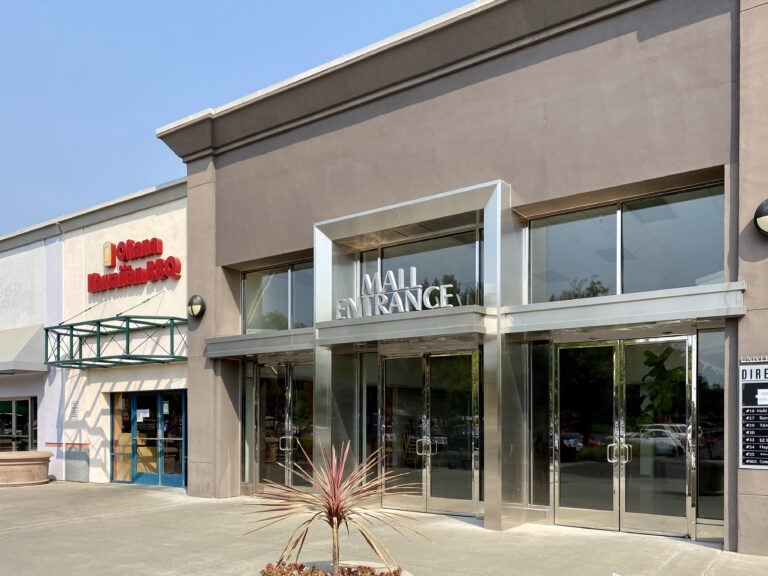
On Tuesday Aug. 18, the Davis City Council held a meeting to discuss the University Commons Project, which would lead to the redevelopment of the site where the University Mall is currently located. This would “entail reconfiguration and replacement of the existing site and buildings to create a new mixed-use development,” according to the web page for this project. 

The redevelopment of University Mall by Brixmor Property Group is intended “to enhance existing retail uses and add residential units to create a vibrant mixed-use development,” according to the project’s description

During the meeting, changes to the number of beds and units were shown.

“We do point out that it’s not unusual for projects to change as they go through our review process,” said Eric Lee, planner in the community development and sustainable department. 

In the March 2018 submission, there were originally meant to be four residential stories with 912 beds, 552 bedrooms and 174 units, according to a presentation shown during the meeting. In October 2018, this was revised to 894 beds, 622 bedrooms and 264 units. In a more recent revision on Oct. 19, however, although the number of units, beds and bedrooms stayed the same, changes were made to the percentage of one, two, three and four bedroom units. 

Of the total number of units, a minimum of 55% are intended to be one, two or three bedroom units, as of October 2019. In addition, a maximum of 45% of the total units can be four bedroom. 

During the meeting, it was expressed that the bicycle facilities at the Sycamore intersection and La Rue and Anderson would be affected, which is discussed in the Environmental Sustainability Report. Potential traffic jams were also discussed.

The project’s height is one of the concerns that was brought up during the meeting. 

“I believe we could cut the height from 80 feet to 72, take 10% of height right off of it, and still have the same cross-section, still meet the one level of retail, still meet the four levels of residential,” said Bill Brown, executive vice president of development for Brixmor Property Group. 

Some of the discussion that revolved around this was the number of floors, however, rather than the height of the project. 

“We’re also focusing a lot on pure height, which I think is part of but not the entirety of this size and scope of concern that’s been expressed by a number of folks in our community,” Councilmember Will Arnold said. “I think the size and volume of people, traffic—everything—is also what we’re talking about here. So when we say ‘scaling it back’—at least when I say ‘scaling it back’—I don’t purely mean just shaving off feet from the sky.”

“I mean there’s obviously some maturation that’ll happen as we go through the design, but that program still fits within the EIR box of what’s allowed, and certainly all of the impacts that go along with that […],” Brown said. 

Arnold further explained his perspective on the project. 

“I still have these major concerns about affordability, or lack thereof, as well as with regard to the availability for all renters to take advantage of this project,” Arnold said. 

Arnold stated that he did not want there to be any four bedroom units, according to the Davis Enterprise.

“People have said that every project serves a purpose, and they think that this particular project is serving the purpose of opening up housing in other parts of our community and moving the students to where they are less impactful on our community as a whole,” Mayor Gloria Partida said. “I think that it’d be great if we could get every single thing out of every single project, but every project serves a purpose […].”

A project that was farther away from campus would have less four bedroom units and be more affordable, as more families would want to be there, according to Mayor Partida. 

Ultimately, the project was approved by a 3-2 vote, with Mayor Partida, former Mayor Brett Lee, Councilmember Dan Carson voting for the project and Councilmember Will Arnold and Vice Mayor Lucas Frerichs voting against it, according to the Davis Enterprise. 

Written by: Shraddha Jhingan — city@theaggie.org

Lightning strikes spark Hennessy fire, burning over 350,000, forcing parts of Vacaville to evacuate

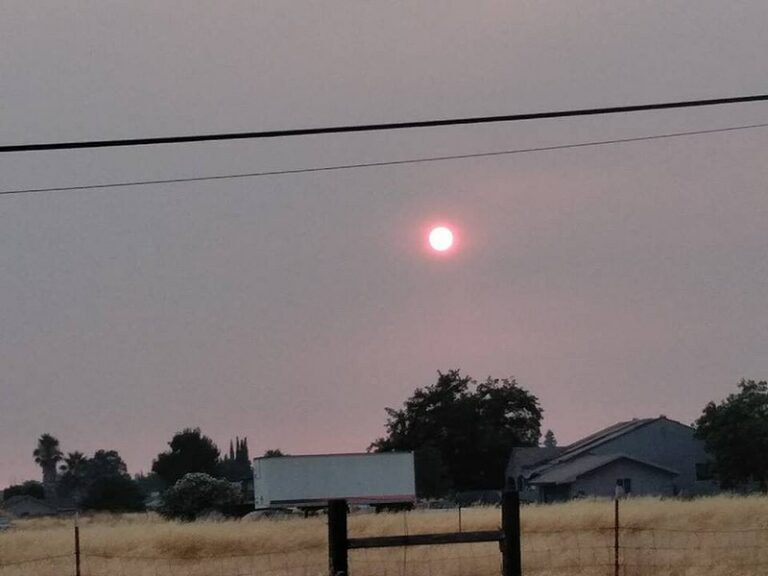
Wildfire evacuations and poor air quality threaten to increase the severity of COVID-19 during wildfire season

On Aug. 16, multiple early-morning lightning strikes sparked the LNU Lightning Complex fires in two locations in Northern California. The Eastern location, named the Hennessy fire, has threatened parts of Napa and Solano Counties, as well as the city of Vacaville. 

Vacaville declared a state of emergency after some residents were forced to evacuate and roughly 4,500 homes were threatened. 

The emergency declaration reads, “As a result of the size and speed of fire movement, during the late night and early morning hours of August 18 – 19, 2020 the LNU Fires moved perilously close to the City limits and residential areas of the City of Vacaville and became an immediate threat to the City […].”

All evacuation orders in the city of Vacaville were lifted by Aug. 24. 

As of Aug. 26, the LNU Lightning Complex fires were 33% contained and had burned over 350,000 acres. In a press conference, Cal Fire Sonoma-Lake-Napa Unit Chief Shana Jones offered gratitude for everyone helping the state address the wildfires. 

“All of the resources in the state of California are working incredibly hard,” Jones said. “We’ve gotten so much support from outside of the area, outside of the state […] I just want to say thank you to everyone—including those that are supporting our evacuees, our communities to provide them with help for getting back into their homes.”

The lightning storms also started the SCU Lightning Complex fires near San Jose, which has burned over 365,000 acres and is 25% contained. 

Assistant Adjunct Professor of Atmospheric Science Matthew Igel explained the processes that led to the summer lightning storms that sparked both the LNU and SCU Lightning Complex fires. 

“It was an uncommon set of events that resulted in the lightning,” Igel said. “We’ve had this very strong heatwave for the last couple of weeks, and then we got moisture from the tropics—which is pretty rare in California during the summer. The very warm air mask from the heatwave coupled with the moisture from the tropics led to lightning and thunderstorms.”

Wildfires also pose a unique threat this year due to the COVID-19 pandemic. Both smoke inhalation and crowded evacuation centers could contribute to the spread of the disease. 

Because of the fires in Northern California, air quality in the Sacramento area has suffered. Spokesperson for the Sac Metro Air District Jamie Arno explained that the masks mandated because of COVID-19 don’t block smoke, so staying indoors is the best way to protect your health. 

“Smoke is unhealthy to breathe,” Arno said. “If you smell smoke, you want to go indoors or to another location. The cloth and surgical masks that we’re using for COVID are not effective when it comes to protecting the body from particulate matter air pollution.”

The CDC explains that inhalation of smoke from wildfires damages the lungs, potentially increasing the severity of COVID-19 symptoms. 

“Exposure to air pollutants in wildfire smoke can irritate the lungs, cause inflammation, alter immune function, and increase susceptibility to respiratory infections, likely including COVID-19,” its website reads.

UC Davis Associate Professor of Regional Climate Modeling Paul Ullrich explained that, in the event of a wildfire evacuation, maintaining social distancing might not be the highest priority.

“Inevitably, evacuated folks will find themselves indoors with many conditions which will have the potential to drive infections up,” Ullrich said. “People are going to wear masks, but once your home has been burned down, COVID precautions seem like they would take a backseat.”

Arno expects unhealthy air quality to remain until the fires are mostly extinguished or wind patterns change. 

“We need to get a status change on the fires—they need to be more under control and produce less smoke,” Arno said. “Or, we need to get a new weather pattern in the region to clean things out. Until one or both of those happen, we expect to continue to have this poor air quality.”

Ulrich stressed that there could likely be more fires during peak wildfire season, which ranges from May to October. 

“I fully expect us to continue suffering from continued wildfires throughout the season,” Ullrich said. “Even in those areas that haven’t been burned already, we’re seeing incredibly dry conditions. They’re prime for the occurrence of wildfires—any spark could set some of these areas ablaze.”

Written by: Eden Winniford –– city@theaggie.org

Tuesday Table offers free essentials to people in need during COVID-19 pandemic

Local Davis movement spreads across country to help community members

Tuesday Table began in March when the COVID-19 pandemic caused significant financial fallout and a growing need for more resources in the Davis community.

The official Facebook page for Tuesday Table provided further insight into this movement. 

“Tuesday Table is an opportunity to give to and receive from your neighbors,” the page reads. “Hosts set up a table on Tuesdays with essentials (food, books, personal care items) to share with their neighbors and their communities.”

Founder Catherine McMullen described Tuesday Table as an idea or movement instead of an organization and explained how she started Tuesday Table out of a desire to help the community. During her day off from work, she set up a table outside her home with food and books. She called her set-up a “Tuesday Table” after the day it was first held and the idea took off from there. 

“It’s a small thing, but if a lot of people do small things together, then it becomes larger,” McMullen said. “If you have more than you need, you build a longer table, not a higher fence.” 

The organizer for Tuesday Table in Yolo County, Melanie Carr, joined McMullen early in the project. She helped to coordinate tables with the help of other Yolo County organizers Peri Siepman and Lindsay Wilson Terry even after McMullen relocated out of California. She explained how the project grew when more people wanted to donate and contribute.

“My goal is just to have there be as many tables as possible and get as much food as possible out to people that need it,” Carr said. “It really helps the heart of the community.” 

In order to participate, Carr described the safety measures in place to eliminate the threat of COVID-19. The measures include mask-wearing, social distancing at least six feet apart, proper cleanliness and/or isolation of donated items, a rule that you must take something if you touched it, as well as the common sense to only take what you need.  

Lindsay Wilson Terry, another organizer for Tuesday Table in Yolo County, first became involved when Carr reached out to her about hosting her own Tuesday Table. Terry had always felt passionate towards food insecurity and has regularly hosted a Tuesday Table ever since. 

She believed Tuesday Table came at the right time when unemployment and homelessness increased and services were either closing or slowing down. When there was not enough aid for those in need, the community stepped up to help. 

“I hope that more and more people will realize the importance of community-based support and community-based action, and realize that it really can be done in a simple way,” Terry said. “All you need is a willingness to share.”

Over time, Tuesday Table expanded beyond Davis and Woodland to other states such as Oregon and Rhode Island, and even halfway across the world to the United Kingdom. Social media helped to play a role in the growth of the movement.

Kayla Schmitz, a Tuesday Table host, became involved after seeing a post on Facebook. Schmitz hosted her own Tuesday Table every week, believing that even a seemingly small contribution can make a big impact in someone else’s life. 

“I was really impressed by how giving the Davis community was,” Schmitz said. “It’s just been really important to me to always find ways to give back to the community that has given so much to my family.” 

Carr further explained how people often come to the tables and say how much Tuesday Table helps them, especially elders and other folks who are unable to go to the store themselves. She wanted to express her thanks for anyone and everyone involved with Tuesday Table, whether it’s a one-time donator or people hosting their own Tuesday Table. 

McMullen had always hoped Tuesday Table would spread to other communities and further emphasized the importance of not working alone in order for a movement to grow. She expressed joy at how far the movement has blossomed since its start, giving people a way to give back to the community and stay connected with each other during these unprecedented times. 

“I don’t think there’s ever going to be an end of a need for us to help each other,” McMullen said. “Long after the pandemic is done, I hope we’re still doing something like Tuesday Table.”

Terry added a final comment about the positive influence and longevity of the project.

“As long as we’re dealing with the repercussions of COVID-19, Tuesday Table will definitely continue and hopefully beyond because there is always food insecurity and there is always a need to build and support community,” Terry said. “I think the more it spreads, the longer it will endure.”

Written By: Jelena Lapuz — city@theaggie.org


NBA bubble begins playoffs

0

After long delay, the NBA playoffs begin with no true favorite

With no meaningful basketball games played for 141 days, the NBA made its successful return on July 30. After months of uncertainty and doubt, the comeback plan included 22 teams staying at the ESPN Wide World of Sports Complex at the Walt Disney World Resort in Orlando, Florida. Among the precautions taken due to the ongoing COVID-19 pandemic, the NBA created “The Bubble,” where these teams will stay until they are eliminated and their season comes to an end. There, the players are tested regularly, provided meals, entertainment and much more as they try to finish their season that came to a sudden stop back in March.

Each team played eight initial games in the bubble to complete the regular season. These eight games were valuable for teams fighting for a playoff spot and that especially rang true for the Portland Trail Blazers. Entering the bubble three and a half games back from the No. 8 seed, the Blazers finished the restart with a 6-2 record, secured the No. 8 seed and beat the Memphis Grizzlies in a play-in game to make the playoffs. Led by superstar Damian Lillard, the Blazers are entering the Western Conference playoffs scorching hot and will prove to be a difficult challenge for the top-seeded Los Angeles Lakers. 

After a nail-biting win in their first game against the Los Angeles Clippers, the Lakers were lackluster to finish off the regular season. They went 3-5 in their eight games after the restart, but having locked in the No. 1 seed early, the Lakers seemed to take the regular season on cruise control and finished with a 52-19 record. Their rival and potential Western Conference opponent, the Clippers, finished with a 5-3 record. Despite beginning the restart with a depleted roster, they showed promise towards the end as they prepared to face the No. 7 seed Dallas Mavericks and their rising star in Luka Doncic. 

Aside from the Trailblazers taking the No. 8 seed in the West, there were no major shifts in seeding. It was nearly impossible to cover ground in only eight games. Nonetheless, the games have proven to be exciting, and with no home-court advantage, each series has the possibility of upsets. 

An intriguing matchup between the No. 3 seed Denver Nuggets and No. 6 seed Utah Jazz has many struggling to pick a winner. Although the Nuggets are the superior team on paper, both teams match up nicely, which could lead to an exciting series that goes the distance. 

The final Western Conference matchup includes two teams with familiar faces. The No. 4 seed Houston Rockets square off against the surprise of the year, the No. 5 seed Oklahoma City Thunder. The Rockets came into the season as a serious contender after acquiring former MVP Russell Westbrook to pair with their MVP, James Harden. The tandem reunited after beginning their careers together in none other than Oklahoma City. After cleaning house by trading Westbrook and co-star Paul George, the Thunder were seen as a rebuilding team who would most likely be competing for the number one pick in the NBA draft. They overcame all doubts and made the playoffs, led by Chris Paul in his bounceback season. The series will almost surely be interesting as there is a lot of background and storylines between these two teams.

On the flip side, the Eastern Conference seeding stayed exactly the same as it was when it began. There was no movement between any of the eight teams and although the Milwuakee Bucks finished with the No. 1 seed at 56-17, the East is as open as ever. Looking to make their first NBA Finals in 46 years, the Bucks will begin their journey against the No. 8 seed Orlando Magic. Led by reigning MVP Giannis Antetokounmpo, the Bucks are favored to win the East. Although they have had their fair share of postseason struggles in recent years, Giannis and the Bucks hope to change that this year, as they try to take the Eastern Conference crown from the reigning champions, the Toronto Raptors. 

After losing superstar Kawhi Leonard in free agency, many doubted whether the Raptors could even be half as good without him. They proved everyone wrong as they finished as the No. 2 seed, showing their talent and depth was enough to lead the way. Their opponent, the Brooklyn Nets, came limping into the playoffs, having entered the bubble missing six of their key players. To the surprise of many, however, they finished the regular season with a solid record of 5-3. While the Nets may not win the championship this year, their fans are not worried, as they still have superstars Kevin Durant and Kyrie Irving, two of the best players in the NBA, waiting to come back from injuries next season.

The Boston Celtics face off against the Philadelphia 76ers, rekindling their rivalry from years past. Both teams come in looking different, but the Celtics are confident about their young wing duo: Jayson Tatum and Jaylen Brown. Many fans are excited to see Tatum and Brown grow into legitimate NBA stars this season. The young Celtics team will look to get back to the NBA Finals after a 10 year absence. Upon entering this season, the Sixers were viewed as one of the favorites. A lack of shooting and depth, however, coupled with controversy has derailed a once promising season. On top of that, they lost All-Star Ben Simmons to a partially dislocated kneecap—another crushing blow. While all hope is not lost, they will have to rely on Joel Embiid, the All-Star center, to lead them to an upset.

The final matchup in the East includes two similar teams, the Miami Heat and the Indiana Pacers. Both squads are built on elite depth, great shooters and strong defense. The one factor that prevents them from being legitimate contenders is the fact that neither has a superstar to depend on. It has been long believed that in the NBA, one must have at least one superstar in order to win a championship. Although both the Heat and Pacers have very good stars in Jimmy Butler and Victor Oladipo respectively, neither are seen as superstars, which is why this matchup is intriguing for many hardcore NBA fans. Despite it not being a flashy matchup, it is sure to deliver as one of the best and closest series in the first round. 

For the first time in years, the NBA championship feels as wide open as ever. Compared to years past, this season has great teams, but there is also a sense that anyone can be knocked out on any given night. There are two betting favorites heading into the playoffs with both the Bucks and Lakers at +225 according to Sports Insider. Not too far behind are the Clippers at +300. After them however, there is a sizable gap. The next favorite falls all the way at +1200 with the Celtics occupying the fourth spot. Although the gap between the third best and the rest of the pack looks large, that is not the reality of things. Each team in the playoffs has a weakness and if faced with the wrong matchup it could be exposed and lead to an elimination. 

The absence of fans is an equalizer, since the home-court advantage element of the game is thrown out the window. There will not be runs off the crowd’s energy or extra adrenaline due to the environment. It is simply basketball in an empty gym. Whom that benefits and whom it hurts has yet to be seen, but after a long delay, the NBA Playoffs in the Orlando Bubble seem to be one that we will be talking about for seasons to come. 

Written by: Omar Navarro — sports@theaggie.org

UC Davis provides emergency housing for community members affected by wildfires

University wildlife reserves also heavily affected by fires

Students, faculty and staff seeking housing support can call the Human Resources Shared Services call center at (530)754-4772 etween 8 a.m. and 8 p.m. today and Monday. Additional resources can be found on this page

UC Davis has offered temporary emergency housing for community members affected by the wildfires that swept through Northern California last week, according to an Aug. 23 press release on the UC Davis News site. 

The offer, made on Aug. 20, extends to professors, staff members and students and their families. As of last night, the university has provided shelter for 45 people from 15 households, as well as 19 animals, including service and emotional support dogs. 

Emergency housing stays can last up to five days, the press release said. For those seeking long-term housing, the university said it could assist with that search.

UC Davis Medical Center is also treating patients with fire-related injuries including burns. Many of the patients were affected by the flames in the LNU Lighting Complex and other locations in the northern part of the state. The School of Veterinary Medicine is treating animals, including an alpaca, a pony and a horse. 

University firefighters are fighting the fires in Angeles National Forest and Nevada County. Recently, fires broke out closer to campus following instances of dry lightning near Lake Berryessa, and an engine crew was deployed to protect structures in the nearby towns of Vacaville and Winters. 

An Aug. 21 email from Chancellor May to the university community noted that officials hoped that Quail Ridge, Stebbins Cold Canyon and Cahill Riparian Preserve – all natural reserves owned by UC Davis – remained safe. The reserve director’s house, however, and eight cabins on Quail Ridge burned down. 

Shane Waddell, the reserve director, was able to escape safely with his family last Tuesday night. At the time that the email was written, the field station and research house were still standing, as was another house. 

Waddell also found that Stebbins Cold Canyon was completely burned on both slopes; the entirety of the reserve was also previously burned in the summer of 2015.

Outdoors work and operations on campus have been limited, and outdoor employees have been given N95 masks. 

Written by: Rebecca Bihn-Wallace — campus@theaggie.org

A look into UC Davis policing reform: what is the role of campus law enforcement?

Police chief, ASUCD chairperson, sociology professors discuss campus policing and the UC Davis Police Department

Characterized by protests and civil unrest, the 1960s was a period not unlike today. Activists marched in the streets, expressing their dissent and struggling with local authorities. Consequently, the turbulent decade, defined by the Vietnam War, counterculture and the Civil Rights movement, was also the source of widespread campus policing. 

The initially peaceful and later violent protests of the 1960s caused many college campuses to establish their own police departments. Throughout the late 20th and early 21st century, the number of campus departments in the U.S. grew, totaling over 4,000 by 2015 at both public and private postsecondary schools.

According to UC Davis criminology lecturer Shane Logan, the goals of campus administration regarding policing have shifted over the years. 

“As we see an increased focus on campus safety with sexual assaults and mandatory campus reporting of crimes taking place on or around campus, administrators increase their focus on policing to increase the marketability of their school, especially in light of declining enrollments, the need to justify higher tuitions and more metrics of competition beyond just academic performance,” Logan said.

The UC Davis Police Department (UCDPD) has been operating for over 70 years. Particularly in the past decade, the department has had a complicated relationship with the student body. It has served the community by employing students while at the same time has undergone reform as a result of incidents of violence.

The event that led to the most significant reform occurred on Nov. 18, 2011, when university students set up tents on the UC Davis quad as a part of the Occupy Wall Street movement. Campus police officers pepper-sprayed a group of students after they refused to vacate the area.

“When I got here in August of 2017, I saw our department as a department that was doing the best that they could on the job, but they certainly had their history, their issues that we had to deal with, pepper spray being the one that is probably the most visible to a lot of people,” said Joseph Farrow, chief of police at the UCDPD. “I think people are still reeling from that. I think we really needed to look at the way we go about our business and the way that we train, we recruit and really have some guidance.” 

 Calls for more radical change in policing such as defunding and abolishing the police have gained prevalence over the past few months with growing participation in Black Lives Matter and outrage over the death of George Floyd. According to a Gallup poll from 2020, 58% of Americans say policing needs major changes but only 15% are in favor of abolition.

“The incidents across the nation, specifically the George Floyd incident, caused this reaction that all of a sudden we had to change,” Farrow said. “I think we recognized that years ago for us to really do a better job [we had to] really respond and listen to our community better.” 

According to campus financial reports, the UC system spent $138 million on policing across its campuses in the 2018-2019 year. Many UC organizations, students and staff recently signed a Justice for Black Lives petition to abolish all UC campus police departments and end policing contracts, stating that funds could be reallocated to better serve the community. A petition signed by faculty members in June similarly called for an end to campus policing in Davis.

“One of the things that the petition itself states [is that] campus policing is the most effective place to begin this project,” said Elizabeth Siggins, a UC Davis criminal justice lecturer and a signatory of the faculty petition. “I believe strongly that we could have better solutions for campus safety.”

Logan had considered signing the petition but decided against it, stating that although it was a difficult decision for him, there are ultimately better ways to improve policing.

“I believe that a complete disbanding of the campus police is not the best way to go,” Logan said. “Re-organizing it to change the structures and incentives to better align with the community they serve can produce far greater benefits without some of the unintended consequences of complete abolition.”

In response to mounting concerns about the policing system, UC Davis Chancellor Gary May announced on June 11, 2020 the establishment of the Next Generation Reforms to Advance Campus Safety Task Force to reevaluate campus policing. The task force is scheduled to report its recommendations by Dec. 15.

“As law enforcement departments across the country are scrutinized—and justly so—for how they respond to and interact with others, I’m calling on our community to come together and examine what we can do to improve our community policing,” May stated in his charge letter to the task force.

This task force is the most recent in a series of reforms for the UCDPD.

UCDPD: A Timeline of Reform

January 2005 — ASUCD Student-Police Relations Committee established (currently vacant, overseen by the ASUCD Ethnic and Cultural Affairs Commission) as a result of the 2004 Sterling Riot

November 2011 — Pepper spray incident

March 2012 — Reynoso report released, detailing investigations into the 2011 incident and identifying errors in police conduct and the decision-making process 

April 2014 — Police Accountability Board (PAB) established to externally evaluate complaints about the UCDPD 

April 2017 — Davis Picnic Day incident: a fight ensued between civilians and two plainclothes police officers

August 2017 — UCDPD started hiring students

April 2018 — Presidential Task Force on Universitywide Policing established

October 2018 — UCDPD began seeking accreditation

December 2018 — Report of the Presidential Task Force on Universitywide Policing released, recommending establishing an independent advisory board for each department

June 2020 — University-wide calls to abolish campus policing

June 2020 — Next Generation Reforms to Advance Campus Safety Task Force established

In the past, ASUCD has pushed for policing reform. According to Shelby Salyer, a fourth-year political science and history double major and ASUCD External Affairs Commission (EAC) Chair, the efforts have faced opposition within the organization, particularly during the 2018-2019 school year under former ASUCD President Michael Gofman.

“The main issue with ASUCD and police reform is the fact that various commissions and senators have been working for years on these issues and have faced significant push backs every step of the way,” Salyer said. “The Gofman presidency in ASUCD significantly hindered the efforts of police reform in ASUCD.” 

Despite initial resistance to and the failure of a senate resolution (SR #10) to disarm campus police on April 29, 2019, ASUCD successfully passed a similar resolution (SR #16) on June 7, 2019. However, Salyer said, Gofman supported two resolutions (SR #7 and #8) to support local law enforcement during the year, contributing to a pro-policing culture within ASUCD. 

“It was not welcomed to speak out against police violence in ASUCD then and it is not welcome now,” Salyer said. “The Ethnic and Cultural Affairs Commission [ECAC] got death threats sent to its Facebook account for advocating against police terror. The mentality of this era of ASUCD and its treatment of ECAC is still pervasive in the senate.”

Beyond student reform, the latest administrative initiative—the chancellor’s task force—will not effectively address the EAC’s concerns about UCDPD and the policing budget, Salyer said. They hope that the administration will meet the demands listed in the Justice for Black Lives petition.

“I think that task forces are a way for institutions to publically look like they’re doing something about an issue while, in reality, they’re doing the opposite,” Salyer said. “What good is a police reform task force if our police budget just got increased? There’s something wrong with a task force based on reform when the Justice for Black lives petition demands the abolition of UCDPD and reinvestment into community members in need.”

Logan, echoing Salyer’s belief that task forces are often ineffective, mentioned that they function to quiet protestors, as they allow for several months between their announcement and release of findings.

“The hope being, public attention moved on and pressure is no longer present for actionable change,” Logan said. “I’m not saying that this is the case, but a task force is insufficient for the change needed within campus policing. I hope that pressure persists for more quantifiable, meaningful, timely and verifiable measures [to] come about from the current movement.”

Improving the system by identifying the functions of policing is inadequate, according to Siggins. Understanding implicit biases, determining appropriate responses to behaviors and looking at racial justice, Siggins said, are essential parts of the process.

“We have to make an absolutely fundamental shift in committing to the safety of everyone,” Siggins said. “We can’t just be thinking about this in terms of how we respond after an incident has occurred.” 

Furthermore, Siggins hopes that those pushing for reform will recognize that the national movement towards a shift in policing has the potential to create lasting change.

“What’s happening right now really helps to illustrate that our history has kind of repeated itself a few times and that up until this moment in time we have repeatedly failed to take advantage of those moments in history to really dismantle white supremacy,” Siggins said. “I do believe now that we are at one of those pivotal moments.”

Written by: Sophie Dewees –– features@theaggie.org