52.4 F
Davis

Davis, California

Tuesday, December 23, 2025
Home Blog Page 321

UC Davis Police Department lowers campus police budget amid COVID-19 campus closure

Students and police chief have differing ideas of campus safety

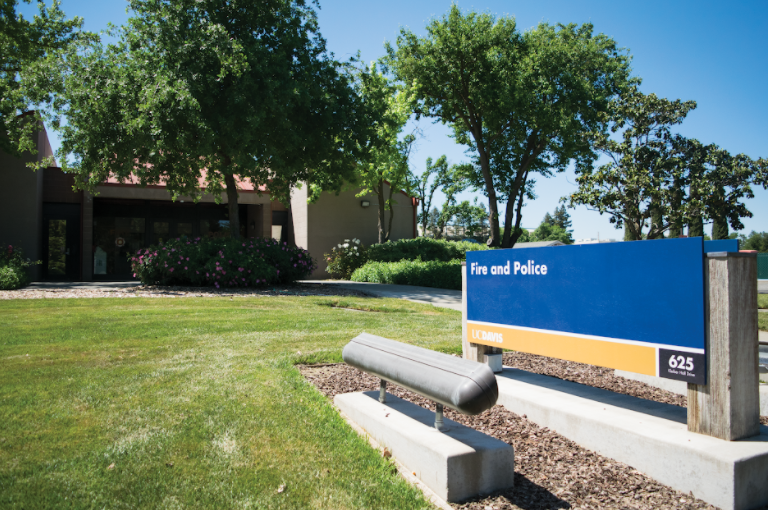
While the UC Davis campus police budget rose by nearly $2 million from 2019 to 2020, the amount the campus spends on police for its Davis campus could decrease in the 2020-21 school year, according to UC Davis Police Chief Joe Farrow. The overall operating budget is divided between the UC Davis campus and the UC Davis Health campus in Sacramento.

The Regents Report on Campus Policing, released July 29, showed that the 2019-20 police budget was $13,393,000 and the 2020-2021 projected budget was $15,121,000. 

During 2019-20, Farrow said $8,550,000 went to the UC Davis campus police, while $6,571,000 went to the Sacramento UC Davis Health campus.

While the report shows a near $2 million overall increase, Farrow said that UC Davis will decrease its Davis campus police budget in 2020-21. The proposed 2020-21 total budget is $15,000,066 – an overall decrease from the projected budget by $120,934; however, this still represents a higher budget than the 2019-2020 school year.  

Farrow noted that while the UC Davis operating budget under this proposal is decreasing, the UC Davis Health campus police budget is increasing. He said that $7,712,000 will go to Davis, with $7,354,000 going to health services in Sacramento in fiscal year 2021.

The Davis campus police department budget is set to decrease in response to the upcoming school year’s decreased student and faculty presence as UC Davis transitions to virtual instruction. Three positions were terminated, two police officers and a dispatcher. 

UC Davis operations — including the Medical Center — lost $120,330,686 during the March 16 to April 30 period. The losses caused many benefits and contracts within the UC Davis Police Department to become absorbed in response to COVID-19 budget changes. 

The budget response therefore allocates more funds than usual to the Sacramento health center campus — where additional personnel are required to maintain successful operations at the hospital. 

“The health services side requested an additional officer to work in the emergency area full time, and that equates to four officers,” Farrow said. “So you’ll see a [budget] increase because that is an increase in some officers that we added on the Sacramento campus, as well as an additional canine.” 

In light of the political climate and UC campus-wide calls for police reform, the police department budget proposal for the 2021 school year has sparked conversation among students.

 Fourth-year political science and philosophy double major Jafar Khalfani-Bey suggested that lowering the campus police budget could allow funds to be allocated to student resources, such as the ASUCD Pantry or lowering tuition.

“I don’t think we should be looking to reform police, I think we should be looking to lessen their presence,” Khalfani-Bey said.

Stett Holbrook, senior communications strategist for the UC Office of the President, said, via email, that UCPD officers frequently participate in trainings for managing implicit bias, de-escalation techniques and non-violent crisis intervention.

“The University of California stands with those demanding an end to police brutality and racist violence, which have no place in today’s society,” Holbrook said. “We recognize and empathize with the sentiment behind calls to defund or disband police departments at UC and across the country, which reflect the rightful call for increased scrutiny of officer misconduct and abuses.”

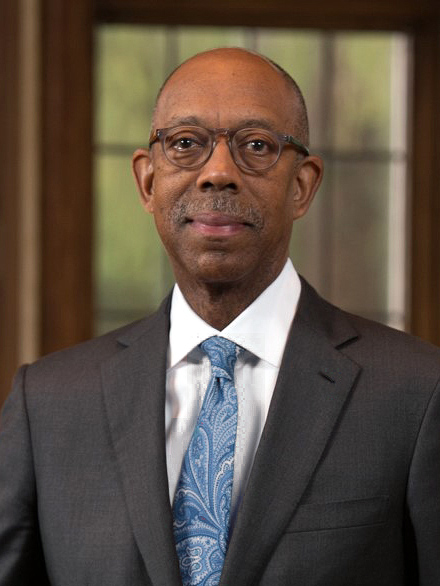
UC Davis campus police follow President Obama’s 2014 “Task Force on 21st Century Policing” reform and guidelines, according to Farrow. The department also regularly attends Chancellor May’s task force on reimagining policing. 

Farrow said he wanted campus police to prioritize campus concerns and student voices.

“During a very turbulent time in law enforcement, I think it’s really important for us to be good listeners and to adjust and adapt to what’s been going on across the nation,” he said. “The entire incident about George Floyd devastated us. We are so alarmed by what we all saw.”

While the UC Davis police department cannot control the actions of other police departments, Farrow also said the department can control its own narrative by listening to the community and making UC Davis the safest campus possible.

Khalfani-Bey said that taking police off campus would ultimately help him feel safest.“As a Black student, a student of color, when I learn about the police budget increasing by nearly two million dollars from 2019 to 2020, knowing the implications of how people of color are treated by police, it feels like a slap in the face,” Khalfani-Bey said. “I have a legitimate fear that if I interact with a police officer on campus, they might not believe I’m a student. But I shouldn’t have that fear.”

Written by: HANNAH BLOME — campus@theaggie.org
UC Davis sees increase in cancellations of housing and dining contracts

COVID-19 prompts cancellations, impacting students and university

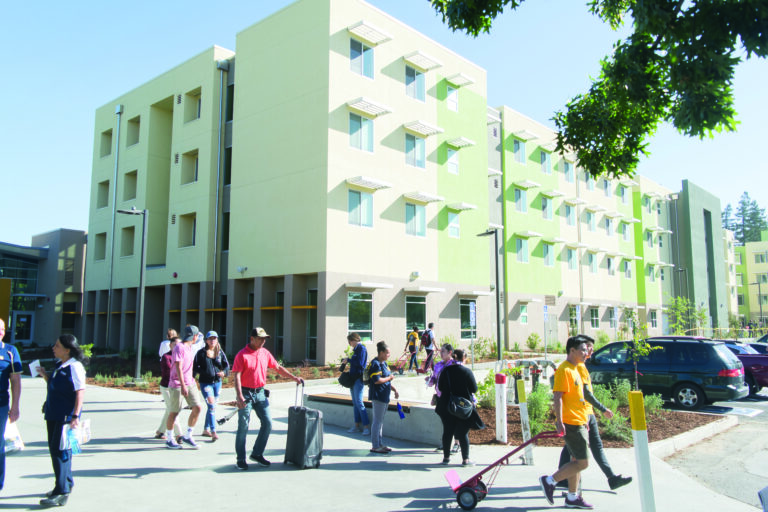
The cancellation deadline for the residence halls has been extended to Aug. 30. For returning and transfer students living in apartment housing, the cancellation deadline has been moved to Aug. 23. 

“This extension will allow students and their families to make a more informed decision,” said Mike Sheehan, associate vice chancellor for Student Housing, Dining and Divisional Operations, via email. 

To initiate the cancellation process, students must turn to the myHousing Portal on myUCDavis

“Once cancellation is initiated, prior to the cancellation deadline, and finalized, the appropriate refund will be posted to their UC Davis student account,” Sheehan said. 

Nandini Sharma, a first-year chemical engineering major, said the process was “pretty simple,” upon cancelling her contract in June.

“It was a click of a button [to] cancel,” Sharma said. “A couple of days later I had a negative sum on myBill. But they kept changing the deadline for the cancellation of housing.” 

When deciding whether or not to cancel housing and dining contracts with the university, Sheehan said he advises students and families to “take into consideration the multiple dynamics that might be impacting them.” 

“I encourage them to consider important variables when making the decision, which could include academic schedule, financial aid, housing insecurity, personal/family health and overall expectations of experience,” Sheehan said.

Student experience, remote learning and coronavirus concerns influenced many students’ decision to either cancel or continue their contracts. 

Alyssa Miro, a second-year student who is currently undeclared, decided not to cancel her contract.

“I really enjoyed living on/close to campus and I’m hoping that I’ll get to continue with that opportunity this year,” Miro said, via Facebook Messenger.

On the other hand, Cristina Avelar, a first-year student majoring in Chicana/Chicano studies, cancelled her contract. 

“I made the decision to cancel my contract because there is really no point to be on campus for me if all classes are going to be remote,” Avelar said. “It just really wasn’t worth the extra cost to move there. It’s not at all what we planned, like most people, but in the end I think it was the best choice for me financially and logistically.” 

Similarly, Sharma said that remote learning influenced her decision to stay in Qatar. 

“California doesn’t seem to be doing too well with [the] coronavirus,” Sharma said. “Also, all my classes are online, even my lab, so I didn’t really see a point being on campus. It’s not like I would get a lot of the normal, conventional freshman year experience as well.” 

Sheehan said that strategies being developed to prevent a COVID-19 outbreak in the dorms include increased sanitization, education, accountability, daily symptom monitoring, testing, contact tracing, isolation and quarantine. These directives were created through a collaboration between UC Davis, Yolo County Health and experts in the medical and public health field. 

If the campus becomes fully functional starting Winter Quarter, both Sharma and Avelar said they would be open to moving to Davis. 

“Winter and spring housing options will be dependent upon the level of COVID-19 infection,” Sheehan said. “Significant changes in the infection rate, treatment options and possible vaccine options will inform what happens in the winter and spring quarters.”

As of now, however, Sheehan said that it is difficult to predict how many students will choose to continue their contracts with UC Davis Housing and Dining Services. 

“We are seeing an increase in cancellations as our county and state continue to see an elevated number of COVID-19 cases,” Sheehan said. 

According to the UC Davis website, as of Aug. 15, 42 employees and 18 students have tested positive for COVID-19. Looking at Yolo County at large, there have been a total of 1,966 cases and 46 county-wide deaths as of Aug. 14, according to the coronavirus dashboards on Yolo County’s website

On Aug. 6, UC Davis Student Housing and Dining Services sent out an email stating that “a very significant number of students cancelling housing contracts,” would reduce the number of Community Advisor (CA) and After Hours Assistant (AHA) positions by approximately 50 percent. 

According to the 2020-2021 CA job description, community advisors are responsible for creating a “positive community environment.” 

AHAs provide after-hour on-site assistance related to facilities, respond to after-hour community needs, and staff area service desks typically from 11 p.m. to 2 a.m., according to the 2020-2021 AHA job description. 

Students were given the option to voluntarily withdraw from their position, according to the email. If not, offers would be rescinded based on responses to a survey students were encouraged to complete.

When Laura Yang, an incoming community advisor for the student housing apartments, received the email, she said she was excited to get an update about where she was going to be living next year. 

           But she said she read the email multiple times after opening it. 

“In that email, I didn’t really understand how to process it,” Yang said. “First of all, I was like, ‘This is really inconvenient.’ I really think they should have communicated to us better what they were doing.” 

In response to this email, Yang started a petition on Change.org. 

“The overarching goal of my petition was to get more awareness because compared to the whole student body, there are not a lot of RAs,” Yang said. “[I wanted to] get more people to know what’s going on. I also wanted student housing specifically to give us options, not just rescind our offers. The first email that was sent out was really alarming, considering how vague and how little detail there was in it.” 

Since it was posted, Yang’s petition has garnered 2,802 signatures and over 3,000 shares as of Aug. 15. 

“When I sent out the petition, I honestly was expecting two to three hundred signatures,” Yang said. “I did not expect this to get this big. I was really trying to build support for it. It really felt good because a lot of people were reaching out to me.” 

On Aug. 7, Director of the Office of Student Development Branden M. Petitt sent a follow-up email apologizing for “the confusion and worry that [Student Housing and Dining Services’] communication has caused.” 

Approximately 20% of the CA and AHA staff had already resigned, according to the email sent out by Petitt. 

“I sympathize a lot with the stuff that’s going on because it’s a really big institution,” Yang said. “There’s a lot of stuff you need to figure out.” 

Yang said that she plans on continuing her position as part of the CA staff. 

“A big reason why I wanted to be a CA, especially an apartment CA, was because […] a lot of my friends who transferred from back home […] would talk about how behind they felt, and how isolating it was, because you don’t get that dorm experience as a transfer,” she said. “I completely understand what it’s like to feel isolated and have anxiety, because it’s a really big transition. I really want to be there for the transfers.” 

In terms of next steps, Petitt said in the email that “a number of factors […] are still evolving” and that “even without concrete plans,” they still plan on providing students with “update, solicit information.” 

Sheehan said that UC Davis Student Housing and Dining Services have been maintaining communication with students via email and their website, which is being updated regularly as changes occur. Moreover, they have been sending a “COVID-19 focused Aggie Reader.” 

“We are sensitive to the impact COVID-19 has on students and families as they make housing decisions they feel best support their educational pursuits,” Sheehan said. “We have and will continue to communicate updates and work with families to support their housing decisions.” 

“This extension will allow students and their families to make a more informed decision,” said Mike Sheehan, associate vice chancellor for Student Housing, Dining and Divisional Operations, via email. 

To initiate the cancellation process, students must turn to the myHousing Portal on myUCDavis

“Once cancellation is initiated, prior to the cancellation deadline, and finalized, the appropriate refund will be posted to their UC Davis student account,” Sheehan said. 

Nandini Sharma, a first-year chemical engineering major, said the process was “pretty simple,” upon cancelling her contract in June.

“It was a click of a button [to] cancel,” Sharma said. “A couple of days later I had a negative sum on myBill. But they kept changing the deadline for the cancellation of housing.” 

When deciding whether or not to cancel housing and dining contracts with the university, Sheehan said he advises students and families to “take into consideration the multiple dynamics that might be impacting them.” 

“I encourage them to consider important variables when making the decision, which could include academic schedule, financial aid, housing insecurity, personal/family health and overall expectations of experience,” Sheehan said.

Student experience, remote learning and coronavirus concerns influenced many students’ decision to either cancel or continue their contracts. 

Alyssa Miro, a second-year student who is currently undeclared, decided not to cancel her contract.

“I really enjoyed living on/close to campus and I’m hoping that I’ll get to continue with that opportunity this year,” Miro said, via Facebook Messenger.

On the other hand, Cristina Avelar, a first-year student majoring in Chicana/Chicano studies, cancelled her contract. 

“I made the decision to cancel my contract because there is really no point to be on campus for me if all classes are going to be remote,” Avelar said. “It just really wasn’t worth the extra cost to move there. It’s not at all what we planned, like most people, but in the end I think it was the best choice for me financially and logistically.” 

Similarly, Sharma said that remote learning influenced her decision to stay in Qatar. 

“California doesn’t seem to be doing too well with [the] coronavirus,” Sharma said. “Also, all my classes are online, even my lab, so I didn’t really see a point being on campus. It’s not like I would get a lot of the normal, conventional freshman year experience as well.” 

Sheehan said that strategies being developed to prevent a COVID-19 outbreak in the dorms include increased sanitization, education, accountability, daily symptom monitoring, testing, contact tracing, isolation and quarantine. These directives were created through a collaboration between UC Davis, Yolo County Health and experts in the medical and public health field. 

If the campus becomes fully functional starting Winter Quarter, both Sharma and Avelar said they would be open to moving to Davis. 

“Winter and spring housing options will be dependent upon the level of COVID-19 infection,” Sheehan said. “Significant changes in the infection rate, treatment options and possible vaccine options will inform what happens in the winter and spring quarters.”

As of now, however, Sheehan said that it is difficult to predict how many students will choose to continue their contracts with UC Davis Housing and Dining Services. 

“We are seeing an increase in cancellations as our county and state continue to see an elevated number of COVID-19 cases,” Sheehan said. 

According to the UC Davis website, as of Aug. 15, 42 employees and 18 students have tested positive for COVID-19. Looking at Yolo County at large, there have been a total of 1,966 cases and 46 county-wide deaths as of Aug. 14, according to the coronavirus dashboards on Yolo County’s website

On Aug. 6, UC Davis Student Housing and Dining Services sent out an email stating that “a very significant number of students cancelling housing contracts,” would reduce the number of Community Advisor (CA) and After Hours Assistant (AHA) positions by approximately 50 percent. 

According to the 2020-2021 CA job description, community advisors are responsible for creating a “positive community environment.” 

AHAs provide after-hour on-site assistance related to facilities, respond to after-hour community needs, and staff area service desks typically from 11 p.m. to 2 a.m., according to the 2020-2021 AHA job description. 

Students were given the option to voluntarily withdraw from their position, according to the email. If not, offers would be rescinded based on responses to a survey students were encouraged to complete.

When Laura Yang, an incoming community advisor for the student housing apartments, received the email, she said she was excited to get an update about where she was going to be living next year. But she said she read the email multiple times after opening it.

“In that email, I didn’t really understand how to process it,” Yang said. “First of all, I was like, ‘This is really inconvenient.’ I really think they should have communicated to us better what they were doing.” 

In response to this email, Yang started a petition on Change.org. 

“The overarching goal of my petition was to get more awareness because compared to the whole student body, there are not a lot of RAs,” Yang said. “[I wanted to] get more people to know what’s going on. I also wanted student housing specifically to give us options, not just rescind our offers. The first email that was sent out was really alarming, considering how vague and how little detail there was in it.” 

Since it was posted, Yang’s petition has garnered 2,802 signatures and over 3,000 shares as of Aug. 15. 

“When I sent out the petition, I honestly was expecting two to three hundred signatures,” Yang said. “I did not expect this to get this big. I was really trying to build support for it. It really felt good because a lot of people were reaching out to me.” 

On Aug. 7, Director of the Office of Student Development Branden M. Petitt sent a follow-up email apologizing for “the confusion and worry that [Student Housing and Dining Services’] communication has caused.” 

Approximately 20% of the CA and AHA staff had already resigned, according to the email sent out by Petitt. 

“I sympathize a lot with the stuff that’s going on because it’s a really big institution,” Yang said. “There’s a lot of stuff you need to figure out.” 

Yang said that she plans on continuing her position as part of the CA staff. 

“A big reason why I wanted to be a CA, especially an apartment CA, was because […] a lot of my friends who transferred from back home […] would talk about how behind they felt, and how isolating it was, because you don’t get that dorm experience as a transfer,” she said. “I completely understand what it’s like to feel isolated and have anxiety, because it’s a really big transition. I really want to be there for the transfers.” 

In terms of next steps, Petitt said in the email that “a number of factors […] are still evolving” and that “even without concrete plans,” they still plan on providing students with “update, solicit information.” 

Sheehan said that UC Davis Student Housing and Dining Services have been maintaining communication with students via email and their website, which is being updated regularly as changes occur. Moreover, they have been sending a “COVID-19 focused Aggie Reader.” 

“We are sensitive to the impact COVID-19 has on students and families as they make housing decisions they feel best support their educational pursuits,” Sheehan said. “We have and will continue to communicate updates and work with families to support their housing decisions.” 

Written by: Aarya Gupta — campus@theaggie.org

Letter from the Editor

Dear readers, 

I’d like to introduce myself — my name is Anjini Venugopal and I am the editor-in-chief of The California Aggie. I am pursuing a double major in cognitive science and linguistics, and I will be starting my third year this fall. I joined The Aggie as a features writer in the fall of my freshman year and served as the assistant features editor starting that spring. Student journalism is crucial, and I am incredibly grateful and honored — but mostly humbled — to lead the staff of this newspaper I love so much.

The prologue to the UC Davis Principles of Community begins with a description of the university’s “diverse community comprised of individuals having many perspectives and identities.” In applying to The Aggie in the fall of my first year, I read and mulled over these principles, hoping to provide the perfect answer to the application question concerning the role of these principles in the newsroom and about my understanding of diversity and cultural competency.

As journalists, we report factual, timely news to inform our community. Equally importantly, we hold organizations and individuals accountable, and our work should inspire change. Our shared and individual experiences have shaped us to be who we are. Diversity strengthens us, both as empathetic individuals in our communities and also as journalists. 

As The Aggie’s first diversity report — produced by former Campus News Editor Kenton Goldsby, former New Media Manager Hannan Waliullah and Campus News Editor Janelle Marie Salanga — has shown, The Aggie has a ways to go in terms of diversity. Although just over 50% of our staff completed the survey, the responses indicate that our staff is disproportionately made up of white students, as compared to UC Davis’ population. Diversity in our staff is vital, not only to ensure that we are reporting on and giving voice to individuals from a spectrum of backgrounds and identities, but also to allow for more thorough, responsible and nuanced reporting that reaches a broad audience. Like I said, we hold organizations and individuals accountable — and that includes ourselves.

Some initial steps The Aggie can and will take include more actively soliciting staff applications from cultural organizations and student resource centers by promoting our hiring through their listservs. Additionally, we will proactively advertise the opportunity to submit guest opinion pieces and letters to the editor. Implicit bias training through the University of California Learning Management System is now a requirement for all employees of The Aggie. We also are in the process of creating an outreach and engagement board that will work to address issues we identify in our newsroom. This board, which will consist of all editors, managers and directors responsible for hiring, will be open to anyone on staff who is interested. It will work to assess our outreach strategies, identify avenues to increase transparency and lay groundwork for potentially introducing a paid outreach director to our managing staff next year. It is important to foster an environment in which people feel comfortable to express issues they identify pertaining to diversity in the newsroom and the newsroom culture, discuss ways to address these and share these with all Aggie staffers. We are committed to publishing diversity reports at least once a year moving forward. These proposals are, of course, not comprehensive, but a starting point as we tackle the lack of diversity in our newsroom. 

When I accepted the position of editor-in-chief in May, I spent a lot of time thinking about the role of journalism. It can be overwhelming how much happens in a day and it can be overwhelming how much happens in a year (especially this one), but remaining informed is crucial. Our staff is here to engage with the university and the greater Davis community. We strive to keep readers informed and up to date with breaking news, and to provide readers with content that promotes critical thinking and sparks productive conversation. I know how dedicated the staff of The Aggie is, and I guarantee we will uphold our journalistic integrity and work relentlessly to provide quality content. 

I would be remiss not to add how grateful I am to my fearless predecessor Kaelyn Tuermer-Lee and the inimitable Hannah Holzer, who led The Aggie during the unprecedented months of Spring Quarter with grace. I hope to live up to the standards that they, and all those before them, have set. 

I have no doubt that my answer to that application question was not perfect then, and it would be a hollow promise to say that we will attain perfection in our efforts to improve diversity in our newsroom within the year. That being said, we must keep growing and never stop asking how we can do and be better. We seek to answer questions and encourage dialogue, so whenever you have questions, comments or concerns, please do not hesitate to contact me at editor@theaggie.org.

Sincerely,

Anjini Venugopal

Editor-in-Chief

Student Housing department displays blatant disregard for employee welfare

Student employees are forced to face financial, housing insecurity in the midst of COVID-19 pandemic

On Aug. 6 I received news that, in order to combat the financial losses incurred by COVID-19, UC Davis Student Housing would be proceeding to rescind employment for approximately 50% of newly hired student workers. I felt a myriad of emotions for my former coworkers: pain, anger, betrayal, sadness. I was, however, unsurprised. 

During my two years as a resident advisor, I was unable to publicly voice my frustration with the unconscionable actions occurring within Student Housing; the fear of losing my job was paralyzing. Fortunately I am not returning to work within this toxic environment and with this newfound liberation will be discussing the most recent inhumane act committed by the department.

Throughout my employment with UC Davis Student Housing, I became intimately familiar with the inner workings and hierarchy of the department. I was trained by my supervisors to believe that this department valued inclusivity, diversity and support as the pillars of its workplace. However, it became increasingly apparent that these pillars of social equity and consideration towards student workers were only upheld by supervisory staff when convenient. The wellbeing of student employees has always been secondary to the image, financial stability and functional operations of Student Housing.

In a staff-wide email sent on Aug. 6, which I obtained from current employees, Student Housing informed student employees that due to the “significant number of students cancelling housing contracts,” Community Advisor (CA) and After-Hours Assistant (AHA) positions would be reduced “by an unknown number, but likely by around 50%.” The email continued on to encourage financially privileged employees to “sacrifice their position knowing that some may need the financial benefits it brings.” 

It is evident that the department is emotionally blackmailing students to resign from an earned, contracted position that guarantees financial, housing and food security. While many may be privileged with safe homes and a financial cushion to lean on, there is no question that the benefits of this job are incredibly valuable to all. Forcing students to evaluate the depth of their financial security in order to provide for their coworkers is immoral and base. To ask this during a global pandemic creates a state of internal turmoil that should not be a reality. 

For many employees, this job is a financial gateway to accessing higher education; fellow coworkers have expressed that their financial aid is contingent on university employment. The announcement of layoffs has students scrambling to find alternative employment in order to afford their education at UC Davis. 

Additionally, the timing of these emails is abysmal. Student Housing preaches transparency in times of crisis, yet has waited until a month before the school year begins to communicate termination of employment information. The lack of information provided in this initial “virtual pink slip” left students one month to find adequate housing or face homelessness and unemployment in the midst of a pandemic. 

In response to the overwhelming concern voiced by their employees, Student Housing sent a follow-up email. The email described a vague “housing assistance commitment” in which the department stated that “if you are in need, you will not be left without room and board. We will limit the impact to CA/AHA’s as much as possible, and we will work with any staff member whose position is affected and provide them with the assistance needed and alternative employment opportunities.”

This directly contradicts the primary email that stated that an estimated 50% of staff members would be cut from the program. Every hired member of the staff has a need for housing, and the email fails to inform staff members of the criteria being evaluated to quantify and qualify staff members for this housing assistance.

The email begs the question: is it possible to protect and provide assistance to employees while also encouraging them to resign and prepare for the possibility of losing their job? I personally wonder why it took student response, petitions and cries of help through social media for this blanket protection to be offered; the promise appears disingenuous and vague.

UC Davis Student Housing has proved they do not view their student employees as valuable humans, but as negligible sources of labor. The camaraderie that is marketed through the job listing is a facade. Contracted benefits to housing, food and financial security are provided as long as employees remain unproblematic and valuable in the eyes of Student Housing. Given the circumstances of the pandemic and the financial repercussions, it is unsurprising to see the department disposing of workers to make up for these losses.

Student Housing employees have been exploited at UC Davis for many years, and yet these instances of injustice have not been highlighted. The department has stated during training and staff meetings that student staff members should not be afraid to voice their concerns or opinions, and yet the personnel that encourage critical feedback are the same supervisors that use these as points of leverage when staffers are ultimately fired. The fear of retaliation in the workplace and termination of employment are too great for those within the system to provide uncensored criticism. 

This article highlights one incident, while countless others have been left unreported. It is time to start holding university employers accountable for their exploitation of vulnerable college students. As a community, we need to work to support these student workers by bringing these stories of injustice to the forefront of the public eye. 

Written by: Priyanka Shreedar

Priyanka was a resident advisor for the 2018-19 and 2019-20 academic years and was formerly a campus news reporter for The Aggie.

UC Davis student starts petition for no-fee lease cancellations, city concerned over legality

Thousands of students sign petition demanding no-fee lease cancellations citing recent Berkeley legislation, state law raises legal questions

UC Davis student April Nicholson launched a petition calling for Davis City Council to pass new legislation offering various student lease accommodations due to the COVID-19 pandemic, student job loss and remote learning. As of Aug. 10, the petition has raised over 4,000 signatures. 

The petition demands that new legislation implements no-fee lease cancellation before the lease’s start date. If the lease has already started, it details that students should be able to cancel while being responsible for a maximum of one month’s rent. Finally, it includes that rent relief should be available for students who have lost roommates. 

Nicholson—who would be a fourth-year political science major but is taking the year off because of the virus—explained that her main goal was to highlight the issue and has been met with positive feedback from city officials. 

“My original intention was to bring awareness to the problem to Davis City Council,” Nicholson said. “I did put in demands, and they were what I hoped to accomplish in the best-case scenario. I have reached out to Davis City Council and political actors within the city, and they’re actually on our side and have looked into it for me.”

Despite wanting to help students, Davis City Councilmember Dan Carson said the petition’s first two demands raise multiple legal questions. 

“There is a provision in both the federal and state constitution that says government agencies aren’t allowed to impair private contracts,” Carson said. “If we take an action that takes away the use of personal property—apartment complexes—it raises the question of whether the state taxpayers will be placed on the hook for reimbursing the landlords. And there is a state law in the civil code that says if you break a lease, you have to compensate the landlord in full.”

The petition referenced recent Berkeley legislation, which allows college students to cancel their leases without paying a fee if classes are online or if they have experienced a loss of income. 

“On June 30, the City Council adopted ordinance No. 7,720-N.S. to allow tenants to terminate leases early without incurring any penalties in the event of a COVID-19 related reasons for delayed payment of rent, or where the tenants are students at an academic institution that has cancelled or limited in-person classes,” the city of Berkeley COVID-19 Tenant and Landlord Resources page reads. 

Although the Berkeley legislation includes no-fee lease cancellation for students, Berkeley Property Owners Association Executive Director Krista Gulbransen explained that students breaking their lease are still liable for paying rent until the landlord can find a replacement tenant. 

“The idea behind the ordinance was that landlords could not charge an automatic lease termination fee” Gulbransen said. “But there’s a state law that says a landlord has the right to mitigate damages related to the breaking of the lease, which can be rent lost or due. Landlords have the responsibility to find a new tenant, but until then, the tenant that’s breaking the lease has the responsibility to continue paying rent.”

Carson explains that the third demand, which calls for the city to provide rent subsidization and relief for students who lost roommates, would be difficult due to the financial crisis facing the city. 

“Our city is also in a difficult situation,” Carson said. “We’re trying to resolve a $20 million loss of funding over three fiscal years. We’re all struggling in this situation. It’s a challenge for us to create new programs—however worthy they might be—at a time when we’re having trouble paying the bills. ”

Nicholson directed any students with further questions to the city of Davis Tenant Resources page, which outlines tenant rights and responsibilities. 

Written by: Eden Winniford –– city@theaggie.org

UC will require all students, faculty, staff to receive influenza vaccine for fall

Requirement rooted in concern for influenza outbreak alongside COVID-19 pandemic

A press release today from the University of California announced that all students, faculty and staff across UC must receive an influenza vaccine this fall.

The requirement is effective for the 2020-21 academic year, with Nov. 1 listed as the deadline to get the influenza vaccination. Its necessity will be re-examined every year in conjunction with public health recommendations.

The updated requirement coexists with UC’s current immunization requirements, which mandate measles, mumps, rubella, varicella/chickenpox and tetanus, diphtheria, pertussis (Tdap) vaccines. Students are also currently required to take a tuberculosis screening test before coming to campus and must have the meningococcal conjugate vaccine if they are under 21. 

Dr. Carrie L. Byington, executive vice president of UC Health, said in the press release that the additional requirement is to both protect individual and community health given the COVID-19 pandemic.

“By vaccinating our students and employees to mitigate the impact of influenza in the coming season, the University is doing our part to ensure that limited, lifesaving health care resources are available for those most in need, including those at risk for severe influenza or COVID-19,” Byington said.

The Centers for Disease Control and Prevention (CDC) estimated that between Oct. 1, 2019 and Apr. 4, 2020, there have been over 39 million flu cases, more than 410,000 flu hospitalizations and at least 24,000 flu-related deaths.

In its 2019-2020 flu season Frequently Asked Questions (FAQ) section, the CDC recommended that vaccinations be completed by the end of October, but cautioned against vaccinating too early.

“Vaccinating early — for example, in July or August — may lead to reduced protection against influenza later in the season, particularly among older adults,” the FAQ said.

The state of California is currently reporting 538,416 COVID-19 cases, with the most recent data from Aug. 5. That being said, the state acknowledged that uncertainty surrounds that number due to technical problems with counting data. 

A lack of standardized contact tracing and a lag in COVID-19 testing results have also been cited as reasons that COVID-19 numbers in California may not fully be accurate.

UC Davis currently has 65 active COVID-19 cases, 59 from employees and 6 from students, linked to the campus. The data is updated every Monday.

Written by: Janelle Marie Salanga — campus@theaggie.org

New bookstore program Equitable Access receives backlash from students

Program creator says it will reduce financial inequity, but students and administrators voice concerns about price and obscure opt-out mechanism

This article was updated on Aug. 16 to reflect that the opt-out period begins on Aug. 25.

Equitable Access, announced in mid-2019, is an online textbook program that gives students access to all of their required texts for a flat fee of $199 per quarter. The program was built to address the inequity caused by differing college textbook prices, which vary significantly across majors. Starting this summer, however, students have questioned how much Equitable Access will actually increase accessibility. 

Though every undergraduate student is automatically opted in to this program each quarter, many are unaware of the program’s existence. 

The email alerting students to the program is easily mistaken as a promotional advertisement for the bookstore, Reddit users said in a thread, and was sorted out of people’s inboxes by spam filters. Some users said they never received the email at all. 

The opt-out period lasts from Aug. 25 to Sept. 10, with the final opt-out date almost three weeks before classes start.

For students who add classes on the first day of fall quarter, or who choose to wait until the first week of school to purchase textbooks, the program is inconvenient. 

Yu Cheng Wang, a second year computer science major, said his typical process for acquiring textbooks starts the first day of class: he decides what classes he likes, then checks if he needs a textbook.

“Then I ask, ‘Is this textbook required? Is it available for free in the library?’” he said. “It takes 10, 20 seconds to copy and paste the textbook [title] into Amazon, and that’s going to save you more money than you ever will under the ‘Equitable Access’ program.”

Other students wonder about the implications of using this program while taking a series of classes such as CHE 2, BIS 2 or MAT 16. 

“Imagine if you were taking a series of classes and had to pay for the book repeatedly since Equitable Access is a subscription model,” said Reddit user Miniland1333. “And of course, you can’t resell your digital textbook.”

According to Executive Director of Student Affairs and architect of the program, Jason Lorgan, these fears are grounded in a lack of comprehensive information about Equitable Access.

He said students are able to opt out up until the end of the add-drop period for class registration as long as they email equitableaccess@ucdavis.edu or go to guest services at the bookstore. 

Similarly, students will be able to access their books after the course is over using the bookshelf tool through Canvas, he said.

“If you make a bookshelf account, once the term is over and [the book] is not on your Canvas page anymore, it will still be in your bookshelf,” Lorgan said. “With Equitable Access, as long as you put [the books] into your bookshelf, you’ll be able to keep it.”

Wang questioned whether the bookstore would be able to handle the volume of emails they may receive as students try to opt out after they are able to do so on MyBill.

“I’m not sure how in the beginning of fall quarter everyone trying to email the bookstore is going to work out,” said Wang. “And we all know how hard customer service is.”

Lorgan said he wasn’t surprised by the backlash that the program has received from students. 

“Complaints about textbooks have been happening for over 100 years,” Lorgan said. “So the fact that students are complaining about textbooks is absolutely nothing new.”

Lorgan explained that he predicted student concerns surrounding Equitable Access based on student reception of similar programs such as Inclusive Access, which he also spearheaded.

“We’ve always expected that at least 15% of our students will opt out of the program, and 15% of the undergraduate population is 4,500 students,” Lorgan said. “There’s currently a petition out there against this program, but it’s within what we fully expected. We expect to get the most opt-outs in the first term when people don’t understand the program.”

Mikayla Wall, a third year genetics and genomics major, started a Change.org petition calling for the program’s cancellation. It has amassed nearly 4,000 signatures, and one of Wall’s reasons for creating the petition was the cost posing an additional barrier to her education. 

“I don’t know if I’m even going to be able to afford to keep going to school, let alone pay this enormous fee for e-books,” Wall said. 

In addition to the high price tag, Wall criticized the publishing companies the bookstore negotiated with in order to create Equitable Access for blatantly charging more than e-books are worth. 

“[An E-book is] not worth as much as a physical copy because with physical copies there’s the cost of printing the papers, there’s the cost of writing the whole thing, there is the cost of publishing again,” Wall said. 

She added that an E-book, after the initial labor that came with writing it, could be distributed by the publisher to as many people as they like with no extra cost.

“Why would you charge ridiculous amounts for something that you’re barely paying for?” Wall asked.

But students aren’t the only ones concerned about the new program. Academic Senate Chair Kristin Lagattuta and Vice Chair Richard Tucker expressed their apprehension for the program in an email to Chancellor Gary May, Provost Ralph Hexter and Interim Vice Chancellor Emily Galindo.

“Although we believe it is a worthy goal to pursue textbook cost reduction for students, we cannot support the Equitable Access pilot program in its current iteration,” Lagattuta and Tucker wrote. “We simply do not have evidence that this program will collectively benefit students and faculty.”

The letter introduces eight concerns regarding the program, including excess influence on faculty when deciding required texts for classes, the opt-out rather than opt-in nature of the program, removal of student agency over financial aid and cost.

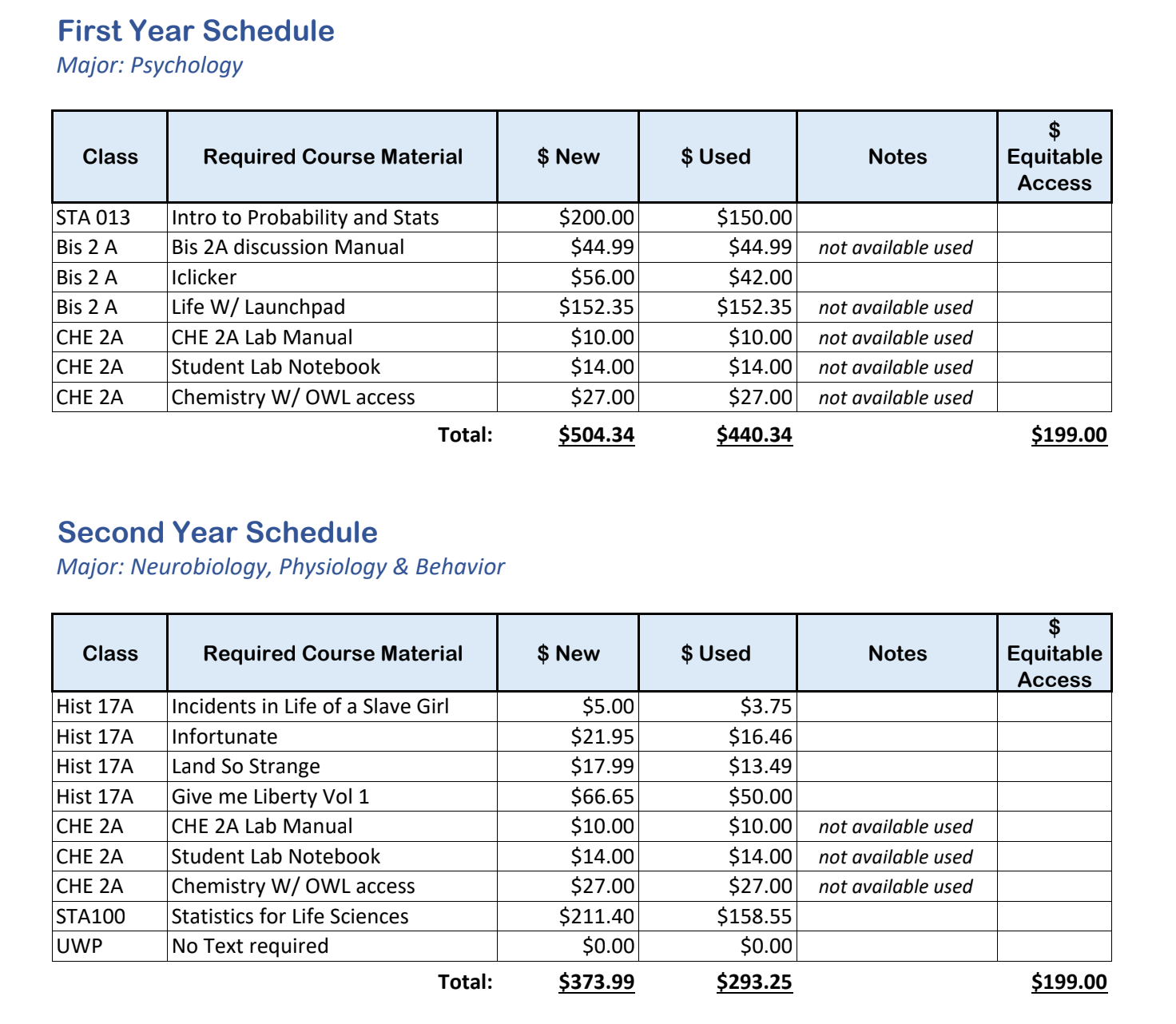
Still, Lorgan said that the cost of Equitable Access for many students may be far less than the price of new or even used textbooks.

Tables created by UC Davis Bookstore comparing the price of new and used textbooks with the flat rate of Equitable Access. 

A search on the UC Davis Textbook Marketplace Facebook group yields different results. The STA 013 book is listed for $5, the BIS 2A text for $50 and an Iclicker for $10. There was a lab notebook listed for $5. Without the BIS 2A discussion manual, the CHE 2A lab manual and the chemistry textbook with OWL access, this totals $70. 

“Anyone that tries will be able to get their materials for under $200 per quarter,” said Reddit user from_narnia. “Most of the time under $50 or even free. I’m a STEM major and the most I’ve had to pay is $30. This is only because the professor required us to buy ‘online access’ to do homework.”

Though all UC Davis students pay the same rate for tuition, fees, and health insurance, the prices for textbooks vary widely from major to major, with STEM students paying the most for their texts.

“Equitable Access will reduce this financial inequity so that every student has access to the same academic opportunities, regardless of the field in which they choose to study,” the Inclusive Access website reads.

“From our perspective, we’re adding an option that doesn’t exist today, but all of the options that students have used for hundreds of years are still there,” said Lorgan. “And so if you don’t like this, keep doing what you’re doing.” 

Written by: Jessica Baggott — campus@theaggie.org

The California Aggie follows zero-tolerance policy for sexual harassment, assault and abuse

The Editorial Board expresses dedication to safe environment for staffers, community

In light of recent allegations against a former employee of The California Aggie, the Editorial Board wants to express its commitment to fostering a safe and supportive environment, both inside and outside of the newsroom. We condemn all forms of inappropriate or nonconsensual sexual behavior, including unsolicited communication, coercion and assault. We cannot comment on the veracity of these claims, but we hope that this editorial will continue to facilitate this discussion and that we can share ways to teach and prevent the dangers of sexual assault and harassment.

As the newest set of leaders at The Aggie, we understand that it is our role to lead staffers in their work as student journalists. Our roles as student journalists have taught us the importance of listening to those willing to share their stories, and we respect those who contribute their experiences on a public platform for the betterment of the community. In our work to deliver well-researched articles, we strive to uncover any injustice we encounter and to never center the narratives of abusers. 

Furthermore, we understand the strength and bravery it takes to recount traumatic experiences and fight for justice. We never want to discount those individuals or their experiences. 

As a college publication, we understand the prevalence of sexual violence and harassment on college campuses. According to a report examining 33 of the nation’s major universities from the 2019 Campus Climate Survey on Sexual Assault and Misconduct prepared for the Association of American Universities, 41.8% of students reported experiencing sexual harassment in college. Reporters from The Aggie have written multiple articles diving deep into this topic, speaking to survivors and hearing their perspectives. While we cannot substantiate claims of assault in our publications, we can still provide a platform to speak about these issues.  

In our reporting, our role as journalists is to inform the public. We must follow journalistic ethics regardless of who wrote the piece or is featured in the publication and cannot justify removing content for any reason other than if it was factually inaccurate at the time of publication. Because once our content is up, it’s up to stay, the Editorial Board understands our great duty in educating our staffers. 

Due to these ethics we follow, we are using every resource that we can to encourage our employees to be thoughtful, accurate reporters, and also decent human beings. 

All paid employees of The Aggie have been required to complete trainings through the UC Learning Center including the UC Sexual Violence and Sexual Harassment Prevention Training for Non-Supervisors and the Clery Act Training for Campus Security Authorities. Under our new leadership, however, these trainings are a requirement for all staffers of The Aggie, regardless of whether their positions are paid or volunteer. 

While these courses require final assessments to check one’s learning, we know that one can only learn so much from online training. As leaders of The Aggie, we must lead by example and show sound behavior in our newsroom. 

While we cannot, of course, track all of our staffers’ actions in their personal lives, we ensure appropriate and professional behavior in our newsroom through a three-strikes policy, which reprimands decisions that do not align with our expectations as an organization. When it comes to more serious matters, The Aggie follows a zero-tolerance policy for sexual harassment, assault or abuse, as stated in our staff manual. There is no room for sexual misconduct at The Aggie. Sexual harassment that involves a staffer is a work matter even if it occurs outside of the office. 

We encourage our employees to reach out to senior staffers and members of managing staff with any concerns. In our near future, we plan to integrate an anonymous question and suggestion form into our newsroom, with the intent to increase transparency within our community.

The editor-in-chief of The Aggie is a responsible employee and must report all suspected or reported incidents of harassment, assault or abuse to Title IX and the Harassment & Discrimination Assistance and Prevention Program (HDAPP). If an individual wishes to file an anonymous complaint, they should seek other avenues such as HDAPP or the Center for Advocacy, Resources and Education. In the case of an accusation against any current staffer, The Aggie will consult with the Title IX office, and the staffer will be advised to immediately halt work at The Aggie until a conclusion has been made.

The Aggie never condones anything less than commendable behavior. In our reporting and in the actions of our personal lives, The Aggie works tirelessly to create a safe place where young journalists can grow, unhindered by the adverse impacts of assault and harassment. We are committed to preventing harm to our community, especially that which may be perpetrated by affiliates of The Aggie. Through our efforts to educate ourselves and our staffers, as well as our intolerance for any form of indecent or dangerous behavior, we work to create an environment where everyone feels safe to express discomfort.

UC Davis has the fifth most COVID-19 cases of all UC campuses

American universities lack standardized system to track COVID-19 cases

According to a recent survey conducted by The New York Times, more than 6,600 coronavirus cases have been found on college campuses nationwide. 

The survey included data from UC Davis, which currently has 47 cases, making it the fifth most heavily affected UC campus as of this week. 

By comparison, UC Berkeley has 123 cases, UCLA has 101 cases, UC Irvine has 77 cases, UC Riverside has 16 cases, UC Santa Cruz has 11 cases and UC Santa Barbara has 6 cases.

UC Davis has implemented an online process that allows employees, staff, and students to report confirmed cases of exposure to or diagnoses with COVID-19 in the university community. 

The site also includes a workflow outlining both medical and public relations responses to reports of the virus. The first step involves UC Davis Medical Center coordinating a plan with members of the Yolo County health department. Then, “affected areas” will be isolated “as needed,” guided by Student Health or Occupational Health. 

These two organizations will determine whether the aforementioned area has been sufficiently disinfected and whether the affected individual can return to campus. In turn, campus leadership is informed and the appropriate departments are notified. 

Certain campus communities are at a particularly high risk of catching COVID-19. There are more than 630 cases of coronavirus on 68 different campuses across 130 universities competing in Division-I football, for example. Clemson University currently has 47 cases of COVID-19 in the entirety of its Division-I athletic department, making its department the most heavily affected according to the survey. UC Berkeley’s Division-I athletic department currently has 3 cases.

The survey had only partial data from some colleges that weren’t tracking COVID-19 diagnoses, refused to disclose statistics due to privacy concerns or did not respond to inquiries. Of the universities that responded to the survey, the University of Texas Austin appears to be the most heavily affected, with 449 recorded cases. The publication of these statistics comes as universities decide whether to continue with online instruction or offer socially distanced in-person classes to students. 

UC Davis will be offering all Fall Quarter classes with greater than or equal to 50 attendees remotely, but will offer some in-person classes outdoors, according to a letter from UC Davis Provost Mary Croughan and Kristen Lagattuta sent to teaching faculty and staff on July 17. 

“When feasible, this in-person instruction will take place outdoors under tents, with necessary AV and audio equipment, physical distancing of six feet and all participants required to wear masks,” Croughan and Lagattuta wrote.

The information in the survey also remains incomplete because American college campuses lack a “standardized” system currently in place for monitoring the virus on American college campuses. According to the New York Times survey, information is not being publicly tracked at a national level.” At least 14 COVID-19 related deaths have happened at universities nationwide, the article asserted.

UC Davis updates its COVID-19 case data every Monday. 

Melissa Lutz-Blouin, UC Davis Director of News and Media Relations, said via email that the campus leadership will not be sending out weekly updates detailing current COVID-19 cases. When asked by The California Aggie to explain why, Lutz-Blouin did not comment. 

Written by: Rebecca Bihn-Wallace — campus@theaggie.org 

The race for 2024 is already on

The groundwork is being laid for an election that will determine the future of both major political parties — and America

In the world of politics, it’s never too early to start picking favorites.

While the 2024 presidential election seems ages away, the stage is already being set for the next generation of political figureheads to try their hands at landing the nation’s biggest role. And from a broader perspective, the ideological evolution of the American electorate and the political parties that represent it are rapidly changing what it means to be a Democrat or a Republican in the modern era. All things considered, it’s not a bad time to imagine just what lies ahead for American voters.

This is hardly the first piece to predict what our electoral options will look like in just under half a decade. Politico ran a very similar piece just a few months ago, while the Washington Post had some of its experts predict potential GOP candidates in 2024. Each presented a compelling set of choices, and was written based on the assumption that 2024 will not feature an incumbent president, a likely prospect given candidate Biden’s apparent desire to serve only a single term. While it’s still far too early to determine a final outcome, for the sake of entertainment this piece will do the same.

Now let’s take a look at who could be occupying 1600 Pennsylvania Avenue in the near future.

THE POPULISTS:

Ron DeSantis, Governor of Florida:

DeSantis, the former representative of Florida’s 6th congressional district, first burst onto the national scene during his 2018 gubernatorial campaign, promoting himself as a staunch Trump ideologue. Most notably, he broadcasted a commercial featuring him reading Trump’s 1987 magnum opus “The Art of the Deal” to one of his toddlers, followed by a scene with him constructing a toy border wall with his other. Harvard Law-educated DeSantis ended up securing a narrow electoral victory over progressive challenger Andrew Gillum, a former mayor of Tallahassee. Their election was both a close and a controversial one, with DeSantis winning by just over 33,000 votes after his opponent accused him of racist dog-whistling and pointed out alleged ties to the far-right.

DeSantis, like his fellow new age right-wing counterparts, has departed from the standard conservative playbook on a number of issues. Since taking office, he has embraced a degree of bipartisanship by moving to allocate additional funds to environmental protection, calling for the legalization of medical cannabis and posthumously pardoning the “Groveland Four,” a group of African American teenagers falsely accused of rape in 1949. 

DeSantis’s once sky-high polling numbers took a hit recently after he moved to quickly re-open Florida beaches, a decision broadcasted across the country as incompetent and premature. Despite a spike in cases shortly after, DeSantis experienced a bit of political redemption, as Florida’s death rate had remained largely stagnant. Now, even with a recent spike, Florida has just under 6,000 COVID-19 related deaths as of July 27, compared to just over 32,000 for New York. 

Commentators have since taken this as an opportunity to criticize the difference in media coverage between DeSantis and New York Gov. Andrew Cuomo, with Politico writing that the mostly New York-based national media apparatus “loves to love its Democratic governor, Andrew Cuomo, about as much as it loves to hate on Florida’s Republican Gov. Ron DeSantis.” Such a description plays into DeSantis’ ability to run as a political outsider in 2024. In recent weeks, however, Florida’s case numbers have spiked by the tens of thousands, bringing into question the governor’s prior decision making. With a mass increase in cases, as well as ongoing debates over Florida’s tracking methods, another test run for DeSantis’s political competency seems to be in the works.

Tom Cotton, U.S. senator from Arkansas:

It’s a bit of a misnomer to call Cotton a populist.

Cotton is among the latest Republicans on the scene to espouse heterodox conservative talking points about issues such as income inequality and immigration reform, but he has hardly shied away from intertwining with establishment figureheads. A Harvard graduate and U.S. Army veteran, Cotton has developed quick connections in the Beltway through stints at several law firms as well as a consulting gig at McKinsey & Company. He’s also formed a close relationship with Bill Kristol, the longtime neoconservative hawk who has re-emerged as a mediahead in recent years due to his unrelenting opposition to President Trump. 

Cotton has since given up law and rewarded Kristol by championing an interventionist foreign policy in Washington. He’s been a hardliner on Iran since taking office and is among the fiercest critics of China in D.C. The COVID-19 pandemic gave Cotton the opportunity to storm the forefront of national politics, where he’s since denounced the role of the Chinese government and recently proposed a bill barring student visas for certain Chinese nationals over fears of espionage. 

He also made headlines after publishing a controversial op-ed in the New York Times calling for domestic military deployment in major U.S. cities during the civil unrest provoked by the killing of George Floyd. Cotton’s piece created a flurry of arguments among Times staffers, with many claiming that the article endangered Black protestors and writers, eventually culminating in the resignation of the paper’s opinion editor. In the end, the Arkansas senator emerged victorious to his base, playing the nationally syndicated paper like a fiddle as he provoked both an internal and national debate on the status of speech among private news publications.

Raised by a set of Bill Clinton-voting Democratic parents, Cotton has routinely been touted in the media as the eventual heir to an ideology that’s been called “Trumpism without Trump.” And having grown up in rural Arkansas, it’s a natural fit. But where Trump made his name as a political outsider who criticized expansionist American foreign policy, Cotton has shown himself to be in line with conventional Republican thinking. Such a difference could harm him with dissident voters in the long run, but it’s likely that Cotton’s close establishment ties will let him rise to the front of Republican candidates should he decide to run in 2024.

Honorable mentions: Matt Gaetz (U.S. Representative – FL-01), Josh Hawley (U.S. senator from Missouri), Donald Trump Jr. (businessman).

THE ESTABLISHMENT:

Nikki Haley, former Ambassador to the United Nations and ex-Governor of South Carolina:

Just a handful of years ago, Nikki Haley looked like the future face of the Republican Party. Now things aren’t so clear.

As recently as February 2016, Haley, who was then in her sixth year as the governor of South Carolina, declared that then-candidate Trump was “everything a governor doesn’t want in a president.” But only some months later, she found herself working under the same figure she once loudly denounced. 

Haley is a living testimony to the difficulty of navigating conservative political circles in the Trump era. Despite a previous history of repudiating the president, Haley was quick to accept his offer of an ambassadorship position just several weeks after his election. After voluntarily stepping down in December 2018, Haley vied to stay politically relevant while walking a very fine line between denouncing the president and outright endorsing Trumpism.

But as is apparent to everyone, Trump has entirely rebranded the Republican Party. Despite initial opposition from the conservative intelligentsia, Trump now enjoys overwhelming support among Republican voters. Haley appears aware of this. After a period of relative silence following her resignation, she came out in support of the president’s character, describing him as “truthful” and stating she “never had any concern on whether he could handle the job ever.” As Peter Beinart noted in The Atlantic, Haley seems to be hedging her bets on a prediction that the post-Trump GOP will not be willing to renounce Trumpism nor further embrace it. 

Haley already appears far less willing to welcome the culture war and rural white identity politics inherent to Trumpism. She previously removed the confederate flag from the South Carolina statehouse after the Charleston massacre and is known for her opposition to the increasingly immigration-restrictionist platform of the Republican Party. Her potential candidacy could consequently be seen as a return to the friendlier, “compassionate conservatism” originally espoused by former President George W. Bush.

Haley certainly has a number of things working for her. Her previous stops at both the national and international level have thickened her resume and given her the image of a competent political figurehead. She’s also navigated South Carolina through a number of tense racial incidents, a skill that is especially relevant in today’s America. And as the daughter of Punjabi Sikh immigrants from India, she’s a woman of color in a party stereotyped as catering to the demands of white men.

While these attributes may potentially give her leeway in avoiding some of the usual labels applied to Republican candidates, Haley’s commitment to the GOP ideals of yesteryear puts her at odds with the increasingly influential tide of right-wing populism. Still, Haley’s extensive political experience and familiarity with Washington insiders could propel her to the top of a ticket come 2024.

Dan Crenshaw, U.S. representative, TX-02:

 It can be argued that the 36-year-old Crenshaw, a Harvard grad and former US Navy SEAL, is not necessarily a member of the Republican establishment. Crenshaw has only served in Congress for a little under two years and lacks the hereditary political background of many of his colleagues. In what Crenshaw lacks in accumulated power and prestige, however, he makes up in his rhetorical skills and political positions, which many see as a return to pre-Trump conservatism. The Texas congressman is far more hawkish on foreign policy than his populist counterparts, and generally avoids supporting the more paternalistic components of economic nationalism.

For such a young up-and-comer, Crenshaw has already made the rounds with a number of prominent media outlets. The Texas congressman, who sports an infamous and intimidating eye-patch due to an IED explosion in Afghanistan, certainly has a unique aesthetic to his politics. He made his first major impression on the national political airwaves after an appearance on “Saturday Night Live,” where Crenshaw lampooned comedian Pete Davidson after the latter controversially mocked him for losing “his eye in a war, or whatever” some weeks earlier. Later, Crenshaw made appearances on The View and Real Time with Bill Maher, proving he is willing to take his message to a national audience no matter the environment.

The articulate, clean-cut Crenshaw is certainly a strict departure from the more bombastic rhetoric of President Trump. And for financially interested Republicans, Crenshaw could represent a figurehead capable of winning back the swathes of wealthy suburban voters that have fled the GOP in recent years. That said, his commitment to an interventionist foreign policy and unwavering endorsement of free-market economics means that Crenshaw may not be the nation’s candidate of choice in a time of populist revolution.

Honorable mentions: Greg Abbot (Governor of Texas), Larry Hogan (Governor of Maryland), Mike Pompeo (Secretary of State).

THE WILDCARD:

Tucker Carlson, political commentator:

Perhaps the most important media figurehead in America, it is no secret that the Fox News host commands a special position in politics. With a frequent and direct line of contact with President Trump, Carlson already exerts enormous influence over the current administration. He was allegedly responsible for personally convincing Trump to avoid war with Iran, and more recently flew to Mar-a-Lago, where he persuaded the president to take the COVID-19 threat more seriously.

Carlson’s political evolution is indicative of the rapidly transforming nature of contemporary conservative ideology. Carlson himself, an heir to frozen food giant Swanson Enterprises, has abandoned the Libertarian beliefs of his youth and emerged as a major critic of the Republican Party’s commitment to free market economics. He’s called unregulated market capitalism an “economic system that weakens and destroys families” and has voiced his admiration for the economic policies of Senator Elizabeth Warren. In December 2019, he further broke from party lines, airing a scathing criticism of billionaire hedge fund manager and prominent GOP donor Paul Singer. He’s since gone after sitting Republicans during their appearances on his show, criticizing Georgia Senator Kelly Loeffler over accusations of insider trading and blasting Indiana Senator Mike Braun for supporting qualified immunity.

Criticisms of capitalism aside, Carlson’s real target is America’s culture war and he’s turned his weekly television slot into a nightly assault on political correctness and identity politics. He’s also made a number of controversial critiques on immigration, claiming that mass immigration robs Americans of their wealth and makes the country dirtier — comments that provoked heavy criticism. His law and order rhetoric in the aftermath of nation-wide civil unrest further divided the country’s opinion of the commentator, as Carlson’s show lost a slew of sponsors while simultaneously becoming the highest-rated program in cable news history.

Consequently, many critics labeled the fiery commentator a racist demagogue, with some on social media comparing Carlson to Father Coughlin, the anti-Semitic but labor rights-friendly Catholic priest who hosted an immensely popular radio show during the Great Depression. These accusations were further enhanced by recent revelations uncovering the bigoted online posting history of one of the show’s top writers. Meanwhile, others in political media have deemed him a “faux-populist,” pointing out the disarray between his own extensive wealth and connections and the “common man” image he plays on national TV. 

Carlson’s television popularity has granted him a degree of influence that rivals even the country’s most popular politicians, a development that has apparently garnered the attention of the Republican Party’s wealthiest donors. Carlson’s favorability with the increasingly working-class Republican base cannot be disregarded either. In response to rumors of a 2024 bid, Elaina Plott of the New York Times noted that she “[couldn’t] tell you how many GOP voters I’ve spoken to in [the] past six months or so who say Tucker Carlson is the only person in media who makes sense to them anymore.”

  So if 2016 proved anything, it’s that these pejorative labels might not hurt Carlson’s popularity enough to prevent him from ascending to the top of America’s political pyramid.

Honorable mentions: Michael Flynn (former National Security Advisor), Candace Owens (political commentator), Peter Thiel (venture capitalist/tech entrepreneur)*

*Eligibility dependent upon interpretation of natural-born-citizen clause

****

THE DEMOCRATS

THE PROGRESSIVES:

Alexandria Ocasio-Cortez, U.S. representative, NY-14:

Alexandria Ocasio-Cortez may be the most well known representative in America.

An icon of progressives and a thorn in the side of conservatives, the freshman congresswoman known best as AOC has risen to the top of media airwaves in the last two years. A member of the Democratic Socialists of America, the New York politician championed a progressive agenda from the day she set foot in Washington—advocating for universal healthcare, calling for the abolition of ICE, supporting free public college and perhaps most notably, proposing the Green New Deal.

Since coming to congress, AOC has served as a surrogate for the emerging democratic socialist movement. Alongside fellow congresswomen Ilhan Omar, Rashida Tlaib and Ayanna Pressley she’s become part of a collection colloquially known as “The Squad”. The group is often cited as an example of the new Democratic coalition, one significantly younger, more diverse and left-leaning than their peers and predecessors. A former bartender from the Bronx, AOC’s working class background is emblematic of the lack of upward mobility that has plagued her millennial generation. Despite graduating cum laude from Boston University in 2011, she “operated out of a paper grocery bag” during her 2018 campaign, according to a profile in Bon Appetit.

If Ocasio-Cortez were to pull off the seemingly impossible, and win the presidential election in 2024, she would just narrowly meet the age requirement necessary for the country’s top position. As of July 2020, AOC is still the youngest member of the House of Representatives — but she has accumulated a level of political clout that exceeds the vast majority of her peers. While future critics are likely to question her ability to bolster mass appeal in a national election, one thing remains certain: Alexandria Ocasio-Cortez is going to be a major player in American politics for decades to come.

Honorable mentions: Ro Khanna (U.S. representative – CA-17), Nina Turner (former Ohio state senator), Stacey Abrams (former Georgia gubernatorial candidate and state representative)

THE POLITICAL MACHINE:

Gavin Newsom, Governor of California:

Like Jerry Brown before him, Newsom looks like the next Democratic governor from California to take a shot at the presidency.

A fourth generation San Franciscan, Newsom became the youngest mayor of the Bay Area city in over a century after a run-off victory in the 2003 election. With the endorsement of national figures such as former President Bill Clinton and Jesse Jackson, Newsom succeeded his mentor Willie Brown as mayor of San Francisco, establishing the political connections necessary to eventually ascend to the governorship.

Despite initially running as a business-friendly centrist, it was his progressive politics as mayor that first garnered Newsom national attention. In 2004, he opted to allow San Francisco to issue marriage licenses to same-sex couples — a move that seems uncontroversial now, but at the time was in direct violation of state law and drew widespread condemnation from Democratic figures. Newsom’s political gamble a decade and a half ago appears to have since paid off, as he rode his popularity as mayor into a position as California’s lieutenant governor for eight years, before defeating Republican John Cox in a landslide victory for governor in 2018.

An idolizer of Bobby Kennedy, Newsom evokes some of the late RFK’s more admirable traits — the unique speaking style, the tranquil demeanor, the youthful energy that The New Yorker described as making the governor appear “still boyish at fifty-one.” He’s also established himself well inside California’s elite political class. The latest protege of Willie Brown, Newsom has found himself among the likes of Speaker of the House Nancy Pelosi and California senators Dianne Feinstein and Kamala Harris.

By progressively climbing the golden state’s social ladder, Governor Newsom appears to be angling himself for a future White House bid. He’s frequently cited as a potential presidential nominee, but the political striver still has a lot to prove. Will he be able to successfully implement his loftier gubernatorial goals, like universal state healthcare? And what about addressing his state’s other ills, which include skyrocketing housing prices and one of the highest rates of poverty in the country? If Newsom wants to follow in the footsteps of other former governors who made the move to the White House, his current job is the audition.

Andrew Cuomo, Governor of New York:

In April 2020, Andrew Cuomo looked like a shoo-in for the 2024 Democratic presidential nomination.

The New York governor, first elected in 2010, boasted a shockingly high job performance rating of 71%, according to a poll from New York-based Siena College. His daily press briefings, in which he discussed the state’s COVID-19 crisis in a calm and paternal manner, garnered national praise and attention. Weaving colorful anecdotes and clever humor into his narrative, Cuomo’s hearings were frequently cited as a stark contrast to Trump’s press conferences, which many perceived as combative and bewildering.

Cuomo’s moment in the sun was short lived, however. The lifelong New Yorker enjoyed several months of praise for his response to the state’s severe COVID-19 situation, but support for the governor gradually eroded as the death toll rapidly increased. Cuomo’s favorability was further diminished by his choice to move significant numbers of patients into nursing homes. According to analysis by ProPublica, the decision resulted in the deaths of over 6,000 elderly New Yorkers — or 6% of the state’s total nursing home population. By contrast, states which banned such movements saw significantly less deaths. Florida, for example, saw only a 1.7% death rate among its nursing home population.

Despite pushback from right-wing media, Cuomo has managed to emerge from New York’s coronavirus disaster relatively unscathed. In June 2020, some three-in-four New Yorkers approved of his handling of the situation. And New York, unlike other states such as Arizona and California, has not seen an additional spike in cases since flattening the curve.

Part of Cuomo’s success thus far is that he is a beneficiary of familial ties with the political and media establishments, both at the state and national level. The son of three-term New York governor Mario Cuomo, Andrew was born into political destiny. He first served as his father’s campaign manager before enjoying a policy advising role in the gubernatorial cabinet after a victory in 1982. Eventually climbing his way into the position of Secretary of Housing and Urban Development under President Clinton, Cuomo was poised to take over the reins of his father’s legacy.

Since doing so, his popularity has advanced thanks to his representation in the media. During the duration of the initial COVID-19 pandemic in New York, for example, Cuomo was routinely interviewed on CNN by his brother, Chris. These media segments featured a brotherly dynamic between the two, with incidents ranging from playful teasing about which son is their mother’s favorite to quibs about the size of the other’s nose. While the broadcasts rapidly became must-see-TV, they also raised concern from across the political spectrum over the ethics of family ties in journalism.

Nevertheless, Cuomo has established himself as one of the country’s more recognizable Democratic figures. And he’s proven an ability to ward off the influence of increasingly powerful progressives, some of whom have defeated established moderate Democrats in recent years. In 2018, Cuomo was able to soundly defeat a primary from the left by former actress Cynthia Nixon, despite the leftist national excitement for the latter. Ultimately, Cuomo appears to be a sort of Democratic analogue to Nikki Haley. Both figures’ ability to navigate Washington could prevent them from falling prey to an attack from populist outsiders. Whether or not 2024 will be still ripe for such a figurehead to take power remains to be seen.

Honorable mentions: Gretchen Whitmer (Governor of Michigan), Andy Beshear (Governor of Kentucky), Joe Kennedy III (U.S. representative – MA-04)

THE WILD CARD:

Oprah Winfrey, media mogul:

In 2000, an affluent, universally recognized television host with a highly loyal fanbase took to CNN to announce a presidential run. His name was Donald Trump.

Life was quite different back then, and Trump was in the process of running for the nomination of the Reform Party, a centrist third-party originally founded by 1992 presidential election spoiler Ross Perot. Running on a platform of fair trade, national debt reduction and single-payer healthcare, Trump named none other than Oprah Winfrey as his ideal running mate. Things didn’t work out and Trump pulled out of the race, but it wouldn’t be the last time that Oprah’s name appeared in politics.

The Mississippi-born talk show host is one of the most recognizable figureheads in American pop culture, and although her signature talk show is no longer on the air, she once commanded an audience of 42 million viewers a week. Oprah’s daytime talk show first ran in 1986, and by 2003 she became the world’s first Black female billionaire. She has since branched out to a number of different investments, including various charitable organizations as well as her own television channel. And she has no shortage of political clout either. By one metric, Oprah’s 2008 endorsement of President Barack Obama was enough to garner an additional one million votes for the then-presidential candidate.

Despite her status as America’s most famous family-friendly television host, Oprah Winfrey is still likely to face scrutiny should she hit the campaign trail. The rise of an increasingly powerful progressive left is likely to oppose any attempted run by a billionaire, harming her much in the way that they did Michael Bloomberg. Meanwhile, others are likely to take issue with what they see as Oprah’s controversial history of self-help and pseudoscience promotion. 

Nevertheless, Oprah has no shortage of followers and if 2016 proved anything, it’s that America is more than willing to elect a TV talking head president. Armed with wealth and charisma, Oprah might prove media figureheads in the White House are not a one time affair.

Honorable mentions: Dwayne “The Rock” Johnson (actor and former professional wrestler), Mark Cuban (entrepreneur and owner of the Dallas Mavericks) 

****

Even with a heavy dose of analysis, it’s still difficult to make any definitive choices over who to expect in 2024. The crowded fields in the 2016 Republican and 2020 Democratic primaries are evidence that the next presidential election cycle is likely to field a diverse array of establishment veterans and political newcomers. Nobody in early 2016 would’ve guessed that Donald J. Trump would be the Republican nominee, let alone the 45th president of the United States. It’s likely that looking back on this article in 2024 will elicit the same reaction about someone else.

For all we know, January 2025 could mark the inauguration of President Kanye West.

Written by: Brandon Jetter — brjetter@ucdavis.edu

Disclaimer: The views and opinions expressed by individual columnists belong to the columnists alone and do not necessarily indicate the views and opinions held by The California Aggie

Michael V. Drake named first Black president of the University of California

Drake’s base salary to be 56% higher than current President Janet Napolitano’s, coming in at $890,000

Dr. Michael V. Drake, the current president of Ohio State University (OSU), was unanimously appointed by the UC Regents as the next president of the UC system on July 7. He will be the first Black president — and president of color — in the university system’s history.  

The appointment concluded the Regents’ search committee’s six-month search, headed by Regents Gareth Elliott and Sherry Lansing. Outgoing UC President Janet Napolitano announced her intention to step down last September.

“Dr. Drake becoming the president of the University of California is a sign that good things are still possible this year,” said John A. Pérez, chair of the Board of Regents. “He has demonstrated a commitment to […] seeing all students and understands the importance of the public and private partnerships the university uses to effect [its] mission.” 

During public comment — before Drake was appointed —  speakers laid out what they believed should be the priorities for the incoming UC president. UC Berkeley fourth-year Sarah Bancroft called for the incoming president to divest from the involvement in the thirty-meter telescope on Mauna Kea

“UC students do not want our money to fund the destruction of indigenous land,” Bancroft said. “We need that money for a cost of living adjustment, lecturers and instructional programs, not a telescope.”

She also urged the Board of Regents to sue the Trump administration for the ICE memo that was released on July 6, which would force all international students whose course loads only included online classes to either transfer to a university with in-person classes or go back to their home country.

Perez responded to that call by saying that the appointment of the president did not allow the board to find an appropriate solution, but that the Regents would discuss it at a full board meeting later in July.

Drake, who is turning 70 in the fall, has a history with UC, unlike Napolitano. Drake is a graduate of UC San Francisco with a M.D. in ophthalmology. From 2000 to 2005, he served as the UC vice chancellor for health affairs, then proceeded to serve as the chancellor of UC Irvine from 2005 to 2014. Napolitano, on the other hand, previously served as the Secretary of Homeland Security under President Barack Obama and was the governor of Arizona.

With a base salary of $890,000 a year, Drake’s salary is significantly higher than Napoilitano’s, whose base salary was $570,000 per year — this amounts to a 56% increase above Napolitano’s base pay. That’s also a salary increase from what he made at OSU, where he was paid a base salary of $856,000 according to 2018 data

This salary increase also comes after all UC chancellors and Napolitano took a voluntary 10% pay cut in the wake of a $1.2 billion budget shortfall due to the COVID-19 pandemic.

Drake will handle finding a new replacement test for the SAT/ACT as well as the budget cuts UC may be facing without aid from the federal government. 

Still, he said that he was looking forward to working with UC and returning to the system after having worked outside it for the past 6 years. 

“The experience feels like being home for so many years, then leaving and then coming back,” he said. 

Drake assumes the role of UC President on Aug. 1.

Written by: Janelle Marie Salanga — campus@theaggie.org 

UC Davis clinicians and engineers collaborate to develop low-cost portable ventilator

 Ventilator created with goal of 80% functionality for 10% of cost compared to commercially available device

In response to the national shortage of ventilators across the country, UC Davis biomedical engineers and clinicians have collaboratively developed an automated low-cost portable ventilator. The device has been named AmbuBox and is on track to becoming publicly available in the near future following urgent authorization from the FDA. 

The AmbuBox is expected to cost between $100 and $500, according to engineers and developers involved in the ongoing project. This contrasts greatly with commercially available ventilators, which can cost upward of $50,000 in some cases. 

The AmbuBox design was originally developed by clinicians and engineers at MiNI Lab, which is directed by Dr. Tingrui Pan, a professor within the Department of Biomedical Engineering. His lab is particularly interested in exploring interdisciplinary links between nanoengineering, biomedicine, and related fields. 

“The idea was first Dr. Pan’s idea,” said Dr. Andrew Li from the Department of Surgery at UC Davis Medical Center. “Whether it’s pumps or converting small volumes of liquid from one area to another, that’s kind of [MiNI Lab’s] specialty — they’re very interested in the flow of liquids and gases, and this was the perfect application.”

After learning early on that there could be a potential shortage of ventilators due to the pandemic, Pan started leading work on easing this issue.  

“During the pandemic, I was working with my collaborator in the Medical Center and they told us that there could be a potential shortfall on the ventilator, and so we started working on it,” Pan said. “The goal is not to create a new category of ventilator [but rather] to make a simpler ventilator design that can be quickly manufactured.”

There are many commercially available ventilators that are equipped with advanced technology in order to improve the user experience, according to Pan. These ventilators are furnished with advanced interfaces and various breath delivery settings, which significantly raise the price of the device but do not provide a significantly greater degree of care to the patient. 

“[The traditional ventilator] consists of thousands of components that you have to order, not only from the US but [also] globally,” Pan said. “If there’s any glitch in the supply chain, you might not get a ventilator in a short time frame.” 

With this challenge in mind, Pan’s lab emphasized a minimal amount of working parts when they were considering various designs for the AmbuBox. Some inspiration for the project came from AmbuBag, an existing manual ventilator which requires a nurse or doctor to squeeze air into the bag to allow for ventilation. 

“[AmbuBox] is a very simple design with no major moving parts,” Li said. “This is in contrast with a traditional ventilator that often has many, many moving parts, and on top of that, sometimes very elaborate electronics. [AmbuBox] is more meant to be a low cost, reliable, durable, hopefully less power-consuming device with the same basic features that would help sustain someone’s respiratory system.”

The AmbuBox has been designed to include an automated compression mechanism for the airbag, making it so that a doctor or nurse is not needed to operate this ventilator. The device is designed to utilize existing compressed air from a medical center, for example.

“Our prototype will be very inexpensive, it will [use] less power,” Li said. “The machine really will drive a breath into a patient with the use of compressed air. Compressed air is relatively easy to obtain versus battery power. The only thing that’s really battery controlled are the pressure sensors and also the solenoid valve that controls the flow of compressed air into the chamber.”

In addition to the changes in power utilization made possible by AmbuBox’s design, developers of the prototype also hope to utilize existing mobile compressed air for the ventilator system. 

“What we also would like to consider is medical transport, whether it’s via ambulance or medical airplane or air transport,” Li said. “All of those vehicles and aircraft have compressed air on board.”

Before the design can be finalized and sent to the FDA for approval, extensive testing must be conducted on the AmbuBox. This is already in progress and involves the use of various test lungs, which are devices designed to mimic the human lung. 

“[The test lung is] essentially a balloon that’s supposed to mimic the elasticity and compliance of lung tissue,” Li said. “The [human] lungs are made up of [somewhere in the order of] thousands of little balloons called alveoli. But unlike a standard balloon, the lungs have a very low surface tension, so it’s very easy to inflate them.” 

Due to the delicate nature of alveoli, Li agrees that it is very easy to over inflate the lung tissue in a select number of COVID patients. This over inflation, called barotrauma, is thus a danger that engineers must factor into the design of AmbuBox. Despite the challenges of developing this ventilator, engineers and clinicians are hopeful the device will prove successful once testing has been concluded. 

“Preliminary data looks very good,” Li said. “We’ll be planning definitive testing on a much larger test lung piece of equipment in the respiratory therapy area of the Medical Center.”

Written by: Dina Gallacher — science@theaggie.org

What characters girls should play as in Super Smash Bros. Ultimate

For all the gamer girls out there

Super Smash Bros. Ultimate is a multiplayer crossover fighting game. It takes popular characters from franchises and lets the player battle them. The series has existed for almost two decades and is now the second best selling Nintendo Switch game. My initial experiences with the game, like so many others’, was difficult. The world of Smash is incredibly male-dominated. The game is associated with large, in person tournaments where majority if not all of the competitors are men. The tournament circuit is bad, but online is even worse. It is a vast tundra of misogyny. Non-male beginner Smash players seeking help online will often be met with violent backlash.

I bought the game last year excited to try it out (like any girl I wanted to make Princess Peach fight Ganondorf). The rules of the game are not hard to pick up on; after a few rounds you understand the mechanics. The difficult part came as a result of male players heavily gatekeeping the game. There are many unwritten, very stupid rules you must follow to be taken seriously: which characters are acceptable to play and which moves are acceptable to use and what setting you should have your game on. I personally do not care because I am very bad at the game and only care about fun, but their toxic mindset makes it impossible for non-male players to succeed in any type of non-recreational setting.

Everyone has a different preference, but there are a few characters I was introduced to that are often ignored because of various flaws men made up. My first recommendation would be Kirby, the title character from the games that share his name. He’s recognizable for his spherical pink body and big red feet. The controls are simple and great for a beginner. He is light and can jump many times, a valuable asset for new players who have difficulty remaining on the stage. He is hated because he is cute and fun.

Bayonetta is another good choice for beginner girl smashers. She begins her fights with “let’s dance boy” and has guns on her feet. She is a witch who can turn into a butterfly. Also she wears glasses which I feel like is really important for representation. Her character illustrates a common phenomenon I have seen when introducing friends to Smash — hot girls gravitate to hot girls (also seen in Zero Suit Samus, Palutena and Zelda). Many female players initially choose women as their avatars. It is made more apparent when looking at the slim number of female fighters compared to the majority male fighters available. Bayonetta is violently hated by “serious” Smash players because of how powerful she is. 

Girl Pokemon Trainer is one of my favorites. The character is originally male Pokemon Trainer, but each fighter comes with multiple skin options. While some alter just the colors, Pokemon Trainer gives you the option to change the look of the whole character. Girl Pokemon Trainer deploys three Pokemon, Charizard, Ivysaur and Squirtle, as her fighters in battle. She is cool because she just stands on the side as the pokemon do the fighting #girlboss. The character is cute and easy to use and offers fun customization.

Being a non-male player in any game is difficult. What is most important is finding the character you mold to best, and finding a group of girl smashers to play with. Together we can foster a new culture around not taking games so seriously. If you don’t want to use a rocket launcher to catapult Yoshi off screen, why are you even playing? Go girl gamers!

Written by: Livvy Mullen – arts@theaggie.org

For all the gamer girls out there

COVID-19 is a reminder that public libraries are still important

The world may be moving online, but public libraries remain invaluable

I first fell in love with public libraries before I could even spell the word “library.” As a kid, I went to the library every weekend and stuffed my backpack with Harry Potter books or the works of Roald Dahl, hoping to learn how to fly a Nimbus 2000 or save the world from the Grand High Witch. It was where I discovered my passion for reading, learning and community. 

The impacts of COVID-19 are far-reaching and extend to public libraries. Public libraries are more than just buildings with books to loan. They provide services from tutoring and tax prep to arts and crafts classes. But most importantly, they are a public space for anyone and everyone to enjoy. Public libraries are our spaces. From the large, ornate buildings of the New York Public Library to smaller, rural libraries, all libraries provide a unique environment for community and collaboration.

Like the vast majority of schools, shops and restaurants in the country, public libraries have had to close their doors in response to the pandemic. On March 12, the Library of Congress became one of the first to close buildings and facilities to the public. Soon after, almost all libraries in the country announced temporary closures. 

Libraries are inherently social spots in almost all communities. They thrive on human interactions, which is why keeping them open during a pandemic is so difficult.

“Part of the reason why libraries aren’t open yet, generally, is that so much of our work doesn’t lend itself to physical distancing,” said Cindy Chadwick, the county librarian for the Alameda County Library (ACL) system.

Learning how to navigate health and safety standards in an institution that functions on sharing materials and providing a venue for social collaboration is hard.

On March 15, the AC Library closed all 10 of its buildings to the public. Since then, a “skeleton crew” of library workers have been coming into the building to work on a myriad of tasks such as paying bills, getting invoices and making deliveries. The buildings are being cleaned out daily as staff comes into work for about four hours a day.

Like so many other libraries, the AC Library is trying to ensure that patrons still hear from and remain connected to the library. It launched “Ask Us,” a live chat room for people to reach out with their questions and concerns.

“Right away, we were responding to questions from the public by having certain online presence every day, Monday through Saturday,” said Blaine Wentworth, the acting library manager and teen services librarian at the AC Library’s Union City branch.

The biggest concern for libraries now is how to operate in a safe and healthy manner for the public and the library staff. With the current stay-at-home orders in California, libraries are seeing an increase in use of electronic resources like eBooks, eAudiobooks and other streaming contents through services such as OverDrive and Libby. In just one month, Alameda County Library saw a 63% increase in usership of OverDrive, a platform for borrowing digital content. This trend isn’t limited to the AC Library system — similarly, the San Francisco Public Library system is seeing a significant change in their e-resource usership.

“[It’s] been a period in which people have taken full advantage of services that they had used before or fallen in love with new e-resources,” said Jaime Wong, the public relations officer at San Francisco Public Library (SFPL).

Many librarians and advocates have been pushing for an increased digital presence in public libraries since the emergence of COVID-19. For Anthony Marx, the president of the New York Public Library (NYPL) — the second largest library system in the U.S. — a strong digital presence is key to ensuring that libraries uphold their commitment to serving the public. For example, the NYPL, along with other libraries such as Alameda County, partnered with Brainfuse to offer free, one-on-one online tutoring for elementary to high school children. These libraries also subscribed and increased access to databases and other important information sources.

“My guess is the world isn’t going to be the same after this,” Marx said in an interview with Yahoo Finance’s Andy Serwer. “People are going to get used to doing things online. People are going to get used to […] meeting online. It’s not going to be the same when this is done.”

Many libraries have moved a great deal of their normal operations online due to the shutdown. SFPL has been working on a 24/7 virtual library, which is now open. It offers services like eBooks, audiobooks, one-on-one tutoring, resume-building workshops and, my personal favorite, Sweet Stories, a virtual storytime led by librarians and occasionally familiar faces like Mayor London Breed

For librarians across the country, now is the time to make long-term, fundamental changes to library operations. Digitizing operations means greater access to library content for those who can’t make it to the building but could otherwise engage with resources from the comfort of their home. With so much information and so many resources available at the ready, an online library is an exciting feat. 

“People have definitely been using more of our electronic resources,” Wentworth said. “I’m hoping that we’ll see the same things with the virtual programs as we offer more.”

But as exciting and progressive as this move to online platforms sounds, there’s an extreme risk in creating a future for public libraries that largely operates online. This is a risk that Marx recognizes in his opinion piece in The New York Times, and one that many librarians are all too aware of.

On May 20, the AC Library began a No Contact Pickup Service at its Fremont, Castro Valley and San Leandro branches. Library members can place a hold on books and other materials either online, by phone or in-person at one of the three sites. Patrons then come to the library and pick up their items at a table outside. The entire process requires no contact between library staff and members.

Making digital what was once physically accessible is not a comprehensive solution to servicing libraries’ communities. Although e-readers and other e-resources are gaining popularity on their own, they aren’t enough to fulfill the needs of all patrons.

“Our emergency in opening up the library door, at least the pick up service, is that those online resources just aren’t reaching everybody,” Chadwick said. “The digital divide is real and is getting bigger, and there are many folks who don’t have either computers or reliable internet to connect to our catalog and online resources.”

The digital divide exists throughout the U.S. but is especially pronounced in rural areas and has been exacerbated by the pandemic. It refers to inequitable access to digital resources: access that is often linked to one’s socioeconomic status.

“When schools are closed and libraries are closed and schools expect students to learn online — it’s a problem,” said Jennifer Pearson, the president of the Association for Rural and Small Libraries and director of the Marshall County Memorial Library, via email. “It’s a problem for students who can’t afford internet at home. It’s a problem for students who CAN afford internet at home but don’t have access to a service that is reliable.”

Many libraries have been working on solutions to the digital divide for some time now. In 2016, the Seattle Public Library, with funding from Google and the city, launched a program offering 50 WiFi hotspots for two to three months at a time using a library card. But solutions can’t be confined to just geographical concerns. The digital divide greatly impacts minority and low-income individuals. Now that so much of teaching, learning and business operations have moved online, the digital divide has only become more pronounced. Even closed, public libraries can, and are, helping with the problem of internet access in meaningful ways.

“What libraries can do, and many are trying to do, is to help by extending wifi so that it can be used in a bigger range outside the building,” Pearson said via email. “We are also purchasing more wifi hotspots and tablets for circulation.”

Libraries are important public institutions in economic downturns, like the recession we’re currently in. A 2010 report from the American Library Association (ALA) found that during the Great Recession, library usership increased significantly. Libraries offer critical assistance to those seeking employment, like resume-building and job seeking workshops, and help patrons complete online job applications and provide them with e-resources. But a recession can also spell financial trouble for libraries at a time when they are most needed. 

“At this point, this is the dilemma we face — libraries are being more heavily used than ever,” said Keith Michael Fiels, the former Executive Director of the ALA, according to an ALA report. “At the same time, library budgets are more threatened than ever.” 

This is partly what makes witnessing public library closures across the country so incredibly difficult. Libraries are open spaces for all members of the public to access the resources and help that they need.

“Rural areas are less likely to have strong social service networks,” Pearson said via email. “The library is often the only place that provides services to the socio-economically challenged of the community.”

The CARES Act allocated $50 million to the Institute of Museum and Library Services. This money is being used to preserve library jobs and operations and to prepare for the changes associated with COVID-19. But each library’s financial situation is different. The Alameda County Library system receives funding primarily through the county, most of which comes from property tax revenue and isn’t as severely impacted as other sources of state funding during an economic downturn. But in other library systems, the pandemic has induced staff layoffs and budget cuts

Libraries are very active and dynamic community centers, even during a pandemic. At the SFPL, library buildings were initially used as childcare centers for children of essential workers. The SFPL also has library staff working as disaster service workers. Some staffers are working with the San Francisco-Marin Food Bank or taking on other essential duties as contact tracers and site moniters at hotels. At Alameda County, about 10 to 15 staff members have been deployed as disaster service workers.

 “Some of our folks have been doing phone banking for the Census to get folks to take the Census,” Chadwick said. “Some folks have worked for homeless shelters and emergency shelters that have been set up for folks who are facing homelessness and may or may not be showing COVID symptoms.”

Then there are specific projects that libraries are working on in order to directly help out their communities. For example, the Fremont branch of AC Library is using 3D printers to make mask extenders. Alameda County is working on potentially making hygiene kits to distribute at the library for anyone who needs them. Before the pandemic, such hygiene kits were first being distributed at AC Library to assist those experiencing homelessness.

“One of the things that I’ve loved about the library in particular is that we can supplement needs that the community is lacking,” Wentworth said. “We don’t have a curriculum we have to abide by. We just need a need in the community and we try to partner to help in any way we can.”

Although public libraries are closed, they remain an important community center for information and resources. Every time there is a county update, the Alameda County Library receives more “Ask Us” questions about what is going on.

“It’s good to see that the public knows to think of the library as a place to get the answers about the status of the information they’re seeking,” Wentworth said.

  At SFPL, patrons are calling in to ask a number of questions on library operations to independent research, or even as a central source for general information.

“There are folks who are calling in to find out about where I can find my local bike repair shop,” Wong said. “If they don’t have the Internet, there are no phone books out there anymore, how do you find out that information? Folks actually have been calling in the library and getting that information.”

This is the first summer in which I won’t get to spend my time at my local library, which is sad but necessary to help slow the spread of COVID-19. Some libraries have already opened with strict guidelines in consideration of health and safety. Many libraries like Alameda County and San Francisco Public are determining how to best reopen at an appropriate time with appropriate health and safety measures. 

“I think having the PPE, personal protective equipment, having face masks, having hand sanitizer, all of that will definitely happen,” Chadwick said. 

It’s been a difficult few months, but libraries are doing their best to overcome an unfathomable situation. Yet it’s uplifting to see how libraries across the country are working to serve and fulfill their commitment to their communities. People are connecting to and relying on libraries in ways they never did before. Libraries have been essential to local communities in the past, and the pandemic has only proved their importance. 

Libraries provide books, but they also offer job workshops, child developmental resources, tutoring programs and, in times like this, 3D-printed mask extenders, hygiene kits and answers to basic questions from the community, like where to find the local bike shop. 

“Libraries are doing our best,” Pearson said via email. “We are concerned for the health and well-being of our patrons, many of whom are also our friends in small communities. We are working toward the best solution for everyone. Just be patient with us as we get to those solutions.”

Written by: Simran Kalkat — skkalkat@ucdavis.edu 


Guest: Why more and more citizens take to the streets to protest

And the numbers keep growing

Eight minutes and 46 seconds — the length of time Minneapolis police officer Derek Chauvin knelt on the right side of George Floyd’s neck.

18 hours — the length of time it took for residents to mobilize in the streets of Minneapolis.

Within days, citizens from California to New Zealand were protesting in solidarity with Minneapolis residents, calling for criminal action against the officers involved in the death of George Floyd and in support of the larger Black Lives Matter movement. 

The purpose of this piece is neither to condone nor condemn specific actions taken by the officers involved in the death of George Floyd or the actions of those protesting, but to explain why more and more citizens are taking to the streets to protest every day.

The main issue unraveling in Minneapolis is not the demand that the officers involved in the death of George Floyd be punished. If it were, then public protests would have ceased after Derek Chauvin and the three additional officers involved in Floyd’s death were charged. But even after the officers were charged, more citizens have taken to the streets every day to rally for justice for George Floyd and the end of racial injustice. 

What caused such an engulfed public response? What makes the Minneapolis protests so different from previous protests that followed incidents of police brutality? 

Many factors have contributed to the recent public response. Americans have grown frustrated staying at home under shelter-in-place orders brought on by the COVID-19 pandemic. They are suffering emotionally from limited physical connections and financially from a lack of government support. Though some Americans have received stimulus funding from the federal government, many have yet to receive their checks, and the amount allocated per household — $1,200 per adult, with $500 added per dependent child — is insufficient to cover a month’s worth of expenses, let alone the more than three months that the shelter-in-place orders have lasted. From January to April of this year, unemployment rates rose by 11.2% as more than 20 million Americans filed for unemployment, surpassing figures from the Great Depression. 

As a result, a growing number of citizens now realize how little the president and other political leaders value their lives and living conditions. In response, individuals have banded together to advocate and achieve change for themselves. 

These factors, combined with the killing of Breonna Taylor and the video recordings of the deaths of Rayshard Brooks, George Floyd, Ahmaud Arbery and Elijah McClain, brought up racial injustices that society has tried to ignore or deny. The attention brought to these murders sparked a discussion in which citizens of varying race and socioeconomic standing from different parts of the U.S. — and even the world —  have united to take part in. 

The demand for action is a response to the question: Can we allow ourselves to willingly prolong racial prejudices? This question, which festered when individuals eluded punishment because of a broken justice system and their positions of authority, is finally being addressed in order for society to advance in favor of all its citizens. 

Seeing no signs of change in the face of racial inequality, frustrated individuals have searched for ways to regain their stolen breaths and filched voices. This undertaking is made more difficult by the actions of individuals only interested in looting, causing property damage and making the protests about financial gain instead of racial injustice. Looting dilutes the meaning of the protest and distracts from the demands for change in the face of rampant racial inequality.

During protests against police violence, police officers have used excessive force against non-threatening protesters. In one viral incident involving excessive force, a 75-year-old man was rushed to the hospital for a concussion and cranial bleeding that resulted after Buffalo police officers violently shoved him

At the end of the day, racial divisions can only be altered through a unified endeavor for change that comes when communities previously dehumanized by white America are given back their humanity. Though racial disparities are lessening — for example, Ferguson, Mo., recently elected its first Black mayor, Ella Jones — the rate at which it is occurring is not fast enough. Swift action is needed to correct century-long injustices. 

The protests are an important catalyst for swift change. Within only 10 days of protests, Derek Chauvin, who otherwise would not have been held accountable, had his murder charge increased from third-degree to second-degree murder. 

Additionally, the other three officers involved in George Floyd’s death were charged with second-degree manslaughter and aiding and abetting second-degree murder. The protests have also led to increased calls for police accountability, with positive progress already being made. The city of Minneapolis plans to ban police chokeholds and California Gov. Gavin Newsom vowed to collaborate with the California Legislative Black Caucus, various community leaders, and law enforcement to develop new standards regarding appropriate use of force by police officers. On June 25, 2020, the United States House of Representatives passed the George Floyd Justice in Policing Act by a margin of 236 yeas to 181 nays which, among other things, ends “qualified immunity” for police officers, ends racial and religious profiling at the federal, state, and local levels, and bans chokeholds and “no-knock” warrants. The comprehensive bill has been sent to the Senate for consideration. 

Achieving racial equality is no small feat — America’s long history of racism proves that. But we certainly won’t overcome racial inequality until we engage in difficult, necessary conversations about race and prejudice. And until that goal is met, people will continue to protest and march for freedom.

Written by: Karura Njoroge 

Karura is a photographer for The Aggie and a second-year undergraduate majoring in environmental science and management.