54.1 F
Davis

Davis, California

Tuesday, December 23, 2025
Home Blog Page 363

Nytch Inc. helps local businesses beat out large online stores

New app connects shoppers with desired products at local businesses in Yolo County

Born and raised in Woodland, Grant Lea saw a problem in his local community, one that is also reflected in the rest of the world: Local businesses, offering unique merchandise and personal interactions, struggle to survive against major online retailers, like Amazon. Due to the high cost and logistics involved, these small businesses cannot sustain websites, but Lea saw a fix to this problem. 

In July 2019, with the help of fellow Yolo County native, Chase Kellison, Lea founded Nytch Inc. in Woodland and subsequently launched an app. Nytch, the app, connects small businesses’ offline inventory and expertise with shoppers in Yolo County. Already, 60 restaurants, retail stores and other local shops are registered on the app. The app’s current customer base reaches around 1,000 users, with ages ranging from 18 to 70+. Kellison is the company’s chief operating officer and Lea is the chief executive officer. 

“These small businesses are being beaten up by large online retailers and it’s difficult for them to compete because they can’t function at the same level that these giants can,” Kellison said.

The app is available on iPhones and Androids and can be downloaded on the Apple App Store or Google Play. Interested customers can also visit www.nytch.me

To use the app, a customer submits a request of what they want to purchase. They can include a description, pictures, the size and the color of what they desire. Any business registered through Nytch can respond to the customer with what they have to offer that is similar to the request. Businesses can send their price and pictures of the recommended product. If customers like the product, they can purchase it through the app or put the item on hold and then pick it up. Currently, no delivery service is offered, but they are working on it, Kellison said. 

“It is one point of access to 60 businesses,” Lea said. “We describe ourselves as a platform that connects communities to the unconnected.”

Customers should use Nytch because it supports local businesses, is environmentally sustainable and is the easiest way to find desired products, Lea said. 

“We’ve created the pathway for shoppers to connect with businesses in their communities in a way no other platform has before,” Kellison said. “There are no other apps like Nytch nor other apps that can do what we do. We’re one of a kind.” 

Shopping locally can benefit customers because they get to receive expert knowledge from store workers, which is lacking in online shopping, Lea said. These knowledgeable workers can connect customers to the right products without a single phone call or Google search.

“The businesses that you shop in offer more than just their inventory,” Lea said. “They offer customer service, knowledge and good experience. They know how to solve problems that their customers have, which you cannot do online.”

Noemi Gregorio, a third-year communication major and intern for Nytch, helps the company manage its social media presence and reach out to new businesses. As a shopper herself, Gregorio was drawn to Nytch as a new way to find clothes from local businesses. 

“I am always thinking of different outfits in my head,” Gregorio said. “I can just think of something, google it and send in the request to local businesses. I like it because I don’t have to go out to a bunch of different stores to look for one thing.”

Gregorio also appreciates the ability to shop locally while still having the convenience of online shopping. By shopping at small businesses, the money stays local and Davis community members invest in their city.

“What is Amazon going to give back to the people of Davis?” Gregorio asked. 

So far, Kellison said mostly older individuals use Nytch, but the company hopes to expand its user base to a younger audience. Kellison thinks that students would really enjoy the shopping convenience the app provides.

For UC Davis students, using Nytch can benefit the town that supports their university. A thriving downtown makes UC Davis a more desirable university to attend. Nytch allows for students to explore the businesses around them, Lea said. 

“When you are applying to UC Davis, we couldn’t boast about any of the stores or businesses downtown if they weren’t there,” Lea said. “We can talk about the unique shops, farmers markets and businesses that make these towns special places.”

Nytch originally launched its platform only in Yolo County because of the strong community emphasis the county has and the connections both Lea and Grant have from growing up there. 

“Both [Lea] and I thought the communities would really appreciate something like this,” Kellison said. “It’s a really special city and county to live in because it’s so community-centered.”

To recruit new businesses for the app, Lea and Kellison originally went door-to-door to businesses and spread the idea through word of mouth. 

“The businesses like what they hear,” Lea said. “It connects them to their communities in ways that they aren’t.”

The SPCA Yolo County Thrift Store joined Nytch to help them reach a wider customer base, said store manager Darci Soiu via email. After connecting with Nytch, they have received many new, regular customers from other towns. 

“We appreciate the wide variety of people [the app] reaches and the advertisement this company gives us,” Soiu said. 

Another business, Shu Shu’s LLC, has grown through Nytch. Via email, owner Shu Shu Hanjani said it helps her focus on customer relationships instead of other issues. 

“It really helped me avoid all the stress […] of figuring out what to put online, how to put it online, and everything else that goes with that,” Hanjani said. 

In the future, Nytch wants to expand its range beyond Yolo County. As of now, however, Nytch wants to focus its efforts on providing the best results for customers and businesses in this smaller region, Lea said. 

“We want to deliver on expectations,” Lea said. “We are delivering on what our people expect and once we do that, we will focus on how to save other local businesses across the country.”

Currently, businesses get to use Nytch for free with no strings attached, Kellison said. This stems from founders’ love of the Yolo County community. Once Nytch launches elsewhere, the company will charge a 10% fee on each sale made, however, companies in Davis and Woodland will never have to pay this fee. As the home county Nytch stems from, Yolo County businesses will always be able to use the app for free. 

Through Nytch, Lea hopes that small businesses in Yolo County and beyond can survive and thrive while up against large online companies. 

“Nytch makes it possible for small businesses to actually compete,” Lea said. 

Written by: Margo Rosenbaum — science@theaggie.org 

Aggie baseball looking for the next step forward

0

Questions abound for UC Davis in 2020 season

The UC Davis baseball team is embarking on another long season in the Big West Conference with the hope of taking a step forward after a fifth-place finish last year. Although the Aggies ended with a 19-31 record, the team made some very positive strides and held its own against top competition. 

Against a pair of traditional Big West powerhouses, UC Davis swept Long Beach State at home and went on the road to take a series from Cal State Fullerton. Additionally, the Aggies took down Stanford, a team that advanced to the NCAA Super Regionals, on their home field early in the season. 

“These are all things that are steps forward for us as a program, but when you look at the ultimate measure, which is that record at the end of the year, we’ve still got work to do,” said Head Coach Matt Vaughn.

It is no secret the program has struggled to win games on a consistent basis since moving up to the Division I level in 2008. After a run to the NCAA Tournament in that inaugural season, the Aggies have enjoyed just one winning season in the past 11 years and have won under 40% of their games since Vaughn took over in 2011. This year, the team was once again selected to finish in last place in the Big West, according to the league’s preseason coaches poll. 

Vaughn, a UC Davis graduate in 1992, is entering his ninth season at the helm. Despite his four-year contract extension received in late 2017, Vaughn knows that the program simply has not made enough progress under his watch.

“Our goal is to get into the top of our conference and be a competitor for a conference title every year and we haven’t been there,” Vaughn admitted. “For the most part, we’ve performed above where everyone thinks we’re going to finish, but still not good enough. We’re still fighting to get there and every year there’s signs of it.”

Every so often, it looks like UC Davis is on the verge of turning the corner, but a breakthrough in success just hasn’t happened. It’s not as though the Aggies haven’t displayed some supreme talent across the diamond, as UC Davis players have been selected in the MLB draft for three years running, but this hasn’t translated to wins on the field. 

Off the field, there have been positive developments with fundraising and facility improvements in the last year, culminating in the construction of a $1 million batting cage beyond the right field line. 

“We’re getting there,” Vaughn said. “We still need to do lights and some sort of clubhouse for our guys, but the batting cages have been a tremendous step forward for us. A great group of donors made that happen for us and our administration helped us get that done too.”

The skipper firmly believes he has the full backing of Director of Athletics Kevin Blue and the rest of the administration, so the only thing left to do is win ball games. 

“The support and resources are here,” Vaughn said. “Are they what our opponents have? Probably not, but we’re getting there and we have everything we need to win games. We just have to find ways to put it together.”

Over the years, the program has struggled from a severe deficiency of effective arms on the pitching mound. UC Davis typically scores enough runs to win, but has failed to avoid long innings in the field and stop the bleeding once things start to unravel. The pitching staff has sported a team ERA over five in three of the past four seasons.

Vaughn says some of the problems are a result of his players trying to balance the demands of such an academically prestigious university like UC Davis.

“Our guys are right in there with every other student at UC Davis and I think that makes it a little different,” Vaughn said. “I think our guys have to grind a little harder in the classroom than maybe some other programs so that presents a challenge in itself.”

Given those rigorous academic requirements and the annual struggles of the program on the field, the coaching staff has been limited in regards to which players it can lure to UC Davis recruiting. When it comes to pitching, Davis is simply not a destination for most of the young flamethrowers coming out of high school at the moment. 

“We need guys that can pitch,” Vaughn stated. “If I’m being honest about it, we’re not getting the 90 mile per hour guys right now. We’re going to get there at some point, but we’re not getting them right now so [we] have to develop them a little bit more and have guys that have an idea how to change speeds, hit their spots and stay down in the zone. Just guys that can really pitch, not guys that are just throwing hard.”

UC Davis does return two of its top-three most used pitchers from last season, including Friday starter Brett Erwin. The third-year right hander led the staff in ERA and wins in over 70 innings of work in 2019. 

Overall, Vaughn believes his guys will do a better job of throwing strikes this season and give the team a chance to consistently win. He hopes a frontloaded non-conference schedule at Dobbins Stadium will allow the pitchers to get comfortable and develop confidence before the rigors of the Big West arrive in late March. The stadium is often regarded as one of the toughest places in the nation to hit home runs, due to its spacious alleyways and high fences. 

In the field, UC Davis welcomes back a strong core of position players and its top four hitters from last year.

“It’s a good feeling to have that experience back and if you watch us practice, you see those guys are a little more ahead, so it sets a good example and benchmark for the younger guys to strive for,” Vaughn said.

Junior shortstop Tanner Murray is a superstar in the making, having already taken home Big West Freshman Player of the Year and All-Big West First Team honors in his first two years on campus. He enjoyed a season-long hot streak in 2019, batting .364 with a .919 OPS and leading the offense in hits, runs, RBI’s and doubles. 

Multiple media outlets are predicting Murray to wind up as the Big West Player of the Year in 2020 and he has drawn a lot of buzz as a draft prospect as well.

Murray recently participated in the prestigious Cape Cod Baseball League in Massachusetts, a summer league showcasing the top talent in the nation. The league is renowned for hosting over 1,000 players that have ended up playing in the MLB. 

In the outfield, the Aggies will rely on the leadership of senior center fielder Cooper Morrison and redshirt-junior right fielder Alejandro Lara. Both players hit over .300 last season and were mainstays in the heart of the lineup along with Murray. 

Behind the plate, the team is ecstatic to bring back redshirt-senior catcher Logan Denholm, who can be relied upon to produce runs as well as handle a staff of young pitchers. 

“We were lucky to get him back,” Vaughn explained. “He should’ve gotten signed last year and he didn’t, which was a boom for us. It’s nice to have that guy because he’s basically another pitching coach on the field. He handles so much stuff that a coach normally handles and he calls his own game. He’s very studious about the game and is a great leader.”

Outside of the core of returning studs, there are many new players on this roster, including nine freshman and five sophomores. Some players, like sophomore second baseman Jalen Smith and junior third baseman Kyler Arenado, will open the season as starters and receive more playing time than they have ever had as Aggies. Elsewhere, first baseman Jonah Henrickson, a freshman from Davis High School, will be immediately thrown into the mix from the get-go. 

Vaughn has stressed the importance of other less experienced players stepping up and providing much-needed depth at each position. Over the course of a 56-game schedule, it’s inevitable that injuries and cold streaks will crop up, so bench players will have to make an impact. So far, the entire 35-man roster, regardless of age or experience, has been meshing very well throughout the fall and winter. 

The coaching staff is taking steps to mitigate the burdens of the long season, in hopes of keeping players fresh and avoiding injuries. Division I baseball presents one of the toughest schedules of any college sport, especially in schools on the quarter system where players actively participate for all of winter and spring quarter in addition to six weeks of fall quarter. 

“This year, we’re trying to go into the season just a little bit healthier and more rested,” Vaughn said. “We’re backing off on practices a little bit and when we do something well in practice, we move onto the next thing. We’re trying to find little mental breaks here and there during the season that help you get through it. It’s a constant, ongoing challenge for us as a coaching staff and as a program to maintain that balance for not only good physical health, but good mental health.”

UC Davis will look to carry the momentum of taking its opening series over a Pac-12 opponent into this weekend’s four-game set versus North Dakota State. First pitch at Dobbins Stadium is set for 2 p.m. on Thursday and Friday, before a doubleheader on Saturday beginning at 11 a.m.

Written by: Brendan Ogburn — sports@theaggie.org


Robinson dominates, Aggies struggle in Aggie Classic Waterpolo Tournament

0

Senior utility scores seven goals, but UC Davis fall short against Bulldogs

Despite an astounding seven goal performance by senior utility Chloe Robinson, the UC Davis Women’s Water Polo team fell short in their third game of the Aggie Classic tournament.

The game remained very close throughout each quarter, but a series of turnovers and missed opportunities by UC Davis ultimately led to the Fresno State Bulldogs defeating the Aggies 12-10 in Sunday’s first game.

“Overall I thought we played pretty good defense for the most part,” said head coach Jamey Wright, referring to his team’s ability to hold Fresno State to only three goals on 10 powerplay opportunities. In regards to the Aggies’ two for 10 powerplay performance and overall turnover rate, Wright explained, “We need to be better in the six on five, we have to score more, we have to have more patience and eliminate some of those unnecessary turnovers.”  

To begin the first quarter, the Bulldogs won the sprint, but Robinson was able to steal and gain possession for UC Davis. With an assist from sophomore utility Allyson Clague, Robinson was able to score the first goal of the game less than two minutes in. Robinson then took advantage of a Fresno State turnover and exclusion, giving the Aggies a 2-0 lead with five minutes still remaining in the first quarter. 

This hopeful start for the Aggies dissolved quickly, as a UC Davis turnover and exclusion allowed the Bulldogs to tie the game at two. Just 30 seconds later, another turnover by the Aggies gave Fresno State a 3-2 lead. The Aggies next possession saw a goal by junior attacker Emily Aikema, and UC Davis re-tied the game at three apiece.  

A fair amount of turnovers by UC Davis allowed the Bulldogs to maintain most of the control during the second quarter, scoring two goals and taking a 5-3 lead with just under two minutes remaining. Nonetheless, two exclusions on Fresno State led to Robinson scoring her third goal of the game to end the first half with the Aggies down four goals to five. 

“We’re doing a really good job at playing team defense and getting up on the counter attack,” Robinson said. “I think we can push our counters a little bit more and just keep looking for each other and looking for the right shots and right passes.”

Robinson was an especially prominent force for the Aggies in the third quarter. The start of the period saw a power play goal from each team within the first two minutes, as Robinson scored another goal with an assist from sophomore utility Julia Hartmann. Within the next minute, Robinson stole the ball and scored once again to tie the game at six goals each.

Another goal from Fresno State was followed by Robinson’s sixth goal — her third of the quarter — assisted by senior utility Emily Byrne. The tie at seven did not last very long, as Fresno State scored twice more before the quarter ended. 

After a missed powerplay shot by the Bulldogs, Clague and Hartmann, with assists from Robinson and Aikema, respectively, were able to bring the Aggies back up and tie the game for a fifth time. A steal by Clague with just under six minutes remaining allowed Robinson to score her seventh goal of the game and give the Aggies their first lead since the early in the first quarter. 

Robinson’s seventh goal was the last the Aggies were able to muster. Fresno State scored three unanswered goals, two of which were preceded by UC Davis turnovers, in the last five minutes to hand the Aggies a 12-10 loss.

Despite the undesirable finish, Robinson remained optimistic about UC Davis’ ability to score in any situation.

“We have a lot of offensive threats and when they shut down one of us, we have a lot of other options and we really come together when our whole team steps up as outside shooters,” she explained.

Some of these offensive threats were displayed throughout the weekend tournament in the form of Robinson’s total of 11 goals, as well as ten goals from sophomore center Noelle Wijnbelt. All in all, the Aggies scored a total of 37 goals in four games.

Wright had confidence in his team following the loss, calling his group “resilient” and complimenting the leadership by the seniors. For that reason, he believes that the Aggies will “bounce back.” Robinson shared a similar sentiment.

“Trust in yourself and trust in your teammates,” she explained. “The shots aren’t always going to go in.”

This very close finish was similar to the two games that the Aggies participated in on Saturday. UC Davis lost both of its games by just one goal each, falling 8-9 in overtime to the California Golden Bears and 7-8 against San Jose State. The Aggies were able to secure a win in their final game of the tournament, however, defeating University of the Pacific 12-7 behind a five-goal effort from Wijnbelt.

The Aggies will now head down to Irvine this weekend for the Barbara Kalbus Tournament before officially opening Big West play with a tilt against UC Irvine at home on March 7.

Written by: Rain Yekikian — sports@theaggie.org


Men and compliments: Traversing masculinity in the modern age

Understanding men to men compliments

Five or six years ago, early in my high school career, while briskly exiting my Intro to Rabbinical Studies class, I vividly remember one of the first times a girl complimented me. She stopped me on my way to study hall, between the courtyard and the commons, and said softly, “Hey, you look, like, really good in those jeans.” I was stunned — genuinely at a loss for words. To this day, I can’t remember what I said exactly, though I’m sure it was a mix of syllables, resembling no pattern heard before in the history of human language.

If you are shocked that I would remember this, let me contextualize the story by confessing that I do not receive many genuine compliments — ones where the receiver can immediately identify the heartfelt intention of the giver. Before you utter an audible “yikes” to yourself or even stop reading, let me inform you that, in general, not many men receive compliments.

The traditional pillars of masculinity — the machismo, perpetual acts of service, exaggerated confidence and bombast — have slowly begun to be phased out. Especially on college campuses, there seems to be a shift of traditional masculine values. Through a discussion with peers and colleagues, and later, some of the male-identifying students at large, I began to explore the relationship between men and compliments. I was curious to gain a female perspective on this as well, and the insights I gleaned from our student body were fascinating. 

Before attempting to understand a female perspective, I was curious about compliments from men to men. There is a long-standing stigma on complimenting male friends if you’re a guy.  This may be from ill-conceived notions of heteronormativity. Although a bit dated, there was a time when the term “no-homo” was the nom de jour of male interactions, both on the internet and in-person. But there was a more serious consequence to this line of thinking: Men were afraid to genuinely express their emotions, due to a fear of being labelled a homosexual. A confusing take, but one that was believable for the internet in the 2010s.

Jared Husing, a second-year cognitive science major, commented on this cultural norm.

“There’s a cultural expectation that men are independent, to a point where they don’t expect others to reach out, or to reach out themselves, leading society to have appropriated ideas of traditional masculinity,” Husing said. 

Indeed, Husing explains how, historically, men giving and receiving compliments can be a sign of some sort of weakness, no matter how unfounded. This fear of weakness plays into the problematic nature of machismo that often permeates the male experience. 

If you listen closely, however, you may be able to hear rumbles of change. 

“The masculinity complex is bogged down by showing your appreciation for another man,” said one anonymous design major.

The student added that the act of being complimented by a male friend made them feel warm and fuzzy inside, but they did not expect that to happen all the time, saying, “When it does, it’s a delineation telling you that that machismo you always hear about is fading.” 

There seems to be a clear shift toward more natural, accepted compliments from men to men, without the baggage of traditionally masculine values. This sentiment has been adopted by many in the modern age, abandoning past notions for a contemporary embrace of kindness.

The viewpoint concerning how men receive and take compliments from those who identify as female, however, is a little different. 

One female political science major, who wished to remain anonymous, spoke to me on the Quad on a particularly sunny day. As we talked, she unwrapped a bagel from the CoHo. 

“I think that when you’re talking about men and specifically, compliments from men, as a woman, you sort of have to be on your toes,” she said.

She put down the bagel after taking a bite and continued, “A lot of the time, compliments from men just don’t mean a lot. Like, they’re not genuine.” 

When pressed on the specific nature of these compliments, she explained “that a lot of them just feel frivolous,” and “like an attempt to get in my pants.” 

Her friend sitting next to her nodded her head in agreement. 

The lack of honesty and the appearance of malintent seem to be hallmarks of compliments from men to women. Yet, as I thanked the political science major, and began to leave, she stopped me. 

“But that isn’t to say that I don’t love getting compliments!” she said. “Especially from my male friends, who actually know me, those feel really nice.” 

There is a fine line, it seems, between unsolicited positive remarks, bordering on cat-calling, and a friendly gesture from a friend who happens to be a guy. 

I began to walk to class, realized my professor had relocated class for the day, and walked back across campus. That day, I made the decision to wear my jumpsuit, a garment from Dickies I bought for a past job at a leather tannery. My mother helped me sew an old Mercedes-Benz patch on the right pocket after I left that job, and I now joke that I was a race car driver in a past life. As I began walking in the right direction, a woman talking frantically on the phone put down her cellular device as she passed me, pointed up and down at me and exclaimed, “So freaking cute!” I smiled sheepishly, thanked her and genuinely expressed that I hoped she had a good rest of her day. 

It seems that much has changed since that encounter in high school, years ago, which is just as much a commentary on me as it is our culture. The volume and frequency of compliments men receive, whether from a man or woman, are steadily building, and this is in many ways a good thing. Compliments build self-esteem, nurture our mental health and remind us that we are, in fact, loved and appreciated by those around us. 

I can only speak from my perspective, which is one of deep privilege as a white, cisgender man on a college campus. The takeaways here were quite comforting, as well as informative. There is a lot of work to be done in the eradication of toxic masculinity, but men learning how to take and receive compliments, from anybody, is a nice step. 

Written by: Ilya Shrayber — arts@theaggie.org


Basic Needs and Services Referendum referred to Internal Affairs Commission at Feb. 6th ASUCD Senate meeting

Confirmations for controller, committee positions

The Feb. 6 ASUCD Senate meeting was called to order at 7:13 p.m. by Senator Shondreya Landrum. President Justin Hurst, Vice President Shreya Deshpande, Senator Lylah Schmedel, Business and Finance Chair Filip Stamenkovic and Gender and Sexuality Chair Elena DeNecochea were absent. 

After Senator Khalil Malik was elected interim Senate pro tempore, Landrum and Academic Affairs Commission Chairperson Naomi Reeley awarded seven students with ASUCD scholarships. 

Second-year Annoushqa Bobde was confirmed as one of the new External Affairs Commision (EAC) commissioners. 

“She has experience in a lot of things that our commision lacks right now,” said EAC Chair Shelby Sayler.

“As an international student, I understand how crucial it is for off-campus bodies to have a good relationship with the student body,” Bobde said. “And I want to help build those relationships and maintain those relationships.”

After Bobde’s confirmation, the Senate then moved into the Mental Health Initiative’s (MHI) quarterly report. 

The report was largely focused on the recent Mental Health Conference that took place on Jan. 25 and 26. The conference featured a total of 12 workshops on topics including legal policy, human trafficking and reproducitive health, as well as student and professional panels, a resource fair and break-out caucuses. 

Since the Mental Health Conference, MHI has been focusing most of its work on the upcoming Mental Health Awareness Month which will take place in May. MHI plans to have approximately 20 themed days over the course of the month, including days based around ethnicity, basic needs, LGBTQIA+ identities, incarceration and masculinity.

MHI discussed the outreach its done to get the Basic Needs and Services Fee Referendum passed, internal team growth and other ongoing projects. 

After, Internal Affairs Commission (IAC) Chair Ashley Lo left the meeting, and the Senate then moved into the reconfirmation of current ASUCD Controller Kevin Rotenkolber. Landrum gave her recommendation of Rotenkolber.

“[He makes] sure that we are not making bad [financial] decisions,” Landrum said. “He’s making sure that we’re keeping ourselves accountable, and making sure that we can come back in 20 years and see what we left behind.”

In his next term as controller, Rotenkolber said he would like to completely restructure the way that ASUCD Reserves are handled, in addition to continuing other current projects.

Rotenkolber was confirmed as controller.

The Senate then moved to confirm Maya Clark as the Transfer, Reentry and Veterans Committee chair. 

“She has incredible ideas for outreach, organizing of the community and ways to actively advocate for transfer, veteran, and nontraditional students,” Deshpande wrote in a letter of recommendation for Clark.

In the position, Clark hopes to focus on reestablishing the committee and collect data about the background of transfer, reentry and veteran students as to best direct the committee’s efforts. Additionally, one of Clark’s main goals as chairperson for the committee is to increase engagement of transfer, reentry and veteran students and provide them with resources to help their transition into UC Davis.

Clark was confirmed as the Transfer, Reentry and Veterans Committee chair.

Kaelyn Tuermer-Lee, the editor-in-chief of The California Aggie, gave the unit’s quarterly report. During the report, Tuermer-Lee spoke about The Aggie’s efforts focused on raising awareness about the Basic Needs and Services Referendum, The Aggie’s move from Lower Freeborn Hall to a house on A St., documenting the history of The Aggie and hiring new staff members. 

The Senate then moved into the confirmation of the Aggie Public Arts Committee chair. The candidate was confirmed.

During the introduction of new legislation, Senate Bill #31, a bill to put the Basic Needs and Services Referendum onto the Spring Quarter Elections ballot, and Constitutional Amendment #67, an amendment to rewrite and clean up the ASUCD Constitution, were referred to the IAC.

The Senate then moved into the confirmation of two students to the Elections Committee. Both of the candidates, as well as the Elections Committee chairperson and Senators, highlighted the importance of being impartial and fair. Both candidates were confirmed. 

Landrum then pushed the table back into the consideration of old legislation. Introduced by External Affairs Vice President Adam Hatefi, Senate Resolution #1 asks the Senate to endorse a previously outlined 10-year plan for the association, which includes business practice reforms, best practices surrounding the legislative process and the expansion of the association.

Along with slight grammatical and format adjustments, the major change to this resolution since it had last been introduced was ASUCD’s creation of a partnership with campus council, instead of hiring a legal fellow at the legal counsel’s office, which will result in no cost for ASUCD. 

The resolution passed as amended. After public announcements, ex-officio reports and elected officer reports — all mainly focused on the fee referendum — the meeting adjourned at 10 p.m.

Written by: Jessica Baggott — campus@theaggie.org


Couch Concert: Alfha Records

More than just a rap collective, Sacramento-based group gives back, empowers youth

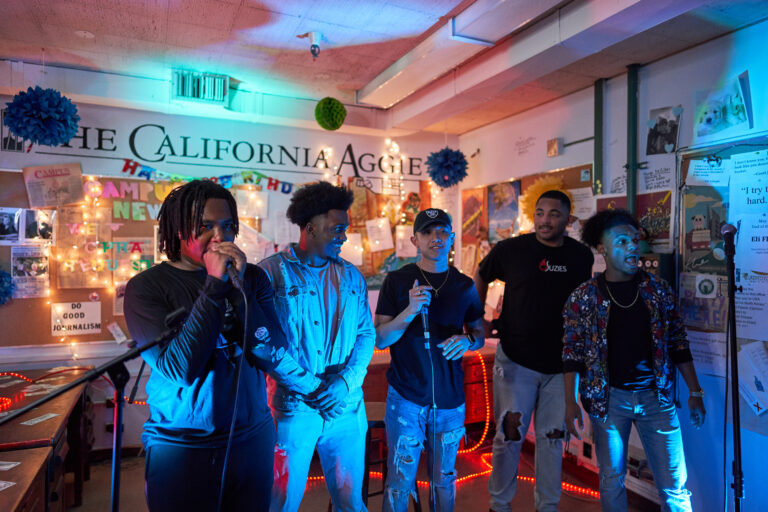
It all began with a fist bump. Not just any fist bump — when Sam Lauderdale and Thaddeus Turner met up on the playground in middle school ready to fight, something unusual happened. “He squared up with me,” Turner said, “And then he threw a punch and both of our fists connected at the same time, and I watch anime so I was like… this is meant to be… and after that, everything’s been Gucci between me and him, like that’s my brother.” 

Alfha Records is a rap collective comprised of five artists: Sam Lauderdale (Alfha Sam), Alayé Sanders (Alfha Bliss), Thaddeus Turner (Alfha Blu), Nick Miles (Alfha Nick) and Tex Wambui. Although they are all associated through this group, they are individual artists under one label, and they “all want to capture a different essence” with the most important thing being staying true to themselves.

The five artists met in middle school, not as epic a meeting as that first fistbump, but nonetheless special enough to form friendships that would bloom into brotherhood. Alfha is an acronym for the message the group wants to share, each word reflecting a different part of their lives. 

“Alfha itself gives a perfect explanation,” Sanders said. “Artistry, being creative and not being sucked in by the industry; loyalty to each other, loyalty to who we started off as and why we wanted to do this; family, because we’re always about family, always about bringing back to our respective communities; honesty, in terms of not capping in our raps; and then just the Alfha symbol, beginning to end, making sure we are concise and clear and cohesive as a group.” 

The cohesiveness of the group is based in the similar struggles some of the members faced growing up in South Sacramento. 

“[We] just kinda got a connection, just being on a team together… going through hardships,” Miles said. 

For some of them, support through these hardships was crucial.

“When our families didn’t have food, we’d go to the other’s house and scrounge with each other together,” Turner said. “Feed our families together. That’s exactly what we’re doing now.”

The experiences are what makes this group’s message authentic: They recognize where they’re from and what they’ve been through in their music and use that to write genuine lyrics with meaningful themes.

A distinctive quality of the collective is the mindset they have when making music. The men took inspiration from artists like Kendrick Lamar, who “was a beacon of hope… [who] showed us that you can pop off and make money and give back to your community by being true to yourself and making an authentic sound.”

For Sanders, this influence was particularly important in finding his sound.

“Honesty is at the forefront of my music,” Sanders said. “There’s power in being vulnerable as an artist. We’re the speakers for people that don’t have a voice, so I always think that the most important thing for an artist is to speak for his or her generation. We’re reflecting the things that we go through on a day-to-day basis, reflecting what we’re thinking about, the trials and tribulations we’re going through.”

Turner touches on personal topics in his music, like the birth of his daughter.

“Things become pretty difficult when you have a child,” Turner said. “There are times when I’ve been feeling this heavy burden of needing money, so when I write that’s what comes out. Everywhere you try to make a move, there’s always something stopping you from trying to get money.”     

These rappers don’t take their platform as musicians for granted. 

“Us growing up in the hood, in South Sacramento […] we all were in AP classes and making sure that we could get the highest level of knowledge possible,” Miles said. “Breaking the stereotype. And [we] put that in our records. So yeah, we come from the hood, and yeah we got banging beats, but listen to what we’re saying.”

All the members are currently students at different universities and colleges. As exemplified by the ‘f’ for family within the Alfha name, they all take part in some sort of community outreach. Most of the group members work with students in programs similar to those that benefited them as highschoolers, like Improve Your Tomorrow in Sacramento. 

“There are a lot of young people looking up to us,” Lauderdale said. “[We’re] helping young men get into good colleges and helping them get more educated and get out of these environments.”

Tex Wambui, a fifth-year economics major at UC Davis and the producer of the group, is especially committed to promoting social change. His nonprofit Sitty, an acronym for Stay In True To Yourself, has a “mission to improve the lives of individuals by facilitating the discussion of how to stay true to yourself.” He is currently working on research in education with this goal in mind and has three published books related to his work. 

The group’s music reflects the message they wish to spread to the youth they work with as well.

“We can’t be putting out detrimental messages while trying to help these young men,” Lauderdale said. “I’m not going to be talking about shooting people in a community where people getting shot is one of the major problems that we’re trying to solve. Just making music that is more empowering rather than bringing people down is always something we’re going to hang onto. No matter how big we get, it’s always going to be the same message.”

Sanders added that a lot of people “don’t make music to contribute to a community.”

 “We’re not here to just turn up,” Sanders said. “We’re here to contribute to the culture.”

The conversation with the five members of Alfha Records was enough to discover the empowered and authentic nature of not only their music, but their ideologies as artists, influencers and human beings. For Alfha Records, relatability is something they want to convey in their music, and it shows. 

Alfha Records will be featured in an upcoming Couch Concert video. 

Written By: Allie Bailey — arts@theaggie.org

ASUCD officials share their stories about UCPath issues

UCPath doesn’t work with one person’s bank, another faced missing pay for weeks

Over the past two weeks, The California Aggie sat down with ASUCD President Justin Hurst, Vice President Shreya Deshpande and Senator Anna Estrada to discuss the ongoing effects of UCPath, the UC-wide payroll system implemented at UC Davis in October 2019. The system — which, according to a state audit, cost approximately $942 million to implement on several UC campuses — resulted in many students receiving incomplete paychecks or missing pay altogether. 

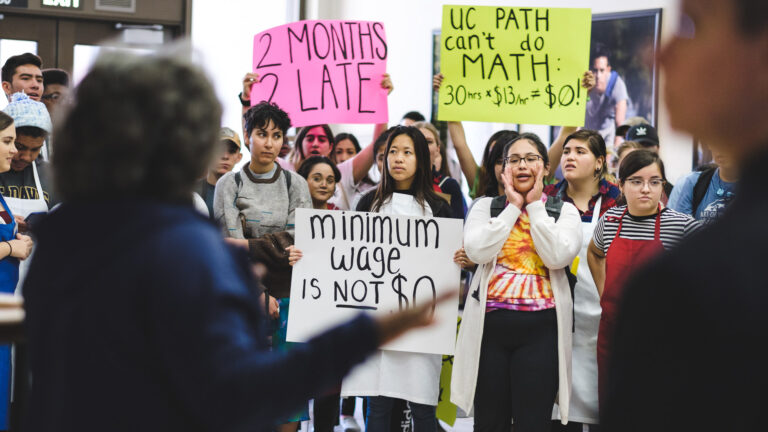
In November 2019, employees of the CoHo organized a walkout demanding that student employees who were missing pay be paid adequately. Administrative officials responded by cutting emergency checks in the weeks afterward.

On Jan. 23, the ASUCD Senate passed a resolution urging the campus administration to further acknowledge the lasting damage UCPath caused. During this meeting, Gender and Sexuality Commission (GASC) Chair Elena DeNocochea said she was unable to make credit card payments due to issues with UCPath, and Senator Mahan Carduny talked about a friend who quit their job at the CoHo to work at Philz due to lack of payment. This friend declined to speak with The California Aggie.

 Despite the emergency check measures, UCPath still poses problems, according to Deshpande. 

“I am getting paid now, but my bank is not compatible with UCPath, so my checks don’t come to me at my local address and there’s no way for me to change that,” Deshpande said. “Before, when ASUCD had control over payroll, I could just pick up my paycheck at ASUCD headquarters.” 

Greg Ortiz, the ASUCD business manager, said via email that there “are still ongoing issues,” despite the fact that “pay discrepancies have been dramatically reduced since fall quarter.” Dana Topousis, the chief marketing and communications officer for UC Davis, said in an email that there “may be instances where people erroneously associate any issue as a UCPath issue.” 

According to Ortiz, emergency checks continue to be double and triple checked. He added that ASUCD is planning to meet with senior administrative officials, and that an audit was opened and will eventually be publicized. 

“ASUCD is receiving a lot of individual attention from campus and I believe that the students not only have the attention of UCPath and UC Davis but their voices are being heard,” Ortiz wrote. 

Kelly Ratliff, the vice chancellor of Finance, Operations and Administration, confirmed the audit via email, adding that it will include a survey of 200 student employees who reported having pay issues.

And recently, when The Aggie’s Editorial Board met with Chancellor Gary May, he apologized that students had been negatively impacted by the implementation and said the university tried its best to mitigate the problems by issuing emergency checks. According to May, 355 emergency checks were issued to 320 students.

Still, Hurst described the current payroll system as “extremely slow,” noting that unit directors and activity managers within ASUCD must approve their employees’ pay. The paycheck is then sent to payroll coordinators at ASUCD and is distributed by the university’s Shared Services Organization (SSO). 

“It’s very likely that someone’s pay could be overlooked […] or their payments [might not be] processed on time,” Hurst added. 

Indeed, the problems posed by UCPath had a profound effect on hourly workers in ASUCD. This was the case with Estrada, who said she was not paid a complete check for her job at the ARC until around Jan. 22 — over two months late. The ARC is a part of Campus Recreation and Unions. Ratliff and Emily Galindo, the interim vice chancellor of Student Affairs, had sent an email to students on Nov. 7 resolving to “cut checks twice daily” and encouraging students to “apply online for a UCPath Emergency Pay Advance.” 

Estrada said her problems with UCPath began around October or November. 

“That was when I started noticing that I was getting incomplete paychecks,” Estrada said. “When I talked to my supervisor about it, he would just say that I should go back and check my hours. And so I would go back. And I started noticing that it was constantly happening with every check I was receiving — it was either very late or missing $100 or more.” 

Estrada recalled printing out her bank statements, time sheets and pay stubs, and asking her supervisor why she was still missing pay. 

“After looking at it, he said he didn’t know why this was happening,” Estrada said. “He said I could submit the hours for my next pay period. And that was something I didn’t like, because I was using that money to pay my rent and my bills, and I had to borrow money from my parents for rent. I don’t want to be a financial burden to them.” 

Although Estrada says that the issue has now been rectified, she explained that she’s still “on high alert,” because of what happened. She said that the paycheck she eventually received contained more money than she expected because of how much her previous paychecks had been missing.

Hurst met with UCPath officials over Winter Break. He described their responses during this meeting as “very politician-y” and added that “they very much dodged questions […] even though I tried to corner them afterward.”

“I had probably the most pointed questions [due to what our campus was going through],” he said. “I felt this probably the most personally. I was asking things to the effect of, given that students aren’t being paid, what are we going to do?” 

Jonathan Minnick, the president of the Graduate Student Association and a Ph.D. student in musicology, was also present at the meeting, but described it as “more of a check-up that UCPath likes to have with the student leaders to make sure that they are aware of any lingering issues and to make sure that we have enough support from their office.”

Prior to the UC Davis rollout, Minnick said, he received educational materials and was connected with campus resources to prepare for its implementation, adding that he worked with payroll staff to put together town halls and workshops to educate people about the system. 

“Unfortunately, there were a lot of errors associated with the transition, and it’s very disheartening to hear that students suffered pay issues, especially at the beginning of the year, which is most students’ first paycheck since July,” Minnick said via email. 

Still, he said that graduate students were well-informed about how to correct pay errors. 

“While these issues do still occur, we are very well prepared to handle them,” Minnick said. “I will be honest, I was really afraid of bringing UCPath to Davis because of how many pay errors were occurring.” 

Minnick noted that the Graduate Student Association was also in contact with the union, which previously arranged for students to receive compensation at UCLA. Ultimately, he has had a positive experience working with UCPath. 

“While there have been and continue to be problems, I cannot say enough about how receptive the folks at UCPath have been,” he wrote. 

Deshpande expressed hope that similar compensation measures will be taken at UC Davis. 

“[The union] basically won negotiations with UCLA for compensation, where [students] won $150 if [they] had missed a month of pay, or if a month more [was missing], they got $400 in compensation,” Deshpande said. “Our administration hasn’t done anything about compensation and dodged it by saying that they had put out fliers, which is meaningless to a student seeing a thousand fliers a day. Our hope is that they acknowledge and address this.”

Deshpande also plans to meet with university officials about developing a way for ASUCD to “pay, onboard and hire its employees,” while still using UCPath. ASUCD employees could be “taught” UC Path, they suggested, which means that paychecks would not have to travel all the way to the SSO to be approved and distributed.

Hurst expressed a similar desire to “work with internal personnel, rather than having a centralized hub where people who don’t really know ASUCD take it over.” 

“Student workers really haven’t been a priority of the university and it’s a continuing trend that’s worrying,” Hurst said. 

Written by: Rebecca Bihn-Wallace — campus@theaggie.org 

Genetic analyses reveal why dogs have different coat colors

Redhead furry friends get coat color from repeated segments of DNA

A new study from UC Davis researchers explores the genetic controls that make similar breeds of dogs exhibit variation in coat colors. 

This study is based on gene expression. One may already be familiar with a textbook example of dog coat color in Labrador retrievers. Interactions between different versions of dominant and recessive genes result in the Labrador’s classic black, brown or yellow coat. As complex as it is, this type of genetic interaction doesn’t account for all variation in coat colors.

One breed of dog in particular had researchers stumped: the Nova Scotia Duck Tolling Retriever. Tollers, like the Labrador example, have widely different coat colors that range from light strawberry blond to deep red. However, Tollers with the same genes often show unexplained coat color variations. 

This was the first hint that something else may influence coat color changes, according to the study’s lead author, Kalie Weich, who works in the UC Davis department of population health and reproduction.

  “While many variants that change dog coat color have been previously identified, the variant responsible for differences in shade or intensity of coat color in red or black dogs had not been found,” Weich said via email. 

Coat color derives partly from the genetic controls of yellow (pheomelanin) and black (eumelanin) pigments. Yellow and red dogs have a mutation that causes them to only express the lighter coat color genes. In the case of Tollers, the genetic code alone couldn’t fully explain the difference in coat colors. 

To fetch some answers, UC Davis researchers surveyed the genomes of Tollers with varying coat colors. Genetic samples came from privately-owned dogs through the UC Davis Veterinary Medicine Teaching Hospital or directly from owners and other veterinarians. The owners provided information including the exact breed, coat color and age of their furry friend along with their dog’s saliva sample. From the collected samples, 13 dogs were Nova Scotia Duck Tolling Retrievers with a variety of coat colors and one was an Irish Setter. Researchers extracted DNA from saliva samples and sequenced the genome of each dog.

Between all of the dogs, a single area of chromosome 15 stood out. There, researchers identified a “copy number variant,” or CNV.

“A copy number variant is a piece of the genome that has been duplicated during normal cell division and then incorporated back into the genome,” Weich said. “Some CNVs include only a single copy, but this CNV can include up to four or five copies indicating that multiple duplication events may have happened.”

Dark red Tollers had around five copies of the gene, which caused dark pigmentation from the root to the tip of the hair. Lighter-colored dogs had about two genetic repeats so their fur had light roots and darker tips.

This is a novel discovery in gene expression for dogs, since the study suggests that copy number variants may be a mechanism of coat color intensity among several different breeds. Although CNVs are not the only method of controlling gene expression, Weich’s study is the first to describe this mechanism in dogs.

“Many, but not all, of the identified mutations in genes that result in color changes are either/or scenarios,” said Robert Grahn, a researcher in the UC Davis Veterinary Genetics Laboratory, via email. “[The dogs] are either black or brown, full color or dilute.”

Instead of abiding by these previously known mechanisms of genetics, the copy number variant introduces a new way of quantifying the controls behind coat color.

“The mutation identified in the current research correlates a number of copies of the gene to the intensity of the color,” Grahn said. “The more copies you have the more intense the color.”

The identification of this color-controlling factor has implications for both dog breeders and future genetic studies. This research informs dog breeders on how certain characteristics are inherited, so they have more control over choosing traits in their next litter of puppies. 

“Studies like these help us to understand exactly what types of genetic changes will modify melanin pigmentation and animal coloration,” said Angelica Kallenberg, a researcher in the UC Davis Veterinary Genetics Laboratory, via email. “Dog breeders will be able to breed for a high or low copy number, if that is what they want.”

Novel discoveries about inheritance in dogs also contribute to further exploration in the field of genetics. Although genetic inheritance in dogs has been widely studied, there are still more factors at play in controlling coat color that haven’t been explored. 

“There are some color differences that couldn’t be explained by this research, so that will be a really interesting direction for researchers to look into in the future,” Kallenberg said.

Written by: Lauren Glevanik — science@theaggie.org

Food Truck Feature: Nash and Proper

0

Owner of Nash and Proper, students discuss new food truck’s popularity

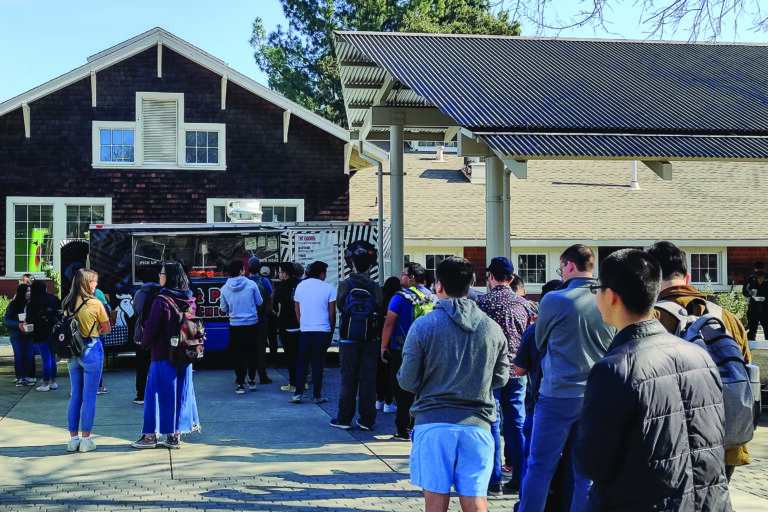
There’s a new food truck in town serving UC Davis “Nashville style hot chicken with a California twist.” Nash and Proper, which has garnered attention at the Silo for its lengthy lines, is co-owned by chefs Cecil Rhodes and Jake Bombard. 

Rhodes is also the owner of Cecil’s Taste, which previously operated a food truck that served food at the Silo. The menu for Cecil’s Taste included smoked pork belly and burgers, but Rhodes noticed that there were a number of UC Davis students who don’t eat beef or pork.The vegetarian burger sold well, and lots of people asked him about a chicken option. That was when Rhodes started playing around with a recipe for a chicken sandwich. 

“I started [selling it] when we were at UC Davis and we started selling out,” Rhodes said. “We were going through about 200 pounds of chicken a week between UC Davis and UC Merced. That’s kind of when the light bulb went off — this could be a concept.” 

At that point, it was just a “straight-up chicken sandwich,” Rhodes said. About four years ago, he began hearing a lot about Nashville hot chicken — KFC even added a Nashville hot chicken sandwich, something Rhodes characterized as “absolutely horrible.” Rhodes continued to serve his chicken sandwich as it was, but then he heard about Howlin’ Rays, a successful Nashville hot chicken restaurant in Los Angeles that began as a food truck. 

“I started studying Nashville hot chicken,” Rhodes said. “I started messing around with a recipe and came up with our hot oil that we dip our chicken in and our different levels of spices.” 

Rhodes wanted a fire-hot chicken food truck that imbued the feel of a picnic, and thus, Nash and Proper was born. The truck offers chicken tenders, wings and the famous Sammich, which has amassed a huge social media presence. Customers can choose from one of five levels of heat — naked, mild, medium, hot and cluckin’ hot. 

The Sammich, which consists of crispy fried boneless thigh, slaw, fuego sauce and pickles served in a bun, is the most popular item, but at UC Davis, it faces close competition with the Quarter Bird, which includes a boneless leg and thigh served with bread and pickles — a menu item that never makes it in the top two at the truck’s other locations. 

“Students may need a little bit of money to go a long way,” Rhodes said. “With the Quarter Bird, it’s a really big piece of chicken. You could probably feed yourself three times with that same [order]. It’s delicious food, I think it’s affordable.” 

Natalie Sahabandu, a first-year graduate student in the biochemistry, molecular, cellular and developmental biology group, went to Nash and Proper with a friend who works in Davis and had heard the hype about the food truck from co-workers. Sahabandu ordered the Quarter Bird “cluckin’ hot,” which she said was just a little too spicy for her — she plans to order it “hot” next time.

“I think the food is really good, but in general it’s really worth the money,” Sahabandu said. “For 10 bucks, [you get] gigantic pieces of chicken which can go for two meals — for a student, I think that is very accommodating and very attractive.” 

She compared Nash and Proper’s popularity to that of Shah’s Halal, which she believes also has a good food-to-money ratio.

Second-year chemistry graduate student Winston Chow decided to return to Nash and Proper after trying it a few times and enjoying it.

“I think it tastes a lot better than a lot of the food trucks here, but that’s just personal preference,” Chow said. “I think what draws people in is that you see a really long line that you’re almost like, ‘Oh, that must be really good, so I might as well get in line and try it out.’” 

Passersby seemed to have mixed opinions on this — some students walked by and took videos of the long lines while others appeared to be considering whether or not to join the line. One student said, “People in California are either too patient or just crazy, why would you wait in such a long line?” 

Second-year statistics and biochemistry double major Christine Zhou was drawn in by the long lines she saw. Zhou had never tried food from the truck, but planned to order the chicken thigh “naked,” since she’s not a “spicy person” 

“I’m just curious,” Zhou said. “You want to find out why there’s always a long line for this chicken.”

Rhodes said the popularity of the truck can be attributed to the fact that the food is delicious, which is something that people gravitate toward, as well as the truck’s social media presence. They see about 300 people a day at UC Davis — and not all of them are associated with the university. Some, like Sahabandu’s friend, work in Davis, but Rhodes said there are some people who tell him they came to Davis from West Sacramento to try the food. 

“We really appreciate coming out [to UC Davis] and the love from all the students and the staff,” Rhodes said. “We’re really grateful for what we have, we don’t take anything for granted. We always want to put smiles on people’s faces. We always want to deliver a delicious product. And you know, when it’s reciprocated, with people standing in line for 45 minutes, it’s really humbling.” 

Written by: Anjini Venugopal — features@theaggie.org 

Couch Concert: Negrete

A band with a spirit full of feeling and fun 

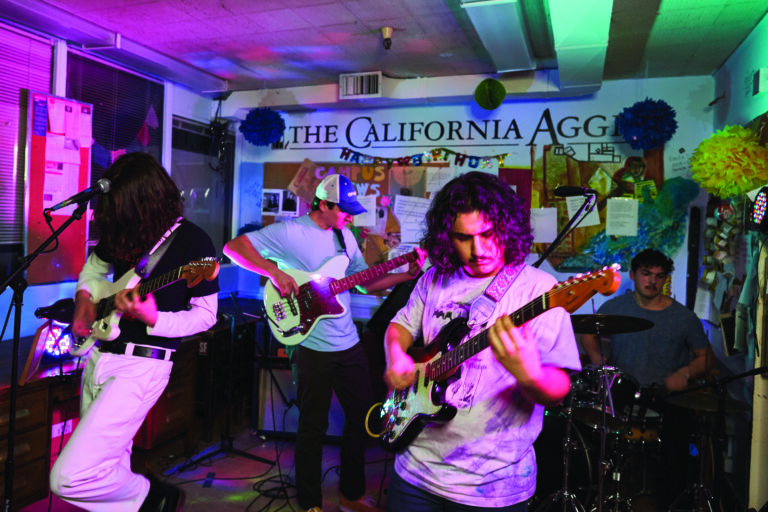
Lyricist, lead singer and guitarist Nick Negrete wants to get out of college — so much so that he wrote a song about it. Written as an expressional anecdote to illustrate Negrete loathing his college experience, “Another year, another year. Another year. Let me go” starts off the song “GREENE” from the band Negrete’s EP “ST. GEORGE.” 

“That was just me being pissed off,” said Negrete, a third-year student at American River College. Thomas Greene, the president of the school, is the muse of the song’s lyrical intent. Negrete explained that when he writes lyrics, it’s a combination of when he’s “pissed off,” complaining about someone or stringing words together that sound good and flow. 

“Our lyrics are purely aesthetic to a certain degree,” said Alejandro Magallan, the band’s guitarist and a third-year music major. He explained that their lyrics are analogous to Thom Yorke of Radiohead in the way that “you don’t know what the f–k he’s saying” and that “it’s the tone of his voice [and] the tambor” that drives the lyrics and makes them so compelling. 

Behind closed doors, their conversations emanate the free-spirit of the group. Their playful energy is evident in their music and in their performances. Talking about their lyrics, Negrete explains that, “if you don’t know what I’m talking about, it’s hard to be like, damn those suck or to say [I’m] talking about something stupid.” 

“That’s genius,” responded Niko Chapman, a second-year student at Sacramento City College and the drummer of the band, as they all laughed at the remark. 

As a band, they agreed that their musical aura is best represented as “beach-rat grunge.” But at the end of the day, they all enjoy being musically creative and just playing what makes them feel good. The motive of their music is to “make you feel something,” according to Magallan.

He further explained that their content is “bare,” “essential” and “raw.” Really, it all comes down to one thing: losing yourself in the music.

“We just kind of play because we love it,” said Taylor Clark, a bassist and a third-year student at American River College. “And it’s fun. You can really get lost in [the music].” 

The band officially formed in April 2019, though they have known each other since high school. Negrete and Clark joined their high-school jazz band together — the genesis of the band today. While the duo was playing in a band for a peer’s senior project, Magallan found his niche on the electric guitar. Chapman picked up the drums on a whim and has been with the band since. Negrete, Nick’s last name, became the band’s name. 

Negrete called the energy of the band their “selling point.” They enjoy playing basement or house shows — or The California Aggie’s office in Lower Freeborn — because those are the shows with the most receptive and energetic crowds. 

Rather than exploitive ticket sales and distractions to the music, the crowd has the chance to indulge in a music-focused experience. After all, such a venue aligns with the morals of the band: music for fun’s sake.  

It’s not that they don’t want to broaden their horizons — the band has played twice at Holy Diver, a popular venue in Sacramento, so they don’t lack talent — but they simply would rather play in a more intimate setting where they can feel the crowd’s energy being moved by the music. 

 “In a basement or a house, just like these enclosed spaces, the energy gets stuck in there,” Magallan said. “You’re just right there.” 

The band named their performance at Turtle House in Davis as one of their favorite performances. By the first song, people were crowd surfing and swinging by the rafters. It was a bucket list moment for the band. 

The soul of the band is feeling and fun, and their music is best received when the spirit lives in the crowd. The band feeds off of that energy to create a compelling environment not only for the audience, but also for themselves.

In regards to keeping that enthusiasm alive, the band touched on their latest EP, “St. George,” available on Spotify. They explained a need to get something out for recognition as a legitimate band. 

“[It is] important for us to have some amount of image or some amount of memorability,” Negrete said. 

“To record [music] and have a finished product — that no matter where you’re at in your life to look back and [say] this is what I was doing when I was 21, this is my project that I was a part of — I think it’s a really special thing,” Chapman said. 

Negrete will be featured in an upcoming video as part of The California Aggie Couch Concert series.

Written by: Sierra Jimenez and Caroline Rutten — arts@theaggie.org

UC Davis graduate students in support of COLA to withhold Winter Quarter grades beginning Feb. 27

The grading strike, a “wildcat” action, marks escalation in UC Davis cost of living adjustment (COLA) movement

After the UC Davis cost of living adjustment (COLA) movement general assembly on Feb. 25, graduate students in the COLA movement decided to withhold grades for Winter Quarter. 

The announcement makes UC Davis’ COLA movement the third to go on a wildcat strike — a strike without the approval of the graduate student union’s leadership. The graduate student instructors are now pledging to withhold grades, following in the footsteps of their peers at UC Santa Cruz and UC Santa Barbara. UCSC’s COLA movement announced a full strike on Feb. 10, with supporters stopping all teaching, research and grading; this marked an escalation from an earlier Fall Quarter grade withholding strike. UCSB announced a full strike on Feb. 24. 

Graduate students at UC Davis have not announced a full strike.

The COLA movement, a push by graduate students for higher wages to offset increasing costs of living that began with UC Santa Cruz graduate students, is now UC-wide. 

According to a statement from UC Davis COLA organizers, over 60% of teaching assistant respondents — which amounts to over 300 individuals — supported the strike to express solidarity with UCSC strikers and to advance their own list of demands at UC Davis.

Support for the movement extends beyond graduate students, according to a statement from the COLA organizers on their Twitter account, @ucd4cola.

“Almost 800 undergraduates, faculty and other supporters committed to showing up at demonstrations, helping to organize departments, building coalitions and to growing the campus COLA struggle,” UCD4COLA said. 

After the people in support of the movement presented their demands to Chancellor Gary May on Feb. 21, the movement’s organizers pledged to go on a grading strike should any UCSC strikers be terminated from their positions. 

UC President Janet Napolitano said on Feb. 14 that Feb. 21 was the deadline for strikers at UCSC to submit grades or face consequences, potentially including the loss of their jobs. After solidarity strikes were held UC-wide on Feb. 21, UCSC External Vice Chancellor Lori Kletzer released a new statement moving that date to Feb. 27. The UCSC strikers are considering themselves effectively terminated from their jobs unless they hear otherwise.

Melissa Lutz Blouin, the director of UC Davis News and Media Relations, provided a statement to The California Aggie on Feb. 23 that said the UC Davis administration welcomes dialogue about how UC Davis graduate students can be supported.  

“It would be unfortunate should our undergraduate students have to bear the consequences of a decision like the one proposed by UCD4COLA,” Blouin said. 

The strikes have not been organized by United Auto Workers (UAW) Local 2865, which represents graduate student workers. A Feb. 25 statement released by UAW 2865, however, said the union demanded on Jan. 15 that the UC come to bargain. The offer has not been accepted.

“Graduate workers at every campus in the UC system are rent burdened, according to criteria laid out by the federal government,” said UAW 2865 President Kavitha Iyengar. “We are past the point of short term fixes. UC needs to do the right thing and come to the bargaining table, where we can establish a permanent, equitable solution for all student workers at UC.”

Written by: Janelle Marie Salanga — campus@theaggie.org


“Reverse” solar panels harness Earth’s heat to generate energy

Heat-radiating panels supplement solar cells meant to generate electricity at night

A groundbreaking theoretical study from two UC Davis researchers explores the possibility of using “reverse” solar cells to generate power from Earth’s residual heat instead of from direct sunlight. The cells work based on the principles of heat flow, also known as thermal radiation. Heat naturally flows from warm areas to cool areas. This technology aims to harness that natural process and generate usable energy.

During the day, energy heats up Earth, but that heat then dissipates back into the atmosphere once the sun sets, according to Tristan Deppe, a graduate student researcher in the Department of Electrical and Computer Engineering and the first author of the paper. 

“The coldest time of day is right before sunrise because the earth has been losing energy all throughout the night,” Deppe said. “What we’re trying to do is extract some electrical power from the heat loss that is always happening from the earth.”

In their theoretical paper, the researchers outline a potential system for increasing the amount of energy harnessed from photovoltaic cells (PV) — “photo” meaning light and “voltaic” referring to the energy that is captured. They propose a design for a thermoradiative cell that generates electricity from the flow of heat. In this system, heat energy flows from the sun-warmed Earth into the cold abyss of space.

The mechanism of thermoradiative cells parallels that of traditional solar cells, but it uses different materials. Solar panel cells are made primarily of silicon, which optimizes energy captured from the sun and minimizes production costs. But sunlight and heat have different wavelengths, so the best material for thermoradiative cells is slightly different to harness the maximum amount of energy. 

Solar energy, generated by PV cells, is one of the most popular sustainable energy sources in use today. However, solar cells have one major pitfall: limited daylight hours.

“The problem with solar cells is that there is no sun 24/7,” said Jerry Woodall, a distinguished professor in the department of electrical and computer engineering. “To make things really attractive to move to solar energy as a primary source of energy, you’re going to need storage. And another problem is that batteries are expensive and they wear out.”

Solar cells only generate power during the day when the power grid is under the least amount of stress, yet demand for electricity peaks in the evening hours when solar panels are the least effective. Implementing thermoradiative cells that harness heat energy could partially alleviate evening electricity demands. In theory, these cells could add up to 12% more power to the daily amount generated and at night when it is needed most.

Atmospheric conditions, such as cloud cover, are another limiting factor of both solar cells and thermoradiative panels. Solar panels are less severely affected if they are strategically placed to maximize electricity generated, according to Adam Moule, a professor in the Department of Chemical Engineering.

“There is a lot of sun in Arizona, not so much in Michigan,” Moule said via email. “There is lots of sun in Florida, but frequent hurricanes make investment in solar farms very risky. It doesn’t make sense to replace forest or high quality farmland with PV panels. For all of these reasons it will be necessary to put the panels on buildings, over canals, over parking lots, and anywhere that does not impact land use and the economy.”

Thermoradiative panels would most likely be constrained to the same areas, since they are most effective in areas with very little cloud cover. Deppe suggests they may be best used in already existing solar farms in desert climates where skies are clear and infrastructure is already in place. 

Creative placement of thermoradiative cells can also mitigate industrial contributions to climate change. Since the cells absorb heat that’s radiating out into space, they could also be used in factories to generate power from heat in industrial processes. By harnessing waste heat, these cells generate energy from a previously unusable source and they reduce significant contributions to climate change.

Another practical use of these panels could be to sustain low-power appliances. One example of a large-scale application like this is streetlights. Many are already equipped with solar panels and small batteries, but an additional source of power generated at night could revolutionize the lighting industry. Thermoradiative cells, used in conjunction with energy-efficient LED lights, could remove any need for developing batteries to store solar energy for night use.

“We need to have other sources of energy after solar cells stop working at sundown,” Deppe said. “This project is trying to allay any reliance we have on batteries to store solar energy and reduce our reliance on fossil fuels to help throughout the night.”

Sustainable energy sources even have the potential to phase out fossil fuel use entirely. In the case of PV cells, they are already a feasible alternative to fossil fuels in terms of production, installation and the amount of energy generated.

“Photovoltaic technology now costs the same as fossil fuels to install in the U.S. and is even cheaper in places that do not have centralized electricity grids already,” Moule said. “In those places, the panels can be contained in one building or town/village/city without the need to develop an extensive electricity grid. From a technical perspective, there is no need to ever install another fossil fuel electricity plant anywhere.”

Although the possibilities seem endless, thermoradiative cells are still in development. The materials engineering and design aspects are still undergoing rigorous testing. Thanks to the advancement of engineering projects like these, however, the future of sustainable energy is looking bright.

Written by: Lauren Glevanik — science@theaggie.org

The value of your own company

I’ll have my cake and eat it alone, too. 

I’m writing this column while sitting alone in the dining hall. There are groups of friends conversing to my left and individuals quietly eating to my right. I’m sitting at the crossroads of these two experiences.

On one hand, I’m feeling self-conscious about my loneliness. Are people looking at me? Am I being judged for sitting here alone, taking up the head of a wide table meant for large groups? 

On the other hand, I am at peace with my situation. If I had friends with me, I would’ve procrastinated instead of doing my homework and writing this column. I would be idly chatting about day-to-day life in Davis. And I’d be content with that, too. 

We all crash-landed in Davis with the idea that we would become truly independent individuals (aside from many of our parents funding a majority of our livelihoods). On weekends, we’re tasked with grocery shopping and cleaning out the fridge, and on weekdays, we don’t have a parent checking to see if we’re up in time for class. It’s a freedom that is both frightening and exciting.

With all of the independence that comes with college, there’s also an overblown emphasis on the importance of friends and possessions. Yes, you should be 100% okay with being alone, but you should also have an expansive group of friends. Oh, and don’t forget to post all of them on social media — you don’t even really have friends if they aren’t on your Instagram stories day-in and day-out.

The whole idea boils down to the spotlight effect, a psychological phenomenon which correlates almost directly with the feeling that I’m having right now: Everyone is watching me, and I am the most important person in the room. 

Egocentrism is the root of this effect, according to Psychology Today. It’s completely unavoidable. There’s no way to think that you aren’t better than most people when your mind is just an echo chamber of your own experiences and opinions. Going into college with the looming spotlight effect hanging over our heads just shields us from the independence that we were promised all those months ago. 

But I’ll save the unwarranted and exhausted metacognition lecture for the guy in your philosophy lecture. 

I feel like we’re all getting mixed signals here: Is the universe telling us that we should be studying alone by putting up dividers at Shields Library, or is it telling us that we should make study groups per our RAs suggestions?

I just can’t tell if any of us have actually become independent, or if we’ve just become slaves to social interactions. Our world is strife with social anxieties and “hashtag squad goals.” How are we going to be okay with being alone?

It’s important to outline the benefits of being in your own company. For starters, there is no pressure to be funny, interesting or talkative when you’re alone. You can absorb the world around you with an uncorrupted lens, free of any other opinions. 

In class, there’s no pressure to be aloof about your lecture and your class. Sitting with friends in class comes with the idea that we should be joshing around the whole time. Being alone means you can sit there and type your disgustingly thorough notes to your heart’s content. Dining alone? Eat everything you want and talk to no one. It’s a gluttonous dream that we can all make a reality. 

Loneliness is so feared because — God forbid — we have to be alone with our own thoughts. And gosh, the mere idea of being perceived in any way besides perfect and popular is just so daunting. 

I’m not saying we all have to go full Eleanor Rigby, but I think the art of being alone is often overshadowed by the idea that we should all be making oodles of friends in college. It’s practically unavoidable – many of us live in one room with two other people. 

Fraternities and sororities are so attractive in part because they are friendship insurance. Socials and mixers are held throughout the year at residence halls to make sure that everyone is tightly intertwined. 

To some extent, these are noble causes. We do flourish with friends and organizations. But our expectation that our future roommates, spouses, maids of honors and best men could be hidden among all of these people we’re meeting keeps us so wrapped up in everyone else. 

It’s important to make connections with everyone else but to force yourself into social situations ignores the value of alone time. It also places unnecessary pressure on social scenarios — making friends should be stress-free and natural. 

The best friends and soulmates will reveal themselves to you without much effort. The rest of the time should be spent on getting to know yourself. 

Written by: Isabella Chuecos –– ifchuecos@ucdavis.edu 

Disclaimer: The views and opinions expressed by individual columnists belong to the columnists alone and do not necessarily indicate the views and opinions held by The California Aggie

What is the deal with traffic?

Traffic and economic growth might be intertwined, but it’s messier than that

Any Bay Area native could tell you about the horror stories of a Costco parking lot on the weekend. When the receptionist at the Fox Rent a Car in Salt Lake City found out my family and I were from the Bay Area, he immediately launched into a lengthy grumble about the terror of finding parking for a simple grocery trip.

He’s not wrong, and as I’ve gotten older, traffic is a problem that just seems to get worse. Traffic has gotten so bad that it is no longer merely an issue of travel time. It turns out that, like most issues regarding transportation, the impact of traffic is much more nuanced and complex.  

The Bay Area has one of the strongest economies, but it is also infamous for traffic. Traffic is universally loathed. It’s a nuisance and can even have an adverse effect on public health for a plethora of reasons, as well as on local economies. That being said, there is also some indication that traffic could be one of many factors contributing to a region’s economic growth. 

Vehicle miles travelled (VMT) is defined by the Federal Highway Administration as “the number of miles traveled nationally be vehicles for a period of 1 year.” VMT has some shortcomings and doesn’t necessarily measure congestion per se — which is a bit more tricky to capture —  but it is still a good indicator of the amount of travel done by private vehicles.

When assessing the trend between GDP and VMT, there is a possible correlation between the two: Since 1936, both GDP and aggregate VMT appear to be growing parallel to one another. This data could be examined through various lenses, in which VMT effects economic growth, economic growth effects VMT, VMT and economic growth affect one another or VMT and economic growth have no relationship. There is plenty of research that relies on these various interpretations, but because transportation is so complex, it becomes hard to make absolute assumptions about the causality between VMT and economic growth. 

As just one example of its complexities, a paper from the Cascade Policy Institute breaks down transportation’s relationship to the economy as both a production and a consumer relationship. The production relationship is quite simple — it is the transportation of goods and services. For firms to produce their output, they will need to rely on transportation systems to obtain all necessary inputs. 

The consumption relationship, however, is more unclear. The transportation of individuals and households is considered to be consumption when measuring economic activity. But this can become a problem because an individual’s commute to work isn’t counted as production, even though labor is considered to be a production input. 

This isn’t to say that reducing traffic by reducing VMT could lead to a slowdown of economic growth. It also doesn’t mean that solutions to traffic that are solely aimed at alleviating congestion will be sufficient, let alone useful. One of the most popular methods of dealing with congestion has been to increase road capacity by creating new roadways, or adding new lanes to current roadways. This has proven time and again to be ineffectual and counterproductive. Increasing road-capacity leads to a short-run and long-run increase in VMT, leading to a phenomenon known as the induced travel effect. The induced travel effect occurs when an increase in roadway capacity doesn’t alleviate congestion, but instead leads to an increase in VMT. And the increase in VMT from the additional lane miles could be responsible for a drastic increase in CO2  emissions. 

Transportation is a large and ever-growing contributor to global emissions, hence the need to curb the negative externalities that come from traffic. In the United States, seven Metropolitan Planning Organizations (MPO), including the Sacramento Area Council of Governments and the Metropolitan Transportation Commission in the San Francisco Bay Area, have come up with goals that would end up reducing VMT while still maintaining or increasing economic growth. 

These policies are a bit unclear about how they plan to link or even decouple VMT and economic growth in order to meet their goals. However, this doesn’t mean it is an impossible feat to achieve. Lund, Sweden adopted a sustainable transportation plan in 1996 that was successful in reducing vehicle travel while still allowing for economic growth. Since the 1950s, Singapore has successfully worked on the decoupling of traffic growth and economic growth through various policies. 

Of course, it is important to be cautious when examining transportation systems and policies across countries as all such systems and policies are implemented under very different contexts. But the success of these programs in other regions underscores the need to better understand and produce inventive solutions for traffic congestion in our biggest cities. There are many proposed and even tested solutions to traffic, such as congestion pricing, that take a unique approach to solving the problem of congestion. Traffic is more than just everyone’s personal annoyance, it is also connected to ideas of not just growth and efficiency, but also the environment and sustainability. To understand traffic means to look at the issue holistically and consider policies that take all these factors into account.

Written by: Simran Kalkat — skkalkat@ucdavis.edu

Disclaimer: The views and opinions expressed by individual columnists belong to the columnists alone and do not necessarily indicate the views and opinions held by The California Aggie

Police Logs

0

 “Male subject threw hot coffee”

February 6

“Heard only, loud ‘BOOM.’”

“Drop box broken off wall.”

February 7

“Train arms down for the last 15 minutes with no train. Traffic backing up.”

“Open signs on business but doors are locked, dark inside, no one seen. Two new bikes with for sale signs on them.”

February 8

“Loud bass music.”

February 9

“Male subject threw hot coffee.”

February 10

“Unknown suspect using her credit card in China.” 

February 11

“Chainsaw noise since 7:30 hours.”

“Possible unethical activity.”

“Juveniles smoking in the men’s restroom.”