53.5 F
Davis

Davis, California

Tuesday, December 23, 2025
Home Blog Page 364

Yolo Bypass Wildlife Area to receive flood escape corridors, renewed habitats

Plan in place to engage community, facilitate pollination

The Yolo Bypass Wildlife Area might be unfamiliar to those who are not avid bird watchers or agriculturalists, but it plays a crucial role in the Delta region. Viewable for those traveling on the Interstate 80 causeway, the Yolo Bypass Wildlife Area (YBWA) constitutes a stretch of wetlands, wildlife areas and agriculture.

The California Department of Fish and Wildlife owns and operates the YBWA. 

“Yolo Bypass Wildlife Area’s approximately 16,600 acres is a haven for fish, waterfowl, shorebirds and wading birds, neotropical migratory birds, raptors, invertebrates, snakes, turtles, toads, and bats,” the California Department of Fish and Wildlife’s website reads. “The wildlife area is also a key cog in the Sacramento region’s flood control system.”

In the wet seasons, many land-dwelling animals can get stranded in floods. Field Biologist Ryan Caruthers from the California Department of Fish and Wildlife commented on which species are most affected by the flooding that occurs. 

“The flooding affects all the land-based animals out there from rodents to rabbits [and] burrowing owls,” Caruthers said. “They also affect our skunks, raccoons, coyotes and our deer that are out there.”

In order to combat some of the negative effects of the flooding that occurs in this area, the Yolo County Resource Conservation District (RCD) has devised a plan to construct corridors for flood escape as well as other environmental installations. 

Heather Nichols, the leader of the project for wildlife flood escape and executive director of the Yolo RCD, spoke about some of the vegetal installations that will be implemented as well as community engagement activities that are to occur. Nichols said this project will be a work in progress until the spring of 2022. 

“We are doing a series of planting events in March in order to engage members of the community,” Nichols said. “Because we’re in the Bypass, we have to use flexible materials. We can’t use trees, so we’ll be using shrubbery to construct a cover for wildlife. These structures will primarily benefit our pollinators, those being local bees and hummingbirds.”

These plants will also benefit the land-dwelling animals, Caruthers added.

“This native vegetation is going to provide cover for the animals,” Caruthers said. “It will lead them off of the wildlife area to the high ground.”

The West Sacramento Chamber of Commerce’s website contains further information on the scope of the project.

“This effort will create five miles of cover for wildlife escaping flood events, enhance year-round habitat for migratory birds, pollinators and other wildlife, provide a public-access demonstration planting and increase awareness and appreciation of the YBWA and its values and functions by holding high school field days and community volunteer stewardship events,” the website reads.  

Outcomes for wildlife will improve soon after the planting efforts start, Caruthers clarified. 

“As soon as they are able to get these native plants in the ground, and they are able to seed and start providing some sort of cover structure for these animals, we’ll be able to start seeing impacts immediately,” Caruthers said. 

Those who wish to stay up to date on the project should consult the Yolo County Resource Conservation District website

Written by: Rachel Heleva — city@theaggie.org
Two weeks of action for UC Davis COLA organizers culminate in pledged strike

Davis branch of Cost Of Living Adjustment movement comes to a head with Feb. 21 March on Mrak Hall

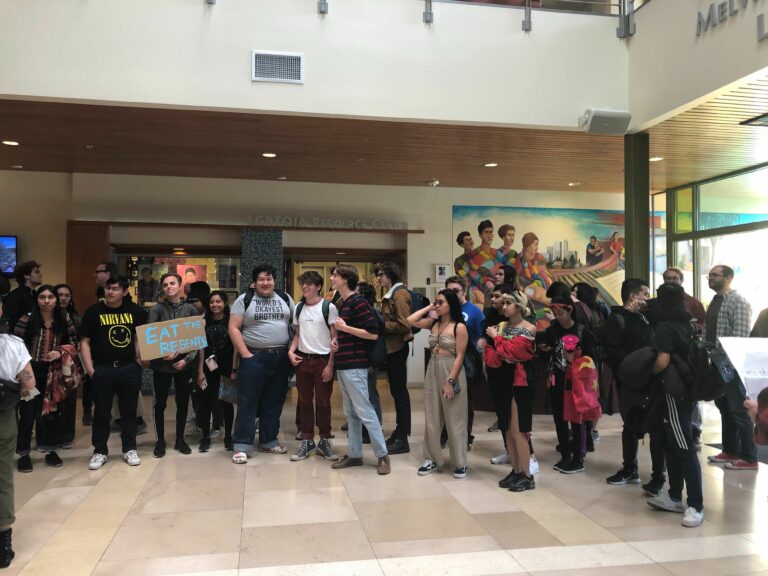
The UC Davis students marching for a Cost Of Living Adjustment (COLA) — higher wages to keep up with rising housing costs — came face-to-face with UC Regents last Friday, Feb. 21. 

According to doctoral student Beshara Kehdi, a COLA is an ongoing stipend to bring a graduate student out of a rent burden. Kehdi said at current rates in Yolo County, that amounts to an extra $1,553.20 a month.

The march was organized in solidarity with UC Santa Cruz, where the COLA movement began as a wildcat grading strike — one unapproved by United Auto Workers (UAW) Local 2865, representing over 18,000 UC student workers, including those at UCSC — in December. Striking graduate students did not release over 12,000 fall quarter grades. The strike expanded on Feb. 10 to include a stoppage of all grading, teaching and research.

UC President Janet Napolitano, after previous messages from UCSC administration, said in a Feb. 14 statement that if the striking students did not release grades by 11:59 p.m. on Feb. 27, they could face consequences, such as “termination from the university.”

During the march, Kehdi said supporters of the COLA movement would not let the UC “terrorize” its graduate students.

In front of Mrak, Kehdi listed off eight demands from the UC Davis COLA supporters, including a cost of living adjustment, dropped charges against all students and workers arrested at UCSC and UC Irvine for their organizing, ceased efforts of retaliation against striking associate student employees, ended threats of deportations against international and undocumented students and affordable housing for all. 

The demands reflected a statement sent out by UC Davis COLA organizers before the march, describing the COLA movement as first addressing only the housing crisis, then expanding to “become a nucleation point to articulate criticisms of the University’s role in upholding structural inequities, systemic racism, colonialism, state violence, policing and Immigration and Customs Enforcement (ICE), poverty, imperialism, and militarism.”

According to the organizers, hundreds of students expressed support for a grading strike if the UCSC strikers were fired from their positions. 

Once the initial march to Mrak Hall ended, a smaller group of students learned that several UC Regents were visiting the Student Community Center (SCC) and marched there. 

The Regents sent a representative from the Student Recruitment and Retention Center (SRRC) to offer a conversation with the regents to five or six of the marchers. When the offer was refused, the regents then offered them the entire SRRC as a space for a town hall.

“We are not waiting outside your office talking to your secretary!” a marcher responded. “We are out here screaming at you! We are already having a conversation, because like it or not, you are hearing us, and that is the only conversation you will get from us today.”

Once the crowd left the SCC, however, Ben Claire, a fourth-year environmental science and management major, and Marlen Garcia, a first-year political science and community & regional development double major, accepted the Regents’ offer.

At the meeting were Regents William Um and Debby Stegura, who said they were visiting different campuses to educate themselves about what was going on. UC Davis Chief of Staff Karl Engelbach was also present. Claire and Garcia, with consent, recorded the entire conversation.

One talking point during the conversation was housing. Claire and Garcia both discussed their struggles finding housing as undergraduates.

Engelbach said that UC Davis was planning to add 5,000 new beds available at 20% below Davis housing market rate.

When asked what they made per month and if they would support a raise for the grad students who made around $2,000 a month, the Regents and Engelbach laughed. 

Engelbach makes over $300,000 a year, including benefits

“Both parties [UAW and the UC] would have to agree to re-opening the contract,” Engelbach said with regard to negotiating higher wages. Um and Stegura gave Garcia and Claire information about the public comment section at the UC regents meetings and invited them to contact the Basic Needs Subcommittee.

“Thank you for your advocacy,” Um said. “That’s how we […] learn from the students.”

Stegura, when asked if she supported cost of living adjustments, said she supported people being able to live. 

“Just because we can’t say we can open up a contract tomorrow doesn’t mean that we don’t get it,” she said. “I don’t know what the resources are, but it’s a problem everywhere, it’s not just a problem with the UC.” 

Garcia said she was thankful that the regents were thankful, but that wasn’t enough. To her, she said, it felt like the regents sounded like they had heard about the problem before.

“It wasn’t that they were uninterested, but they already knew it was a problem,” Garcia said. “If it was something they were interested in doing, they would have done something long ago,” 

At the conversation’s end, Stegura told Claire to “burn that video” and asked, “Am I on your good side?” 

When Claire responded no, Stegura told him, “I don’t have a good side.” 


Updates from UCSC:

UCSC External Vice Chancellor Lori Kletzer published a statement on Feb. 24 clarifying the “needs-based” $2,500 housing subsidy offered to graduate students, providing a conditional offer of non-retaliation should strikers resume normal duties and moving the deadline to submit fall quarter grades to Feb. 24. 

The day before, UCSC strikers began considering themselves effectively terminated from their jobs, according to a statement posted on the UCSC COLA strikers website. 

Napolitano offered to meet with the UC Graduate and Professional Council (UCGPC) to discuss housing, cost of living, mental health and other issues on Feb. 21, but her offer was refused by both the UCGPC and the UCSC strikers

The president of the Graduate Student Association at UCSC, Cierra Raine Sorin, said on Twitter that UCGPC did not have a UCSC representative on its board and so did not accurately represent the UCs. 

“The GPC executive board is run by folks that have been and continue to be incredibly anti-COLA,” Sorin wrote. 

Additionally, UCSC doctoral student Krizia Puig said UAW Local 2865 was attempting to make it look like COLA4ALL was a campaign they started

The California Aggie has reached out to the union and the UCGPC for comment.

The History of Consciousness, Astronomy and Astrophysics, Microbiology and Environmental Toxicology and Environmental Studies graduate departments have pledged to turn down graduate student instructor, readership and TA positions should any UCSC strikers from their department be terminated.

Updates from UC Santa Barbara:

UCSB’s COLA movement announced on Feb. 24 that they are planning a full wildcat strike — no teaching, research or grading — on Feb. 27. That makes it both the second UC to start its own COLA movement and to launch a full strike.

Adam Parison, a sixth-year classics doctoral student representing the UCSB COLA movement, said the movement’s supporters chose to pursue a full strike instead of a grading strike based on what they saw at UCSC.

“A lot of people thought it [a grading strike] was an ineffectual way to escalate,” he said. “UCSC has been having a hard time and if we wait until the end of the quarter, it doesn’t seem to do as much. We have to strike when the iron is hot.”

He said that UCSB’s administration has been more receptive than UCSC’s and that the UCSB COLA movement will be meeting with administration on Feb. 25.

“I’m kind of surprised myself [at the support that emerged],” Parison said of UCSB being the second campus to escalate action to the extent of UCSC. “We’re in a very similar position as them [UCSC] — it’s incredibly expensive to live here and we’ve been feeling that economic pressure. Some departments, like sociology, have been already agitating for change.”

Parison called the movement a “first step to reworking how the university works, where students don’t have to fall into deep debts.” 

Updates from UC Irvine:

Over 200 UC Irvine graduate students and supporters rallied in solidarity with UCSC and aimed to call attention to the high cost of living in Irvine on Feb. 20, according to an email statement from a representative from the UC Irvine COLA movement.

On the UCI 4 COLA Twitter, Feb. 20 also saw UCI students rush into the administration building, which the representative said they locked down for 48 hours as Chancellor Howard Gillman refused to meet with students. There are also videos of UCI police using force on students, and according to the statement, a black woman unaffiliated with the action was arrested. 

The representative said that same day marked the start of UCI’s own COLA FOR ALL movement. 

“COLA FOR ALL is a recognition that we cannot address racial inequities in this country without addressing housing, and we cannot address housing inequities here at Irvine and elsewhere without addressing race,” the statement said. “Cola for all is also a recognition that our economic struggles are inextricably linked with the strikers at UC Santa Cruz, with the undergraduates at Irvine and with workers all across America.” 

Updates from UC Merced:

Anh Diep, the unit chair for the Merced chapter of UAW Local 2865, said via email that on Feb. 21, about 70 folks including graduates, undergraduates, postdoctoral students and faculty showed up to a demonstration held at their campus.

Diep described UCM as undergoing a cultural shift despite being celebrated as having “cheap” and “affordable” rent.

“As a commuter campus, the apartments and houses close to UCM bus transit stops have seen rent hikes,” Diep said, citing rent that increased from $700/month to $1,400/month.

Diep said the UCM COLA movement’s lists of demands are: for the UC Office of the President (UCOP) to hear the demands to bargain for a cost of living adjustment, as delivered by UAW 2865 reps from all UC campuses on Feb. 10 to 12. They also demand that UCOP and UCSC not retaliate, fire or discipline striking UCSC students and faculty, and those across the UC system. 

To Diep, part of the next steps for the UCM COLA movement include working with other unions and organizations across campus, dispelling the myth that UCM has “cheap” rents, using the rent-burden conversation as a segue to emphasize UC-wide solidarity and make the UCSC struggle more salient and hosting peaceful, public demonstrations in solidarity and support.

Updates from UC Berkeley:

UC Berkeley, like other UCs, also held a solidarity rally on Feb. 21. A representative from UC Berkeley’s COLA movement said after the rally, COLA undergraduate allies occupied a campus dining hall in solidarity with Santa Cruz and maintained it all day, providing free food for all. 

“Considering that nearly 100 grad workers at Santa Cruz defied Napolitano’s threats and maintained withholding of the fall grades past Friday, solidarity actions across UC campuses are ever more important,” they said. 

The representative added that their COLA movement is holding a General Assembly on Feb. 24 to determine next steps, such as possibly developing a wildcat strike on their own campus, and said the movement plans to have multiple actions this coming week. 

The Aggie is in the process of getting statements from COLA organizers at UC San Diego, UC Riverside and UCLA. 

Written by: Janelle Marie Salanga — campus@theaggie.org

Editor’s Note: A previous version of this article named Anh Diep as a representative of UC Merced for COLA working with the Merced chapter of UAW Local 2865. Diep is actually the unit chair for UAW Local 2865 at UC Merced and a part of the UCM COLA movement. The UCM COLA and UAW actions are not mutually exclusive. Additionally, it previously stated that the deadline to submit Fall Quarter grades was Feb. 24. That is incorrect; the date is Feb. 27. The article has since been updated. The Aggie regrets the error.


Art, artificial intelligence and technology

The muse of 21st century art is hidden in lines of code

The mystique of robots taking over humanity, or the notion that humans will eventually be forced to fight for their relevance among super-human robots that outgrow the need of their human creators, is a trope that has existed in artistic expression for decades. The ever-increasing discussion about artificial intelligence has fostered a sleeker, more modern incorporation of technology in art as a subject, a tool and a means of measuring the value of art. 

Grimes began her latest project in November 2018 with the release of “We Appreciate Power,” a nod to the capabilities that lie in endless lines of code and an embrace of the reign of AI. It’s futuristic synth-pop with the lyrics, “Baby, plug in, upload your mind / Come on, you’re not even alive / If you’re not backed up on a drive.” This statement begins to sound more realistic as the recombinant power of innovation expands.

Artists such as Björk have even gone as far as giving AI some creative freedom with her work. She and Microsoft recently partnered to create Kórsafn, meaning “choral archives” in Icelandic, which uses AI to recombine fragments of her music to react to patterns in the weather. For example, the chords sound different during sunrise and sunset. The project takes place inside the hotel Sister City in New York City. It’s a “generative lobby score powered by Microsoft AI,” according to Microsoft’s website.

Technology has historically had a large influence on music and has helped expand the array of sounds that can be incorporated into a song. There may be some who say that technology has worsened the quality of music, but overall it contributes to music’s evolution. This reminds me of the song “Intro” on Odesza’s “Summer’s Gone,” with the lyrics, “You combine segments of magnetic tape/By these means and many others you can create sounds which no one has ever heard before.”

British artist Matthew Stone designed the album cover of FKA Twig’s “Mary Magdalene” by creating digital brushstrokes that resemble paint on canvas, creating a truly three-dimensional shape that’s arguably more believable than traditional painting. A computer-generated program always draws a perfect line, but will art created by AI be objectively better?

The incorporation of technology and AI into art are redefining who and what can be an artist. In the case of Kórsafn, AI is doing the work for itself and isn’t created with human direction. The program is given input and recombines them based on musical rules. It’s one thing for AI and tech to be the subject of an artist’s work, but it’s another thing entirely when it doesn’t need a human artist. 

Artists’ experiences and struggles, whether documented on canvas or with musical chords, hold a value unmatched by data collected to create something that is “most likely” to be liked by the masses. Good art is disinterested in what people already want and is often a catalyst that breaks the mold — a trait on which humans still have a monopoly. “Life imitates art” wouldn’t be very interesting anymore if predicted by a program. 

Written by: Josh Madrid — arts@theaggie.org

More than diversity: Davis Joint Unified School District plans to implement ethnic studies program

2

DJUSD associate superintendent, UC Davis professor discuss benefits of the program

The discussion over ethnic studies, rooted in the late 1960s, has only grown in prominence since activist movements of the day and has become integrated into university education. California students spearheaded the movement, calling for the establishment of ethnic studies programs in 1969. UC Davis was one of the first universities to adopt a program which celebrated its 50th anniversary this school year. 

Recent state legislation proposed a further expansion of ethnic studies into high schools, making it a graduation requirement for California students. The 2019 ethnic studies bill, AB 331, however, entailed a description of a model curriculum that generated significant controversy, causing an extension of the bill by one year.

Despite these setbacks, the Davis Joint Unified School District (DJUSD) is beginning a discussion over how to implement ethnic studies into the curriculum with the formation of a task force.

“We, as a community, would like to move forward […] regardless,” said Rody Boonchouy, associate superintendent of Instructional Services. “We want to work in parallel [with the state] so that we have the important dialogue and conversations with our stakeholders about the values and objectives of ethnic studies in our school district.”

Creating local change

DJUSD held its first of four task force meetings on Feb. 19, signifying the beginning of a process to determine what changes to make and how to incorporate these changes into the standing curriculum. The task force, comprised of students, parents, staff and UC Davis faculty, will focus on developing the ethnic studies program.

“We will be focusing on three driving questions for this task force,” Boonchouy said. “What problem are we trying to solve? What does the research say about ethnic studies? [And] what do we know from implementation case studies? What have been the successes and challenges, so that we can know what the pitfalls [are] and be intentional about our own implementation.”

In June 2020, the task force will present to the board of education the findings from their meetings and a recommendation outlining future steps.

 “One possible outcome for the next phase would be a working group to start building a program,” Boonchouy said.

Teaching a global narrative

According to Boonchouy, the discussion of ethnic studies plays a significant role in education and representation. 

“The national narrative that started [in the 1960s] around marginalized voices [functioned] so that we better understand how communities have not had a seat at the table [or] may not have had the opportunity to be represented through our curriculum and through our schools,” Boonchouy said.

Boonchouy said the inclusivity of the program could help students feel more connected to their education.

“We want a program that benefits all students, particularly those whose identities, cultures and communities may not be reflected in existing curriculum and content,” Boonchouy said.

According to communication and East Asian studies professor Bo Feng, recent studies have shown there is clear value in teaching ethnic studies.

“There is pretty overwhelming, consistent, empirical evidence showing that incorporating ethnic studies in school curriculum can benefit students across the board, not just students who are Hispanic or African American, but they benefit the general student body as a whole,” Feng said.

Ethnic studies can have additional benefits besides simply providing a wider educational scope, Feng said.

“It’s not uncommon for bullying to take place between students from different ethnic groups, and I think part of that causes misunderstanding and stereotypes and […] prejudice of one group against another,” Feng said. “I’m hoping that education through ethnic studies can help bridge the gap in an understanding and appreciation of people of different colors, different origins, different ethnicities.”

Distinctions in diverse education

According to Boonchouy, there is an important distinction between ethnic studies and multicultural education, although the two are not mutually exclusive.

“Multicultural education has been more [focused] around [making] sure that in schools and in classes […] that we are reflecting diverse people and contributions,” Boonchouy said. “Ethnic studies has focused on the marginalized voices, particularly of people of color and [their] impact […] and finding an opportunity to identify local community issues and take an active role in addressing them.”

Following this idea, Boonchouy believes the ethnic studies program at DJUSD should be tailored to the specific needs of their community. 

 “Even though you look at academia and how these programs or approaches have been defined academically, we may develop something that is unique to us and inclusive of more groups or different constructs that we believe are important,” Boonchouy said. 

Ethnic studies for all walks of life

The task force will discuss the age at which to implement the ethnic studies program. 

“We don’t have a preconceived concept of what the outcome is going to be for the program, […] whether it’s a single high school course or if it is an integrated experience woven all the way through elementary school, junior high and high school,” Boonchouy said.

For Boonchouy, there is a strong case for teaching ethnic studies as early as possible.

“A lot of advocates would say ‘start young and be explicit about the role of diverse voices and ethnic groups and perspectives in our society and in our history and speak to that at a younger age so that students don’t have to unlearn their history when they get to high school,’” Boonchouy said.

Racial biases in education can have long-term impacts on children, who aren’t necessarily aware of these biases, according to Feng.

“When they grow up, [children] develop biased perceptions, perspectives, ideas and world views about people and about the world in general, which is not a good thing,” Feng said. “We want our kids to grow up with a more objective and comprehensive and fair understanding of […] history.”’

Written by: Sophie Dewees — features@theaggie.org

Bachelor twitter is better than the actual show

The revolutionary new way to watch your favorite shows (I swear this isn’t satire)

“The Bachelor” is a show about marriage that in no way reflects the values of marriage. Now in its 24th season, the show consistently has over 5 million viewers per episode, with a peak of 6.5 million viewers. Bachelor contestants compete against 29 other women to form any scrap of connection they can with the one and only “bachelor” before they get booted off the show (until the “women tell all” episode). 

To this day, of the 23 prior seasons of the show, only one bachelor is married to the contestant who won his season — a 4.3% success rate. The show is a mess, but that’s why we all love it so much.

The top prize for the contestants is not to “win” the season and get engaged; the top prize is getting “Bachelor” fans to like you enough to become the next “Bachelorette.” That’s part of what makes Twitter and other social media platforms so valuable — they are indicators of who America roots for or tears down the most. 

Just a few weeks ago, the show’s usual two-hour time slot ballooned to two episodes, with five hours of content between them. This is ridiculous, but I (and millions of others) just went along with it and sacrificed all that time for this show. There should be a way for us to enjoy the “Bachelor” more time-efficiently  — and there is: Bachelor Twitter.

Bachelor Twitter is easy. It reduces the show to what you actually care about. The drama and suspense you love can be experienced on your small screen in a fraction of the time. Twitter moments, savvy culture consumers and all of your friends are in the same place to maximize your enjoyment of the show without even watching it. Of course, those of us who need both would say otherwise, but the standalone value of Bachelor Twitter cannot be denied.

Bachelor Twitter is full of all the great, overly dramatic moments without the obtuse fillers that the producers string in between. As well as cutting commentary that rivals that of your wittiest friends, Bachelor Twitter gives you post-live show commentary with wrap-ups and dissections from the brightest culture fiends among us. 

You can avoid all of the terrible lessons the show teaches you about human beings, like valuing physical attraction and drama over the important qualities — loyalty, honesty, maturity and employment — in genuine relationships. 

The best part of “The Bachelor” experience is what goes on outside of the show. It’s the podcasts, the reactions and the conversations we all have about our own speculations and theories. Rooting for our favorite contestants and debating why, say, Hannah Ann is better than every other contestant (because she stays out of the drama) is the best part. Engagement — as well as millions of viewers and money — is what Chris Harrison and ABC want.

Amid all of the dangerous, greedy and isolating aspects of social media, we cannot forget about the good that it does for so many of us. For those of us who watch our favorite shows or sports teams by ourselves each week, these platforms make us feel like we’re not alone. Scrolling through “#thebachelor” on Twitter can connect you and remind you that others think and feel exactly like you. 

Realizing that we’re all just trying to enjoy the same thing and aren’t actually as divided as we may believe is one of social media’s most powerful and encouraging attributes. Something as silly as “The Bachelor” gives us hope that we’re all in this human experience together and that we all have common interests even when our politics, backgrounds or beliefs differ. It’s unifying and it makes our personal devices a little less isolating. 

“The Bachelor” is by no means a good show, but the experience and culture it cultivates is second to none. It’s closer to a sporting event or the Olympics than it is your average television show. And that’s why a platform like Twitter lends itself so perfectly to the experience of “The Bachelor” — loyalty, competition and heartbreak are at the core, just like all great fandoms.

Open up some time for yourself and hop on Twitter at 10 p.m. on Mondays to catch up on the action — or don’t and experience the community live. Either way, Twitter makes “The Bachelor” infinitely better than it was before, and reminds us that we are not so far apart from one another. 

Written by: Calvin Coffee — cscoffee@ucdavis.edu 

Disclaimer: The views and opinions expressed by individual columnists belong to the columnists alone and do not necessarily indicate the views and opinions held by The California Aggie

New scholarship for Mexican-American high school students made available to students at Davis, Woodland High Schools

0

Recently-founded scholarship offered to honor Mary Ellen Dolcini’s legacy

The Mary Ellen Dolcini Foundation recently announced it will begin presenting “higher education scholarships for graduating high school seniors of Mexican-American heritage,” starting with the Class of 2020, according to the Mary Ellen Dolcini Foundation website

High school seniors who are graduating from Davis and Woodland high schools will be able to apply for the scholarship. This applies to students who are graduating from one of the following schools: Martin Luther King High School, Davis Senior High School, Pioneer High School and Woodland Senior High School. 

The creation of the scholarship was inspired by Mary Ellen Dolcini, who “was a life-long resident and career educator in Davis, California,” according to the foundation’s website. Despite having been a long-time resident of Davis, she was also able to develop a connection to the culture and people of Mexico. Val Dolcini, Mary Ellen Dolcini’s nephew, commented on the inspiration for the scholarship. 

“It was inspired by my aunt who was a lifelong citizen of Davis and a lifelong educator,” Val Dolcini said. “And she started her career with the Davis School District in the 1950s and served in a variety of different functions, but she developed over the course of her life a real connection to Mexico and a love for the people of Mexico and Mexico’s culture.”

The board of directors at the Mary Ellen Dolcini Foundation will choose four students to receive the scholarship after an online application process. Val Dolcini continued to explain the details of the application process.

“The application period is open until the end of March and then the foundation board will review the applications and make awards based on what we receive,” Val Dolcini said. “I think we’re all optimistic that this is going to be a great way for her legacy to continue in our region [and] in her hometown of Davis — the hometown of several of us, [including] my brother and I.” 

Val Dolcini highlighted the role that the Davis community played in Mary Ellen Dolcini’s life.

“It’s going to be a wonderful opportunity for her to continue to give to the community that gave so much to her over the course of her life,” Val Dolcini said. 

Cindy Pickett, the board president for the Davis Joint Unified School District, commented on the impact that such scholarships have on students and their academic achievements leading to their college education. 

“The scholarship recognizes these achievements and also sets the stage for having high expectations,” Pickett said. 

According to Pickett, pursuing a college education can be promoted through exposure to role models.

Mary Ellen Dolcini was a well-known teacher in the Davis area who spent her childhood in Davis and later returned to teach. 

“I’ve lived in Davis all my life,” Mary Ellen Dolcini wrote on Nov. 16, 2000. “Oh sure, I went away to college, the University of California at Berkeley, and I taught away for 5 years. But my home and heart were in Davis, so I never really left it.” 

Although this is the first year that the scholarship is offered, the foundation hopes to continue to have a positive impact on education to honor Mary Ellen Dolcini’s legacy with this scholarship in future years, according to Val Dolcini. 

“I hope we [will] definitely get a lot of great applications this and every year,” Val Dolcini said. “This is a foundation that will award scholarships for the long-term future. We really hope that we’re able to get a lot of great, talented and ambitious applicants for these scholarship awards and that we’re able [to] fulfill my aunt’s dream of leaving an important legacy for students of Mexican heritage.”  

Written by: Shraddha Jhingan — city@theaggie.org 

Pence Gallery offers $1,000 reward for arrest and conviction of vandals who beheaded statue

Downtown art gallery offering $1,000 for information leading to the capture of vandals after “White Light Madonna” sculpture destroyed in courtyard

A sculpture in the courtyard of the Pence Gallery in Downtown Davis was beheaded in an apparent act of vandalism on the night of Jan. 23. The gallery is offering a $1,000 reward for any information leading to the arrest and conviction of the perpetrators. 

The gallery posted a picture of the destroyed ceramic and glass sculpture on its Facebook page on Jan. 29, thanking followers for their support and asking for any information about the act. 

“We are also thankful for the support of our community members following the destruction of Donna Billick’s ‘White Light Madonna’ sculpture in our outdoor patio,” the post reads. “This took place last Wednesday night, and was truly shocking for our staff to find the following morning — If you have any information about who may have done this, please let us know.”

Natalie Nelson, the director and curator at Pence, said that the decapitated statue was discovered before opening the morning after the incident occurred. Most of the statue’s head above the chin had been smashed off and its pieces were scattered throughout the courtyard where it stood, according to Nelson. 

According to a Facebook comment left by the gallery’s official page, this is the second time the sculpture has been vandalized.

Police arrived that morning to gather information for a report, Nelson said. The gallery does not have external security cameras pointed at the courtyard, so no footage of the incident or perpetrators is available. The gallery put forth a reward in the hopes that someone with knowledge of the crime might come forward. 

“We are offering a reward,” Nelson said. “One of our members offered $1,000 if someone can tell us information leading to the arrest and conviction of whoever did this.”

The sculpture’s destruction comes with a host of associated costs, Nelson said. In addition to the lost value of the artwork, Nelson said the gallery would increase security measures to prevent future vandalism.  

“The sculpture is valued at $6,000,” Nelson said. “We consider it a total loss, and now we have to spend thousands on security cameras and all sorts of other issues. We have to pay for it to be removed.” 

The gallery does not plan to attempt to restore the sculpture, according to Nelson, as the extent of the damage is too severe to repair.

  “We will have to remove it,” Nelson said. “[Restoration] is next to impossible — you can’t just create a new head and just plop it back on. And we don’t want to put any new artwork in the courtyard because someone could just come and smash it again.”  

The community response has largely been shock and dismay at the sculpture’s destruction, Nelson said. The “White Light Madonna” is a fairly well-known public art piece in Davis, even appearing in city promotional materials. 

“Part of the reason we put it outside was to give something back to the community outside the gallery walls,” Nelson said. “That sculpture’s been used in all this Downtown Davis marketing material. Her face was on all sorts of things — even was part of a wedding at the Pence where they dressed her up. It’s just really sad.” 

The “White Light Madonna”  was first installed outside the gallery in 2014, according to Nelson. She said the statue’s artist, Donna Billick, has been notified about the vandalization of her statue. Billick, who currently lives in Mexico, according to Nelson, could not be reached for comment. 

Billick is the artist behind many iconic Davis public art pieces. Among them are the “Cow Fountain” and “Dancing Pigs” sculptures in The Marketplace shopping center, as well as the ceramic sculptures found at the Honey Bee Haven at UC Davis. A biography on her website notes both her commitment to public art and involvement with the university. 

“Billick is a Northern California artist that has been doing community build projects with a focus on environmental awareness,” her website reads. “Her 43 year commitment, as director of Billick Rock Art and Todos Artes with creating large scale public art, has brought her to UC Davis where she is co-founder of the Art/Science Fusion Program.”

Written by: Tim Lalonde — city@theaggie.org

Lecturers are without a contract after UC-AFT contract ended Jan. 31

 Lecturers say contract negotiations are about more than just raises — also about working conditions, student learning

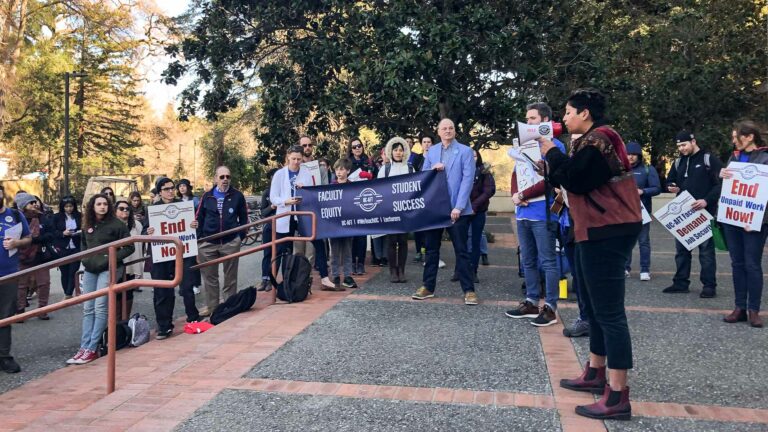
The contract that covers over 6,000 UC lecturers represented by the University Council-American Federation of Teachers (UC-AFT) ended on Jan. 31. With the no-strike clause that is contained in their expired contract no longer applicable, lecturers, librarians and students gathered for a rally in front of Mrak Hall on Feb. 3.

During the rally, dozens of attendees sang a modified version of “Solidarity Forever” and chanted “Hey, hey, ho, ho, UC greed has got to go.” 

Speakers at the rally included Katie Rodgers, a UWP lecturer and the president of the UC-AFT Local 2023 as well as Don Palmer, the president of the Davis Faculty Association (DFA) and ASUCD Vice President Shreya Deshpande.

Palmer said the DFA stands in solidarity with UC-AFT and Deshpande said ASUCD also supports the lecturers and librarians.

“UC is treating public education as a privilege, not a public good,” Deshpande said. 

At the rally, Michael Gunnarson, a first-year aerospace engineering and music composition double major, said one of his best music teachers was a lecturer on contract.

“He just graduated, and he still doesn’t have a job,” Gunnarson said. “With music, most teachers are lecturers. Tuition’s rising and the cost to hire paid faculty goes up, so people just hire lecturers — it becomes a gig economy.”

UC-AFT is a union that has represented non-tenure track faculty, or lecturers, and librarians at the UC since 1983. According to an FAQ and bargaining update on the UC-AFT website, the union’s negotiating team has been in talks with UC since April 2019 to revise the current contract, which took effect in February 2016. 

The update, written by UC-AFT Chief Negotiator Mia McIver, did say going out of contract had affected negotiations “very positively.” 

“Negotiations between the University of California and UC-AFT are ongoing, and the University is working hard to negotiate a fair agreement as quickly as possible,” said a statement from the UC Office of the President (UCOP) that was provided to The California Aggie.

The contract offered to the UC-AFT Unit 18 faculty, which includes lecturers, would have increased the compensation for Unit 18 members by 3% each year from 2020 to 2022, followed by 2% adjustments during 2022 to 2025, among other salary increases offered.

“We believe you deserve to vote on our offer, and to be fairly recognized and compensated for the contributions you make to the University and our students,” stated a letter written by Peter Chester, the UC’s Executive Director of Systemwide Labor Relations, sent to the UC-AFT chapters.

On Feb. 1, the day after the contract expired, the UC-AFT bargaining table team released a statement explaining why they did not accept the university’s offer, which they called “an incomplete, take-it-or-leave-it, bundle of articles with little to no movement.”

Their reasons for rejecting the contract included the UC’s use of “salary as a wedge” meant to reduce “commitment to major improvements in job security and workload,” offering other unions “significantly higher salary increases” than those proposed to UC-AFT and a lack of UC proposals on key UC-AFT demands like middle-class salaries, more full-time teaching jobs and fair workload standards.

Rodgers also argued that the proposed contract would have taken rights away from new lecturers.

“The university’s proposal that we rejected says that lecturers are on what they call ‘self-terminated’ contracts with no option to renew,” she said. “All lecturers would have to be rehired. That’s a huge deal — it’s part of what makes someone an adjunct with no right to rehire.”

Around 30% of UC Davis’ classes are taught by lecturers, who fall into “pre-six” and “post-six” categories. Pre-six lecturers are those who are rehired quarter by quarter, then year by year — with a performance review each year — until they reach their sixth year of service. They then receive a six-year merit review, which takes a lecturer from “pre-six” to “post-six.” 

“Post-six” status means that a lecturer becomes a “continuing” lecturer, a level of job security similar to gaining tenure for tenure-track faculty. If a lecturer does not pass their six-year review, they remain in limbo. If a department wants a pre-six lecturer to return, they can reappoint them.

Under the proposed contract, however, lecturers would have to be rehired and put back into the system again — a disadvantage in terms of salary and workload.

Post-six faculty, however, still experience difficulties despite their relative job security. 

Dr. Bryan Enderle, the treasurer of UC-AFT Local 2023 and a continuing lecturer in the UC Davis Chemistry Department, said he still knows continuing lecturers who teach at other universities.

Though he sells his chemistry readers to students and has a YouTube channel, Enderle said the money from his readers — if there is a sizable enough amount — is donated to Doctors Without Borders and the money from his YouTube channel goes toward pizza for his TAs during their grading sessions. 

“Even after you reach that level of security, the cost of living here is just so high that a lot of people don’t even live in Davis,” he said. “I’ve been lucky that I have a full appointment and my department has been accommodating, but it definitely doesn’t work for everybody.

Enderle said he went through his six-year review “totally clueless.”

“There have been folks who’ve been around for way more than six years that haven’t made it through for various reasons — maybe the department doesn’t know if there’s space or enrollment or they just don’t want you,” he said. “It depends.”

Matt Oliver is on the UC-AFT bargaining team and is a pre-six UWP lecturer at UC Davis. He described the pre-six experience as being “marked by contrasts.”

“My chair and colleagues are extremely supportive and professional,” he said via email. “Nevertheless, the larger institution reminds me every day that my job is tentative; that I can lose it at any time regardless of how well I perform.”

He said that despite the resources and letters of support his colleagues and chair provide him each year, he has to wait — often until after his contract expires each year on July 1 — to hear if there’s room for him in the university budget.

“Last year, six of my colleagues did not find out they had lost their jobs until four days before their contracts expired,” he said. 

Oliver, Enderle and Rodgers all believe their involvement with the union is not just about better compensation but also about professional courtesy, lecturers’ basic needs and improving students’ learning.

The UCOP statement provided to The Aggie states that the UC believes its “lecturers play an essential role in supporting the University’s educational mission,” adding that its “goal is to reach an agreement on a multi-year contract that includes fair pay and excellent benefits, and recognizes their contributions and is in line with other labor agreements.”

Oliver, however, implied that the UC had not yet demonstrated that belief. He said one way it could offer the lecturers a voice would be to grant them a vote during curricular development, program assessment, department meetings and committee work.

“While we do care very much about fair compensation, we also want UC to acknowledge that we are professionals and that we make a vital contribution to the fabric of the university,” he said. “As a professional courtesy, we’d appreciate if they could at least tell us whether or not we will teach again in time for us to find another job.” 

Enderle said the bargaining process was an avenue for helping lecturers focus on teaching.

“The lecturers teach a huge portion of the classes on campus,” he said. “The union is part of the support that helps us do that, to fight for our rights so that we’re able to focus on the classroom. I think the things that the lecturers are asking for and bargaining for are quite reasonable — not just to get paid more, but to have basic rights, like having an office or not be questioning whether we’re going to get hired.”

UC-AFT’s student reach is large, especially because of how many courses are taught by lecturers, according to Rodgers. She said she thought it was important for students to know and understand the structures defining their education.

“[Students should know they] have the right to ask questions, like ‘Why do I have to pay for my parking pass?’ or ‘Why is the university allowing workers and a union to stay out of contract for three years?’” Rodgers said.

She suggested that lecturers could encourage their students to ask the questions she posed and said she tries to remind her students to do the same.

“I think that teachers should help students to know the extent to which working conditions become learning conditions with lecturers and librarians,” Rodgers said. “We need the students to understand this, otherwise it’s all for nothing — then we’ll have no one left to teach.” 

Written by: Janelle Marie Salanga — campus@theaggie.org

Editor’s Note: A previous version of this article stated that lecturers and librarians are without a contract after a UC-AFT contract ended on Jan. 31. That is incorrect. It is just lecturers without a contract. The article has since been updated. The Aggie regrets the error.

Ever crave a simple street taco in Davis? Here’s where to go.

A three-part criteria for success

Since coming to Davis, I have been on a personal mission to find the best taqueria. The place you frequent every weekend, filled with welcoming mariachi music and brightly colored walls. But more important than the decor, taquerias are home to tacos. These bundles are the most elegant type of food: meat within a warm tortilla, covered with a variety of fresh green to spice up your mouth. They are made to be effortless, an easy solution for a late night dinner. From this mission, I have devised a three-part test to determine the best street style tacos in Davis, creating a comprehensive review to inform your next Mexican-style outing, while also taking into consideration affordability. 

First, the tacos have to be hot. When you get them, they need to be fresh off the grill, a representation of the ease and simplicity that tacos embody. A cold taco may often demonstrate a lack of care, both by the establishment and the server. 

Second: the meat. For the purposes of this study, we will be focusing on the classic chicken taco. If the chicken is flavorful and well-seasoned, this provides a look into the quality of the meat in the rest of the dishes. If the chicken is out of this world, the steak and pork are sure to portray similar elements. The treatment of meat divides the “okay” tacos from the “amazing” ones. To truly be above the rest of the crowd, the meat has to shine in its complexity.

Last is the toppings. Onion and cilantro provide the perfect backdrop to support the intensity of the meat. Iceberg lettuce and chunks of tomato, however, are not as kind, diluting the chicken in order to create the appearance of a loaded taco.

I visited four restaurants: Taqueria Guadalajara, Davis’s Piñata, El Burrito and Tres Hermanas.

Tres Hermanas

Tres Hermanas was not the classic taqueria I thought it would be. There were no $2 tacos on the menu, yet Randall Dobkin, a second-year studying political science and economics, explained his take.

“Tres Hermanas is just a different restaurant,” Dobkin said. “It’s more of a sit down place, and a place to get drinks. You don’t come here at three in the morning to get tacos. The chicken is not the most seasoned, yet it comes out very hot, and the toppings are lettuce and tomato, elements not in the classic street taco.”

The lack of onion and cilantro, as well as the sit down nature of the restaurant, place Tres Hermanas at the bottom of the four options, more of a Saturday lunch with parents than a quick taqueria. 

El Burrito

El Burrito is located conveniently downtown, and embodied the classic taqueria atmosphere. The taco was hot, covered with onion, cilantro and well-seasoned chicken. The only critique I had was the salsa — it was incredibly hot, but easily avoidable with a quick request. Henry Gardener, a second-year political science major, outlined his position. 

“El Burrito is just the most bang for your buck,” Gardener said. “On Taco Tuesdays, when tacos are $1.50, it is just the best deal. There are no crazy long lines, and the pastor tacos are amazing too,” he says.

Davis’s Piñata

Davis’s Piñata was the next stop, and the taco was very hot, covered with onion and cilantro, at $2.00: a classic street taco. 

Dobkin, however, noticed a slight difference between the tacos of El Burrito and of Piñata. 

“Although both solid tacos, El Burrito just has more flavor in its chicken itself,” Dobkin said. “The chicken just has that extra little spice.”

Taqueria Guadalajara

Last up was Taqueria Guadalajara. The tacos here were considered to be better than the three other Mexican restaurants — the onion and cilantro toppings were paired perfectly with flavorful, hot chicken that beat out El Burrito in terms of texture. What really set it apart, however, were the fluffy sand dollar tortillas, which were equally as hot as the chicken inside.

“It just beats out El Burrito,” Dobkin said. “Although El Burrito is my eating out staple, I find Guad’s to be better in terms of meat and tortilla, separated even more from the competition in its true street taco style.”

In second-year cognitive science major Noel Fernandez’s words: “When it comes down to it, Guad’s is home.”

Written by: Athena Aghighi — features@theaggie.org

TV vs film: The advantages of longevity

How television is able to live up to the quality of cinema

No form of artistic expression is more cultivated than another. The intrinsic value that, for instance, classical literature can possess in comparison to free verse poetry is entirely subjective and thus cannot be measured by general perception. 

When discussing movies and television — the “big screen” and the “small screen” respectively — it’s important to note that their titles are not indicative of their greatness, but rather of their closeness to audiences.

What appears to place film above television in the “hierarchy of art” is its forced concision and implied richness. Movies reduce a narrative to about two hours, cutting the “fat” of unnecessary scenes and dialogue. Because of this, television is often seen as expendable in comparison to cinema. A film’s ability to tell a story within a limited amount of time is both efficient and convenient for viewers. We dread seeing our favorite shows drag on for too long and may end up wondering if it would be better suited as a film.

It is the serialized story-telling format, however, that allows television to grow in complexity. And through patience, viewers can see these intricacies blossom. The anatomy of the televisual medium provides narrative methods that are simply unobtainable in film. This advantage builds an experience that is limitless, creating a unique bond with the audience. Although television may become prone to “rushed” or “sloppy” writing, it has the room to  experiment with different arcs, which only makes the medium more compelling.

When we think of film, our minds often conjure up images of popcorn-filled aisles, the Oscars or celebrities standing on red carpets. No matter how many times we rewatch a film or familiarize ourselves with the cast, there always seems to be a distance between us and “the movie world.” Once we finish a film, we talk about it, read about it and think about it until there is nothing left to say. Then we pick up another movie, and the cycle starts again.

Television, on the other hand, creates a sense of intimacy in that it can easily be consumed in episodic moments throughout the day. Whether you’re watching your favorite episode of “The Office” while getting ready in the morning or scouring for a new show before finishing dinner, television remains a permanent guest in our homes.

And unlike film, television does not have to force out a revolutionary concept to garner attention. Shows such as “Friends” or “How I Met Your Mother,” which follow ordinary people in their ordinary lives, are successful for their relatability. It’s this mingling of our personal lives with the TV format that brings us comfort.

What immediately comes to mind in thinking of “cinematically powerful television” is Vince Gilligan’s “Breaking Bad.” The five-season show about a drug-dealing high school chemistry teacher only got better with time — allowing for complexities unachievable in film.

The polarizing “Fly” episode best exemplifies this. For 47 minutes, we see the protagonists, Walter and Jesse, attempt to remove a fly from their laboratory in order to prevent contamination. With no plot advancement or really any need, the episode was heavily criticized for being a “filler.” 

But despite its mundane premise, the episode was significant in developing the relationship between the two characters. As viewers, we are able to slow down for a brief moment and reflect on the current state of Walter and Jesse’s relationship in all its toxicity. The brilliance of this episode is proof that television does not need to rely on bombastic action shots or big turning points to be great. What may seem like an empty episode about nothing can end up representing everything.

There is no time to waste in film. With only two- to three-hour durations, each scene and line needs to count in order to fully deliver the message. Television has the upper hand in that it can make the most of its extended frame. This longevity, however, should not be mistaken as an element of “low brow culture.” Instead, both mediums should be applauded in their ability to construct distinct narratives, regardless of their respective lengths.

Written by: Julietta Bisharyan — jsbisharyan@ucdavis.edu

Disclaimer: The views and opinions expressed by individual columnists belong to the columnists alone and do not necessarily indicate the views and opinions held by The California Aggie

Davis City Council officially ends use of glyphosate, approves use of pre-emergent pesticides amid community’s concern

1

The grass is not always greener on the other side: Council members combat increasing invasive species due to toxic pesticides

The Davis City Council voted to officially end the use of pesticides containing glyphosate, the chemical found in RoundUp, after the city successfully reduced its use in public green spaces over the last few years. Council members also approved the use of pesticides with more moderate toxicity to combat the increase in invasive species.  

This vote comes after a 2017 decision when the Davis City Council decided to phase out glyphosate pesticides in areas of high public exposure by 2020, such as parks, greenbelts and bike paths. At a previous meeting, the council made other decisions regarding pesticide use, including banning harmful neonicotinoid pesticides and developing the Integrated Pest Management Team. 

Though the official three-year deadline was in November, city staff said that glyphosate use was already eliminated in high public exposure areas when the matter was reevaluated during a city council meeting on Jan. 28, 2020. The approval of the official ban means that glyphosate can still be used in city operations that are not highly accessible by the public, like at the wastewater treatment plant. 

The reduction in glyphosate has led to a substantial rise in costs for maintenance of the green spaces, with more complaints from the community about the increase in weeds, according to a presentation given by city staff during the city council meeting. 

City Councillor Dan Carson described how reducing the glyphosate impacted the aesthetic effect of the green space in a video of the meeting. 

“I heard and talked to other people and saw for myself that particularly on the medians like Lake and Anderson and other places — it looked horrible,” Carson said. “I’m hoping we’re able to move ahead with a pre-emergent that seems to pose a pretty low risk.”

City officials then proposed using Tier 2 pre-emergent herbicides to counteract weed growth in green spaces that are overwhelmed with invasive species. The herbicides are moderately toxic, providing a compromise between manual labor and heavy chemical use. 

Several community members voiced their disapproval of the use of new pesticides during public comments. Roberta Millstein, the chair of the Open Space and Habitat Commission, spoke for better transparency between city staff and city commissions to help regulate the use of pesticides.

“It is apparent that staff is not in any position to implement a new round of pesticide usage without a trained IPM specialist on board, and without first bringing this new usage of plan to the NRC [Natural Resources Commission], Recreation and Parks and Open Space and Habitat to explain exactly what they are doing and why,” Millstein said.

Councilmember Will Arnold voiced concerns similar to Millstein’s, questioning whether city staff can make an informed decision about pesticide use without the right avenues of review. 

“We don’t have the IPM specialist — and we don’t have the TAC in place — so that’s our only resource at this point: these commissions,” Arnold said. “Skipping past them […] does give me a lot of discomfort.”

Despite objections from the public, four out of the five councilmembers, with Arnold dissenting, voted to allow the use of pre-emergent pesticide, thus passing the resolution. 

With the Tier 2 pre-emergent herbicide approved, the areas that would be exposed  to the new pesticide include streets such as Pole Line Road, Chiles Road, Mace Boulevard, Covell Boulevard, Anderson Road and Shasta Road, as well as some interior medians. 

Some parks and larger green areas that are also subject to pesticide use include Cannery, Mace Ranch Park, John Baravetto Park, Arroyo Park, Northstar Park, Sandy Motley Park, Walnut Park and the El Macero Greenbelt.

In addition to using Tier 2 pre-emergent herbicides, city staff added future goals for pesticide use in the city, including the development of an Integrated Pest Management Technical Advisory Committee and added mapping of pesticide hazard and reduction mapping. Ultimately, the city staff is looking to respond to the public’s concerns with minimal use of pesticides.

Written by: Madeleine Payne — city@theaggie.org

Grants for gun violence research available from UC Firearm Violence Research Center

First federally funded gun-violence research initiative in 20 years

The UC Firearm Violence Research Center (UCFC), located at UC Davis, recently launched a new round of funding for firearm violence research. This is the first round of funding to study firearm violence approved by the U.S. Congress in over two decades. Proposals for grants must be submitted by May 1 and decisions will be made over the summer, according to Garen Wintemute, a professor of emergency medicine and the director of UCFC.

“Firearm violence is a big problem here in California and the entire country, and the state recognized that and created a publicly-funded research center here with our program at UC Davis,” Wintemute said. “We recognize that while we can do a lot of good work here, there are plenty of smart people at other universities, and part of our job as a center is to help them do the work that they can do.”

UCFC is the first publicly funded center for firearm violence research. Committed to interdisciplinary approaches to address firearm violence and firearm-related deaths, UCFC supports researchers with backgrounds in medicine, epidemiology, statistics, criminology, law, economics and policy.

Since 2017, UCFC has researched firearm violence and has worked closely with the UC Davis Violence Prevention Research Program (VPRP), established in 1991. VPRP’s research and policy programs focus on the nature, causes, consequences and prevention of many forms of violence, with a particular emphasis on firearm violence research and prevention, wrote Nicole Kravitz-Wirtz, an assistant professor of emergency medicine with VPRP, via email. 

The new grant program has sent out two requests for proposals, both regarding firearm violence research. One program is only open to investigators at UC campuses, and will award grants of up to $75,000 to researchers. In order to increase grant accessibility, the other grant is open to applicants from all public universities.

To be chosen for funding, proposals should have rigorous study designs and a team with relevant experience. It is up to the applicants, however, to decide what they will study and how the grant will be used. Additionally, there is no set number of grants that will be given out, Wintemute said. 

“There is also far too little evidence on the effectiveness of policies and programs to prevent firearm violence,” Kravitz-Wirtz said. “Research funding from UCFC through its small and large grants programs is designed to help address this dearth of data and scientific evidence on one of the leading causes of death in this country.”

Wintemute and other supporters of the UCFC see firearm violence research as an essential step toward helping prevent future tragedies. Pro-firearm lobbyist groups, however, have historically worked to block and minimize funding for research. Matthew Larosiere, the director of legal policy at the Firearms Policy Coalition in Sacramento, spoke out against firearm violence driving public policy.

There is an increasing prevalence of firearm violence-related deaths in the U.S. and a disproportionately high number of firearm violence incidents in the U.S. compared to other developed countries. In 2017 alone, there were 14,542 firearm homicides, another 23,854 firearm suicides and an estimated 456,269 instances of aggravated assault, robbery or rape involving firearms in the U.S. Deaths from firearm violence now exceed those from motor vehicle crashes. 

There have also been more public mass shootings in the U.S. than in any other nation in the world. Additionally, firearm homicide rates are 25.2 times higher in the U.S. than in other high-income nations. Thirty-six thousand Americans are killed by firearms each year, according to Giffords Law Center to Prevent Gun Violence. Moreover, the frequency of firearm violence is increasing in the U.S., rising 16% from 2014 to 2017.

Larosiere and other opponents see firearm violence research as serving a specific political agenda — Larosiere claims that it is “odd” to focus on firearm violence research.

“I’m thankful we live in a time when overall violent crime is low and decreasing, and murders are mercifully rare,” Larosiere wrote via email. “Given that, it seems odd to focus on ‘gun violence’ as opposed to violence in general, when there seems to be a great many other causes of death that are far more common and preventable without threatening the fundamental rights of our people. It seems that, when violent crime is low, directing public funds to ‘gun violence’ research seems like a move driven more by agenda than public safety.”

In a press brief, UCFC explicitly stated that it hopes that future research will help “reduce firearm violence in California.” Wintemute and others who work at VPRP and UCFC acknowledge the opposition to their research, but still believe a scientific approach will lead to better understanding of firearm violence and ways to prevent it.

“We fund research because lives are at risk,” Wintemute said. “Our goal is to save lives and prevent injuries by preventing violence, and that’s what makes it important to fund good research and to fund lots of research.”

Examples of previous studies include researching the frequency of deaths and injuries in California and how they vary across the state, how common firearm ownership is in California, what firearms are used for and what kinds of firearms people own. 

Wintemute believes that using science to research firearms will effectively prevent violence and help researchers understand why it occurs. 

“We have to understand the effectiveness of prevention measures, and that’s where science comes in — just as if we were talking about the opioid epidemic or AIDS or heart disease or cancer, which are big problems,” Wintemute said. “In order to do something, we need to understand that it’s the same for firearm violence.”

Kravitz-Wirtz said that she hopes funding scientific research on firearms will decrease the statistics of death and injury. 

“Programs like these, which fund comprehensive, up-to-date research designed to answer basic questions about gun ownership and evaluate the effectiveness of firearm policies and violence prevention efforts, in combination with the wisdom of communities most impacted by violence, are thus a vital and life-saving endeavor,” Kravitz-Wirtz said.

Written by: Margo Rosenbaum and Ally Russell — campus@theaggie.org

Science competition hosted by Science Olympiad at UC Davis draws hundreds of high schoolers

Aggie Invitational featured over 20 events across various disciplines

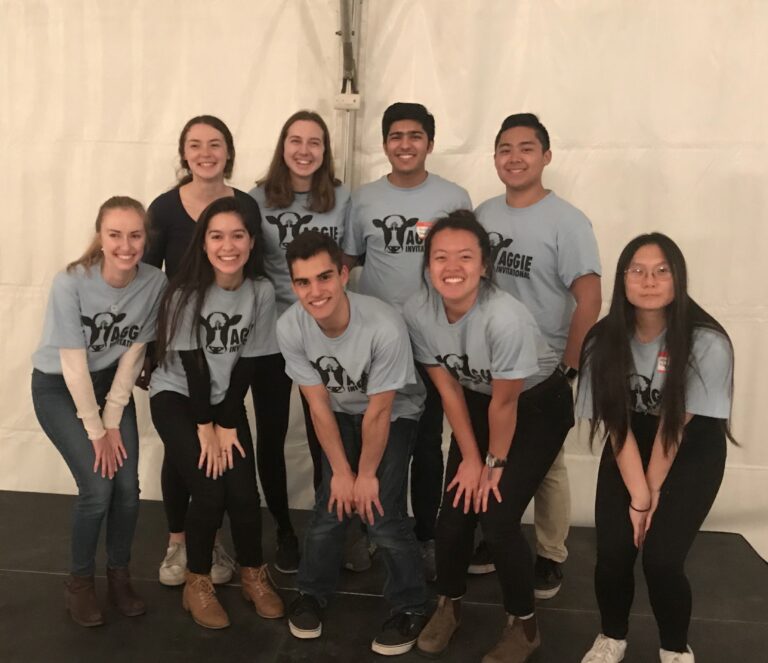
Over 600 students from a variety of Northern California high schools visited UC Davis to put their scientific knowledge to the test at last month’s Aggie Invitational competition. There were 23 events with themes ranging from anatomy and protein modeling to astronomy and ornithology. Students competed in pursuit of the overall first place prize, which was claimed by one of Mountain View High School’s two teams.

The invitational, held in buildings across campus on Jan. 25, was organized by the student organization Science Olympiad at UC Davis. The competition serves as a warm-up for high school students to prepare for upcoming regional, state and nationwide Science Olympiad competitions.

“We wanted to bring a Science Olympiad competition to UC Davis to give these high schoolers that opportunity to see the events, how they play out, so they’re prepared for regionals,” said Chad Mowers, the co-president of Science Olympiad and a third-year physics and mathematics major. “And it’s also just a really fun experience, too.”

The Science Olympiad hosts annual competitions, but the invitational was the first of its kind at UC Davis. Mowers formed the academic club at the beginning of Fall Quarter 2019 with co-president Claire Chapman, a third-year global disease biology major. Chapman competed with Mowers on their high school Science Olympiad team and said she and Mowers were inspired by their experience at the Golden Gate Invitational, which was co-hosted by Stanford and UC Berkeley.

“If Berkeley can do it, then why can’t we?” Chapman asked. “We forget that for high school students it’s very special to come to a university. It’s huge — they maybe haven’t started visiting them yet, so they were really excited by the fact that it’s UC Davis.”

The day’s events kicked off at 8 a.m. and continued until 3 p.m. Some of the invitational’s events were open to the public, such as the Boomilever and Gravity Vehicle engineering competitions in Kemper Hall and the Wright Stuff airplane-building challenge in the ARC Pavilion.

While the Science Olympiad team was tabulating scores, “Secrets of the Universe,” a new film spotlighting UC Davis physics Professor Manuel Calderón de la Barca Sánchez and his work, was shown. The film explores Sánchez’s collaboration with other scientists at the Large Hadron Collider near Geneva, Switzerland. Ken Burtis, the faculty advisor to the chancellor and provost, also spoke at the awards ceremony about opportunities for youth in science, technology, engineering and mathematics.

The event drew over 40 teams from 26 high schools, so it required a significant amount of preparation on the part of Science Olympiad. Chapman and Mowers reached out to Science Olympiad alumni, friends and science enthusiasts to assemble a larger group of team members and volunteers. Serena Kutney, a third-year chemical engineering major, helped run the Machines event, which challenged students to build measuring devices capable of finding a ratio between the weights of two objects.

“I had never seen homemade machines like theirs before, and some of them measured so accurately,” Kutney said via email. “It was fun interacting with these high schoolers who were invested in the event and were so bright.”

Events testing other skills besides science and technology were included in the mix as well. Kendra Goudie, a Tokay High School student from Lodi, California, participated in a communication challenge called “Write It Do It.” 

“‘Write It Do It’ is an interesting one because it’s more of the science of communication and language,” Goudie said. “You are given an object and a creation, and you have to write it down and describe how to create it piece-by-piece. And then it’s given to a person in another room and they have to create it from your instructions.”

Some high school student participants found the invitational to be both challenging and a valuable learning experience.

“It was an eye-opener,” said Isaac Nguyen, a first-time Science Olympiad participant from Albany High School who competed in the Forensics and Circuit Lab events. “I was not prepared — definitely not.”

Even so, Nguyen is among those planning to participate in future Science Olympiad competitions.

“I want to do it again next year,” Goudie said. “I’ve always wanted to continue doing it. There’s been some hard years and hard events, and you kind of get discouraged. There’s other times where you do really good and it’s really encouraging.”

UC Davis students interested in getting involved with the planning process of future invitationals are always welcome, according to Mowers and Chapman.

“A good portion of people don’t have Science Olympiad experience, so they just like science or like education, and it’s worked out really well,” Chapman said. “We put them on events that they’re interested in because a lot of the events correlate with majors here.”

Written by: Daniel Erenstein — science@theaggie.org 

Beyond cereal: Three recipes to upgrade your breakfast game

A new look for your morning routine

Bowl, cereal, milk, eat, repeat… bleh, bleh and more bleh. This monotonous breakfast routine has seeped into the lives of far too many. From the earthy richness of coffee to the pillowy yet robust texture of homemade pancakes, breakfast is objectively the best meal there is, and it deserves to be treated as such. 

Even for students who operate on constrained time and budgets, quick and cheap doesn’t have to mean dull and tasteless. 

I have pulled together some scrumptious and practical early morning recipes for the aspiring Gordon Ramsay to break free of the humdrum standard of Cheerios and Captain Crunch. So get that tush out of bed, flip on some cooking tunes — I recommend the soul-warming sounds of Aretha Franklin or Sergio Mendes — and let’s get cooking. Without further ado, here are three quick and easy recipes for a college student in a rush and on a budget.

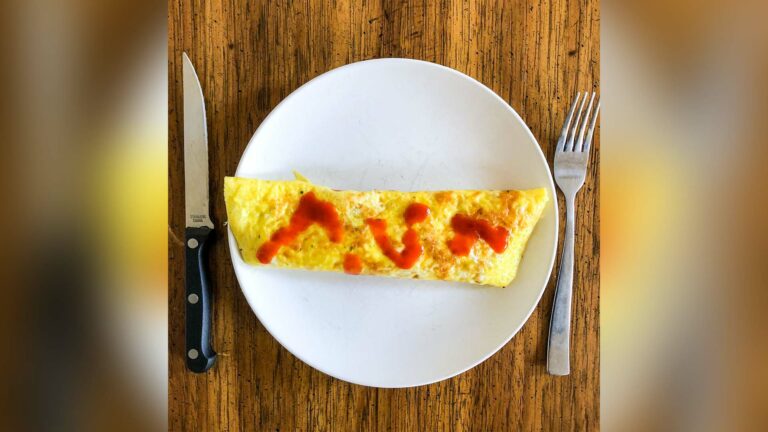
Omelette Francaise

Starting off in the French countryside, we have the simple yet savory omelette francais. The omelette francais is the traditional omelet’s thinner, rolled and undeniably more bourgie cousin. It’s an indispensable dish for any cook’s arsenal and a bonafide crowd-pleaser. Minimal ingredients are required, but if you so desire, this recipe leaves plenty of room for experimentation. 

Ingredient list:

3 eggs

Teaspoon of salt

Half a tablespoon of olive oil

Aged white cheddar

Shaved Potato Skins (optional)

Trader Joe’s Umami Spice (optional)

Sriracha or Ricanta Manzana hot sauce

Estimated Prep and Cook Time: 15 minutes

Instructions:

  1. Crack and empty three eggs into a medium-sized bowl
  2. Grate a handful of white cheddar cheese and add to the bowl
  3. Add one teaspoon of salt, a dash of Umami spice and some shaved potato skins
  4. Whisk until the eggs and added ingredients are mixed thoroughly 
  5. Add a tablespoon of olive oil to a 10-inch nonstick pan on medium heat, making sure to spread it throughout the pan
  6. Gently pour the mixture in the pan making sure that it covers the entire pan
  7. Cook for four minutes while moving your spatula in a figure-eight motion to evenly distribute contents
  8. After four minutes or once the mixture has solidified, but is still slightly runny on the top, begin to gently flip the omelet onto itself in inch-long segments
  9. Using a spatula, gently move the omelet onto a plate
  10. Optional: Drizzle Sriracha or some Manzana Hot sauce over the top and voila

Cinnamon Currant French Toast

Next, we have a subtle twist on a beloved classic with the Cinnamon 

Currant French Toast. With lightly egg-battered cinnamon bread, chopped bananas, raspberries, a drizzle of honey and just a dollop of whipped cream, it doesn’t get much better than this. This matured french toast is a kick-your-legs-back kind of dish best served on a tranquil Saturday morning.

Estimated Prep and Cook Time: 20 minutes

Ingredients:

Half a loaf of cinnamon bread (If you’re feeling saucy, drop by the Co-op for Acme Cinnamon Currant bread)

3 eggs

Cinnamon

Honey

Raspberries

Heavy Cream

2 Bananas

Directions:

  1. Add three eggs and a dash of cinnamon into a medium-sized bowl and whisk until combined
  2. Slice loaf into the desired amount of pieces
  3. Chop up a banana or two, depending on the planned serving size
  4. Pour three cups of heavy cream into a blender and whip until solid
  5. Lightly dip bread into the batter one side at a time and place on a non-stick pan at medium heat
  6. Flip until each side is golden brown
  7. Add a tablespoon of whipped cream, a drizzle of honey and a small handful of raspberries

Overnight Oats

To round out the trio we have Overnight Oats. Overnight oats are the ideal, simple concoction for on-the-go, early risers in need of prep-free, portable nourishment.

Estimated Prep and Cook Time: Five minutes

Ingredients

½ cup milk

¾ tablespoon chia seeds

½ cup rolled oats

Peanut butter/nut butter

Cinnamon 

Honey

Instructions:

  1. Add all the ingredients together except for the peanut/nut butter, making sure all the oats are covered by the milk and place in the fridge overnight
  2. In the morning add the desired amount of peanut butter, stir

A little bit of effort goes a long way both in the kitchen and in the belly. These three simple recipes may provide the spark of culinary inspiration needed to transform bland and boring into a breakfast routine that you can own.

Written by: Andrew Williams — arts@theaggie.org

ASUCD Senate resolution condemns UCPath rollout at UC Davis

SR #8 demands UC further compensate student workers affected by UCPath

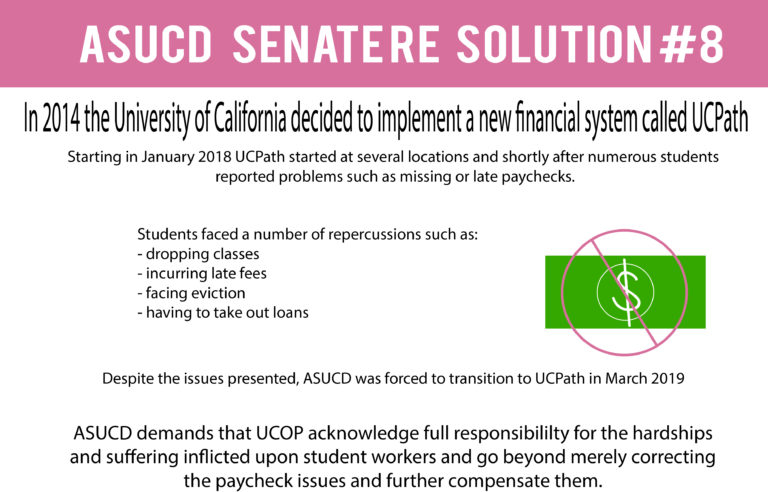
Senate Resolution #8, which condemned the university’s flawed rollout of the UCPath payroll system, was adopted by the ASUCD Senate on Jan. 21. The implementation of UCPath was widely seen as a failure by undergraduate students and led to a walkout of student employees at the CoHo who faced difficulties receiving timely and correct pay.

Since its implementation in October of 2019, as many as 800 undergraduate students, faculty and staff have been affected. By the end of Fall Quarter 2019, at least 50 students were still without paychecks.

The resolution passed, with 10 senators in favor. Senators Sahiba Kaur and Lylah Schmedel abstained.

Christine Lovely, the chief human resources office for UC Davis Finance, Operations and Administration provided updates on residual issues with UCPath.

“All known issues since UCPath implementation have been resolved,” Lovely said via email. 

Despite Lovely’s reassurances, at least 41 students still remain unpaid at the time of publication. Lovely claimed that paychecks have been written for these students, but have yet to be picked up. 

Many of these checks are only available at UC Davis Central Payroll Office, located far from campus on Research Park Drive. For those who work, attend school during the regular work week or lack reliable transportation, the decision to rely on check pickup at an off-campus location has introduced an additional barrier to receiving their money owed. However, students can contact the Central Payroll Office to see if their paycheck can be forwarded to Dutton Hall by calling (530) 757-8550.

This resolution was sent directly to Chancellor Gary May, Vice Chancellor Kelly Ratliff and Associate Vice Chancellor of Student Affairs Sheri Atkinson among others according to Senator Victoria Choi, who authored of the resolution.

“I wrote the resolution with the intention of documenting the harm done by UCPath across the UC campuses and condemning the lack of concern for student welfare indicated by its sloppy and rushed implementation,” Choi said. “I think UC Davis should have pushed back on the initial implementation of UCPath, as it had already been clearly demonstrated at other campuses, like UCLA, that the implementation caused many issues that harmed students. Knowing this, they allowed the system to wreak havoc on our student workers here.”

Among the issues cited in the resolution, senators criticized the centralization of the onboarding of new employees and payroll processes, now overseen by UC Davis Shared Services Office. The resolution states this “significantly delayed the onboarding of Unitrans employees and Coffee House employees, which, in addition to providing crucial services for students, have the highest volume of student workers.” 

Before the implementation of UCPath, ASUCD HeadQuarters (formerly known as ASUCD Shared Services Office) had full autonomy to issue payment to employees, oversee onboarding processes and issue reimbursements.

These onboarding delays are still impacting students in Winter Quarter 2020, limiting the number of buses available during Unitrans’ highest ridership season and the frequency of bus stops.

The resolution states that the University of California Office of the President “must go beyond merely correcting the paycheck issues experienced by UC Davis student employees and further compensate them in a similar model as has been arranged with UAW Local 2865.”

Affected student employees at UCLA were compensated $150 each in addition to their normal wages. According to an article in the Daily Bruin, if issues persisted for more than a month, employees were compensated with an additional $450.

Authors of the resolution also hope this resolution will serve as a warning to other UC campuses who will implement UCPath. Vice President Shreya Deshpande commented further on this intention.

“The resolution also serves as a preliminary warning — a heads up — to the remaining UC’s that are yet to see the implementation of UCPath,” Deshpande said.

Currently, UC Hastings School of Law, UC San Francisco and UC San Diego have not implemented UCPath.

“As Vice President, I am responsible for sending out resolutions that are passed by Senate, and this allowed me to notify these campuses and connect with their leadership, advising them to ask their administration to potentially delay the rollout until all of the technical glitches and errors can be fixed,” Deshpande said.

Written by: Ally Russell — campus@theaggie.org