57.3 F
Davis

Davis, California

Wednesday, December 24, 2025
Home Blog Page 365

Facebook breaks into saturated online dating market

Is it too late for tech giant to stake claim?

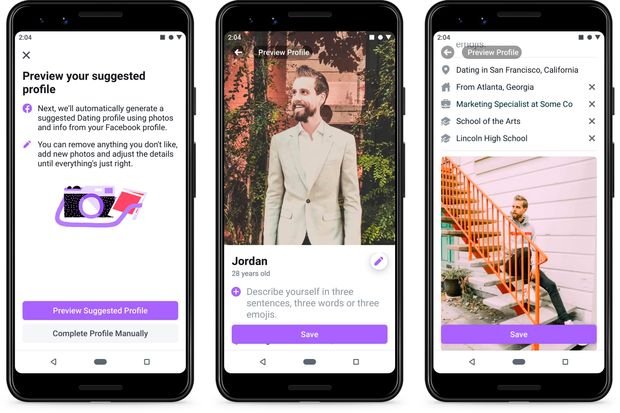
Facebook is attempting to further its agenda as an app-of-all-trades with Facebook Dating, which launched in September 2019 and is available in 19 countries throughout North and South America and East Asia, with a rollout in Europe expected in early 2020. The opt-in, in-app feature resembles many of its competitors in appearance and what it offers, but the introduction of a few features and a heightened concern for safety and privacy may help Facebook stand out in the crowded business of finding love online. 

Users can create a “Secret Crush” list based on their Facebook and Instagram networks. Users can add up to nine crushes and are notified if they’re in another users’ nine crushes — much like a game of Battleship where the objective is to find matching coordinates behind a wall.

“Secret Crush lets you match with people you already know on Facebook and/or Instagram,” according to the Facebook website. “By default, Facebook Dating won’t match you with your Facebook Friends, but people told us they were interested in exploring potential romantic relationships within their extended circles, like their Facebook friend list and Instagram followers.” 

Users have the choice to share their Facebook and Instagram stories on their dating profiles. It’s a window into someone’s day-to-day life, which may be an effective counter to the catfishing epidemic as a backdoor background check and identity verification method.

Users can see who likes them and “swipe” with just those profiles. This is a feature that’s available on other apps, but they’re commonly behind a paywall. 

“There’s a lot of competition, and I don’t think it would do that well because there’s Bumble, Hinge, Tinder and Grindr,” said Rabiya Oberoi, a third-year international relations major. “I associate Facebook with staying connected to people I already know.”

Facebook is trying to ensure safety and privacy, especially through protection from malicious use of personal data, for its users.

Michael Walters, a museum scientist at UC Davis, commented on whether he thinks Facebook can compete in the online dating market with many of the apps available having the same recurring issues.

“I don’t think so — I think the dating app market is saturated already,” Walters said. “Plus, not to mention this would be using, or gathering, more of our personal data, [and] Facebook has had issues with security.”

According to Facebook’s website, “Finding a romantic partner is deeply personal, which is why we built Dating to be safe, inclusive and opt-in. Safety, security and privacy are at the forefront of this product. We worked with experts in these areas to build protections into Facebook Dating from the start, including the ability to report and block anyone.” 

Alex Zoch, a fourth-year communication major, expressed her hesitation when deciding to meet someone she met online in person.

“I get scared about meeting someone new, and that environment is very vulnerable,” Zoch said. “I get worried about their intentions as opposed to being out in a neutral place.”

Regardless of new features or safety measures, there are still social stigmas surrounding the use of dating apps.

“If you’re using a dating app, it’s expected to just be for hooking up,” Zoch said. 

Walters also said some view the experience as a whole to be lacking a human emotional element. 

“With my experience using online dating apps, people seem to use online dating apps in lieu of interpersonal connections,” Walters said. 

Written by: Josh Madrid — arts@theaggie.org
In light of impeachment trials, students and professors discuss media literacy

0

Fake news or legitimate information? Many UC Davis students are able to make the distinction

Impeachment has been a hot topic of conversation over the past few months. House Speaker Nancy Pelosi’s announcement of the impeachment inquiry on Sept. 24, 2019 was followed with much media coverage, perhaps most notably on Dec. 13, 2019, when the House Judiciary Committee voted to recommend two articles of impeachment, and on Feb. 5, 2020, when the Senate acquitted the president on both charges. 

The high density of news coverage of both events has spurred a discussion around media literacy, defined as “the ability to access, analyze, evaluate, create and act using all forms of communication,” according to the National Association for Media Literacy Education (NAMLE). 

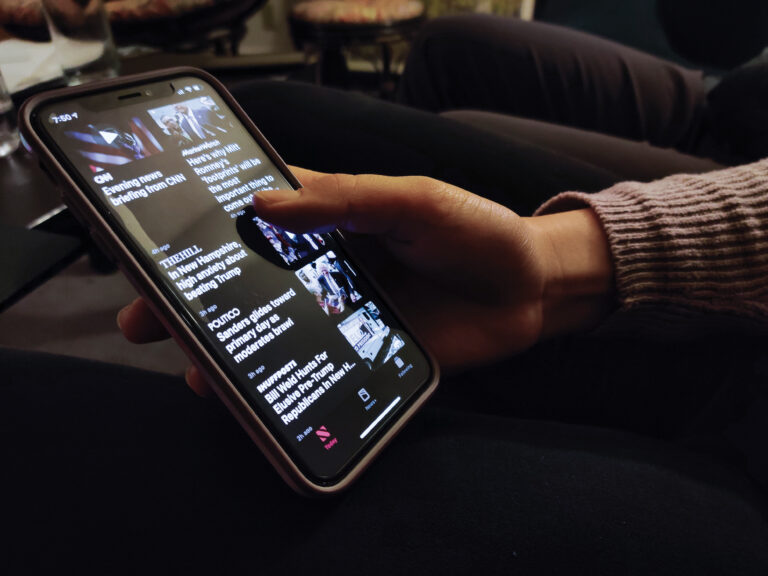
Third-year anthropology major Cierra White mainly consumes her news digitally, and she often finds articles on Instagram that pique her interest. She has found a way to deal with the fact that there can sometimes be a lot of information presented. 

“I read a lot of The Telegraph, weirdly enough, which is not an American publication,” White said. “But [it] will cover things in a simpler manner because it is for people outside of the U.S., and so it’s a little easier to understand.” 

White said her knowledge about the impeachment during the proceedings was “pretty low” since she had a lot going on at home and didn’t consume too much of the news surrounding the impeachment. Since a president had not been impeached during her lifetime, White wasn’t sure what the process looked like and said that the limited amount of information that she followed was valuable. 

“I just kind of hear little tidbits of information,” White said. “I know that our president was impeached, but that it did not affect his standing as president. Nothing really changed in the power structures.”

White lives at home, with her “very literate and educated” grandmother and parents — the news is often on in the background and the family makes a point to discuss current events. 

“We talk about what’s going on and what’s happening on both sides,” White said. “I’m always open for learning.” 

White believes that UC Davis students’ media literacy mostly depends on their major and said students studying policy or students who are involved in events like speech and debate or mock trial are likely to be “more oriented in modern happenings.”

“I think that it probably just depends on your personality,” White said. “If you’re just here to study and that’s what you want to do, then you will. But if you are looking to broaden your horizons, chatting with other students about current events would be really important.”

Second-year materials science and engineering major Tyler Grey agrees with this sentiment. Grey considers himself fairly informed in regards to the impeachment — often checking for updates on the proceedings, usually on the home pages of search engines such as Google, Yahoo or Bing. 

“Students focus heavily on specific items that are relevant to their studies and their careers, as well as any political items that might affect their studies,” Grey said.

He said conversations about the impeachment with friends and peers involved discussions of what the political, economic and socioeconomic ramifications of different outcomes would be.

Associate professor of political science Amber Boydstun said the UC Davis students she has interacted with are quite informed about national and global news. Her impressions, however, are based on the students in her classes who come to office hours, emphasizing that this pool is a non-representative sample of students. 

“My perception is that UC Davis students are remarkably savvy in their understanding of world events and in their ability to choose and interpret their news sources wisely,” Boydstun said. 

In a class that Boydstun taught in Fall 2019, she assigned a project asking her students to track their media consumption for a day and write a diary about their experience. 

“Even above the high esteem with which I already hold UC Davis students and their media savviness, I was very pleasantly surprised to see […] that they seemed to be very self-aware,” Boydstun said. 

Through the project, she observed that they had “very good” media information habits. Boydstun is not teaching any undergraduate courses this quarter, but she said it would shock her if students were not “riveted to the impeachment” and paying close attention to the proceedings.

“This is going to sound sappy, but talking with UC Davis students is what gives me hope for the future,” Boydstun said.

Written by: Anjini Venugopal — features@theaggie.org

UC Davis Boxing Club trains competitive, noncompetitive participants

0

Members, coach talk about sense of community fostered through practices

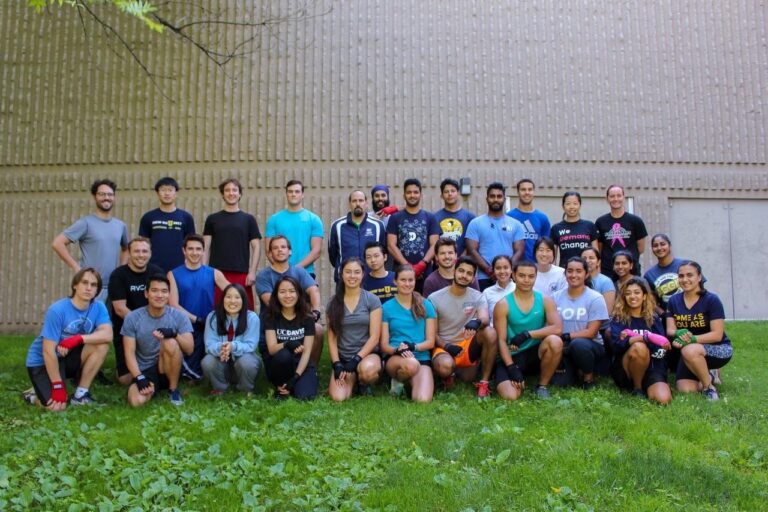
Three days a week, approximately 100 members of the UC Davis Boxing Club gather upstairs in the ARC pavilion to practice. Each practice spans two hours and involves a combination of warm-up drills, boxing instruction, hard drills and sparring, ending in a sweaty mess. Members’ level of experience ranges from years of boxing experience to those who have never participated in a sport before.  

The boxing club was founded 12 years ago by a UC Davis graduate student who happened to be an amateur boxer and who later brought on the former coach, Hector Lopez. The club competes under the same rules as regular amateur boxing as part of the National Collegiate Boxing Association Western Division. In previous years, the club has produced several national champions in a variety of weight classes and in both the male and female categories.

Second-year biomedical engineering major Liz Metzger had years of experience under her belt when she decided to join the club. Metzger had been fighting since the age of three, practicing karate for 11 years and krav maga for three. When Metzger came to UC Davis, she sought out a similar environment and decided to join the boxing club during the winter quarter of her freshman year. 

Third-year economics major Mansoor Ahmadi joined for similar reasons. A wrestler since middle school, Ahmadi has always had an affinity for contact sports. When he heard about the boxing club after transferring to UC Davis as a junior, he decided to join. So far, he’s loved his experience.

“I like it because it’s like a skill, it’s like art,” Ahmadi said. “You’re learning something new. For me, it’s self investment: I’m investing in myself, I’m learning something. I think for me it helps me with school too — it keeps my mind clear. I’m always more focused when I’m doing exercise.”

Despite only starting a quarter ago, Ahmadi is committed to working towards competing. Although his busy schedule means that competing this year is not an option, he hopes to be able to compete starting in December. 

I like competing in the things that I do,” Ahmadi said. “I feel like that’s how you can make yourself better.”

Metzger is also in the training stage as she works towards competing at a local amateur boxing gym in May. Despite her strong background, she spent a quarter and a half working on basics before she began to work with Coach Joel Stern toward competing. And throughout the process, Metzger feels she has found a strong community among the team. 

“I love my team — obviously I love these people so much,” Metzger said. “Everyone’s just been really nice and it’s the same environment that I’ve always had with competitive fighters who are very friendly. You can’t be mean and then let people punch you, you know it doesn’t work out. So, everyone’s really nice and everyone’s really dedicated to what they’re doing.”

Not everyone decides to compete though, according to third-year electrical engineering major and club president Elliott Napier. Becoming a competitive boxer at the amateur or collegiate level is a huge commitment, he says, and it requires a lot of discipline on the part of the students themselves. Currently only nine students are working towards competing, with most of them hoping to compete in the fall. 

“You need to put in some serious training if you’re going to go into a fight, because the other guy in there is basically trying to take you out for six minutes,” Napier said. “So, you have to be serious about the sport if you want to compete.”

The club operates on a framework that allows members to choose their level of commitment. Those who want to compete can do so if they want, but plenty of members join the club just to learn more about boxing while getting in a good workout and choose to never compete or take part in sparring during practices. 

Stern works hard to make sure this dynamic is maintained. As a seasoned boxer with four years of coaching the club under his belt, Stern understands that not every student comes into the club wanting to be a competitive boxer.

“I understand that not everyone’s going to be a fighter because that’s a very particular person, and it’s an extremely difficult thing,” Stern said. “But I wanted to give everyone here an opportunity to do something that you don’t ordinarily do in life. From day one, I talk about how everyone here is a boxer, and we respect everyone. We’re here to learn about boxing — this isn’t a fighting place, this is a place to get in good shape, test yourself, learn about yourself and help everyone else improve.”

Stern also dedicates time outside of practice to work with students who want to compete. He began working at UC Davis nine years ago, starting as an assistant coach and later taking over as the official coach for the club.

“It’s been one of the great experiences of my life working with the students and developing them,” Stern said. “Not just [as] successful boxers, but through the process of being a boxer, you really learn a lot about yourself and you strengthen yourself, you know, for the rest of the challenges in life. Getting the students through that process and having success and then seeing them go on and have success in their life has been really rewarding.”

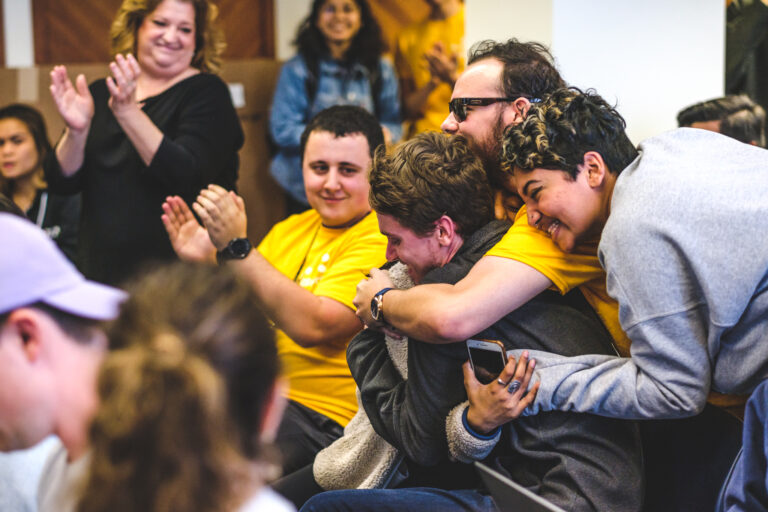
For many students, it’s that sense of community fostered by team members that keeps them motivated and makes the experience so rewarding. During practice, team members shout words of encouragement to each other to help keep spirits up. They work with each other to ensure that even when club members have off days they can still make progress at their own pace.

“There’s the most sense of community out of any club I’ve been in, which I thought was strange, because I thought it was a bunch of people that are trying to punch each other in the face three times a week,” Napier said. “But, there’s a weird kind of friendship that you build off of that. Some of my best friends here are all from the boxing club.”

The Boxing Club practices Mondays, Wednesdays and Fridays from 5-7 p.m. in the ARC Pavilion. 

Written by: Priya Reddy — sports@theaggie.org

The false promises of the wellness industry

The diet industry may have been pushed out of the mainstream, but a new industry has taken its place 

In 2018, Weight Watchers completely rebranded its marketing as a company. It even changed its name to WW, or “Wellness That Works.” This rebranding was a result of an increase in criticism regarding “diet culture” and the practices it promotes, such as crash dieting and restrictive eating. The diet industry makes $35 billion off of Americans, and people have started to catch on.

Unsustainable diets that condemn entire food groups, such as the Atkins diet, have been pushed out of the cultural zeitgeist. An increasing number of people are pushing back against the claims made by the diet industry about the best way to care for your body. Instead, “wellness” has become a keyword in 2020 utilized by these companies, supposedly focusing on ways to boost true physical and mental health. 

Just because a diet product is rebranded as wellness, however, does not mean that there is not an industry profiting behind it. Disordered and restrictive practices still prevail under their mask. 

The concept of “wellness” has replaced its diet-driven predecessors and has integrated itself into our daily lives. An article in JSTOR Daily reviewed this rising trend.

“Once associated with the utopian New Age subcultures of places like Marin County and Santa Fe, wellness has gone mainstream,” the article explained. “The landscape is crowded with the business of it: juice bars, meditation retreats, detox diets, mindfulness apps, and retailers of downward-dog-friendly Lycra.”

Although these routines are not inherently dangerous, the conflation between the practices and full-fledged diet practices are becoming an issue. The act of fasting, for example, has been practiced for hundreds of years. It can have great benefits for one’s mental, physical and spiritual health. When it is coupled with a desire to lose weight, however, it can lead to detrimental mental and physical damage. 

“The worst component of this industry is that it positions itself under the guise of legitimate health, making it possibly even more damaging than the conventional diet culture,” an article for Metiza articulates. 

Fasting for religious or spiritual purposes lead to intermittent fasting, which has now led us to alternate day fasting, in which people restrict calories for entire days in order to place themselves at a caloric deficit. Disordered behaviors around food and health are harder to see when they are masked by “wellness.” 

Just like the condemned “diet industry” that profits off of people thinking something is wrong with themselves and their diets, the wellness industry functions in a very similar way.

An opinion piece in USA Today, written by former holistic nutritionist Denby Royal, details the falsehoods of many wellness claims and the ways in which it functions like a business.

“A meal in my home would have included only organic and non-genetically modified organisms (non-GMO) foods,” Royal writes. “I thought this was the best way to rid your diet of toxins and pesticides. In reality, this isn’t quite the case. The U.S Department of Agriculture (USDA) has a list of synthetic substances that organic growers are permitted to use on their crops and still maintain their ‘organic’ label.” 

This industry has gone beyond replacing the diet industry and has pervaded aspects of medical care as well. Certain wellness practices and “natural cures” are hailed as valid remedies for actual medical and psychological issues. This is demonstrated by trends like the anti-vaccination movement, which advises using peppermint and lavender oil instead of antiviral medication to treat influenza, with disastrous consequences, and in the case of Gwyneth Paltrow’s Goop Lab company, which sells $70 “Wellness” candles and a $500 Wellness Solution vibrator. This proves that just because an ideology or product has “wellness” in the description does not mean you should buy into it. 

Although there’s nothing wrong with focusing on one’s health and wellness, people should still be weary of claims that a specific product or lifestyle change will inherently better one’s life. Odds are, there is an industry behind the claim trying to make money by selling dissatisfaction. 

Written by: Alyssa Ilsley — arts@theaggie.org  

UC Davis students share their experiences with sexual assault

Sexual assault though a woman’s perspective 

Content warning: sexual assault, rape 

Sexual assault is a reccuring issue, but there never seems to be a resolution. Although attempts are made to educate the public on the issue, accusations of rapes or sexual assaults constantly make headlines, and women disportionately suffer the consequences. 

UC Davis students who identify as women courageously took a stance against this pattern by anonymously sharing their stories of sexual assault. 

The first woman to share her story was a 20-year-old neurobiology, physiology and behavior major. 

“I was 18 when it happened,” she said. “I met this guy my first day of my freshman year, when I moved into the dorms, and I went to a frat party. He asked me if he could go home with me to the dorms and I said no. I was not into that.”

“He was a sophomore, an older boy, and I thought he was so cool,” she said. “And so we started hanging out Fall Quarter, and eventually we did engage in sexual intercourse. He asked me if I was comfortable using no condom, and I said no. I had never, not even with my past boyfriend, ever had unprotected sex. That’s a deal breaker for me.”

“I got a pet fish, and I invited him over to see it. I was drunk because I was celebrating my fish’s birthday. And he decided to drink […] I was like, okay, I guess you can sleep here. And so then, that night, we had sex,” she said. “I wasn’t that drunk, I was perfectly [capable] to consent. And he again, asked about the condom and I said, ‘No,’ like, that’s not something I’m gonna budge on. And so we went to bed afterwards, and then the next morning I woke up to him f-cking me without a condom.”

“I woke up and I pushed him off of me. [He said he] thought [I] was awake, but if I were awake, why were my eyes closed? I didn’t tell anyone for two weeks that had even happened because I didn’t know what to do,” she said. 

She eventually told her roommate and her resident advisor what happened because she was still in communication with him and was in denial about what had happened. As a mandated reporter, her RA stopped her and told her that she was sexually assaulted. 

 “No, I wasn’t, because we had sex before, so it’s totally fine,” she responded, but as she explained what had happened, she realized, ‘Oh my god, he sexually assaulted me.’” 

“I asked her to keep his name off of [the report],” she said. “And until that happened, I never understood why girls don’t automatically report — like why they don’t report the name and get the guy in trouble? But now I get it, and it’s so hard to explain, but it’s just, you don’t want to live in it.”

“I wouldn’t have reported it all if I didn’t tell her because it’s really hard to recount what happened and to actually say the words, ‘I was sexually assaulted, and this is the person who sexually assaulted me,’” she said. “But I get now, like in the Kavanaugh case, why [Dr. Christine Blasey Ford] came out so much later; it makes sense, because it’s so hard to do it right after it happens. You’re in so much denial and traumatized.”

She ended up with perfect grades that Winter Quarter, not out of sheer determination, but because of her insomnia. She would do her homework at all hours of the night, because she “was so afraid of sleeping, because of him.” She experienced panic attacks and anxiety and went to therapy, which she said didn’t help.

“I think the thing that ended up fixing it for me was just talking about it,” she said. 

Three weeks after the sexual assault occured, she was at a party and ended up finding out that the man who had assaulted her had chlamydia. She ended up finding out about his STI through a friend, and confronted him about it on the Quad, where they argued about the effects of chlamydia. She made him take his phone out and text all the women whom he had had sex with to inform them about his STI.

“[I said], ‘Have a great life,’ and I just walked off,” she recounted. “The worst part of all is that it wasn’t even my fault, the fact that I had unprotected sex. It was not my fault.” 

She got her STI test at the Student Health and Wellness Center, but was met with accusatory questions about her sexual history.

“I got a call that I got chlamydia because his d-ck was inside me for five seconds unprotected,” she said.

She underwent a round of antibiotics and probiotics, which ended up costing $150 out of pocket. 

“At the end of the day, I don’t regret anything, because I think I learned so much from it,” she said. “I think before [my experience], I was so naive and couldn’t quite comprehend why on earth a girl would not report. And now it makes complete sense to me, because we live in a society that blames the victim and questions the victim.”

“My housemate last year was like, ‘We need to question the girls more; who’s to say they’re not lying?’ And now, any person that says they’re sexually assaulted, I automatically trust them and believe them because it’s not something you lie about,” she said. 

The second woman to share her story was a 20-year-old undeclared major. 

“I had a co-worker that was very inappropriate with me,” she said. “At first, I thought it was just in a homie way, and then he would start making me feel really uncomfortable by grabbing me in places where he knew there weren’t cameras.”

“When somebody would walk by us, he’d immediately stop, and I would always tell him, ‘I’m trying to work, […] don’t touch me like that, we’re just friends,’” she said. “That went on for a while.”

One day he lured her to the back freezer and he gave her a beer.
“Then he just grabbed me and went in for the kiss,” she said. “I gave him no signs at all whatsoever and like, I’ve never validated his moves on me. And he’s an older guy, probably in his 30s. He’s not like this young dude. And I obviously wasn’t attracted to him or anything. He just [planted] his lips on mine.”

“I obviously pushed him away,” she continued. “I ran out of the freezer, and it was just so uncomfortable and so not okay. I don’t think I realized that until a long time after it happened. At the moment I was like, ‘I didn’t feel comfortable, and I don’t feel comfortable when he does things to me,’ and I tell him to not do them to me, but it doesn’t do anything.” 

“I didn’t even think about telling anybody about it,” she said. “I worked with my best friend and he had done similar things to her, but he never put his lips on her. He would touch her in inappropriate ways, like grab her waist […] while we were trying to work. It was really inappropriate.”

“[If] he’s doing it to both of us, like it’s okay, you know?” she said. “I think when I realized that it was really messed up was when I actually told somebody about it. It hits harder when you say it out loud, I think.” 

“I’m never going to tell my parents or anything,” she said. “Nobody wants to hear that their child has been sexually assaulted. It’s also weird because I feel embarrassed. In a way, I was violated and I let them violate me. There’s a sense of embarrassment that I think goes a long with the act.” 

“I’m sure a lot of people feel how I feel,” she said. “There’s obviously so many predatory guys out there. You really come to realize that as you get older. People don’t understand that some things are not okay. I feel like I don’t know how things could possibly change. It’s just […] so ingrained in society.”

The final woman to share her story was a 20-year-old international relations major.

“I feel like it’s just something that follows me, something I can’t seem to shake no matter where I am,” she said. “I find it absurd that four out of four of my housemates have all been sexually assaulted in some way. It almost seems like a norm for women nowadays, and it definitely shouldn’t.”

“My senior year of high school is when it all began,” she said. “The guy I was talking to for a while ended up getting accused of rape. After that, it just kind of spiraled. More and more girls started coming forward saying that he had sexually assaulted them in some way and that he was a predator.” 

“The crazy thing is that he was ASB president, he was on the varsity baseball team, everyone seemed to love him and his parents were gems,” she explained. “Senior year sucked for me because I was so torn that the person I spent so much time with was being accused of something so unforgivable. Although he never did anything to hurt me, I felt almost contaminated. I never got closure with him, he went off the grid, and he never reached out again. So once I went to college, I thought I would just be able to move on.”

“I started talking to this guy freshman year of college,” she said. “He was really sweet, handsome and smart. There were no red flags. One night, we went to a party and I drank so much I completely blacked out. I had already spent the night in his dorm before, so he ended up taking me back to his place for me to sleep it off. I don’t remember how I got there, or even leaving the party, but all I remember is a snippet of the night of him on top of me.”

“I woke up blurry from the night before, and I didn’t even realize what happened until later on that day,” she said. “I ended up confronting him, but I didn’t really think much of it. He said that I told him I sobered up and that I consented, so I kind of pushed it aside. A few weeks later, I started getting panic attacks every time I saw him, and I knew something wasn’t right.”

“The panic attacks got so bad that I ended up calling the UC Davis Center for Advocacy, Resources and Education (CARE) and talking to this lady about it all,” she said. “I didn’t realize how messed up I was after high school and how it came with me to college. I realized then that I wasn’t in the right mindset to consent at all and that it wasn’t my fault. I realized that I was sexually assaulted, but I didn’t want to press any charges whatsoever.”

“The thing is, I didn’t want to have to go get help, I didn’t want to have to avoid the bike rack he went to, I didn’t want to talk about it or even say that I was sexually assaulted,” she said. “It really f-cking sucks that women have to go through this so often. Nobody wants to have to get help because they were violated. I don’t want that to be a part of who I am, but I had no choice, that choice was taken from me.” 

“I just want to be a normal college student who goes out and has fun, but sometimes I find myself leaving parties early because I get panic attacks,” she explained. “Sometimes, I end up drinking a lot because I don’t feel drunk. I think my body goes into autopilot and won’t let itself get drunk, and that is honestly really frustrating because I just want to be normal and have fun. I don’t get that choice anymore; it changed who I am.” 

There is no “right way” to confront this issue, but sharing personal stories may encourage others to come forward — sparking a change. 

“Pussy power,” said the undeclared major. 

Written by: Sierra Jimenez — arts@theaggie.org

The names of students who spoke about their experiences with sexual assault have been omitted in order to protect their identities.

Basic Needs and Services Referendum passes, smashing voter turnout record

BASED wins Executive ticket, EAVP from Thrive, three BASED senators, two Thrive senators, one independent senator

The results of the Winter Quarter 2020 ASUCD Elections were announced at 2 p.m. in the Mee Room of the MU. The Basic Needs and Services Referendum, the focus of hours of campaigning done by ASUCD officials throughout this quarter, passed with the highest voter turnout of any initiative in ASUCD history.

The Basic Needs and Services Referendum passed with a 35.82% voter turnout. A total of 10,562 students voted in this referendum, beating the turnout for last year’s Unitrans Fee Referendum by 94 votes. A total of 85.38%, or 9,018 students, voted in favor of the referendum. Of that, 14.62%, or 992 students, voted against the referendum and 552 students abstained. This referendum approves an $8 per quarter increase to the ASUCD base fee. 

Starting in Fall 2020, the fee will start at $34 per quarter and then increase by $8 per quarter thereafter until 2030. After the last $8 increase in 2030, the fee will be indexed to inflation. The fee increase will ensure the survival of many student-run organizations, events and jobs. ASUCD will continue as a unique, autonomous student government for generations to come. 

Constitutional Amendment #67, The Constitutional Cleanup Amendment, also passed. CA #67 rewrote the ASUCD Constitution in response to growing textual inconsistencies, but also moved Winter Elections to Spring Quarter. This puts ASUCD in line with other Associated Students organizations across the UC that hold their elections in fall and winter. Specific amendments include defining the External Affairs Vice President role with increased detail and solidifying a 10-year budget plan. A total of 94.44%, or 8,126 students, voted in favor of the cleanup amendment, 5.56%, or 478 students, voted against and 1,985 students abstained.

The first round of ASUCD Senate tabulations elected Laura Elizalde from BASED. The second round of tabulations elected Shreya Deshpande from BASED. The third round seated  Tenzin Youedon from BASED. The final, fourth round seated Lucas Fong and Amanjot Gandhoke from Thrive and Roberto Rodriguez Ibarra, who ran as an independent. 

Kyle Krueger and Akhila Kandaswamy were elected to the presidency and vice presidency, respectively. They ran on the BASED slate.

Maria Martinez is the new external affairs vice president, besting incumbent Adam Hatefi. Martinez is on Thrive.

Ashley Lo ran unopposed for the student advocate position. This brand new position exists as a non-partisan officer representing students involved in disagreements with the university. 

Written by: Hannah Blome — campus@theaggie.org

Correction: This article incorrectly listed the number of senators elected from each slate. It has been corrected to clarify that three senators were elected from BASED, two from Thrive and one independent. The Aggie regrets the error.

Get to know the two first years taking UC Davis men’s hoops by storm

The Aggie sat down with Ezra Manjon and Elijah Pepper to talk about the season

Currently sitting at second in the Big West with a 6-5 conference record, the UC Davis men’s basketball team has so far surpassed their eighth place pre-season projection. After five seniors graduated at the end of last season, the program was left searching for a new starting rotation. 

With nine underclassmen on this year’s roster, anyone could take the starting minutes. Although the Aggies have enjoyed contributions from across their roster, the most noteworthy have come from two standout freshman guards: Ezra Manjon and Elijah Pepper. 

Manjon, from Brentwood, California, and Pepper, from Selah, Washington, gave the Aggies the boost they needed at the start of the season and have developed into key contributors in a short time. Manjon is averaging 12.6 points per game, along with four assists and three rebounds. He boasts four 20-point games, with a career high of 24 against Cal State Fullerton. Manjon also recently became the first true freshman in decades to be awarded Big West player of the week multiple times in the same season.

Pepper, on the other hand, has provided the Aggies with a much bigger guard who can both defend and stretch the floor, averaging nearly nine points and 5.5 rebounds per game. His season-high came in at 19 points against Long Beach State.

The California Aggie had an opportunity to get to know more about these two players.

The California Aggie: How did you feel coming into this school and joining this team? Has it been what you expected? 

Ezra Manjon: The first day I was a little anxious because I didn’t know what the program was going to be like. Coming in, I knew [the practices] and the games were going to be tough. I knew it was going to be a different style of game. But, I was ready for the speed of the game. My junior year [of high school] in AAU — it was a really fast game. I was good with the pace when I came in. I wasn’t ready for the practices and the pounding on the body and all of that. Now, I’m just comfortable and confident.

Elijah Pepper: I think at the beginning of the year I was just kind of nervous. I was trying to get really comfortable and get into the groove of things. Once I got comfortable, it’s just been a routine. Now [I’m] more focused on what I have to get done on the court and in class.

TCA: How much impact did your coaches and teammates have on getting ready for the season, and where you are now?

Manjon: The coaches prepared me really well. In the off-season, we trained really hard, got my body prepared for it. They were talking to me about my mental [game]. My teammates were all there [for me]. It was pretty good preparation leading up to all the competing and all of that.

Pepper: They’ve been tremendous. If I didn’t have them, I don’t know where I would be. It’s tough to say because, without them, I would probably be lost honestly. That’s probably the best way I can [put] it.

TCA: Where do you see the team right now? What do you think the potential is for this season?

Manjon: Right now, [I think] we have the potential to beat any team in our conference. I feel like we can beat anybody and do anything we put our minds to. And we’re super young so I feel like our potential is super high, our ceiling is super high and our future is really bright. 

Pepper: I think we’re in a good position right now. I think we’re in a good spot and our limit is sky-high. We just have to get everything clicking together. One night the offense [may] struggle but the defense is really good and the other night it’s the other way. So, I think once we get everything going in the same direction then we’re good. 

TCA: When did you start playing basketball? When did you realize you loved it and wanted to dedicate your time to it?

Manjon: When I was like one or two [years old], my brother who’s three years older than me always liked basketball and football, so I would always play with his toys and a little basketball — stuff like that. I started really young because of my brother. As I started getting older, I started working out with him more, so I’ve been around basketball basically my whole life.

Pepper: I’ve been playing basketball since I was like one. When I realized that I wanted to play college basketball when I was in like fourth or fifth grade. I was like ‘Hey, I want to play basketball for as long as I can.’

TCA: Is there a particular moment or a person — whether a loss, a tough moment or a favorite coach — in your playing career that helped shape you into the players you are today?

Manjon: In 2015, my grandpa who was really inspirational with basketball [and] helped me a lot, passed away. That made me go harder and keep going. I also have a lot of coaches in my life. Coach Q, a couple [of] other coaches, they pushed me to be vocal, tough and, most importantly, my faith has just kept me through everything. 

Pepper: My dad played professional basketball in Australia. That was someone and I always just followed in his footsteps. It took me to playing basketball in college and hopefully [beyond].

TCA: Going more to your life off of the court — what do you do in your free time? Any hobbies, shows you like to watch or activities you like to do?

Manjon: One real big hobby I have is that I like to collect shoes. I’m really big on shoes and like to buy them. My favorite [pair] of shoes ever are the Motorboat nines. Second favorites I would probably go [with] the Chicago Jordan ones. I like to watch tv and play video games. I like Call of Duty and nothing much [aside from that than to] just go to church.

Pepper: If I’m not doing anything related to basketball, I’m probably either hanging out with some friends, watching some Netflix or playing some video games. Those are probably my top three right there.

TCA: It’s only your first year here, but if we were to fast forward into the future, what would you have hoped to accomplish in your college career?

Manjon: There’s a lot of things I want to accomplish. Little things like be the best player I can be, win some championships. I love to win and I’m really competitive. I want to help other players reach their potential too. And just let people see Christ through me. That’s really important to me.

Pepper: At the end of my college career I would [have] hopefully won Big West championships. As long as we win, I’m happy. 

The Aggies return to action Feb. 20 against Cal Poly in San Luis Obispo. 

Written by: Omar Navarro — sports@theaggie.org

Commentary: Redefining Valentine’s Day

There’s no rule to relationships

With the great holiday of Valentine’s Day recently passed, I’ve taken some time to reflect on the heteronormative and strictly defined social constructions of relationships left in its wake. 

From a very young age, we are taught a specific set of ideas about love and relationships. Whether it be from books and movies, our families or just observing the world around us, there lies a clear consensus by the time we start engaging in romantic behavior. Most of us learn the following: We are all meant to end up in a relationship. With this person, you will have a bond like no other, and you will call it “love,” and if it isn’t right the first time, you will one day find your soulmate. 

That’s where Valentine’s Day comes in. Commercials are centered around love: Magazines feature gift guides “for him” and “for her,” and supermarkets are overflowing with teddy bears and pink. Every Feb. 14, we celebrate our special someone with material goods, remembering the gendered expectations of relationships on the day Saint Valentine was buried. (Note: This guy was only deemed romantically relevant some 1,400 years after he died. So it makes sense that a possibly false notion that the saint had anything to do with love upholds the socially manufactured norms imposed on us by the holiday.)

I don’t mean to say that anyone who celebrates the holiday is being fooled by capitalist interests or that we don’t need a day just to appreciate our significant others. The day itself isn’t the real problem here, but rather what it represents about the ideals we operate under during the rest of the year. 

In a jewelry commercial I saw recently, a woman tells her husband that she doesn’t want anything for Valentine’s Day, and he says to himself that he knows she’ll be livid if he doesn’t actually get her anything. The notion that women aren’t communicative or are so materialistic as to hate their partner for not buying them a gift is one of many false and disrespectful representations of the ways relationships work. These perceptions perpetuate gender roles and sexist concepts in relationships.

This day of love also highlights our obsession with monogamy. Monogamy is a concept that arose with civilization, and it’s not as innate as we tend to believe. Humans are sexual beings, and it’s normal to want to be with more than one person after a while — most animals do. It’s becoming increasingly clear that monogamy isn’t always necessary to sustain a healthy and happy connection. For some, it can even be the downfall of a relationship. Vox’s Netflix show “Explained” has an episode on this topic if you’re confused or intrigued. 

Beyond the enforced interplay within romantic relationships, there is also a sentiment behind Valentine’s Day that we’re supposed to be in love. It’s there to remind us that that is the ultimate goal. 

The UC Davis Love Lab passed out condom goodie bags last week, including a strip of paper with the statement “You are a worthwhile human being, whether or not you are in a relationship.” At first, I found this to be ridiculous. I’m pretty sure most people don’t define their self-worth on the basis of their relationship status. Upon further consideration, though, I realized that the need they felt to include this disclaimer among the condoms was representative of a bigger issue: The holiday’s aggressive push of romantic love and relationships can leave people feeling less loved than usual, even those who feel fulfilled while single. It’s kind of counterintuitive. 

On the holiday of love, shouldn’t we be encouraging kindness, compassion and all types of love — romantic or otherwise? If we participate in this holiday in elementary school, before we understand what romance really is, then its basis must reach beyond just romantic relationships. If it doesn’t, then we shouldn’t be celebrating it with children. 

We should use this day to encourage loving friendships, too — in particular, the idea of platonic intimacy. We’re taught that romantic relationships are where you should be most emotionally and physically vulnerable with another person. There is, however, an opportunity for this with friends as well. The way you open up to a person is likely different with friends than it is with partners, but that doesn’t make one form of vulnerability more profound than the other. The bond between people is immensely stronger when we can be our authentic selves and this is supported by intimacy in both romantic and platonic settings. This type of love can be just as impactful.

My point is simple: There is no rule to relationships. Our romantic relations are just as individual and effortful as our friendships. Standards vary from person to person, but so long as all parties involved agree on what’s expected from one another, the way you choose to engage is no one’s business but you and your partner’s. 

Valentine’s Day doesn’t create this narrow definition of relationships — all of us do. But the holiday props up an idealized version of human connection that impedes the progression of a culture that should be allowed to explore the diverse interests of humans without judgement. 

Humanity constantly touts our emotional intelligence and social capacity that surpasses that of most of the Animal Kingdom, but we are conforming to a dynamic that is more restrictive than what those same, emotionally inept animals practice. If we’re able to love and feel in such varying and complex ways, why don’t we celebrate it? 

In the wise words of the Beatles, “All you need is love.” The only thing I would add is “Love that is equally represented and free of conventions” — and I’d like to think they would agree. 

Written By: Allie Bailey — arts@theaggie.org

Davis Theatre and Dance Department puts on “Peter and the Starcatcher”

Peter Pan’s origin comes to life in Cooper, Sedgwick production

The UC Davis Theatre and Dance department will host their rendition of “Peter and the Starcatcher,” a prequel to the well-known “Peter Pan.”

Although the production is put on by the Davis Theatre and Dance Department, cast members do not have to major in theatre and dance to take part in a production. 

“Our theaters on campus are our classrooms,” said Mindy Cooper, the co-director, a Broadway veteran and a professor of theatre and dance. “So the rehearsal process for this is a classroom. And I’m very proud of what we get on stage.” 

The pre-production and production of this show has taken over a year. The department began by spitballing ideas and tearing them up, seeing what worked best with the budget they had and brainstorming the best way to relate the plot of this award-winning play to regular students living their day-to-day lives. 

“It’s been interesting to bring them to life,” Cooper said. “They are words on paper. And when you first read the script, the voices come to life in your head and then they’re in your head and then you hire actors and then suddenly, they’re bringing flesh and blood to it. And so I’ve grown kind of in love with all of the characters and all the meshugas that happens.”

“Peter and the Starcatcher” is adapted from the 2004 novel of the same name written by Dave Barry and Ridley Pearson. The story takes place before we meet Peter Pan as a whimsical character, where he is simply known as Boy. He heads aboard a ship named Neverland and meets a witty young girl named Molly who promises to keep the “starstuff” hidden from the pirates they meet at sea. But her willingness to be good gets them into an immense amount of trouble and adventure.

“Peter and the Starcatcher hits home for me,” said Katie Halls, a fourth-year drama and English double major who portrays Molly, via email. “Because Peter Pan was always one of my favorite stories growing up. The thought of flying away and escaping my troubles was, and is, still appealing to me.” 

Nathaniel Challis, a fourth-year communications major who portrays Peter, said he can connect to his character now more than ever.

“I think it’s funny that I’m coming up at the end of my college career, maybe my educational career, and I’m playing this character that doesn’t want to grow up,” Challis said. “[Peter] just wants to be a kid, he just wants to be a boy for a while. And the older I’m getting, the closer I’m getting to entering the real non-educational world. I’m hanging on to these fleeting minutes [and] classes and enjoying every second of it. So it’s a cathartic experience getting to portray that on stage.”

As for Halls, she said she relates to her character’s quirks of being a child with a smart mouth and an odd sense of maturity. 

I always saw myself in Wendy, a character who is constantly torn with wanting to stay a child but also grow up,” Halls said, in reference to the Neverland character. “Molly is the same way. She’s smart, sophisticated, strong and seems to have a lot of things figured out for being only thirteen year old. But she is still a child, and I think Peter brings that out of her.”  

Challis said the magical element of the story is “only a fraction” of what the play is about. 

“Most of what it’s about is finding a home and finding a family and finding out who we are,” Challis said. “Whether it’s 13 or 22, we’re still looking for who we are. Most of us don’t have a clue yet. And this show is a beautiful portrayal of that. I don’t think it matters what walk of life you’re in because there’s always something in Peter Pan for anybody.”

Although the story has been told multiple times, Cooper and 2020 Granada Artist-in Residence Toby Sedgwick, the co-directors of the production, have created a new take for the Davis rendition of the story. The twist will feature projections and a live camera feed to move the story forward and do the writing justice. 

“What I really love about this script is that it’s kind of a homage to theater as a process,” said Samantha Reno, the scenic designer. “It’s magical, but it’s more about the physicality and the showing. You’re airing your laundry in many ways and pulling back the curtain on this show, in the way that we’re storytelling here. It’s nice to see the nuts and bolts visible instead of this invisible thing you would see in a very conventional [show].”

The tale of Peter Pan has been around since the early 1800s, when the little boy first appeared in a short novel written by J.M. Barrie. But his story has been written and rewritten time and time again. And this take on Peter is another addition to the character who is ingrained into the public’s thoughts. 

“I love the storytelling of it,” Cooper said. “The different ways that you can tell stories are important. Stories are as old as ancient cultures sitting around a fire grunting and telling what happened that day. It’s drawing hieroglyphics on the wall of a cave and telling the story of hunting that woolly mammoth, we need stories, and so I love the theatricality that you can tell a story with it.”

Cooper also said she believes that students may be able to relate to the story now more than ever.

“I think the world needs a lot of hope right now,” Cooper said. “And this is a show full of hope [and] believing [as] we are living in these incredibly strange times. I love coming to rehearsal and feeling uplifted.”

Tickets are currently on sale and can be bought through the UC Davis event website. Students can purchase tickets at the discounted price of $12 whereas faculty and staff pricing is $17.50 and general admission is $20. The show takes place at Wright Hall from late February to early March. 

Written by: Itzelth Gamboa — arts@theaggie.org

Culture Corner with Andrew Williams

The Arts Desks’ weekly picks for movies, books, music and television shows.

Movie: The Departed

Leonardo Dicaprio, Matt Damon, Jack Nicholson and Mark Wahlberg. Directed by Martin Scorsese. That’s all you need to know. Sit that tuchus down and get ready.

Book: “Slaughterhouse 5” by Kurt Vonnegut

Nazis, time travel and a filthy flamingo, Kurt Vonnegut’s 1969 “Slaughterhouse-Five” is an uproarious, acutely honest journey of epic proportions to nowhere in particular. This is one of the few Advanced Placement Language books I was forced to read, but couldn’t put down. It tracks the life of U.S. Army private Billy Pilgrim, a half-hearted attempt of a human being, as he travels from the countryside of a war-torn Germany to an alien zoo’s makeshift suburban living room. “Slaughterhouse 5” is often recognized as Vonnegut’s defining work, and it’s not hard to understand why. His disarming humor and eccentric wisdom provide nonstop cackles and states of heavy contemplation. In Billy Pilgrim-like fashion, “Slaughterhouse-Five” effortlessly stumbles to the top of the satirical war novel canon. Both young and old alike can delight in the absurd genius of Vonnegut at his prime.

Album: “Sound and Color” by the Alabama Shakes

“Sound and Color” is a 2015 Grammy award winner and the second album from the Athens-based artist Alabama Shakes. The arresting voice of frontwoman Brittany Howard stays front and center within the album’s 47-minute lifespan. Howard’s vocals weave between the soulful tones of Etta James and the jarring shrill of Led Zeppelin’s Robert Plant. This may not sound appealing, but give it a listen and you’ll get it. The opening title track is a delicate layering of chimes, rhythmic snare and tenderhearted vocals. SImply calling it a song does not do it justice. Meticulously timed and masterfully crafted, it bears more resemblance to a resplendent auditory sunrise. Another standout, “Gimme All Your Love,” showcases a deep rooted dichotomy in sound, between warm tenderness and uncensored anguish. When all is said and done, the Shakes manage to piece together a timeless work of sonic catharsis. So, yes, if you were wondering, it’s really good.

Television Series: “Succession”

Coming off its second season, the HBO-produced show is on a roll, and it’s just gaining momentum. The series is set in the opulent mansions and looming skyscrapers of New York City’s financial elite. The story begins to unfold when Bryan Cox’s character Logan Roy, the cold-blooded sociopathic CEO of conservative media goliath Royco, falls into ill health. In the ensuing fallout, Roy’s four bloodthirsty children clamber to snatch whatever power they can get. Packed full of corporate backstabbing, ruthless humor and one of the most gripping casts on television today, “Succession” is downright binge-worthy.

Written by: Andrew Williams — arts@theaggie.org

Humor: The top 10 reasons you should take a moral stand against the impure, imperfect Democrats by not voting at all

And why you should feel absolutely great about yourself for doing so, even if you help re-elect Trump in the process

Here are the reasons:

1.

2.

3.

4.

5.

6.

7.

8.

9.

10.

Written by: Benjamin Porter— bbporter@ucdavis.edu

(This article is humor and/or satire, and its content is purely fictional. The story and the names of “sources” are fictionalized.)

Davis Co-Op starts series of free cooking classes for those in need

Davis relief organizations address food insecurity

Five organizations in Davis have partnered together to provide relief for those who are in need, specifically students, with a series of free instructional cooking classes. These organizations are the Yolo Food Bank, Homeless Outreach through Prevention and Education (HOPE) at UC Davis, CommuniCare, The Davis Food Co-Op and Aggie Compass. 

The Yolo Food Bank identifies students as a demographic within Yolo County that is “disproportionately affected” by food insecurity. The Yolo Food Bank website discusses how food insecurity affects members of Yolo County.

 “Despite being known for an abundant agricultural economy, food insecurity is an everyday concern for many Yolo County residents, with as many as 17% of the overall county population affected,” the website reads. 

Aggie Compass is a campus-based organization that helps UC Davis students access food-assistance, counseling and housing resources. 

“Our mission is to help mitigate the effects of food and housing insecurity on students, while working to change policy, systems and environment that will affect long term change,” Aggie Compass’ website reads.

Leslie Kemp, the director of Aggie Compass, spoke about the necessity of programs like those offered through Aggie Compass. 

“Students are a niche audience,” Kemp said. “And they’re our only audience here on campus.”

Kemp also addressed the inherent difficulties in connecting students to food relief resources.

“There’s so many scheduling conflicts for students,” Kemp said. “There’s class, there’s study time [and] there’s work schedules on top of that.”

In 2016, the University of California’s Global Food Initiative did a Student Food Access and Security Study which described how food insecurity affects students. UC Davis students responded to a UC Undergraduate Experience Survey in 2016, indicating the need for food, according to UC Davis’s press release

“Of some 8,600 UC Davis students who responded […] 24 percent said they sometimes ran out of food before they had money to get more, and 9 percent said it happened often,” the press release read. 

Kemp said that the problem of food insecurity was not the problem of any one individual or organization, but rather the problem of all involved. 

“If you’re talking about sustainability or too much food waste — it’s happening everywhere — not just on campus,” Kemp said. “The more we can collaborate with people on campus and with people in the community, the better and more varied resources we can provide to students.”

The cooking program offered by the Co-Op specifically targets those who are experiencing financial hardship, who are beneficiaries of specific relief programs such as CalFresh or who are struggling to get adequate nutrition with the resources available to them. 

Each class will focus on instructing attendees on how to make a simple meal with the ingredients that would be provided through the ASUCD Pantry. The Davis Food Co-Op holds classes in a teaching kitchen located at 537 G St. These classes will run until December 2020 and will take place every third Thursday of the month, from 5:30-7:30 p.m. 

Madison Souja, the demonstration and outreach coordinator of the Davis Food Co-op, commented on why the program started. 

“We saw the need for people and students to learn to cook with what they are given,” Souja said via email. “Cooking can be stressful if you are a student new to living on your own.”

Souja explained how attendees can benefit from these classes. 

“Attendees benefit by learning some basic cooking skills,” Souja said. “The hope for this program is that by learning to cook with what they have, those who attend will be able to optimize the food that they have access to. They are also given food from Co-op or Yolo Food Bank, and are given servings of what we prepared to take home.” 

Written by: Rachel Heleva — city@theaggie.org

Editor’s Note: An earlier version of this article stated that UC Davis did a Student Food Access and Security Study; however, the study was conducted by the University of California’s Global Food Initiative. UC Davis students responded to the survey, but UC Davis did not conduct the survey nor the study. The article has since been updated. The Aggie regrets the error.

Davis City Council’s hands tied over 5G wireless ordinance

2

Despite public backlash, federal law restricts Davis city government from preventing construction of 5G wireless facilities

The Davis City Council voted to approve an ordinance on Jan. 28 regulating the construction of new wireless facilities, which are necessary for the rollout of 5G Internet service.

The Federal Communications Commission (FCC) restricts the ability of local governments to control telecommunications companies. These constraints are outlined in the Davis City Staff Report. 

“Any regulations that the City adopts must not ‘effectively prohibit’ the provision of wireless service in the City,” the report read.

Due to these guidelines, the City Council is unable to control wireless companies seeking to build new small cell wireless facilities. City Councilmember Dan Carson commented on the city’s frustration over the law. 

“The Federal Communications Commission and state law severely restrict the authority of the City of Davis,” Carson said. “We had no choice but to conform our city ordinances to go along with what the FCC specified. We’re not happy about it.”

Assistant City Manager Ashley Feeney shared similar sentiments in the city council meeting

“In a country established on freedom and independence, when we receive federal orders saying that ‘Actually, we’re taking away local control that you previously had,’ nobody is excited about that,” Feeney said. 

Carson also described the FCC ruling’s economic implications, saying it caps the amount of money that cities can charge telecom companies for implementing wireless facilities, frequently undervaluing the public infrastructure.

“The FCC rules severely limit the compensation for the taxpayers for the use of our property,” Carson said. “These multibillion-dollar telecom companies are going to make huge amounts of money off of 5G. But they’re doing so using taxpayer property and they’re not, we believe, properly compensating taxpayers.”

At the meeting, a number of individuals commented on the city’s inability to prevent the construction of new wireless facilities. They cited unease over 5G health effects and potentially declining property values. Meredith Herman, a Davis resident, expressed her concern. 

“I refuse to be part of a 5G experiment,” Herman said. “I want to live in a safe community, and I believe that’s my right.”

Despite public concerns over 5G’s health safety, the staff report describes that the Federal Telecommunications Act of 1996 prevents the city from considering health impacts  when approving the construction of wireless facilities.

“The City may not regulate wireless facilities, including small wireless facilities, based on concerns regarding radio frequency emissions, including health concerns,” the staff report reads.

Davis has joined the National League of Cities in suing the FCC. Carson described the actions being taken by the city to ensure the safety and comfort of residents. 

“We as a city are a part of the National League of Cities, which is legally challenging the FCC at the national level,” Carson said. “We did do what we could do within the confines of this regulation to protect our Davis citizens. At the end of the day, we’re limited in what we can do.”

Although public backlash has been considerable, several wireless providers have already applied to build small cell wireless facilities in Davis, according to Carson. Dante Williams, a representative from Verizon Wireless, spoke at the city council meeting. 

“We want to partner with the city to find a clear and objective standard for the rules of the road and not be in a combative stance,” Williams said. 

To achieve this partnership, Williams called to table the ordinance for the time being, echoing a similar sentiment as many Davis residents who commented. Ultimately, however, the council approved the ordinance.

Written by: Eden Winniford –– city@theaggie.org

Apology for egregious acts against Japanese Americans long overdue

California State Legislature takes first, but not final step to address injustice

The California State Legislature issued a formal apology on Thursday for its role in the internment of Japanese residents and Americans of Japanese ancestry during World War II. Although this decision is long overdue, the Editorial Board commends the legislature’s important gesture and encourages the state to continue its efforts to redress injustices committed against marginalized groups — both past and present 

House Resolution 77 lays out in detail the state’s compliance with President Franklin Roosevelt’s Executive Order 9066 — signed this month 78 years ago — and its involvement in the forced removal and incarceration of 120,000 persons of Japanese descent. It expressly mentions several past actions taken by the California State Legislature that directly violated the rights of Japanese immigrants and American citizens living in the state. These actions include prohibiting Japanese immigrants from leasing or owning land, and urging Congress to strip Japanese Americans of their citizenship and to redistribute the property of the incarcerated “for use by other Americans.”

By passing HR 77, the legislature “apologizes to all Americans of Japanese ancestry for its past actions in support of the unjust exclusion, removal, and incarceration of Japanese Americans during World War II, and for its failure to support and defend the civil rights and civil liberties of Japanese Americans during this period.” As made clear by its principal author, Assemblymember Al Muratsuchi (D-Torrance), the resolution is an indication of California’s willingness to “lead by example” and take responsibility for its lengthy history of racially motivated immigrant oppression.

It’s astounding that it took almost 80 years for California to officially apologize for its contribution to this shameful period of injustice. Nevertheless, HR 77 is a critical step in acknowledging the state’s obligation to repel racist, fear-based policies — especially if it wants to live up to its reputation as a place of tolerance and progress. 

Clearly, the internment of Japanese Americans is neither the first nor the most recent instance of federal or state governments blatantly violating the rights of certain racial, ethnic or religious groups under the guise of national security or prioritizing native-born Americans. In 1994, California voters passed Proposition 187, an initiative that denied public and non-emergency health services to undocumented immigrants. While the courts blocked the initiative, Prop. 187 is a much more recent reminder that the state’s troubled immigrant rights track record has persisted even within the past three decades.

But even more recently, the country has been confronted by a tide of nativist sentiment and a number of anti-immigrant policies that somewhat resemble the part of history that HR 77 seeks to mend. In the wake of the bombings at Peal Harbor on Dec. 7, 1941, it was U.S. Army General John L. DeWitt who erroneously and intentionally claimed that “the Japanese in this country have more [arms and ammunition] in their possession than our own armed forces.” Now, in 2020, the U.S. has a president who perpetuates and utilizes fear and racism to feed his political power. He oversees an administration that has issued a travel ban targeting Muslim immigrants, ordered the detainment of unauthorized immigrants at the southern border and placed a limit on the number of refugees allowed to enter the U.S. 

Fortunately, the State of California and its local governments have acted decisively to counter the administration’s most egregious practices. The Board urges California lawmakers and leaders to apply past lessons in their fight for a better future for all those who call this country home. As HR 77 itself states: “Given recent national events, it is all the more important to learn from the mistakes of the past and to ensure that such an assault on freedom will never again happen to any community in the United States.”

Written by: The Editorial Board

Graduate student workers’ concerns deserve to be heard by UC Santa Cruz administration

UC Santa Cruz, University of California Office of the President must negotiate with, not arrest, protestors

In light of the 17 recent arrests of UCSC graduate student protestors, the Editorial Board feels its pertinent to announce its solidarity with the strike. 

This strike, which follows months of negotiations between administrators and graduate students, concerns a cost of living adjustment of $1,412 per month. Many of these instructors say that they cannot afford to live in Santa Cruz, and they argue that this increase to their monthly salary would allow them to do so. 

The UCSC administration has refused to negotiate, saying that to do so would be illegal, as the protest was not authorized by the United Auto Workers (UAW) 2865, the union representing student workers throughout the UC system.

Their contract dictates pay across the UC, meaning that “a graduate student teaching assistant in Santa Cruz or Berkeley is paid about the same as graduate students in Riverside or Merced, which have much lower housing costs,” according to The New York Times. This year, Santa Cruz, a city without rent control, ranked number one as the least affordable city in the U.S. for teachers. The median gross rent in Santa Cruz County is $1,685 — $311 more than the median gross rent in Riverside County — according to the American Community Survey

It is unjustifiable to expect graduate instructors in Santa Cruz to afford their cost of living on a salary of $2,400 a month — the same salary that supports graduates at UCs located in drastically more affordable cities. Whether or not the strike was sanctioned by the broader union, the university has a duty to ensure a living wage to its employees, and current wages do not meet that standard.

These graduate students study and contribute research to the institution while working as part-time instructors, yet they are barely compensated enough to afford housing. This should be an immediate concern of the UCSC administration.  

Rather than negotiating, however, the administration is considering disciplining protestors, and has condemned them for endangering undergraduate students. “I am extremely disappointed that some graduate students chose to do so [protest] in a way that was unsanctioned by their union and is harmful to our undergraduate students,” said UCSC Chancellor Cynthia Larive in a statement to the campus community, according to The New York Times. 

But by paying its student workers unsustainable salaries, the administration puts them at risk for homelessness. This is an issue for which these graduate students are willing to put themselves on the line, as demonstrated through the 17 recent arrests during a protest last Wednesday. 

If the UC Santa Cruz administration has no authority to raise salaries due to the graduate students’ labor contract being system-wide, then the entire contract should be renegotiated. 

The Board urges the UCSC administration to meet with protestors and negotiate a fair contract. We encourage the University of California Office of the President (UCOP) to come up with a way to make future labor contracts with the UAW 2865 campus-specific. Graduate students should not have to strike in order to afford housing. The UCSC administration and UCOP must dialogue with graduate student workers and ensure that their concerns are heard rather than arresting and punishing them.  

Written by: The Editorial Board