55.7 F
Davis

Davis, California

Monday, December 22, 2025
Home Blog Page 413

Yolo County Food Bank development initiatives affect Davis

Yolo County Food Bank partners with organizations to improve environmental, food sustainability practices

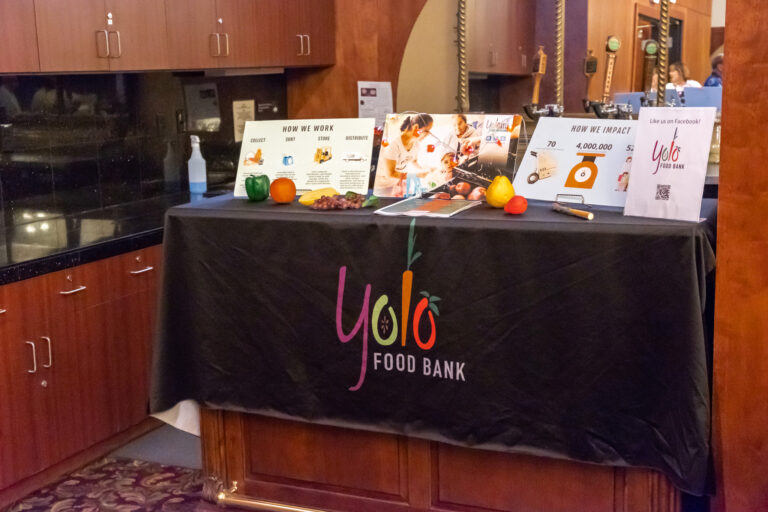
On May 13, local leaders and founders of various companies across Yolo County, including Target and Nugget Markets, came together to address End Hunger Yolo capital campaign donors, in support of the new food and economic development plan of the Yolo County Food Bank. This plan details that in less than a year, the Yolo County Food Bank came up with sustainable, equitable food systems that have led to changes within the community. One of the goals of this ongoing project is to use a new $9.5 million food distribution and operations facility in order to keep food distribution and prevent food waste from increasing.

Michael Bisch, the executive director of Yolo County Food Bank, explained its purpose and goals.

“With an unparalleled capability and capacity to collect, store and distribute this food, Yolo Food Bank provides unique services and opportunities to the region,” Bisch said. “It has the potential to transform the nutritional paradigm of our communities, thereby reducing poverty, increasing health and education outcomes and enabling social mobility of all kinds.”

The Food and Economic Development Report in Davis (FED) details that the Yolo Food Bank will establish new Priority Action Areas that are meant to improve on keeping the community informed and making its systems more sustainable. Mayor Brett Lee suggested that he has a shared vision to promote sustainable food.

“I share the vision laid out in the report to establish Davis as a sustainable food testing lab, to lead in climate-smart food practices, to ensure access to a healthy diet for all, to make Davis a leading center for food entrepreneurship, education and innovation, and to establish a cohesive food brand and narrative for our city,” Lee said to The Davis Enterprise.

Joy Cohen, the director of Philanthropic and Engagement of Yolo County Food Bank, indicated that based on letters of support written by civic and corporate leaders across a spectrum of companies, CalRecycle decided to award Yolo County Food Bank with $500,000, a prestigious award that will greatly assist in the future investment of Yolo Food Bank’s new facility.

“Essentially, the CalRecycle Grant is meant to enable our building to execute the purpose of why it was built,” Cohen said. “The purpose is to meet the full food security need of the county. As of right now, the food security is 150 to 200% more than the 4 million pounds of food we are distributing currently and, as a result, this facility is 300 times larger. We look to see how we can expand our distribution further than the sites we already have. When it comes to UC Davis, we often think, ‘how can the food bank specifically help in the distribution food sites on campus like the pantry, and how far can we connect students to our food?’”

The leaders that helped support the CalRecycle Grant represented organizations like UC Davis, Woodland Community College, Yolo County of Education, City of Davis, Farm Fresh to You, Raley’s and Target. Furthermore, the Senate got involved in its success; California senators Bill Dodd and Richard Pan also support the FED’s plan.

Local leaders and founders stated that these funds will go further to provide the necessary equipment and startup needs for the facility so that it meets full food security for the future. Yolo Food Bank will invest in de-packagers and bio-digesters to increase the recycling of packaging materials, which helps break down and remove the compost of sugary, unhealthy beverages from the food system. These leaders and founders also discussed investments on a new county-administered food rescue education program that would allow the public to be a part of this Yolo Food Bank endeavor, opening up communication channels to inform the public.

To ensure that the new facility fulfills its promise, the Yolo Food Bank came up with a campaign called Nourish Yolo. This campaign sets up small end goals for the first year of use in the facility as it hopes to collect, store and distribute 50% more food to better educate people about nutrition.

Davis, in particular, is one of many communities that will receive the most of these benefits, as these new strategies will help avert food waste from overfilling its landfills. Positive environmental practices will ensure the increasing growth of clean and fresh foods.

“We are looking to provide greater health and well-being for our residents, a more sustainable approach to farming and food distribution for our ecosystem and to provide leadership best practices that can and will be adopted by other communities and regions,” Lee said.

Written by: Susana Jurado — city@theaggie.org

Police Logs

Leave the plants alone!

May 15

“Male loitering and giving mean looks to customers.”

May 16

“Large shepherd mix off leash in the area chasing reporting party.”

May 17

“Male and female—shouting outside and laying on cars.”

May 18

“Female subject was removing plants from planter in front of business.”

May 19

“Reporting party was walking to friend’s house when an unknown male walked up to reporting party grabbed her by her shoulder and then grabbed her butt, no words exchanged.”

May 20

“Grandson inside the office refusing to leave.”

May 21

“Loud stomping.”

May 22

“Black plastic bag found.”

“Intoxicated male slurring words, moving cones and blocking traffic.”

Robotic sex dolls promote rape culture

Guilt-free sex with female look-alikes is an algorithm for the objectification of women

The internet and reality morph into what is called the “Nether,” replete with realms in which people can live in alternate realities as the characters they wish they truly were, in the 2013 play titled “The Nether.” As these individuals spend more time in the Nether than they do in “real life,” the fine line between fantasy and reality is increasingly blurred.

Among the alternate realities exists a realm call the Hideaway, where characters — all of whom are males — venture, seeking sex with underage girls, the most coveted among them being Iris. An undercover detective, intent on exposing the Hideaway, enters the Nether under a new identity. But he, like others, finds the lines too blurred to stifle the growth of his own affections for Iris. Iris herself is later revealed to be a grown man assuming a new identity in the Hideaway.

“The Nether” poses innumerable moral questions — primary among them is whether procuring sex in the Hideaway is wrong if the person behind the young girl is a grown man. Does it matter when everything about the sexual experience feels and looks like it’s being done with a child? These are the questions broader society may find itself asking when sex robots venture outside of the cinema into reality.

But as it stands, the only U.S. city that has faced this question so far is Houston. The answer was a resounding yes: it does matter, and it is wrong. Despite the contention around the sexbot debate, Houston made the right choice. Although, to me, there was only ever one morally sound option.

Sexbots have been floated as a solution to many issues — pedophilia, violent sexual fantasies and loneliness, to name a few. Proponents, however, gravely miscalculate substitutes for humans as solutions — an inadequate substitute at that.

Giving a robotic child replica to a pedophile for sexual gratification is not only wrong and endorses the notion that their desires can’t be suppressed, but it can also push such perverse feelings into tangible, egregious action.

As realistic as the dolls get — and trust me, they’re really real — they will never fully replace an actual human being. If someone enjoys acting out their fantasies enough, their appetite will likely grow to the point where relieving those fantasies on dolls won’t be satisfying anymore. And when you give a pedophile a child look-alike, comparable in every way save mental autonomy, acting out those desires on an actual child won’t be as large of a moral plunge. Giving someone almost everything they want makes the real thing that much closer and easier to attain.

I’m not alone in my concerns. Prominent among experts denouncing sexbots is Dr. Patrice Renaud, a leading researcher at the University of Montreal who studies how artificial intelligence could treat pedophilia. Renaud has shown enthusiasm for the prospects of using childlike sexbots to treat pedophiles, but also remains aware of the dangers.

“Pedophilia is difficult to treat as you can’t change this sexual preference,” Renaud said. “Maybe some individuals would have the self-control to stick to robots, but for others the experience may push them to seek out real children.”

Research is limited, and the technology is relatively new, but the fact that 85% of the men arrested for possession of child sex dolls in the U.K. also possessed “conventional” forms of child pornography speaks for itself.

Among denouncers are those concerned that the use of sexbots will promote the sexualization and objectification of women. Sex doll producers and brothels are a testament to this. LumiDolls’ website gives prospective purchasers options like “college,” “Japanese” and “mini” (I can think of very few reasons why someone would want a mini-female sex doll). TrueCompanion invented a “frigid” setting for its dolls, where users will find her not too “appreciative” when “touched in her private area.” The owner of the world’s first sex doll brothel has said that, while business is booming and drawing international customers, requests have become too vile as he finds himself faced with more and more requests for rape fantasies and child dolls.

Proponents think the advent of robotic sex dolls really does mean there’s someone for everyone and opens up the door for sexual freedom. Yet what they fail to see, but think they’re actually promoting, is the importance of the intimacy of sex. Having sex with a doll eliminates many things from the equation — chief among them being mutual consent and mutual gratification.

Commodifying sex in this way promotes a conceptualization of sex that emphasizes one person’s pleasure while wholly rejecting consideration of others involved. Unlike the robotic imitation, women have their own preferences, desires, feelings and thoughts, and the idea that you can now have sex with something resembling a woman in every way except in mental capacity is a promotion of rape culture.

Studies have shown porn reduces incidents of sexual assault, and some see this as a prospective benefit of sexbots. But this is not like porn where men can masturbate to images of sexual violence — this allows men to act it out with all the guilt-free gratification they seek. The difference between watching consensual sex played out in a rape fantasy and playing out those fantasies on a party incapable of consenting is a line as blurry as that in the Nether.

To me, the lines are never blurry. But with sexbots we will perpetually find ourselves asking just what that line is.

Written by: Hanadi Jordan — hajordan@ucdavis.edu

Disclaimer: The views and opinions expressed by individual columnists belong to the columnists alone and do not necessarily indicate the views and opinions held by The California Aggie.

These brands are profiting off of your misery

Young people are depressed and as anxious as ever — some companies see that as a financial opportunity

Millennials and members of Generation Z have a lot to be down about. Stagnant wages, skyrocketing housing prices, job automation and a crippling debt crisis have all caused millennials to spiral into a new form of downward mobility. All of this has made them the first generation in the modern era to have future prospects worse than their parents. Generation Z, meanwhile, is not faring much better. Gun violence, social media exposure and the increasing threat of climate change serve as reminders of a bleak future and have left today’s teenagers lonely and distraught. Members of Gen Z are the most likely of all generations to report poor mental health, with 91% stating they experience physical or emotional symptoms like anxiety or depression — and brands have taken notice.

Earlier this month, Burger King became the latest company to hop on the mental health advertisement bandwagon, launching its “#FeelYourWay” promotional campaign aimed at the emotionally downtrodden. Through a dark advertisement displaying contemporary stressors like student debt, slut-shaming and hostile work environments, the fast food chain took aim at rival McDonald’s iconic “Happy Meal” by proclaiming, “No one is happy all the time. And that’s OK.” In what could have otherwise been straight out of The Onion, Burger King used the ad as a launching platform for its “Real Meals”; the Blue Meal, YAAAS Meal, Pissed Meal, Salty Meal and DGAF Meal all among the new products.

Of course, this type of corporate cynicism is hardly new. Kaitlyn Tiffany of Vox noted that Burger King is merely the latest company to utilize millennials’ emotions and mental health as selling points. This technique is particularly prominent on Twitter, where nearly every corporate brand now tweets in first person, creating false, youthful personas through angsty posts and the awkward adoption of modern slang. Although typically playful and benign, these accounts sometimes take a darker and more problematic route, tweeting in a manner reminiscent of someone going through a suicidal or depressive episode. The official Twitter account for SunnyD, for example, recently tweeted nothing but the message “I can’t do this anymore.”

In much of the same way that brands have co-opted social justice movements as a means to bolster advertising — typically despite largely questionable workers’ rights records — the appropriation of mental health issues has come at a time when many companies are under fire for the mistreatment of their employees. Allegations of understaffing, long hours and low wages, for example, were all cited by Burger King employees in the aftermath of the company’s latest campaign. Incidentally, the fast food giant has also adopted the aforementioned “woke” capital approach. The company caused a stir with recent tweets appearing to endorse a string of incidents in which a number of conservative politicians in the United Kingdom were attacked with milkshakes (yes, seriously).

Burger King, of course, cares not about the mental wellbeing of its employees and customers, but rather about maximizing profits. In doing so, Burger King and numerous other companies adopting this strategy have created a dangerous trend of advertisements that trivialize legitimate mental disorders and offer material items as an appropriate solution. While this may seem harmless at first, deep down it’s a cynical ploy, aimed at commodifying yet another component of human suffering.

Written by: Brandon Jetter — brjetter@ucdavis.edu

Disclaimer: The views and opinions expressed by individual columnists belong to the columnists alone and do not necessarily indicate the views and opinions held by The California Aggie.

Humor: HBO to auction off opportunity to rewrite Game of Thrones Season 8

Will this finally appease the fans?

***SPOILER ALERT***

Dear Game of Thrones fans,

David Benioff and D.B. Weiss here. Obviously, neither us nor HBO have any intention whatsoever of remaking Season 8, but we hope we grabbed your attention with that headline. There’s no need for us to remake something that’s perfect. Unfortunately, the perfection and genius of Season 8 has been lost on many of you and your inferior intellects, so we thought we’d take the time to explain ourselves here in a way that all of you can understand.

One important thing to remember is that much of the season revolves around the concepts of memory and forgetfulness. A classic example of this occurs during the much-discussed scene when Dany kinda forgot about the Iron Fleet. The fact that she kinda forgot about the Iron Fleet, while they certainly didn’t forget about her, is a stark illustration of the dichotomy between remembering and forgetting, which also cleverly invokes the word “Stark.”

Since this is a fantasy show, after all, we realized while writing this final season how important it would be to be able to rely on the power of the imagination. No, not our imagination — yours. You, the fans! Your imagination provides us with a genius way to account for all of the times when we kinda forgot about establishing logical character development, character motivations, character arcs and plot twists. You see, we instead leave a lot of this to you. Additionally, our forgetfulness and haste when writing also demonstrates that, like Dany, we are flawed too. So, you can’t hate us and love her.

“Where is the supposed ‘missing piece’ scene that shows how and why Dany would become willing to engage in mass genocide?” you may ask. “Why does the Night King matter and what does he want?” you may ask. We purposefully forgot to show these scenes because we want to leave things like that up to you, the viewer, and your unique imagination. We hoped that by bringing this element of fan fiction to the show — allowing people to simply imagine and invent their own exposition scenes — our bare bones final product would be able to satisfy everyone since it would be up to you to fill in the pieces. We hoped that this would be a fun and interactive experience for the audience.

Anyway, we’d like to apologize for overestimating the intellectual capacity of our audience. We very easily could have written a conclusion that would have been very bad and poorly planned with full confidence that you all would have had the rudimentary levels of intelligence to understand it. Instead, we shot for the stars, making the ending of the show far too brilliant for most of you to appreciate. But, we’ve learned our lesson, and we’ll be sure to dumb things down when we make our Star Wars Trilogy. To subverting expectations!

Sincerely and F**k you,

Dan & Dave

Written by: Benjamin Porter — bbporter@ucdavis.edu

(This article is humor and/or satire, and its content is purely fictional. The story and the names of “sources” are fictionalized.)

Video game worlds are more than just a background

Video games provide an unparalleled relationship between you and the world of a story

One of the greatest strengths of video games is their ability to transport you to a whole new world. It’s what makes them such great storytellers. But as games have increased their ability to create worlds on a technical level –– games are larger, more detailed and more realistic than ever before –– they’ve also been able to create digital versions of real-world cities. And in many ways these “fictionalized” cities in the digital world become almost like travel brochures for the cities themselves.

In the analysis and criticism of games, setting is still treated like a background. And, to some extent, that may be applicable in older games and certain genres of games today. But, in the massive open-world odysseys and epic stories that are now produced, the world is so much more than a background — it is more like a living, breathing character than ever before.

How do the worlds feel? How do they sound? How long did it take for you to remember your surroundings and recognize landmarks? These are the questions we should be answering (and experiencing) when we play games today.

Swinging around Manhattan as Spider-Man in Insomniac Games’ “Spider-Man” let me feel the energy and bustle of New York. The liveliness of the world, swinging through skyscrapers and shooting finger-guns at enthralled New Yorkers, really made me want to be there. Each subsection of the city felt different, from Hell’s Kitchen to the Upper East Side. The sensationalism of Spidey’s friendly-neighborhood was amazing.

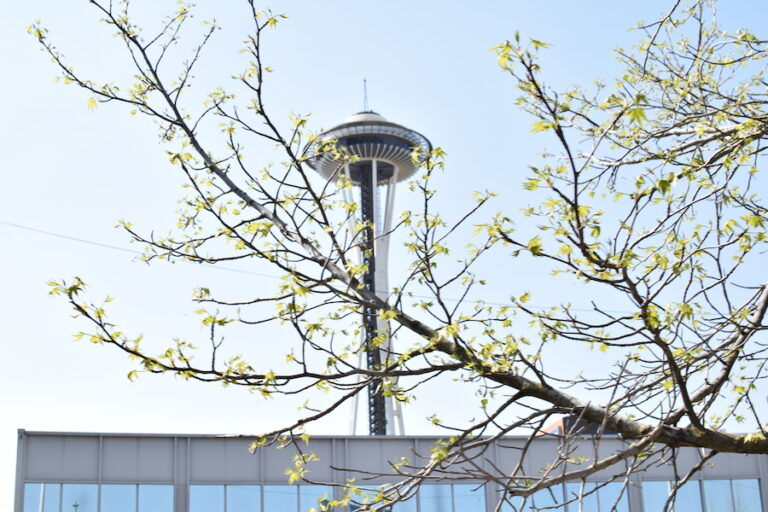
But, the game that gave me the best sense of immersion in a new setting was Sucker Punch Productions’ “Infamous: Second Son.” It was the spring of 2014, and I had just gotten my hands on the next generation of gaming: the PS4. “Infamous: Second Son” was the title I had to play. Set in a fictionalized Seattle, the game itself was amazing, but the world was sensational. Any city, real or created, had never looked so beautiful in a game. The high reaches of the Space Needle and the views of Mt. Rainer were breathtaking. Photo mode was killer, and “Second Son” made the feature an instant staple for our current generation of games.

I fell in love with a city I had never been to –– through a video game. It was so beautiful not because it was visually appealing –– I could see that in a movie –– but because I could experience the city in a way that was personal, like I could in real life. It felt like a place I could actually inhabit. The dark alleyways and empty docks were mine to explore. I could climb on top of any building to get a better view or spend as much time as I wanted at the Pike Place Market. Movies can portray the highlights of a city, but having the freedom to take in the beauty of that Seattle at my own pace is not possible through a movie.

Five months later, when I finally visited the real Seattle, the feeling was almost indescribable. It was a mix between the strangest deja-vu feeling ever and utter joy. I didn’t just recognize Lincoln’s Toe Truck or Elephant Car Wash: I recognized actual alleyways and street corners. It was like experiencing a new city for the first time –– twice.

Of course, Sucker Punch Productions is located just outside of Seattle, so the setting of the game they created was pretty much in their own backyard. The city the studio recreated felt even more alive and breathing, It wasn’t just a still or moving image on a screen — it was full of interactable NPCs and environments. It even responded to my actions and gameplay choices. That is the power of games, and it’s hard to understand until you actually experience it yourself. And with the rise of virtual reality technology in games, these digital cities are going to feel more real than ever.

It’s not that video games can do this better than movies or TV shows, or any other form of entertainment; it’s that they can do something that no other platform can. Video games can put you in the city and give you all of the sounds and sights you would actually see in the real-life thing. It’s unparalleled, and I can’t wait to see where the technology of video games takes us.

Written by: Calvin Coffee –– cscoffee@ucdavis.edu

Disclaimer: The views and opinions expressed by individual columnists belong to the columnists alone and do not necessarily indicate the views and opinions held by The California Aggie.

How to teach kids about climate change

A guide for parents and teachers on how to take climate action with America’s youth

I remember clearly the first time I understood what death really meant. That all people — parents, brothers, friends and myself — will eventually be no more. I was about five years old, and my dad was watching Braveheart. I walked into the room right when Mel Gibson was getting tortured and executed. I was confused and asked my dad what was happening.

“He’s dying,” my dad told me.

“What happens when he dies?” I asked him.

His answer of “ceasing to exist” and “complete eternal darkness” haunted me for years. Every time I saw Gibson’s face I associated it with death, and depression would take hold of me. It wasn’t my dad’s best moment.   

Parents and teachers, after being guardians, are the educators of our youth. Their duty is to make sure kids are prepared for the future ahead of them. Certain lessons about life can be very scary to kids, and fear is not a good teacher or motivator. The biggest challenge facing our youth — climate change — is also a scary one. How we go about teaching kids could be the difference between paralyzing fear and action.

Previously, I wrote an column explaining how 80% of parents and 86% of teachers think kids should be taught climate change, but only 42% of parents and 45% of teachers actually teach them about this issue.

The overwhelming majority of teachers say they don’t teach climate change because “it’s not related” to their subject. But I challenge that claim. Climate change is an issue that covers all subjects of education, and here’s how you can implement it even in non-science classes:

English

There are many great ways to introduce kids to climate change in language arts classes. You can assign reading from the various books related to the environment and climate change. A personal favorite and classic is The Magic School Bus — a flying school bus taking kids through adventures while they learn different science lessons. Check out the series’ “The Magic School Bus and the Climate Challenge” edition. EL Education also has great ideas on its website for English topics related to climate change for K–8th graders.              

Math

Reading graphs and plotting points are basic lessons that all kids learn in math. Why not graph examples of how our greenhouse gas levels have been increasing dramatically over the past two centuries? You can add and subtract basic examples of the carbon cycle to see how extra carbon can surpass our threshold of living in a balanced cycle. Basic tools like transposing Celsius to Fahrenheit and calculating range, mean, median and percentages are all needed to understand the fundamentals of climate change. Math Goodies is a free website with a great “Mathematics and Climate” section that can be used to teach many different basic math lessons related to climate change.

Social Studies

Social studies classrooms are the perfect space for students to lose any worry or fear of climate change. Here, they can feel empowered to take action in their schools, homes or communities. Among many options, you can have your students do hands-on recycling projects, plant trees, write notes to members of Congress and use social media to spread environmental awareness. Social studies is the ideal subject to start teaching kids how to be good stewards of our planet. Teaching kids hands-on that climate change solutions must be solved by collective action and that all individuals can have an impact is a great way to show the power of social action. “Young Voices for the Planet” is a great website for teachers and kids that covers inspirational stories of youth taking action all over the world, while giving ideas and projects for how to take local action by developing an “action plan.”    

Parents

You can request that your kid’s K–12 schools implement a climate change curriculum through the California Education and the Environment Initiative website. You can also participate with your kids in the #FridaysForFuture climate marches that happen every Friday all over the world, which was started by Swedish 16-year-old and Nobel Peace Prize nominee Greta Thunberg. Strikes are happening in every major city, and you can request and organize one in your own city if yours doesn’t already have one. If you live in Davis, the Peregrine Project leads strikes every Friday at 10:30 a.m. at Peregrine School (click on the Davis map for contact information).

The youth of the world have shown us what they can do when aware of the problems facing them. 21 youth activists are currently suing the U.S. in Juliana v. United States, and children all over the world are marching to the beat of a 16-year-old’s drum and demanding climate action. Educating our youth by giving them hope and encouraging them to take action is the least we can do.

Like Will Smith told his son Jaden in the movie “After Earth”:

“Fear is not real. The only place where fear can exist is in our thoughts of the future […] Danger is very real, but fear is a choice.”

Teach our kids. Let them have a choice between fear and hope. They’ll choose wisely.

Written by: Daniel Oropeza — daoropeza@ucdavis.edu

Disclaimer: The views and opinions expressed by individual columnists belong to the columnists alone and do not necessarily indicate the views and opinions held by The California Aggie.

How digital tools reinforce racial and ethnic bias

Research at UC Davis shows the dangers of algorithmic bias

Digital tools are omnipresent in everyday life, and while they are known for being objective and unbiased, that isn’t entirely accurate. In fact, if left unaddressed and unregulated, digital tools could inadvertently reinforce current racial inequalities. Without formal regulations, public awareness and further research, algorithms could propagate racially-based consequences.

“There’s an old saying in the computer business: ‘Garbage in, garbage out’,” said Steven M. Bellovin, a professor in the Department of Computer Science at Columbia University who wrote about the effects of algorithm bias on artificial intelligence. “Unfortunately, most people blindly believe the output of computers — and if the inputs are bad, the outputs will be bad. In other words, ‘garbage in, gospel out.’”

This study shows where bias could be located in an algorithm and how it could be addressed based on where it’s located. According to the paper, there are five phases in the model of algorithmic decision-making: input, algorithmic operations, output, users and feedback.

Within these five phases, nine types of bias could occur: training data bias, algorithmic focus bias, algorithmic processing bias, transfer context bias, misinterpretation bias, automation bias, non-transparency bias, consumer bias and feedback loop bias. This suggests that bias could originate in the data, algorithm or the individuals using the algorithm or the output produced.

“So the data and algorithm may not be biased but the user interacts with the platform in a biased way,” said Martin Kenney, a professor in the Department of Community and Regional Development and co-author of the paper. “For example, say an Uber rider or driver rates someone negatively due to the ethnicity.  Here, the data and algorithms may be completely unbiased, but the human being making decisions expresses their bias.”

The more widespread technology becomes, the more likely the risk of bias. The impacts of algorithmic bias already exist and could affect anyone. An example of this would be a company using an algorithm to read resumes and select the best candidate for a job opening.

“The algorithm may be trained based on the qualities that current employees of the company already have such as education, location and specific skills,” said Selena Silva, 4th-year undergraduate Community and Regional Development major and co-author of the paper. “If I apply to this job position and do not match up with the type of employee who already works there, I will be denied the job. A short-term impact would be me getting denied access to an interview. A long-term impact from the bias would be that the company continuously hires people who match the status-quo which prevents diversity.”

Some of the algorithms used in the criminal justice system or by employers are made by private companies for profit and are minimally regulated. Potential solutions to prevent algorithmic bias include rigorous testing of algorithms before they are used to make real-life decisions and employing algorithms that are transparent, if possible. Engineers and programmers need to constantly be aware of the possibility of bias in the algorithms they build and where potential bias could be located.

“It should be possible to audit outcomes to search for biased outcomes,” Kenney said. “This can be done statistically because all digital decisions can be tracked and analyzed. This is the good thing about digitization. Everything can be examined, as it all leaves data tracks. Awareness is important, as is enforcement of the laws, in cyberspace.”

Written by: Kriti Varghese — science@theaggie.org

From 2D to 3D

How the movies we enjoyed as children are being redone for the new generation

It’s easy to remember our middle school Saturday mornings, waking up early, jumping out of bed, running straight to the living room and turning on the TV to watch cartoons. We used to watch our Disney classics on VHS, and these classics defined our childhood. Yet fast forward 10 years later, we are seeing an upgraded reintroduction of the cartoons we grew up with.

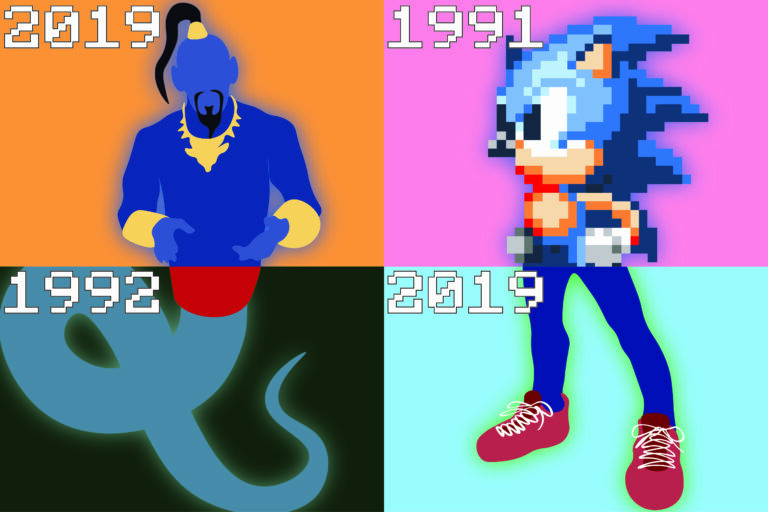
Premiering in theaters this year, “Pokemon: Detective Pikachu,” “Sonic the Hedgehog” and Disney’s “Aladdin” reintroduce classic cartoons in a new way. When we first watched these films, they used 2D graphics. Now they are being transformed into films that use 3D animation, new CGI techniques and are live-action. While these changes reflect the today’s technological advances, the films face backlash from those who don’t want the classic image of their iconic characters to be changed at all.

It’s hard for fans to adjust to the changes since they grew up with the classic graphics. Anything that doesn’t resemble the original cartoon they were introduced to is sacrilegious. This adds an immense pressure on animators to make sure they capture the essence of the original character in the new version.

With the iconic 90s video game characters such as Pikachu and Sonic the Hedgehog, graphic designers have the difficult task of balancing the original 2D image with transforming them into real life textured characters. While the new “Pokemon: Detective Pikachu” film has gained positive ratings from both the original fan base as well as the new generation of fans, the Sonic film’s trailer has not received the same positive reaction.

The animators for Sonic were unable to balance the 2D graphics with the new CGI innovations they tried to integrate. By drawing Sonic’s body disproportionately, with the legs being too long compared to his head and giving him human teeth, fans are upset. Given the immense backlash to Sonic’s new image, the creators promised they will attempt to correct the mistake before the film is released.

The live-action films being made by Disney are also facing controversy. Die-hard fans of Aladdin were initially angered with the first trailer because the Genie was too blue. The anger didn’t go away with the overcorrection of not making Will Smith blue at all. Fans were also mad at the lack of energy in the scenes seen so far.

Some students’ opinions reflect their thoughts on how remakes are not really capturing the same classic films.

Jennifer Peña, a second-year psychology and Spanish double major, isn’t thrilled with the reinterpretations.

“Classics are good movies but don’t do a good job [at] capturing the essential element that made the movies iconic in the first place,” Peña said. “While its a good idea that they want to expose this generation with what we grew up but it doesn’t capture all of it and the audience will be disappointed if that element is not there.”

Whereas Courtney Gobrera, a first-year transfer and managerial economics major, believes that the remakes are okay, as long as children have seen the originals.

“The industry wanted to remake the movies so that every generation can know about the movies but the originals are what the youth should know,” Gobrera said. “They should be exposed to the originals first instead, for the remakes lose that quality with the use of technology.”  

There will always be mixed feelings on what fans are expecting, and there will always be hesitation about any renovations done to the classic characters our generation grew up idolizing.

With my younger sister, the generation gap becomes obvious. It is interesting to watch young people, who have never seen the originals, become fans of the new movies and cartoons, while we find it difficult to adjust to the changes. While we are filled with nostalgia and sometimes anger at our fond memories being upgraded, they are filled with fascination.

Written By: Gabriela Hernandez –– arts@theaggie.org

Review: “Guava Island”

Childish Gambino film succeeds as creative project

The Thursday night before his highly-anticipated performance, Donald Glover, alias “Childish Gambino,” released “Guava Island” for attendees at Coachella, the famous site of Beyonce’s recent “Homecoming” documentary and Kanye’s Easter Sunday Service. The next day, Amazon released the film for an 18-hour period of free streaming for all viewers before moving it to Amazon Prime.

The 55-minute film is directed by Hiro Murai, the director and producer of Glover’s popular show “Atlanta” and his viral, Grammy award-winning music video for “This is America.” “Guava Island” is an additional collaboration between Murai and Glover and the film evokes a nostalgic vacation with its grainy yet detailed cinematography and a 4×3 aspect ratio.

The film begins with animation and a voice-over by Rihanna, who plays Glover’s long-time girlfriend. She explains the history of Guava Island and of the couple’s relationship. The origin story of this film echoes a similar origin introduction to animated films like “Moana” and “Coco,” but it then transitions into the real world of Guava Island with an opening shot of Rihanna and Glover waking up to begin their day. This transition between the romanticized child’s fairytale and the harsh reality of life for those living on Guava Island sets the film’s tone as a deeply symbolic and critical work.

Glover plays Deni, a musician organizing a music festival for the islanders, and Rihanna plays Kofi, a factory worker who supports Glover’s musical ambitions and wants him to succeed. Amazon categorizes the film as an “Island Thriller,” but many felt the film functions better as an extended music video rather than a plot-driven film (Pitchfork’s review of the film was titled “Guava Island is a Pretty Good Childish Gambino Film and a Pretty Bad Movie.”).

While “Pretty Bad Movie” is an ambitiously critical term, those expecting a film with a dynamic plot or action sequence might be disappointed in certain aspects of the film’s production. Those intending to watch the film because they enjoy Donald Glover’s various creative endeavors, however, will be fully satisfied by Glover’s music and dance scenes.

The movie features several of Childish Gambino’s more recent songs such as “This is America,” “Summertime Magic” and “Feels like Summer” as well as other songs from his 2016 album “Awaken, My Love!” The songs appear in new settings which differ from their music videos in short snippets within the film. The inclusion of these songs in an alternate setting only adds to Glover’s archive of visual and musical production while maintaining the same tone and emotion present in the original releases and music videos for the songs.

The film touches on many themes which are commonly reflected in his songs, especially when Glover explains to a fellow worker that “America is a concept: anywhere where, in order to get rich, you have to make someone else richer, is America.”The film’s plot, specifically surrounding a musician’s attempt to throw a music festival for those on his island, eerily mimics Gambino’s Coachella performance. This attachment to reality further highlights the degree of Glover’s constant consideration for his art and enhances the viewing experience.

As a film that attaches itself to reality in Glover’s choice to play a musician and his casting of Rihanna as an idolized celebrity, some were disappointed in Rihanna’s minor role. Many critics felt that Rihanna’s role in the film was underserved — The New York Times’ Jason Bailey wrote, “Rihanna, rather depressingly, has little more to do than to be “the girl”: inspire Deni with her beauty, worry about his safety, and (the oldest and moldiest of tropes) try to decide when and how to tell him she’s pregnant. It’s a dispiriting waste of such a fiery, complicated performer.”

Despite the mostly mixed reviews that came from the film’s inability to be classified into any one category, it still succeeds as a creative project which surpasses a “tropical thriller” or a prolonged music video. It operates as a visually enticing project from a very thoughtful and highly intentional artist.

Written By: Rosie Schwarz — arts@theaggie.org

To tattoo or not to tattoo?

Students discuss their experiences getting and having tattoos

Turning 18 marks the start of adulthood — with the ability to vote, buy lottery tickets and make one’s own medical decisions, it’s the age of an abundance of new freedoms. Unlike non-ear body piercings, which minors can obtain with a parent present or as notarized by the parent, tattoos can only be obtained after 18.

First-year political science: public service major Mili Bhatnagar got her first tattoo in her hometown as soon as she turned 18. It’s a small symbol on the outside of her wrist, and she described the experience as “pretty exciting” because of how long she’d been planning it, but she was still slightly nervous.

“My first tattoo was something I had decided to get a long time ago,” Bhatnagar said. “I think I was 15 when the design first occurred to me.”

While some people may not tell their parents about tattoos that they have obtained, Bhatnagar talked to her parents about hers.

“In fact, [my parents] actually want to get matching [tattoos] someday! My mom was a really big part of the decision too,” Bhatnagar said. “She told me to get it in a place where I can hide it or show it off when I want. Truthfully, telling my parents about my first tattoo was a very organic decision because that particular symbol holds a lot of meaning to all of us.”

Bhatnagar has three tattoos now, but she plans on getting more. The second tattoo she has is on her arm and is her younger brother’s date of birth in Roman numerals; her third tattoo is a simple flower on her foot. Since getting these tattoos, she has never had second thoughts about them. Bhatnagar would advise people who don’t have tattoos but want some to start small.

“This piece of art will be on your body for the rest of your life, so make sure you’re happy with the design beforehand and have added your own flair,” Bhatnagar said. “All of my tattoos are on the smaller side, so I’ve never felt overwhelmed by them. And smaller tattoos also really help prepare you for larger tattoos.”

Second-year philosophy major Skylar Duvall described herself as “obsessed with astrology” and when she was 17, she got her first tattoo — the Virgo constellation — back home in Houston.

“The first moments walking into the tattoo shop were honestly terrifying because no matter what people tell you, you still can never know what quite to expect,” Duvall said. “I remember my artist going over two basic rules – don’t move and don’t cry.”

Duvall chose to get the tattoo on her ribcage, a particularly difficult first spot, because of breathing regulation that’s required to prevent moving the needle. However, she doesn’t regret that and said that she’s glad she got one of the most painful spots over with. Duvall said that she still cries over a flu shot but finds the tattooing process to be therapeutic. Duvall’s mom went with her for her this first tattoo despite not necessarily approving.

“[She] also figured I would just get it behind her back if she said no because I’m so stubborn,” Duvall said. “She loves my tattoos now and appreciates them much more as an art.”

Duvall has 10 tattoos, and she plans to get more. She originally wanted a few small black tattoos, but her love for bold and colorful tattoos has grown. She is now in the process of completing a full leg sleeve. However, Duvall’s dad does not know about any of her 10 tattoos, most of which she described as being on the “larger side.”

“[My dad] is very conservative and holds the irrational belief that tattoos ruin the beauty of a woman’s body,” Duvall said. “Because of this, I’m just going to wait until he eventually sees them and as mad as he will be, and no matter if he were to threaten taking me out of school, I think it’d be better to have a tattooed, educated daughter than a tattooed dropout.”

Duvall has a favorite tattoo, which she described, but she also thinks that it is all of the tattoos together that contribute to its beauty.

“I have a large hip piece in color of a deer skull with a rattlesnake wrapped around/through it with two yellow roses dedicated to my ranch back in Texas,” Duvall said. “This is probably my favorite just because the detail is so beautifully done, but all my tattoos are so different and blend together well to create one large body of art to appreciate.”

Duvall initially believed that she would only get tattoos with strong meanings behind them, but her view has “totally flipped.” She now often gets tattoos for the aesthetics, because tattoos are “an art, not necessarily a story.” Duvall described how she got into piercings and tattoos.  

“Body modifications started becoming an interest of mine when I was struggling with bodily insecurities during a bad, depressive phase of my life,” Duvall said. “I felt as though adding something to my body would make me learn to love it more, which it definitely has. As cheesy as it sounds, I got my first tattoo inspiration literally from a Tumblr post and it was the first one I felt connected to.”

Duvall hopes to go into law, and said that she is “well aware” of the stigma around tattoos, which is why she chose the locations she did. She also urged people to get tattoos if they want — not all tattoos need to have meanings, and she thinks that people need to appreciate it as an art form more.

“For all the people holding off on tattoos because [they’re] not sure if it means enough, I encourage them to go ahead and get them,” Duvall said. “Be spontaneous but smart. It is your body and you don’t need to impress or please anyone. […] Instead of having the regret of a tattoo, I think it is worse to miss the opportunity to enhance your  body while you’re thriving and young. Once you are older and settle down, I believe the biggest regret would be missing all those opportunities.”

Duvall said that she’s been successful in hiding her tattoos from her dad for the past three years and knows that she’ll be able to hide them in a professional setting. Bhatnagar agrees that there is a stigma attached to tattoos.

“People often don’t realize that tattoos hold a lot of personal meaning and aren’t just decisions made in the heat of the moment,” Bhatnagar said. “Though it may seem that someone’s tats are completely spontaneous, most of us like to plan them out and agonize over the size, placement and detail for months. And not all of us regret our ink either! For me, all of my tattoos allow me to permanently express myself and hold a moment forever. My tattoos are a reminder of memories that I’ve shared with the people I love.”

Duvall hasn’t had second thoughts about her tattoos either, and neither has second-year wildlife fish and conservation biology major Breeze Davis. Davis got her first two tattoos a couple of days after her 18th birthday from a tattoo artist who had previously tattooed her mom.

“My mom has gone with me to get a few of them,” Davis said. “She has a lot of tattoos, so I always grew up going with her to her appointments and that kind of got me excited to one day get my own. […] With all my following tattoos, my process is pretty fluid, sometimes I can have the idea picked out for awhile but [sometimes] I have just walked into the shop and decided what I wanted on the spot.  Both are really great and exciting ways to get tattooed, but I just try to have fun with it and not take it too seriously in a sense. For me it’s my main form of self expression to the world and just something I love to do.”

Davis currently has 12 tattoos, but her favorite is a moth on her leg that she got at Death or Glory in downtown Davis by Cait Gale, who is one of her favorite tattoo artists.

Davis thinks that the stigma towards tattoos that Bhatnagar and Duvall identified has decreased and that people are generally more accepting of tattoos than they were in the past.

“I think that people are starting to realize that anyone can be tattooed and the fact that someone has chosen to tattoo their body doesn’t define who they are as a person,” Davis said.

Written by: ANJINI VENUGOPAL — features@theaggie.org

Update on campaign started by UC Davis student to adopt official city flag

With new flag, campaign asks for support to get petition approved

For the past few years, a campaign has pushed for the city of Davis to have its own official city flag. Last year, a contest was held to have the public vote for the flag that would be presented when the city is given the petition. The chosen flag consists of a bicycle spoke that makes the letter “D” in yellow type against a background of blue, representing the UC Davis’ school colors.

The campaign was started by Aiden Ramey, a fourth-year electrical engineering major, back in 2017, and it has grown since.

“I started this campaign because I love Davis,” Ramey said via email interview. “Ever since I first stepped foot in the city, I knew this was the place I wanted to go to school. I was thinking of ways I could give back to this great city when I came across a TED talk about city flag design which gave me the idea. There is no better way to show your civic pride than with a city flag and to give the city a symbol we can proudly fly would be my greatest accomplishment.”

Ramey noted the positive impacts of the flag on the Davis community.

“I love the flag that the residents of Davis have chosen,” Ramey said via email. “We had close to 20 submissions from our community and the design that was chosen highlights so many great aspects of our city including, biking, agriculture and our wonderful university. When people see the design that we are proposing, they immediately think of Davis demonstrating how great a flag it is. I already have order requests of the flag and it hasn’t even been officially recognized yet!”

Ramey’s campaign drew city-wide attention. In 2018, Ramey was interviewed on the “Davisville” segment of the local public radio station in which he talked in more detail about the campaign. In the interview, Ramey spoke about how he has committed to getting a tattoo of the flag, should it receive approval.

A Facebook page enables people to support the cause, as well as find a template to help draft a letter to be sent to the city council. Ramey had gone before the city council, but at that time the petition was impeded by the fact that a flag had not been picked yet. Now that a flag has been decided upon, the next step is to gain support from city council.

“Moving forward, we are trying to get organizational and political support as we have lots of public support and getting big names in the community behind the project will be very valuable,” Ramey said via email. “We also started a letter writing campaign to the city council and you can find that on our Facebook page.”

On campus, Hannah Hu, a second-year microbiology student at UC Davis, suggested that the flag was not necessary.

“Overall, I’m not sure, I honestly think that a flag for Davis is a bit unnecessary but if it’s something the community wants then that’s ok too,” Hu said via email.

On the other hand, Nathan McPaul, a fourth-year political science major at UC Davis, indicated support for the flag.

“A city flag would allow Davis residents to better identify with and understand the city’s character,” McPaul said via email. “The flag is something all residents share together and relate to. For example, Chicago’s city flag is very popular and has come to represent the city’s daily life. The Davis flag will encourage collaboration among residents while also encouraging the expressing of the residents’ personalities. The flag will provide unity and camaraderie among the population of Davis.”

Written by: Taylor Martinez — city@theaggie.org

Davis Cruise-In brings community together

Car shows to come at Sundstrom Hill Winery

Davis Cruise-In, a car show, will come to Sundstrom Hill Winery at 2744 Del Rio Place, Suite 130, Davis on every third Saturday from April to September. Davis Cruise-In showcases cars, both old and new, and everyone is invited to come and bring their cars and share their stories. The car shows last two hours, from 5 to 7 p.m.

Bruce Risley, one of the founders of Davis Cruise-In, initiated the car shows in Davis because he had a new vision.

“A friend of mine, an architect in town — we were going to the Cruise-in, in Winters, and we saw how it was set up and that it was popular,” Risley said. “[Winters is a] small town similar to Davis, right in the downtown area. And we thought, ‘you know what […] we can go a lot better than this in Davis.’”

Risley noted that what sparked his inspiration to create a new car show in Davis was because he saw a gap, where people did not socialize at the Cruise-In in Winters.

“We came back and started kicking around ideas about what we didn’t like first,” Risley said. “We absolutely hated the blaring music, which seems to be a staple at every car show and Cruise-in. That’s fine if people like the oldies, which we do — we just didn’t want that to be the main thing. We noticed a crowd of people walking around if they were single people, [and] they had nobody to talk to. They did not interact very much with the car owners, and if they came in pairs or small groups of say a family, they would talk to each other, and they still didn’t talk to the car owner. It occurred to us that everybody wants to share the story of their car with somebody that’s interested.”

Elena Coker, the coordinator for Davis Cruise-In, wanted to continue the car shows’ legacy, to bring back the atmosphere where people can come and get together.

“You’re welcome to bring any car in any condition,” Coker said. “No one is going to be judgemental of you. Everyone is very welcoming — they appreciate what you have, it’s an all around good experience.”

Risley indicated the past success of the Davis Cruise-In, where his vision was to have people come out and get to know one another.

“The main idea was that when the drivers pulled in, what we noticed immediately was that people got out and started talking to one another — this was the whole point,” Risley said.  “Pretty soon there was a buzz like a beehive on a busy evening, and it was just wonderful. People talked about their cars and their experiences — their fun things from the past [and] their first car — and we feel like that’s the way it should be, and we spiced it up with some fun. The last show of the season, we felt should be a reward for the drivers with raffles for antiques and collectibles.”

Coker has been a regular at the car shows because she felt like the culture was welcoming.

“I just really like the culture; honestly, everyone’s really nice and so open and they want to show you their car,” Coker said. “Some people may even take you out for a spin, and it’s just so fun. Everyone was really welcoming, and I wanted to share the same experience I got when I first came. It’s been pretty successful — I think people feel love when they come there. There are no people who are mean or hateful towards anyone else, [and] it’s a nice event.”

Hope Fernandez, a first-year psychology major at UC Davis, suggested that events like Davis Cruise-In can do more outreach to students as well, as she has participated in car shows before when she was in high school.

“I think there should just be more advertising on social media because that really speaks to the students, or even on campus with flyers that can capture their attention,” Fernandez said.  “I have attended a car show in high school, but never in Davis. From my own experience, I think that the owners of the cars were just really friendly and interactive, which is weird because you would think they would be so protective of their cars.”

Still, the Davis Cruise-In seeks to improve on its outreach and expand its fan base.

“I was hoping to expand our car fan club and try and get more people to come and enjoy the shows,” Coker said. “Not many people knew about it, to begin with, and even some people I talk to now — it’s new to them. When I stepped in as coordinator, I ended up making the website and Facebook page while trying to get flyers out.”

Risley further elaborated on how Cruise-Ins were meant to be social gatherings, and he reminisced that people got to know one another through car shows.

“The main thing we wanted to get across was that the Cruise-In should be fun again,” Risley said. “When we came out of the 50s and 60s, we didn’t have a lot of money, and the idea was that on a Friday night or Saturday night, we would get together for a Cruise-In — it was a social get-together, and the cars were part of the equation. Everyone was proud of what they had, maybe it was Mom and Dad’s cars.”

Coker indicated that everyone is welcome to come and that they merely need to show up.

“If anyone wants to come, they just come,” Coker said. “They can check in with me once they get here. You tell people what your car is, and what your name is and you roam around and look at people’s cars. There’s some really nice old cars and new cars. It’s just really awesome — you can bring any car.”

Written by: Stella Tran — city@theaggie.org

M.E.Ch.A. student group to consider name change

Move would take out “Chicanx” and “Atzlán” from name, terms that some see as potentially exclusionary

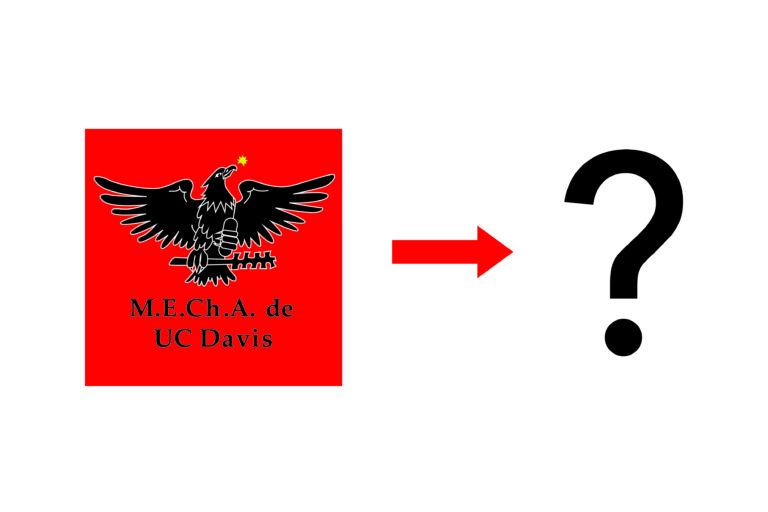
The Movimiento Estudiantil Chicanx de Aztlán (M.E.Ch.A.) recently announced that the organization will be considering a possible change to the its established name of 50 years, specifically to remove the terms Chicanx and Aztlán to promote inclusion.

In a statement signed by National M.E.Ch.A. Co-Chairs Katherine Chiu and Emilio Balderas and National M.E.Ch.A. GIS Chair Gabriela Guillen, M.E.Ch.A. “means nothing without a commitment to the liberation of our Central American, South American, Caribbean and/or Black and indigenous hermanxs” and stands as the reasoning behind eliminating what they see as historically Mexican-American-focused and exclusionary terms of Chicanx and Aztlán.

Professor of Spanish Robert Irwin stated that for M.E.Ch.A. “to critically debate the meanings and cultural baggage contained in the name of their organization” is a good sign, as it means the organization’s members are trying to reflect on “their five decades of achievements, and to think about how to best meet the needs of their diverse membership in the years to come.”

Irwin agreed with the organization’s questioning of the appropriateness of the term Aztlán because although it “compellingly represents the roots of Chicanx culture in Alta California,” it also displays a “highly problematic aspect of Mexican nationalism that glorified one indigenous ethnicity.”

M.E.Ch.A. de UC Davis, the UC Davis chapter of M.E.Ch.A., voted yes on considering a name change for the organization. Efren Diaz, the former internal coordinator of M.E.Ch.A., stated that this type of change was something the UC Davis chapter was already “having conversations about last year.” When Diaz became internal coordinator in Spring Quarter of 2018, he knew he wanted to make a change. This change was not necessarily changing the name of the organization, but a change that required “checking in with the community, specifically the Latinx and indigenous community to see how people felt about M.E.Ch.A. as an organization, including the name.”

“The name is not just a name — it has roots,” Diaz said. “We just want the name change to reflect the practice of what we do.”

Written by: Deana Medina — campus@theaggie.org

Saving white abalone

The White Abalone Recovery Program reaches huge milestones in their mission to recover wild and endangered white abalone species

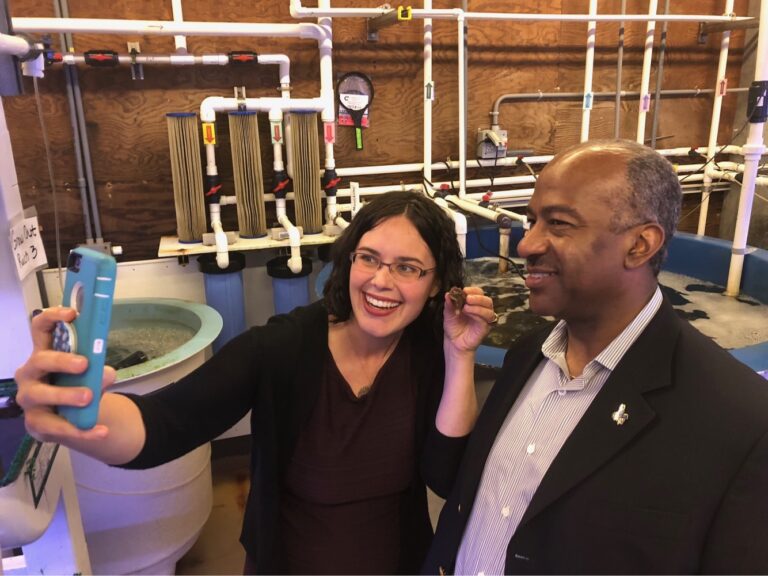
Last month, the White Abalone Recovery Program saw success in the form of millions of larvae.

In an effort to save the white abalone species, researchers with the UC Davis Bodega Marine Laboratory and other collaborators with the National Oceanic and Atmospheric Administration Fisheries and Fish and California Wildlife Service dedicated many years of hard work towards finding a way to cultivate the species in the lab.

Ben Walker, the former Analyst at UC Davis BML, spent five years with the White Abalone Recovery Program.

“I led the White Abalone spawning efforts, wild White Abalone larval monitoring efforts, many specific studies in the lab and wild, helped NOAA survey many areas for white abalone, lead the Section 6 grant reports and helped write the grant proposals, among many other tasks,” Walker said.

These efforts came about in response to the large decline in the number of White Abalone in the wild.

Kristin Aquilino, the director of the White Abalone Breeding Program and assistant scientist, said the wild white abalone population began to decrease substantially after being heavily fished at the start of the 1970s. As one of seven Abalone species on the coast of California, the White Abalone has the densest and most delicious meat.

“Their laziness is why they’re known as the most tender abalone to eat,” Walker said. “Since they don’t move much, compared to other abalone, their meat is very tender.”

“Because of the popularity of this tender meat, 99% of their population were fished during this time,” Aquilino said.

“Since the Abalone are broadcast spawners, the spareness of individuals in the wild makes it increasingly difficult for eggs and sperm to meet,” Aquilino said.

In order to help the species to recover, California’s commercial and recreational White Abalone fisheries closed down, the species was listed as federally endangered and the White Abalone Breeding program was initiated.

The program started in a facility in Southern California. It saw its first big success in 2001, when 100,000 larvae grew into juveniles.

When everything was seeming to be going swimmingly, the young Abalone were faced with yet another obstacle: disease.

They were hit with a disease called Withering Syndrome. The bacterium is exacerbated by warm water, which causes a lack of appetite for the white abalone, Aquilino explained.

However, the disease didn’t stop researchers from pursuing their goal of creating baby abalone. The setback just pushed them to come up with more innovative ways of increasing the survival rate of these animals.

The NOAA suggested Bodega Bay be used as a facility for the program. Use of the facility would grant the program many things: the expertise of the many scientists there and the surplus of cold, northern California waters.

“Even if the bacterium that causes Withering Syndrome is present, the Abalone won’t get the disease because the cold water prevents that from happening,” Aquilino said.

The researchers within the program worked hard to create the perfect conditions for spawning.

“The process of spawning is very romantic,” Aquilino said.

The white abalone each have their own bucket, and are given a ‘love potion’ consisting of hydrogen peroxide. This seductive concoction leads them to release their gametes.

Since the process of spawning white abalone is very complex and replicating their natural conditions in the lab has proven to be difficult, the amount of larvae the White Abalone create is much less in the lab than it is in the wild. However, with each trial the White Abalone Recovery Program produces more embryos and larvae then the last, which eventually led to the huge success of last month.

With the combination of love, fate and hard work, the last spawning effort in April was a cause for celebration. With 25 million embryos transforming into 10 million competent-to-settle larvae, it is the most success the program has seen thus far, Walker said.

“Smashing our records over and over again has been a massive treat over the years,” Walker said.

The White Abalone Recovery Program hopes to find new homes for the abalone in the ocean where they can help save kelp forests from sea urchins, maintain biodiversity and return to their position as the “zamboni of the sea floor,” Aquilino said.

Written by: Ellen Caminiti— science@theaggie.org

Editor’s note: An earlier version of this article stated that the wild white abalone population decreased substantially after heavy fishing in the 1950s. That is incorrect. It has decreased substantially since the 1970s. The Aggie regrets the error.