58.6 F
Davis

Davis, California

Monday, December 22, 2025
Home Blog Page 412

Title IX does us a disservice

I am a rape survivor and Title IX makes me feel unsafe

Title IX of the 1972 Education Act states: “No person in the United States shall, on the basis of sex, be excluded from participation in, be denied the benefits of, or be subject to discrimination under any educational program or activity receiving Federal financial assistance.” On every college campus that receives federal funding, this means there are Title IX offices and accompanying policies and procedures for handling campus sexual discrimination, harassment and violence.

Title IX is an attempt at the federal level to keep our academic communities accountable for sexual misconduct. But from personal experience, I say we are entirely too proud of ourselves for this law. I do not feel protected by Title IX. There are facts concerning rape that overlap with postsecondary academic institutions that are detrimentally unclear and harm the survivor.

First, any university employee who becomes aware of an incident of sexual misconduct involving a student is obligated to report it, regardless of the student’s wishes. This cuts students in crisis off from important sources of guidance and support exactly when they need it the most. They need emotional support from the people in our academic community who know them best — faculty or staff, such as professors, advisors, employers or coworkers — not solely advice from trained professionals. After my own rape by another student during my first year at UC Davis, there were faculty and staff I was desperate to talk to and couldn’t because of Title IX, but finally broke down and did anyways. I was then contacted by the Title IX office.

The second reason concerns precisely why a survivor would not want their rape reported to Title IX in the first case. What is not made clear on any website is that once Title IX is made aware of any sexual misconduct, the survivor loses all control over whether there’s an investigation. In my case, after taking advantage of the free legal counsel available to all UC Davis undergraduates, I decided not to press charges against my rapist — criminally or through Title IX. This was happening just as Dr. Christine Blasey Ford, Deborah Ramirez and Julie Swetnick were being torn apart by the conservative right over bringing sexual assault allegations against Brett Kavanaugh, a Supreme Court nominee at the time.

After meticulously going over the details of what had been done to me, I was told that I had very little chance of winning a case given my circumstances. Ultimately, I decided putting myself through the extreme and traumatizing stressors of an investigation would not be worth it. Title IX would take this decision away from me, exposing me to the kind of derision women in our society experience when publicly confronting their rapists. We have seen this in the Kavanaugh case, and I have lived it in speaking up about my experience in my own community. I chose not to pursue an investigation, and I desperately wish to see that respected. Anyone else in my position deserves that same right.

The third reason is a specific point of violation in the reporting process. Like every website of post secondary education, the UC Davis website user interface is often not user friendly. While researching what to do after being raped, I encountered a convenient link to file a report with the school many times before I could find detailed information about what would happen after reporting. Even then, the information was unclear.   

The most thorough source was very reassuring, using words like “appropriate, supportive, preventive, and corrective measures,” and phrases such as “very seriously,” “highest priorities” and “interim protections or accommodations.” I was told I would be provided with, “confidential emotional support” and that “necessary measures will continue to be taken to ensure that [I felt] safe.” So I was shocked that it took 1,000 words for this UC Davis sexual violence resource to inform me, in the fourth-to-last paragraph, that in an investigation “your name will probably appear in the notification letter sent to the accused by the Title IX Officer.”

The “probably” does not make me feel any better. My rapist does not know my full name, and I am in possession of an email from our UC Davis Title IX officer that says if they ever get ahold of his name, it is fully within their jurisdiction to open an investigation and potentially give my name to him. I find this to be viscerally horrifying.

The final problem with Title IX is the lack of repercussions. Title IX is a federal law without federal reach. I spoke incredulously about this with the head of the UC Davis Family Protection and Legal Assistance Clinic. Title IX benefits the survivor in that the burden of proof is less than that of a criminal investigation. That is, it is easier to get a conviction. The consequences for raping another human being, however, are minimal. Title IX benefits the survivor in that is physically removes their rapist from their lives, which is critical, but this action falls tragically short in the larger scheme of things.

We are patting ourselves on the back inappropriately if we think we are actually keeping people safe. We aren’t.

If a student, for example, is found guilty of rape and forced to leave, there is nothing noted on any kind of permanent record to prevent them from immediately reapplying to another school. Going through the rigors of Title IX proceedings at Davis may ultimately protect students at Davis, maybe at other UCs, but if a rapist is found guilty, they are not prevented from preying upon students elsewhere.

Instead of going straight to a Title IX report, from my experience, the best resource for a survivor at UC Davis is the Center for Advocacy, Resource and Education (CARE). To make an appointment, call 530-752-3299 (Davis campus) or 916-734-3799 (UC Davis Health – Sacramento) or email ucdcare@ucdavis.edu. Same day appointments are often available.

Title IX cut me off from my most important sources of support, misled me, would have potentially disclosed my identity to the man who raped me and threatened to take away my autonomy. Title IX subverts the entire point of pressing charges in the first place: to ensure my rapist’s next victim never becomes a victim in the first place.

Written by: Lauren Frausto — lrfrausto@ucdavis.edu

Disclaimer: The views and opinions expressed by individual columnists belong to the columnists alone and do not necessarily indicate the views and opinions held by The California Aggie.
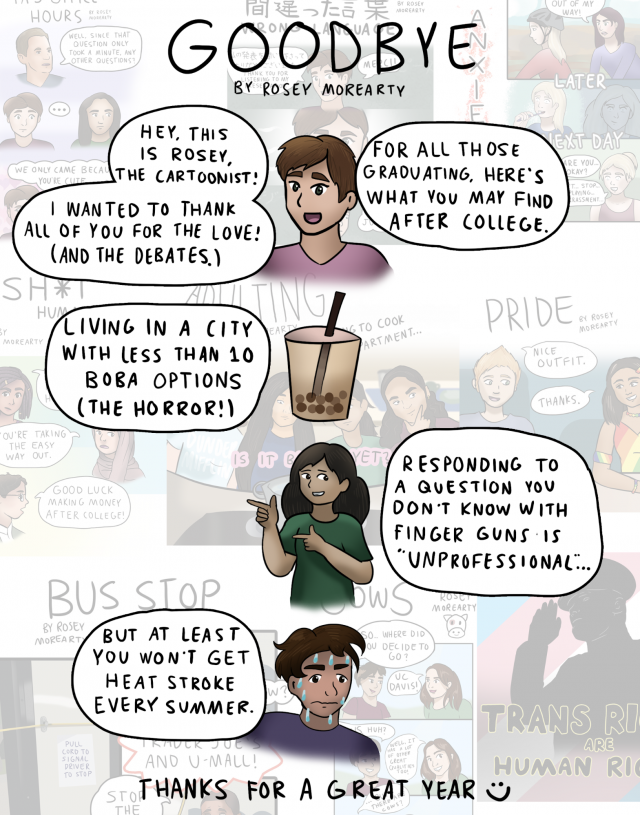

Cartoon: Goodbye

ROSEY MOREARTY / AGGIE

Undergraduate student team one of five finalists in Martian Agricultural and Plant Sciences project

Team created conceptual design for greenhouse on Mars

Have you ever imagined living in a greenhouse on Mars? A team of undergraduate students from the UC Davis Space and Satellite Systems Club designed a greenhouse for astronauts to reside in for two years on Mars. The project was entered into the Martian Agricultural and Plant Sciences project, a competition offered by the National Institute of Aerospace and NASA. After researching and formulating this design, the UC Davis students were nominated as one of five finalists within the competition. The winners are eligible for NASA summer internships.

While many of the other teams enrolled in the competition were graduate students, UC Davis’ team consisted purely of undergraduate students, many of whom are freshmen and sophomores. The team found it challenging to understand research papers and decipher the language as relatively young and inexperienced students, according to Audrey Chamberlin, a first-year aerospace science and engineering major.

“We went through many strange and outlandish ideas before settling on our final design,” Chamberlin said. “Those ideas consisted of using mirrors to track the sun [and] having a mote at the bottom of the dome. We decided on the final design by whittling down and editing all our ideas into one final, comprehensive and realistic design.”

Their final product consisted of a two-story greenhouse which utilizes a sensor-supported irrigation system to support plant growth, according to Isabella Elliot, a first-year aerospace science and engineering major. Martian regolith, the soil found on Mars’ surface, would be used in plant bags to facilitate plant growth and provide a comfortable environment for the Martians to live and work in.

Chamberlin added that the team decided to use soil after conducting a risk analysis, although NASA subtly recommended the use of a hydroponic growing system, which involves using mineral nutrient water solvent solutions to grow plants. From this initial idea, they had to determine a way to create fertile soil out of the toxic, innutritious Martian regolith, leading to the development of the sensor-supported irrigation system.

“When you are creating something new, never or rarely done before, you have to expect many, many drafts,” said Nancy Juarez, a second-year triple major in international agriculture development, Middle Eastern/South Asian studies and Chicano studies.

Although many of the members have engineering backgrounds, each member is specifically interested in a certain subject field and contributed to the project, according to Chamberlin. One student handled the more human-centered aspect of the Environmental Control and Life Support Systems, which includes the facilitation of atmospheric pressure, oxygen levels and waste management. Another student focused on power usage. The team heavily relied on Juarez, who has a plant science background, to guide them through the requirement for plants within their design.

“The diverse perspectives [were] amazing to work with,” Juarez said. “We all come from different fields. As an agriculture major, with every idea I came up with, I felt like I had a team behind me to fact check and cross examine. [It] really makes you trust your peers.”

After their initial idea was proposed by NASA’s BIG Idea Challenge, the UC Davis team had the opportunity to present their finalized design to NASA officials in Virginia.

“I would like other people to know that we have a lot of faith in our design, and that we put a lot of hard work and effort into developing and understanding it,” Elliot said. “We put our whole heart into this project, and I’m very lucky to have been a part of it.”

Written by: Michelle Wong — science@theaggie.org

Culture Corner

The Arts Desk’s weekly picks for television, movies, books and music

Television: “Freaks and Geeks”

Although this show came out in 1999, if you haven’t watched it yet, please do yourself a favor and hit play. This show is about two groups of high schoolers in the ’80s: the freaks and the geeks. This classic Judd Apatow creation is where Jason Segel, James Franco and Seth Rogen first met. And while it only ran for a single season, it’s remembered as one of the best shows to hit the air. Even if you cannot relate to either subset of groups, or the ’80s, this show evokes a youthful nostalgia through its comedy, content, soundtrack and memorable cast.

Movies: “Slacker”

Following the theme of nostalgic homages to earlier eras, Richard Linklater’s debut film “Slacker” is one of the best movies about the ’90s. The film, which also stars Linklater, occurs over the course of a single day and follows the many small interactions that happen among college students in Texas. The film is famous for inspiring Kevin Smith’s cult favorite “Clerks,” but on a grander scale, for inspiring both the content and style of ’90s independent cinema. The movie captures the feelings of a “lost” generation and is a really fun watch.

Novel: “Catch-22” by Joseph Heller

This Joseph Heller novel is one of the most famous post-war satires, but in honor of George Clooney’s recent HBO adaption of the novel, this book deserves an extra recommendation. Many people recognize this novel as one of the most funny and biting books to exist, and if you like any degree of absurdity, you will love this book.

Album: “Section.80” by Kendrick Lamar

Giving another old suggestion, Kendrick Lamar’s 2011 freshman studio album is often forgotten amid all his amazing albums and projects that followed. This album came out in July and as summer approaches, it’s time to dig it out of your music library and give it a listen. If you haven’t given this album a listen to in a few years, you’re in for a treat as you remember just how talented Kendrick Lamar has always been.

Written By: Rosie Schwarz — arts@theaggie.org

Non-Existent Discussions: Game of Thrones and non-binary politics

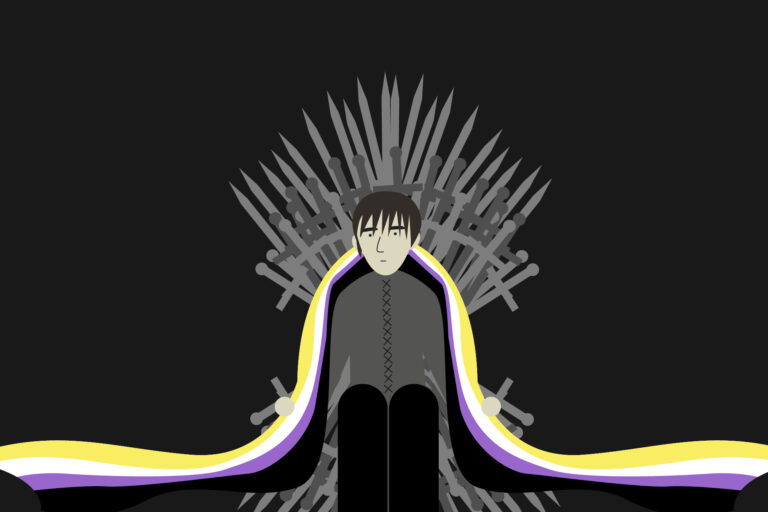
Bran the Broken: King of the Six Kingdoms, Breaker of Genders

The fire of HBO’s “Game of Thrones” has been reduced to its embers. Its finale is still a hot topic, but since the series concluded, its once blinding flame now casts a light on the issues of gender politics within the show and how these issues mirror those in 21st century politics. Show viewers and book readers alike are unanimously disappointed with how Dan Weiss and David Benioff wrapped up the epic series, particularly with the decision to kill off Daenerys Targaryen, the all-powerful matriarch, and instill another “male” ruler. Most likely, this ending already contributed to libraries worth of articles highlighting the show’s neglection of capable female rulers. But one overlooked aspect of the show’s finale is the decision to place a genderfluid character upon the once-Iron Throne: Bran the Broken (i.e. the Three-Eyed Raven).

It is nearly impossible to view any piece of art without holding it under the scope of 21st century values, hence the extensive discussions about the absence of Queendom (and female Knightdom) in “Game of Thrones.” Popular interpretations of “Game of Thrones” have been done through a selective scope. But while such focus is drawn to the divide of the dancefloor, many onlookers do not have the tools to see who is dancing — the characters who refuse to meet the standards of gender in Westeros.

The concept of non-binary identities in Westeros did not exist in the 4th century AC (After [Aegon’s] Conquest), explaining why all characters still refer to the Three-Eyed Raven as Bran, a character who used the pronoun “he.” In many ways, the former friends and family of Bran Stark do not know what do with this new omniscient being, therefore resorting to an identity that’s comfortable for them. The Three-Eyed Raven does not stand on either end of the gender spectrum, they sit somewhere above it all, as an essence of knowledge that transcends the roles placed by humans on one another. The Three-Eyed Raven is deemed king, but never wears a crown. They are named the true born son of Eddard Stark, but reject the title. Sansa says Bran (who has not been Bran since season six) will father no children and will likely take no bride (as the divine royal rights were abolished in the finale). Therefore, who is to assign the Three-Eyed Raven a gender? Those of the Westerosi aristocracy, of course, as they have no knowledge of the term or what it means to exist outside of the binary. But for viewers to refuse to recognize the Three-Eyed Raven in this light says a great deal about the current conversations surrounding the non-binary community.

One day after “Game of Thrones” ended, Representative Alexandria Ocasio-Cortez and Senator Elizabeth Warren sat down to converse about the show’s ending. Ocasio-Cortez commented, “we were so close to having this ending with women running the world and then the last two episodes it’s like ‘oh, they’re too emotional.’” Warren agreed with her, then Ocasio-Cortez voiced her frustration about the show’s male writers. And while this is a reasonable conversation to have given our political climate, it still says something about our society as a whole if two icons of the progressive movement forgot to include non-binary people in their conversations about gender politics in “Game of Thrones.”

If the first thing that comes to mind in discussing the political allegories of “Game of Thrones” is the inequality between the sexes, then that’s a good sign. The disparity men and women face in the 21st century needs to be reconciled. But if one’s mind does not go to other outlets for allegories within the show for social betterment (such as a non-binary character taking the throne), then it shows our world is succeeding in erasing identities that do not meet normative standards.

Consider the aspects of non-binary culture: all attention is given to the two ends of the gender spectrum but none to the middle ground. Those who do not meet the binary norms are typically met with silence or denial because communities do not know how to recognize and include the non-binary in societal discussions. Too often, non-binary people are marginalized and rejected by the institutions to which they belong, whether in queer spaces or under a government that attempts to force these individuals to pick a side that can make sense to the masses (thanks Title IX).

Although ancient Mesopotamian tablets from 3100 BC describe how the gods created an intersection of people that had no gender, the term “non-binary” was not coined until the 1970/80s when feminists Casey Miller and Kate Swift wrote “The Handbook of Nonsexist Writing,” where they encouraged the use of gender-neutral pronouns and acknowledged the existence of people outside the gender binary. It’s unacceptable that the discussions surrounding the biggest television series in history do not involve non-binary identities. And if the answer to that argument is that non-binary identities did not exist in 4th century AC Westeros, well, they existed in ancient Mesopotamia and through the proceeding centuries of our history. If “Game of Thrones” is a fantasy retelling of our history, it would be ignorant to cherry pick what parts of our history are included within that fantasy.

Consider the obstacles and adversities non-binary people need to overcome in order to exist: social rejection, a wall of legislation to keep one from claiming an identity and a life underneath the prescriptive roots of America’s nuclear family tree (not talking about the Three-Eyed Raven here). Yet nobody recognizes the Three-Eyed Raven as a non-binary being because other characters within the show are keen to push gender roles onto them. The Three-Eyed Raven is the essence of an omnipotent almanac forced into the human body in order to exist. They claim no identity, therefore they claim no gender, and what better way to end “Game of Thrones” than to say that the future is non-binary?

The wheel is broken in Game of Thrones, in more ways than Daenerys originally intended, and if the show was interpreted through a more holistic lens, such as recognizing a potential non-binary character taking the throne, then maybe it could influence the breaking of our own wheel of genders.

Written By: Clay Allen Rogers — arts@theaggie.org

In lieu of controversial New Yorker article, UCD Professor weighs in on proper journalistic practice

Science journalism’s obligation to truth

After The New Yorker published “The Day the Dinosaurs Died,” which details the discovery of a fossil site in Hell’s Creek, North Dakota, by Robert DePalma — a Kansas State PhD student and paleontologist, debates and discussions across the country arose over the article.

Douglas Preston’s writing about the discovery lauds it as one of the most important discoveries for paleontology in recent memory. Researchers and professors alike in the paleontology community, however, have objected to the presentation of this discovery in The New Yorker, claiming it to be sensationalized and misinformed.

Soon after the article went online, a scientific paper was published in Proceedings of the National Academy of Sciences. This paper was the peer-reviewed account of DePalma’s findings in Hell’s Creek. The piece generated even further controversy, given that many of the findings discussed in The New Yorker article were not in the actual peer-reviewed article published in a respected scientific journal.

Sandra Carlson, a professor and researcher at UC Davis who studies paleontology, has helped lead a discussion on campus regarding the discovery, the article and the debate that followed. One of her biggest concerns was the timing of The New Yorker article and the irregular process by which the paleontological find was made publicly known.

“There were a lot of things about it, from a scientist’s point of view, that just kind of rankled me,” Carlson said. “The general public got to read about this through The New Yorker before the scientific community was even introduced to it. It’s one thing if you have a paper and that’s published and has been peer reviewed and then you have a more popularized article. It was the wrong order.”

Carlson explained that by contacting a fiction writer to do the story, DePalma was advertising his find with somebody not in the scientific field. She claims this is a “weird” thing to do, unless the scientist simply wants fame.

Pushing past her concerns about the journalistic process, Carlson also felt the article contained misleading details. She felt that the paper published in the scientific journal, PNAS, was sedimentology in nature, while The New Yorker article only addressed the dinosaurs.

“There’s plenty of interesting stories that you could present from this — just from the fish alone and from the plant fossils,” Carlson said. “The fact that it was all pulled to the dinosaurs [is] because when people think of the End-Cretaceous extinction event, they think of dinosaurs, not these other organisms.”

Carlson expressed her opinion that The New Yorker article was a journalistic misfire, skirting regular and ethical ways of disseminating scientific information to both the public and the scientific community.

What does good scientific journalism look like to her, then?

“A [good] journalist who wants to find an interesting story should start with the peer-reviewed literature,” she said. “Write things that come out recently. And then do your best to both try to get an interview with one of the authors of the paper. Try to get them to expound more on what’s in the paper. Try to get them to talk about the greater significance of it, if it’s not in the peer reviewed paper.”

But in her view, scientific journalism need not be dry and strictly factual — the information should be engaging and written in such a way as to inspire and inform the public.

“It’s really important for scientists to be able to communicate with journalists, and get that information out,” Carlson said. “And not just get it out in a factual manner — to paint a picture that’s accurate, that doesn’t go too far.”

Written by: Aaron Levins  — features@theaggie.org

Recreation Pool to reopen June 10

Construction took just over a year, finished on schedule

After being closed for over a year, the Recreation “Rec” Pool is reopening just in time for the end of the school year with an open house set for June 10.

Construction began in May 2018 and the project is expected to finish on schedule. Julianne Nola, the director of major capital projects for Design and Construction Management, said there was a possibility of an “early completion.” The soil had to be replaced, however, due to the discovery of “micro levels of naturally occurring asbestos in the soil,” so June 2019 remained as the original opening time.

Although the rec pool is reopening on schedule, some graduating seniors have expressed disappointment over not having the opportunity to make use of it.

“I feel the same way about the ARC,” said Natalie Hill, a fourth-year psychology major. “I wish construction hadn’t taken so long. I never got to use the Rec Pool, and the Hickey Pool has such odd hours it’s hard to utilize that pool as well.”

Jeff Heiser, Associate Director for Campus Recreation, said that the new facility “will be a great place to relax with friends, play a pick-up game of sand volleyball and even study” due to the availability of Wi-Fi. Students can also look forward to having “expanded opportunities for lap swimming, swim lessons, aqua fitness classes, outdoor yoga classes and special events and activities.”

Heiser also noted that the updates to the Rec Pool have made it “more inclusive,” as it now has “a gender-inclusive locker room complete with a separate shower, restroom and day lockers.”

Events to advertise the opening will begin with a giveaway of free scantrons on June 10, free ice cream and frozen treats on June 11, therapy fluffies on June 12 and a beach party on June 13.

Written by: Deana Medina — campus@theaggie.org

Senate passes second resolution to disarm campus police

Controversy over the first resolution that was written by a graduate student resulted in an undergraduate reintroducing the bill.

Vice President Shreya Deshpande called the May 23 ASUCD Senate meeting to order by at 7:30 p.m. following a sparsely-attended ASUCD Town Hall in the CoHo. Senator Ricky Zapardiel was absent.

Senate began with the confirmation of Amaris Fraley, a third-year environmental policy and planning major, as an Environmental Policy and Planning Commission (EPPC) commissioner. Fraley noted underprivileged communities that are disproportionately affected by climate change, and said she wants to open up a dialogue about this issue as a future commissioner.

“I really want to open a dialogue about that where we are able to bring other [organizations] on campus together, specifically orgs that discuss green issues, like Environmental Club, and hold an event of some kind where they’re able to interact more,” Fraley said.

Scott Hatcher, the UC Davis Fire Department’s pre-hospital care coordinator, put on a presentation next. Fire Chief Nathan Trauernicht, who was also present, occasionally interjected with more information and answers to questions from senators. The presentation focused on ways the fire department is attempting to be increasingly student-oriented.

“In 2014, we started our EMT program, where students can sign up and actually become licensed as EMTs,” Hatcher said. “In 2016, we started our community education program that initially started with using CPR and first aid. Currently today, we’re teaching about 1,000 people a year in those disciplines.”

Hatcher emphasized the importance of educating students on procedures such as CPR that may save lives in the time that it takes the department to respond to emergencies on campus.

“It’s going to take us anywhere between three to seven minutes to get to where you’re at, depending on where you’re at on campus,” Hatcher said. “There’s a big difference that you all can make in those three to seven minutes that can really make a difference in someone’s life.”

The fire department responds to about 1,300 calls a year and UC Davis alumni make up 40% of the fire department career staff, according to Hatcher.

A second-year environmental policy analysis and planning major whose name could not be confirmed at the time of publication was confirmed as a second commissioner for the EPPC. The second-year student is interested in the zero-waste movement and thinks it’s something the city of Davis should be more focused on.

Shelby Salyer, a second-year political science and history double major, was confirmed as the External Affairs Commission Chair.

Directly after Salyer’s confirmation, Senate passed SR #16, a resolution that calls for the disarmament of campus police. Senate passed a similar resolution a week earlier, but there was controversy over the constitutionality of the resolution since a graduate student authored the resolution. Rina Singh, a fourth-year political science, international relations and Italian triple major, introduced SR #16 with two additional clauses that call on the UC to fit campus doors with door jams and for faculty and TAs to be trained in basic first-aid and CPR.

The bill passed with six in favor and three against. Senators Maya Barak and Rebecca Gonzalez abstained and Zapardiel’s absence counted as an abstention.

Senate also passed another resolution to remove pesticides from UC campuses. UCSB passed a similar resolution for an herbicide free campus.

The meeting was adjourned at 10:30 p.m.

Written by: Sabrina Habchi — campus@theaggie.org

Less than a dozen students attend ASUCD town hall

Audience member questions Senate’s outreach strategies

The ASUCD Spring Quarter Town Hall gathered a sparse crowd at the CoHo on May 23. While 16 individuals marked “going” on the Facebook event page, only around 10 people actually filtered in and out during the duration of the meeting.

ASUCD Vice President Shreya Deshpande led the meeting — they asked first for any questions or comments from the audience, but were met with silence. Deshpande deflected to a Google Forms document that was posted on the Facebook event page that allowed students to ask anonymous questions to their representatives.

The first question they read aloud asked what senators planned on doing now that Tipsy Taxi, a free transportation service for students, was dissolved. With no senators volunteering an answer, Deshpande encouraged them to speak up.

“Come on senators, I need answers,” Deshpande said. “What do we do?”

Senator Maya Barak chose to take the inquiry on. She noted that the university is currently trying to partner with Lyft to make rides more affordable for students.

ASUCD President Justin Hurst also chimed in and said the prospect of a partnership was still being discussed.

The next question that Deshpande read asked what senators can do to bring the Experimental College, an ASUCD unit that was also recently dissolved, back to campus.

Senator Alexis Ramirez said that senators would be able to add it back in the future. The Experimental College was cut due to a lack of funding, and Senator Shondreya Landrum explained that it could only come back if ASUCD could find a way to cut its budget deficit. She noted that one main goal of the current student government was to be above its deficit for the 2019-20 year.

Hurst also mentioned that students should be on the lookout for a proposal to increase the ASUCD base fee. According to Barak, the fee currently paid by students hasn’t been adjusted for inflation in decades. Because of the association’s budget deficit and a rise in minimum wage, ASUCD drafted a referendum to increase the fee.

Following the Google Form questions, Felix Cassidy, a third-year English major, stood up and questioned what kind of outreach methods ASUCD was currently using. He said that he was unaware this town hall was even taking place.

His inquiry was initially met by silence from the senators. Landrum eventually volunteered an answer, saying that she puts advertisements out on Facebook and is starting to do the same on Instagram.

“Not everyone wants to be involved with student government,” Landrum said. “We want people to know that we’re here, we want to help. Our main goal is to start this precedent that we need to be around and visible.”

Deshpande also explained that ASUCD as a whole is planning on increasing its outreach in the fall. They said that the Bylaws have been changed to require ASUCD senators to hold mandatory outreach hours and that ASUCD will be tabling and putting on different activities in the future.

The senators then went around the table and explained what their platforms are and what actions they’ve taken to work towards their goals in office.

The meeting concluded at 7:06 p.m.

Written by: Claire Dodd — campus@theaggie.org

2018–19 Goodbye Editorial

Don’t you forget about us *throws fist in air*

Emily Stack, Editor-in-Chief

By Hannah Holzer

My first interaction with Emily went something like this: My shy freshman self approached Emily, shades on, pencils stuck in her blonde hair, to ask if she wanted to complete The Aggie’s Best of Davis survey. “I work there,” she said, barely glancing up.

Her cool demeanor, her boundless intelligence, her eagerness to offer witty comments in classes (but especially classes taught by Frances Dolan or Gina Bloom) and the grace she displays when she skateboards around campus in her thrifted leather jacket make Emily a powerful, intimidating Leo to be reckoned with. Imagining The Aggie or an Ed Board without Emily’s killer wit, her infinite Shakespeare knowledge or her incredibly resourceful brain, which seems to go a million miles a minute and which can function as both a stand-in AP style guide or thesaurus, is impossible. Imagining this scenario seems wrong. The Aggie appears ever the less zany and colorful sans Emily. That being said, I could not be more certain that Emily has only the brightest future ahead of her, guided by her passion for teaching, her love of learning and her trustworthy moral compass. Emily Stack: You have truly given your blood, sweat and tears to The Aggie this year, you have overcome more hurdles than you ever expected going into the editor-in-chief position and you are a better person and a more capable leader because of it. I’ll miss you dearly.

Olivia Rockeman, Managing Editor

By Emily Stack

Olivia has been a colleague and a dear friend from my first days at The Aggie as a staff copy editor to my final year at the helm of this ship. It’s not often that you find someone who can read your mind, but Olivia knows what I need sometimes before I do. She’s been a stellar managing editor this year — half of the time I ask her to do something, she cheerfully responds that it’s already done. Her capacity for steadfast support is bottomless, and I’ve turned to her more times than I can count this year when I’m in need of someone cool, calm and collected. She’s a model of grace under fire, and I’m awed and inspired by her tireless work ethic, her matchless eye for detail and the care and dedication she gives to The Aggie and to all of us as individuals.

Olivia, I truly believe that I wouldn’t have made it through this year without you. You’ve only been gone for a week, but I already miss you terribly. I would “wish you the best of luck in your future endeavors,” but I know you don’t need it — if any of us are going to be runaway successes and land themselves on Forbes’ 30 Under 30 list, it’s you. I love you tons.

Hannah Holzer, Campus News Editor (Fall, Winter)

By Kaelyn Tuermer-Lee

A year ago, Hannah wrote, “Kaelyn and I may be the two second-year babies of the Aggie managing staff, but I like to think we’re also pretty badass.” I like to think we are too.

Hannah and I have led very parallel jobs and responsibilities at The Aggie, her as campus news editor and me as city news editor. Side by side, we’ve covered breaking news, bounced ideas off each other, edited hundreds of articles and spent countless hours together down at The Aggie. I am grateful to have had two great years of working with such an incredibly kind, caring, smart and truly outstanding person, reporter and editor.

Most of all, I’m lucky to call Hannah an amazing friend. I love our lunches outside in the quad, our bike rides home and even our nine-hour days down in the basement of Lower Freeborn working on the next print issue. And I think I speak for both of us when I say that tennis with Coach Maze was a blast.

But perhaps one of my favorite things about Hannah is that I know that she’ll always have my back without fail. Honestly, we had both always secretly hoped over the years that we’d be the ones to lead The Aggie as seniors, and I can say without a doubt that there’s no one else I’d rather have by my side.

Kenton Goldsby, Campus News Editor (Spring)

By Taryn DeOilers

When Kenton assumed the role of campus news editor this spring, he had big, Hannah-sized shoes to fill — and by god, did he succeed. Kenton is the newest member of this year’s Editorial Board, but you wouldn’t know it by his abounding insight into campus and world events, strong editing skills and contagious dedication to The Aggie. But Kenton is much more than a great editor. He’s fiercely devoted to both his ministry and his advocacy for the LGBTQIA+ community — a rare combination that I find beautifully inspiring and indicative of his commitment to what’s important to him, regardless of what others might say. Kenton’s explosive laugh makes every joke so much more hilarious, and I’m pretty sure he could talk for hours about the greatness of CupcakKe — and damn it, I would listen.

Just the other day, Kenton was telling the other editors and me about some Platonian concept about belly buttons and soul mates and having four arms and legs and two faces and — I don’t know, it was confusing and weird. But I remember getting sad in that moment because I realized I won’t get to hang out with Kenton in the office, just sitting between editing sessions and chatting and venting and laughing, after this week. Kenton, I’m going to miss your genuine heart, your ability to find joy in everything and your drive for justice. I’d say, “Keep the campus accountable next year,” but I already know you will.  

Kaelyn Tuermer-Lee, City News Editor

By Dominic Faria

I entered last fall as a brand new member of the Editorial Board. I really had no idea what to expect. When I was thrown onto a Board composed of eight strong women, I wasn’t exactly in my element as the lone male in the room (until Kenton showed up in spring and saved me). But Kaelyn, being one of the veterans of the group, was instrumental in helping me navigate the weekly meetings and my new position. Although I did not know her well, Kaelyn never failed to make me feel welcome.

I should have known how awesome Kaelyn was when we covered a Sacramento FC game last October. Throughout the evening, we bonded over our shared love for sports, reminisced about our high school playing days and even discovered that we are both allergic to peanuts. Since then, along with being coworkers, I am happy to say Kaelyn and I have become great friends.

Kaelyn is one of the most kind, positive and supportive human beings I have ever met. She is fiercely intelligent and a tremendous leader. Her wealth of experience at the city news desk and on the Editorial Board, along with her outstanding work ethic and humble attitude, will serve her well when she takes over this paper next fall. There are many talented and inspiring individuals who work at The Aggie, but I can think of no better person to lead this place to greater heights.

Taryn DeOilers, Opinion Editor

By Olivia Luchini

Taryn DeOilers has been a familiar face for me at The Aggie since I first waddled in as a sophomore to pedal jokes with the bois on the Humor Desk, part of the Opinion Desk for which she was already the assistant editor. For two years, I have watched Taryn gracefully handle the controversy that comes with both hard-hitting opinion pieces and bonkers satire articles. She is a dynamic editor and an even better friend. Being in charge of two weekly editorials is not an easy job. No nine writers are going to agree on the way something is written, and it can be stressful sitting in the hot seat as your words and angles are analyzed by the talented editors that we have. Taryn never lets you feel inferior, even in the face of extreme edits. She makes you feel like you can certainly do it. She is calm and understanding, keeping edits (both ones of my stupid humor articles and serious editorials) both professional and supportive, a hard balance to have.

I could go on for pages about what Taryn has given to her desk and the Editorial Board, but I would be foolish to say she was only a good editor. Taryn is a fantastic human being. She has whimsy in the way she walks in the world, even her fashion making her stand out from the crowd. Girl plays the dang harp. What? Who is she, Florence and the hecking Machine? I love her! More than anything, Taryn is someone that I can confide in and laugh with. Some of my greatest laughs have come from sitting at her desk and deep-diving into our internet history.

Taryn is a lovable and talented human being. She saved us. She gave us all the clues.

Olivia Luchini, Features Editor

By Kenton Goldsby

What’s that sound I hear? Could it be…Olivia playing a kazoo?

Olivia has, on so many occasions this year, brightened my day with her joyous demeanor, humorous mannerisms and pure devotion to memes. She throws herself into everything with her whole heart. Her attitude toward friendships and her devotion to The Aggie are no different.

When I became campus news editor this spring, it was a hard transition. I had big shoes to fill and I was beyond nervous. I needed someone to make me feel comfortable in my new role as a member of the Editorial Board, where group dynamics were already established and I was the “new kid.” Nonetheless, I remember my first Ed Board meeting and how welcome she made me feel.

But after the second Ed Board meeting, I couldn’t sit next to her anymore. We couldn’t stop giggling. (Readers: Giggling is generally frowned upon during Ed Board meetings.)

Olivia, thank you for helping me move into my editorial role this year. I will miss you so much next year, but I’m thankful for the lessons you’ve taught me on how to make someone new feel so welcome. I hope I’ll be able to carry that with me next year and beyond.

Liz Jacobson, Arts and Culture Editor

By Harnoor Gill

Liz is the sweetest Arts Editor! I have really enjoyed her bluntness during Editorial Board meetings when it comes to matters that she is passionate about, such as social justice, as well as her simultaneous fine-tuned sensitivity and empathy. I also think that Liz has the natural ability to handle everything with grace, including the time she sustained an injury from a biker directly crashing into her on campus. She hobbled into the office on crutches for an editing session the next day and managed to laugh (weakly) about it, which is much more than I could’ve said for myself. As a political science major, not only does Liz have a great aptitude for political concepts, but she makes compelling arguments when advocating for a particular story or angle that she feels strongly about. I wish her all the best in the Arts Editor position next year!

Dominic Faria, Sports Editor

By Liz Jacobson

I’ve had the immense pleasure of working with Dominic for three years now — two years as fellow sportswriters and this year as editors. As someone that also applied to be Sports Editor, I can say, without a doubt, there is no one better for the job than Dominic. Not only is he a great editor, but he brings an unrivaled passion for sports and athletics to his desk.

Although we root for different Bay Area baseball teams, it’s comforting to always have someone in the office to commiserate with over the Niners. I know that if I look over to his desk, I can count on that he’s watching whatever game is on. In fact, I would bet my life savings on that right now, as I’m typing this, he’s watching Game 3 of the NBA Finals.

Beyond sports, I would also argue that Dominic is one of the strongest members of the Editorial Board. He consistently brings thoughtful, well-developed ideas and a level-headedness that serves as a voice of reason when we argue over the placement of one sentence.

We also all owe an immense thank you to Dominic because without him, we wouldn’t have our tote bags. Dominic, I’m excited to work with you again next year and on Capitol Hill this summer.

Harnoor Gill, Science Editor

By Olivia Rockeman

People that don’t know Harnoor Gill well might say that she’s shy or reserved — especially in a room of outspoken personalities. I, however, have had the honor of getting to know Harnoor on a deeper level this year and can say that she is one of the most intelligent, thoughtful and driven people I have met during my four years at UC Davis. Beyond being a double major (English and STEM!), Harnoor volunteers at a clinic, does research on campus and gives countless hours per week to The Aggie. While juggling all of her commitments, Harnoor commutes to campus each day from Elk Grove, which takes over an hour of her free time. In other words, she is a multi-talented superwoman who tackles everything she does with grace. All of this being said, my favorite part about Harnoor is her ability to write fierce editorials that consistently prove her skills as a writer, advocate and academic. The team of writers she leads at the science desk look up to her so much and so do I. I can’t wait to see all that she accomplishes after graduation!

Written by: The Editorial Board

Thorough investigation of Band-Uh! long overdue

Suspension provides opportunity to enact positive change

It was announced that the California Aggie Marching Band, also known as Band-Uh!, had been placed on interim suspension on May 29 pending the completion of an independent investigation by the Sacramento law firm Van Dermyden Maddux into allegations of hazing, binge drinking and sexual assault. The decision was made after a pair of articles were published — one by The California Aggie in April and the other by The Sacramento Bee earlier this month — that reported on the band’s alleged inappropriate and dangerous culture.

While the band’s suspension should come as welcome news to the UC Davis campus community as it addresses the damaging actions of one of the university’s most highly-touted programs, it’s also frustrating that it took a wave of negative media attention for the university’s administration to respond with adequate action. The band and its alumni association’s history of questionable conduct has been well-documented. While several different forms of punishment have been administered over the years, none have seemed to put an end to the band’s most pressing issues.

The recent reports and subsequent suspension also raise concern regarding how closely the university actually oversees the band’s operations. It took testimonies bravely given by several current and former band members to independent news outlets, rather than internal UC Davis channels, to elicit a response from the university.

Now that the university has temporarily put a halt on all band-related activities, it’s time for administrators and high-ranking members of the Band-Uh! to support those affected by the alleged misconduct and make concrete changes to the band’s culture once and for all. Band members tormented by forced binge drinking, constant humiliation or sexual misconduct and violence deserve to have their stories heard, acknowledged and taken seriously by the university.

Above all, the band’s offensive “traditions” that have caused so many UC Davis students, past and present, to suffer emotional and physical trauma, must end immediately — not be “phased out” only to reappear down the line. The band cannot be exempt from the rules and regulations that work to ensure the safety and well-being of the UC Davis student body. It must be held accountable for its actions.

As is the case for most other college campuses, a marching band is an integral piece of each university’s history, school spirit and overall culture. Losing the Band-Uh! — even temporarily — is certainly an enormous blow to the UC Davis community and to the reputation that the university has built for itself as one of the top-ranked public schools in the nation. But make no mistake: Allowing the band’s culture to continue and spread unmonitored would leave a larger stain on UC Davis’ reputation than temporarily banning its existence.

For its members, Band-Uh! should be about playing music, spreading school spirit and building meaningful friendships with fellow members, not degrading others or perpetuating hyper-sexualized “traditions.” It’s regrettable that many members of the band — who love it for what it’s meant to be loved for — are being robbed of the positive moments they were planning on experiencing. It’s the Editorial Board’s sincere hope that the current suspension and investigation will lead to sweeping and lasting changes to the band so that those affected by its past behavior may find healing, and that future generations of Aggies will be able to enjoy all of the band’s good qualities without fear of suffering unnecessary harm.

Written by: The Editorial Board

Humor: Gary May battles Katehi in the Death Star

Star Wars vs. Star Trek — who would win?

What started as an innocent conversation between UC Davis’ current Chancellor Gary May and pepper spray perpetrator Linda Katehi quickly devolved into a shouting match. Expletives filled the air as Davis’ golden boy and the she-Lucifer of Cowtown argued outside of Mrak Hall this past Monday. Onlookers couldn’t help but rubberneck at the scene. The cause of this dispute? According to our sources, Katehi stated that “Star Wars is better than Star Trek” to May, who is the biggest Trekkie this side of the Mississippi.

Sources say that May replied, “Those are fighting words, Linda,” before engaging in a heated argument over which fandom was better. After volleying insults for the better part of an hour, the two agreed to settle this debate in the Social Sciences and Humanities building on campus, aka the “Death Star.”

At approximately 11 p.m. that same night, Gary May sauntered around the bottom level of the Death Star, sporting his yellow Star Trek uniform. He gripped a phaser in his right hand, ready for battle. Hearing labored breathing, he turned to see Darth Vader step out of the shadows. Vader took off the helmet, revealing Katehi in the suit.

“I see we’re both wearing our costumes,” May shouted.

“Oh, this?” Katehi replied, looking down at her Vader vestment. “I wear this suit under my clothes to keep me alive. This is no costume. And,” she said, pointing to the sky, “That’s no moon.”

Gary May, falling for the oldest trick in the book, looked where Katehi was pointing. Darth Katehi unsheathed her lightsaber, the blade of light glowing a Unitrans red. As she lunged towards May, the Trekkie trained his phaser, set to “stun,” on Katehi.

“You snake!” May yelled. “I would expect nothing less from a Jar-Jar Binks lover.”

“At least I’m not a nerd who speaks Klingon!” Katehi fired back.

May snorted loudly. “YOU TAKE THAT BACK.” He fired his phaser at Katehi’s heart, stunning her in the process. As Katehi lay dazed on the concrete floor of the Death Star, May strode up to her body. He leaned in close, whispering:

“This is who we are …”

Written by: Madeline Kumagai — mskumagai@ucdavis.edu

(This article is humor and/or satire, and its content is purely fictional. The story and the names of “sources” are fictionalized.)

The best and worst sequels

From horror to family, which sequels continued the originals’ legacies, flopped

When it comes to sequels, there is a general hatred for the second, and even worse, third movies. There are, however, still some sequels that lived up to the originals.

Horror Movies

Best: “The Conjuring 2” (2016)

When paranormal psychic Lorraine Warren, played by Vera Farmiga, meets single-mother Peggy Hodgson, played by Frances O’Connor, she is told that something evil is haunting her house and terrorizing her four children. Warren and her husband Ed, played by Patrick Wilson, decide to help the family, but they soon become the next target for the spirit.

While horror movie sequels are usually a bust, this one was generally pleasant. The most pleasant a horror movie can be anyway. When I watched “Conjuring 2,” I was with a friend who never reacted to anything on screen and it was baffling because I was jumping out of my seat throughout. This particular movie left me walking a little faster from the living room to my bedroom at night.

Worst: “The Nun” (2018)

After a young nun commits suicide, Sister Irena, played by Taissa Farmiga, is called to travel to Romania with Father Burke, played by Demian Bichir, a priest experienced in demonic possessions. They travel to Romania to investigate the death of the young woman only to discover a demon that resides within the Abbey. In order to save the Abbey from the demonic presence disguised as a nun, the two agree that they must stay to close the portal before the demonic nun decides to hurt anyone else.

“The Nun” had the potential to be a good movie, but it fell flat. This movie was built up for years. The nun was first mentioned in “The Conjuring,” but after watching it I felt underwhelmed. There’s a scene in the movie where the nun reaches out and chokes Sister Mary. She literally chokes her, with her bare hands, which is my ultimate pet peeve in a horror movie. The nun is a supernatural being, so for crying out loud have her use her demonic powers to lift the girl and choke her.

Action:

Best: “The First Purge” (2018)

“The First Purge” describes how the purge was created and taken as a trial. It took place in a fictional Staten Island, where for 12 hours, crime is legal.

“The Purge” was one of those movies where you have to stop and convince yourself that the plot could never happen. Not in a million years. “The First Purge” delivered this fear better than the original. It gave us the politics behind the purge. Through the first purge, the participants discover that the government was going into low-income neighborhoods and killing everyone in the complexes. When I was watching the movie, I thought to myself, “Would the government really kill off people in a purge just because they were poor?” Then I realized that the government lost track of 1,475 immigrant children and sexually abused immigrant children as they were being held in detention centers. Not to mention the ongoing mass incarceration of black males. So, who knows?

Worst: “National Treasure: Book of Secrets” (2007)

When Ben Gates’ late great-grandfather is accused of planning the assassination of Abraham Lincoln, Gates makes it his mission to disprove the evidence and save his family’s reputation.  

Having a secret map on the back of the Constitution in the first film was a stretch, but a plot based on new information that randomly resurfaces about the assassination of Abraham Lincoln is too much.

Comedy

Best: “Ride Along 2” (2016)

A rookie cop, played by Kevin Hart, has his heart set on becoming a detective. Luckily, his brother-in-law James Payton, played by Ice Cube, is in need of a partner in order to follow a lead for a drug ring.

This is the exact type of movie that I’m looking for in a comedy; there isn’t anything too dramatic and there really isn’t anything bad about the movie, which is difficult for a comedy sequel. When it comes down to comedy sequels, it’s more often a miss than a hit, so going into “Ride Along 2” I was a little apprehensive. But it didn’t disappoint.

Worst: “Grown Ups 2” (2013)

Lenny Fedder (played by Adam Sandler) moves his family away from his glamorous life in Los Angeles and back to his small hometown expecting a quiet life. But he gains the exact opposite.

I liked the first “Grown Ups.” It wasn’t exactly the funniest movie, but it was bearable. It’s something to watch when nothing else is on. But the second one exceeded my expectations of a disaster. I didn’t think that the first movie could get any worse and yet, the second one came out to surprise me.

Family Movies

Best: “Monsters University” (2013)

When Mike Wazowski, voiced by Billy Crystal, gets accepted into his dream school, he is immediately an outcast. During the first semester of college Wazowski meets Scully, voiced by John Goodman, who is a natural scarer. The two form a rivalry that gets them kicked out of Monsters University’s scaring program and they have to compete with other fraternities on campus to fight for a chance to stay.

While Monsters University had a couple of plot holes, the movie was wildly entertaining. The ending and the character development made the movie worth watching. Scully is an overgrown monster jock that befriends Mike, the overachieving nerd, in order to further his career but ultimately ends up wanting to be best friends with him. We see Scully progress from viewing Mike as a nerd to a rival to a friend all while he changes himself for the better in the process. How much better can it get in a children’s movie?

Adding on an alternative ending where the character does not get exactly what they want in the way they want it, but they are still happy is such an important message. There need to be more films that emphasize to children the importance of reaching for happiness instead of reaching for an end goal.

Worst: “Despicable Me 2” (2013)

“Despicable Me 2” focuses on Gru, voiced by Steve Carell, who is a newfound father and wants to do good by his sweet girls. He joins an anti-villain league where he goes undercover to find a villain that committed an incredible heist. On his way he meets a spunky woman, who just in luck, ends up being Gru’s romantic interest.

I loved “Despicable Me.” It’s funny, it’s cute and it has those tear-jerking moments. But “Despicable Me 2” was sad. Not because the plot line was sad, but because the movie itself is a failure, and they should not have moved on to the third one. Unfortunately, they did and unbelievably, it was worse.

Teen Movie

Best: “The Princess Diaries 2” (2004)

I loved this movie, not only because the perfect Anne Hathaway is the star, but because they stick true to the original character: quirky, nerdy and hilariously clumsy.

While Mia, played by Hathaway, learns how to be a true royal, she faces a little bump in the road when the counsel reminds the queen that in order for Mia to become a queen she has to be married. However, Mia and Queen Clarice, played by Julie Andrews, take this obstacle head on and deal with it in their own way.

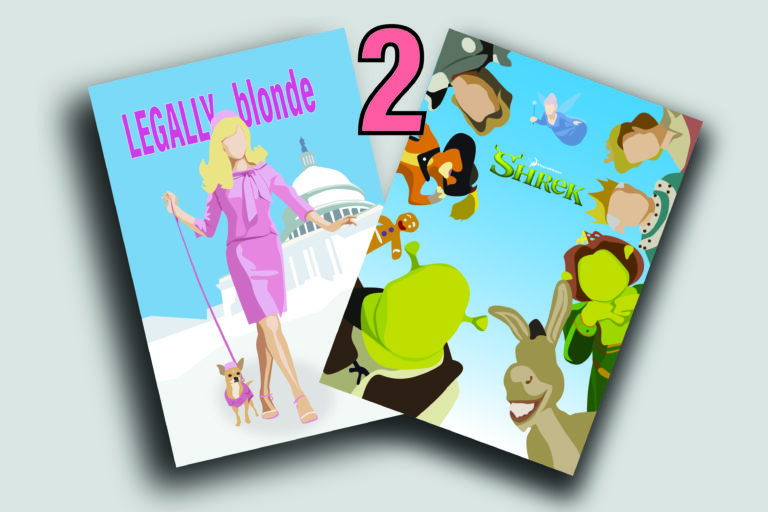
Worst: “Legally Blonde 2” (2003)

Afte Elle loses her job, she redirects her focus and sets off to Washington, D.C. to bring attention to animal rights. But with every legislator ignoring her and the typical mean girls, she quickly realizes that this is a different playing field than what she’s used to.

“Legally Blonde” was a great movie. It gave Elle, played by Reese Witherspoon, the position to be a powerful woman. It’s empowering to watch and every scene in the movie had something worth watching. But when it comes down to “Legally Blonde 2”, I had to force myself to watch it. The plot was lackluster and not deserving of my attention.

Written By: Itzelth Gamboa – arts@theaggie.org

Women’s World Cup Preview

Defending champion United States Women’s National Soccer Team prepares for 2019 run

Entering the 2019 World Cup as defending champions and favorites, the United States Women’s soccer team (USWNT) undeniably has a reputation to uphold. The U.S. became the first nation to win the Women’s World Cup three times when the Americans defeated Japan, 5-2, in the 2015 World Cup final. USA’s Carli Lloyd scored the fastest hat trick in Women’s World Cup history in that match and will play an essential role in USWNT’s surge for its fourth title this summer.

The opening game of the tournament will feature two worldwide powerhouses: France and South Korea. France is the second-highest favored team in the tournament (7-2 odds) behind only the U.S., which is listed at 2-1 odds. South Korea, even after playing well recently, is still a longshot to win the title, at 60-1 odds.

This year, although there are many teams with high odds to win the cup, there are two teams that have virtually zero chance of advancing, let alone winning it all: Jamaica and Thailand. These small countries and others will have much to prove throughout this lengthy tournament.

This year’s tournament in France will be the eighth ever Women’s World Cup, with only four teams having won the title before: the U.S., Germany, Norway and Japan — with the Americans and the Germans capturing five of the seven trophies. But surging teams like France and England are on the hunt for their first championship, with both teams possessing a handful of young, eager newcomers.

Fortunately for them, they have company in the U.S., with the Americans compiling a roster of veteran talent alongside a handful of fresh faces. The most notable absence from USWNT’s ranks will be Hope Solo, the stalwart goalkeeper who has anchored the team for the last decade. Since the goalkeeper decided to step away from international play in 2016, three keepers have been competing for the starting spot, with 31-year-old Alyssa Naeher seemingly separating from the other two. With 44 career international appearances, Naeher possesses the experience necessary to compete on the world stage.

On the other hand, the U.S. has brought up numerous prodigal, young stars that look to give the team some added firepower. Last season’s National Women’s Soccer League (NWSL) MVP Lindsey Horan looks to make a name for herself on the international stage after having undoubtedly the best stretch of her career over the last two calendar years.

Alongside the 24-year-old Horan, 21-year-old Mallory Pugh and 20-year-old Tierna Davidson further compliment a roster full of veterans. Pugh has steadily improved and garnished some attention, especially after she compiled over 50 international caps before her 21st birthday.

Then of course, rounding out the 23-player roster, there are USWNT’s star players that have already done so much to capture the hearts of millions. These names include the likes of striker Alex Morgan, winger Megan Rapinoe and midfielder Julie Ertz, who are all seeking to lead the team to its first ever back-to-back titles.

The tournament kicks off Friday, June 7, but the U.S. will open its World Cup run on June 11 against Thailand. The Americans won’t have to wait much longer to prove they are still the world’s best soccer team.

Written by: AJ Seymour — sports@theaggie.org

Sexual health resources offered on campus for students

Student Health and Counseling Services, Women’s Resources Research Center among others provide resources

With the passage of recent laws, many students may be wondering what resources UC Davis offers when it comes to sexual health. The Student Health and Counseling Services (SHCS) and Women’s Resources and Research Center (WRRC) provide options for students to access the help they need.

Some birth control options are available for over-the-counter purchase at the SHCS such as condoms, spermicide and emergency contraception. Students also have the option to talk to an SHCS advice nurse at the UC Davis Student Health and Wellness Center to discuss personal matters and explore various resources for sexual health.

Although the Student Health and Wellness Center does not perform abortions, they can guide students to the appropriate resources near the campus. According to the website, “The state of California may not deny or interfere with a person’s right to choose or obtain an abortion prior to viability of the fetus (the ability of a fetus to survive outside of the uterus, determined by physician, generally after 23 weeks of gestation or more), or after viability when the abortion is necessary to protect the life or health of the pregnant person.” Questions regarding abortions can be answered through the SHCS to help individual students find the best option for them.

Students also have access to STI and HIV testing through Get Yourself Tested (GYT) UC Davis. Appointments can be made through the Health-e-Messaging website or by calling (530) 752-2349. Students who have the UC SHIP plan can have the costs of the tests covered. The LGBTQIA+ Resource Center offers no charge for anonymous HIV testing. More information on this resource can be found here.

Students can also find assistance at the WRRC, a space for students to connect with resources for their reproductive health.

Cecily Nelson-Alford, the director of the WRRC for 2 years, said, “We offer safer sex supplies, including latex and non-latex external condoms. We also offer free menstrual health products in all of our restrooms (first floor, North Hall).”

“The WRRC can support students with referrals to on and off campus resources related to reproductive health,” said Sara Blair-Medeiros, the assistant director of outreach of the WRRC. “We also have staff who have undergone training on birth control methods, including how they work, their effectiveness and how to access them.”

For the coming year, the WRRC is discussing programming that will address the topic of education on sexual and reproductive health. More information on health resources through the WRRC can be found here.

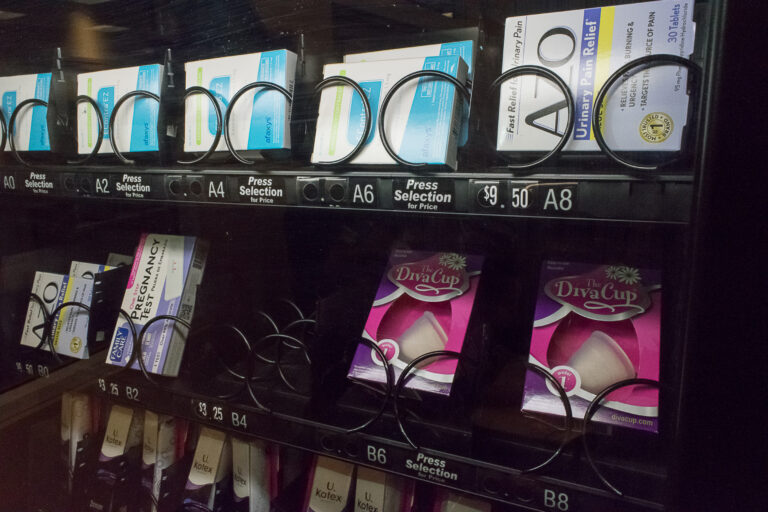
In 2017, a Plan B vending machine that contains items such as condoms, tampons, forms of birth control and even things like Tylenol was installed in the ARC study room.

While there are many options for students to consider when thinking about their sexual health, UC Davis has the resources to explore which paths are best for individual students who seek the assistance.

Written By: Sierra Burgueno — features@theaggie.org