55.7 F
Davis

Davis, California

Monday, December 22, 2025
Home Blog Page 414

Impacted chemistry labs leave staff, faculty searching for new ways to prioritize student learning

Summer school, heavier class loads solution for some

Pass times frequently come and go and, each time, students log into their Schedule Builders searching for chemistry classes to meet major requirements and career goals. Some look for the right professor, lecture and discussion times, finally settling on the best lab time for their needs. But when the ideal lab class is filled and waitlisted, what next?

As UC Davis increases its student enrollment and encourages more students to engage in science, technology, engineering and math majors and careers, chemistry classes are becoming increasingly competitive to register for and challenging to fit in with other registered courses.

“General chemistry is the gateway to STEM, we service all the other majors through chemistry,” said Debbie Decker, the safety manager of the UC Davis Department of Chemistry. “Even for students that don’t pursue STEM, the techniques and learning in chemistry training labs leave students with transferable knowledge, such as how to work with careful measurements, report results, observe and use the scientific method. These are important skills students can learn.”

Chemistry classes are held between Mondays and Thursdays, in three-hour blocks ranging from nine in the morning and ending until ten at night. Each lab class is designed to avoid conflicting with lectures. After each lab, UC Davis chemistry dispensary staff remove all of the chemicals from the room, cleaning the counters and removing and exchanging chemical equipment in the classroom. Fridays are reserved for equipment cleaning, staging and preparation for lab spaces.

UC Davis hosts eight chemistry dispensary sites scattered across the Earth and Physical Sciences building, Chemistry building and Sciences Laboratory Building. By dispersing the sites, it becomes difficult to organize, creating a cohesive and collaborative environment to organize lab experiences for students.

Chemistry teaching labs are also limited to the materials that can be provided for students.

“A lot of students interact with the chemistry department, but we have limited room for them,” Decker said. “We are limited in the number of lockers within the labs. We can’t have students sharing lockers because they might work in pairs, groups or alone. They need to have their own materials for any situation.”

Each chemistry teaching lab is confined to a 1200-square foot space. UC Davis’ fire code requires students to be given 50-square feet of space for teaching lab activities.

The fire code limits each teaching lab space to 24 students only.

“We have seat release, so incoming new and transfer students typically get into the chemistry courses,” said Yasmine Jefferson, an academic advisor in the UC Davis College of Biological Sciences for Neurology, Physiology and Behavior majors. “Continuing students are encouraged to have backup plans if they don’t get into the class during the academic year.”

During seat release, the registrar creates a cap on student enrollment in chemistry classes between 20 and 22 students. As the sections fill up, students can be added from the waitlist or later pass times.

“If ever my students cannot get into a chemistry lab course, I’ll suggest summer school and typically that will solve it,” Jefferson said. “If not, they can pick it up next quarter and add more units. It usually doesn’t negatively impact them.”

For the past few years, members of the chemistry department have been asking campus leadership to consider expanding UC Davis’ capacity for lab spaces, which would require additional construction and consolidation of branches within the chemistry department.

At the moment, no long-term plan exists to mediate the STEM presence expanding on campus or the student need.

Written by: Foxy Robinson — science@theaggie.org

Oakland in danger of getting left behind in stadium arms-race

A’s are last hope as city prepares to say goodbye to Warriors, Raiders

For the last 60-plus years, the property nestled between 66th Avenue and Hegenberger, just on the side of the Nimitz Freeway, has housed a trio of proud sports franchises. Three teams, the A’s, Raiders and Warriors, not only brought a lifetime full of memories and championships, but truly embodied the scrappy, resilient nature of the city they call home.

Fast forward to 2019, where two-thirds of its inhabitants will be departing in the span of six months.

The Warriors are playing their final games at Oracle Arena in the NBA Finals before bolting to the other side of the bay. Ever since co-owners Joe Lacob and Peter Guber took control of the Warriors in 2010, they had their sights set on a new arena in San Francisco. After a few setbacks, the team finally settled on a location in the Mission Bay district, about one mile south of the San Francisco Giants’ Oracle Park. The new $1 billion Chase Center, which will seat 18,064 fans, will open in September, in time for the 2019-2020 season.

The Raiders are in the midst of their second divorce with the city of Oakland. After abandoning the area for a move to Los Angeles in the early 1980s and subsequently returning 12 years later, the Silver and Black are now in a position to relocate to Las Vegas in the fall of 2020. The team has secured an unfathomable $750 million in public money from Nevada taxpayers, paving the way for a $1.8 billion stadium that will seat 65,000 fans.

At the end of the day, the city of Oakland was simply not in a position to shell out any amount of tax dollars to finance new venues for its sports teams, especially given the regrettable decisions made in the late 1990s that funded two major renovations to the Oakland Coliseum and Oracle Arena.

Fortunately for Oakland and its citizens, the Warriors have been mandated to pay off the remaining $40 million in debt for the renovations to Oracle Arena. Oakland and the Raiders are currently in a legal battle to determine who will cut the check for the almost $80 million in debt from the Coliseum upgrades, which were a key factor in the Raiders’ decision to return from Los Angeles.

After nearly 15 years of aimless stadium searches and relocation threats, it seems the Athletics finally have a path to securing a new stadium, and one that allows them to be the last remaining professional sports franchise in Oakland.

The team’s 51-year stay in the Oakland Coliseum became progressively worse in recent decades, especially since the return of the Oakland Raiders in 1996 and the subsequent renovations and construction of “Mount Davis.” This monstrous seating area high above center field blocks what used to be a picturesque view of the Oakland hills behind the stadium and serves no purpose for the A’s, who kept tarps over those seats for many years.

The A’s have tried to move to locations such as Fremont and San Jose in the last 20 years and threatened to relocate out of the Bay Area entirely but are now finally committed to staying in Oakland.

Things took a turn for the better in late 2016 when former co-owner Lew Wolff decided to step down and current team president Dave Kaval was hired. Kaval, who oversaw the building of the San Jose Earthquakes’ Avaya Stadium, has been at the forefront of the team’s pursuit of a new ballpark in Oakland.

In the fall of 2017, the A’s originally announced their intentions to build a stadium in the Peralta Community College District in downtown Oakland, near Laney College and the city’s Chinatown neighborhood. The team went all in on this idea and seemed convinced it would work out, so the backlash from organizations in the area and the community college came as quite an embarrassment for Kaval and the A’s.

With the downtown location firmly out of the picture, the A’s currently have two options for locations to build their ballpark: the current Coliseum property or a 50-acre site known as “Howard Terminal” in the Port of Oakland.

Currently, Howard Terminal is the team’s preferred option, due to its proximity to the waterfront and Jack London Square, an adjacent area with many restaurants, shops, offices and new housing developments. The team hopes to construct a 35,000-seat stadium that will be ready to open in time for the 2023 season.

Out of the three original options, Howard Terminal poses by far the most challenges. The site has been used for industrial purposes for many decades in the Port of Oakland and likely contains a variety of toxic and hazardous materials. Before the A’s can even come to an agreement to purchase the property or break ground, they will need to conduct many Environmental Impact studies and possibly conduct a large-scale cleanup. In addition, there has been a considerable amount of pushback from Port workers and longshoremen who believe the project will negatively affect their businesses and take away jobs.

Finally, there are concerns regarding the ability of this neighborhood to handle the increased traffic and influx of thousands of fans on a daily basis. The A’s will have to find a solution to these transportation issues and a way to provide the appropriate amount of parking spaces and public transportation options in an area that currently cannot handle such demands.

Nevertheless, the A’s received a vote of confidence earlier this month from the Port of Oakland’s board of commissioners, who gave the team a four-year period to do all necessary preparatory work on the project including conducting environmental studies and obtaining “land-use” permits. Just last week, the California State Assembly approved a bill outlining the team’s plans to construct the privately-financed stadium. Needless to say, the last few weeks provided a lot of optimism that the A’s will finally figure things out.

It’s no secret that the A’s have struggled to draw fans to their ancient, dilapidated home, annually sporting some of the lowest attendance numbers in Major League Baseball. Even so, the old concrete bowl in East Oakland doesn’t deserve all of the blame for these problems.

Over the last couple decades, the A’s frugal ownership group repeatedly neglected to reinvest in the team and spend the necessary dollars to sign players to long-term contracts and build for an extended run of success. Even though the team has been quite successful during this time, especially given its miniscule payroll, the front office routinely opted for fire sales of the team’s best players, so the most promising and exciting talent has been traded away to other teams.

This painful practice truly took a toll on the fanbase over the last two decades, leading to dwindling fan support at the box office and general outrage from many supporters. Many fans feel betrayed when their favorite players are traded away in the peak of their careers. From a fan’s perspectives, the loyalty they show in the stands is not matched by the team’s front office.

A’s fans in the East Bay show time and time again how passionate and supportive they can be and simply need a reason to believe that the organization cares as much as they do about delivering a winning product on the field.

The A’s took the first step towards changing their ways with the recent signing of slugger Khris Davis to a multiyear contract. Fans hope young cornerstone players Matt Chapman and Matt Olson will receive similar treatment in the near future.

Besides spearheading the efforts for a new stadium, Kaval has attempted to reinvigorate the A’s fanbase with numerous improvements to the existing fan experience at the Oakland Coliseum. Over the past two seasons, the team introduced a plethora of new seating areas around the stadium and a revolutionary and affordable ticketing framework. For the first time in a while, the organization is making an effort to engage its fans.

While a new ballpark would help boost interest in the A’s and drive up revenues for the team, a development like this won’t suddenly solve all of the organization’s business problems. There are too many years of distrust built up among much of the fanbase. This fractured relationship will not be repaired overnight, even with the prospect of a sparkling new stadium.

In order for the team to achieve long-term, sustainable success in Oakland, it must prove to its fans that it’s committed to spending the necessary amount of money to keep its star players on the roster for many years at a time and truly develop a core capable of competing for championships the fans can support.

Whether the Howard Terminal project pans out or the A’s end up staying at the Coliseum site, it is refreshing and encouraging to see team executives who show they care about the fans and are committed to keeping the team in Oakland.

It’s been a rough few years for East Bay sports fans and the next six months are only going to get tougher with the departure of the Raiders and Warriors. But there may be light at the end of the tunnel.

If the A’s can finally put an end to their lengthy stadium dilemma, at least Oakland fans will have one team playing in town for 81 days out of the year.

Written by: Brendan Ogburn — sports@theaggie.org

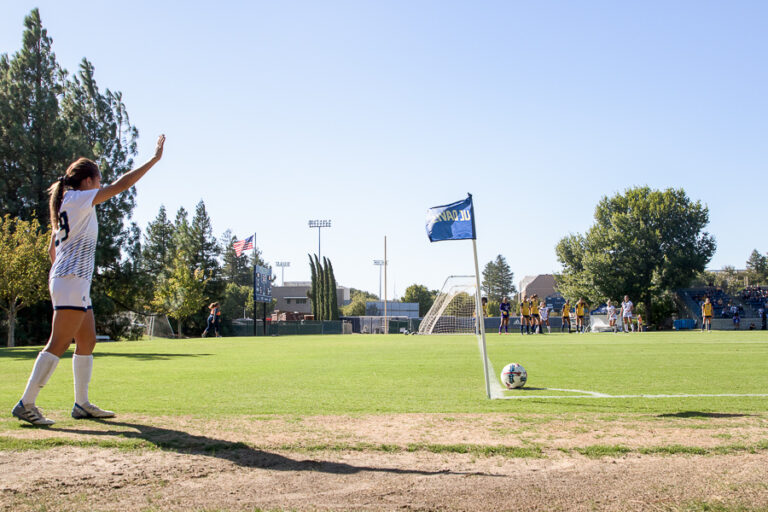
Tracy Hamm hired as new Head Coach of UC Davis women’s soccer

After making improvements to program at SF State, Hamm takes on Kaufman’s legacy

Earlier this month, Tracy Hamm was announced as the new Head Coach for the UC Davis women’s soccer team. Hamm’s hire takes over for former Head Coach Twila Kaufman, who resigned from the position in April. Before leaving, Kaufman led the Aggies for five seasons as head coach. Since her addition in 2014, Kaufman helped to improve the Aggies year after year. In the 2018 season, Kaufman helped lead the team to a 7-8-4 overall and 4-2-2 conference record and advance to the semifinals of the Big West conference tournament for the first time since 2011.

“We were not expecting Coach Kaufman to resign,” UC Davis Director of Athletics Kevin Blue said in a statement to The Aggie. “She made a decision that she believed was in her best interests, and we respect that. Coach Kaufman made a significant positive impact on the program during her time here. The team improved in the Big West standings each year under her direction. We are thankful for her contributions.”

Before her arrival at UC Davis, Hamm was most previously a Head Coach for the San Francisco State women’s soccer program. Having a similar effect to Kaufman, Hamm excelled at SF State as Head Coach, leading the Gators to winning records for the first time since 2002 in her first two years, as well as two 10-win seasons. Under Hamm, the Gators earned their first birth in the California Collegiate Athletic Association tournament for the first time since 2010, where they lost in the semi-finals.

“I think for me I’ve been pretty selective in positions that I have been taking in my coaching career,” Hamm said. “When the opportunity came [at Davis] I just felt like it was really the right fit. I have had a lot of success in my prior programs, and I have been searching for the right fit at the right time with the right institution. UC Davis just checked a lot of boxes for me.”

Hamm’s experience in the sport is extensive, as she played professionally in Women’s Professional Soccer for FC Gold Pride and the Atlanta Beat. Hamm is also one of two American women who possess a United European Football Association “A” Coaching License, mandated by the Union of European Football Associations — just one level shy of a Pro License.

“Coach Hamm is a rising star in college coaching,” Blue said. “She’s extraordinarily well-trained and has seven years of head coaching experience already. She will bring tremendous energy, passion and expertise to the position. Coach Hamm is also a very strong female role model for the student-athletes on our teams.”

Examining her overall coaching strategy over the years, Hamm believes that her approach to coaching is one not normally taken at a collegiate level.

“The way I have led my previous programs is very much player centric as far as I want to know what they think that they need to have to be successful,” Hamm explained. “So for me that is them identifying the positives and negatives of their experiences so far and doing what I can do to try to make some of those weaknesses or negatives, we can turn into positives. So I give my players a lot of autonomy and then push them to where I think that we can go.”

Next season will certainly be an interesting one for the UC Davis women’s soccer program. Coming off one of their most successful seasons in recent years and with Hamm leading the way, there is hope for a bright future for the Aggies.

“I like to win and I think that winning is a product of being prepared, being confident and working hard. But it also those intangibles making sure you create the right team chemistry and team culture,” Hamm said. “It depends how you define success, but I want them [the players] to have a positive experience. For someone who is very competitive I measure success a big part by wins and losses but also take a holistic approach to things. It’s [the overall feeling] excitement and I think that this program is unique and this is a program that has a lot of potential. And that is the first step in creating a successful culture that I want and a culture where everyone is accountable, but enjoying their UC Davis experience.”

Written by: Ryan Bugsch — sports@theaggie.org

Review: “Wine Country”

Amy Poehler’s directorial debut “Wine Country” isn’t as fun to watch as it was for the cast to make

Amy Poehler’s directorial debut “Wine Country,” released on Netflix on May 10, follows six old friends reuniting over a vacation in Napa Valley. With a cast of heavily-experienced comedians like Maya Rudolph, Rachel Dratch, Tina Fey and Poehler herself, the film had the potential for greatness. The film’s tone is irregular and somber, however, focusing too much on the dark parts of aging rather than the funny aspects.

The cast all has roots in the 2000’s era of “Saturday Night Live.” Even SNL writers Paula Pell and Emily Spivey joined the on-screen cast in the film. The iconic bond between the women remains evident even 20 years later.

In the film, the group met in their early 20’s working for the pizza shack Antonio’s, a thinly-veiled metaphor for SNL. The chemistry and aspects of real friendship between the characters shines through the writing in what feels like many improvised moments. The group regularly breaks out into song and running gags representative of any group of people who have known each other for a very long time. And in that sense, the film is delightful.

“The episodic story — Spivey and Liz Cackowski wrote the script — tracks the women as they hang out, tour Napa, drink, laugh and cry. Repeat,” wrote Manohla Dargis in The New York Times. “The comedy is situational and confessional, the flat one-liners mixed in with more memorable physical comedy.”

Fans of Poehler may be a bit disappointed as the film does not feature as much of her usual charm and energy; however, the cast is undeniably hilarious and the other leading ladies shoulder the bulk of the humor. Poehler takes the sidelines to let Rudolph and Drach shine. Pell, as the loud and raunchy Val, also provides some of the biggest laughs in the film.

Despite a great cast with obvious chemistry, however, the storyline lacked both in terms of plot and a consistent tone. Sliding from emotional and sentimental moments to wild and drunken slapstick so quickly can give the viewer whiplash and the film struggled to flow naturally. While the relationships between the friends seem as old as time, the characters themselves are rather shallow and underdeveloped.

“The rudimentary nature of the plot yields a perhaps inevitably episodic feel, leaving fun individual moments, but a movie that’s a few bottles short of a case,” wrote Brian Lowry for CNN.

Since I was raised in Napa myself, I found the setting of the film particularly alluring. It was exciting to see my hometown portrayed as a sort of prestigious wonderland for adults. I recognized the backdrops and some of the wineries, which was nostalgic and exciting as well.

While some Napa locals found errors and inaccuracies in the portrayals of wine, for the average viewer, it’s fun to see your hometown portrayed in a film with some of the best female comedians of our time.

“The lush Napa Valley setting, with its storybook green hills and vineyards, becomes a surreal backdrop to all the nonsense and angst,” Sheri Linden wrote for the Hollywood Reporter. “As to the local viniculture, the characters, and the film itself, are not especially interested, except for the liberating/medicating effects of wine. Sommeliers and their oenophile spiels make for a couple of well-played scenes but are all-too-easy targets.”

Poking fun at the snobbiness of the wine industry may be an easy target, but the accuracy is still there.

“Jeez, people really like to talk about wine around here,” Poehler’s character Abbi complains early on into the film.

Wine puns aside, this seems to be the general notion about the film — it was nothing awe-inspiring or particularly unique, but enjoyable to watch for what it is: a typical Netflix original. It would have suffered at the box office, but provides a niche group of people who are avoiding homework or just have nothing better to do on a Saturday night with a casual but enjoyable viewing experience. It may not be worth the hassle of leaving the house or paying $10 for a movie ticket, but it will keep you entertained in bed.

Written By: Alyssa Ilsley — arts@theaggie.org

Behind Every Skateboarder is an Artist

The art of film in skateboarding

To build a list of famous skateboarders does not depend on whether or not one has ever skateboarded— Tony Hawk, Nyjah Huston, Ryan Sheckler. Easy enough. Everyone knows those names. There’s band of creative filmmakers and photographers, however, who trail behind skateboarders that typically go unnoticed; creators who care little about having their talents eclipsed by the raw footage they capture of these prominent skateboarders. Some worthy mentions of filmmakers who are responsible for the exponential growth of skateboarding: Torsten Frank, the now deceased Preston “P-Stone” Maigetter, Spike Jonze and Ryan “Beagle” Ewing. And that barely scratches the surface of the creators who have made skateboarding what it is today.

It’s not difficult to imagine what skateboard filmmakers go through to get the perfect shot. For every skatepark line, for every stair set and every hill bomb, there is a camera person catching the same amount of speed and traversing the same exact obstacles behind the skater who’s being recorded. The only difference is that the filmmaker simultaneously skateboards, juggles a camera and keeps their eyes on the viewfinder.

Unlike a Hollywood movie set, the filmers are in the fray with the skaters. Whereas camera operators on a movie set use dollies, cranes and shoulder rigs, the skate filmer has their own set-up — 8.5 in. boards, urethane wheels (for quieter, safer shots) and cameras with handles (Usually a Sony VX) allowing them to skate and shoot.

And it’s no easy feat to be a skate filmer. More than enough videos exist on the internet of filmers catching rogue skateboards to the face or cracks in the ground and falling flat on their faces. Who then can be considered the stunt person on the set of a skate flick, the skater or the skate filmer?

Skate filmers tend to rip through footage and libraries worth of memory cards due to their filming techniques. There is no cut, take, scene on a stair set or in a skatepark. Filmers keep the camera rolling and capture whatever they can while the red light is on. Because skaters can’t call when they’re going to land a trick or get busted by the cops while attempting to do so, it’s best for the filmmakers to “keep that shit rolling,” as Beagle famously said in an interview with RIDE.

Beagle set a precedent with his films by using this exact technique. For those unfamiliar with his work, he is responsible for most of the films that come from the skateboard companies Baker, Deathwish and Shake Junt. All of those companies are famous for harboring the most talented and charismatic skaters in the game. Skaters idolize the films “Baker 3,” “Baker has a Deathwish” and Shake Junt’s “Chicken Bone Nowison” for two reasons: the skateboarding and the incidental comedy.

“What comes with the style [of skateboarding] is personality. You just leave that camera rolling and capture all the after-antics,” Beagle said. “The big part of skateboarding is the fun, so you got to capture all the fun that comes with it: the celebrating, the random freaks and characters, the effort, the board-throwing, the meltdowns, the laughs, the cries. It’s good to show it all.”

All that’s known about skateboarding and the culture therein is because of the people that stay behind the camera. While they handle shooting the film and snapping the photos, most of them edit their own footage, too. Beside the two Baker team skaters, Andrew Reynolds and Dustin Dollin, who help edit certain parts in Baker films, most of the creative process rests on the shoulders of Beagle.

“Ever since I started filming, I wanted to make the magic happen […] There was never a turning point where [filming] became a job for me,” Beagle said. “Anybody [can] point a camera, push record and think that they’re filming a trick, but there’s so much art that goes into [filming].”

While the art of skating is left to the skaters, the art of skateboarding and how we perceive that art comes from the filmer’s passion they put into their work.

“This is skateboarding for the world. You want it to look as good as possible,” Beagle concluded. “They might try the trick 300 times, but if they land that trick the 316th time and you didn’t film it the way you wanted to, you’re going to live with that the rest of your life.”

Beagle exemplifies the dedication that filmers put into making skateboarding great. And while filmers get may get the appreciation they deserve from within the skateboard community, most of them are entirely disregarded by the fans who view the films. Beagle is an exception because the Baker team makes it a priority to take the camera out of his hands and turn it back on Beagle, thus resulting in the favored “Beagleoneism” part that plays at the end of every Baker, Deathwish and Shake Junt film.

Maybe other skate teams should take a page out of Baker’s book and feature their filmers more often. Maybe then a level of worldwide recognition would materialize for these artists. Sadly, though, many filmers are not recognized for their work as skate filmers until it’s too late. For Spike Jonze, his work on Girl Skateboards’ “Yeah Right!” is completely overshadowed by his work on “Where the Wild Things Are” and the first three “Jackass” movies.

But is this not the plight of the artist? To be heard, but never seen? Undoubtedly, these filmers are not concerned with stepping in front of the camera because they are too focused on ensuring that everything behind the camera goes smoothly. For what skateboarding has become today, the thanks goes to the filmmakers who put their bodies on the line for the sport, from their motivation on set to their dedication in the editing room.

For every skater ripping down a hill or tre flipping a stair set, there is an artist, hard at work, ensuring those tricks find their way to the next generation of skateboarders and filmers who wish to create the same fire with their creative spark.

Written By: Clay Allen Rogers — arts@theaggie.org

Students discuss Adderall use for academic purposes

Those prescribed medication for ADHD weigh in on controversy of pill, its presence in study habits

Third-year cognitive science major Claire Brandmeyer was diagnosed with Attention Deficit/Hyperactivity Disorder (ADHD) when she was in second grade and has been prescribed Ritalin or Vyvanse ever since. After transferring to UC Davis, Brandmeyer noticed the behavior of abusing focus drugs is far more normalized on UC Davis’ campus than at her community college.

“I definitely get asked more about whether or not I sell my medication here than I did when I was at community college,” Brandmeyer said.

After doing more research on the effects of these drugs, Brandmeyer decided that she no longer wants to rely on them in order to focus. Adderall and other focus drugs are all amphetamines, meaning they alter brain chemistry and function and can have negative side effects as a result. Brandmeyer is concerned that students don’t take into consideration the long-term effects of taking these drugs and are damaging their overall health.

“I went off my meds after learning what ADHD medication does neurologically,” Brandmeyer said. “There’s not enough awareness about the long-term effects of these drugs on the brain.”

ADHD is defined by the National Institute of Mental Health as “a disorder that makes it difficult for a person to pay attention and control impulsive behaviors.”

Approximately 9.4% of children ages two to 17 have been diagnosed with ADHD and among this population and 64% of this group took medication to control their symptoms, according to the Center for Disease Control and Prevention as of 2016.

ADHD can present challenges when it comes to being able to focus on assignments or maintain attention while taking exams. Diagnosed students take medication in order to elongate their attention spans and in the hopes of being put on an equal playing field with their peers.

Some undiagnosed students, however, have found that taking medication used to treat the effects of ADHD, such as Adderall, Ritalin or Vyvanse, gives them a leg-up academically. As a result, it has become a norm for students without ADHD to use these drugs in order to study for midterms and finals or complete large assignments.

Due to the high pace and pressure of the quarter system, as well as the demands of maintaining a healthy work-life balance, some students find that there are simply not enough hours in the day to achieve their goals. Therefore, the question must be asked: is abusing focus/study drugs a justified behavior? If so, what can the university do to ease the stressors which instigates this abuse?

Third-year animal science and management major Olivia Sinclair has seen a consistent pattern of this abuse among peers and classmates since coming to college. She feels that this issue is especially prevalent among students in Science, Technology, Engineering and Math (STEM) fields.

“I would say that the majority of the people I have met in STEM do Adderall whether they are prescribed or not prescribed,” Sinclair said. “There are so many people out there who are buying and selling, it’s just so easy to get a hold of.”

Sinclair believes this behavior is somewhat justified because there aren’t enough alternate options that allow students to choose to not abuse focus drugs. She feels that intense academic pressure combined with the pressure to maintain one’s well-being leave students in need of assistance to stay afloat.

“I think the problem is the way UC Davis approaches teaching, especially STEM,” Sinclair said. “There is so much information given in such a short time span that by the time finals rolls around, you have to extract so much information all at once. Sometimes, the only way to do that and get a good grade is to take Adderall.”

Regardless of a prior struggle with focus medication, Brandmeyer empathizes with students who abuse focus drugs. She feels that the culture and expectation to achieve perfection normalizes use of these medications so that students can wear a facade and appear as if they’re not struggling personally or academically.

“When you’re on a quarter system, and the expectation is to be happy all the time, have friends and get straight A’s, people find that focus drugs are the only way they can get through,” Brandmeyer said. “It just feels like there are never enough hours in the day.”

Sinclair believes this culture can be combated by a more applied, fieldwork-based teaching style. She argues that through learning by doing, stress will be minimized and students will learn in a more holistic way.

“The school needs to understand that growth doesn’t come from cramming a bunch of information,” Sinclair said. “The way people learn is through hands-on experience.”

Brandmeyer believes that the only way to combat this issue is by striking up a dialogue between students and administration. She feels that at this point in time, the administration is quick to criticize students’ use of focus drugs without acknowledging the roots of the problem.

“The amount of pressure that is held on students, and the lack of communication between the university and the students needs to change,” Brandmeyer said. “The university needs to recognize that school-related stress and anxiety are as detrimental to mental health as any other mental illness.”

Written by: Miki Wayne — features@theaggie.org

The Davis Needle: downtown’s monumental mark

Ribbon-cutting event to celebrate installed sculpture, completion of Third Street Improvements Project

Downtown Davis recently welcomed “The Davis Needle” to its repertoire of public artworks. Created by artists Mark Grieve and Ilana Spector, the 25-foot tall sculpture sits on Third Street, marking the transition from the edge of downtown to UC Davis.

The sculpture was commissioned back in 2011 in conjunction with the Third Street Improvements Project, which was intended to promote safer pedestrian travel and overall beautification. The project was delayed, which subsequently delayed the installation of the obelisk.

“There was interest in putting something there that created a gateway feeling, that marked the specific location,” said Rachel Hartsough, the arts and culture manager for the city of Davis. “It’s for creating this really lovely pedestrian-bicycle promenade between the city and the university.”

Grieve and Spector were working on a series of works relating to repurposed bike parts when they were chosen by the city of Davis. In particular, the obelisk is composed of around 110 unwanted children’s bikes, taken apart, cleaned and rebuilt into the Needle.

“There’s a sea of material going through the junkyard, especially children’s bikes,” Grieve said. “The original reason why we got into this series was because the material was cheap, that was really it. We sort of grew it from there.”

Spector echoed that cost-efficiency and sustainability factored into their unconventional use of bike parts in their artwork.

“It’s both,” Spector said. “I used to own a solar electric company, and we recognized that if we can reuse something and transform it into something beautiful, there’s an alchemy that goes on. So that is appealing to us, the sustainability aspect definitely.”

The sculpture’s name originated from “Cleopatra’s Needle,” a notable ancient Egyptian obelisk. Other worldly inspirations came from a trip to Paris, resulting in the installation of LED lights throughout the entirety of the sculpture to mimic the lighting of the Eiffel Tower.

“For one minute at the top of the hour, it’s going to sparkle like the Eiffel Tower, and there’s going to be slight anomalies going through it,” Grieve said. “The city’s going to be able to program it for daily occasions for yearly occasions.”

While the artists are from Petaluma, roughly an hour and a half away, they found Davis to be a fitting environment for their art due to the city’s prevalent bike and art culture. Transporting the giant sculpture to its new home, however, proved to be a challenge.

“When you work in artwork, it’s always a question of how you get it from where you build it to where it’s going to live,” Spector said. “A lot of times, we’re dealing with an inch on either side that [it] wants to fit in, and how we get it into the truck.”

The artist’s hard work and the completion of the Improvements Project will be celebrated at a ribbon-cutting event on June 1. The ceremony is set to begin at 11:15 a.m. and will feature remarks from city staff, among other activities near “The Davis Needle.” Booths will include the city’s “Art Bike,” a UC Davis design team working on a bicycle scavenger hunt, The Cali Rice Festival and free bike lights.

“We will have a selfie station to take photos at The Davis Needle,” said Barbara Archer, the communications and customer service manager for the city of Davis, via email. “All the restaurant owners who have put up with the construction will help to cut the ribbon. We really want to ask people to come eat at the Third Street establishments.”

Grieve and Spector hope for the “The Davis Needle” to leave a lasting impression on the City of Davis and for residents to adopt it into their community.

“People call it an artwork, but it’s really a working piece of artwork — something that keeps giving back to the community,” Grieve said. “Rather than making a piece of artwork, we [feel] that we’re making a landmark and hopefully, a monument.”

Written by: Renee Hoh — city@theaggie.org

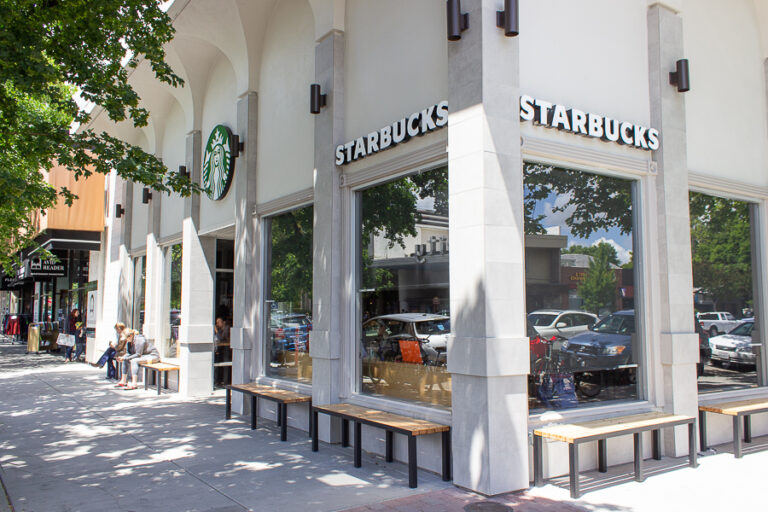
New Starbucks opens on F Street across from previous location

New location provides more space for customers

A new Starbucks sign was displayed across the street from another Starbucks, leaving the two coffee shops from the same company facing each other downtown on F Street. As construction began, it became noticeable that these stores were actually very different in terms of size and style.

Rather than having two Starbucks locations so close together, however, the old one was torn down and closed off, as a new business would soon replace it. The newer Starbucks mimics the layout of the local popular coffee shop, Philz. Many customers explained that the new Starbucks is outdoing the older one, both in style and satisfaction.

“I love it, it is way bigger and better for studying,” said Mckenna Moriarty, a fourth-year communication major. “I could never go to the old Starbucks because there was no place or room to study. I thought of the other as more of a “grab-and-go” spot. Also, there are way more outlets so you can plug in your laptops. It is refreshing to have a new study space downtown.”

Although the larger space is being utilized by students and residents, employees felt otherwise about the changes that were made when switching to the new location.

“When I spoke to a barista while checking out, he mentioned that it’s been difficult to sustain the increase in business and larger store,” said Dani McCabe, a fourth-year economics major. “He also noted that no new employees were hired to support this move.”

McCabe mentioned that the barista mistook her drink order, but the barista allowed her to keep it while also remaking the new coffee. The increase in customers was said to overwhelm the staff, which consists of the same amount of people.

Besides an increase in space, the new Starbucks offers the nitro cold brew and communal sinks.

All in all, as this new Starbucks opens its doors to the public, the previous location remains vacant. The California Aggie reached out to the manager and employees of the new Starbucks location but was unable to receive a response, as the manager said the overall corporation media relations dealt with questions, and that employees working for the company were not permitted to give statements.

Written by: Lauren Tropio — city@theaggie.org

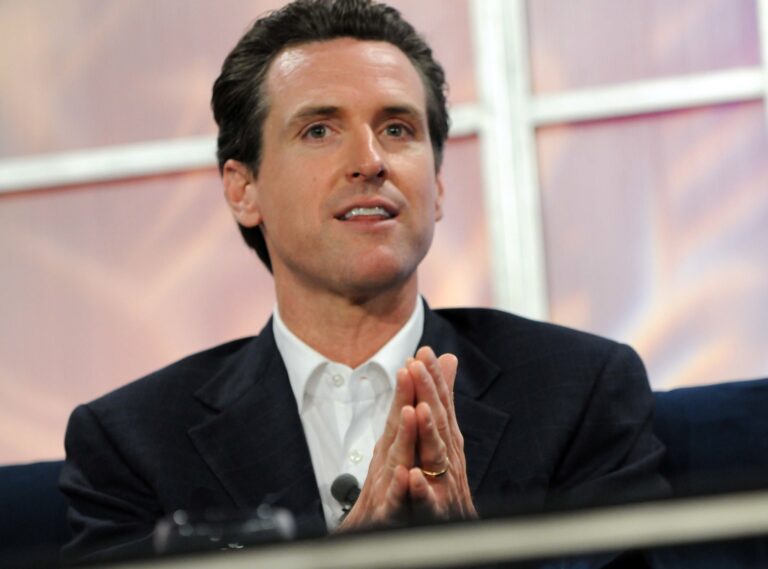
Governor Gavin Newsom’s annual budget proposal includes increased funds for UC system

UC could see 1.2% increase in funding

California Governor Gavin Newsom recently released a revised 2019-2020 budget proposal with nominally increased funds for higher education in the state. This January, Newsom’s proposed budget allocated a total of $17,952,680 for higher education. Now, the revised state budget allocation for higher education is $18,162,197, marking a 1.17% increase in funding.

The greatest portion of the higher education budget is comprised of funds for the Board of Governors of community colleges in the state, with $6,593,543 allocated. The California State University system received the second largest portion of funding, $4,222,289, and the University of California system has received the third largest portion, with $4,048,127 allocated. Other funding allocations include money for the Student Aid Commission, which provides financial assistance to students, retirement costs and California State University health benefits.

The University of California Office of the President (UCOP) indicated its support for these changes.

“The University of California appreciates the strong investment in higher education reflected in Governor Newsom’s January budget introduction, as well as the additional proposed investments from the May Revision, such as new ongoing funds to support housing for homeless students,” read a statement from the UCOP.

The statement added that UCOP was hoping to “secure additional funding,” which would permit a “one-time allocation from the Budget Act of 2018” that helped prevent a tuition increase during the 2018-2019 school year. This would ideally help “bolster enrollment growth and access throughout the university.”

Written by: REBECCA BIHN-WALLACE — campus@theaggie.org

Xicanx Futurity exhibition comes to an end, Native American students discuss future actions

Native American and Indigenous Student Advisory Committee proposed to consult chancellor

The Xicanx Futurity exhibition at the Manetti Shrem closed on May 5. The controversial exhibition, featuring the use of ceremonial indigenous objects by Chicanx artists, weathered critical public statements from both the Native American Studies department and Native American and Indigenous students on campus.

In the wake of the exhibit, students at UC Davis have begun organizing a Native American and Indigenous Student Advisory Committee that would report to the Chancellor.

Lindsey Balidoy, a fourth-year undergraduate student, and other students are working to create a this advisory committee that would ideally prevent future instances of cultural misappropriation from taking place. Balidoy said that the group has met with the Chancellor to formally present on the goals of the proposed advisory committee.

“On [our] end, we’re organized,” Balidoy said. “We know what our ask is and we know, you know, how we want this committee to function.”

In response to concerns that were raised by Native American elders, faculty in the NAS department and Native American and Indigenous students on campus, the Manetti Shrem facilitated the removal of eagle feathers from artist Celia Hererra Rodriguez’s installation, “Acoyaliztli Tlachpana” Xicana, on March 25.

Rodriguez’s son, Matthew Montes, who took part in creating the installation, consulted with his spiritual leader and advisor, Chief Wakiyan Sna Mani II of the Oglala Sioux Tribe from Pine Ridge Reservation, about further steps to take.

Following an April 13 meeting organized by the co-curators and staff of the Manetti Shrem Museum, Sna Mani “felt compelled to restore Herrera Rodríguez’ and Montes’ original prayer” by returning the feathers to the exhibit. The Department of Fish and Wildlife also maintained that the artists featured in the exhibition had the right to own the eagle feathers. Wendi Delmendo, the chief compliance officer at UC Davis, affirmed this decision in an email to Susan Reece, a Native American elder who publicly raised concerns about the exhibition.

“After consultation with University counsel, we were unable to determine that any of the federal laws you cited were violated,” Delmendo wrote in the email. “Nonetheless, the University referred the matter to the Department of Fish and Wildlife for independent review.”  

However, Reece said that the investigation into a possible violation of federal law is ongoing. She added that the General Counsel of lawyers at the university should be held accountable because federal law “most definitely falls under [their] purview.”

“When issues were raised about Herrera Rodriguez and Gina Aparicio’s installations of prayer ties and feathers the curators worked to actively understand more fully the critique from Native American Studies and community members considering past exhibition practices,” the co-curators of the exhibition said in an email. “When the co-curators and artists attempted to establish communication with those who expressed dismay minimal ground was made so the curators and artists could not negotiate with NAS faculty or community to realize the best steps forward.”

Gina Aparicio, whose tobacco tie installation was featured in the exhibition, has also responded to the complaints that were raised about her work, discussing the thinking behind her artistic practices.

“This offering of tobacco is meant to unite us as one heart, one mind, and one spirit,” Aparicio said via email. “It is a prayer for the healing of ourselves, our community, and our Madre Tierra. Ipan Nepantla Teotlaitlania Cachi Cualli Maztlacayotl bridges the political and the sacred,” she added. “It is meant to disrupt, challenge, and reclaim spaces that have historically been oppressive to our communities. In an act of self determination it is meant to transform the white walls of an institution into a sacred space.”

Aparicio also said that none of the complainants contacted her directly about their concerns.

“Not once was I ever contacted by anyone about their concerns about my work,” she said. “If I had been I would have asked that we dialogue the way we have been taught on this road, in front of the fire.”

But on April 17, Native American and Indigenous students at UC Davis released a public statement in response to the use of these ceremonial objects.

“The commodification of these objects violates cultural protocols that have been in place since time immemorial,” the letter said. “Neither NAS faculty nor our Native American and Indigenous student body were consulted regarding the planning of the exhibition, nor have they been consulted regarding the harm it has inflicted.”

The letter also described the emotional nature of the exhibition’s content, noting that “[…] student and community members have experienced deep shock, immense stress and pain regarding the misuse of ceremonial objects.”

However, Xicanx Futurity co-curators have said that they were in contact with NAS faculty before the exhibition.

“Shrem staff met with faculty across many academic departments, including Native American Studies,” the co-curators said. “The two faculty members (Professor Ines Hernandez-Avila and Assistant Professor Jessica Bissett Perea) who first approached Shrem staff with concerns in February of 2019 were consulted prior to the exhibition.”

The curators and artists of Xicanx Futurity are cognizant of the concerns raised by the Native American and Indigenous community in Davis and have asked for “clarity, healing, understanding, compassions, and deep listening for everyone who is feeling the pain of these tensions, and who has experienced the traumas of colonization for generations.”

Their letter described the NAS and Chicano/a Studies departments as “not opposing forces,” and clarified that, “Xicanx Futurity co-curators and artists [are] not aiming to disrupt anyone’s autonomy, sovereignty, land and treaty rights, and/or ceremonial rights, nor do we want to participate in the white supremacist settler practice of ‘the elimination of the Indian.’”  

Balidoy, who helped craft the Native American and Indigenous student letter, views the controversy at the Manetti Shrem as being part of a general disregard for Native and Indigenous voices on campus. Balidoy is a member of the Bad River Ojibwe and Tiwa Pueblo tribes.

“Our community is hurt because our voices are not being heard and our voices are kind of actively being silenced,” Balidoy said. “I think the biggest thing on campus for our student leaders and our student community, is we want to be heard. […] I think we’re lucky that we have a very strong Native student body on campus, [but] it hurts that we’re not being talked to or listened to.”

Balidoy expressed hope regarding the increased visibility of Native students on campus, mentioning a recent pow-wow that took place, as well as a student advisor to the Chancellor who is Oglala.

Native American students who had raised concerns about the exhibition also received a message of solidarity from El Movimiento Estudiantil Chicanx de Aztlán (M.E.Ch.A.), a Chicanx student organization with a chapter at UC Davis. Alejandro Galicia Cervantes, a first-year political science major and the recently elected political chair of M.E.Ch.A., described the Xicanx Futurity exhibition as a “big event” for the Chicanx and Latinx communities on campus. Initially, he said, he “didn’t think too much of it,” and was not aware of the controversial use of eagle feathers and tobacco ties in the exhibition.

Galicia Cervantes said that he was contacted by Balidoy and viewed the concerns she expressed as a chance for M.E.Ch.A. to express its solidarity with Native American students on campus. Since M.E.Ch.A. is undergoing a transition of its own that has raised questions about indigeneity and inclusion, including a possible name change, Galicia Cervantes decided to take action. Within a few days, M.E.Ch.A. had voted to issue a statement of support for the Native American student community on campus.

“I felt that it was connected to the national movement that we’re trying to do […] I felt that if we’re making a move on the national stage, we have to walk the talk on campus,” Galicia Cervantes said. “It was an opportunity and a call from another community member to show solidarity for them, and I chose to push for that.”

Balidoy, who expressed gratitude for M.E.Ch.A.’s public support, discussed the importance of this kind of allyship.

“I want to highlight that it’s important that we have allies, and it’s important that we have allies that back our ask [for the advisory committee] and can respect that we’re hurt on a level of thousands of years of trauma,” Balidoy said. “But we also need our allies to amplify our voices and not speak over us or speak for us or disregard our feelings.”

Highlighting the fact that tribal nations are sovereign and have their own governmental processes, Balidoy said that Native American and Indigenous students are “not just an ethnic group,” pointing out the high number of different tribal affiliations on campus.

Balidoy added that Native students on campus are moving forward from the incident at the Manetti Shrem by pro-actively creating the advisory committee, noting that the student body is not actively seeking a response from the museum.

“Just keeping in mind, we have to deal with this every day,” Balidoy said. “The one thing we want to focus on, is how do we prevent this from happening again? Because it’s not the first time that there’s been a lack of cultural oversight. And we have a little bit more voice in how we would like our community to be represented on campus. Because who better to know what the students want or need than Native and Indigenous students?”

Written by: Rebecca Bihn-Wallace — campus@theaggie.org

Band-Uh! placed on interim suspension, Bottlerock, NBA Playoffs Recap: Your Weekly Briefing

Happy Friday Aggies!

Well, that week went fast. I hope you all had a mellow and relaxing long weekend — a little taste of summer. Welcome to week 10 — just like that, the time went by too fast! I will be graduating this spring, so I will be passing the news briefing batond. It has been a true pleasure.

For the last time… here’s your news.

Campus:

JUSTIN HAN / AGGIE

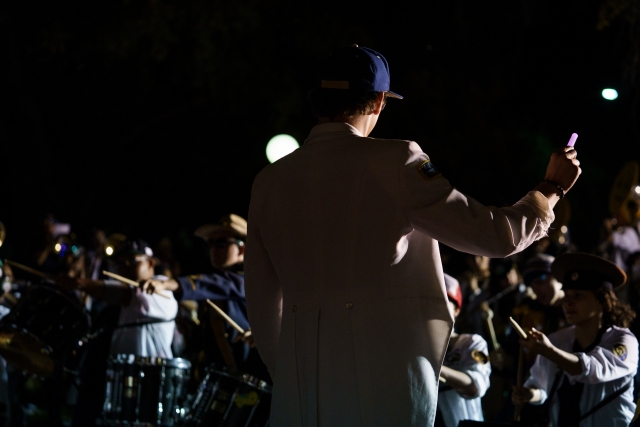
Band-Uh! placed on interim suspension following accusations of hazing, sexual violence, misconduct. After the article published in The California Aggie and a subsequent investigation done by The Sacramento Bee, an investigation by an external law firm is under way and has placed an interim suspension on the UC Davis marching band Band-Uh!. “[The suspension is] what the band needs, because while there are extremely fun aspects — like music, like having pretty much a family in the band — it’s not something that can just cover up all the bad things that happen in the band,” Ema Seijas said, a former section leader in the band who still pays dues and a fifth-year animal science major. Read on.

Senate passes resolution #14 to recommend the disarmament of UC Davis Police — after a two and a half hour discussion, senate voted 7-6 in favor the resolution. Over 20 speakers gave their opinions and asked questions about the resolution, midway through, a mock vote was called resulting in a split, with two senators abstaining. When the discussion concluded, Deshpande cast a tie-breaking vote in favor of the resolution, two senators were absent for the vote. The Judicial Council has since placed a temporary injunction on the resolution. Read on.

City:

JEREMY DANGER / AGGIE

ICE slams California’s sanctuary policy after fatal DUI crash in Yolo County — Undocumented suspect accused of killing three people in King’s Landing collision released on bail, drawing ire from ICE. On May 4 the alleged suspect, Ismael Huazo-Jardinez, veered off the road and crashed into a travel trailer home in King’s Landing, killing the three occupants inside. Huazo-Jardinez was released on a $300,000 bail, police told The Bee, and is now awaiting trial in ICE custody. “Individuals who enter our country illegally and commit crimes must not be released back into our communities where they are able to harm others,” Acting Director Field Officer Director Erik Bonnar said in a statement. “This is an important matter of public safety.”Read on.

Features:

QUINN SPOONER / AGGIE

Meet the organizers of Mental Health Awareness Month — student groups come together to promote wellness. May was Mental Health Awareness Month, and several student groups banded together to reduce the stigma surrounding mental health. Shradha Shah, the co-chair of the Student Mental Health Coalition (SMHC) made strides towards uniting several advocacy groups on campus with the common goal of bringing mental health issues to light and increasing resources to students. Another group, the National Alliance on Mental Illness (NAMI), offers free mental health first aid training twice a quarter which informs students how to recognize mental health conditions and respond appropriately.

Read on about SMHC, NAMI, and the other mental health groups and resources on campus.

Arts & Culture:

BRIAN LANDRY / AGGIE

Bottlerock music festival 2019 — where music, food, booze live in harmony. Photo director Brian Landry and I went to Bottlerock last weekend, eating, drinking and dancing our way through the Downtown Napa Valley festival. Some of my best memories from the festival came from people-watching in the crowd: a circle of middle-aged women sipped glasses of cab and passed around a joint while shaking their hips to “Insane in the Brain” at Cypress Hill and a thirty-something year old man danced and twirled his mother to Mumford and Sons. The vibe was refreshingly mature, no pushing or shoving in large crowds — in fact quite the opposite. I often found myself conversing and dancing with the people next to me, exchanging smiles and good energy.

Read on for recaps on performances by Logic, Pharrell, AJR and Mumford and Sons.

Sports:

ANDREA GONZALEZ / AGGIE

NBA Playoffs Recap and Finals Preview — Toronto reaches first finals in franchise history, Warriors reach 5th straight. “For the first time since the franchise was founded in 1995, the Toronto Raptors will represent the Eastern Conference in the NBA Finals after a 100-94 victory over the number one seed Milwaukee Bucks on Saturday. The Raptors will host the Golden State Warriors, who reached their 5th straight NBA Finals, in the best of a seven game series that will begin on Thursday,” writes sports reporter Omar Navarro.

Read on for his recap of the season.

Science:

ALEX R / CC 4.0

The Epic Saga Of How A Single two-inch Fish Saved A Population — New research explores how the Gulf Killifish adapted to deadly pollution in the Houston Ship Channel.

A study published in Science by scientists from UC Davis and Baylor found that a population of Gulf Killifish adapted to deadly pollution in the Houston Ship Channel. In the 1970s, ships off the coast of Texas were found to be releasing toxic chemicals into the water, causing a catastrophic heart problems in a population of Gulf Killifish, leading to population shrinkage. Now, 50 years later, Gulf Killifish are thriving in the area. Andrew Whitehead, a professor of Environmental Toxicology at UC Davis, and his team painstakingly sequenced the full genomes of almost 400 fish and found that a deletion mutation had disabled a pathway that was previously being activated by the toxic chemicals in Killifish embryo’s and causing serious developmental problems.Read on.

Culture Corner — Caroline’s Weekly Picks

TV: “The Office” (Season 1-3)

Music: “Wideass Highway” by Dougie Poole

Book: “A Little Life” by Hanya Yanagihara

Movie: “Pillow Talk”

Read on.

Opinion:

Editorial — “On-campus parking should be more affordable for, available to students

Guest — “UC Davis climbs ladder to a carbon-free campus

Column — “Recycling is hard and it’s not your fault

That’s all for this week. Check back next Friday for the last briefing of the year and to meet next year’s briefers.

Over and out.

— Grace Simmons

The Epic Saga Of How A Single two-inch Fish Saved A Population

New research explores how the Gulf Killifish adapted to deadly pollution in the Houston Ship Channel

In the 1970s, toxic chemicals in the Houston ship channel off the coast of Texas were causing catastrophic heart problems in a population of Gulf Killifish, leading to population shrinkage. Yet today, 50 years later, Gulf Killifish are thriving in the area. The fish have adapted a resistance to the pollutants. It seemed like a classic example of natural selection: a random mutation had given some killifish the ability to survive the toxic chemicals, and the advantaged killifish passed down their genes, while disadvantaged fish died off before they could procreate. However, when a group of scientists from UC Davis and Baylor investigated the origins of the advantageous mutation in a study published in Science on May 3rd, the story became a whole lot more interesting.

Gulf Killifish are not the only species of Killifish to have adapted to increased pollution. Several populations of Atlantic Killifish on the East Coast, hundreds of miles away from Gulf Killifish, have adapted to and currently thrive in heavily polluted water. When Andrew Whitehead, a professor of Environmental Toxicology at UC Davis, found out about these resilient populations of Atlantic Killifish, he was immediately intrigued. How had these fish adapted so quickly to the conditions that were killing them?

So Whitehead and his team painstakingly sequenced the full genomes of almost 400 fish. They compared the DNA of the adapted fish population who lived in polluted water to the genome of nearby populations who had not developed the pollution resistance. The found that in resistant Killifish, a deletion mutation had disabled a pathway that was previously being activated by the toxic chemicals in Killifish embryo’s and causing serious developmental problems.

“In resistant fish the signaling pathway is essentially desensitized,” Whitehead said. “It’s kind of broken, it doesn’t get turned on by these chemicals during development.”

The key genetic mutation was also identified in a small percentage of the non-resistant fish populations. To researchers, this indicated that the mutation had come from the local gene pool and, due to its highly advantageous nature, had spread through populations of Killifish exposed to the deadly polluted waters.

When the researchers turned their attention to a population of Gulf Killifish in the Houston Ship Channel that had also miraculously adapted to damaging pollutants, they expected to uncover a similar story. After Whitehead and his lab group, this time led by Ph.D. candidate Elias M. Oziolor, sequenced the genomes of Gulf Killifish off the coast of Texas, they found that resistant Houston Ship Channel Gulf Killifish had a mutation in the genes which controlled the same signalling pathway as the resistant Atlantic Killifish hundreds of miles away.

“We were able to confirm that Gulf killifish had indeed adapted to pollutants in the Houston Ship Channel, and that it was through a similar genetic mechanism as observed in Atlantic killifish, a recalcitrant aryl hydrocarbon receptor pathway,” said Cole Matson, a professor of Environmental Science at Baylor University and a co-author on the study.

The story of the resistant Gulf Killifish and the resistant Atlantic Killifish seemed similar. However there was a problem. The Gulf Killifish mutation did not come from local genetic variation.

If local genetic variation provided the mutation, that would mean that the mutation already occured in a small percentage of the fish, and then spread through the whole population when it provided a selective advantage. If that was the case, one would expect to find the same mutation occurring in a low percentage of populations of nearby non-resistant fish. Yet when the research team sequenced the genomes of neighboring non-resistant Gulf Killifish they could not find the mutation at any percentage. Where had the genetic variation that allowed the Houston Ship Channel Killifish to survive come from?

To answer that question the scientists dug even deeper into the genome. They knew that when a mutation provides selective advantage, DNA located nearby is passed down along with the mutation. This hitchhiking DNA is a sort of genetic calling card. The researchers examined the “calling card” in the Gulf Killifish and found that it was genetically identical to DNA from the Atlantic Killifish. The genetic variation that allowed the Houston Ship Channel Killifish to survive had come from a different species hundreds of miles away.

“About forty years ago, some Atlantic Killifish which live on the Atlantic coast were brought into the Houston Ship Channel, likely by accident,” said Elias Oziolooor. “They successfully mated with Gulf Killifish and they conferred genes which allowed for these fish to adapt and persist in this environment.”

This biological story is incredible because killifish are not migratory.

“You catch a killifish and it was probably born within 100 meters of where you caught it,” Whitehead said.

Yet, somehow, in a ship, or in the styrofoam cooler of a fisherman, an Atlantic Killifish traveled hundreds of miles and successfully mated with a different species.

“We’ve discovered something that is really unique and lucky,” Whitehead said. “But we can’t all be Killifish”

Moreover, genetic variation, the key ingredient in this survival story, is at risk. Across the globe, biodiversity is rapidly declining due to human destruction.

Yet, the story also demonstrates the great power of natural selection. Life on earth will outlast human pollution and destruction. The open question is how life on earth will be changed and whether humans will be a part of that future.

Written by:  Peter Smith—science@theaggie.com

UC workers represented by AFSCME Local 3299 hold 5th strike in past year

12 arrested at board of regents meeting

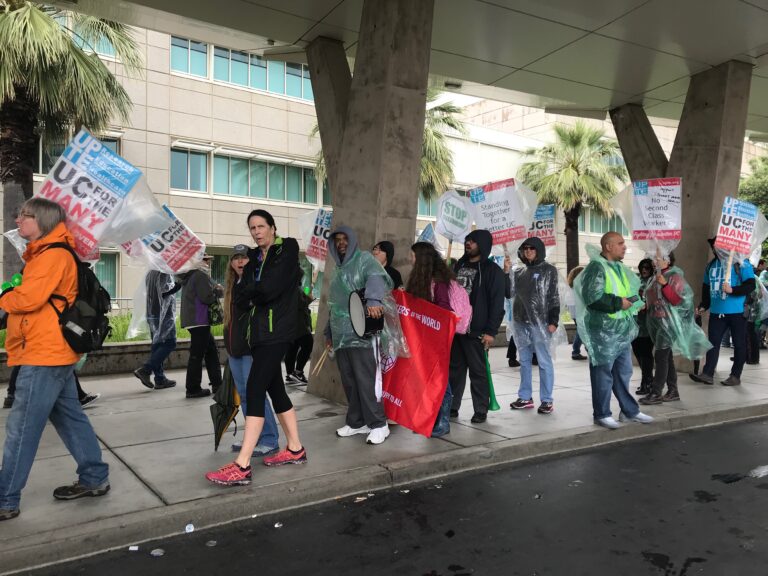
Just weeks after their last state-wide strike, AFSCME 3299 partnered with University Professional and Technical Employees (UPTE-CWA 9119) to protest unfair labor practices and outsourcing jobs. Workers formed picket lines at all 10 UC campuses and five medical centers on May 16.

This is the fifth strike held in the last 12 months, following the last walk-out that took place on April 10 over alleged worker intimidation and formal complaints filed against the UC with the Public Employment Labor Relations Board.

These strikes have garnered national attention. Former U.S. Secretary of Housing and Urban Development and 2020 presidential candidate Julián Castro showed solidarity with protestors at their San Francisco picket line. Presidential candidate Bernie Sanders also sent out text message reminders to supporters in California located near UC centers and campuses to join the fight and protect union jobs.

Protesters organized at the UC Regents meeting hosted at UCSF’s Mission Bay campus to bring their concerns to the regents. Rudy Gonzalez, the president of the San Francisco Labor Council, addressed the regents at that meeting.

“I have to tell you the 130 unions and 100,000 members in this city stand behind AFSCME 3299,” Gonzalez said. “When we talk about outsourcing, we’re talking about surrendering. We’re talking about giving up. When agencies and enterprises outsource, it’s really a race to the bottom. You’re taking good middle class, union jobs, in this case, and outsourcing them to vulnerable workers who are being paid barely minimum wage. In fact, some of your internal audits show some of these workers haven’t even achieved minimum wage.”

12 protestors attending the UC Regents meeting were arrested after refusing to leave the meeting room following public discussion.

According to UPTE-CWA 9119’s website, part of the motivation to strike emerged from the unions’ belief that the UC is not bargaining in good faith and respecting the rights of union employees.

Union workers protested the UC’s decision to outsource jobs that, according to union representatives, should go to union employees.

One point of workers’ concerns involve UC Davis’ plans for a new rehabilitation hospital that will work with a private company, Kindred Healthcare, rather than expanding opportunities for current patient care workers. According to union leaders, this plan will divert about $684 million toward for-profit companies rather than union employees.

UC representatives claim that union leaders are spreading false information about outsourcing jobs. Claire Doan, the executive director of Strategic Communications and Media Relations for the University of California Office of the President, commented on union leaders’ claims.

“AFSCME’s real reason for continual strike activity is to gain leverage in negotiations, at which they have failed time and time again,” Doan said via email. “In fact, UC’s agreements with AFSCME explicitly bar the university from contracting out solely to save wages and benefits. Furthermore, UC cannot terminate an employee due to a sub-contracting decision.”

While the justification behind outsourcing is not specifically mentioned, a 2017 California State Audit report showed evidence that the UC has engaged in outsourcing to minimize the need to hire more employees.

AFSCME 3299 President Kathryn Lybarger addressed claims made by Doan while speaking at the Board of Regents meeting.

“On three occasions UC has failed to meet and confer with us, with your workers about decisions to outsource our work to low wage contractors, despite it being required to do so by law,” Lybarger said. “These latest charges highlight the scope of what is an increasingly radical privatization scheme at UC which is ultimately focused on one thing— paying its lowest wage workers even less. Despite all this, UC leadership continues to deny legitimacy of workers’ concerns over outsourcing as you continue to insist that this is about leverage over wages and benefits. But I’ve got to ask you — what good are wages and benefits when UC will outsource these jobs tomorrow?”

Written by: Ally Russell — campus@theaggie.org

NBA Playoffs Recap and Finals Preview

Toronto reaches first finals in franchise history, Warriors reach 5th straight

For the first time since the franchise was founded in 1995, the Toronto Raptors will represent the Eastern Conference in the NBA Finals after a 100-94 victory over the number one seed Milwaukee Bucks on Saturday. The Raptors will host the Golden State Warriors, who reached their 5th straight NBA Finals, in the best of a seven game series that will begin on Thursday.

Only one of these teams was expected to make it this far while the other was expected to wallow under the postseason pressure once again — which begs the question: how did we get here?

The Champs are back, but this time without their best player

After winning 57 games in the regular season — their lowest since the 2013-2014 season — the Warriors entered the playoffs as the number one seed in the West. Despite being a team filled with plenty of all-NBA talent and all-stars, this year’s team was filled with questions. From two stars engaging in a heated exchange early in the season to the lackluster regular season that saw them getting blown out or dropping winnable games on more occasions than usual, this year’s Warriors seemed like the most vulnerable Golden State team in the past four years. On top of that, the looming free agencies of superstar Kevin Durant and sharpshooter Klay Thompson were a topic of conversation throughout the whole year. But regardless, the Warriors had made deep playoff runs for over the last several years and their lack of engagement during the regular season is to be expected at this point in the dynasty.

In the first round, they encountered a Los Angeles team — but not the one most experts expected to make the playoffs at the outset of the season. That team was the Clippers, and while many expected this to be a Warriors sweep, the Dubs slipped up in game two, giving up a 31 point third quarter lead en route to a loss, tying the series up 1-1 heading back to Los Angeles. To make matters worse, Warriors center Demarcus Cousins, a big free agent acquisition, injured his quad, missed the series and has been out ever since. After winning both games in LA, Golden State looked to close out the series in Oakland. But once again, the Warriors were shocked by the Clippers at Oracle Arena. Golden State eventually ended the series when they won in game six and awaiting them was a familiar postseason rival.

MVP candidate James Harden and the Houston Rockets came one game short of an NBA Finals birth just a year ago at the hands of the Warriors. Looking to exact revenge, Houston entered Oracle Arena but fell in the first two games of the series. Down but not out, the Rockets took back both games at home and traveled back to Oakland with momentum and the series tied at 2-2. In the third quarter of the pivotal game five, Durant attempted a mid-range jump shot on the baseline, came down and began to limp. The injury was later diagnosed as a right calf strain, which sidelined Durant for the remainder of the series and through the next round.

The Warriors would go on to win the game behind a clutch play by Steph Curry and Klay Thompson, who scored or assisted on 27 of Golden State’s 32 fourth-quarter points. In game six, it was a win-or-go-home scenario for the Rockets and after going scoreless in the first half, Curry caught fire, scoring 33 in the second half to lead the Warriors to a series-clinching win that eliminated the Rockets in six games.

In the Western Conference Finals, the Warriors encountered the Portland Trail Blazers, a franchise that had not made such a deep postseason run since 2000. After a 22 point blowout in game one, the Blazers looked to steal a game before they traveled back to Portland. Up 17 in the third quarter of game two, the Blazers could not prevent the Warriors from storming back and taking a 2-0 series lead. Games three and four had a nearly identical narrative, as Portland blew another 17 point lead and then a 15 point lead in games three and four, respectively, ending their season and giving the Warriors a chance at their fourth title in five years.

Kawhi carries “The Six” on his back

After years of being dominated in the playoffs by Lebron James and the Cleveland Cavaliers, the Raptors made a splash last July by trading all-star guard Demar DeRozan to the San Antonio Spurs for 2014 Finals MVP Kawhi Leonard. The trade was a big risk, and one Toronto decided to take knowing well that Leonard could be spending just one year there. The Raptors needed to make a big change if they wanted to win a championship.

After being shocked at home in game one of the first round by the Orlando Magic, the Raptors would go on to win the next four games easily, advancing to the Eastern Conference semifinals to play a talented Philadelphia 76ers team. After making in-season trades to acquire all-star guard Jimmy Butler and up-and-coming forward Tobias Harris, the Sixers were all in for a finals run. After exchanging blowouts in the series’ first six games, it all came down to a game seven in Toronto.

With 4.2 seconds left in a game tied at 90, the whole country of Canada was on its feet waiting tensely. The ball was inbounded to Leonard who drove baseline and put up a shot with seven-foot Joel Embiid and 6’10” Ben Simmons closing out over him. After an initial bounce off the front rim, the ball bounced on the rim three more times before it sunk, winning the game for the Raptors and turning Scotiabank Arena into a frenzy. With that wild buzzer beater, all that stood in front of the Raptors was the number one seeded Milwaukee Bucks.

The best record in the NBA this season belonged to the 60-22 Bucks, led by MVP-favorite forward Giannis Antetokounmpo. The Bucks were the favorite heading into the Conference Finals and seemed to prove their worth by defeating Toronto in games one and two. In game three, however, Raptors Head Coach Nick Nurse made an adjustment and put their superstar and ex-defensive player of the year winner Leonard on Antetokounmpo in. That gamble proved to pay off, as Giannis scored 27.9 fewer points per 100 possessions than his regular season average when being guarded by Leonard. After grinding out three straight wins, Toronto had a chance to clinch its first-ever NBA Finals appearance at home. In a close game down the stretch, Leonard continued his dominant postseason and led the Raptors to a victory, ending the series in six games.

Looking ahead

With game one set to tip-off Thursday, the Raptors have a daunting task set ahead of them as they look to defend their home court against the reigning champs. The Warriors, however, may have to play at least the first few games of the Finals without Durant, who, according to CBS Sports, is “unlikely” to play in game one of the series with the calf strain and has still not practiced. Some good news for the Warriors, however, is that Cousins is likely set to make a comeback in game one, as he has recovered from the quad injury he suffered in the first round. Cousins’ return will add some much-needed depth to the team that has somehow found a way to win with a thin bench.

The Warriors are heavy favorites according to the Westgate Las Vegas SuperBook, opening at -275 and, as of Sunday afternoon, -300. The bettors are believing in the Warriors to pull this off, with or without Durant, and rightfully so. A team that has had so much success in the past five years deserves the benefit of the doubt. The Raptors, however, look to pull off the shocker and win their first ever championship. The task will not be an easy one at all, but the brilliant play of Leonard is giving them and Raptor fans more than a reason to believe. Whether or not Leonard or Durant leave their respective teams this summer can very well be decided by the outcome of this series, which adds a new element to an already intriguing culmination to an exciting NBA season.

Written by: Omar Navarro — sports@theaggie.org

The Resurgence of Overalls

From Hard Work to High Fashion

Overalls, once regarded as childish and hillbilly-esque are taking the fashion world by storm. Comprised of material ranging from denim to corduroy, an absurd amount of pockets and unrivaled comfort, there is nothing out there quite like them. Currently, overalls are enjoying plenty of time in the limelight as celebrities and college students proudly rock them as they lounge, paint and skate through their days. In spite of their trending popularity, overalls have had to overcome a history of stigma to reclaim their place in outfit rotations.

The overalls phenomenon dates back to the 1750s, when they were first adopted by farmers and sailors as a protective garment for rigorous manual labor. Initially, the nascent versions of the overalls were known as slops. Transitioning into the 1870s, Levi Strauss, a German immigrant and founder of Levi Strauss & Co. located in San Francisco, began mass-producing overalls, propelling their beloved utility and comfort into working-class households across the nation.

Since their emergence, overalls gained significant attention in media and pop-culture. In the 1940s, they became a symbol for the indomitable spirit of the American worker. During World War II, the iconic character Rosie the Riveter even donned a pair of strapped trusty blues to show her support for the efforts of women factory workers.

Gradually, the industrious allure surrounding overalls began to take on a more (for lack of a better word) slop vibe.

“Overalls have been the outfit of choice for any redneck scumbag with a sharp implement,” according to an article from the The Daily Beast. “They are almost compulsory for slasher films […] they all have killers wearing denim overalls to match their one-eyed potato-sack hoods and hockey masks.” Naturally, this detrimental sentiment forced overalls into taking a lengthy hiatus from the fashion scene.

Fast-forward years later and overalls have awakened from their hibernation to join the ranks of bold stylish statements worn by fashionistas, artists and anyone else willing to give them a spin. indomitable

Laili Attai, who graduated from UC Davis with a bachelor’s degree in managerial economics and is now a Merchandising Assistant at Banana Republic, noted her initial hesitation about getting into the overalls game.

“When I thought about someone wearing overalls at that time I was like, ‘I’m not five years old, I’m not going to be wearing overalls,’” Attai said.

Eventually Attai became enticed by the care-free call of overalls. For Attai, who is a fashion blogger, they were a perfect fit for her modern, laid-back aesthetic.

“My style became more sophisticated Bohemian,” Attai said. “I look really relaxed, but I put a lot of effort into it. That’s exactly what I think overalls are. They look like you put effort into what you are wearing, but they still have a really relaxed Bohemian vibe.”

One of the major upsides of overalls is their never-ending supply of remarkably deep pockets. Overalls lovers never cease to find creative uses for these practical pouches.

“When I wear my overalls it’s usually a day that I am vlogging,” Attai said. “My overalls’ pocket that’s right on my breastbone is a perfect point of view for my camera. So there’ll be days I can go around and for that hour, it has my perspective for the day.”

In addition to fashion forward individuals, overalls have created a soft spot in artists’ hearts for their comfort, coverage and utility. Maxine Aiello, an overalls devotee and third-year art studio major, commented on their versatile and comfortable characteristics.

“I really appreciate the unisex aspect of them because it’s a little frustrating how impractical women’s clothes can be sometimes,” Aiello said. “I like to reap the benefits of some men’s clothing.”

When focusing on her art, overalls provide Aiello with the trusty and considerate qualities that have become a necessity in the art studio.

“Well, in most of my work, since I do mostly sculpture, I have to be pretty flexible,” Aiello said. “What I am wearing needs to accommodate a lot of things. I usually need to be wearing pants. I don’t want to be wearing pants that I have to pull up all the time, that’s one of the huge plusses of overalls. They just stay on.”

Aiello also remarked that overalls give her the ability to conveniently transform into a walking mini storage unit.

“Having everything on my person is definitely becoming a preference of mine,” Aiello said. “With overalls, you got all the latches. I put keys on them. I hold tools in them, whether it’s nails, clips or tape. I’ve definitely walked around with all of my overalls stuffed with pockets of things feeling like a pack rat.”

A fundamental tenet of overalls is that you don’t have to be a fashionista or artist to relish the many benefits that they provide, just a little bold. Owen Sowerwine, a second-year environmental science major, has also pledged his support to the movement. He embraced the look when realizing overalls had transitioned to “something people actually rock.”

“I think that more people are accepting them as a piece of clothing and not work wear,” Sowerwine said.

Along with Aiello and Attai, he greatly emphasized the pockets and utility aspect as key factor in his overalls experience.

“I think they are super utilitarian, at least the ones that I have, have a f*** ton of pockets,” Sowerwine said.

Despite originally buying them for casual use, his overalls returned to their roots when he was employed on a farm this past summer.

“When I worked on an organic farm, they were really clutch,” Sowerine said. “I’d just wear boots with them.”

The diverse combination of Attai’s, Aiello’s and Sowerwine’s experiences embody the true character of overalls. After conquering stereotypes, they have re-emerged to add some much needed comfort and flare to life’s everyday activities. May all those daring enough to give overalls a try, wear and continue to wear them unjudged for years to come.

Written by: Andrew Williams –– arts@theaggie.org