57 F
Davis

Davis, California

Monday, December 22, 2025
Home Blog Page 415

Bottlerock: where music, food, booze live in harmony

Music festival takes place in Napa

Located in the heart of wine country, this up-and-coming music festival is appropriately themed and centered all around wine. Though sponsored by Jam Cellars, there was a wide selection of other wine labels to choose from and, in addition to wine, a plethora of beer and spirit options too. “The Beer Bend” beer garden hosted a list of various IPAs, Hop Valley, Lagunitas and more. Others around the festival included Ketel One, Hendrick’s and Milagro Tequila.

With bellies full of booze, there was a full Culinary Garden of food to select from, including tacos from La Calenda and gourmet pizza and giant buckets of buttermilk fried chicken from Ad Hoc. Other, more elevated options, included sushi, vegan cheese boards and the most aromatic paella my nose has ever had the pleasure of smelling. I could have spent a quarter’s tuition on all they had to offer.

The age range varied from an older crowd to the age range of other music festivals like Coachella, but there were also a fair number of families — think Neil Young crowd mixed with kiddos jamming to Pharrell’s “Happy” and every age in between. I even spotted a couple of babies in Bjorns.

Some of my best memories from the festival came from people-watching in the crowd: a circle of middle-aged women sipped glasses of cab and passed around a joint while shaking their hips to “Insane in the Brain” at Cypress Hill and a thirty-something year old man danced and twirled his mother to Mumford and Sons. The vibe was refreshingly mature, no pushing or shoving in large crowds — in fact quite the opposite. I often found myself conversing and dancing with the people next to me, exchanging smiles and good energy.

While it wasn’t possible to see all of the performances from the stand up lineup this year, I did my best, and the following were my favorites.

Logic was one of the few hip-hop artists on this year’s line up, differing from the mostly indie, alternative, rock vibes, but his performance was easily one of my tops.

“Look to your left, and look to your right, tonight, these people are your family,” he said.

Logic proclaimed that his goal in creating music is to spread peace, love and positivity, something that may not come across from the chorus of his song “Killing Spree” — “A**, titties, pu***, money, weed” — but if you listen closely beyond the vulgar lyrics, he uses the song to speak against anti-Muslim rhetoric and call attention to the way our generation lives life through the lens of our phones.

A wildly talented spitter, I’ve never seen anyone’s mouth move so fast. Between songs Logic stirred up the crowd with chants, unifying a crowd that was largely outside of his key demographic, but you’d never know looking in. He closed with “1-800-273-8255,” leaving with a smile that created big craters in his cheeks.

Logic wasn’t the only performance to spread peace, love and positivity. Pharrell ended Saturday night on a happy note. Strutting a “ye must be born again” hoodie, Pharrell moved and grooved with his cohort of talented back-up dancers. He may be better known as a producer, a mastermind behind songs by The Carters, Ariana Grande, Ed Sheeran, etc., but his own voice sure rocked the crowd.

After playing big hits like “Lemon” and “Happy,” the stage went quiet and the words “FREEDOM is the right to choose” graced the screens behind him. He spoke about abortion rights and the current political climate threatening Roe v Wade. He called out to all the women in the crowd, saying “thank you for standing together,” and then he sang his hit song “Freedom” twice.

The three brother trio AJR, a lesser-known indie-pop band known for songs such as “Sober Up,” “I’m Ready” and “Weak”, made a splash. AJR, which stands for Adam, Jack and Ryan, had the crowd smiling and swaying to their feel-good jams. A highlight of the set was when the brothers simulated a mixing session, layering the beats and talking the audience through their creative process.

The brothers live together in Chelsea, writing and producing out of their converted living room studio. Jack, the lead singer, wore a fur hat, striped board shorts and some beat-up Adidas and flailed his limbs as he sang, jumping around the stage like a rag doll. He was so entranced in their music and performance, it seemed he was never standing fully upright, tripping over himself gracefully.

Between songs, the brothers engaged in banter. At one point, they called on the audience to donate a new hat for keyboard player Ryan and Jack pointed to an audience member to pass up an American flag cowboy hat. Ryan put the hat on and said I feel like “a Jewish guy who goes to NASCAR for the first time and is like, ‘yea, I fit in.’”

Mumford and Sons took the cake on Sunday night, closing out the festival. They had the large, drunk crowd singing, swaying and jumping to their upbeat folk rock hits. The West London group played both old and new hits, ranging from “Little Lion Man” to “Believe” to “Guiding Light” and, the song that everyone was waiting for, “I Will Wait.” I stood shoulder-to-shoulder with strangers, all belting the lyrics as loud as our hoarse, out-of-tune voices could go. Overwhelmed with joy, I left the festival smiling, hungry for next year.

Written By: Grace Simmons — arts@theaggie.org

Culture Corner

The Arts Desk’s weekly picks for television, movies, books and music

TV: “The Office” (Season 1-3)

Some may say I’m obsessed with “The Office.” I prefer the term expert. I’ve seen every episode countless times, but as of recently, I have rediscovered the overlooked hilarity of seasons one through three. The humor is at its most dry and the character development is still working through its kinks — but as a true fan, watching the series in its most raw form is refreshing. Also, Jim and Pam’s budding relationship and on-camera chemistry is heartwarming.

Music: “Wideass Highway” by Dougie Poole

Dougie Poole seamlessly combines classic Western drawn-out guitar chords and the psychedelic feeling of floating in space — what a combo! The album begins with the emotional ballad of “Don’t You Think I’m Funny Anymore?” and quickly transitions to the quirky love song “Tripping with the One You Love” — two of my favorite songs in the album. The album as a whole has the storytelling capabilities characteristic of Western lyrics with musical twists and turns to attract the indie rock listener.

Book: “A Little Life” by Hanya Yanagihara

This heart-wrenching novel is not for the faint of heart. Yanagihara introduces us to four best friends living in modern-day New York City. However, as the plot unfolds, Jude — the survivor of a horrible trauma — becomes the central focus in the friendship dynamic. Each sentence in this 800-page novel must be read with care and attention. The writing is beautiful, simple and packed with fine details that make you reflect on your relationships and people with whom you share your life.   

Movie: “Pillow Talk”

With Doris Day passing away earlier this month, I began to reminisce about the fond memories of when my aunt — a classic movie expert — and I would watch Day’s movies together. Beginning with its adorable title scene and charming theme song, this comedy is the love story of two people who meet on a party line (my aunt had to explain what that was when I first watched it). Of course, the plot is sexist due to the decade in which it was filmed, but it remains  one of Day’s most well-known performances and a piece of my childhood.

Written By: Caroline Rutten — arts@theaggie.org

Plant Sales raise money for Arboretum, Public Garden

Davis community members, students come to plant sales to buy California native plants

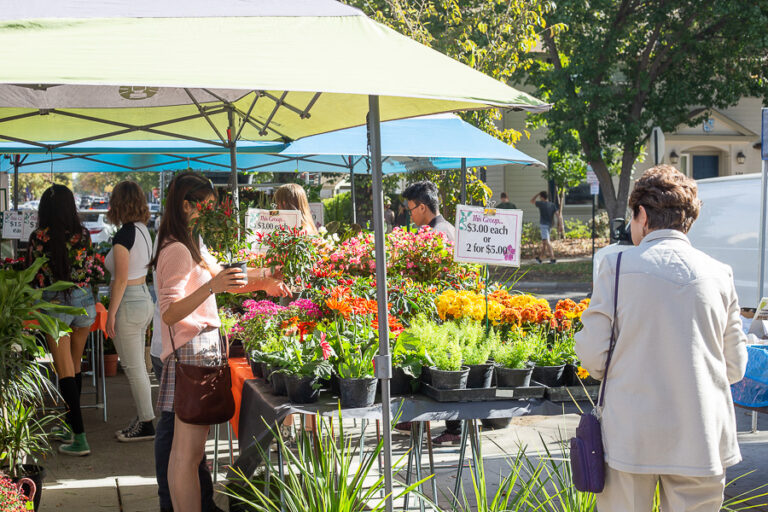
Agaves, aloes, succulents, California Fusil, Buckwheat, California Lilac, Manzanitas, Salvias — all can be found at the Arboretum and Public Garden Plant Sales.

Community members and students attend these events at the Arboretum Teaching Nursery, on Garrod Drive, to purchase plants grown and sold as a fundraiser for the Arboretum and Public Garden. With three in the fall and four in the spring, anywhere between 1,000-1,500+ customers will attend the events. These sales are put on by the Arboretum and Public Garden staff, volunteers and Learning by Leading students, according to UC Davis Arboretum and Public Garden Assistant Director Carmia Feldman.

“We put on the sales because they are our biggest outreach and community engagement opportunities of the year to educate people on regionally appropriate gardening and [to] sell the California natives, Arboretum All-Stars and other plants that will help them be successful in creating gardens that need less water, less fertilizers and pesticides and provide [a] habitat to important native pollinators and other wildlife,” Feldman said.

According to Nursery Manager for the Arboretum and Public Garden Taylor Lewis, the sales are well trafficked because the plants sold at the events cannot usually be found at retail stores. People line up beginning at 7:30 a.m. and anywhere from 200-300 walk in the door right away.

At the sales, over 600 taxa or plant varieties are available for purchase, such as various kinds of trees, vines, bulbs and grasses. According to Lewis, the sales offer plants for all soil and sun types.

“I focus specifically on drought tolerant, pollinator, beneficial insect attracting plants from the mediterranean climates of the world,” Lewis said. “California natives make up 30-35% of my overall stock. I grow plants that are hardy in our area, since I don’t like to grow plant that don’t do well here.”

The price of the plants depends on how easy they are to grow. Plants that take years to be ready for retail cost more, according to Lewis. Most common, one-gallon plants are sold for $12.

According to Feldman, the plant sales are the biggest fundraising events of the year for the Arboretum and Public Garden, with all proceeds going directly toward supporting the educational and environmental stewardship programs.

“It is a fundraiser to support a lot of the programs for the public,” said Outreach and Leadership Program Manager Melissa Cruz Hernandez. “A lot of the educational programing that we do is for free. We raise funds to support our organization.”

These events attract many members from the community, such as homeowners, landscape and garden professionals, restoration professionals, campus affiliates and more.  

“We have many outreach partners at the sales and often have children’s activities, live music [from local musicians], and educational demonstrations,” Feldman said.

Professionals and expert graduate students are brought into the sales to get advice about the best types of plants for specific yards with different soils or amounts of shade.

“We plan the events in a way that is fun and engaging for the community and also makes people want to come again,” Cruz Hernandez said.

Community volunteers and students make up most of the workforce that puts on the plant sales. According to Lewis, there is a very small number of paid staff that work for the nurseries. Four volunteer teams work every week to grow and take care of the plants.

“Volunteer work is a crucial piece of what we do,” Lewis said. “Students who are interested in how to grow plants and manage a nursery have a team of them who are here every week.”

Students who want to get involved with the plant sales and the public garden can take part in any of the 12 relevant internships offered. In the Nursery and Propagation Internship, students learn how to propagate the plants that are sold at the sales.

“Not only are the [plant sale] days really fun and engaging, the behind the scenes that allow the sales to happen is also very engaging in that we have community volunteers and students working side by side, making sure we have those plants readily available,” Cruz Hernandez said.

The Fall 2019 plant sale dates are Sept. 28, Oct. 12 and Nov. 2, all from 9 a.m. to 1 p.m.

“We invite everyone to get involved in the plant sales,” Feldman said.

Written by: Margo Rosenbaum — features@theaggie.org

Meet the organizers of Mental Health Awareness Month

Several student groups come together to promote wellness

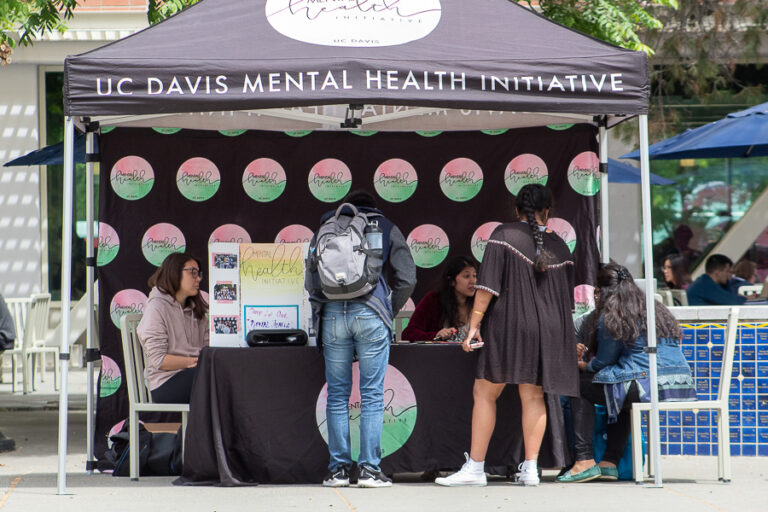
Throughout May, many mental health advocacy groups stood in solidarity to support Mental Health Awareness Month (MHAM). These groups aim to reduce the stigma surrounding mental health by encouraging students to join the conversation and be more receptive towards recognizing the importance of taking care of themselves.

The different themed events, such as “Mental Health and College,” which focused on raising awareness about the stresses that accompany college, emphasize what can cause mental health issues and how to find the correct treatment for the particular situation. Fun activities, like “Adopt a Pet Rock,” provided a low-stress environment for students to decorate their own rocks with various messages of positivity and support alongside friends, while also highlighting the numerous ways students can keep their mental health strong and what options are available in times of stress.

One of the groups affiliated with MHAM, Each Aggie Matters, is responsible for placing green ribbons decorated with myths and facts about mental health on the trees surrounding the Memorial Union.

As part of Each Aggie Matters, the executive board of the Student Mental Health Coalition (SMHC), led by fourth-year neurobiology, physiology and behavior major co-chair Shradha Shah, aims to unite some of the advocacy groups on campus with the mutual goal of bringing mental health issues to light. Shah is in full support of “advising campus leadership, reducing stigma[s] and informing students to allow for greater collaboration and resource transparency,” echoing the larger mission the coalition hopes to achieve.

The road doesn’t stop at increasing the resources available. Shah and her members also take on the task of “representing student mental health interests to all agencies, such as the Student Health and Counseling Services,” which means keeping in close contact with the support outlets available to students to ensure the best service possible is given to those in need.

Ty Miles, a fifth-year linguistics major and president of the National Alliance on Mental Illness (NAMI), spoke about the resources his organization provides to students and the help he and his members make available.

“We offer free mental health first aid training twice a quarter that teaches students how to recognize mental health conditions and the appropriate ways to respond until professional help can be sought,” Miles said. “It also helps students develop the care and compassion necessary in these situations.”

Miles also highlighted various presentations open to students that showcase the reality of living with mental health conditions.

“We recently had a student guest presenter at a meeting talk about her experience with Obsessive Compulsive Disorder,” Miles said. “This gives students a chance to see what some mental health conditions look like and to learn more about how to address these conditions with others.”

As someone who has struggled with mental health issues in the past, Miles understands how the rigors of college can weigh on students, especially those who feel like UC Davis demands higher expectations than they are capable of handling.

“I think one of the largest factors of mental health issues in students here at Davis is that, because they are in a research university with a good reputation, they feel so much pressure,” Miles said. “Students want to succeed and sometimes overachieve. Many studies show that people ages 17 to 24 are most likely to experience mental health issues, which falls right in line with college students.”

With the help of organizations like NAMI, SMHC and many more, students struggling with mental health, or who may know of someone in need of help, have multiple resources providing aid. Breaking the stigma starts with students looking out for one another and extending a helping hand wherever possible.

Written by: VINCENT SANCHEZ – features@theaggie.org

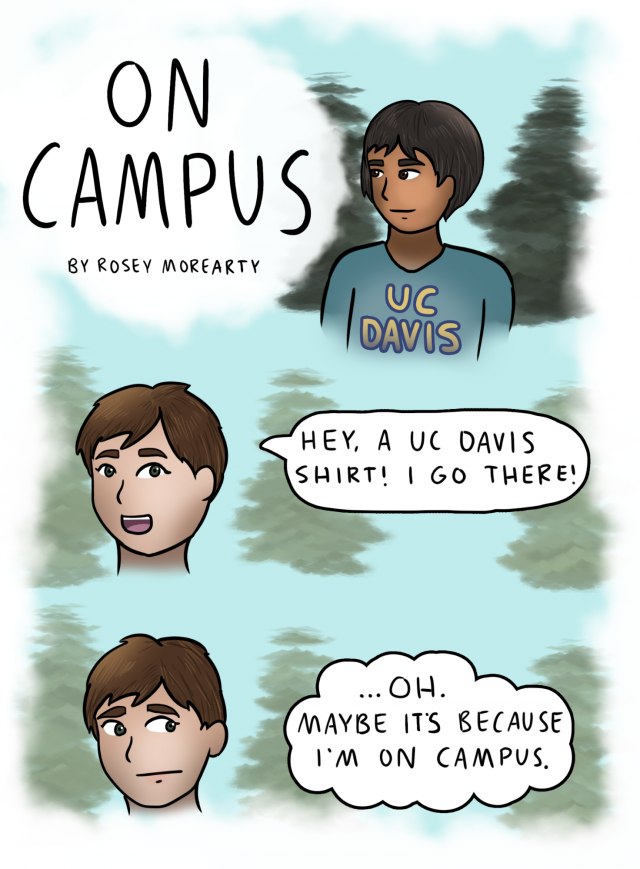
Cartoon: On Campus

ROSEY MOREARTY / AGGIE

Davis Pride hosted by Davis Phoenix Coalition

Run/Walk for Equality, Community Fair, Music Festival celebrates Pride

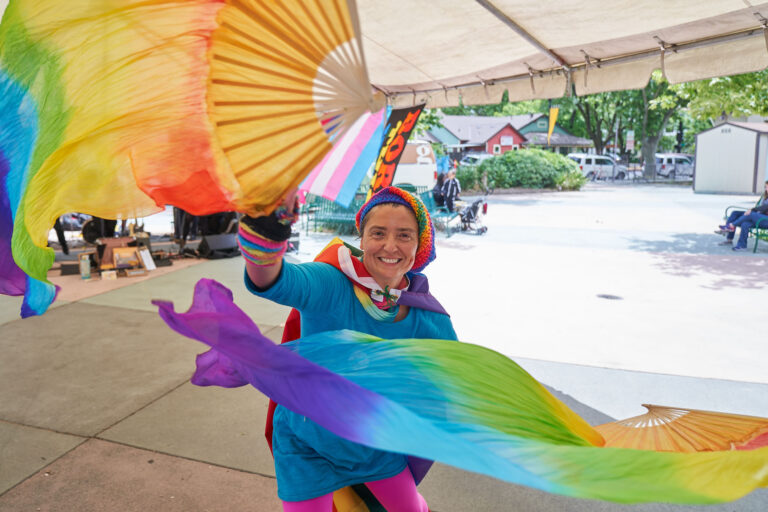
Those participating in the Davis Pride Run/Walk of Equality on Sunday, May 19 ran through morning showers, which cleared up just in time for the Community Fair and Musical Festival. Hosted by the Davis Phoenix Coalition — and free, as in previous years — the fifth annual Davis Pride offered music, community exhibitors and vendors as a space for young and old to connect.

After organizers accommodated for the rain by moving the exhibitor area to the Davis Farmers Market Pavilion instead of Central Park’s grass, Davis Pride celebrations went on, with crowds walking through the pavilion and gathering at the music stages to enjoy live music.

Pride Director Sandré Nelson said that the organizing committee estimated there were about 2,000 attendees — fewer than last year’s estimated 3,500 attendees because of the rain — but they were still happy with attendance. He said that about 300 people participated in the Run/Walk for Equality.

“Despite the rain or the threat of rain or whatever, you can see we’ve had a good turnout today,” Nelson said at the event. “It rained for an hour this morning, and [now] it’s been beautiful […] The sun is out. [Everyone’s] having a good time.”

This year’s Davis Pride — held from 8 a.m. to 4 p.m and open to all ages — especially commemorated Pride’s history, as its theme of #StonewallStrong aimed to honor the 50th anniversary of the Stonewall riots. This theme served as one reason for the addition of a new “Senior Zone” to the existing kid and teen zones, in hopes of honoring and including generations who have worked toward LGBTQ+ equality over time.

Christina Boyer, a fourth-year cognitive science major at UC Davis and member of the Davis Pride organizing committee, said that these generation zones were successful in bringing people together, and that for her, seeing people of all ages coming out to celebrate was an excellent experience.

“We combined all three [zones] for a little intergenerational dialogue,” Boyer said. “That’s what’s really nice, to see like from kids to seniors celebrating themselves, and it’s been great. They’ve been chitchatting, swapping tales.”

Her friend, Miranda Donning, a third-year cellular biology major at UC Davis, echoed this.

“That was cool!” Donning said of the dialogue. “People of all ages are here.”

Donning heard about the event from Boyer and said she came because it sounded like fun — offering “good food, good vibes.” Donning encouraged UC Davis students who did not attend to check out Davis Pride next year.

“It’s a safe place, and it’s fun and the dancing’s cool,” Donning said. “You can come with an open mind and have a good time […] Everybody should come on down.”

One highlight of the event, according to Donning and her friends, was the music, which took place at two stages. On the Western Health Advantage Community Stage, Davis Phoenix Coalition provided a welcome address, which was followed by performances by Cheer Sacramento, Control Z, Trace Repeat, Wisdom Project Drumming Circle and The Midnight Dip. Davis Live Music Collective arranged several of these community stage performances.

For the Wells Fargo Main Stage, Nico Nieves, Josh Diamond, Cathy Speck, I AM REBEL, Badlands Sacramento Drag Revue, Sacramento Women’s Chorus and Sacramento Gay Men’s Chorus performed. Headlining at the main stage was Xavier Toscano.

Daniel Lavolle, a third-year wildlife, fish and conservation biology major at UC Davis, described the music as “top-notch.”

“Honestly, the music here is better than most concerts you go to,” Lavolle said. “I was pretty hyped. It was good.”

Lavolle and Timothy Cater, a fourth-year microbiology major at UC Davis, said they particularly enjoyed The Midnight Dip’s performance in the afternoon, and Cater applauded the Davis Pride organizers for making the event happen. Cater noted that the organizers thought on their feet in handling the rain and said he admired the group’s work as a whole.

“I know Christina [and that] she had been planning it all year, so there’s a lot of work that goes into this,” Cater said.

Boyer said that the work with the Davis Phoenix Coalition has been meaningful for her.

“It’s been a life-changing experience,” Boyer said. “The work [members of the Davis Phoenix Coalition] do for the community is unparalleled. It’s really beautiful to see it all come together.”

Davis Phoenix Coalition’s mission is to eliminate intolerance in the community through ongoing efforts, such as Yolo Rainbow Families, The Gatherings Initiative, Davis LGBTQ+ Youth Group, Davis Pride and the Upstander Carnival. Proceeds from the Run/Walk for Equality benefit these efforts, as well as the coalition’s goal of creating a physical LGBTQ+ Community Center.

Written by: Anne Fey — city@theaggie.org

ICE slams California’s sanctuary policy after fatal DUI crash in Yolo County

Undocumented suspect accused of killing three people in Knight’s Landing collision released on bail, drawing ire from ICE

Officials from the local branch of Immigrations and Custom Enforcement agency condemned California’s sanctuary policies after an undocumented man was released from a Yuba City Jail on bail on May 5. The suspect is now awaiting trial in ICE custody.

On the evening of May 4, a car allegedly driven by Ismael Huazo-Jardinez, allegedly veered off the road and crashed into a travel trailer home in Knight’s Landing, killing the three occupants inside — Jose Pacheco, 38, Anna Pacheco, 34, and their 10-year-old son Angel Pacheco-Espinoza — Sutter police told The Sacramento Bee.

“At around 9:54 p.m. Saturday, Huazo-Jardinez was speeding northbound in a 2008 Chevrolet Avalanche when he failed to adjust to a curve on Highway 113 and hit the family’s trailer near Jennings Court,” a Sutter County Sheriff press release obtained by The Bee reads.

Knight’s Landing is near the border of Sutter and Yolo counties, and though the crash technically happened in Yolo County, the suspect was taken into custody in Sutter County Jail on suspicion of DUI and vehicular manslaughter, The Bee reported.

Huazo-Jardinez was released on a $300,000 bail, police told The Bee, and presumably returned to his home in Yuba City afterward.

ICE spokesperson Paul Prince confirmed that the ICE began surveillance of Huazo-Jardinez’s last known address in Yuba City shortly after he was released on bail. Prince said that ICE agents took Huazo-Jardinez into custody on May 7 without incident.

“On Tuesday, May 7, U.S. Immigration and Customs Enforcement (ICE) (San Francisco) Fugitive Operations Team members apprehended Huazo-Jardinez,” Prince said via email. “ICE used available resources to locate and detain him. He will remain in ICE custody pending the disposition of his immigration proceedings.”

Prince provided some of the background information obtained by ICE on Huazo-Jardinez. Allegedly from Mexico, he was first apprehended by immigration in 2011, and accepted the agency’s offer to voluntarily return to his home country.

“Ismael Huazo-Jardinez is an illegally present Mexican national,” Prince said via email. “The U.S. Border Patrol apprehended him in Arizona and granted him voluntary return to Mexico in February 2011. He illegally re-entered at some point thereafter.”

Prince declined to comment specifically on his agency’s position on the case, but forwarded a statement from Acting Director Field Officer Director Erik Bonnar he said addressed the agency’s position on California’s sanctuary policy.

“Individuals who enter our country illegally and commit crimes must not be released back into our communities where they are able to harm others,” Bonnar said in the statement. “This is an important matter of public safety.”

Prince told The Bee that Huazo-Jardinez was released from custody before ICE could file a detainer to take him into their custody.

“ICE lodges detainers once the agency determines an alien is subject to removal,” Prince said via email, citing an official statement from the agency. “In certain situations, an alien may be released from local custody before ICE can lodge a detainer with the local law enforcement agency.”

Even if ICE had filed a detainer, however, California Sanctuary Law Senate Bill 54 prohibits local law enforcement from detaining undocumented individuals accused of a crime on behalf of ICE.

“It’s unfortunate that current local and state laws and policies tie the hands of local law enforcement agencies that want and need to work with ICE to promote public safety by holding criminals accountable and providing justice and closure for their victims,” Prince said to The Bee.

Written by: Tim Lalonde — city@theaggie.org

Editor’s note: An earlier version of this article referred to Knight’s Landing as King’s Landing. That is incorrect. The Aggie regrets the error.

Lengthy discussion over Police Disarmament resolution ensues at May 16 Senate Meeting

After SR #14 passed, Judicial Council issues temporary injunction

An estimated 20 members of the public voiced their opinions on Senate Resolution #14, which calls for the disarmament of the UC Davis police, at the May 16 ASUCD Senate meeting. The discussion over the resolution lasted approximately two and a half hours.

The resolution, which is non-binding, was ultimately passed in a 7-6 vote after ASUCD Vice President Shreya Deshpande cast the tie-breaking vote. Since the meeting, however, the ASUCD Judicial Council has placed a temporary injunction on the resolution after the Davis College Republicans sued the Association to block the bill.

Those who spoke at the May 16 Senate meeting, including senators and other members of the Senate table, professed a range of perspectives and opinions regarding whether or not UC Davis police should be disarmed.

The author of the resolution, Blu Buchanan, began the conversation for those in support of disarmament. They spoke about the importance of taking the time to understand the evidence. Buchanan cited the resolution as appearing in a larger conversation — those who choose to take part in this conversation bring different experiences to campus and doing something such as disarming the police is a common measure, not a radical idea.

A member of the campus community mentioned an argument related to mental health, stating that those who suffer mental illnesses are more likely to be killed or brutalized by the police. They added that police approach people of color with unnecessary violence, which in turn creates further problems for those with mental illnesses within these communities.

Another member of the community mentioned the recent bookstore incident, stating that

disarming the police is not enough due to the fact that during the incident no weapons were used, but the woman in question was still brutalized by UC Davis police.

External Affairs Commission Chair Nayzak Wali-Ali said UC Davis Chief of Police Joseph Farrow spoke to them about the decreasing crime rates in Davis. Wali-Ali noted that guns were not used to decrease crimes, so the notion that guns are necessary to reduce crime rates is not accurate.

Wali-Ali also mentioned that passing the resolution would not alienate the UC Davis Police Department, as Farrow has been very open to the discussion and open to working with students to ensure their safety, with or without weapons.

Another argument in favor of police disarmament presented at the meeting asserted that the institution of the police was originally created to protect property and not people. Speakers cited court cases such as the Parkland shooting, where a court ruled that the officer on site had no legal obligation to protect the students. The member of the community cited Professor and Associate Dean at the University of Florida School of Law, Darren L. Hutchinson, who said, “Neither the constitution, nor the state law, impose a general duty upon police officers or other governmental officials to protect individual persons from harm, even when they know harm will occur.”

An additional argument in support of disarmament contended that police jobs were originally created to uphold white supremacy and target people of color.

Arguments were also heard from those in opposition to the resolution.

Senator Rebecca Gonzalez asked why the text of the resolution had not changed, given that when the resolution came before the Senate the first time, there were members of the Senate table in support of disarmament who took issue with some of the language present.

Gonzalez asked why there was no compromise over wording. Ethnic and Cultural Affairs Commission Chair Rina Singh and Wali-Ali responded, saying they made a note about the conversation they had had with Gonzalez. Ultimately, after feedback from others, Singh and Wali-Ali decided that changing the wording would dilute the resolution.

Senator Andre Spinoglio vocally clarified his stance on the issue, saying that he felt uncomfortable signing his name onto a resolution with what he felt to be factual errors. Citing lines eight through 10 and 46-50, Spinoglio said he does not see an increase in militarization and said that while he does not refute the facts that minorities are being abused, he still believes there are untrue portions of the resolution.

Senator Ricky Zapardiel expressed concern over alienating the police department, stating that the resolution tells police officers their work does not matter. Zapardiel made it clear he is not for the militarization of the police, but the language in the resolution is too extreme and hasty. He said that it is not his intention to dismiss anyone’s opinion, but that he feels it is his duty to protect the student population.

Others present voiced concerns that the resolution does not address the core of the negative aspects of the police and others expressed concern about alienating the police and creating a “we-versus-them” attitude. Some called for tangible measures to decrease acts of police brutality, such as further trainings in de-escalation tactics.

Civil discourse was also a topic during the meeting. One member of the community mentioned that a conversation cannot be started if both sides attack each other, saying arguing will not fix anything.

During the conversation, Zapardiel recorded someone who spoke in favor of the resolution. The individual being recorded brought it to the attention of the Senate and Deshpande asked Zapardiel to delete the video, but he said his ability to record was his constitutional right given that the meeting was a public event. Deshpande later assured those who were being recorded that they would deal with the problem.

Later in the meeting, many of the people at the table expressed their discontent with the behavior and actions of Zapardiel, including the possibility of having a closed session and “censuring” a member of the association. A censure is when a collective body decides to condemn the actions or repeated behavior of an individual.

During a mock vote midway through the discussion, the Senate was split 5-5, with Senators Tony Chen and Rebecca Gonzalez both abstaining. Later, Chen voted in favor and Gonzalez voted against the resolution. Deshpande cast the tie-breaking vote and the resolution was passed.

After the resolution passed, the ASUCD Senate meeting continued, ultimately adjourning at 12:02 a.m.

Following the May 16 Senate meeting, the Davis College Republicans issued a formal complaint with the ASUCD Judicial Council on the basis that the author of the resolution is not a member of ASUCD. In a statement, the Judicial Council issued a temporary injunction, stating the claims are “of lawful concern.”

Written by: Alexis Lopez — campus@theaggie.org

May Regents meeting addresses Catholic hospital affiliation, tuition hike

Undergraduate nonresident tuition will be raised by $762 for 2019-20 school year

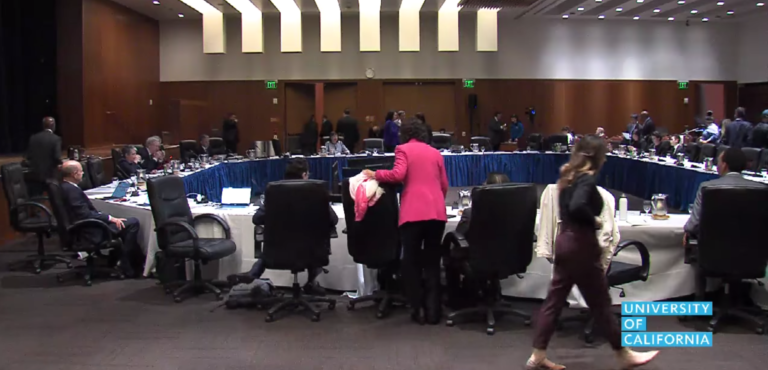
The University of California Board of Regents held meetings at the UCSF campus on from May 14 to 16 to discuss its regular business matters, including a potential affiliation with Dignity Health and tuition increases for nonresident students.

The Regent’s Health Services Committee convened in a closed session for a “Discussion of Legal Considerations for Strategic Affiliation with Faith-Based Health System, UCSF Health, San Francisco Campus” on the third day of meetings. The UC was considering an affiliation with Dignity Health for a little over a year, which had sparked controversy in several communities and generated a petition from the American Civil Liberties Union.

Critics of the potential affiliation believe some of Dignity Health’s policies discriminate against women and LGBTQIA+ individuals. Dignity Health, a Catholic healthcare system, requires its hospitals to uphold specific ethical and religious directives.

However, since the May Regents meeting, UCSF has cancelled the potential affiliation with Dignity Health in what the Los Angeles Times calls “a victory for reproductive rights.”  

Over the three days of the Regents meeting, hundreds of individuals stood up and spoke out against the affiliation between UCSF and Dignity Health. Among these included a representative for Dr. Patricia Robertson, a professor at UCSF who specializes in obstetric care.

“I could not, in good conscience, transfer my patients to a Catholic system because of the restrictive care,” Robertson said. “We have built UCSF into an inclusive and compassionate health system with the best medical care in the world — why would we, now, go backward so women and LGBTQ patients are second class citizens?”

Her concerns were echoed by many other speakers, and on May 28, Sam Hawgood, chancellor of UCSF, issued a letter to the public informing them of the halted negotiations.

“We respect and appreciate the diversity of opinions from multiple stakeholders both within UCSF and outside our University, and we have heard you all,” Hawgood said. “Given the concerns, we will not continue to pursue the affiliation as it had been envisioned, which would have created a stronger link between UCSF Health and Dignity Health’s four Bay Area hospitals.”

While the affiliation appears to be halted, the Regents did approve something else: tuition increases.

The recommendation to increase undergraduate Nonresident Supplemental Tuition (NRST) was brought up at a Regents meeting in March, but the Regents tabled it over concerns about the potential impact this increase may have on “financially needy” students.

However, the raise was discussed again on May 16, when the Regents voted 12-6 in favor of increasing NRST by 2.6%, or $762, for the 2019–20 school year. This addition brings the price of tuition for out-of-state students to a grand total of $29,754. This new tuition price was calculated using an expected inflation rate of 3.4% 2019–20.

To settle the initial concerns voiced over how this may impact financially burdened students, the university proposed to allocate 10% of the new revenue to support nonresident and international students in need. New revenue generated from this increase is estimated to be around $28.9 million.

“Setting aside 10% of the new tuition revenue would allow campuses to cover the increased cost for those students, for example, or to assist other needy students for who the increase might pose an obstacle to enrollment at UC,” said UC President Janet Napolitano during discussions.

For Sarah Abdeshahian, this did not seem like an adequate solution. The third-year political science and economics double major from UC Berkeley voiced her concerns during the public comments on May 16.

“The proposal puts us at risk of further eroding two cornerstones of this university — its affordability and its accessibility,” Abdeshahian said. “Students should not have to bear the burden of the UC funding gap. Nonresident students diversify the university community and raising their tuition even more would merely exacerbate their financial struggles.”

Nevertheless, Napolitano defended the board’s choice and explained the necessity that prompted this decision.

“As we all recognize, our needs are great,” Napolitano said. “Without this, we had another $30 million hole and that will have an impact on the educational program we can provide our undergraduate students — be they from California, or be they from out of state.”

Written by: Claire Dodd — campus@theaggie.org

Judicial Council rules 2015 BDS resolution unconstitutional

Senate Resolution #17 encouraged UC to divest from Israeli companies

Senate Resolution #17, passed by the ASUCD Senate in 2015, was ruled unconstitutional by the Judicial Council for violating Article II, Section 2 and the Student Bill of Rights of the ASUCD Constitution. The decision was unanimous.

The resolution, a part of the larger Boycott, Divestment and Sanctions movement, urged the UC to divest from “corporations that aid in the Israeli occupation of Palestine and illegal settlements in Palestinian territories.”

The case was brought forward by former ASUCD Judicial Council Chair and former Interim Senator Sydney Hack and former Senator Daniella Aloni. The Judicial Council declared the resolution unconstitutional, as Section 2 of the Constitution states that ASUCD must promote student welfare, and the council found that the resolution “caters to the welfare of a group of students […] at the expense of the welfare of other students.”

The second justification pointed to language in the Student Bill of Rights that prohibits discrimination based on national origin, ethnicity or political belief. The Judicial Council found the resolution to be in conflict with anti-discrimination language, explaining that the resolution “has led to the discrimination and harassment of students whose ethnicity, national origin or political beliefs are in opposition to the content of the Resolution.”

Amid what Aloni called an increase in anti-Zionist and anti-Semitic rhetoric on campus, she and Hack brought the case before the council.

“While this resolution may have been passed in 2015, it still has created a toxic environment for students on campus,” Aloni said via email. “There were rumors of another Senate Resolution similar to this one being passed by the current ASUCD Senate Table and we decided it was best to go on the ‘offense’ rather than wait for another wave of antisemitic incidents to take place.”

Aloni said that actions intended to sanction Israel, such as academic boycotts, negatively impact Israeli students because the students may feel isolated and discriminated against.

“This academic boycott also prevents American students in the U.S. from attending Universities in Israel,” Aloni said. “These boycotts lead to discrimination against students from Israel, and from the United States.”

Hack expanded on this issue, stating that any boycotts of Israel “can negatively affect Israeli students in that they may have invested interest in the companies being boycotted.”

Hack also said that boycotts affect all students, because they result in limited cooperation between the U.S. government and the governments that have been sanctioned.

ASUCD President Justin Hurst, on the other hand, argued that there is a difference between sanctions against a government and sanctions against the people in a nation.

“My understanding of the resolution is that it was specifically targeted against the actions of the Israeli government, not the individuals of Israel,” Hurst said. “Another comparison is with the importance of similar legislation of the U.S. government during apartheid in South Africa. The point of it was to change the government’s actions — it had nothing to do with the people of the country.”

ASUCD Vice President Shreya Deshpande echoed Hurst’s argument by emphasizing the fact that there is “no mention of the word Judaism or Zionism.” Deshpande expressed concerns that declaring SR #17 unconstitutional will stop discussions that students need to have about the Arab-Israeli conflict.

Deshpande argued that the resolution did not detract from the welfare of a portion of the student body, because the resolution specifically mentions ways the UC could divest from companies that fund the Israeli military.

Judicial Council Chair Aria Aghalarpour, however, said that the council agreed that the resolution was harmful to a certain group of students based on the arguments of the plaintiffs, Hack and Aloni.

“Throughout the hearing, what the petitioners were arguing [regarded] how this bill affected them and their group,” Aghalarpour said. “As a council, we believe their argument is true.”

Hurst expressed concerns that the outcome of the case would have a chilling effect, a

term used to indicate that a decision on one case may yield broader implications.

“Defining and limiting what resolutions can be effectively limits what ASUCD can do with a resolution,” Hurst said.

Hurst also emphasized that a resolution is nothing more than an opinion.

“In the bylaws, and to an extent, the constitution, a resolution is defined as the expressed opinion of the Senate,” Hurst said. “By silencing an opinion, essentially, it’s a violation of free speech.”

Deshpande also voiced concerns that Aloni and Hack brought the case to the Judicial Council on behalf of the American Israel Public Affairs Commission (AIPAC), a political organization dedicated to lobbying for pro-Israel policies.

“I think it’s very concerning that the folks that were contesting it are advocating on behalf of a larger political organization,” Deshpande said. “That conflicts with the responsibility of ASUCD to promote the welfare of students as a whole, which I think this resolution did speak to in a lot of ways.”

Hurst mentioned “The Lobby,” a documentary by Al Jazeera which is an investigative report that focuses on UC Davis and SR #17 in particular, according to Hurst.

Deshpande elaborated on the content of the documentary, saying that it shows how AIPAC has representatives on college campuses around the country who essentially lobby on behalf of the organization.

“It’s very concerning, because AIPAC has had ties with the US government in infiltration of cyber security systems and things like that,” Deshpande said. “The documentary is very disturbing and it highlights a lot of the reality that does go on not just on our campus but on multiple campuses and it talks about how especially the manipulation of the media occurs.”

This manipulation includes phrasing that attempts to “frame Palestinians and supporters of ending the genocide in Palestine,” according to Deshpande.

Deshpande also noted that a resolution which passed to support sanctions on Turkey this year has not been contested, arguing that there was a particular subjective motivation behind the Judicial Council’s decision to rule SR #17 unconstitutional.

Asked whether her former position as Judicial Council chair contributed to a ruling in her favor, Hack said she did not believe it did.

“The Judicial Council works to preserve the Constitution of the Association,” Hack said via email. “Our success was due entirely to the constitutional strength of our argument. This is apparent in that the decision was handed down unanimously.”

Devo Leichter, a former Judicial Council member and a fourth-year political science major, said that while he agreed with the outcome of the case, he viewed the justifications for the decision as being problematic.

Leichter viewed the rationale that the resolution negatively affects the welfare of a group of students as weak, emphasizing several instances where ASUCD can help a “certain portion of the student population through the allocation of funds or just in general.”

Deshpande also described the first justification as problematic for similar reasons, because the same issues do not affect all students in the same ways.

“When there are disproportionately certain students that are targeted, there should be disproportionately resolutions addressing that specifically,” Deshpande said.

The second argument which relies on the anti-discrimination language in the Student Bill of Rights is also problematic, according to Leichter, because it is within ASUCD’s jurisdiction to affirm or reject a certain set of ideas.

“They’ve done that before with denouncing the hateful posters that were anti-Semitic,” Leichter said.

Leichter, however, still agreed with the outcome of the case, arguing that SR #17 did not affect student welfare in the general sense.

“While certain resolutions, like the one in question, are important for students and relevant for a portion of the student body, I really want to see that proof of an immediate, direct impact on the student body in general,” Leichter said. “I think a lot of resolutions, including the one in question, while they’re very important, they don’t have that same immediate salient impact.”

Although Leichter sees issues in constant resolutions without immediate impacts on the student body, Hurst believes that limiting the Senate’s ability to make resolutions limits advocacy and makes it less likely for senators and commissioners to draft legislation to bring to the table.

“If anyone can go and use the same grounds to strike down any resolution, then what’s the point?” Hurst asked.

Deshpande was also concerned with the limitations potentially imposed on the Senate as a result of the Judicial Council’s ruling.

“According to the same rules that ruled [the resolution] unconstitutional, the only issues that we can really focus on are tuition increases or parking fee increases, and it’s something that won’t be representative or promoting the welfare of all students,” Deshpande said. “These issues affect all students, but there are more pertinent issues that certain students feel targeted or shoved aside because of. It does effectively limit our ability to advocate for them to the best of our ability.”

Written by: Sabrina Habchi — campus@theaggie.org

Elite Dance Company’s first annual spring concert

Showcasing original choreography and supporting a helpful cause

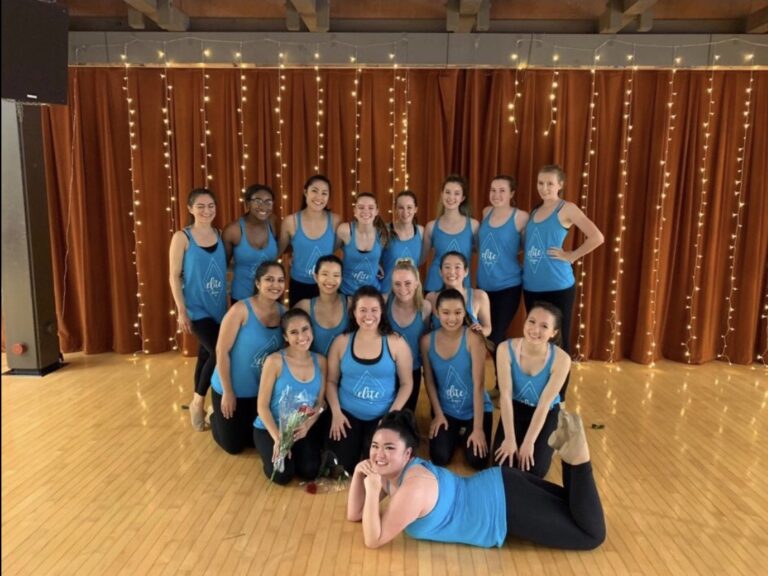
The Elite Dance Company hosted its first annual spring concert on May 19 in the Della Davidson Performance Studio. From starting with only five members a few years ago to featuring a healthy number of members eager to show off their own choreography, the organization has seen both growth and diversification throughout the years. Students witnessed various types of dance routines including jazz, hip hop and ballet, among other forms featured.

Rhea Kerawala, a third-year genetics and genomics major and current treasurer of Elite Dance Company, spoke about the organization and what some of the main goals are for this year.

“We’re built like a performance team,” Kerawala said. “We incorporate a lot of different styles into our routines. Our main goal is to have an organization where people can come together and build a community of people that enjoy dancing.”

Starting with the organization as a freshman, Kerawala has experienced the growth in members from year to year. She acknowledged that this has not always been the case, since some years had more members than others, but explained how this came about.

“We used to be a pretty big organization,” Kerawala said. “Around the time that other current officers, like Andrea [Varela] and Alice [Argueta-Ramos], took over, we had a lot of members starting to graduate or move on to bigger things. We’ve really been working on building our members back up to where it used to be. We have 18 members currently, so we’re starting to get there.”

The decision to make this event the first one for Elite Dance Company was due to the officers wanting to bring back an old tradition.

“Elite Dance Company used to have a big spring event, but that was before any of us were involved,” Kerawala said. “We really wanted to bring that legacy back. Since our freshmen year, we’ve really been trying to make this event happen. Now, we have the financial resources available and the members to make this happen.”

When discussing the spring concert, Kerawala emphasized the dedication and commitment that the performers have shown in creating their routines.

“Primarily, we will be showcasing original works by different dancers,” Kerawala said. “Some of the dancers are officers, others are just members and some are even freshmen that have choreographed their own performance. We also plan on having some guest performances from other dance organizations.”

In addition to showing various dance performances, the event is also intended to shed light upon another organization that Elite Dance Company is proud to raise awareness of.

“While it’s a pretty big deal for us to put on such a big event given our small numbers, we also want to promote our partner organization called PAN’DA [Postpartum Anxiety N’ Depression Advocates]” Kerawala said. “They support so many women going through postpartum depression, so we’re having one of their members speak at our event. Any donations will go toward their cause.”

Andrea Varela, a fourth-year theater and dance major and current co-artistic director, shared her excitement about being able to finally put on an event for her organization.

“It’s really a culmination of all the projects that our members have created,” Varela said. “It’s now our time for us to show everyone what we have to bring and also for the members to have fun. It’s a great way for us all to end the year strong.”

Varela shared information about how Fall and Winter Quarter have played a part in making the spring concert happen.

“When we start Fall quarter, we have our recruitment process,” Varela said. “We do some collaborative work as well. In Winter quarter, we always work with other dance companies and perform in their showcase events. It really depends on what we get invited to and mostly helping our team to get ready for the end of the year show.”

Like Karawala, Varela also started as a freshman and became the co-artistic director soon after that. She explained how this position has allowed her to mentor other dancers that are being groomed to take over the role.

“We thought that, for our last year, we should give this position to someone else while we’re still in charge behind the scenes to see if they need our help,” Varela said. “So we really take care of a lot the backseat work for the showcase since this is our first one. It’s a lot of applying for grants and finding other people that can help us find the proper venue.”

Holding a leadership position has allowed Varela to see not only how she has grown, but also how she impacts the other members and the many more that continue to join year to year.

“I’ve grown so much from being first a member to now understanding what being a leader truly is like,” Varela said. “When you start off leading five people, then it becomes ten, and then twenty, it can be difficult to handle, but over time you get better with communication and working with so many different types of people. We always understand that school comes first, so we try and make it a fun environment with the least amount of stress possible.”

Varela also commented on how the organization has been built from the ground up, starting with five members that had to figure out the proper ways to handle recruitment and how to advertise themselves to reach a wider audience. She finds great pride in knowing that her and her fellow officers have paved a path for new officers to take up leadership roles and continue where they have left off.

Through the planning of the different performances set for the event, Varela hoped to show that her organization is open to any and all new routines and genres that people are interested in.

“All of our members have different styles they bring to the table,” Varela said. “We’re not just contemporary jazz or things like that. If you can do hip hop or something else, we want to learn and help build that routine. We want new members to help us and teach us about what it is they have in store.”

Written by: VINCENT SANCHEZ –– features@theaggie.org

Tha Dirt Feelin

A local Davis band returns to Central Park with new energy

During Spring Quarter, students and Davis residents attend the Wednesday Farmer’s Market to enjoy fresh produce, food booths, Central Park and the different musical acts that play. The bands bring a similar energy of relaxing covers and family friendly music that are great to dance to or enjoy as background music to your conversation. Recently, however, local band Tha Dirt Feelin returned to the Farmer’s Market after a long hiatus and brought a newfound energy to the beautiful night atmosphere.

Tha Dirt Feelin is a local band, described by the Davis Enterprise as “the local kings of funk and soul, with a style that lies somewhere between Parliament Funkadelic and early Red Hot Chili Peppers.” However, beyond the band’s extremely catchy and relatable songs is the contagious energy that both their music and band members bring to the stage. The band’s lead singer Marque Cass will often take a moment to let his band jam without him as he dances, goes off stage and chats with his fans.

Looking around, many people dancing near the stage can be seen sporting tie-dye “Tha Dirt Feelin” shirts. It’s apparent that, unlike many of the other bands which sometimes serve as more ambient music, Tha Dirt Feelin has an extensive fan base. While some of the songs that Tha Dirt Feelin perform are covers and mashups, their unique style and energy provide the perfect mixture of familiarity and originality. Those dancing are able to sing the words to the songs but can easily adapt to the creative changes Tha Dirt Feelin adds.

Beyond the band’s energy, it’s apparent that Tha Dirt Feelin has spent years getting to know the Davis community. The band explains they met “by chance at school in Davis, California almost eight years ago. The music came from random jam sessions and turned into shows at Harlows and Torch Club in Sacramento, Sauced in Livermore, Davis Farmer’s Market and large stages like Whole Earth Festival and more.”

For those who have missed Tha Dirt Feelin’s latest performance, they actively post on Facebook and Instagram about their whereabouts. They are constantly engaging with their fans and making new music. Keep an eye out for this incredibly energetic and unique band; they are guaranteed to make your day.
Written By: Rosie Schwarz — arts@theaggie.org

On-campus parking should be more affordable for, available to students

TAPS to increase parking permit prices come Fall Quarter

Come Fall Quarter, students will have another obstacle to hurdle at the beginning of their academic year with the recent announcement of increased parking permit prices for the 2019–20 year, despite the fact that no new parking options will be installed.

It should go without saying that raising the price of parking without providing any solution to issues of limited space or students’ distance from campus is not going to solve any problems facing UC Davis Transportation and Parking Services (TAPS). Students who already pay between $45 and $55 per month for a pass will pay the increased rate because they need to drive to campus for an abundance of reasons and will be met with the same conundrums: They miss lectures because they can’t find a spot or they are forced to park 20 minutes away from their destination, late to the classes for which they pay.

It’s important to think about why students invest in parking permits. It appears from interviews that TAPS is under the impression that driving to school is an act of laziness or a direct ignorance of bus systems being offered. This is not the case. Students driving to campus are often doing so for jobs or extracurricular activities that start well before the buses run or end far after their routes conclude. Students with an opening shift at the CoHo and students who stays until 11 p.m. for a theatre rehearsal are similarly out of luck when the buses stop running. Having a car on campus allows them to safely make it home or to school without having to wait, isolated, in the cold of the night or speed walk from a distant apartment complex at the crack of dawn. Having accessible permits therefore is an issue of safety.

Many UC Davis students do not live in the areas immediately surrounding the campus. Those who commute from Sacramento, Woodland or the Bay Area do not have the option of buses or campus carpools to class. Increasing parking costs corners these people whose only option is driving and forces them to pay more for resources that are not being improved. It does not encourage them to find another way to get to school, but instead robs them of an extra $5 each month that could have gone to tuition or living costs.

Student commuters are a given when the housing crisis in Davis continues without clear solution. Though facilities such as West Village are building more units, affordability is always a concern for students. Simply building a few new apartments won’t solve a problem that will only grow worse as more students are admitted with the 2020 Initiative, which promised to add 5,000 students by 2020 in comparison to the campus population in 2013 when the plan was declared. This slow addition of housing combined with the choice to admit more and more students is pushing people out of Davis and making their only option a commute via personal vehicle. The university should take responsibility for its commitment to more students and provide them more resources.

When students drive by unused faculty and staff spaces to be met with no available C-permit spots, it’s clear that effective changes are not being made to be worthy of an increased permit price. With the housing crisis, commuters are inevitable. The Editorial Board believes that parking should not only be affordable and easy to find for students, but that solving the housing crisis is one of the most effective ways of alleviating the parking nightmare.

Written by: The Editorial Staff

Band-Uh! placed on interim suspension

Suspension follows accusations of hazing, sexual violence, misconduct

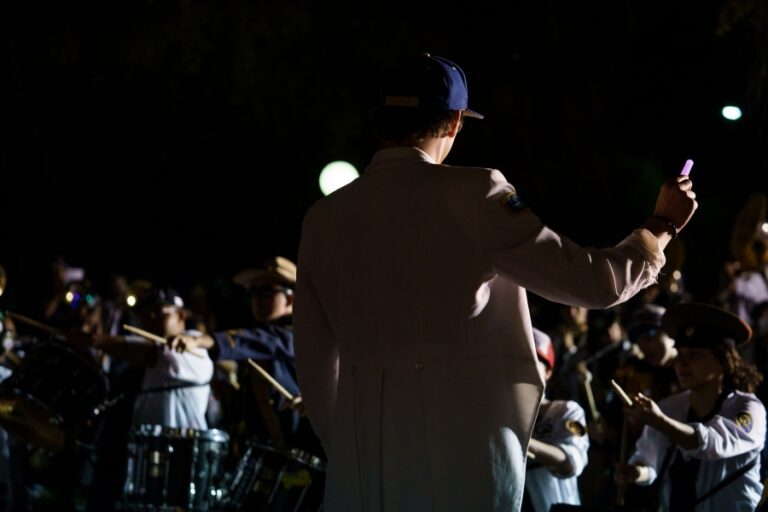
The Cal Aggie Marching Band (Band-Uh!) has been placed on an interim suspension pending the completion of an independent investigation by an external law firm following an article published in The California Aggie and a subsequent investigation done by The Sacramento Bee.

Previous reporting detailed potential cases of hazing; sexual assault, harassment and violence; binge drinking and other instances of misconduct. The investigation into Band-Uh! will be conducted by Sacramento Law firm Van Dermyden Maddux, according to The Davis Enterprise.

While the suspension is in place, all band activities are canceled, according to Jeff Heiser, the associate director of recreation at UC Davis. These activities include all performances, including those at the commencement exercises, and the band’s annual fundraiser. According to The Bee, band officers’ key cards have been deactivated, all university-owned instruments must be returned and the band room will be officially closed at 5 p.m. on Friday.

Before the suspension of the Band-Uh!, the Cal Aggie Marching Band Alumni Association had been suspended in Winter Quarter when allegations against one of its members came to light, according to statements from Emily Galindo, the interim vice chancellor of Student Affairs.

“The review will also consider whether band administrators failed to appropriately respond to reports of misconduct and will include an assessment of the relationship with the alumni band,” Galindo said in a May 24 statement. “Within the Division of Student Affairs, Campus Recreation leadership has also initiated a review of policies, procedures, reporting and training, and is consulting with other UC campuses to ensure best practices.”

The suspension of Band-Uh! is not an unprecedented move for organizations of this type within the university, according to Galindo, who also noted that university leadership “is committed to conducting a thorough internal and external assessment to determine the best path forward to provide a safe and inclusive experience for all student band members.”

Ema Seijas, a former section leader in the band who still pays dues and a fifth-year animal science major, welcomed the suspension. She said that although she and others wanted the Band-Uh! placed on suspension, she never expected “the university would take it that far.”

“[The suspension is] what the band needs, because while there are extremely fun aspects — like music, like having pretty much a family in the band — it’s not something that can just cover up all the bad things that happen in the band,” Seijas said.

While this is a step in the right direction, according to Seijas, her relationships with band members remain strained because of the allegations that have come out and her participation in news articles.

“The people that I went forward with definitely are happy that this happened,” Seijas said. “I’m doing my best not to talk to other current members of the band because last time it happened, I just got a bunch of hate from them. So I can only imagine how mad they are right now.”

Heiser responded to the suspension via email.

“The safety of all CAMB students is paramount and the University decided to impose the interim suspension to determine the path forward to promote a safe and inclusive environment,” Heiser said. “The decision to suspend the band was a difficult one, but necessary in order to create the space needed to conduct a thorough review.”

Written by: Kenton Goldsby — campus@theaggie.org

Campus News reporter Claire Dodd contributed to this report.


Flash fire on campus leaves one with minor injuries

Fire immediately put out, officials call it a “minor incident”

While officials first indicated that an antenna battery exploded on May 28 on the west side of campus, what actually occurred was a small fire near Garrod Drive that ignited and immediately went out, according to UC Davis Spokesman Andy Fell.

Fell said there was no battery explosion nor chemical exposures, as had been initially reported in local news media outlets.

“There was no chemical exposure — that was a miscommunication,” Fell said.

Fell explained how the incident unfolded from maintenance to a flash fire.

“There is an antenna plant out in the west campus, and technicians were doing some maintenance work,” Fell said. “In the course of that, a flash fire ignited — maybe from a spark. It ignited, immediately went out, but left a person with some light scorching. Police responded and the technician got treated.”

One person was treated for minor injuries, but no other information about that individual was released.

“A person was treated at the scene,” Fell said. “It’s kind of like when you light a gas cooker and it does not come on all the way. It’s really a minor incident, to be honest.”

Written by: Stella Tran — city@theaggie.org