52.7 F
Davis

Davis, California

Friday, December 26, 2025
Home Blog Page 418

Review: “Father of the Bride”

Did Vampire Weekend exchange their boating shoes for sneakers?

I’ll skip the over-dramatic fangirl monologue for the time being. My continuous admiration for Vampire Weekend was (maybe embarrassingly) established in my preview of the altered band’s newest album “Father of the Bride.” With the full 18-track album released on May 3, many of my predictions seem to have come to fruition — Vampire Weekend has flipped themselves on their own heads, critical of themselves and the world we share with them. However, they stick to their roots; the album is not without their classic twists and turns, well-played innuendos to make the listener think without realizing it. With “Father of the Bride,” Vampire Weekend gives an ode to their previous style and celebrates what is to come.

In complete contrast to the darker keys found in “Modern Vampires of the City,” “Father of the Bride” is playful and peppy, even whimsical at times. A summer-drive-with-the-windows-down kind of sound. “Harmony Hall,” one of the album’s first released singles, kicks off the motif. The guitar riff is smooth, infectious — so much so that Vampire Weekend has released a two-hour loop of the instrumentals. What I once worried would foreshadow a simple sounding album has become the earworm of listening pleasure, displaying the continued musical mastery and development of the band. They no longer have to rely on the complexity that gained them fame, but simply well-composed music worthy of praise. They even tap into some autotune on “Flower Moon.”

They haven’t forgotten their roots totally, however. “Flower Moon” as well as “Sympathy” rests on international, Latin beats; “Sunflower” has a hip-hop-esque rhythm mixed with the faint hints of their classic Victorian sound found in their older content like “Run” from “Contra.” Perhaps the familiar juxtapositions are what drew me to these songs initially, but Vampire Weekend hasn’t failed to make fun of themselves in the process. The music video for “Sunflower” is a prime example. While captivating to watch, the contorting visuals could be seen as overdoing it. Shot at Zabar’s, a classic bagel shop in New York, they are possibly turning people off. In the words of my older brother, a Manhattan resident, “#wegetit #yourefromNYC.”  

That’s the point. “Unbearably White” confronts this directly. A similar witty use of diction found in “Diane Young” jokes at the whiteness rooted in Vampire Weekend. Whether or not they should be using these sounds from different cultures is too large of a discussion to be had here, but Vampire Weekend minimally recognizes that their privilege could have been their earlier shortcomings and annoyance: “Could’ve been smart, we’re just unbearably bright.” They further criticize it with “Rich Man:” “But if ten million dollars is all that you got / You won’t be the one.”

Many of the album’s songs are thus reminiscent of 1970s rock ‘n’ roll. Drawing on Grateful Dead for inspiration, “This Life” is a spitting image of Van Morrison’s “Brown Eyed Girl.” Packaged in their upbeat tempos are our collective fears for the future: “Something’s happening in the country / and the government is to blame” in “Married in the Gold Rush,” “I don’t wanna live like this / but I don’t wanna die” in “Harmony Hall,” “This life in all its suffering / Oh Christ, am I good for nothing?” in “This Life.”  Vampire Weekend removed themselves from the musical and intellectual isolation of New York City and gravitated toward larger concepts and the country as a whole: the current generation’s anxiety, fear of environmental destruction and government failure. They may not be the best voices (you can’t rid yourself of your privilege after all), but they are living the collective experience too.

Vampire Weekend turns to themes of marriage and romanticism — love serving as the light in dark times. Ezra Koenig may be feeling these sentiments strongly nowadays, living in Los Angeles with partner Rashida Jones and a newborn baby. The irony of their progressive calling for environmental action and responsibility from the government is the use of traditional marriage tropes in expressing love, like the significance of the father of the bride.

While the album has been on repeat, I don’t believe “Father of the Bride” is Vampire Weekend’s strongest album. Nonetheless, it proves the band adaptable, and takes them out of the mold of merely the Ivy League educated indie-rock band. We are granted the opportunity to see a band in their growing pains, constantly developing and toying with their sounds and themes; a band worth waiting another six years for.

Written By: Caroline Rutten — arts@theaggie.org

Bigger, Better, Faster: Games are getting harder to put down

Advancements in video games are (rightfully) leading to an increased concern about gaming addiction — and China is bad at fighting it

There will soon be more PC gamers in China than the total U.S. population. The statistic alone is mind-boggling, but is even more perplexing when put in context. The massive number of PC gamers comes as a result of China’s attempt to combat gaming addiction by banning video game consoles from the country from 2000 to 2015.

This ban was just one part of China’s ongoing actions to curtail gaming addiction. In 2018, China halted all approvals on new video games as they transitioned approval responsibilities to the State. And last month, the country banned blood, corpses and gambling (among others) from games sold in China.

Recently, China has implemented a new strategy: video game rehabilitation centers that look more like military prisons than anything else, with barred windows and rigorous training regimes to keep “patients” active. China’s efforts to combat video game addiction even lead one mother to say this about her child: “I tried everything, but nothing helped. Therefore we had to drug him with sleeping pills to bring him here.” Another father hired a digital hitman to “kill” his son repeatedly in the gaming world so that he would get a job. The issue has become so large in China that many have deemed digital media consumption and video games as “electronic heroin.”

The fundamental issue of video game addiction is that many developers are actively making games harder to put down. The reality of the situation is that the best outcome for video game developers is to keep you playing and paying for their games for as long as possible. That’s why many of the largest game developers actively seek out psychology consultants to give players an “itch” to keep playing again and again. Some of the biggest games on the market —  “Fortnite,” for example — are made with such a compelling and inviting gameplay loop that they create a new kind of addictive rush in games. The feeling you have when you finally get your first “Victory Royale” is unmatched.

But are these games inherently bad because they are hard to put down? After all, it’s in the game designers’ best interest to give players a product that they can get the most enjoyment out of for long periods of time. And gamers are asking for just that. So where is the line?

I often tout my favorite games as those that give me that “just one more round” feeling, and I’m sure we’ve all had those moments where we lose track of time in a game, television show or social media and we suddenly realize that our day is slipping through our grasp. It happens to me far too often. But when you take a step back and realize that, in a different context, that same feeling could be applied to another drink or another round at the casino, it’s easy to understand how gaming addiction could occur. I don’t know what I would do without games, but, at the same time, I’ve also been able to go months without playing them.

The problem of real video game addiction is that it results in significant impairment to important areas of daily life. There is no magic number for the amount of hours it takes for gaming to be classified as a disorder — it boils down to the impact the behavior has on your life. This may not be substance abuse like drug addictions in the traditional sense, but it is a serious non-substance addiction nonetheless — in the same category as food and gambling addictions, according to the World Health Organization, to be made official in 2020.

So what is the best way to combat video game addiction? Is it just as simple as catching it early? When Prince Harry complained about the addictiveness of social media and video games earlier this year — and called for them to be banned — my immediate reaction was just to blame poor parenting. I mean, come on: steal the power cord, block the device from wifi, just do something. Don’t sit there with your arms in the air — be a parent. But while I still think this method will solve most issues related to time spent on video games, actual cases of disorder can alter behavior and make it incredibly difficult.

Developers have already started to provide solutions to video game addiction. Plenty of games and systems encourage breaks and activity outside of gaming. “Pokémon Go” encourages gamers to hatch Pokémon eggs by walking more, meet new people at a local park by joining a raid and even build communities around catching the rarest of them all. Nintendo has historically been a proponent of encouraging activity. We’ve all dealt with the Netflix equivalent of “Are you still watching?” every time the Wii used to remind gamers to go outside. Even one of the best-selling games of all time, “Wii Sports,” encouraged engaging in physical activity, which was then followed up with hits like “Wii Fit” and “Wii Sports Resort.” The marketing of those games was quite brilliant –– they were aimed toward parents worried about the health of their children.

The video game industry relies on games that keep players coming back for more. That’s how the money is made. But caught up in the race-for-profitability are those who deal with the damaging consequences of digital addiction. We have to find a better way to break stereotypes of gaming addiction and help those who are actually dealing with a harmful gaming disorder.

Written by: Calvin Coffee –– cscoffee@ucdavis.edu

Disclaimer: The views and opinions expressed by individual columnists belong to the columnists alone and do not necessarily indicate the views and opinions held by The California Aggie.

New proposal for health coverage for undocumented young adults

Counties retain their healthcare funding for now

While Governor Gavin Newsom initially proposed a plan to provide health coverage for low-income, undocumented young adults ages 19 to 25, a caveat emerged where public health dollars from four counties — Placer, Sacramento, Santa Barbara and Stanislaus — would lose public health funding for their current programs. Newsom has since revised the proposal, however, so that other counties will not take such a large hit.

Peter Beilenson, Sacramento County’s health services director, mentioned how Sacramento County would be impacted specifically if the initial plan went through.

“It affects Sacramento County more than any other county in the state,” Beilenson said. “We have this robust program for healthcare services to undocumented adults — this will be decimated if the callback continues. It will cut about 75% of patients that we can serve.”

Beilenson added that Sacramento County’s Department of Health Services offers primary and preventative care for undocumented individuals through its Healthy Partners Program; however, he expressed concern that funding for the larger population that the program serves will be cut back because the plan is age specific.

“It’s ironic to fund the 19- to 25-year-olds, [which] is going to affect or help only about 2.5% of our patients in our Healthy Partners Program,” Beilenson said. “Only 100 of our 4,000 or 2.5% are 19 to 25 years old, but it will decimate the services to the older populations of 25- to 70-year-olds who otherwise would have been getting healthcare but now won’t be able to — it’s penalizing the vast majority of adult undocumented folks.

Jeff Brown, the director of Placer County’s Health and Human Services Department, explained that the plan has now been updated.

“The Governor revised his proposal — he has a new proposal as a revise to his budget, and he proposes not taking the initial funding from counties at this time,” Brown said. “Now, the financial situation is very positive for California. He had expounded a fund to be able to use to make that happen without having to take funds from the four counties.”

Beilenson noted that without the revision to the plan, the initial proposal would have affected older individuals which is more detrimental to the populous. Additionally, citizens will be detrimentally affected.

“The services needed by young folks are nowhere near as extensive or preventive as services for 30- to 60-year-olds, which is the vast majority of our Healthy Partners Program,” Beilenson said. “Unfortunately, it will affect them in terms of reducing their access to care. The same providers provide care for our medical clients who are actually citizens so they will see a decrease in coverage as well.”

Brown indicated that the Health and Human Services Department would be able to retain their current programs with the new proposal.

“[Newsom] realizes that his proposal to transfer the budget from four counties would’ve had serious negative impacts on our clinical disease programming and our maternal child health program,” Brown said. “He has since come up with a better plan, and we appreciate his efforts to listen to our concerns and be willing to consider alternatives.”

The new proposal will now undergo a process in the assembly and Senate for approval.

“The governor has proposed and made some revisions, and so the total budget will be going to both the Assembly and Senate for review,” Brown said. “They vote, and it needs to be voted on and enacted by mid-June. All of the decisions that need to be made will be made in the state legislature. Once they agree on a budget, they will forward it to the governor for his final signature.”

Jenny Nguyen, a budget analyst at the state Department of Finance, noted that there is a cost to diverting funds from one area to another.

“As the state takes on responsibility for providing health care to undocumented adults, counties’ costs and responsibilities on indigent health care are expected to decrease,” Nguyen said to The Sacramento Bee.

With the new plan, Brown mentioned that the counties can focus more on their programs to tackle current outbreaks such as measles.

“The new plan allows us to maintain a safe level of realignment funding to continue to provide critical services,” Brown said. “If the governor’s original plan went through, we would probably be looking at reducing our services. That could be problematic, given that we just don’t have the infrastructure around the state to provide comprehensive coverage against a number of diseases including measles; right now, we have a major outbreak in our state, and by maintaining this level of funding will allow us to do the necessary work we need to control the spread of infections such as measles.”

Beilenson acknowledged that the initial plan had good intentions; however, the diversion of funds can affect counties on a wider level and even hinder funding for older individuals.

“We’re hopeful,” Beilenson said. “There’s still a lot of talk of making these four counties do not bear a disproportionate burden to take care of the 19- to 25-year-olds, which is obviously a good thing to do to cover them, but should be funded on the back particularly of these four counties and particularly for Sacramento County, which suffers the most.”

Written by: Stella Tran — city@theaggie.org

Three UC Davis students report tainted drinks

Toxicology reports showed an unknown substance, police still investigating

In the course of a little over two weeks, the Davis Police Department received three reports of instances in which women — all students at UC Davis — experienced blackouts, abnormal behavior and scares due to drinking alcoholic beverages that had been tampered with. It is believed that these three women were drugged on various accounts while out. These reports were all filed within a short time frame, and police are still investigating the matter.

“Anytime you go into a club or bar, the problem is, as you drink, your awareness goes down,” said Lieutenant Paul Doroshov of the Davis Police Department. “This is natural, and you have to understand you are not in a completely safe environment. Keep your awareness up, and make sure people around you are being respectful. Number two, don’t leave your drink. If you have friends around you, that is best, we would love to have these things reported. If you aren’t feeling right after drinking, go get medical help. We don’t know what is being put in drinks — we encourage reporting — [but] it is hard for us to see the overall problem because we don’t have that information flowing in.”

April 17 marked the first instance when a woman reported experiencing memory loss and a blackout without having drunk an excessive amount of alcohol. The second account took place on May 1 at the same bar as the mid-April case, WunderBar, located on G Street. Fox40 noted that “WunderBar has more security than anybody,” after speaking with the owner of the bar.

“It’s never that student’s fault that this happens,” said Raeann Davis, with UC Davis’ student health services, to KCRA 3. “We do suspect that this is something that’s under-reported and so by students reporting that to the police department, we can then do more as a community and as a campus.”

The most recent report was for an occurence on May 3 at Bistro 33, when the restaurant and bar received more traffic than usual, hosting a party for over 200 people.

“I actually know two of the girls that were drugged — I drove straight to the hospital when the most recent incident happened with my friend at Bistro 33 — I knew something was not right,” said a friend of two of the victims, who preferred to remain anonymous. “The worst part was she was surrounded by people that care and love her when this all went down, so these kinds of situations can literally happen anywhere and at any time.”

Each woman was admitted to Sutter Davis Hospital once the realization struck that something was not right. The information gathered from the previous night was all from secondhand sources. Davis police are warning individuals to be extra cautious of where a drink is set and who a drink is received from.

Common date rape drugs leave the body within 24 hours, and according to toxicology results from the hospital, additional substances beyond alcohol were present in the women’s systems.

“Some of the chemical tests had shown that an unknown substance was present,” Doroshov said.

None of the three women reported being physically harmed while under the influence.

The Center for Advocacy, Resources & Education at UC Davis offers support through counselors as well as opportunities to get involved and support survivors. The Center emphasized that survivors of any sort of sexual violence or harassment can and should reach out for anything they need.

Written by: Lauren Tropio — city@theaggie.org

TAPS to increase parking permit rates starting July 1

Amidst increased expenses, increased parking rates are necessary, TAPS director says

Starting July 1, parking permit rates on campus are scheduled to see an increase in prices. Permit holders have been emailed and notified of the upcoming increases.

According to the Transportation and Parking Services (TAPS), another email will go out with the option of renewal for parking permits. It will also explain how to enroll in payroll deductions for access to the electric vehicle charging stations.

For the 2019-2020 school year, parking rates will increase by up to $5 in each category of parking permits. C-permits will move from $55 to $65. Visitor parking will only increase from $9 to $10. Citation fines will also see increases.

Since 2009, there have been dollar increases in parking permit rates, until 2017 when TAPS made a $4 increase.

TAPS stated the costs to operate its facilities such as lots, roads and pathways have surpassed the rate increases over the past few years. With the lots operating at their capacity, TAPS has had to look at other methods such as stack parking that have also brought a financial burden to the organization.

As demand has increased over the years, TAPS is not looking to create more parking spaces or parking structures, with the exception of the Veterinary Medical Teaching Hospital District. Instead, it has shifted its focus to alternative methods for getting people to campus and reducing single occupancy vehicles.

Clifford Contreras, the director of TAPS, said it is very open and happy to provide information to the community and the campus as to why these new increases are happening. Contreras mentioned he reached out to five constituent groups on campus to present the information regarding the price hike. The groups include the Academic Federation, the Graduate Student Association, ASUCD, the Staff Assembly and the Academic Senate.

Contreras spoke about the six areas that have caused the increase in prices. He mentioned base expenses that can range from employee salaries to the pens and paper they use. The unrelated business income tax is also a new expense for the organization. Other factors include the increased utilization of stack parking, the shuttle from the UC Davis Medical Center in Sacramento and additional contributions to roads, paths and parking facilities. TAPS has also hired a new career staff employee. These expenses have amounted to about one million dollars for the upcoming year.

“We are a self supportive unit, we receive no money from the campus, the state or the federal government, so the money comes from fees and citations,” Contreras said.

In defense of the move to not build more parking areas or structures, Contreras spoke of the alternatives TAPS will look into.

One of the reasons behind this move is the sustainability goals TAPS is looking to meet. By the year 2025, TAPS hopes to reduce single occupancy vehicles by 10%, bringing forth alternatives to convince people to find other options.

“We are looking to encourage and reward people to choose an alternative to driving alone and as a result of that we would no longer need to build additional parking; instead we would have new programs and services,” Contreras said.

TAPS also hired a consultant to identify and make recommendations on the 10 best ways to incentivize commuters to no longer drive single occupancy vehicles to campus.  

“We will begin our engagement process with the campus community and show them the top 10 recommendations of the report and that is how we will implement them,” Contreras said.

The community is a big part of the report. TAPS is looking to communicate what it wants to do and wants the community to provide feedback in order to find the best incentives to reaching the 10% goal. This engagement process will start in the fall, since much of the campus community is gone during the summer.

Some of the alternatives that were mentioned were creating vanpools to pick people up from certain communities, increasing car pools and providing subsidies for people who use these alternate methods.

In regards to student complaints about not being able to find parking, Contreras said the issue is not that there are no available spots, but that available spots may not be in convenient locations.

“The main complaint is that [students] can’t find parking, but we do provide parking,” Contreras said. “We can demonstrate where additional parking is located but where it is located, from the student perspective is that it isn’t convenient.”

With affordable housing being hard to find, many students look to other nearby towns such as Woodland to find housing. This in turn would make parking spaces essential to them. Contreras mentioned the best solution is to create more housing on campus and that would eliminate the need for parking spaces for many students. He cited the expansion of West Village and how that is creating less of a demand for parking structures.

Some students find West Village and on-campus student housing to be too expensive, however. For those who still choose nearby towns, Contreras reiterated that he can’t stop the demand for parking but the supply is there, it just won’t always be convenient.

Another alternative he mentioned was working with YoloBus to get those who live in nearby towns easier access to public transportation to alleviate demand for parking. He also suggested creating express routes to get buses from nearby cities to Davis

However, there is still an ongoing anti-TAPS sentiment from some of the student body. There are numerous complaints such as parking citations and not being able to find parking even with a parking pass.

Alex Robles, a third-year psychology major who commutes from Sacramento, explained what she thinks about the increase in parking rates and TAPS.

“I find that with the expanding student body, TAPS should have thought about building another [parking] structure because some students find public transportation inconvenient or feel unsafe,” Robles said.

Robles commutes from Sacramento due to the high rents in Davis and finds it cheaper to simply pay for a parking permit and deal with the commute. Nonetheless, it is still not easy.

“My house is about 25 miles from campus; I have to leave an hour and a half before my class so that I have enough time to get to Davis and account for traffic, then leave 20 to 30 minutes to look for parking,” Robles said.

The commute creates a cheaper alternative than Davis housing for Robles, but it comes at the cost of convenience and efficiency for the busy student. Robles also mentioned the idea that there are many areas designated for faculty and staff which aren’t used to full capacity while students may search for a spot for up to 30 minutes.

“The other problem is that you can buy a permit, but you aren’t guaranteed a parking spot,” Robles said. “I hear people complain about it on a daily basis, this is a problem that needs to be addressed.”

Written by: Alexis Lopez — campus@theaggie.org

Billionaires are not the solution to overwhelming student debt

Philanthropy is laudable, but systemic change is needed to tackle $1.5 trillion of college debt

Robert F. Smith, a billionaire tech investor, the founder and CEO of Vista Equity Partners and the richest black man in America, announced during the commencement address at Morehouse College this past Sunday that he would pay off the student loans of the college’s entire graduating class of 2019. A video of the speech shows the almost 400 students of the historically black men’s college — with debts ranging from $17,000 to $200,000 — erupt into celebration after the shock of Smith’s statement wore off.

Smith’s generous gift — pouring a portion of his wealth into freeing hundreds of young men from the immense burden of student debt — is undeniably laudable and inspiring. This action will profoundly affect the Morehouse graduates for the rest of their lives, allowing them to pursue a future career or further education without thousands of dollars of loans hanging over their heads.

But regardless of Smith’s generosity, personal and large-scale philanthropy should never be a substitute for fixing the egregious failure of the American higher education system that burdens tens of millions of students. Student debt in the U.S. has nearly tripled since 2007, reaching a staggering $1.5 trillion this year. The average 2017 graduate of a four-year college finished with $28,650 of debt. At the UCs alone, students pay more than six times the amount of tuition than in 1979–80 when adjusted for inflation.

The student debt crisis has particularly targeted people of color, both nationally and in California, with historically black colleges like Morehouse being hit the hardest. Ironically (or perhaps intentionally), nothing shows this more clearly than Smith’s gift, which is expected to be as much as $40 million — for a mere 396 students. Black graduates of four-year colleges owe an average of $7,400 more in student debt than their white counterparts. Students of color at the UCs are three times more likely to accumulate student debt than are their white peers.

College graduates should not be forced to move on from higher education, which they’re told is essential to make a decent living, with thousands of dollars of debt that might take decades to pay off. The gracious act of one billionaire — or even a dozen billionaires — does not make up for the injustice of America’s student debt crisis. Whether a student will be dragged down by debt should not be determined by their commencement speaker, and being able to walk away from college debt-free shouldn’t feel as unlikely as winning the lottery.

“I know my class will make sure they pay this forward,” Smith said at the end of his announcement. “Let’s make sure every class has the same opportunity going forward.”

The ideal world is a generous world, where each generation looks out for the next. But a string of donations is no replacement for effective public policies that would allocate more funding to higher education and end the predatory student loan system, which saddles students with debt that cannot be escaped even by declaring bankruptcy. This kind of large donation is ultimately just a Band-Aid attempting to alleviate an issue in the short-term and does little to actually eliminate the student debt crisis at its roots.

It’s unacceptable that the cost of higher education in America might also mean a life of debt. In addition to Smith asking this generation of graduates to “pay it forward” with generosity and empathy, the Editorial Board asks for tangible solutions to fixing a broken system that steeps millions of Americans in a trillion dollars of debt.

Written by: The Editorial Board

Drugging incidents at Davis bars, Investigation of UCD Police’s use of force, Llamas on the Quad

Happy Memorial Day Weekend, Aggies!

Or happy houseboats, whatever floats your boat. Enjoy a well deserved recovery Monday before the home stretch, two weeks to go! Graduating seniors, savor it.

Here’s what you need to know this week…

Campus:

ZOË REINHARDT / AGGIE

UC Davis Office of Compliance opens investigation into use of force — a video of UC Davis police restraining a woman outside of the bookstore prompted public outcry and investigation. After a woman allegedly shoplifted from the UC Davis bookstore, video captured campus police officers pinning the woman to the floor where she was heard screaming that she couldn’t breathe after being restrained by a garment. After the video spread on Twitter and Wildfire, the ASUCD Executive Office released a statement via Facebook.

“The police are not attempting to calm her down in the video,” the statement said. “Police should be utilizing de-escalation tactics and intervention with mental health specialists and counselors, instead of brute force to pin someone, a [Chicanx/Latinx] woman of colour, down against her will after explicitly expressing she had PTSD.”

An investigation by a department not affiliated to the UC Davis Police Department is now under way.

“Any time there’s a use of force in this police department, we have to go back and thoroughly review and critique the actions of our officers,” UC Davis Police Chief Joseph Farrow said. “Use of force always looks bad — it just does, and this one has really gathered the attention of a lot of people, probably our entire community.” Read on.

City:

JEREMY DANGER / AGGIE

CalFresh soon to come to California Community Colleges — CA Assembly Bill 612 approved to implement the food financial aid program for all 114 state community colleges. With rising tuition rates and costs of living, students are increasingly facing food and housing insecurities. Following the implementation of CalFresh at UC and CalState schools — which offers students with resources and helps to decrease the time to get approved for the low-income government food program — AB 612 aims to replicate the program’s success at the CC level.

“The fact that exists now is that more than half of our students have been food insecure over the last year,” said Larry Galizio, the president/CEO of the Community College League of California. Read on.

Features:

TESSA KOGA / AGGIE

No Prob-Llama — forget therapy dogs. The UC Davis Mental Health Initiative brought four llamas to the Quad to kick off Mental Health Awareness Month. In addition to getting to pet and interact with llamas, students fed them carrots, passing them off between their teeth — a foolproof way to better your mental health.

“It had a very positive impact on students and their mental health. Everyone was so excited to be petting and taking pictures with the llamas, and I heard people talking about it for the next week at least,” Judd, a fourth-year animal science major, said. “It really put a smile on everyone’s face.” Read on.

Arts and Culture:

TREVOR GOODMAN / AGGIE

Mac Demarco performs at Ace of Spades— a collab art’s desk review. Half the art’s desk went to the Mac Demarco concert, they all shared their thoughts, here are a few:

Liz Jacobson: “His charisma and personality made me blush. He is definitely someone I would want as my beer die partner. So comfortable on stage in his gym shorts and cowboy hat, as he grinned ear-to-ear; I swayed with my friends to his “jizz jazz” style music and Bob Dylan-like voice.”

Clay Allen Rogers shared “the good”, “the bad”, and “the ugly” of the night: “The Bad: Getting denied access to the bar because I picked up an empty beer can on the street and threw it away in the recycling bin outside of Ace of Spades. According to the arbiter at the door, those are the signs of pregaming. Thanks guy, I’ll stick to the psychedelics.”

Caroline Rutten: “I banged my head as much as I hugged my close friends around me; watching “My Kind of Woman” performed live will stay with me for a while,” … “my future husband.”

Rosie Schwarz: “Everyone was entranced by DeMarco’s goofy yet passionate stage presence and catchy music, and once the show ended, everyone was still in awe by the incredible performance they had witnessed.”

Read on.

Sports:

MELINDA CHEN / AGGIE

Horse racing — what a recent increase in horse deaths means for the future of the sport. Twenty-four horses have died at Santa Anita Racetrack in Arcadia, Calif. since last December, raising an investigation. The suspected cause, Lasix, a drug commonly used in high-level racehorses in the U.S..

“It is very common that many horses have a condition called exercise induced pulmonary hemorrhage,” said Dr. Rick Arthur, the Equine Medical director at the School of Veterinary Medicine at UC Davis and full-time member of the California Horse Racing Board. “When they are at peak performance, the alveoli [in the lungs] bleed because of high blood pressure. Furosemide [Lasix], got started by being prescribed in humans to lower blood pressure many years ago [and is used for the same reason in racing horses].”

The total of $165 million was wagered at this year’s Kentucky Derby, a 10% increase from last year, according to the New York Post. These deaths pose a threat to the valued $39 billion racing industry. Read on.

Science:

DAVID SLIPHER / COURTESY

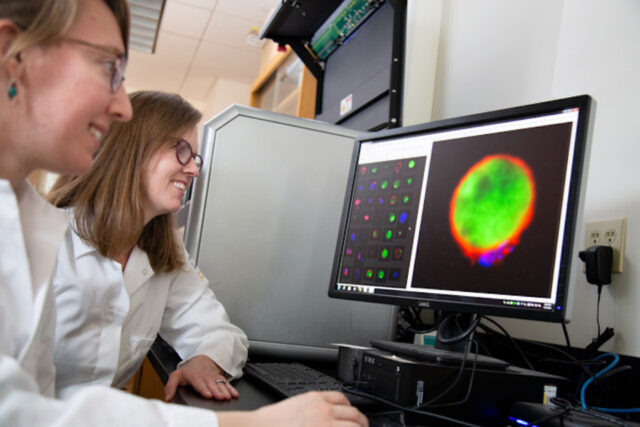
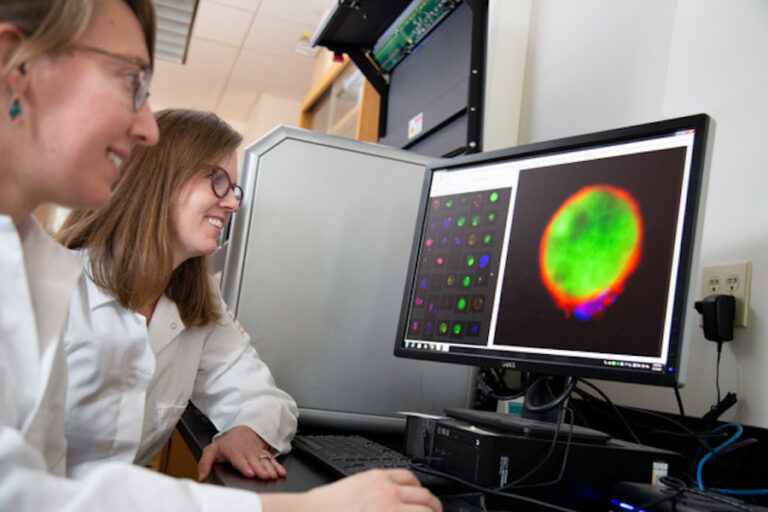
Parasites — UC Davis nibbling away at discovery. UC Davis researchers have discovered an amoeba called Entamoeba histolytica, a parasite that “nibbles” on human cells and display human proteins on their surfaces in order to evade the human body’s immune response and sneak into the bloodstream.

“We’re not only learning about entamoeba itself, but we’re also further understanding the fact that this nibbling process, trogocytosis […] might be a overarching theme in cell biology in eukaryotic cells,” said Rene Suleiman, a third year microbiology student. “So we know that immune cells do this, and now we know entamoeba and other species of amoeba do this process as well, so I mean I would want people to be excited about it and maybe come up with more questions of how we could study it.”

Doesn’t that just make your skin crawl? Read on.

Culture Corner — Liz’s Weekly Picks

Television: “Schitt’s Creek”

Movie: “Obvious Child”

Book: “The Houseguest and Other Stories” by Amparo Dávila

Album: “Cuz I Love You” by Lizzo

Read on.

Opinion:

Editorial — “Watch your drinks in wake of drugging incidents at Davis bars

Humor — “DC hosts houseboats-themed meal with only dino chicken nuggets, alcohol

Column — “Gen Z doesn’t suck

That’s all for this week. Check back next Friday.

— Grace Simmons

Bill for CalFresh to come to California community colleges

“Food financial aid” becomes pertinent, half of students face food insecurity

California Assembly Bill 612 proposes the food benefit program, The CalFresh Program, be approved for all 114 California community colleges across the 72 districts. The bill intends to remedy the number of students battling food insecurity, or hunger, on college campuses.

“Now, students are struggling, and they have to make choices,” said Kamaljeet Khaira, the director of the UC CalFresh Nutrition Education Program. “Do I pay my tuition or do I pay for my housing or do I eat?”

In California, students inherently face rising tuition costs, high cost of living and high housing prices. According to the California Community College’s Basic Needs Survey Report, 56% of community college students faced food insecurity and 35% are experiencing housing insecurity.

“The fact that exists now is that more than half of our students have been food insecure over the last year,” said Larry Galizio, the president/CEO of the Community College League of California. “Just the astonishing and disturbing number of our students that have credibly precarious socioeconomic situations has galvanized the leadership and students.”

AB 612, authored by Assemblymember Shirley N. Weber, follows a slew of legislation in implementing CalFresh in the University of California and California State University campuses. Galizio noted that the success of the program at the Cal State and UC level inspired them to work with Weber as the chief sponsor of the bill for CalFresh at community colleges.

The bill aims to decrease the time to gain approval and implement the program as well as encourage more districts to participate in the anti-hunger movement.

“We saw that it was functional at the CSU level,” Galizio said. “And we thought we could significantly cut down the amount of time and effort that our 72 districts would have to go through in order to place this on their own campuses –– it just seemed to make good sense.”

The CalFresh program issues eligible, low-income individuals with a monthly budget in the form of an Electronic Benefit Transfer (EBT) card, which can be spent at select grocery stores and farmers markets.

“We think of it as food financial aid,” Galizio said. “We’re in the business of trying to help students afford to be able to attend college and make it more accessible.”

Also known as the Supplemental Nutrition Assistance Program, CalFresh also promotes healthy eating with the UC CalFresh Nutrition Education Program.

“Not only do we want students to have food and not be hungry, but we want them to choose the foods that are healthy foods that prevent disease,” Khaira said. “We want healthy choices to be the available choice, the easy choice.”

On the UC Davis campus, the Aggie Compass, located in the Memorial Union, provides assistance with the CalFresh application and lists the qualifications to apply on its website. Around the corner, The Pantry provides students with basic necessities –– from food to sanitary products to soap –– for free with a three-point system. These establishments are meant to ease the financial transition into UC Davis for incoming first-year and transfer students.

“The community colleges are really made for students to be able to do college more affordably, but the sticker shock of the price of tuition is going to be hard for people,” Khaira said. “When students drop out of school or if they have to take two jobs and their school suffers, people are paying attention to that.”

Noah Isaac de Guzman, a third-year neurology, physiology and behavior major, transferred from a community college to UC Davis, and expressed the adjustments he made to his lifestyle due to the increase in tuition costs.

“I come from a place of privilege, but despite that information, now that I know I’m spending so much money on housing and tuition, I try to be more mindful of what I spend, especially with food,” Isaac de Guzman said. “For groceries, I look for the cheaper option, and I try not to eat out as much because every penny that I spend is an extra financial burden.”

Khaira conveyed the need for benefits to supply healthy foods to students and erasing the stigma surrounding food stamps.

“It really is the government’s obligation to support students to get them the education they need, and it’s a crime if somebody needs to drop out because they don’t have money to make ends meet,” Khaira said. “So if CalFresh can give them the money for food and they can spend their money on the academics, then that’s what we should be doing.”

Thus far, the bill has not faced any opposition with unanimous bipartisan support and will go to the Assembly side of the House for further approval, according to Galizio.

Written by: Renee Hoh — city@theaggie.org

Davis population up by 1% in 2018

Estimates from the California Department of Finance show growth in city size last year

The city of Davis grew in population by a roughly single percentage point in 2018, outpacing surrounding Yolo County cities by a significant rate, according to a press release by the California Department of Finance.

In a press release on May 1, the department released data of its most recent estimates of California city and county populations. The Davis population grew from 68,999 on Jan. 1 of 2018 to 69,761 on the same date in 2019. That means that 762 new residents were added to the city in 2018, a population growth of 1.1%. Yolo County itself has grown in population by 0.6%, according to the data, and much of that growth appears to come from Davis.

These numbers don’t account for population growth on campus or in nearby neighborhoods outside city limits, however. The balance of the unincorporated county as a whole, which would include some neighborhoods near Davis, also grew by 1% from 30,878 residents in 2018 to 31,200 in 2019. The department’s data specifically excludes most student housing on or near campus, according to its website.

Ashley Feeney, the assistant city manager for the city of Davis, said that the recent population growth is consistent with the city’s projected growth rate alongside the construction of new housing in Davis. The Regional Housing Needs Allocation, the state process for regulating the production and affordability of housing in California, allocated Davis 1,066 new housing units between January of 2013 and October of 2021. According to Feeney, the city adopted a corresponding resolution in 2008 that accounted for an expected 1% growth rate in population.

“I’d say that growth in the city has been consistent with what the anticipated growth rate was through our RHNA cycle, coupled with what we’ve seen in the market trends,” Feeney said. “Certainly, we’ve had a number of different housing opportunities available across the city, whether it be for-sale housing, rental housing projects that have been improved — starting construction or nearing construction.”

In other words, the city has not been caught unaware by the growing size of its population. But expected or not, Davis’ 2018 growth has eclipsed nearby Yolo cities by a factor of nearly double.

Compare Davis’ growth to nearby West Sacramento, which only grew 0.4% in population the same year — according to the Department of Finance — or Woodland, which grew by 0.2%. Winters actually lost residents, with a population decrease of 0.1% — though this only represents a loss of 10 residents, due to the city’s small size.

To estimate the population of Davis and other California cities, the California Department of Finance uses a system called HUM, or the Housing Unit Method. This number takes data from added or lost housing — construction of new buildings, demolition and annexations, for example — and adding it to already existing Census data from in 2010. The department adjusts that number based on data on vacancy rates from the Census and American Community Survey.

“Occupied housing units are estimated by applying a derived civilian vacancy rate to the estimated civilian housing units,” according to the department’s website. “Vacancy rates are based on 2010 Census benchmark data, adjusted to incorporate the directional changes described by the latest available ACS data.”

The state of California will use these numbers to determine the distribution of state funds, as well as uphold state codes, but the new population data will also prove useful to California local agencies, businesses and academia.

“The State Controller’s Office uses Finance’s estimates to update their population figures for distribution of state subventions to cities and counties, and to comply with various state codes,” the press release reads. “Additionally, estimates are used for research and planning purposes by federal, state, and local agencies, the academic community, and the private sector.”

Written by: Tim Lalonde — city@theaggie.org

Nibbling away at discovery

Researchers find parasitic amoeba “nibble” on human cells to survive

The image of a wolf dressed in sheep’s wool is commonly used as an analogy for camouflaging, and a certain type of parasitic amoeba called Entamoeba histolytica certainly fits this analogy. Discovered by UC Davis researchers, these amoebae “nibble” on human cells and display human proteins on their surfaces in order to evade the human body’s immune response and sneak into the bloodstream.

Katherine Ralston, the assistant professor in the department of microbiology and molecular genetics, was initially interested in how microbes interact with hosts during her undergraduate career at UC Davis. She continued to study parasites in her graduate and postdoctoral training, and now runsa lab where she studies Entamoeba histolytica, which infects the intestinal tract in humans.

“Parasites are important causes of worldwide disease – for example malaria is caused by a parasite, and E. histolytica causes 50 million diarrheal infections annually – but they are generally underappreciated and understudied,” Ralston said. “Parasites are single-celled organisms, but they are not bacteria and rather they are the same types of cells as the cells that make up our bodies – they are eukaryotes. This makes parasites more complicated than bacteria, and they are really interesting and important to human health.”

Ralston’s laboratory aims to understand how this species of amoeba causes diarrheal diseases in humans. In rare occasions specific to this amoeba, the Entamoeba histolytica can also cause ulcers and liver abscesses by traveling through the intestinal lining, the process of which researchers are currently looking into.

“We’re not only learning about entamoeba itself, but we’re also further understanding the fact that this nibbling process, trogocytosis […] might be a overarching theme in cell biology in eukaryotic cells,” said Rene Suleiman, a third year microbiology student. “So we know that immune cells do this, and now we know entamoeba and other species of amoeba do this process as well, so I mean I would want people to be excited about it and maybe come up with more questions of how we could study it.”

According to Suleiman, there are still many unanswered questions about the entamoeba that researchers have yet to discover. She is currently working on examining attachment proteins and how the amoeba differentiates between different human cells. Hannah Miller, a Ph.D. student also working in Ralston’s lab, discovered how human proteins are displayed and  is looking to further their research by creating mutant amoebae that are unable to undergo trogocytosis and comparing them to wild type (non-mutant) cells.

“I would like people to appreciate that parasites are an important cause of infection, not just bacteria and viruses,” Ralston said. “Parasites like Entamoeba histolytica can do really complicated and clever things.”

Written by: Michelle Wong –– science@theaggie.org

Measles is going viral

As the measles virus spreads, the unvaccinated are left to the mercy of disease

As opposition to vaccines rises, so does the rate of new measles infections. Just this year alone, there have been 839 cases of measles in the United States. In California, that number is 45.

Since measles was declared virtually nonexistent in the United States in 2000, the recent rise of measles can be attributed to the emerging trend of decreasing vaccination rates.

The measles virus usually arrives via air travel and affects vulnerable populations.

“Outbreaks often begin with imported cases from countries with endemic circulation and grow within unvaccinated subpopulations,” said Courtney Shelley, a Ph.D. candidate in the UC Davis Graduate Group in Epidemiology.

Because someone can spread measles via coughing or sneezing before even having symptoms, an unvaccinated individual may not even know they are contributing to spread of the disease. In fact, someone with the measles virus can infect as many as 90% of everyone that they come into contact with, according to the CDC.

Measles can spread quickly and so has the anti-vaccination movement. Because family and friends tend to share similar ideas, unvaccinated individuals tend to live near each other.

“When measles is introduced into these groups, it can quickly spread into the larger community, infecting immunocompromised individuals who cannot be vaccinated or those in whom the vaccine did not ‘take,’” Shelley said.

Because of the fast rate of spread, it is critical for every person to become vaccinated.

According to Stephen McSorley, a professor and the director for the Center for Comparative Medicine at UC Davis, vaccinating a general majority of the population is not enough to prevent a measles outbreak. In reality, at least 95% of the population needs to have their measles vaccination in order for epidemics to be prevented.

Both McSorley and Shelley agree that because some members of the population are physically unable to get the vaccine, it is imperative that everyone who can, does.

“As an immunologist, it’s very disappointing that people don’t understand the value of these incredible vaccines,” McSorley said. “They work fantastically well, but they only work well for the community when everyone takes them.”

An example of the effects of not vaccinating happened right here in California, with the outbreak last month in Los Angeles.

“The recent UCLA measles outbreak demonstrates the importance of vaccination requirements for college students,” Shelley said.

Since many students travel and come from countries where measles is a circulating disease, college students are at a higher risk of infection, Shelley said.

If you are not already vaccinated, you can become vaccinated with the MMRV vaccine, which will not only protect you from measles, but mumps, rubella and chickenpox as well. According to Shelly, experiencing side effects of this vaccine is both rare and mild.

For more information on how to obtain the vaccine, visit the UC Davis Student Health and Wellness Center’s website.

Written by: Ellen Caminiti –– science@theaggie.org

What the recent increase in horse deaths means for the future of horse racing

A look into the recent increase in horse deaths at Santa Anita Park

In 1978, due to horse racing being deemed as a game of skill rather than chance, betting on horse races was made legal and the horse racing industry has been growing since then. With big-name races like the Kentucky Derby held every year, fans flood Churchill Downs racetrack to try to win big.

According to the New York Post, the amount wagered on the 2019 Kentucky Derby increased 10% compared to the 2018 race, for a total of $165 million. For the first time in about 140 years, the horse that won the derby, Maximum Security, was disqualified for an illegal maneuver. While this shocking and controversial result shed a new light on the sport of horse racing, there is still one aspect of horse racing that remains unanswered.

Since December of 2018, 24 horses have died at Santa Anita Racetrack in Arcadia, Calif. With deaths occurring as recent as earlier this month, racing enthusiasts and animal lovers alike all wonder why these unfortunate events keep occuring. With the horse racing industry valued at $39 billion, according to a Purdue University study, it is worth examining some of the problems that the sport often faces. Over the last few months, many have pointed to the use of Lasix, a drug commonly used in high-level racehorses in the United States.

“It is very common that many horses have a condition called exercise induced pulmonary hemorrhage,” said Dr. Rick Arthur, the Equine Medical director at the School of Veterinary Medicine at UC Davis and full-time member of the California Horse Racing Board. “When they are at peak performance, the alveoli [in the lungs] bleed because of high blood pressure. Furosemide [Lasix], got started by being prescribed in humans to lower blood pressure many years ago [and is used for the same reason in racing horses].”

Despite the recent storm of protests blaming drugs like Lasix as the cause of the increasing number of racehorse deaths, Arthur assures that, although this drug may not be necessary to use, it is not the cause of the problem.

“Horses seldom have exercise induced pulmonary hemorrhage that is fatal,” Arthur said. “Horses race around the world without lasix and they are fine and just as healthy as they are in the United States, so I don’t think that horses have to have Lasix. The problem is that what we have done in the U.S. is raised a generation of horsemen who have no experience training horses without Lasix, so it’s a difficult for them to see horses racing without a medication that does reduce hemorrhage. Lasix reduces the risk but doesn’t cure the problem.”

Though some may still believe that Lasix is one of the primary causes of the rise in racehorse deaths, Arthur says the drug has no correlation to this phenomenon. Rather, it is due to problems with the muscular and skeletal systems in horses.

“When you look at racing fatalities, they are musculoskeletal problems about 95% of the time, which are usually associated with repetitive stress-type injury” Arthur said. “Other scientists have been able to identify a number of pre-existing lesions that are associated with fatal catastrophic injuries. Some of those are not amenable [diagnosed] to current diagnostic techniques.”

The majority of injuries with racehorses, according to Arthur, come from an already existing problem with the horse or an imperfect race track that can cause stress on the horses’ legs. Current research is being done to create new pieces of equipment to better diagnose pre-existing injuries in racehorses that current techniques fail to notice. Hopefully with this research, for future horses, these lesions can be detected and treated early before the problem presents itself with the passing of the horse.

“I would hate to think that horse racing is something of the past,” Arthur said. “It is certainly a different environment. I actually look at this unfortunate incident as an opportunity. It is like the Boeing situation, nobody wants regulation until there is a catastrophe. I believe there are opportunities to get done some regulations that we have been trying to get for years. It has awoken people to the fact that we have to do a better job in ensuring the safety of horse racing. The fact is that they [horses] don’t talk to us and we have to try to better understand when horses are at risk.”

While the fate of this $39 billion sports industry is currently unknown, it is clear that improvements are underway, with the hope that horse racing can continue to be a sport that many can enjoy for years to come.

Written by: Ryan Bugsch — sports@theaggie.org

Culture Corner

The Arts Desk’s weekly picks for television, movies, books and music

Television: “Schitt’s Creek”

Father-son duo Eugene and Daniel Levy created and star in this Canadian sitcom about a family who lost all of their money in a Ponzi scheme and are forced to move to the small town they bought as a joke: Schitt’s Creek. Schitt’s Creek is filled with many interesting characters, such as the wildly annoying Mayor Roland Schitt and his wife Jocelyn. Daniel Levy’s chemistry with his father, on-screen mother Catherine O’Hara and on-screen sister Annie Murphy is pure comedy. Each character delivers their own brand of sarcasm so perfectly that I find myself mimicking Murphy’s eye-rolling, “Daaaavid!” to anyone around me. Watching the spoiled, shallow Rose family grow over time and adjust to small-town life and small-town antics is touching and hilarious.

Movie: “Obvious Child”

This Gillian Robespierre-directed flick defies any box in which you try to put it. It’s a romance, comedy and drama. Starring Jenny Slate as Donna, a stand-up comedian who finds out she’s pregnant after a one-night stand, the film follows her decision to get an abortion. It feels strange to cry and laugh at a movie centered around abortion. But that’s what so special about this film. Her decision and the situation surrounding it are not revolutionary. She is supported by her friends, mother, the guy who forgot a condom and the woman next to her at the clinic. The normality and real range of emotions create a narrative that is needed in today’s political climate. When the credits rolled, I felt peace. This part of Donna’s journey came full circle. Of course I was left wanting more, but I didn’t need more.

Book: “The Houseguest and Other Stories” by Amparo Dávila

“The Houseguest and Other Stories” is Amparo Dávila’s first anthology of short stories to be published in English. While quick reads, these short stories will stay with you for a long time after you close the book. Each story is mysterious, creepy and leaves the reader spooked and wondering what exactly Dávila is describing. The first story, “Moses and Gaspar,” sets the tone for the rest of the anthology. I still don’t know what terrorized Señor Kraus and his brother. Each story is incredibly detailed and eloquently written, leaving room for your imagination to run wild.  

Album: “Cuz I Love You” by Lizzo

“Cuz I Love You” is a powerhouse album, from the title song “Cuz I Love You” to “Lingerie.”  For 33 minutes, Lizzo defies all genres. The Minneapolis star’s third studio album has elements of jazz, rap, rhythm and blues, pop, hip-hop and soul. A symbol of body positivity, empowerment and confidence, Lizzo has the power to appeal to everyone. When the feel-good album was released on April 19, I was listening to it as I got ready for my day. Suddenly, my roommate burst in to sing the chorus of “Like a Girl” with me. We danced around my room to the upbeat, feminist anthem. The rest of the album explores themes of body positivity, confidence and love. “Jerome,” a ballad about an ex-lover, is emotionally and vocally powerful, whereas “Tempo,” which features Missy Elliot, is a sexy banger, perfect for dropping it low.

Written by: Liz Jacobson — arts@theaggie.org

Review: Mac DeMarco, in concert

With the release of new album “Here Comes the Cowboy,” DeMarco stops in Sacramento as part of North American tour

Last week, half of the Arts and Culture Desk saw Mac DeMarco perform at Ace of Spades in Sacramento, Calif. Here are our thoughts.

Liz Jacobson:

I’ve seen a lot of great concerts this year, but Mac DeMarco’s concert is easily a contender for the best. His charisma and personality made me blush. He is definitely someone I would want as my beer die partner. So comfortable on stage in his gym shorts and cowboy hat, as he grinned ear-to-ear; I swayed with my friends to his “jizz jazz” style music and Bob Dylan-like voice. “My Kind of Woman” was everything I wanted it to be and more. While the band’s dynamic was interesting (Mac DeMarco often took the backseat to his bandmates’ antics), his passion for his music radiated. Mac DeMarco ended the show by having the entire crowd sit down so he could sing us a lullaby, “Watching him Fade Away.”

Clay Allen Rogers:

The Good: After Mac Demarco and friends performed a series of classic hits from “Salad Days,” “This Old Dog” and “Another One,” he broke out the haggard cowboy hat and hit some funky-country jams from his new album “Here Comes the Cowboy.” After his performance, he disappeared backstage for about 10 minutes until he responded to the crowds chants (“ENCORE! ENCORE!”) by turning the lights low, commanding everybody to “sit down and be calm” and performing “Watching him Fade Away,” a sentimental piece about a fading father and son relationship.

The Bad: Getting denied access to the bar because I picked up an empty beer can on the street and threw it away in the recycling bin outside of Ace of Spades. According to the arbiter at the door, those are the signs of pregaming. Thanks guy, I’ll stick to the psychedelics.

The Ugly: The Jimmy Page lookalike hitting a five-minute, one-note guitar solo that raised the hands of the crowd up and over their ears. Please send a memo: on a 24-fret guitar, there are a total of 49 notes.

Caroline Rutten:

Mac Demarco’s stage presence was beautiful, displaying both his total goofball personality and infectious charisma in perfect coexistence. I banged my head as much as I hugged my close friends around me; watching “My Kind of Woman” performed live will stay with me for a while. Also, his long-hair, barefoot electric guitarist was a show in his own right. And my future husband.

Rosie Schwarz:

Mac Demarco’s performance at the Ace of Spades was the best show I have been to at that venue because of the sound, energy and audience. As someone who just released an album, DeMarco could have focused only on his new songs; instead he chose to play a long, expansive set which ranged from fan favorites to songs that had been released just a few days prior to the show. Everyone was entranced by DeMarco’s goofy yet passionate stage presence and catchy music, and once the show ended, everyone was still in awe by the incredible performance they had witnessed.

Written by: Arts and Culture Desk — arts@theaggie.org

No Prob-Llama

Mental Health Initiative brings llamas to the Quad

You may have heard of therapy dogs, but have you heard of therapy llamas? This year, the UC Davis Mental Health Initiative brought four therapy llamas to the UC Davis Quad as part of their Kick-Off Day for Mental Health Awareness Month (MHAM).

Over the course of one and a half hours, almost 300 people stopped by the East Quad to interact with the llamas, according to the event coordinator, Milly Judd.

“It had a very positive impact on students and their mental health. Everyone was so excited to be petting and taking pictures with the llamas, and I heard people talking about it for the next week at least,” Judd, a fourth-year animal science major, said. “It really put a smile on everyone’s face.”

Students were even able to hold carrots between their teeth and even kiss the llamas in order for them to eat.

The llamas came from Llamas of Circle Home, a ranch in Sonora, Calif. that has worked with the animals for 35 years. According to their website, Llamas of Circle Home brings their furry friends to schools, universities and more to share “this medicine and energy with others.”

The llamas arrived in a large van along with the owner and one professional handler. One team member from the Mental Health Initiative was also helping out to hold each easy-going llama while students interacted with them.

While Milly Judd arranged a lot of the event, the mastermind behind “No Prob Llamas” was Elena Torres-Small. The team put a lot of hard work into holding the event by getting approval from about six different departments on campus to ensure the safety of the llamas, students, handlers and equipment. Torres-Small also came up with a tabling event idea called “Donut Stress!” to attract students and get them excited for the events being held throughout the month.

Founded in 2016, the UC Davis Mental Health Initiative is a committee under ASUCD that hosts the UC Davis Mental Health Conference and Mental Health Awareness Month.

“It’s always important to discuss mental health and hold events such as this one to bring awareness because mental health is still very stigmatized in society today,” Judd said, “In fact, suicide is the number two leading cause of death among college students. By talking about facts like these, we can help increase awareness, reduce [the] stigma and advocate for more mental health resources/access to mental health resources.”

Based on the success of “No Prob Llamas,” the event will most likely happen again for Mental Health Awareness Month for years to come.

“The owners loved how the students reacted to the llamas, the students loved the llamas and MHI loved seeing all our hard work make so many people so happy,” Judd said.

Mental Health Awareness Month still has events planned for the duration of the month. They can be found tabling at the MU patio every day and have two themed days per week. The events and online program can be found on the UCD Mental Health Facebook page and Instagram (@ucdmentalhealthinitiative).

Written by: SIERRA BURGUENO — features@theaggie.org