55.7 F
Davis

Davis, California

Monday, December 22, 2025
Home Blog Page 420

Burnt out of playlists

Reminiscing on an activity technology has eliminated

When Apple decided to get rid of the CD drive in their laptops a few years ago, they did more than eliminate the ability for people to watch DVDs or upload music onto their iTunes accounts. By getting rid of this tool for burning CDs, Apple completely virtualized its media-sharing service.

We all remember making CDs for our friends, crushes or even our parents to play on long car rides as a way of sharing our music with those around us. We even decorated blank CDs and bought colorful slips to put them in. While this fun activity hasn’t been completely eliminated — avid fans of the CD can still buy external disc drives — most people have adapted to the CD-less life. Now, the idea of burning someone a CD might seem archaic when streaming websites have playlists and other ways to share music. However, when reflecting on the not-so-distant past, the act of burning CDs seems to contain a more personal aspect than is attainable via the computer screen.

Josie Kamida, a fourth-year psychology and history double major, misses decorating the CDs that she would make for her friends.

“I used to make mix CDs for my friends in middle school and high school and draw little decorations for the album art,” Kamida said. “Once Spotify came out and computers didn’t come with CD drives anymore, we pretty much all switched to playlists, but my car still only plays CDs. So it’s fun to dig the old mixes out and remember all the songs we were listening to at the time. I think it’s a lot easier to have a physical object when you’re making a mix for someone.”

Ilya Shrayber, a third-year design major, made the effort to buy an external CD drive because of how much he likes making mix CDs.

“Mixtapes have always been relevant to me, solely because of my incessant need to romanticize things,” Shrayber said. “A mixtape is a labor of love, one of the few things I find in life that I have to be completely invested in while making with no distractions whatsoever. The act of listening to a CD that someone made for you is also a labor of love because you have to find a CD player, sit there and listen to it. I think mix CDs create such a beauty in having to pay complete attention to something someone made for you.”

Stephanie Daniloff, a fourth-year communication major, still keeps the old CDs that friends have made for her even if it’s harder to find a way to play them.

“Making mix CDs used to be the best way to share music with friends in middle school and high school,” Daniloff said. “I remember my freshman year at Davis someone burned me a mix CD of a bunch of their favorite songs from a certain artist and that was cool because I hadn’t gotten a mix CD in a long time.”

Each mix CD holds a special memory as one can remember the context in which it was given to them.

“It’s still really cool to hold onto because, especially when the CD is decorated, it brings you back to the memories and moments associated with the songs.”

While playlists still carry the sentiment of music being curated for another person, many people have reflected upon missing the personalization and physical nature of mix CDs. Maybe the future will bring a synthesis of both, but for now, we exist in a realm where some have moved on, but many still remember and miss the mix CD.

Written By: Rosie Schwarz — arts@theaggie.org

Best of Davis: Best Study Spot

Winner: Shields Library

A college campus is incomplete without a great library. Most libraries, while mostly used to house books, fulfill another purpose instead; being a comfortable, quiet and reliable space for people to study. Peter J. Shields Library at UC Davis is no different. With many different rooms and areas to fit everyone’s needs, it is no wonder why it was voted by UC Davis students as the best place on campus to study.

Second-year computer science and engineering major Sophie Bolotin agreed with this finding but also provided a differing opinion.

“I think Shields is the best study spot when I need silence, but I study in other places when I need some sound in the background,” Bolotin said. She also added that when she does study there, she prefers the third floor.

This is a common thought also expressed by second-year neurological, physiology and biology major Valerie Betsis.

“I enjoy studying on the third floor where it is more quiet and separated from others, allowing me to focus better,” stated Betsis.

First-year English and political science major Yuri Yi further spoke about this feeling.

“I do like the library as a study spot. It is quiet and the little cubicles allow me to fixate on my work and not deviate too much,” Yi said.

WRITTEN BY: ISABELLA BERISTAIN — features@theaggie.org

Best of Davis: Quintessential Davis Fashion Statement

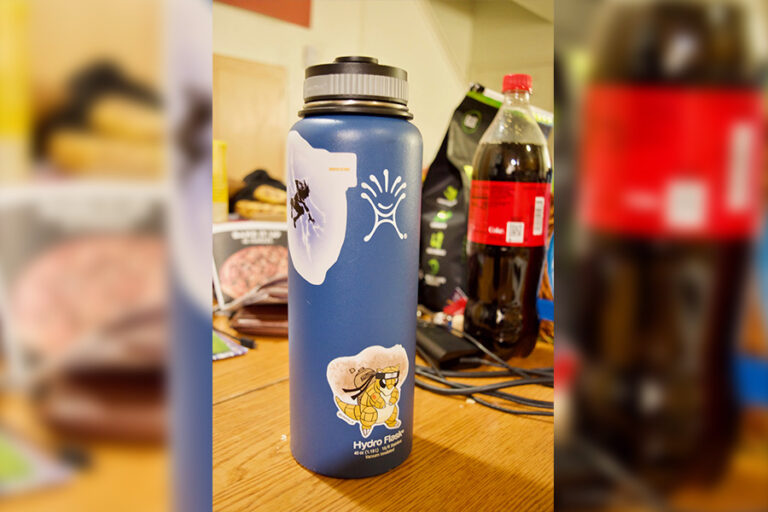
Winner: Hydro Flask with stickers and/or dents

Clinking with ice in the back of a crowded lecture, the Hydro Flask makes its presence known. You turn to see a student with a sideways Farmers Market hat, Birkenstocks and an old Aggie Pack shirt with holes in the armpits (it’s from 2015). These are all iconically Davis fashion pieces, but held up high in the gleam of the fluorescent lights is the queen of college town fashion: the Hydro Flask with stickers and a couple of dents (you know, from when it was dropped in the middle an intimate lecture and slammed into a desk).

Hydro Flasks are becoming more accessible than ever for Davis students. They’re sold in the campus bookstore and they continue to come out with new colors. Anything from a soft lilac to a vivacious rainbow ombre can be found with the help of the Internet, and students take the opportunity to customize their hydration to say something about themselves constantly.

“[My Hydroflask tells everyone] that I still love vine a lil’ too much,” said third-year animal science major Camille Larsen. Her water bottle is plastered in stickers referencing jokes from the app of six-second-long comedic videos that famously shut down and disappeared from the world in 2017.

Many students see their Hydro Flasks as a canvas for their own self-expression. Some have inspirational quotes, stickers from different campus clubs, souvenirs from trips to national parks or famous landmarks or just images they found pretty, like a flower or unique design.

Larsen believes the reason that Hydro Flasks are the most popular water bottle in comparison to other brands like Klean Kanteen stems from the fact that they’re everywhere.

“I think they’re a thing across like all college campuses,” Larsen said. “Everyone wants that specific brand just because they’ve heard so much about them and seen them everywhere. It’s the ‘popular brand’ nowadays.”

Hydro Flask advertises its water bottles to have a “unique combination of temperature, taste, and transport.” On this same page, they profess TempShield double-wall insulation, stainless steel that won’t retain or transfer flavor and a powder coat for easy holding. A lot of students cite the longwear and durability of these bottles as attractive features that make it worth the investment.

When asked what stickers and dents she’d have if she were a Hydro Flask, Larsen had her answer in her back pocket.

“I would definitely have both dents and stickers because we like to play it fast and loose in life,” Larsen said. “Honestly, I’d probably be covered in Bigfoot stickers.”

Written by: Olivia Luchini —features@theaggie.org

Agricultural giants are monopolizing your food supply

Four major agritech corporations now account for 60 percent of the global seed market. It’s time to change that.

Earlier this month, PepsiCo stepped down from a controversial league battle with Indian farmers over use of their patented potato seeds.

The lawsuit originated when a group of farmers in the Indian state of Gujaret allegedly infringed the company’s patent by cultivating a variety of potato grown exclusively for the company’s potato chips. While the case may have been isolated to India, it reveals a much broader problematic relationship between small farmers and the corporate giants who control the vast majority of global seed strains — an issue with major repercussions here in the United States.

Per the Plant Variety Protection Act of 1970, breeders are given up to 25 years of exclusive control over “new, distinct, uniform, and stable sexually produced or tuber propagated” plant varieties. The provision provides globally recognized patents to seed owners, giving them the exclusive rights to reproduce and market these products. The advent of genetically modified and insect-resistant strains has led to the gradual monopolization of the seed industry, with just four major agricultural companies now accounting for 60% of the global market.

Major agricultural corporations have solidified their control over the seed industry through a series of extensive lawsuits related to intellectual popular rights. Since 1997, Monsanto — the notorious agrochemical giant-turned-subsidiary of the multinational pharmaceutical company Bayer — has filed 147 suits against American farmers. The U.S. court system has largely ruled in favor of agricultural conglomerates, levying heavy fines on small farmers and drawing the ire of various advocacy groups.

In addition to the vast majority of cases favoring the intellectual rights of agricultural corporations, weak antitrust laws have also allowed the monopolization of the global seed supply. The consolidation of the seed industry has harmed small farmers by limiting their purchase options and increasing the prices of patented products. Drastic increases in the number of genetically engineered crops over the last several decades have directly correlated with skyrocketing seed prices. From 1995 to 2011, for example, the average cost per acre of soybean and corn seed increased by 325 and 295%, respectively. Corn and soybean yields meanwhile rose by just around 35% during this time period, indicating that this development has harmed farmers by increasing costs and lessening their returns.

Additionally, the unique nature of the patent restrictions on these seeds allows companies to require farmers to repurchase seeds instead of saving them, forcing small farmers into de facto contracts that hurt their bottom line. Monsanto’s total monopoly on soybean seeds  (9-in-10 seeds now carry the company’s “Roundup Ready” trait) means that the company can adjust prices as it sees fit, leaving farmers defenseless against the company’s control of their seed supply. Since individual farmers cannot legally save and replant the seeds, they are forced to annually repurchase the product, with no leverage against unwarranted price raises.

Stronger antitrust laws and other actions from the Department of Justice would work to help prevent and break up the formation of agricultural monopolies. Last year, the DOJ approved the merger of agriculture giants Bayer and Monsanto, despite finding that such action would result in increased costs for the industry, lessened motivation for new developments and an overall increase in anti-competitive leverage. The approval came less than a year after regulators had previously authorized mergers between DuPont and Dow Chemical as well as ChemChina and Syngenta — moves which further concentrated control of the worldwide agricultural industry among a few major companies.

As is true with monopolies in all industries, the consolidation of power by a handful of greedy corporate giants stifles competition and harms the average consumer. This is especially true within the agricultural sector, where the unholy union of major agritech firms has led to increased prices and a decline in biodiversity. Accordingly, the U.S. government should take the appropriate steps necessary to ensure that stronger antitrust laws and heavier industrial regulation can prevent the seeds of our future from landing in the hands of a few major players.

Written by: Brandon Jetter — brjetter@ucdavis.edu

Disclaimer: The views and opinions expressed by individual columnists belong to the columnists alone and do not necessarily indicate the views and opinions held by The California Aggie.

Annual “State of the Air” report reflects impact of Northern California fires

Unpredictable wildfires pollute Yolo County, Bay Area

The American Lung Association’s annual “State of the Air” report revealed Yolo County’s short term particle pollution amid the effects of climate change and California wildfires.

The 2019 report covered 2015 to 2017, which were the warmest years ever recorded in modern history, and included seven of the 20 most destructive fires in California history. The effects of the 2017 Northern California Firestorm downgraded Yolo County’s grade of an “A” for short-term levels of particle pollution to a “B.”

William Barrett, the director of the American Lung Association in California, expressed the impending effects of the 2018 Camp Fire in Butte County in the 2020 report.

“It just goes to show that even in places that have some of the cleanest air in the country, to be honest for particle pollution, have been impacted by the wildfires, and we expect those impacts to show up in even greater detail next year,” Barrett said.

Yolo County was not alone in this increase of particle pollution. All across California, counties suffered as a result of devastating fires in 2017. In fact, under the short-term particle pollution heading, “twenty of the 26 most polluted cities had more days [with spikes in particle pollution] on average in the 2019 report. Many of these are due to wildfires,” according to The American Lung Association.

“[The wine country fires] definitely had a greater impact closer into the Bay Area, where we saw for the first time ever in our report not one single Bay Area county got an ‘A’ grade for the number of pollution days,” Barrett said. “Actually, in the whole state there was not a single ‘A’ for particle pollution days; it’s largely a direct result of those fires.”

Locally, the Yolo-Solano Air Quality Management District is one of the first outreach programs contacted by residents and government agencies during a fire. Anna Champe, the public information officer, noted that the agency observes the “State of the Air” report, but primarily follows the United States Environmental Protection Agency regulations, which categorizes fires as exceptional events and excludes them from the report.

“The smoke that comes into our communities when an event happens, like the Camp Fire or the Wine Country fires, the air moves it out at a pretty rapid pace,” Champe said.

“So, six months [after the Camp Fire,] we would be back to normal. We’d be back to normal as soon as the air changed and moved it out of our area.”

Even short term particle pollution in a city typically used to healthy air quality, however, can have harmful impacts on respiratory health. The American Lung Association website wrote that a “study in 2017 looked more closely at Boston and found a similar higher risk of premature death from particle pollution in a city that meets current limits on short-term particle pollution.”

Side effects of inhaling such particle pollution “diminishes lung function, causes greater use of asthma medications and increased rates of school absenteeism, emergency room visits and hospital admissions.”

In November 2018, UC Davis’ campus was closed for seven instructional days due to unhealthy air quality from the Camp Fire. School officials announced campus closures on a day-to-day basis, leaving students and administrators scrambling to adapt. Champe hopes to provide tools and messages for schools in preparation for the next wildfire season.

“Right now, we are doing some advance work with some local officials and school districts to work with them and prepare for wildfire season for next year,” Champe said. “We are cognizant that the events that happened last year impacted the schools greatly, and so we want to offer our expertise and our technical support in whatever way would best serve them.”

Written by: Renee Hoh — city@theaggie.org

California state legislators take action in response to college admissions scandal

UCOP responds to proposed bill package

California legislators introduced an admissions reform bill package in response to the nationwide college admissions scandal that broke earlier this spring.

Democratic Assemblymember Kevin McCarty, who represents the seventh district in Sacramento and heads the Budget Subcommittee on Education, has helped introduce a college admissions reform bill package into the state legislature. The bill package is also backed by Phil Ting (D-San Francisco), Evan Low (D-Silicon Valley), Sharon Quirk-Silva (D-Orange County) and Tasha Boerner-Horvath (D-Encinitas).

“The recent college admissions scandal involving some of the top universities in California, and across the nation, brought to light merely a portion of the fraudulent practices that have been taking place in college admissions due to a lack of oversight,” McCarty said via email. “Legislation is needed because for every student admitted through bribery, there was an honest and talented student that was rejected.”

In the bill package, checks and balances would ideally be strengthened, requiring admissions by exception, or “special admissions,” to be vetted by no fewer than three administrative figures at a given university before being accepted. These figures could include the Chancellor, the Vice President, the Provost or the Admissions Director, to name a few. These new processes would be overseen by the state auditor, who would examine the UC’s admissions process closely.

“Admission by Exception is typically reserved for students with non-traditional educational backgrounds, such as homeschooled students, students from rural or extraordinarily disadvantaged circumstances, or students with special talent in the arts or athletics arenas who narrowly miss the admission requirements,” the UCOP statement said. “Campuses use this policy very sparingly, with such students comprising approximately 2 percent of newly enrolled students systemwide.”

The University of California has said that it is committed to working with the state government to improve policies while investigating potential abuses of the current admissions system.

“We share California legislators’ outrage and concerns over the illegal and unethical actions of individuals who have impacted not only UC, but also public and private universities in California and across the nation,” said an official statement from the University of California Office of the President provided by Sarah McBride, a media and communications strategist with UCOP.  “UC’s Ethics, Compliance and Audit Services has already started its systemwide audit of admissions, including athletics. We continue to collaborate closely with state and federal authorities to investigate individuals who have been implicated and to gather additional information on how the university can make proactive improvements.”

Another bill, specifically supported by Ting, would ban preferential treatment at California universities for children who are related to donors or alumni. UCOP said that it doesn’t engage in these practices in the first place.

“As a public institution, UC forbids ‘legacy admissions,’ as noted in our longstanding Regents policy,” the UCOP statement said. “We do not grant preferential admission to the children of alumni or donors, nor have we in the past. In fact, we do not ask students about family members’ alma maters in the application process and therefore do not have that information, much less consider it.”

A university that fails to comply with the stipulations outlined in the bill could “risk exclusion” from the Cal Grant program.

The bill package also requests that the University of California and California State University systems examine the necessity of the SAT and the ACT.

“An assessment of the value of standardized tests is already underway,” the UCOP statement said. “In July 2018, President Napolitano requested that UC’s Academic Senate conduct a formal review and assessment based on factual, historical data.”

According to UCOP, a Task Force has recently been established to “determine whether SAT and ACT tests are useful measures of academic aptitude and to assess the impact of these tests on the admissions process.” UCOP has also contacted the organizations who administer these tests.

Additionally, private college admissions consultants would be required to register with the Office of the Secretary of State if they generate more than $5,000 in annual income. A “stakeholder group” would determine how the industry was being regulated within a year of registration.

The bill package also aims to prevent fraudulent tax write-offs, meaning that any individual named in the current college admissions scandal “may not deduct related charitable donations from state income taxes.”

“The recent admissions scandal has revealed the utter lack of oversight involved in an industry where bad actors have been able to thrive,” Low said in a statement. “This bill will finally put a check on bad actors while still allowing legitimate firms to stay in business under state regulations and guidelines.”

And in the wake of this scandal, UCOP wants to make sure that it stays “proactive, transparent and accountable” to keep another scandal of this caliper from happening again.

“We are making every effort to take a critical, hard look at our own practices and to keep our students and alumni, the Legislature and the public, informed of our continued investigations and reforms,” the UCOP statement said. “We look forward to working with legislators to address their concerns and proposals.”

Written by: Rebecca Bihn-Wallace — campus@theaggie.org

Engineering diversity summit to be held at UC Davis

Summit on May 23 aims to address problems of marginalized engineering communities

A coalition of engineering clubs on campus plans to come together to host a diversity summit on May 23. The diversity summit will have a panel of speakers from the UC Davis community. Some of the notable speakers will be the Dean of Engineering at UC Davis and many alumni who now work for companies such as Facebook, Microsoft and YouTube.

The purpose of this summit is to address issues faced by many marginalized communities within the engineering field. These communities look to have their issues heard to build a more inclusive environment for all engineers, regardless of background.

The hosts of the summit include a number of engineering clubs on campus: the Black Engineers Association, the Chicano and Latino Engineers and Scientists Society, the Pilipinx Americans in Science and Engineerings and the Society of Women Engineers.

Shason Briscoe, the president of the National Society of Black Engineers at UC Davis, gave his reasoning for having the summit. Briscoe said it was about having a conversation with alumni and the employees that will be speaking at the summit. Briscoe wants the guests to speak about the struggles they may have faced due to a lack of inclusiveness.

According to Heather Lynch, the external vice president for the Society of Women Engineers, one of the big issues they wish to address is the low retention rates of marginalized communities.

Briscoe also stated this was one of the key motivators for this summit. For him, it began when he had a conversation with the dean of engineering.

“One of the biggests things that she told me was that out of 23 black students that entered, only about six or seven will be graduating,” Briscoe said.

This led Briscoe to realize many of the issues students face are not being discussed.

“Some of the common struggles I wish to address with this summit are to minimize the imposter syndrome that may come with comparing oneself to those around,” said Graciela Fabian, the president of the Chicano and Latino Engineers and Scientists Society, via email.

Fabian emphasized that as first-generation woman engineer, she has also felt these struggles. That is why Fabian wants others to find communities that will support them.

“Over the years my confidence and drive to do better has been the fruit of self-reflection and finding a community that propels me forward and provides resources,” Fabian said.

The summit also hopes to address how minority engineers are treated. Briscoe mentioned one of the goals after the summit is to further the conservations and possibly have sensitivity workshops, which would teach others how to interact with their fellow engineers.

There is a sentiment from many engineers that they are treated differently by their peers, and this summit hopes to address such issues.

“A lot of people, when they interact with black or Latino engineers, they don’t know what’s happening on the micro level — they are historically being pushed out of these majors,” Briscoe said.

The summit’s discussion will also be centered on community and how everyone can come together to build a better environment: one where everyone is treated equally and helps each other succeed.

“I want [those who attend] to walk away with confidence in themselves to conquer and succeed in their personal goals,“ Fabian said.

Although the summit is meant to start a conversation, there is another goal: to make the university notice. Briscoe mentioned they can converse all they want, but nothing will change unless students’ voices are heard by those outside of the summit. Since the event is hosting high-profile companies, it should help the students have their concerns heard by UC Davis’ administration.

“It is important to have these discussions beforehand, and talking to the college to address these concerns [and] bringing these companies is a good look for our school,” Briscoe said. “That would be wasted if we don’t go to the administration and get our concerns addressed.”

The alumni’s discussion will also help serve this purpose.

“If we bring alumni, they can talk about the lack of inclusion or inconsistencies,” Lynch said. “This would offer the opportunity for our faculty and our people to take action and improve the organization.”

The main goal of this summit is to hear the voices of marginalized communities. If only one person who is not from one of the communities hosting this event comes and learns about marginalization, Briscoe said one of his goals will be achieved.

Lynch also described how crucial it is to raise awareness of these issues.

“The most important thing about improving the state of diversity […] is making the problem of diversity an issue that is broadcasted,” Lynch said. “It’s easy to push [marginalization] under the rug if it doesn’t affect you — whether you do it purposely or maybe just now knowing.”

The event will not only serve as a new voice for these communities but will offer a small networking portion where engineers and others will be able to speak with employees and alumni of the companies present. Many of these alumni were invited and brought by the engineering clubs here on campus through their own networking.

With all that the summit is offering, Lynch wants one message to be clear to those who are affected by these issues.

“Even though inclusion isn’t pushed for all the time, don’t give up on your own success and push for those who are also in the community: being diverse makes the engineering community valuable,” Lynch said.

Written by: Alexis Lopez  — campus@theaggie.org

What I Learned From “Salt, Fat, Acid, Heat”

Nosrat teaches four basic elements of cooking

The Netflix original series “Salt, Fat, Acid, Heat,” starring Samin Nosrat, is an artful culinary journey through the the four basic elements and flavors of cooking. As she travels the world, Nosrat explores the countries she deems have mastered these elements that can make or break a dish — fat in Italy, salt in Japan, acid in Mexico and heat right here in Northern California. Adapted from the best selling cookbook of the same title, the goal is to encourage and inspire home cooks.

The now celebrity chef was one of the many great chefs to come out of Chez Panisse — the original farm-to-table restaurant in Berkeley, Calif. run by Alice Waters and Paul Aratow. Built on a strong French foundation, it was the first of its kind to source local, organic and sustainable ingredients that has morphed into what is now known as California cuisine. Despite this professional training, Nosrat’s style is far from snobbish. Good food shouldn’t be exclusive, good food shouldn’t be difficult to make, it is for everyone. The words “anyone can cook” from “Ratatouille” echo in my head.

The food is mouthwatering and the cinematography is awe inspiring, but it’s Nosrat’s passion and child-like giddy excitement for food that stands above all. Her raw love for food is expressed by her bug-eyed, eyebrow-raising amazement when she tastes food and her eagerness to learn from her interviewees: grandmothers, butchers, salt masters and beekeepers. You instantly fall in love with Nosrat when she dives into not two, not three, but five different gelatos in a row, expressing pure bewilderment of the flavors on her palate, truly embodying a kid in a candy store. To say she loves food would be a severe understatement, an unhealthy obsession rings closer to the truth.

What do olives, pigs and cheese all have in common? Fat. We begin in Italy.

A word often carrying a negative connotation, fat in this series is presented as the cornerstone of flavor, as “fat makes food delicious.” Traversing the hills of Liguria, Nosrat first explores the art of olive oil, butchers some hogs, then collapses in a parmesan cheesery. My three takeaways:

  • Olive oil is essentially a fresh pressed juice that has an expiration date. There is no heat or chemicals used in the process, just squeezing. This means that olive oil can go bad — keeping it too long causes it to go rancid.
  • The fat used sets a path for the dish by defining and shaping the essential flavors. The French use butter. Southern cooking relies heavily on bacon fat and lard, and for Italians it’s olive oil. Fat enhances flavor, so don’t be afraid of it.
  • When cooking, it’s imperative to heat the pan before you add the oil. There seems to be controversy about this one on the internet, but Nosrat says it with such gusto and veracity, that I’m going to side with her on this one.

Several times throughout the tetralogy, Nosrat alludes to the fact that Americans seem to be clueless in our knowledge of food and flavor. Initially, I was offended to be lumped in with an entire culture that is ignorant to crafting good tasting food, but as she proceeded to explain (for example, that olive oil goes bad or that not all salt is created equal) I was confounded. I consider myself an avid home chef, but was not taught by my parents. Cooking was a voyage I embarked on when I moved away for college. I’m self-taught from YouTube videos, cooking shows and recipe following — but not even Bobby Flay had taught me these basic concepts.

Next, Nosrat travels to Japan for salt. Japan produces over 4,000 different kinds of salt, each differing by location and production method. Though all salt comes from the sea, there are many different ways to add salt when cooking. Nosrat sets out to sea, boating to gather seaweed — one method of harvesting salt — and learns traditional methods of making soy sauce and miso paste. Salt enhances flavor, making it taste “more like itself.”

  • Not all salt is created equal. Size, source, flavor. Smaller crystals dissolve fast and give off a saltier taste, whereas larger flakes dissolve gradually, giving a more delicate taste.
  • When you salt matters — for example, salting meat in advance. Nosrat seasons meat on the bone as soon as she brings it home from the store to give it time to “do its magic”.
  • There are many sources of salt and there is an art to layering it. Olives, cheese, pickles, etc. are all sources of salt.

It seems very obvious to taste your food as you go and to check whether it needs adjustments. But attuning your tastebuds to know what adjustments need to be made takes skill, and taste is just one way to understand your food. Nosrat preaches the importance of using all five senses in order to cook a good meal. She calls this a sensory experience, one that she feverishly projects.

Citrus, salsa, chocolate and oddly enough honey, are all essential forms of acid in Mexico. Acid brightens and adds contrast to dishes, doing the “necessary job of balancing”. My personal favorite episode of the series begins in the Yucatán Peninsula at a citrus market where Nosrat walks around with “La Abuela” tasting sour oranges — her lips puckered and her face scrunched before bursting out in a joyous yet uncomfortable laugh.

  • Acidity cuts through other flavors — fatty, salty, starchy or sweet — but spice enhances it. For example, salsa.
  • Browning, or cooking, produces acidity. The process of cooking brings out flavors that didn’t exist before. Think roasting peppers. More on this for heat.
  • Marinating meat in acid and cooking meat in acid yield two different results. Marinating tenderizes the meat. Acid essentially begins the cooking process. Think ceviche, the acid essentially cooks the raw shrimp or other seafood used, but it’s important not to leave meats in the marinade too long before cooking, otherwise it will overcook and toughen.

Cooking is a balancing act between layering flavors to elevate each other and letting each element speak for themselves.

As a native of Northern California, Samin returns to her roots to embark on the last element: heat. Heat is described as the transformation phase, where flavors are changed, developed and created. Heat is a spectrum: intense heat browns and crisps while leaving a tender inside, whereas slow and gentle heat utilizes time and liquid makes foods tender and juicy.

  • Ovens aren’t as precise as we may think. Heat isn’t evenly distributed nor is it stable. Ovens work like a thermostat, fluctuating up and down to regulate the set dial temperature. There are also “zones” in the oven: the front is much cooler because of the door, and the center and rear are hotter than the sides. Because of this, you have to use your senses to gauge whether the food is cooking properly or evenly. Samin demonstrates this by roasting whole chickens, rotating them and flipping them to get an even color and doneness.
  • You don’t have to have expensive ingredients to make good food. Nosrat recommends always getting quality staples like fresh citrus, herbs — the biggest bang for your buck in terms of flavor — grabbing “everyday vegetables” — getting comfortable with year round veggies like spinach, broccoli and carrots, and learning how to make them taste good.
  • Cooking takes time and patience. With the roasted chickens, for example, let the refrigerated meat rest and rise to room temperature prior to cooking, and let the cooked chicken rest afterwards for the juices to redistribute and the flavor to settle.

Nosrat concludes the series with a paradoxical, yet heartfelt message: cooking is not about the food, it’s about what happens at the table. Good cooking is within reach for everyone.

I find irony in the recent increase in food related docu-series and cooking videos flooding social feeds — what I like to think of as the “wave of Chef’s Table”, or the “food porn” social media trend. We are watching and consuming more and more food related media, but we are cooking less and less. This paradox suggests that we are interested in good food, we want to be consuming good food, but we don’t take the extra step in the kitchen.

Is it laziness? Is our desire to cook satisfied by watching others? Do we not have the time? — I would argue the latter can not fully explain this because if we have the time to watch from the couch, we have the time to do in the kitchen. Nosrat achieved her goal by inspiring me, and probably others, to step into the kitchen and elevate home cooking through remembering salt, fat, acid and heat.

Written By: Grace Simmons — arts@theaggie.org

Insights into UC Davis’ Architectural Celebrity

Manetti Shrem Museum stands as glimmer of hope for architecture on campus

UC Davis can be quite the dreary location if you fancy yourself an architectural enthusiast. Among the stucco and concrete box-like structures that riddle the campus, students are hard-pressed to find a building that evokes anything but a shrug. In the midst of this overwhelming mediocrity, however, one building rises above the rest. Located on the South East side of campus, the inviting and thoughtful design of The Manetti Shrem Museum of Art may be more than enough to inject the university with some much needed architectural life.

Since the museum opened its double glass doors to the public in November of 2016, it garnered widespread notoriety from national media outlets and architectural critics alike. Christopher Hawthorne, an architecture critic for the Los Angeles Times, wrote the Manetti Shrem is a building “to boost your faith in the future of American architecture.” In addition to Hawthorne’s praise, CNN’s Lifestyle Division listed the museum in its top 12 buildings that transformed cities around the world.

Initial steps for the Shrem were taken in 2011 when UC Davis introduced a program detailing a “high level vision” for building the school’s first art museum. A committee of carefully selected UC Davis faculty took on the task of turning this dream into reality. The process was fully set in motion when the school received a ten million dollar donation from the Manetti Shrem family to fund the endeavor.

Mark Kessler, a professor of design at UC Davis who closely followed and participated in the museum’s design process, noted the importance placed on the museum’s execution.

“We raised money to make something special, to break the tradition of second rate architecture,” Kessler said. “And in consideration of the fact that it was the university art museum, it was especially important to get this one right, and to pour a little more funds and more attention into the hiring of the architect.”

The architecture duo chosen by the faculty was a collaborative partnership between SO-IL and Bohlin Cywinski Jackson, two internationally-recognized design firms based out of New York and San Francisco respectively.

Rachel Teagle, the founding director of the museum, emphasized the committee’s confidence in their decision.

“SO-IL was a unanimous decision yes for the jury because they took our goals to the next level,” Teagle said.

Designing the campus’s first art museum presented a challenging and unique opportunity for the firms.

“A puzzle for us was that the building was on the edge of campus, said Ted Baab, a senior associate at SO-IL, who is familiar with the project. “It’s an extension of the campus as a whole. It creates continuity to the campus around it to make it a crossroads at intersection of students coming, going and passing through.”

The underlying vision that informed the creative process was the team’s intention to create a structure that was welcoming, adaptive and unconstrained by the museum label.

“One of the key design goals was to not make the museum a closed and hermetic experience but something open, connected, and interactive,” Baab said.

The primary feature implemented to meet this goal is the building’s iconic 50,000-square-foot perforated aluminum grand canopy which looms above the roof and extends over campus.

“Using the canopy for shading space allows the exterior space to be used as an extension of the building,” Baab said.

This extension of shade in the building’s outdoor area invites students to sit, chat and reset as they go about their day.

In addition to addressing their design’s intention, the grand canopy acts as a structural light filter, creating a dynamic exterior.

“We designed the canopy to produce a variety of different lighting types and spatial conditions underneath,” Baab said about the grand canopy’s lighting effect. “Even though it’s one continuous space there are some areas that are narrow and very tall and some areas that are low and more intimate. There are different densities of shading as well.”

Teagle said this relationship with light was one of her favorite aspects.

“I think the building really feels special because of the way it embraces light,” Teagle said. “With the shadows coming off the canopy changing over the course of the day you really can feel the passage of time.”

Although the signature grand canopy has amassed considerable praise, it should be noted that some still doubt whether it has fulfilled its original architectural intention.

“A good proportion of the space is given to a grand canopy that as time goes on will be increasingly viewed as a curiosity,” Kessler said. “Something that quite hasn’t found its reason to be. A kind of no man’s land, a rather overdeveloped no man’s land. It certainly is a kind of cautionary tale for future architects and their clients.”

Kessler elaborated on his position, citing the museum’s location on the periphery of campus as a major reason for why its design falls short.

In spite of his criticism, Kessler also stated that “the campus did a great job. They succeeded in putting UC Davis finally on the map architecturally with a very good building.”

The museum also boasts a LEED Platinum sustainable certification that more than exceeds university standards. This accomplishment puts the museum amongst the best in conserving energy and utilizing sustainable design and materials.

Baab remarked on how the building’s sustainable specs were a byproduct of the museum’s canopy.

“The enclosed portions of the building could be quite efficient, as the expression and identity of the building actually are defined much more by the canopy.”

Whether the Manetti Shrem has met all of its original design intentions or not, it acts as a glimmer of hope for architecture on campus. Teagle summarized the impact of the building when reminiscing on comments of students who frequent the Shrem.

“One of the moments when I feel most proud is when students tell me that they feel special when they’re in the museum,” Tealge said. “That it’s so cool to have a building on campus that feels like a special place and makes them feel good. In our comment book, students write, ‘I feel seen at the Manetti Shrem Museum.’”

Written By: Andrew Williams — arts@theaggie.org

The new fast food green burger to satisfy even the most beef-hungry carnivores

Carl’s Jr.’s Beyond Famous Star burger offers a more environmentally-friendly option in Davis

There I was: driving my friend back home from the emergency room at midnight. Starving. I missed my meal-prepping time window, so I had nothing to eat at home. I knew there was nothing open in small-town Davis, much less something to satisfy my vegetarian needs. Cereal before bed seemed like my only option.

“Do you want to try the Beyond Famous Star burger from Carl’s Jr.?” my friend asked me.

What? Only de Vere’s has Beyond Burgers. Was she teasing me? After I gave up my precious meal-prepping time? After sitting for hours in a hospital waiting room, using hospital Wi-Fi to finish my homework due by midnight? The audacity…

“They close at 1 a.m., so we should hurry,” she said.

And hurry we did. The joy I felt driving back home — drive-through burgers in hand, sharing laughs past midnight with my friend — was something I thought was long gone after I made the choice to become vegetarian.

Well, my fellow Aggies, the late-night, fast food, plant-based burger gods have heard our cries and delivered. The Beyond Famous Star burger is here, and it’s awesome — not just for vegetarians, but for meat-lovers as well. Oh, and you know, the planet.

Unlike veggie burgers — which were never designed to mimic the taste of beef — the Los Angeles-based Beyond Meat burger is a pea protein and beet juice combination designed to look, taste, feel, smell and cook like beef burgers. They are specifically designed for meat-lovers who want to make “greener” choices.

As a part of the School of Agriculture and Environmental Science, I was surprised to find out how many of my fellow environmental friends, TAs, faculty and staff would eat meat regularly in their diets. The majority do not commit to a meat-free diet for two main reasons: practicality and love for the taste of meat.

The Beyond Famous Star burger is the answer to the silent screams of meat-loving environmentalists who do not want to fully commit to going vegetarian. No longer do they have to experience the cognitive dissonance of eating their “humanely” slaughtered, delicious beef burgers in the closet. The Beyond Famous Star burger could easily be mistaken for an actual beef burger by most people.

At the same time, the practicality of Carl Jr.’s fast food and its drive-through option allows for late-night food runs or quick lunch breaks.

And for the carnivores still on the fence about whether the Beyond Famous Star burger is worth their time or money, here’s the best part: It has one-tenth the climate impact of a beef burger.

Dietary changes are the quickest way to reduce your carbon footprint. Beef has the biggest carbon footprint per gram of protein, while plant-based foods tend to have the smallest impact. According to the Environmental Protection Agency, livestock contributes to about 18% of global greenhouse gases. That’s more than the output of emissions from all cars, trucks, ships and airplanes combined.

Although many people think their individual dietary choices don’t make a dent in our climate problem, think about it this way: if everyone stopped consuming animal products, we would reduce global greenhouse gases by 28%, according to a study published in Science Magazine. Over a quarter of our climate problems would be gone by the simple change of what we put in our mouths.

While everyone going vegan seems unrealistic, if we all reduced our animal consumption by half, we can reduce our global greenhouse gases by 20%. The point is not necessarily to let go of meat completely, but to at least reduce our beef consumption. Small but collective action adds up and can have great global impacts.

Most importantly, convincing regular meat eaters to choose more environmentally-friendly options is what will have the biggest impact on our net reduction of greenhouse gases. As a vegetarian, eating a plant-based burger will not have the same global climate impact as a beef-hungry carnivore would if he were to choose the Beyond Famous Star burger over the Double Western Bacon Cheeseburger.

Luckily for humanity, McDonald’s and Burger King will soon join the green bandwagon with their own plant-based burgers. The success and demand of plant-based burgers has been so great that many companies are jumping at the opportunity to get rich or die trying — and help save the planet in the process.

Written by: Daniel Oropeza — daoropeza@ucdavis.edu

Disclaimer: The views and opinions expressed by individual columnists belong to the columnists alone and do not necessarily indicate the views and opinions held by The California Aggie.

Best of Davis: Meme

Winner: “Use the free masks to save the Tercero cows”

Early last November, Davis was hit with a gust of smoke that originated from Camp Fire in Butte County. For almost two weeks, the air quality index of the surrounding cities of Butte County had been deemed “unhealthy” by the Environmental Protection Agency.

The smoke had reached Davis right around the time the dreaded season of midterms crept its way in, sending students into a frenzy because of the health concerns of being on campus during this time.

Each morning students would lay in their beds checking the air quality index and praying for an early Thanksgiving break. As a result, the students of UC Davis banned together and created numerous memes regarding the fires. This year, the student body voted for “save the Tercero cows” as the featured meme of the year, with a N95 mask covering the nose of and iconic Davis cow.

Second year NPB major, Haris Terovic, prides himself as being an active member on the UC Davis Meme of Egghead Teens on Facebook. Terovic described what he think makes a meme.

“A meme is basically a startical image that makes a joke out of ironic or relatable events or moments,” Terovic said. “It could also be a funny picture that portrays a reaction or mood. I think irony is what makes a meme funny and more relatable.”

Terovic explained why “save the Tercero cows” was voted best meme.

“The Tercero cows are almost another mascot of Davis and has always been a fairly popular subject in Davis memes,” Terovic said. “When the fires happened, access to clean air was a concern and making a meme of masks for cows was an ironic way of bringing up a serious issue in a joking manner. In a way this meme was used almost as a funny way to bring up a real issue to a wider audience.”

Written by: Sneha Ramachandran — features@theaggie.org

Review: “Shrill”

Aidy Bryant’s honest, real comedy pulls the heartstrings of viewers

The Hulu original series “Shrill” premiered on March 15 and enchanted viewers with its quirky and unapologetic representation of women. The series is an adaptation of Lindy West’s novel “Shrill: Notes from a Loud Woman” and focuses on a version of West’s younger self. The show is produced by household names Lorne Michaels and Elizabeth Banks. The first season received a score of 91% on Rotten Tomatoes.  

“Saturday Night Live” comedian Aidy Bryant stars as the series’ protagonist Annie, a 30-something journalist who happens to be overweight. Throughout the first season of the series, viewers watch Annie develop a sense of self-worth and begin asserting herself in her career and her relationships.

The show has been praised for its body-positive message and realistic depiction of fat women.

“The audience never gets an explanation for Annie’s weight, nor is one necessary to appreciate all the wonderful characteristics that make her a heroine worth rooting for,” said Sarah Conley for CNN. “Instead, ‘Shrill’ shifts the focus to Annie’s relationship with her body and how it impacts her relationship with everyone she encounters — a revolutionary move in today’s culture.”

Annie’s struggles are treated with empathy and normalcy, making her a relatable hero that any viewer will find easy to root for. Bryant’s performance is subtle and nuanced, showing the unspoken troubles fat women everywhere face.

Lolly Adefope stars as Fran, Annie’s best friend and roommate. Fran functions almost as a foil for Annie; while Fran is still a fat woman, she never tries to make herself smaller or apologize for who she is. However, she does not fall under the trope of the funny sidekick that many fat women are casted as either. Fran is a self-possessed and intelligent woman who is also a wonderful friend to Annie. Women lift each other up in this series, and the on-screen relationship between these two characters is a perfect example of it.

“Shrill” has also been praised for its diverse characters and cast. Fran is a black woman who is also a lesbian, and she exists as more than just Annie’s sidekick. She has storylines of her own and is a complex character herself. Characters of all walks of life are featured in the series, each treated with respect and integrity.

In an interview with Vanity Fair, Adefope spoke about what she hopes viewers will take away from the show.

“I hope people see it for what it is, which is just a very interesting story of a woman trying to realize who she is in a world that’s telling her that she shouldn’t be the way she is,” Adefope said. “I hope people see that […] it’s not just a ‘fat show.’ It’s so much more than that. Fat people aren’t just fat people; they have so many layers to them, just like anybody else, that I think should be explored.”

Episode four, titled “Pool,” is the series’ stand-out because it encapsulates the positive message of the show. The episode follows Annie covering a story on the “Fat Babe Pool Party,” a body-acceptance event hosted by the local body-positivity community. Annie knows that she will find a great story if she attends the event, but feels the common anxiety around attending a pool party.

The writer of the episode, Samantha Irby, spoke to Vulture about the anxieties she wanted to highlight in this episode.

“It’s not just about being in a bathing suit and having so little between your body and other people,” Irby said. “It’s being in your bathing suit and also having to project that you’re having a good time.”

The shot of Annie sitting on the side of the pool, fully dressed with her jeans cropped slightly to dangle her legs in the water is powerful. Viewers understand that feeling. Many have sat on the outskirts in the very same way. However, the difference was that Annie and the viewers got to watch a diverse group of women be unapologetic in their suits and actually enjoy themselves.

The scenes at the pool party were beautifully shot and featured a variety of body types. The women laughed, danced and enjoyed the space they occupy in the world.

“I wanted it to feel like the best place you’ve ever been,” Irby said. “Because you don’t get that a lot. You don’t get a lot of beautiful fat spaces.”

Annie does get in the water by the end of the episode, and it feels triumphant. The simple shot of her diving into the pool with a huge smile on her face was heartwarming and memorable.

While the show depicts many uncomfortable scenes of fat-shaming and Annie’s struggles with her body, the character and her plot lines focus on so much more than that. It also follows Annie’s career troubles and pursuit of being a journalist, as well as her complicated relationship with an uptight mother and ill father. At the end of every episode, Annie is a complex and unique character who just so happens to be fat.

“It’s a f—ing mind prison, you know, that every f—ing woman everywhere has been programmed to believe,” Annie rants in one episode. “And I’ve wasted so much time and money and energy, for what? I’m fat. I’m f—ing fat. Hello, I’m fat.”

That is the tone the entire series takes, from the pilot episode to the season finale. The show has recently been picked up for a second season, showing that Annie is fat and here to stay.

Written By: Alyssa Ilsley –– arts@theaggie.org

The Rights and Wrongs of Nature Documentaries

Can documentaries like “Our Planet” advocate for environmental justice?

The United Nations reported that we have a 12 year window to drastically change the state of the environment before catastrophe strikes. A much more urgent tone warrants reevaluation if the strategies currently used to mitigate climate change impacts aren’t enough.

At the same time, nature documentaries like “Planet Earth,” “Blue Planet” and the more recent “Our Planet” can be viewed as a positive mechanism for change. Visually stunning images of our planet’s natural landscapes, combined with warnings of a potentially disastrous future might make these examples of documentary filmmaking just what the planet needs.

“Media and particularly visual media, is a powerful way to portray messages because people can see with their own eyes and evaluate messages,” said Tracy Winsor, an environmental law lecturer.

Fourth-year marine and coastal sciences major Anya Stajner has personally seen the growing environmental concerns expressed by her students because of the documentary “Blue Planet.”

“I completely think that these types of documentaries are a super important tool in at least triggering environmental change,” Stajner said. “I teach at a local elementary schools in Yolo County, and after ‘Blue Planet’ came out and we were going over the ocean ecosystems lesson, all of the kids wanted to raise their hands. They were stoked to participate.”

Despite their praise, however, there may be flaws in these documentaries. Fran Neil, a second-year sustainable agriculture and food system major, attended the “Environment as Freedom: Racial Capital and Environmental Justice” lecture on April 29 which pinpointed a few of these negative repercussions.

“These documentaries are very ‘Oh nature is go great,’” Neil said. “That is important, but it doesn’t go into much of what needs to be done and problem solving.”

Problem solving, however, may not be the purpose of “Planet Earth,” “Blue Planet,” “Our Planet” and others of the like.

“It is important when we look at these documentaries that we have realistic expectations for them,” Stajner said.

These documentaries’ purposes might simply be to act as the first step in climate change mitigation, rather than calling for direct action.

“In the whole advocacy process, there are a lot of steps you can take that have different implications, purposes and meanings,” said Andrew Isaac, a third-year community and regional development major. “When you are trying to convey the importance of something or getting someone to take action is important. These documentaries are a step in the process of advocacy, but it is no means the end of the road. It gets people engaged and thinking about the animals and environment we are impacting. Without that first step, people will not be inspired to make change or have the mental capacity in understanding the crisis we have on our hands. It is reaching a young base of people and maybe inspiring a few to continue or begin environmental advocacy.”

Presenting the issue of climate change in an open manner might then allow the viewer to take steps to better the environment. In fact, according to Winsor, there is a respected phrase in legal writing that emphasizes this point: “if you keep it simple, people are going to get your message.”

“A lot of times an artist has a message that they want to convey, but then the viewer of the art brings everything that is in their background and experience,” Winsor said. “So it may not be the artist’s intention to have a results oriented message, they just might want to share information and interject it into the world of the viewer and make them think about it. If you try to force someone to accept you view, they may react more negatively to it and see it more like propaganda. If someone thinks about it and talks about it, they may arise to the message the artist is trying to convey but in their own way.”

Therefore, “One Planet” and other documentaries separate themselves from the potential gate-keeping phenomenon that can occur in some advocacy methods.

“I really think that a problem with environmentalism is exclusivity — trying to gate keep people, to say that you’re not enough of an environmentalist,” Stajner said. “And while this documentary has not changed any policy, it gets people excited and I think that’s as much as you can ask a documentary to do.”

Indeed, according to Winsor, legitimate change involves a multitude of interacting bodies and industries

“The arts, including documentaries and media, have been very important to reaching critical turning points,” Winsor said. “Causing change is a collaborative effort that crosses science, politics, the law and policy. I think the arts and media and new is important to raising awareness, but itself is not going to force change.”

Despite its simplicity, however, there may be related areas to environmental justice that are missing from the narrative. Neil noted the social implications of environmental justice that these nature documentaries do not cover.

“They often fail to recognize the impacts on certain peoples,” Neil said. “It is a lot of indigenous people who are impacted by not sustainable forestry, for example. It’s really glossed over, and does not look at the starting problems: the industrialized communities.”

In addition, according to third-year environmental science and management major Jazmine Dahi, the documentaries fail to mention that most environmental damage is created by a select few larger industries.

To Isaac, however, recognizing the social implications of environmental degrade in this format may not be effective due to the filming style of nature documentaries.

“I don’t think that is the right place to address the social inequalities and inequities of climate change,” Isaac said. “I think the purpose of ‘Planet Earth’ is to show the beauty, and that type of documentary film technique is not the right way to show inequities among marginalized communities and the social implications in general of environmental justice. But I do think there should be a documentary that does it.”

Although “Planet Earth,” “Blue Planet” and “Our Planet” may not be able to capture the entire complexity and implications of climate change and environmental degrade, they may act as a first step in taking the urgent action recommended by the United Nations. Perhaps the other implications that are part of the greater picture can be mentioned in another documentary.

Written By: Caroline Rutten — arts@theaggie.org

Best Nap Spot: Arboretum

Every student has their own reason for choosing to snooze in the Arboretum

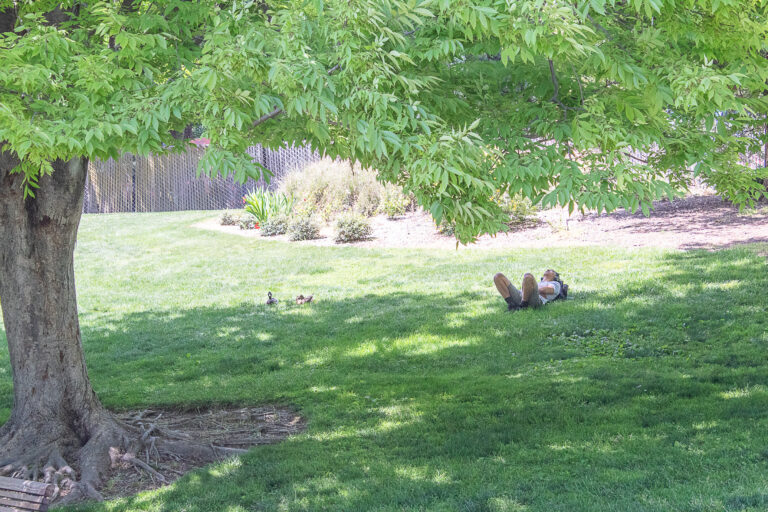
Taking a nap in the arboretum takes some effort. Walking 20 minutes to the far west end of the arboretum where patches of grass are shaded by Oak Grove is not always convenient. Biking down past the students taking pictures of ducklings to the redwood forest takes a bit of time. However, sometimes a bit of extra effort pays off.

The Arboretum is perhaps the most unique part of the UC Davis. Most of the campus is comprised of uniform concrete buildings and sterile modern structures that can be found at most American universities. The slow-moving waterway sits in refreshing opposition. The Arboretum is a quirky combination of different types of parks. Some parts of it are beautifully landscaped with native plants, reminiscent of the zero-scaped, drought-tolerant modern parks common in California. The Arboretum’s man-made lakes and large lawns are more reminiscent of the urban parks in the center of big American cities like Echo Park in Los Angeles and Boston Common.

All throughout the Arboretum you can find people sleeping on benches, in hammocks and on the grass. Students chose the waterway for all the obvious reasons. Senior Austin Decker said he liked to nap there because of the serenity.

Anjuli Kapila, a third year music major, chose the Arboretum for its temperature.

“It’s warm and there are nice sounds” Kapila said.

There are plenty of more convenient places to take a nap. The back row of a calculus class or the comfortable chairs in the Memorial Union will do just fine. Often students at UC Davis take the sleep they can get. Walking to the Arboretum seems like an exorbitant waste of time for something you can do almost anywhere, but is that really the best way to think about a quality sleep session?

At the beginning of this year, I was sleeping in the basement of Shields Library in between math problems when a tour group walked by. I woke up and realized that parents were excitedly taking pictures of me sleeping, seemingly celebrating sleep deprivation. After all, it is usually representative of productivity and hard work, an expectation in college.

Walking to the Arboretum for a nap is a small rejection of this idea. It is a deliberate action to increase the quality of sleep. Yes, it might lead to a shortened nap, but it will be a better nap. Somedays the grass in the central quad is just a little too close to Wellman Hall; the aroma of education, of integrals and prepositions is a bit too strong. Taking a short walk, laying down in the grass, listening to the ducklings and watching the clouds pass by overhead as you drift off to sleep is a luxury that many college students don’t take advantage of enough. Yet those who are able to take a nap in the arboretum know the great benefits it provides. That is why the Arboretum is the winner of the best nap spot Best of Davis 2019.

Written by: Peter Smith— science@theaggie.org

Best Date Spot: Farmer’s Market

The appeal of Davis’ local farmers market to couples

Given Davis’ agricultural background, it’s no surprise that Davis Farmers Market attracts a lot of attention from the surrounding community. Davis Farmers Market opens to the public Saturday mornings and Wednesday late afternoons until sunset, regardless of weather conditions. Yet in addition to serving as a hub for fresh produce and local cuisines, Davis Farmers Market provides another prospect: a prime date spot.

Couples of all ages can be seen walking around Davis browsing the stands and enjoying The Hotdogger’s Chili Dogs while listening to live musical performances. First year managerial economics major Jasmine Cheng believes that these performances make the experience much more enjoyable, as it contributes to the liveliness of the atmosphere. Cheng explained that she chooses this location as a date spot when she wants to sit on the grass and feel surrounded by others.

“The atmosphere of the farmer’s market is very relaxed and laid-back,” Cheng said. “It gives a homey and nostalgic feeling.”

This welcoming atmosphere attracts many college students. Second year design major Paige Talle comes to Davis Farmers Market every other week in order to buy locally made peanut butter chocolate chip cookies. Her boyfriend, Cade Keegan, a second year astrophysics major studying at Princeton University, vouched for her, stating that these were the most amazing things he’s ever eaten. He also described the apple cider as fantastically delicious.

Every time he comes to Davis, he said he comes to the farmers market and has found Wednesday nights to be crowded and lively. He recommends having cash on hand and walking around to support local businesses.

Ryanne Green, a senior from Woodland High School, loves coming to the farmers market on Wednesday nights.  

“I would say it’s probably the best date spot,” Green said. “I would bring anyone here. But only if I like them a lot.”

Green came to the Farmers Market with Woodland HS senior Abel Preciado, who had never been to the event. They sat on a blanket on the field while enjoying dishes from Montoya’s Tamales.

“There’s a lot of people out and there’s a really nice vibe going on,” Preciado said. “Positive. Lively. Very lively.”

Aside from the exploring the different food stands, Green enjoys watching the dogs, as flurries of fur can be seen dashing in and out chasing after frisbees. One of her favorite things to do is look for the cutest dog at the event.

Preciado added that it is important to take allergy medicine before coming to the farmers market. Green also recommended bringing a blanket to sit on, especially if you are allergic to grass.

What seems to be most appealing to students and Davis residents is how community-centered the Davis Farmers Market is.

“Especially for someone who’s not from around here I think it’s a really cool community gathering,” Preciado said. “It really makes it feel like the town really comes together around this event, and it’s a very comfortable space to be in and interact with people, so from an outsider’s perspective I think it’s a very unique, cool thing that you guys have going here.”

Written by: Michelle Wong — science@theaggie.org