58.6 F
Davis

Davis, California

Monday, December 22, 2025
Home Blog Page 419

Sunsets with Savina

First-year Savina Bouathong works on “Sunsets with Strangers” photography portfolio

When looking through a photo album to get inspiration for a photography portfolio, first-year food science and technology major Savina Bouathong came across a picture of her and her sister in her grandfather’s Jeep. When she was growing up, her grandfather would take her and her sister to watch the sunset at Dixon Lake in Escondido, Calif. or Sunset Cliffs National Park in San Diego, Calif. She and her sister would be wrapped up in fuzzy blankets and enjoying their favorite snacks — Shrimp Chips, Hello Panda and Pocky, to name a few — while he told them stories about his life and the people he had met.

Bouathong started thinking about pursuing photography because of her grandfather. From the time she was five years old, she would notice him taking pictures of people and places. She started to view photography as a lifelong passion in middle school, working for the yearbook and eventually becoming its editor. She didn’t stay involved with yearbook in high school but continued to hone her photography skills through internships — switching off between using a Nikon D810, Fujifilm X-T2 and the camera she currently uses: a Canon Rebel T5.

“I think that people think photography is an easy thing to do,” Bouathong said. “[They think] they see something nice and take a picture of it — you just click a button. But it’s more than that. You have to look at the lighting and you have to look at the environment around. And you have to think [about] what you want in your photo and what you don’t want.”

Bouathong is in the process of applying for a photography internship for which she is producing a digital portfolio. The position is year-round, and Bouathong would be shadowing this summer and would be taking over the position while the year-round photographer takes the summer off for the next three years.

With this year marking 10 years since her grandfather’s passing, that photograph she saw in the family album gave her an idea.

“Usually when I create a portfolio, I do something that I’m inspired by,” she said. “Because I know if I’m not inspired, I’m not going to put my heart into it […] At that moment [when I saw that photo] I was like, I have to do it […] I need to honor him, and this is what I’m going to do.”

The title of Bouathong’s portfolio is “Sunsets with Strangers,” inspired by the time she spent with her grandfather at sunset and the stories he’d tell. The portfolio consists of three parts for each subject — a portrait, a silhouette and a sticky note on which the subject is asked to write their story. The fourth part is a video that includes footage of all the people she photographs.

Bouathong started working on the portfolio towards the beginning of Winter Quarter. For the portfolio, she wanted to include 100 sunsets, so she started off with a goal of getting 25 people each month so she could reach 100 by the end of May. She started asking people she knew and then asked them to reach out to friends. However, she wanted to make sure she included strangers as well, so she reached out to people she saw in the Dining Commons or in classes.

In creating this portfolio, Bouathong said she had some interesting and fun interactions with people she otherwise may not have talked to. But what Bouathong said she enjoys most is talking to these people, who were strangers to her before, and hearing details about their life.

“There have been photoshoots where people start playing music, and they start dancing,” Bouathong said. “It’s so cute, it’s really cute […] There have been times when they start talking about themselves and the way they grew up or a unique experience to them. They open up to me, and I enjoy that. And I open up as well.”

Bouathong’s goal is to honor her grandpa, and she said a lot of how she identifies herself today is from what she learned from him and his stories.

“Stories about people who had to give up their dreams, those who didn’t have a choice […] or simply those who did not have any sense of direction [have] made me the person I am today,” Bouathong said. “Because of [my grandfather’s] stories, I appreciate everything I have and everyone who decides to be a part of my life. My grandpa taught me to treat others with kindness, because life is complicated and everyone is going through something. I am living his dream — to live the way I want to and to do the things I love.”

Written by: ANJINI VENUGOPAL — features@theaggie.org  
Cartoon: Canvas

ROSEY MOREARTY / AGGIE


Gen Z doesn’t suck

The so-called smartphone generation is more than just technologically obsessed  

Although I’m not technically a Millennial — I was born in 1998 and missed the cutoff by two years — I’m not really part of Generation Z either. I don’t remember 9/11 but I certainly remember a time before Facebook and Instagram, when the iPod Shuffle first came out and created a new and exciting way to listen to music. Somewhere between the two, I feel I can comfortably speak — anecdotally, of course — on the differences between Gen Z and Millennials by comparing the upbringing of my youngest brother to myself.

Gen Z is deemed the generation of technology, but not in a good way. The connotation for Gen Zers is that they’re so absorbed in their phones that they’ve become psychologically and physically dependent on them. To some extent this is partially true, but technological dependency isn’t Gen Z’s defining characteristic. Technology impacts this generation in other ways. As the only generation to grow up with the smartphone, Gen Zers like my brother are the perfect test case.  

Technology made our childhoods quite different. My brother, Adam, never really connected with books. At his age, I used to stay up late reading “Harry Potter,”  but Adam stays up late to play video games.

Adam and his friends love video games and often choose to spend most of their free time playing them — alone or online, which, to me, just seems alone.

This past summer I noticed I hadn’t seen much of his friends around. Slightly concerned, I asked my mom why the neighborhood kids weren’t over as much. My mom said when she asked Adam, he simply told her that he and his friends talk to each other online when they play video games, so they don’t have to get together to play.

His response concerned me even more, making me wonder about the ways in which technology might impact how Adam and his fellow Gen Zers perceive human interaction.

Truthfully, I worry Adam spends too much time by himself. In part, I worry about how that might impact his communication skills and later relationships in life, but primarily I worry he isn’t filling his time with the things that make life meaningful. I fear this most because it’s a mistake I’ve made.

Transitioning into high school wasn’t easy. I had spent seven years in Qatar and found myself moving back to a place where some of my peers didn’t even know where or what the Middle East was. I threw myself into school and often passed up nights with friends for “me time” — essentially Netflix and Chill, but by myself. Retrospectively, and with the benefit of having built meaningful relationships in college, I wish I hadn’t let technological entertainment replace time I could’ve spent doing things I would remember today.

My experience seems to be happening for Gen Zers at an even younger age. With Gen Zers growing up never remembering a time before Instagram or the smartphone, they’ve always had a technological replacement for human interaction.  

Some think the luxuries of tech make this generation softer, more sensitive. Admittedly, Adam often meets my advice with defensiveness. But he is ultimately a force of compassion, thoughtfulness and curiosity. I see in him the many things of which he is capable and why sensitivity isn’t a bad thing if it means he and his peers care about each other.  

Adam is much more concerned about the world than I was at his age and has been ever since he understood that a world outside of himself existed.

At his age, many of my peers were unconcerned with things like gay rights, not necessarily out of malice but out of ignorance. While many of the people I knew growing up still need to learn that using the word “gay” as an insult isn’t okay, Adam and his friends properly ridicule such speech. They don’t reason with prejudice.

He saves spare change for charity, challenges and expands certain family member’s views on gay rights and always speaks up. Whether it’s a kid, adult or even our parents saying or doing things with which he disagrees, he will always be most compelled by his sense of right and wrong.

I see this in his friends and our young cousins, who can’t stomach bullying or witnessing others be excluded from the group for their differences. They care about others, not just those like them.

Adam embodies the tolerance and acceptance reflected in the rest of his generation. They accept people’s differences in a way that missed the masses of previous generations. In a way, the immediate access to information provided by tech is creating a more unified, idealized notion of social equality.

Having only known an ever-evolving technological world, Gen Z is not the generation of tech addiction — it’s the generation of progress. Personally, I can’t wait to see what Adam and his generation will accomplish.

Written by: Hanadi Jordan — hajordan@ucdavis.edu

Disclaimer: The views and opinions expressed by individual columnists belong to the columnists alone and do not necessarily indicate the views and opinions held by The California Aggie.

Anti-Zionism week held at UC Davis, Aggies for Israel organizes response

Week featured marches, guest speakers, talks

From April 29 to May 3, the Muslim Student Association (MSA) and Students for Justice in Palestine (SJP) organized a series of talks, marches and activities as part of anti-Zionism Week.

In response, Aggies for Israel (AFI) also organized a series of tabling events and safe spaces in support of Zionism for those who felt targeted by anti-Zionism week.

On campus during the week, SJP and MSA organized events around the theme of Palestinian liberation and spoke out against the state of Israel.

Kauser Adenwala, a second-year history, political science and religious studies triple major, is the external vice president of the MSA and helped organize the week’s events.

“The goal is to shed light and bring awareness to people who don’t know what Zionism is,” Adenwala said. “Often times, especially with the current events, anti-Semitism and anti-Zionism are equated when they are two distinct ideologies.”

Anti-Zionism week concluded on the same day as global Holocaust Remembrance Day, Yom Hashoa and a memorial service to honor victims of the shooting at the Chabad of Poway synagogue. Adenwala said the timing was not intentional and the events were even postponed to avoid falling on Passover.

AFI organized tabling events, a lunch, debriefing spaces and a community vigil for the victims of the synagogue shooting in response to anti-Zionism Week.

AFI President Dana Benavi, a fourth-year communication major, commented on anti-Zionism week taking place during Yom Hashoah.

“The scheduling of anti-Zionism week during this time is offensive and hurtful to so many of us whose families suffered as a result of the Holocaust because the Jewish people did not have a safe haven during World War II,” Benavi said via email. “In the future we hope to see a week that does not call for Zionist destruction, but rather Palestinian empowerment.”

While the weeklong events are a part of anti-Zionism week, specific events organized by MSA and SJP focused on creating a space for Palestinian students on campus as the main goal. Adenwala commented on the organizations’ aims to promote an understanding of what it means to have student rights on a college campus.

“It means not having your events shut down by CSI; it means having a place to organize, not being targeted by Canary Mission or other student organizations who don’t agree with us,” Adenwala said.

When asked if Zionist groups should have the same rights to exist on campus, Adenwala said they should not.

“Zionism is an ideology rooted in racism, imperialism, colonialism and the subjugation of Palestinians,” Adenwala said. “The line is not arbitrary. When you’re a Zionist, you’re arguing that you are okay with the violence and the brutal subjugation that Palestinians endure every day.”

While many see Zionism as an endorsement of the modern state and government of Israel and anti-Zionism as a renouncement of that government, Professor David Biale has a different understanding.

“Many fall somewhere in between,” Biale said. “The term Zionism needs to be understood in its historical context. The problem today both on the side of the Palestinians and to some degree on the side of the Zionists, has become more and more narrow in terms of its definition.”

Biale is the director of the Jewish Studies Program at UC Davis and has been teaching courses on Jewish history and the Holocaust for over 40 years.

“Zionism arises out of a quite desperate need of the Jews to get out of Europe,” Biale said. “It was the idea that the Jews should have their own society in which they could govern themselves. Given where they were coming from in Poland, they were a minority, they were discriminated against, there was violence against them and Zionism offered one option for trying to save them from that situation.”

Events organized by MSA and SJP showcased different speakers, including filmmaker

Rebecca Peirce, who works with Jewish Voice for Peace.

Peirce’s lecture focused on the militarization of the modern Israeli state and the violence Palestinians and other marginalized groups have faced.

“Part of the division has to do with people having experienced being scapegoated by nationalist groups,” Peirce said. “It’s not just Jewish minorities, it’s other groups that experience this too.”

Peirce also addressed the historic emergence of the Israeli state which Biale conceptualizes as emerging out of the need for Jews to escape Nazi-occupied Europe.

“A lot of this is happening in an explicitly colonial framework,” Peirce said. “Today you

will hear [that] a lot of people strongly object to the idea that Zionism has anything to do with

colonialism.”

While the events highlighted current points of conflict in the Israeli-Palestinian crisis and its impacts on individuals and diasporic communities, they did not include the future aims of either organization or alternative ways to address the conflict.

Biale commented on the purpose of SJP and MSA organizing on the Quad.

“If the goal of the Palestinian side of this is dismantling the state of Israel and its replacement by an Arab state, then that goes against the reasons there is a Jewish state there in the first place, that Jews and the world community feel there is a justice in the Jews, after centuries of persecution, having their own state,” Biale said.

Biale does not believe it’s possible to dismantle the current state of Israel.

“As a practical matter, the state of Israel is not going to be replaced,” Biale said. “We’re talking about a state that has something like the fifth most powerful army in the world; it has nuclear weapons. This is not a state that is going away just because there is a demonstration on the Quad.”

Adenwala spoke more on the purpose behind Anti-Zionism week.

“We are interested in talking about real solutions to these issues, and we are being pragmatic with our role as students,” Adenwala said. “The purpose of the lectures, workshops and demonstration at the Quad were not only to advocate for the replacement of Israel, but to expose other students to their unjust actions in the present day and throughout history.”

Adenwala commented on the complexity of the Israeli-Palestinian conflict, beyond being simply one with clear-cut sides.

“We expressed and still do express solidarity with our Jewish, Muslim and Christian brothers and sisters,” Adenwala said. “Political ideologies should not interfere with the rights of those that should be united.”

Written by: Ally Russell — campus@theaggie.org

UC Davis Office of Compliance opens investigation into use of force

Video of UC Davis police restraining woman outside of bookstore prompts public outcry, investigation

An investigation is currently underway into the use of force by UC Davis police officers against a woman allegedly caught shoplifting in the UC Davis Bookstore on May 6.

A video spread online through Twitter and the Wildfire app shows police officers pinning the suspect on the ground both inside and outside of the store. The woman can be heard screaming that she can’t breathe and was carried away in a garment that restrained her movement.

Shortly after the incident and the spread of the video, the ASUCD Executive Office made a statement via Facebook, calling the use of force by police “an institutional tactical issue.”

“The police are not attempting to calm her down in the video,” the statement said. “Police should be utilizing de-escalation tactics and intervention with mental health specialists and counselors, instead of brute force to pin someone, a [Chicanx/Latinx] woman of colour, down against her will after explicitly expressing she had PTSD.”

UC Davis Police Chief Joseph Farrow said the department received a call about two individuals shoplifting at the bookstore. Only one suspect was still present once officers arrived, and they proceeded to initiate an arrest. Farrow claimed that the suspect was non-compliant “to the extent where they had to use force.” He explained why an investigation done by a department not affiliated with the UC Davis police would be necessary.

“Any time there’s a use of force in this police department, we have to go back and thoroughly review and critique the actions of our officers,” Farrow said. “Use of force always looks bad — it just does, and this one has really gathered the attention of a lot of people, probably our entire community.”

As a result of the publicity surrounding this incident, Farrow asked the UC Davis Office of Compliance, which is part of the UC Davis Police Accountability Board (PAB), to conduct an investigation.

While the investigation proceeds, many activist groups on campus, as well as individual campus community members, signed onto a statement regarding the incident. The statement included a list of demands, which included “the public release of security footage from the Memorial Union bookstore” and “the creation of a crisis management team,” among others.

Farrow intends to promote transparency by choosing to have the Office of Compliance perform the investigation, rather than the UC Davis Police Department. The report drafted by the Office of Compliance, pending the results of the investigation, will be presented to PAB.

“I don’t always want the police to investigate the police,” Farrow said. “Sometimes it’s better to have it be an outside agency, and that’s what we’re going to do in this case.”

The Office of Compliance will make a recommendation based on the findings of its investigation, according to Farrow. He said that the investigators will look into video and audio of the incident, as well as interview witnesses and the officers involved.

Wendi Lilliedoll, the Office of Compliance director of investigations, said in an email that her office oversees reviews after members of the public submit complaints to PAB.

“In this case, we have not received a PAB complaint regarding the May 6 incident,” Lilliedoll said via email. “However, yesterday, Chief Farrow asked if our office would be willing to investigate the May 6 incident despite the lack of a complaint. I agreed to charge an independent investigation into the matter.”

Lilliedoll said she cannot release approximate deadlines for the completion of the investigation since it has just begun.

Farrow said he wasn’t familiar with the garment used to restrain the woman, but that the system is within UC Davis police policies. He acknowledged that its use generated controversy and that he wants its use to be part of the investigation.

Farrow further acknowledged the students’ concerns of police violence on campus.

“I think self-assessment and self-reflection is really important in policing,” Farrow said. “I think it’s really good that police departments are held accountable for their actions.”

Aaron Ochoa, the director of the UC Davis Stores, said the store has precautionary policies in place, such as immediately calling the police when an individual who has previously attempted to shoplift enters the store. The woman associated with this incident was a non-student who was previously caught attempting to shoplift, according to Ochoa.

When asked whether the UC Davis Bookstore had policies in place for employees who may have been exposed to police violence in the past, Ochoa said bookstore supervisors try to focus on open communication with the staff.

“We don’t have any policies in regards to ‘Hey, if something you witnessed on campus, regardless of what it is, has a triggering effect, how do you handle it?” Ochoa said. “We talked to all of our [new] hires, […] and we try to make sure there’s an open line of communication between their supervisors and the students themselves, so that we can kind of see how people are reacting to whatever the incident may be.”

Written by: Sabrina Habchi — campus@theaggie.org

Mental Health Initiative presents third annual Mental Health Awareness Month

Monthlong celebration focuses on intersectionalities

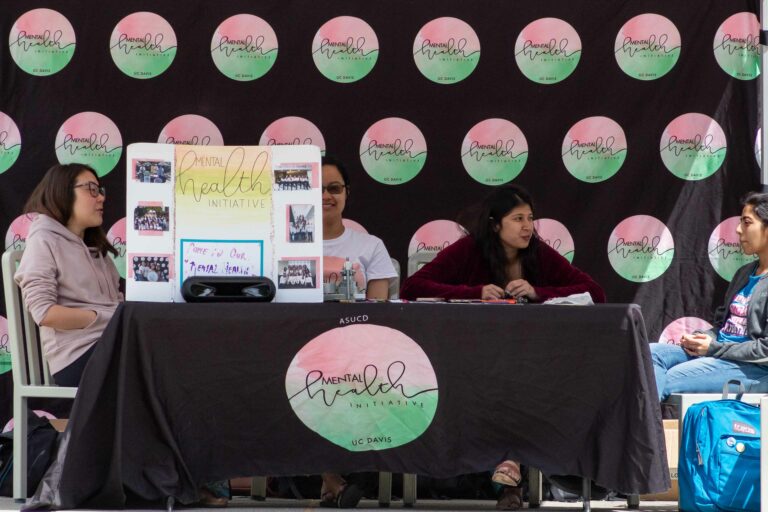
Throughout May, the UC Davis Mental Health Initiative (MHI) hosts 20 different events and 10 themed days on campus to celebrate Mental Health Awareness Month. The events range from therapy llamas on the quad to workshops focusing on the undocumented community.

The panels, workshops and activities are part of the MHI’s mission to create a broader definition of mental health. They seek to reveal the different aspects and intersectionalities associated with mental health — such as LGBTQIA+ mental health, body image mental health and more.

Each day and theme is intended to deepen students’ understanding of the topic and the various aspects that mental health can encompass.

According to the National Alliance on Mental Illness, approximately one in five adults in the U.S. experiences mental illness in a given year. UC Davis as a whole tries to increase well-being and destigmatize mental illness, recently ranking number two on “Top 10 Colleges Advocating for Mental Health Awareness.”

The MHI is one of the main mental health advocacy initiatives on campus, striving to destigmatize mental illness and create a safe space for the Davis community.

Deborah Widjaja, a fourth-year neurobiology, physiology and behavior major and publicity coordinator for the MHI, explained that because mental health depends on intersectional experiences, the MHI found it essential to create a broad, encompassing theme for the month. She stressed that one main goal for the month is to reach far corners of different groups.

Widjaja also made it clear that students need not be experts on mental health to participate. The events are also meant to be educational for those who want to learn.

“We have a lot of different topics, such as mental health in general, what does mental health mean and what some examples of mental health illnesses are,” Widjaja said. “There’s a themed day that we organize called intro to mental health and it just talks about mental health, usually in the lens of people who don’t really understand it yet.”

Although the MHI hosts all events, Widjaja explained it wouldn’t have been possible without the support of other student organizations on campus. This year, the MHI partnered with the Coffee House and Unitrans to promote the wide variety of activities.

She also commended the 70-something volunteers who helped create a “cohesive team” within the MHI. One of these volunteers is Shreya Deshpande, a third-year cognitive science and sociology double major and the ASUCD vice president.

Deshpande played a crucial role in organizing the LGBTQIA+ mental health day, scheduled for May 30. They feel that giving each event a unique topic reveals an overarching theme for the month: intersecting identities.

They went on to explain the role that mental health plays in their life.

“Mental health is a lot of things,” Deshpande said. “It’s about self care, it’s about community care […] Mental health really prioritizes self awareness and making sure you’re constantly thinking about whether you’re okay, what could make you okay or who makes you okay.”

Another active volunteer was Shritha Gunturu, a second-year psychology major who worked the “Button Up for AAPI ME/SA Mental Health!” event at the Memorial Union patio on May 14. She said this month is intended to encourage students to open up about their emotions.

“It’s okay to talk about yourself when you’re not doing well,” Gunturu said. “It doesn’t make you less of a person if you have mental health issues. There’s no reason for that stigma, and I think this month is really about starting that conversation and opening up more of a dialogue so people have a better forum to talk about themselves.”

She also emphasized that an individual’s health should include physical and mental components, asserting that both should be treated as equally important — to her, people should have the same attitude about going to the doctor to stay healthy as they do when seeking mental health support.

“You have to make sure you take care of yourself as a person overall, and taking care of your mental health is all about self-care and checking in with yourself,” Gunturu said.

Although the month is drawing to a close, there are still two activity-filled days left: a Toxic Masculinity day on May 29, and an LGBTQIA+ day on May 30. More details can be found on the Facebook page.

Written by: Claire Dodd — campus@theaggie.org

Davis Feminist Film Festival

14th annual festival to showcase intersectionality, feminist struggles

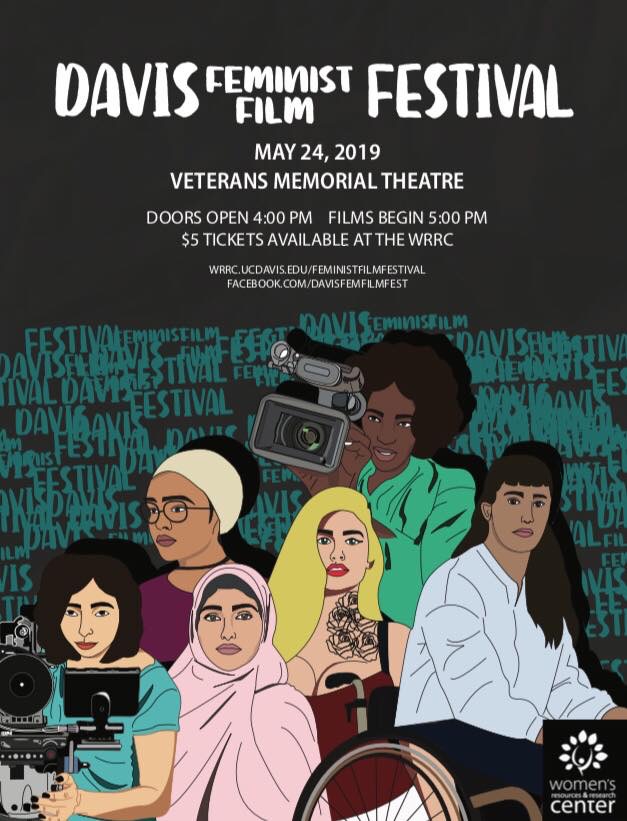
The 14th Annual Davis Feminist Film Festival will be held on Friday, May 24, at the Veterans Memorial Theater. The festival is hosted by the Women’s Resources and Research Center and will showcase over twenty domestic and international short films. The festival will also host an art show that will feature work from underrepresented community artists.

The festival aims to promote perspectives that are not usually visible in mainstream media. The films focus on social justice and raising consciousness about the intersections between socially constructed categories and how these intersections affect people’s lives.

“The festival curates a night for the Davis community where topics including race, women’s bodies and skin color are offered from women’s perspectives,” said Elizabeth Mercado, a second-year English major and the festival’s communications coordinator. “The amount of films we’ve chosen from other countries widens the conversation around feminism from just an American one. In my commitment with the festival this year I’ve witnessed from my fellow interns women supporting women’s stories. It’s validated my input as a Latina first-generation college student who’s gotten to see examples of women of color within the film industry.”

The first half of the festival will feature “2nd Class,” which focuses on how women of color persevere in the face of discrimination, xenophobia and white nationalism; “Stereotyped,” a humorous take on the narrow mindedness of Hollywood’s casting culture; “Little Lantern,” a story of rebellion, friendship and childhood; the romance “Arcana Six”; and “My Black” which focuses on young girls’ relationships with their skin color.

The second half of the festival will feature the emotional “2Faces,” which deals with domestic violence and “In the End,” a story about the disavowal of non-binary children. Further, audiences can expect the resilience of women to play out on screen in “Little Red Riding Hood,” “Can She Kill It” and “Mars 2025.” The final short film shown will be “Game,” which highlights women’s courage and perseverance in the face of inequality on the basketball court.

Carmen Valdivia, a Spanish and Portuguese Ph.D. candidate, is this year’s festival director.

“As a former undocumented immigrant from Peru, single mother and educator completing a Ph.D. at UC Davis, I consider that feminist perspectives, especially from marginalized knowledge bearers such as black, brown and indigenous communities, can and will be the sustaining and crucial forces to fight social injustice and also preserve the only home we have,” Valdivia said. “Working with an amazing group of diverse, young and talented women to make the DFFF possible reaffirms these beliefs, and I hope our audience feels and shares not only the intensity and urgency of doing feminist work, but also the inspiration and joy behind each story.”

The art show will be open for viewing starting at 4 p.m. Film viewing begins at 5 p.m. Tickets can be purchased at the WRRC or at the door. There is a suggested donation of five dollars. The festival’s lineup is available on the festival’s official website and on Facebook.

Written by: Liz Jacobson — arts@theaggie.org

Watch your drinks in wake of drugging incidents at Davis bars

Davis is not exempt from dangers of rape culture

Content Warning: This editorial contains descriptions of drugging and sexual assault, which some readers might find upsetting.

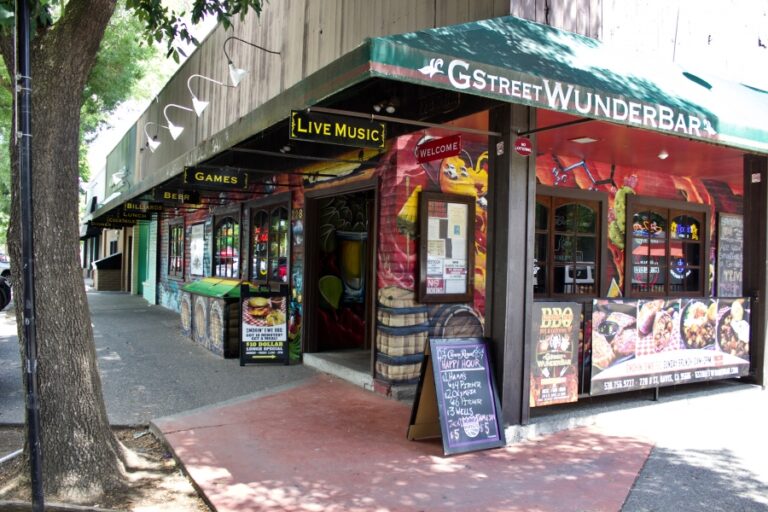
The Davis Police Department received three reports this past month of women, all of whom are UC Davis students, experiencing abnormal behavior like blackouts after drinking alcoholic beverages that may have been tampered with. While the reports are still under investigation, police believe that these women had drugs placed into their drink while at G Street Wunderbar and Bistro 33.  

These reports are a reminder of the dangers of going out as a college student. A 2016 study published in the journal Psychology of Violence found that 7.8% of students from three U.S. universities self-reported that they had been drugged before. About twice as many women report being drugged as men, according to the study.

The common term for these substances placed in drinks without the knowledge of the consumer are date rape drugs. Nearly 11 million women in the U.S. have been raped while drunk, drugged or high, according to the Centers for Disease Control. Common date rape drugs include cocaine, prescription and over-the-counter medication, cannabis and so-called club drugs, such as Rohypnol (otherwise known as roofies), gamma-hydroxybutyric acid (GHB), gamma-butyrolactone (GBL) and ketamine.

In Davis, it’s easy to think of ourselves as in a safe bubble. But living in a college town does not exempt us from the dangers present at bars and parties. It’s important that all students, particularly women and LGBTQIA people who are especially vulnerable to assault and abuse, take precautions and recognize the symptoms of the possible presence of drugs in your system.

Never leave your drink unattended, and if you do, don’t resume drinking it. Only drink what you’ve watched the bartender pour. If you’re at a house party, avoid any type of “jungle juice” because it’s impossible to know what’s been mixed in. And even if you’re out with friends and classmates, it’s important to still be on your guard. “About 85 to 90 percent of sexual assaults reported by college women are perpetrated by someone known to the victim; about half occur on a date,” according to the National Institute of Justice.  

Symptoms of possible tampering include nausea, confusion, vomiting, visual problems and blacking out. It’s especially important to recognize these symptoms if you haven’t consumed enough alcohol to warrant these effects.

If you suspect your drink has been tampered with, you should immediately go to the hospital. If so inclined, you can confidentially file a report with the Davis Police Department. If you would rather not report with the police or are just in need of extra support, there are confidential counseling services on campus, like the Center for Advocacy, Resources & Education.

No matter which precautions you did or did not follow, the situation is by no means your fault. While it’s difficult to determine the exact number of people who have had their drinks unknowingly tampered with, 7.8% is still too high. This is a reflection of the pervasive rape culture that students are forced to navigate.

Written by: The Editorial Board

Guest: UC Davis’ inadequate mental health resources

What will campus do to address students’ health after Mental Health Awareness Month has ended?

Words are some of the easiest things to gift to any cause. They tumble out of our mouths and, in the exchange, help heighten awareness — bring attention to things otherwise shadowed in silence. This month is Mental Health Awareness Month at UC Davis. No doubt you’ve seen events advertised that bolster exposure to the lifestyle folks with mental illnesses must live. But as we stand in solidarity, taking a moment to be enveloped in empathy, I wonder: Where will the action develop after Mental Health Awareness Month has passed?

I have no beef with taking time to chat about the lives lived in which depression swallows folks whole, mania cracks self perception or psychosis relegates bodies to living on the fringes of societies. It’s important and necessary work. For those of us who don’t have to live through these experiences, it’s understandably hard to imagine how folks might experience these journeys that take them through the darkest parts of the human psyche. It’s understandable that it might otherwise be easier to believe that these stories are as real or effective as the Bogeymen — figments of nightmares and mismanaged personal lives.

It’s important to speak of how this is not the case. Exposure cleaves these ideas from skeptical people’s minds. It puts faces and stories to experiences. It deeply humanizes those of us who trudge through invisible struggles. The work of destigmatization is profoundly important. But even as UC Davis is hailed (rightfully so) as the second most active university advocating for mental health awareness, the university and surrounding city of Davis are poor in their mental health resources. So I wonder, for a university that exemplifies such an aptitude in raising awareness for those with mental health maladies, where is the infrastructure backing up this advocacy crusade?

A reasonable response might be, “Take a look at the Student Health and Counseling Services, the LGBTQIA Resource Center, the Women’s Resources and Research Center and the crisis text line. Clearly, there are resources.” But with a student body of over 35,000 and personal anecdatoes of the psychological toll of the quarter system, these resources are paltry, meager offerings for folx who are in pain, mostly acting as crisis intervention care. Unfortunately, this is an era of unprecedented rates of depression, anxiety and suicide. Beyond what any one person might attribute these psychological states to, their presence persists and is often reported to be exacerbated or even brought on by the quarter system by which UC Davis operates. (Research is lacking on the psychological effects of the quarter system as opposed to a more leisurely semester option. This study, however, suggests that the quarter system does in fact bring on the comorbidity of stress, anxiety and depression.)

I invite you to dabble in these resources. Many find, myself included, that these underfunded departments are able to offer little more than appointments scheduled months out, the distribution of colorful pamphlets and an encouraging word about joining clubs on campus. They are doing their best, but their best is simply not enough to cater to a hyper-stressed student body. It is not enough for those who additionally have default states of mental illness, and it does not offer comprehensive care continuity to people struggling with these mental states. I struggle with PTSD and major depressive disorder and I can tell you that, with as severe as my symptoms were presenting, it took me over a year to find adequate help. That help came only after I had become apathetic with UC Davis’ species of one-time therapy and looked beyond what the university currently offers.

Another anecdotal account: When I had tried speaking to a counselor at SHCS about passive suicidal ideation — something common in both major depressive disorder and college students — I was strapped, within 15 minutes, to a gurney and forcibly admitted to a hospital. I had no plan, no means or no timeframe, and I had personally sought help and council, hoping that some medication might alleviate the symptoms. Later in the night, my case worker determined I was at no risk to myself. She sent me home so that I might continue my night, in shock, with my cats and my partner. This was only after spending six hours in a hospital, clothed only in a hospital gown, and guarded by an officer who, once his partner arrived, liked to make sneering remarks about the mental health patients he’d been charged with. The next day I continued on, numb, to complete a midterm. I never returned to the SHCS for mental health help due to the fear born of this experience, and I still experience anxiety when visiting for primary care physician appointments. My experience isn’t an isolated one. This is not the earmark of a system constructed to help those who are shackled to despair.

I sincerely believe that UC Davis wishes to help those in need. I believe that it is not the intent of Davis to leave those who suffer to their suffering, to leave those affected by the quarter system to their own psychological squalor. After all, advocacy itself leads to help-seeking behavior. I wonder, though, what then happens when someone in pain reaches out for help and is burned by the framework set in place for their refuge?

The work doesn’t end at advocacy. It doesn’t end at appointing a mental health task force, putting on entertaining events or co-opting personal narratives during Mental Health Awareness Month. The work, the truly difficult work, is in finding funds, spaces, people, programs and allocated time for those who need it.

Written by: Aryss Hearne

The writer is a second-year transfer student studying genetics and genomics and philosophy at UC Davis. She is currently a member of the Disability Issues Administrative Advisory Committee.

Disclaimer: The views and opinions expressed by individual columnists belong to the columnists alone and do not necessarily indicate the views and opinions held by The California Aggie.

Best of Davis: Bar

G Street Wunderbar

Whether it’s a Wednesday night out after a final or a three-day weekend, Davis has many bars that are popular among students. G Street Wunderbar is one of the most notable, with the Wednesday night event “Funk Night” being a pinnacle Davis tradition for many legal drinkers. Since it opened on October 24, 2011, it has reportedly become one of the most well-known bars to visit in Davis.

Nicole Chin, a fourth year psychology major, thinks the G Street Wunderbar is not only a great place to dance, have fun and drink, but also a place with great food. The Smokin’ Ewe BBQ restaurant contains a lot of burgers, fries, wings and sandwiches.

“I like to go to the Wunderbar for the entertainment, especially to see people do karaoke,” Chin said, “But I always like to see what kinds of foods each bar has because I think it makes them kind of unique. The Wunderbar definitely has some bomb food.”

Regille Rodriguez, a fourth year design major, remembers the first memory she had at the G Street Wunderbar, “I actually didn’t go to the Wunderbar for a while after I had turned 21 because I just didn’t know much about it. When I actually went a couple months after, it ended up being a lot of fun and I even learned how to play pool properly there.”

With a relaxed yet fun atmosphere, the G Street Wunderbar has provided many UC Davis students with memorable moments.

“I definitely recommend going if it’s your first time. Everyone is nice and it’s a different environment compared to other places in Davis. One of the things that I like about it is how spacious it is, so you can have fun but also have time to chill if you need it,” Chin said.

Written by: Sierra Burgueno — features@theaggie.org

Humor: DC hosts houseboats-themed meal with only dino chicken nuggets, alcohol

Patrons say it’s the best meal they’ve ever served

In preparation for the most anticipated weekend of the year, the UC Davis Dining Commons decided to rock the boat with its most recent themed meal. Instead of the typical themes, like Star Wars or Harry Potter, the brains behind grape-and-bleu-cheese pizza went for a houseboats-inspired smorgasbord.

For the parents reading this, scratching your heads and saying, “Houseboats? Never heard of her,” I am here to tell you that you yourself probably went to Houseboats. You likely had a little too much of the blood of Christ that weekend to remember.

Just like the Harry Potter meal, the DCs were adorned with festive decorations for this event. Draped over the backs of chairs were authentic Houseboats beach towels, full of stains of unknown origin. Towards the back of each DC sat kiddie pools full of brown lake water, complete with freshwater microbiota. Each table had centerpieces of empty beer cans in every shape, size and color. But that’s enough about the decorations; it’s time for the food.

Every stall served the same meal: a single, microwavable chicken sandwich with a can of Natty Light. Even the vegan stall prepared chicken between slices of white bread plus a bottle of fermented grain juice to wash it down. Was it tempeh, you ask? No, it was chicken and chicken only. Gotta stay true to the theme. Even the frozen yogurt machine dispensed chicken sandwich soft serve into freshmen’s bowls.

Instead of the usual playlist of songs from 2013 and Selena Quintanilla hits, every song you’ve ever heard thumping at the back of a house party played through the DC speakers. I’m talking songs like “Mo Bamba,” “SICKO MODE,” “Get Low” and “Bodak Yellow.” You know, the classics.

DC employees donned sunglasses and oversized hoodies to get in Houseboats uniform. The really dedicated staff wacked each other in the legs in an effort to recreate The Bruises.

Truly, it was another wholesome themed meal at the Dining Commons.

Written by: Madeline Kumagai — mskumagai@ucdavis.edu

(This article is humor and/or satire, and its content is purely fictional. The story and the names of “sources” are fictionalized.)

Invisible disabilities provide us with an important reminder: Don’t be a jerk

Be kind, for everyone you meet is fighting a hard battle (said NOT Plato)

“Be kind, for everyone you meet is fighting a hard battle.” Everyone says Plato said so, but no one really knows. It’s like 2,500-year-old gossip. Besides, “Says Plato,” is a lot catchier for our mugs and mini wall art than “Says Ian MacLaren,” or “Says John Watson.” Who are they and why do I care? To what degree do we follow “Plato’s” sage adage anyway?

We may not overtly rail against the seemingly-surly jerk ahead of us in line at the bank or the asshat cutting us off in traffic, but the landscape inside out heads might not always be as pretty as we’d like others to think or as we’d like to delude ourselves into believing. That person is too quiet or standoffish or awkward and they make me uncomfortable, so I’m going to take the easy way out and simply walk way over here now…

It seems like many of us on social media talk up a massive help/care/love-thy-neighbor/mental health/inclusive game but fail utterly when asked to put that into action concerning the people around us in real life. That #Anxiety meme looks so pretty and clever and poignant, but actually practicing compassion takes serious emotional energy and outside comfort zone-ing (#MemeAboutMindfullness). OMG, I perceived that person as being such a jerk to me just then, and ouch MY precious feelings! And who was Plato again? Cultivating empathy and sympathy in the moment and keeping the notion that people sometimes behave in the less-than-ideal ways for a reason at the forefront of our minds can be, well, exhausting.

“Be kind, for everyone you meet is fighting a hard battle.” The invisible disability is one of those harder battles that is getting a lot of attention lately. There is even an Invisible Disabilities Comedy Show coming up in Sacramento on May 26 and a new accompanying open mic every second Wednesday. The Invisible Disability Project defines invisible disability as the following:

An “invisible,” “non-visible,” “hidden,” “non-apparent,” or “unseen” disability is any

physical, mental, or emotional impairment that goes largely unnoticed. An

invisible disability can include, but is not limited to: cognitive impairment and

brain injury; the autism spectrum; chronic illnesses like multiple sclerosis, chronic

fatigue, chronic pain, and fibromyalgia; d/Deaf and/or hard of hearing; blindness

and/or low vision; anxiety, depression, PTSD, and many more. We understand

the body as always changing, so disability and chronic illness may be unstable or

periodic throughout one’s life.”

If someone is exhausted, in pain, depressed, anxious or, heaven forbid, a combination of all, they are not going to have the luxury of being their best self around the people they encounter out in the world. If someone has early onset MS, there’s no culturally acceptable or established shorthand button for them to pin to their lapel that will translate into everyone’s understanding of and accommodation for their extreme fatigue. If a student has to navigate campus with PTSD on constant alert for the next trigger, they are not going to be able to enjoy the luxury and privilege of inhabiting their normal personality that would have them smiling as opposed to frowning at their classmates and professors.

This current prominence of the invisibility disability phenomenon can be unpalatable to some people with visible disabilities. After all, the experience of someone who, for example, uses a wheelchair or cane is going to be very different than that of a disabled person who largely passes as able-bodied. But there are more common denominators than not. People in both camps will experience the pity of others. Additionally, both will experience accessibility issues, possibly extreme isolation and significant amounts of unsolicited advice from both those close to them and complete strangers. For the invisibly disabled, however, judgement is also a difficult issue. Often, they struggle to be taken seriously or even believed, or the fact that they are disabled is overlooked or forgotten.

With the existence of these invisible struggles coming to the forefront, the necessity of our everyday compassion becomes handily highlighted and the answer isn’t exactly an open mic (though I for one am always down for some morbid humor about chronic pain). Laughter between entertainer and audience is one thing, but have you ever experienced a consciousness shift one-on-one? Have you ever been the impetus for someone else’s bad-to-good day shift and seen their face lift? Or have you been on the receiving end of a simple smile that completely saved your headspace from your anxious, depressed, preoccupied, pained, panicked self? It doesn’t take much. Give someone else a little ammo for their battle. Give them a rocket launcher. Give me one less meme and go out to see how it feels to reveal the beautiful human behind someone else’s suffering — invisible or otherwise.

Written by: Lauren Frausto — lrfrausto@ucdavis.edu

Disclaimer: The views and opinions expressed by individual columnists belong to the columnists alone and do not necessarily indicate the views and opinions held by The California Aggie.

Police Logs

Pranking the police, bad idea

May 1

“Caller advised prank calling.”

May 2

“Male transient threatening to hit bicyclists with a stick.”

May 3

“Gold Toyota Sienna with driver and passenger smoking marijuana joint in vehicle, while holding cigarettes out of the window trying to conceal the joint.”

May 4

“Single male screaming outside for past 3-5 minutes.”

May 5

“Counting loudly, shouting and exercise music since 7:30.”

May 6

“Group of four transient on the property obstructing fence repairs.”

May 7

“Male subject continually exposing himself in the plot and through the window of his hotel room.”

May 8

“Reporting party here to pick up backpack.”

UC Davis LGBTQIA Resource Center hosts 25th anniversary celebration

Staff, advocates for center throughout the years share memories, challenges, triumphs

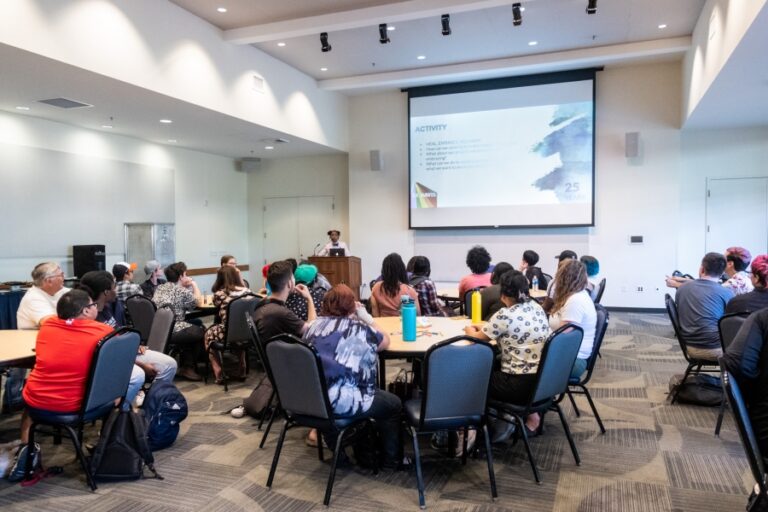
The UC Davis LGBTQIA Resource Center held its 25th anniversary celebration on May 7, providing food and presenting several speakers who reminisced and shared stories about the center’s history.

The theme of the anniversary celebration was “Heal, Embrace, Reclaim!” Monae Roberts, the director of the Center, encouraged those seated at the tables to grab an index card and answer a question pertaining to the theme, such as “How can we contribute to the healing of our past?” and “What about our present existence are you embracing?” The index cards were collected and put on display, Roberts said. The cards were paired with “old photos of past folks who used to work at the center,” continuing the theme of looking back in order to heal, along with “teaching how we do things [at the center.]”

Associate Vice Chancellor of Student Affairs Sheri Atkinson was the first speaker. She first came to UC Davis in 2003 to be the director of the then-named Lesbian Gay Bisexual Transgender Resource Center. Atkinson remarked that she was excited at the prospects of working for the resource center on campus upon her arrival, as there were hopeful indicators of success and support such as having actual staff members, compared to her time at St. Cloud State University, Minnesota where they built the center from the ground up. But Atkinson also noted that there was work to be done.

“One of the things I heard pretty quickly was that students of color, queer students of color, LGBTQIA [people] of color didn’t feel comfortable or feel like this center served them at that time,” Atkinson said.

This led to Atkinson working with students, staff and other centers, such as the Cross Cultural Center, to promote intersectionality and inclusivity as much as possible.

“Even the LGBTQIA community is not immune to issues of oppression and racism, sexism, misogyny,” Atkinson said. “We started engaging with people making those [uninformed] comments and talking about the impact. We also started to center marginalized voices within our community and our programming.”

Among those seated in the crowd who were particularly reminiscent was John Dixon. Dixon worked on campus for 33 years, serving as the second chairperson for the LGBTQIA committee. His 33 years of work for the LGBTQIA community have shown Dixon that “things have come a long way.” What particularly stood out for Dixon with regard to how the center is currently established is the fact that you can “see it in the open.”

“People were still in the closet [when I was still working] and the building was on the west side of campus, so you didn’t see people going in,” Dixon said.

Written by: Deana Medina — campus@theaggie.org

Origins Overlooked: Trap Music in Mainstream Music

While trap flourishes in popular culture, the story of its inception does not

Depending on the person, the word “trap” can mean many things. Thanks to the rise of trap music in mainstream media, the words trap and trapping are now glorified, epitomizing a chic image that everyone wants to get behind. Stickers that say “trap house” now pervade the outside of Hydroflask canteens and trap-style beats are being used as background music for commentators to speak over, such as in HBO’s “Game of Thrones: Game Revealed,” a behind-the-scenes special for the world’s most popular television series. As the trap bandwagon becomes laden with suburban teenagers, Hollywood producers and cross-genre musicians, so does the concern that those who appropriate the culture do not understand the origins of the trap.

The word “trap” is meant to reference an inescapable place in the ‘hood — a place where one hustles and does anything necessary to leave the trap behind. Conversely, those who thrive in the trap use the word to reference a place where the money comes and never leaves, but as the word circulates popular culture, little homage is paid to those inner-city individuals who have survived the trap or have used it as a means to propel their hidden talents into the limelight.

The implementation of the word “trap” into popular culture is undoubtedly attributed to the widespread fame that trap music knows today. Although most music connoisseurs think of 1017 BRICK SQUAD and Lex Luger when they think of the iconic trap sound, it predates those trap stars by decades. Slowly but surely, trap music rose to prominence through the 1980s with musical groups like World Class Wreckin’ Cru (two of whose members went on to form N.W.A.) and 2 Live Crew.

For those interested in a breakdown of the trap sound, it goes 1/3 hip hop (tempo and song structure are similar, most tracks are usually between 70 -110 bpm), 1/3 Dance Music  (high pitched Dutch synth work, Hardstyle sampling) and 1/3 dub (Low-frequency focus and a strong emphasis on repetitiveness throughout a song), according to runthetrap.com. The man who coined this now-immortal beat type was was Greg Broussard, otherwise known as Egyptian Lover, a Los Angeles-based musician, producer and D.J.

Broussard produced his beats with the Roland TR-808, the same machine that was used by Afrika Bambaataa and producer Arthur Baker to create the ultra-popular 1982 track “Planet Rock,” which served as the catalyst for the soon-to-boom L.A. electro and hip-hop scene. What Broussard did differently than Baker, though, was tweak the settings of the TR-808, as many other producers who followed in his footsteps would do as well.

Aldrin Davis, a remote protégé of Broussard, voiced the exact technique that Broussard used to create his compositions.

“When I started playing around with the 808 drum machine, I noticed that when you turn the one little knob up that says ‘decay,’ it’ll make the bass stretch out,” Davis said in an interview with Complex Magazine. “But I never knew back in ’85 how I could actually use that sound. […] Ain’t no telling what ‘Planet Rock’ would have been if they would have let that decay kick off back then. That shit would have changed the world, for real. It would have blown a lot of speakers, too.”

Davis would go on to produce a large number of tracks for Atlanta-based artists in the late ’80s, all of which would lead to his work with T.I., who brought the word “trap” into popular culture with his album “Trap Muzik” in 2003. From there, it’s all history — synth tracks would remain simple, 808s would whop in the background and hi-hats would be cranked up to an inhuman speed: the iconic sound of trap music.

Somewhere later in that history, subgenres would be created, such as “future bass,” “boomtrap” and “trap step” to be performed on E.D.M. stages, Grammy-nominations would be handed out to Lorde for her trap single “Sober II (Melodrama)” and the Higher Brothers, a China-based rap trio, would be praised as trap stars.

In an interview with Vice outside of a Higher Brothers performance in Chengdu, fans were asked what trap is. One fan responded with, “Trap is life. It’s a lifestyle.” And when the front-man MA$IWEI was asked what people will think of his music, his response was, “They just [think] you’re doing trap music, that means you’re encouraging that kind of bad stuff. But my lyrics are not like that.”

There is a culture speaking through the knock of 808s and the fast paced hi-hats of trap music, one which voices the cumbersome realities and rapid lifestyle changes that original trap stars had to overcome to promote their music. And while the sentiment may have been there in the eastern interpretations of the word trap, it still invokes a fear that the proprietors of the sound have been forgotten in the mainstream hype.

Everyone praises trap music for its simplicity, but few consider the reasons why it’s so simplistic. To paint a picture, the king of trap Lex Luger got his start with a PlayStation controller, a pair a toy turntables and the video game “PlayStation 2 MTV Music Generator 3.” Luger was able to channel his musical talents into a video game and record his beats onto a memory card. As the story goes, Luger rose to fame by sending beats to Waka Flocka Flame, but it was not by sending out a PlayStation memory card in the mail.  

A friend of Luger lent him a laptop with an unlicensed version of F.L. Studios on it, from which he supposedly made ten beats per day and sent them all to Waka Flocka Flame over Myspace until he was flown out to Atlanta to make beats for BRICK SQUAD. Even then, in the height of his fame, making beats for Juicy J and Jay-Z, Luger kept it simple and chose a computer keyboard over synthesizers to make his music, pressing “W” for an 808 and keys “A” through “G” for various percussions.

When considering the origins of trap, who can speak to Luger’s sleepless nights in a basement, battling drug addiction and broken keys on a laptop, or Migos in 2013, still living in a functioning trap house and recording their own music in a booth that holds both their clothes and a microphone.

This goes to show that trap music does not come from a cushy studio with hightech equipment and professionally trained musicians, but from the trap, from real people with real experiences of trapping that either allowed them to make it out the trap or killed them in the process (R.I.P. Nipsey Hussle).

Although the glamorization of trapping may be an uncontrollable force, it’s imperative to understand the history that goes along with both the music and the word itself. All that surrounds trapping, from the music to the hustle, is akin to marginalized people that have battled a history of institutional racism and oppression, all of which put them in the trap house to begin with. Yet the culture is still subjected by those who haven’t a clue of what the trap house entails.

The realities are this: trapping may seem appealing when looking from the outside in, but when trapping is one’s only means for survival, the appeals pale against the implications of that harsh reality. Trap music, where it is and whence it came, holds the secrets of that culture, all it requires is a level of appreciation for its origins and the knowledge that its rise to prominence may be the most complicated come-up in the history of music.

No one owns the rights to the word “trap” but Migos said it best when referring to what trapping means today, now that it courses through the veins of popular culture.

“It ain’t gotta be about cocaine and all that no more,” Quavo said in an interview with Vice. “You’re trapping when you’re hustling and doing your thing.”

Written By: Clay Allen Rogers — arts@theaggie.org